This is the entry that I should have been working on last night.
Wow, doesn’t that just feel like history repeating itself. To be fair, I actually should have written this weeks ago. And I did. At least, I tried.
When I last left off (this is the point where Marvel would have a footnote under one of my sentences, referring to my previous “issue” of Mythic Bios), I went on vacation for the weekend. I’d just come from finishing off my interview with Will Brooker and creating some press for Poets in Hell: where I have a short story published.
It was a nice trip. There was good food, a cabin, a forest to explore, a river and some really nice company. After so much time in front of a computer, I found myself staring into a great bonfire right in front of me. As the warmth of flames replaced the cold glow of the screen on my face, grateful to be away from my parents’ place for a while and all the other distractions, I began to become aware of something.
It’s as though I keep forgetting it. When you spend a lot of time by yourself, for extended periods, you begin to forget things. I mean, even in the days when I went out more often, I was shy and introverted regardless. I get very quiet and overwhelmed by a large group of people: even people I know. But after I moved to Thornhill, this became even more pronounced. Most of the time I was camping, I mostly talked with a few people about very specialized geeky things and, well, that was about it.
That’s generally about it. You see, I like the things that I like and when I’m nervous or feeling awkward I either “talk shop” or I don’t really talk at all. I’m not really one for small talk and I don’t really talk much about other parts of my life under most circumstances. But, even though I didn’t do any archery, or golf, or even sing karaoke, I did have fun. I even had some really cool discussions with some people towards the end of the second night after a massive rainstorm came down on us all.
After that, I actually found myself used to being around people again. One other thing I’ve noticed about being by yourself a lot is that you forget how to talk with people or even relate to them. So after that weekend, I actually wanted to be around people again. I had these thoughts about going out and hanging out with some friends: even working outside of my house and exploring again.
I’m not quite sure what happened, to be honest. I genuinely meant to do all of these things. Then I had some projects I wanted to work on before dealing with anything else. I thought I could get those out of the way and then do what I needed to do. Of course, none of these went as planned and I am still working on them. I was enthusiastic and as clear-minded about these projects and goals as I could be but I began to get bogged down in a slow, creeping sort of fashion.
I took on some tasks and obligations as well. And then, one day, some people from the city were fixing our side walk and destroyed our cable. It took over a day for them to replace it and even now it’s only a three month temporary one.
Now, this might not sound like a very big deal. I mean, most people would take that as a sign to relax and do something else. But I’d already gotten used to my rhythms back here. The fact is, I had no where really to go in Toronto. Not really. And a lot of my work is dependent on the Internet: personal projects and otherwise. But what is worse, for me, is that somewhere over time a lot of my even more personal relationships have become dependent on the Internet. And when my Internet is not working, I am cut off from a majority of my long-distance friends and loved ones.
I get very angry when someone meddles with the Internet primarily because of the fact that if something happens to it — and cable companies that are near-monopolies have no reason to really expedite or even take the time to fix something properly without endless hassle — my means of communicating some of the few people that keep me sane is gone.
When I spent over a day without the Internet at my own house, I became aware of just how … alone I was.
After that, when it was fixed, I just continued doing what I was doing. But I also noticed I wasn’t really going outside as often anymore. I was staying up late again. And I found I had nothing really to say on Mythic Bios. My mind began to become clouded and murky. I was avoiding people, even people visiting, because I already felt I had work to do that, conversely, I felt I wasn’t doing fast enough.
It even got to the point where communicating with people online became very disassociative. I suppose the signs were an extreme need for perfectionism leading the way to a lack of concentration and then, lately, a sense of frustration and anger. Sometimes, to make a Vampire: The Masquerade reference, I’m like an Antediluvian — an ancient and vampire — waking up from torpor and going into a blood-thirsty rage at existence. Or something suitably melodramatic. Sometimes anger is easier to feel — to actually feel active and present — than detachment.
But why shouldn’t I just go out? Why not just meet people outside or go to Toronto regardless? The truth is, there are few people I can meet in Toronto. Some others have already moved on with their lives or have their own difficulties to deal with. And I’ve had some bad experiences downtown and I feel very reluctant to open myself that way again. With a very apt, and now unfortunately timely, moment of insight Robin Williams once said something to the effect that the only thing worse than being alone is other people making you feel like you are alone.
So this past while, struggling to write, I’ve been mostly watching interactions. It’s felt easier in a lot of ways: just as corresponding with people over the Internet is still easier for me as I can, usually, express myself well through the written word instead of with the awkward chagrin of dealing with people “out of my element.”
At one point an acquaintance of mine made a joke that I was “better than the rest of them.” Now, when I was out more people did tell me that I have this mien of aloofness. But let me just state that I hope it goes without saying that despite my manner, the way I write and my “big words” that I don’t think I’m better than anyone.
Trust me, I know I’m not.
So, where does this leave us now? Well, I definitely knew my depression was getting stronger when I stopped writing Mythic Bios for a while. I will try to keep up this Blog and there are some other things I’ve wanted to write on here for quite some time. But at the same time I do actually need to do some writing.
I’m also still going to therapy. And my budgie is a source of ridiculous entertainment. I have other plans to actually meet some people as well as some tasks that I still need to fulfill. I think I’ve said everything I’ve needed to in this post. Sometimes, as my friend Fairytaleepidemic once mentioned to me about a year ago now, I wish I had a group of friends that I could just meet and marathon StarGate SG-1, Dr. Who, and other shows and films with — hell, even those bloody Clone Wars cartoons — just to be able to go to someone’s house and have that kind of contact and presence of like geek minds.
Who knows. Maybe it will happen again one day. That all depends on others. And myself.
“He who fights with monsters might take care lest he thereby become a monster. And if you gaze for long into an abyss, the abyss gazes also into you.”
— Friedrich Nietzsche, Beyond Good and Evil, Aphorism 146
When last we left off in my article Life and Identity, Eden and Hell: The Twines of a Gaming Pixie, said Pixie left us in a second-person perspective hell of “You”: having left her penchant for placing us in the autobiographical of her Twine shoes and moving on to other worlds entirely.
But some things always come full-circle before revolving outward into a spiral.
Gaming Pixie writes a little bit about the origins behind why she made She Who Fights Monsters, this interactive combination of autobiography and fiction, far better than I ever could. If you want more information about that, read the previous link or look at her other posts on the subject on her developer’s Blog Gaming Pixie Games. This is not what I’m going to be focusing on.
Instead, I’m going to write about my impressions the basic plot and structure of the game, examine a bit of its creative evolution, and focus a bit on some of the game’s implications: especially with regards to its premise, its protagonist, and its ending. I will admit, right now, that I had a lot of trouble initially coming up with a way to write about She Who Fights Monsters. But it was Gaming Pixie herself who told me, when we last talked about the matter, to write about my own reactions to the game. There is something ironic about talking about the personal — about my feelings with regards to interacting with this game and its subject matter — in lieu of scrutinizing the autobiographical.
But in any case, do not read on if you don’t want to be exposed to potential triggers or spoilers. Reader’s discretion is advised.
It is no accident that this article begins with the above aphorism from Friedrich Nietzsche though, when the Alpha Demo for the game first came out, I had no idea this would even play a part in it. The Demo itself was called Fighting the Monster: which took place on Day One of the game’s chronology.
The story premise presented in this Demo translated over to the Beta Demo — called She Who Fights Monsters — and the subsequent game of the same name. You, the player, control the sprite of Jenny: an eight year girl who must survive the presence of a monster in her home for no less than seven days.
Of course, it becomes clear that Jenny’s battle is not merely with one monster.
This distinction is all the difference between two ideas embodied by the Alpha and Beta Demos. I will admit, right now, that I thought it would have been easier for Gaming Pixie to remain with, and work from, the spirit and aesthetics of Fighting the Monster. But make no mistake: both of them came from the same idea.
Let me try to articulate this as best I can. The overt antagonist, the monster, in She Who Fights Monsters is Jenny’s alcoholic father. Fighting the Monster, the Alpha Demo, was simpler. It was crude and more elemental for it. For me, it felt a lot more like a generic RPG: especially when you look at Jenny’s room and the imaginary haven inside her closet. But there was an old, faded texture to even these safe childhood places: like that of an old memory. The darker places, however, were dingier. Grittier. It set the tone of a stereotypical, old and dilapidated home where dysfunction and abuse are almost always typically depicted. And even here, it still felt like the aesthetic shell of an old 16-bit role-playing game.
And the monster is clearly Jenny’s father. If you judge the context by the Demo alone, he is the threat that Jenny must avoid. He breaks through all of her childhood illusions of magic, fairness, and innocence through cursing at her. Her Tears and her Innocence do not save her in the simulated turn-based RPG battle. In this one Demo alone, her father’s words feel like a slap in the face but the atmosphere of this world has been building to it. Even so, with Jenny’s mother’s revelation at the end of the Demo, that her father is an alcoholic, it sets a straightforward tone for the game and makes the Demo itself feel self-contained and continuous.
But Gaming Pixie never meant her game to be straightforward. So in the process of changing the game’s name, she also developed its aesthetics in the She Who Fights Monsters Beta Demo that would inform the rest of her game. And I will admit: it felt jarring at first.
Gone are the dinginess and grit and the fading of peeling memory on the walls. You find yourself with Jenny in a much more colourful and vibrant world. Her toys are brighter. The details around her stand out and the temple that is her imaginary place in her closet is grander and more elegant. Even her home looks more comforting: as much as any middle class home made by 16-bit pixels. Everything, even the nightmares, is vital and alive with colour: as much as any child’s world is at that age.
I feel it was designed this way: to make the player feel safe before immediately and brutally introducing them to the world of abuse and its effects on Jenny’s highly impressionable and figurative mind. And, this time around, when the trauma of encountering her verbally abusive father passes she finds herself in her room and her mother entering without even a single explanation. It was most likely made to function as an interactive preview in order create more ambiguity: so that the player could gradually, through the rest of the coming six days, see past the daydreams, imagination, and nightmares of a child to the adult reality of an alcoholic parent.
In some ways, it is even worse this way: to depict a normal childhood and have it impinged upon by the violence of an unknown and terrifying adult world, and the understanding that it will change Jenny’s life. It is a real life horror story of an ordinary world shattered by something aberrant and always lurking under a façade of normalcy.
I felt that both Demos were almost dress rehearsals for the psychodrama that was to come. The title itself says a lot: in that there is more than one kind of monster at work, and as such there are consequences for facing them.
So now we come to the real She Who Fights Monsters. The graphics are further improved — with even greater attention to detail — and you can explore Jenny’s entire house. Day One happens pretty much like it did in the Demos: with one interesting exception. Gaming Pixie ends off Day One from the part depicted in the Alpha Demo where Jenny’s mother flat-out tells her about her father’s alcoholism: the part that did not exist in the Beta Demo. And the scene where Jenny goes out to get some cookies becomes a background reminiscent of strange organic Giger-aesthetics of the horror game Yume Nikki or the Earthbound Giygas battle.
You, as the player, now know what you are facing and you must play through the remaining days. Yet there is one more thing that you need to consider.
The Memory Bloom is a giant flower that you find past the Temple in the closet. It didn’t exist in the Alpha Demo and I almost missed it in the Beta until Gaming Pixie pointed it out in one of her developer’s blog posts. In the Demo the Bloom itself tells you that it will only become important in the main game and, make no mistake, it is crucial. You will get Locked Memories throughout the game and it is critical to interact — or not interact — with this flower. If you do, you will also realize that not all of Jenny’s memories and experiences with her father are bad. In a lot of ways, it makes it even worse: in that these positive moments and traits in an abuser often make a victim feel bad in attributing negative emotions to that person. It makes the situation all the more complicated than simply Fighting the Monster. What you decide to do will determine Jenny’s future.
After all, it took Seven Days, in the Christian New Testament, for God to create the world and its inhabitants and She Who Fights Monsters demonstrates that seven days can create an entire human being depending on the choices that you make, and how Jenny responds to the monster in front of her and the ones forming inside of her head.
There is a quote often attributed to the writer G.K. Chesterton which states that “Fairy tales are more than true — not because they tell us dragons exist, but because they tell us dragons can be beaten.” However, there is another quote, from the fantasy and horror writer Stephen King that is also equally true, that “Monsters are real, and ghosts are real too. They live inside us, and sometimes, they win.”
These are both words to bear in mind as you progress: when on the Seventh Day even the illusion of childhood safety will be ripped away and Jenny will have to start on the path to self-actualization — to adulthood — far sooner than she should. For me, that and my scary and heartbreaking decision to unlock her Final Memory were the hardest parts of this game: to deal with them and to determine what Jenny should do beyond it.
Do you remember when I said that in some ways She Who Fights Monsters is a subversion of a 16-bit RPG? This still holds true even past the Alpha Demo: but in an even more subtle way. I mean, you already understand from Day One that any attempt to fight the game like it is a turn-based battle will end in failure. You already know that not fighting will end in failure. The fact that the game narrative text boxes are in third person-limited perspective, always referring to “Jenny,” “her,” and not “you”: the distance only provides you some illusion of safety.
The perspective is perhaps designed to make you feel that disassociation that a child facing ongoing emotional trauma and abuse would experience: only made more jarring during Jenny’s first-person interludes. These narrative perspectives are very notable departures from Gaming Pixie’s previous Twine-based games: not unlike Christine Love’s don’t take it personally, babe, it just ain’t your story where you are not the character, or even acknowledged as a player. This simply isn’t your story, even if you do influence it.
And when the game does get to the point where it feels like a turn-based RPG battle? Be careful — be very careful — because the thing you need to remember is the end of the first “battle” with Jenny’s father, particularly the words, “Nobody wins.”
The subversion goes deeper when you also consider that there will come a Day where Jenny is hiding in her room and there are clues around. They are extremely clever elements of potential foreshadowing and they are a nice contrast to the beginning of the first Day. For me, the freedom of exploration in Day One — of finding the bathroom, the kitchen, living room, basement, and crawl space — seemed to set up the beginning of a horror survival game, of knowing all the hiding spots and thinking you have discovered potential secrets only to make it purely about the psychological and the inner world of demons. Aside from the clear mindscape influence of the Silent Hill series, this game is reminiscent of the game Eversion in that sense: only instead of the aesthetics and gameplay changing over time from something brighter into something grimmer, it is a dynamic that goes back and forth between states of atmosphere — always in Jenny’s head, because we are all seeing this from Jenny’s head — until a final decision is made.
When I first heard about the concept behind what would become She Who Fights Monsters, I was reminded of another game based on a child creating an imaginary world to deal with an alcoholic parent called Papo & Yo. Yet aside from the fact that both games have autobiographical elements, child protagonists, and monsters for fathers that hurt them even as they love them there are obvious differences. Papo & Yo takes place in a fantastic equivalent of a favela –a Brazilian slum — and in all realities it is three-dimensional, while despite the aesthetics of its Alpha Demo She Who Fights Monsters takes place in a normal looking middle-class home. Monster, the Papo & Yo protagonist’s enemy is sometimes his companion when he isn’t in a rage, while it is clear that despite some good memories Jenny’s father is never really her friend nor does he help her in her game. While Papo & Yo is more distinctly a puzzle and deadly hide-and-seek game, She Who Fights Monsters is indeed a story that you mostly observe: sometimes very helplessly. And, of course Quico is a young boy and Jenny is a young girl.
You might think that the latter distinctions mean very little and indeed, they are both children placed into situations that no child should ever have to deal with: confronting their parents as enemies. But then there is the elephant in the room to consider. In a segment of her article regarding Gaming Pixie’s epic Twine game Eden, Soha Kareem observes that the former is “an accidentally political game.”
The fact is, Jenny is not only female but she is also “a person of colour.” It can’t be stated enough that, at least to my knowledge, just how rare and unique it is to be playing a game with a young Black girl as its protagonist: in her own story. In a medium that is still struggling to represent different identities in its games, it is definitely something to take note of. However, I am not qualified to talk about “race” or its implications: and how the race and class of Jenny’s family affects her story, if at all, is a matter I will leave to more capable writers than myself. Indeed, this matter seems more “incidental” than “accidental” and Gaming Pixie herself is more focused on the situation and survival of Jenny as opposed to her background.
But there is something else I’d like to note that Soha Kareem also states. In her writing on Gaming Pixie’s Eden, she points out that “The game’s endings and achievements are determined by your karmic choices.” She goes on to explain how, in Eden, how Gaming Pixie subverts the video game trope of the protagonist needing to manipulate their love interest as an object into a relationship by making it so that the player must genuinely act like “a good person” in order to gain that level of trust. The point is, Gaming Pixie is both sneaky and honest in the sense that your choices have clear moral consequences. Even in She Who Fights Monsters, depending on what you do with the Memory Bloom and what you choose to remember, some paths will be open to you, some closed, and some will exist only for one tenuous moment of conscience.
I won’t spoil the endings for you, but I will say this. When I play a game, particularly one with this kind of detail, I like to get all of its information so that I can actually make an informed decision. Even so, remember what I mentioned about being careful when you find yourself in a combat situation in this game? Well, if you make a certain choice and you like to be violent and go all Sith you should know that, if you do, there are consequences. You may become the monsters that you are fighting, the demons in your mind, and it might well lead … to a whole other game entirely.
So please, download Gaming Pixie’s She Who Fights Monsters — which is supported by donationware — and determine how this horror story ends, and where others might well begin.
It was a little while ago that Star Wars fanatics were informed, by LucasFilm, that the Star Wars Expanded Universe of novels, comics, video games and other multimedia would no longer be considered canon in the Great Holocron of that Galaxy far, far away. The Star Wars canon, such as it is, has been culled down to the current six films, The Clone Wars animated series and the upcoming Rebels.
For the most part, all other materials belonging to the Expanded Universe have become Legends: stories that have, for all intents and purposes, been regulated to the status of galactic apocrypha. I wrote something on the subject at GeekPr0n, where I was fairly tongue-and-cheek about the entire matter, but I have to admit I had a few more thoughts on the matter.
You see, it’s not the first time a major franchise has rebooted, or attempted even a partial reboot, of itself: where stories that fans have followed for ages become either the relics of Gold, Silver and Bronze Ages, or non-canon entirely. Say what you will about Star Wars Legends becoming different “points of view” in examining that galaxy, that fans will “always get to keep their stories,” or that they will be consulted for those creators making the “new continuity.” I can even sympathize and admit that there were some Expanded Universe elements that simply didn’t make sense or, frankly, were very badly made.
But that all said, despite my own feelings that I wish the Prequels and The Clone Wars CGI series should be relegated into the realm of Legends (because, frankly, I don’t like the majority of their elements) I feel that there is something very cynical about taking a story and characters that people love and saying that they are no longer legitimate. Oh, they get their Legends and you can still read them but, chances are, you will never see them influence mainstream Star Wars and even if they do, they will not be the same. Your stories and characters are no longer in continuity.
For me, and in the words of Obi-Wan Kenobi, this news felt “as if millions of voices suddenly cried out in terror, and were suddenly silenced.”
But why stop there? Why simply stop at placing all of the Expanded Universe into its own Legends pocket dimension and go further?
That’s right ladies, gentlemen and other beings throughout the multiverse: perhaps LucasFilm should have “pulled a DC” and created their Crisis In Infinite Galaxies.
I mean, the tools were all there. There were already Star Wars Infinities comics: the very same that are, ironically enough, in Legends right now. But instead of a series of What-ifs, they could easily make a big What-If. And let’s make it a big one that functions a little something like this:
Imagine that each story arc: The Dawn Of The Jedi, Tales Of The Jedi, Knights and The Old Republic, The Star Wars Prequel books, The Clone Wars, Republic Commando, The Force Unleashed, X-Wing, Thrawn all the way to Visions Of The Future, Young Jedi Knights, Star Wars: Jedi Knight, Dark Empire, The New Jedi Order, The Dark Nest Crisis, Legacy Of The Force, Fate Of The Jedi, Star Wars: Legacy, the original Marvel Star Wars comics, The Star Wars, and all other multimedia adventures are their own Galaxies: including the novelizations of the films. Think of them all as alternate timelines and realities like the different Ages of DC and the parallel universes of Marvel.
And each of these realities contains alternate versions of our favourite characters, and some unique characters as well. We take these characters and settings and, through some deus ex machina — through the art of the crossover stolen from the traditional comic book superhero genre — we do what Star Wars does best: we engineer a plot-driven conflict and destroy every reality until there is only one: the accepted one.
Think of this as the premise: there is an imbalance in the Force. In the Splinter Galaxy, an archetypal and primordial power known as the Kaiburr Crystal has been taken from its place in the Temple of Pomojema on Mimban and split into pieces by the forces of the Light and the Dark. Because of the separation of this Crystal and its removal from its resting place, the hyperspace disturbances on the edge of the Galaxy fluctuate.
Meanwhile, in other Galaxies the ancient Celestials and the Rakatan Infinite Empire become aware of this shift in the boundaries beyond their Galaxy: or perhaps a hyperspace lane that one of them is manipulating warps into an unstable portal in the Deep Core. The Celestials proceed to explore while the Rakata mobilize their fleet and their Dark side-fuelled technology for invasion. The spirits of Obi-Wan and Yoda appear after a mysterious rift opens up near Endor and give Luke Skywalker a new mission. Then you have the Force Priestesses that taught Qui-Gon Jinn and Master Yoda ascension, along with The Ones, the anchorites in the Clone Wars Galaxy sense the destabilization of reality and summon the Chosen One and his allies to deal with this issue from Mortis.
Of course, this does not go unnoticed by the Dark Side. In addition to the Rakata you have Abeloth from the Fate Galaxy rushing in past the remnants of the Centerpoint and Sinkhole Stations: where a rift opens in the Maw and her realm “beyond shadows.” It gets worse, of course. Palpatine from the Dark Empire Galaxy seeks all of his alternate selves and plans to drain their knowledge and become a god, whereas the Sith Emperor Vitiate from The Old Republic Galaxy plots to destroy, devour all life everywhere and do the same.
Now imagine a young Luke Skywalker meeting all of his alternate selves: including the older Jedi-Bendu version of himself from The First Draft Galaxy, the swashbuckling hero from the Marvel Galaxy, and his Jedi Master selves from the others. Envision Han Solo’s genuine shock when he sees a reptilian version of himself that tells him about the odds. Perhaps Starkiller from the Unleashed Galaxy meets Annikin. The clones from Republic Commando run into their The Clone Wars counterparts. Even now I can see the Delta and Omega squads stating, “Brain chips? Brain chips!? What the kriff is this load of osik?”
Then you have Revan from The Old Republic Galaxy meeting The Clone Wars Anakin Skywalker and making the latter wonder what it is to be the Chosen One. Or Darth Vader encountering his First Draft counterparts: the general sharing his name, Prince Valorum of the Knights of the Sith and the prototype demonic artist’s version of himself. And just imagine the Force spirits of different Galaxies meeting each other: such as the young Anakin and the old Anakin many of us grew up seeing.
And the Space Fortress and Death Stars band together, all survivors band together as a terrifying amalgam of World Devastator and Sun Crusher technology — something with a name like the Cosmic Obliterator — crafted from a Galaxy where a Droid Revolution or an Abominor invasion succeeded, or perhaps even the Star Forge gaining its own sentience and independence — obliterates one Galaxy after another in its quest to reunite the Kaiburr Crystal shards and gain unlimited power.
Or worse … perhaps the malicious Mnggal-Mnggal, coming from the Unknown Regions Galaxy, is seeking to expand its pain, suffering, and self-awareness across all the flesh in existence utilizing the Sith and Imperial-created Blackwing Virus to infect and infiltrate beings in all currently enmeshed realities — the only thing stopping it being a united Kaiburr Crystal. Or the strange and transdimensional Waru, from his Crystal Star Galaxy is drawn into the madness and wants to just go home. That’s right. I went there. I definitely went there. And yes, the blob gets his own Galaxy of that book title’s name. So there.
Yes, I am being incredibly sarcastic. But why not? If each story is no longer canon or set within a Star Wars continuity, why should there be a causality inferred between them? Of course there are copyrights to consider and more fan rage, but just consider the stories you could tell with this attitude. And imagine if the stories were told well. Think of all these characters and their interactions, the stories they themselves can tell. Imagine them making fun of, but respecting their own origins for what they are. And when they die, they can die with some kind of meaning: something more than simply being told they no longer exist.
And even with the cop-out of the reunification of the Kaiburr Crystal in the centre of the First Draft Galaxy’s most potent Force nexus repairing and “rebooting” the Galaxy of long, long ago erasing the characters’ knowledge of past events, does it really matter? Because if they don’t know of the struggles, if they no longer exist as the credits and the epic music roll heralding a new and uncertain reality, we will remain. We will know.
We will mourn the passing of the strange teleportation, time-travel, advanced droids and lost civilizations of the Marvel and Dark Horse Galaxies, the origins of the Je’daii civilization from the Dawn Galaxy, the short and meaningful lives of Frontline Combat clone commandos, the insane pinnacle of Jedi Grand Master Luke Skywalker who finally comes into his own, beautiful Zeltrons, the varied lives of bounty hunters, scum and villainy, and the love and passion between worlds.
Or, maybe this could be the process by which future writers will decide what goes into the new primary Galaxy. Who knows.
I will tell you now: this is the stuff of fanfiction. But I won’t make this story. I can’t. I recognize my limitations. But if something has to end, it should go out with a bang and everyone should have their time. I salute anyone who can, is, or will be running with this mad jigsaw idea of a crossover.
My rant has turned into a homage. Thank you for reading it. The Force be with you. Always.
Children are excellent at creating mythologies. And some of the mythologies that you make with your friends can affect you for the rest of your lives.
That is one of the first thoughts I probably had when I began reading Urasawa Naoki’s manga series 20th Century Boys. Much in the way that its protagonists struggle to remember all the details of their childhood, I find I’m having difficulty recalling how I even found this series.
I found some of the Viz Media-translated books at the Toronto Public Library and read Books One through Fifteen from 2011 to early 2012. They didn’t have all of them yet and I suspect that some of the books themselves weren’t even translated for purchase during that period. I admit: I was attracted to the simple prototypical white, grey and black elegance and faded colouring of the covers and, of course, the premise on the backs of the books themselves.
Yes, it’s not so much that I judge a comic book by its cover, but more specifically its back cover. And I was also intrigued by context.
It didn’t hurt that 20th Century Boys title is was actually taken from the catchy song 20th Century Boy by a music group called T. Rex, that the twentieth century itself covers so much ground with regards to modern history, and footnotes. Yes, a manga series that has footnotes about Japanese culture and–specifically–manga, anime, television, and geek (or otaku) culture. There’s this special magic in starting off a story of any kind with literary and cultural references: hence the reason why I tend to start some of my narratives with epigraphs, or quotes from other works real or imagined that appeal to me.
You can blame Frank Herbert’s Dune for that.
I’m also really hesitant in committing to most series. I admit it. There is this vulnerability in opening yourself up to a story that is bad, becomes bad, or is so good that you get attached to the characters and you just wince at what is about to come: especially when it hit something home for you much in the way of a children’s baseball game.
But as I was saying, it was the story premise that got me. In 1969, the time of the first Moon landing and Uri Geller’s spoon-bending psychic phenomenon, a group of children create a story where they are a society of heroes rising up against a league of evil that has destroyed the world. They create together a Book of Prophecy that outlines all the events that will lead to their battle. This is their symbol: that of friendship.
Eventually, when they lose the field with their “secret base” they leave a time-capsule with the book and then, as childhood friendships are want to do, they move and drift apart. However, just as the symbol above represents an image in some manga that tells the reader to turn the page (with an eye drawn over it), this story isn’t over yet.
Years later Endo Kenji, one of the group and the creator of the Book of Prophecy, is an adult and with the suicide of one of his old friends notices the rise of a cult led by a mysterious figure named “Friend:” a man that uses and wears their childhood symbol as a mask. Kenji and his other friends begin to reunite and realize that someone is reenacting the scenarios of their childhood into a very grim adult reality.
What I really liked about this series was how it took the tropes of the superhero, the supervillain, and even Japanese mecha and juxtaposes them over an adult and human world. Even as the protagonists themselves have to suspend their own disbelief and, indeed, try to remember the distant memories of their childhood in order to find out who “Friend” is and to stop him, “Friend” himself subverts the archetypal story and creates something truly horrific. It’s almost as though his actions and their consequences on the world around him not only mock the characters, the genre of adventure hero manga but our own expectations as well.
[Welcome to the *Real* Friend Zone]
From my perspective, reading 20th Century Boys is like Alan Moore having been born into an alternate universe where he came from Japan and was influenced by Tezuka Osamu, Yoshihiro Tatsumi, anime and manga for most of his formative years and became the person that exists in our world: Urasawa Naoki. However, don’t let my bad analogy deceive you. This is not a comics Revisionist series. While Urasawa did make a grittier and darker version of Tezuka Osamu’s Astro Boy world of robots through his series Pluto, 20th Century Boys is its own world and story that utilizes, parodies, subverts and pays homage to the otaku and twentieth century symbolism of his, and so many others’, childhood and culture.
In fact, now that I think about 20th Century Boys reminds me of the realistic and gritty style of gekiga. I wrote a sloppy Blog post about this a while back with a focus on a lack of superheroes in Japan, but this book is making me reconsider some of my original points. It actually does remind me of Julian Darius’ explanation about Reconstructionism.
As children, the main characters are very iconic and essentialized while they are surrounded by a realistic background. In fact, even when they grow older they still maintain traces of that youth–of that neoteny–only matured and “grown up.” And isn’t Reconstruction what creating stories is ultimately about: especially when you consider that children form stories in much the same way that put Lego pieces together. You have your basic building blocks that exist in reality and then you rearrange them to create some other kind of meaning. That’s what Kenji’s Group does. And then imagine the story continuing to build itself after them. Later in the series, a character even flat-out states “But kids games never finish.”
And sometimes reading 20th Century Boys is like watching a child’s game continue imperfectly. It’s true. Between the introduction of ESP into the story which seems to serve little significance to the characters but to hearken back to the spirit of the late twentieth century, people miraculously being able to walk away from explosions that should have killed them, the use of some stock and stereotypical characters, and a lack of visual closure with regards to the narrative build-up of some emotional relationships (which I hear is typical of Urasawa in his other works as well) the story is not exactly perfect.
However, consider this: the plot of 20th Century Boys is that “Friend” made a children’s playground out of the destruction of the world: turning a childhood dream into a dystopian nightmare used against its dreamers and all humankind. It was like Urasawa combined Field of Dreams with The Prisoner and 1984. It is terrifying and fucking beautiful in that the only way the protagonists can beat him is if they play the game that they all made together.
It makes me wonder what would have happened if some of the roleplaying games of my childhood and long-term friendships were ever applied to the real world. A long time ago, some of my friends, influenced by the Dune II computer game, created a whole world of interactions that I had a part in creating to this very day.
I won’t lie: becoming the secret Emperor of the world does intrigue me from time to time. But what 20th Century Boys illustrates is how even a childhood dream can cost the lives of billions. Even so, what a beautiful story that makes in fiction.
I would definitely recommend this series. It was only recently that I finished reading them online. Unfortunately the ones I read were not Viz English translations: which was one of the reasons why I hesitated in looking elsewhere for so long. No translation, from Japanese to English or any language for that matter is the same. So if you can find those Viz English editions, please read them. If not, consider the following:
The Friend cult sometimes has to purge some of its members. While the literal translation of their euphemism is generally translated as “banish,” the Viz version uses the word “reject.”
So tell me, my … friends, doesn’t the phrase, “Reject him,” sound so much more satisfying? And doesn’t it remind you of childhood: where acceptance and rejection can make all the difference in how your perceive your identity if not your very life? Keep that in mind when you read 20th Century Boys and you wonder who the heroes are, who the villain is, what their motivations are, and how some parts of childhood affect you forever. There is never full closure.
“I’d start talking about the dark and darkness, cold, loneliness, aging and illness, money, and how the hell can anybody keep making a living through a whole lifetime? I’d get myself all wound up and just rattle on in my head about the scariest shit I could think of” (2).
An ice storm hit parts of Toronto and the Greater Toronto Area and knocked out our power. For about three days in late December 2013 we had neither heat nor light, but plenty of cold and darkness. I felt absolutely helpless before Nature and my personal demons as my parents’ home became a dark and icy tomb. Suffice to say, this book came to me at a very appropriate time.
It was on the second day that I got Anthony’s book early in the mail: the postman having somehow navigated across the treacherous ice-crusted ground and overhanging crystalline pine hedges to deliver it right to the mailbox on the doorstep of our deathly cocoon. It’s similar to the way I will also have to navigate through this book.
One challenge I really had is that even though I wanted to look at Beloved Demons in its own right, in a manner similar to how I examined the theme, interrelation of stories and, of course, what I related to in Lunatic Heroes, this book still remains stubbornly intertextual. What I mean by that is it’s almost as though Anthony’s beloved demons want to war and fight alongside his lunatic heroes and define themselves by this ancient conflict. While you can read Beloved Demons as a standalone book, it has a whole other dimension if you take its predecessor into consideration.
So first off, what does Anthony possibly mean by a “beloved demon”?
It is said that the ancient Greek poets, when singing stories of heroes attempting to find home, war, or both, would evoke the muse — or the daimon — before they began to recite their tale. “Daimon” is also the root of the contemporary words “angel” and “demon.” In addition, daimons are known as forces of nature that pass through and influence human beings. So it is only fitting, and in keeping with the ancient idea of the daimon, that “Cocoon Talk: Confessions of a Psychology Intern” begins with Anthony singing on the road on a warm summer’s day.
It’s also tempting to mention that demons have traditionally been used to incarnate a particular vice, evil, or negative thought in order to ward off, exorcise, or otherwise purge it from a subject. Certainly, “Feast of the Hungry Ghost” is a pretty good example of an attempted exorcism. However, I feel that Anthony draws on Carl Jung’s idea of the daimon much more and, in doing so, it brings an older mythological resonance to mind.
The Roman equivalent to the daimon is the genius loci: a very clearly monstrous or non-human spiritual being that protects places and people. These genii also tend to embody their spaces: to serve as their souls. And, if you think about it, it can apply well to Anthony’s Beloved Demons. His short story “Sign” is an example of a space with great emotional resonance to that regard. In other words, places can be spaces, and spaces can be memories. And Anthony evokes their souls like the daimons that they are.
Each one of the nine stories in Beloved Demons is like a different and yet interconnected reality. “Swept” is the only story that focuses solely on Anthony’s childhood. Almost all of his stories focus on the aftermath of his youth and how it affected his developing adulthood. The crowning achievements of this process can be found in the narratives of “Cocoon Talk,” “Sign,” and “Feast of the Hungry Ghost”: for just as daimons served as intermediaries between mortals and the divine, so too do these stories seem to function as bridges between Anthony’s past and adulthood.
As such, Anthony’s “Cocoon” is a nice complement to his last book’s short story “Swamp”: except that while Bullfrog was a symbol of enlightenment and the casualty of Anthony’s childhood sense of powerlessness, the butterfly is Anthony’s personal adult casualty. But the thing to understand about this butterfly’s death isn’t so much that Anthony was responsible (he was driving as it hit his vehicle after all), it is the fact that the butterfly, among other things, represents change. It is said that the wind from a butterfly’s wings can utterly destroy a mountain on the opposite side of the world. And while no one ever truly suspects the butterfly, Anthony seemed to believe the potential omen all too well and tried to prepare for the resonance of the change: the change that he ultimately experiences.
In fact, even more so than Lunatic Heroes, time seems to collapse faster than a landslide in Beloved Demons. It’s as though all the experience and time within Anthony that had been contracted into itself, into himself and his inner world back in his first book begins to expand out in extreme, ricocheting vengeance in “Cocoon”: a process that he makes even more clearly explicit in “Feast.” Anthony is breaking out of the confines created from the trauma of childhood: the continued suppression and the emotional starvation caused in “Force Fed” becoming an expansive and terrifying “Feast of the Hungry Ghost.”
Anger and passion are definitely elements of this great change. It is no coincidence that, for seemingly the first time, Anthony reveals his first legal name to be Carmine (30): the colour of red and fire and blood, of the wine-drenched Dionysian god and associated today with demons.
There is also a sense of space that becomes dilated between certain kinds of individuals, particularly sensitive ones such as Anthony, over time. For instance, I find there to be an interesting parallel between “The Wild” and “Feast of the Hungry Ghost” in which people, from well-meaning and voyeuristic to impatient and completely disrespectful, try to know more about — and even interfere with — the more intimate parts of Anthony’s life. In many of the stories from both Lunatic Heroes and Beloved Demons this, unfortunately, seems to be a recurring theme — of people wanting to know or control the passion inside him that he has been trained from childhood to avoid, while he is attempting to find and understand it himself in the midst of people constantly violating his personal space.
As a result, his space seemed to be small and narrow at times against a much larger world. At one point Anthony writes “I threw my eyes like an ocular ventriloquist” (18). It was Anthony’s reaction, ingrained from his mother, to avoid looking at people, while at the same time dealing with the perverse reflex to subvert authority and follow his own natural curiosity. Anthony’s account of Jackie not wanting him to look at “the crippled boy” in “Cocoon” is an interesting complement to his short story “Carnival” and his childhood reactions in that one as well.
You can even take this internalization a step further. In fact, “Feast of the Hungry Ghost” does take it further when the Devil and she-devils, which were seen as secretly forming and liberating within Anthony’s subconscious in Lunatic Heroes‘ “Carnival,” now become fraught with anxiety and desire: with a fear of judgement.
This leads Anthony to all but come out and describe the creation of a kink in “Feast”: or at least his kink. He seems to hypothesize that a combination of familial shame, religious fear, and suppressed desire culminated into a need for submission and masochism on the BDSM spectrum: with a particular focus on a darkly eroticized female archetype and a craving for punishment (144-45). After explaining how it is a feeling of wanting to get away, but eventually give into the fantasy scenario, he then describes a sensation in his stomach that he calls “‘the sugary feeling,’ which was both weakening and wonderful” (145). It is a striking description: particularly the latter aspect because it, above everything else, portrays a bridge between something that is both loved and feared: a beloved demon.
As I write this, I feel as though I am analysing themes in English class, and the very sense of my life depended on it. Whereas my review of Anthony’s Lunatic Heroes looked at many of his possible influences or what his tone at times sounds reminiscent of (I compared it to Will Eisner’s unsentimentality), it now really feels like Anthony’s own voice resonating throughout this entire series of linked narratives.
That said, there is one intriguing idea I would like to note. When Anthony talks about his cat Java mourning the death of his old dog and rejecting the new (110), it is very reminiscent of the narrator in Neil Gaiman’s TheOcean at the End of the Lane being “enraged” at having his pet die while some adults, in their ignorance, attempt to replace him. It is interesting to consider that Neil seemed to have created this particular story around the same time Anthony was working on Beloved Demons‘ predecessor. In any case Neil’s novel, according to Amanda Palmer, seems to have “dialed down” the setting on his own “creative blender” — of that place in an artist’s mind where their personal experiences and imagination intermix to make a story — and I can’t help but wonder if reading and working with Anthony might have influenced this in some part.
Certainly, this can be seen even more overtly when you consider that Neil actually wrote an Introduction to Beloved Demons in which he’s not only very candid about death, but he even writes out the Buddha’s entire quote on self-conquest (xxii) to which Anthony alludes in the conclusion of the book (193). And make no mistake: while Lunatic Heroes was obviously a personal narrative, an autobiography through-and-through, Beloved Demons delves deep into the personal and adult aspects of not merely “an unquiet mind” (which is one of the biggest understatements I’ve seen in Anthony’s work) but a forming mind attempting to find its individuation or, rather, its own sense of centre.
It is a dark and grueling process. I think that out of all the narratives, and aside from “Feast of the Hungry Ghost” coming to some kind of revelation through pain, pleasure and eventual acceptance, it is “Sign” that presents that unsettling feeling most of all.
Whereas “The Wild” was merely a hint of Anthony facing the primal part of his nature — his “Other” long controlled, vilified, alienated and chained as an animal — it’s in “Sign” where it truly comes to the fore in the form of power. It is very disturbing, to know that passion can be warped into the capacity for violence and the desire for control over another, and that this struggle is within all of us. But Anthony spells it out in himself and … it is unsettling.
I suspect it is meant to be so. This is something that wants to be free from all constraints: from his family’s expectations, societal duties, and his wife at that time. There are patterns and dynamics that Anthony finds himself bound by and wanting to fall back into. But there is more at work in “Sign”: a greater work if you’d prefer. You begin to realize that all of these impulses and thoughts in his mind are reaching a state of at least narrative transformation. As he finds himself back in his childhood home, it’s as though he is attempting to find stability amid his own change and he goes back to the place where he sketched out the sign of a crucifix — a cross — on a door frame so long ago.
And this, here, I believe captures the essence of why Anthony writes. The crux of it, I believe, can be seen when he asks himself: “I wonder why I made that mark? Perhaps to save something of myself from that time? Or to create a future a memory? To say I was here … To see the sign. Or perhaps I only carved into the soft, painted wood with my thumbnail, and that’s it … nothing more; then, all those years later, made a story of it. Just to make a story. The world isn’t created of atoms and molecules, but of stories” (88).
It becomes very apparent here that not only are Anthony’s books his “cross” for us to see that he was here — that perhaps all autobiographical stories function in this capacity to help us remember who we are, who we were, and perhaps to see where we are going by comparison — but it also hits home another crucial point. Dominance and submission war inside him, and these are forces, within him which he can neither deny nor completely surrender to, he attempts instead to master: that he does to the point of transcending his own sense of self and stating something very important about his book, autobiography and literature itself:
“Making stories from memories … I think it has something to do with looking back and fabricating meaning in events that, at the time, just happened. Maybe writing stories is the same as the tiny sign of the cross in the molding. Perhaps that was my first story, my first memoir, to be known about and read only by me. Now, it seems, I mark the entrance to my childhood with these symbols on paper and share them so others will know I was here, understand me, and help me understand myself, before I’m gone and can’t return” (88-89).
Any way you look at it, however, Anthony’s stories have become his beloved demons, even as he understands now that he is his own.
I am about done here. Now that I have talked about the symbolism and interlinking of stories in Beloved Demons, I want to write out some quotes that I think are very interesting and that found sympathy with me: you know, as if I haven’t already.
Anthony talks about love and perspective: “I loved her in the only way I could love then” (51).
At the beginning of “Cocoon Talk” Anthony makes a statement about the origins of human conflict: “I was always babbling, always unsure of what I was saying yet revealing nothing, and never truly trusted people who said they knew themselves or suggested that they knew me. Never really wanted anyone to see me” (3). It strikes me that the root of all problems and conflicts within relationships is that people claim to understand others and their intentions without actually doing so. No one ever truly or fully knows anyone, and the very act of proclaiming that “You don’t know me” is not only an act of anger and defiance in and of itself, but also a reminder that in all of our connections with each other we are our own sovereign spaces and should be respected as such.
In addition to the spaces in ourselves, Anthony writes about personal demons and how they can begin as weaknesses and become our strengths: “Through fantasy, we enter the screening room of an obsessed mind. And in our private theaters, we watch the show through the projector of our damaged narcissism — where the phantasmagoria transforms weak pariahs into prevailing superheroes, the shamed and the shunned into the celebrated, and places us, the marginalized extras, right at center stage … And here, we come not merely to tolerate, but to accept and finally embrace our demons — as if we willed them into life out of passion and the need to survive” (150).
I think my favourite quote, however, is the one that seems to describe how Anthony envisioned himself interacting with his desires. He states, “Nothing was nearly as captivating as this special pursuit, along with my role as undercover superhero- disguised as a pale and twitchy kid, foisting a dazzling subterfuge on a coterie of torment-skewed girls. A superhero, whose special power is getting his covert muscle charged by girls without their knowledge — surreptitiously slipping Kryptonite into their hands in order to feel his strength deliciously melt away” (152).
This last statement has a great affinity to me not only due to the “superhero” reference and how he applies it to his kink, but also in how it is different from my own personal vision of myself. Whereas Anthony seems to describe his childhood as him pretending that he is powerful and giving that power to others for his own enjoyment, I have always liked the idea of seeming to be mild — of actually being mild and kind — while underneath entertaining the fact that I can bring to bear great fury and power on everyone and everything around me. And even then, I’ve always considered what I am doing now, slowly building up my connections and experimenting carefully with that core of energy within me, as exercising that power in careful and clever ways until I can gain what I want: to take what is rightfully mine.
So if Anthony is a “superhero,” then I am definitely a Dark Lord of the Sith. Perhaps Anthony’s story “Swept” and what he learned from his father might have come in handy with my own education to that regard.
Finally there is the fact that, apparently, Anthony’s dog Poochy is “a food-operated boy” (72). Yes. He went there. He went there. If you want a hint of what to expect from Beloved Demons beyond what I’ve written, here is a video of its book launch in which not only do we hear Anthony reading “Sign” and “Dog,” but we also get to listen to Neil read his Introduction to the book and Amanda … basically making you feel. Her song Bigger on the Inside (an appropriate title for more than one reason) certainly made me do so.
You can also find Beloved Demons on Kindle as well as Lunatic Heroes if you are so inclined. Finally, and in reply to a Tweet Anthony sent me a while back:
I finally understood where the statement originated from and what it means. It will give you all more background on Anthony and perhaps on both of his books. As such, and in no way due to any implied threat, I give Beloved Demons a five out of five. The fact of the matter is that what I said about his quote on his dog Poochy applies to the rest of his book.
He went there.
He went there into the cold and the darkness, melting the warped and stratified ice of his surface interactions, singing like a rat, and I have to give the Devil his due … just as Anthony gave his demons their own.
It’s been two weeks now since I posted anything on here.
Really, my post before this would could have had a few other alternative titles: you know, like “Fed Up,” or “Exhausted,” or something more responsible along the lines of “I Love You All, But I Need To Take a Fucking Break.”
So let me tell you what I’ve been doing since I last wrote here, and what I plan to do.
The very day I wrote that last post, I went to my friend Noah’s birthday dinner and then hung out with him and my friends at a Tim Horton’s: including my friend Andrew whom I haven’t talked with in ages. We just talked about geeky stuff and nothing more strenuous than that. That was about the last time I have seen my friends so far, but it reminded me that I needed to get more time out that I have, well, honestly been getting.
I’m can’t remember a lot of what I did after that. I kept meaning to write something here and I just … didn’t. I even started to get ideas again and have them become more coherent in my brain. I bought the second issue of The Sandman Overture, and then the book Darth Plagueis: the last of which I’ve been meaning to do for a while now.
And during this time I knew that I had a few ideas for more Sequart and Mythic Bios articles. I want to look at Gwendolyn MacEwen again, at an interesting form of comics, at a Batman fanfic comic and the second volume of the new Sandman. The material is all there. I’ve contemplated writing about women in George R.R. Martin’s A Song of Ice and Fire, but figured it had already been done before and didn’t include it here: though some of that did make its way into an article on Sansa Stark on GeekPr0n. Perhaps that will happen one day.
I also thought about eventually making that article on Anakin Skywalker and how as a classic science-fiction swashbuckler hero he is at a severe disadvantage merely existing in the extreme black and white Force-powerful Star Wars universe. I have also been meaning to write something for my friend Anthony with regards to his second novel Beloved Demons.
And, of course, after one playthrough so far I also want to look at Zoe Quinn’s Depression Quest. It’s fitting I guess, when you consider that this past while I’ve been depressed.
At first it was all exhaustion, but then I started to get perfectionist and disillusioned and side-tracked with procrastinating. Also, I began to feel concerned that I would get restless and feel empty again: having no sense of accomplishment writing at least two hundred words a day.
So I didn’t do anything at all.
Well, that’s not entirely true. I’ve been maintaining my one post a week on GeekPr0n, as it is my job but also something I like to represent my skills well in doing, but it’d been a lot of white noise in the back of my head. Of course, that white noise is ultimately a lot of ideas that lack a structure or starting point that threatened to drive me crazy.
But now here we are. I’m writing something on here again. And now, we come to the next part of this post.
I took one proactive measure that I’m proud of. A few days ago I went downtown and made good on my Day Pass to Bento Miso: a collaborative workspace and community. Game makers utilize the space considerably, but there are a whole variety of different people that go there to work on their own projects, network, and attend particular events. I must have the strangest luck in the world in that the few times I’ve visited outside of the Bit Bazaar events, I’ve always come when most of Bento Miso’s members are at conventions.
The fact of the matter is that, as I have said before, I do need a space away from home to work, but not just on anything. There are some other projects I’ve been meaning to focus on and I have not had time or the concentration to do so. And I just need something new. So I decided to join Bento Miso as a cohort. 🙂
I remember that night, walking down Queen Street from Strachan, thinking to myself that the street didn’t feel nearly so old anymore or filled with ghosts. In the spring time, looking at Trinity-Bellwoods Park and walking down the street to take a streetcar to the subway, it felt like it was new again. I mean, here I was outside going downtown on some adventures and a new quest.
I think what I’m trying to say is that for the first time in a while I felt more like me again: no longer hiding and starting that process of making new opportunities and perhaps even connections. Who knows, right?
And I do have plans. I’ve thought long and hard about why my Patreon account hasn’t been followed or supported. And I realized that my work right now, on Mythic Bios, is good but scattered over a variety of different subject matters: all of them geeky, but not always specific or focused. This was always ever meant to be a supplement to the main writing that I planned to do.
Kris Straub, before he created Broodhollow, spent much time creating works to get to that place where he could make something akin to an ongoing master project or, if you’d like to get more profound about it, a magnum opus.
So here is what’s going to happen.
I am going to be writing on Mythic Bios once a week now. I simply can’t always write two posts a week like I used to. I need time to work on other projects and details in my life. I will, of course, break my own rules from time to time, but expect a post either Monday or Thursday. I will most likely alternate.
I will still be working at GeekPr0n creating my articles for them as well and with more time, hopefully, I can send some more … unique work Sequart’s way again. But, more importantly, I am going to be creating Patreon-Only content. My plan is to create a serialized work, or series of works, and make it so that those who Support me will be able to see whatever it is I will post there. Anyone can contribute whatever they’d like and we will see what happens from there.
And that is just for starters. I need to make my Patreon more presentable aesthetically and outline what my actual goals are. Right now I just have what I can offer. These are two entirely different things and with something more concrete, I might be in something akin to business.
Let me know if you have any suggestions. I have a few ideas for some serialized work, mainly fiction, that I think some of you might actually enjoy. In the meantime, this is just the beginning. There are other possibilities as well. And I look forward to seeing where they might go.
I’m writing this post on something of a time limit, but given how much time itself has been challenging me lately, it’s only appropriate. So let me try to tell you what I want to say.
There’s this point. I’ve been really back-logged lately. What I mean is that I have a lot of different projects and some obligations to deal with and they are beginning to mass on each other. It kind of makes it really hard to breathe at times, in all honesty. In fact, it gets to the point where it’s really hard to think and you get to that place where you begin to wonder if it is ever going to pay off.
But I think more than that is the fact that I’m starting to get tired.
From 2012 or so, I have had a very nice, if somewhat insular routine in place. But now that safe place from years of constantly moving around is becoming really suffocating for me. There are times when I just literally can’t stand it anymore.
I’m tired of being stuck in one place and away from resources that could help me: once I can identify and gather them. At the same time, I am terrified of reaching out for the potential of changing this situation–especially in terms of being social–because, quite frankly, I’ve been burned on that front before. There’s no other polite way to phrase it beyond that.
It’s now 2014 and I need to get a new passport. I need to not always be sitting in front of this computer screen: and when I am, one of my own customization. I need to get out of my parents’ house and meet the people I care about. Mostly, I feel this driving need to get out.
To get the fuck out.
I need to have something akin to my own space again: and not just in the material sense, but psychologically as well and when I am outside. At the same time, I need to maintain a routine and a sense of discipline but also that sense of calm and centring in carrying the rest of that out.
A while ago, I was talking about limiting my time on Mythic Bios to one post a week, as opposed to two. This was back when I was writing that other work of mine that required so much time. I am now seriously considering this. At the same time, I don’t want to become aimless or feel that every bit of writing I do has to be out of a sense of obligation. But the fact is, when it comes to it, I have not had enough time to essentially play with my writing or challenge myself: and this is not a good thing.
I need that time to play or I won’t make anything remotely original. And right now I am fighting against that whole “what is the point if I am not even getting paid because I want to pay off my dues and move out and have my own adult life again while doing something a worth a damn to me” mentality. It is really frustrating all around for me right now and, at the same time, there is this strange feeling I have that I am very close to something: to getting closer to something that I need if I can find that place. I just don’t want to stop doing my work because I’ve lost enthusiasm for it or I took much time away from it all.
I can sum this entire post up in one sentence: something has to change. And I may have some idea as to what some of those things might have to be.
I’m not the most musically literate person there is out there. I always heard some of my friends constantly talking about musicians that they love and bandying their name all around. And I never understood it really until relatively recent times. I’m also sure that there plenty of musicians that can sing with the intensity that Amanda Palmer has displayed. But the fact of the matter is that none of the others that I’ve either heard or haven’t bring up the effect in me that she can.
Not to this extent.
I don’t even know where to start: though I do know it is going to be short. There is a moment in a few Amanda Palmer songs, particular songs, where she enters what could be called a climactic phase but what I call a keening moment. For Amanda, and from my limited experience as I am not a fully comprehensive Amanda Palmer listener, it is that point where she builds and builds her tone and pitch to the greatest of passion and it … rips through you.
For instance, take her rendition of the song “Hallelujah.”
While she didn’t create this song, and the piece in itself already has a powerful emotional resonance, Amanda increases this frequency to its nth degree. She sings it for Anthony, who at the time was fighting a particularly brutal form of cancer. Her voice is broken. Apparently, when she was singing this and as she is wont to do as she is always on the move, she was physically ill. But, as if that weren’t enough, she was also in an intense place of grief.
But when she reaches that moment of “Hallelujah” … I don’t even know what to say. It is a scream. It’s a scream that, for me, pierced me right to the quick. In that moment, it was real. It was very real because, quite simply enough, it was. It is the terror and anger of life fighting for life. It is primal and messy and only the surface of what is underneath it. It’s like that moment when you try to detach yourself from what’s going on and you don’t understand, or want to understand what your friend is going through and you hide behind something petty only for that friend to scream that this supersedes all of that bullshit and you will damn well fucking acknowledge it: because life takes precedence over the proprietary.
I’ll be honest with you. It’s makes me uncomfortable: to have that surface of pretend that makes most human interaction ripped away to expose the raw. It is a brilliant, uncomfortable feeling made even more poignant that it is from another person being shared with everyone else.
Yet as potent as this is, Amanda’s “Bed Song” is …. something else entirely.
If her voice in “Hallelujah” makes me uncomfortable in that it reminds me of mortality and my very real lack of power, “The Bed Song,” quite frankly, terrifies me.
I’m not kidding. It scares me. It scares me to the point where after having heard it a few times, I just can’t listen to it or watch the music video. It, too, is far too real. But it’s more than that. It’s worse. It is a beautiful song and an excellent series of visuals and storytelling that captures the essence of a relationship dying.
I mean: think about this. You have two people together who love each other and you watch as time and circumstance erode that connection and friendship between them into distance. Into death. I’m not even talking about the physical death that happens at the end and the retrospection, but the emotional death: the slow rot of the soul between the two people living together, but not being together in any meaningful way.
Neil Gaiman, Amanda’s husband, has created many terrifying creatures and stories in his time. He has made “Cereal Conventions” and Other Mothers and all kinds of terrors with and without flesh. But, if I were to choose, I would say that Amanda Palmer in the context of “The Bed Song” scares me more than Neil ever could. She manages to build up to and capture the essence of a living death and the helplessness of watching it happen and feeling powerless to stop it only, at the end, to confront it … after it’s far too late.
That realization, in and of itself, is enough to drive anyone insane or want the embrace of physical death, but “The Bed Song,” the idea of two people lying next to each, facing away from each other, inches away and dying alone, is all the more horrifying because it is a wrongness that becomes accepted much in the way that someone slowly succumbs to an icy death.
It is a brilliant story. It is a poignant song. It takes the spirit of that lack of communication to the point of “too late” and makes it into art.
And it utterly terrifies me: because it makes me feel something I don’t want to feel. Or it brings out something that I already have. Because that keening moment isn’t just the climax of the song or the pitch of Amanda’s voice, but rather it’s that painful and almost transcendent moment of recognizing these qualities growing inside of your own very self.
I could just leave it all at that. I could leave you here with the feeling of raw grief and a lack of catharsis. I really could be that mean and say that this is what life really is. But I would be doing Amanda a tremendous disservice. The keening moment I identify is not merely in the domain of grief but its very opposite.
“The Ukulele Anthem.”
Sometimes nonsensical, sometimes weird, but oftentimes fun and always, for me, transformative. It just expands to the horizon and becomes liminal. There is darkness but it is the song commands, “Ukulele banish evil.” I can just see a glowing, eternal figure facing the growing darkness and playing her simple ukulele: making the shadows scream and, for a time, retreat from her sheer presence, only for her to hand it to someone else cowering in the darkness, smiling and skipping away to make another one.
So while I like the ferocity and anger of the keening moment in The Killing Type and dealing with the loss of a romance as life goes on in the summery fey cabaret of Massachusetts Avenue, “The Ukulele Anthem” is, for me, a reaffirmation that eventually the darkness will be put in its place as people realize they are not alone and they can make the light grow together even sharing something as simple as how to play ukulele.
Maybe one day, when I am less self-conscious, someone will show me how to play one. In the meantime, I am just grateful that through those keening moments I have another way to relate to music. Perhaps, as Neil’s Erasmus Fry once said, all writers are liars, but I believe that at least some musicians tell the truth.
I’ve been having some technical issues these past few days and time hasn’t really been my friend but what I’m going to write here past most reasonable people’s sense of sleep is another down and dirty, and therefore ad hoc, article on comics. So if anyone out there is an expert or has done their homework, by all means, please correct me if need be.
As some of you already know Sequart created and is now in the process of editing, a Kickstarter called She Makes Comics: a documentary on women in the comics industry and the culture surrounding it. One element in particular that it has focused on is the fact that long ago there were more female readers of comics than they were male. Now, I wrote a short article on what will soon be called GeekPron in which I found some of my own assumptions to the question, well, questioned.
I believed that it was the Comics Code Authority, inspired by the fear of McCarthyism “witch-hunting,” blacklisting, the detrimental testimonials by psychological experts such as Frederic Wertham, and a loss of business that had comics publishers eliminate most of their different genres of comics and focus mainly on watered-down stories about superheroes. All the horror, revenge, gore, westerns, romances, and sexuality all went the way of the dodo at the time because of fear. Anything that challenged the rules of the Comics Code, of authority always being right and just for starters, could not exist in mainstream corporations that published for money.
But the comic book editor Janelle Asselin also mentioned that this female readership of 55% over 45% of male readers changed as the superhero genre became more mainstream. Think about that: the idea that after a time the superhero not only reduced a female readership, but also eliminated or greatly marginalized a whole body of stories and genres that made the medium different. I realize now, looking back on what I wrote earlier, that these two statements are not necessarily mutually exclusive.
I mean, if you are afraid of losing your business and your liberty in telling stories for which you want a certain pay cheque and livelihood then eliminating anything that could be construed as an overt challenge to your culture’s status quo or even subversive to it, it unfortunately makes a horrible kind of sense.
The godfather of manga Tezuka Osamu once said that “Now we are living in the age of comics as air.” And while he was most likely referring to the influence of manga in Japan as becoming more widespread, its connotations can be applied to the comics medium in general. According to Paul Gravett, in Sixty Years of Japanese Comics, Tezuka believed that comics without passion or originality can become damaging and even create pollution. It took me a long time to figure out what this meant. When I first encountered the quote and the explanation, I thought that it referred to the potential damage to the morality of the reader but now I realize that the quote can definitely apply to comics as a medium and what occurred during the heyday of the Comics Code Authority.
The age-old notion of the superhero ghetto that we are so used to hearing about with regards to the comics medium: the notion of an immature all-boys club with shallow depictions of sexuality and simplistic violence with no consequences is damaging not only society’s concept of the medium but also that of its readers and future creators.
I’m not, by any means, saying that the comics that existed before the Code and its predecessors were the fonts of enlightenment for gender or, really, humankind. But there was a lot more experimentation before the Code and it just makes you wonder: what would have happened if these vigilantes and superhuman beings in tights had just remained one of many genres and there had been no Code?
I mean, there is always the scenario that Alan Moore presented in Watchmen: that if masked heroes and one a superhero had been in existence then no one would have paid attention to Wertham and the horror comics of Bill Gaines and friends would have dominated the medium from the fifties all the way into the eighties: becoming darker and more grotesque with time while also innovating itself much like our comics have done.
But that is just one creative interpretation. Who knows? Maybe a flat period of unoriginal and recycled stories would have followed regardless. Perhaps female readership demographics would have changed or something else would have challenged the “morals of comics:” for or against the status quo. Or we could have had another Golden Age: where comics became, earlier on, a widely accepted form of beautiful art and every great artist might have tried their hand at one. Maybe comics could have become widely accepted and mainstream coffee table or instructional as manga has in Japanese society to an almost ubiquitous degree. Instructional comics even had their place in North American society and to some extent they still do.
Of course, those latter thoughts are just me playing at utopia and I’ve never been really good at that. Maybe if there had been no Code comics would have, earlier, been just another form that challenged conventional morality much like any work of great art or literature should. Of course, again, this also happened in the Western world through the advent of what we understand as Underground Comix defying the establishment during about the late 60s: about that same time frame that Asselin gave when she talked about the female comics readership majority existed from the 1950s to the 1960s. Or perhaps the comics medium would have burned itself out as a fad and amateurs such as myself would be wondering, even then, what if: what if it had been different.
As for me, if you really want my honest opinion I will say this. I think that if there had been no Comics Code or anything like it children would have still been influenced by Tales from the Crypt, and Archie, and The Lone Ranger, The Green Hornet and all of those others. And some girls and women would have had Wonder Woman and Black Fury. Many things would have continued on, but sometimes I think about that idea of all people–young, old, straight, LGBTQ, male, and female, different ethnicities, different classes–making their own comics and showing them to their friends and the world. They would realize how different they and everyone else are but also how many things they have in common.
And when you wipe away my pseudo-utopia of a whole loss of potential for a readership of intensely intelligent men, women, and sentient beings, when it comes down to it I do like the idea that without the Code and the forces behind its development, the medium of comics would have been considered more than just silly laughter and transparently hidden BDSM parodies. Those things would have been a part of the kaleidoscope. I think that many more people might have seen comics as a medium that tells all kinds of stories: a space inside and outside of us that is pictures and words. I think many more people may have been more accepting that the medium of comics as that place of sheer variety, like film, between both art and literature.
There is another way to look at Tezuka’s quote about “comics as air.” If you take the pollution of censorship and unoriginality away, what you might ideally have is a fluid art-form that anyone can learn and use. And if you consider that we all live in the continuing Age of Information and in societies that utilize wireless Internet and you include webcomics into the medium … perhaps we can all fly where only superheroes used to tread: up, up, out of the ghetto and away.
It’s the end of the night and Dead Can Dance’s Rakim drifts and rhythmically rumbles through the musty air before the undulating chant of the female singer through the night. The DJ knows what he’s doing. The frenzy of Electric Body Music with its violence of movement and the wry painfulness of clarity that is Alternative Rock have taken their course and had their place in their club.
Now the bar is closed and the black-jacketed, white dressed, neon colour-haired patrons are fewer and dancing with each other in pairs: slowly in tempo with the music. All of reality itself seems to wind out like a wavering road as the woman sings and the man chants in a deeper voice, with stranger words, accompanied by the hollow tap of drums and waves of languorous, synthesized sound.
Everything downtown, far away from where I sleep at the time, unfolds a path in front of me as I watch them dance. I see everything that has happened before and I know that even before being here it had already been in my head: this simultaneity. It gestates through countless songs, and observations, and the weird jerking near-violent movements and pseudo-martial forms that I called dancing. This feeling will continue to grow long after my long bus ride home.
“A million faces, a million lies,” VNV Nation’s Chrome wavers out before I ever knew its name, accompanied by a weird looping music that somehow taps my heart.
“The streets are cold, the lights go by…” Like a strange, throbbing, secret whisper it tells me about walking downtown the first time by myself at night, the passing of the streetcar away from Brock, a lost white grin and electric blue eyes, words on a screen leading nowhere, that summer on Euclid Avenue, friends at a Noodle Shop, wishing my friends were there in a bar dancing, a worn convenience store open past three, Higher Ground and Eglinton, cold darkness, past chances, taken chances, lost chances…
When that music comes on, it’s as though my life isn’t linear but multiple-choice: my thoughts fragmenting but somehow being pulled back together again. Then I remember EBM and rock music and it’s as though I’m fighting against the inertia of my life in the epic battle I’ve always fought in my mind: alone and proud.
But then at the end of the night, my favourite night of the week, my Friday night, after dancing through the endless possibilities and talking mutely with people over thundering percussion, I’d see the reality of it. Two men in glistening black leather kilts dance with a white-blonde girl between them. A tall girl moves with a shorter darker one. Then Rakim winds down for the night, the male singer’s last reverberating, “Since forgotten…”
I remember these Friday Nights well as I skirted the rim of the dance floor and danced in the middle of it in my own bubble of space. I interacted with the people much in the same way, just as I still in some ways do. I remember that I don’t relate well to groups. I am like the girl in “Tonio Kroger” that tries to dance like others, on the periphery, but unlike her I know I have my own dance that few can or could care to match. Perhaps I’m getting too old to dance now, too hermetic to move as often. Maybe I already had my chance to find something special in the night.
Yet sometimes, even now, I have this insane urge to contemplate another Gothic Picnic in High Park drinking the liquid essence of fruit salad and watermelon juice alongside white-painted people wearing black leather and lace. Or maybe I’d dress up like the Crow again and go downtown to lose myself in the role while dancing: laughing at those who think I’m Heath Ledger’s Joker instead.
At the very least, I can take comfort in knowing that I can still dance well in one place: through the diaphanous smoke screen of my own words. Right here.


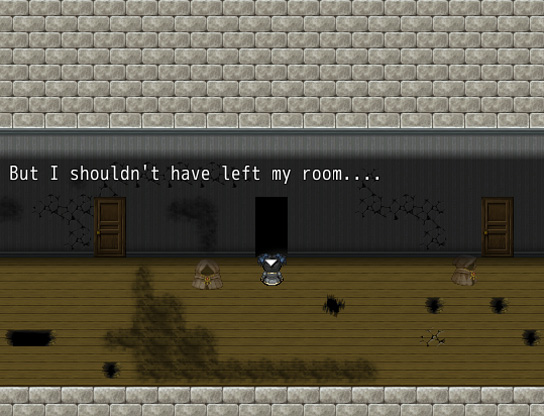

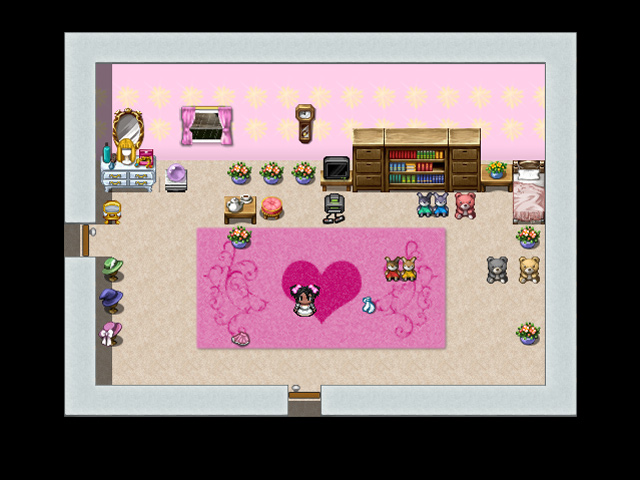


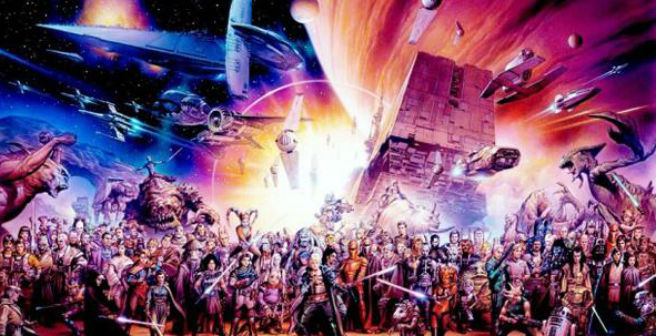


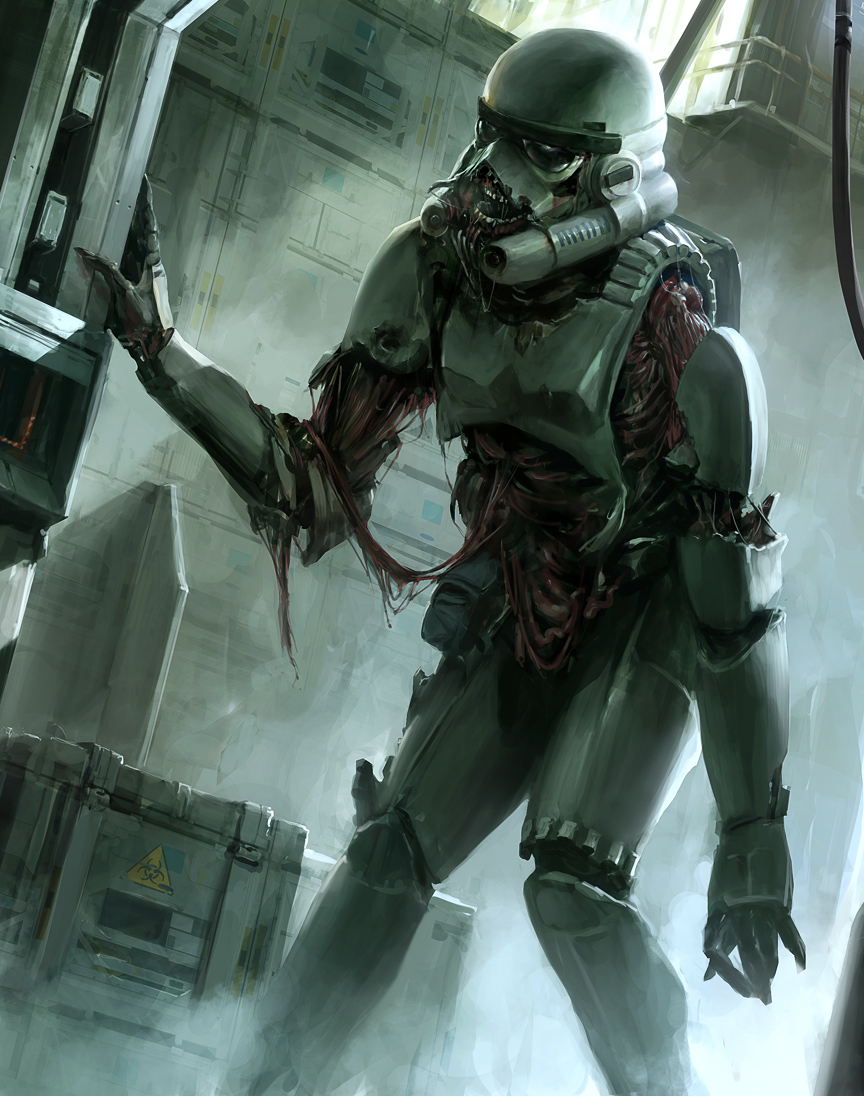
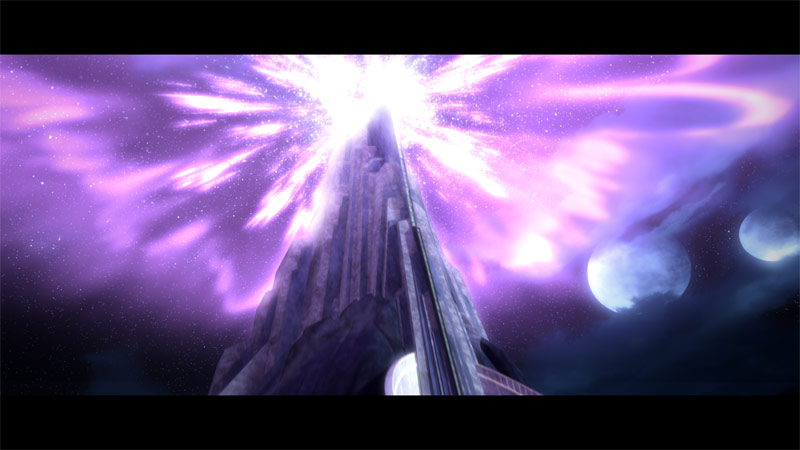


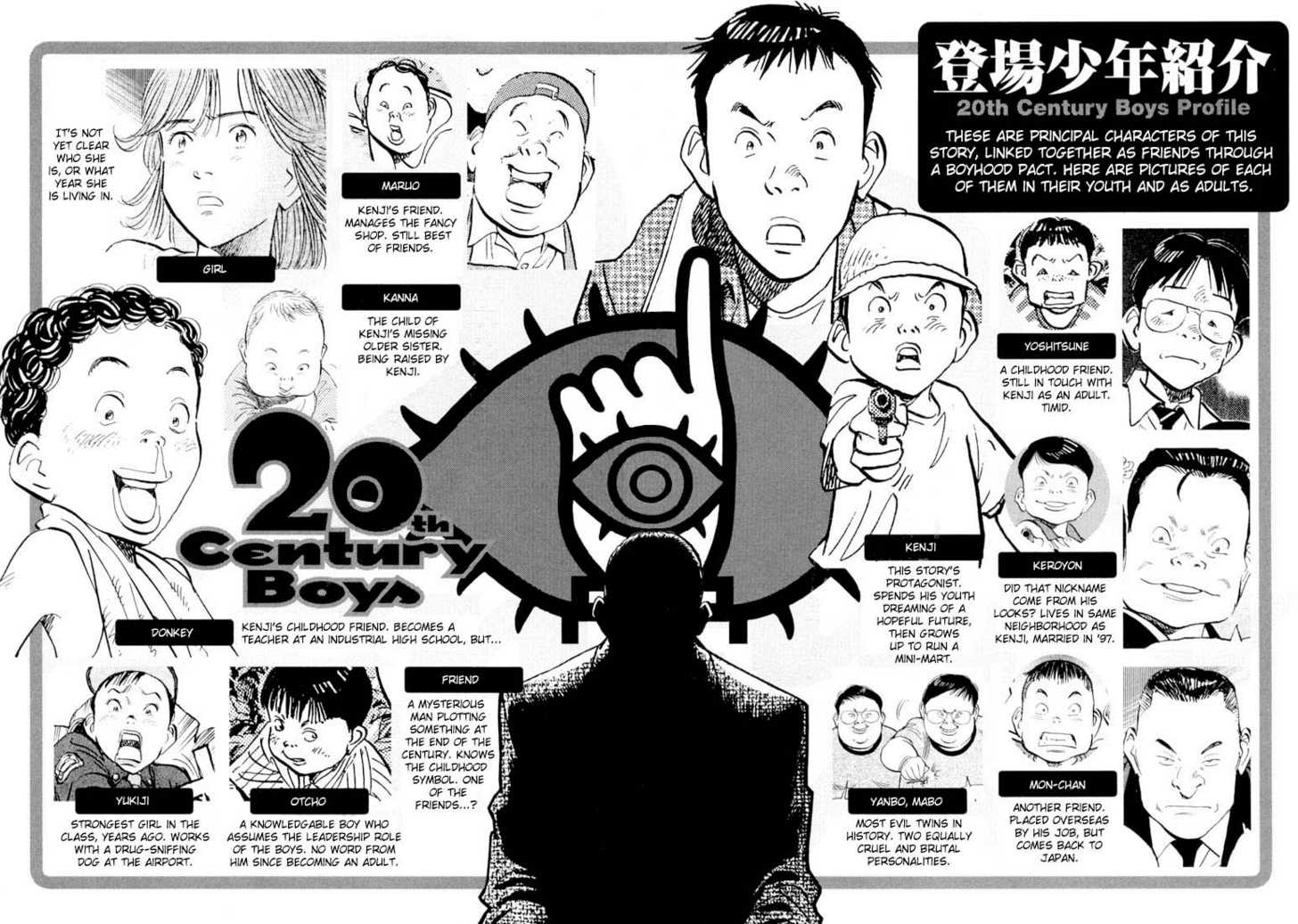







 Mythic Bios