Zing! Pow! The Batman and Green Hornet ’60s Crossover

Sometimes classic superhero comics are all about dynamic duos and, in this case, we have three pairs of them. Film-maker and writer Kevin Smith and comedian Ralph Garman along with the artists Ty Templeton and Alex Ross will be creating a Batman and Green Hornet ’60s crossover comic. Moreover, this Batman and Hornet ’60s crossover, entitled Batman ’66 Meets the Green Hornet, is going to be treated “like a missing ‘lost’ sequel to the 1967 Batman two-parter” that brought the two heroic duos together in the first place.

Even though both the 1960s Batman starring Adam West and The Green Hornet were shows that started well before I was born, I spent a lot of time at my grandparents’ place watching both of them: and particularly Batman. In fact, when I look back I can say I’m fairly certain that Adam West’s Batman was the first serialized exposure I had to the character before Tim Burton’s 1989 film and I was always fascinated by the strange campy assortment of villains and how I wanted to know who they all were in the comics: even though some of them were made for the show itself. I took it seriously when I was younger, but as I got older I became “serious” about it and thought the show had become irrelevant to more contemporary times. Really, Adam West’s Batman in particular is a lighthearted comedic parody of itself that isn’t afraid to make fun of itself while paying homage to its sources. And it has a powerful zany effect: so much so that sometimes I find myself saying something along the lines of a Boy Wonder-worthy “Gee Willikers Batman!”

I also only saw a few Green Hornet episodes but from what I have seen, particularly with regards to the Green Hornet and Kato climbing scenes, it made sense that they and Batman existed in the same universe. And though it has been a while, I might have even seen the crossover happen as well.

And let’s look at dynamic duos again. The thing about heroic duos is, in fact, the dynamics that play between them. Kevin Smith and Ralph Garman are the collaborating writers of this twelve issue comics series. Smith himself has written many Batman stories and inundated his films with thoughtful and zany geekery, and Ralph Garman is the host of The Joe Schmo Show, a voice actor on Family Guy and Smith’s co-host on the Hollywood Babble-On podcast.  And then there are the artists to consider as well. Alex Ross is well known for his high mythic art in Kingdom Come and he will be designing the covers for the Crossover series while the Canadian artist Ty Templeton, the creator of Stig’s Inferno and Bigg Time as well as The Batman Adventures, will be the comic’s central illustrator. I actually met Ty Templeton before in a seminar about writing and drawing comics back at the old Paradise Comicon. He and his wife Keiren Smith run the Comic Book Boot Camp in Toronto, while also helping to organize events such as the 12 and 24 Hour Comics Marathons.

So not only do I get the positive feel of visiting imaginary space from my own childhood and know of most of the players involved in its creation, but in writing this article I get to promote someone who is well known and loved in the local geek community of Toronto. There is just so much … fun in this collaboration and if Kevin Smith’s hopes come true, who knows: perhaps it will be adapted into a straight-to-DVD animated feature with Adam West taking a role as a voice actor. In doing so, it would almost be like a spiritual sequel or “second televised episode” of Batman meeting the Green Hornet. Knowing that this comes from a place where the creators finally get to play in the creative sandbox that shaped their youth is just plain full-circle and heartwarming.

You can read further on Batman ’66 Meets the Green Hornet on Brian Truitt’s USA Today article Batman, Green Hornet team for a ’60s crossover. Until then, see ya later. So long! Same Bat-time, same Bat-channel.

Out

Sometimes I can still hear it.

It’s the end of the night and Dead Can Dance’s Rakim drifts and rhythmically rumbles through the musty air before the undulating chant of the female singer through the night. The DJ knows what he’s doing. The frenzy of Electric Body Music with its violence of movement and the wry painfulness of clarity that is Alternative Rock have taken their course and had their place in their club.

Now the bar is closed and the black-jacketed, white dressed, neon colour-haired patrons are fewer and dancing with each other in pairs: slowly in tempo with the music. All of reality itself seems to wind out like a wavering road as the woman sings and the man chants in a deeper voice, with stranger words, accompanied by the hollow tap of drums and waves of languorous, synthesized sound.

Everything downtown, far away from where I sleep at the time, unfolds a path in front of me as I watch them dance. I see everything that has happened before and I know that even before being here it had already been in my head: this simultaneity. It gestates through countless songs, and observations, and the weird jerking near-violent movements and pseudo-martial forms that I called dancing. This feeling will continue to grow long after my long bus ride home.

“A million faces, a million lies,”  VNV Nation’s Chrome wavers out before I ever knew its name, accompanied by a weird looping music that somehow taps my heart.

“The streets are cold, the lights go by…”  Like a strange, throbbing, secret whisper it tells me about walking downtown the first time by myself at night, the passing of the streetcar away from Brock, a lost white grin and electric blue eyes, words on a screen leading nowhere, that summer on Euclid Avenue, friends at a Noodle Shop, wishing my friends were there in a bar dancing, a worn convenience store open past three, Higher Ground and Eglinton, cold darkness, past chances, taken chances, lost chances…

When that music comes on, it’s as though my life isn’t linear but multiple-choice: my thoughts fragmenting but somehow being pulled back together again. Then I remember EBM and rock music and it’s as though I’m fighting against the inertia of my life in the epic battle I’ve always fought in my mind: alone and proud.

But then at the end of the night, my favourite night of the week, my Friday night, after dancing through the endless possibilities and talking mutely with people over thundering percussion, I’d see the reality of it. Two men in glistening black leather kilts dance with a white-blonde girl between them. A tall girl moves with a shorter darker one. Then Rakim winds down for the night, the male singer’s last reverberating, “Since forgotten…”

I remember these Friday Nights well as I skirted the rim of the dance floor and danced in the middle of it in my own bubble of space. I interacted with the people much in the same way, just as I still in some ways do. I remember that I don’t relate well to groups. I am like the girl in “Tonio Kroger” that tries to dance like others, on the periphery, but unlike her I know I have my own dance that few can or could care to match. Perhaps I’m getting too old to dance now, too hermetic to move as often. Maybe I already had my chance to find something special in the night.

Yet sometimes, even now, I have this insane urge to contemplate another Gothic Picnic in High Park drinking the liquid essence of fruit salad and watermelon juice alongside white-painted people wearing black leather and lace. Or maybe I’d dress up like the Crow again and go downtown to lose myself in the role while dancing: laughing at those who think I’m Heath Ledger’s Joker instead.

At the very least, I can take comfort in knowing that I can still dance well in one place: through the diaphanous smoke screen of my own words. Right here.

The Crow

The King in Yellow Spreads the Sign

I just want to state, right off the bat, that I am a fan of H.P. Lovecraft. It took a very long time for Lovecraft and his Cthulhu mythos, specifically the idea that something ancient, eternal, and either uncaring or malevolent underlying our conception of space and time, to come to some kind of mainstream appearance in geek culture. It was on my quest to read everything eldritch and gibbous by the man who was Providence and spurred on even further by Alan Moore’s The Courtyard and Neonomicon comics when I came across something called “the yellow sign.”

I followed this up online and found a book called The King in Yellow. The book contains a series of short stories published in 1895 written by Robert W. Chambers: a writer of many genres but especially romance, decadent literature and, in particular, horror. In four of The King in Yellow‘s stories, “The Repairer of Reputations,” “The Mask,” “In the Court of the Dragon,” and “The Yellow Sign” as well as some mention in “The Prophets’ Paradise” we are introduced to the idea of a play in a book that drives people insane, a malevolent entity known as The Yellow King that is a part of the play or summoned by it, and “the yellow sign”: last of which is a symbol associated with the King that can manipulate or distort the minds of those who see it.

They were some fascinating tales, by favourite being “The Repairer of Reputations” but aside from taking some notes on them, I thought that they would remain some fascinating but otherwise obscure stories even though it has a specific following and Lovecraft himself read them and alluded to their content in his story “The Whisperer in Darkness.” But I thought that would be the last I ever saw of them.

So how does this book from 1895 have any bearing on geek culture right now?

The answer is possibly a lot. Very recently I watched a recent video interview with the author and editor Joseph S. Pulver Sr.: who is an expert on the mythos of The King in Yellow. I knew that he would say some very interesting things on the stories, but what I didn’t know then until he and the interviewer, The Arkham Digest’s Justin Steele, mentioned it was that there is a recent television program that draws heavily from The King in Yellow. Please don’t click on the video unless you want spoilers from True Detective.

I’ve had a friend or two suggest that I watch True Detective and I just thought it was another generic police show or a derivative of Criminal Minds until this little nugget was revealed to me. Two detectives undertake a seventeen year old hunt for a serial killer named The Yellow King:  a quest that seemed to have come to its conclusion this past weekend. Steele and Pulver seem really enthusiastic about The King in Yellow becoming more mainstream as a result of this plot development in True Detective. Indeed, for years Pulver himself has been instrumental in gathering The King in Yellow‘s stories for Chaosium anthologies and then even editing and encouraging writers to create stories in Chambers’ particular universe. Pulver takes great pains to point out that despite August Derleth’s attempts to make The King in Yellow a part of the Lovecraftian or Cthulhu mythos that these stories exist in their own continuity and outside of Lovecraft.

In addition, Pulver himself is in the process of gathering further King in Yellow stories from new writers: particularly female horror writers. It is quite fitting in a way. After all, unlike Lovecraft whom the mythos of The Yellow King is often attributed, Chambers was definitely not afraid of writing female characters into his stories that weren’t monsters, one-dimensional throwaway characters, or that just pretty much exist at all.

Justin Steele’s interview with Joseph S. Pulver Sr. is very fascinating and I would definitely recommend watching the above video if you are at all interested in the origins of The King in Yellow as well as reading Pulver’s article on the subject at The Lovecraft eZine. Also, please check out True Detective: Season One is now over and there are only eight episodes in the series, so it shouldn’t take you long to get through them. Finally, I should point out that you can read The King in Yellow for free online.

As an added bonus, it seems that H.P. Lovecraft himself and a Southern doppelganger, reanimated for YoutTube by Leeman Kessler, have their own opinions about both True Detective and The King in Yellow.

In any case, you will find that the mythos of The King in Yellow is a very mysterious thing of poetic fragments and goose bumps not unlike its yellow sign. This is just as well: as that sign, whatever its shape or purpose, makes minds receptive to madness.

See you in Carcosa.


You Never Know: Resurrecting a Phoenix and Moving On

I’ve been writing a lot on here lately again. There is so much else that I am needing to do, but now I just want to spend some time and really get contemplative on something.

I still find it really amazing just which of my articles garner the most attention. When I first wrote my When I Recognized Elfquest article, I had no idea that so many people would find it fascinating or even relate to it: never mind having the Pinis Favourite, Retweet, and Share it throughout the Elfquest community. The fact is, you can never predict these things. I wrote that article back in 2011 and it sat on my Facebook without input of any kind until I realized, after my hiatus, that it was time and I brought it here–with some revisions–to where it rightfully belongs. I actually have another Elfquest personal story in me. I’m not sure when or where I’ll post it but hopefully I will share it one day.

And then there is my Sequart article On the Art and Cycle of Proper Suffering: The Artist Figure in Phoenix: Karma. That article has its own personal story as well and, as I sit here late at night, I consider the place from where it came. It was originally a paper for a class in my Master’s Program. It was conceived and written in the 2008-2009 period when York University was on strike and, as such, many deadlines and time tables were severely messed up. We ended up having to do Fall term papers during the beginning of our Winter term. It was not a pleasant situation.

Nevertheless, I liked my class and I decided that I wanted to write a paper on Tezuka Osamu’s Phoenix: Karma: as I consider myself an artist, who sometimes emotionally suffers and, as such, finds sympathy with that work. I had a lot of challenges to face when writing that paper. Between continuing to live on my own at the time, and juggling my other assignments and relationships in addition to the readjustment of the school year I found that I had to ask for a few extensions on the paper.

It was towards the end of summer, or what I termed at the time the Summer of Hell when everything seemed to be falling apart, that I finally emailed the final draft to my professor. There were a lot of things wrong with my paper back then. I barely grammar-checked it, never mind read through it, and it was barely twenty of the twenty-five pages that it was supposed to be. But I reached a point where, quite honestly, I just didn’t give a damn any more. It had been hovering over my head for so long and I just wanted it done so I could finish the last of the original term’s work and move on.

After going to a much needed vacation at Dragon Con in Atlanta, I came back to find that my professor marked my paper and left it for me. I remember telling myself to prepare for the worst. Despite that, it was both a surprise and a slap in the face. The comments that my professor left on my paper amounted to the following: that I hadn’t done the work I was supposed to have and that this was not Graduate school material. He ended up giving me a B- which, I have to admit, was pretty damn generous of him.

And suddenly, the reality hit me and I felt a great deal of shame. Here was this excellent comic that I read in the remaining years of my Undergrad, while I vowed to write a modest paper on and which I rushed when I just couldn’t take it any more. I didn’t understand my professor’s instructions, despite asking him a few times and it frustrated me. I was also, before all of this, a good student and to see those words in front of me, that what I made wasn’t Grad School material, honestly made me angry. It made me so angry after everything I’d gone through that I wanted to quit my Program.

Of course, this was all ego talking and most of the suffering I went through had nothing to do with academics and more to do with the choices I made in my personal life. In the end, it was too much and I just took the paper, put it in my desk drawer, placed it under a pile of other papers and tried to forget about it and the lingering shame of failure.

Fast forward a few years. I was living with my girlfriend and we talked about the paper. She gave me a bit of a reality check and told me what I already knew: that my professor had been damned generous. So I called up a digital copy of my paper and read it. I actually read it. I looked at all the grammatical errors, the bad sentence continuity, the lack of flow between ideas, and even some outright preventable errors. And when I mean preventable, I mean I made spelling errors. I even misspelled one character’s name.

It did not sit well with me.

So I spell and grammar-checked that son of a bitch. I made more transitional sentences. I made the word flow a whole lot less awkward and painful to look at. I didn’t know why I was doing it. I finished the assignment years ago. There was no point. Maybe I planned on publishing a better version. I do know I was toying with doing more research and going beyond the narrow limits of books that my University had available on this subject at the time. But then life happened and I forgot about it again.

A year or so later, Julian Darius saw my comments and my work on Mythic Bios and asked me to join Sequart. At one point, another year later, we were informed of it being Manga Week: that we had something of a call to papers or articles to do with manga, its creators, and culture.

That was when I realized something. My professor was right. Maybe “Proper Suffering” wasn`t Grad School material.

But it is Sequart material.

There were some difficulties of course. I’d evolved a different style of writing thanks to Mythic Bios: a combination of the formal and the profane as I like to say. Even my article on The Stitching Together of a Mythos: Kris Straub’s Broodhollow, for all of its relatively extensive footnoting, still had the informal aspect of contractions and some personality on my part. In the case of “Proper Suffering,” my idea was first to re-adapt my old paper into an article that specifically focused on the manga of Phoenix: Karma itself and then get rid of the internal citation and the formal arrangement of language in the paper. But first, I eliminated the extra material on Japanese modernity in the paper. I narrowed and focused it solely on the manga. I added more to the title of the thing. And then I remembered something another professor said to me about my work with comics at York. She told me that I needed graphic examples to complement my written work as that was the medium I had chosen to examine.

So I looked for scans of Phoenix: Karma panels on the Internet. I did not find much. I tried to scan my own copy professionally but it didn’t work and it would been too expensive: especially for bad copies. I did work on Neil Gaiman’s The Sandman Overture #1 in the meantime and forgot about it until I was asked to contribute another article. So that was when I decided to bite the bullet, place the graphics in that I could get, create transitional sentences between parts because, at this point, I realized “Proper Suffering” was at least three serialized parts in Sequart format. I even added in an extra part examining the kleptomaniac Buchi, whom I didn’t have the time or the energy to look at before, though she was important in the artist Akanemaru’s future decisions.

Then, finally, I sent it in.

And there it is. It still isn’t perfect. Sometimes I wish I added a bit more about how the artifice in the ancient Japanese city of Nara in Phoenix: Karma was representative of the Hindu and Buddhist concept of maya: that all of reality is an illusion of sensory addiction and suffering and how Nature leads to a truer state of non-being beyond ego: or nirvana if you’d like. I feel as though some of the graphics are not quite positioned in flow with the words of my article and then there is the occasional awkward sentence. I thought very few, if any people, would want to see something so painfully, bluntly, academic. It was a relic from another time in my life and I had reinvented myself in many ways much like Tezuka’s emblematic fire-bird.

But then I noticed something. People were retweeting my article in all its three parts. Not just Sequart and my peers there, but other places and people like Brigid Alverson and Tezuka in English. I mean, I was told by Julian that there were few scholastic English sources that focused on manga in depth, but I didn’t believe him. I thought what I made was mediocre at best or at least serviceable. I still think that to some extent.

Yet having “On the Art and Cycle of Proper Suffering” acknowledged really vindicated something for me. It’s one of the few things that from that point in my life that I could go back and give another chance. It was the only thing I could fix. And I did fix it. I resurrected that work like the namesake of the book that I examined and made it better. I suppose, in the end, in doing so I didn’t just make a good and reasonable article but in so doing I also redeemed a perceived failure and honoured a part of my life: with something to show for it in the end.

Perhaps that is one of the real lessons that Tezuka’s characters should have taken when hunting for the legendary phoenix. Like the ancient Sumerian hero Gilgamesh realizing that a mortal life of accomplishment is far better than one of perceived eternity and perfection, I realize it was the process of searching for the phoenix and that even though the pain was a part of it, it was only part of a totality.

So yes, sometimes you just don’t know which of your articles or writings people will like, or become relatable. Sometimes you just have to keep moving on.

Tezuka's Phoenix v4 p108

For Crystal and Castle: An Author Quest Ends and a Gelfling Gathering Begins

Last week, The Dark Crystal Author Quest to write the first novel of The Gelfling Gathering finally ended. Twenty-five excellent writers were given honourable mention and five were chosen as finalists. It still really disappoints me that I couldn’t find the time to enter the story that I had planned. I was working on another submission at the time and I had to make a choice. Suffice to say, it was not an easy decision to make and, hopefully, I will be able to show all of you the fruits of that decision one day soon enough.

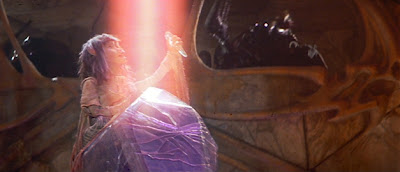
However, I did manage to do something during that time. As a treat and in honour of the Author Quest’s success, I want to show you the introduction that I created to start off my Dark Crystal Gelfling Gathering tale. I hope you will take it in the spirit that it is given and enjoy. Its working title was Dark Crystal: For Crystal and Castle.

It was over nine hundred trine ago that the Great urSkeks, wonderful, luminous, glorious beings from the highest realms who had come to bring wisdom and enlightenment to our beautiful world of Thra, finally left us. They had come to our home for contemplation and, having gained the revelation of their true selves from the divine Crystal of Truth, they left us with one final task.

Before the urSkeks, we were small and lowly. It was not until their blessing that were chosen as Stewards of their Castle of the Crystal: to guard it, Gelfling, Podlings and all of Thra from the evil that still surfaces to this very day.

For the soul stealers, ugly, twisted monsters that would take Gelfling children in the night for their shadowy sorceries were locked away: banished to their prison in the Mystic Valley from which they shall never fully escape. Our Adversaries were held back and imprisoned behind the wards of the urSkeks, whose power we still maintain and they cannot ever fully escape: let alone dare approach the Sacred Crystal to see what cowards they truly are inside.

Nevertheless, the soul stealers are crafty and clever.

To this very day, led by their dark and insidious Master, these cruel wizards still lure Gelfling victims to their Valley. And sometimes it is even worse. Sometimes, some–not all, but some–of the soul stealers find ways out from the barriers that seal them their infectious nature from the rest of Thra and seek to interfere with, and corrupt, our great and glorious realm.

This was the reason why the paramount of our kind, the beloved and enlightened Emperor skekSo First and Only of His Name, created the elite Castle Guard and made his Empire of all Gelfling civilization and Podling principalities. This is why we have decided to teach those worthy among you Gelfling the arts of war and defence.

And while a soul stealer cannot be destroyed by Gelfling or Podling hand, with your help we can capture and contain the menace of the wizards–to keep the dread Sixteen from liberating their entire body–until that great and glorious day when a thousand trine shall pass and the Third Great Conjunction brings glory to the Empire, peace and order to its loyal citizens, honour to the Guard that defends our Lordly Stewardship and the Crystal of Truth, and eternal oblivion to the soul stealers and their corrupted followers.

Until that momentous day we must remain forever vigilant. Everything is connected and it will only be through our sense of connection and our trust in his Imperialness the Great skekSo that we will all find true harmony.

This is our duty and our gift. This is our peace to all of Thra.

Remember the oath of our Guard: “For Crystal and Castle.”

— written by skekLi, Noble and Humble Poet Laureate of the Skeksis Empire

File:Castle of the Crystal - Pure.jpg

This was, sadly, as far I officially got. But I had plans. I’d written a whole lot of notes asking myself questions about the Skeksis, the urRu Mystics, and the Gelfling, their different Clans and what kind of plot I could make out of all of it.

But as the second part of my treat, I will tell you what I roughly had in mind.

I really planned on writing about Rian, the Woodlander Gelfling Guard slowly discovering that his beloved rulers were in fact some of the most evil monsters that he has ever met. I wanted him and his Spriton friend Jul to be rivals in the Guard and when Rian finally did defect away from the Skeksis, he would have to face his best friend until, finally, the latter saw the truth and came to his side.

During this time, the Guard are actually trained and led by three Skeksis: skekVar the General instructs the Gelfling in land-based combat, skekSa the Mariner drills them in naval war, and skekMal the Hunter teaches the Guard survival skills and the art of stealth and, well, hunting. I wanted to make three things clear. First, skekGra the Conqueror was once a leader and instructor of the Guard before he was exiled by the Emperor along with skekLi the Satirist. The second is that Emperor skekSo sometimes displays his martial prowess during Castle Festivals and the Guard are in awe of his speed and sheer power. And, third, that all the Guard feel very uneasy about skekMal. He has this way of looking at them as though they are just pieces of meat. Sometimes, some of the Guard go missing during the night. Not always, but occasionally and while the “soul stealers” are blamed, some of the Guard wonder.

Of course, it is revealed later that skekMal basically trains the Guard to hunt only to hunt them down, in return, much later after he puts on his mask and tracks them. It is basically a sport to him to “play with his food.” Even the other Skeksis find that somewhat disturbing. He comes and goes whenever he feels like it and he supports the two Skeksis in exile when it suits him. I was also toying with the idea that it is on a mission to “find” the exiled Skeksis that Rian discovers more about them.

Basically, this side story, or first book even was going to have the Emperor send the Guard to stop skekGra and his associates from attempting to make their own rebellion with Gelfling followers. If skekHak the Machinist hadn’t been killed in the second volume of Dark Crystal Creation Myths, I would have used him to create a makeshift essence-extractor: a cruder version of skekTek’s. However, perhaps skekMal had his own portable device made when he threatened skekTek. Remember: the Gelfling Gathering takes place before the Emperor had sole access to essence, so it is possible that something like this could have happened.

But in any case, I saw Rian and the Drenchen Gelfling Gurjin as childhood friends. Gurjin, for a swamp-dwelling Gelfling, was the more scholarly of the two in my mind and he wasn’t a part of the Guard. When they weren’t playing Jarra-Jen and Creghel the Tyrant, they played Three Suns and the Moon: each of them was one of the suns and an old childhood female friend was the moon. I picture her as a Vapra and perhaps, in their minds, the future Queen of the Gelfling Clans.

Eventually, Rian discovers that there is a Gelfling Resistance led by the hidden Gelfling Queen. As it turns out, almost a century ago, the Sifa Gelfling Gyr and the Vapra Lady Kel witnessed the actual creation of the Skeksis and the urRu. Kel, becoming the next Gelfling Queen, secretly passed on the knowledge of what happened through dreamfasting with her successor and a select group of loyal Gelfling. They didn’t know what to make of what they saw and so they waited. They waited for a few generations: knowing that they didn’t have the power to oppose the Skeksis directly and that their own pacifist nature, with the exception of perhaps the Spritons that were so close to the Skeksis’ corruption, would limit whatever they could do for now.

I decided that Rian first acts as their spy in the Castle and then he finally just can’t stay there anymore. Maybe I will tell that story one day: though it will definitely be fanfiction unless the Henson Company or Grosset and Dunlap are ever looking for short stories. That story was going to be my entry. And if the third Dark Crystal Creation Myths book doesn’t destroy its continuity, then it definitely will be a fanfic.

But as for the rest … Rian sees the beginnings of the proto-Garthim developing in the cave tunnels of the Castle: supervised by skekUng the Garthim Master who wants to supplant skekVar as General and skekTek who hopes to get more prestige out of helping him. I see them as red and raw without their organic carapaces at this stage. Rian and his friends run into the real Gelfling Queen: a young and mute Dousan Gelfling. She has mastered Dream-etching: the precise ability needed to bring something from dreaming into physical being. She will become the central architect of the Wall of Destiny. They attempt to mobilize the other Gelfling, but they need resistance and disbelief. But gradually, they would pass on what they have learned through dreamfasting.

At this point, the Skeksis become aware of what is going on. As they pass the cover story of there being missing shards of the Crystal, as the Gelfling group has revealed that it is damaged, the Castle Guard is led by Emperor skekSo himself, along with his minions, to take care of the Rebels. Unfortunately, for the Skeksis, the Guard are all converted to the Rebels through dreamfasting. I planned, at this point, for the urRu to get involved: as the protagonists were staying in the Valley: having realized that the Skeksis’ accusations against them are obviously false and the Skeksis are the ones kidnapping and “draining souls” from Gelfling.

There was an epic duel between the four-armed combatants: urSu the Master and skekSo the Emperor. These are not the decrepit beings we saw in the film, but two powerful opponents in the prime of their lives. Each blow they land on each other also affects the other one and they gain cuts and injuries that match each other’s own. SkekSo only retreats when he realizes that his Guard have defected and his other Skeksis are facing similar problems. SkekSo vows revenge and flees. The Gelfling either do not notice this phenomenon or simply do not understand and it is understated. It is also during this time we are introduced to urVa the Archer: the one Mystic who seeks to actively destroy his counterpart in the form of skekMal.

UrVa spends much time teaching Rian and the others how to fight, as he is a martial arts master, and when the time comes to leave the Valley and go to organize the other Gelfling, he chooses to go with them: being the only urRu who can actually find it in himself to actively interfere in what is going on. Later, as they get to the site where the Wall of Destiny will be built, this is when the Skeksis get nasty and they send the three militaristic Skeksis with a mass of essence-drained Gelfling husks, literally zombies, to destroy the Rebellion.

By this point, it is a bloodbath. And what is worse is that skekMal starts picking off Gelfling from the shadows of the Vapra’s trees (I assume this their territory is close to where they are building the Wall) with his crossbow. He and urVa have a standoff. UrVa hates everything that skekMal stands for, representing the aggressive side of him he despised as an urSkek, while skekMal hates urVa for being that weak and hesitant part of his original self whose deliberations cost lives back on the urSkek homeworld.  In the end, they both shoot each other at the same time: a former whole being in conflict with its dual aspects.

Rian holds urVa’s dying form in his arms. UrVa asks Rian to kill him, but Rian doesn’t understand and refuses. He then goes and finishes off skekMal: who had killed his father not too long ago. Both Skeksis and urRu die. Then the seven Gelfling Clans, all knowing what the Skeksis truly are, congregate and the Wall is created.

File:Prophecy.jpg

It awakens the essence-drained Gelfling husks from their living death and the remaining Skeksis are forced to retreat. But Rian, the Queen and the others all know that this far from over. Nevertheless, there is still hope and wonder in Thra.

This is, sadly, as far as I got in my notes. And there are so many gaps. I still have difficulties describing our world’s geography, never mind Thra’s and its unique solar system. There is also so much story there and many story lines that I could have done with the mariner Sifa, the desert-dwelling Dousan, and the underground Grottan. I did plan on having each chapter dedicated to, and function from, the limited third-person perspective of the character: Skeksis, Gelfling and perhaps even an urRu. You know: much in the same that George R.R. Martin structures his chapters in A Song of Ice and Fire.

But I didn’t get to it. Nevertheless this process of world-building kept my mind occupied and got me into some good discussions on The Dark Crystal Community Forums. I’m also pretty sure I learned something and, in the discussions themselves, I even suggested corrections for their entries into the Encyclopedia. And what is even more awesome is that the other authors that didn’t get into the finals have a similar idea to mine and have posted links to their stories in the Forums and in the Fanfiction section of the Dark Crystal website.

The fact is that my experiences in the Quest, for all I didn’t make a story, deserved its own honoured place in my Mythic Bios and it is excellent way to show you how my creative process and, well, my mind works.

I will say it again: everything is connected. Everything is connected and I am glad I connected my creative mind to the world of Thra. Therefore I salute my fellow writers and posters, as well as the Henson Company, and my story that could have been and in the words of the Castle Gelfling Guard I planned to create let me proclaim proudly, “For Crystal and Castle.”
Forces in History, Readers of the Present: Women in Comics

Sequart’s Kickstarter Campaign She Makes Comics, a documentary on women in comics, is now complete.

In my last post, I wrote about how the original demographic of comics readers, the majority of which were female, changed from the 1950s onward due to, possibly, the advent of an enforceable Comics Code Authority. I also mentioned that there were more women reading comics from the 1930s to the late 1950s. However, in the actual She Makes Comics Kickstarter Campaign video itself, comic book editor Janelle Asselin states that not only did this female majority of readers exist in the 1950s and the 1960s, but it was due to the comics medium becoming mainstream through an emphasis on the superhero genre that this fact began to change. In fact, the very documentary itself will be focusing on women in comics specifically from the 1950s and onward.

And with even that much information, I just learned something new. Perhaps they aren’t mutually exclusive facts, but they are definitely thoughts that I want to see followed up.

In this sense, the focus on a largely female comics readership of the past is very timely as, now; something similar is being said for the audience of the present. This past weekend, at the ComicsPRO Annual Membership Meeting, Image Comics publisher Eric Stephenson stated that the comics industry’s fastest growing demographic of comics readers is, once again, women. While Stephenson does emphasize that this is the case for Image Comics, he also mentions that this may also apply the comics industry itself.

Eric Stephenson mentions a lot of very interesting points, including how comics sellers can do their part in encouraging innovation and inclusivity in the industry while putting aside the tired old reprints and derivative superhero stories to appeal to a more diverse readership. For instance, I know for a fact that Toronto’s very own Comic Book Lounge and Gallery not only holds comic book launch parties, but has even hosted reading groups and Ladies Night events: and these seem to be the kind of endeavors that Stephenson encourages. Not only does Stephenson actually seem to be addressing many of the industry issues I brought up in Boys and Toys Franchising Make For Better Superhero Cartoons? but also references the superhero genre as something that needs to be innovated along with whole new kinds of stories if the comics industry is to remain fresh and original in order to make material other industries, such as film and television, can adapt accordingly. The rest of Stephenson’s fascinating speech can be read at your leisure right here.

In the meantime, you still have time to join She Makes Comics and get some interesting rewards including: The Girls’ Guide to Guys’ Stuff anthologyan autographed copy of Colleen Doran’s A Distant Soil: The Gathering graphic novel, a portrait drawn from a photo of anyone of your choosing by Miss Lasko-Gross for $200 and, finally, two poster prints of the poem Desert Wind, written by Neil Gaiman and beautifully illustrated by Molly Crabapple: both of which are autographed.

Also, now that the baseline goal of the Kickstarter has been met, She Makes Comics has a new stretch goal. If the campaign gains $50,000, She Makes Comics will film  a 10-15 minute mini-documentary on Jackie Ormes: the first African-American female cartoonist and creator of the comic strips Torchy Brown and Patty Jo ‘n’ Ginger. So please, keep that support coming. I know I will definitely enjoy She Makes Comics as both history and as reality.

I Write on The Black Tunnel Wall

There is a story I read in Rosemary Sullivan’s Shadow Maker. It is a biography of the Canadian, and particularly Torontonian, poet Gwendolyn MacEwen. Towards the end of Gwendolyn’s life she approached a bank for a loan which, unfortunately, she was refused. In a fit of rage she apparently stormed back to her apartment, picked up all the books she had ever written, or ever written in–including those given awards by the Canadian government and literary societies–threw them down on the teller counter, and proclaimed that she made all of these books and that she just wanted her money.

There is, of course, a lot more behind this story such as Gwendolyn’s ultimately fatal alcoholism, the fact that she only had her sporadic university teaching salary and reading profits to live off, the job opportunities she was denied because she never matriculated out of high school, and always having to deal with the stigma of being a female writer and creator and fighting for recognition from the fifties to the late eighties, or even the argument that Canada didn’t value the arts and its poets nearly as much as it should. There is an entire book or two speculating and detailing all of these things.

I am also, obviously, not Gwendolyn MacEwen. I am not an alcoholic, I graduated from a Master’s Program, and I do not claim to have created any works coming anywhere near close to Gwendolyn’s but I have been unemployed for quite some time and, as such, I am on Ontario Works: a Provincial job search form of welfare. I’ve also mentioned that I suffer from situational depression. In retrospect I’ve probably had this for quite some time but it’s only in unemployment and the struggle to keep writing that I came to really call it what it is.

Systems are not perfect: especially bureaucracies. Bureaucracies and many of them do have some really good workers that attempt to help people to the best of their ability, are systems that function in quantitative ways. They want numbers written, blocks marked out, NIL scratched down in key squares: with “concrete evidence” or “statistical proof” of some sort before they will begin to help you. Coming from an academic background myself, I’m unfortunately no stranger to the bureaucracies of academia or even OSAP loans, but it becomes very clear when you leave those places and go into “the working world” that you are in a different place where quantifiable data is given more precedence over quality.

When I first came into Ontario Works, I was presented with a work sheet–a long letter-sized piece of paper–that I had to fill out once a month: to show how many jobs for which I actively searched. They have an initial section where they ask whether you’ve attended classes at school, or gone to a job search seminar, or gotten a job, and if so what are they and such. And then on the other side is the very long lined list of jobs you looked and applied for and, below that, is an additional comments section.

And for all that space and everything I had to fill in, that was it: just one small space for additional comments.

That is the mode of reality that I had to deal with for a very long time. And I won’t lie: it was depressing. It was made all the more frustrating by the fact that I knew this sheet didn’t even exist in the Toronto welfare system: that it had been considered an anachronism and was actually made obsolete. In the program that I had been under, had I not been so depressed and had to move back to Thornhill, I would have actually gotten paid for volunteer work while looking for a job. To go from that model to the one I found myself in was galling and it just rubbed the salt into my wounds even further.

For the work that I do, and make no mistake I do work, the jobs I can apply for with the skills and interests that I have are limited. As someone who is an extreme introvert and has social anxiety issues, along with tension headaches, stomach issues, and learning disabilities with regards to mathematics, retail jobs are not an option for me. I also know that if I work some job I don’t like, I will simply not do well in it because, frankly, I just don’t care.

And then there is the stigma of that to consider. People on welfare often feel like, if they aren’t flat-out told, that they are lazy and that they should accept any old job because, frankly, they are lazy. Thankfully, my counsellors at Ontario Works are not the people who communicate this sentiment and have, with what resources they have, actually tried to talk me through and help me with this.

But then there is that other critic.

I’m not talking about my friends who I, up until now, haven’t even told I’m on welfare, or my family that sometimes wonder what I’m actually doing about this, or all the people–anonymous or otherwise–that have their own opinions on the matter on the Internet. No. I’m talking about me.  I have to catch myself and be careful to remember not to impose what I think the system’s view of me is over who I really am. Because I am often tempted to think that the system, society or what not, views me as that stereotype: a lazy, free-loading unemployed shut-in bum that has done nothing worthwhile with his life while quite a few of his friends have jobs and families and should just “suck it up” (a phrase I find utterly infuriating) and do something that I hate for the greater good.

And then to remember that I was once a student that had very high marks in my classes, the respect of many of my teachers, who was always told that I wrote well and who believed that academia would take care of someone like me from cradle to grave only to have to compare it to my current reality of living at home again, in debt, and in this living situation…

It’s that nice litmus test between anger at the world and anger at myself.

Me and my Head

But one day, something happened. It was around the same time I was doing my best to fill out those worksheets. I realized that I could talk about the things that I was, in fact, doing that didn’t seem to apply to the criteria on the sheet. Of course, there was very little space and my handwriting got cramped and bad as per usual. So I began typing out my additional comments. In fact I made a whole section called Additional Comments.

Over time, and through a succession of workers, my Additional Comments varied but mostly got longer in description. For the past year or so, I have been telling Ontario Works about the conventions I’ve attended, the networking I’ve been doing, the writing I’ve undertaken, and the recommendations and praise that I have received. I have even told them about this very Blog: this Mythic Bios of mine.

Because, unlike the stereotype of the unemployed lazy bum, I have been writing. I have been writing almost every day. I write until it is late at night to the point of there actually being sunlight. I write until I rhyme. Sometimes I can get myself to go out and network with important people: to have them remember my name and know me. I made a whole lot of business cards for that very purpose. I made a Patreon account. I have looked over and edited other people’s works. I have made friendships and relationships during this period.

And even though I have not been paid yet, I must reiterate that I work. Some people clock out for the day. I clock out when my head feels like wool and I can’t concentrate any more. I read, research, write, edit, and attempt to maintain my own schedule. I am not useless. I have made more things than most people can dream of and one day, I hope to profit from all of these endeavours.

And perhaps it’s not that important. Even though my current worker has started calling my Additional Comments my Reports and knows that I am genuinely attempting to earn money from the places where I’m at now and I no longer have to use those worksheets–all now regulated to NIL–due to my disabilities and my therapist’s evaluation of me, perhaps the system doesn’t give a damn about my efforts beyond statistics. Maybe no one cares about anything I do if there are no crisp dollar bills next to my words.

But you see that’s the thing: I care.

Every time my worker sees my Reports, every time my parents glance at them, every time I have the excuse and the medium to write about all the achievements and contacts I’ve garnered it is a victory for me. It is me, to myself, proving that I’m earning my money, that I’m actually doing something and there is meaning in all of it.

It may mean nothing to anyone else. It may not even help me. But it means something to me. When I write these, it is just another way of saying “Look at me world. This is what I’m doing. This is what I’ve done. This is what I’ll be.”

Originally, I wasn’t even going to write about this. I had a review I promised Anthony Martignetti and I had a good Monday when Elfquest retweeted and Shared my article When I Recognized Elfquest. I wanted to talk about welfare and money after it was all over: after my loans were paid off, after no longer needing Ontario Works and beginning to function as an independent force again in my own right. But I am just tired of feeling shame and fear. I just wanted to tell all of you, more or less, what is going on and what all of this means to me. Realistically speaking, I will need help for quite some time and I know there are others out there like me, who fear waking up, who feel that sick pit of dread in their stomach whenever they have to pick up that phone, who despises dealing with bureaucracy and puts it off as long as they can, who have to fight against that feeling of futility, who wishes they had help and who–ultimately–need to read this.

One day, you will not be in this situation any more. You only needed help to get to your next destination and there is no shame in that. All of this will just become another story to tell your friends, your loved ones, and yourself: to remind you of where you were, and how far you have come.

Looking Outward

On August 27, 1987 the mythopoeic creator Gwendolyn MacEwen, who should have been the Poet Laureate of Toronto, if not all of Canada itself, slammed her books down on a counter and said, “I did this. Now give me my money.” I’d like to think that, when she did that, she was really throwing her works against her Black Tunnel Wall: on that last work she never finished and what metaphors it might have represented.

And every month, because I can never forget, I write on my own Black Tunnel Wall, covering it with words, one Report at a time.

amaze.me

Also, this is my Patreon Page. If you have the funds, or the interest, and you want to see what I can really do as a writer, please support me. You can also access it on my About Page. Thank you.

When I Recognized Elfquest

It took a long time for me to discover the World of Two Moons.

Back in High School, my Mom started me reading Piers Anthony’s Xanth series. It was a fantasy series with a world of magic and puns and where practically everyone had a magical Talent of some kind. At one point in the series, Piers Anthony got a letter from a mother whose twelve year old daughter Jenny was in the hospital paralysed from being hit by a drunk driver. She was very fond of the world of Two Moons: with the Wolfrider Elves and their wolf mounts: so much so, that Anthony actually created a character from that world named Jenny Elf and transported her to the world of Xanth. This was the first time I’d heard of this place, and for the longest point it was almost the last time.

This was until about a year or so before I started working. I was finishing off my Undergrad at York and I came back to the world of comics with extreme prejudice. I came to Cyber City Comix near Bathurst and Clarke where I found the DC Archives volumes of The Spirit and a strange series called Elfquest. Elfquest looked particularly strange and vintage: from the covers alone they looked like 70s adult versions of my childhood fantasy cartoons mixed with Tolkien on a beautiful manga binge for good measure. They were colourful and compelling and beautiful and also very expensive.

Little did I know that Elfquest and the World of Two Moons were one and the same, or that they would be relevant to me. I did, however, have the nagging suspicion that we’d meet again at some point. But it was not at that time. Not yet.

A lot more things happened with me. I finally moved out and got into Grad School when I discovered the black and white versions of the books at the Seneca Library at York. I was just going to read them there, but I didn’t for some reason. I kept putting it off …

A few months later, I found out that Labyrinth Comics were having a comics sale in Seneca. I planned to stop by the place after I picked up my OSAP grant and loan. Unfortunately for me, that particular day I found out that the Faculty of Graduate Studies had changed my status to part-time without my knowledge and as such withheld my loans from me: just as they had before because my previous government ID expired. I was in at a very low point at this time when I came back from the Student Financial Building to Seneca, not expecting to find anything, not really expecting to be happy for a very long time …

And then I found it. I found the first Elfquest Archives volume for $30. I put down a copy of Mark Millar’s 1985 and decided to buy this. I didn’t quite know what to expect at this point but I was glad to begin with the first volume.

Then I read it.

Somehow, something in me knew that I would relate to some aspects of this series. And that something, somehow in me was right. The DC Archives edition of Elfquest were coloured and vibrant in precisely the way that its creator Wendy Pini planned it along with her husband Richard. Her paneling is not unlike Will Eisner’s comics work in The Spirit and is varied and far beyond the traditional boundaries of squares and rectangles: bringing you closer into the world she made.

I was treated to a world that had been in existence since the late 1970s: that strange, weird and somehow marvelous place that made other things like Star Wars and Wizards.  The premise was that ages ago a floating castle containing a race of Elves crashed onto a world populated by primitive and superstitious humans. These beings drove them out of their fallen castle and their descendants had to adapt to and survive in their new environment.

One of their descendants are the Wolfriders: short, powerful Elves (not unlike a friend of mine’s drawings of other beings in our shared world) that are linked to and ride on wolves as hunters and warriors in their forest. Wendy Pini’s drawing style was this vintage hybrid of manga and North American comics illustration that just really somehow managed to touch that 80s childhood part of my heart. But what was more was in addition to magic and a really varied world, she also touched upon new elements that I was also dealing with in my life these days as well. She touched upon these in a way so poignant that tears almost came to my eyes. Suffice to say, after starting to read this series in colour, I could not in good conscience go back.

I wouldn’t do justice to Elfquest by simply summarizing it or trying to explain what the Wolfriders and their Tribe are like. They have close bonds with their Wolves, who they hunt with, and each other. Especially each other. If there is a positive archetype or ideal for the concept of “Tribe,” they would be it. In many ways, they are like humans, though not necessarily like the barbarian humans we initially see in their world, but in others they really aren’t. They are savage, and merciless but at the same time fiercely loyal, sensitive, and honourable. And they are so incredibly close with each other. I am very glad that the people at DC at that time decided to include the comic strip that others before them would have rejected in the first Volume of the Archives. And Wendy Pini was not afraid to talk about just how different Elf relationships could be: reminding the reader that for all we can relate to them and some of their ways, the Elves of Two Moons are definitely not human.

It’s sad sometimes to realize that Sending doesn’t exist in humankind, just as it is humbling to realize that Recognition as a visceral feeling of affinity with another being is weaker in us though when it’s not, it’s really not. Even so, the Elves get into conflict and this spans a great deal of a world. A world I really wanted to follow.

Unfortunately, a while ago I learned an unfortunate fact about the Elfquest Archives. The first was that they were out of print. And second was that while I could buy Volumes 3 and 4 for $30 as well, Volume 2 somehow has become especially rare. I have seen some of these copies go for over a hundred if not two hundred dollars or more. This is money that not even the creators get, but only the comics store owners. It was very disappointing and infuriating: especially since I remembered being in Cyber Comix and realizing that they were all there and I could have bought them all at that time.

But the good news is that the Pinis have taken all their Elfquest comics and put them on their website for free. That’s right. All the Elfquest run to date is online for free. You just have to look it up online and it’s right there. Granted, I know I would have liked my own complete book copies and it saddens me to know I probably never will, but you know: I’m just glad I found them at all. I have even started reading beyond what the DC Archive books contained. Coincidentally, I find that out of all the Elf characters, I relate the most to Cutter’s fierce heart, Rayek’s brooding ambitions, and Skywise’s sense of curiosity and understanding.

Personally, though, I can see myself as the leader of a group of Gliders that left the Blue Mountain in the early days before Voll fully settled and sought to reclaim magic for ourselves, and continue to evolve as opposed to languishing in stagnation. I always liked the idea of having a bird mount, even though I am not adverse to wolves on a spiritual level.

It’s funny how you find something when it is time and when you Recognize its significance in your own life.

A Traveler’s Account of Katrina Elisse Caudle’s Darkmoon City

On the surface, Twine is about making games. But that is just one way of looking at it. To be more specific, Twine software allows one to hyperlink from one page or another through the click of a word. Words link together different pages and, ultimately, different ideas. Now, take that bare-bones concept and link together not only Twine narratives, but short stories and real time events. Essentially, in doing so, you would be creating a reality from multimedia.

Someone at the Toronto Global Game Jam made this suggestion to me after I showed him the Twine game I made at that particular event. However, what he didn’t realize is that others have already thought of this idea, and have utilized it.

In creating Darkmoon City, Katrina Elisse Caudle is one of these people.

I am not entirely sure how I found Darkmoon City, back when it was called Faerie Dark and focused more on its own content and less on outside activities. Katrina’s site itself has evolved quite a bit. At one time it was a textured grey interface in which you had to input the names of the Twines or stories that you wanted to see in a search bar. It was arranged in such a way that inputting the title of the work was a lot like participating in an agreed-upon ritual or the casting of a particular spell or evocation that would interact with the world of words and code that Katrina embedded into that world. I will admit that sometimes it confused me and it was hard to search for what I wanted back then. I even had the odd error or two. But, eventually, I “said” the words and found a part of her world.

At the time, there was only one Twine game: one interactive hyperlinking story. It was, and is The Edyn Project. I played this game during a time when I was still beginning to figure out how Twine games worked and attempted to see the different kinds and qualities of such that existed. Essentially, you find yourself in the White City: the former seat of arcane learning before the plague that wiped magic, and a good portion of the global population, off the face of the earth. The Edyn Project is an attempt by various powers to utilize technology in order to create a utopia from a Dark Age.

It was here that I began to see a different world-view emerging: especially with regards to how the White City’s new bitcoin economy is supposed to function. To this day I’m still confused about bitcoin, but the game did succeed in introducing me to the layout of the City and some of its history: including the presence of an ambiguous artificial intelligence program guardian named Edyn. I didn’t know, then, that the game wasn’t completed yet and indeed I reached a point where I didn’t know what else to do and got caught in a looped event at one point when going back to deal with my character’s blood work.

I really got to know the world of the White City through its short stories. Liminal Creatures of Heaven depicted something of a creation mythos and a different cosmogony from that of our own solar system. It even has its own astrological charts and celestial cycles.

But it wasn’t until The City With No Animals that the spirit of what would become Darkmoon City really began to slowly and subtly set into my mind.

Imagine a world where animals no longer exist: to the point of them becoming legends and myth. Now imagine a world where homosexual, bisexual, queer and polyamorous relationships are not only seen as commonplace but as part of an unquestioned norm. Then consider a place where there are more than two kinds of gender, where people can alter themselves in an almost transhuman sense, all of this is an ingrained and understood part of that world as well. The pronouns of he, she, and they are simply there in sentence and conversation. Now add to the fact that magic once existed and is in the process of being replaced (or complemented) by science and technology of questionable nature and a new bitcoin economy while the vestiges of the supernatural remain as ghosts, and faeries, and other things.

Now imagine writing this world with characters that experience varying degrees of emotions while exploring old and new secrets, and each other. You would basically be creating a whole other kind of paradigm or mentality from our own world. Katrina basically does all of this. It takes some getting used to and sometimes there is even still a bit of culture shock, but once you watch the characters’ interactions with the world and each other you begin to focus on them a lot. What I really loved about “The City With No Animals” is the fact that Katrina captures well that feeling of sweet confusion when you are discovered by those you know are special and could be, or might not lovers even as she also depicts the warmth of intimacy between childhood friends. “The City With No Animals” is a long story of four-parts, it has a unique writing style, and it is definitely worth reading.

I said a whole lot of other things about this story to Katrina herself, but unfortunately much of this correspondence was lost and now I can only focus on my impressions of what I read from that time. Indeed, Katrina changed the layout and name of the site from Faerie Dark to Darkmoon City. I’m not sure if she reloaded all of the older stories that I can’t recall, but she did add some newer elements to the new layout that she has created.

In addition to another interactive Twine called Happy Birthday Smoke!–in which you play as a character from “The Edyn Project” who is discovering her uncle’s creation of bitcoin and thus giving you a tutorial into what it is for the very first time–there are the addition of more creation myths and legends in the form of new stories.

I mentioned earlier that Katrina has a very unique writing style. I think what really stands out for me is in addition to a world with different ideas of gender, economy, science and magic, there is this very fascinating blend of Far East Asian and ancient Western culture, philosophy and mythology that exists in her overarching, and interlinking, narrative. If each world of fantasy and science-fiction is part of a multifaceted lens looking at an alternative perspective of reality, then Katrina’s world of Darkmoon City feels like a pale violet-tinted part of the cosmological kaleidoscope. Her language and sense of pacing are languid, flowing, and beautiful: and they put you into an “alien” and external mindset intimately and to the point where you realize it may not be that dissimilar from your own.

There is one more thing I want to mention before I wrap this retrospective up. A little while ago, while Faerie Dark existed, Katrina had another Twine game called Chrysalis. There were a few interesting elements about this game. First of all, and as far as I know, it was the only game that required payment: the small amount of $2.99. Secondly, it was a Twine that incorporated images and audio into its structure. But the third and most important element that I want to look at is what the about was about.

Essentially, Chrysalis was a Twine game in which you visit a courtesan named Rabbit. Its premise is almost an answer to the questions that the Canadian comics creator Chester Brown seems to pose in his graphic novel Paying For It: what kind of world would result from the creation of a society without the stigma of paying for sex, or even on non-conventional relationships? What kind of morality would exist where an exchange of services for intimacy and learning is condoned, honoured, and even encouraged as healthy?

You had to progress by learning various lessons through interaction with Rabbit. Should you have not been interested or wanted to skip ahead, you were always invited to leave if the terms no longer suited you, or if you could not follow or respect them. I didn’t always understand the astrological elements within the game itself which, may or may not have made Chrysalis into part of Faerie Dark (or Darkmoon City now) or as a standalone in and of itself. Sometimes the audio did not work and it did verge into some specific areas of sacred sex and spirituality. Sometimes the audio segments seemed long as well. But what really struck me about that game, aside from being a creative attempt to depict a different form of society where sex work is an inherent part of the culture and you learn about intimacy, sensuality and just what constitutes as an important exchange between consenting adults, as well as navigating the places between different emotions and a process of personal growth, is how Katrina applied her own experiences and the paradigm of her creative world, and bitcoin, to the scenario of Chrysalis.

It was not an explicit game, but it was definitely a very involved and thoughtful meditation on pleasure. Sadly, my words aren’t doing this game any justice as I can no longer access this game. It came in the form of a code I purchased for Faerie Dark‘s search bar that now no longer exists. All that is left are Katrina’s above account and ethereal fragments of audio to give you some idea of what this game was like. But it, and the other stories, were an excellent look into the creative mind and imagination of Katrina and what could be.

Darkmoon City is still very much a work in progress, with its own Patreon page, and as a fellow traveller into the realms of fancy, I look forward to walking where the White City journeys from this particular foundation.

La-Mulana 2 Still Has More Stories to Tell

When last I wrote about La-Mulana 2, its Kickstarter Campaign met nearly half of its stated $200,000 minimum goal. Well, not only has it reached it’s goal, it has started to meet its stretch goals.

It has been an interesting experience watching this particular Kickstarter development, while also being involved in at least some of that growth. I got to watch as NIGORO and Playism Games added their own unique animated sprites and adjusted their stretch goal tiers accordingly with input from their fans. Even as they took the time to give their page its own unique pixilated aesthetics, I’ve seen them re-organize their campaign page’s information and the order of their Updates. But I think what really struck me is the tremendous sense of community that I gleaned from, and to some extent even experienced, from being involved in this particular Kickstarter.

I mean, just look at both of these Fan Art Updates. This is one other very unique element of the La-Mulana 2 Kickstarter: the fact that the creators and their supporters actually encourage and utilize a Fan Art Update to promote their world and the game that they want to create. NIGORO and Playism have also encouraged fans to make their own memes and advertisements for the game. And when there were some concerns expressed by fans in the comments section of with regards to the appropriateness of  some of Lumisa Kosugi’s unlockable and otherwise stunning costumes on the grounds of potential gender and cultural stereotyping, the creators responded and seemed more than willing to look into the matter. Basically, it seems to be the fans that get to determine many of the directions in which La-Mulana 2 will go: as is, and should be the case with crowdfunded projects. It also shouldn’t be too surprising.

After all, NIGORO itself began as GR3 Project which, in turn was and still is, an indie or independent video game development team. The very first La-Mulana, before its remake on Windows, WiiWare and Steam, was an 8-bit freeware game dedicated to the spirit of hard but rewarding vintage era games: especially those made for the MSX. The team has always wanted to see how far they can push the boundaries of the 2D game-scrolling medium. As such, it has always relied on a strong fan-base of even stronger-minded and enthusiastic fans to bring it to the point where it is now. In fact, one point that the Kickstarter itself has made in one of its updates is that while they could easily get sponsorship from other companies to meet their Kickstarter goals, gaining money directly from their fans will allow for NIGORO to maintain the degree of creative control over its work that it so desires.

One thing that has always struck me about La-Mulana is how rich its world truly is and how many stories can be told in it. So the good news is that they have met their baseline goal in what has proven to be their experiment and learning experience with Kickstarter and getting us fans involved. The bad news is that, with Kickstarter, they only have three days to fund the rest of their stretch goals. And what are some of these stretch goals?

If they receive $230,000, they will include a game mode called “Father’s Diary” in which further story is added to the game: to a point where the events between La-Mulana 1 and 2 are filled.  And if they receive $350,000 they will add “Character Stories”: in which every time you complete the game you will get to start over again with a new character, interact with a whole new story and even switch between characters. And while these are definitely my favourite stretch goals, there are many more if you check out the Kickstarter.

Yet while the bad news is that it seems very unlikely that they will meet all of their stretch goals with Kickstarter, especially in three days, the good news is that they are already opening up a Pledge Through PayPal option in order to keep reaching for those heights of game development.  So please, if you haven’t already, please check out this Kickstarter and follow the adventures of Lumisa Kosugi as she treks her own path through the ancient, terrifying and wondrous world of La-Mulana.

In fact, you can do more that simply look through a Kickstarter or even pass it along to others. As the following new Big Update has revealed, you can watch a video of the La-Mulana 2 game demo above and even download and play it for free. How cool is that?