I Found Out I Was a Cambion on my Birthday

It was my birthday yesterday.

It’s funny. I can’t always remember what I did every March 16. I can’t really remember anything particular about 2013. I do recall watching the controversial return of Darth Maul in Clone Wars back in 2012. I also recall my girlfriend buying me a Ms. Fields’ chocolate chip cake in 2011: the same year she had offered to have me move in with her. I didn’t really celebrate my birthday in 2010: though there had been the promise of a celebration that never happened. In 2008 I brought a birth cake to a gathering and before that there was another where someone announced it was my birthday and I was all embarrassed and such.

Before that it was a blur of Undergrad and small family celebration. I do know that every time this day comes along, it feels lighter. I mean there are seasonal reasons for that. When you look at it I was born towards the end of Winter. According to my parents, I was supposed to be born in the Springtime but I was apparently eager. Sometimes I wonder about my infant self’s wisdom, but there it is.

For many years in my childhood I had a birthday party with my friends and such. And yes, I was an eighties child and my parents did rent a party room and we did watch The Neverending Story and gave out memorabilia such as Falcore on a ruler that turned into a wristband. But then I got older and my friends went their separate ways and I found that I had no friends really to celebrate anything with. Birthday parties just started to feel very childish and when many of your friends live downtown or out of province and country, it is hard. Even though it didn’t feel like it, aside from dinners that my parents insist on taking me out on now that I’m at their place and a cake, my birthday just became every other day.

C'Tor Solutions

I was lucky this weekend. My friends, some of whom I’ve known since high school and one who I knew in elementary, told me at the last minute that we had a role-playing game session. This was going to be a special session. This was the point where our characters were going to cross from the ordinary mortal realm into beings of other essences. A new rule system was based and is still being tested by us. We talked, rolled dice, ate, laughed and actually role-played. I was exposed to so much lore from this world that Noah, our DM, has taken great pains to create.

And now because of the revelations of last game, my character’s plans might have changed along with his view of the world.

We spent the first part of our time cutting out cards and writing down our new powers. Then we started playing. I felt really enthusiastic and there were twists and turns and dinner and I could just see Noah waiting to reveal all of this lore: and it is not over yet. It’s funny. I have talked about my friends here before and our games, but I don’t think I ever realized just how long we would know each other. We have evolved over the years and sometimes we are together and other times we are off by ourselves. I think that is what loners of our kind do. But loners do gather from time to time to do awesome things.

And I vowed, for that one day before I even knew we had these plans, that I wasn’t going to dwell on the more difficult elements of my life. Not my welfare, nor my conflicts, or the myriad of other things I want or need to do, or didn’t do. All that mattered was that one day where I got to roleplay with my friends.

So there you go. This is my obligatory post-birthday, well, post.

Oh and, my character found out he was a Cambion: a descendant of a human and a demon. It actually explains a lot about me. It really does.

Happy thirty-secondth birthday to me.

Looking Outward

I Got Quoted, She Makes Comics, La-Mulana Cries, and A Pixie Is Making Games

This will be my first post written directly on schedule and I hope to make this a habit again. So what I’m going to do is the following. I missed you guys so much that in my haste to actually let you know what’s been going on with me lately, I’ve actually forgotten t mention a few things.

The first is that Anthony Martignetti, the author of Lunatic Heroes and now Beloved Demons, has created his own writer’s site and in its “Reviews and Endorsements” section is a blurb, at the very bottom of the page, taken from someone that all of you might find very familiar. Basically, Anthony quoted me. 🙂 I found this when I was at the Toronto Global Game Jam (which probably explains how I forgot to write about it with all the writing I had to do there and after) and in addition to all the positive energy that was already around me, it made my day. The fact of the matter is that I am honoured and feel kind of unworthy to be mentioned in such really august company.

That said, it still makes my day and reminds me that I am actually doing some good work here on Mythic Bios. I will tell you right now that it has been difficult to return back to my regularly scheduled posting. I still plan to do some writing outside of Mythic Bios and the Net and, regardless of even that, it took a while for the old, weird ideas to come back into my head and flow properly as they did. But I do have something to work with now.

And Anthony, I have not forgotten about you. You will all see something new about Anthony’s work relatively soon.

But here is what I am going to do for the rest of this post. I am actually going to be doing some very shameless plugging for some really cool things that haven’t been derived from me.

For first thing’s first. The Sequart Research & Literacy Organization is making a Kickstarter Campaign called She Makes Comics. Basically, this is a documentary about women in comics: specifically women as creators, editors, researchers, and publishers in the comics world. It really makes me frustrated that, despite all the comics I’ve read, I actually had to struggle to suggest some prominent female comics creators. In fact, it makes more than frustrated. It makes me sad. I am doing my part to support this Kickstarter. I even wrote a G33kPr0n article on She Makes Comics to give you another look or perspective on just why this is so important. I hope that you will support this campaign, or at least send the links out to those you know and, if you are Facebook or Twitter users, please do not hesitate to use the hashtag #SheMakesComics.

There is also another Kickstarter I would like to draw your attention. The La-Mulana 2 Kickstarter has reached its baseline goal. However, in order to unlock more goodies from chests not rigged with spikes, including the addition of extra character journals and story-modes to an already dangerous quirky puzzle and monster archaeological game of death, it requires more funding: with not much more time to spare. I always hated “timed levels” and I hope that someone here will make sure that this remains in reality and not in the game: which I hope to see funded as far as it will go.

I still hope PLAYISM will have time to post up my Twine fanfic in another Fan Art Update: as it has not happened yet. 🙂

Finally, last by not least there is a game-maker that you should be following. She is Gaming Pixie, whose work and process I reviewed in Life and Identity, Eden and Hell, and not only is she working on a video game that centres around a girl surviving seven days with her alcoholic father, but she has made offline versions of her Twine games Eden and Shadow of a Soul. The latter games are very complex and if you purchase them you will be able to store them on your hard-drive to play at leisure and also experience far less graphics and sound loading time. In addition, with the very modest prices that she offers for both games, you can also help to continue funding her endeavours. I cannot recommend Gaming Pixie’s work highly enough and it will only get better with time and aid. You can find both games here and, if you’re a Windows user, you can download “the first day” of her first major game Fighting the Monster for free.

are-you-sure

And that’s it for now. I had this all in my head for a while and there is still so much more work to do. I will speak with you all soon again I’m sure. Take care now, and have an excellent week.

Time Travel and Retconning: Revisionism and Reconstructionism in Doctor Who

Just as the New Year is approaching, so is “The Time of the Doctor.”

Time of The Doctor

I’ve come out of hiatus again, essentially, because this is another thought that just won’t leave me alone. After I was exposed to Julian Darius of Sequart’s distinctions between Revisionism and Reconstructionism with regards to comics, I applied it to my article In a Different Place, a Different Time: Revision and Reconstruction in Comics Without Superheroes? Of course, I should have realized it was not going to end there.

I mean, come on: I already mentioned space and time in the aforementioned article’s title. And after a while of gestation and trying to stave it off, I knew what was going to happen. I was going to provide the distinctions of Revisionism and Reconstructionism, taken from Julian Darius, the latter term apparently coined from Kurt Busiek, to the development of the Doctor Who series. Let’s face it: this was just going to happen and, if we’re going to be honest with each other, it probably has in no so many words and in ways that have been covered far more exhaustively than I am going to be.

So let’s get to the point and quote River Song, as I tend to with a lot of the Doctor Who articles I’ve written, to say, “Spoilers.”

This is really going to be a brief case of looking at parallels between the development of the superhero comics genre and Doctor Who. Like the early comics versions of Batman, Superman and others, The Doctor as a character starts off as a relatively morally ambiguous character: someone who isn’t necessarily evil, but not always good. Certainly, they all have the power to impose their will on others whom they don’t agree with, or are quite willing to let someone destroy themselves as opposed to interceding on their behalf. The Doctor himself, in his very first incarnation was more than willing to abandon people to their deaths if they became “inconvenient” to his or his granddaughter’s own survival.

And this was in the 1960s. Superhero comics themselves, especially the ones I mentioned, existed from the 30s onward: from that Golden Age period where superheroes were still trying to get past their “might is right” mentality to reveal at least some of the heroism that we recognize. The Doctor, however, had an even more interesting challenge: in that he was a character in a science-fiction program that drew on a tradition of science-fiction programs and stories. He wasn’t exactly a hero then and never quite fit that mould well. He and his Companions were more explorers and, as such, the program was one of exploration that bordered on a weird sort of horror: the kind of horror that, well, basically came from the spectacle of science-fiction B movies, comics, and pulp stories before it. Even the early Doctor Who episodes, from I’m given to understand, have a very pulp and serial feel to them: with constantly interrelated chains if episodes making a story followed by standalone episodes and “monsters of the week.”

Of course, things changed for both superhero comics and Whoniverse respectively. It was the Comics Code Authority that greatly white-washed many of the darker elements away from superhero adventures. Some of them simply didn’t survive and became silly caricatures of their original selves. This wasn’t always the case and some stories managed to be told well even in the midst of not being able to question authority-figures among other things. Towards the sixties, however, there were many campy and downright silly elements amongst this genre of comics: particularly with regards to Batman and such.

Doctor Who, which started in the sixties, always had an element of the uncanny and the weird in itself. It also had elements of camp and strange, tangential adventures. For some time, the BBC had a low budget so they basically had to utilize B movie props and effects to make their monsters and their stories. And The Doctor himself became a lot more of a swashbuckling character or archetype: embodying different ideals but becoming somehow more human as time went on. The humanization of The Doctor, which began with his Companions from his early days, contributed to this and probably in no small part due to the fact that the program began as a children’s show.

But just as there were so many disparate elements and strangeness in the Silver Age of superhero comics, this was definitely the case with the original Doctor Who series. What is interesting to consider with regards to Doctor Who however is that many “silly costumes and props and styles” have become iconic in themselves and even popular in a vintage, classic, nostalgic sort of way among fans. The books and audio dramas also helped to expand many of these elements and add more to the quantum branch of reality that was the Whoniverse.

It was in the 1980s that things began to change for superhero comics. This was when Revisionism came into play. Writers like Alan Moore and Frank Miller asked themselves the question of what a superhero would be like, with the powers and abilities they possessed, in a realistic situation. They were also mindful of the pessimism, cynicism, and fear around in this particular time period and wondered how the hero would function in such a world: and what they would do to that world. This is the period in which the superhero really got dissected. Writers in this time and onward seemed to draw on the ancient classical designations of “hero”: of a person of spectacular power and skill that bordered on, or were totally amoral, to reshape the heroes of the 30s and 60s. This allowed much in the way of character development and the creation of truly epic story-lines. Of course, the danger was also created: that the dark grittiness of Revisionism would become a form onto itself and not a vessel to tell a carefully thought out story. Darkness for darkness’ sake, as it were.

With Doctor Who, I argue that its Revisionism came in 2005 with the beginning of the new series. After a gap from 1989, and television movie in 1996, The Doctor returned in 2005 under a very different premise from his earlier adventures. It is almost like producer and screenwriter Russell T. Davies created his own Crisis on Infinite Earths and destroyed much of the quantum and tangential branches of the old Whoniverse in order to create a very centralized, dark, and Byronic reality: as though he and others believed that the only way the program could survive would be to “mature” into this new spirit. It is as though they expected viewers to want something less silly and more “realistic.”

So there was a Time War, the Last Great Time War, that seemed to have obliterated many loose-ends (and cause no small heap of trouble in the loose-ends that did, in fact, continue to exist for the Universe) and leave a Doctor that was more gaunt, more lonely, and far angrier than many of his other incarnations before him. The children’s show origins of program seemed to have been burned away by rage, an attempt at a more serious tone, singular purpose, and Revisionism.

Even the inclusion of David Tennant as the next Doctor, who was a marked contrast to the sullen leather jacket-wearing Doctor who somehow began to lighten up a bit towards the end, only accentuated this kind of Miltonian grandiosity. He might as well, in a ridiculously sublime way, have been an angel from Milton’s Paradise Lost sailing through a perfect clockwork Universe skewed by Original Sin, or perhaps as a far livelier Virgil figure in a kind of Dante’s Inferno of wonders. When Steven Moffat took over as producer and the Matt Smith incarnation of The Doctor came in, the youngest depiction there has ever been (he is about my age), the dark elements were beginning to wear a little thin.

But there is something truly wonderful that was forming with Doctor Who, and its spin-offs Torchwood and The Sarah Jane Smith Adventures. Despite the darkness and the angst of The Doctor being “the last Time Lord,” there has been a great depiction of wonders. I’m not just talking about the more advanced CGI or sophisticated props and costuming provided to the program. I’m also talking about its embrace of diversity: about its inclusion of different cultures, race and even sexual orientations. And it doesn’t seem to display them as novelties but as givens. As science-fiction that, by its very nature, encompasses the future and its possible sensibilities in addition to all of space and time it is extremely encouraging to see. It might have something to do with the fact that Russell T. Davies is gay himself and wanted to include diversity, but there is also the fact that Doctor Who is the longest running science-fiction show in existence and it changes with the times and the attitudes in each era in which it finds itself.

https://i0.wp.com/static3.wikia.nocookie.net/__cb20130505044335/tardis/images/c/c6/Lizard_Woman_From_The_Dawn_Of_Time_And_Wife.jpg

But the sense of wonder that is, in the words of the program’s first producer Verity Lambert, “C.S. Lewis meets H.G. Wells meets Father Christmas,” is so much older than this and it wins out over the darkness every time. It is similar to the sense of nobility and kindness from Superman or the sure sense of justice from Batman. You can also call that sense of wonder hope.

By the time of Steve Moffat, whose episodes are strong in a self-contained short story fashion but whose overall structure begins to unravel the strong Miltonian clockwork of Davies with plot holes, much in the way that the Cracks in Time began to appear, or how the Weeping Angels feed off of temporal rifts and die from paradox-poisoning (which is ironic when you consider how Moffat created them in the first place and that his stories have many plot-holes), you may be witnessing a change beginning to happen. From 2005 and onward, most of Doctor Who has taken place on Earth or has focused almost solely on humans and has maintained a relatively linear story line and premise.

But then Moffat did something. By 1995, Julian Darius argues that Revisionism in comics began to change. Writers such as Grant Morrison began to look back on superhero comics before Revisionism and draw on the idealism and hope of those periods. They took the character-writing and plot development of Revisionism and combined it with the light-heartedness of heroes against the darkness. They, arguably, contributed to the creation of Reconstructionism.
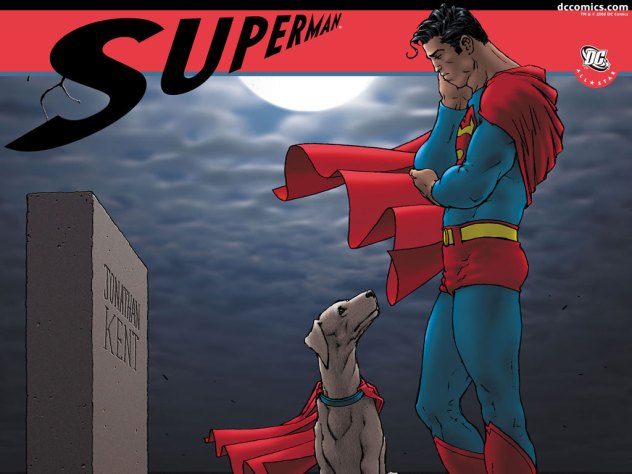
And Morrison himself was known to have really liked the strange and wacky DC elements that existed before what he considered to be a cynical Crisis plot: perhaps much in the way that some of The Doctor’s fans might view his present “gritty and realistic” situation.

Now look back at Steve Moffat. In “The Day of the Doctor” he took the premise of The Doctor having destroyed the Time Lords and, in a typical time-travelling fashion, changed and retconned time. He had The Doctor and his previous incarnations save Gallifrey. Now The Doctor has to go and find it. In one stroke, however it was executed, Moffat eliminated the heart of The Doctor’s modern angst. And in the next episode, in the Christmas Special “The Time of the Doctor” we are going to see him fall to his lowest as he is apparently on his “last incarnation” and is going to die. But we know that isn’t going to happen. We know he will survive. We know there will be a new Doctor.

And perhaps, just perhaps, this is Moffat’s attempt to apply Reconstructionism to Doctor Who. Certainly the inclusion of Tom Baker, the former Fourth Doctor that represented The Doctor’s kindliness, affability and wisdom, into “The Day of the Doctor”–representing what could be another future incarnation of the Time Lord–can be interpreted as a sign of that return to some the weird, and wacky adventures that possess no small amount of hope.

But whatever the case, we are going to see Peter Capaldi as an older, but perhaps wilder Doctor: someone who is not a soldier, a traumatized war veteran, a hero with an anguished dream, or a lonely boy but an adventurer and traveler. He is going to look for where he put Gallifrey. He is going to go out again. Perhaps he might even leave Earth in all time lines and we can see how the rest of the Universe has been doing, how other worlds and newer beings live, and how he will interact with them. Maybe after all the time that Davies has reforged the content of the program it will open up back into larger vistas beyond just Earth and the human.

There is just one last Battle of Trenzalore, a Regeneration rule to work around, and then perhaps the potential for some reconstruction, for something new, for something old, and for something new again. Either way, I look forward to the journey.

When the Ghosts Stare Back Into You

In the First World, there were no ghosts.

https://i0.wp.com/upload.wikimedia.org/wikipedia/en/5/50/NES_Super_Mario_Bros.png

Everything was new and colourful in a washed out, nostalgic sort of way: like a lucid mind in an ecstasy of mushrooms and fantasy. And as shells of soldiers fell off ledges or collided with each other in contention, plants burned out by fire, beetles failed by foot, squat things were squashed back into the earth, and fish and squids fell in water and monsters drowned below bridges a princess was found in the right castle and all was well.

As a result, the Second World was a sleep of the just and bounty.

Until the Third World.

Until the ghosts came.

https://i0.wp.com/www.mariowiki.com/images/c/c1/LookinAtBoo.png

Perhaps the ghosts didn’t so much come as they were always there and it was only in the greatest castles, forts and darkest worlds that they began to manifest. Certainly, in the time of the Third World they seemed mostly limited to those spots and, after, they could be rendered out of sight. Out of mind.

Yet perhaps in mockery of the deeds that heroes did not want to admit to, or examine in too much detail, the ghosts would always stare away from their tormentor … they would stare away until his back was turned and, like a guilty conscience no longer assuaged by excuses, his ethereal attendants would catch up with him.

By the Fourth World and the graduation from shaded 8-bits into vibrant cartoon colours the ghosts gained their own castles. And some of them had different faces. And there were so many of them. So many.

https://i0.wp.com/www.mariowiki.com/images/6/66/Circling_Boo_Buddies.PNG

Did the heroes ever stop to count the number of enemies they slaughtered and attempt to match them up with the restless, mocking, vengeful dead?

And now–now–the ghosts have grown in size and intent. And worse yet, not all of them turn away under scrutiny but lunge for their murderers or, worse yet, stare right back into their eyes. But what does it mean? What does it mean?

What does it mean?

How You Can Help Me

Remember my post where I Am Asking For Your Help? Well, this follow-up post is both late and a long time coming.

I have been insanely busy. I wasn’t exaggerating when I said it feels like I’m in a Time War of my very own. I am trying to find that balance between having a life and using my art to support that life. It’s hard. When people tell you that attempting to become a published writer, especially a published writer that makes money off of your creations, they are not exaggerating. I have attempted to get published “legitimately,” and while I have still not ruled it out by any means, and I have one work in particular that I want to send by those channels, there is this one hard fact to consider.

I am working hard to make content and I am not getting paid for it.

Don’t misunderstand. I enjoy writing for Mythic Bios and being given the opportunity to contribute to the other online magazines in which I publish articles. I write much better when I get to focus on the matters of Geek Culture and other areas of interest.

This not about them or any of that. I just can’t ignore the facts. I am on social assistance, and I am working hard to write articles and stories that are not making me any money.

And this has been bothering me for a very long time. To be perfectly honest with you all, I know I’m talented. I know that I have accomplished a great many things in this past year alone and I continue to make myself believe “in as many as six impossible things before breakfast,” which is a far cry from the one or two I barely had energy to concentrate on back in the day, but despite my efforts and my audience I am quite simply not getting paid for any of it.

So I have thought about a solution to this issue. I’ve realized that this is no one’s responsibility but my own and I am now going to take steps to deal with it. The fact of the matter is that throughout my entire life, I’ve never done anything through orthodox channels, and even when I’ve been in established institutions I have had to find my own methods of dealing with them, and creating my own learning path. And now that I’m outside of academia and those established places I realize that I have to apply that same mentality to life. That said, I didn’t even know how begin to deal with life on those terms.

Until now.

Anna Anthropy, through her own quests to support herself and her work, made me aware of a new crowd-funding platform called Patreon. It is essentially an application that allows an artist’s supporters to become their patrons: to donate money to their art. It is a lot like Kickstarter and Indiegogo, but while the former are made to support larger projects, Patreon is created to fund artists on a smaller and yet potentially longer term monthly scale.

So now this is the part where I finally get to the point. While Anna Anthropy was the one who lead me to this platform, Amanda Palmer introduced me to the Art of Asking: to the power of crowd-funding, of trusting in the goodwill of your fans, and to simply asking for help.

And here is how you can help me.

I have created a Patreon Profile. I would like you, my loyal friends and Followers to read over what I have written on this Profile and do one of two things: become my Patrons and donate whatever amount of money you feel comfortable paying to my art, or spread word of my art and my Patreon Profile to the people that you know.

I go into a lot of detail in the Profile, so please read it closely, but allow me to clarify a few other matters first. I am not charging money for anyone to view my work on Mythic Bios or anywhere. Aside from the fact that I lack the authority in those other places, I do have the authority to state that Mythic Bios’ content will always be free to the public. If you’d like, think of it as what the name suggests: you are patronizing me (hopefully in the positive sense of the word) for the work that I already do and if you do become my Patrons in addition my Followers you will get to see some Patron-Only work, or be the lucky ones to get a first view of it before I launch it more publicly. And I am also willing to undertake research and creative commissions.

I am not begging you for charity and most of you already know this. I am asking you for the opportunity to work for pay doing something that I love doing and making that connection with you.

Now, this will be a learning process for the both of us. I myself am still figuring out the details with regards to Patreon and it will undoubtedly change over time. Also, I just want to state that if you ever want to stop funding me for whatever reason, you can easily cancel your donations. I am simply hoping for a modest cumulative monthly donation of some kind which I plan to share the results of with you.

The thing is: this is both really hard and very easy to ask this of you. What Amanda Palmer espouses, asking for help, is something that has been ingrained in me ever since I was diagnosed as being learning disabled. The very term “extra help” is indicative of asking. But as I said, I have challenges but I will not beg and if you can’t or don’t want to donate anything to my work I understand and, like I said I hope you will keep following it and let other people know about it and my Patreon.

There has always been a stigma to asking for extra help, or even just asking someone for help in society. But here is where I began to realize the difference. I am not asking a bunch of strangers for change. I am asking you–my friends, peers, colleagues, and loved ones–for help. I am letting go of the negative part of my stubbornness: the pride and the fear of change that does not want to admit weakness or, in this lexicon, vulnerability.

I am trusting, all of you, to help me in some way. Even if it is only in the form of suggestions, questions, concerns, or advice about the contents of my Patreon please let me know and I will treasure what you tell me.

So I am going to re-post a picture I’ve been using for two posts now, and with good reason. This was me looking at the horizon a few years ago: wondering what was going to happen next. And this time, not only am I doing exactly the same thing but I hope to see you all there with me. I will keep putting myself out there. I promise you that. I owe you that. I owe that to myself.

Thank you for supporting me: in any way that you can. You already are.

*Hugs*

sincerely,

Matthew Kirshenblatt

Looking Outward

P.S. I am going to pay this attempt at good will forward. Gaming Pixie is an excellent reviewer, graphic artist, site designer, and video game creator. She is one of those that already believes in six impossible things before breakfast. But due to life circumstances, she needs more help than I do at this moment. Please consider donating some money to her art on her website and seeing what she can truly do. Because just as I believe in her, I also believe in all of you. Please encourage her to believe in a seventh impossible thing.

And check out Anna Anthropy’s Patreon as well. She cannot have enough support for the work that she is doing: not only being one of those creating games with her own voice, but advocating the creation of means for other people to do the same.

Who Knew that Games Would be a Part of our Future

This is definitely going to be a retrospective article. And yes: it is definitely going to be about video games.

A while ago now, in fact almost at the beginning of the online version of Mythic Bios, I wrote an article simply named How to Turn a Medium into a Genre: 8 to 16-Bit Video Games followed much later by an overview of games I found fascinating in Dreams of Lost Pixels, Hand Eye, and More Video Game Ramblings. You can read these if you haven’t, or again if you’d like to refresh yourself but they aren’t necessary to understand this current post of mine.

I’m an intermittent gamer, I admit it. As I’ve said before, I only play certain games that interest me. I’m not into first-person shooters or sports related games. I don’t even like Grand Theft Auto, though I will admit when I was younger I just loved running people over: take from that what you will. But like many children that grew up in the 1980s, video games were really important to me: as other interactive worlds to delve into instead of doing school work. And it’s really funny how even though I was one of those that always hated it when my parents and other adults called games “a waste of time,” I was that same person that would believe a game could become obsolete when something newer and with “better graphics” came along.

At the same time, I have kept all of my old Nintendo systems and most of my games. It’s that strange paradox: of not taking games seriously, but also recognizing their value at the same time and keeping them as mine. I was even ashamed to admit that there were video games that inspired my earliest stories.

For me, it was after the Super Nintendo era–which as far as I am concerned was Nintendo’s Golden Age–and the early Nintendo 64 when I began to lose interest in video games. There just … seemed to be something missing from those games. At first the novelty of the “new” polygon graphics of the Nintendo 64 and the strange challenge of 3D gameplay made up for a lot. And some games like Mario 64 and Legend of Zelda: Ocarina of Time really caught my eye: even if the controls and the perspectives made me want to scream. I mean, seriously, how many times did any of you make Link try to push a block under a time limit only for him to decide to jump on the block each and every fucking moment!? It’s actually kind of a small miracle I didn’t break my controls out of sheer fury: though I did make Link bash his head into the wall … a lot.

Don’t feel bad. We have all been there.

I felt lost then. I had played the Sid Meier’s Civilization games a while ago and sometimes I went back to them: because, for those who know me, I can’t really resist playing god. But I never found a game, really, that interested me: and it just depressed me to play old games because it reminded me of times that were no longer the present. It wasn’t until my brother and some of his friends started playing old Super Nintendo games–a lot of which I had only seen mentioned in Nintendo Power‘s Epic Center section and never played–that I got back into it. And then I realized we weren’t alone: that we and a few others were not isolated, drunken cases of nostalgia.

It still amazes me–even to this day and knowing a lot better now–that what many adults believed would be frivolous and arbitrary electronic fun that we children would promptly forget about when the next best thing came around, became some of the formative years of our childhood and the cultural references and experiences of our own adulthood. Somehow, as a few of us aged, video games became relevant beyond skipping homework and we became discerning. We pay attention to gameplay mechanics and story lines and ideas in the code of the game. Moreover, there are people who look at the history of video game development and the cultural contexts around them. And these games mean so many different things to different people.

We began to ask questions: questions such as why we had to kill the enemies in a game and what an enemy actually was? Questions of gender assumptions come up and eventually, with people like Anna Anthropy, game designers–having taken what was originally an 8 or 16-bit medium and now a genre due to the advancement and availability of technology–make their own stories (some of them very autobiographical) and use video games to create a narrative around them. And now we are at that place where we even question what a video game actually is and how “cheap games” such as those made with Twine as choose your own adventure text-based games qualify and are more accessible mediums to make games from: to allow someone to put on the skin you make for them.

What is happening with the Indie scene now is almost reminiscent of what occurred with Underground Comix in the 60s and 70s while the Comics Code Authority ruled over the mainstream comics industry. Yes, sometimes the mainstream industry makes some compelling games but a lot of really fascinating artifacts are coming from independent designers and smaller groups.

But more than any of this: I think what really strikes me is that there have been some people who thought of us 80s children as a Lost Generation: of those that had promise, but due to the economy and the changing times never reached it. We were supposedly forgotten and the media and genres we grew up with rendered irrelevant. Our time was supposed to have been a Dark Age and we are all strange, weird artifacts that neither the previous generation nor the ones after us can relate to. I go a lot into this in Paradigms Lost, Paradigms Regained, but the long and short of it is that we didn’t vanish and neither did the things that we like. They became relevant because they were always relevant to us.

And now: everyone knows Super Mario. In-jokes and references to Mortal Kombat and other games are abound. There are whole Let’s Play videos on Youtube that look at old games. And, as I said, new creators are taking those old principles and subverting them with adult understandings. Even I have been caught up in the Twine craze and I like to write about games and make game references in some of my own creative works.

Despite a lot of other things that have happened in my life, when I look at where we are going with all of this–even with some of the delays and the setbacks–it is a good time to be alive and I look forward to seeing where this goes. If anything I only hope that I can play some good vintage games with friends again: one day.

What Is a Doctor and When Does He Stop Running?

All right, so relatively soon–on November 23rd–we are going to see “The Day of the Doctor”: in which we not only find out why the Eleventh Doctor Regenerates into the Twelfth–which seems a lot less ominous now that the Time Lord Regeneration limit seems arbitrary and limited to the now-defunct Time Lord society–but we will also find out more about The Unknown Doctor.

Or maybe won’t.

I don’t really know what else to say without subscribing to a certain supposition about who this version of The Doctor–played by John Hurt–is supposed to be. So I’m going to subscribe to one of them: mainly that our friend The Unknown Doctor is from the Last Great Time War: the incarnation that utilized The Moment to exterminate both the Daleks and his fellow Time Lords and pretty much save the Universe.

There are some interesting details that could back this up. Aside from the fact that he clearly did something that he regretted, but was ultimately necessary–at least from his perspective–and that he had no choice there is the matter of the fact that Clara wasn’t even with him in this time line. Remember, you Doctor Who fans out there, the Time War was time-locked: keeping certain forces from using, or being propelled by time travel into the battlefield such as it may have been. That is why I think Clara Oswin Oswald never met The Doctor then, or traveled with him: because this field would have, by its very nature, kept her very existence out or destroyed her along with the others: and perhaps removed that knowledge from Clara herself.

But if we operate on the assumption that The Unknown Doctor was the one that either Regenerated during the Great Time War or aged from the Eighth Doctor due to possible time-dilation within the sphere of the time-lock and the sheer horrors of temporal war, it just makes the Eleventh Doctor’s judgment (and those before him) of his previous incarnation–his “secret”–all the more unforgivable.

He not only claims that The Unknown Doctor is not worthy of the moniker–the promise that he and other incarnations of the same man made to the Universe and himself–but that all of his actions, whatever they were, were “not in the name of The Doctor.”

And this is where I take issue with The Doctor’s idea of what a doctor actually is. Despite the fact that the Time Lord has no medical degrees, as far as we know of and perhaps has some haphazard scholarly qualifications (at least by his own people’s standards) from his Time Lord Academy days, he is a healer in that he tries to fix problems and “meddle” in pockets of time that aren’t “fixed.” He sees time, like most Time Lords, as a flowing current with some static and fixed places: like a stream coursing around some pebbles. He likes to re-align things back into, or really into a pattern that makes sense.

But here is the thing. You see, if The Unknown Doctor did develop during the Great Time War, then he knew what was at stake. The Daleks would have exterminated all life in the Universe if they had become the new Lords of Time. The Time Lords themselves decided they were going to ascend into beings of pure energy and obliterate the current Universe to do so. Essentially, both species were–or had become–like mad dogs and any good doctor understands that sometimes the only sane medicine at that point is euthanasia.

Does that mean that he should be proud of it? I don’t think so: though we know that he is not adverse to admitting and even using the fact that he killed both Daleks and Time Lords to his advantage when the situation arises. He has even admitted his role to his Companions to some extent. Perhaps he thinks that his previous incarnation should have tried harder, or should not have been suckered into the War–a war by the very nature of war being a situation where no one really wins–and should have done something different. Or perhaps, Doctor Eleven just hates himself: like his other incarnations tend to do whenever they think back on times that they can’t deal with.

But when it came to it: when it came down to the Daleks destroying all life, the Time Lords obliterating all Creation for their benefit, or giving everyone else in the Universe a chance: there really was no other choice.

The fact is, even though he admits The Unknown Doctor is him but not The Doctor, it’s almost like he is displacing all the blame for something onto this man and trying to forget that he ever existed. The mere fact that this incarnation of him is referred to as The Unknown Doctor speaks volumes about the truth that The Doctor has been running away from the entire time.

But now, after looking at John Hurt turn around with an old, haunted and very sad expression on his face that belies him being the villainous Valeyard or something else–perhaps serving as the guardian against any psychic vestige of the Time War infecting the reality outside of the time-lock (which The Doctor may have jeopardized by delving into paradox itself by going into his time-stream) and with the credits under him proclaiming him to be what the Eleventh Doctor says he is not, The Doctor himself–having crossed into his own time-stream–has to face what and who he has been trying to escape from and finally be forced to do what he has been fearing the most.

To stop running.

We Interrupt These Stories to Bring You Andrez Bergen, Great Capes and GeekPron

Originally, I was going to make the month of October 2013 Storytime for Mythic Bios: if only because for the past three entries I have been posting up stories. And I was going to do it again today until it occurred to me that there are two updates that I need to make.

So first of all, I am friends with Andrez Bergen: an author and musician whose Blog you can find under a cap-locks version of his name right here with the subtitle: a wayward soapbox for author/hackwriter Andrez Bergen. He has written a few books, but the one that I have read is his new Who is Killing the Great Capes of Heropa?: of which you can either click on the previous link or look at Heropa itself. Basically, imagine a virtual reality world modelled after an original Silver Age comics universe where players can be either superheroes or villains. Then add to it with the fact that it operates on the Comics Code Authority rules: such as no swearing, fraternizing between hero and villain roles, drinking in public, revealing your secret identity, and then some. And then complicate it by having set in a dystopian offline society and have the dregs of it start to affect this ideal world.

I actually met Andrez in the WordPress Blogsphere when, I believe, I wrote My Best Friend Was a Sith Lord. What it seems like in this amateur version of Blog archaeology or psychogeography is that Andrez commented on my entry and I commented back, followed him to his site where his book was being promoted and still in the process of being finalized … and the rest is history that can be summed up into a continuing friendship and a consequent Sequart article published yesterday entitled Revisionism Comes to a Silver Age: Or Who is Killing the Great Capes of Heropa?

Suffice to say, I am really pleased with how the above article turned out and if you are interested please buy Andrez’s book, look at my article and read through Sequart’s really fascinating scholarship on the medium of comics and everything it has influenced. You can find the link to Sequart through my article or my Blogroll on the right-hand side of Mythic Bios proper.

It is just amazing how things can come together: and in ways that you didn’t even think of beforehand. I also have another element of news. As you might have seen from my Blogroll, I have been following G33kPr0n for some time now. What you might not know is that they were looking for some contributing writers and, after sending them some work, you are looking at one of the newest members of the G33kpr0n Contributing Writer Staff. 😀

I didn’t want to say anything until I posted my first article and made it official. It is different writing for G33kPr0n than for Mythic Bios, but it has opened various new avenues to me: if only out of sheer geeky enthusiasm. My first article actually covers The Dark Crystal Author Quest and outlines it for the readers of G33kPr0n. I am also getting revitalized for my work for the Quest as well in creating my story. I know what I want it to be about and the rest is now a question of details and time. Suffice to say, I have a whole lot of ideas for G33kPr0n articles, new space to collaborate with, and good awesome geeky people to share it with as well: both staff and readers.

I have wondered, however, if this will impact my writing of Mythic Bios: if I will have to cut down on articles in order to also work on my other projects … maybe to once a week instead of twice for a while. I still need to look for other avenues as well and we will just have to see where it goes. But in the meantime, yay: lots of links tonight, ladies and gentlemen and beings of all kinds. I believe I will have some other news if and when specifics are given to me as well. I have plenty of branching ideas and I just want to see how they bear fruit.

So stay turned everyone, as I become an even more obnoxiously speaking-Geek. Same Mythic time, same Mythic Bios …

Looking Outward

Play It Again

It can be a video game where you can’t skip past the cut scenes. The part of you that plays your character sits disquieted, out of immersion and clicking on the controller frantically, uselessly as you watch yourself doing something stupid and you can’t stop it … or look away.

You just don’t understand. These actions are not in-character and it messes up your sense of equilibrium–of continuity–with yourself.  And even when it all works out, your brain otherwise seems to function like Super Mario RPG: including that annoying tendency to fall into pseudo-3D gaps and the frustrated screaming that comes after.

And sometimes other people laugh at you when you tell them that people give you advice behind houses and you can only find treasure by jumping in the corners of places. For when others attempt to dissect and hack those places, they do not find the sprites of others or the value of hidden items. They find nothing because, deep down, they are are only looking for nothing.

But you? You might not be real, like they are, but you are a character in a video game. Only you can see the people that hide behind bit-houses or vanish into the black squares of doors. You have the intuition to find those unseen blocks. You are the one that can hear the music of invisible secrets.

And that, my friend, says it all.

Please play again.

Stitches, Meetings and Silver Keys in Downtown Toronto

Well, I have been fighting off a cold for some time now and it seems as though in these days two days I’ve finally lost that battle and I’m now in the process of surviving. Sometimes I wish I was like one of Vampire Maman Juliette’s vampires to that regard who, from my understanding, are immune to such annoying things as sickness. But, sadly, there is already one vampire in her world named Matthew and having two would just be redundant.

No, I’m still mortal–for better or worse–and annoyed at my body right now because I have so much to do and not an infinite amount of time to do it.

So, how about some good news? The third and final part of my article The Stitching Together of a Mythos: Kris Straub’s Broodhollow came out a few days ago. It really made things come full circle: especially since it talks a bit about Kris Straub’s story “Candle Cove”: which is what got me interested in his work to begin with. We’ve been talking a bit on Twitter as well: which is really awesome. And in addition to getting a few more Twitter Followers–which is always excellent–I may have opened some … new avenues up for future exploration. I need to just develop this possibility further and I’m not sure how well I will do with portraying current events–even of a Geek kind–but let’s just go at it one thing at a time.

This passing week has been a challenge for me on some many different levels, but I did go to an interesting meeting before an evening Torontaru at the Get Well Bar: which I went to for the very first time. Unfortunately, already having gotten lost (because neither of the places I went to were right along the way–between Ossington and Dundas Street West–and where there is Toronto, there is always construction and the TTC to contend with) I didn’t think to actually use some networking time to–you know–network (aka talk to people) and it only occurred to me after I was heading home. But I did more or less what I had to and, besides, the Get Well Bar was over capacity and I was already feeling tired and a bit ill and there were few people I even knew there. The Bar’s game cabinets were amusing though the first little while I was there before I left and couldn’t get back in. I still never figured out how to get the Barbarian to fight in Gauntlet and I died in Frogger: a lot.

So I have been mysterious about two things so far. Upon risk of making this the most boring Mythic Bios post ever, I will leave it at that until I get more information. Instead, I guess I’m going to lean on my fall-back and become retrospective.

I’ve been to Ossington and Dundas Street West before. It’s less that I have a specific memory and more that I have found myself in the general atmosphere before. The buildings are old and run down, but there is new life and–life–in all of them. Many of them are stores or bars and you can make out some apartments above them.

At one point, after I was at the Get Well Bar–which is an ironic name given that I’m sick though it has nothing to do with anything really–I was sitting at Subway near the window. Here I was, finding myself sitting downtown watching people walk and interact beyond the glass. I saw a few couples holding hands and a few pairs of friends talking. One man was carrying his meal in layers of containers wrapped in a white plastic bag. And there was an old man I saw pass by twice and an older woman walking by.

And it made me wonder as night time already took over the faded gold and pink sky I’d been walking through earlier in my quest to find that meeting place: was this part of the city like this–like all of this–thirty or forty years ago when those older people I saw were my age or younger? Was it always like this? And would those couples still be together and those friends still meet up? Would they be as old as the people I saw that night: remembering all those times they passed through this area of the city talking and laughing and thinking it would all be the same the next day when–one day–it is going to inevitably change somehow? Would Toronto’s proclivity towards construction eliminate so many familiar landmarks that no one would even recognize this place with most of their mind or would the gritty aura of it transcend the loss of a mere few buildings that were hosts to so many other things in the past?

And it occurred to me that people lived here–actually lived here–and it was like seeing some of the Scott Pilgrim video game in real life. Is the Scott Pilgrim game really Ossington and Dundas as well as the Chinatowns? I tried to live in Toronto but, more than that, I tried to understand it: to find its spirit and companionship. I tried to find its life as it could relate to me and embrace it and–to this day–I’m not sure if I ever succeeded. A lot of the time I just found “being lost” and “afraid of the dark” as my common feelings towards being downtown: with some “dazed and confused” and the occasional and inexplicable … magic, I guess.

I think everyone of us gets nostalgic and sometimes yearns for and broods about the past.  Sometimes it’s almost like there is a choice between having some awesome moments and watching them disappear into memory forever … or never having a life of any pain or joy and watching other people’s and feeling nothing but envy, when you really get right down to it, a sense of hollowness: of having wasted your life. The first is magic, as far as I understand it and the world feels a little greyer when it finally fades. And no matter how much you want it back, you either can’t or it will never be the same: and that’s not always a bad thing.

It does make for good writing, though, such as my short story Stop 17.

I’ve been angry at Toronto and in love with it and disappointed in what I thought I found occasionally. But as I was sitting in that Subway shop, that night it just seemed like another … place to me: just a place I visit from time to time.

I’d like to leave you all with one more thing. Leeman Kessler has succeeded in resurrecting a homunculus of H.P. Lovecraft to answer all of your questions. As such, Mr. Lovecraft was good enough to answer a question that has been close to my heart for a very long time. Have a good night everyone.