What Scares You Will Be Its Soul: My Dead Girlfriend and Project: Dark-Seed

This post contains horror, disturbing images and, worst of all, *spoilers.* Reader’s discretion is advised. 

When Dream created the Corinthian a long time ago in Neil Gaiman’s Sandman, his original aim was to construct a sentient dream that represented humanity’s fear of its own darkness. In the end, of course, he became more like a simple serial killer than anything as grand as a being that could make dreamers face the worst parts of themselves.

Corinthian Uncreated

The Corinthian’s initial failure as a dark mirror in which humanity could see the other part of its soul is a fitting metaphor when you hear discussions about the horror genre: particularly how gore and spectacle can take precedence over slow, creeping, uncanny elements out of the corner of your eye and the fear of the unknown or the forgotten.

And then you have creepypastas.

Kris Straub is already doing a web series called Scared Yet in which he looks at and dissects creepypastas: examining how they work, and how they don’t. He said once, in his now defunct Ichor Falls Blog, that many creepypastas fall into a formula or a series of tropes. You know: Jeff the Killer that is the result of bullying and acid being thrown on his face becoming ala the Joker analogue, a whole series of cursed video games bought from a creepy old man who may or may not vanish after a purchase, every story about Disney symbolizing institutionalized and secretive evil, and all the rest of it.

Many beginning writers can do this: they find stories that appeal to that part of them and they imitate them. Even so, many of these pastas have somehow become viral memes as they tap — sometimes even in a shallow manner — into that sense of universal horror and dread in humanity.

But then there are others …

There. Are. Others.

I have talked about Candle Cove before: created by the aforementioned Kris Straub. But a few days ago this little gem manifested itself:

My dead girlfriend keeps messaging me on Facebook. I’ve got the screenshots. I don’t know what to do. It is a story that was created on a subreddit called r/nosleep: where people seemingly write stories that commenters respond to as if they are real accounts. You can find a more polished version of it right here. But in many ways the original is much more diabolical and I will explain why.

First of all, like Candle Cove, it uses its medium to effect. But while Candle Cove emulates a Message Board, complete with user typos and all that loveliness, My Dead Girlfriend is already on a subreddit: a forum that functions as a series of comments stacked up on each other in a grey background with faded white fonts.

But goes further than that. My Dead Girlfriend also has links to what seem to be screen captures of Facebook Private and Public Chats. It utilizes Tags in empty spaces. And then there is the writing style to consider. While Kris Straub utilizes typos in Candle Cove, natesw or Nathan — which I suspect are personas — writes this from the first-person in something of a epistolary format: a series of journals or reports of the phenomenon occurring. Moreover, the writing from natesw’s persona on r/nosleep is clear, with no typos whatever, and possesses proper sentence structure, spelling, and grammar.

Yet the Facebook Chats he has “screen-captured” have the typos and fragmented sentences. And the dialogue between him and his dead girlfriend gets juxtaposed and played with like a twisted form of poetry. These two modes, the first-person of the subreddit text and the third-person and visual aids of the Facebook images complement each other. Unfortunately, if you go by the subreddit the ending could be lost: if it is indeed the ending.

Read the second, cleaner tickld version though: and look at the very last image that it shows you.

Creepy, no?

Remember, you have to find Candle Cove. My Dead Girlfriend finds you.

Ghost Writer

It’s still finding us. When Candle Cove was first sent to me, it had been around for a few years. Right now, though, My Dead Girlfriend is still spreading.

And the story had me before that image too. My friend and I were talking about this into the wee hours of Sunday and she told me that it had her at “FRE-EZING.” This was the only original word that “Emily” was able to construct, or revealed. You see, we never know whether Nathan’s torment is the result of a sick hacker, Nathan’s own subconscious mind projecting the grief of his trauma into messages from Emily, or … the fragments of Emily’s traumatized essence not completely realizing that she is dead and going to the place and person that she knows more than herself: perhaps even trying to make up for the reluctant displays of affection that she showed Nathan in life before she died on her way to their apartment.

Basically, the story is left open-ended. And there is the challenge in the recipe right there. You have to basically know that balance between detail and that open-endedness. If you have too much detail, people will question the specifics and your creepypasta will deflate into skepticism. On the other hand, if you are too grandiose and you try to encompass everything your structure will either never grow or will fall apart at the seams.

I think one element to know what medium you want to use and how you want to structure it. At the same time, you need to know what story you want to tell. Images, photoshopped or otherwise, help too. Another advantage that My Dead Girlfriend has is the fact that it has many commenters either playing along (being the poster’s friends or general fans of the subreddit) or are so taken by the Orson Welles’ War of the Worlds Effect that they are genuinely giving the poster natesw advice. But this story also manages to tap into the general and the specific. The characters and personas have names. There are dates. The accident that took Emily is revealed in slow and painful detail. The uncanny is tapped.

And that is the difference right there: that last ingredient. You can study the remnants of a miracle, but you can’t really reconstruct its soul from what is left. Or, in my case and in the case of other writers, you can’t create an original soul of a new story by purely examining leftovers alone.

I can tell you how these stories work, but it’s like deconstructing a joke. It’s just not funny after. It’s just not horrifying. And anything that I make from this, as it has been a long-term goal of mine to create a viral horror meme after my girlfriend had showed me Candle Cove, would just be a shallow or empty form.

I have many ideas for a creepypasta. It was the very aim of my Project: Dark-Seed. But after that conversation with my friend last night, I realized something. I realized just why the Corinthian was such a failure to Dream.

Dream even admitted that the fault was his own. Dream created the Corinthian to embody humanity’s fear of its own darkness, but despite the fact that Dream is an embodiment of the sentient impulse of imagination and dreaming, he isn’t human. Until his imprisonment in Preludes and Nocturnes, and slowly before with his human friend Hob he never tried to get close enough to humans to actually understand their perspective.

Dream could observe human darkness, but he didn’t really know how they experienced it. He couldn’t relate to his audience. The Corinthian, who was intended to be a classic horror tale became a gory spectacle because he only engaged humans on that superficial level. Unlike Dream’s other stories, other dreams and nightmares, the Corinthian wasn’t made from a pre-existing concept or a sentient being made into something more. He was Dream’s attempt at original creation and imitation of life and he failed.

He was an empty shell that tried to fill himself with gore and eyeballs and attention. As Dream’s creepypasta to humanity, the Corinthian falls short. That is the same reason why some creepypastas and horrors stories fail because the creator doesn’t try to relate to their audience. In terms of comedy, the joke doesn’t amuse them.

The story doesn’t scare them.

But what would have happened if the Corinthian scared Dream? What would have happened if Dream thought about what scared him and made the Corinthian in that image? What happens when a horror writer creates a monster that scares them, that makes them feel goose flesh at the mere thought of it: of that thing at the corner of their consciousness that they logically know can’t happen or exist, but deep down knows?

Who knows. Perhaps Dream’s re-creation of the Corinthian after his own imprisonment and exile changed the model. Perhaps he just needed a catalyst to tap him into that deep black pool of universal horror and white noise, take a piece of it, and fashion from its substance a soul to fill the emptiness.

Static

Perhaps a creator only needs to find something to be scared of in order to create a nightmare that can be shared with the world.

Now if that isn’t the beginning of a story of one’s descent into creative damnation, I don’t know what is. The powers help me. I think I have been writing too much in hell. But the moral of this story is that some people like their pastas filled with gore or emptiness.

I like my pastas to be filled with darkness: from the heart.

Corinthian

You Never Know: Resurrecting a Phoenix and Moving On

I’ve been writing a lot on here lately again. There is so much else that I am needing to do, but now I just want to spend some time and really get contemplative on something.

I still find it really amazing just which of my articles garner the most attention. When I first wrote my When I Recognized Elfquest article, I had no idea that so many people would find it fascinating or even relate to it: never mind having the Pinis Favourite, Retweet, and Share it throughout the Elfquest community. The fact is, you can never predict these things. I wrote that article back in 2011 and it sat on my Facebook without input of any kind until I realized, after my hiatus, that it was time and I brought it here–with some revisions–to where it rightfully belongs. I actually have another Elfquest personal story in me. I’m not sure when or where I’ll post it but hopefully I will share it one day.

And then there is my Sequart article On the Art and Cycle of Proper Suffering: The Artist Figure in Phoenix: Karma. That article has its own personal story as well and, as I sit here late at night, I consider the place from where it came. It was originally a paper for a class in my Master’s Program. It was conceived and written in the 2008-2009 period when York University was on strike and, as such, many deadlines and time tables were severely messed up. We ended up having to do Fall term papers during the beginning of our Winter term. It was not a pleasant situation.

Nevertheless, I liked my class and I decided that I wanted to write a paper on Tezuka Osamu’s Phoenix: Karma: as I consider myself an artist, who sometimes emotionally suffers and, as such, finds sympathy with that work. I had a lot of challenges to face when writing that paper. Between continuing to live on my own at the time, and juggling my other assignments and relationships in addition to the readjustment of the school year I found that I had to ask for a few extensions on the paper.

It was towards the end of summer, or what I termed at the time the Summer of Hell when everything seemed to be falling apart, that I finally emailed the final draft to my professor. There were a lot of things wrong with my paper back then. I barely grammar-checked it, never mind read through it, and it was barely twenty of the twenty-five pages that it was supposed to be. But I reached a point where, quite honestly, I just didn’t give a damn any more. It had been hovering over my head for so long and I just wanted it done so I could finish the last of the original term’s work and move on.

After going to a much needed vacation at Dragon Con in Atlanta, I came back to find that my professor marked my paper and left it for me. I remember telling myself to prepare for the worst. Despite that, it was both a surprise and a slap in the face. The comments that my professor left on my paper amounted to the following: that I hadn’t done the work I was supposed to have and that this was not Graduate school material. He ended up giving me a B- which, I have to admit, was pretty damn generous of him.

And suddenly, the reality hit me and I felt a great deal of shame. Here was this excellent comic that I read in the remaining years of my Undergrad, while I vowed to write a modest paper on and which I rushed when I just couldn’t take it any more. I didn’t understand my professor’s instructions, despite asking him a few times and it frustrated me. I was also, before all of this, a good student and to see those words in front of me, that what I made wasn’t Grad School material, honestly made me angry. It made me so angry after everything I’d gone through that I wanted to quit my Program.

Of course, this was all ego talking and most of the suffering I went through had nothing to do with academics and more to do with the choices I made in my personal life. In the end, it was too much and I just took the paper, put it in my desk drawer, placed it under a pile of other papers and tried to forget about it and the lingering shame of failure.

Fast forward a few years. I was living with my girlfriend and we talked about the paper. She gave me a bit of a reality check and told me what I already knew: that my professor had been damned generous. So I called up a digital copy of my paper and read it. I actually read it. I looked at all the grammatical errors, the bad sentence continuity, the lack of flow between ideas, and even some outright preventable errors. And when I mean preventable, I mean I made spelling errors. I even misspelled one character’s name.

It did not sit well with me.

So I spell and grammar-checked that son of a bitch. I made more transitional sentences. I made the word flow a whole lot less awkward and painful to look at. I didn’t know why I was doing it. I finished the assignment years ago. There was no point. Maybe I planned on publishing a better version. I do know I was toying with doing more research and going beyond the narrow limits of books that my University had available on this subject at the time. But then life happened and I forgot about it again.

A year or so later, Julian Darius saw my comments and my work on Mythic Bios and asked me to join Sequart. At one point, another year later, we were informed of it being Manga Week: that we had something of a call to papers or articles to do with manga, its creators, and culture.

That was when I realized something. My professor was right. Maybe “Proper Suffering” wasn`t Grad School material.

But it is Sequart material.

There were some difficulties of course. I’d evolved a different style of writing thanks to Mythic Bios: a combination of the formal and the profane as I like to say. Even my article on The Stitching Together of a Mythos: Kris Straub’s Broodhollow, for all of its relatively extensive footnoting, still had the informal aspect of contractions and some personality on my part. In the case of “Proper Suffering,” my idea was first to re-adapt my old paper into an article that specifically focused on the manga of Phoenix: Karma itself and then get rid of the internal citation and the formal arrangement of language in the paper. But first, I eliminated the extra material on Japanese modernity in the paper. I narrowed and focused it solely on the manga. I added more to the title of the thing. And then I remembered something another professor said to me about my work with comics at York. She told me that I needed graphic examples to complement my written work as that was the medium I had chosen to examine.

So I looked for scans of Phoenix: Karma panels on the Internet. I did not find much. I tried to scan my own copy professionally but it didn’t work and it would been too expensive: especially for bad copies. I did work on Neil Gaiman’s The Sandman Overture #1 in the meantime and forgot about it until I was asked to contribute another article. So that was when I decided to bite the bullet, place the graphics in that I could get, create transitional sentences between parts because, at this point, I realized “Proper Suffering” was at least three serialized parts in Sequart format. I even added in an extra part examining the kleptomaniac Buchi, whom I didn’t have the time or the energy to look at before, though she was important in the artist Akanemaru’s future decisions.

Then, finally, I sent it in.

And there it is. It still isn’t perfect. Sometimes I wish I added a bit more about how the artifice in the ancient Japanese city of Nara in Phoenix: Karma was representative of the Hindu and Buddhist concept of maya: that all of reality is an illusion of sensory addiction and suffering and how Nature leads to a truer state of non-being beyond ego: or nirvana if you’d like. I feel as though some of the graphics are not quite positioned in flow with the words of my article and then there is the occasional awkward sentence. I thought very few, if any people, would want to see something so painfully, bluntly, academic. It was a relic from another time in my life and I had reinvented myself in many ways much like Tezuka’s emblematic fire-bird.

But then I noticed something. People were retweeting my article in all its three parts. Not just Sequart and my peers there, but other places and people like Brigid Alverson and Tezuka in English. I mean, I was told by Julian that there were few scholastic English sources that focused on manga in depth, but I didn’t believe him. I thought what I made was mediocre at best or at least serviceable. I still think that to some extent.

Yet having “On the Art and Cycle of Proper Suffering” acknowledged really vindicated something for me. It’s one of the few things that from that point in my life that I could go back and give another chance. It was the only thing I could fix. And I did fix it. I resurrected that work like the namesake of the book that I examined and made it better. I suppose, in the end, in doing so I didn’t just make a good and reasonable article but in so doing I also redeemed a perceived failure and honoured a part of my life: with something to show for it in the end.

Perhaps that is one of the real lessons that Tezuka’s characters should have taken when hunting for the legendary phoenix. Like the ancient Sumerian hero Gilgamesh realizing that a mortal life of accomplishment is far better than one of perceived eternity and perfection, I realize it was the process of searching for the phoenix and that even though the pain was a part of it, it was only part of a totality.

So yes, sometimes you just don’t know which of your articles or writings people will like, or become relatable. Sometimes you just have to keep moving on.

Tezuka's Phoenix v4 p108

For Crystal and Castle: An Author Quest Ends and a Gelfling Gathering Begins

Last week, The Dark Crystal Author Quest to write the first novel of The Gelfling Gathering finally ended. Twenty-five excellent writers were given honourable mention and five were chosen as finalists. It still really disappoints me that I couldn’t find the time to enter the story that I had planned. I was working on another submission at the time and I had to make a choice. Suffice to say, it was not an easy decision to make and, hopefully, I will be able to show all of you the fruits of that decision one day soon enough.

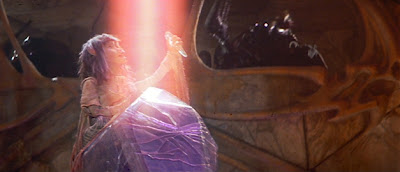
However, I did manage to do something during that time. As a treat and in honour of the Author Quest’s success, I want to show you the introduction that I created to start off my Dark Crystal Gelfling Gathering tale. I hope you will take it in the spirit that it is given and enjoy. Its working title was Dark Crystal: For Crystal and Castle.

It was over nine hundred trine ago that the Great urSkeks, wonderful, luminous, glorious beings from the highest realms who had come to bring wisdom and enlightenment to our beautiful world of Thra, finally left us. They had come to our home for contemplation and, having gained the revelation of their true selves from the divine Crystal of Truth, they left us with one final task.

Before the urSkeks, we were small and lowly. It was not until their blessing that were chosen as Stewards of their Castle of the Crystal: to guard it, Gelfling, Podlings and all of Thra from the evil that still surfaces to this very day.

For the soul stealers, ugly, twisted monsters that would take Gelfling children in the night for their shadowy sorceries were locked away: banished to their prison in the Mystic Valley from which they shall never fully escape. Our Adversaries were held back and imprisoned behind the wards of the urSkeks, whose power we still maintain and they cannot ever fully escape: let alone dare approach the Sacred Crystal to see what cowards they truly are inside.

Nevertheless, the soul stealers are crafty and clever.

To this very day, led by their dark and insidious Master, these cruel wizards still lure Gelfling victims to their Valley. And sometimes it is even worse. Sometimes, some–not all, but some–of the soul stealers find ways out from the barriers that seal them their infectious nature from the rest of Thra and seek to interfere with, and corrupt, our great and glorious realm.

This was the reason why the paramount of our kind, the beloved and enlightened Emperor skekSo First and Only of His Name, created the elite Castle Guard and made his Empire of all Gelfling civilization and Podling principalities. This is why we have decided to teach those worthy among you Gelfling the arts of war and defence.

And while a soul stealer cannot be destroyed by Gelfling or Podling hand, with your help we can capture and contain the menace of the wizards–to keep the dread Sixteen from liberating their entire body–until that great and glorious day when a thousand trine shall pass and the Third Great Conjunction brings glory to the Empire, peace and order to its loyal citizens, honour to the Guard that defends our Lordly Stewardship and the Crystal of Truth, and eternal oblivion to the soul stealers and their corrupted followers.

Until that momentous day we must remain forever vigilant. Everything is connected and it will only be through our sense of connection and our trust in his Imperialness the Great skekSo that we will all find true harmony.

This is our duty and our gift. This is our peace to all of Thra.

Remember the oath of our Guard: “For Crystal and Castle.”

— written by skekLi, Noble and Humble Poet Laureate of the Skeksis Empire

File:Castle of the Crystal - Pure.jpg

This was, sadly, as far I officially got. But I had plans. I’d written a whole lot of notes asking myself questions about the Skeksis, the urRu Mystics, and the Gelfling, their different Clans and what kind of plot I could make out of all of it.

But as the second part of my treat, I will tell you what I roughly had in mind.

I really planned on writing about Rian, the Woodlander Gelfling Guard slowly discovering that his beloved rulers were in fact some of the most evil monsters that he has ever met. I wanted him and his Spriton friend Jul to be rivals in the Guard and when Rian finally did defect away from the Skeksis, he would have to face his best friend until, finally, the latter saw the truth and came to his side.

During this time, the Guard are actually trained and led by three Skeksis: skekVar the General instructs the Gelfling in land-based combat, skekSa the Mariner drills them in naval war, and skekMal the Hunter teaches the Guard survival skills and the art of stealth and, well, hunting. I wanted to make three things clear. First, skekGra the Conqueror was once a leader and instructor of the Guard before he was exiled by the Emperor along with skekLi the Satirist. The second is that Emperor skekSo sometimes displays his martial prowess during Castle Festivals and the Guard are in awe of his speed and sheer power. And, third, that all the Guard feel very uneasy about skekMal. He has this way of looking at them as though they are just pieces of meat. Sometimes, some of the Guard go missing during the night. Not always, but occasionally and while the “soul stealers” are blamed, some of the Guard wonder.

Of course, it is revealed later that skekMal basically trains the Guard to hunt only to hunt them down, in return, much later after he puts on his mask and tracks them. It is basically a sport to him to “play with his food.” Even the other Skeksis find that somewhat disturbing. He comes and goes whenever he feels like it and he supports the two Skeksis in exile when it suits him. I was also toying with the idea that it is on a mission to “find” the exiled Skeksis that Rian discovers more about them.

Basically, this side story, or first book even was going to have the Emperor send the Guard to stop skekGra and his associates from attempting to make their own rebellion with Gelfling followers. If skekHak the Machinist hadn’t been killed in the second volume of Dark Crystal Creation Myths, I would have used him to create a makeshift essence-extractor: a cruder version of skekTek’s. However, perhaps skekMal had his own portable device made when he threatened skekTek. Remember: the Gelfling Gathering takes place before the Emperor had sole access to essence, so it is possible that something like this could have happened.

But in any case, I saw Rian and the Drenchen Gelfling Gurjin as childhood friends. Gurjin, for a swamp-dwelling Gelfling, was the more scholarly of the two in my mind and he wasn’t a part of the Guard. When they weren’t playing Jarra-Jen and Creghel the Tyrant, they played Three Suns and the Moon: each of them was one of the suns and an old childhood female friend was the moon. I picture her as a Vapra and perhaps, in their minds, the future Queen of the Gelfling Clans.

Eventually, Rian discovers that there is a Gelfling Resistance led by the hidden Gelfling Queen. As it turns out, almost a century ago, the Sifa Gelfling Gyr and the Vapra Lady Kel witnessed the actual creation of the Skeksis and the urRu. Kel, becoming the next Gelfling Queen, secretly passed on the knowledge of what happened through dreamfasting with her successor and a select group of loyal Gelfling. They didn’t know what to make of what they saw and so they waited. They waited for a few generations: knowing that they didn’t have the power to oppose the Skeksis directly and that their own pacifist nature, with the exception of perhaps the Spritons that were so close to the Skeksis’ corruption, would limit whatever they could do for now.

I decided that Rian first acts as their spy in the Castle and then he finally just can’t stay there anymore. Maybe I will tell that story one day: though it will definitely be fanfiction unless the Henson Company or Grosset and Dunlap are ever looking for short stories. That story was going to be my entry. And if the third Dark Crystal Creation Myths book doesn’t destroy its continuity, then it definitely will be a fanfic.

But as for the rest … Rian sees the beginnings of the proto-Garthim developing in the cave tunnels of the Castle: supervised by skekUng the Garthim Master who wants to supplant skekVar as General and skekTek who hopes to get more prestige out of helping him. I see them as red and raw without their organic carapaces at this stage. Rian and his friends run into the real Gelfling Queen: a young and mute Dousan Gelfling. She has mastered Dream-etching: the precise ability needed to bring something from dreaming into physical being. She will become the central architect of the Wall of Destiny. They attempt to mobilize the other Gelfling, but they need resistance and disbelief. But gradually, they would pass on what they have learned through dreamfasting.

At this point, the Skeksis become aware of what is going on. As they pass the cover story of there being missing shards of the Crystal, as the Gelfling group has revealed that it is damaged, the Castle Guard is led by Emperor skekSo himself, along with his minions, to take care of the Rebels. Unfortunately, for the Skeksis, the Guard are all converted to the Rebels through dreamfasting. I planned, at this point, for the urRu to get involved: as the protagonists were staying in the Valley: having realized that the Skeksis’ accusations against them are obviously false and the Skeksis are the ones kidnapping and “draining souls” from Gelfling.

There was an epic duel between the four-armed combatants: urSu the Master and skekSo the Emperor. These are not the decrepit beings we saw in the film, but two powerful opponents in the prime of their lives. Each blow they land on each other also affects the other one and they gain cuts and injuries that match each other’s own. SkekSo only retreats when he realizes that his Guard have defected and his other Skeksis are facing similar problems. SkekSo vows revenge and flees. The Gelfling either do not notice this phenomenon or simply do not understand and it is understated. It is also during this time we are introduced to urVa the Archer: the one Mystic who seeks to actively destroy his counterpart in the form of skekMal.

UrVa spends much time teaching Rian and the others how to fight, as he is a martial arts master, and when the time comes to leave the Valley and go to organize the other Gelfling, he chooses to go with them: being the only urRu who can actually find it in himself to actively interfere in what is going on. Later, as they get to the site where the Wall of Destiny will be built, this is when the Skeksis get nasty and they send the three militaristic Skeksis with a mass of essence-drained Gelfling husks, literally zombies, to destroy the Rebellion.

By this point, it is a bloodbath. And what is worse is that skekMal starts picking off Gelfling from the shadows of the Vapra’s trees (I assume this their territory is close to where they are building the Wall) with his crossbow. He and urVa have a standoff. UrVa hates everything that skekMal stands for, representing the aggressive side of him he despised as an urSkek, while skekMal hates urVa for being that weak and hesitant part of his original self whose deliberations cost lives back on the urSkek homeworld.  In the end, they both shoot each other at the same time: a former whole being in conflict with its dual aspects.

Rian holds urVa’s dying form in his arms. UrVa asks Rian to kill him, but Rian doesn’t understand and refuses. He then goes and finishes off skekMal: who had killed his father not too long ago. Both Skeksis and urRu die. Then the seven Gelfling Clans, all knowing what the Skeksis truly are, congregate and the Wall is created.

File:Prophecy.jpg

It awakens the essence-drained Gelfling husks from their living death and the remaining Skeksis are forced to retreat. But Rian, the Queen and the others all know that this far from over. Nevertheless, there is still hope and wonder in Thra.

This is, sadly, as far as I got in my notes. And there are so many gaps. I still have difficulties describing our world’s geography, never mind Thra’s and its unique solar system. There is also so much story there and many story lines that I could have done with the mariner Sifa, the desert-dwelling Dousan, and the underground Grottan. I did plan on having each chapter dedicated to, and function from, the limited third-person perspective of the character: Skeksis, Gelfling and perhaps even an urRu. You know: much in the same that George R.R. Martin structures his chapters in A Song of Ice and Fire.

But I didn’t get to it. Nevertheless this process of world-building kept my mind occupied and got me into some good discussions on The Dark Crystal Community Forums. I’m also pretty sure I learned something and, in the discussions themselves, I even suggested corrections for their entries into the Encyclopedia. And what is even more awesome is that the other authors that didn’t get into the finals have a similar idea to mine and have posted links to their stories in the Forums and in the Fanfiction section of the Dark Crystal website.

The fact is that my experiences in the Quest, for all I didn’t make a story, deserved its own honoured place in my Mythic Bios and it is excellent way to show you how my creative process and, well, my mind works.

I will say it again: everything is connected. Everything is connected and I am glad I connected my creative mind to the world of Thra. Therefore I salute my fellow writers and posters, as well as the Henson Company, and my story that could have been and in the words of the Castle Gelfling Guard I planned to create let me proclaim proudly, “For Crystal and Castle.”

A Surprise Post Appears! La-Mulana, an Age, and Solo Jamming all Entwined.

I have been meaning to write here for a very long time. So I am going to write behind my own designated schedule and wave hello at all of you.

So I am still alive and I am hoping to write here again a lot more often now. For those of you don’t know, I went on something of a hiatus to finish a short story that may have me see actual print: as in something actually published in print in addition to my poem in the art book Klarissa Dreams. That is all I can really about that at the moment, but please stay tuned.

In the meantime, however, I have been busy with other things as well. So where do I even begin?

Well, I participated in the Unwritten RPG Kickstarter Campaign. I essentially made an Age for them. In case you don’t know, Unwritten is a table-top RPG based on the universe of Myst: in which you must go through several Descriptive and Linking Books that connect to other worlds. The D’Ni civilization figured out a way to write Books that allowed people to link to other worlds or gradations of a particular world: or Ages as they are called. I read the books and played two of the games in my formative years and for about a decade I had an idea for an Age and a people.

There were some changes I had to make, but what resulted is pretty impressive based on a creative collaboration with the team. I can’t wait for it to come out so I can show people that I was part of the Guild of Writers and I finally made my own Age. My nineteen year old self would be proud of what the thirty-one year old me has become capable of doing: at least to that regard.

I also admit one other thing. So you know the game I vowed never to play? Well, I am playing La-Mulana now. In fact, very soon the La-Mulana 2 Kickstarter will be making more Fan Art Updates and my Twine story The Treasure of La-Mulana will be featured in one of them. I will be on the look out for that and at some point I will link that update to all of you. It’s funny. I have gotten to know quite a few people through this game and it is perhaps one of the few sources of real community that I’ve felt in a really long time, if not ever. I am not a game-designer in the programming sense. I am a writer. Of course, Christine Love herself said the same thing and look at the places she is at now. Granted, she has programming knowledge and I don’t. But that’s ok.

In fact, I hit another milestone relatively recently. I attended the 2014 Toronto Global Game Jam. As some of you know I participated in the event last year, but armed with a basic understanding of Twine, I registered as a Solo Jammer and completed my first Twine game as such. I go into a little more detail about that on my G33kPron article Experiences from the 2014 Toronto Global Game Jam, but given what this Blog is about I wanted to talk a little shop about my game.

The Looking Glass was an experiment. After my Treasure of La-Mulana fanfic, I realized I could tell an extensive story with Twine, and use the hyperlinking transitions to control how much text the reader sees, and how much I wanted to pace the narrative. My Haunted Twine was an earlier attempt at this, but it was a lot clunkier and it still has issues that I need to address in future works. But I wanted to add more of an interactive element besides clicking on words this time around.

In addition, I was following a person’s experiences with a particular game online and, as my brain often works, I combined a few ideas together and came up with a concept and a few notes that you can see in all of their natural idiosyncratic handwritten glory down below.

I had a choice between this and a game about a serial killer. I was at first happy with neither of these concepts as I wanted to make something very personal and me for this Jam, but when I realized that my version of a “choose your own adventure” Twine game about my experience at the Jam itself would not be good enough at this stage in my development, and not really feeling the killing thing by the second official day of the 48-hour Jam I went with my original, very complex yet simply elegant idea that I should have taken more than two days to do. I may create more games like this one in the near future. In fact, I may be personally showcasing this one at the Toronto Global Game Jam Arcade in April. We shall see.

So now that I have at least four working Twine games or stories, I decided to expand a branch of Mythic Bios to contain them. You can find it on the menu bar above or click here on this link. I thought I would only make two relatively big Twine novels, but it seems my brain had, and needed, other plans. Perhaps sometime in the near future I will see what will be done with those.

And seriously ladies, gentlemen and other sentient beings, this is it for now. As I said before, I hope to be writing here more often again and I have some plans, as always. I have a few posts that are overdue and I want to fee more time to explore while continuing some of the work that I have been cultivating in my long self-exile. Poor January only had one post. Let’s see how many posts February will have as result shall we? 🙂

La-Mulana 2

Oh and before I go, please support NIGORO and Playism’s La-Mulana 2 Kickstarter Campaign. The universe of La-Mulana is both an archaeologist’s and a gamer’s dream and worst nightmare: it will challenge your ingrained assumptions about gameplay and mechanics. It also has a really nice unfolding story and a quirky character about it that few other games I’ve seen can match. So please check it out. You will not be disappointed and we might get to unlock some goodies without the spikes.

Mostly. Err …

Take care everyone.

The Work Continues and a Peek at Coming Attractions

Yesterday, I was going to post up an article that I already made but then I started to think about I feel that everybody deserves something fresh.

The obligatory zombie reference aside, this time of year is generally harder for me. I mean, winter probably has a seasonal affect on everyone and makes them want to sleep more but more recently I’ve been lucky to wake up in the early afternoon never mind what can be considered morning. I mean, I am up in the morning technically, but I generally haven’t slept before then.

It hasn’t been solely due to procrastination or depression however. If there is one thing I have been consistently this past while, it has been busy. I’ve been experimenting more directly with Twine now and after two experiments, there is another one that I would like to implement sometime soon.

For my next trick, I want to make a story with Headings that you can Rewind to, and selectable options that will determine what endings you will get. I envision a few game-overs, one “normal ending,” and one “true ending.” I have been looking at some tutorials, though I am concerned that I will be going closer into the realm of programming or, at the very least, the kind of “user-accessible” programming that was available in Civilization II: Fantastic Worlds. Twine may well be a gateway drug back into the Hell Temple of coding for me. But I do have help and all I need to keep track of time.

And I have to watch time very carefully. I have a story that I need to write, a Dark Crystal entry that needs to appear, an article that needs to be edited, and … another article that I want to write on Wonder Woman creator William Moulton Marston: on one aspect of his life in particular. I am wondering how much material will exist out there on the latter and when I will have a chance to look at this.

But I also know that I have priorities. This entry is a short one, but it’s good because it will serve as a reminder for what I am doing and what I plan to do. I will be back soon and, hopefully, sooner this time. 🙂

My Second Twine Game: Haunted

Me and my Head

I am apparently now in the habit of posting late. So a week or so after the WordPlay Twine Workshop with Christine Love, and exploring Faerie Dark’s world of interconnected Twine games and stories–essentially the progression of a universe-seed in progress–I felt compelled to make another Twine.

My first Twine game was mostly an experiment to see what I could apply in a very basic way to the software medium. I wanted to see if I could tell a story and use the medium to mimic page-turnings, or panels, or–if you prefer–punctuation. With this game, I wanted to do two things.

First off, I wanted to make sure what I did before wasn’t a one-off and I wanted to keep up the practice for when I create some of my more involved works. Luckily I have the template of “Level-Up” to work off of as well as some Twine tutorials and the instructions of Anna Anthropy and Porpentine as well as Gaming Pixie’s advice to go off of too.

But the second reason I made “Haunted” is because I wanted to make both a longer story and something personal. And this story is personal. I don’t just mean that it is based off of some of my life experience, which it is, but it really taps into feelings. I wanted to make sure that I could do this. It feeds into part of a feeble excuse in which I didn’t edit the text or anything, just because it was something I wanted to say and express while it felt real and fresh and, more importantly, tangible and cohesive in my mind. So, in part, I am basically taking Twine and telling a story as flat-out as I can and I admit that process is rather cathartic, if nothing else.

This also gave me an opportunity to explore the boundaries of my own ignorance. Right now, I am at the stage where I am basically taking basic Twine hyperlinking and knowing how to make titles and attribute my name and nothing more. I don’t know how to grey-out or eliminate links once they are chosen. I don’t know how to affect the game when certain items are chosen or not, or when certain places are clicked on or not selected. I have to be mindful about what words I will be using to click from one plot box to the next.

Sometimes I have made mistakes. In my old Twine story, I didn’t even unload it to Philome.la, a free Twine Twitter-based hosting site, properly. It took a few tries and I succeeded thanks to the very prompt and patient guidance of one Colin Marc. This story, such as it is now, is structurally limited but it is more of a game than the first one is. There is more exploration and you will have some–albeit simple–options. I am still focusing on story and expression, this time more personal expression, but I hope to eventually make a stronger game mechanic to make that exploration more potent … with editing, I assure you.

That said, I can see some “dictatorship of the narrative” going on here and I don’t know how well a more generalized audience will be able to relate to this game, but as I have said many times this is a story and I am working on one thing at least that might be a bit more inclusive. At very least and if nothing else, I made an experience and a story.

So here is my answer to the question of whether or not you can haunt the places of your own life. I hope you will appreciate it, and take it for what it is. Until next time, my friends.

For now, become Haunted.

ETA: Based on scraps of what I can remember from Christine Love’s Workshop, I believe I recall what the vertical bars, the |s do. They actually create Headings so that you can Rewind your game to that point and start off from there again instead of doing it all over. I will keep that in mind next time once I figure out how to utilize it properly.

My First Twine Game: Level-Up

I know that in my last post, I asked for all of your help. And very soon, I am going to show you how you can help me. There is just a little more work to do, but once that is taken care of I will explain everything in my next post this coming Thursday.

But right now, I want to talk about something else in this belated post of mine. This Saturday, at Christine Love’s Twine Workshop during the first-ever WordPlay event, set up by the Hand-Eye Society, I made my first ever Twine story. The reason I call this my first story is because, technically, it is not a game.

So here is what I am going to do. I am going to paste the link of my creation onto Mythic Bios and then, afterwards, I am going to talk about the Creative Process of it a bit. This is my experiment–my first Twine by action if not in planning–and for what it is, I am extremely proud of it. So without further ado, and without images or sounds or other fanfare allow me introduce to all of you, my loyal readers to …

Level-Up

All right, now that you played through it I want to talk about what went on behind it. Basically, a little while ago I had a story sketch in my head that almost–almost–became an entry for Mythic Bios. Really, like a lot of my creative works, it grew from a single sentence. This single sentence formed in my head and I needed to create a home for it. Then I found out, and signed up for Christine Love’s Workshop. If you have been following this Blog for a while, you will know that I have the utmost respect and enthusiasm for Christine’s storytelling and her game-making. So you will understand that I could not allow the opportunity of attending one of her Workshops to pass.

And when I was accepted onto the reservation list, I realized that I wasn’t just going to learn how to make a Twine game. I was going to make one right there, at the Toronto Reference Library, in about little over than an hour.

You have to understand that I generally plan out my stories in advance, or I take a lot of time actually making them. But Christine took the time to talk about the basics of Twine in fifteen minutes and, the next thing I knew, we had five minutes to think of an idea and then the rest of the time to implement it.

And I did.

What you are about to see here is what happens when a world is being processed in your brain for a lot longer than you thought it did. It seems I am almost always world-building in the back of my head: even when I should be doing something else … or especially then.

But this isn’t a game. This is a story fragment that somehow functions well. I made up for my lack of knowledge and technique with Twine by attempting to create the right transitions or hyperlinks. Basically, I was aiming for making a rhythm for clicking through the story from one screen to the next.

Yet, as a friend of mine who is now working on his own Twine as part of my Challenge to him observed, what I didn’t really do with the medium of Twine at this stage I attempted to do with descriptive storytelling and dialogue. Also, my second-person perspective–you–might have gotten into the mind of the character in question. Or maybe you won’t. You’ve also see that it is extremely short and lacks sound and images: hence the storytelling that is my strength.

So allow me to thank Anna Anthropy for introducing me to Twine through Rise of the Videogame Zinesters, Christine Love for her Workshop and giving me the excuse to finally go beyond the theoretical and do something hands-on with the software I plan to work with, Gaming Pixie for her support and to all you for all experiencing my very first, and not my last, Twine story. It is not part of the two that I have been planning for ages, but I have to remember my priorities at this point. Also, anyone who can guess which line helped to form the entirety of the story will get bonus points from me.

Take care, my reader-player audience. I will be back here this Thursday … with news.

Looking Outward

Art From Trauma and Twine: Red From a Violet Magician

So a little while ago, I mentioned that I was working on a Twine game: a text-based choose your own adventure story. I made a few decisions on the way. Essentially, I decided to put my Twine novel idea aside–to work on from time to time when the mood and the inspiration really set into me–and I began expanding on the root idea that it came from to make a shorter Twine that doesn’t even have an ending so far. I’m writing out the first section by hand and I’ve finished the first section and I am currently focusing on the second part. I meant to complete this sooner as I have some other priorities.

However, this post is not about me or my Twine. It is about someone else’s. No, what I’m going to do, late tonight in some many ways, is I’m going to introduce you to a Twine that was derived from an initial Challenge that I gave to a friend: who then utilized Twine to tackle both a personal and universal issue.

https://i0.wp.com/31.media.tumblr.com/c844da5a455d8705e7894c5025720e27/tumblr_msvx9qY1OC1qgyk1bo1_500.png

Here is the *Trigger Warnings* Disclaimer from here on in. Do not read further if any of you are set off by a discussion or depiction of trauma. You have been warned.

Trauma is a very human experience: or at least in how we perceive and express it. I’ve mentioned depression and grief and bad memories on this Blog before, but this is something different. Post-traumatic stress disorder and complex post-traumatic stress disorder are what happens when an event of violence or violation, or a series of such events created by environment and society affect a person’s psyche to the point where certain stimuli–such as scents or sounds or sights–or sleep or even memories can elicit a sense of panic, anger and fear inside them.

And I am not doing justice to either definition. From what I understand, it is taking a really awful moment, or a series of moments and having them imprinted into the brain–much like stimuli and exercise imprints trained reflexes into muscle memory–or injecting fear and crippling anxiety into a cell of a memory that can be triggered by anything: hence my earlier disclaimer for this post.

It can affect anyone from any form of life and, as such, it is unfortunately part of a variety of different personal and human experiences. However facing it in any way is a sign of both necessity and, as far as I am concerned, a tremendous amount of bravery. My friend Ionas has taken on this force and manifested it into a Twine, which right now at this moment, I want to speak for itself.

Ionas’ Twine is called Red. It is an important story to anyone who either experiences trauma, or knows someone who does, or wants to know more about it. Really, it is just a very important story in and of itself. If any of you, my readers, appreciate my own writings please sit down, click on the above link, and take the time to navigate through the world that Ionas has created. I got the rare privilege of watching this story get constructed from the ground up in a very deep kind of creative process.

And while I do not suffer from PTSD or CPTSD as far as I know, this is still something that is close to my heart for various reasons. Some of the best art can come from pain and while that pain is never wished for, it can create powerful experiences.

So please read this Twine and share it on WordPress, Twitter, Facebook and any social media site that you like to use. Also, Ionas is an excellent graphic artist whose work can be found within the Violet Magician. Ionas also takes artistic commissions, so anyone out there looking for art, the Violet Magician is fascinating to go to and see.

I am going to be encouraging people to make Twine games. You can find the link for the free online Twine software right in this link. I have another friend too whom I have also assigned this “homework”: to make a Twine. You know who you are. I understand that you’re busy, but I will be checking up on you … soon …

I Think I’m Ready For Another Adventure

It’s been September for a little while now. Cool winds vie with warm air as Summer continues to want its time. The seasons tend to be greedy like that. And every year, at this time, I remember feeling a combination of fear and anticipation as school started again: as a whole new journey began.

Of course, after a while and as my Master’s work came to a certain point I had fewer–if any–new courses to look forward to and dread. Even so, in 2009 of this time I had Dragon Con as my next great journey–all the way into Atlanta–followed by forays into new places and meeting new people. But eventually by 2012, even that sense of movement began to ebb and fear–that natural fear of impending change–turned in on itself and became a deep sense of internalized anxiety followed by a sense of burn-out and a whole lot of being practically sedentary: in almost all the ways that mattered.

For about a year or so, my only real movements were–aside from meeting from friends–very reluctant journeys into practical matters and solitary walks. I can’t even remember a lot of last year’s September, but a lot of it was writing, writing, writing and the slow and inevitable realization that despite one inclination to shun connections and being the North American equivalent of Hikikomori–a recluse or a shut-in–I was now talking a different journey into making voice actually heard and slowly opening up in a different space in my life.

I’ve told you all about some of the somewhat modest developments in my life over time, including these recent ones, and I want to tell you a little more before going on my next journey.

I am working on The Dark Crystal Gelfling Gathering story and continuing to explore the world of Thra and its characters through story sketches. This is a recent one: it is the story of two urSkeks–though of one in particular named YiYa–who die before the Crystal is cracked. It is a brief look at YiYa’s existence, of a role that he didn’t have enough time to gain, and an attempt to give his demise some meaning aside from being a throwaway character. I tell more than I show, there are undoubtedly grammatical errors and perhaps some choppy sentences, but it is literally another foray into the world that I plan to look at with a little more depth. A journey does not happen all at once, but in increments and with setbacks and some insights along the way. The urSkeks came all the way to Thra to heal themselves, but they also got to explore an entirely different world and find out some things about themselves in the process. It is a nice background for me as I will continue on with how the Gelfling operate.

In other news, Sequart has published the second half of my article The Stitching Together of a Mythos: Kris Straub’s Broodhollow: which, in turn, focuses on a more neurotic young man named Wadsworth Zane undertaking a train ride of his own. And with Kris Straub’s comment today on my Twitter, stating that “@MKirshenblatt’s dissection of broodhollow and its origins is everything i ever wanted” fuelling my sails further I am also going to go on my own train ride: to Ottawa.

And by the time you read this, I will be on my way. I won’t be gone long and it is a relatively ad hoc journey. In fact, it’s almost completely out of character for someone like me: or the person I’d turned into this past while. While I am going out of some practical concerns–such as developing my skills and resources further to actually gain employment and even go so far as to create my own job–I’m also enjoying the prospect of meeting some old and new friends and, really, to get something akin to a vacation.

Some people might think to themselves, “But Matthew, you’ve not had a paying job or gone to school in almost two years. You’ve had about two years of vacation.” And that’s all very well and good an opinion, except that they would be wrong. I have been out of school and work for almost two years, it’s true, but almost two years of unemployment, of anxiety, of being shut-in, of not really having my own space, of doing a checklist and a report for Ontario Works, of looking for work, of networking, of constantly writing everyday–as enjoyable as that may be–is not a vacation. What it has been is almost two years of work and struggle and rarely, if ever, letting myself fully relax.

But I have been waking up. As much as I want to retreat back into the tiredness sometimes–especially when it gets stressful–I find I’m like I always am where when I am up, I’m up. I have built up a certain kind of momentum but I also recognize that I am going to have to take some paths I didn’t even think about and that sometimes they happen suddenly and that life does not stop when you want it to and–perhaps–that is a very good thing. Life happens when you make other plans and life happens when you make any kinds of plans, or you think you are going to be on a certain track for the foreseeable future and this is true of gods and monsters and careers and relationships of any kind. And even now, I don’t intend to really take a break.

It’s almost fitting that while I have a Project or two to catch up on, I will also no doubt be reading J.R.R. Tolkien’s The Fellowship of the Ring on my journey by Via Rail on my seat by the window: watching the space I’ve been in for so long pass me by. A part of me is scared to be leaving the familiarity of my surroundings–both my comforts and my inconveniences and so relatively suddenly too–but there is another part of me, a part I’d almost forgotten about that is excited and looks greatly forward to meeting up with some awesome friends and to learn new things together.

To my friends and loved ones I love you all, and I will see you again on Monday because in the words of Bilbo Baggins–my favourite Hobbit–I think I’m quite ready for another adventure.

Looking Outward

The Death of *Silence: Hate Plus and The World of Christine Love Confirmed

What is better than hate?

The answer is more hate.

Hate Plus is the sequel to Christine Love’s Analogue: A Hate Story: a visual novel and video game in which you, as “a space investigator” must recover the records of a lost 25th century Korean generation ship called the Mugunghwa and figure out what happened to its colonists and their descendants. This is not the first time I’ve talked about Analogue or the world that it inhabits so, if you’d like and if you are not afraid of spoilers please look at my article This Love and This Hate Ain’t Completely My Story: The Possible World of Christine Love.

I have been waiting for this game for a long time, though obviously not as long as certain characters on the Mugunghwa have been, and I want to get into its structure, the elements of its world, and the story line.

So here is the nitty-gritty of Hate Plus‘ game interface from my own personal experience. I’m actually glad that I went back and played Analogue for a while during this time in order to remind myself of its game-play interactive qualities. In Analogue, you had to go through various journal entries and click on the figure of the AI next to you to get more information or her opinion. You also had a very confusing Family Tree of characters to look at with names that often got confusing. It is important to note that some Far East Asian cultures place their surnames before their first ones and it explains a lot culturally with regards to Analogue and Hate Plus and how the societies depicted within them function. But I am getting ahead of myself.

In contrast to Analogue, in Hate Plus the AI is more active and has a certain degree of limited animation. They basically read over your shoulder and make comments as you scroll along: as you scroll along very, very slowly. You do have to be careful though: because if you read too fast, the AI’s comments will be lost seemingly forever into an ethereal digital void of, well, scrolling too damned fast. There are names in the documents that you click on and get more information with each entry that you read. The files that you extract are better organized and you have dossiers on–and profile pictures of–each person that you read about. In some ways, it is a lot harder than Analogue. I imagine that the slow-scrolling simulates sifting through the files you’ve compiled from an ancient ship. At the very least this time around you don’t have to input technical commands into a DOS-like–pardon the pun–analog program: which confused and frustrated me to no end.

That said there are some really interesting goodies and special touches to the game structure that only Christine, at least from what little I’ve played, can accomplish with her style. While Christine utilized a form of code that transfers information from her other games that you’ve played to make some “Easter-egg” moments between them, she uses this same process to take your Save Files, if you have them, from Analogue and translate over to Hate Plus. She creates that almost very personal feeling of continuity and that, in itself, is something that I greatly appreciate.

In addition, depending on what Saved File you use, the introduction screen changes colour and when you finish a story arc, the end credits music becomes the introductory music for a while: which really gives you a sense of difference with each playthrough. There is also one other difference between Analogue and its sequel. Unlike the former, which you can download off of Christine’s site Love Conquers All games and Steam, you can only download and play Hate Plus from Steam itself: mainly because that is the only place it’s available from and perhaps the only way to facilitate the Achievements that you get to unlock in addition to the different Endings that are just extensions of your Saved Files from Analogue. This game does not save the retrieved files and timelines you sifted through outside of the AI interaction such as in the other game, nor does it have an extra material section as far as I can see, but the Achievements in themselves and the interactive dynamics that Christine has implemented are … different.

Let me be more specific: if Analogue felt like essentially interacting with a program, Hate Plus is an attempt at a realistic interaction with another sentient being and time. This pacing is actually pretty refreshing and while with anyone else it might threaten to take you out of immersion, in this case it just adds a barely meta-narrative feel to it and at the most it adds personality: a very fascinating experiment in player on and offline participation and interaction. It might take you aback at first, but it’s worth it.

I should also note that you can play this game without having played Analogue or saved your files. The game will just give you an intro recap and a simple Quiz and you’re off. But personally, and as I said, I liked the continuity of using my old files from the previous game.

So now we go past the technical and into the more specific area of content: of the world. And here is where I go into Spoilers: real Spoilers. So please, if you have read this far and you want to play one or both games, save this article link somewhere, click on the links to Christine’s site above, download the game for $10, take the time that you will need, and then come back. Do not say I didn’t warn you.

Now then: the world of Christine Love. If you read the link to my previous post about “Christine Love’s Possible World,” you probably realize by now that it is less possible as it is more probable and true that all her games–at least the ones I talked about in that article–take place in the same world as time goes on. I always suspected this but it was only confirmed when, in this game, she added that missing link: when you receive an email in your message box talking about exploring the ruins of the 23rd Century Lake City. That addition made me smile: not just because it gave me some feeling of vindication in my statements, but because of just that one segment of a post adding this seamless transition between Digital: A Love Story, don’t take it personally babe this ain’t your story and Analogue. What it is, is it’s both immaculate and it’s beautiful. Fucking. Beautiful.

It also doesn’t stop there. You find out a bit more about Earth and how advanced it has become. In addition to me realizing that the reason AI have such difficult times replicating themselves is due to limitations imposed due to *Mother and the terrifying consequences of *Reaper in Digital in the 1980s, I also got to see that AI interactions have changed even more. Essentially, Earth technology has evolved to the point where AI programs can be downloaded into customized lifelike humanoid bodies. This totally slapped me in the face with surprise, but it was a good kind of slap as I realized what it meant for you to have received this email–from the very familiar household name of Wong Robotics (which is a nice parallel to the email you first get from what seems to be its predecessor Wong Computers in Digital: A Love Story and another world tie-in) and what you were probably searching for with regards to your AI companion.

These discoveries make me wonder about something. You discover that *Mute–the Mugunghwa‘s Security AI–is actually over 1600 years old (about 1900 years old): though she can only remember about 300 years of her history or so after that time. You realize later that this was due to … another incident. Now, think about this. On Earth, in this time of the year 4989, over two thousand years after the disappearance and disaster of the Mugunghwa, there have been AI existing and living on Earth. It makes you wonder if some of the programs from the 70s onward still exist at this point. Imagine a series of millennia-old intelligences on Earth and think about how they could have influenced everything. You also get an idea that really old AI tend to slow down because they have too much information to process, but if they specialize in different areas over time and diversify they can adapt both functionally and psychologically. Christine makes a very eerily familiar vintage science-fiction reference to this regard.

And all this makes me wonder just what kind of society her Earth is at this point and, if the technology *Hyun-ae’s eccentric father–the technology that can download human brain-waves and convert them into an AI psyche–is already commonplace in this world. Talk about a potential Ghost in the Shell. Anyway, enough geeking around on my part. Everyone appreciates a good science-fictional world as much as the next person. Let’s talk about the story.

So in the last game, you spend the time trying to figure out what happened to the Mugunghwa and why it never reached its destination. You find out why the colonists’ descendants died and what happened to their society. But you never knew why it happened.

Until now.

Whereas, Analogue is arguably *Hyun-ae’s story, Hate Plus is definitely the story of *Mute. *Mute is a complex character. She believes in the Neo-Confucian ideals of the society that evolved–or degenerated–on the Mugunghwa: including an over-emphasis on the importance of familial duty and traditional gender roles. She supported the monarchy that came into power and Chinese-character literacy given only to the noble families. At the same time, despite her vehement protests towards anything “untoward” like homosexuality between women–which makes her almost a more compassionate version of don’t take it personally babe, but it just ain’t your story‘s Taylor (though the character Oh-Euna might be more like her in terms of fucked up)–*Mute is still a decent person that wants to protect her ship and the people in it. She also does not tolerate cruelty and she has cared for people throughout the years and even though she might judge them and say some offensive things–and always speak her mind in some form or another–she never has consciously attempted to hurt another person, always tried to help and always remained loyal.

In the first game she comes off as abrasive, though you understand that she hates herself because failed to save the people and way of life she was programmed to protect. She also does not seem to tolerate the unorthodox: though I always filed this under “Milady doth protest too much.” And in many ways, I was right. But deep down, there was the theme of the game that I had to keep remembering.

Hate.

And *Mute, with her anger towards female homosexuality and her chauvinistic comments towards women and even the feminine identity she adopted, portrays this self-loathing that I had not seen clearly before. At first, it seems very clear that she isn’t conscious of it either. In fact, *Mute in at least two of her incarnations seems to really not pay attention to details: or, at least, not the right ones.

Then you find out that her previous incarnation, the one that had existed for 1600 years, left some embedded code in her: with files from before the Neo-Confucian dynasty. And this is where your adventure begins.

This is also the part where the game really explores the concept of transhumanism. For instance, *Mute is a reboot of *Old Mute and *Hyun-ae is an AI taken from the code of *Mute. In essence, both AI are descended, code-wise, from *Old Mute. But whereas *Hyun-ae believes she is the human that had her consciousness downloaded ages ago, *Mute is another version of another being. And there are two versions of *Mute.

They are almost two people with similar qualities. *Old Mute was the Security Councillor of the ship that was more assertive and viewed all the people on it as her children: though the Heo Family more than anyone else. She was not afraid to talk to men as equals or politick when the need set in. She was old enough to remember when banditry and civil war wracked the ship and saw the death of the navigation AI *Star: which is the reason why the ship never reached its destination to begin with. *Old Mute was at the very core of her programming a security AI that sought stability and the preservation of life. Unfortunately, she did not see this in what may have been–to her–the unstable mob-mentality of the various pro-democracy movements racking the ship throughout the years.

She, through her adopted Heo Security Family and her seat on the Council of the Mugunghwa maintained something of an oligarchy throughout the centuries and either allowed for the creation of peasant or “commoner” and noble classes, or maintained that tradition. Perhaps these families were the descendants of the workers and ship staff respectively. Perhaps a “middle-class” got co-opted by the nobility or the commoners there did not seem to be a differentiation between peasants and vendor merchants. Maybe that is why the “Bureaucrat Class Act” passed: to seemingly “deal” with this problem. We will never really know and can only speculate. Unfortunately, she was so set on sabotaging an emerging pro-democratic figure that she didn’t see the danger in the so-called figurehead that she helped place on the Council due to her wanting affect the appearance of change to quell the masses and maintain a safe status quo.

In the end, it cost her. It didn’t have to. She was the ship’s Security AI. She could have monitored those in power far more closely: including and especially those she had placed there. But as she put it; she had so much data through existing for “far too long” at the time that sometimes the minutiae of various events escaped her. Personally, I think that she should have “vetoed” the usurper and his whole Council out of a sudden airlock. She could have created a democratic structure from the very beginning and rigged all the ballots to maintain her idea of order. After all, from what I understand, she already had most if not all of the power and even though she started out as a Security Program, she clearly proved that she could adapt over time like any intelligence can. Unfortunately, or fortunately, if *Old Mute had an understanding of Asimov’s Three-Laws of Robotics, her interpretation of it: of letting her memories get erased so that she could survive, of her own self-preservation for the duty of the ship being more important than the quality of life for the people she swore to protect–for not ending certain beings’ lives for the greater good of the whole of humanity around her–cost her.

And in the end it costs *Mute as well. I was so … sad and angry when *Mute decided to deactivate herself. I felt as though she had abandoned me and took pretty much the coward’s way out. She could not face what her predecessor, or what her previous self, had done. And as for me: despite her brusque manner and prickly nature and weird fascination with what boys do in their recreational time together, her “death” hit me hard because she was a good person.

That was when I found the third *Mute: *New Mute. This one did not make herself look old and silver-haired like *Old Mute or garb herself in the traditional hanbok like *Mute, but she had her security uniform and genuinely wanted to know and learn from her predecessors: her previous selves. I eventually took on myself to show her everything that the others had given and seen. If the first *Mute was the Old Kingdom, and the one I knew had been The Middle Kingdom, then this *Mute was a New Kingdom who, eventually and unlike *Mute who couldn’t face her transition from *Old Mute admits that they were all her. I actually liked this *New Mute, but *Mute’s self-deactivation actually broke my heart.

I will admit that when I played from my Harem Route Analogue Saved File, there was one part that made me really catch my breath and tear-up when after one of *Mute’s homophobic tirades,  *Hyun-ae tells her something to the effect of, “You really don’t think you are lovable?” It hit me so hard: almost as much as it did *Mute.

My poor mass-murderer and my authoritarian with good intentions. One of them condemned many to death for the horrible crimes of a few and the other condemned many to social and cultural slavery and barbarism for the chance that everyone lived. “Those who trade away freedom for safety deserve neither,” or “Give me liberty or give me death.” I guess, in the end both of these paraphrases came true. I loved and felt for them so much after all of this.

There is one more thing that I want to write about with regards to Hate Plus. So I found the list of Achievements and saw that there was one for playing through *Mute’s Route as a female. My friend Angela O’Hara had played Analogue as a female and told me that she had had a very different interaction with *Mute than I had: having played as a male. So I decided that if I was going to do this, I was going to do it right.

I replayed Analogue as a female persona and I noticed *Mute’s interactions with me had changed. She was still mostly grateful and respectful of me, but she would ask what an “unmarried woman like me was doing all alone doing a man’s work” and “not troubling me with the details of matters.” She even made pointed remarks about my orientation towards other women or being permissive of it. In Hate Plus, as you imagine, she got worse. She would skim details at times and “take charge” and took it on herself to call herself “my wife” while still “protesting too, too much” about how “icky” female love was. She called me “a stupid bitch” at one point and I admit I called her “a chauvinistic bitch” at another point. I still cared about her and I tried to be patient but it was different.

At the same time, when *Mute did reboot, *New Mute had a lot more to say about some of the letters and transcripts–particularly the ones with the female relationships–that we found in her base code than she had when I played as a male. She also, and this might just be me, seemed to relate to me more as a female in this incarnation and seemed more open to the possibility of being my companion: if not my wife.

And even before I did this, I saw the chauvinism and misogyny that would bloom into the Mugunghwa‘s Neo-Confucian dynasty. I saw what Kim So-Yi had to put up with from her boss and the assistant that violated her: making her feel compelled to say nothing to anyone about it and just like our time unfortunately. I saw that the Ruling Council only had two women on it: one of them being *Old Mute and got to see her gradually lose her voice and see her opinions get ignored under the New Council. I saw the policies of the new regime culturally influencing Mugunghwa society and forcing non-heterosexual relationships underground and even breaking some of them. I saw two women who had jobs and were relatively independent people become kept-women and courtesans. I saw one woman who could have saved the whole population of the Mugunghwa from decreasing birthrates lose her job and her former assistant try to take advantage of that fact with blackmail.

I saw how the emerging political system took advantage of the knowledge of these declining birthrates to make women stay at home and raise children. I respected the unorthodox, alternate-living and loving Heo Family members and grieved to watch their loved ones suffer and some of them die. I also saw one psychologically-troubled woman who felt so trapped by trying to fulfill two seemingly contradictory roles–of traditional woman and working person–and hated her pre-Neo-Confucian reality and herself so much that she retreated into and desired to destroy it and replace it with a culture and political system with “simpler and more ideal roles:” only seeming to realize, at the end, that she had expanded the prison inside herself to the outside.

But I saw the roots of what would become that Neo-Confucian dystopia: of people becoming roles instead of people anymore: becoming silence instead of actions and words. That is what I wanted to say to *Mute if we could have discarded the dialogue wheel we all found so annoying: that she and every woman–every person–was more than a role: that we are all people with feelings and that hate is not the only emotion we have. Hate creates a foundation that attacks itself until the fragile thing built on it rips apart and collapses in on itself. And seeing those … policies go through the Council and seeing each one strip away another freedom for “safety and stability” makes me feel even more cautious about my own world and the subtle infectious forces underneath it all that still discriminate against women and those not of the mainstream: underground or taken for granted attitudes that infect behaviours even unconsciously and just wait to bloom like flowers, colourful beautiful flowers of blood, and bruises, and pain. And, of course, hate.

And hate has to be watched. It has to be dealt with. And it is more deadly under the enforced silence of even something as colourful as a hanbok than all the screaming in the world.

Also, Christine Love manages to problematize, yet again, heterosexual relationships with that new regime but, at the same time, humanizes them and shows that while they weren’t perfect before, they were still legitimate because they were between individuals that may not have always understood each other, but loved each other nonetheless: just as much as the homosexual male and female relationships portrayed.

I don’t know if I communicated this last section well. The analysis seems heavy-handed compared to the elegant and subtle way that Christine Love implemented it and I am exhausted because I just finished playing all of the game today and it is early in the morning now as I finish this. I think I will end this review and analysis by stating that I will give Hate Plus a 5/5 and that what is better than hate is not the flippant answer I gave above. It’s not more hate. It’s love.

I’m sure this is a message of which Christine Love won’t have too much of a problem.