Time Travel and Retconning: Revisionism and Reconstructionism in Doctor Who

Just as the New Year is approaching, so is “The Time of the Doctor.”

Time of The Doctor

I’ve come out of hiatus again, essentially, because this is another thought that just won’t leave me alone. After I was exposed to Julian Darius of Sequart’s distinctions between Revisionism and Reconstructionism with regards to comics, I applied it to my article In a Different Place, a Different Time: Revision and Reconstruction in Comics Without Superheroes? Of course, I should have realized it was not going to end there.

I mean, come on: I already mentioned space and time in the aforementioned article’s title. And after a while of gestation and trying to stave it off, I knew what was going to happen. I was going to provide the distinctions of Revisionism and Reconstructionism, taken from Julian Darius, the latter term apparently coined from Kurt Busiek, to the development of the Doctor Who series. Let’s face it: this was just going to happen and, if we’re going to be honest with each other, it probably has in no so many words and in ways that have been covered far more exhaustively than I am going to be.

So let’s get to the point and quote River Song, as I tend to with a lot of the Doctor Who articles I’ve written, to say, “Spoilers.”

This is really going to be a brief case of looking at parallels between the development of the superhero comics genre and Doctor Who. Like the early comics versions of Batman, Superman and others, The Doctor as a character starts off as a relatively morally ambiguous character: someone who isn’t necessarily evil, but not always good. Certainly, they all have the power to impose their will on others whom they don’t agree with, or are quite willing to let someone destroy themselves as opposed to interceding on their behalf. The Doctor himself, in his very first incarnation was more than willing to abandon people to their deaths if they became “inconvenient” to his or his granddaughter’s own survival.

And this was in the 1960s. Superhero comics themselves, especially the ones I mentioned, existed from the 30s onward: from that Golden Age period where superheroes were still trying to get past their “might is right” mentality to reveal at least some of the heroism that we recognize. The Doctor, however, had an even more interesting challenge: in that he was a character in a science-fiction program that drew on a tradition of science-fiction programs and stories. He wasn’t exactly a hero then and never quite fit that mould well. He and his Companions were more explorers and, as such, the program was one of exploration that bordered on a weird sort of horror: the kind of horror that, well, basically came from the spectacle of science-fiction B movies, comics, and pulp stories before it. Even the early Doctor Who episodes, from I’m given to understand, have a very pulp and serial feel to them: with constantly interrelated chains if episodes making a story followed by standalone episodes and “monsters of the week.”

Of course, things changed for both superhero comics and Whoniverse respectively. It was the Comics Code Authority that greatly white-washed many of the darker elements away from superhero adventures. Some of them simply didn’t survive and became silly caricatures of their original selves. This wasn’t always the case and some stories managed to be told well even in the midst of not being able to question authority-figures among other things. Towards the sixties, however, there were many campy and downright silly elements amongst this genre of comics: particularly with regards to Batman and such.

Doctor Who, which started in the sixties, always had an element of the uncanny and the weird in itself. It also had elements of camp and strange, tangential adventures. For some time, the BBC had a low budget so they basically had to utilize B movie props and effects to make their monsters and their stories. And The Doctor himself became a lot more of a swashbuckling character or archetype: embodying different ideals but becoming somehow more human as time went on. The humanization of The Doctor, which began with his Companions from his early days, contributed to this and probably in no small part due to the fact that the program began as a children’s show.

But just as there were so many disparate elements and strangeness in the Silver Age of superhero comics, this was definitely the case with the original Doctor Who series. What is interesting to consider with regards to Doctor Who however is that many “silly costumes and props and styles” have become iconic in themselves and even popular in a vintage, classic, nostalgic sort of way among fans. The books and audio dramas also helped to expand many of these elements and add more to the quantum branch of reality that was the Whoniverse.

It was in the 1980s that things began to change for superhero comics. This was when Revisionism came into play. Writers like Alan Moore and Frank Miller asked themselves the question of what a superhero would be like, with the powers and abilities they possessed, in a realistic situation. They were also mindful of the pessimism, cynicism, and fear around in this particular time period and wondered how the hero would function in such a world: and what they would do to that world. This is the period in which the superhero really got dissected. Writers in this time and onward seemed to draw on the ancient classical designations of “hero”: of a person of spectacular power and skill that bordered on, or were totally amoral, to reshape the heroes of the 30s and 60s. This allowed much in the way of character development and the creation of truly epic story-lines. Of course, the danger was also created: that the dark grittiness of Revisionism would become a form onto itself and not a vessel to tell a carefully thought out story. Darkness for darkness’ sake, as it were.

With Doctor Who, I argue that its Revisionism came in 2005 with the beginning of the new series. After a gap from 1989, and television movie in 1996, The Doctor returned in 2005 under a very different premise from his earlier adventures. It is almost like producer and screenwriter Russell T. Davies created his own Crisis on Infinite Earths and destroyed much of the quantum and tangential branches of the old Whoniverse in order to create a very centralized, dark, and Byronic reality: as though he and others believed that the only way the program could survive would be to “mature” into this new spirit. It is as though they expected viewers to want something less silly and more “realistic.”

So there was a Time War, the Last Great Time War, that seemed to have obliterated many loose-ends (and cause no small heap of trouble in the loose-ends that did, in fact, continue to exist for the Universe) and leave a Doctor that was more gaunt, more lonely, and far angrier than many of his other incarnations before him. The children’s show origins of program seemed to have been burned away by rage, an attempt at a more serious tone, singular purpose, and Revisionism.

Even the inclusion of David Tennant as the next Doctor, who was a marked contrast to the sullen leather jacket-wearing Doctor who somehow began to lighten up a bit towards the end, only accentuated this kind of Miltonian grandiosity. He might as well, in a ridiculously sublime way, have been an angel from Milton’s Paradise Lost sailing through a perfect clockwork Universe skewed by Original Sin, or perhaps as a far livelier Virgil figure in a kind of Dante’s Inferno of wonders. When Steven Moffat took over as producer and the Matt Smith incarnation of The Doctor came in, the youngest depiction there has ever been (he is about my age), the dark elements were beginning to wear a little thin.

But there is something truly wonderful that was forming with Doctor Who, and its spin-offs Torchwood and The Sarah Jane Smith Adventures. Despite the darkness and the angst of The Doctor being “the last Time Lord,” there has been a great depiction of wonders. I’m not just talking about the more advanced CGI or sophisticated props and costuming provided to the program. I’m also talking about its embrace of diversity: about its inclusion of different cultures, race and even sexual orientations. And it doesn’t seem to display them as novelties but as givens. As science-fiction that, by its very nature, encompasses the future and its possible sensibilities in addition to all of space and time it is extremely encouraging to see. It might have something to do with the fact that Russell T. Davies is gay himself and wanted to include diversity, but there is also the fact that Doctor Who is the longest running science-fiction show in existence and it changes with the times and the attitudes in each era in which it finds itself.

https://i0.wp.com/static3.wikia.nocookie.net/__cb20130505044335/tardis/images/c/c6/Lizard_Woman_From_The_Dawn_Of_Time_And_Wife.jpg

But the sense of wonder that is, in the words of the program’s first producer Verity Lambert, “C.S. Lewis meets H.G. Wells meets Father Christmas,” is so much older than this and it wins out over the darkness every time. It is similar to the sense of nobility and kindness from Superman or the sure sense of justice from Batman. You can also call that sense of wonder hope.

By the time of Steve Moffat, whose episodes are strong in a self-contained short story fashion but whose overall structure begins to unravel the strong Miltonian clockwork of Davies with plot holes, much in the way that the Cracks in Time began to appear, or how the Weeping Angels feed off of temporal rifts and die from paradox-poisoning (which is ironic when you consider how Moffat created them in the first place and that his stories have many plot-holes), you may be witnessing a change beginning to happen. From 2005 and onward, most of Doctor Who has taken place on Earth or has focused almost solely on humans and has maintained a relatively linear story line and premise.

But then Moffat did something. By 1995, Julian Darius argues that Revisionism in comics began to change. Writers such as Grant Morrison began to look back on superhero comics before Revisionism and draw on the idealism and hope of those periods. They took the character-writing and plot development of Revisionism and combined it with the light-heartedness of heroes against the darkness. They, arguably, contributed to the creation of Reconstructionism.
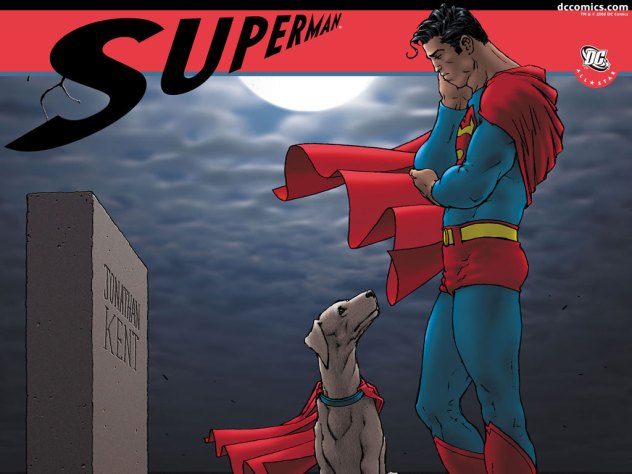
And Morrison himself was known to have really liked the strange and wacky DC elements that existed before what he considered to be a cynical Crisis plot: perhaps much in the way that some of The Doctor’s fans might view his present “gritty and realistic” situation.

Now look back at Steve Moffat. In “The Day of the Doctor” he took the premise of The Doctor having destroyed the Time Lords and, in a typical time-travelling fashion, changed and retconned time. He had The Doctor and his previous incarnations save Gallifrey. Now The Doctor has to go and find it. In one stroke, however it was executed, Moffat eliminated the heart of The Doctor’s modern angst. And in the next episode, in the Christmas Special “The Time of the Doctor” we are going to see him fall to his lowest as he is apparently on his “last incarnation” and is going to die. But we know that isn’t going to happen. We know he will survive. We know there will be a new Doctor.

And perhaps, just perhaps, this is Moffat’s attempt to apply Reconstructionism to Doctor Who. Certainly the inclusion of Tom Baker, the former Fourth Doctor that represented The Doctor’s kindliness, affability and wisdom, into “The Day of the Doctor”–representing what could be another future incarnation of the Time Lord–can be interpreted as a sign of that return to some the weird, and wacky adventures that possess no small amount of hope.

But whatever the case, we are going to see Peter Capaldi as an older, but perhaps wilder Doctor: someone who is not a soldier, a traumatized war veteran, a hero with an anguished dream, or a lonely boy but an adventurer and traveler. He is going to look for where he put Gallifrey. He is going to go out again. Perhaps he might even leave Earth in all time lines and we can see how the rest of the Universe has been doing, how other worlds and newer beings live, and how he will interact with them. Maybe after all the time that Davies has reforged the content of the program it will open up back into larger vistas beyond just Earth and the human.

There is just one last Battle of Trenzalore, a Regeneration rule to work around, and then perhaps the potential for some reconstruction, for something new, for something old, and for something new again. Either way, I look forward to the journey.

Going Deeper Into Myth, Farewell For Now

A long time ago now, as I always like to say, Mythic Bios started out as a series of private notebooks where I wrote down story sketches and some short stories as well. So I hope you will forgive the following hyperbole and metaphors as I give you some news.

I’ve been working on the Mythic Bios Blog for over a year now. It started from a great pit in my life and it’s kept me sane in a sea of chaos for about that same amount of time. I knew when I took on work at G33kPr0n and, to some extent, Sequart before it that I would have some challenges on my hands in writing for all three of them. At one point, I even toyed with the idea of cutting down my posts on Mythic Bios from two a week to one.

But now the insanity is different, and I have to do something different, at least for the time being.

I find that for the first time in over a year, I am going to be taking a break from Mythic Bios, to go back to my Mythic Bios. There is a story that I am writing right now that people are depending on. If it was just the other magazines and Mythic Bios, I could handle that but this story requires much of my attention.

So what is happening is that, with my special golden pen that I rarely use, that was in fact a graduation present for my Master’s Convocation, I am writing out this story by hand in the last Mythic Bios notebook that I have, until now, neglected for the computer screen. In order to accomplish my goal, I have gone back to the basics: to the very beginning.

It isn’t just that, of course. Life has been happening with me at a very accelerated rate compared to the slow molasses of earlier times and while this story is my top priority–with my Dark Crystal story following right after it–I find that right now I need to write less about life and actually start living some of it.

I’m not going to be completely gone. In this day and age it is simply impossible for me not to be entirely on the Internet. I will be continuing to write a few G33kPr0n articles and an article that I am really proud of is going to be published on Sequart in an instalment of three parts separated over three weeks. I may even take some time to do a quick update and let all of you know about my article.

But here are the facts. I’ve been really late making posts on here for the past few weeks. I mean, this in itself is already a weekend post and I’m not entirely sure how many of you are going to see this. I’ve learned a lot through this Blog and the challenges I’ve posed myself. I even made a great many friends and shown many of my old friends and contacts just what it is I can do beyond merely talking about my stories and my writing. I intend to continue to do so and make posts far more eloquent than the one that preceded this.

It pains me, and I am not doing this lightly, but I have priorities and hopefully when the first priority is finished I will have something to be proud of, and something to tell all of you. In the meantime, you will have plenty of reading material to tide you over here. I have no illusions that everyone has read everything on this Blog, and to those people who are my new readers, you will have a lot of entries to slog through … or anything that piques your interests. You can even look at my G33kPr0n and Sequart works, if you’d like.

I’m glad you have followed me this far. During the 50th Anniversary of Doctor Who I felt like I was The War Doctor, constantly in battle and hardly letting myself rest or even feeling the inclination to rest unless I had to pass out for a time.

But now, right now, I realize that the real war is already underway and unlike the wars of our world in which nobody wins, I hope that in this one there will only be one victor and that, in the end, you will be looking at him. I’d like to think that a good writer goes to war.

I will be back relatively soon, my friends. Take care. And, in the meantime, back to my notebook.

Looking Outward

My Second Twine Game: Haunted

Me and my Head

I am apparently now in the habit of posting late. So a week or so after the WordPlay Twine Workshop with Christine Love, and exploring Faerie Dark’s world of interconnected Twine games and stories–essentially the progression of a universe-seed in progress–I felt compelled to make another Twine.

My first Twine game was mostly an experiment to see what I could apply in a very basic way to the software medium. I wanted to see if I could tell a story and use the medium to mimic page-turnings, or panels, or–if you prefer–punctuation. With this game, I wanted to do two things.

First off, I wanted to make sure what I did before wasn’t a one-off and I wanted to keep up the practice for when I create some of my more involved works. Luckily I have the template of “Level-Up” to work off of as well as some Twine tutorials and the instructions of Anna Anthropy and Porpentine as well as Gaming Pixie’s advice to go off of too.

But the second reason I made “Haunted” is because I wanted to make both a longer story and something personal. And this story is personal. I don’t just mean that it is based off of some of my life experience, which it is, but it really taps into feelings. I wanted to make sure that I could do this. It feeds into part of a feeble excuse in which I didn’t edit the text or anything, just because it was something I wanted to say and express while it felt real and fresh and, more importantly, tangible and cohesive in my mind. So, in part, I am basically taking Twine and telling a story as flat-out as I can and I admit that process is rather cathartic, if nothing else.

This also gave me an opportunity to explore the boundaries of my own ignorance. Right now, I am at the stage where I am basically taking basic Twine hyperlinking and knowing how to make titles and attribute my name and nothing more. I don’t know how to grey-out or eliminate links once they are chosen. I don’t know how to affect the game when certain items are chosen or not, or when certain places are clicked on or not selected. I have to be mindful about what words I will be using to click from one plot box to the next.

Sometimes I have made mistakes. In my old Twine story, I didn’t even unload it to Philome.la, a free Twine Twitter-based hosting site, properly. It took a few tries and I succeeded thanks to the very prompt and patient guidance of one Colin Marc. This story, such as it is now, is structurally limited but it is more of a game than the first one is. There is more exploration and you will have some–albeit simple–options. I am still focusing on story and expression, this time more personal expression, but I hope to eventually make a stronger game mechanic to make that exploration more potent … with editing, I assure you.

That said, I can see some “dictatorship of the narrative” going on here and I don’t know how well a more generalized audience will be able to relate to this game, but as I have said many times this is a story and I am working on one thing at least that might be a bit more inclusive. At very least and if nothing else, I made an experience and a story.

So here is my answer to the question of whether or not you can haunt the places of your own life. I hope you will appreciate it, and take it for what it is. Until next time, my friends.

For now, become Haunted.

ETA: Based on scraps of what I can remember from Christine Love’s Workshop, I believe I recall what the vertical bars, the |s do. They actually create Headings so that you can Rewind your game to that point and start off from there again instead of doing it all over. I will keep that in mind next time once I figure out how to utilize it properly.

My First Twine Game: Level-Up

I know that in my last post, I asked for all of your help. And very soon, I am going to show you how you can help me. There is just a little more work to do, but once that is taken care of I will explain everything in my next post this coming Thursday.

But right now, I want to talk about something else in this belated post of mine. This Saturday, at Christine Love’s Twine Workshop during the first-ever WordPlay event, set up by the Hand-Eye Society, I made my first ever Twine story. The reason I call this my first story is because, technically, it is not a game.

So here is what I am going to do. I am going to paste the link of my creation onto Mythic Bios and then, afterwards, I am going to talk about the Creative Process of it a bit. This is my experiment–my first Twine by action if not in planning–and for what it is, I am extremely proud of it. So without further ado, and without images or sounds or other fanfare allow me introduce to all of you, my loyal readers to …

Level-Up

All right, now that you played through it I want to talk about what went on behind it. Basically, a little while ago I had a story sketch in my head that almost–almost–became an entry for Mythic Bios. Really, like a lot of my creative works, it grew from a single sentence. This single sentence formed in my head and I needed to create a home for it. Then I found out, and signed up for Christine Love’s Workshop. If you have been following this Blog for a while, you will know that I have the utmost respect and enthusiasm for Christine’s storytelling and her game-making. So you will understand that I could not allow the opportunity of attending one of her Workshops to pass.

And when I was accepted onto the reservation list, I realized that I wasn’t just going to learn how to make a Twine game. I was going to make one right there, at the Toronto Reference Library, in about little over than an hour.

You have to understand that I generally plan out my stories in advance, or I take a lot of time actually making them. But Christine took the time to talk about the basics of Twine in fifteen minutes and, the next thing I knew, we had five minutes to think of an idea and then the rest of the time to implement it.

And I did.

What you are about to see here is what happens when a world is being processed in your brain for a lot longer than you thought it did. It seems I am almost always world-building in the back of my head: even when I should be doing something else … or especially then.

But this isn’t a game. This is a story fragment that somehow functions well. I made up for my lack of knowledge and technique with Twine by attempting to create the right transitions or hyperlinks. Basically, I was aiming for making a rhythm for clicking through the story from one screen to the next.

Yet, as a friend of mine who is now working on his own Twine as part of my Challenge to him observed, what I didn’t really do with the medium of Twine at this stage I attempted to do with descriptive storytelling and dialogue. Also, my second-person perspective–you–might have gotten into the mind of the character in question. Or maybe you won’t. You’ve also see that it is extremely short and lacks sound and images: hence the storytelling that is my strength.

So allow me to thank Anna Anthropy for introducing me to Twine through Rise of the Videogame Zinesters, Christine Love for her Workshop and giving me the excuse to finally go beyond the theoretical and do something hands-on with the software I plan to work with, Gaming Pixie for her support and to all you for all experiencing my very first, and not my last, Twine story. It is not part of the two that I have been planning for ages, but I have to remember my priorities at this point. Also, anyone who can guess which line helped to form the entirety of the story will get bonus points from me.

Take care, my reader-player audience. I will be back here this Thursday … with news.

Looking Outward

I Am Asking For Your Help

Sometimes, I can’t believe I’m doing this.

After almost a month of few updates, lots of stories, reviews and even more review writing on G33kpr0n and for Sequart, I feel as though I haven’t touched base with you guys in a very long time. There are so many things happening now, and while not all of them have been what I expected, or even what I had originally been looking for: most of them are very exciting.

I remember when I used to touch base with all of you a lot more often: when I had time to think and ponder and reflect much more on the past. I had, and I’m sure I will always have enough, past experiences to process but sometimes you just need to … act and continue moving forward. I don’t even need to tell all of you: those of you who have existed in my life before this Blog, who were here at the very beginning, and who followed me for some time now know how far I’ve come.

I feel like a certain man in a blue box who has run almost his whole life–or at least from 2005 to 2013–and finally, soon, he will begin to stop running. I might still have youthful good looks reminiscent of Doctor Eleven but these days I can’t help but feel like The Unknown Doctor. I can relate to him so much more. After a lifetime of running, he decides to go all-out in the Last Great Time War: still doing things in his way and how he feels they should be done, but still doing it in his way.

But I think the title of the episode “A Good Man Goes to War” suits me as well: though it is debatable how good a man I exactly am. Whatever the case, where I was once focused on one or two projects and then wandered around restless and empty, I am literally bombarding myself with multiple writing assignments. Ideas–old and new–are blooming constantly inside of my mind in a way that I never thought possible.

I am writing articles for two magazines. I am working on two Twine games on and off. I am even working on two substantial short stories coming dangerously close to their deadlines. And originally, I endeavoured to keep staying in my home until I got all of this done: but now I am starting to realize that if I do that, I will never get out of here. And life is not leaving me alone. It is harder to remain a hermit now that I am more out there and my friends and loved ones also want my attention.

It seems as though, completely going up against my original metaphor I am actually getting something of a life now. And sometimes I confess, I think to myself that I can’t believe this. I think I wasn’t built for this: for approximating journalism when I was so vehemently against doing so in the past for feeling out of my depth, or delving into scholarship again after promising to stay as far away from it as possible, or daring to write an upcoming article on something truly great and having the gall to think that I have anything new and exciting to say about something like that.

I have times when I’m tired. Every day, I sit in front of this computer and go into a world of music and chatting and writing–constant writing–and putting myself out there. And with every article I finish or come up with or that decides it is important, I have two projects that aren’t finished yet and are so close to those deadlines. And I think to myself: I don’t know if I can do this. I wasn’t built for this. What if I don’t succeed? What if I keep taking down these smaller units and the large ones loom over me? What if I fail?

But as I write this, I look at what I have done and what I am doing. And I realize that despite all the aggravation and fear and outright exhaustion, this is actually one of the happiest times in my life. It is a battle, yes, and in the spirit of video games I keep taking more of opponents down with a growing sense of power but I am tired, and I realize that this game is reality.

And I need your help.

Yes, you. I need your help. It has come to my attention that my current material situation cannot last forever and while I have already planted some potential seeds for the future, I’ve realized that I need to do more. I’ve realized that I can’t do this alone. I never could. In fact, even now I’m not. There are people who have always been there for me: through all of this. And in order to proceed further, I will continue to need you and those of you who have found and like the work that I do.

So here is what I am going to do in my epic battle and I am going to be clear right now. I am going to ask you to Like this post if you are willing to help me. Let me be clear: if you know me, or you’ve just gotten to know me you will know that I won’t ask anything unreasonable from you and I will return the favour in the ways that I am capable.

I will post more details when the time comes, soon, and you can definitely change your minds then and there will be no hard feelings but right now I am more interested to see a show of hands and Likes as to who is willing to help me and believes that I will make something truly special.

I want to take Mythic Bios–and everything I have been making–and expand on it. I want to make it into something that will support me, that will give me more resources to work with in order to make better quality work, and get my name out there to do the same. There are some burdens that I need lifted and some that I need to adopt to get the freedom that I need to continue my work and my life. I suppose I can be even more melodramatic and raise my hand and shout, “Who’s with me!” but really I just want to know who is curious about what I want to do and, besides, I’m comfortable with the fact that I won’t end up like Theon Greyjoy after his speech in the Game of Thrones television series.

Essentially, all of you 1,198 Followers, I want to know if you believe in me and what I am capable of doing: just, as I already said, to see that show of hands. Comments are a bonus too: advice even more so. But right now, all I want are Likes on this one post.

I realize now that I am at the part in the game where I do need to go all-now but, with all of you beside me–physically or in spirit–I would like to see just what over a thousand people are capable of doing: especially something as modest as I am proposing.

It is said that a thousand cats can change reality. I wonder if over a thousand humans can help affect one writer’s life. Think of it as a Challenge for myself and all of you. If not, well, it was a good experiment. Take care, my friends. I love you all and, no matter what, I am now looking forward to what comes after.

Looking Outward

Who Knew that Games Would be a Part of our Future

This is definitely going to be a retrospective article. And yes: it is definitely going to be about video games.

A while ago now, in fact almost at the beginning of the online version of Mythic Bios, I wrote an article simply named How to Turn a Medium into a Genre: 8 to 16-Bit Video Games followed much later by an overview of games I found fascinating in Dreams of Lost Pixels, Hand Eye, and More Video Game Ramblings. You can read these if you haven’t, or again if you’d like to refresh yourself but they aren’t necessary to understand this current post of mine.

I’m an intermittent gamer, I admit it. As I’ve said before, I only play certain games that interest me. I’m not into first-person shooters or sports related games. I don’t even like Grand Theft Auto, though I will admit when I was younger I just loved running people over: take from that what you will. But like many children that grew up in the 1980s, video games were really important to me: as other interactive worlds to delve into instead of doing school work. And it’s really funny how even though I was one of those that always hated it when my parents and other adults called games “a waste of time,” I was that same person that would believe a game could become obsolete when something newer and with “better graphics” came along.

At the same time, I have kept all of my old Nintendo systems and most of my games. It’s that strange paradox: of not taking games seriously, but also recognizing their value at the same time and keeping them as mine. I was even ashamed to admit that there were video games that inspired my earliest stories.

For me, it was after the Super Nintendo era–which as far as I am concerned was Nintendo’s Golden Age–and the early Nintendo 64 when I began to lose interest in video games. There just … seemed to be something missing from those games. At first the novelty of the “new” polygon graphics of the Nintendo 64 and the strange challenge of 3D gameplay made up for a lot. And some games like Mario 64 and Legend of Zelda: Ocarina of Time really caught my eye: even if the controls and the perspectives made me want to scream. I mean, seriously, how many times did any of you make Link try to push a block under a time limit only for him to decide to jump on the block each and every fucking moment!? It’s actually kind of a small miracle I didn’t break my controls out of sheer fury: though I did make Link bash his head into the wall … a lot.

Don’t feel bad. We have all been there.

I felt lost then. I had played the Sid Meier’s Civilization games a while ago and sometimes I went back to them: because, for those who know me, I can’t really resist playing god. But I never found a game, really, that interested me: and it just depressed me to play old games because it reminded me of times that were no longer the present. It wasn’t until my brother and some of his friends started playing old Super Nintendo games–a lot of which I had only seen mentioned in Nintendo Power‘s Epic Center section and never played–that I got back into it. And then I realized we weren’t alone: that we and a few others were not isolated, drunken cases of nostalgia.

It still amazes me–even to this day and knowing a lot better now–that what many adults believed would be frivolous and arbitrary electronic fun that we children would promptly forget about when the next best thing came around, became some of the formative years of our childhood and the cultural references and experiences of our own adulthood. Somehow, as a few of us aged, video games became relevant beyond skipping homework and we became discerning. We pay attention to gameplay mechanics and story lines and ideas in the code of the game. Moreover, there are people who look at the history of video game development and the cultural contexts around them. And these games mean so many different things to different people.

We began to ask questions: questions such as why we had to kill the enemies in a game and what an enemy actually was? Questions of gender assumptions come up and eventually, with people like Anna Anthropy, game designers–having taken what was originally an 8 or 16-bit medium and now a genre due to the advancement and availability of technology–make their own stories (some of them very autobiographical) and use video games to create a narrative around them. And now we are at that place where we even question what a video game actually is and how “cheap games” such as those made with Twine as choose your own adventure text-based games qualify and are more accessible mediums to make games from: to allow someone to put on the skin you make for them.

What is happening with the Indie scene now is almost reminiscent of what occurred with Underground Comix in the 60s and 70s while the Comics Code Authority ruled over the mainstream comics industry. Yes, sometimes the mainstream industry makes some compelling games but a lot of really fascinating artifacts are coming from independent designers and smaller groups.

But more than any of this: I think what really strikes me is that there have been some people who thought of us 80s children as a Lost Generation: of those that had promise, but due to the economy and the changing times never reached it. We were supposedly forgotten and the media and genres we grew up with rendered irrelevant. Our time was supposed to have been a Dark Age and we are all strange, weird artifacts that neither the previous generation nor the ones after us can relate to. I go a lot into this in Paradigms Lost, Paradigms Regained, but the long and short of it is that we didn’t vanish and neither did the things that we like. They became relevant because they were always relevant to us.

And now: everyone knows Super Mario. In-jokes and references to Mortal Kombat and other games are abound. There are whole Let’s Play videos on Youtube that look at old games. And, as I said, new creators are taking those old principles and subverting them with adult understandings. Even I have been caught up in the Twine craze and I like to write about games and make game references in some of my own creative works.

Despite a lot of other things that have happened in my life, when I look at where we are going with all of this–even with some of the delays and the setbacks–it is a good time to be alive and I look forward to seeing where this goes. If anything I only hope that I can play some good vintage games with friends again: one day.

What Is a Doctor and When Does He Stop Running?

All right, so relatively soon–on November 23rd–we are going to see “The Day of the Doctor”: in which we not only find out why the Eleventh Doctor Regenerates into the Twelfth–which seems a lot less ominous now that the Time Lord Regeneration limit seems arbitrary and limited to the now-defunct Time Lord society–but we will also find out more about The Unknown Doctor.

Or maybe won’t.

I don’t really know what else to say without subscribing to a certain supposition about who this version of The Doctor–played by John Hurt–is supposed to be. So I’m going to subscribe to one of them: mainly that our friend The Unknown Doctor is from the Last Great Time War: the incarnation that utilized The Moment to exterminate both the Daleks and his fellow Time Lords and pretty much save the Universe.

There are some interesting details that could back this up. Aside from the fact that he clearly did something that he regretted, but was ultimately necessary–at least from his perspective–and that he had no choice there is the matter of the fact that Clara wasn’t even with him in this time line. Remember, you Doctor Who fans out there, the Time War was time-locked: keeping certain forces from using, or being propelled by time travel into the battlefield such as it may have been. That is why I think Clara Oswin Oswald never met The Doctor then, or traveled with him: because this field would have, by its very nature, kept her very existence out or destroyed her along with the others: and perhaps removed that knowledge from Clara herself.

But if we operate on the assumption that The Unknown Doctor was the one that either Regenerated during the Great Time War or aged from the Eighth Doctor due to possible time-dilation within the sphere of the time-lock and the sheer horrors of temporal war, it just makes the Eleventh Doctor’s judgment (and those before him) of his previous incarnation–his “secret”–all the more unforgivable.

He not only claims that The Unknown Doctor is not worthy of the moniker–the promise that he and other incarnations of the same man made to the Universe and himself–but that all of his actions, whatever they were, were “not in the name of The Doctor.”

And this is where I take issue with The Doctor’s idea of what a doctor actually is. Despite the fact that the Time Lord has no medical degrees, as far as we know of and perhaps has some haphazard scholarly qualifications (at least by his own people’s standards) from his Time Lord Academy days, he is a healer in that he tries to fix problems and “meddle” in pockets of time that aren’t “fixed.” He sees time, like most Time Lords, as a flowing current with some static and fixed places: like a stream coursing around some pebbles. He likes to re-align things back into, or really into a pattern that makes sense.

But here is the thing. You see, if The Unknown Doctor did develop during the Great Time War, then he knew what was at stake. The Daleks would have exterminated all life in the Universe if they had become the new Lords of Time. The Time Lords themselves decided they were going to ascend into beings of pure energy and obliterate the current Universe to do so. Essentially, both species were–or had become–like mad dogs and any good doctor understands that sometimes the only sane medicine at that point is euthanasia.

Does that mean that he should be proud of it? I don’t think so: though we know that he is not adverse to admitting and even using the fact that he killed both Daleks and Time Lords to his advantage when the situation arises. He has even admitted his role to his Companions to some extent. Perhaps he thinks that his previous incarnation should have tried harder, or should not have been suckered into the War–a war by the very nature of war being a situation where no one really wins–and should have done something different. Or perhaps, Doctor Eleven just hates himself: like his other incarnations tend to do whenever they think back on times that they can’t deal with.

But when it came to it: when it came down to the Daleks destroying all life, the Time Lords obliterating all Creation for their benefit, or giving everyone else in the Universe a chance: there really was no other choice.

The fact is, even though he admits The Unknown Doctor is him but not The Doctor, it’s almost like he is displacing all the blame for something onto this man and trying to forget that he ever existed. The mere fact that this incarnation of him is referred to as The Unknown Doctor speaks volumes about the truth that The Doctor has been running away from the entire time.

But now, after looking at John Hurt turn around with an old, haunted and very sad expression on his face that belies him being the villainous Valeyard or something else–perhaps serving as the guardian against any psychic vestige of the Time War infecting the reality outside of the time-lock (which The Doctor may have jeopardized by delving into paradox itself by going into his time-stream) and with the credits under him proclaiming him to be what the Eleventh Doctor says he is not, The Doctor himself–having crossed into his own time-stream–has to face what and who he has been trying to escape from and finally be forced to do what he has been fearing the most.

To stop running.

Song Hunter

If they listen, they can tell he’s listening to the music again. It beats and wavers from the basement that Friday night as he sits at their computer. Sometimes it is a combination of industrial sounds and chiming. Other times it seems to encompass the night. There are even moments when they can make out voices, though the hard percussion and beats of the music are muffled by the floor between him and them: making the vocals only vaguely decipherable at best.

So they don’t really know what the music is, or what might–or might not–mean to him.

They don’t see him hunched over and cross-legged on the swivel chair. He sits there staring at a blank Google screen. His hands are clasped together and his fingers are entwined in front of him. They feel cold.

He listens to the music and its rhythms: as though trying to find something, trying to go back to the night beyond the basement, to the city, to a club that doesn’t exist, and another one that changed … trying to go back in time.

As he listens to VNV Nation’s “Space and Time” again, he tries to remember the remnants of a train of music. The beats are faint in his head, but they do not translate into words or anything tangible enough to work with.

One, you love the goddess,
two, you bring the night,
three, your song has ended,
and four is the god-killing light.

The half-imagined refrain of “spread the lay, Judgment Day …” faintly thunders like echoes or receding footsteps through his mind. He can’t find the song’s name: not through the typing of half-imagined fragments of lyrics on Google, or sifting through Electric Body Music on YouTube. Sometimes he wonders if the song and the dancing pale bodies were just figments of a long-standing delusion: the same one on which he had been out of this house, out of this basement … dancing …

Spread the lay,
Judgment Day …

Somehow, he thinks if he can find that song it will all come back in some way, somehow … the bouncer with the golden eyes, the concrete stairs, the welcoming dark beat …

Old dark nights two years gone sit like uneasy ashes in the pit of his stomach, rustling the occasional word, the remains of a memory, when all of it was still real …

Huddled in his sweatshirt and old sweatpants, he tries to remember the feel of black leather on his shoulders, and the luminous lights of downtown and clanking tracks, and the anticipation that far outweighed the anxiety.

And then, clicking on the mouse in one chill hand, he finds something. An 8-Tracks.

It belongs to a DJ that went to a club he knows well, though it was long gone before he ever walked the streets of Toronto on his own.

It’s music from Sanctuary.

That is when he knows. He can’t skip too many tracks: the application won’t let him. Instead, he sits and waits it out. Each wailing note and synthesized tone brings him closer. Queen Street. Floor-length black leather coats. Floating must. The night bus on the way home. A girl’s head on his shoulder.

But music creates videos inside his mind: replaying scenes that may or may not have happened. He isn’t sure yet. He isn’t sure …

Then there is the silence. And the hollow beat. He checks the list to see what it is called.

Front 242’s “Headhunter V1.0.”

Finally. Finally, he knows its name. He knows who made it. He can call it up on YouTube and the Web with impunity. He can play it whenever he wants.

And he plays it. He waits until the song comes to its crescendo and he finally–and truly–hears it.

One you lock the target,
Two you bait the line,
Three you slowly spread the net,
And four you catch the man!

As the song tells him to “Lock the target, bait the line, spread the net, and catch the man,” over and again, he listens to the rest of the music. And, for a few moments, he’s back.

He takes the bus the bus from his apartment, to the subway and to the Spadina streetcar. Sometimes he goes to the Velvet at Queen but usually it’s the Neutral Lounge. He goes there every Friday night. Sometimes he’s there with friends, sometimes meeting friends but more often than not he goes there alone …

Except for that night when he got off the streetcar. He’d been reading Soseki’s Kokoro–a novel about an old man eaten away by the shadow of guilt and youth being the loneliest time of all–when he met an unexpected Cheshire smile, electric blue eyes, the inside of a red car smelling like cigars, and something wonderful.

Until it and everything after was eroded by shadow.

Lock the target, bait the line,
spread the net, then catch the man …

Something dead stirs inside him as he finds himself back in the basement. While he is reminded of the freedom that going to that club first held for him, he also recalls the disconnect of watching the beautiful people dance and hearing nothing but the music, the fear that he would lose this place, and the emptiness underneath it all. It never seemed real. He never really belonged.

He will never dance there or anywhere as he once had. The music of the clubs is now regulated to the speakers of the computer that doesn’t belong to him and his once aggressive movements have become the nervous twitches of a burnt-out recluse. But even as the pang of what he lost reverberates through him again, he remembers the hollow feeling and the fleeting nature of happiness, and how even if he could go back–even when he could–there is nothing waiting for him there now.

Perhaps there never was. Perhaps he was just as alone there as he is here, as he was in the apartment that the people upstairs helped him take apart that last night.

Perhaps it was all sound and fury, signifying nothing. Maybe it had all meant nothing.

So he sits in that basement, listening to dead music from a dead life, staring at a blank screen and reliving glory days that never happened, still remembering–like Lucifer–the time when he thought he was an Angel but always knowing that his own fall had been a slow and gradual matter of becoming an unmovable object colliding against the unstoppable force inside himself.

The real and imagined lyrics of the song he looked for, for so long, begins to coalesce in his head now: the real words hard, and his own become shadowy echoes interlapping with one another inside the dark core of what he now knows what he truly is.

One you lock the target,
one, you love the goddess,
Two you bait the line,
two, you bring the night,
Three you slowly spread the net,
three, your song has ended,
And four you catch the man!
…is the god-killing light…

Spread the lay,
Judgment Day …

Photo Credit: Sevres Babylone

We Interrupt These Stories to Bring You Andrez Bergen, Great Capes and GeekPron

Originally, I was going to make the month of October 2013 Storytime for Mythic Bios: if only because for the past three entries I have been posting up stories. And I was going to do it again today until it occurred to me that there are two updates that I need to make.

So first of all, I am friends with Andrez Bergen: an author and musician whose Blog you can find under a cap-locks version of his name right here with the subtitle: a wayward soapbox for author/hackwriter Andrez Bergen. He has written a few books, but the one that I have read is his new Who is Killing the Great Capes of Heropa?: of which you can either click on the previous link or look at Heropa itself. Basically, imagine a virtual reality world modelled after an original Silver Age comics universe where players can be either superheroes or villains. Then add to it with the fact that it operates on the Comics Code Authority rules: such as no swearing, fraternizing between hero and villain roles, drinking in public, revealing your secret identity, and then some. And then complicate it by having set in a dystopian offline society and have the dregs of it start to affect this ideal world.

I actually met Andrez in the WordPress Blogsphere when, I believe, I wrote My Best Friend Was a Sith Lord. What it seems like in this amateur version of Blog archaeology or psychogeography is that Andrez commented on my entry and I commented back, followed him to his site where his book was being promoted and still in the process of being finalized … and the rest is history that can be summed up into a continuing friendship and a consequent Sequart article published yesterday entitled Revisionism Comes to a Silver Age: Or Who is Killing the Great Capes of Heropa?

Suffice to say, I am really pleased with how the above article turned out and if you are interested please buy Andrez’s book, look at my article and read through Sequart’s really fascinating scholarship on the medium of comics and everything it has influenced. You can find the link to Sequart through my article or my Blogroll on the right-hand side of Mythic Bios proper.

It is just amazing how things can come together: and in ways that you didn’t even think of beforehand. I also have another element of news. As you might have seen from my Blogroll, I have been following G33kPr0n for some time now. What you might not know is that they were looking for some contributing writers and, after sending them some work, you are looking at one of the newest members of the G33kpr0n Contributing Writer Staff. 😀

I didn’t want to say anything until I posted my first article and made it official. It is different writing for G33kPr0n than for Mythic Bios, but it has opened various new avenues to me: if only out of sheer geeky enthusiasm. My first article actually covers The Dark Crystal Author Quest and outlines it for the readers of G33kPr0n. I am also getting revitalized for my work for the Quest as well in creating my story. I know what I want it to be about and the rest is now a question of details and time. Suffice to say, I have a whole lot of ideas for G33kPr0n articles, new space to collaborate with, and good awesome geeky people to share it with as well: both staff and readers.

I have wondered, however, if this will impact my writing of Mythic Bios: if I will have to cut down on articles in order to also work on my other projects … maybe to once a week instead of twice for a while. I still need to look for other avenues as well and we will just have to see where it goes. But in the meantime, yay: lots of links tonight, ladies and gentlemen and beings of all kinds. I believe I will have some other news if and when specifics are given to me as well. I have plenty of branching ideas and I just want to see how they bear fruit.

So stay turned everyone, as I become an even more obnoxiously speaking-Geek. Same Mythic time, same Mythic Bios …

Looking Outward

The Art of Truth-Telling

I ask the dead to teach me to tell the truth. But they say that they cannot.

Deep within the sepulchric depths of their Temple, as I shiver in a cold that dead flesh and bone can no longer feel, they tell me that they cannot tell me the truth because all things already know it.

They tell me that the truth is an ugly thing: naked, hard, and cold. In its purest form it is sterile at best, and inevitable to its highest degree: like a dull pendulum blade or a lump of unrefined ore embedded within a living heart.

No, they tell me that they cannot tell me what I already know. But, they say that they can teach me how to tell the truth.

And I realize that this is what I wanted all along: to clothe that stark objectivity in all the raiment that a philologist’s treasury can offer.

But mostly, I want the knowledge: to know what I have to say to those I love, and to know what to say to myself in the nights long after.

Because, in the end they, the dead … they tell the most excellent of stories.