Jen: A Dark Crystal Vignette

Two years ago now, I immersed myself in the world of Thra: in an attempt to write a novel for The Dark Crystal Gelfling Gathering Contest. Every day I would write notes on my novel outline in my journal while reading the old novelization and the visualized encyclopedia. Before this, I had only taken smaller creative challenges that I displayed on this very Blog. But taking this on, even though I didn’t end up creating a novel, actually helped to save my sanity and cultivate my own creative energy. 

Still, sometimes I regret the fact that I didn’t write that Gelfling Gathering novel or the short story I had planned. To be honest, though, sometimes I’m just sad the contest itself ended: with all the interactions on the Community Forums and the possibilities of making myself a part of this world. During this time I wrote a few story sketches on the Board: to immerse myself and my writing into that world. Basically, I wanted to see if I was capable of writing Dark Crystal stories. So in honour of that special time in my life, I want to present to you one of the first story sketches that I made: from the point of view of our favourite Gelfling Jen in light of everything I learned afterwards. I hope you will enjoy this, my friends for I know I did, in writing it. Take care. 🙂 

Jen watches the luminous beings—the urSkeks—as they ascend into the air, through the Crystal, dissipating into mist, into space, and time and energy, and all the other elements and concepts that his Mystic teachers and friends attempted to instill in him until they were gone completely: as though they had never been there to begin with … as though they had never come to Thra at all.

But Jen knows better. The gleaming palatial white of the Castle that houses the Crystal of Truth—once blackened and warped by the filth and depravity of the Skeksis—is a testament to the beings that were here: that did all of these things. He sees the inscriptions on the newly clean walls: with art and frescoes rivalling that of the ruins of the Gelfling cities … so many cities … so many people … so many of his own kind gone.

UrSu had known. All of the Mystics—the urRu—had known. Even when they taught him, he sensed their collective weariness—their awful guilt—and a few moments ago he realized why.

Jen looks out through the window at the sky. The three suns have passed other another. The Great Conjunction has ended: not to begin again for another one thousand trine. And the wake of those three mingled suns leaves Jen with much to think about.

The urRu and the Skeksis had been one people: two halves of the same being.

His Master had always instilled into him that everything has symmetry and balance: and that when balance was broken, Nature—abhorring a vacuum—would adapt accordingly. UrAc, the Scribe of his people, of his brothers, once showed Jen a myth that his long-departed brother—who Jen now remembers as urLii the Storyteller—used to tell in which a race of great and powerful beings challenged the gods and for their hubris were torn asunder into two peoples. They would spend the rest of their existences trying to live and yet always searching for their other halves. UrAc had written this tale down: as one of the many chronicles that urSu let him see when he was learning to read, and the irony of this story does not escape him now.

He saw them. After the Skeksis cut down Kira, even after he saw her graceful, beautiful winged form crumple to the ground reaching for him and he slammed the burning shard into the Dark Crystal with a righteous fire in his veins, he saw his teachers come into the Chamber. They surrounded the Crystal and he saw them … He saw the light refract from the whitened Crystal blazing as they drew the panicking Skeksis towards them.

The usurpers of Thra were so afraid: as their moment of triumph became one of their greatest fear. It was as though the Skeksis feared death and, in a way, that is exactly what happened. Jen saw that even the Skeksis that tried to trick him and Kira, become drawn into the waiting arms of urSol. The urRu had always been so hunched over, so old, so humble but when they came before the restored Crystal they towered powerfully … majestically over the quailing Skeksis. They were beautiful as their thoughts and considerations finally followed through to definitive action.

The words of the long-dead Storyteller flashed through Jen’s mind of two becoming one again. So much more happened after that. The urSkek—the one that had ordered the Garthim and urIm the Healer both—told him so little, but enough. One mistake had cost them their unity, one mistake had cost the lives of the Gelfling people, and almost the life of Kira. But then … the urSkek sang and his brothers sang with them. It was urSol’s chant and the deep resonant hum of the other Mystics only with another chord running through the sound, a high pitch to match the heavy thrum. For a few moments Jen thought he had heard what was once the squealing “mmm” of the Skeksis he met before, which he now saw as just a broken fragment, a base echo of the brilliance surrounding him as his heart glowed against Kira’s body: clutching it for dear life.

And as the music filled him, it was like the dreamfast … only different. There was no touch of skin, but it went beyond that. He saw stars and a crystalline world, and the urSkeks, Thra in the beginning, Aughra younger and his people all whole and spreading throughout the world … the urSkeks aligning crystals to make the Crystal brighter, cultivating it … the Great Division, the inhibitions of the urSkeks turned into the Skeksis and their horror, the compassion and conscience of the urRu powerless to do anything but protect and pain, and sorrow, and joy, and peace and yearning manifesting into one place through another people entirely: Jen’s people … Jen and …

The joy of Kira stirring against his breast would never leave Jen as long he lived. And that was when he saw the glimmers of the urRu through the strange and ageless forms in front of him, the active power that was once embodied by Skeksis made into something positive again.

And now they are gone: the urSkeks leaving them with the mysteries of the Castle and the Crystal: with hope. Kira is at Jen’s side: stirring against him. Jen realizes he isn’t angry at the urRu for not telling him. They did in their way. But he wonders. What of the urRu and the Skeksis that died before the Conjunction: fragmented and separate? Were they consigned to a void? To an abyss of nothingness? Did the gentle and inquisitive urTih cease to exist? And what of urSu: the wise Master that shared his fate with a dying corrupted Emperor: who Jen now knew had finally let himself die so that he could succeed this day?

But then Jen remembers. He recalls his Master telling him about another life, and Aughra saying that urSu could be anywhere. Jen smiles and closes his eyes: basking in the light of the Crystal and Kira by his side: for he now remembers another lesson. For just as urSu once told him that Nature abhors a vacuum and that energy can neither be created nor destroyed, the urSkek also taught him another lesson.

Everything is connected.

It is with this thought that Jen knows he and Kira can build again: and that there is again, finally, hope.

Jen and Kira

It’s Almost Time Now

Sometimes you have this dream. You have a dream, or a memory of a good moment in your life. And you run with it. At some of the worst, or most challenging points in your life you let it fuel you. You let it keep you going.

You keep telling yourself that one day if you work hard enough, if you’re honest enough, if you’re brave enough, or if you maintain that dream in your heart that you will attain it. After preserving or holding onto that memory you will find the means to bring it back to life.

But more often than not what really happens is that you hold an ideal in stasis. It never changes, even as you continue to do so by virtue of being made up of flesh and imperfect recollection. Sometimes it rots and becomes a heavy weight inside you that keeps you from moving on.

Somewhere along the line I realized that this one vision of what I wanted just wasn’t going to happen. It simply isn’t possible: at least not in the way that I held onto. A little while ago, I gave up on a Twine novel idea of mine. It was going to be the first Twine creation I ever made and it was going to draw from my life in a heavily abstract but emotionally poignant manner. There were some interesting ideas in that work, and at some point I may rework them into something a lot less long-winded and laboured: something smaller, sleek, and to the point. There is another work I want to continue as well and, perhaps, it may be more doable.

But here I am at the crossroads, or the threshold where I knew I was getting to for a very long time now. The truth is, once I realized that dream was over, I’m wondering what my next one is going to be. Perhaps parts of the old can be integrated into the new. I do know that I want to make new articles and stories. I want to be writing.

And I want to be paid for my writing. Some of you have been reading about how I Have A Disability, and how I am also dealing with Depression. It sucks to be virtually unemployed for about three years, and practically house-bound for a good portion of it: remembering the good old days even if they didn’t actually exist. I will always be dealing with those struggles. That’s just how it’s going to be.

By the time this Blog entry gets posted, I am going to my first orientation at the LDEEP. It is a program that helps people with learning disabilities find employment and perhaps begin to shape their career paths. I’m not going to lie to you: a part of me is afraid. My routine is going to be different very soon. I most likely won’t be able to keep the hours that I have, and my time may well be used differently. I’ve been in something of a twilight world for so many years now that sometimes I don’t know what I’m going to do, or how this is going to work out.

I’m also, through a legal clinic, attempting to get ODSP and get — unironically — the Social Justice Tribunal to reconsider my status: to get me the aid that I need. My hearing is next year. We will see if the clinic will take me on as a client and all I can do is deal with bureaucracy with bureaucracy and hope for the best.

I’m lucky that I had the resources to find this help and that I also have access to psychological counselling: which may give me some more resources in dealing with my anxiety. I’ve realized that I’ve had anxiety and panic attacks my entire life: I just didn’t name them until now. And now that I know them for what they are, I can make strategies in dealing with them.

But what it comes down to, for me, is the fact that I know I can’t go back. I can’t look back. I need to be at the point where I can finally move on and begin that process of actually living my life. So this is my Blog entry to start off this scary but exciting week.

There’s this thing about archetypes. They might be a constant or an essential idea, but they are never in the same form twice. Not really. The myth is the same in essence but different in form and execution. It’s adaptation. I’m terrified of not feeling comfortable or lost in memories anymore. Maybe that is a good thing.

Maybe it’s an old idea waiting to be reborn again.

Looking Outward

I Have A Disability

Disclaimer: This is a post that comes from my experiences but, ultimately, they form my opinion on this matter. As such, this will get into some “life story” content. This is also a very long post, so if you don’t like reading long posts, don’t read this. Reader’s discretion is advised. 

I was going to post about this earlier, but I wanted to have fun first before getting into something so serious and personal. Hopefully we can get back to those fun things later.

A little while ago, I read some articles about gifted children: or children that are considered gifted. More specifically, these articles were written by the adults that these children would one day become. They wrote about a lot of things: how difficult it had been to focus in mainstream classes, behavioural problems some of them had, and the culture shock of being in a gifted class only to have to deal with “the real world.” Some suffered burn-out, or high expectations of reality that didn’t pan out as — for the most part and barring notable exceptions — their gifted statuses didn’t translate into independent adult success.

I wasn’t a gifted student.

In fact, some might tell you that I was on the very opposite end of the spectrum.

I’m what the educational system calls learning disabled. It’s a misnomer in a lot of ways. The way it’s been described to me, it’s more like I have a different form of brain wiring: or, really, I just learn differently. I have great difficulties with mathematics: in the form of dyscalculia. I can add and subtract basic numbers, but multiplication and division can only happen with a calculator. And even adding and subtracting, without a calculator, takes me a while to do: and a lot of mathematical formulas are beyond me. Certainly, it can get in the way of a game of Dungeons & Dragons. I also have spatial difficulties. I literally struggle to read a map and unless I’ve passed through a place several times and know the landmarks, I will get lost. Sometimes, even then I will still get lost. And this doesn’t even go into a lack of focus or attention that I have sometimes: which can lead to a total lack of motivation. I need to move around a lot. I get very stressed out and tense when I have to sit in one space doing one thing for an extended period of time.

All of this really doesn’t sound like much and, indeed, there are people with far more severe disabilities than I. And I was lucky. Early in my childhood, my parents identified and placed me into programs with professionals that could help me adapt as much as I could to mainstream programs and interactions. They knew and accepted what a learning disability is and gave me the help I needed to get the tools to deal with it and one day live an adult life: as much as anyone really can.

I was also lucky in that by elementary school and after a lot of childhood therapy there were various teachers in an administrative capacity that dealt with a lot of the bureaucracy involved with getting me help. All I had to do was focus on the activities and my studies. Aside from a class or two I had outside my main one, I was otherwise like everyone else.

In fact, I improved. I learned how to hide my fidgeting fits and my poor fine-motor coordination. And after years of childhood teasing over not being in touch with my surroundings, or being tricked out of money, I embraced my strengths. I focused on English and literature. I built up and focused on what I could do: and even though I can always improve and learn more, what I can do I do well.

The point is, I had to work — twice as hard — to be better.

I did so well, in fact, that in elementary school I got a Most Improved Student Award along with my best friend at the time. But by high school, things had changed. Suddenly, the onus was on me to deal with math and geography. There was no extra class or space I could do my work and I had to take extra classes and tutorials to get help: to do the work from those classes in addition to the work I needed help with. And high school kids did notice that I was different and they took pains to remind me of that fact. At least by this point, I wasn’t wearing velcro shoes any more: as laces were an anathema to my motor skills at the time. Still, I had extra time for exams, tutoring, and after dropping many of those courses I did what I always did: I focused on my strengths.

I thought by University my learning disability wouldn’t matter any more. And I wanted that to be true. I took the extra help when I could and when it didn’t interfere with my own time. I was facing more and more stress as finished high school and then got into Undergrad. But I found my stride eventually in Humanities and I had this whole plan figured out. I would ride through the stress, take the Tylenols when I needed them for my headaches and Gravols when my stomach bothered me. I would stay in the academic system. I was good at it: in my way.

My plan was simple. I would work in the system, using what aid I had from learning disabilities and Affirmative Action policies at York to rise up through the ranks. I’d graduate Undergrad, then my Master’s and then get my PhD. I would then get a contract and get a position and teach while writing on the side. I figured it all out. I’d focus on my specialization: on the words that I learned to compensate for looking weak to everyone else from my childhood. And I would use it all to gain personal independence and build a life for myself.

I had it all figured out.

There is something else that some gifted and learning disabled students have in common. In addition to learning in different ways from a mainstream program outline, and having different mindsets, we also have trouble dealing with that same culture shock that I mentioned before. And I thought I’d grown immune to that.

It’s true. I’d become a University Graduate and I was working on my Master’s. I even got my Master’s Degree. But as I worked through the stresses of the academic life, the lack of money, and the personal losses and learning experiences of actually living on my own for the first time in my whole life, I realized I’d lost something. It was a sense of guidance: that sense of guidance and understanding that I’d almost always had.

Of course, I’m not talking about an authoritarian sense of guidance: where someone tells you what you can and can’t do all the time. That kind of authority can be necessary when you are a child, but when you want to be an independent adult it can be extremely counter-productive and patronizing. I will get more into that.

These things all fit together. You see I always thought, and I was always taught, that the work was the most important thing: that academic excellence is what you should strive for. It makes sense when it’s a central force in your life at that time and it will, theoretically, become an important element in determining your social status in the future. For me, things like jobs, dealing with bureaucracy, learning how to drive and so on weren’t particularly on the list in the beginning. And despite my parents’ and even my schools’ best efforts, socializing wasn’t really high on my list either.

So I didn’t really network with many people at my University. Most were nice enough, but I just didn’t relate to many of them and I didn’t know how to approach my professors for help. So I didn’t do the networking, or the grant or bursary seeking. I didn’t realize, or want to realize that these things were just as important as writing that thesis: a thesis I didn’t think anyone in the field was interested in, or — deep down — that I thought was worth it. And I think it’s safe to say that from mid-Undergrad to Grad School onward I was getting intensely frustrated with bureaucracy and student loans: with being run around, having my status changed, dealing with illogical government websites, and not having enough money to live on as a Grad student complete with budgeting.

And all I could think of was that when I was younger someone else dealt with this stuff, or it wasn’t even a factor. Yes, adulthood brings adult responsibilities but when most of your life is made up of people helping you deal with these matters so that you can study and keep studying so that you can get a career, you have certain expectations that others in positions of authority will be just as helpful. And some of these people are, and some of them really, really, are not.

I didn’t want to use my learning disability status to help me. I wanted to think I’d grown past it: that I was finally achieving what I sought to do on my own terms. You can read into this however you want. But I have used it, and I still use it because I’ve realized that the system — however broken it may be — has those statuses for a reason and to those who need them.

It wasn’t just my learning disabilities. I have difficulty handling stress. It gathers into my body. Most of the time it’s headaches, but I have stomach problems and, like I said before, I can’t stand sitting down in one place being passive for too long. I was also burning out on academia: fast. And after I moved in with my girlfriend at the time, I was running out of money only at a slightly slower rate.

I had to get a job.

I got my original job through a learning disability organization outside of my university, though I was hired by my merits. My university’s program was a Career Centre one and, as such, only asked me questions about what I wanted to do and offered a whole ton of workshops. By that point I was so burned out from academia and I’d done so little work outside of it that I had nothing really to offer and resumes confused me and I just didn’t feel motivated to go to a workshop — especially after accidentally going to “the wrong workshop” by the administration’s own error — just to do that.

I needed a job almost immediately. At the same time, I wasn’t going to take just any old job. That is not how it works. If I am not interested in what I’m doing, the task will simply not be completed. It won’t happen.

But I still had that drive, right? I wrote stories and tried to publish them but I didn’t know — and to some extent still didn’t know — how to send them in and everything just seemed to take so much energy from me. It was pretty obvious at this time that my stress and frustration was changing from burn-out into depression.

One of the most frustrating and soul-destroying moments for me during this period was having to move out of my girlfriend’s apartment and go to an Ontario Works appointment that we arranged after I went under her ODSP plan that would have paid me $100 dollars a month for volunteer work — with the worker even offering me an adult teaching program for adults — until we could find an actual job together. This was in the Ontario Works branch of Toronto. Ontario Works is designed to be a relatively a short-term social service program that finds you work of some kind in the community. It theoretically encompasses all of the Province of Ontario.

And I was confronted with the fact that my resume, edited by my university’s Career Counselling Services, was more like a CV: with a list of achievements that couldn’t be applied to the outside world. I was told I had to tailor make each resume to match the job I wanted. I was also told by others to “Cold Call” my resumes in a cookie-cutter style. It was confusing and, honestly, I got sick of it really fast.

And that was the last time I dealt with Toronto’s social services and the city’s benefits. I ended up moving back in with my parents. As of right now, I pay rent and I applied to Ontario Works in York Region. I thought that I could have a similar arrangement to them as I did with the Toronto branch. I thought they were integrated.

I thought a lot of things.

What Ontario Works was, and is, is a program that I had to fight to get into. You know that sullen feeling that seethes in your stomach when you’re put on hold and there is nothing you can do about it? I ended up feeling that sensation more than I ever had with National Student Loans: though they would have their turn. I had to prove that I had a disability and phrase it as such. And when I finally did get in, I ended up needing my dad to drive me to their Woodbridge location as their Richmond Hill one, closer to where I live, “wasn’t in the right jurisdiction.” A situation where a person navigating their way to a long-distance location with a spatial disability and stress issues has all the makings of an insanity tale.

Their counsellors are only temporary and they cycle out a lot to take on new clients. I had to full out a long legal size sheet of paper listing all the jobs I applied for: as if my set of skills and interests could easily be found in the newspapers or the Internet. I simply couldn’t fill out all of those papers. Applying for jobs that don’t, ironically, apply to you for the most part plays on that lack of motivation that I was talking about earlier. It becomes a cycle of de-motivation. Some of my counsellors understood this and let it go. But others would phone me up and tell me I wasn’t “doing my part” in the process. None of them suggested any concrete ideas based on talking about my skill set or my leanings. And I had to re-apply — twice — to be exempt from filling out the sheet because I have a learning disability and stress issues: complete with a note from my psychotherapist (who is, by the way, one of the most awesome human beings I’ve ever met).

The York Region branch didn’t have any community services or job workshops I could participate in. After a few years of making appointments whenever was convenient for me, as adults do, I was assigned appointments with my status in Ontario Works always on the line if I couldn’t show up. I even got some pre-generated punitive letters from time to time stating that I was suspended from the program when, in fact, I met their specifications.

And I’m not even talking about my National Student Loans. University costs money, as does living on residence. Being on social assistance makes sure I don’t have to pay the government money that I don’t have, while theoretically helping me get a job with some benefits to do so. It got to a point, up until fairly recently, where I would wake up almost every weekday with dread coiling in my intestines: wondering if a voice message was left on my phone, or if I got a letter from NSL or OW.

Recently, I’ve been trying to apply for ODSP: which is specifically a government social service that deals with people that have disabilities. So far, I’ve been rejected: on the grounds that I don’t have a recurrent or permanent disability.

Even though I’ve been diagnosed as having both, and I had a doctor’s note. They invited me to write them a letter for an internal review. I can’t begin to tell you how hard it was to write that letter. It felt like NSL all over again where I was applying to go further into debt: except this time I felt like I was arguing that I was crippled in some way: that I wasn’t a complete person. One thing I was taught in school, no matter what direct help I was given, as that being learning disabled isn’t about what you lack, or what kind of deficiencies you have: it’s the fact that you just learn differently and you need other strategies to deal with the obstacles in your way.

So here I was: taking a lifetime of being taught that I could help myself — to the point of getting a Master’s Degree — and being told, now, that the only way I could get the help I needed was to tell them about how ruined I was.

And I did. I told them about the nature of my disability and how it manifests. I told them about the stress I suffer from and how it manifests physically. I even went as far as to give them examples of how this would affect me in most job situations. And, after a while, that sullen anger I’d been feeling became this righteous fury towards a broken system. But my words were cordial, even polite. Even though I was sure nothing would come of it, perhaps nothing will come of it even now, I used my words to take what was there — in me — to help me.

And oh, I wanted to tell them the rest of it. I wanted to tell them about the life I had in Toronto. I wanted to tell them about the loneliness and the peaceful solitude I had in my own apartment. I wanted to tell them how my girlfriend at the time used to tease me about being “independent in the city” and how it chagrined me and made me proud.  I wanted to show them the stories I wrote and the essays I made in my own place. I wanted to tell them about the dreams I had for my university life that never happened, or could have happened, or almost happened. Or how I could come and go with sheer impunity. Or how I explored down town Toronto for new opportunities and to discover new people, and to grow into a better person.

I wanted to tell them about my triumphs and my failures. I wanted to show them that I am a human being and that I gradually retreated from Toronto and that whole other into a small little box of memories and regret that I only occasionally leave: all the while envying the other people who “made it” and dreaming about those times when my life was better, when it was expanding … when I actually had one.

Do you want to know what one of the most important moment in my life was? I think you’d actually be surprised. Almost all my life, even though I didn’t live in Toronto proper I had access to the Toronto Public Library. That place contained the largest amount of books that became my life. And every Saturday I’d go to a branch and get a new book. So when I moved out of the Greater Toronto Area and moved into Toronto itself I realized that I could, for the first time in my whole life, get myself my own card.

And I did. It had my name on it and everything. I took out books and comics. I read them on the TTC, in my apartment, at my girlfriend’s, and everywhere. For the first time, despite the schizophrenic nature of living in and feeling detached from Toronto, I felt like I could belong.

But I don’t own property in Toronto. I don’t go to school in Toronto any more. I don’t work in Toronto any more. And I don’t live in Toronto. Any more.

So I lost my card.

A good part of me died that day. And I became a ghost: remembering all the times when I was still, fully, alive.

It got so bad I sometimes felt tempted to re-enrol in school: to go for that PhD program I used to dream about even if a Degree didn’t guarantee me a job, or a position in today’s market, or if the thought of even more deadlines looming over my head didn’t terrify me. Even if it only bought me a little more time and would never get back the life I had before.

My Mythic Bios saved me. It made me into a writing ghost: of which I can see where a certain pun or turn of phrase might come in. I wrote: keeping as much of my life away from here as possible. I wanted a space where I wasn’t a failure, where I wasn’t bound, or held down into one place. And sometimes, I wasn’t always a ghost. Sometimes, like Tiresias I got to drink the vitality of imagination and companionship and I had inspiration and vision again. I could believe that I was alive and that my body wasn’t a liability.

I’ve accomplished a lot of good things during this time when all these other elements were happening in the background. I published a story, I published some articles, and I started writing for an online geek magazine. I networked and I even made some new friends. I realized that this place, right now, even without money or steady employment isn’t hell because I’ve written about hell and there are still some chances here.

There is something else you need to understand about having a learning disability and, again, it was something taught to me in school. In addition to problem solving, I was also encouraged to ask for help. I think one of the most difficult challenges in being an adult with a learning disability in addition to all the other gritty and uncomfortable adult things is the fact that I didn’t feel like I had an advocate.

An advocate is different from having a teacher or a counsellor. A teacher will show you how to do something, but will ultimately have you do it. A counsellor will advise you or tell you the status quo or the party line and stick to the minutiae of the system. But an advocate can not only teach you, or advise you, or know how the system works but they will listen to you and stand beside you in getting to that place that you need to be.

I haven’t really had an advocate of that level since childhood. But I might be getting one like that right now. For the first time in ages, I don’t feel the dread coiling inside of me. Just yesterday, I turned thirty-three. I’ve been unemployed, but working and trying to find my way — trying to find a focus — for almost three years.

I’m still scared, but in the sense that I know there will be challenges that I’m going to have to face: that I’ve always faced. I am going to need to deal with this world and its realities of rules and regulations. But maybe I won’t have to do it alone. There are already people behind me but maybe, just maybe I can take those obstacles that I have been in my way and turn them into goals, into goal posts until — eventually, I get to where I need to be.

Now, if you’ll excuse me, I have to go sleep now. Tomorrow, I have an appointment to keep.

Looking Outward

Connecting the Doughnuts: Amanda Palmer’s The Art of Asking

Even though I’m not a musician, or even a complete music literate (whatever that ultimately means), I had been looking forward to Amanda Palmer’s first book for quite some time. And now that I finally finished reading it a few days ago, I’m now in a place where I can actually say something about it.

Amanda Palmer

It wasn’t easy and, to some extent, it’s still very challenging. The Art of Asking is something like what might happen if you take a blender, to borrow one of Amanda’s creative sayings, put it on a low setting, and introduce autobiographical anecdotes, self-help philosophy, social media excerpts, a few literary quotes, and of course musical lyrics, to the blade and mix. Chronological events are sometimes parallel with each other in the narrative, but these instances are often separated by philosophical musings and personal moments.

Whatever else, The Art of Asking is, it’s definitely not an ordinary book: as if something that’s a fusion of the creative and the personal can ever be ordinary.

I’ll also admit that it took me a while to get into the book, and sometimes I had trouble actually staying inside it. I mean, I knew that — even based on the title — that Amanda’s book would have some significant roots in her TED Talk of the same name, but it is both fascinating and sometimes off-putting to consider that there is a fair amount of her book that you can already find to some extent in her Blog and even in her introduction to Anthony Martignetti’s Lunatic Heroes.

The intertextuality, the way her book relates to the narratives and circumstances behind Anthony’s Lunatic Heroes and Beloved Demons, as well as to Neil Gaiman’s Ocean at the End of the Lane really does intrigue me and it puts some elements into perspective. I’d argue that The Art of Asking has details that can give you something of a holistic approach to looking at all four narratives upon risk of falling into the authorial fallacy: of looking at the people behind the works instead of the works themselves on their own merits.

I mean, it’s no secret that Amanda encouraged Anthony to hone and publish his personal stories — many of which he’d already told her before during their time together — and that Neil’s Ocean was the result of a story that he actually wanted to tell her while she was in the middle of her own solitary creative struggles. When you look at how those narratives talk to each other, like the people that made them and talked to each other in turn, The Art of Asking is almost something of a bridge between three different and creative spaces. It is my opinion that they all belong together.

The downside was that sometimes these references felt like filler. I think what really confused me was something that Amanda said which, ironically, I truly appreciated. It was a reference to another part of her creative process. After a fascinating look at different types of creative processes from her perspective, Amanda mentions that to create something is to “connect the dots” between things that you gather or experience. This, for me, pretty much sums up how creativity happens. As a creator, you take things that don’t seem to relate to each on the surface and you find or make connections between these elements. This thought particularly jived with me.

Unfortunately, at least from my perspective as a reader, I couldn’t always see how Amanda connected the dots of her ideas and anecdotes or even her musical lyric interludes within the structure of The Art of Asking itself. Perhaps I just don’t have a good eye for it, or for that matter even a good ear. Maybe, as Amanda herself isn’t generally a book writer — this being her first one — she writes prose much in the way her mind generates rhythm and lyric: through music. This is just a thought that I’m throwing out there myself. However, maybe the narrative is a lot like Amanda herself in that her art and her performance seems to be a 24/7 deal where you cannot particularly separate them: even in another medium.

The Art of Asking, to me, felt like a balancing act: much like the way I reacted to it. The tone of it got to me sometimes. On one hand it sometimes felt like it was rather self-involved, but on the other hand it is to some extent a memoir and of course Amanda would be talking about her experiences and her feelings. At times I felt a self-help vibe from the book and I had a personal reaction to whenever Amanda would talk about giving herself to trust and love as, in my own experience, most people who expose surrendering themselves to absolute abstracts of benevolence, revolution, peace, and love often want something from you and are anything but the ideals that they claim to represent. Something about Koolaid comes to mind.

Then again, these very sentiments on Amanda’s part are tied into some considerably shrewd business and people sense. The Art of Asking specifically outlines how love and trust are relational. What I mean is that by opening yourself up to other people, by interacting with them, by actually relating to them as fellow human beings you create a bond — at least on some level — and they will become more willing to actually help you. Amanda very correctly identifies this precept in why some crowdfunding campaigns excel and why others fail completely.

In asking for help without shame and taking what is offered you without forced expectations or, again, humiliation, you are attempting to embrace a different mindset. I can personally respect and even understand this idea. Amanda even applies it well to just why her former label and the music industry are simply failing to understand their customers: as they only relate to people as customers, artists as commodities, and not as people.

Really, what I learned from this as a potential crowdfunder artist myself, is that I have a long way to go — in building relationships of some kind with my readers, in networking, and in relating to others — before I can even begin to approach the place where others can support me: and where I can provide consistent content for their support. It’s actually very humbling, and sometimes discouraging as I am not a natural extrovert and I don’t have access to the support that I need to get there, or a coherent and stable vision to attract others. Yet.

In this sense, it’s not about connecting the dots per see.  It isn’t even about giving out “the flower,” a metaphor and literal fact from Amanda’s time as a living bride statue in her early busking years that can be accepted or rejected in an attempt at staring someone in the eye and relating to them.

To me, it’s about doughnuts.

In late November 2014, I actually attended the last part of Amanda’s Book Circus Tour in Toronto. As we waited in line outside of Lee’s Palace, a volunteer kept handing out Timbits: small, round, balls of assorted doughnuts. During the event itself Amanda actually read us a part of her book in which apparently David Thoreau, during the time he wrote Walden, accepted free food from his family as help in completing his work. And Eric Alper, Amanda’s guest and interviewer bought us all tons of Timbits to hit home the point that it is okay to “Take the doughnuts.”

The way I ultimately see it, The Art of Asking is a collection of Timbits: a collection of little doughnuts of many kinds. Some might prefer specific flavours of Timbit, or all of them, or none at all. Yet all of them are doughnuts and all of them are offered to the reader.

As for me, I took my favourite doughnuts from Amanda. Some of them were crisp and instrumental. Some were multiple flavours that branched into different places, that reminded me of other things, and gave me insight about my favourite people behind the scenes. I know I ate one or two confections that Amanda had never offered before outside of her book: and the flavours hit me hard and without mercy: that were real. At least one was a moment that touched me to the core.

But all of them, even the ones I don’t always like or require an acquired taste, are in the same box of words: a bread and circuses on paper thanking everyone that it asks.

I’m Still Alive

A week or so ago, I had quite a few plans lined up. They were all in a queue in the back of my head and I was going to deal with them one by one. One night, before talking to a friend of mine on the phone, I was sitting down on my bed with my notebook and supporting material out. I was even considering whether I should use my golden professional’s pen — the one I used to write my Heroes in Hell story — to work on this story that I planned to send out to a very interesting opportunity.

So here I was, with this story that had been in my head for a while and then I talked with my friend on the phone only to feel really … odd afterwards. I immediately put away everything and even cleaned my room a bit. I thought I just needed time in the washroom and that this particular night was, to pardon the phrase, a write off and I would continue the work I began the next day.

Instead, after almost two years of staying up late, eating at odd times, going out in ridiculous weather, and having my insides get hammered out by sheer stress my body decided that for the first time in twelve years it was going to open itself up to a stomach bug. As my friend told me, it’s not so much that my body betrayed me at the worst possible moment, but rather it was that I’d been betraying it for much longer and it decided to make me pay the piper that night.

The following day, for the first time in a long while, I didn’t go on my computer: at all. I sat in front of the television and just stared at it. For the next week or so, after my body and its digestive system decided to go through its factory reboot I didn’t do any writing at all. To be honest, I just didn’t care.

It’s like, when I got sick, something I’d been hold on long and hard to, released itself. I started going to bed at a consistent time. I didn’t really go outside all that much. I went through something of a movie marathon and caught up on Orphan Black. I found myself doing something that I hadn’t done in a few years: which was actually taking it easy. I’m no Alan Moore. I mean his talent, genius, and eccentricities aside I can’t just get back to work right after throwing up or being otherwise considerably ill.

I actually needed to rest and do something that wasn’t work. Or rather, do nothing that was work at all. So I didn’t write for a while. Even though I’m not where I want to be, everything I’ve been doing has not been worth destroying my body or my mind. So I didn’t end up sending out the writing sample I planned. I decided to take care of myself instead and actually relax. In the end I think that will serve me far better than if I tried to soldier on through a muck of exhaustion.

I’ve just been tired and it finally caught up with me. I hated being sick the way I was because I lost control of my body but now it’s strange: that ever-present heaviness and pressure in the core of my stomach doesn’t seem to be there as much. Perhaps a part of it is that I just don’t really care as much any more about pushing myself, but I think it’s also that this time off doing something else really helped me.

And tomorrow I am actually going to be leaving my house for a longer time. I’m going to the Toronto Global Game Jam again at George Brown College. I was originally hesitant in doing so. So much has happened in the indie game scene these past couple of months and I didn’t know if this would effect my time at the Jam. My friends aren’t going to be there. Aside from some organizers, I don’t know if I’ll know anyone there really. And I’ve been reluctant to go outside: finding it easier to deal with matters at my parents’ home with my resources around me.

And, hell, here I was talking about going to bed at consistent hours and eating properly and now I’m going to a two day Jam where I will be sleeping in my — admittedly — comfy clothes in a sleeping bag on a hard classroom floor that is never truly dark.

But I think it’s time to get out of here for a while and do something else. My goal is to go out and make a story: a Twine. And that’s what I’m going to do. And maybe I will be social. Maybe I will talk with people. It’s entirely possible and if it happens, great. If not, that’s fine too as I have so many ideas that now I will have the excuse to use some of them.

I’ve not been totally negligent in the writing field either. I managed to edit a previous story of mine not too long ago and send it out, and hopefully with my next project I can free myself up more to do other things.  So I’m going to make another game this weekend on my own. And, who knows, maybe this time around I won’t take a thousand years to write another post on here. One thing about being a writer and doing more work is that you don’t always have as much time to write Blog posts as much as you did.

But either way, you will definitely be seeing me again.

This Year In Passing: Hell, Everland, And Fascinating Beginnings

I said I was going to make another post in December, but I have to say that this is kind of cutting it close. A lot of people are making New Year recaps on their social media statuses and Blogs and I’m probably going to be no different to this regard.

It’s just … hard to remember everything I accomplished this year. In some ways, 2014 was a short year for me in which a microcosm of things happened. I suspect that I may have been stuck in a time dilation field that stretched out or contracted at a whim. So what I’m going to do is reach into my mind and pull out the things that stand out at me the most.

I got my first story published in print in Janet Morris’ Heroes in Hell shared universe. I have also written for GeekPr0n for over a year and got to interview people such as David Hayter, Larry Wilson, and Will Brooker. I also got to write reviews for Volume One of My So-Called Secret Identity, She Makes Comics, and a whole slew of Toronto After Dark films. Anthony Martignetti has quoted me in the endorsement section of his writer’s Blog. I got to attend the Toronto part of Amanda Palmer’s Book Circus and I got to meet her. I also got to meet Kelly Sue DeConnick and begin reading her comics work: of which I love Pretty Deadly.

In addition, I made the acquaintance of Jovanka Vuckovic — whose advice and encourage has helped me a lot in my endeavours — and I think you may be seeing me dealing in some more horror writing fairly soon.

My friend John Chui dragged me out to Fan Expo and I got to see him and my friend Angela O’Hara again midst all the geekery. I also got to travel a bit.

And I met someone awesome who challenges, levels with, and has become special to me. I just want to say that I love you Gaming Pixie and to everyone else who was here along the way.

I won’t say that I’ve accomplished everything that I set out to do and that there won’t be other frustrations and challenges along the way. But there are and there will be. But tonight, right now, I prefer not to focus on those. They will have their time. Instead, I’d like to do three things.

First, I want you to take a look at the Critters Writers Workshop and vote for Poets in Hell on the Anthology page. And if you have more time, please vote for one of the three stories in the Science Fiction and Fantasy short stories section: Chris Morris’ “Words,” Joe Bonadonna’s “We The Furious,” and Janet and Chris Morris’ “Seven Against Hell.” All three of these stories exist in Poets in Hell — the volume of which my writing is a part — and this could help us considerably. Remember, if you do vote, please confirm your vote in your email. And check out Poets in Hell as well if you haven’t. It’s diabolically good.

Secondly, there is Cody Walker’s Everland Kickstarter. Imagine a darker version of Peter Pan and Neverland: where Peter realizes that he is essentially a god and things get, shall we say, twisted. It looks very promising and I highly suggest that you check it out.

And now, finally, I want to wish you — all of you — an excellent 2015. May it truly be a eucatastrophe.

Looking Outward

On A Half-Written Page

For those of you who don’t follow me on GeekPr0n or know me, surprise: I’m still alive.

This may well be the first and last post I make for this December and before another year takes us. I remember when I used to write so much on here. I used to write a post on Mythic Bios every day, and then every day, and then every two days, one day, and now occasionally. I suppose what I didn’t realize, at the time I started this, was as I began writing more I would have less time to Blog than I once did.

At the very least this has not been the result of a creative block or major depression. I have been busy this past while. I’m not even going to try to catch up on what I’ve been doing since my last post because so many things have happened.

I think what I really wanted to write about this time around was something about writing and life: as I’ve not done in a while. I’ve been working on a long-term project this past while that has taken a lot of time, energy, and concentration on my part. I made good progress on it for a while. I planned to have it finished before seeing my girlfriend for Thanksgiving.

Of course, that didn’t happen.

Instead, after dealing with writing other articles, interviews, and life stuff I had to put it aside and prepare to recharge for a while: but not before going to my first Amanda Palmer Book Circus when she came to Toronto. I still haven’t had the time to read her Art of Asking. That is how busy and preoccupied I have been.

So I came back from a well-deserved hiatus to my assignment only to get stuck. Some writers might tell you that the worst thing in the world, aside from deadlines, is staring at a blank page and having nothing come to you. Well, I’m here to tell you that this is not the worst that can happen.

From my experience, be that as it may, the worst thing that can happen to a writer is looking a half-completed work of theirs and totally having lost their train of thought, while knowing how the story continues in their head, but fighting the details to get it all down. It is downright infuriating and it’s made all the worse when you just want to get it out of your system, and move on with your life.

Sometimes you’ll even begin to develop some performance anxiety and avoid looking at it. It will sit there in the back of your mind, but you are torn between wanting the fucker done, and despairing that you will not do it well enough. Procrastination becomes your writerly alcohol or drugs: that is, if you don’t like alcohol or drugs already.

A little while ago, I finally managed to get my story to where I needed it to go. It’s not perfect but now I feel the excitement again: and the passion and momentum to keep pushing forward. There will be editing and formatting and such to keep in mind, but those are secondary concerns at the moment: as I now feel that this will happen.

I think that what I’m trying to say is that, because a year where some promises and potential breaks didn’t pan out, where I sometimes wonder what I’m doing with my life and if I will get anything out of it, that — right now — I don’t feel like a fucking failure. 🙂 And I’d like to say that’s pretty something.

I’ve also been getting used to going outside again without feeling a whole lot of tension: though it will take some time. I’ve decided that Tuesdays are now my Suspect Video days with alternating Library days as well: to keep my mind fresh with films, books, and comics so that I don’t go completely insane. And who knows, I might even learn how to socialize again and function outdoors without too much anxiety after all this time.

Anyway, I hope that the next time I see you all in Mythic Bios will be when I have finished my work and I get to finally work on something new.

Until then the writing: it continues.

The Spooky Ghost, The Spider, The Bat, And The Count

I promised you all a second Halloween post a few hours ago and so, somewhat against my better judgement, I am going to show you the first Halloween story I ever made.

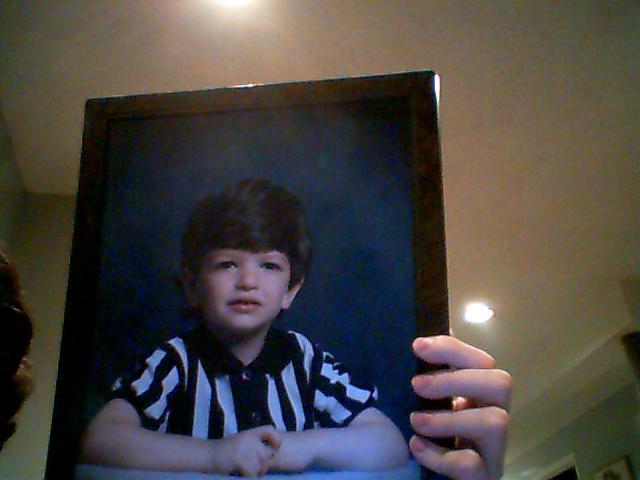
And when I say the first I mean the first. I don’t know how old I was when I wrote it, but I must have been extremely young because someone had to transcribe it for me. They may have even helped guide my ideas while somehow letting me keep my child voice. I found this creased and rusted paper wedged somewhere in my old desk drawer. I can also barely remember having toys or some figures that inspired the characters. 

And no matter how much parts of this very short bit of juvenilia make me wince, no matter how many parts of it make me want to edit it and shake my head, I have to remember that we all start from somewhere. So in honour of this Halloween and all the progress I’ve made, I just want to show you a little bit of where I used to be.

Trick-or-treat my friends. Happy Halloween, Past Child Me. 

Once upon a time there was a castle and there lived a spider, a spooky ghost and a red bat. And then count was visiting the witch. The count won’t take too long.

The next day when it was nighttime it was dark in the castle. The bat was sleeping.

“Oh!” Somebody open the door. I’m getting scared!” said the count.

The candle was lighted and one candle was turned off, and one was on, and one was dead. Then the count was sleeping, the spider was sleeping, the bat was sleeping, and the ghost was sleeping.

“What was that?”

They were all afraid.

Something said, “Oww!”

It was a wolf.

“Help!” said the bat and the spider to the count.

“There’s nothing to be afraid of,” said the count, “Just go to sleep.”

The ghost said, “Boo!”

The bat said, “Eee!”

The candles burned and they chased the wolf away. They lived happily ever after.

The end

Child Me

This is Halloween

This will be the first of two posts that you will see today.

I spent a lot of weeks before and during Halloween differently. When I was a child I would be inundated with television specials, movies, school events, and trick-or-treating. As an adolescent, I spent some time with my group of friends. In my early adulthood I spent a lot of it by myself trying to remember how happy I used to be and imagining all the other people who were having fun that I did not. I spent the rest of my young adulthood, alternatively, with friends and sometimes on my own.

I almost went to a Halloween party last year but I didn’t. I was too depressed and I did what I often do in that state: sleep and work.

This past while I’ve been doing something different for Halloween. Instead of wandering around outside at night in the dark aimlessly, or watching television, or hanging out with friends and lovers I have been busy.

I have been busy.

Last week or so, I covered six films in the 2014 Toronto After Dark for GEEKPR0N. I even covered an extra day, a Wednesday, so I could watch one film that was recommended to me. Those of you that read this Blog or my work at GEEKPR0N already know about this. I wrote reviews on The Drownsman, Wolves, Late Phases, Wyrmwood, The Town That Dreaded Sundown, and Why Horror?

And it was difficult. There were many times I thought I could just watch the films, then go straight home, and write something out that night. But even though I got wiped out, it was totally worth it. The irony is that once, long ago, I was told that I should write reviews for movies — or movies like these — and I didn’t think I was qualified to do so. It’s only in relatively recent times that I’ve realized that the only way to be qualified to do anything is to make yourself so, and start to believe it.

I got some other things published in honour of Halloween as well. Not only did I write a nice short article on the end of Kris Straub’s Broodhollow Book Two, but I got to examine and see just how a creepypasta created by Eric Heisserer the subreddit no/sleep truly lures readers into fear and trepidation. If you have read my articles on creepypastas, you know something of what you might be in for when you read this particular piece of mine.

But I think there is one achievement in particular that I can really be proud of mentioning. Do you recall, that week or so ago before I went off the Mythic Bios grid again, that I was doing another interview: this one live and in-person? Well, with the help and guidance of GEEKPR0N and Toronto After Dark organization … the following actually occurred.

David Hayter Fav and Retweet

Not only did David Hayter, the screen writer of the first two X-Men films and Watchmen as well as the voice of Solid Snake favourite and retweet my review of his movie Wolves I also got to interview him before Werewolf Night at the Toronto After Dark.

You can find my interview with David Hayter right here.

So that has been my time leading up to Halloween so far. The rest of what I intend to do, however, is as follows. Later this evening I am going to the Silver Snail Halloween Party: the same one I didn’t end up attending last year. I don’t have a costume idea as of yet and I’m having some difficulty finding make-up after my last misadventure but I’m going and to anyone living in Toronto or nearby, I hope that you will join me. It’s organized by GEEKPR0N, in part, and it makes some pretty awesome parties and I don’t intend to miss this one this time around.

The next day I’m going to the Comic Book Lounge and Gallery to pay a visit to Drawing For Deb: In Support of Epilepsy Toronto. There will be signings and a 12-Hour Comics Marathon: Special Edition there to raise money to combat epilepsy which claimed the life of Debra Jane Shelly: a well-known friend of the comics community and someone that I only began to know when I first started coming to the Lounge. She was an awesome person and there will be some good people there. I’ve realized long ago that I am just not an artist with pictures, so I will be attending to pay my respects and I may not be there the entire day.

And then the next day I will be going to Horror-Rama: an all-horror convention where I want to explore and particularly meet Jovanka Vuckovic: the brilliant upcoming director of the Jacqueline Ess film adaptation.

Then somewhere, somehow I will catch up with my Doctor Who recaps and next week get back to my fiction writing and probably sleep for a few centuries as I am bloody exhausted.

So this is both what I have been doing, and what I am going to do. It’s funny. When I was reviewing Why Horror? I started thinking about just how it is effective. When I was a child I read many abridged versions of horror stories, listened to and read written down folktales and urban myths. And I would spend time in the now-defunct Hollywood Movies store reading the backs of horror film VHS tapes. I would attempt to avoid watching them, scared of being caught in the web of their details and becoming committed, but so very fascinated with what I might find.

Not much has changed. I think the reason that horror is so fascinating is the fact that when you look at all the gore, the grisliness, and the uncanny you see what you are not and you also get to see a bit of what you are. You are ultimately safe and in sensible surroundings, or so you think, and it gives you a rush of life — of vitality — in the autumn.

That’s why some people have sex after watching horror. That’s why some people have an urge to create stories and study mythologies after watching horror. That’s why people gather around their friends and celebrate their grisly façades: the orange light in the darkness. That’s ultimately why I’m rambling right now.

I’ve spent my life fascinated by, and avoiding life. But it lures you in. It is the ultimate horror but it is also a spectacle, and best experienced in good company. I hope that, today in sharing all of this with you, that I got to be the latter.

Happy Halloween, my friends.

Writing Time Again: And More To Come

Hello everyone. I’m glad I got to spoil you with two articles last week, but this will probably be an exception and not the rule. Still, for a while there it felt almost like old times and it was all creative writing: as I obviously have Doctor Who on the brain.

Basically I am going into writing and deadline mode again. So I am going to be focusing a lot of my energies on my current assignment and, when it’s done in some way or form, I’ll be back in force. But before I go, let me tell you a little bit about what has been happening with me so far.

Very soon you are going to be seeing a lot of GeekPr0n articles. In fact, you already have in some ways. Cyan Worlds even retweeted my article on their plans to make a Myst television series. Myst was prevalent in a lot of my young adulthood and there is something very full circle about being recognized by its creators: especially as it is an article about worlds — Ages — linked to by Writing.

But that all said and done, it’s the season of Halloween and I found a lot of current news to talk about. As the zombies moan, spread the love and you know where to follow me.

There are two things of note that I’d like to mention, though, to this regard. First, I had an important interview with someone who has informed many a geeky childhood and is currently doing some good work. The second thing I’d like to mention is that I will be covering some of the upcoming Toronto After Dark for GeekPr0n.

And it’s funny. For years I had nowhere to go and nothing to for Halloween night proper and now I have two events around that time which I am going to attend. I’m excited and I feel different these days. There is still a lot I have to deal with but, and I think this has been happening for a while, I am not the same person that I used to be.

It’s hard to explain and it doesn’t involve spiritual or alien possession, cloning, mutations, or the dark side of the Force as far as I know. I’ve been producing words like a fiend and even though I didn’t get to undertake my Twine projects like I planned, I still haven’t ruled them out and they will be in my thoughts for the future.

In the meantime, I have some other writing to do and I hope to see you all soon and well. Once again, take care everyone. You are all awesome.