I was going to put an entirely different post up here at the time that is now yesterday. At the beginning of 2012, this Blog was just an idea: if even that.
For quite a few people, 2012 meant the End which, in various ways, it was.
At least, it was for me.
It was the end of my time at School, my apartment on campus, and living in downtown Toronto. It also saw the finish of two longstanding Projects of mine that hovered over my head for the longest time. I might have even gotten rid of some bad habits along the way as well.
But more than any of this: this year was the end of another old life. I’ll have plenty of time to be melancholy about it, but mostly–right now–I feel like it just is.
I’ve thought about some things that have occurred this past year. I will say that my Writer’s Blog has exceeded my expectations. Most of the time, this is a good thing. I try to make my writing clear, accessible, and relatable. I also attempt to make sure that I know what I am talking about or, at very least, contain my writing to knowledge that I already have. For the most part, I feel that I am accomplishing a lot of these goals. However, sometimes I catch myself becoming very wordy, talking about things I don’t fully understand, or trying to mash things together in a way that just … gets awkward and doesn’t completely work.
I’m looking at you, Clouds and Mirrors. This article, which was more of a fan reaction made right after watching the Dr. Who Episode than a well thought-out and analytical review, had its heart in the right place and some interesting creative parallels but it never sorted its identity out. It took me a long time to write it and I wasn’t completely satisfied with what I made, or really what I did. The fact is: it took longer than I expected and there were many times I almost didn’t finish it.
To be perfectly honest, I almost deleted my “Clouds and Mirrors” article until I realized that the reality of this Blog has changed from when I first made it. Gone are the days where I could post something and few people would barely give any input. I know that the article itself has received quite a few “Likes” and it still gets more than a few Views as well: which may or may not be because of the pictures I embedded into it.
One reason it stays here is because others appreciate it and got something out of the piece. But the other reason I am leaving it is because, like I said, the heart was in the right place. When I see something I like, like any creator or geek, I want to possess it. I want to take its essence, and make it my own. There is this impulse to put something like it in my own words and way, and display my joy out of experiencing it. Perhaps by writing this, I wanted to have some part–some unique kind of relationship with it–as well: even if it was something that I didn’t entirely have full knowledge of.
So it stays.
In this New Year, I do hope to keep to my original promise and post things on here and elsewhere that are more than reviews. Don’t misunderstand: there will still be reviews, but I have some other plans as well …
But getting back to the subject of this passing year, I would like to reflect a bit on some of the things I’ve learned.
The obligatory Animaniacs Wheel of Morality reference aside, 2012 taught me two clear lessons. The first is that this is the time to start pursuing what I need to do. This is the point where I need to hone my writing and expand my network of contacts. May 10, 2012 was when Mythic Bios went from being a series of yearly private notebooks to a public online Journal: where “Oh I should make a Blog, but ..” became, “Here it is and I can now begin using it to my advantage.” Sometimes it is an intimating thought: that what I write on my Blog gains a greater amount of scrutiny and feedback now, but it also makes me feel like I am doing something important and it is good practice if I want to keep writing and doing something with that craft.
The second lesson though, has taken much longer to learn. In fact, I would say that 2012 needed the help of the years that came before to hammer the point home for me. And it is this: you cannot depend on other people to get what you want. The only person you can truly depend on to get what you want is yourself. Other people can help you get to the places where you want to go. They can offer support in physical and emotional ways. If it is given to you, you should value it because those who give you this aid are taking time and resources away from their own lives and labour to help or recognize you. Freshly Pressed, for instance, took the time and consideration to look at and feature my Funnies article.
This helped my Blog a lot. There are many of you that found me because the above article was featured. But I didn’t expect it and I know that it is not a given. I just continue to do my thing and take constructive suggestions along the way when they are offered. Ultimately, my writing and the other aspects of my life depend solely on me: and it is one thing to know that intellectually, but a whole other thing to feel it on an emotional level. It has been a very sorely needed perspective that may help me in all of my endeavours and interactions.
But now, it is 2013. I feel like I am leaving a lot of things out, but I do remember one thing. I can’t expect you to keep Following me or being there for me, but thank you for doing so regardless. Thank you for Linking me to other places. Thank you for Following me here. And thank you for Liking me.
So in the end, like everyone else, The End of 2012 has just been the beginning. As I have said before, you are all awesome and I hope that you will stay–and even come along–as I continue to take this space I’ve made to other places.
Take care and have an excellent New Year everyone.
Imagine Calvin and Hobbes, with A Christmas Carol, a Sherlock Holmes detective mystery parody, an English fairy-tale, some steampunk, and a hint–just a pinch–of true love in a whole lot of wonder.
And those were some of the most immediate feelings I had watching the Prequel to “The Snowmen” Christmas Special of Dr. Who.
Now, I am going to go into “The Snowmen” Episode itself: into Spoiler Territory.
First off, from the trailers and the title alone, I got a major Attack of the Deranged Mutant Killer Monster Snow Goons vibe: especially from the beginning when a young lonely boy–Walter Simeon–has a snowman of his own creation begin to talk back to him in 1842. I couldn’t help but feel sympathy for Walter because most of us have been there: where we don’t understand children our age–or even relate to them–and would rather have imaginary friends instead. Unfortunately, Walter made a very bad imaginary friend who would continue to be there with him for the next fifty years: essentially becoming a giant steampunk snow globe and, well, mutating with more snow being added onto it.
Also, a word of advice: if someone ever offers to feed you, it would probably be prudent to figure out of there are more words in that sentence: you know the ones after “I will feed you …” as the now-Doctor Simeon’s workers discovered to their chagrin.
Anyway, then we get introduced to Clara. And then we get reintroduced to The Doctor.
Clara goes outside of the bar that she is working at to see a Snowman appear there pretty much out of nowhere. We then see The Doctor walking by in passing and she accuses him of making it. The Doctor looks very different now: as much as the same Regeneration can. He looks … tired, and subdued. Really, he is very sad and he has reason to be when you take into consideration what happened to his last Companions. He wants nothing to do with anything save for the bare minimum of contact with some of his allies.
So after he gives her some advice, he leaves. But even when very depressed and angst-ridden, The Doctor says interesting things or his mere existence is a curiosity in itself. So what does Clara the barmaid–and later as it turns out part-time governess do? Well, it’s quite simple.
She follows him.
So we go from a the beginnings of a weird horror story to what is now a Christmas fairy-tale adventure as Clara continues to stalk The Doctor and discovers more strange and new things about him. The Doctor has a Sontaran friend/servant named Strax that attempts to get a memory-worm The Doctor has to erase Clara’s memories under his order. Strax is hilarious in that he often advocates militaristic force in all situations and speaks something like this, “Impudent human scum. Prepare to be destroyed … I mean, may I have your coat please?” The Doctor also refers to him as a Potato more often than not.
Of course, with such a mentality Strax keeps touching the memory-worm and forgetting where it is: though there is evidence to believe that the former clone soldier isn’t quite as “stupid” as he attempts to act and often does these things to annoy people if it amuses him: especially The Doctor. Also, Clara doesn’t really want her memory erased, but plays along with interacting with The Doctor: which is consciously what he doesn’t want to happen–he doesn’t want to make a new bond–but subconsciously continues to converse anyway.
This won’t be a part-by-part dissection of the entire Episode, just to let you know. The Doctor realizes that robbing Clara of her memory wouldn’t be a good idea because she needs to remember to “not-think” about the Snowmen so they don’t multiply and try to kill her … conveniently enough.
But while The Doctor is trying not to get involved with the world or–really–people, there are two other people trying to figure out what Dr. Simeon is up to. So if you watched the Prequel link above, you’ll know that there is a Silurian woman named Madame Vastra and her human maid-wife Jenny Flint who essentially solve crimes in the Victorian era.
Dr. Who has always, aside from being an epic show of crazy linked ideas has–at least in the twenty-first century–been very open-minded and progressive. I mean, Jack Harkness is an omni-sexual being and there is such a wide array of civilizations and times out there in the Whoverse that something like different kinds of sexuality is just a given really. So a primordial lizard woman and a human woman being a couple–and being married–in Victorian times is not very shocking to me.
In fact, aside from Vastra–and even then people rationalize her existence as having something of a “skin-condition” (I find it hilarious how the people of Earth’s past never react at all to aliens in Dr. Who or even The Doctor when he or his Companions are wearing entirely different styles of clothes from that time-frame: it just goes to show you how most humans are either oblivious, more open-minded, or simply do not give a damn than even we believe)–two women having a relationship and even having an arrangement not unlike marriage in Victorian times is not unheard of at all. It is pretty telling that for the past while and it seems especially now in 2012, same-sex marriage has been gaining a lot of acceptance and support in–or at least is now really challenging–the social consciousness of many places. But really, I just like how these two characters work together and understand one another: actually complementing each other’s strengths and actions.
These two confront Dr. Simeon about his activities and he doesn’t seem bothered by this (in fact he doesn’t seem to have much emotion at all), and he states that it doesn’t matter what they do because, get this:
Winter is coming.
Oh, Steve Moffat. That reference to A Song of Ice and Fire was hilarious. My Mom didn’t know why I was laughing so much.
So Vastra and Jenny eventually find Clara: whereupon they ask her why she is so interested in The Doctor. By this point in the game as it were, Clara has seen the TARDIS after climbing a spiralling ladder like Psyche chasing Cupid, or Jack going up the beanstalk, into a cloud where it is resting and she knows that there is some bad stuff about to happen at the house that she is a governess at: particularly with a pool that is frozen over after a previous governess died in it. One of her wards has been having dreams of this former governess coming back to punish her and her brother. She knows she needs The Doctor.
Vastra and Jenny force Clara to answer the former’s questions with one-word answers. At one point, Vastra flat-out asks Jenny why she thinks The Doctor should help her. Of all the words that she could have chosen, she spoke one word.
Pond.
Yeah. Of all the words. That one.
So this does get The Doctor’s attention. So he starts parodying Sherlock Holmes: figuratively and literally. He beats the giant snow globe with a stick. Then he later he does more sleuthing where, despite himself he goes up to the manor where Clara is staying after exchanging hand gestures at each other. After Clara and her wards are being confronted with a snow-version of the former governess that drowned, The Doctor pulls a Punch and Judy play by having the wee-little puppet man of Mr. Punch use his sonic driver on her.
Because, you know, “That’s the way to do it!”
In fact, making another popular cultural reference, this whole episode was–like many of them but particularly this one–a Tragical Comedy, or a Comical Tragedy. Yes, I am a Neil Gaiman fan. It also doesn’t help that Mr. Punch is an enduring English symbol and archetype. Or maybe it does.
It turns out that Dr. Simeon and the Snow Globe want the Ice Governess: to use her as a prototype to make a race of ice people that will supplant humanity. Clara and The Doctor lure the Ice Governess away. This is not before The Doctor tells the children’s father that he is Clara’s “gentleman friend,” though far less eloquently and more abstract-awkwardly as he usually says things and Clara herself decides to take matters into her own hands and kiss him. Because she seems to have a special kind of impulsive streak tempered and complemented by daring and a strange form of intuition. Not deduction like Vastra: Clara is pure intuition with a devil-may-care attitude. Right: that is my last Punch and Judy reference for today.
Finally, in the TARDIS, after Clara surprises The Doctor by not being predictable about her first impressions of said TARDIS, The Doctor finally seems to give into something that he really wants and gives her a key. You know the key: the one to said TARDIS. You also know what that means. This is a big thing for him to do: after everything that has happened. I honestly don’t know how he survives losing everyone he cares for, and I can understand why he has periods where he wants nothing to do with anything.
I also understand how he can’t not stay away when events conspire to bring him and this strange Victorian girl: who speaks Cockney and free in her pub job, and “proper crisp English” with a hint of mischief as a governess for upper middle-class children … and who is also immensely beautiful. Yes. I said it.
Their relationship unfolds fast, but what is Time to a one thousand year old Time Lord and to a human being, who only lives, let’s face it, in a brief moment of said Time? It’s everything.
That is the point where the Ice Governess comes after them and drags Clara and herself to a death by falling off The Doctor’s cloud.
Because the Universe seems to be a bitch to The Doctor like that.
Of course, it’s not so simple as all that: Comical Tragedy or Tragical Comedy as it all may be. The Doctor ends up having his confrontation with Dr. Simeon and his Snow Globe. Dr. Simeon is the proprietor of the Great Intelligence Institute. There was something really ominous about the name “Great Intelligence”: as though it had more significance than being a one-off Dr. Who monster. The Doctor critiques his antagonists as stating that making a world of snow people is “Victorian values” incarnate: at least overt values.
See, that is the thing about Victorian times. There was how you were in public and how you were in private. Some people understood that you could be different in different spheres and there was an implicit understanding that what you did in private was your–and yours–own business. Of course, there is other side of it: in that some people chose–or felt forced–to embody stratified notions of gender and social interaction in all aspects of life.
The father of the two children that Clara cares for does not think it proper to show affection or even take of them himself, for instance. In addition, there were real laws in place that forbid overt or “discovered deviant behaviour”: otherwise known as displaying affection or sexuality in a non-sanctioned manner. Think of Vastra and Jenny’s relationship, or even the fact that Clara did not use her Cockney accent with the children often: to the point where they called it her “other voice” or the other voice of the lower class of Britain perhaps? Perhaps only in a society like this one can an accent be considered another voice.
Now consider that Dr. Walter Simeon grew up in this strange schizophrenic culture. The adults were sad and even considered it unhealthy that he wouldn’t interact with his peers at all. But while Clara flouted and manipulated the rules, and Vastra and Jenny were exceptions and lived as “an open secret”–with a great deal of geniality, politeness, honesty, and a whole lot of “none of your business,” Simeon dealt with it by deciding that human beings were “silly” and that he didn’t need anyone.
The Great Intelligence is a highly psychically-receptive being. It took all of these impulses from Dr. Simeon and anyone around it: shaping itself. Of course, it goes deeper than that. The Doctor talks about how the snow that is the extension of The Great Intelligence only mirrors living beings around it. But there are a lot of mirrors in this entire Episode: especially The Doctor and Dr. Simeon. Both–in a lot of ways–are scared and withdrawn little boys that do not want to interact with the Universe as it is. Dr. Simeon patterns the Great Intelligence with his need for order and an inner emptiness.
It actually reminds me of another mirror that The Doctor’s other mirror possesses:
His new Control Room desktop-theme is much different than the other recent ones. It is apparently reminiscent of the Fourth Doctor’s TARDIS room, but there is something more angular, far sharper in angle and just …. colder about that blue light in there. The inside of his TARDIS represents his past mood and mind after the loss of his Companions. Bear in mind, this is the first time we have seen this desktop of his and it is no coincidence that it looks as cold as the season of 1892. The fact is: Winter came to more than just Great Britain. If things hadn’t been challenged, The Doctor’s life would have been what the Great Intelligence wanted to make the world: a land of “always winter, but never Christmas.”
I also feel I need to make special note here: I do not say that Clara or any of The Doctor’s Companions are mere mirrors of him. Writing about mirrors reminds me of something that Virginia Woolf stated with regards to how women had–and are–perceived only entities in relation to men. This can be applied to Dr. Who and his trend of female Companions. All of them, especially Clara, are entities and fully actualized people in their own right: something that Dr. Who writers Davies and Moffat attempt to express. Whether or not this is successful is something that can be debated at length, but I personally think is something a very fine distinction that needs to be made: that just as The Doctor gives definition to them, they give definition to him as well. As it is, even though The Doctor’s desktop remains as it is so far, The Doctor himself is brought out of that mood by the warmth of another–exemplified by Clara already asking where the kitchen is in his TARDIS–prompting him to express his own and no longer deny what he is feeling.
Then you have Simeon, or the impulses that drive this otherwise emotionless man, that can only seem to function around extensions of himself … or hollow shells. Even the wrathful Ice Governess, the result of his and the Intelligence’s progress is just a mirror–a symbol–for the repressive aspect of the Age of Victoria. But as it turns out, it is Dr. Simeon who becomes the hollow shell when The Doctor’s attempt to destroy Simeon’s memory–as the thing that fuels the Great Intelligence as its mirror–backfires and the Intelligence possesses Simeon. However, as with most of The Doctor’s enemies, it made one miscalculation.
Ignoring the rest of the human emotional spectrum.
Remember Clara? Well, she is dying. And the Intelligence feeds from emotion and memory. So as Clara is dying, everyone in the manor–the children she cared for, their father that cared for her, and the others–grieve and their feelings manifest on the Snowmen and turn into water.
Or, as The Doctor put it, he can no longer stay on his cloud … because it has turned into rain.
So the Great Intelligence seems to dissipate and Clara dies.
Or do they?
In the end, there are some … interesting details about Clara. You know, even without knowing these things before hand, I knew–from her very interaction with The Doctor–that Clara would be special. Each of his Companions is special, but she will be more so.
We have essentially been watching The Doctor grow up from his first incarnation onward. Each Companion has been integral to this. It is strange to watch The Doctor interact with his future wife River Song in temporal-reverse and she will only associate with him so far because she has intimated that he has a long ways to go before he is the man she paradoxically will meet later.
I’m going to intimate some more and possibly be very, very wrong. Now we’ve seen how The Doctor acts with his other female Companions. We know he had a family on Gallifrey ages ago: though they may have all been artificially Loomed. I believe he has been married before and is no stranger to having a romantic relationship. But consider that his whole world was destroyed. He has struggled with survivor’s guilt and has a certain kind of detachment to cope with it. Even when he travels with others it just reinforces that safety protocol of distance.
I will say this now and possibly be wrong, but the only time I had seen him look at someone like he did with Clara was with Rose.
And that says a lot.
Just that one scene where they looked at each other as he gave her that silver key.
All right, I admit it. I am a romantic. But I want to express one main thought: Clara made this entire episode. Period.
So as this look at “The Snowmen” comes to a close, I just want to say a few more things. I looked up The Great Intelligence. It has in fact been in the Whoverse before and … has Lovecraftian origins even. That just makes me smile. And that is it. It is good to see The Doctor up and out again. I look forward to seeing him try to figure out the physical–if not the humanly unique and individual–mystery of Clara Oswin Oswald and where he might have … seen her before…
Potential Hobbit Book and Film Spoilers. You have been warned.
This past weekend, a day after its first official release, I saw The Hobbit: An Unexpected Journey. And it was important that I did.
I mean, yes, as a fanboy and someone who loves Middle-Earth I would not have been able to look at myself in the elven enchantress Galadriel’s mirror if I hadn’t gone to see it, but I’m talking about something else. It seems like I’m almost always talking about more than one thing these days when I look at, and share, what I love.
I honestly … didn’t know what to think when this movie finally became a reality. It reminded me of all the times back in the early 200os where, once a year on a cold winter’s night I would go with friends to Silver City in Richmond Hill and get to see these films unfold. There is a warm, epic feeling involved in watching something like these films in the heart of the season. I can’t even describe it, but the closest thing I can tell you is that it was like I was coming home.
Home.
Yes, that is the word and it is a very apt one. In 2001, I was nineteen years old. I had just entered University and it was overwhelming. After I’d graduated high school, my friends went to their separate Universities and jobs. Also at this time, I had been involved in an online roleplaying community that just … wasn’t meshing well with me. Or that I wasn’t meshing well with. Really, it was probably a bit of both. I couldn’t find an offline equivalent of this game with actual people–partially because I was shy and introverted–and there never seemed to be a game going on. And I always felt, at the time, that I could never say the right thing. The irony was that it was a game about magic.
In those days, I was pretty smart and I read what I could, but I was also in that age-range or with that personality type back then that either didn’t want to admit that I didn’t know something, or felt entitled to be educated, or by admitting ignorance somehow thinking that this excused it.
I was also not very happy with my life. So here I was at Lord of the Rings: specifically TheFellowship of the Ring. I had no idea what to make of it or what it would be like. And then … it happened.
I was transported into a whole other world that I had read to me as a child. The music was beautiful and terrifying and fun depending on the moments. The characters–as Hobbits–were very relatable. And the scene where Gandalf fell actually made tears come to my eyes. As I watched this movie, then, I thought about everything else in the back of my mind. I found it ironic that I was having so much difficulty and frustration with a game about magic and then it occurred to me that I was watching magic–real magic–right in front of me. I remembered what it was all about.
The only thing that really happened after seeing this incredible movie was that I dropped out of the game and tried to focus on the things that mattered: my work, my friends, my life and … my own stories again.
The long-winded point I’m trying to make is that the first Lord of the Rings movie clicked something back into place way back when. The other two never quite did it, though they were good, and as far as I am concerned Fellowship was the best film of the whole trilogy. It just had such symmetry, and life, and warmth in it. It was complete in itself. I was utterly in love with the magic of it.
So then The Hobbit comes out. It’s December 2012. I’m thirty years old and am in another transitional time. I have moved on from school. My friends tend to do their own thing now and my other friends and I have since drifted apart. I’ve graduated from Graduate School, but I’m still looking for work and money. I’ve been tired and frustrated. I have been dealing with depression and anxiety to the point where sometimes I barely go outside. In addition, I’d recently been delving into personal and creative matters that had left me in a really bad mood. Sometimes being a writer does that: you mine the material inside of you that starts to flame up like any Balrog, and you can delve a little too greedily, a little too deep into that black ore of you.
I used to go out a lot more and explore, but as time has gone on I have become more and more sedentary due to many of the above elements. I gave up on a lot of things, and ensconced myself in my hole almost as much as Bilbo Baggins himself.
A long time ago, my friend Lex forced me to navigate my way to her old place in Toronto on my own. It tells you something that I didn’t have the knowledge or the confidence to do so on my own. I was a very sheltered person and I pretty know that this trait has led me to some of the above difficulties: especially for a natural introvert.
One day, after I did indeed learn how to get to her place, I did something entirely spontaneous and went to a gathering of new and unknown people deep downtown on my own. I remember Lex actually saying that she was proud of me. That day I remembered Bilbo Baggins and something he said that I quoted as a heading on my old online journal. He said, “I think I am quite ready for another adventure.”
I look back on those words that I quoted and the years that I followed them. You know, people think that my role-models are wise figures and Dark Lords, and most of the time I would agree with them. But in that one moment, my role-model was a Hobbit: a particular Hobbit who after a lifetime of anxiety and adventure, very calmly and benignly realized it was time that he went on another one.
So now we have Peter Jackson’s movie opening the day before on Friday. And I pretty much gave up on seeing it anytime soon. I was going to wait maybe a few days or a week. I was in a really black mood: dwelling on things from the past and staying away from people. But somewhere I still hoped that Saturday that my parents and I could go see this film that I wasn’t sure I was waiting for. I was almost scared to see it for reasons that I wasn’t conscious of at the time. So my Dad came to the basement and I had every reason to not only say that there was no way we would be able to see that film the day after its first release, but that I really didn’t want to go out to a movie–or anywhere else–at all.
The truth is, I wanted to see this movie badly. So much that I had to convince myself that I didn’t. I know some people who got advanced screenings and I was a little jealous of this. My reasons for not going to see this movie were pretty sound: there would be a crowd, times would sold out, there would be no parking, I had to meet my friends the next day and so on and so forth.
I had every reason not to go except for one. And this one gnawed at me like a small ember coming a reluctant inferno. And the anger I was feeling towards a lot of things became something else. So I went to my Dad and said to him, “Well, we can try it. If not, well we had an outing and we can try it again some other time.”
So we eventually all left and went to Silver City. We were in luck. We had left early and the line wasn’t bad. My Dad got parking and we got the seats that we wanted. That ember was still burning in me and I didn’t want to fuel it too high, but just enough to get me through this. I was remembering the season of the first movies and how I role-played a custom made world with my friend Noah back when he lived closer by. How I felt then with that magic from that world and ambiance.
Then, in that line that was not as long as I thought it would be, I realized why I was hesitating throughout all of this. I realized I really needed to feel that magic again. I needed to feel it now. Right now. I delved into a necessary darkness, but now was the time to stop delving and writing and just experience something beautiful. And I was afraid–terrified–that The Hobbit wouldn’t provide that magic from 2001, and other times: that I would still be feeling the unhappiness–the sheer bitterness–in me and I just couldn’t bear it.
I’m no fool though. This was a movie: just a movie. It was–and isn’t–a cure-all for all woes. It isn’t a psychologist or medicine. It is a piece of entertainment. But that was exactly what I was looking for. Entertainment. And immersion into a whole other world: a familiar warm world in the cold of the winter night.
Experiencing The Hobbit at thirty was different than experiencing Fellowship at nineteen. Sometimes it felt like it dragged a bit. Other times the fighting got a little much. I over-thought some things and tried to remember the book it was based from. The singing … was strange in that my impulse would have usually been to wince, but I just couldn’t find the strength to.
I think the most poignant moment for me was when Bilbo woke up in his Hobbit hole–after Gandalf almost cheerfully “ruined his good morning” by inviting thirteen questing Dwarves that drank and messed up his place–and found the place spotless again.
And found himself alone.
I thought about that. I thought about Bilbo completely out of his element and Gandalf doing his damnedest to wreck his peaceful life out of very intrinsic good intentions. I thought of the laughter, mirth, the drunkenness, the storytelling, the sombre singing of the Dwarves that lost and wanted to reclaim their stolen home from an impossible monster, and I thought of Bilbo with his books and armchair encountering all of this and finding that spark growing inside him: making him uncomfortable in his comfort that was never really comfortable for who he was at all.
Then I thought of him finding himself alone in the peace and quiet again: with the adventurers’ contract that he never signed.
And I’ll be damned. I will be damned. I will be three-times damned if I had not felt the same way too many damn things (four times) in my own life.
So Bilbo ran like a crazy little man after the Company of boisterous Dwarves and a meddling old red-wine drinking Wizard. I sat there in a theatre seat and watched. I also watched as he entered and left Rivendell: first with wonder at its beauty, and then with longing for its peace. For me, that was the second poignant moment for me: because we all know that the next time Bilbo–now a young man–goes back there, he will be much, much older and with only one journey left to him then. After the film was over, I came home and went on my Facebook. I thought of writing this Blog entry: which in the end took much longer than I thought. Then I thought about how the next day I was going to be playing a favourite old game with Noah and the others.
It didn’t end up happening, but since I was out anyway I decided to explore a bit. I ran into an old friend on the subway, then I hunted unsuccessfully for a camera, and then came back home. That darkness I was feeling is still there. It will always be and I don’t pretend otherwise. But I’m feeling a levity. I’m not “cured” of myself. I have a lot of work to do and I know it will take one step at a time to balance out my life, but now I am remembering that I can actually adapt. I can work around the anxiety and the bad moods.
I might not have a meddling Wizard to carve a strange bit of graffiti into my door, but I guess I can fulfill dual roles for myself. I have to move at my own pace, a little faster than that of an Ent’s, but I will do it. I have plans. My journey isn’t over. The writing is just part of it and will benefit in the long run from the things I plan to do. Each day you live once and I want to do different things each day: even the small things.
So before I wrote this Blog post, I went on my Facebook and wrote the following as my status. And I quote:
“Matthew Kirshenblatt thinks The Hobbit was awesome. In fact, I think I’m quite ready for another adventure.”
Foregone Warning: the title of this post is a play on words and borderline off-key rhyme. It almost verges into the territory of the pun. Actual warning: this article is going to be a very link extensive post and I hope it will all make sense towards the end.
I said before that it seems like we are in the process of the rise of a new paradigm: based on the geek nostalgia of the late seventies, but mostly the eighties onward to early 2000. As I said before, I feel I need to be more specific about this. What I actually mean is that we have been, for some time now, at a point where we can look back what was the present not too long ago and actually subvert and critique it. I mean, we can actually ask some questions about a lot of things that we took for granted: either in all seriousness or through satire.
For instance, look at Robot Chicken and how it makes fun of a lot of popular culture from the 80s and onward. The thing about Robot Chicken, however, is that it makes fun of generally everything to a warped and twisted degree of hilarity: and I wonder if this hasn’t also been a product of the past thirty or forty years or if it takes a paradigm about that amount time to gestate and create itself.
I guess I am trying to talk about a few things at once: which is not the first time something like this has happened for me. So I’m going to take a risk and bring up some theory, and then see what I can do with it from there.
In about the 1980s, there was–or even is–this theory that we had entered something called post-modernism. There is a lot of debate as to what post-modernism actually is, but from my understanding it seemed to be a period in which literature and other media had become fragmented or combined with one another to make entirely different meanings from what they once were, or could have been. In addition to this was the rise of another idea called deconstructionism which, in the very reduced way I’m explaining it, is a theory that likes to take things apart. When you combine these ideas together, you essentially create writings and cultures that are incredibly ironic, sometimes “self-aware,” and that like to dissect themselves while at the same time attempt to reveal a multiple amount of different meanings.
There are a lot of scholars and artists that dispute these terms, of course, and say that every generation or paradigm goes through a phase of critiquing what came before and making something new from these elements afterwards. I like to think that the 80s and onward really favoured making pastiches–narratives and stories created from parts of things like patchwork monsters–to either subvert something that once existed or make as unique as is humanly possible.
Now, take that idea. You can definitely apply that to Robot Chicken. But it goes further than that and it doesn’t always manifest in the same way. For instance, take ItsJustSomeRandomGuy. As I mentioned in another post, he takes primarily Marvel and DC superheroes and villains and actually makes them aware of their fictional status but keeps them in character in doing so and even manages to make some incredible meta-narrative plots with a whole lot of geek culture references. I‘m A Marvel, I’m a DC is a whole lot less “profane” than Robot Chicken, but they operate on similar principles. I also would be greatly remiss if I forgot the How It Should Have Ended series: where popular movies and videos are depicted as cartoons and their plots are changed or subverted by … well … common sense. But since when do good fictional plots make sense with common sense? 😉 We can argue that point.
The whole idea of popular cultural or geek references, sometimes to the point of being self-referential in different media seems to have originated from Joss Whedon’s Buffy The Vampire Slayer: where in addition to a whole lot of witty “dialogue without pity,” there was a regular string of different kinds of references. The issue, however, is that I’m not sure this where it came from, or one of the points of entry into mainstream culture and entertainment. All I can say is, it was for me.
I have noticed, however, that a lot of my examples of this paradigm are very television and Internet-based. And there it is. I would argue that a paradigm or a culture is created when it evolves to the point of being able to look at itself and critique itself. And right now, this impulse, which may have started in the 80s as we know it, has sky-rocketed as information technology has advanced.
Look at the Abridged series for instance. Abridged series are fan-made parodies of television shows and cartoons. Parodies like LittleKuriboh’s Yu-gi-oh Abridged and Team Four Star’s Dragon Ball Z Abridged have become very popular and entertaining shows among fans: so much so that many other fans create their own Abridged series, or parody the Abridged series that exist. They are practically viral phenomena.
And these are just the fictional examples. I haven’t even begun to go into the actual Critics like The Nostalgia Critic, The Angry Video Game Nerd and Cinemassacre Productions, Nixie Pixel, G33kPron and countless others who review and critique video games, movies, and geek culture old and new. They also use the pastiche form in some cases to make various verbal and media references. There are also so many more people we do this as well.
Now, somewhere in all of this fictional and non-fictional stuff … is me.
It took me a really long time to realize that not only was I already a part of this nebulous process, but that it was legitimate and more than okay to be so. I’ve had at least one teacher or two who would have once considered comics and video games utter dreck: or at the very least very un-serious diversions from real life. And I’m not going to lie to you or myself: there is a lot of garbage out there that isn’t even entertaining like “YouTube Poop”: videos created specifically to be obnoxious. But every literary and media culture has garbage. They also have gems and other treasures.
Think about this prospect. All the video games you’ve played and the comics you’ve read are becoming references that more people from a generation of thirty or forty years understands. These references make it into literature and criticism. Moreover, we exist in an Age of Information: where many obscure and old elements of our childhood are much more accessible to us now than ever before.
Some scholars have even argued that we are–or we were–in an age of Hypertext: a situation where we can click on a vast amount of chain-information through links and linked words on the Internet. You know, like when you are on Wikipedia or anywhere else, and you search for one thing, and then click on a highlighted word or phrase to be linked to another–or multiple other–online pages. In part, this allows us to look back on “our childish things,” and we don’t turn our backs on them, but instead we embrace them with an adult perspective and understanding that only someone who knew them way back when can give.
Moreover, we can even take this perspective–possibly created from our own nostalgia–and apply it to times that existed before us, or take that and make something entirely new in our time now. But also think about this: in addition to having more information technology, we are developing more interactive technology as well. Video games are much in the same place that comics, and film used to be–and to some extent–still are in public opinion. They have not always been respected, but as we continue to make them we can add more content, more distinction, and more variety. We can–and we have–gotten to the point where video games can even make references or “literary allusions” to other video games and culture in general. I am definitely going to revisit this thought at some other people.
Then consider the other people who participate in these interactive narratives and add the Internet to that fact: which connects people all across the world and different forms of life. Sometimes, I believe–in my more optimistic moments–that we could be on the cusp of creating something truly great and maybe even in our own lifetime. I can’t even imagine what will come after this if all goes well.
So in all of this, I am trying to find my own place: to find my niche. I want to take advantage of this time and do something that matters. This Blog, in no small way, is a part of this drive. It is here that I can combine my geeky interests with my academic background and my creative impulse to construct new things and state my opinions. I want to be a part of this. I want to do something great as well.
I grew up in the nineties or, as a friend of mine likes to chant, “90s 90s, living in the 90s!” Once, it was my present and sometimes it’s weird–really weird–that it and the early 2000s aren’t anymore. Sometimes, I feel time-displaced. I feel lost. I have another acquaintance who once stated that the children of the 80s, and even those before are a Lost Generation: of people who never really achieved their full promise in today’s world. But we’re not. We’re really not. I think we have been coming into our own and we will continue to do so as we ascribe a multiplicity of new meanings to old things, and create things that will make other things together.
Because there it is: perhaps post-modernism and deconstructionism might have taken things apart to see how they work, as they work, but we–whether we are in a Hypertext age or not–are starting to put them back together … and make different things entirely. Now that is something to celebrate.
For the purpose of the rhetoric in this article–its method of expression–I am going to be using the general second-person pronoun of “you.”
I’ve gone to Conventions before. They are some of the few places that have the opportunity to actually relate to people who have similar interests as mine. I’ve been to the crowded, but varied Toronto Fan Expo. I went to Anime North with all of its variance of cosplayers. I have gone to, and volunteered at the Toronto Comics Arts Festival. I even went all the way to Atlanta to go to what is arguably a grandparent of them all: Dragon Con.
I don’t go to nearly as many as I should: given what this Writer’s Blog is about, and the fact that I’d like to meet with more people who have similar interests to my own.
So I’m not really going to say anything new. There will be no insight into anything here that you already haven’t read a thousand times before. The sad thing is that I feel like I even have to repeat this at all because you would think, by now, that this would be common sense. But I have two points that I’m going to make.
First of all, when a girl or a woman–or anyone–is at a Convention, they want to be there. Period. If they have taken the time, such as at Anime North, or Fan Expo, or Dragon Con, or any other Convention or Festival to dress up as a fictional character or otherwise, chances are they want to be at this Event and they know who they are dressed as. Some good friends of mine, and people I love create their own costumes from raw sewing materials. Also, I’ve been told that–as such–it is more than okay to compliment someone on their costume–self-made or otherwise–and to ask to take pictures of them. Hell, you might even talk with them and make a friend.
Hey, it could happen, or so I hear.
So please do not talk about who knows what about what character, or series, or franchise and then some.
And even if they don’t, they are there–after paying money and a substantial amount of money at that–to have fun. That is what a Comics, Video Game, Film, and Geek Convention or Festival is ultimately about. To have fun.
They are not there for you and they do not have to fulfill your standards as to what a “true geek” should be. And here is some more common sense, I don’t care what their costume looks like, you do not have the right to touch someone without their permission. This is basic kindergarten knowledge. Do not touch someone without their permission. Period.
Also, here is an exercise. Imagine that women can create, buy, review, play, and add to Geek Culture. Or, you know, simply enjoy it.
Well, you don’t have actually imagine this, because this has already happened. And it is happening right now. Because guess what: women are people. People make choices and sometimes different choices from those you might make. Therefore it is pretty foolish to make generalizations or assumptions based on intrinsically different individuals who happen to have flesh bodies like all human beings do.
So here is something constructive that I can suggest. Talk to a woman like a human being and treat her like one (because well, duh, she is one), and you might learn something about another human being who may or may not share the same interests as you. Encourage them to create and review works. In fact, encourage anyone to do that. Moreover, if you do not agree with what they have to say, insults, threats, and sexist remarks really will not help your case or make you look any more intelligent by comparison. If you have something constructive to say, take the time to say it and remember that you are talking to another human being who has their own thoughts, feelings, and experiences.
And as your parents will tell you, if you don’t have anything nice to say, don’t bloody say it. This man here astonishes me not so much because of his views with regards to “a majority” of female cosplayers–of which I don’t agree with in the slightest–but because he is an artist and he decided that it was wise to publicly post this for anyone to see. I can’t really fathom it, to be honest. As an aspiring creator, cultivating an audience is important to getting your work off the ground, and to continue supporting it, and this just looks like a whole lot of personal sabotage of everything he has ever collaborated in. It’s just sad. It’s just really sad and unacceptable.
So I am going to get into the second part of my rant now, which will also begin with the word “unacceptable.”
Just because you like a certain work, or have followed something for a while, or bought a wide range of products, or have Joe Shuster’s autograph, or written ridiculous fanfics, or created other works, or any wide variety of Geeky things does not make you better than other people. I’m now really talking about the overarching issue here in addition to sexism: elitism.
Now, you can find jerks in any human endeavour or culture of some kind. They’re jerks: enough said and you don’t need to waste your time with them if they bother you that much. But–but–that does not give you or anyone else the right to make the judgment that they are not “true geeks” and it doesn’t reflect well on what you love by disparaging others who may not meet “your standards.”
What is a geek? Honestly, I believe that a geek is someone who really loves something to the point of obsession–or bordering on it–and it can be a wide range of different subjects and objects. Just because a geek might not know as much as another, or doesn’t own as many toys doesn’t mean they are any lesser. The term “geek” and indeed any label is problematic at best, so the rest of this is going to be more of my opinion: as if you haven’t already heard enough of it.
Do you know what I think a “true geek” is? I think a true geek is someone that loves something so much that they are willing–and happily so–to share that love with someone else. This could be in the form of education, or telling stories, or hanging around each other, or making things together, or playing games together, or trading knowledge, skills, and experiences, or something even so basic as simply acknowledging that–even if you don’t share the same interest–that you can at least respect it.
Because here’s the thing. When you get to the point of trying to prove you are better than someone, you are entering a pissing match.
And the thing about pissing matches is even if you win, you’re still going to be covered in urine.
So keep that in mind. I actually like Conventions and I’d like to it to stay that way. And if they can be even better, then I am all for that too.
Credit: Matt & Kristy on Flickr, whose picture and costumes these actually are.
I always find it amazing when you set out to write one simple thing and then not only does it become more complex than you thought it was going to be, but the implications of what it might say can be very difficult to gauge as well.
My comparison of the character of Miracleman to the protagonist of Virgil’s Aeneid did not.
Aeneas is depicted by the Roman writer Virgil as not only a demi-god and a high-ranking survivor of Troy after its Sacking by the Achaians, but also as the founder of another greater Empire: Rome. He has a son named Ascanius from his wife who dies during the end of the Trojan War, and has a few adventures dealing with the gods plans for him. In fact, he leads his son and the survivors of Troy to a new life: carrying his father Anchises with him out of the lost city. His father is also notable for having been a mortal man who had been chosen by and ultimately impregnated the goddess Venus (or Aphrodite): who is also the mother of Aeneas himself.
Later, Anchises dies but due to his intimate association with divine leaves him a whole other legacy: so in a way it is more than fitting that the hero carries his father on his back and ultimately later lays him to rest.
But while he is ultimately loyal to the gods–to their plan to make him the creator of a new Empire–he has his doubts: about himself and about how successful he will be. From what I remember, he mourns his old life and some of the decisions that his destiny forces him to make: such as leaving Queen Dido of Carthage whom he had fallen in love and had a relationship. Much later, he marries Lavinia of the Latins in what will one day become the city-state of Rome while his son becomes his heir.
But before this, Aeneas descends into the Underworld to see the future of the Empire that the gods decreed that he would help build: learning about the future of his people and descendants in immense detail from the spirit of his now deceased father Anchises. This is obviously a transformative experience for him–making him see that reality is far different than he had always known–but what strikes me is that the doubt never really leaves him in Virgil’s depiction. I will go more into that later.
Miracleman, or Marvelman–also known as Mike Moran–is depicted by Alan Moore as a genetically altered human being that survives the destruction of his super-hero team with few of his memories intact. He was engineered with advanced alien organic matter and technology to fulfill a purpose that was ultimately taken away from him when the authorities that made him and his Marvel or Miracle Family believed them to be too dangerous: and sought to destroy them. Despite this, Miracleman and his Family were created by Project Zarathustra to help “save” the world: or at least the status quo version of it at the time.
Miracleman has a wife named Liz while he still believes he is a human being and eventually reawakens his power and many of his lost memories. At first he believes he is a superhero, but after a trip to the Spook Show bunker that created him and his Family, he realizes that he is the result of a physical and psychological weapons experiment: his first trip to the “Underworld,” if you will. Eventually, he meets his creator–and nemesis–Dr. Gargunza who reveals more about his true nature before trying to kill him.
Gargunza himself is a mortal human man that has also–in a way–delved into the divine by adapting crashed alien technology to create Miracleman and his Family. Miracleman also carries him: though in a somewhat different fashion than Aeneas and Anchises.
He both honours his nemesis creator and sends him directly into the Underworld where, at least in Neil Gaiman’s run of the comic, he remains in another Underworld … in a sense. 😉
The hero ends up having a child named Winter with Liz, who eventually leaves him when she can no longer relate to either him or his superhuman and intellectually advanced child. He also gains a new lover in the form of Miraclewoman. In the end after a time in his original base of operations–the Silence–to mourn his old life, he, the remainder of his Family, and other heroes he has assembled take it upon themselves to create a utopia on Earth: whether ordinary humans like it or not. This also ushers in the creation of a new race of humans created from his DNA: of which Winter is the first. At the same time, even though he discovers what he truly is and that he seemingly made his own destiny upon the world, Miracleman never loses his sense of doubt in his own motivations or what he has wrought.
So we have two demi-gods that survived the destruction of their way of life, losing loved ones and finding new ones, creating heirs to the Empires that they leave behind, finding knowledge and terrible enlightenment in the Underworld, and reshaping the status quo while always questioning their motivations in doing so. These are the superficial similarities and differences between the two figures, and you can definitely see some eerie parallels at work. I’m not saying that Alan Moore attempted to copy Virgil, or was even consciously inspired by this epic. In fact, I’d venture to say that it is more the case of the hero archetype that functions similarly in both an ancient novel and an early 1980s comics form.
But the implications, for me at least, go deeper than that.
I’m mainly thinking about how both stories end: especially how they end.
Aeneas is told that there are are two kinds of dreams that leave the Underworld from two different gates: prophecies from the Gate of Horn, and false dreams from the Gate of Ivory. After being shown Rome’s future history, Aeneas is shown the way out of the Elysian Fields and the Underworld: specifically through the Gate of Ivory. This act says a lot of things right off the bat and perhaps foreshadows the very end of The Aeneid itself.
It is a strange ending: almost a very abrupt one. Aeneas confronts Turnus, the King of the Rituli and former suitor of Lavinia, on the battlefield. The latter instigates a war with the Trojan survivors with his own subjects after he loses the hand of Lavinia to Aeneas. At the very end of their personal duel, Aeneas gains the upper-hand and Turnus begs for his life. Aeneas actually pauses for a few moments, and as a reader I can almost picture him looking right at the reader somehow, before he lets anger consume him and strike his enemy down. The last obstacle to Aeneas’ destiny over the Latin people and Rome is removed: but it is a troublesome and problematic ending in that Aeneas, despite fulfilling the will of the gods and having seen the future of his actions–or because he saw the future before he left through the Gate of Ivory–hesitated for that one moment of possible doubt.
That is one possible reading of The Aeneid in any case. I mean, what could it possibly mean if you saw a glorious future and legacy before leaving it through a Gate of false dreams: of lies?
Then we have the way Alan Moore ended his run of Miracleman. Miracleman’s entire existence, despite his extraordinary powers and advantages, has been a layer of dreams and lies. People have constantly manipulated him in some way or form with either maliciousness, expectations, or even good intentions. Finally, he makes his own decisions: not merely for himself but for the species of fallible beings that created him.
He does this after killing his former friend, Family member, sidekick and now nemesis and mass-murderer Kid Miracleman–or Bates–having him return to his child form, promising to save him, and snapping his neck.
The beginning of a new utopia in Miracleman’s version of a 1980s world starts with him cradling the half naked brutalized child alter-ego of a friend that he failed to save and who he himself kills for the “greater good.” And even after he eliminates capitalism, ends world hunger, encourages the advancement of medical science, creates an Earth alliance with advanced aliens, as well as creating a process of giving normal human beings powers like his own, where he and his heroes have essentially taken rulership of the Earth for themselves in a benevolent dictatorship– they have become the embodiment of the human need to have gods to aspire to and worship–that he stares from a balcony at the very end of the story … and he ponders again, in his garden of horrors and wonders, if he actually did right.
This is the main reason why I see Miracleman as an Aeneas figure within Alan Moore’s and–to some extent–Neil Gaiman’s run of the comic. I was also willing to end it at this point as well: to merely show the parallel between these two heroes with problematic issues to the destinies they’ve taken on themselves. But there is something else that I find interesting.
In one of my courses at University, when I first read The Aeneid, there was this implication presented to us that Virgil may have had some other motivations when he wrote his book. Virgil was around during the time when the princeps Augustus of Rome reigned. Before Augustus, Rome had been a Republic with two consuls in governance, and sometimes a triumvirate after periods of civil unrest. There were many accusations that Augustus had, once becoming ruler of Rome, made it into a monarchy again or controlled it as a tyrant. Some scholars have seen Virgil’s act of writing the glory of Rome and Augustus through the Gate of Ivory and Aeneas’ supposed doubts of the future as a subversive criticism of Augustus’ regime and the way that Rome was heading. It may have been coincidence or premature death that left The Aeneid unfinished after the death of Turnus at the hands of Aeneas, or it may not have.
So what does any of this have to do with Miracleman? Aside from creating a narrative that uses a superhero to criticize and end the late-Cold War politics and social orders of the early 80s? Or Moore himself being an integral force in re-innovating the medium of comics? Well, this is where the theme of prescience–of seeing the future–becomes ironic. I’ve read somewhere that Alan Moore believed that the comics medium–at least that sponsored by the industry–has become stagnant and that it uses techniques and themes that were created about twenty-five or so years ago. He especially goes into this when he talks about DC’s decision to create the Watchmen prequel series: another work of his from the 1980s era. I think about this. Then I think about Miracleman. It was one of the earliest 1980s revisions of the superhero genre, and the comics medium, that Alan Moore ever undertook.
And then I wonder if the iconic Miracleman–Moore’s Aeneas–looked out over the balcony surveying the dark and yet promising structure his writer created around and before him … and found himself afraid.
From what I could remember, I’d never played a video game RPG. It was the mid-nineties and I’d played a few adventure games, but I never really thought of them at all. Whenever I did, I heard mostly about Secret of Evermore, Legend of Mana, or the Final Fantasy games. But it was still the era of Nintendo Power Magazine and I really loved its Epic Center section: a place where they discussed new and upcoming RPGs.
I actually loved the descriptions of these games and the wonderful illustrations that found their way into the magazines more than anything. It was just a pleasure to read through these hints and images of games. So in a way my game voyeurism–of watching or seeing games as opposed to playing them–started around that time. And then, one day, two years after Nintendo and Rare’s Donkey Kong Country and its very exciting “32-bit graphics” (I’d got a video cassette with previews of said game), another game came out for the Super Nintendo.
It was Super Mario RPG: Legend of the Seven Stars.
I don’t even know where to begin with this game. You might wonder why I would be talking about it on this Blog and what it has to do with the spirit of Mythic Bios until you realize that until this point I’d never played a video game RPG. So my brother and I rented it from Hollywood Movies–an old store that used to exist in the plaza closest to us–and we kept it in our possession for a while.
What can I tell you? Mario RPG–as Nintendo and Square’s baby–had the same graphics as Donkey Kong Country, except instead of being a two-dimensional side-scroller venture–or a 2D game–it attempted to simulate a 3D environment. But it was more like having a bird’s view of a well painted clay animated demented doll’s house diorama that was always on an angle. I can’t begin to tell you how that strange perspective both awed and pissed me the hell off.
If you’ve ever played this game, and you have hand-eye coordination issues you know exactly what I’m talking about.
The endless times I would fall through the gaps of floating platforms, or had to manoeuvre the platforms by jumping properly, or just missing something by inches but the perspective or parallax didn’t register properly in my brain. Also, like I may have intimated, my hand-eye-coordination was not that good in those days and it led to swearing. A lot of swearing.
However, once these hurdles were passed, it was a brilliant game. Now that I have my complaining out of the way, I want to talk about what really struck me. First, you start off playing as Mario as a distant third-person character. You go to rescue the Princess from the bad guy as per usual and then …
Shit goes down.
A giant Sword plunges into Bowser’s Keep and throws Mario, Princess Peach, and Bowser in all different directions as the Mushroom Kingdom and the world face a whole new danger … and a whole new game.
That is how Mario RPG begins. Then it gets helpful. There are mushroom-headed Toads and various other beings that are more than willing to give you tutorials as to how to navigate in a RPG. I mean think about it: Mario has always been in a side-scrolling platform world and now he finds himself in a turn-based role-playing world with a fairly structured story. I wasn’t exaggerating when I said that his world had changed, and so has your playing experience with him.
You also begin to realize that the Mushroom Kingdom is only a small part of a much greater world of weirdness and old enemies, and new ones come into the fore. You also get new allies as you realize that Mario can’t fight this new enemy and undertake his new quest on its own.
Remember when I said that Mario RPG reminds me of a weird angled doll-house? I think it would be more appropriate to compare it to a interactive reality bento-box. Yes, that’s right. A bento box. Not an Italian plumber’s feast. I went there. 🙂 At first the jumping and angling can be as awkward as learning how to use chopsticks for the first time (and in my case you never learn how to use them properly), but when you learn the basics you realize that the contents of the open-lidded box are compact, well-organized, elegant, and heart-warming.
This seemingly simple game is complex. There are so many in-jokes and easter-eggs–hidden secrets–it is positively ridiculous. And when actually sit down and take the time to think about Mario RPG, it influences me to add another criterion to what I think defines a classic game. This criterion is replay value and a different experience each time you play it. I can tell you now, if I replayed this game, and I have seen others replay it, my knowledge of some of its secrets now as an adult would change how I played it when I was much younger. Hidden chests, and puzzles, and knowing how to fulfill certain tasks changes a lot of things. You can tell, just by watching someone interact with this strange little world, just how skilled and experienced a gamer they truly are. I feel like was–and is–one of those litmus tests.
When you get past the awkwardness of navigation, you have something really compact and very dynamic. You are not attacked randomly. You either run into enemies, or you don’t: which is awesome because while Final Fantasy VI is an awesome game, the random enemy encounters got annoying fast: just yanking you rudely and obnoxiously out of the immersion of this world you find yourself in. Mario RPG doesn’t have this as much. Moreover, if you press a button– and you time it just right–in combat, you can double hit your opponents, block damage, and even get extra items.
The timed hit mechanism made it seem like the characters have actual reflexes: which was a brilliant piece of innovation in what can become an almost robotic and boring turn-based fight of dealing damage. And then there is also a very personal touch in healing your characters–like Mario–with an item in battle and having him turn to the screen with a dialogue bubble of “Thank you” coming out of his mouth. There is just something really nice about your character thanking you for helping them: especially some you’ve known since childhood.
As the Mario games have continued, they seem a lot like interactive slapstick comedy and this was definitely in Mario RPG: especially with the hilarious dialogue, the Mario-pantomiming that would occur from time-to-time, and the game’s often lighthearted and alternatively epic carnival-toned music box soundtrack.
This game influenced me a lot in more ways than I care to admit, or even know. I was very disappointed when the other Mario RPG games were not direct sequels, but–while really good in their own rights (having played Paper Mario and–even more enthusiastically– Super Paper Mario)–were their own standalone worlds. I mean, they brought all these new characters into play: Croco (who was the humanoid alligator equivalent of the octopus Ultros from FF VI who pissed me to no end in those early days), the sentimental marsh-mellow weather-controlling Mallow (who I didn’t mind), Smithy (who was a bad-ass villain) and his minions, and–of course–Geno: the animated wooden walking puppet guardian seeking to restore the Star Road so that people could have their wishes granted again. I guess at the very least, the game was not going to cop out by stating that it was “just a dream” like another Mario game we all know. ;P *Cough*Mario 2*cough*
I loved to play with Geno and Bowser in my team: Geno because of his powers, and Bowser because he was strong and scary. But they were all awesome and especially Mario. You know, Mario RPG really hit home just how unlikely Mario is as a hero. A plumber that finds himself in a weird world almost defying Alice’s Wonderland who turns into a giant from eating mushrooms, throws fire after finding a flower, and becomes invincible for a brief time with a star and jumps so high. This plumber goes to save a princess and fight a monster. He is quiet and he looks one of the least menacing figures ever. He never speaks but he has a definite affable personality.
In fact, aside from Kirby from Kirby’s Dreamland, the only other heroic figure who is so unlikely is The Doctor from his own television series. But he has that same heart-warming quality and care along with his enemies–even Bowser–and they have continued throughout the years to the point of having their own epic role-playing game. I would have once laughed and found this silly–which it is–but there is just so much packed in just this one little game that it is simply incredible.
So yes, tangents aside I give this awesome classic a five out of five. It was well-made and a joy. As Boltage McGammar in his own “Let’s Play” of this same game liked to say, “later plumbers.”
Now for another geek moment and an old television show.
So after my post on Who Watches the Watchers, I was thinking mainly about the Watchers from the series Highlander. If Immortal sword battles and decapitations are The Game, then the Watchers have always been its shadowy audience of spectators. Be warned, I am going to be making a lot of references to this show as this post goes on.
Essentially, the Watchers were a secret society created in about the time of ancient Sumeria to observe Immortals–human beings with eternal lifespans who can only be killed by beheading–and record all knowledge of them. They have a code that forbids them to reveal information about Immortals to the public, and also of their own existence to Immortals. They recruit from a variety of fields and are essentially a glorified and ancient intelligence service of field agents and researchers.
For a spectator-sport of Immortal-watching, this would obviously take a lot of resources to accomplish. Now, here is the thing. In Highlander, the Watchers have three challenges. The first is to make sure they are never, ever discovered by Immortals or the rest of the mortal public. As such, they do not want any of their lore or information falling in hands beyond their own network. The second is to never interfere with Immortal battles or conflicts, but to merely observe them and never get detected. All right, fair enough. Then there is the third task that they have: to make sure that others not only never find out about their group, but also the very Immortals that they are studying.
But how do you explain the bodies?
Yes. There are natural causalities from The Game: mainly the decapitated bodies of the Immortals that lost against their opponents.
So what happens with that?
In ancient times, when wars were fought almost all the time with swords and sharp blades, and when there were much wider and unobserved spaces either no one gave a thought to a beheaded corpse, or there was a more than a likely chance that they would never find it. Also add to the fact that little conventions like democracy didn’t always exist and people would turn blind-eyes to vigilante mobs, and government pogroms and executions alike.
Unfortunately for both Watchers and Immortals, things have changed. The media now exists, forensics has developed to the point of being able to identify tiny fibres of material and DNA, there are much more extensive public records kept and so on. One thing that was always mentioned in Highlander was how the ability of the Watchers’ resources towards secrecy has dwindled down considerably in the last century or so of information technology.
So what about those dead, decapitated bodies? Because nowadays, not only would they be found but there would be investigations. Pretty soon forensics specialists and police, as well as Interpol would find a pattern developing: some kind of ritualistic killing that seems to span across the world. I can also more than imagine that–say the Watchers have agents on the inside of law-enforcement to discourage such investigations–that someone would eventually ask questions.
All they would need is to find someone, or several someones with a purple almost cult-like Watcher’s tattoo on their wrists, order searches onto their properties, analyze their computers, find evidence carefully collected by said Watchers–who not only sat back and did nothing when these killings happened, but actually recorded them for some unknown purpose–and then go into the homes of Immortals–who they would probably think are “champion serial-killers” in a Watcher-sponsored arena of death for entertainment purposes–and start DNA-testing their swords. It would go downhill from there.
So why didn’t this happen at all in the show? Well, I think it’s very simple. You see, I think that not only did the Watcher network have agents in the media, law-enforcement, politics, medicine, education, and business, but I think they were directly involved in disposing of the bodies.
That’s right. The very organization in the show that went on about non-interference in Immortal battles and mere observation most likely were the ones to get rid of the defeated Immortal corpses. That is the only thing that makes sense, because otherwise there would have been a massively historical international hunt going on.
This also means that the Watchers have a lot of power and they aren’t exactly neutral. They would know that if those bodies were discovered, or the documentation on them weren’t doctored in some way, and Quickenings weren’t played down in the media as strange electrical weather disturbances, their Watching days–and their freedom–would be pretty much over.
So really, in a lot of ways the Watchers are pretty complicit with The Game of Immortals and they know that if the Immortals were ever discovered, chances are they would be too. Now, in Highlander itself, there have been occasional times when some Watchers rebelled against their own code and became Hunters: actually killing Immortals themselves. In a lot of ways, if the whole organization became Hunters it’s argued that they would pretty much fuck up all known Immortals everywhere. They know a lot about their pasts, their assumed identities, their properties, what they had to eat for breakfast that morning, their strengths, their weaknesses and all of that. Intelligence-wise, all the Watchers would have to do is put the right information in the right places and arguably let the governments do their work for them.
There would be complications however. For instance, Immortals like Duncan MacLeod and Darius have figured out–on their own–about the existence of the Watchers. It stands to reason that beings that are always being hunted by their own kind for their Quickenings–or essences–or by people in the past that liked to kill “witches and demons,” that they would have developed sixth senses about being followed, or if one of their mortal companions had … other affiliations that might concern them. And these are the nice Immortals.
I’m not even going to go into Immortals–like Kalas who found out on his own that there were Watchers–that wouldn’t hesitate to use torture and murder as their tools to get more information. And a lot of really old Immortals have their own resources and contacts: along with some alliances with each other. In addition to that, not all Immortals are documented or discovered yet. Some are very young and haven’t even died for the first time yet. The Watchers would need a seriously sophisticated network to keep up with that last fact. But there is more: because if a few Immortals could have discovered the Watchers, they might have been pretty circumspect about what they themselves know and deliberately planted false information of their own. Some, like Methos, might have even go as far as to infiltrate their ranks.
At the very least, it’s also been known in the show that some Watchers might have even been approached by the people they were told to observe and they might have their biases. It’s not been unknown for a Watcher to give out classified information to an Immortal that they like: and I am not just talking about Joe Dawson and Duncan MacLeod.
So really, I guess I’m talking less about the nature of the Watchers’ “neutrality,” and more about what would actually happen in a Watcher-Immortal War: an idea I got during one episode of Highlander when Duncan MacLeod was almost seriously facing down that prospect. It didn’t happen, but it easily could have.
Originally, I would have been tempted to say there would be an even split between the two, and for the most part there would be. I also think there would be factions. There would be Watchers that would withdraw from the whole conflict and preserve what they can: mostly dedicated Researchers. There would be Hunters attempting to use their own skills and governmental resources to create pogroms. There would be Immortals using their resources and bounty-hunters to hunt down anyone with a purple Watcher’s tattoo. While one faction wants heads, the other might want severed forearms as proof of jobs well done.
There would also be Watcher and Immortal alliances: some wanting to help an Immortal win The Game for power and glory, and others just trying to help each other survive. The young Immortals would be alternatively tools for various factions, and even their own agencies: seeing as most of them would not be documented during the chaos of such a War and can take advantage of the conflict as well.
It’s also possible that the governments and corporations would turn on both and both secretive kinds of beings–Immortals and Watchers–would be on the run from scientists, overzealous military and paramilitary organizations, terrorists, religious fanatics, and mobs. A shadow war would quickly become an overt and very nasty mass-conflict with the nature of what humanity is itself as the ultimate prize.
But when this is all said and done, I would just like to state that I would definitely have watched a film or a television show based on the concept of a Watcher-Immortal War. In fact, I would even read a book or fanfic based on this idea. Anyway, that is my major and one of my most long-standing geeky thoughts at the moment.
All right, there will be Spoilers, so if you haven’t played To the Moon and you want to, please do so and don’t read this yet. As always, you have been warned.
So in my previous article, Going to the Moon with Kan Gao, I basically reviewed the game, its graphics, some of its game-play and story, and also talked about the Workshop I did with Gao himself as well as a little bit about the nature of video games. In that same post, I went a little bit into my personal reaction towards the game, but not as much as I would have liked. Actually, aside from getting to some of the basics, I was a little dissatisfied with what I wrote and felt that there could be more that I had to say.
I logged onto Steam and came across this Kotaku Gamer’s Guide article Steam Users Can Now Buy To The Moon, A Game About Marriage, Memories, And So Much More by Kate Cox: where she writes her interpretation of the events that occur in Kan Gao’s game. And here is where I stop talking about video games and media and go into the matter that I am really interested in: storytelling and character development.
The game itself has you and your player characters–Dr. Rosalene and Dr. Watts–going back through Johnny’s mindscape in order to find a place to create new memories for him so that you can fulfill his dying wish: to go to the moon. But why does Johnny want to go to the moon?
When you find Johnny to do your job in fulfilling his wish, he is an old man on his deathbed. You end up having to go through his mind, and his home, to find out more about him. You are told by his housekeeper that he has always been a very quiet man that keeps to himself. Then when you get into his mindscape, you do find out a lot more about him.
You follow him backwards through his life. You see him as a sad old man mourning his wife–River’s–passing, as a middle-aged man getting increasingly frustrated with fulfilling his wife’s dream and taking care of her while being deeply afraid of losing her, as a young man that is ignorant of his wife’s condition and yet still wants to help her, as a sullen and scared adolescent who wants to feel like he is different, and finally as a child who has hopes for the future.
It is easy–very easy–to get to the point where you start to think that the story is about River and not Johnny. Even the Doctors Rosalene and Watts sometimes get distracted by these memories to that point. But this isn’t about River. It’s about Johnny.
So here’s Johnny.
As we go back further and farther into his past to implant the new memories that will fulfill his dying wish in his mind, we look at Johnny’s life: the good and the bad.
We see a young boy watching his mother accidentally hit his twin brother with her car as she backs out of the driveway. As the investigation of Rosalene and Watts goes on, we find out Johnny was given beta-blockers to take the edge off of that traumatic memory. In fact, if it weren’t for this discovery, their own work with Johnny would never have been completed: those memories being cut off from Johnny and from their own access.
Johnny is a boy who started off with a twin brother named Joey and dreams: who’s life is shattered before it even begins. What’s worse is that he met River as a child then and they promised to meet in a place once a year to watch the “lighthouses in the sky” and by watching them, making sure they will not ever be lonely. He even gives her a stuffed platypus that she carries with her for the rest of her life. They actually promise to meet on the “the rabbit’s tummy” which is–essentially–the Moon surrounded by a star shape they created themselves. Johnny throws a hackey sack down on the spot they stand in to signify this.
But then he loses his brother Joey and the beta-blockers block or severely blunt all of those memories. In other words, he doesn’t even remember meeting River then.
Johnny gets older and he has friends. He finds himself attracted to River, also in the same high school as they are, and seeks to make a date with her. He tells his friend Nick that he only wants to be with her because she is “strange” and he doesn’t want to be “another typical kid in a sea of typical people.” He wants her strangeness–her Otherness–regardless of what she wants, to fill that … need in him: that emptiness that has probably existed since he lost his brother. On a deep and intrinsic level, Johnny knows he isn’t normal–that everything isn’t all right–and he uses the idea of River and wanting her to somehow fill that need created out of hurt and suppressed memories. Of course, perhaps on some subconscious level, there is a part of him that still feels that kinship with her from that forgotten night all those years ago when they were children, and alone, and they looked at the sky together.
Some people have intimated that River probably has Asperger’s Syndrome, but I am not so sure about that. I know that this condition manifests in different ways and there is a spectrum. I do know that River does not perceive reality in the same way as other people and is often very literal in some ways: while highly figurative in others. As time goes on, Johnny discovers that she thinks of merely being in the same room together, and being close together bodily, as pretty much the same thing. And she always asks him questions about what something means to him and what he sees in that thing. For all River is sometimes quiet, she is also very intuitive in a way that Johnny and most other people are not.
Sadly, Johnny has the ignorance of a lot of young men his age. Combined with the trauma and repressed memories of his early life, there is a disconnect between him and River that–at least initially–limits his empathy. He doesn’t understand River’s condition and he doesn’t want to: which is horrible and even more hypocritical considering how–at least consciously–this was the trait that attracted him to her to begin with. It is also clear that this decision is motivated by fear and perhaps even the guilt of seemingly being attracted to her solely because of her difference: as though he is afraid of actually further reducing his sense of her to the “illness” that her doctor wants him to read about.
At the same time, he also coddles her–even going as far as to say that marriage means having responsibility for her–and ignores statements of hers in which she tells him some very clear things about what she wants. When they do marry, he seems to even think of it as more of a responsibility than a joy while River doesn’t feel anything about it at all. At one point, Johnny admits to her the secret of why he had asked her out to begin with: revealing the shame that he felt. They are in the spot where they first met years ago as children. River ends up taking a hackey sack and throwing it on the ground. After that, she starts making origami rabbits: a lot of origami rabbits.
Maybe Johnny didn’t think she understood, or even worse, was angry and resentful at him for the “initial reason” he liked her. Finally, after a while, River begins to get sick. But before this, Johnny promises her to create a house near the lighthouse Anya–named so by River–so that “this star” that was the lighthouse would never be alone. Unfortunately, River begins to get sick and Johnny finds himself in the situation where he has to choose between spending their money on finishing the house (River’s wish), or saving River’s life.
At this point, Johnny breaks down and almost gives up on finishing the house: just to save River. But this is where River puts her foot down and reiterates her wish. Johnny doesn’t understand why this lighthouse or the house is more important than River’s own sense of health. He creates a song for River that even she can see isn’t really about her, and it is incomplete and fragmentary: a cycle that symbolizes what is going on in Johnny’s mind.
Yet, in the end, he fulfills her wish and continues with the house. And two years before the events of To the Moon begin, River dies.
It’s very easy to judge Johnny for what he did, or didn’t do until you remember and realize a few things. River was not the one who was broken. Johnny was. River seems to have a highly metaphorical mind. She threw that hackey sack down on the hill that night to remind him of the real reason he sought her out all those years ago: mirroring what he did as a boy. She always carried the stuffed platypus toy he gave her: even though he didn’t remember that either. And each origami rabbit she made was her way of trying to remind Johnny that they had promised to meet on “the rabbit’s tummy”: on the moon.
Although these actions were non-verbal, River showed that her mind didn’t seem to be bound by linear time. She even hated the sound of clocks: of a construct of time. Everything he told her about his selfish reason in pursuing her, in be willingly ignorant of her condition–whatever it was–didn’t matter a damn to her. All that mattered to River was the boy that Johnny was promising to meet her so that neither of them would be alone.
Then there is Johnny again. He went from being someone with dreams, to being in a haze, to having friends, to finding someone he loved and didn’t understand–and having the answers right in front of him the whole time–to living the rest of his life in the house that he built for his wife: alone. Another thing to also consider is that even though the beta-blockers made Johnny’s childhood hard to remember, he could ruminate on the rest of it: on every mistake that he ever made with River. It is no coincidence that most of the memories Dr. Rosalene and Dr. Watts travelled through circled around Johnny’s regrets. It also makes you if–when the two doctors gave him the scent of roadkill to reawaken his earlier memories of his brother’s death–if on some level of consciousness it made him remember everything. Absolutely everything.
In any case, when he was conscious Johnny had two years after his wife died to think about everything, to regret everything he had done, and make sense of it all.
At the same time, the mechanism of travelling through his memories only chose particular memories of his. The thing to remember is though certain memories of Johnny–powerful ones–came to the fore in this game, he and River probably had many more and they weren’t all bad. Even the prominent memories weren’t all awful. Johnny and River undertook equestrian therapy and actually had fun despite Johnny’s initial misgivings. They went to the movies. They danced in the lighthouse that Anya made. They spent time with their mutual friends Nick and Isabelle.
After River was gone, Johnny kept everything of hers: rabbits and platypus. And he fulfilled his promise to her: even after his own death by giving his house to his housekeeper and her family so that the star of Anya would never be alone. They spent practically their whole lives together and though there was tragedy and misunderstanding, they still had a life, and it was very clear to me that despite their differences they loved each other. Or, as Death from Neil Gaiman’s Sandman might put it, they got what everyone got. They got a lifetime.
In a strange way, what Dr. Rosalene and Dr. Watts do for Johnny at the end of his lifetime lets him meet River on her own terms: in a figurative reality that specifically bridges the gap between them. Dr. Rosalene herself even states somewhere along the line that what she is creating for Johnny in his memories is what River would have wanted. In essence, they–particularly Dr. Rosalene–write a plausible story based on memories and the emotions that were involved. Johnny doesn’t consciously know why he wants to go to the moon because of trauma, but he does on a very integral level. It is the same reason why River made the rabbits and threw down that hackey sack on the hill. River wanted to meet on the moon because Johnny would be there. And Johnny wanted to go to the moon because River would be there: at that meeting that he never made it to again in life.
Johnny’s story in To the Moon was a heartbreaking story about a very fallible but well-meaning man who had a life that despite misunderstanding, moments of ignorance, selfishness, and loss actually meant something. The last scene where Johnny is in his new memories and River takes his hand as they travel to the moon on their NASA rocket-ship–in retrospect–is a tremendously satisfying moment of completion and understanding beyond words.
It’s a story that really makes you look at the intricacies of a life with people. I know it made me look at mine. And, as I’ve said before, it is a story totally worth playing through.
When we last left off, our intrepid heroes were continuing to work on the formative phase of a silent comic. Much of Angela O’Hara’s pictures in the previous Project entry are of our female protagonist and as you can see here, she has been busy with her.
Notice the eyes. They are not only how I thought of them–pure blue–but Angela even went one further by giving them the detail of actual sclera and pupils while also keeping them the same colour. Angela has also been playing with facial expressions, some dimples, and conveying certain kinds of emotion with every facial image that you can see here. There is something very serene, sometimes sad, but ultimately determined in this heroine who is questioning herself as she continues on her path through the strange little world that we are making for her.
While our heroine is getting more detailed, we are also working on fleshing out our antagonist as well.
Like our heroine, I provided and talked with Angela about certain details. He is supposed to be an older man and he is obviously different from our main character. It’s been a challenge to figure out what he’s supposed to look like as of yet. What I find works for me is looking at these conceptual drawings with Angela and picking certain details from these already made illustrations that can be incorporated into a figure closer to what we both want to work with.
For instance, I really like the idea of an X-like scar on his cheek: an aesthetic very reminiscent of the protagonist in the manga Rurouni Kenshin. In fact, as we talked about this online, I figured out exactly how he got that scar even though I didn’t originally plan on having this “X” on his skin. I was more thinking of having it on his costume, but Angela’s initiative worked out well.
So basically I decided he would look older, but not grizzled or ancient. The mask has also been a challenge too because I had been thinking of having it cover his whole face and making him look more mysterious as he watches our protagonist at work. Of course, the advantage to the half-mask–aside from the fact that it plays with our theme–is that it shows more facial expression and therefore more humanity. There is a part of me that does wince at it seeming too much like a stereotypical comic book hero or villain’s mask, but at the same time this is definitely something that want to play with as well.
We are still working on what the suit should look like. I do like some of these designs in these latter pictures. I like, for instance, how Angela puts the “Zero” symbol at the lower-hand corner of each costume. That was one issue I was having when I was envisioning how to fit the “X” and “Zero” symbols together on his person. I mean, he’d not be very intimidating if his sigil was something derived from a “Tick-Tack-Toe” game. In terms of the clothing in the latter set of pictures, I can definitely see at least the lab coat becoming a basis for another costume. In fact, we’ve talked about giving him different costumes depending on what environment he’s in and what he is doing. I mean, he has the resources. He has the technology. 😉 We just need to see where he goes from here.
And now to the Boink! part of our creative progress.
This Calvin and Hobbes reference aside, when I was much younger I fancied myself something of a graphic artist as well. The thing is, I had difficulty imitating basic shapes. At the same time, I liked to create monsters. To this day, it’s safe to say that I create better monsters than I do humanoids. I knew that in addition to the heroine and antagonist, we needed to have some other creatures and enemies in our developing environment. Now I could have simply described these, and to some extent I did describe them to Angela on email but pictures speak louder than words and so I unearthed these images.
(No, my blurred face is not one of the monsters … I think.)
See, those three pod-constructs were robot minions that I created for a primitive high school comic about a stick-man from a cartoon dimension who gets crippled and reconstructed into the Styx Demon by aliens. These were supposed to be the aliens. I used to have drawings of these with ink pen and pencil crayon colouring, but they are sadly lost to time. When I sent these to Angela, it was like an archaeology of my drawings: taking pictures of and documenting glyphs from my old high school art kit.
There is more.
These two kinds of beings in particular, from what I remember, were created as creatures for an old RPG game I had planned: something that people could scroll through a Paint Program to interact with. To this day, I still love that Cairn Grass. These drawings sat in my closet for years, just as the ideas that made them have rested in my mind. The idea is for Angela and myself to use some of these as templates to … make things that our heroine can interact with.
Sometimes, I feel like my part in our creative process is very ad hoc. I don’t have a script ready as of yet though I have created a rough outline of the events that I want to depict along with some notes on character personality and a little bit about how their abilities work. A lot of the interaction between Angela and myself has been exchanging ideas. I admit that sometimes I feel bad for not having a detailed enough script as of yet, but there are still some decisions that need to be made and I’m glad that it is not a case of me dictating to another person. Much of our creative decisions so far have been the result of a mutually creative exchange of ideas, shared enthusiasm, and just throwing stuff out there. I’m given to understand that each comics–and creative–collaboration works differently and so far, our works just fine. 🙂
Angela has just told me that she has some special pictures planned for next time: something that may or may not have been influenced by talking about old video games. I look forward to seeing where this goes from here.


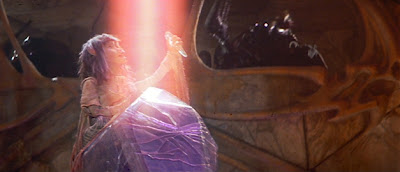



 Mythic Bios