Sing, Oh Heavenly Daimon, Sing: A Review of C. Anthony Martignetti’s Beloved Demons

“I’d start talking about the dark and darkness, cold, loneliness, aging and illness, money, and how the hell can anybody keep making a living through a whole lifetime? I’d get myself all wound up and just rattle on in my head about the scariest shit I could think of” (2).

It was a cold day in hell when I began reading  Anthony’s Beloved Demons: Confessions of an Unquiet Mind. Literally.

An ice storm hit parts of Toronto and the Greater Toronto Area and knocked out our power. For about three days in late December 2013 we had neither heat nor light, but plenty of cold and darkness. I felt absolutely helpless before Nature and my personal demons as my parents’ home became a dark and icy tomb. Suffice to say, this book came to me at a very appropriate time.

DSC00069

It was on the second day that I got Anthony’s book early in the mail: the postman having somehow navigated across the treacherous ice-crusted ground and overhanging crystalline pine hedges to deliver it right to the mailbox on the doorstep of our deathly cocoon. It’s similar to the way I will also have to navigate through this book.

One challenge I really had is that even though I wanted to look at  Beloved Demons  in its own right, in a manner similar to how I examined the theme, interrelation of stories and, of course, what I related to in Lunatic Heroes, this book still remains stubbornly intertextual. What I mean by that is it’s almost as though Anthony’s beloved demons want to war and fight alongside his lunatic heroes and define themselves by this ancient conflict. While you can read Beloved Demons as a standalone book, it has a whole other dimension if you take its predecessor into consideration.

So first off, what does Anthony possibly mean by a “beloved demon”?

It is said that the ancient Greek poets, when singing stories of heroes attempting to find home, war, or both, would evoke the muse  or the daimon — before they began to recite their tale. “Daimon” is also the root of the contemporary words “angel” and “demon.” In addition, daimons are known as forces of nature that pass through and influence human beings.  So it is only fitting, and in keeping with the ancient idea of the daimon, that “Cocoon Talk: Confessions of a Psychology Intern” begins with Anthony singing on the road on a warm summer’s day.

It’s also tempting to mention that demons have traditionally been used to incarnate a particular vice, evil, or negative thought in order to ward off, exorcise, or otherwise purge it from a subject. Certainly, “Feast of the Hungry Ghost” is a pretty good example of an attempted exorcism. However, I feel that Anthony draws on Carl Jung’s idea of the daimon much more and, in doing so, it brings an older mythological resonance to mind.
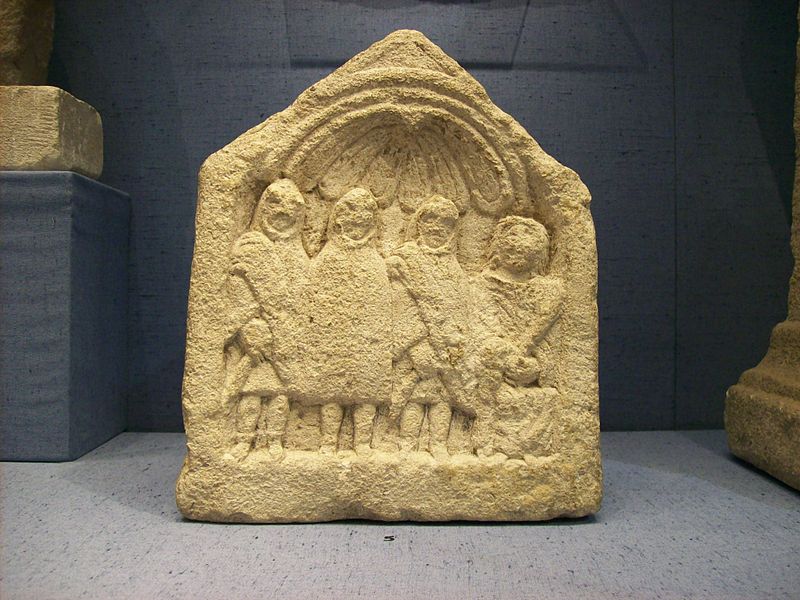
Genii loci

The Roman equivalent to the daimon is the  genius loci: a very clearly monstrous or non-human spiritual being that protects places and people. These  genii  also tend to embody their spaces: to serve as their souls. And, if you think about it, it can apply well to Anthony’s  Beloved Demons. His short story “Sign” is an example of a space with great emotional resonance to that regard. In other words, places can be spaces, and spaces can be memories. And Anthony evokes their souls like the daimons that they are.

Each one of the nine stories in  Beloved Demons  is like a different and yet interconnected reality. “Swept” is the only story that focuses solely on Anthony’s childhood. Almost all of his stories focus on the aftermath of his youth and how it affected his developing adulthood. The crowning achievements of this process can be found in the narratives of “Cocoon Talk,” “Sign,” and “Feast of the Hungry Ghost”: for just as daimons served as intermediaries between mortals and the divine, so too do these stories seem to function as bridges between Anthony’s past and adulthood.

As such, Anthony’s “Cocoon” is a nice complement to his last book’s short story “Swamp”: except that while Bullfrog was a symbol of enlightenment and the casualty of Anthony’s childhood sense of powerlessness, the butterfly is Anthony’s personal adult casualty. But the thing to understand about this butterfly’s death isn’t so much that Anthony was responsible (he was driving as it hit his vehicle after all), it is the fact that the butterfly, among other things, represents change. It is said that the wind from a butterfly’s wings can utterly destroy a mountain on the opposite side of the world. And while no one ever truly suspects the butterfly, Anthony seemed to believe the potential omen all too well and tried to prepare for the resonance of the change: the change that he ultimately experiences.

In fact, even more so than  Lunatic Heroes,  time seems to collapse faster than a landslide in  Beloved Demons. It’s as though all the experience and time within Anthony that had been contracted into itself, into himself and his inner world back in his first book begins to expand out in extreme, ricocheting vengeance in “Cocoon”: a process that he makes even more clearly explicit in “Feast.” Anthony is breaking out of the confines created from the trauma of childhood: the continued suppression and the emotional starvation caused in “Force Fed” becoming an expansive and terrifying “Feast of the Hungry Ghost.”

Anger and passion are definitely elements of this great change. It is no coincidence that, for seemingly the first time, Anthony reveals his first legal name to be  Carmine (30): the colour of red and fire and blood, of the wine-drenched Dionysian god and associated today with demons.

There is also a sense of space that becomes dilated between certain kinds of individuals, particularly sensitive ones such as Anthony, over time. For instance, I find there to be an interesting parallel between “The Wild” and “Feast of the Hungry Ghost” in which people, from well-meaning and voyeuristic to impatient and completely disrespectful, try to know more about  and even interfere with — the more intimate parts of Anthony’s life. In many of the stories from both  Lunatic Heroes  and  Beloved Demons  this, unfortunately, seems to be a recurring theme — of people wanting to know or control the passion inside him that he has been trained from childhood to avoid, while he is attempting to find and understand it himself in the midst of people constantly violating his personal space.

As a result, his space seemed to be small and narrow at times against a much larger world. At one point Anthony writes “I threw my eyes like an ocular ventriloquist” (18). It was Anthony’s reaction, ingrained from his mother, to avoid looking at people, while at the same time dealing with the perverse reflex to subvert authority and follow his own natural curiosity. Anthony’s account of Jackie not wanting him to look at “the crippled boy” in “Cocoon” is an interesting complement to his short story “Carnival” and his childhood reactions in that one as well.

You can even take this internalization a step further. In fact, “Feast of the Hungry Ghost” does take it further when the Devil and she-devils, which were seen as secretly forming and liberating within Anthony’s subconscious in Lunatic Heroes‘ “Carnival,” now become fraught with anxiety and desire: with a fear of judgement.

This leads Anthony to all but come out and describe the creation of a kink in “Feast”: or at least his kink. He seems to hypothesize that a combination of familial shame, religious fear, and suppressed desire culminated into a need for submission and masochism on the BDSM spectrum: with a particular focus on a darkly eroticized female archetype and a craving for punishment (144-45). After explaining how it is a feeling of wanting to get away, but eventually give into the fantasy scenario, he then describes a sensation in his stomach that he calls “‘the sugary feeling,’ which was both weakening and wonderful” (145). It is a striking description: particularly the latter aspect because it, above everything else, portrays a bridge between something that is both loved and feared: a beloved demon.

As I write this, I feel as though I am analysing themes in English class, and the very sense of my life depended on it. Whereas my review of Anthony’s  Lunatic Heroes  looked at many of his possible influences or what his tone at times sounds reminiscent of (I compared it to Will Eisner’s unsentimentality), it now really feels like Anthony’s own voice resonating throughout this entire series of linked narratives.

That said, there is one intriguing idea I would like to note. When Anthony talks about his cat Java mourning the death of his old dog and rejecting the new (110), it is very reminiscent of the narrator in Neil Gaiman’s  The  Ocean at the End of the Lane  being “enraged” at having his pet die while some adults, in their ignorance, attempt to replace him. It is interesting to consider that Neil seemed to have created this particular story around the same time Anthony was working on  Beloved Demons‘ predecessor. In any case Neil’s novel, according to Amanda Palmer, seems to have “dialed down” the setting on his own “creative blender” — of that place in an artist’s mind where their personal experiences and imagination intermix to make a story — and I can’t help but wonder if reading and working with Anthony might have influenced this in some part.

Certainly, this can be seen even more overtly when you consider that Neil actually wrote an Introduction to  Beloved Demons  in which he’s not only very candid about death, but he even writes out the Buddha’s entire quote on self-conquest (xxii) to which Anthony alludes in the conclusion of the book (193). And make no mistake: while  Lunatic Heroes  was obviously a personal narrative, an autobiography through-and-through,  Beloved Demons  delves deep into the personal and adult aspects of not merely “an unquiet mind” (which is one of the biggest understatements I’ve seen in Anthony’s work) but a forming mind attempting to find its individuation or, rather, its own sense of centre.

It is a dark and grueling process. I think that out of all the narratives, and aside from “Feast of the Hungry Ghost” coming to some kind of revelation through pain, pleasure and eventual acceptance, it is “Sign” that presents that unsettling feeling most of all.

Whereas “The Wild” was merely a hint of Anthony facing the primal part of his nature  his “Other” long controlled, vilified, alienated and chained as an animal  it’s in “Sign” where it truly comes to the fore in the form of power. It is very disturbing, to know that passion can be warped into the capacity for violence and the desire for control over another, and that this struggle is within all of us. But Anthony spells it out in himself and … it is unsettling.

I suspect it is meant to be so. This is something that wants to be free from all constraints: from his family’s expectations, societal duties, and his wife at that time. There are patterns  and dynamics that Anthony finds himself bound by and wanting to fall back into. But there is more at work in “Sign”: a greater work if you’d prefer. You begin to realize that all of these impulses and thoughts in his mind are reaching a state of at least narrative transformation. As he finds himself back in his childhood home, it’s as though he is attempting to find stability amid his own change and he goes back to the place where he sketched out the sign of a crucifix — a cross — on a door frame so long ago.

And this, here, I believe captures the essence of why Anthony writes. The crux of it, I believe, can be seen when he asks himself: “I wonder why I made that mark? Perhaps to save something of myself from that time? Or to create a future a memory? To say I was here … To see the sign. Or perhaps I only carved into the soft, painted wood with my thumbnail, and that’s it … nothing more; then, all those years later, made a story of it. Just to make a story. The world isn’t created of atoms and molecules, but of stories” (88).

It becomes very apparent here that not only are Anthony’s books his “cross” for us to see that he was here  that perhaps all autobiographical stories function in this capacity to help us remember who we are, who we were, and perhaps to see where we are going by comparison — but it also hits home another crucial point. Dominance and submission war inside him, and these are forces, within him which he can neither deny nor completely surrender to, he attempts instead to master: that he does to the point of transcending his own sense of self and stating something very important about his book, autobiography and literature itself:

“Making stories from memories … I think it has something to do with looking back and fabricating meaning in events that, at the time, just happened. Maybe writing stories is the same as the tiny sign of the cross in the molding. Perhaps that was my first story, my first memoir, to be known about and read only by me. Now, it seems, I mark the entrance to my childhood with these symbols on paper and share them so others will know I was here, understand me, and help me understand myself, before I’m gone and can’t return” (88-89).

Any way you look at it, however, Anthony’s stories have become his beloved demons, even as he understands now that he is his own.

I am about done here. Now that I have talked about the symbolism and interlinking of stories in  Beloved Demons, I want to write out some quotes that I think are very interesting and that found sympathy with me: you know, as if I haven’t already.

Anthony talks about love and perspective: “I loved her in the only way I could love then” (51).

At the beginning of “Cocoon Talk” Anthony makes a statement about the origins of human conflict: “I was always babbling, always unsure of what I was saying yet revealing nothing, and never truly trusted people who said they knew themselves or suggested that they knew me. Never really wanted anyone to see me” (3). It strikes me that the root of all problems and conflicts within relationships is that people claim to understand others and their intentions without actually doing so. No one ever truly or fully knows anyone, and the very act of proclaiming that “You don’t know me” is not only an act of anger and defiance in and of itself, but also a reminder that in all of our connections with each other we are our own sovereign spaces and should be respected as such.

In addition to the spaces in ourselves, Anthony writes about personal demons and how they can begin as weaknesses and become our strengths: “Through fantasy, we enter the screening room of an obsessed mind. And in our private theaters, we watch the show through the projector of our damaged narcissism — where the phantasmagoria transforms weak pariahs into prevailing superheroes, the shamed and the shunned into the celebrated, and places us, the marginalized extras, right at center stage … And here, we come not merely to tolerate, but to accept and finally embrace our demons — as if we willed them into life out of passion and the need to survive” (150).

I think my favourite quote, however, is the one that seems to describe how Anthony envisioned himself interacting with his desires. He states, “Nothing was nearly as captivating as this special pursuit, along with my role as undercover superhero- disguised as a pale and twitchy kid, foisting a dazzling subterfuge on a coterie of torment-skewed girls. A superhero, whose special power is getting his covert muscle charged by girls without their knowledge — surreptitiously slipping Kryptonite into their hands in order to feel his strength deliciously melt away” (152).

This last statement has a great affinity to me not only due to the “superhero” reference and how he applies it to his kink, but also in how it is different from my own personal vision of myself. Whereas Anthony seems to describe his childhood as him pretending that he is powerful and giving that power to others for his own enjoyment, I have always liked the idea of seeming to be mild  of actually being mild and kind — while underneath entertaining the fact that I can bring to bear great fury and power on everyone and everything around me. And even then, I’ve always considered what I am doing now, slowly building up my connections and experimenting carefully with that core of energy within me, as exercising that power in careful and clever ways until I can gain what I want: to take what is rightfully mine.

So if Anthony is a “superhero,” then I am definitely a Dark Lord of the Sith. Perhaps Anthony’s story “Swept” and what he learned from his father might have come in handy with my own education to that regard.

Finally there is the fact that, apparently, Anthony’s dog Poochy is “a food-operated boy” (72). Yes. He went there.  He went there. If you want a hint of what to expect from  Beloved Demons  beyond what I’ve written, here is a video  of its book launch in which not only do we hear Anthony reading “Sign” and “Dog,” but we also get to listen to Neil read his Introduction to the book and Amanda … basically making you feel. Her song Bigger on the Inside (an appropriate title for more than one reason) certainly made me do so.

You can also find  Beloved Demons on Kindle  as well as  Lunatic Heroes  if you are so inclined. Finally, and in reply to a Tweet Anthony sent me a while back:

Anthony Martignetti@DRAMARTIGNETTI @MKirshenblatt  MK, Looking fwd 2 ur review. And if u give me 4 stars again for not telling more, i’m coming 2 c u in Canada & hanging a rat

I finally understood  where the statement originated from  and what it means. It will give you all more background on Anthony and perhaps on both of his books. As such, and in no way due to any implied threat, I give  Beloved Demons  a  five out of five. The fact of the matter is that what I said about his quote on his dog Poochy applies to the rest of his book.

He went there.

He went there into the cold and the darkness, melting the warped and stratified ice of his surface interactions,  singing like a rat,  and I have to give the Devil his due … just as Anthony gave his demons their own.

My Depression is a Ginosaji

It was Winston Churchill that called depression his black dog. I never thought of actually personifying or embodying my depression into its own form before. I suppose I’m really talking about the subject of depression due to my absence away from Mythic Bios and having thought about the matter at some length.

But there are different kinds and variations of depression depending on the situation or the person. So, after really thinking about it and with Gaming Pixie’s unintentional helpfulness in the matter in attempting to get me back for sending her a disturbing video, I give to you my loyal readers what my depression would look like.

Yes, my depression would be Richard Gale‘s Ginosaji.

A Ginosaji (which apparently means “silver spoon” in Japanese) seems to be this grotesque, dark, awkward, lurking, creeping thing that beats you with a spoon. Eventually. At first, it’s the little details that simply irk you. And you try to ignore it, or dismiss it. But then the spoon beatings keep increasing and they never stop. You can’t power through it. You can’t kill it. You can’t ever completely blow it up. You can’t become it.

You don’t know why it is even there. And just as a shovel can slowly erode a mountain given time, so can a spoon beating begin to bruise and wear you down. And it is so ridiculous. It offends your pride. It is laughable that something like this can challenge your sense of self-worth and peace of mind. It embodies all the little things that shouldn’t bring you down: the bureaucracies of the world, getting your passport, preparing your trips, even responding to potential incentives … All of these things are just one ridiculous, banal spoon blow at a time.

And when you apply this to sufferers of chronic illness, the symbol of the spoon gains a whole other kind of connotation: the irony being that while you run out of spoons, the depression always seems to get them all.

But, unlike the main protagonist of the above short film, I have my methods of dealing with this particular demon. I can at least laugh about it. Sometimes. I suppose that is the function of the Ginosaji: a ludicrous symbol of the humour in, and the parody of, human suffering and existence.

That, or he is just a douchey demon with one too many spoons.

What? Did you think I could honestly resist another reference?

This Little Party is Just Beginning

It’s been two weeks now since I posted anything on here.

Really, my post before this would could have had a few other alternative titles: you know, like “Fed Up,” or “Exhausted,” or something more responsible along the lines of “I Love You All, But I Need To Take a Fucking Break.”

So let me tell you what I’ve been doing since I last wrote here, and what I plan to do.

The very day I wrote that last post, I went to my friend Noah’s birthday dinner and then hung out with him and my friends at a Tim Horton’s: including my friend Andrew whom I haven’t talked with in ages. We just talked about geeky stuff and nothing more strenuous than that. That was about the last time I have seen my friends so far, but it reminded me that I needed to get more time out that I have, well, honestly been getting.

I’m can’t remember a lot of what I did after that. I kept meaning to write something here and I just … didn’t. I even started to get ideas again and have them become more coherent in my brain. I bought the second issue of The Sandman Overture, and then the book Darth Plagueis: the last of which I’ve been meaning to do for a while now.

And during this time I knew that I had a few ideas for more Sequart and Mythic Bios articles. I want to look at Gwendolyn MacEwen again, at an interesting form of comics, at a Batman fanfic comic and the second volume of the new Sandman. The material is all there. I’ve contemplated writing about women in George R.R. Martin’s A Song of Ice and Fire, but figured it had already been done before and didn’t include it here: though some of that did make its way into an article on Sansa Stark on GeekPr0n. Perhaps that will happen one day.

I also thought about eventually making that article on Anakin Skywalker and how as a classic science-fiction swashbuckler hero he is at a severe disadvantage merely existing in the extreme black and white Force-powerful Star Wars universe. I have also been meaning to write something for my friend Anthony with regards to his second novel Beloved Demons.

And, of course, after one playthrough so far I also want to look at Zoe Quinn’s Depression Quest. It’s fitting I guess, when you consider that this past while I’ve been depressed.

Me and my Head

At first it was all exhaustion, but then I started to get perfectionist and disillusioned and side-tracked with procrastinating. Also, I began to feel concerned that I would get restless and feel empty again: having no sense of accomplishment writing at least two hundred words a day.

So I didn’t do anything at all.

Well, that’s not entirely true. I’ve been maintaining my one post a week on GeekPr0n, as it is my job but also something I like to represent my skills well in doing, but it’d been a lot of white noise in the back of my head. Of course, that white noise is ultimately a lot of ideas that lack a structure or starting point that threatened to drive me crazy.

But now here we are. I’m writing something on here again. And now, we come to the next part of this post.

I took one proactive measure that I’m proud of. A few days ago I went downtown and made good on my Day Pass to Bento Miso: a collaborative workspace and community. Game makers utilize the space considerably, but there are a whole variety of different people that go there to work on their own projects, network, and attend particular events. I must have the strangest luck in the world in that the few times I’ve visited outside of the Bit Bazaar events, I’ve always come when most of Bento Miso’s members are at conventions.

The fact of the matter is that, as I have said before, I do need a space away from home to work, but not just on anything. There are some other projects I’ve been meaning to focus on and I have not had time or the concentration to do so. And I just need something new. So I decided to join Bento Miso as a cohort. 🙂

I remember that night, walking down Queen Street from Strachan, thinking to myself that the street didn’t feel nearly so old anymore or filled with ghosts. In the spring time, looking at Trinity-Bellwoods Park and walking down the street to take a streetcar to the subway, it felt like it was new again. I mean, here I was outside going downtown on some adventures and a new quest.

I think what I’m trying to say is that for the first time in a while I felt more like me again: no longer hiding and starting that process of making new opportunities and perhaps even connections. Who knows, right?

And I do have plans. I’ve thought long and hard about why my Patreon account hasn’t been followed or supported. And I realized that my work right now, on Mythic Bios, is good but scattered over a variety of different subject matters: all of them geeky, but not always specific or focused. This was always ever meant to be a supplement to the main writing that I planned to do.

Kris Straub, before he created Broodhollow, spent much time creating works to get to that place where he could make something akin to an ongoing master project or, if you’d like to get more profound about it, a magnum opus.

So here is what’s going to happen.

I am going to be writing on Mythic Bios once a week now. I simply can’t always write two posts a week like I used to. I need time to work on other projects and details in my life. I will, of course, break my own rules from time to time, but expect a post either Monday or Thursday. I will most likely alternate.

I will still be working at GeekPr0n creating my articles for them as well and with more time, hopefully, I can send some more … unique work Sequart’s way again. But, more importantly, I am going to be creating Patreon-Only content. My plan is to create a serialized work, or series of works, and make it so that those who Support me will be able to see whatever it is I will post there. Anyone can contribute whatever they’d like and we will see what happens from there.

And that is just for starters. I need to make my Patreon more presentable aesthetically and outline what my actual goals are. Right now I just have what I can offer. These are two entirely different things and with something more concrete, I might be in something akin to business.

You can find my Patreon account right here: http://www.patreon.com/mkirshenblatt

Let me know if you have any suggestions. I have a few ideas for some serialized work, mainly fiction, that I think some of you might actually enjoy. In the meantime, this is just the beginning. There are other possibilities as well. And I look forward to seeing where they might go.

Amanda Palmer: The Keening Moment

I’m not the most musically literate person there is out there. I always heard some of my friends constantly talking about musicians that they love and bandying their name all around. And I never understood it really until relatively recent times. I’m also sure that there plenty of musicians that can sing with the intensity that Amanda Palmer has displayed. But the fact of the matter is that none of the others that I’ve either heard or haven’t bring up the effect in me that she can.

Not to this extent.

I don’t even know where to start: though I do know it is going to be short. There is a moment in a few Amanda Palmer songs, particular songs, where she enters what could be called a climactic phase but what I call a keening moment. For Amanda, and from my limited experience as I am not a fully comprehensive Amanda Palmer listener, it is that point where she builds and builds her tone and pitch to the greatest of passion and it … rips through you.

For instance, take her rendition of the song “Hallelujah.”

While she didn’t create this song, and the piece in itself already has a powerful emotional resonance, Amanda increases this frequency to its nth degree. She sings it for Anthony, who at the time was fighting a particularly brutal form of cancer. Her voice is broken. Apparently, when she was singing this and as she is wont to do as she is always on the move, she was physically ill. But, as if that weren’t enough, she was also in an intense place of grief.

But when she reaches that moment of “Hallelujah” … I don’t even know what to say. It is a scream. It’s a scream that, for me, pierced me right to the quick. In that moment, it was real. It was very real because, quite simply enough, it was. It is the terror and anger of life fighting for life. It is primal and messy and only the surface of what is underneath it. It’s like that moment when you try to detach yourself from what’s going on and you don’t understand, or want to understand what your friend is going through and you hide behind something petty only for that friend to scream that this supersedes all of that bullshit and you will damn well fucking acknowledge it: because life takes precedence over the proprietary.

I’ll be honest with you. It’s makes me uncomfortable: to have that surface of pretend that makes most human interaction ripped away to expose the raw. It is a brilliant, uncomfortable feeling made even more poignant that it is from another person being shared with everyone else.

Yet as potent as this is, Amanda’s “Bed Song” is …. something else entirely.

If her voice in “Hallelujah” makes me uncomfortable in that it reminds me of mortality and my very real lack of power, “The Bed Song,” quite frankly, terrifies me.

I’m not kidding. It scares me. It scares me to the point where after having heard it a few times, I just can’t listen to it or watch the music video. It, too, is far too real. But it’s more than that. It’s worse. It is a beautiful song and an excellent series of visuals and storytelling that captures the essence of a relationship dying.

I mean: think about this. You have two people together who love each other and you watch as time and circumstance erode that connection and friendship between them into distance. Into death. I’m not even talking about the physical death that happens at the end and the retrospection, but the emotional death: the slow rot of the soul between the two people living together, but not being together in any meaningful way.

Neil Gaiman, Amanda’s husband, has created many terrifying creatures and stories in his time. He has made “Cereal Conventions” and Other Mothers and all kinds of terrors with and without flesh. But, if I were to choose, I would say that Amanda Palmer in the context of “The Bed Song” scares me more than Neil ever could. She manages to build up to and capture the essence of a living death and the helplessness of watching it happen and feeling powerless to stop it only, at the end, to confront it … after it’s far too late.

That realization, in and of itself, is enough to drive anyone insane or want the embrace of physical death, but “The Bed Song,” the idea of two people lying next to each, facing away from each other, inches away and dying alone, is all the more horrifying because it is a wrongness that becomes accepted much in the way that someone slowly succumbs to an icy death.

It is a brilliant story. It is a poignant song. It takes the spirit of that lack of communication to the point of “too late” and makes it into art.

And it utterly terrifies me: because it makes me feel something I don’t want to feel. Or it brings out something that I already have. Because that keening moment isn’t just the climax of the song or the pitch of Amanda’s voice, but rather it’s that painful and almost transcendent moment of recognizing these qualities growing inside of your own very self.

I could just leave it all at that. I could leave you here with the feeling of raw grief and a lack of catharsis. I really could be that mean and say that this is what life really is. But I would be doing Amanda a tremendous disservice. The keening moment I identify is not merely in the domain of grief but its very opposite.

“The Ukulele Anthem.”

Sometimes nonsensical, sometimes weird, but oftentimes fun and always, for me, transformative. It just expands to the horizon and becomes liminal. There is darkness but it is the song commands, “Ukulele banish evil.” I can just see a glowing, eternal figure facing the growing darkness and playing her simple ukulele: making the shadows scream and, for a time, retreat from her sheer presence, only for her to hand it to someone else cowering in the darkness, smiling and skipping away to make another one.

So while I like the ferocity and anger of the keening moment in The Killing Type and dealing with the loss of a romance as life goes on in the summery fey cabaret of Massachusetts Avenue, “The Ukulele Anthem” is, for me, a reaffirmation that eventually the darkness will be put in its place as people realize they are not alone and they can make the light grow together even sharing something as simple as how to play ukulele.

Maybe one day, when I am less self-conscious, someone will show me how to play one. In the meantime, I am just grateful that through those keening moments I have another way to relate to music. Perhaps, as Neil’s Erasmus Fry once said, all writers are liars, but I believe that at least some musicians tell the truth.

Photo Credit: Glenn Ross

What If Comics Had Been a Place Without Codes? Would We Live as Air?

I’ve been having some technical issues these past few days and time hasn’t really been my friend but what I’m going to write here past most reasonable people’s sense of sleep is another down and dirty, and therefore ad hoc, article on comics.  So if anyone out there is an expert or has done their homework, by all means, please correct me if need be.

As some of you already know Sequart created and is now in the process of editing, a Kickstarter called She Makes Comics: a documentary on women in the comics industry and the culture surrounding it. One element in particular that it has focused on is the fact that long ago there were more female readers of comics than they were male. Now, I wrote a short article on what will soon be called GeekPron in which I found some of my own assumptions to the question, well, questioned.

I believed that it was the Comics Code Authority, inspired by the fear of McCarthyism “witch-hunting,” blacklisting, the detrimental testimonials by psychological experts such as Frederic Wertham, and a loss of business that had comics publishers eliminate most of their different genres of comics and focus mainly on watered-down stories about superheroes. All the horror, revenge, gore, westerns, romances, and sexuality all went the way of the dodo at the time because of fear. Anything that challenged the rules of the Comics Code, of authority always being right and just for starters, could not exist in mainstream corporations that published for money.

But the comic book editor Janelle Asselin also mentioned that this female readership of 55% over 45% of male readers changed as the superhero genre became more mainstream. Think about that: the idea that after a time the superhero not only reduced a female readership, but also eliminated or greatly marginalized a whole body of stories and genres that made the medium different. I realize now, looking back on what I wrote earlier, that these two statements are not necessarily mutually exclusive.

I mean, if you are afraid of losing your business and your liberty in telling stories for which you want a certain pay cheque and livelihood then eliminating anything that could be construed as an overt challenge to your culture’s status quo or even subversive to it, it unfortunately makes a horrible kind of sense.

The godfather of manga Tezuka Osamu once said that “Now we are living in the age of comics as air.” And while he was most likely referring to the influence of manga in Japan as becoming more widespread, its connotations can be applied to the comics medium in general. According to Paul Gravett, in Sixty Years of Japanese Comics, Tezuka believed that comics without passion or originality can become damaging and even create pollution. It took me a long time to figure out what this meant. When I first encountered the quote and the explanation, I thought that it referred to the potential damage to the morality of the reader but now I realize that the quote can definitely apply to comics as a medium and what occurred during the heyday of the Comics Code Authority.

The age-old notion of the superhero ghetto that we are so used to hearing about with regards to the comics medium: the notion of an immature all-boys club with shallow depictions of sexuality and simplistic violence with no consequences is damaging not only society’s concept of the medium but also that of its readers and future creators.

I’m not, by any means, saying that the comics that existed before the Code and its predecessors were the fonts of enlightenment for gender or, really, humankind. But there was a lot more experimentation before the Code and it just makes you wonder: what would have happened if these vigilantes and superhuman beings in tights had just remained one of many genres and there had been no Code?

I mean, there is always the scenario that Alan Moore presented in Watchmen: that if masked heroes and one a superhero had been in existence then no one would have paid attention to Wertham and the horror comics of Bill Gaines and friends would have dominated the medium from the fifties all the way into the eighties: becoming darker and more grotesque with time while also innovating itself much like our comics have done.

But that is just one creative interpretation. Who knows? Maybe a flat period of unoriginal and recycled stories would have followed regardless. Perhaps female readership demographics would have changed or something else would have challenged the “morals of comics:” for or against the status quo. Or we could have had another Golden Age: where comics became, earlier on, a widely accepted form of beautiful art and every great artist might have tried their hand at one. Maybe comics could have become widely accepted and mainstream coffee table or instructional as manga has in Japanese society to an almost ubiquitous degree. Instructional comics even had their place in North American society and to some extent they still do.

Of course, those latter thoughts are just me playing at utopia and I’ve never been really good at that. Maybe if there had been no Code comics would have, earlier, been just another form that challenged conventional morality much like any work of great art or literature should. Of course, again, this also happened in the Western world through the advent of what we understand as Underground Comix defying the establishment during about the late 60s: about that same time frame that Asselin gave when she talked about the female comics readership majority existed from the 1950s to the 1960s. Or perhaps the comics medium would have burned itself out as a fad and amateurs such as myself would be wondering, even then, what if: what if it had been different.

As for me, if you really want my honest opinion I will say this. I think that if there had been no Comics Code or anything like it children would have still been influenced by Tales from the Crypt, and Archie, and The Lone Ranger, The Green Hornet and all of those others. And some girls and women would have had Wonder Woman and Black Fury. Many things would have continued on, but sometimes I think about that idea of all people–young, old, straight, LGBTQ, male, and female, different ethnicities, different classes–making their own comics and showing them to their friends and the world. They would realize how different they and everyone else are but also how many things they have in common.

And when you wipe away my pseudo-utopia of a whole loss of potential for a readership of intensely intelligent men, women, and sentient beings, when it comes down to it I do like the idea that without the Code and the forces behind its development, the medium of comics would have been considered more than just silly laughter and transparently hidden BDSM parodies. Those things would have been a part of the kaleidoscope. I think that many more people might have seen comics as a medium that tells all kinds of stories: a space inside and outside of us that is pictures and words. I think many more people may have been more accepting that the medium of comics as that place of sheer variety, like film, between both art and literature.

There is another way to look at Tezuka’s quote about “comics as air.” If you take the pollution of censorship and unoriginality away, what you might ideally have is a fluid art-form that anyone can learn and use. And if you consider that we all live in the continuing Age of Information and in societies that utilize wireless Internet and you include webcomics into the medium … perhaps we can all fly where only superheroes used to tread: up, up, out of the ghetto and away.

Miracleman Balloons

There’s No Place Like Home

“I am Oz! The Great and powerful …”

I ignore the floating green skull and its superior glare, hovering theatrically in its own flames as I make my way to the red curtain not too far away.

“How dare you!” the terrible voice booms, “You have not been given permission to go there!”

The sounds of thunder explode throughout the great chamber. Lights not unlike lightning explode into my eyes. I continue to stalk towards the booth with the red curtain with Apollonian purpose, an ironic reference in itself. Mists and fog swarm around me, and frightening admonitions echo throughout the great throne-room. These sights, and sounds and smells almost make me dizzy.

“Taking a scrap from the Pythia’s scroll, I see,” I speak aloud and continue walking.

“Cease this insolence!” the other cries, his below prompting a burst of orange flame around me, “Or I will summon my Guards to destroy you!”

“No,” I say calmly and without feeling, “you won’t. As an Oracle, you can’t afford to have your men that close,” I get closer to the booth, “besides, we both know they are already dead.”

I walk through the illusionary flames, images channeled there by glittering panels from the corner of my eye.

“Desist, or be struck down by the power of Oz the Great and Terrible!”

“I’m surprised, really,” I tell him as I get closer, “I’m surprised that in a world of magic and strangeness like this one, they wouldn’t have seen right through your disguise. Of course, a magician of any kind–mystical or otherwise–does his best work,” I come up to the curtain, “in plain sight.”

I rip open the curtain. And there is great maniacal laughter.

The man behind the curtain … is not a man at all. It is something else dressed in long emerald coattails. The bronze creature lunges for me with its blade. I barely dodge it, and meet it with the sword in my own hand. Then the curtain completely collapses and two more metallic creatures wielding great silvery wicked-looking scythes surround me. I parry the central construct’s blade even as the others come towards me from the sides …

And promptly collapse into pieces.

The central construct, the Tik-Tok as my companions outside called them, halted. In its beady clockwork eyes, I can almost see fear before it too shudders, steam bursting from its neck-bolts, and falls to the ground with its fellows in one great ruinous scrap-heap.

I hear the click of the weapon at my neck before I even turn around.

“Steam-powered clock-work automatons,” I nod, “I’m impressed.”

“Why thank you,” the voice behind me said, “it took me quite some time to create them.”

“I can imagine.”

“Get up.”

Slowly, I turn around. He’s dressed in the same green coattails that his construct wore. He’s short, and stout, and his receding hair is grey, almost silver. Anyone who saw him would probably have thought him some kind of minor janitor in the Emerald City, a harmless and perhaps even friendly old man. But the hard eyes behind the small rectangular spectacles say otherwise.

“There’s always one in every crowd,” his voice quavers somewhat nasally without the machines to make it sound fearsome, “someone who just won’t believe in the magic.”

“So that’s what you call it,” my words are cold, and final.

He trains his weapon at me, a black antique Colt pistol, “Young man, it is all magic. It’s all one spectacle. Bread, and circuses, you know,” he drawls casually, “It’s just very rare that you find one in the crowd that sees through the trick,” his eyes narrow, “But since you seem to know how my tricks work, it’s only fair–from one magician to another, mind you–that you tell me yours.”

“It’s a trade secret.”

The man laughs, “It was Elphaba, wasn’t it?”

“And what makes you think the Witch is the only one with magic?”

“Well, she isn’t. Not really. She is just more skilled at it than most here. You’d be surprised how much ‘magic’ is left in even these lands.”

“Actually,” I tell him, “I’m not.”

“Tell me what I want to know, young man,” his nasal voice becomes low, the weapon in his hand clicking again, “we are not in Kansas.”

“Though we do come from the same world,” I relish telling him this, now, “Oscar Zoroaster.”

The man seems to freeze in place. His beady eyes seem to dilate like that of a bird’s, “What?”

“Oscar Zoroaster Phadrig Isaac Norman Henkel Emmannuel Ambroise Diggs,” I repeat, “You were a showman in the United States, probably in the late nineteenth century. A minor conjurer, traveling magician, and tinkerer. You know a lot about mirrors, tricks, sleight of hand, sophistry, clock-work devices, and the power of steam, your Age being what it was before you … left.”

“So …” he says after a while, “You are from Earth.”

“From a different time, yes. You missed a lot since you’ve been away, Oscar Zoroaster.”

“I am Oz now,” he grins at me, waving his gun at me, “the great and powerful Wizard of these Lands.”

“You’re an artificer at least,” I amend, “Like I said, you must have spent a lot of time here, letting you hone your craft. You made one great Industrial Revolution here, I’ll grant you that much, but not much else. I wonder though … how much of it was your innovation, magic filling the gaps … or slave-labour.”

“Merely dirty Animals, and savages,” he says dismissively, “no one will miss them. I brought peace here. Stability. I brought them civilization.”

“And all the horrors of Industry to go along with it,” my mouth clenches and I remember why I want to kill this man, “Like I said, you missed a lot after you left us. Pollution, starvation, two World Wars, and mechanized genocide. An entire century of human atrocity and dehumanization, anticipated by and brought to scale right here by a carny-man. You are an Oracle after all, ‘Wizard’: a retrograde Oracle from our world more than anything else.”

“Hush now,” he growls at me, “you only live because I want to know how you know about me. I mean, you could have researched, but there are things … perhaps you read The Book. Elphaba probably learned …” he shakes his head, “a pity I can’t let you live beyond this.”

“It won’t matter what you do or don’t do to me,” I tell him, “you’ve already lost, ‘Wizard.'”

“I can recover easily enough. My men are a dime a dozen, and there are many exits to this place. I know. I had it built myself,” his gaze becomes considering, “And then I will rebuild. It won’t take long. None of it really did in relative terms. Then …”

“Your Madame Morrible is already dead. I’m sure that Elphaba and Glinda of the South made sure of that by now, even as we speak,” I allow a smile to appear on my lips, “By the time you kill me, they will be right here. Them and the flying monkeys you experimented on. And all of this, all of this here will be even more meaningless than it already is.”

“You’d be surprised how quickly one can disappear,” he takes aim at me, and pulls the trigger.

There is a sharp click. And then nothing. I let him pull the trigger of his gun again. And there is still an empty click. His small eyes have dilated further into shock, disbelief, and then fear. Very calmly, I take the gun from his hand.

“This is quite the antique you have here. It’s almost as dated as your Vaudevillian antics,” I throw it on the ground.

“Please …” he backs away from me.

“It is already too late for that. And no, I don’t want emeralds, or power, or ruby slippers,” I grab the collar of his shirt, “you’ve already taken enough from these Lands as is.”

“H-how …”

“Oz is a magical place, as you well know. Back in our world, I always had a knack for causing my machines to malfunction. But Oz … seems to make things less obvious things very pronounced, taking concepts and rounding them up to the next most cosmically ridiculous common denominator. It’s like one great Caricature.”

I let my rage fill my eyes, “But it was a Caricature I loved. Dearly.”

I throw him to the ground, “Your mistake, you murderous charlatan was that I watched this place from the very beginning. I saw it grow. I grew up with it. And saw you. I used to think you were pretty something. I used to think, much like Elphaba did, that you were a wise and benevolent Wizard. Even when I knew you couldn’t use magic. I looked up to you,” my voice cracks, “I liked you, and your hot air balloon until I realized that the only thing in your heart is precisely that. Hot air.”

The next thing I know, I’m shaking with fury, and pointing his own gun at him with one hand, “You ruined the Land I loved, that gave me any meaning in my life — poisoned it with the exact same nationalism, and war, and death from our own world. Our own garbage. You … had … no … right! I should kill you right now.”

I walk back a few paces. And then, I do the unthinkable. I toss his own gun back at him. He catches it, with shaking hands and trains it on me again.

“I helped Elphaba figure out how to read The Book. All of The Book. I didn’t have to do much. You can run anywhere you want. You can hide. You can try to kill your way through. But she will find you. Her and all the citizens of Oz: the Munchkinlanders, the Vinkus, the Quadlings, and the Animals. Especially the Animals. They’ll find you, and make you wish you were dead.

“But I don’t want them to get any more blood on their hands on your account. So you have two choices really. Choose wisely.

I wait and watch him. He knows he can’t run from me. And I can see that he knows that even if he can, they will find him. Elphaba even knows who he is. It doesn’t take long for him to make the choice. I swallow violently and look away after. Even after all he did … I almost wished that what I saw come out of him was spilled oil, and shattered coils and springs. An advanced Tik-Tok mechanism that was created with benevolent intentions, then went out of control and killed his real creator: enchanted to look like a man. Like him. But sadly, all that hot-air inside him was not merely the result of steam-power.

It was just the result of another man playing at being God. I feel less like a child now than ever.

But there is just one more thing for me to do. I search around for a little while until I find it. The green elixir.

I hide it in my pocket before she comes back in. She stands there, surrounded by her winged monkeys and Vinkus allies. They scatter and start securing the room. She sees the body on the floor. Fiyero isn’t here yet, so it falls on me to get to her first. Elphaba doesn’t flinch from the sight. But even after all this man did, I can see in her eyes that her heart is broken. I hold her and she holds me back tightly.

“Glinda is fine,” she says to me, “she handled Madame Morrible. I came here as fast as I could …”

“I know,” suddenly I find a lot of my wordiness is gone.

“It’s done then,” she looks sad, and lost, but at the same time there is a great flush of strength from her emerald skin, “I suppose … you have to go now.”

I look at her. We stand at the same height. None of the literature from my world ever really did her justice. This time, I look away from that penetrating stare, “I … don’t want to,” I admit it. I love this world. I love it and its people, and the magic and the friends I’ve made here. I want to see them grow, and prosper. I want to be with them. There is so much wrong with the world that I came from, so much that disgusts me and isolates me there. There is just too much potential to become petty and small again. To forget everything. And her.

“But you have to,” this is not a question. For a few insane seconds, I want to ask her to come away with me, to fly with me on the Wizard’s hot air balloon back to my world. But although my world is more politically correct in some places, she would be no less green to anyone there as she is here. And she would know that. Those few seconds are gone. She has a life here … and a new life to begin. This entire Land has a new life to begin, and Earth and those few people from it have already done enough to it.

I look at this amazing person who is the best of both worlds–though she would never know it–embodied into a beautiful green form with discerning intelligence and an even greater heart and I know that Fiyero is a lucky man, whatever else he is now. A choking feeling sits hard in my chest, not unlike the one I felt as a child when I saw another farewell scene.

“There must be people who care for you,” she prompts, and then hands me something. It is The Book.

“Elphaba …”

“No, I want you have this. Glinda, and I learned everything we needed to. We want you to have it and keep it safe. Who knows …” she smiled, sadly, “maybe one day it will lead you back to us.”

Then she wraps her arms around me and I hold her.

“What will you do with all of this?” I ask her, looking at the throne-room.

She smiles, “I think I might have a plan or two.”

We hug again, and then I manage to walk away. I don’t know what I’ll do now. Maybe I will go back home. Maybe I will succeed in finding the hot air balloon in one of those workshops that the self-styled Wizard had lying around. Or maybe I’ll take it and ride across the clouds to other places, others untouched by time and always going. A little girl and her family one day will move to Oz, hopefully under better circumstances. Maybe I will find the Oz I knew from my childhood again. Though it would be one without her.

No, it will be better to find other Lands. To keep travelling. A young girl from Kansas once said that there is no place like Home.

But I now know, however, that Home is where I carry The Book: this Book and story, that I now keep on living.

Photo and Collage Credit: Beth Ann Dowler

Out

Sometimes I can still hear it.

It’s the end of the night and Dead Can Dance’s Rakim drifts and rhythmically rumbles through the musty air before the undulating chant of the female singer through the night. The DJ knows what he’s doing. The frenzy of Electric Body Music with its violence of movement and the wry painfulness of clarity that is Alternative Rock have taken their course and had their place in their club.

Now the bar is closed and the black-jacketed, white dressed, neon colour-haired patrons are fewer and dancing with each other in pairs: slowly in tempo with the music. All of reality itself seems to wind out like a wavering road as the woman sings and the man chants in a deeper voice, with stranger words, accompanied by the hollow tap of drums and waves of languorous, synthesized sound.

Everything downtown, far away from where I sleep at the time, unfolds a path in front of me as I watch them dance. I see everything that has happened before and I know that even before being here it had already been in my head: this simultaneity. It gestates through countless songs, and observations, and the weird jerking near-violent movements and pseudo-martial forms that I called dancing. This feeling will continue to grow long after my long bus ride home.

“A million faces, a million lies,”  VNV Nation’s Chrome wavers out before I ever knew its name, accompanied by a weird looping music that somehow taps my heart.

“The streets are cold, the lights go by…”  Like a strange, throbbing, secret whisper it tells me about walking downtown the first time by myself at night, the passing of the streetcar away from Brock, a lost white grin and electric blue eyes, words on a screen leading nowhere, that summer on Euclid Avenue, friends at a Noodle Shop, wishing my friends were there in a bar dancing, a worn convenience store open past three, Higher Ground and Eglinton, cold darkness, past chances, taken chances, lost chances…

When that music comes on, it’s as though my life isn’t linear but multiple-choice: my thoughts fragmenting but somehow being pulled back together again. Then I remember EBM and rock music and it’s as though I’m fighting against the inertia of my life in the epic battle I’ve always fought in my mind: alone and proud.

But then at the end of the night, my favourite night of the week, my Friday night, after dancing through the endless possibilities and talking mutely with people over thundering percussion, I’d see the reality of it. Two men in glistening black leather kilts dance with a white-blonde girl between them. A tall girl moves with a shorter darker one. Then Rakim winds down for the night, the male singer’s last reverberating, “Since forgotten…”

I remember these Friday Nights well as I skirted the rim of the dance floor and danced in the middle of it in my own bubble of space. I interacted with the people much in the same way, just as I still in some ways do. I remember that I don’t relate well to groups. I am like the girl in “Tonio Kroger” that tries to dance like others, on the periphery, but unlike her I know I have my own dance that few can or could care to match. Perhaps I’m getting too old to dance now, too hermetic to move as often. Maybe I already had my chance to find something special in the night.

Yet sometimes, even now, I have this insane urge to contemplate another Gothic Picnic in High Park drinking the liquid essence of fruit salad and watermelon juice alongside white-painted people wearing black leather and lace. Or maybe I’d dress up like the Crow again and go downtown to lose myself in the role while dancing: laughing at those who think I’m Heath Ledger’s Joker instead.

At the very least, I can take comfort in knowing that I can still dance well in one place: through the diaphanous smoke screen of my own words. Right here.

The Crow

You Never Know: Resurrecting a Phoenix and Moving On

I’ve been writing a lot on here lately again. There is so much else that I am needing to do, but now I just want to spend some time and really get contemplative on something.

I still find it really amazing just which of my articles garner the most attention. When I first wrote my When I Recognized Elfquest article, I had no idea that so many people would find it fascinating or even relate to it: never mind having the Pinis Favourite, Retweet, and Share it throughout the Elfquest community. The fact is, you can never predict these things. I wrote that article back in 2011 and it sat on my Facebook without input of any kind until I realized, after my hiatus, that it was time and I brought it here–with some revisions–to where it rightfully belongs. I actually have another Elfquest personal story in me. I’m not sure when or where I’ll post it but hopefully I will share it one day.

And then there is my Sequart article On the Art and Cycle of Proper Suffering: The Artist Figure in Phoenix: Karma. That article has its own personal story as well and, as I sit here late at night, I consider the place from where it came. It was originally a paper for a class in my Master’s Program. It was conceived and written in the 2008-2009 period when York University was on strike and, as such, many deadlines and time tables were severely messed up. We ended up having to do Fall term papers during the beginning of our Winter term. It was not a pleasant situation.

Nevertheless, I liked my class and I decided that I wanted to write a paper on Tezuka Osamu’s Phoenix: Karma: as I consider myself an artist, who sometimes emotionally suffers and, as such, finds sympathy with that work. I had a lot of challenges to face when writing that paper. Between continuing to live on my own at the time, and juggling my other assignments and relationships in addition to the readjustment of the school year I found that I had to ask for a few extensions on the paper.

It was towards the end of summer, or what I termed at the time the Summer of Hell when everything seemed to be falling apart, that I finally emailed the final draft to my professor. There were a lot of things wrong with my paper back then. I barely grammar-checked it, never mind read through it, and it was barely twenty of the twenty-five pages that it was supposed to be. But I reached a point where, quite honestly, I just didn’t give a damn any more. It had been hovering over my head for so long and I just wanted it done so I could finish the last of the original term’s work and move on.

After going to a much needed vacation at Dragon Con in Atlanta, I came back to find that my professor marked my paper and left it for me. I remember telling myself to prepare for the worst. Despite that, it was both a surprise and a slap in the face. The comments that my professor left on my paper amounted to the following: that I hadn’t done the work I was supposed to have and that this was not Graduate school material. He ended up giving me a B- which, I have to admit, was pretty damn generous of him.

And suddenly, the reality hit me and I felt a great deal of shame. Here was this excellent comic that I read in the remaining years of my Undergrad, while I vowed to write a modest paper on and which I rushed when I just couldn’t take it any more. I didn’t understand my professor’s instructions, despite asking him a few times and it frustrated me. I was also, before all of this, a good student and to see those words in front of me, that what I made wasn’t Grad School material, honestly made me angry. It made me so angry after everything I’d gone through that I wanted to quit my Program.

Of course, this was all ego talking and most of the suffering I went through had nothing to do with academics and more to do with the choices I made in my personal life. In the end, it was too much and I just took the paper, put it in my desk drawer, placed it under a pile of other papers and tried to forget about it and the lingering shame of failure.

Fast forward a few years. I was living with my girlfriend and we talked about the paper. She gave me a bit of a reality check and told me what I already knew: that my professor had been damned generous. So I called up a digital copy of my paper and read it. I actually read it. I looked at all the grammatical errors, the bad sentence continuity, the lack of flow between ideas, and even some outright preventable errors. And when I mean preventable, I mean I made spelling errors. I even misspelled one character’s name.

It did not sit well with me.

So I spell and grammar-checked that son of a bitch. I made more transitional sentences. I made the word flow a whole lot less awkward and painful to look at. I didn’t know why I was doing it. I finished the assignment years ago. There was no point. Maybe I planned on publishing a better version. I do know I was toying with doing more research and going beyond the narrow limits of books that my University had available on this subject at the time. But then life happened and I forgot about it again.

A year or so later, Julian Darius saw my comments and my work on Mythic Bios and asked me to join Sequart. At one point, another year later, we were informed of it being Manga Week: that we had something of a call to papers or articles to do with manga, its creators, and culture.

That was when I realized something. My professor was right. Maybe “Proper Suffering” wasn`t Grad School material.

But it is Sequart material.

There were some difficulties of course. I’d evolved a different style of writing thanks to Mythic Bios: a combination of the formal and the profane as I like to say. Even my article on The Stitching Together of a Mythos: Kris Straub’s Broodhollow, for all of its relatively extensive footnoting, still had the informal aspect of contractions and some personality on my part. In the case of “Proper Suffering,” my idea was first to re-adapt my old paper into an article that specifically focused on the manga of Phoenix: Karma itself and then get rid of the internal citation and the formal arrangement of language in the paper. But first, I eliminated the extra material on Japanese modernity in the paper. I narrowed and focused it solely on the manga. I added more to the title of the thing. And then I remembered something another professor said to me about my work with comics at York. She told me that I needed graphic examples to complement my written work as that was the medium I had chosen to examine.

So I looked for scans of Phoenix: Karma panels on the Internet. I did not find much. I tried to scan my own copy professionally but it didn’t work and it would been too expensive: especially for bad copies. I did work on Neil Gaiman’s The Sandman Overture #1 in the meantime and forgot about it until I was asked to contribute another article. So that was when I decided to bite the bullet, place the graphics in that I could get, create transitional sentences between parts because, at this point, I realized “Proper Suffering” was at least three serialized parts in Sequart format. I even added in an extra part examining the kleptomaniac Buchi, whom I didn’t have the time or the energy to look at before, though she was important in the artist Akanemaru’s future decisions.

Then, finally, I sent it in.

And there it is. It still isn’t perfect. Sometimes I wish I added a bit more about how the artifice in the ancient Japanese city of Nara in Phoenix: Karma was representative of the Hindu and Buddhist concept of maya: that all of reality is an illusion of sensory addiction and suffering and how Nature leads to a truer state of non-being beyond ego: or nirvana if you’d like. I feel as though some of the graphics are not quite positioned in flow with the words of my article and then there is the occasional awkward sentence. I thought very few, if any people, would want to see something so painfully, bluntly, academic. It was a relic from another time in my life and I had reinvented myself in many ways much like Tezuka’s emblematic fire-bird.

But then I noticed something. People were retweeting my article in all its three parts. Not just Sequart and my peers there, but other places and people like Brigid Alverson and Tezuka in English. I mean, I was told by Julian that there were few scholastic English sources that focused on manga in depth, but I didn’t believe him. I thought what I made was mediocre at best or at least serviceable. I still think that to some extent.

Yet having “On the Art and Cycle of Proper Suffering” acknowledged really vindicated something for me. It’s one of the few things that from that point in my life that I could go back and give another chance. It was the only thing I could fix. And I did fix it. I resurrected that work like the namesake of the book that I examined and made it better. I suppose, in the end, in doing so I didn’t just make a good and reasonable article but in so doing I also redeemed a perceived failure and honoured a part of my life: with something to show for it in the end.

Perhaps that is one of the real lessons that Tezuka’s characters should have taken when hunting for the legendary phoenix. Like the ancient Sumerian hero Gilgamesh realizing that a mortal life of accomplishment is far better than one of perceived eternity and perfection, I realize it was the process of searching for the phoenix and that even though the pain was a part of it, it was only part of a totality.

So yes, sometimes you just don’t know which of your articles or writings people will like, or become relatable. Sometimes you just have to keep moving on.

Tezuka's Phoenix v4 p108

For Crystal and Castle: An Author Quest Ends and a Gelfling Gathering Begins

Last week, The Dark Crystal Author Quest to write the first novel of The Gelfling Gathering finally ended. Twenty-five excellent writers were given honourable mention and five were chosen as finalists. It still really disappoints me that I couldn’t find the time to enter the story that I had planned. I was working on another submission at the time and I had to make a choice. Suffice to say, it was not an easy decision to make and, hopefully, I will be able to show all of you the fruits of that decision one day soon enough.

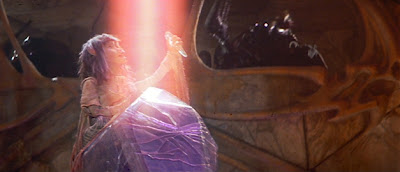
However, I did manage to do something during that time. As a treat and in honour of the Author Quest’s success, I want to show you the introduction that I created to start off my Dark Crystal Gelfling Gathering tale. I hope you will take it in the spirit that it is given and enjoy. Its working title was Dark Crystal: For Crystal and Castle.

It was over nine hundred trine ago that the Great urSkeks, wonderful, luminous, glorious beings from the highest realms who had come to bring wisdom and enlightenment to our beautiful world of Thra, finally left us. They had come to our home for contemplation and, having gained the revelation of their true selves from the divine Crystal of Truth, they left us with one final task.

Before the urSkeks, we were small and lowly. It was not until their blessing that were chosen as Stewards of their Castle of the Crystal: to guard it, Gelfling, Podlings and all of Thra from the evil that still surfaces to this very day.

For the soul stealers, ugly, twisted monsters that would take Gelfling children in the night for their shadowy sorceries were locked away: banished to their prison in the Mystic Valley from which they shall never fully escape. Our Adversaries were held back and imprisoned behind the wards of the urSkeks, whose power we still maintain and they cannot ever fully escape: let alone dare approach the Sacred Crystal to see what cowards they truly are inside.

Nevertheless, the soul stealers are crafty and clever.

To this very day, led by their dark and insidious Master, these cruel wizards still lure Gelfling victims to their Valley. And sometimes it is even worse. Sometimes, some–not all, but some–of the soul stealers find ways out from the barriers that seal them their infectious nature from the rest of Thra and seek to interfere with, and corrupt, our great and glorious realm.

This was the reason why the paramount of our kind, the beloved and enlightened Emperor skekSo First and Only of His Name, created the elite Castle Guard and made his Empire of all Gelfling civilization and Podling principalities. This is why we have decided to teach those worthy among you Gelfling the arts of war and defence.

And while a soul stealer cannot be destroyed by Gelfling or Podling hand, with your help we can capture and contain the menace of the wizards–to keep the dread Sixteen from liberating their entire body–until that great and glorious day when a thousand trine shall pass and the Third Great Conjunction brings glory to the Empire, peace and order to its loyal citizens, honour to the Guard that defends our Lordly Stewardship and the Crystal of Truth, and eternal oblivion to the soul stealers and their corrupted followers.

Until that momentous day we must remain forever vigilant. Everything is connected and it will only be through our sense of connection and our trust in his Imperialness the Great skekSo that we will all find true harmony.

This is our duty and our gift. This is our peace to all of Thra.

Remember the oath of our Guard: “For Crystal and Castle.”

— written by skekLi, Noble and Humble Poet Laureate of the Skeksis Empire

File:Castle of the Crystal - Pure.jpg

This was, sadly, as far I officially got. But I had plans. I’d written a whole lot of notes asking myself questions about the Skeksis, the urRu Mystics, and the Gelfling, their different Clans and what kind of plot I could make out of all of it.

But as the second part of my treat, I will tell you what I roughly had in mind.

I really planned on writing about Rian, the Woodlander Gelfling Guard slowly discovering that his beloved rulers were in fact some of the most evil monsters that he has ever met. I wanted him and his Spriton friend Jul to be rivals in the Guard and when Rian finally did defect away from the Skeksis, he would have to face his best friend until, finally, the latter saw the truth and came to his side.

During this time, the Guard are actually trained and led by three Skeksis: skekVar the General instructs the Gelfling in land-based combat, skekSa the Mariner drills them in naval war, and skekMal the Hunter teaches the Guard survival skills and the art of stealth and, well, hunting. I wanted to make three things clear. First, skekGra the Conqueror was once a leader and instructor of the Guard before he was exiled by the Emperor along with skekLi the Satirist. The second is that Emperor skekSo sometimes displays his martial prowess during Castle Festivals and the Guard are in awe of his speed and sheer power. And, third, that all the Guard feel very uneasy about skekMal. He has this way of looking at them as though they are just pieces of meat. Sometimes, some of the Guard go missing during the night. Not always, but occasionally and while the “soul stealers” are blamed, some of the Guard wonder.

Of course, it is revealed later that skekMal basically trains the Guard to hunt only to hunt them down, in return, much later after he puts on his mask and tracks them. It is basically a sport to him to “play with his food.” Even the other Skeksis find that somewhat disturbing. He comes and goes whenever he feels like it and he supports the two Skeksis in exile when it suits him. I was also toying with the idea that it is on a mission to “find” the exiled Skeksis that Rian discovers more about them.

Basically, this side story, or first book even was going to have the Emperor send the Guard to stop skekGra and his associates from attempting to make their own rebellion with Gelfling followers. If skekHak the Machinist hadn’t been killed in the second volume of Dark Crystal Creation Myths, I would have used him to create a makeshift essence-extractor: a cruder version of skekTek’s. However, perhaps skekMal had his own portable device made when he threatened skekTek. Remember: the Gelfling Gathering takes place before the Emperor had sole access to essence, so it is possible that something like this could have happened.

But in any case, I saw Rian and the Drenchen Gelfling Gurjin as childhood friends. Gurjin, for a swamp-dwelling Gelfling, was the more scholarly of the two in my mind and he wasn’t a part of the Guard. When they weren’t playing Jarra-Jen and Creghel the Tyrant, they played Three Suns and the Moon: each of them was one of the suns and an old childhood female friend was the moon. I picture her as a Vapra and perhaps, in their minds, the future Queen of the Gelfling Clans.

Eventually, Rian discovers that there is a Gelfling Resistance led by the hidden Gelfling Queen. As it turns out, almost a century ago, the Sifa Gelfling Gyr and the Vapra Lady Kel witnessed the actual creation of the Skeksis and the urRu. Kel, becoming the next Gelfling Queen, secretly passed on the knowledge of what happened through dreamfasting with her successor and a select group of loyal Gelfling. They didn’t know what to make of what they saw and so they waited. They waited for a few generations: knowing that they didn’t have the power to oppose the Skeksis directly and that their own pacifist nature, with the exception of perhaps the Spritons that were so close to the Skeksis’ corruption, would limit whatever they could do for now.

I decided that Rian first acts as their spy in the Castle and then he finally just can’t stay there anymore. Maybe I will tell that story one day: though it will definitely be fanfiction unless the Henson Company or Grosset and Dunlap are ever looking for short stories. That story was going to be my entry. And if the third Dark Crystal Creation Myths book doesn’t destroy its continuity, then it definitely will be a fanfic.

But as for the rest … Rian sees the beginnings of the proto-Garthim developing in the cave tunnels of the Castle: supervised by skekUng the Garthim Master who wants to supplant skekVar as General and skekTek who hopes to get more prestige out of helping him. I see them as red and raw without their organic carapaces at this stage. Rian and his friends run into the real Gelfling Queen: a young and mute Dousan Gelfling. She has mastered Dream-etching: the precise ability needed to bring something from dreaming into physical being. She will become the central architect of the Wall of Destiny. They attempt to mobilize the other Gelfling, but they need resistance and disbelief. But gradually, they would pass on what they have learned through dreamfasting.

At this point, the Skeksis become aware of what is going on. As they pass the cover story of there being missing shards of the Crystal, as the Gelfling group has revealed that it is damaged, the Castle Guard is led by Emperor skekSo himself, along with his minions, to take care of the Rebels. Unfortunately, for the Skeksis, the Guard are all converted to the Rebels through dreamfasting. I planned, at this point, for the urRu to get involved: as the protagonists were staying in the Valley: having realized that the Skeksis’ accusations against them are obviously false and the Skeksis are the ones kidnapping and “draining souls” from Gelfling.

There was an epic duel between the four-armed combatants: urSu the Master and skekSo the Emperor. These are not the decrepit beings we saw in the film, but two powerful opponents in the prime of their lives. Each blow they land on each other also affects the other one and they gain cuts and injuries that match each other’s own. SkekSo only retreats when he realizes that his Guard have defected and his other Skeksis are facing similar problems. SkekSo vows revenge and flees. The Gelfling either do not notice this phenomenon or simply do not understand and it is understated. It is also during this time we are introduced to urVa the Archer: the one Mystic who seeks to actively destroy his counterpart in the form of skekMal.

UrVa spends much time teaching Rian and the others how to fight, as he is a martial arts master, and when the time comes to leave the Valley and go to organize the other Gelfling, he chooses to go with them: being the only urRu who can actually find it in himself to actively interfere in what is going on. Later, as they get to the site where the Wall of Destiny will be built, this is when the Skeksis get nasty and they send the three militaristic Skeksis with a mass of essence-drained Gelfling husks, literally zombies, to destroy the Rebellion.

By this point, it is a bloodbath. And what is worse is that skekMal starts picking off Gelfling from the shadows of the Vapra’s trees (I assume this their territory is close to where they are building the Wall) with his crossbow. He and urVa have a standoff. UrVa hates everything that skekMal stands for, representing the aggressive side of him he despised as an urSkek, while skekMal hates urVa for being that weak and hesitant part of his original self whose deliberations cost lives back on the urSkek homeworld.  In the end, they both shoot each other at the same time: a former whole being in conflict with its dual aspects.

Rian holds urVa’s dying form in his arms. UrVa asks Rian to kill him, but Rian doesn’t understand and refuses. He then goes and finishes off skekMal: who had killed his father not too long ago. Both Skeksis and urRu die. Then the seven Gelfling Clans, all knowing what the Skeksis truly are, congregate and the Wall is created.

File:Prophecy.jpg

It awakens the essence-drained Gelfling husks from their living death and the remaining Skeksis are forced to retreat. But Rian, the Queen and the others all know that this far from over. Nevertheless, there is still hope and wonder in Thra.

This is, sadly, as far as I got in my notes. And there are so many gaps. I still have difficulties describing our world’s geography, never mind Thra’s and its unique solar system. There is also so much story there and many story lines that I could have done with the mariner Sifa, the desert-dwelling Dousan, and the underground Grottan. I did plan on having each chapter dedicated to, and function from, the limited third-person perspective of the character: Skeksis, Gelfling and perhaps even an urRu. You know: much in the same that George R.R. Martin structures his chapters in A Song of Ice and Fire.

But I didn’t get to it. Nevertheless this process of world-building kept my mind occupied and got me into some good discussions on The Dark Crystal Community Forums. I’m also pretty sure I learned something and, in the discussions themselves, I even suggested corrections for their entries into the Encyclopedia. And what is even more awesome is that the other authors that didn’t get into the finals have a similar idea to mine and have posted links to their stories in the Forums and in the Fanfiction section of the Dark Crystal website.

The fact is that my experiences in the Quest, for all I didn’t make a story, deserved its own honoured place in my Mythic Bios and it is excellent way to show you how my creative process and, well, my mind works.

I will say it again: everything is connected. Everything is connected and I am glad I connected my creative mind to the world of Thra. Therefore I salute my fellow writers and posters, as well as the Henson Company, and my story that could have been and in the words of the Castle Gelfling Guard I planned to create let me proclaim proudly, “For Crystal and Castle.”

I Write on The Black Tunnel Wall

There is a story I read in Rosemary Sullivan’s Shadow Maker. It is a biography of the Canadian, and particularly Torontonian, poet Gwendolyn MacEwen. Towards the end of Gwendolyn’s life she approached a bank for a loan which, unfortunately, she was refused. In a fit of rage she apparently stormed back to her apartment, picked up all the books she had ever written, or ever written in–including those given awards by the Canadian government and literary societies–threw them down on the teller counter, and proclaimed that she made all of these books and that she just wanted her money.

There is, of course, a lot more behind this story such as Gwendolyn’s ultimately fatal alcoholism, the fact that she only had her sporadic university teaching salary and reading profits to live off, the job opportunities she was denied because she never matriculated out of high school, and always having to deal with the stigma of being a female writer and creator and fighting for recognition from the fifties to the late eighties, or even the argument that Canada didn’t value the arts and its poets nearly as much as it should. There is an entire book or two speculating and detailing all of these things.

I am also, obviously, not Gwendolyn MacEwen. I am not an alcoholic, I graduated from a Master’s Program, and I do not claim to have created any works coming anywhere near close to Gwendolyn’s but I have been unemployed for quite some time and, as such, I am on Ontario Works: a Provincial job search form of welfare. I’ve also mentioned that I suffer from situational depression. In retrospect I’ve probably had this for quite some time but it’s only in unemployment and the struggle to keep writing that I came to really call it what it is.

Systems are not perfect: especially bureaucracies. Bureaucracies and many of them do have some really good workers that attempt to help people to the best of their ability, are systems that function in quantitative ways. They want numbers written, blocks marked out, NIL scratched down in key squares: with “concrete evidence” or “statistical proof” of some sort before they will begin to help you. Coming from an academic background myself, I’m unfortunately no stranger to the bureaucracies of academia or even OSAP loans, but it becomes very clear when you leave those places and go into “the working world” that you are in a different place where quantifiable data is given more precedence over quality.

When I first came into Ontario Works, I was presented with a work sheet–a long letter-sized piece of paper–that I had to fill out once a month: to show how many jobs for which I actively searched. They have an initial section where they ask whether you’ve attended classes at school, or gone to a job search seminar, or gotten a job, and if so what are they and such. And then on the other side is the very long lined list of jobs you looked and applied for and, below that, is an additional comments section.

And for all that space and everything I had to fill in, that was it: just one small space for additional comments.

That is the mode of reality that I had to deal with for a very long time. And I won’t lie: it was depressing. It was made all the more frustrating by the fact that I knew this sheet didn’t even exist in the Toronto welfare system: that it had been considered an anachronism and was actually made obsolete. In the program that I had been under, had I not been so depressed and had to move back to Thornhill, I would have actually gotten paid for volunteer work while looking for a job. To go from that model to the one I found myself in was galling and it just rubbed the salt into my wounds even further.

For the work that I do, and make no mistake I do work, the jobs I can apply for with the skills and interests that I have are limited. As someone who is an extreme introvert and has social anxiety issues, along with tension headaches, stomach issues, and learning disabilities with regards to mathematics, retail jobs are not an option for me. I also know that if I work some job I don’t like, I will simply not do well in it because, frankly, I just don’t care.

And then there is the stigma of that to consider. People on welfare often feel like, if they aren’t flat-out told, that they are lazy and that they should accept any old job because, frankly, they are lazy. Thankfully, my counsellors at Ontario Works are not the people who communicate this sentiment and have, with what resources they have, actually tried to talk me through and help me with this.

But then there is that other critic.

I’m not talking about my friends who I, up until now, haven’t even told I’m on welfare, or my family that sometimes wonder what I’m actually doing about this, or all the people–anonymous or otherwise–that have their own opinions on the matter on the Internet. No. I’m talking about me.  I have to catch myself and be careful to remember not to impose what I think the system’s view of me is over who I really am. Because I am often tempted to think that the system, society or what not, views me as that stereotype: a lazy, free-loading unemployed shut-in bum that has done nothing worthwhile with his life while quite a few of his friends have jobs and families and should just “suck it up” (a phrase I find utterly infuriating) and do something that I hate for the greater good.

And then to remember that I was once a student that had very high marks in my classes, the respect of many of my teachers, who was always told that I wrote well and who believed that academia would take care of someone like me from cradle to grave only to have to compare it to my current reality of living at home again, in debt, and in this living situation…

It’s that nice litmus test between anger at the world and anger at myself.

Me and my Head

But one day, something happened. It was around the same time I was doing my best to fill out those worksheets. I realized that I could talk about the things that I was, in fact, doing that didn’t seem to apply to the criteria on the sheet. Of course, there was very little space and my handwriting got cramped and bad as per usual. So I began typing out my additional comments. In fact I made a whole section called Additional Comments.

Over time, and through a succession of workers, my Additional Comments varied but mostly got longer in description. For the past year or so, I have been telling Ontario Works about the conventions I’ve attended, the networking I’ve been doing, the writing I’ve undertaken, and the recommendations and praise that I have received. I have even told them about this very Blog: this Mythic Bios of mine.

Because, unlike the stereotype of the unemployed lazy bum, I have been writing. I have been writing almost every day. I write until it is late at night to the point of there actually being sunlight. I write until I rhyme. Sometimes I can get myself to go out and network with important people: to have them remember my name and know me. I made a whole lot of business cards for that very purpose. I made a Patreon account. I have looked over and edited other people’s works. I have made friendships and relationships during this period.

And even though I have not been paid yet, I must reiterate that I work. Some people clock out for the day. I clock out when my head feels like wool and I can’t concentrate any more. I read, research, write, edit, and attempt to maintain my own schedule. I am not useless. I have made more things than most people can dream of and one day, I hope to profit from all of these endeavours.

And perhaps it’s not that important. Even though my current worker has started calling my Additional Comments my Reports and knows that I am genuinely attempting to earn money from the places where I’m at now and I no longer have to use those worksheets–all now regulated to NIL–due to my disabilities and my therapist’s evaluation of me, perhaps the system doesn’t give a damn about my efforts beyond statistics. Maybe no one cares about anything I do if there are no crisp dollar bills next to my words.

But you see that’s the thing: I care.

Every time my worker sees my Reports, every time my parents glance at them, every time I have the excuse and the medium to write about all the achievements and contacts I’ve garnered it is a victory for me. It is me, to myself, proving that I’m earning my money, that I’m actually doing something and there is meaning in all of it.

It may mean nothing to anyone else. It may not even help me. But it means something to me. When I write these, it is just another way of saying “Look at me world. This is what I’m doing. This is what I’ve done. This is what I’ll be.”

Originally, I wasn’t even going to write about this. I had a review I promised Anthony Martignetti and I had a good Monday when Elfquest retweeted and Shared my article When I Recognized Elfquest. I wanted to talk about welfare and money after it was all over: after my loans were paid off, after no longer needing Ontario Works and beginning to function as an independent force again in my own right. But I am just tired of feeling shame and fear. I just wanted to tell all of you, more or less, what is going on and what all of this means to me. Realistically speaking, I will need help for quite some time and I know there are others out there like me, who fear waking up, who feel that sick pit of dread in their stomach whenever they have to pick up that phone, who despises dealing with bureaucracy and puts it off as long as they can, who have to fight against that feeling of futility, who wishes they had help and who–ultimately–need to read this.

One day, you will not be in this situation any more. You only needed help to get to your next destination and there is no shame in that. All of this will just become another story to tell your friends, your loved ones, and yourself: to remind you of where you were, and how far you have come.

Looking Outward

On August 27, 1987 the mythopoeic creator Gwendolyn MacEwen, who should have been the Poet Laureate of Toronto, if not all of Canada itself, slammed her books down on a counter and said, “I did this. Now give me my money.” I’d like to think that, when she did that, she was really throwing her works against her Black Tunnel Wall: on that last work she never finished and what metaphors it might have represented.

And every month, because I can never forget, I write on my own Black Tunnel Wall, covering it with words, one Report at a time.

amaze.me

Also, this is my Patreon Page. If you have the funds, or the interest, and you want to see what I can really do as a writer, please support me. You can also access it on my About Page. Thank you.