Displacement: A Twine About A Learning Disabled Experience

People almost always gravitate towards personal stories. I’ve probably said this already in some way or form, and I know if I haven’t many other people have.

For the longest time, even though I’ve been very busy, I’ve wanted to have an excuse to make another Twine story. I almost did a few times: such as when I was tempted to create a Twine called Bureaucracy Quest in which you have to go on a scavenger hunt of varying documents, while keeping labyrinthine and mandatory appointments, while running into dead-ends and recursive story loops which are specifically designed to make you shut off the Twine from complete and utter frustration. But, fittingly enough, I didn’t have the patience to make this game while living the experiences that inspired it.

It was one night, between other projects I’ve been attempting to work on, that the cynical idea came to me. I was still waiting to hear back from my legal counsel as to whether or not I was going to get on the Ontario Disability Support Program settled out of court, or if I were going to need to attend the hearing that was going to happen this month. The good news is that the community lawyer working on my case was excellent and got me onto this new system. But at the time, I’d been waiting to hear back from ODSP for about a year and I didn’t know what was happening at the time.

There was a series of muscles I must have been holding for over a year, and a few days before I finally heard the decision on the phone from my lawyer, a lot of different elements began to gather in my mind. It began with the first rejection letter I’d ever gotten from ODSP: essentially stating that according to their guidelines I didn’t have a permanent disability.

I had been diagnosed as being learning disabled, as being what nowadays might be called “non-neurotypical” since I was a child. I had to attend special kindergarten, then classes, and then alternate classes. I had an especially hard time in high school: as I only had one class that dealt with learning disabilities and I had to get extra help from the teachers themselves without much in the way of a department to back me up.

My plan was simple. I had gradually weened myself off and away from the programs that I had difficulty completing. I mean, you can imagine how disabilities such as dyscalculia, spatial difficulties, and even challenges in hand-eye coordination and mental focus — in needing finer instructions — can get in the way of mathematics, geometry, fine arts, geography, and even aspects of the hard sciences. Phys. Ed was especially bad for me due to physical coordination issues. So I got through them with the bare minimum. And then I replaced them with philosophy, sociological, historical, and literary courses. I focused on what I was strong in doing: and even then I needed special help with regards to tests and exams.

But I was told, and I hoped, that by University I could take the courses that I wanted and build the education that suited me: making me ready for a career in academics. I was going to focus on my strengths and leave my weaknesses behind. I was going to make it so that my learning disability was irrelevant and I wouldn’t have to identify with it anymore. I believed that I could succeed through sheer merit, through personal work, discipline, and sacrifice: and that, with some help and support behind me, I could excel.

What I didn’t understand, at the time, was that our society is not — and has never been — a meritocracy. It is a bureaucracy: with specific rules and procedures. Networking is also a social skill that is integral to navigating the labyrinth. And while I had instructors and academic representatives that told me about the importance of this element, I just couldn’t relate to it. Not really. Again, I thought it was about what you did and not who you know: or even who knew you.

Then there are the psychological factors to consider. Other kids are hyper-aware of differences and if you have trouble socializing, or counting fast enough, or telling directions, or the fact that you rock back and forth when you are excited or nervous and your hands fidget, or even when you talk to yourself they will notice. They will notice and they will laugh at you, or bully you, or avoid you.

And those are just the children: your peers. I’m not even talking about the adults. Between having my grandfather thinking of my math disability as a sign of laziness, and others snapping at me to stop fidgeting or talking to myself — for fear that I would “look ridiculous” — you can already understand why I’d want to leave that all behind me. You can also more than imagine where a lot of my anger comes from, and where some of my own present difficulties spring.

I was also lucky. My parents recognized that I had cognitive difficulties and got me as much treatment for them as possible. But as such, most of the family emphasis was less on me learning life skills as it was actually succeeding in school: as that was a major difficulty of mine. But it cost me: as by the time I moved out a few years ago, I didn’t really know how to take care of myself. I didn’t really have a stable network of people to help me with that, and I was left to figure out a lot of these things on my own, or deal with people and organizations that gave me basic — or bad — advice and nothing really of substance.

There was a lot of weight on my mind in getting through my Master’s and juggling real life: and I hated, absolutely resented the idea that my learning disabilities — that the make-up of my brain — was still affecting me despite all the calculators and GPSes of the world.

So you can imagine that when I finally swallowed my pride, the first time with Ontario Works, and the second with ODSP that when I got my first rejection letter telling me: “By our guidelines you do not have a permanent disability” that it was the equivalent of a slap to the face.

I had a long time to think about this. It took a while but I had to accept that my disabilities, that my “non-neurotypical” brain are still parts of my life. It took me even longer to embrace the fact that I have to identify what is just another wiring of my brain and experience as a disability: in order to get the current social structure to help me survive it. I thought about all the people that have told me to “suck it up” or just tolerate what I can’t focus on in order to exist. I’ve had to fight against the idea that I am “coping out” when I identify as being learning disabled instead of “earning my place like everyone else”: whatever that means.

And so I decided to call ODSP on its punitive structure. I sent in my forms and my diagnosis from my therapist, which they rejected the first time. I had them do an internal review, in which they found no fault in their decision. And then I faced down a hearing in a game of “Chicken” to see who would give way first. I am a really stubborn person when I have a mind to be. In fact, I do extremely well when I have something passionate and real to focus on instead of settling for something less than.

I’m also aware of how privileged I am. Between my family that actually recognizes learning disabilities and finds itself there for me, to the community counsel that got my case settled out of court, to the best therapist I’ve ever had with or without Canadian OHIP, and a lot of Affirmative Action protocols, I have been exceedingly lucky. And I know that just as all learning disabled people aren’t the same, many others haven’t had — and don’t have — the backgrounds or resources that I do.

But there is one other thing that stuck with me after that experience of having my disability and experiences not acknowledged until I faced them head on. I thought about how we all experience and interact with the world. And that night, a few nights ago, when I was thinking about how best to communicate what it was like to be in the world with a learning disability, I came up with this idea for an interactive story.

I asked myself this: how would someone navigate a world if they had trouble reading maps or telling directions? What would it look like, in words, to see someone with dyscalculia doing equations or basic math? How would I portray the psychological baggage that comes with dealing with these issues since childhood? Can I do all of this and show they have something of a commonality?

And can I communicate my experience — my voice on this — through a creative medium with which I still have limitations? Can I express my story simply through the description of perception and emotion?

I realized, a few days before the bittersweet moment of finally having ODSP recognize that I have a permanent disability, that living with spatial, mathematical, and even body movement issues is like existing out of the same space-time as most people. You are somewhat out of synchronicity with the rest: both cognitively and socially. And that was where I eventually got the name for my story idea the following day.

Displacement.

It’s by no means an exhaustive story about all learning disabilities, or even the different gradations of the ones that I possess. It came out very rough in its first iteration — I had to par down the psychological elements — and even now I think I could have portrayed the experiences of the narrator more effectively: such as using that recursive loop of repeating hyperlinks I mentioned earlier to symbolize getting physically lost. But I also don’t know how accurate that would be and, honestly, I think right now this is as good as it gets.

This will have been my third post dealing with learning disabilities on this Blog: or at least the latest one after my experiences from this past summer. I hope, after this, to go back to writing posts about video games, comics, fictional universes, and projects that I’m working on. Those are the things which I want to be known by and remembered.

That being said, I would like to thank Gaming Pixie for looking over and providing input into the Twine story that I have linked above. Whatever else, I hope you find the story, and this post, educational at the very least.

What If Marvel Cinema

I’m not sure if it will ever come to this, but I would definitely love to see a Marvel What If short film series: on the web, as bonus content on DVDs, or others. But I’m afraid I’m just being a bit misleading with my title. Really, this is just another Thursday geeky conjecture ramble that was a long time coming. What can I say? I am a busy man these days.

There are a few things I would have loved to see happen in the Marvel Cinematic Universe. In fact, there are some things that I could have definitely seen happening in the films that — for obvious reasons — did not.

One thing always bothered me about Avengers: Age of Ultron. You know, for all Joss Whedon had Ultron sing that “there are no strings on me,” Ultron and the way he carried himself felt a lot like Joss Whedon playing Ultron if that makes any sense. What I mean is: it felt less like watching Ultron develop and go into action, and more like Whedon using Ultron as a prop to carry the story onward: being the puppet that he claimed he was not.

Age of Ultron

Like many of you, I saw the trailers. In particular, I saw the trailer where Ultron’s conscious possessed one of Iron Man’s suits and made that twisted, jagged hole of a mouth on its surface. I thought it was creepy and perfect: the sign of an artificial intelligence going completely, maliciously, and utterly insane.

So imagine this. Instead of a long and convoluted plot that starts off with the Avengers going after HYDRA — with perhaps a key streamlining of the process for the sake of continuity with Agents of SHIELD — we get to actually see Ultron get created by Tony Stark and Bruce Banner. But more importantly: imagine if we could have seen Ultron develop.

Picture Tony, Bruce, and JARVIS working on Ultron. Think of them working with him. After deriving all the missing elements of artificial intelligence evolution from the Sceptre’s Gem to further improve on Tony’s own knowledge, I could see Ultron genuinely affecting change and improving on a defense plan: undertaking the monumental task of protecting humanity from all dangers. But perhaps there are … “glitches” or “malfunctions” along the way. Sometimes Ultron complains about “an absence” or “lacking something”: phantom electronic pains. Think of it as an artificial intelligence’s sense of dysphoria: though in this case it is Ultron’s lack of a physical body that plagues him. You even see him experimenting with one of Tony’s suits and attempt to embody it like a ghost in the machine: resenting the people that made him and the constant chronic discomfort that he always feels.

ultron

But it’s only when he begins to fully process the fact that humans are a greater threat to the world than anything that is extraterrestrial that Ultron decides to destroy humanity in the only way he knows how. It’d be a slow burn, perhaps one that has no real place in a superhero action movie where the audience already knows that Ultron is supposed to be evil, but the payoff along with the philosophical implications and the confrontation with Vision could have fleshed it out even further. A sympathetic Ultron, as warped and evil as he is, could have made audiences truly unsettled.

Then consider how Ultron would undertake his goals. It’s true. He could spread his consciousness through many bodies as he already has. But he could take control over SHIELD and general human technology. Hell, he could even release substances into Earth’s atmosphere that would utterly decimate humankind without going through something as grandiose as smashing Sokovia’s capital into the Earth. A subtle, creepy, and ubiquitous Ultron could have gone a long way into making The Age of Ultron an action adventure superhero film bordering on pure science-fiction horror.

Ultron wouldn’t have to look far to realize that humanity is a threat to Earth and itself. All he would really have to do, and what he already did in Whedon’s take, is look at the chaos that HYDRA attempted to unleash in Captain America: The Winter Soldier. It is also interesting to note that there was an AI in that film as well in the form of Arnim Zola: the man responsible for regrowing HYDRA right within the ranks of SHIELD itself.

Zola

It was Zola that ultimately created the data-mining algorithm that HYDRA relied on to eliminate potential enemies. This was done through SHIELD’s Project Insight: taking advantage of three heavily-armed satellite-linked Helicarriers that were supposed to proactively protect the Earth from further alien invasions and using them to destroy HYDRA’s enemies and everything around them. This would allow HYDRA to obliterate the world’s infrastructure and be the only force of civilization left to Earth’s survivors.

But Zola’s algorithm didn’t predict the Avengers: or at least it didn’t deal with them all that well. Imagine what would have happened if HYDRA remained in hiding for a little while longer. Think about it: HYDRA had infiltrated all levels of SHIELD and the World Security Council. HYDRA itself, at least since WWII, had evolved from a para-military branch of Nazi Germany, to its own organization, and into an intelligence sleeper-agent group. Covert operations became the name of their day.

Would it have been too much of a stretch for HYDRA, who had already been privy to most if not all SHIELD operations, to know about Captain America’s retrieval from the ocean? Would it have taken much for one of their operatives, as a SHIELD staff member, to gain a sample of his blood? And I’m not even talking about HYDRA recreating the super-soldier serum: though they sure as hell tried in the Centipede Project. No: certainly the Red Skull wouldn’t have been nearly so trusting of his branch of HYDRA back in the day to take some of his blood as we know the organization thrives on Social Darwinism to its nth degree.

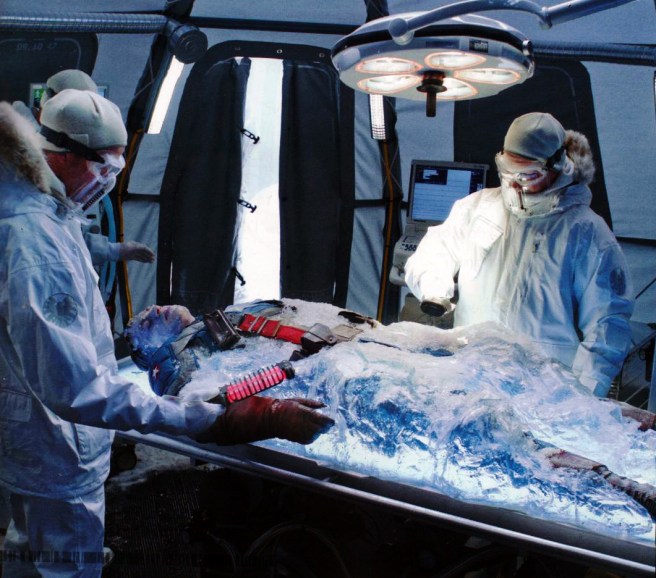
What HYDRA could have done, if they had been clever enough, is create an anti-serum for Erskine’s formula. All they needed to do was inject it into Cap while he was comatose. And, really, who would have been the wiser? Cap was frozen for quite some time: and no one really knew how that formula worked to begin with. It wouldn’t have been inconceivable for Cap to have died of complications in his decades long sleep. And in injecting some sweet sleep painless poison from a hidden fang, HYDRA could have removed one major enemy off the playing board.

What would the Avengers do without him at the very beginning of the game?

Captain America on Ice

And about the rest of the Avengers? Well, most of the technology they had access to came from SHIELD itself and HYDRA has infiltrated many facets of the organization. Imagine if HYDRA had managed to get their hands on the blueprints Howard Stark created for a power source and purposefully engineered a controllable flaw in the device: effectively creating a kill switch to Tony Stark’s heart? Or maybe they could have rigged something explosive into Sam Wilson’s EXO-7 Falcon jet pack or sabotage one of Hawkeye’s arrows.

Thor and The Hulk might also be problems. However, HYDRA has the psychological profile of Thor to work with: or at the very least might be able to prevent him from returning to “Midgard” due to their own researches into Asgardian technology. As for The Hulk: they would need to use some powerful tranquilizing agent on Bruce Banner before he transforms and they would need to do it quickly … or have a very good assassin cut off his head.

The Avenger HYDRA would have the most issue with would be Natasha Romanoff. She is distrustful of everyone and she has millions of contingencies: perhaps as many as Nick Fury himself. Even releasing all the information of her past gruesome deeds to the world and a warrant for her arrest would only buy time with warm bodies. Perhaps forcing her to kill unwitting agents or having her hold back would wear her out. The Winter Soldier has defeated her before as well, and he could either be sent after her or be placed into the Avengers in Cap’s place to turn on her. But you never know with the Black Widow.

Of course, there are many flaws to these possibilities. The Hulk can change really quickly. Hawkeye probably takes care of his own arrows. Tony Stark would spot a design flaw in his Arc Reactor, back in the day, a mile away and he doesn’t even need it to protect his heart now. Even if the alloy and equipment for his armour had initially come from Obadiah Stane’s engineers, Tony would have detected any discrepancies and improved on them. Thor might be a warrior but he is not stupid enough to be manipulated easily into being unworthy of his Hammer, and I doubt anything HYDRA has can incapacitate him or keep Asgard from accessing Earth unless their “real plan” comes to fruition.

And finally, we have Cap. That Super Soldier Serum is built like a motherfucker. It is not going to be poisoned or altered easily. And even if HYDRA somehow had legitimate access to him through medical staff, Nick Fury is paranoid. He has a sixth sense born from battles and infiltration gone wrong. He is a man that trusts his gut and he just knew there was something wrong in The Winter Soldier. Also, it is fairly possible only Fury, Maria Hill, and their confidants knew about Cap’s retrieval and kept it that way.

Winter Soldier

No. if HYDRA had really wanted to win, they needed to pull an Order 66: create a visible enemy to distract SHIELD and the Avengers that wasn’t them, and then simultaneously sabotage and/or kill them with the operatives that served as their “back-up” and “cavalry.” And even if the Winter Soldier himself was brought into play, and there is no way HYDRA’s SHIELD operatives could have convincingly brought him into the Avengers or SHIELD without setting off major warning bells in Natasha Romanoff and Nick Fury’s minds, none of this would be a sure thing.

Seriously: Black Widow should be remembered for just how terrifying her fighting and infiltration abilities truly are … the deeds she did in the past, and what she tries to do about them now. I wish there had been more emphasis on that.

Black Widow

Yet all this aside I can honestly do this all day and all night. But I really don’t have the time and I know there are many flaws with my ideas. Certainly, there are better geeky experts than I who could poke holes in all of these scenarios. But this was a good exercise in creative speculation. I look forward to doing this again sometime in the near future.

As the man says, “Excelsior.”

Anthony Martignetti From the Mouth of the Wolf

I met Anthony Martignetti in 2013. Actually, that is something of an exaggeration on all accounts. I read about Anthony at the time and not long afterwards I read his memoir Lunatic Heroes. Then I wrote a review of it and sent it to him. After all, he had put his email address and Twitter handle at the back of the book: and Amanda Palmer had his information on her Blog.

It was about that point that Anthony and I started talking. And while he took issue with the fact that I gave Lunatic Heroes a four out of five (I knew that he could do better: that he had more stories to tell), he liked my review. He put a link to it on his Endorsement page and he and Nivi Nagiel — his editor, writer peer, and friend — sent me a green Lunatic Heroes T-Shirt that I wear when I know I am going to be facing something particularly tough with which to deal.

Then we sometimes played games of witty pithy words on Twitter. There was even one point he accused me of getting my new budgie drunk as he wore his bell as a party hat. And then he challenged me to write a review of his next book: Beloved Demons. It was challenging: not just because it was about his adult life this time around, but also due to the fact that I had other projects and Toronto had been hit by a freak ice-storm that made me aware of just how powerless I really was. That pun was unintended, I assure you, but I suspect Anthony would have appreciated it.

The last time we really talked though, and I mean really interacted, was outside my parents’ house for a change. I was staying overnight at the Toronto Global Game Jam of 2014. I had my own computer and everything. So here I was at this computer at George Brown College’s School of Design, surrounded by creatives in a field that sort of related to my own, and having come from a particularly bad day with Ontario Works and bureaucracy when I got an email from Anthony.

He sent me a link and, sure enough, all the work I’d done with Nivi to polish my review of Beloved Demons had paid off and he included a link to that article on his Endorsement page as well. It inspired me. It encouraged me even more when I sent him something that I wrote and he gave me some feedback on it. He promised, when he had time, to give me a more indepth critique of the work and to look at some of the other things I sent him.

But there was one thing he sent me during that time, when my own loneliness was changed by into gentle solitude by the creatives around me, that I won’t forget. In response to the story that I sent him, Anthony quoted an old operatic and theatrical Italian saying:

“In Boca al Lupo . . . crepi il Lupo.”

I admit I actually took a while to find a good translation of the idiom, but ultimately it seems to amount to this: “In the mouth of the Wolf … may the Wolf die.”

I knew, somehow, that I could use this. I knew it even before I found a smooth enough translation and it was appropriate. In a small, but meaningful way that was the apex of our conversations: our relation to each other.

These words stayed in my head as I introduced my own therapist to Anthony’s work and they had actually had their own interaction. I am glad I did my part to help them meet at least on some level. But I wasn’t entirely accurate when I stated that the Game Jam was the last time Anthony and I interacted.

The last time we actually talked was when I sent him a copy of my first published story “When You Gaze Into An Abyss” in the Heroes in Hell anthology Poets in Hell.  It too was appropriate, all things considered. Anthony emailed me back to let me know that he got the book I mailed him and that he would read my story first.

I never met Anthony. I only talked with him online. He had touched many peoples lives: and that doesn’t even include the books he wrote after Amanda all but had to strong-arm him into doing so. I always knew he had been sick, and sick for a long time, but it’s weird. Even with that knowledge there are times I still find myself expecting to see something on his Facebook page, and I even ponder sending him more things. But I never really forget that he’s gone.

I’ve been sad for a little while and it took me a while to actually put one of the reasons into words. Last week, there was a memorial service for Anthony: held by his writing group the Souled Out Artists. I unfortunately couldn’t attend as it was in the States, in Boston, I have been dealing with anxiety issues, and I just didn’t have the logistics for a stay there. But I were to be perfectly honest, those are just part of the reason. Anthony said, once, that he and I should one day meet for owl sandwiches. He also said he wouldn’t have minded a phone call.

The fact is, I didn’t know whether or not he was being facetious. I didn’t dare ask, but jokingly said sure. But as I said, we never did physically meet. And I never phoned him. I regret that sometimes.

Many people that attended that service, or didn’t attend, actually knew Anthony personally. And, in retrospect, I would have felt weird being there. I was just a person on a fringe of lives that happened to appreciate his writing and influence. I wasn’t a family member, or a patient, or a student. At best, I’d to think we were casual friends that sometimes had time for each other for non-serious things and an appreciation for good writing.

I am glad that people went to Boston to the Souled Out Artists to celebrate Anthony’s life. His stories will continue on as living signs in the people that loved him. And his idiom of the Wolf will be an epigraph at the beginning of a novel that I plan to release one day: and it is all thanks to him.

Anthony understood the importance of mythology. He knew that the Wolf was symbolic of a great many dark things. And in so knowing, he created stories that fulfilled his old Italic proverb.

In the mouth of the Wolf … may the Wolf die.

Those are some words that I hope I will continue to live by. You can find more about Anthony’s stories here. Trust me: they are worth reading.

wpid-wp-1447229690679.jpeg

What I’ve Been Doing For Over A Month

It’s been a while since I’ve written here, so I think it’s about high time for an update.

A lot of things have happened during the time I’ve been gone. I’ll admit that some of my previous plans … didn’t go well. In fact, it’s not so much that they failed in that they just didn’t happen. I had some expectations and assumptions and while the results of these didn’t pan out, at least they were learning experiences.

Still, I admit I was disappointed. And there was a period of time where I honestly got fed up and depressed: where I was actually having panic attacks. I honestly didn’t really know what else to write in my Mythic Bios during that time: where I was regrouping and gathering up my strength again.

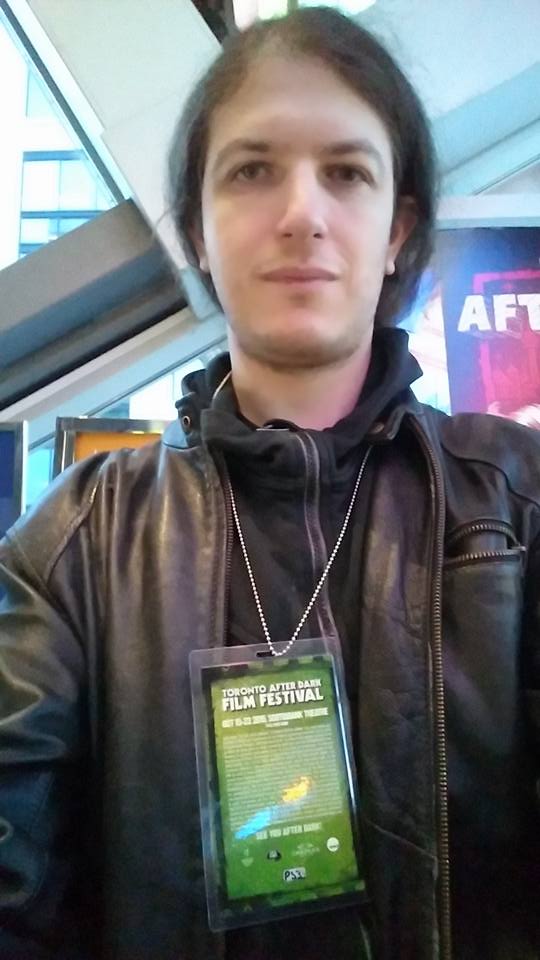
But it hasn’t been a total waste. I’m still writing my GEEKPR0N articles. In fact, I covered the beginning and end of the Toronto After Dark not too long ago. It’s always awesome to get to attend on GEEKPR0N’s behalf: to be among such enthusiastic horror and gorehounds and know that people are reading my reviews on those films. If you are interested, I wrote about Tales of Halloween, The Hallow, Patchwork, and Deathgasm.

In addition, I’ve been taking classes: specifically Ty Templeton’s How to Write Comics in his Comicbook Bootcamp Program. Working with Ty and my peers has been pretty awesome. It’s the first time in a decade that I felt like I was in a creative writing class that actually inspired me and genuinely felt constructive. The first seminar focused on writing techniques, story-making, and how to write for an audience. The second seminar, which I just started, focuses on how to world-build, create pitches, and write for a publisher. In all ways we are encouraged to think creatively: to work outside of the box while understanding just what that box is. I don’t know how much of this information I’m absorbing — as I’ve stated before that I have a different manner of learning and retaining knowledge — but what I have gleaned is excellent. And it is good to feel something to encourage my sense of purpose again: even if it is as bittersweet as finding it on College and Spadina with all those memories of that place.

In other news, I found a lawyer through the Social Justice system who is willing to take on my case to get me onto ODSP. It is a relief in a lot of ways and at least some of the pressure on me has been lifted. I know it is just a start, but a start is a good thing. Everything I’m doing is going to help me in some way.

I will admit it. I am not where I want to be right now. Sometimes, at my worst I honestly feel like I am in hell. But I have to keep reminding myself to moving forward. After all, the only time travel that any human being is capable of accomplishing is going towards the future. Slowly. Gradually. And inexorably.

Perhaps while I’m at it I’ll get to make more new memories in the process.

12065705_10153786689582125_5628166252022257967_n

Treat or Trap: Toby Fox’s Undertale

In honour of Halloween, tonight’s quick and dirty Mythic Bios article will be a video game review appropriate to the season at hand.

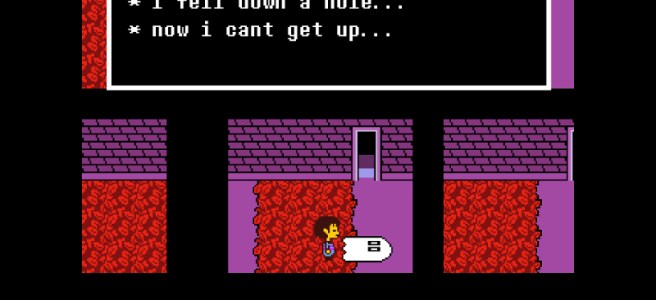
It is a fine game to play on an autumn afternoon or Halloween night. Imagine taking Maurice Sendak’s Where the Wild Things Are and combining it with Abby Howard’s The Last Halloween, apparently some Earthbound and some subversive turn-based RPG mechanics and what you might get is Toby Fox’s Undertale. And this description doesn’t do the game any justice.

Undertale

In Undertale, you play as a child who has climbed up Mount Ebott and found themselves in the Underground: the site of which the race of monsters was banished ages ago in an ancient war with humankind. Now, there are two ways you can play this game. However before I go on, I want to reiterate something. A long time ago, I mentioned that a friend of mine truly appreciates “games with consequences.”

So imagine the phrase “games with consequences” existing in a Dictionary somewhere. If you can do that, think of the picture right beside the entry. That picture would be Undertale.

The first way you can play this game is to utilize one of its unique mechanics. This Path is called the Pacifist Run. That’s right. You can play through the game by killing absolutely no one. But what fun is that, you might ask? Well, imagine a child’s world. Think of a child coming across an Underground world of monsters: each one with their own hopes, dreams, and fears. Consider how scared children can be, but also how curious they often become, and then think about how they might handle a situation with a strange and eccentric being compared to how an adult might — or might not — do so.

Ironically, in a lot of ways the Pacifist route is a lot harder than its … opposite. But if you play it right: if you get to know the monsters and realize they are not different from you — and if you pay very close attention to details — you will be well rewarded.

And then you have the other … route. The alternative isn’t that hard to figure out if you are a long-time gamer. Basically, when you encounter monsters you consider them enemies and you essentially kill them all. You kill them and take their EXP. You level up. You will also learn a lot about this world, but your lessons — for all the ease of killing and staying to the tried, tested, and true mentality of being a gamer — will ultimately be harder ones.

It might be all the difference between an epic fantasy adventure … and a personal horror game.

I’m not going to go into much more detail beyond any of this, I’m afraid. To be honest, I’m just not feeling it. Toby Fox and his team create an excellent archetypal world of almost cartoonish beings, but with a lot of heart and serious subject matter amid some silliness verging into the profound. Also … they play with the form of the medium and genres that they are working with: a lot.

I really appreciate the story and the surface level simpleness of the game belying its true complexities. It is a game filled, literally, with heart but also secrets, and mysteries: some of which have still not even been solved to this very day. The music and graphics hearken back to the 8-bit nostalgia prevalent in much of the independent game scene.

But if I had one major quibble with Undertale, it’s ironically with the core of what it is: that actions have consequences. I will tell you right now: as with real life, if you are not at all careful your actions will leave a permanent mark on your gaming experience. And no amount of Saving or Restarting will ever change this. In fact, you can count on Saving or Restarting to have consequences of their own.

It is amazing to see a game that is so moralistic to the point of being both forgiving at times, and completely unforgiving: while also not being particularly all that preachy. Sometimes, it will give you just a few opportunities to see something wonderful but if you’re slow or you don’t pay attention, you will miss it. Yet what’s worse is that you will not get the entire story through one playthrough. It’s just not possible. You will miss details if you only have one playthrough. But the Catch 22 of another playthrough is, well that …

Consequences will be on you.

I’m just going to say this: this game is a self-aware completionist’s bane. Perhaps the best way to explain this without spoilers is to talk about two other games. Gaming Pixie created her own RPG: She Who Fights Monsters. At the very end, depending on your choices — even those made in the blink of an eye — and how much you pay attention to details, you will have only a few chances to get a particular ending. Your actions will colour what you get.

At the same time, there is also the lesson inherent in Gaming Pixie’s Shadow of a Soul. Sometimes, the only way to play a game is to not play that particular game at all. Either way, I hope that you will play Toby Fox’s Undertale and that no matter what you do you will stay determined.

Who Wants To Be Luigi

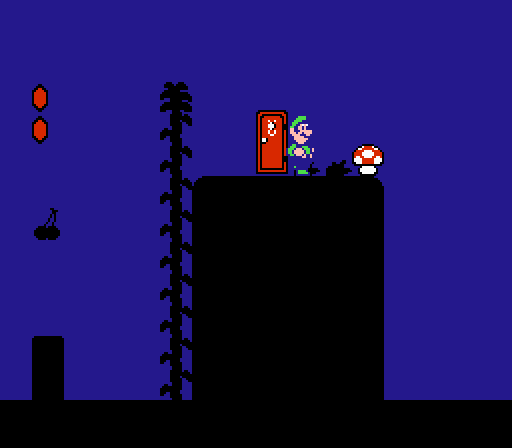
There is always someone who can relate to Luigi.

Let me be clear on the matter. It’s not because they were necessarily the younger sibling stuck with being Player Two on their Famicom or Nintendo Entertainment System. It’s not because they’ve felt second best throughout most of the entirety of their lives, or feel like they are only talked about in relation to a “better person:” to the point of their last name being the first name of said before.

I’m not talking about Luigi in the original games or even the newer adventures that have been released in recent years: particularly in The Year of Luigi.

No, I think that most of the people who can relate to Luigi have played Super Mario Brothers 2.

Yes, I know. Super Mario Brothers 2 is problematic. I mean, in addition to it only being a single-player game for the multiple choice of characters at your disposal, it is also goes in and out of being Doki Doki Panic: the intended Mario sequel, made into its own game, and whose bones made the game we all know and love from the late 1980s.

And in this game we have another problematic character. For the first time we see that Luigi is different from Mario! He is not just Mario with a green hat and shirt under blue overalls. He is taller and thinner. And he even jumps higher than his brother.

For the jumping alone, Luigi should be superior to Mario. The problem in the problematic here, however, is one simple fact: much like my green-feathered budgie, Luigi sometimes has troubles when he attempts to land.

It’s true. He jumps magnificently in the air only for his feet to spin under him in a slapstick cartoonish fashion. This is especially annoying when you try to aim for a platform: which might as well be made of ice due to the fact that Luigi is too busy spasmodically moving up and descending.

I know I’ve been frustrated many times in attempting to control Luigi’s jumps: just for him to scuttle or slide off a platform or a brick. It can be downright infuriating.

But imagine what it’s like to be Luigi. Mario doesn’t jump as high as you, but he is a more dependable jumper and lander (for the most part).  He is consistent. He gets the job done. People generally like him a lot more. And it all seems so effortless. It’s as though its all innate: all natural to him.

Yet you, Luigi, know you can jump high –higher than anyone else in the game — but you have to work at it. You have to think it out, and you become self-conscious of that process. Maybe you have more energy to expend than Mario. Perhaps you are so afraid of potential danger that you have to channel that frenetic energy somehow, or you’re excited, or that is just how you move under scrutiny. Or maybe you wish you could glide more like Princess Peach.

Maybe you like to imagine that you can fly.

And it only gets worse when someone is frustrated with you or draws attention to you when you attempt to jump under orders. Some might find it right on hilarious. And few people, if they only see you in one video game — in Super Mario Brothers 2 — will ever truly appreciate your jump. All they will see is how you struggle, and fail, and fall.

Luigi

That is why I think some people like Luigi better: not because he’s perfect, or even good. But because they are Luigi: and they don’t get the luxury of a curtained stage with a Player Select Screen.

SilSol: A Dark Crystal Vignette

Here is my second, and last Dark Crystal character sketch. I made a lot of speculation as to which urSkek SkekSil and urSol came from: especially from the second volume of The Dark Crystal Creation Myths. To me, this writing represents what I could have done, and what I did actually do. I hope you will enjoy it and appreciate this in the spirit that it is meant. 

SilSol flew through the lines of stars and suns with his brothers as they finally left Thra through the Crystal of Truth. His own mind, though clearer, now was no less blurred as they passed the point beyond space and time and perception.

He looked down at his form: such as it was now. It was a brighter orange: almost a bright white light. Once, UngIm would have told him that a white corona symbolized a process of healing. And he, above the rest of his brethren, shone the whitest of all.

Even now, travelling with the others, it was hard to think of Thra: of the place of their banishment. He remembered wanting to leave and rejoin his people so badly. He hovered in the skies far across the ocean and sang in a place where he thought no one else would hear them. To the Gelfling people, he taught them songs of growth, and peace, and love. But to himself, singing to an audience that no longer listened to him, that he was no longer a part of by virtue of being a “he,” of being an individual, he sang of loss and loneliness and the clinging to of false hope as temporary staving off of despair. But it had been a deceptive salve, one that ate away at his very being, that stained his reddening form with a spreading blackness … it had proven just as corrosive and as ineffectual a balm as essence, as vliya

Deep regret flowed and passed through SilSol’s ethereal form. He had not known the mariner Gyr had been there that day, listening to his song. It hadn’t been the Gelfling’s fault. It had been none of their faults. In his spite he thought them primitive savages and only Aughra was considered even remotely equal to his kind. But she had been wiser than he in many ways, though he did not spend nearly as much time with her as TekTih had, and the peoples of Thra had their own songs, their own rhythms and variations. It was the very opposite of the former unity and symmetry—the perceived perfection—of the communal consciousness of his own race. Once, long ago, SilSol knew his music had been as precise and perfect—as crystalline—as mathematics and the physics of the cosmos. But he had split away down a quantum path into something else, like the rest of his brethren and he hadn’t been able to find that perfect note again, that rhythm that he needed, that he craved for balance …

Is there no place in all the realms of the Crystal where a single being will show me compassion!?

It wasn’t even Raunip’s fault that he had finally unleashed his anger and bitterness. That one had his own imbalance, his own lack of connection with himself to deal with and SilSol had not envied him. In the end, SilSol blamed Thra, the place that graciously took them in, for this sense of loss: though the fault, he knew now, lay within himself.

Dark Heart, Raunip named him, once.

Is there truly no love for me in all creation!?

The Crystal, and Thra, and the Universe had answered him. They had always spoken to him. He just did not hear it. He chose not to hear it. Like the Chanter that he had been, he closed his hearing to everything but his own song, letting it play around him and drown everyone out, let it deafen the world, let himself become deaf …

He knew now that his brothers had been the same: had denied their darker impulses, had secretly hoped to purge them with the light of the Crystal, to go home … SilSol had just been the catalyst to ignite and rip apart their wilful ignorance.

But it did nothing to assuage his guilt. Better urSkeks than he: so many others including TekTih and the great SoSu passed on fragmented while he, the catalyst that made the Crystal divide them, remained. He recalled the Division vaguely: remembering the scorn of his brothers and their hatred of his one discordant note: for the vestige, that grating reminder of what he had cost them, of what they had lost and he had taken from them when they were all whole. He went around and used that crooning voice, that one note, to tell lies and ruin lives … At the same time, he recalled the Valley and the peace, though unearned, that he had finally found for his soul there, for the love he had of the planet he once disparaged, and the time he spent singing with his brothers, with the Gelfling Jen that was like their child …

As these fragmented memories unified, the pain in SilSol eased and flowed out of his body into the darkness of space, into the streaming of his brothers’ light. Even fragmented, he taught Jen his songs, and his selfish part—the part that caused so much pain—guided him to where he needed to go. Unity and symmetry won out at the end of the day, disparate notes becoming a single song again.

Around them, as they continued to travel, his brothers began to sing. UngIm, at their forefront where SoSu had once been, beckoned him forward. SilSol found his light becoming a brighter white and gold again. He understood that he would heal—that they all would heal and had healed—together. With this thought, this solace, his two voices—become one once more—joined the rest of the chorus as they, all of them, continued on their final and eternal journey together and whole again.

Urskeks

Jen: A Dark Crystal Vignette

Two years ago now, I immersed myself in the world of Thra: in an attempt to write a novel for The Dark Crystal Gelfling Gathering Contest. Every day I would write notes on my novel outline in my journal while reading the old novelization and the visualized encyclopedia. Before this, I had only taken smaller creative challenges that I displayed on this very Blog. But taking this on, even though I didn’t end up creating a novel, actually helped to save my sanity and cultivate my own creative energy. 

Still, sometimes I regret the fact that I didn’t write that Gelfling Gathering novel or the short story I had planned. To be honest, though, sometimes I’m just sad the contest itself ended: with all the interactions on the Community Forums and the possibilities of making myself a part of this world. During this time I wrote a few story sketches on the Board: to immerse myself and my writing into that world. Basically, I wanted to see if I was capable of writing Dark Crystal stories. So in honour of that special time in my life, I want to present to you one of the first story sketches that I made: from the point of view of our favourite Gelfling Jen in light of everything I learned afterwards. I hope you will enjoy this, my friends for I know I did, in writing it. Take care. 🙂 

Jen watches the luminous beings—the urSkeks—as they ascend into the air, through the Crystal, dissipating into mist, into space, and time and energy, and all the other elements and concepts that his Mystic teachers and friends attempted to instill in him until they were gone completely: as though they had never been there to begin with … as though they had never come to Thra at all.

But Jen knows better. The gleaming palatial white of the Castle that houses the Crystal of Truth—once blackened and warped by the filth and depravity of the Skeksis—is a testament to the beings that were here: that did all of these things. He sees the inscriptions on the newly clean walls: with art and frescoes rivalling that of the ruins of the Gelfling cities … so many cities … so many people … so many of his own kind gone.

UrSu had known. All of the Mystics—the urRu—had known. Even when they taught him, he sensed their collective weariness—their awful guilt—and a few moments ago he realized why.

Jen looks out through the window at the sky. The three suns have passed other another. The Great Conjunction has ended: not to begin again for another one thousand trine. And the wake of those three mingled suns leaves Jen with much to think about.

The urRu and the Skeksis had been one people: two halves of the same being.

His Master had always instilled into him that everything has symmetry and balance: and that when balance was broken, Nature—abhorring a vacuum—would adapt accordingly. UrAc, the Scribe of his people, of his brothers, once showed Jen a myth that his long-departed brother—who Jen now remembers as urLii the Storyteller—used to tell in which a race of great and powerful beings challenged the gods and for their hubris were torn asunder into two peoples. They would spend the rest of their existences trying to live and yet always searching for their other halves. UrAc had written this tale down: as one of the many chronicles that urSu let him see when he was learning to read, and the irony of this story does not escape him now.

He saw them. After the Skeksis cut down Kira, even after he saw her graceful, beautiful winged form crumple to the ground reaching for him and he slammed the burning shard into the Dark Crystal with a righteous fire in his veins, he saw his teachers come into the Chamber. They surrounded the Crystal and he saw them … He saw the light refract from the whitened Crystal blazing as they drew the panicking Skeksis towards them.

The usurpers of Thra were so afraid: as their moment of triumph became one of their greatest fear. It was as though the Skeksis feared death and, in a way, that is exactly what happened. Jen saw that even the Skeksis that tried to trick him and Kira, become drawn into the waiting arms of urSol. The urRu had always been so hunched over, so old, so humble but when they came before the restored Crystal they towered powerfully … majestically over the quailing Skeksis. They were beautiful as their thoughts and considerations finally followed through to definitive action.

The words of the long-dead Storyteller flashed through Jen’s mind of two becoming one again. So much more happened after that. The urSkek—the one that had ordered the Garthim and urIm the Healer both—told him so little, but enough. One mistake had cost them their unity, one mistake had cost the lives of the Gelfling people, and almost the life of Kira. But then … the urSkek sang and his brothers sang with them. It was urSol’s chant and the deep resonant hum of the other Mystics only with another chord running through the sound, a high pitch to match the heavy thrum. For a few moments Jen thought he had heard what was once the squealing “mmm” of the Skeksis he met before, which he now saw as just a broken fragment, a base echo of the brilliance surrounding him as his heart glowed against Kira’s body: clutching it for dear life.

And as the music filled him, it was like the dreamfast … only different. There was no touch of skin, but it went beyond that. He saw stars and a crystalline world, and the urSkeks, Thra in the beginning, Aughra younger and his people all whole and spreading throughout the world … the urSkeks aligning crystals to make the Crystal brighter, cultivating it … the Great Division, the inhibitions of the urSkeks turned into the Skeksis and their horror, the compassion and conscience of the urRu powerless to do anything but protect and pain, and sorrow, and joy, and peace and yearning manifesting into one place through another people entirely: Jen’s people … Jen and …

The joy of Kira stirring against his breast would never leave Jen as long he lived. And that was when he saw the glimmers of the urRu through the strange and ageless forms in front of him, the active power that was once embodied by Skeksis made into something positive again.

And now they are gone: the urSkeks leaving them with the mysteries of the Castle and the Crystal: with hope. Kira is at Jen’s side: stirring against him. Jen realizes he isn’t angry at the urRu for not telling him. They did in their way. But he wonders. What of the urRu and the Skeksis that died before the Conjunction: fragmented and separate? Were they consigned to a void? To an abyss of nothingness? Did the gentle and inquisitive urTih cease to exist? And what of urSu: the wise Master that shared his fate with a dying corrupted Emperor: who Jen now knew had finally let himself die so that he could succeed this day?

But then Jen remembers. He recalls his Master telling him about another life, and Aughra saying that urSu could be anywhere. Jen smiles and closes his eyes: basking in the light of the Crystal and Kira by his side: for he now remembers another lesson. For just as urSu once told him that Nature abhors a vacuum and that energy can neither be created nor destroyed, the urSkek also taught him another lesson.

Everything is connected.

It is with this thought that Jen knows he and Kira can build again: and that there is again, finally, hope.

Jen and Kira

Like A Million Bucks, That Wonderful Feeling

This isn’t going to be a very long entry.

What’s coming up is going to be my last full week at the LDEEP Program and, while that’s true, I understand now that the real work is about to truly begin.

I have plans. I always have plans. A good part of those plans is to take what I am good at doing, and what I enjoy, and actually begin the process of making a living from it. And I know what I’m good at doing. I am a good creative consultant when it comes to ideas for stories and editing them. I can tutor adults in subjects in and around the humanities. I can even create writing commissions on subjects in which I am familiar. And I can create content. I am even in the process of making focused and collaborative content. I already have a name for what I want to do. I just need to build on its body of sorts.

And, as such and if all goes well, I might have help.

In fact, I already do. I just want to say that before this week begins I had some excellent tidings happen last Friday. As you know, I am working on story and content for a video game with a group of my friends. Last Friday was the first time I’d ever gotten paid for something I had directly written, or aided in writing.

Admittedly by my friend and the leader and founder of our group it isn’t much, and I will continue to need assistance for a while, but it’s amazing how sixty dollars can feel like a million bucks when someone thinks of your work enough to pay you as the professional that you are: to give you money for something you are good at, and enjoy, doing.

Somehow I feel like I’ve made more progress in collaborating on this project than in a great many other things I’ve done this past while. It is definitely a good start and I don’t intend to have it end here. And it won’t. We believe in what we are creating and I already have some good ideas to expand on to make our game leave a distinctive mark. I can’t wait for the day where I can tell you more about that: and so many other things besides.

Until another time soon, my friends. You will be hearing from me and thank you for all of your continued support. It is greatly appreciated.

High School

I’m Doing It: Towards the Final Week

And now: for Too Much Information Time. If you do not want Too Much Information Time, please stop reading this post. As I’ve said before, there are a plenty of good and viable articles and writings of mine that you can read instead. But if you do go on, know that these are challenges that I am dealing with and, at the very least, there is some positive problem-solving involved. That said, reader’s discretion — as always — is advised. 

I’ve never really been good with time. Not too long ago, I said that it’s an inescapable fact that projects are monsters that can get away from you but really, if we’re going to be honest with ourselves here, it’s time that’s the greatest monster of them all.

Usually, I’ve been able to update my Blog on Mondays and be able to focus on other things throughout the week. But last week, and a good portion of this one have been … something else I have to say. It’s true that I haven’t really kept you up to date about my fourth and, now practically, the fifth weeks of my time in LDEEP: an Ontario government-sponsored program that helps people with learning disabilities find meaningful employment.

One reason I’d been stuck on saying anything is because I reached a … curve, as it were. A lot of the syllabus that we follow is generic government-mandated material: mainly filling out questionnaires to determine our technical and intellectual skills, resume building, possible interview scenarios, and even cold-calling. We also had sessions on computers to look for jobs.

In the beginning, I could understand the questionnaires: as it would help the workers know us a bit more and eventually aid them in getting us the right placements. But after a while, I started feel a bit … restless. It probably doesn’t help that before I get a ride to the centre, I have to use the washroom three or four times before getting paranoid about being stuck in traffic for far too long. Irritable bowel is manageable when you are not facing a lot of stress. I don’t dare eat anything before I leave for that similar reason: even though it doesn’t seem to make much difference and, in fact, it might actually improve my condition.

I don’t mention this a lot, but especially before I even came to LDEEP I developed this feeling that anything outside my immediate vicinity is ultimately unsafe and I have to be on guard all the time. I can’t relax. I need to know where the facilities are and I need to have the freedom to move around and have access to them. If you have seen Toronto, this is easier said than done in a commuter city where public restrooms are few and far between.

It was … bad the first two weeks of the program as my body was adjusting to waking up earlier again and figuring out what the hell was going on. Actually, it feels like hell: a hell of discomfort and anger I have to work through and I am relieved to get around when I finally get to the centre thanks to my dad. But in the beginning I was all right because I insisted on doing work when I got there, despite some of my experiences before that, and I left — with the work there — and with a sense of accomplishment. I did what I needed to do despite my body and the panic attacks. I put them in their place.

By the end of the three week of the program and through the middle of the fifth, I started to have other doubts. One key issue, when you are dealing with learning disabled or gifted students, is that you can never make an educational program that is one size fits all. It’s just not possible. It’s even less possible when you have a results-driven mandate that you need to keep up in order to keep going.

I’m not going to lie. There have been a lot of interesting elements of the program that I’ve filed away out of curiosity’s sake, but I’ve felt that a lot of it just doesn’t apply to me. The fact is, I know what I want. I am a writer. I knew I would need to do some tasks for LDEEP, but I thought that we could take what I was good at, focus on what I was missing or what needed improvement, and have some more one-on-one sessions to get me there: complete with more networking to make employment for me possible.

I’ve said before that I also had to get used to interacting with a group again, and that hasn’t been so bad. I’ve made some really nice connections and the people there — including the workers — are good people just trying to find their way and help each other out. Some of us have gone through a lot. When you get beaten down so many times, you can begin to internalize it. But everyone in my program wants to get past that and get the employment they deserve.

But there have been times, particularly when left to our own devices on assignments I didn’t really understand or felt applied to me that I got frustrated. I will admit that there were a few times I was even tempted to leave.

I’m used to having things a certain way. I’m used to being able to eat breakfast at home and deal with my functions before interacting with people. Especially due to my past as a Master’s student, I’ve gotten used to being independent, leaving at my own pace, and learning the things that interest me. And I am a published writer. I have not forgotten any of this. Sometimes I’ve honestly felt like in pursuing this, I’d taken one step forward and three steps back in terms of my own independence: getting a ride to the centre, needing to get a lunch before hand instead of finding something on the way, and even dealing with different kinds of people and situations.

It also doesn’t help when I have to fight a burning feeling in my gut and not feeling safe until I’m out of traffic and near facilities — kind of like how you’d feel if you were playing a video game and Save Points were few and far between on your journey — just to do something that I don’t always feel applies to me, or get left doing something that Ontario Works had me do without much in the way of success.

I know what I want and what I need. And I did ask myself: “Why am I here? Why am I putting myself through all of this? What am I hoping to achieve?”

On Wednesday, the leader of our program called me into his office. Somehow, I knew he would, and not for any terrible reason.  We get along very well and I enjoy talking with him. But he does get busy. LDEEP itself is very busy and he and the other workers attempt to help as many of us as they can.

We had a long talk that can be summarized like this: he has to find me a job and it has been difficult. But I threw out a few ideas and he is going to help me out with them. One of them is a business plan: which will have roots with some of the things I’d been attempting to do for the past three years. It also helps now that, because of LDEEP, I know what my potential net worth — my salary — actually should be. I’m going to be consulting and editing someone else’s work and using the above, along with some of the program leader’s input, as potential templates.

There is also something else I could do in addition to this that might get some pressure off my back and advance my connections and knowledge further. I know that I am going to have to do some hard work no matter what I choose, but at the very least I can choose what work that will be.

And that’s what it is about for me. Personal agency. The fact is — another fact is — I’ve realized how far I have come. LDEEP’s nine to three schedule makes me keep daylight hours and I actually feel a lot better than I have in years aside from the morning departures. My headaches are more manageable when they happen and I actually go to sleep at midnight now.

It has also gotten to the point where, when I come in to the centre, I socialize and work with my peers and this, along with some directed activities, actually makes me feel better as I can focus on a task at hand: or, really, enjoy a conversation. We are all different in this program, and there is a lot we’ve learned about each other.

I also know what I am going to do now. I’ve realized that I can go to the workers and tell them about my concerns: that I don’t have to do all of this on my own. They are there to help us and I need to remember to do that. I might need some time in the morning and that shouldn’t be an issue. I might need clarification about a task.

And, even better, they might have some suggestions for me. Next week will be our final session. We will have assignments to do, but I have my own assignment now that I can begin to focus on starting Monday. I also feel a growing sense of relief. After next week, I can finally pace my own time again. I will still be going to the centre and interacting with the workers and my peers, but I won’t have to be there as stringently as before. I know my stressors and I can pace myself accordingly.

And look at how far I’ve gotten from where I was. On my Facebook today, I wrote something for my status. I said that I’m starting to feel like my life has just begun.

image

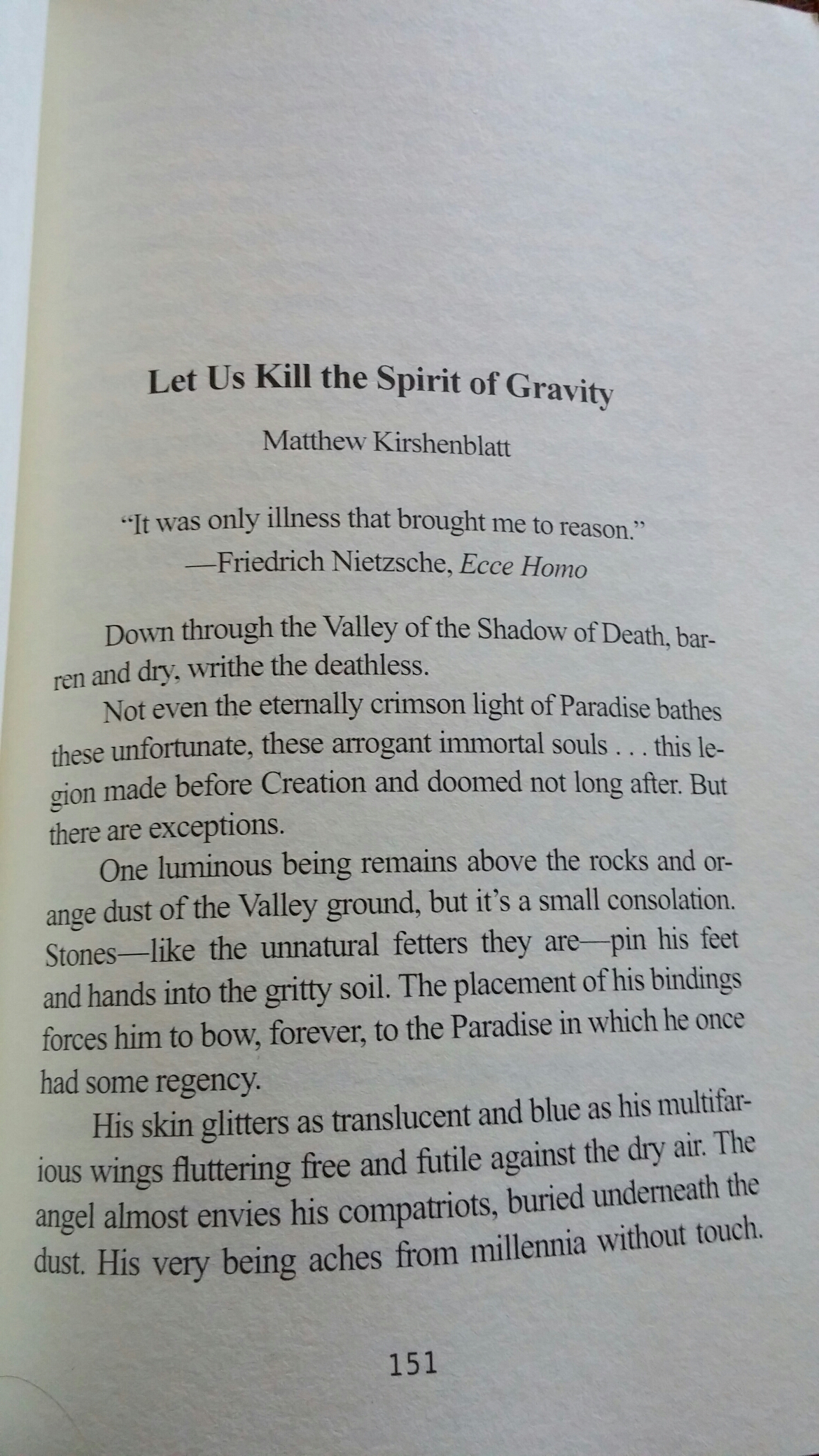
So, if you have read this far, here is your reward. As you’ve seen from the article image, I got my copy of Doctors in Hell: an appropriate title when all things are considered. So here is an excerpt below, just for you. I just got the hard copy today.

image

Perhaps, when you get right down to it, it’s not so much that I’m trying to get my life back. Rather, I’m beginning to realize that I have the potential to make a whole new life entirely. And that, my friends, is a very important feeling. I think I will leave you with that for now. Until next time soon.