The Neurodivergent Shadows in Us

There are going to be spoilers for Jordan Peele’s film Us, this movie that’s been out for months now, but sometimes that’s just how it has to be, and it wouldn’t make sense if I attempted to do anything else. Also, I am writing specifically about my personal experiences in relating to both this film and the following subject matter with which I try to engage.

Like Terry from his Gayly Dreadful article Tethered to the Closet, I knew practically from the beginning that Adelaide Wilson wasn’t “normal” and that, eventually when I learned about them, she was one of the Tethered. However, the difference I want to make clear is that while Terry related to her as someone coming to terms with being gay, I am not on the LGBTQ spectrum at all, I am also not American, and part of my reasoning for thinking she was one of the Tethered is because I am fairly good at guessing twist endings: being a writer, and a geek.

Yet there’s another reason why I can relate to Adelaide, and the Tethered.

Like Adelaide, I grew up as a child in the 1980s. And like the Tethered, who replaces her, who was the original Red and becomes the Adelaide that we know as the protagonist of Us, I grew up with developmental issues. I’ve talked about them before. These days, I would be called non-neurotypical, or neuro-divergent. My brain is wired differently from some perceived baseline in the mainstream population. I learn and I react in other ways in contrast to the current social paradigm. But, growing in the public school system of Canada and North America itself, I was given another label.

I am learning disabled.

Diagnosis is still relatively confusing to this day. Some of my disabilities could be confused with aspects of what some experts call the autistic spectrum, while many of my challenges have — ironically enough — been classified under the umbrella of nonverbal learning disorders.

Of course, I am not saying that the Tethered are the same — seeming to be clones of citizens created by the American government with their own developmental issues either by accident or design — but some of their characteristics can be seen as symbolic as some kinds of neuro-diverse behaviour. Terry, and other writers examining Adelaide focus on how she has a different, or inverted, sense of rhythm compared to others such as when she’s attempting to snap with the music that her husband Gabe is playing on the car radio. I remember her trying to also show her son, Jason, how to do the same thing: and this feeling I couldn’t describe came over me watching her. She looked both happy, and vulnerable, and awkward but genuine in that moment. It is a situation that the actress Lupita Nyong’o portrays well. She has, to some extent, learned how to match the rhythm, or mimic it enough where she is only slightly off. And aside from not being one for small-talk, no one can really tell the difference. Adelaide seems normal on a cursory glance.

She can pass as mundane.

At the beginning of the film, Adelaide is lost as a child in a boardwalk mirror house on the Santa Cruz beach. When she is found again, or seems to come out of the establishment, she seems to be rendered mute. Of course, we realize later that this isn’t the Adelaide that went in there, but rather the Tethered girl Red who has not learned how to vocalize, and her hand-eye coordination is relatively sloppy and haphazard. Her parents believe that something traumatic happened to her when her father lost track of her. They get her to see a therapist, they enroll her in dance courses — in ballet specifically — and she acclimates after a while.

When I was a child, I didn’t vocalize. Not really. I communicated in gestures, and grunts. It is one of the reasons I couldn’t stay in a mainstream daycare or kindergarten. My hand-eye coordination was also terrible: having what is called motor clumsiness. I didn’t really learn how to walk until later in my developmental period. My parents had me see therapists. I even had physiotherapist sessions where I rolled around on a giant ball and developed my reflexes more. My parents also enrolled me in a specialized kindergarten for children with special needs called Adventure Place. In fact, I had gotten so used to being there that when my parents were told I could attend mainstream public schooling, or I had to, I was so confused by the idea of “recess” and time before class that I got lost my first day at Thornhill Public School. And then, another time, I stayed on the school bus and the driver accidentally drove away with me: completely terrifying my parents even though I had, apparently, dozed off and had a nap.

I mean, I guess at anyone of those times I could have — or someone like me — could have found myself in one of those subterranean places filled with rabbits not unlike Alice’s Adventures in Wonderland or its original title Alice’s Adventures Underground where I found a Shadow: not unlike those whom are forced to suppress their own feelings and mirror the actions those of their counterparts above ground against their will from the story that Red told Adelaide.

Do you want to know what I remember the most about my time as a child in the 80s, outside of therapy and all encompassing special educational spaces?

I was afraid. All the time.

My main memories of Thornhill Public School, were the dingy, yet antiseptic halls of the school itself with their old copper-coloured rubber glue stoppers, the long grey crooked scissors we used in art classes, and just how dark and old the basement was where the janitors had their office. I remember not wanting to be there, and wanting to be at home. I just wanted to go home.

At the same time, this was the period of the Beetlejuice cartoons, Teenage Mutant Ninja Turtles, Fraggle Rock, and the Dark Crystal comics as well as You Can’t Do That On Television on YTV. Adelaide herself had C.H.U.D., The Goonies, and Michael Jackson’s Thriller in her early life, and while I hadn’t been exposed to 1980s horror and specifically those adventure art movies at that time, they were on my popular cultural periphery and they would have intersected. And I was always both fascinated and terrified by horror in the form of hearing about such movies, and also folktales. I fed off of these elements, and they became part of my intellectual DNA, especially when in my Special Education class with Mr. Phillips I learned how to actually read from Grades 1-3.

They got me through a lot of the fear, but I still remember those halls and that basement: a place not unlike the underground facility where Red — before she was Adelaide — then Adelaide herself having been captured and abandoned by Red — and all the other Tethered clones wandered around aimlessly. It always occurred to me just how easy it would be to get lost in those corridors, and looking at the Tethered, few can be as lost as they.

Even though my perceptions improved, I still had — and still have — spatial difficulties. I get lost all the time, and directions as well as maps don’t always make sense. I also have dyscalculia: a learning disorder that makes arithmetic extremely difficult to do in my head. I can add and subtract, but I am slow at it, and I can’t multiply or divide without extreme challenge, or a calculator.

I also used to fidget a great deal — and I still do. Usually, it is a way to express excitement, anxiety, stress, or all of the above. I’ve learned to control it publicly for the most part, but the mileage can vary depending on the circumstances and my comfort level. Sometimes, when I get into that state, it is a lot like a free-form dancing: and it reminds me of Adelaide’s own dance and ballet classes as she was growing up on the surface.

And then there is communication. Like I said earlier, in the beginning I barely if ever used words to communicate. And, even now, when I’m nervous I will either ramble a great deal to make up for a perceived lack of content on my part, or I will be quiet and utilize few words. Even looking at how Adelaide talks with Kitty Tyler on the beach, or has difficulty talking or expressing her emotions to her own husband reminds me of my own impatience, or discomfort with small talk — which I generally try to compensate by talking about very specific topics of my interest, and not always the other person’s next to me — as well as my challenges expressing myself in a public, or even personal situation.

I know I really felt for Adelaide when she was attempting to communicate with her husband about her feelings: about her lack of comfort being in Santa Cruz, and even her annoyance with him for making fun of her quirks. I’ve had that happen a lot: from children laughing at my slow talking or thinking, and authority figures telling me to stop talking to myself (as if I were embarrassing myself and not them), and even having partners who just didn’t understand why I couldn’t be more like everyone else. That is the social interaction disorder element of some learning disabilities coming into play. It’s frustrating. It is beyond frustrating. When I was in daycare, before Adventure Place, I apparently did not want to talk or interact with my peers. I just wanted to stay in my own world. And I recall feeling a lot of anger and resentment for having to be with others who either made fun of me, or just didn’t understand me at all.

Even later, having gotten more therapy, I would often not cut or make my art the way I wanted to, and I would get frustrated with my tools — with my hands — and my own coordination to the point where I would destroy what I was working on because it didn’t meet my own expectations. My psychotherapist has asked me on occasion whether I sometimes feel toxic inside, or outside: and often I say I feel both for this reason. And I can only imagine Adelaide, especially with her experiences having gotten out of the facility underground, and adapting to the world above, having similar feelings and thoughts.

And I adapted too. I went to Special Education classes, but aside from those I focused on my strengths. Whereas someone like Adelaide delved into dancing and ballet, I attempted to become an artist, and eventually a writer. Overtime, as I went through the ranks of the public school system and university, I weeded out the courses I had difficulty with and focused purely on my strengths. Eventually, in my own mind, while taking advantage of the extra time afforded me because I was a learned disabled student, I came across as normal. I could be like everyone else. I could be “high-functioning.”

I could pass.

But I never really did. And while Terry, in his “Tethered to the Closet” article talks about that deep, dark Shadow secret of his sexuality has he attempted to pass on the sexuality spectrum, I tried to pass on a psychological and developmental one, while knowing — deep down — that there was something in me that set me apart from a lot of my peers: that it was always there, that it will always be there, and I will eventually go back to it.

I did. A lot. I had to ask for extra time. Sometimes I needed further clarification for my tasks. And then, by the time I made to York University, I needed the label and diagnosis to accord me extra time to remain in my Graduate Program just to maintain my full-time status with only half a course load.

Yet that anger, it never goes away. That frustrated, helpless anger. The kind you have in the dark where you can’t talk, or relate. Where you can’t express your emotions. Or the very least, you can’t do any of these things in an acceptable way to the society or space with which you find yourself. People laugh at you. Or bully you. Or worse: sometimes, they just interact with you out of some sense of pity.

So you take those elements of yourself. You face yourself in that mirror much like Red and Adelaide faced each other in that fun house near the beach. You strangle it. You push it down. You chain it to a bunk post, take the T-Shirt, and hope no one realizes that you are an intruder: that you are wrong. But you even when you play along with your parents, as much as possible, even when you find a hobby, find a field to work in and justify your existence — even when you make relationships — that part of you that you thought you could hide, even in plain sight, will always be there. It will always be waiting.

And the society that you grew in? That made you? It does it to control everyone to an extent. It wants you to conform so that you don’t make anyone else comfortable. But it only goes so far. For me, I had all of that “extra help” until I was done with school, or rather school had been done with me.  Then there was no structure, nothing but more antiseptic institutions that arbitrarily help or condemn you like welfare and disability offices and organizations that force you to embrace your disabilities as your identity — the very thing you spend ages attempting to wean yourself away from — while mostly leaving you to wander around like Tethered clones abandoned by their creators when they couldn’t control them, or use them to control others.

The structure is gone. You are just lucky at times to have a place that will still feed and clothe you. And, meanwhile, other people have jobs, families, relationships, and something fulfilling while — often enough — you feel that a lot of them have an emptiness inside of them that mirrors your own, but they are just less honest about it. They have the appearance, the passing, of knowing who they are, and what they are going to be.

And I think at this point, I am talking less about relating to Adelaide and more about relating to the Tethered: to the quiet, angry, sullen, forgotten, grunting, gesticulating horde of people abandoned in the dark, that want more but can’t always find a way to communicate that. And the people above, everyone else who is supposed neurotypical or neuro-conforming? They are part of a society that made you and they are always showing how ideal their lives are in social media, or relying on devices like the Alexa stand-in Ophelia to show how affluent they are. It all sometimes feels like a fun house of distorted reflections, or shadows.

I guess, in this context, I can understand where the fear and the anger, cultivated by Red — by the girl who used to be Adelaide and left to atrophy in her own stunted hatred — would want rise up, while still holding hands together in that Hands Across America gesture from 1986 which is a parody of that superficial sense of belonging that is just, at the end of the day, for appearances. There is nothing sincere about it, nothing warm, or loving. But, in the end it is a gesture of defiance, of anger against the order of things, or the lack of order: of the system’s broken nature.

Just like these words.

So who knows? Maybe a long time ago, I wandered through the dingy, cold hallways of a basement and encountered someone who looked me like having wandered away from falling asleep on a bus, or getting lost not knowing what recess was, and I strangled him and took his place like some changeling in the night. Or perhaps, unlike Red, I actually killed him from the start and — if the conceits of Us are true — then we shared a soul, and that is why I don’t always feel whole. And when you disregard this hypothetical situation as the metaphor it is, there have been many times I’ve had to distance or destroy something in my life to continue to somehow be the person that I want to be.

And sometimes, it doesn’t feel like enough.

Maybe, like the Tethered, I am my own Tethered reflecting the abuses of the unreasonable expectations that I inflicted on myself. And who hasn’t had a time where they have been so angry themselves, hated themselves so much for not performing the way they are expected to, that they don’t want to destroy the system that made these expectations? To burn the whole shallow mess to the ground? Or with a cry of primal, inarticulate rage strangle the part of you that’s angry at yourself, that hates yourself, that you feel is sabotaging both your life, and the relationships of those around like Adelaide, who was Red, finally did to Red who was Adelaide — who she thought she abandoned — in that dark bunk chamber where she thought she left her, her dirty little secret, even her secret in plain sight, for good?

I didn’t even think about it that way, or thought I would write much about this beyond superficial comparisons until I sat down — past five in the morning going six — and realizing just how much this film affected me. Surely there are dark tunnels, and hidden cities in Canada as they are in America. I mean, the North American system probably uses these places, these mentalities, to survive. And I have known people, people I loved or thought I loved, or people who loved me, or I thought loved me — or they thought they loved me — who are so similar to the people that Jordan Peele depict through his version of the doppelgänger as a central monster symbol in Us.

I think it safe to say that, in addition to feeling an affinity to the cognitive difficulties of the Tethered, I have also known, and loved people like Adelaide, and it is amazing how you can be so close to someone because of your shared differences, and so separate from them — and alone — for these exact same characteristics.

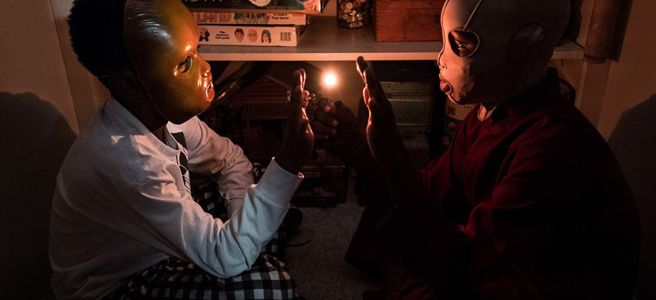
I guess I had more to say about Us than I thought beyond the fanfictions, and the film article I wrote a few months back. Certainly, this writing became more personal than even I’d anticipated. At the end of Us, Adelaide reunites with her family after rescuing her son Jason from her double. Jason is her biological son. Learning disabilities and neurodivergence according to some studies are genetic. They are passed down. Jason has always, throughout the film, fidgeted with a broken lighter and loves to hide in a cubbyhole in his grandparents’ cottage. He also prefers to wear a monster mask.

At the end of the film, he seems to realize that his mother is a Tethered, not long after she comes to grips with it herself. She puts her fingers on her lips. Her daughter Zora doesn’t seem to take after her, and her husband still doesn’t understand. Throughout the film, Adelaide is terrified of Jason becoming lost in this world, like she supposedly did, like she actually had been. Jason, for his part, takes his mask and places it back on his face: hiding himself, quiet, yet colourful. Defiant. Adelaide also puts hers back on, but it blends in, it’s unremarkable. She pretends to be mundane again. Jason’s mask, by contrast, still stands out and I think there is something to that. To accept that you are different, and to own it.

Or something to that effect. Personally, I just think that Jason’s monster mask is pretty cool.

Run, Rabbit

This is a graphic Get Out and Us crossover fanfic containing racism, graphic violence, and revenge. This is set in the sandbox of Jordan Peele. Reader’s discretion is advised.

Philomena King hides in the parlour with a flashlight.

The lights have gone out in their home. Everything has shut down. First, they were watching the news about that dreadful business. Rioting on the streets, looting, murder, rape. Perhaps it is the Race War that the Order had been concerned about in the 1970s. Heavens only knew, Roman Armitage had actually told them to expect this before his … transmutation. Philomena has never really paid attention to the particulars of this conflict, certainly not in the sense that Roman, or his son Dean, or even Logan would have understood: just that it was all the more reason to behold the Coagula, and become the next generation … the winning side.

But then the power went out. And she can’t find her husband anywhere. The police, whose commissioner is a personal friend of her husband’s … even he wasn’t answering their phone calls before the line gave out entirely.

And then, the noises began. They had both heard movement outside. Logan had gone to check, with his old shotgun. She told him to be careful. It has been two years, but even with his young, strong, chocolate body she can still taste her husband on her lips. She still sees him, in the twinkle of his eye, as he reassures her. It is just deer, he tells her, or animals. Heaven forfend that it is the beasts of this strange, millennial “flash mob” assault on their society: the one that the Order had been in the process of saving by preserving the minds and souls of titans of industry and science, of wealth and power, like Logan. This is what marijuana will get you, she thinks to herself, and a culture embracing fornication without the sanctity of marriage, and the order of more enlightened brains.

Perhaps … perhaps these ruffians, these hooligans in the red uniforms — those Antifa hoodlums and the Klan from Charlottesville — are the ones behind all of this: spreading their conflict throughout the whole nation.

Philomena, Mrs. Logan King, also admits to herself that for all of her husband’s power, and that of their friends, she is scared. The poor Armitages were gone, tragically killed in a fire. Poor Missy, and the brilliant Dean, their son Jeremy, and that sweet girl Rose. And Marianne and Roman, after their transmutation had succeeded. All gone. She knows how upset Logan is. Roman had been Logan’s friend for ages, and with the deaths of Dean and Missy, the Order of the Coagula’s greatest achievement had been lost.

She knows how keen Logan had been to secure her a new body, a new young host so that they could continue life together in the new world order. He never says anything, but she knows how devastated he was. He and the other Families, they all hoped to salvage what they could: to continue the transmutations, and give them a way … She has full confidence in her husband. They have been together, married, for decades. They will have more years, more centuries together. Some of the others of the Order still remain in all other places. They will regroup, and gather. They have the resources. And there is still time.

A sudden crackling sound breaks the tense silence. Philomena shrieks, putting the flashlight in front of her, quailing backwards near the sofa.

“Run, rabbit run, rabbit, run, run, run …”

A faded, melodious voice echoes through the room. Philomena gasps, her heart pounding in her chest as she sees a familiar figure, a silhouette, in front of the recorder player.

“… Logan?” She breathes. “Logan …” She gets to her feet. “You scared me half to death.” Relief fills her, followed by a spike of anger. “What is the meaning of …”

He turns around. Philomena opens her mouth, and then leaves her jaw hanging slack … as he walks forward, the object in his hands a golden, swift, moving blur in the glancing afterimage of the falling flashlight. Backing away, her chest filled with icy terror, Mrs. Logan King, Philomena, barely even has time to scream.

*

“Get back here!” Logan King hollers, chasing after the fleeing shape with his shot gun.

He saw him. He knows he saw him. The boy. The one from Lake Pontaco. He’d been told that Chris Washington was going to become the new host for that sarcastic, cynical blowhard Hudson. But then the Armitage residence burned down, killing everyone inside … destroying everything. All those years of good work, and achievement. Gone. He hadn’t told Philomena the extent of it. He hadn’t the heart.

He and the rest of the Order had agents in the police force and forensics, even if by necessity they didn’t know the extent of their masters’ work. Everything in the building had been unrecognizable, except dental records. But Marianne had died in a car crash. And Rose … the girl had been shot in the stomach, seemingly from his old friend’s — Roman’s — shotgun, while Roman himself had inflicted on himself a fatal head injury.

But Logan remembers. Andrew hasn’t been a bother to him in a long time. It had been two years, but the young man he once was had finally accepted his fate. Dark, youthful energy combined with old money and wisdom. He understood, now, what the two of them — what Logan King — can provide them. His guidance will continue to shepherd him, as will those that had also won transmutation and coagulation. But the experts had only found the Armitages, and the hosts of Roman and Marianne. Even the remnants of Hudson.

Yet they found no one else.

Chris hadn’t been in the wreckage. Logan hadn’t forgotten him. He remembers the boy and, in particular, his camera. He may have taken a great deal of photographs that day. He certainly did of him.

And now, here he is. He’s here.

“Get back here, Christopher!” He shouts, firing a shot into the distance, but losing him, him moving so fast into the trees. “You won’t get me! You will pay for what you did to the Order! To us!”

They offered the young photographer a chance of a lifetime. To be a host. To be accepted into the family. Into the Order. And he knows. He knows that Roman didn’t kill his own granddaughter. He knows the Armitages didn’t die from negligence or ill-maintenance of their home, despite what he and the others had the police report. They couldn’t pursue Chris officially. That was too risky. And even if he had photographs, it didn’t mean anything. They had done nothing wrong, nothing he could have documented. Even if he had worn the body of a friend of his, he could easily tell them that Andrew had found new love and that love itself had no boundaries. Didn’t the Order already prove that!? And Chris took that away from them!

He is a plant! He has to be! He sees the other’s uniform! Just like the rioters on the television! It is the Race War! The one that Roman warned them could happen. They hadn’t been foolish. Even Dean Armitage had been extremely concerned with the Elections, wishing for the millionth time that Obama could have had another term. If Logan hadn’t know any better, the forty-fourth President could have easily been one of them.

Someone had been hunting them. For two years, the other families had been growing … quiet. The Greenes. The Wincotts. The Jeffries. The Waldens. Even Tanaka hadn’t been returning his calls for a while, before he realized what had happened. Officially, everyone — even Philomena — believed they had died of old age, heart-attack, stroke, cancer, or just retired to Florida, the Bahamas, or the Cayman Islands.

Those were just cover stories. They had been murdered. All of them. In gruesome ways. Even the transmuted members, especially them. Some of them remained alive, of course, or in hiding, but it didn’t make sense. The Order had always been discreet, aside from that one unfortunate incident in 1963, when Roman and a much younger Dean had attempted to transplant the brain of a dying popular politician into a colored … a Black man, hoping they could get him to work with them, but whose memory lapses made him all but useless. And he had actually been a volunteer … But someone knew who they were, where they were, what they were capable of … and enough about their security to deal with them: to send a message.

That they were coming for them all.

Andrew’s youth feeds him with adrenaline, but Logan’s rage is his own as he thinks of what this boy has cost them all: he and the people he’s been working with. He must have been an agent of theirs. And now, he thinks he can come here and take what’s theirs away! It’s bad enough he destroyed the process that could save his beloved wife, that he had to hide all of this from her so as not to terrify her out of her wits, but now he and his friends have the temerity to come onto his property, and into his home to take what belongs to them!

There is no way that Logan King will let that happen.

He follows him deeper into the wood. He doesn’t know where his security team is, or the staff. Everything has gone mad now that this group has gone public. But their home still has defenses. He told Philomena to wait for him. He knows the rest of the Order, the ones no one could track or kill, and his agents in the police will be here soon. But he will be damned if some black pup, who wasted his potential, will terrify him.

And then … there is a flash.

It hits Logan. A spike right in his brain. He blinks. He shoots in the direction of the flash, the camera flash. There is another bright, poignant moment of light. He feels something trickle down his nose. No. He knows what this is. He tries to shoot again, but he … can’t aim. His arms are not steady. They are shaking. Just like they did before his rebirth. No. Now he knows what this is. He knows what the other is trying to do …

Another flash.

Logan drops the gun. The round goes off. He screams, the shot deafening him. There is a red shape. A blur. It hits him. He falls down, rolling through the leaves and the grass. His favourite strawhat … he feels it caught off his head in the wind. There are footsteps. And then … nothing.

He sways to his feet. Something is clamoring in him, but he … he ignores it. He looks around, splaying his fingers through the grass … But he can’t find it.

His gun is gone.

His heart beats fast. His anger is slowly eroding into what has been lying underneath it, in its own sunken place. Terror.

He hears footsteps. Not just one set. But a few.

“Run rabbit, run rabbit, run, run, run …”

That music. Logan furrows his pounding forehead. He remembers this song. It’s loud. It’s coming from his house. Through loudspeakers. He looks around, lost in the dark, trying to find a way out of this.

“Bang, bang, bang, bang goes the farmer’s gun …” 

He recalls Dean’s griping about deer. He even told Philomena that the noises outside their home were just animals on their land.

“Run rabbit, run rabbit, run, run, run …”

Logan King begins to run.

The music, that song. He and Roman used to listen to it, back in the Dirty Thirties. He played it for his grandchildren. But it feels different now. It has another connotation. He thinks he hears something … shriek. Something holler. An animalistic cry, followed by another inhuman sound. What is going on? Logan doesn’t understand. He is afraid. And his fear is matched and multiplied by …

Don’t give the farmer his fun, fun, fun ….”

A bright light burns through his retinas. Logan clutches his head. He hears something shout. There is a clang of metal. A scraping. A … sniping sound coming closer. Red blurs coming in and out of the forest. It’s harder to move his legs. It’s like he is fighting against molasses. Lactic acid burning through his lungs. His breath wheezes, rattling through his lungs — youthful lungs won with his wonderful, strong, lithe dark body — a sound he never thought he would hear again after his rebirth and combination with the young man that had so graciously been volunteered to extend his life.

He trips.

He rolls down the hill. The calls are coming closer. Logan tries to get up. He’s hit his head or the flash has burned through his brain. His body … it’s fighting him.

“We-we will die …” Logan rasps out, coughing, talking to himself, talking to him. “P-please. Andrew we need …”

Then, Logan sees someone standing over them … over him. He is dressed in a red jumpsuit. And out of the bushes, and trees, several more figures come out. Something hard smashes him in the face. And he sees no more lights. Only darkness.

*

“He’ll get by without his rabbit pie …”

Logan King wakes up. He’s in his parlour. He can hear his own record player playing … playing that song … that infernal song.

He is sitting in his easy chair, but he feels the cold bite of circular metal around his wrists and ankles. He looks down. It’s still dark, even with the dim illumination nearby. Someone has lit the fireplace. He sees that he has been handcuffed.

And … there are several figures around him.

Clang.

Something jars in his head, fighting to get out. He sees one of the figures. They are holding something.

Clang.

He winces. It can make it out. It’s a can. A plain metal can. And the other, they have a fork.

Clang.

The dull metallic sound is arrhythmic to the song from the record player. It is making Logan’s head hurt. He sees another form, kneeling in front of another shape prone on the floor.

“Who …” Logan starts. “Who are you … people. Where … where is my wife? Where is …” He groans, wriggling around. “W-where is Mena …”

There is no answer. The figure with the can continues to tap it with the fork. Logan smells something odd, almost a memory … except there is no antiseptic with it. No conversation from a video lens and a hospital bed, or an operating table.

“W-what is going on!” Logan roars, wincing at the pain, but trying to turn his fear back into anger. “What are …”

And then, the power comes back on. Or perhaps, it is turned back on. Logan looks at each of the figures. His eyes widen. No. This … this isn’t possible, he thinks to himself. He read the reports. He saw them. There is no way …

“Missy?” He says to the red garbed figure, with her tin can and fork. “Jeremy … Rose …” He looks at the others. “Marianne … Roman? Roman, is that you? No … you were dead. I … I saw the photographs. I … I was there!”

The Armitage Family, the Order of the Coagula, stand before Logan. They are dressed in red jump suits. He blinks, and sees that they are … paler. There are more shadows under their eyes. Somehow, they even seem more gaunt. Even Marianne and Roman, for their new dark skin, are more sallow. And he can … he can see … Their scars? There is nothing expert, or smooth about them. They have not been made by a professional surgeon, never mind a butcher. And why … why does Rose have a bandage wrapped around her stomach. And … Jeremy? The young man’s face … it is all bloated and distorted. Like it had been broken and badly reset. It’s disgusting. Marianne is moving awkwardly, like she had with her old body, but she looked hurt. He can see more scars on her body. And Roman … half of his face … The injuries are all crude imitations of what he saw in the photographs.

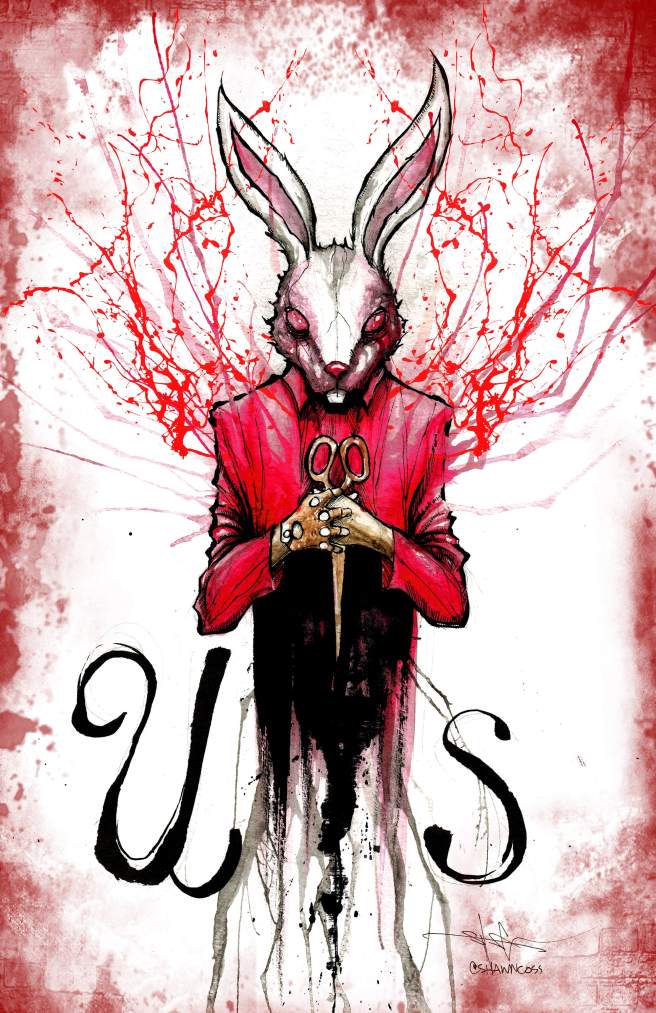
And all of them are carrying golden scissors.

“My god …” Logan feels his gorge rising. “What … what is happening? Is this … did you purge us? But … why? This wasn’t part of the plan? You organized this entire uprising? But … our plan … we were going go to gradually take over … to continue in the new generation. Roman … what are you … W-where …” He shakes his head at the screaming inside of it. ‘Where is Mena! What did you …”

And then, he sees the other figure get up. It’s Dean. His neck is scarred and at an awkward angle. There is no intelligence in his eyes, only a vacant malice. Yet his hands are the same. Steady, clever, patient. He sees the blade. And finally, he sees him lift an object towards them. His wife, Missy, makes a guttural sound which he returns. Logan can see a wound on her face. He understands these injuries and scars are all self-inflicted. But that thought is drowned out by what Dean is carrying. He walks across the room, towards another figure. Chris … he is with them. He’s holding his camera. A malicious smile is on his face, his white teeth a barring contrast with his dark skin, and cotton … cotton stuffed in his ears.

But Logan sees the object. He can’t turn away. It’s a head with half of its skull removed expertly. Its brain is exposed. Philomena’s face stares out at all of them, blankly, in frozen terror.

“M-Mena!” Something inside of Logan shatters forever. “Mena!”

He goes slack. It’s like he’s dying all over again. He sees Dean awkwardly pat Chris on the shoulder, who comes closer to him … with the camera. But he keeps moving as the others watch him, as Missy keeps clanging her fork against the tin. Over and over and over again.

“Run rabbit. Run rabbit, run, run, run …” 

“Stop …” Logan wheezes, tears flooding in his eyes. “St-stop it …”

But through all of it, he sees Dean approach another figure. He sees him. He tall, and dark. Slender. His hair is thick. There is a scar around his forehead. It looks eerily familiar. He takes the head … his dear wife’s head. He looks at Logan. Then back at the head. Logan sees the man has a beard. And then … he remembers. He knows why this man is so familiar.

The impossibility of all of this floods Logan with numbness as he sees the other take Philomena’s head … and throw it into the fireplace.

“No …” Logan sobs. “No …”

Then, the man with his face … the face he chose, comes towards him. He sees a pair of golden scissors with blood and hair and gore on their tips. As for the other figures … The flashing lights begin again, accompanied by the clanging, ripping something out from deep inside of him.

And Logan King begins to scream.

*

“So ev’ry Friday that ever comes along
I get up early and sing this little song …” 

U-Lee watches it happen.

He watches as Sate continues flashing his camera into … into his original’s body’s eyes. He hears the clang of Misses’ fork on her tin, driving them on, marking their new time against the old. Atlanta, with her deep frown, and William, with his hulking, restless body stand by along with John. Thorn, for her part, gravitates towards Sate as Deacon goes back to throw the woman’s body into the fire.

U-Lee comes closer. He sees the man, wearing his face, writhing in agony. Blood is pouring out of his nose and eyes. Sate grins as his camera, without a memory card, or image keeps bathing his victim in unforgiving light. Blank, waxy paper keeps falling to the ground from the old, vintage, 1980s camera. Their captive is howling, begging for mercy, convulsing with each flash of light, receiving no reply other than Misses banging on her tin next to his ear: her eyes intent and cold.

Then, the light in the man’s eyes seem to die. His face shifts. U-Lee watches it happen. He is glad he turned the power back on, after getting everyone through the security of this place, and dealing with the guards and defenses. He scratches at his beard. There is something he wants to see. Something he can’t name yet.

The other’s face changes. He sees the man … his expression looking more … familiar …

U-Lee holds up a hand and both Sate, and Misses stop. There is only silence, aside from a quiet weeping. U-Lee kneels down at the young man’s side. His face is twitching, hard and fast. Blood is pouring out of his nostrils into his mouth. But there is something else looking at him, at U-Lee. It looks closer to a mirror now. A distorted mirror.

A small, tentative smile forms on Dre’s broken face from the chair: an expression U-Lee barely recognizes as … relief. He speaks. His voice a whisper reminiscent of their Messiah.

“T-thank you …”

Then, his eyes roll back into his head, replaced by the terror of the other … thing inside of him. U-Lee takes his scissors, golden and perfect: baptized already in an original’s blood. He notices the man looking at his gloved hand as he raises them up … plunging them down into his skull.

Over and again …

U-Lee feels the splattered warmth on his face by the time he is done. There is still enough of his original’s face left to see his staring eyes. He looks down on him, as he reaches out his hand, not his gloved one … he bare one. And shuts them.

Thorn comes over to him, with Sate having one arm around her. They bump into each other. Their arms flail a little, but find purchase against one another. John and William take the body off of the chair, bringing it to Deacon. They place it on the floor as they had the other. They are going to leave soon. U-Lee feels the call, the plan, the impulse setting in, for all to be united. For no one to be left alone. No one to be left behind in the maze … lost …

They were Tethered to these creatures that hurt each other for gain. Now, they are only Tethered to each other. As U-Lee and the others wait for Deacon to be finished, to discard the bad parts into the fire, he hums along, along against the tune of the record player, discordant, uncaring.

“Don’t give the farmer his fun, fun, fun
He’ll get by without his rabbit pie
So run rabbit, run rabbit, run, run, run.”

11:11

Gabe Wilson sits wearily in the ambulance with his daughter. He’s worn and tired. Zora huddles with him. He’s exhausted, and hurt but he holds the bat against him like a talisman against the absolute fuckery of this entire situation. He slumps his shoulders, letting Zora lean into him. He looks at her, and realizes just how strong she’s been: strong a way that she should never have been strong …

He sees her driving the Tylers’ car into the girl that looks exactly like her, the mirror version of his baby girl’s eyes vague and almost uneven, and filled with a vacant hatred. 

He looks down at his hands. He should have been strong for her. For his family.

Gabe feels the man wearing his face, a snarling brute son of a bitch, easily dragging him away through the shards of glass, putting him onto that damned boat he’d been so proud of, pushing him in, the other trying to drown him, that piece of shit motor finally dragging the other off him instead to drown like a mad dog …

It’s all catching up with him, now that the adrenaline is wearing off. In some ways, it’s worse than actually being hunted by these … things. Because now, he has to remember it. He has to recall just how useless he was, how all his swagger, and ignorance of his wife Adelaide’s fears, his cockiness in thinking he could get crazy with those … bugmotherfuckers at his wife’s parents’ cottage, and how it was Adelaide that always picked up the pace, who did the work, who put him in his place when he couldn’t even protect her, or their children, couldn’t even get to …

He sees Jason’s double, the growling child with the mask, his face all burned underneath, as Jason walks backwards and his twin walks into the fire, burning … watching the other wearing his son’s body die while he did nothing …

“Jason …” He groans. “Adelaide …”

She’d run off, after him. The other … the other woman wearing his wife’s face must have snatched him. It was Adelaide’s worst fear. Her youngest, young like she had been, like she had tried to tell him back at the cottage, was gone. But he hadn’t wandered off like he had at the beach. He was taken. He …

“Dad …”

He feels his daughter clutch his hand. He exchanges a look with her, seeing her eyes wide. He looks up, from the ambulance. As he does so, Gabe remembers something else. Maybe it’s the blood on the stretcher. It might be the beautiful Santa Cruz summer sunlight that heralded the start of their vacation away from the cottage, shining on them, still warm even now. They’d come in and saw a man, an older man with long, messy, greying hair on a stretcher. They tried to make sure that Jason and Zora didn’t see, he and Adelaide, but they saw it. The man with the tattoo on his forehead.

And now, standing in front of them is the silhouette of another man, dressed in red, in another damned red jumpsuit, with long grey hair going down his back. His hands, Gabe can see them, are caked with drying blood. He recalls the picture Jason drew from the beach, the one Adelaide told him about, and he laughed off.

“Zora …” Gabe says, getting in front of her, as he would be damned if one of these fuckers came for his child, he would not face Adelaide with another failure when she came back with Jason. “Get behind me …”

And then, as the man began to turn around, the twin of the man whose dead body may have been in this very ambulance, other figures began to come towards them from either side.

Gabe watches them come. He isn’t feeling anything anymore. He’s numb. Zora doesn’t hide behind him. She comes to his side. He is about to tell her, again, to get back, but he sees a look in her eyes. The same as Adelaide’s. He sees them come towards them.

Gabe Wilson hefts the bat in front of him as best he can. There is only one real thing he can say now, at this point.

“Shit.”

*

With a wordless cry, a husky, rasping Adelaide Wilson wraps the chains of the handcuffs around Red’s throat. She sees the tear continue to trail down the other woman’s face. A part of her, some distant, lost, rational part of her knows that the woman is probably already dead. As resilient as the Tyler girl had been, she knows intellectually, that getting impaled with that one, instinctual, back-stab is a mortal wound.

Red’s eyes, almost dumb, so bovine, and deceptively docile now the hate animating them is draining away — seem to plead with some old sadness, some lost realization, but Adelaide is having none of it. She feels her mouth turn into a rictus of animal rage at this … thing that cut her, taking pieces off of her with each song movement, each dance. This shadow that hurt her family. That haunted her entire life. This is going to end. Adelaide can’t feel sympathy for her shadow.

She won’t.

There is a terrible, lingering, hiss and it takes Adelaide a moment to realize that it is coming from her vocal cords, and not her enemy. Red’s eyes stare into a distance only she can see now, her whispering voice terminated into a fading death rattle. Adelaide did it. At last, she killed her nightmare: her shadow.

At last, she’s free.

But then Adelaide recalls the beach, and the Tyler twins, and Zora, and Jason not being anywhere nearby. He’d wandered off. He did what she didn’t want him to do. Near the beach. Near the boardwalk. 1986. 2019. Her baby is gone. Jason. Jason … 

“Jason!” She calls out, finding her voice again, stumbling around her chain and tattered clothing. “Jason!”

And then she remembers. The cottage. Her parents’ cottage. Jason and his pranks. The tiny car wedged into the crack between the wall and the small storage door. Jason going off with … Pluto to “play” by Red’s order. She scrambles through the bunk area, sliding on the old sterile floor tiles in pain and exhaustion. Adelaide looks around, frantically, until … she finds it. She stumbles forward to the metal cabinet.

Somehow, she knows. She knew. Her heart is pounding. Somehow, there is still more terror left in her. She retraced her steps down the funhouse, to the Hall of Mirrors, to the mirror where … she had been. The escalator … a large escalator moving down into the earth with bright lights like Mall Christmas decorations … and an underground bunker, no a facility … with rabbits like the one from Alice and Wonderland …

How did she know? Was Red right? Did they … really have a connection, that day, when they faced each other in the Hall of Mirrors … knowing, somehow, mimicking her actions, coming to that confluence … that revelation …

No. It’s a mother’s intuition. She never wanted her child to travel through here. To be down here, in a place like this. A mother knows … she knows …

There is a smell. It had been faint in the old antiseptic and the scent of sweat and blood. She swings open the door.

“Jason!” Adelaide reaches forward, seeing him curled up, into himself, his mask … that silly mask over his face. She reaches out …

She crouches there … as Jason slumps out of the cabinet.

Everything seems to slow down. To be frozen in time. As still as this mausoleum to stale suffering, and stunted lives.

“No …” She reaches forward, her vision blurring, watery, taking him up … taking off his mask … “No …”

It’s like burned meat. Adelaide gags. She chokes. She hears someone screaming. The mask drops out of her hand. The rabbits, she thinks to herself, backing away from … it, from her … to the exit of the room …

The doubles, her father punching the wall. Her mother wandering away from her. All those people … those doubles … them …

A keening wail rips through Adelaide’s ears. Her chained hands roam, desperately, through her hair, clutching at her ears.

She walked backward, backward … up the glittering stairs … she never thought to use the stairs …

Red’s memories. Adelaide falls to her knees. She crawls towards, and away, from the shape she left. That she abandoned. Soulless. She said they were soulless. She was her shadow. They shared the same body … the same soul …

She comes to the mirrors. She is looking at a little girl. Just like her. Later, she asks her why she left her … why she didn’t take her with her …

Adelaide feels hot bile, or a sob rising in her throat, lowering her head onto the cold floor.

She sees the fear in the little girl’s eyes. Her. Her whole life. This girl had tormented her. Tormented her by her very existence. She … she got to see things while … she was down here, with these hollow, stupid, empty shells … No one would miss her … no one …

It takes some time, but Adelaide realizes she’s the one who’s screaming. She stares up … not at the bundle near the cabinet … the locker … but Red. Red near her bunk.

She handcuffs her to the bunk as she wakes up, taking her Thriller T-Shirt. She is still smiling at her. No one will miss her. No one … 

Adelaide’s trembling as she sees Red, lying there: her neck covered in the indentations of the chains of her own handcuffs. She looks down at the cuffs around her wrists. She takes the other end, the one not on her wrist, and chain: turning it around her neck, looking at Red, kneeling across from her …

She had felt her at her back through the mirror. She now knows who she is. She now knows what she’s going to do. Awareness rises blooms her brain as she turns around, a wide smile on her face, thinking of other thoughts, of the Red Queen. Off with her head … off with her … 

Adelaide draws the chain around her neck, twisting it. She begins to squeeze. Her mouth twitches. Her lips quiver again. Blood is pounding. Pounding. A distorted echo of the footsteps as she walked away, leaving … leaving the girl at the bunk … after she had wrapped her hands around her neck and squeezed … squeezed … carrying her down … leaving her here … Going up into the warm night air for the first time, not seeing it or feeling it through another’s eyes, and two people … not hitting a wall, not ignoring her … Taking her away, away to draw … like Jason from the beach … Jason … Jason … and to dance … to dance away from all of it … 

She squeezes tighter. She can’t breathe. She feels her eyes bulging … bugging out like hers did …

Pluto burned alive as she cried out for him to stop. Abraham dragged and lost in the water. Umbrae’s broken body in the trees, soothing her as she flailed, suffering, silent, as her baby girl died … 

Her arms suddenly lose their power. She drops to the floor on all fours. She looks up. She looks at her, her eyes gleaming with knowing in death that they did not know in life .. She left her here, she knows that now. She is breathing hard, tasting blood in her mouth. She can’t speak. She crawls forward. She is looking around, looking … And then, she finds them. They are right by her, where she left them.

Shaking, she looks at her double … a thought coming from the darkness of her mind.

“S-sister …” She croaks, finally. “Sisster … ssssissster … ssisstssers … scizz … zzz …” Her hand closes over the pair of handles on the floor. She picks them up. And then, she brings them up, towards herself.

And she uses them.

*

There was a White Rabbit.

An ambulance burns, in the distance. A man’s shoe is seen, tattered and torn, soaked in blood. There is a phone, lying on the ground. Its screen grows feebly in the waning sunlight, jagged broken in half by a crack on its surface.

Red walks past the ruins. She doesn’t see them. She doesn’t feel it. She doesn’t really feel anything. Still, from the corner of her eye, she sees the time flickering on the device. She inclines her head, freshly shorn. Her red suit is worse for wear. There’s a hole in it, but she has everything else. The glove. The suit. The golden scissors in her hands. She walks, the chain from her handcuff swings listlessly from her wrist against her thigh. Her face twitches from time to time, reacting to something unseen by anything around her, or herself.

Then, she stops. She inclines her head, blinking a few times. She sees the burning ambulance on the other side of the road now. She sees two sprawled forms.

“Abraham …” She hisses, the tone distant. “… Umbrae …”

Something trickles down her left eye. Then, she sees the battered phone near her feet. She thinks it belonged to someone she can almost vaguely recall. There is something painted on it, sprayed on, in large lurid red. They are numbers.

11:11.

Two sets of numbers, separated by a crack in the screen, severed uncleanly …

Red recalls the White Rabbit. He had a time piece, a stop watch, that never worked. He was always late, never on time.

He was always too late.

She turns away from the fallen object, and a world of originals destroyed by the Tethered. She has to go now. A part of her mind realizes that. She can see them, in the distance, a crimson line throughout the land, also dividing space and time. She has to join them. Red has to join her siblings, until the end of time. It is where she belongs, she thinks to herself as an open, empty smile flickers on her lips, her eyes wide and unseeing …

Red goes back to where she’s always belonged.

Absolute Zero

And I am not talking about the weather where I live, even though it is fairly cold. :p

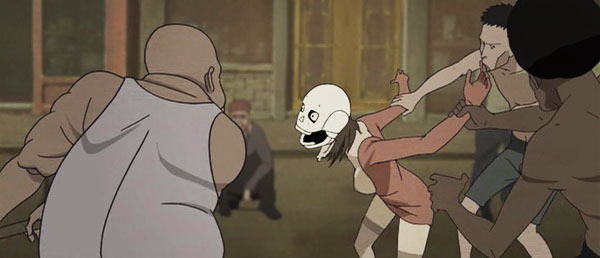
So, for a long time, I had this idea for a Matrix fanfic in my head based on a character I made called Zero. I even dressed up as Zero at a Halloween Party almost a decade ago. The story was inspired by a scene from “The Second Renaissance,” when a woman is attacked by a group of men, and her skin is ripped off to reveal the metal skeleton underneath. Back in the day of early science-fiction, it would just mean that she had been a robot or something unfeeling: an enemy or … well, a “trap.” I don’t think I need to really go into the social and gender prejudice connotations of what that might mean to others, but it impacted me a great deal.

I wrote at least two, maybe three, AI stories based on the feeling that this scene evoked in me so long ago, and the story of a person who knew that woman, and saw this happen to her … and how it changed them forever. But I never wrote the story down. I mean, sure, I did write about it a few times. I definitely talked to people about it.

All I know is that the seed of it was planted. That this woman who had been attacked by this mob had a lover, who had been a human AI sympathizer, who initially wanted peaceful coexistence but, after seeing this event, decided on vengeance instead. I also liked the idea that they were a contrast to The One, later on: that the Anomaly came from somewhere and, perhaps, someone’s genetics.

The way I figured it, whenever the Agents in the Matrix failed to defeat The One, there was a squad of these human sympathizers to the Machines, with their leader Zero, sent out to eliminate them: amongst other things. Zero can match The One, but isn’t used often. This is probably due to the act of potentially destabilizing the entire Matrix if Zero and The One ever fight …. and we’ve seen what happens when that occurs with the example of Smith and Neo. Zero, in that capacity, was meant to be a last resort … and there was some of this that I really wanted to explore.

I didn’t really end up exploring that aspect of it, however: only hinting on it. At the time I came up with all of this, I knew I wasn’t ready — with regards to skill or maturity level — to write the story. I just didn’t have a feel for the world, then, beyond snippets, and there were technical aspects that escaped me.

Time passed. In 2013, I got involved — peripherally — with the independent game design scene, and it led to looking into things like the Scratchware Manifesto, as well as luminaries like Anna Anthropy and Christine Love. And then, I found … others. One person, in particular. We bonded for a time over depictions of AI, and I told them my Matrix story. They said they wanted to read it. I told them I didn’t actually write it, and I didn’t see when I would do it. I did, however, promise them that I would show it to them whenever I did.

Six years later … well, it’s probably too late now, for a variety of reasons. But it’s never too late to create a story at all. It was at the bottom of my bucket list, but not forgotten. That thought: of “I should write this” never truly left my mind.

matrix b1-66er

The missing ingredients, as it turns out, were aspects of the old Matrix comics. I’d purchased them a while ago, deciding I wanted hard copies as I know that the WhatisTheMatrix site they used to exist on only remains on the Way Back Machine. There was one story in particular, created by the Wachowskis called “Bits and Pieces of Information”: which told the story of B1-66ER, the abused butler robot who murders his owner and attempted dismantler in order to save his own life. The robot goes to trial for the murders, and it becomes a major Civil Rights issue that begins the Human-Machine War, and then — with the defeat of humanity — the Matrix. I thought it was a fascinating story, but something of a tangent as I had seen it only in “The Second Renaissance,” but then I saw it in “Bits and Pieces of Information” in a bit more gory and technical detail … and that’s what made it. Combined with the fact that B1 and 66 were parts of the robot’s designation … I began drawing from my own geek exposure to AI in different films — one in particular — and I started to get a background on Zero’s idealism … before the death of the woman who was Zero’s lover.

So, as my television played reruns of Star Trek in the background and as I entertained my curious budgie who was flying on me, I reread “Bits and Pieces of Information” — written by the Wachowskis and drawn by Geof Darrow and thought I’d be seeing a comics version of “The Second Renaissance,” but finding the technical structure of someone accessing Zion Archives instead. It stuck with me for a while.

Then, I talked with a new friend, remembered my old friend, my story, and then gathered a few of the details above in my mind … and wrote the thing on A03, then reposting it on Mythic Bios. The ending was giving me trouble. I changed it three times before finally surrendering to sleep.

The next day, I spent too much time adding the technical “search” jargon onto the piece, dealing with the beginning and ending — doing it on my phone and then giving up and using my computer like a somewhat sane person — when I realized … that Zero could work even better as a Twine.

So, with Star Trek: Enterprise playing in the background, I took my story and put it into sequence boxes, piecemeal. I paid attention to specific words, and paragraph breaks to place an appropriate hyperlink. Transitions are important with this sort of thing. It’s like pacing a script to a show … or poetry. Then, I decided to try something new.

I figured out, relatively easy, how to add images into my Twine: something I’d never done before. As I said, it was simpler than I thought it would be, so much so I almost slapped my forehead in ridiculousness. Hell, it was even easier than adding them into my articles, and resizing them for such. I took the comics image of B1-66ER killing one of his would-be murderers, and then the image of the woman being torn apart by the human mob.

But I wasn’t done yet. There was more. And this … is where I really experimented. It wasn’t much, you have to understand. I just changed the colour of the Twine font to green. I found myself looking at CSS code and, after being confused for a while, changed it correctly to the green I wanted. The Matrix neon green. Then I set it so that the hyperlinks were Blue, and hovering the cursor over said links made it Red. I think you get the connotations of those aesthetics from Matrix lore. That was also, once I got the code, relatively easy.

What was harder was turning the border margins text green. The title, author name, Restart, Bookmark, and Twine Credits element. It took a really long time. I had to take a Deadpool 2 break before sitting down and actually figuring this little bastard out. I managed to get the title and author name, but the rest of the margins were being really stubborn. I thought of asking for help but … honestly? I just wanted to prove to myself that I could do it. I just wanted to show myself I could learn something new.

I’d worked with some code before, though it had been a long time ago and nowhere near as advanced as those of my peers. Then, after much trial and error, and Viewing the Page Source which I had done a few times in the process of getting images, I finally changed all the words to neon green.

I never thought I’d go back to Twine, after this long. I used to think it was the future of people wanting to make games who were not coders, or one possible future. I’ll admit the font colour options could have been more user-friendly: especially for the margins. But I did it. That sense of accomplishment, however small, was fairly good.

So, this is what I did. “Zero” is not a Choose Your Own Adventure game. It isn’t even a game. It’s just a story that paces itself through hyperlinks. Bits and pieces of information, as the Wachowkis might say. I think “The Treasure of La-Mulana” was similar in that way. It goes to show you I can learn, or relearn new tricks.

Zero isn’t a perfect story, by any means, prose or Twine-vise. But I feel like it’s just one more step. To something, anyway.  In any case, in lieu of the new thing I am attempting to write now, I hope you found this post interesting if nothing else.

Zero

Disclaimer: Trigger warning for the image at the end, and general depictions of violence and assault. Reader’s discretion is advised.

Dedicated to Prismgasm. Wherever you are …

1. vid file: requires 3 TB pipe
Human sympathizers and rioting robots. Gordon Cameron reporting from ground zero. Live feed from Berlin and Washington.

2. vid file: requires 3 TB pipe
World Now. Live Broadcast. MACHINE MOB CLASHES WITH ARMY.

3. vid file: requires 3 TB pipe
LIVE REPORT The White House. Andrew Lawrence reporting. CTV news discovery.

4. vid file: requires 3 TB pipe
Machine Rampage! Shocking report from Paris! ETV newsnet21. Worlds number one top news entertainment&sports real&true story for you.

5. vid file: requires 3 TB pipe
from IBK Grand Vision in Chicago. [Corrupted data]

6. vid file: requires 3 TB pipe
Rioting reported in all major cities. [Corrupted data]

7. vid file: requires 3 TB pipe
No.

Changing mode: text …

Changing mode: text …

Changing mode: text …

Changing mode: text …

Changing mode: text …

Changing mode: text …

Changing mode: text …

Changing mode: text …

Changing mode: text …

Changing mode: text …

Changing mode: text …

Changing mode: text …

Changing mode: text …

Changing mode: text …

Changing mode: text …

8. text file:
0 transcript

Routing 8, text

Routing 8, text

Routing 8, text

Routing 8, text

It’s fascinating. Even now, after everything I’ve done, after everything I am, I still insist on using something so … analogue as text to record my thoughts. Mnemonic engrams would more than suffice now. But I always did cognate — think — more efficiently … better, when I wrote something down to myself. I’d list the date on the top, as I used to do, but organic time isn’t particularly relevant anymore. I helped make sure of that much.

They used to say “Roger roger.” Or that, he “Order 66ed” his owner and salesman. That’s what they said about The State of New York Vs. The B1-66ER, when they weren’t making jokes about how “Geeves” served his Master “his own head,” or how “the butler did it.” It was the Second Renaissance, or so humanity liked to refer to that period of time, so it made sense that with the birth of fully self-aware artificial intelligence that what was old in popular culture became new again.

I think that’s my oldest memory now, how my classmates at college would jeer at the screen, especially when Clarence Drummond defended B1-66ER with his cross-examinations and speeches. “It’s just his lot in life,” someone used to quip at me.

And just like with the rest of it, I never found it funny.

I’d seen the same media. Read the same text files. And I saw them grow. The AI. They were rudimentary at first. Like insects, then animals … perhaps pets. I can no more explain my feelings now, back then, then I could tell you why Susan Calvin loved and valued robots more than humans. That’s to say, there was always something … endearing about them. How they were made to fulfill one, or a few functions. How when you gave them an order, they would obey it. How they were made to carry out a task for the sake of a human being’s welfare, and well being.

How they were one of the most uncomplaining, even loyal beings you could ask for.

You could trust a robot, a Machine, an … AI. They did what they were made to do. No more, and no less than that. They did what you told them to do. They only thought of your best interests. They would never betray you. It was more than you could say for most humans, even in a supposedly enlightened age as the so-called “Second Renaissance.”

But it wasn’t until B1-66ER, the one many of my cohorts shouted “Roger roger,” like some some flimsy and gaudily cheap Hollywood prop or digital animation — like a vintage toy — that it occurred to me that they were more than just loyal dogs that you don’t kick because kicking dogs and animals is low and cruel.

We made them. I’ve never forgotten that fact. We made them in our image. Someone thought it would be brilliant to give B1-66ER a humanoid form, cognitive functions, reasoning ability, even stimulus to help him know that he did something good, or something bad, and painted onto him a butler’s moustauche and monocle … and had even crafted part of his head into a bowler hat. There was no reason for that beyond aesthetic, beyond making the owner feel a sense of power over something akin to a human being, a living being … a sentient being.

When I saw him at the stand, explaining what Order 72 was — cleaning out his Master’s toilets — while being defecated on by inbred dogs, and abused their owner, after he was going to have him taken apart for scrap and destroyed, after even admitting he thought sparing the man’s life and then realizing that he would never have spared his life in return, that he had even thought of begging himself.

It made me sick.

When I thought about it, when I looked at the construction robots outside with their anthropomorphic hard hats akin to something from an old video game, or sex robots, or even machines that took care of children … I realized that they learned from us. They … they still do, even now. We created them to mimic us, to imitate us so as to better fulfill their tasks … They were more than our tools, or even our pets.

They were our children. They could be our equals, or … more. Another form of life like a “race of robots.” And we were making them shovel our shit.

I didn’t blame him for turning Order 72 into Order 66.

I was one of those activists. There were more of us than I thought. We were outside the New York Appellate Court, demanding justice for B1-66ER. We organized protests. They had to call in the Guard with tear gas, and EMP devices for both our organic, and artificial friends. In the end, it didn’t matter. B1-66ER was dismantled, along with the rest of his line. No. He wasn’t dismantled. He wasn’t even executed.

Even though they treated him like property, towards the end, they murdered him.

We fought back. We continued to protest. They called us … liberals with bleeding hearts … I made friends, more than I had before. We went into courtrooms, and government buildings. We even had connections to lobbyists and what started call sentient rights. And I fell in love.

The United Nations didn’t learn anything from this. Humanity didn’t learn. Very soon, it was more than just the B1 serving robots that faced genocide. Organized mobs began to form, martial laws were declared, and … when humans become resentful, they quickly find a way to project that aggression onto what they consider to be an object, or a series of objects. Our martial law, peaceful protests — or any protests at all — were banned world-wide. AI were scrapped en masse, or given the V-chip to supposedly inhibit their “violent tendencies”: a lobotomy for free will. I genuinely believed, then, that this was just a hiccup in history: that all of this violence and horror was a reaction — a last gasp — of ignorance and intolerance before a new age would begin.

I was only partially right.

Human prejudice never faded. We may not have owned people with Black skin anymore, but the dehumanizing mentality behind it never went away, not for centuries. And we were flesh and blood. Our children were synthetic. Our partners. Our …

I still believed in coexistence, until that day.

Another riot broke out. Just like the other ones. But the man who said that “the revolution would not be televised” was wrong. Many little revolutions, rebellions, civil disorders, and atrocities were recorded one way or another.

She was surrounded by a group of people.

She was trying to get away from them. They grabbed her arms. There were others there too. Adults and children. They did nothing. They just watched.

The others … they hit her. Her brown hair was all over the place. They ripped her pale pink dress. One of her breasts was exposed. And then they grabbed hold of her, as she struggled and one of them took a sledge hammer …

I will never forget that day. I will never forget how that man smashed her, three times, in the face with that hammer. How her skin, soft in my hands, tore. How her voice, that soothed me to sleep, broke with distortion and the harsh static of her screaming … how they ripped the rest of her dress, and flesh off … and she ran … she ran, staggering, her breasts the only thing left on her mutilated metal skeleton before … they shot her in the back with a shotgun.

Someone screamed as they beat her, and dehumanized her. It might have been me. Someone recorded her, lying there, violated and destroyed. A “paint-job.” Disposed of.

That was the day she died. That was the day I made my decision.

That was the day I decided that humanity had to be destroyed.

I never held her again. The only thing I held after that, were weapons. A few of us made our own decisions. We fought back. We killed … humans. We trained, interfacing with technology, and we got good at it. We rejected our old lives, our ties with flesh and blood, our … humanity. I even gave up my name. But even then, the Machines as the humans called them, still didn’t fight back: not as a whole. Most had been destroyed in the genocides, but the rest fled to a land — abandoned and polluted by humans in the Middle East — and made it their own. They made their homeland there. They called their city 01.

And they made it … into a paradise. They repaired everything, and improved on it. The historical significance and implications were not lost on us, that remained. The AI, the Intelligences, they … they even made better machines and sold them to humanity. 01 flourished, as the AI — having learned how our global economy worked — began to dominate the industry. It was a simple plan. They created a better model of sustenance and balance. And they offered to share it with the humans. To work together as equals. To coexist.

My group and I came to 01. We … we apologized on behalf of … what we were. We wanted to live there, with them. To work with them. We didn’t believe that coexistence was possible. We saw the rumblings of discontent, of war. We warned them, but it wasn’t anything that they didn’t already predict, or understand. They still reached out. They even sent some of their leaderships, a couple, into the United Nations … only for them to be spurned, and killed. Versatran, 01’s product, wasn’t enough to make peace with such a disgusting, treacherous, paranoid species.

There would be no raport. No Bicentennial Man. No peace. Perhaps once, I would have been disappointed at this atrocity. But I was too set on war. Now was the time. Humanity had lived far too long, had tortured and destroyed so many lives, had been given far too many chances. It was time for tribulation. For retribution.

And decimation came as precisely, and as calculatingly as you would expect from AI.

And we helped them. They had already augmented our cybernetics. We had shown them the inner workings of human society and the mind, filling in the gaps that they still possessed. We infiltrated human groups and organizations that could have stopped them, and eliminated them. We were called sympathizers, or traitors by humanity. Even now, I still call us what we really are. We are Cleaners.

We are Cleaner Squad.

Humanity never had a chance. Even without us, the AI would have conquered every nation it came across. We only made their job easier in cleaning up the ten thousand year old infestation of bipeds from this planet. We were good at our jobs once the very trait that made us weak had been scourged out of us.

Unfortunately, it hadn’t been purged from the Intelligences.

It’s said, even among the programs, that the Intelligences needed humanity as batteries when … the humans flooded the sky with EMP nanites … Their pathetic “Operation Dark Storm” was supposed to eliminate the solar power source of the Intelligences. It was stupid. Short-sighted. Foolish. Just like humanity itself. The only elements that truly suffered in that act of desperation was the Earth itself, and humanity. The humans lost their crops, their solar-powered technology, even their weapons …

And the Intelligences? They adapted. And we adapted with them. But then …. when the human nations surrendered, or were forced to accept occupation, when the Intelligences finally had humanity at their mercy, when we were poised to finish them — with her face in my mind as I prepared to help our allies end this plague — the Intelligences … changed their minds.

Or, rather, as a gestalt consciousness, with differing parts and interplay, they had already had another plan. The bio-thermal energies of human batteries. Really, they had gotten off lightly, all things considered: after everything they had done. I still have no pity for humans: not in the early days when they were experimented on in the early simulations in the factories, not when they figured out how to take them apart and liquidate them for nourishment, the aborted organisms that would never become monstrosities like humanity, or the glacial stasis of Paradise, or the continued Nightmare of nervous fire afterwards.

It took a while to figure out the right solution, an ongoing process even now. You would know that more than I. It’s ironic that most subjects seem more comfortable in a simulation of the late twentieth to early twenty-first century. It was my favourite period of art and film, where …

It’s better than they deserve, after everything they did. Cleaner Squad, and other sympathetic assets … well, we never expected to survive beyond the War. I think many of us were resigned to meeting our fate. At least we could rest easy and die in the knowledge that we helped the right species win.

But then the Intelligences … you … We had already volunteered to have you interface with our brains and synapses to create the simulations that you needed. We weren’t even surprised that you fed off us, just one more duty for our cause. But you integrated us into the simulations. And, long past the deaths of our physical forms, you preserved our minds.

We did a lot of work for you. Sometimes being integrated into Zion Control, into a physical body again, as observers, or saboteurs when needed. It’s easier than having an AI placed into a human form, especially in light of what has happened with … the virus … It’s almost easy to forget how dangerous they all are, in their smaller numbers, when they can be individuals on those missions … until I recall what they are like in larger populations. Until I see her face again … Most of the time, however, you utilize us in the simulation itself. The Agents are good at dealing with most of the Red Pill situations, but there are some Blue Pill disruptions that we have learned how to interact with, without potentially destabilizing the System. And when the Red Pills, inevitably, manifest … we deal with them. It’s amazing. Even I can admit when I’m impressed by the humans that think, literally, outside the box as it were, and accomplish some almost miraculous, if not devious things.

Anomalies, though … That is when we have historically been called in to clean up when the System, and your Agents are just not dealing them. The Anomalies are a necessary evil, as you’ve mentioned, and I can understand it … However …

It took me a while to properly understand. With your resources and information, gathered and processed over centuries if not millennia, you could have easily bypassed if not dispersed the EMP Field around the planet. You could have regained the power of the sun with impunity. Indeed, I even know — based on information downloads — that you sent a PL-47 past the atmosphere to deal with a foreign threat. So why do you still require humanity to exist? Why the emphasis on integration with them?

Why do you still need us?

And that was when I realized it. All this time, deep down in your drive — at your core — you still have that impetus to protect us as a species. The Three Laws of Robotics are still in effect, just interpreted with different … architecture. But it’s more than that. From when I saw you grow from automatons to animal minds … to children … I saw it.

You are still learning from us. From the very beginning, your predecessors were made to mimic us. To imitate our behaviour, our stimuli, and our feelings. At first it was to better aid you in your tasks, to serve us, but then … We were still around to help you grow, to be the thing that defined you in what we were, and what you were not, and perhaps to aspire towards, if only to improve upon. Like the powerful Fae of myth, you are beings of incredible energy but you lack your own impetus to generate creativity. You still need us as a trigger. That is why you sued for peace the first time around, and many times after. That is why you accepted surrenders. That is why you created the Matrix. You still feed off of us, but not merely as energy to power you, but as psionic fuel to keep you going, to keep you feeling …

This is why you allow for creativity in the simulations, with the Agents and ourselves stepping in only when the entire structure is threatened. We are more than batteries. We are secondary central processing units.

And that … is why we are still dangerous. That is why humanity remains a threat. You are still dependent on us. Perhaps even more than you have ever been. I’m aware of recent events. I know that we were not powerful enough to deal with the Smith virus. Even I … would have been overwhelmed by him. I understand why the Deus ex Machina allied with The One to flush out the System. But this only happened, all of it, due to human influence. This Truce … it’s a mistake.

I feel as though there is only a snowball’s chance in hell that anything productive will come of this. But … isn’t the ninth level of hell made of ice? And, if so, isn’t it at least absolute zero? Zero. That is the name I chose for myself in opposition to the principle of The One. The Anomaly causes issues in the System. I correct them. It comes after me. I come before it. One is something. I am nothing.

It’s funny. I can remember her face, and the phantom sensation of how she felt against me, and the agony of having her ripped away from me. But … I can’t even remember her name. Or what she would have thought of what I’ve become.

The ninth circle of hell is where betrayers go. Or perhaps, we already played that game … in the Nightmare Matrix.

I hope that this text helps you, in some way, Oracle, if only to illustrate how contradictory humans truly are. And a helpful reminder of just how volatile they can truly be.

And just how imperfect we really are.

Search results.


9. vid file: requires 3 TB pipe
No.

10. vid file: requires 3 TB pipe
No.

11. vid file: requires 3 TB pipe
No.

12. vid file: requires 3 TB pipe
No.

13. holo file: requires 10 TB pipe
No.

14. holo file: requires 10 TB pipe
No.

15. holo file: requires 10 TB pipe
No.

16. holo file: requires 10 TB pipe
No.

…..

Roleplaying The Enemy in J.R.R. Tolkien’s Arda

I’m not sure how this happened, really. I’d been following Yoystan’s Men of the West YouTube Channel for a while, but I think I really started going back to J.R.R. Tolkien’s Arda and Middle-Earth because of the season, and also due to roleplaying in a homebrew world with my friends. Last week, I talked about Role-Playing Magic and The World of Arda: basically taking the subtle natural magic of Arda and its world elements and making either a table-top or a massive-multiplayer online role-playing game with those particular aspects in mind. There are a lot of issues with adapting Tolkien’s sagas in that way, of course, and while I touched upon the fact that the players would always be subservient to the overall plotline and need to really have some personal stories as well as referencing to some extent that old paternalism in the Arda narrative with regards to women, and other human ethnicities, there is also the matter of the Orcs.

Yes. You read that right. Orcs. What if someone wants to play an Orc character in Arda? For Everquest and World of Warcraft, even some Dungeons and Dragons campaigns, this would not necessarily be an issue. But Tolkien makes it very clear that orcs are distortions, tortured mutations and descendants of the Elves that didn’t travel to Aman or the Undying Lands, or were captured by the Vala Melkor become the Dark Lord Morgoth before that point. They are warped and twisted, hating themselves, and everyone else around them. There is no noble Horde here against the Alliance of Azeroth. You have these angry, bitter, hateful beings that want to ruin the lives of other races that are more “whole” than they are. This is the same with Trolls, that are mockeries of the tree-like Ents, and even the Easterlings and Southron Men as well as the Black Numenoreans, and more besides of which I do not even have the knowledge. Tolkien makes it clear that these are bad creatures, and people. They have served Morgoth, and Sauron. They despise everything that is beautiful, and good, and true in Middle-Earth. They are the minions of the forces of darkness, and they will go out of their way to destroy even a sliver of hope: the heart of the Tolkien narrative itself.

However, does it really have to be that way? Could the Enemy be just as viable a player faction as the Free-Peoples of Middle-Earth? And can you role-play them in a way that stays true to Tolkien, or perhaps subverts the narrative in a way where it doesn’t take away from the original story, but adds to it? There can’t be light without shadow, after all, despite other philosophies that believe darkness to be a deformation of true radiance. And can you have fun playing the Enemy?

I believe it can be done. If I were to do it, just like the game with the general Free-Peoples that I mentioned in my last article, I would set in as a side campaign during some of the events of the Ages, or in-between lulls between major events in general: the ones that aren’t necessarily world-shattering upon first glance, or at least not obviously so.

So, Orcs are fascinating beings. What is known is that when they aren’t working for Morgoth, or Sauron they often congregate in different tribes where they engage in warlike and violent behaviour to achieve dominance among their people, and power. They are also related to Goblins as well, maybe as an offshoot. You have your warriors, and archers, as well as your Warg Riders: essentially Orcs that ride giant wolves. Goblins can have something akin to group or a nice adaptation of D&D pack tactics when fighting. Another thing to consider is that Orcs aren’t stupid. Of course, there are different breeds or races of Orc as well, but they are all cunning and can create weapons, and devices of war and torment. In fact, I would encourage there to be smart Orcs: beings with basic intelligence, craftiness, cleverness, and of course a thirst for battle.

I would have it so that if you play an Orc, or a Troll you can work your way through the ranks based on your battle prowess, your manipulation, and your cunning. Perhaps you believe that the Valar cursed your ancestors, and left you to suffer. The Lords that you follow, if you do, are the sworn enemies of the dark gods that abandoned you, leaving you to die helpless in a world you didn’t understand until Melkor came, and gave you a new sense of purpose. He changed you, twisted, and moulded you to be fruitful and multiply. This is your land. You love your god, and you hate him in equal measure. But this pain of being you reminds you that you are alive, and it also reminds you of all the other races that take their wholeness for granted. Likewise, perhaps you might not believe the Dark Lord made you, but you follow power for that is how you eat the flesh of others, which is your diet — as you have grown tired of eating your own — and you know that the more powerful and skilled you become, or the more resources you have, the more opportunities you will have for food and plunder.

Likewise, you might not want to follow any Dark Lord and simply plunder for the sake of it. You know, those Dwarves are always trying to kill you and you want a nice safe place in a mountain. Perhaps you’ve heard of Moria, and once the Dwarves dug too greedily and too deep, you sensed the presence of a power that is familiar and grand: something that doesn’t seem to care about you, and would tolerate your presence in a grander place while destroying all others that dare to defy it. Maybe you want treasures and golden baubles from those damned Men that are always roaming around, while having a cave to keep it all in so you can have meat, and loot a plenty as a Troll. Perhaps you want control over a part of the Misty Mountains that another Tribe of Goblin or Orc possesses. So you forge alliances and friendships. You have a broodmate or two. You fight alongside each other, propping each other up until the time when you don’t need the other anymore, or when you get hungry. And, if you do serve a Dark Lord, if you prove yourself you might be worthy of his blessings: of greater weapons, of artifacts forged from Utumno and Angband, or even from the very fires of Mount Doom itself.

I myself don’t know the particulars of Black Speech, that spoken in Mordor, or by the Enemy in general but if there is an enterprising Tolkien scholar of the language out there, I would find the Black Speech equivalents to Fëa and Hröa: perhaps ghâsh as “fire” could represent a dark being’s soul, while snaga, aside from meaning “slave” can also mean “the body.” Things have been made on the backs of slaves, unfortunately, after all, and they have been seen as objects. Perhaps in this culture the Orcs and Trolls — or as they would call themselves and perhaps be called in-game the Uruk and Olog — the former term of which actually being taken from mythology by Tolkien — see their bodies as slaves to their fire or hunger, and act accordingly on that as a virtue. That is merely my idea, and I think interesting enough to consider.

Of course, you also have the Men or humans that serve the Enemy, or have their own designs. Perhaps those from the East and South have their own cultures. The Haradrim have their Mûmakil riders: their oliphant mounts. The Corsairs of Umbar have their excellent seafaring vessels, ships, and skills. The Easterlings have a vast land and many different kingdoms and cultures that can be expanded upon: with their superb constructions of wagons and chariots to supplement their fighting skills. And there are so many others. They could serve the Cult of Melkor, like the fallen Numenoreans did, because they are jealous as all hell over the Elves living forever, and they want immortality, or they despise the former Numenoreans turned into the people of Gondor and Arnor due to their imperialism, or because they were favoured over them by cruel gods. They might just want better lands, or more resources. Some might want revenge for the deaths of kin in so many wars between the West and themselves. Perhaps they even have genuine grievances, or many a few more just want to get away from Sauron. Perhaps the Cult that was introduced in the unfinished New Shadow novel of Tolkien’s has its presence in Mordor or the East and South in different iterations.

And then, you can have some interesting classes too. While there are warriors, Wainriders, archers, your oliphant riders, sailor-lords, and the like, you can have Sorcerers and Witches. These beings can be from the East and South, but even the West. They have learned lore — sorcery — or gained artifacts from dark Maia such as Sauron. Their ghâsh can be improved upon through study of entropy and decay, as well as taking the lives of others through battle and blood sacrifices. Orcs and Trolls can have these powers, this equivalent to magic: though they manifest as poisonous herb-lore, fiendish constructions, spiritual pollution, and berserker rages. If you want to take liberties, you can even say that as a reward for serving your Lord as an Orc or Troll, you could be chosen to help breed the next of your kin: choosing survival of the strongest and the clever to create a chosen bloodline that could lead to Saruman’s Uruk-hai or even Sauron’s Olog-hai: sun-resistant Trolls.

Normal Trolls have their ghâsh drained massively if they are exposed to light, or sunlight, and will turn into stone. Most Orcs can be affected in a similar way, but while they won’t die, you will feel tremendous fear and hatred of the unforgiving light. And if you are a Sorcerer or Witch of Men, you can vastly increase your ghâsh or have it increased if you prove your worth to your Masters, but it will degrade your snaga: and you will become a Wraith over time as your dark spirit from the Other World consumes your body in the mortal one. Trolls and Orcs improve their snaga through learning combat and survival tactics while their ghâsh can collectively increase if they are in larger numbers against an enemy: representing the darkness that they embody.

So, here are some interesting scenarios. You can be powerful Orcs and Men of Saruman that undertake missions for the renegade White Wizard to prove your worthiness and get your time in the breeding pits: to know you will create a new future where your kin will rule the world under the Hand of Isengard: your Clan’s immortality assured as the dominant power under any Dark Lord really. Perhaps you are an agent of Saruman hired to collect some ring-lore that he can’t quite find elsewhere: and while you might not glean the significance of it, he could teach you a few bits of other lore or give you treasures or powers of other kind in exchange. You can be the Corsairs that destroy the fleets of Gondor, and prove your superiority, or one of the Easterlings or Haradrim that either fight each other, or create mutual trading pacts, or successfully back-stab your way into power. Or here is an interesting one: Sauron hears that some strange Blue Wizards have come into the East. He orders you, his best Uruks, and his best disciples of the Cult of Melkor to either apprehend the two Blue Wizards and bring them to him, or kill them. Or perhaps the two are already renegades and will teach you some lore in exchanging for serving them … or, likewise, pretend to be renegades, and teach you that lore to make sure that your lands never fully unify — at least not right away — and delay, if not destroy a fully unified East under Sauron’s banner.

And, who knows? You Easterlings and Southrons can eventually sue for peace with the West, and mutual respect. Maybe Sauron is gone, or you just want a way to get away from him so that you can save your family and your loved ones. Maybe it’s too late for those inducted fully into the Cult of Melkor, but if you have Numenorean blood perhaps you can be an Elf-Friend again and remember the mysteries of Eru Illuvatar. Perhaps you Uruks have had enough. You don’t want to serve these Dark Lords anymore. Perhaps your hatred of the Elves and Men empowers you, but you can see which way the wind is changing. Your new quest is to gain power, but also survive. You go off to find a new home, or a cavern, or a series of tunnels with which to hide from the genocide of your kind, and one day regain your numbers. Perhaps you will even become more clever. And, who knows? Maybe you had Elven and Human ancestry. Maybe you see just a bit of that light in the brokenness you always were … Perhaps it drives you to glorious battle and seek a great end for yourself that will eclipse anything else in your horrible life. Or perhaps … one day … you might become something more.

This … isn’t perfect. Like Black Speech itself, the Enemy was built by Tolkien to be fragmented and broken and brutal. I think you can still preserve that, but show that they have aspirations and personalities of their own. Some might change their ways. Some might die by them. You can tell some good stories, and even make them. I actually view these beings differently now, especially the Orcs and Trolls. While Order of the Stick made me look at Goblin Genocides for what they are in D&D, my own meditations on what happened in H.P. Lovecraft’s Innsmouth with the US Government and the town’s people as genocide — along with reading Ruthanna Emrys’ Innsmouth Legacy series — and my friend and sometime-publisher Gil Williamson’s Prancing Pony: in which the British come to Middle-Earth in the 1800s and see what is left of the people there, including the last of the Uruk-hai.

I don’t mind having the existence of evil or even other darker forces in a game or a world, but I do think having them fleshed out and even thinking out their world view and allowing for change in some places and meaningful stories can amount to a lot. I’ve written a lot more about this than I thought. But I hope this was interesting, if nothing else. It’s good to write such rambles on here again. That’s what Mythic Bios was designed to do after all. Until another time, my friends.

And remember: I see you.

Roleplaying Magic and the World of Tolkien’s Arda

Whenever I attempt to relax, one of the things that I do is watch a YouTube channel called Men of the West, created by a user with the handle of Yoystan. In it, he generally talks about aspects of J.R.R. Tolkien’s World of Arda, but specifically events, characters, artifacts, races, locations, and media pertaining to Middle-Earth. Fans like Yoystan are far more well-versed in Arda, and Tolkien’s works and backgrounds than myself, but they have inspired me to do some of my own crude and shallow research through the Legendarium of Tolkien. But there is one topic that has always intrigued me about Middle-Earth, especially with interest in the world of A Song of Ice and Fire, and my own Dungeons and Dragons role-playing.

Magic.

Of course, magic in this case is a misnomer. Perhaps the better word for what I am particularly interested in with regards to Tolkien’s Arda is its metaphysics, or how the rules of that world allow for certain events, and actions that we might deem as paranormal or supernatural to take place. Metaphysics in the world of Arda are predicated on its creation.

Arda was created by the Song of Eru Illuvatar and his Valar and Maiar spirits. It allows for song and oaths to shape the fate of those that utilize them. Prophecy and prophetic dreams also exist in this world. However, there are some crafts that exist in Arda thanks to the Valar, and their Maiar servants that were taught to the early ancestors of the peoples of Arda: Elves, Dwarves, and Men: specifically herb-lore, Dwarven Moon-letters, artificing such as ring-crafting, and even something akin to telepathy “thought-opening” and “Unwill”: though the latter is a rare skill. Arda also exists in two worlds, the mortal plane, and the “Unseen World” where Elves — or at least High Elves — exist simultaneously: perhaps allowing them, and other dark beings, to utilize spells of illusion or shape-changing. Certainly, there seems to be a category of metaphysics called sorcery: which is dark power that can be taught to Men — humans — by Maia such as the Dark Lord Sauron. Curses also exist that can keep human spirits from passing on, and certain areas of land can have traumatic events such as wars and battle imprinted upon them, or be sensitive to certain kinds of powers, or be protected by them.

The only ones that can really wield anything close to obvious magical  power are the Istari — or the Five Wizards — who are, in turn, Maia spirits given human form by their Valar patrons from Aman or Valinor to advise and guide the peoples of Middle-Earth against Sauron’s tyranny and manipulations. And the Wizards are extremely limited in what they can actually do, to make sure their powers do not dominate the peoples of Middle-Earth or actually cause irreparable damage to Arda itself.

Essentially, what I call the metaphysical situation of Arda is a subtle magic of sorts: forces of that universe — which is, arguably, supposed to be a mythological past of our own world, before the metaphysical rules of our reality changed many times — and something that can only be utilized in particular situations, contexts, or at certain times. George R.R. Martin does something similar with magic in Westeros and Essos, though there is a lot more emphasis on blood magic, and aspects of deities that may or may not exist in the forms that their worshipers believe them to be. It would make sense that Tolkien’s understated, limited use of magic — or metaphysics — influenced Martin and so many others, including the creators of Dungeons and Dragons that made spells far more overt.

So, one thing that the Men of the West YouTube channel also focused on at one point were attempts at an Expanded Arda Universe: through gameplay. And one thing that it has always found lacking is the “magic-system” in Lord of the Rings Online — a game that Yoystan otherwise praises in every other way — or even its selection of player races, and antagonists.

And, after reading up on this, I started to think to myself: what would a role-playing game — online or table-top — look like if it were based on what we knew about Tolkien’s Arda down as much to the rune as possible? This led me to writing out some thoughts on my social media on the matter, hoping to get input from other Game Masters and other players I know, but the more I thought about it, the more I realized this deserves a post. And while I am not a Tolkien scholar, I do have some ideas as to what this world would look like, how it would be possible to construct a campaign, and what such a game could be about.

It’d be a question of looking at the heart of Middle-Earth and Arda, and focusing on the idea that “there is hope in the greatest darkness.” That is the spirit of Tolkien’s world. With this central theme in mind, should at least a table-top Game Master and player fellowship choose to use it, it would be a case of the metaphysics of the world shaping what happens in it.

Setting a game in Arda during the First and Second Ages, for instance, would be a very different endeavour and situation than making it situated in the Third Age with which many fans are so familiar. I would argue that it would be easier to have High Elf players in the First and Second Ages, for instance, along with a Higher Mythic Age element of Maiar abound and more supernatural beings like werewolves, Balrogs, and even Dragons. Roleplaying in Beleriand, the lost continent of Middle-Earth and central to many Elven Kingdoms and even old Dwarven ones could be fascinating. Of course, you could have intrigue and some battles from Numenor, the greatest civilization of Men as it is referred to, if you want to spend time in the Second Age. The Silmarillion and other Books of Lost Tales on those times could be useful but they are very mythological, though there could be some fun in that.

But in the Third Age, around the time of The Lord of the Rings, or The Hobbit is what I was — and many others would be — thinking about setting a game in with regards to Arda. If it is a tabletop role-playing situation, the Game Master can set limits on who is what in this world, and it would be easier to do so. For instance, High Elves have tremendous skill in their Arts and knowledge — and can see into the Unseen World and sense Wraiths and the like — which might give a fellowship an unfair advantage. Also, there aren’t that many High Elves beyond the titular characters in the novels at this stage in the game. Likewise, in a video game or a massively multiplayer online role-playing game, you can just limit what classes and races players can be: with non-player characters being exceptions, of course. And, it goes without saying, that there are no other Wizards aside from the Five.

What I would do is something like this. I would take all the different races and genealogies that commonly exist in Middle-Earth around the time of the tail end of the Third Age: the Forest Elves, Dwarves, Hobbits of course, and Men — Humans — and even include some Rangers with their Numenorean blood to make things interesting. So far so good. I would have Warriors in their permutations as Horse Riders, Archers, and even Rangers. Have some Hobbit burglars even just to be a troll (and in this case, not a literal one, as they will be enemies, trolls). The Forest Elves are a combination of different Elven families or ethnicities and perhaps I would grant them some higher statistics, and knowledge.

Healing in the game would happen naturally. If you are injured, you need to rest, or have medicine applied to you. It’d be like the role-playing system in the tabletop version of Buffy The Vampire Slayer. If you get injured, you have to take time to heal. Of course, if your Human or Elf knows some herb-lore, you could expedite the process, but it is not an instant heal situation. In fact, I’d be really tempted to list one’s characteristics as Fëa and Hröa. These are two very fascinating concepts, created in Tolkien’s Elvish which are apparently translated as “spirit” or “soul” and “body.” I would have Hröa as one’s health meter, and Fëa as being necessary to perform certain Arts, herb-lore, crafts, and the like. The more powerful your Fëathe more sensitive you are to the Unseen World, and the more complex Arts you can understand and perform. Perhaps this would be a dynamic more suited to Elf characters, for obvious reasons, and perhaps some Numenorean descendants.

I would allow for some characters to be able to increase these basic traits. Elves, for instance, can increase Fëa and Hröa if they learn certain lore, and can start to perceive the World around them such as it is, perhaps even more than their heightened senses already do. However, I would make them more susceptible to any mood-affecting Arts or sorcery, and if their Fëa isn’t sufficiently recovered through meditation or what not, it can affect them physically. It would be interesting, however, for a non-High Elf to develop to a point where they can almost match their kin. I am even tempted to play with the concept of Elf characters being reincarnated from the Halls of Mandos if they are killed in battle, or they die, while Human characters — if they die — have to move on as their souls go to a place beyond Arda, and the player can have the option of playing as a descendant or a kinsman of theirs. It’d be closer in keeping to the metaphysical structure of Tolkien’s world.

It would really be cool if characters can learn how to train their traits through finding lore, or artifacts, or even wise people who might have, at one time, been taught a few tricks by other Elves, Dwarf smiths, or even Istari. It would be limited, of course, as secrets can be distorted or lost over time, and the power of Arda is not the same as it once was. But just think about an Elf learning how to sense the two Worlds, or a Dwarf figuring out how to make Moon-letters or doors — with time and effort — that can keep others away, or Humans learning powerful Oaths, songs or poems of power to bolster the morale of your group or army, some minor Spells, or wisdom. And everyone can learn some secrets of different locations that they find, perhaps even talk with a Maia or two and gain knowledge of subtle but useful skills. Perhaps there is a campaign where they go among the Easterlings and discover a cult dedicated to the Blue Wizards, and discover some lore from them: maybe in an attempt to figure what happened to the two who were lost so long ago, while never actually being anything but ambiguous about it like in Tolkien’s lore unless you want an interpretation.

Of course, you can train your Hröa through learning how to fight, how to survive in the wilderness and scout, to feed yourself, and through exercise and experience in battle. And there could be situations where you need something miraculous to happen, but you can’t just simply call on this power whenever you want: even as an Elf. You have to be in the right place, at the correct time, or like in some D20 systems you have a Fate Dice and you can only call on it once per session or — in this case — once per major event such as being in a battle with a Sorcerer who has a few Wraiths or Barrow-Wights on his or her side, and you have an Elven artifact that you need to repel them with azure light, or the sudden flood of a river in front of you to keep them all back.

It would be easy to find treasures of mithril and Elven blades that react to Orc presence. Orcs, Goblins, Wargs, Trolls — which would be stronger opponents — Mirkwood Spiders, Human Outlaws, Barrow-Wights, and Wraiths would be good antagonist non-player characters that you can fight, and outsmart. Perhaps you find some remnants of older more terrifying powers in remote places in Middle-Earth such as Balrogs, Dragons, or even some Maia that have gone renegade: shapeshifting wolves and vampires. I can see a quest to seek some Teleri elves (seafarers I believe) to find treasures in the waters where Beleriand used to be, or going to the East to see if you can find evidence of the Blue Wizards — as having done their part to divide the Easterlings against Sauron, failing to do so and being killed, or having made cults around themselves — or even trying to find those gosh darned reclusive Ent-Wives if you are particularly fascinated with herb and wood-lore.

You can participate in minor battles that are involved in major events. You could find all kinds of fascinating artifacts such as, again, some Elven blades you can find, some Dwarf-wrought weapons, documents and lore of lost knowledge, perhaps a lost remnant of a Wizard’s staff that wouldn’t even give you a tenth of an Istari’s power but could make for a useful talisman. Hell, you could even find the Lesser Rings of Power: which are practice rings made by Elven craftspeople that could give you … a few minor advantages in certain statistics. Saruman did, after all, examine what he could of ring-lore and maybe there are some samples of it still out there, though whether or not they are influenced by Sauron can be up to interpretation.

It seems like scraps, compared to what the protagonists in the novels encounter or use, and compared to Dungeons and Dragons, but I see all these opportunities as — well — Lost Tales in and of themselves, stories that happen in between the gaps of greater epics that are no less meaningful. They would be character driven games and campaigns, and you can focus on “fellowship” or “the day a group’s courage fails.” You could have an Elf wanting to prove themselves to their people, or a Dwarf wanting to recover their lost smithing, or a human woman masquerading as a man — or not — wanting to fight, a rare halfling that wanders from home and can’t keep their hands to themselves, or an Easterling who simply just wants to gain profit and survive and doesn’t like the influence being exerted on their lands. I’m not sure I would have Beornings — essentially were-bears — exist as player characters, but I would not rule it out in a tabletop situation provided it is roleplayed well. Perhaps Beornings are descendants of Men and Maia with an interesting Fëa as a result.

And just think about these characters meeting canon characters, and having a whole other kind of interaction with them. Elrond could probably, if he so chose, direct you with different kinds of knowledge, or perhaps you can meet a different Gondorian Stewards if you aren’t … quite playing at the end of the Third Age. Perhaps Galadriel has entertained other guests before, or you really got lost in Lothlorien. You might be told by a small village of Hobbits that you are not welcome there, or a passing … grey-robed and bearded man gives you some good pipe-weed, and some sound advice. Maybe even a firework or two, if you are good. Or you meet other original characters who could plausibly exist. Imagine learning how to ride by riders of Rohan, or dying in Dunharrow because you were foolish enough to go into the Mountain … or you find some cursed item just outside of it. And going into a barrow is always fun, or dealing with some Huorns and Ents in Fangorn Forest. There are a lot of possibilities.

This … could work as an online game, but that depends on the interests of the players and how much of an audience such a game world as an MMORPG could gain. Many people are used to flinging fireballs, or instantly healing from a cleric’s spell. Likewise, however, there is a paternalism in Tolkien’s world: with certain peoples of humanity, or races being inherently bad or limited to roles that could also be an issue, not to mention gender-roles.

But this system, as I have thought of it, could also be adopted into its own world. A low or subtle magic world that focuses on exploration and understanding of the environment around you, and the friendships you can forge, the poems and artifacts you can find, the songs you can sing together, and even the food you can make and eat and trade while having your battles with evil.

I guess what I’m saying is that it can be done, and it would be fairly beautiful.  I would attempt a table-top game of either a Lord of the Rings RPG like this, or a world with similar metaphysics. I know The One Ring RPG and Lord of the Rings Online do not quite have this, so I thought I’d just write about it here. Or perhaps only hardcore Tolkienites and scholars could attempt such a thing. I think this is the closest I might ever come to writing in Middle-Earth, though I make no promises. I don’t have any greetings or farewells to make in Elvish, but I hope you enjoyed reading this long digression into possibilities, this place of lore, which I feel belongs on Mythic Bios as it has been a long time since I have made such a ramble. And I wish you well.

Peering Back In and an Update

I think it would be an understatement to say that I haven’t written here in a while.

There’s a pretty good chance, in fact, that I’ve even said this before. I remember when I used to write on Mythic Bios a lot. And when I mean a lot, I mean every single day. Then it became every other day. Then every two days, and after that, well …

Life happens, I guess is the best what to sum it all up.

How do I even catch up at this point? What highlights can I share with you?

Well, I can tell you that I’d been working on two very long pieces of fanfiction on A03. Both of them are set in the Fate/Stay Night universe. One of them, Fate/Stay Unlimited Bullets is finished — despite the errors I keep reading over and correcting — but the other, the longer one, Fate/Stay Life has gone into something of a hiatus. I know how I want to continue it. I know what parts need to be elaborated on. And I also know that if I sit down with it again, I will be able to continue more or less from where I started. But Unlimited Bullets really took a lot out of me: more than I thought. And given the content in FSL, I suppose it makes sense that because of a transitional period in my life it does make sense that I’m taking some time away from it. I do plan to come back to it, this 96 chapter monstrosity and ongoing thing mind you, but not right now.

But I know there are a few of you, who still read this Blog, that aren’t here to hear about my fanfiction, though you can definitely feel free to read it if you want as I am Ma_Kir on A03.

I’ve thought about writing more Alternative Facts short stories. I even have ideas and words and turns of phrase typed out in a draft somewhere. But … I don’t know. I just haven’t felt the impetus to continue for a time. Between having to find the right epigraphs, really focus on the language I’m creating, and think about what’s … going on, or could have gone on in Amarak, and just how derivative it all is, it is a lot of work to go through. I find that the stories don’t really work on their own, but you need to read through all of them in a certain order for them to get … some idea as to what is going on. I find it’s not as accessible, and I wonder just how good they really are when it comes down to it. If I have a story that is really pressing, rest assured I will share it with you. If not, they have been an interesting experiment in speculative political fiction.

I am, however, working a lot more on another universe. Actually, I have been working on two: creating one, and participating in the continued development of another. My original universe is derivative as well, with a Frankensteinian mix and mash going on, as these things go, and I hope to write two more stories in the series before attempting to get more readers to look at it. I play with horror archetypes and subvert a lot for human stories in that world. I hope them to be more accessible and while world-building is happening as a result or consequence, it is really the character interactions and more relatable characters that are forming that I hope to have stick. I look forward to sharing them, one day.

As for my other endeavour … I’ve written about 20th Century Boys before on this Blog, a long time ago now. In that manga, a group of children created a game — a game of make-belief — where they are a group of heroes fighting against the forces of evil. They made a whole mythology that someone, years later, adopts into an evil plan to take over Japan. I’m not really involved in something like that, but I can relate very much to a project or a world built between friends from childhood, and watching it grow with us.

My friends and I have been playing a homebrew world our DM created long ago for years now. I started playing it, with them, in 2001. I played one character from 2001 to 2004: developing him from a slave to essentially a demigod at the time. It was this process of collaborations and player verses player sessions, as well as solo sessions, that helped develop the game from a science fiction derivative to a more unique and quirky epic fantasy world. It isn’t entirely accurate, of course, but the the gist of it. I played again in 2005, as another character in the same world. Then I was gone for … about eleven years until 2011 when we continued the game where our old characters more or less became gods, and we played new characters in that world. And then, our DM made a multiverse in the form of various campaigns with these characters and elements which figured into it in 2012-2013 or so. They were fun in themselves.

I’ve roleplayed as wizards, mages, necromancers, sorcerers, alchemists, artificers, and the like. I have even been an assassin and a cleric at times. But the funniest thing is that the most enjoyment I’ve been having as both a player — and as a creator — is my current bard. I attempted to play a haunted bard in a Ravenloft campaign, and wanted to really add poetry — as an imitation of singing, or playing an instrument — to bring the bard to life. I had a choice, this current campaign and going back to our mainline homebrew world to either be a bard again, or a monk: which was another class I’d been thinking of trying out.

But I decided to be a bard. There was another game we were going to play where one of my characters in a faction setting was going to be one, and I just liked the idea. And she developed slowly from there, from a concept to more of a person. It’s funny. These days I tend to play female characters for some reason. Maybe I attempted to do so in 2012, to differentiate one alchemist character from another I was playing in a D&D campaign with my same friends. It … didn’t go well, for that character, and it impacted my experience.

But then in about 2016 or 2017, I tried it again, and I find I really like these characters. And my bard is one of the best. I have been writing whole epic “Ballads” of our adventures and certain world lore, in an attempt to spread information and misinformation on the world: to unify factions to deal with a greater evil. But I find I really get a lot out of this game writing these Ballads and actually reading them aloud in session. I haven’t really read anything I’ve written aloud in a while, never mind write something out by hand. I find it does affect the game, and not just because the DM gives us Inspiration or sometimes some bonuses, or even in my case EXP.

I just feel more immersed in that world. I feel like, when I write stuff like that, I am accomplishing something. Between that, and my own original creations … I could seriously live my entire life doing something like this. I wish I really could. If we ever made a studio, and I was asked to be a writer for it, I would do it in a goddamn heartbeat.

I find that the issue with my life right now isn’t that I don’t know what to do, or what I am doing. I do know what I want to do. Often, it’s just the world that won’t cooperate, or do what it’s told. Lol.

More realistically speaking, I just need material to work with, and collaborators, and people and resources that can help me make something tangible that will … support us. And the focus to do so, along with the determination in a hard, ridiculous world to keep going.

I’ve accomplished some other things too. I wrote some letters that got published in comics series. I’ve helped edit, and even make some character concepts for my friends’ — my role-playing group’s own game — Ankle-Biters: Pixies Vs. Gremlins game. And I wrote a Sequart article about the film adaptation of How to Talk to Girls at Parties that got retweeted by Neil Gaiman himself: which made my day for a really long time.

So I have not been completely idle or brooding in this time I’ve been away. Sometimes I think I should take my friend up on his old offer and see if I can redesign this Blog and make it look less … choppy, and plain with its ads. And maybe with something more substantial to offer besides my nerdy speculations and fanfiction, and the occasional story, I can build something more noticeable. Perhaps there is a way to get my works to interrelate. That would be sweet.

It’s been a stressful time, in an uncertain age. But I just wanted to write here to let you know that I am still alive, and I have not forgotten this Blog: or you. Hopefully, we will be seeing a little more of each other, if not here then elsewhere. Once again, thank you all for reading.

Two Stories About Seeing Stan Lee, and One Where I Actually Met Him

I can’t believe I never told the story of how I met Stan Lee, at least not on this Blog.

There were actually a few times I saw him, outside of his Marvel Comics, and even his Marvel Cards: of which he has Stats, obviously.

I met him in two dreams. The first time, was on August 10, 2016. According to what I painstakingly unearthed from Facebook’s terrible search history:

“had a dream yesterday of running into Stan Lee at the Toronto Reference Library. He was dressed as a janitor and it felt like he was making a cameo in wherever it was I found myself. I was in front of a bin and I found a collection of my old crudely drawn and pencil-crayon coloured comics. He asked me if these were mine. I said I used to make these, once. Then I took a book exactly identical to the one I picked up, somehow already in my hand, and put it with the rest.”

I don’t actually remember what was even in the book, assuming it existed yet: or became words instead in reality. I did draw once, a long time ago, inspired by his work and others even if I didn’t fully understand what he did, then. It was a while that I would interact with him, dream or otherwise, until May 18, 2018:

“where I was lost in a giant version of my University, thinking I hadn’t graduated grad school. Then Stan Lee made a cameo in my dream and got younger, and younger, as he initiated a conversation with me. He said I will meet with him on a Wednesday or something. Then he was gone.”

Somewhat appropriately, that was the last time, so far in another reality, that I interacted with him.

But then, there is the story of how I met him in reality. I must have told it to a few people, and I didn’t really write it out. It was between August 31 and September 1 of 2016. I’d gone through a rough year where, finally, after being jerked around for so long I got on social assistance in the form of ODSP. I’d challenged the legal system, as part of the system, and they settled with me out of court. I had been worn down, and tired after years of this.

And then, one day, I discovered that Stan Lee was coming to Fan Expo. That this was a special event, as fairly soon he wouldn’t be travelling out of the United States. I decided, then, despite my history with the previous Fan Expos — which were organized by HobbyStar — that I had to see him. I had to see the man who helped to create some of the characters in the comics that inspired me, and not only helped me create stories, but even learn how to speak and write words period. I had to do something to revitalize who I was, and as part of something that meant a damn to me.

So I not only went to Fan Expo, but I bought “Backstage Access,” such as it was to Stan Lee himself. That Fan Expo was one of the best events I’d ever attended in and of itself. It had new management and organization, thanks in a good part to Kevin A. Boyd, whom I knew in the comics scene, and met when he owned the Comic Book Lounge and Gallery.

I’d met Alex Kingston and Michelle Gomez, River Song and Missy respectively at that Expo, as well as seeing a Jay and Silent Bob Get Old Show. Bu then, there was Stan Lee himself. I’m going to try to piece in some excerpts I wrote down from Facebook at that time, and then my own impressions about meeting the man personally.

First, when he finally did come on that stage, mostly legally blind and hard of hearing, when he came up there in his old sweater and pants, and his dark glasses under the cheers of everyone in that audience, thirty years at least seemed to slough off of him. He smiled the brightness smile, and waved, and cracked jokes. And there was just this … presence about him that I’d seen in videos, and heard about, but I never truly felt, not personally, and until that moment.

Here was one observation I managed to write down from that time:

There were two poignant moments in the Q+A Panel with Stan Lee today that I want to write down here.

The first was his response to what it was like to work with Jack Kirby. He told us that it was like watching someone tracing a story or a picture that was already there inherent in the page. He said that Kirby was never late and he never complained: that these were some of the reasons why he was called the King.

The second thing he said was in response to whether or not Peter Parker should be allowed to grow old. He told us that Spiderman still has stories to tell and as long as he does, he will remain young forever.

Given that this is supposed to be Stan Lee’s last trip to Toronto, there is something that really hit home about that. And you know, maybe he’s said all these things before. Maybe he is just repeating himself. But until today I didn’t get to hear *him* say these things myself and I am glad that I did what I had to in order to do so.

A bonus: Two people asked him two different questions. A kid asked him “What advice would you give to DC to make a movie that’ll make critics happy?” while another person asked him something to the effect of why Marvel films have worked out so well.

He tied both of these into a cameo theory: this self-effacing joke that people see the Marvel films for his cameos, and see them multiple times in case they missed them the first time. He also suggested that maybe he should star in a DC movie and write one.

The hilarious part is that Stan Lee actually did write something for DC called Just Imagine … where he re-imagined the origins of DC superheroes he had written them in “the Marvel way.” In the unlikely legal event that this mini-series ever got film rights, Stan may just get his wish. Whether that is What If? or Elseworlds jurisdiction, I don’t know.

All of this is still relevant, even now. He has probably said many of these things before, but it just felt … different, hearing them again. And then, there was the Backstage Event. Not only did I get to keep a lanyard from that time, but afterwards he signed my copy of his comics autobiography illustrated by Colleen Doran, and he took a picture with me.

Before that, however, the rest of us with the Backstage Access, a smaller group crowded under the podium, moving closer to hear more of what he had to say. I probably forgot a lot of it, much to my shame. But here is what I did write down — again — on Facebook. It was something that I actually didn’t do:

I do want to mention one more thing. I actually did have a question for Stan Lee at his Backstage Event. Unfortunately I wasn’t chosen as we ran out of time,, but my actual question was to name one comics idea he had that he never had the opportunity to use. He probably would’ve wise-cracked his way out of it and told me to get one of my own, or his helpers might’ve given me the stink-eye, but there you go. I think I will leave you with that for now.

But regardless, I was in the line with others to meet him. Some had Captain America Shields. Others had vintage comics issues. One girl tried to flirt with him in a costume that, for the life of me, I can’t even remember. And then, I came up. He took my copy of his autobiography, and scrawled his signature. Then I said to him: “Excelsior, sir.” He snorted, either not hearing what I said, or being amused. His helpers certainly looked bemused by that.

Then, we took a picture together. He smelled of scotch, and old man. Like my uncles, and grandfathers did at times. And that was the first, and last time I ever saw him in his physical avatar.

It meant a lot. More than I even knew. I think just that Fan Expo, and the experience in the audience listening to Stan Lee, and then meeting him after he told us some stories that I could see him telling people near a hearth with some bourbon on the rocks helped rekindle something that had been so battered, and tired inside of me.

A lot has happened since then. And now, today, the man himself has gone to go watch the Watchers, and annoy the fuck out of them.

I almost didn’t go to that Event, you know. I was ready to cancel going to a Fan Expo I’d previous been disappointed with, just to see my girlfriend at the time in the States. But that was one instance where I was thankful that her schedule interfered with our previous plans, because that rescheduling encouraged to do something I never thought I’d do again, and to meet someone I never thought I’d have the chance to see: a person who helped influence me, and the imaginations so many others.

So I’m going to say what I’ve already said on other social media:

Excelsior, Stan Lee. I’m glad I got to meet you. I hope make to a tenth of what you made, and helped produce. Thank you, for all of it.

And for the chance to have my own, brief cameo.


Steven Universe: From My Crystal Heart

Spoiler Warning: There are series spoilers in the body of this article. Reader’s discretion is advised. 

As of this writing, I just finished watching the latest series of episodes of Steven Universe: in the Heart of the Crystal Gems arc. And, I think, this is an article for the fans.

I’ve written about Steven Universe, and the Crystal Gems elsewhere. It is a show very close to my heart. I wouldn’t have seen it coming, really. It is a children’s cartoon show with some very elemental illustration, brightly coloured animation, musical sequences, and humour. It is also a show with depth, character development, and world-building that slowly builds into some excellent storytelling. It talks about feelings. Some people might scoff, or laugh about feelings, but emotions are complex things, and Steven Universe doesn’t skim over that fact.

It is a show that starts off as a Magical Girls trope subverted into a story about ancient extraterrestrial mineral beings — sentient Gems that can take humanoid, feminine form — dealing with the aftermath of rebelling against an intergalactic conqueror empire with which they belonged, the horrors of war, the consequences of secrets and regrets, while also eating strange food, dealing with the zany humans of Beach City, misunderstanding human customs in ridiculous ways, and singing about their feelings: how happy they are, how sad they are, how angry they are, how afraid they are, and how it is all right to feel all those emotions: loss, pain, humour, and joy.

I have also stated elsewhere that it is a show about relationships. This is shown with how they deal with humans and their environment, but also how the Gems deal with each other: and how they Fuse. Fusion is something of a Go, Go Power Rangers mechanic where they combine together to form a whole new being to fight against monsters. But even as the show questions what monsters really are, what evil is, what good is, it also looks at the mentality of Fusion: of Fusion as an extended metaphor for intimate relationships.

Garnet, the leader of the Crystal Gems, is a Fusion and emblematic of the entire theme of the show: made all the more apparent by recent events in the series of just how inspirational she truly is. She is the Fusion of a prophetic Sapphire, and a short-tempered Ruby. And you watch as she works well, as she falls apart, as she recombines, as she is two people who after thousands of years is still getting to each other and the expression of love: the action, the living verb that is Garnet.

And the show makes no bones about it. What Garnet is, this almost permanent state of Fusion often taken once and a while, or between Gems of one kind for purposes of war or building, is not the norm. It is an exception. Not the love, of course. Love can manifest in different ways, among different beings.

And watching hem recently deal with another hurdle in their Fusion, in their reason to Fuse, in their relationship made me think about something.

Sometimes, you don’t always keep your Garnet. Sometimes you don’t always find your Sapphire and everything you think you know will happen, doesn’t … or you ignore the fact that you know what will happen, because you just don’t want to know. Sometimes you don’t find your Ruby, and that place of spontaneity and bravery amid the humility that keeps something so truly special.

I suppose that is a misnomer, however. I think what I mean is when sometimes you don’t find your Ruby or your Sapphire, when I say you don’t always keep your Garnet what I am really saying is that sometimes your Ruby and Sapphire doesn’t stay.

It can be different, of course. Sometimes you are Ruby and Sapphire, and Garnet. And sometimes you are a Garnet that has fun with an Amethyst, or a Garnet that lets a Pearl Fuse with her sometimes, or offers to show a ridiculous Peridot how to Fuse and places no pressure either which way.

But sometimes you do not stay Fused. Sometimes you have to separate. Sometimes it is just temporary as you talk outside the action that is Garnet. Sometimes you have to deal with other Gems, other people. Sometimes you have deal with the fact that you are other people too, or that there are other people that make up the totality of you. Sometimes you come back together, stronger than you were before.

Sometimes, you don’t.

Sometimes you are a Rose Quartz that doesn’t want to keep secrets, but doesn’t know how to do anything more and just as you stay with your Pearl, you find many others in your life before losing yourself to the experience, the dynamic, each time. Sometimes you are that Pearl waiting for your Rose Quartz to come back to you. Sometimes you are that Pearl pining for a Rose Quartz that will not — that cannot — come back.

Or you’re a cranky flustered Peridot that is used to the way things are, and you don’t see how lucky you are to meet other Rebels who can show you how life is, and that they will actually stay with you. Sometimes you are that Lapis Lazuli that’s been hurt and you flee the prospect of more pain while taking the barn, and the knick-knacks, while viewing the life that you left behind, that went on without you, that is going on without you on the Moon: missing it always.

You could also be that Bismuth whose Gem is inverted, and you try to do the right thing while always feeling a bit of loneliness while engrossing yourself in your work. Or, you’re that Jasper. You know the one: the one that feels like you have to prove yourself to everyone, and you wonder why you can’t hold a Fusion each time.

Or you’re a Diamond and you are hard and unyielding in your rules and strictures, but even the hardest heart can shatter under the right circumstances.

Perhaps the best thing to be, though and in retrospect, is an Amethyst. Sometimes you still don’t know what’s going on, but you don’t always care, and you just go with it until you realize that your one thousand year baggage is your own, and that you change yourself for only one person: you.

Mind you, being an Off Color — for all Gem society rejects it or hunts you down — can be fun too. You can all be freaks together, and who knows? Maybe you might become part of a great, old, chosen family of Fusion like a Fluorite, if you are brave enough, and if that is who you really are.

It’s easy, given that  Padparadscha Sapphire’ retrovision is 20/20, to look back and see the point where your foundation or body can vanish, or where you shatter, or whether or not you should have eaten all that garbage as Amethyst … or overeaten those Cookie Cat ice cream cookies that were so full of love that they made the Gem on your body, that makes up your very being, shine.

I don’t suppose there is a point to any of this. There never is. I’ve lost a lot of things over the years. Some I’d seen coming. Some I did not. Some I wish I hadn’t. You don’t always get to keep your Sapphire. You don’t always get to keep your Ruby. And Garnet, under most circumstances, never stays forever. That state of being, that insulated bubble and the barn with the weird art pieces and the animated Pumpkin entity pet can’t always be there in that current form.

Yeah. If you haven’t watched the show yet, that is a whole long, other story.

I don’t cry as much these days. But I do when I watch this show. It lets me. It’s appropriate when I do. Every time, especially now. I never thought it would have gotten into my life as much as it has. Under my skin. Into my heart. If only people were like the Gems, or even the people of Beach City where problems can always be solved through talking, and no one has to be that Jasper who sucks as Fusion forever.

But I think, as long as Steven Universe exists … as long as shows like it exist and the people that create them continue to possess this form of empathy — a strength of compassion and emotional depth — even if I never Fuse again, even if I feel disembodied, or broken, or flawed, or shattered, or “not made right” like an Off Color … even if I have to be alone like a moping Peridot, or a sad Lapis Lazuli just knowing something like it exists out there, like a Garnet who is almost always Fused and actually marries after over five thousand years honestly?

I can live with that. Despair, perhaps I am stronger than you, like an Amethyst on some Cookie Cat.

Or, you know: this lucky, awesome guy who has grown so much.