I Am Getting Published In Hell

I was away last week, but I had a pretty good reason: one so compelling that I actually changed the article that I was going to post up here today.

For those of you who have been following me, you know that I’d participated in the Dark Crystal Author Quest. Unfortunately, I had too many other tasks at the time and I couldn’t deliver on that story beyond the outline and crude introduction that I posted on Mythic Bios a while ago.

What some of you might also remember was that I’d been working on another project at the time. Some months before, Janet Morris–the creator of Heroes in Hell–approached me and asked me if I wanted to write a story for her universe. Of course, I agreed. Not only do I find the world she created captivating, but it would be the first opportunity I’ve had in getting a short story of mine published into print.

Of course, I didn’t want to say anything too soon. There was not guarantee that I was actually going to get my story published. First of all, it had to be accepted first. There were a lot of challenges in even creating this story, and then editing it. Two weeks ago I was going a little crazy: hitting a major learning curve in the collaboration process. This was happening for a while, but in particular almost concurrently after showing off my Twine game and attending the GeekPr0n Third Anniversary Party.

But I was lucky in that there were good people to help me through the process, including and especially Janet Morris herself. So now, let me make it nice and official.

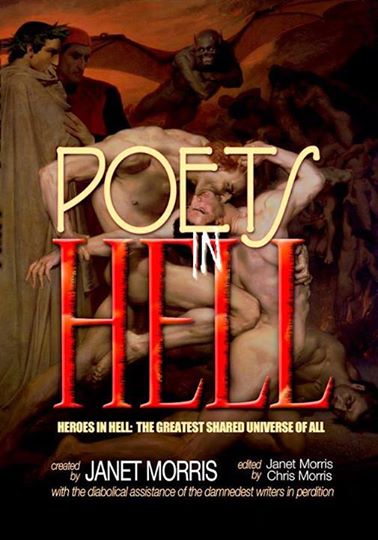
My story WHEN YOU GAZE INTO AN ABYSS has been accepted into the latest volume of Janet Morris’ Heroes in Hell POETS IN HELL.

Poets in Hell

As a bit of background information, Heroes in Hell is a shared universe that operates on the premise that anyone who has had an interesting life will have violated one of the 613 commandments intrinsic to the fabric of a moral universe and will thus find themselves in hell. So imagine hell filled with underworld gods, fallen angels, demons, monsters, mythological figures, historical figures, genii, mass-murderers, thieves, and–well–humankind in general. And make no mistake, my friends. This is literally hell.  If you think our world is bad, and it has a lot of bad qualities, reading this will make you appreciate our world a whole lot more: as all good and intelligent literature should.

My story “When You Gaze Into An Abyss” features Lilith, the apocryphal first wife of Adam, and the German philosopher Friedrich Nietzsche — amongst other diabolical friends.

I look forward to hearing what you think about this story and the volume that it comes in. I can’t reiterate enough that this will be my first short story ever in print. Expect POETS IN HELL to become available on Barnes & Noble, Amazon around June to July 2014. I also believe it will be on Kindle as well along with its other volumes. I will update you all with more images and links when they arrive.

Suffice to say, and considering all the struggle it was to get to this point in time, it feels good to be a poet of hell.

There’s No Place Like Home

“I am Oz! The Great and powerful …”

I ignore the floating green skull and its superior glare, hovering theatrically in its own flames as I make my way to the red curtain not too far away.

“How dare you!” the terrible voice booms, “You have not been given permission to go there!”

The sounds of thunder explode throughout the great chamber. Lights not unlike lightning explode into my eyes. I continue to stalk towards the booth with the red curtain with Apollonian purpose, an ironic reference in itself. Mists and fog swarm around me, and frightening admonitions echo throughout the great throne-room. These sights, and sounds and smells almost make me dizzy.

“Taking a scrap from the Pythia’s scroll, I see,” I speak aloud and continue walking.

“Cease this insolence!” the other cries, his below prompting a burst of orange flame around me, “Or I will summon my Guards to destroy you!”

“No,” I say calmly and without feeling, “you won’t. As an Oracle, you can’t afford to have your men that close,” I get closer to the booth, “besides, we both know they are already dead.”

I walk through the illusionary flames, images channeled there by glittering panels from the corner of my eye.

“Desist, or be struck down by the power of Oz the Great and Terrible!”

“I’m surprised, really,” I tell him as I get closer, “I’m surprised that in a world of magic and strangeness like this one, they wouldn’t have seen right through your disguise. Of course, a magician of any kind–mystical or otherwise–does his best work,” I come up to the curtain, “in plain sight.”

I rip open the curtain. And there is great maniacal laughter.

The man behind the curtain … is not a man at all. It is something else dressed in long emerald coattails. The bronze creature lunges for me with its blade. I barely dodge it, and meet it with the sword in my own hand. Then the curtain completely collapses and two more metallic creatures wielding great silvery wicked-looking scythes surround me. I parry the central construct’s blade even as the others come towards me from the sides …

And promptly collapse into pieces.

The central construct, the Tik-Tok as my companions outside called them, halted. In its beady clockwork eyes, I can almost see fear before it too shudders, steam bursting from its neck-bolts, and falls to the ground with its fellows in one great ruinous scrap-heap.

I hear the click of the weapon at my neck before I even turn around.

“Steam-powered clock-work automatons,” I nod, “I’m impressed.”

“Why thank you,” the voice behind me said, “it took me quite some time to create them.”

“I can imagine.”

“Get up.”

Slowly, I turn around. He’s dressed in the same green coattails that his construct wore. He’s short, and stout, and his receding hair is grey, almost silver. Anyone who saw him would probably have thought him some kind of minor janitor in the Emerald City, a harmless and perhaps even friendly old man. But the hard eyes behind the small rectangular spectacles say otherwise.

“There’s always one in every crowd,” his voice quavers somewhat nasally without the machines to make it sound fearsome, “someone who just won’t believe in the magic.”

“So that’s what you call it,” my words are cold, and final.

He trains his weapon at me, a black antique Colt pistol, “Young man, it is all magic. It’s all one spectacle. Bread, and circuses, you know,” he drawls casually, “It’s just very rare that you find one in the crowd that sees through the trick,” his eyes narrow, “But since you seem to know how my tricks work, it’s only fair–from one magician to another, mind you–that you tell me yours.”

“It’s a trade secret.”

The man laughs, “It was Elphaba, wasn’t it?”

“And what makes you think the Witch is the only one with magic?”

“Well, she isn’t. Not really. She is just more skilled at it than most here. You’d be surprised how much ‘magic’ is left in even these lands.”

“Actually,” I tell him, “I’m not.”

“Tell me what I want to know, young man,” his nasal voice becomes low, the weapon in his hand clicking again, “we are not in Kansas.”

“Though we do come from the same world,” I relish telling him this, now, “Oscar Zoroaster.”

The man seems to freeze in place. His beady eyes seem to dilate like that of a bird’s, “What?”

“Oscar Zoroaster Phadrig Isaac Norman Henkel Emmannuel Ambroise Diggs,” I repeat, “You were a showman in the United States, probably in the late nineteenth century. A minor conjurer, traveling magician, and tinkerer. You know a lot about mirrors, tricks, sleight of hand, sophistry, clock-work devices, and the power of steam, your Age being what it was before you … left.”

“So …” he says after a while, “You are from Earth.”

“From a different time, yes. You missed a lot since you’ve been away, Oscar Zoroaster.”

“I am Oz now,” he grins at me, waving his gun at me, “the great and powerful Wizard of these Lands.”

“You’re an artificer at least,” I amend, “Like I said, you must have spent a lot of time here, letting you hone your craft. You made one great Industrial Revolution here, I’ll grant you that much, but not much else. I wonder though … how much of it was your innovation, magic filling the gaps … or slave-labour.”

“Merely dirty Animals, and savages,” he says dismissively, “no one will miss them. I brought peace here. Stability. I brought them civilization.”

“And all the horrors of Industry to go along with it,” my mouth clenches and I remember why I want to kill this man, “Like I said, you missed a lot after you left us. Pollution, starvation, two World Wars, and mechanized genocide. An entire century of human atrocity and dehumanization, anticipated by and brought to scale right here by a carny-man. You are an Oracle after all, ‘Wizard’: a retrograde Oracle from our world more than anything else.”

“Hush now,” he growls at me, “you only live because I want to know how you know about me. I mean, you could have researched, but there are things … perhaps you read The Book. Elphaba probably learned …” he shakes his head, “a pity I can’t let you live beyond this.”

“It won’t matter what you do or don’t do to me,” I tell him, “you’ve already lost, ‘Wizard.'”

“I can recover easily enough. My men are a dime a dozen, and there are many exits to this place. I know. I had it built myself,” his gaze becomes considering, “And then I will rebuild. It won’t take long. None of it really did in relative terms. Then …”

“Your Madame Morrible is already dead. I’m sure that Elphaba and Glinda of the South made sure of that by now, even as we speak,” I allow a smile to appear on my lips, “By the time you kill me, they will be right here. Them and the flying monkeys you experimented on. And all of this, all of this here will be even more meaningless than it already is.”

“You’d be surprised how quickly one can disappear,” he takes aim at me, and pulls the trigger.

There is a sharp click. And then nothing. I let him pull the trigger of his gun again. And there is still an empty click. His small eyes have dilated further into shock, disbelief, and then fear. Very calmly, I take the gun from his hand.

“This is quite the antique you have here. It’s almost as dated as your Vaudevillian antics,” I throw it on the ground.

“Please …” he backs away from me.

“It is already too late for that. And no, I don’t want emeralds, or power, or ruby slippers,” I grab the collar of his shirt, “you’ve already taken enough from these Lands as is.”

“H-how …”

“Oz is a magical place, as you well know. Back in our world, I always had a knack for causing my machines to malfunction. But Oz … seems to make things less obvious things very pronounced, taking concepts and rounding them up to the next most cosmically ridiculous common denominator. It’s like one great Caricature.”

I let my rage fill my eyes, “But it was a Caricature I loved. Dearly.”

I throw him to the ground, “Your mistake, you murderous charlatan was that I watched this place from the very beginning. I saw it grow. I grew up with it. And saw you. I used to think you were pretty something. I used to think, much like Elphaba did, that you were a wise and benevolent Wizard. Even when I knew you couldn’t use magic. I looked up to you,” my voice cracks, “I liked you, and your hot air balloon until I realized that the only thing in your heart is precisely that. Hot air.”

The next thing I know, I’m shaking with fury, and pointing his own gun at him with one hand, “You ruined the Land I loved, that gave me any meaning in my life — poisoned it with the exact same nationalism, and war, and death from our own world. Our own garbage. You … had … no … right! I should kill you right now.”

I walk back a few paces. And then, I do the unthinkable. I toss his own gun back at him. He catches it, with shaking hands and trains it on me again.

“I helped Elphaba figure out how to read The Book. All of The Book. I didn’t have to do much. You can run anywhere you want. You can hide. You can try to kill your way through. But she will find you. Her and all the citizens of Oz: the Munchkinlanders, the Vinkus, the Quadlings, and the Animals. Especially the Animals. They’ll find you, and make you wish you were dead.

“But I don’t want them to get any more blood on their hands on your account. So you have two choices really. Choose wisely.

I wait and watch him. He knows he can’t run from me. And I can see that he knows that even if he can, they will find him. Elphaba even knows who he is. It doesn’t take long for him to make the choice. I swallow violently and look away after. Even after all he did … I almost wished that what I saw come out of him was spilled oil, and shattered coils and springs. An advanced Tik-Tok mechanism that was created with benevolent intentions, then went out of control and killed his real creator: enchanted to look like a man. Like him. But sadly, all that hot-air inside him was not merely the result of steam-power.

It was just the result of another man playing at being God. I feel less like a child now than ever.

But there is just one more thing for me to do. I search around for a little while until I find it. The green elixir.

I hide it in my pocket before she comes back in. She stands there, surrounded by her winged monkeys and Vinkus allies. They scatter and start securing the room. She sees the body on the floor. Fiyero isn’t here yet, so it falls on me to get to her first. Elphaba doesn’t flinch from the sight. But even after all this man did, I can see in her eyes that her heart is broken. I hold her and she holds me back tightly.

“Glinda is fine,” she says to me, “she handled Madame Morrible. I came here as fast as I could …”

“I know,” suddenly I find a lot of my wordiness is gone.

“It’s done then,” she looks sad, and lost, but at the same time there is a great flush of strength from her emerald skin, “I suppose … you have to go now.”

I look at her. We stand at the same height. None of the literature from my world ever really did her justice. This time, I look away from that penetrating stare, “I … don’t want to,” I admit it. I love this world. I love it and its people, and the magic and the friends I’ve made here. I want to see them grow, and prosper. I want to be with them. There is so much wrong with the world that I came from, so much that disgusts me and isolates me there. There is just too much potential to become petty and small again. To forget everything. And her.

“But you have to,” this is not a question. For a few insane seconds, I want to ask her to come away with me, to fly with me on the Wizard’s hot air balloon back to my world. But although my world is more politically correct in some places, she would be no less green to anyone there as she is here. And she would know that. Those few seconds are gone. She has a life here … and a new life to begin. This entire Land has a new life to begin, and Earth and those few people from it have already done enough to it.

I look at this amazing person who is the best of both worlds–though she would never know it–embodied into a beautiful green form with discerning intelligence and an even greater heart and I know that Fiyero is a lucky man, whatever else he is now. A choking feeling sits hard in my chest, not unlike the one I felt as a child when I saw another farewell scene.

“There must be people who care for you,” she prompts, and then hands me something. It is The Book.

“Elphaba …”

“No, I want you have this. Glinda, and I learned everything we needed to. We want you to have it and keep it safe. Who knows …” she smiled, sadly, “maybe one day it will lead you back to us.”

Then she wraps her arms around me and I hold her.

“What will you do with all of this?” I ask her, looking at the throne-room.

She smiles, “I think I might have a plan or two.”

We hug again, and then I manage to walk away. I don’t know what I’ll do now. Maybe I will go back home. Maybe I will succeed in finding the hot air balloon in one of those workshops that the self-styled Wizard had lying around. Or maybe I’ll take it and ride across the clouds to other places, others untouched by time and always going. A little girl and her family one day will move to Oz, hopefully under better circumstances. Maybe I will find the Oz I knew from my childhood again. Though it would be one without her.

No, it will be better to find other Lands. To keep travelling. A young girl from Kansas once said that there is no place like Home.

But I now know, however, that Home is where I carry The Book: this Book and story, that I now keep on living.

Photo and Collage Credit: Beth Ann Dowler

Out

Sometimes I can still hear it.

It’s the end of the night and Dead Can Dance’s Rakim drifts and rhythmically rumbles through the musty air before the undulating chant of the female singer through the night. The DJ knows what he’s doing. The frenzy of Electric Body Music with its violence of movement and the wry painfulness of clarity that is Alternative Rock have taken their course and had their place in their club.

Now the bar is closed and the black-jacketed, white dressed, neon colour-haired patrons are fewer and dancing with each other in pairs: slowly in tempo with the music. All of reality itself seems to wind out like a wavering road as the woman sings and the man chants in a deeper voice, with stranger words, accompanied by the hollow tap of drums and waves of languorous, synthesized sound.

Everything downtown, far away from where I sleep at the time, unfolds a path in front of me as I watch them dance. I see everything that has happened before and I know that even before being here it had already been in my head: this simultaneity. It gestates through countless songs, and observations, and the weird jerking near-violent movements and pseudo-martial forms that I called dancing. This feeling will continue to grow long after my long bus ride home.

“A million faces, a million lies,”  VNV Nation’s Chrome wavers out before I ever knew its name, accompanied by a weird looping music that somehow taps my heart.

“The streets are cold, the lights go by…”  Like a strange, throbbing, secret whisper it tells me about walking downtown the first time by myself at night, the passing of the streetcar away from Brock, a lost white grin and electric blue eyes, words on a screen leading nowhere, that summer on Euclid Avenue, friends at a Noodle Shop, wishing my friends were there in a bar dancing, a worn convenience store open past three, Higher Ground and Eglinton, cold darkness, past chances, taken chances, lost chances…

When that music comes on, it’s as though my life isn’t linear but multiple-choice: my thoughts fragmenting but somehow being pulled back together again. Then I remember EBM and rock music and it’s as though I’m fighting against the inertia of my life in the epic battle I’ve always fought in my mind: alone and proud.

But then at the end of the night, my favourite night of the week, my Friday night, after dancing through the endless possibilities and talking mutely with people over thundering percussion, I’d see the reality of it. Two men in glistening black leather kilts dance with a white-blonde girl between them. A tall girl moves with a shorter darker one. Then Rakim winds down for the night, the male singer’s last reverberating, “Since forgotten…”

I remember these Friday Nights well as I skirted the rim of the dance floor and danced in the middle of it in my own bubble of space. I interacted with the people much in the same way, just as I still in some ways do. I remember that I don’t relate well to groups. I am like the girl in “Tonio Kroger” that tries to dance like others, on the periphery, but unlike her I know I have my own dance that few can or could care to match. Perhaps I’m getting too old to dance now, too hermetic to move as often. Maybe I already had my chance to find something special in the night.

Yet sometimes, even now, I have this insane urge to contemplate another Gothic Picnic in High Park drinking the liquid essence of fruit salad and watermelon juice alongside white-painted people wearing black leather and lace. Or maybe I’d dress up like the Crow again and go downtown to lose myself in the role while dancing: laughing at those who think I’m Heath Ledger’s Joker instead.

At the very least, I can take comfort in knowing that I can still dance well in one place: through the diaphanous smoke screen of my own words. Right here.

The Crow

For Crystal and Castle: An Author Quest Ends and a Gelfling Gathering Begins

Last week, The Dark Crystal Author Quest to write the first novel of The Gelfling Gathering finally ended. Twenty-five excellent writers were given honourable mention and five were chosen as finalists. It still really disappoints me that I couldn’t find the time to enter the story that I had planned. I was working on another submission at the time and I had to make a choice. Suffice to say, it was not an easy decision to make and, hopefully, I will be able to show all of you the fruits of that decision one day soon enough.

However, I did manage to do something during that time. As a treat and in honour of the Author Quest’s success, I want to show you the introduction that I created to start off my Dark Crystal Gelfling Gathering tale. I hope you will take it in the spirit that it is given and enjoy. Its working title was Dark Crystal: For Crystal and Castle.

It was over nine hundred trine ago that the Great urSkeks, wonderful, luminous, glorious beings from the highest realms who had come to bring wisdom and enlightenment to our beautiful world of Thra, finally left us. They had come to our home for contemplation and, having gained the revelation of their true selves from the divine Crystal of Truth, they left us with one final task.

Before the urSkeks, we were small and lowly. It was not until their blessing that were chosen as Stewards of their Castle of the Crystal: to guard it, Gelfling, Podlings and all of Thra from the evil that still surfaces to this very day.

For the soul stealers, ugly, twisted monsters that would take Gelfling children in the night for their shadowy sorceries were locked away: banished to their prison in the Mystic Valley from which they shall never fully escape. Our Adversaries were held back and imprisoned behind the wards of the urSkeks, whose power we still maintain and they cannot ever fully escape: let alone dare approach the Sacred Crystal to see what cowards they truly are inside.

Nevertheless, the soul stealers are crafty and clever.

To this very day, led by their dark and insidious Master, these cruel wizards still lure Gelfling victims to their Valley. And sometimes it is even worse. Sometimes, some–not all, but some–of the soul stealers find ways out from the barriers that seal them their infectious nature from the rest of Thra and seek to interfere with, and corrupt, our great and glorious realm.

This was the reason why the paramount of our kind, the beloved and enlightened Emperor skekSo First and Only of His Name, created the elite Castle Guard and made his Empire of all Gelfling civilization and Podling principalities. This is why we have decided to teach those worthy among you Gelfling the arts of war and defence.

And while a soul stealer cannot be destroyed by Gelfling or Podling hand, with your help we can capture and contain the menace of the wizards–to keep the dread Sixteen from liberating their entire body–until that great and glorious day when a thousand trine shall pass and the Third Great Conjunction brings glory to the Empire, peace and order to its loyal citizens, honour to the Guard that defends our Lordly Stewardship and the Crystal of Truth, and eternal oblivion to the soul stealers and their corrupted followers.

Until that momentous day we must remain forever vigilant. Everything is connected and it will only be through our sense of connection and our trust in his Imperialness the Great skekSo that we will all find true harmony.

This is our duty and our gift. This is our peace to all of Thra.

Remember the oath of our Guard: “For Crystal and Castle.”

— written by skekLi, Noble and Humble Poet Laureate of the Skeksis Empire

File:Castle of the Crystal - Pure.jpg

This was, sadly, as far I officially got. But I had plans. I’d written a whole lot of notes asking myself questions about the Skeksis, the urRu Mystics, and the Gelfling, their different Clans and what kind of plot I could make out of all of it.

But as the second part of my treat, I will tell you what I roughly had in mind.

I really planned on writing about Rian, the Woodlander Gelfling Guard slowly discovering that his beloved rulers were in fact some of the most evil monsters that he has ever met. I wanted him and his Spriton friend Jul to be rivals in the Guard and when Rian finally did defect away from the Skeksis, he would have to face his best friend until, finally, the latter saw the truth and came to his side.

During this time, the Guard are actually trained and led by three Skeksis: skekVar the General instructs the Gelfling in land-based combat, skekSa the Mariner drills them in naval war, and skekMal the Hunter teaches the Guard survival skills and the art of stealth and, well, hunting. I wanted to make three things clear. First, skekGra the Conqueror was once a leader and instructor of the Guard before he was exiled by the Emperor along with skekLi the Satirist. The second is that Emperor skekSo sometimes displays his martial prowess during Castle Festivals and the Guard are in awe of his speed and sheer power. And, third, that all the Guard feel very uneasy about skekMal. He has this way of looking at them as though they are just pieces of meat. Sometimes, some of the Guard go missing during the night. Not always, but occasionally and while the “soul stealers” are blamed, some of the Guard wonder.

Of course, it is revealed later that skekMal basically trains the Guard to hunt only to hunt them down, in return, much later after he puts on his mask and tracks them. It is basically a sport to him to “play with his food.” Even the other Skeksis find that somewhat disturbing. He comes and goes whenever he feels like it and he supports the two Skeksis in exile when it suits him. I was also toying with the idea that it is on a mission to “find” the exiled Skeksis that Rian discovers more about them.

Basically, this side story, or first book even was going to have the Emperor send the Guard to stop skekGra and his associates from attempting to make their own rebellion with Gelfling followers. If skekHak the Machinist hadn’t been killed in the second volume of Dark Crystal Creation Myths, I would have used him to create a makeshift essence-extractor: a cruder version of skekTek’s. However, perhaps skekMal had his own portable device made when he threatened skekTek. Remember: the Gelfling Gathering takes place before the Emperor had sole access to essence, so it is possible that something like this could have happened.

But in any case, I saw Rian and the Drenchen Gelfling Gurjin as childhood friends. Gurjin, for a swamp-dwelling Gelfling, was the more scholarly of the two in my mind and he wasn’t a part of the Guard. When they weren’t playing Jarra-Jen and Creghel the Tyrant, they played Three Suns and the Moon: each of them was one of the suns and an old childhood female friend was the moon. I picture her as a Vapra and perhaps, in their minds, the future Queen of the Gelfling Clans.

Eventually, Rian discovers that there is a Gelfling Resistance led by the hidden Gelfling Queen. As it turns out, almost a century ago, the Sifa Gelfling Gyr and the Vapra Lady Kel witnessed the actual creation of the Skeksis and the urRu. Kel, becoming the next Gelfling Queen, secretly passed on the knowledge of what happened through dreamfasting with her successor and a select group of loyal Gelfling. They didn’t know what to make of what they saw and so they waited. They waited for a few generations: knowing that they didn’t have the power to oppose the Skeksis directly and that their own pacifist nature, with the exception of perhaps the Spritons that were so close to the Skeksis’ corruption, would limit whatever they could do for now.

I decided that Rian first acts as their spy in the Castle and then he finally just can’t stay there anymore. Maybe I will tell that story one day: though it will definitely be fanfiction unless the Henson Company or Grosset and Dunlap are ever looking for short stories. That story was going to be my entry. And if the third Dark Crystal Creation Myths book doesn’t destroy its continuity, then it definitely will be a fanfic.

But as for the rest … Rian sees the beginnings of the proto-Garthim developing in the cave tunnels of the Castle: supervised by skekUng the Garthim Master who wants to supplant skekVar as General and skekTek who hopes to get more prestige out of helping him. I see them as red and raw without their organic carapaces at this stage. Rian and his friends run into the real Gelfling Queen: a young and mute Dousan Gelfling. She has mastered Dream-etching: the precise ability needed to bring something from dreaming into physical being. She will become the central architect of the Wall of Destiny. They attempt to mobilize the other Gelfling, but they need resistance and disbelief. But gradually, they would pass on what they have learned through dreamfasting.

At this point, the Skeksis become aware of what is going on. As they pass the cover story of there being missing shards of the Crystal, as the Gelfling group has revealed that it is damaged, the Castle Guard is led by Emperor skekSo himself, along with his minions, to take care of the Rebels. Unfortunately, for the Skeksis, the Guard are all converted to the Rebels through dreamfasting. I planned, at this point, for the urRu to get involved: as the protagonists were staying in the Valley: having realized that the Skeksis’ accusations against them are obviously false and the Skeksis are the ones kidnapping and “draining souls” from Gelfling.

There was an epic duel between the four-armed combatants: urSu the Master and skekSo the Emperor. These are not the decrepit beings we saw in the film, but two powerful opponents in the prime of their lives. Each blow they land on each other also affects the other one and they gain cuts and injuries that match each other’s own. SkekSo only retreats when he realizes that his Guard have defected and his other Skeksis are facing similar problems. SkekSo vows revenge and flees. The Gelfling either do not notice this phenomenon or simply do not understand and it is understated. It is also during this time we are introduced to urVa the Archer: the one Mystic who seeks to actively destroy his counterpart in the form of skekMal.

UrVa spends much time teaching Rian and the others how to fight, as he is a martial arts master, and when the time comes to leave the Valley and go to organize the other Gelfling, he chooses to go with them: being the only urRu who can actually find it in himself to actively interfere in what is going on. Later, as they get to the site where the Wall of Destiny will be built, this is when the Skeksis get nasty and they send the three militaristic Skeksis with a mass of essence-drained Gelfling husks, literally zombies, to destroy the Rebellion.

By this point, it is a bloodbath. And what is worse is that skekMal starts picking off Gelfling from the shadows of the Vapra’s trees (I assume this their territory is close to where they are building the Wall) with his crossbow. He and urVa have a standoff. UrVa hates everything that skekMal stands for, representing the aggressive side of him he despised as an urSkek, while skekMal hates urVa for being that weak and hesitant part of his original self whose deliberations cost lives back on the urSkek homeworld.  In the end, they both shoot each other at the same time: a former whole being in conflict with its dual aspects.

Rian holds urVa’s dying form in his arms. UrVa asks Rian to kill him, but Rian doesn’t understand and refuses. He then goes and finishes off skekMal: who had killed his father not too long ago. Both Skeksis and urRu die. Then the seven Gelfling Clans, all knowing what the Skeksis truly are, congregate and the Wall is created.

File:Prophecy.jpg

It awakens the essence-drained Gelfling husks from their living death and the remaining Skeksis are forced to retreat. But Rian, the Queen and the others all know that this far from over. Nevertheless, there is still hope and wonder in Thra.

This is, sadly, as far as I got in my notes. And there are so many gaps. I still have difficulties describing our world’s geography, never mind Thra’s and its unique solar system. There is also so much story there and many story lines that I could have done with the mariner Sifa, the desert-dwelling Dousan, and the underground Grottan. I did plan on having each chapter dedicated to, and function from, the limited third-person perspective of the character: Skeksis, Gelfling and perhaps even an urRu. You know: much in the same that George R.R. Martin structures his chapters in A Song of Ice and Fire.

But I didn’t get to it. Nevertheless this process of world-building kept my mind occupied and got me into some good discussions on The Dark Crystal Community Forums. I’m also pretty sure I learned something and, in the discussions themselves, I even suggested corrections for their entries into the Encyclopedia. And what is even more awesome is that the other authors that didn’t get into the finals have a similar idea to mine and have posted links to their stories in the Forums and in the Fanfiction section of the Dark Crystal website.

The fact is that my experiences in the Quest, for all I didn’t make a story, deserved its own honoured place in my Mythic Bios and it is excellent way to show you how my creative process and, well, my mind works.

I will say it again: everything is connected. Everything is connected and I am glad I connected my creative mind to the world of Thra. Therefore I salute my fellow writers and posters, as well as the Henson Company, and my story that could have been and in the words of the Castle Gelfling Guard I planned to create let me proclaim proudly, “For Crystal and Castle.”

The Treasure of La-Mulana

So I have been stabbing my Mythic Bios notebook with my golden pen, but for one brief moment I am going to re-materialize back from the ether to leave you with something. I made this, my third Twine story, a little while ago after watching Deceased Crab play through both the original and the remake of La-Mulana.

This game … for something I have never played and probably never will because I neither have the patience nor the hand-eye coordination, got into my head: into that mythic space that permeates my very being. La-Mulana is an adventurer-archaeology game created by the game company NIGORO and filled with puzzles, riddles, deathtraps, insanity, lore, and vintage video game goodness. It is a fun, but notoriously hard game. But the world and story that NIGORO created got into my mind so much, and so badly, that I went online at one point and looked for fanfiction based on it.

It was there, online, that I found madamluna’s long slow collision and Bones. It was the first story, a Twine narrative itself, and the news that there would be a sequel to the game itself that cinched it for me.

So now: to business. What you are looking at here is a homage–a fanfic–to a game I’ve only seen on Let’s Plays, written in Twine. Basically in addition to this being my third Twine story, this is my first polished Twine fanfic to an awesome and insane game. So while I might not be a “real” fan of the game, in that I haven’t played it, I hope you can all accept me as one in spirit if nothing else.

In other news, I am still hard at work and I plan to make a New Year’s post of some kind. I hope you enjoyed this surprise and impromptu post of mine. I hope to return relatively soon. But, since you have all been very good readers I now leave you with my modest attempt at a homage, at something that will probably be completely debunked and repudiated by the actual sequel to La-Mulana itself. It is a story with events meant to bridge the gap between the two games. So such, please remember that there are Major Spoilers. I hope you will take this in the spirit that it is given.

So good night, fellow explorers, and allow me to leave you all with The Treasure of La-Mulana.

La-Mulana

Life and Identity, Eden and Hell: The Twines of a Gaming Pixie

The following will talk about–and accordingly link to–games of a graphic nature: if you will pardon the unintentional pun. Reader’s–and player’s discretion–is advised. Do not say that you have not been warned.

It was around February when I discovered Gaming Pixie. Less than a month before, in January, I finished Anna Anthropy’s Rise of the Videogame Zinesters and participated in my first–and so far only–Game Jam. After really hearing more about Twine, I began searching for more information on Anna Anthropy’s works and other Twine games.

I’m not sure how I found Gaming Pixie exactly. Perhaps it was through one of her creative YouTube video game reviews, or I found her Pixie’s Sketch Book before or after. I do remember, however, playing one of her only two Twine games at the time: specifically What’s In a Name? Seeing this really personal Choose Your Own Adventure text game really hit home for me the fact that I wanted to make something similar: something that to this very day along with everything else. Then I played her first Twine game–The Choice–and at the time I stopped playing once I got the good ending. It’s strange that I remember the second game more than the first, but even though I could relate to both of them in some way, I really felt more akin to What’s In a Name? and what I felt that Gaming Pixie was attempting to portray.

But I am getting ahead of myself here. Originally, after getting to know Gaming Pixie more, I was only going to write about her game Eden. However, I know feel compelled–in some way–to trace the development of her game-making, and its content even as both continue to evolve.

As I stated before, Gaming Pixie was best known for her own video game reviews. If you click on the above link, you will see an analytical mind that engages with the mechanics of the games she’s plays: accompanied by a sense of wry bemusement, her personal reactions to the game, how she related to it, and her liking to break the Fourth Wall a lot and interpose herself into the games. She rarely, if ever, indulges in profanity (though there are times it seems as though she is coming close, but instead settles for the tongue-in-cheek), and she has a wide assortment of costumes.

A little girl

But in addition to this past, she is also a talented artist–creating many lush and vital comics and storybook-like illustrations–as well designing a really immaculate website or two. By the time I found her, she had more or less transitioned away from reviews, planning to create some comics, then Flash animations, but ultimately choosing the medium of video games to work in: with Twine as her first tool. She had so far created two games: two very personal games.

The Choice: by Gaming Pixie

Her first Twine game, The Choice, is about suicide. You play from the second-person perspective and, after choosing which way you want to die, a part of you attempts to stop you. And that part of you is tenacious. Let me tell you. When I replayed it recently and made a determined choice to kill myself off, that embodied part of me was relentless in asking me whether or not I was sure I wanted to do this.

And playing The Choice made me also re-examine the perspective I want my games to be from and why. Because, you see, I automatically stated that the game was from my own perspective because of the second-person “you” that the narrative addresses the player from, yet it can also be an attempt to make a player see into the mind or the situation of another person. There is this fine line there. And despite the bleakness in this text-based game, there is hope in it too, and the ornate, story-book illustrative graphics complement it well.

Also, when I was searching through Gaming Pixie’s Sketch Book to get more insight into the game, I also came across a review and link to this really interesting Indie game by Daniel Benmergui called Today I Die: which according to her Sketch Book greatly inspired her to look at the issue of a game being a medium for art and emotional expression. It is a truly brilliant and beautiful game about seizing your life back from depression, and so much more. I wonder if it inspired some of The Choice, but either way I, for one, am really glad that Gaming Pixie’s entry led me there, that I played it and that it gave me a little more insight than I had before.

What's in a Name: by Gaming Pixie

By What’s In a Name? … I think this is where it all begins. While The Choice dealt with a feeling of suicide and either overcoming or giving into it–with an emphasis of the strength of life–this game is about futility. It is that second-person perspective again: except whereas you could argue that the previous game gives you more lee-way in projecting your own identity into the game, this one is very concrete and autobiographical. The character or the perspective is that of a woman who is struggling to understand her bisexual feelings and in a situation where no matter how she reacts to an issue of identity, she always loses: finding herself and her burgeoning sense of self becoming de-legitimized and trapped in a place of pervasive biphobia.

This game must have come at the height or the beginnings of what is called The Twine Revolution, or perhaps there was just a niche that formed there because both Kotaku and The Border House as well as Anna Anthropy made mention of and even reviewed this game. Please look at The Border House’s IF Game of the Day: What’s in a Name? by Gaming Pixie, Patricia Hernandez’s A Game About The Confusion And Difficulties That Come With Being Bisexual and Lana Polansky’s Nameless with regards to how she related to the game’s content for a little more information: but please consider playing the actual game first.

I will admit: when I played that last game I really, really wanted there to be a third option and a “screw you to everyone else because I will live my life the way I want to” ending. The fact is, even though the game was not about me, it touched that place in me, and I’m sure in many of us, where I remember trying to figure things out and having other people and forces tell me what was right: with changes in their treatment towards me if I didn’t comply with their spoken or unspoken views. It is a similar feeling and perhaps, one day, I will go more into it: and you can thank Gaming Pixie–at least in part–for at least reinforcing that possibility.

And then things began to really change. I’d lost track of Gaming Pixie for a while, but by the time I came back I saw that she was working on a much longer and more ambitious Twine. The Twine plot outline chart for Eden is a spider’s web of complex activity for me and I’m amazed that Gaming Pixie could keep track of all of that.

Some Twine source code for Eden. SOME.

[It makes me really think I have my own work cut out for me with my own Twine novel.]

What’s more is that this is the point when her game-making changes. Whereas What’s in a Name? is minimal in terms of graphics and both games are silent, she starts to utilize the royalty-free music of Kevin MacLeod as her soundtrack. In addition, she creates a great many more graphics: lush, colourful, finely lined and utterly beautiful pastel images. One thing I should definitely note here is that she has moved past the short and personal into something larger and far more fictional.

And yet, sexuality and gender play a great role in–and with–Eden. At the beginning of this game, you are asked to choose a name and a gender. You are also asked what your sexual preference is. Unlike The Choice, where you have one or two endings, or What’s in a Name? that is ultimately one ending no matter what you do, Eden has multiple–multiple–endings. It looks at beauty and it examines your morality and just how far you are willing to go to maintain what–and who–you believe in: an element that Soha Kareem, in her Haywire Magazine article Soha Kareem shares four more games made in Twine also points out.

What is even more interesting is that Gaming Pixie has managed to place a lot of randomizing elements into the narrative: so that upon future playthroughs the game and its text do not always react in the same exact way. There is even one ending that happens almost simply by chance.

In a lot of ways, if The Choice is choosing life and What’s in a Name? is a grim coming to terms with one’s identity I feel as though Eden was an answer to What’s in a Name?: that third option that branches out from one persona into so many other choices … so much so that if I had to answer What’s In a Name? as a question, I would reply with Eden. In fact, in one Blog post before she reveals her game, Gaming Pixie goes into further detail on the matter.

Shadow of a Soul

And now, we shift gears from a potential and fragile utopia, into–quite literally–Hell. For Halloween, Gaming Pixie decided to do something different yet again. Shadow of a Soul is a horror game in which you have to make some pretty macabre, and yet strangely erotic, and BDSM-themed choices. It starts off the same way as Eden does: asking what your name is, your gender, and your sexual preference. You can see something of a pattern here: in which your sexuality–particularly bisexuality–has an impact on how you experience both of these text games. However, it is more than that. In addition to an open-ended possibility of a third gender or something beyond binary gender, both games present bisexuality as a valid orientation: and that is a great assertive against the spirits of The Choice and What’s In a Name?

Shadow of a Soul has fewer endings and some of the randomization and knowing how many resources you have can mean all the difference between … being in different states. I will not spoil it further than that except to add that it is very hard to win this game: even when the answer stares you right in the face … or if you choose it: just for the, if you will pardon this pun too, hell of it.

It is fascinating to see someone with clear creativity undergoing the transition point between reviewer and artist, then text game-creator, and now going into the realms of programming beyond Twine. So please keep your eye on Gaming Pixie Games: which you can either click on here to view or find on my Blogroll: because Gaming Pixie can obviously explain her process far better than I can and, trust me fellow Clappers, she is one fairy that you should definitely believe in.

Pixie-art

Another Revolution

On Fame’s eternal camping-ground
Their silent tents are spread,
But Glory guards, with solemn round
The bivouac of the dead.
— Theodore O’Hara, “The Bivouac of the Dead”

They marched among the geometrical angles of granite tombstones, wearing simulated gore and affected awkward staggering gaits, carrying upraised signs made of stick handles and Bristol boards with bloody running red lettering.

Among the people dressed in dried red, white and green make-up, purposefully tattered clothing and horror film t-shirts, were people in uniform. Some of them wore dark helmets and dark-blue padding with realistic plastic rifles and riot gear in hand. They seemed to wave the macabre crowd along with plastic severed limbs: at least those that weren’t holding signs of a merry skeleton man with a top hat and cigar between his teeth pointing and proclaiming, “Baron Samedi Wants You!” or “Occupy the Evans City Chapel! Donate Your Flesh!”

For all the attention it received, the Chapel was a square structure of stacked old grey cement blocks with a steeple-roof of dark slate, and a chimney of faded red bricks. If someone looked closely at the base of the building, they would have seen green mould slowly and almost verdantly eating away at its foundations.

It had once been used as a storage-shed ages ago, before it was finally boarded-up altogether and left a hollow shell: its emptiness dignified with the remnants of almost forgotten hallowedness. But its simple crumbling elegance cast a long shadow of significance over the minds of its protesters, its guardians, its revellers and its other self-appointed friends as they gathered near the grounds of its long-sealed front door.

Whatever these fifty-odd some people saw on the path amongst the gravestones in front of their modest, aging Mecca and beyond the frame of a black and white reality, they all wanted to be here. Most of the Event’s participants were enthusiastic locals, some particularly devoted interstate and even international tourists. The other group that came into the Evans City Cemetery, on the other hand, did not seem local but they were–in their way–no less eager to be there.

The newcomers did not go to the Chapel. Instead, they moved past it. Some of them walked with a familiar stiffness, ramrod straight spines and a seeming lack of joints: with deep blue eyes that glittered from sallow faces in the setting sun. Others were more sombre or even more colourful heaps of mouldering robes that hopped or leapt alongside their compatriots: jumping with arms open enough to embrace the entire world.

Others wore darker investments: grey and black medieval armour, closed visors and ragged peasant garb. Some of the new arrivals hulked over the others: seeming to rise up from the ground like earthen blue-black shadows and wearing helmets of sharpened horns.

Still more followed them: large and small and some in more than worse for wear contemporary clothing carrying bits of playing equipment, tools and debris. Bloated and emaciated green things in rags crawled and whispered after them, and in the lengthened shadows it seemed as though they did not always have a shape at all. Lean beasts followed them with raised hackles and similar expressions of living greed on their muzzles and in their eyes.

Some were writhing, undulating wild-eyed women bathed in old red and cloying vinegar-wine as they alternatively fell over and prostrated themselves in erratic procession; while others were black-haired, dark-skinned, beautiful hollow-eyed women gliding in fine dresses and sporting long, long, fingernails. A significant proportion of the assembling throng were even more skeletal: shrivelled and brown caricatures that walked slowly and ably. Two of them looked like little girls in tattered old dresses holding smoking cups in their hands: their eyes silvery cobwebs of intent.

In front of them loomed a pillar of Quincy granite: nineteen feet high and surmounted by the figure of an eagle perched on a globe. As the grisly travellers surrounded it, its shadow consumed them and they became a part of the evening that it dwelled in. One side was inscribed with the names of forty-five dead men, while another was carved with an emblem of a wreath with crossed swords.

They had travelled all this way to congregate at this one point: the old Civil War memorial stone known as The Soldiers’ Monument. Anyone else in the Cemetery might have wondered why there was so much attention and security paid to the road and the Chapel, but not for the old war memorial. Yet no one other than the throng moved towards this spot. And so they waited.

They did not wait quietly. At first, the stillness was broken by a faint nearby rattling reminiscent of dry hollow bamboo tubes clattering against one another.

Gachi gachi … gachi gachi …

As though in sympathy, parts of the throng itself began to shuffle restlessly. A few gaunt forms covered with shaggy hair peered forlornly at their fellows with bloated faces and held out delicious ethereal food. This food went ignored.

Grumbling shadows seemed to shift back and forth above the closest gravestones, as the motley assortment began to moan and bang their makeshift tools on the nearby graves. The robed group began to hop impatiently in one place. The unseen ones stomped their shrunken feet in defiant rhythm. The brittle moving antiques that were the two girls walked through the throng with their two steaming cups, their soft voices mournfully chiming, “Cafe grille … Cafe grille …”

Even while the freshest among the ranks began to growl and hiss at each other, and the fat and thin green shifting creatures with their hyena brethren whispered to each other like sand and Arabic, a few of the figures in the front closest to the Monument remained solemn and patient.

One of them was a white-eyed woman with skin the texture of old coffee and dressed in the habit of a nun. Another was a man in a World War I Canadian Major’s uniform with a waxen blank-looking face and a black bag at his side. People arranged in a wide assortment of shapes surrounded him. They remained still, they and the shrivelled white-eyed brown ones. The latter held vintage bottles that seemed to flutter with eerie lights. They did not offer these to anyone as they stood near the nun. The two girls skipped to her side and she put a weathered hand on both of their wispy heads.

And so they waited. And so they wait. They wait for me. The vetala.

What is past is now present and what will be is now. Even as the evening comes, as it has come several times before, and the blue, black and pale-skinned Draugar bathe themselves in the fox-fire light of their trollskap runes, and the Jiangshi resemble Chinese paper lanterns filled with glow-worms, I come. I appear at the top of The Soldiers’ Monument: my feet balancing on the eagle statue as though I am a fallen angel perching on the head of a pin.

I smile a serene, demoniac smile as I lean forward. With a balance and flexibility that would put any enlightened yogi to shame, I hang down from the top of the pillar and my sightless eyes stare into each and every one of them. Now they are all still. I have their attention.

“The living claim to know our stories,” I begin, “but only the dead may tell them,” I look through all of them, “Speak.”

I am the vetala. I hear their stories. They speak to me. They speak to each other. They speak to each other in the rustling words and fading dactyls of our kind. Although their words are disparate, they are all unified under one scraping dissonant mother tongue: the language of the dead.

The elders speak first. Some are dressed in furs, archaic bronze, gold and rotten silk. They wail about the stories their fleshly tribes and descendants told, hidden away in their caves and ancient homes at night, while they raged outside pounding the doors: demanding sacrifice or just to be among the living again.

The Ro-Langs say they are tired of being created and hunted by sorcerers and Buddhist priests for their tongues and their golden bones. The Nachzehr contingent in the Cemetery say they have grown to despise having their graves intruded on and having coins shoved into their mouths. The few remaining native Skadegamutc–their long skeletal forms pulsing with stolen blood and their hair tied into feathered braids open their fanged maws to release whooping war cries into the air–decry the loss of their lodges, being forced to dwell in holes in the ground, and the burning finality of fire.

Many murmur among the gathering in sympathy. The shaggy Bukwus lament the fact that the living no longer take their offerings of food, nor join them in the waters. The mariner Drang nod their seaweed-encrusted heads in agreement and state in vehement Germanic that they are sick of being spat on. In equally fluent German, distorted only by the gnashing of their teeth into their death-shrouds underground, the Nachzehr rebuke the Drang with their livid, gesturing shadows: telling them that at least they didn’t have to worry about getting their heads cut off.

These exchanges bring another large murmur of agreement: especially from the Wiedergänger and their European revenant cousins. The Jiangshi say nothing but continue to jump around ignorant of glutinous rice, peach-wood, the I Ching and their own reflection while everyone else is aware of the funerary-mockery of self-transport that sorcerers first made of their bodies. Mostly, they are impatient for more qi. From its sprawling place near the corner of the Monument, the giant collection of the bones from a multitude of starved human beings called the Gashadokuro reiterates this sentiment with a loud rustling gachi gachi giving even the other assembled dead reason to pause.

Even so, the Ro-Langs are quick to mention their solidarity with the Jiangshi and add that they are also tired of having their tongues ripped out to become occult-swords. This draws the ire of the beautiful Pontianak: hissing that just as they were victims in life of the men that impregnated them and forced them to die at childbirth, so too do they still continue to abuse them after their deaths by driving nails through the backs of their necks and cutting off their long nails to make them “more docile” as wives.

Most of the ones arguing now, while a little more numerous than the elders, are fewer than the majority: with even fewer of the living in their native lands telling their stories every day. With some exceptions, theirs are complaints that have less to do with current persecution and more to do with past wrongs, restlessness and hunger.

Out of all of them, it is the Draugar that are collectively the loudest.  The walking remnants of the Northmen boast about their achievements in strength and power, how it took the will of a true hero to wrestle them back into their howes. They say that the living can cut off their heads or burn them to ash, but that they will fight it all the way and retake the world that was once their own. They taunt the other dead, calling them cowards and mindless shells: commanding them to fight.

One of the revenants laughs hoarsely and points out the ever-present truth: the Draugar are few and most of their barrow-homes have been lost. Even with their power and lore of the dead, they are too few to reclaim their own lands of ice and darkness themselves: never mind the entire world. The Draugar become angry: proclaiming they will get all the reinforcements they need from their brethren in Hel once the ships made from dead men’s nails set sail.

The wax-faced Major steps forward. Even as he points at his twisted companions, his voice comes from the black bag in his hand: explaining in a muffled yet cultured tone that he and his fellow Re-animates were the result of horrible medical experiments that forever robbed them of the gift and dignity of death that is the right of all living beings. After they found each other, they methodically hunted down and killed their creator for his crimes against them and defying the will of Nature.

The elders and the avenging dead add their cries to the Major’s words, and even the brown-skinned zonbi contingent in their silence and with their shimmering glass bottles–by their very nature still full of purpose–incline their heads slightly with mutual respect. The nun–the Mother Superior Marie M.–finally speaks.

She talks of how her young body was abducted from her grave and family by a bokor in her native Haiti where she was made into his slave: only for his wife to attempt to sell her until, finally, she was brought to stay at a convent in France where she has been ever since the early twentieth century. Until now. From my vantage point hanging upside down and slowly swinging from the memorial, back and forth like a pendulum between life and death, I nod at her and the Canadian soldier-doctor.

The more numerous modern dead are also angry and hungry. They are not as articulate as the others, but they make their case clear. They throw their debris. They roar. Some of them stagger at each other while others tense and lunge with swift viciously mindless animal instinct.

They cease just as I stop my swinging. From the Chapel, I can already sense some of those who are with child clutching at their bellies from the Draugar’s auras: not enough to kill, but just strong enough to cause discomfort for those not-yet-born. It seems that as this gathering continues, the Pontianak may yet gain more sisters.  Everyone and even the newest among us are cowed by the presence of the vision I have not revealed yet.

I am the vetala. I am the storyteller. I take the story of my being and I shrug out of it–a layer of ego–as I curl up to stand again on the stone eagle and let the tale tell itself.  I point at the words that my body once concealed on the Monument, words they have all waited to see, “We are the bivouac of the dead.”

At my words, I sense a woman at the Chapel cramping into miscarriage. I continue.

“We exist on ground without walls or protection. The living has the luxury of walls between them and the night of us. We have nothing to protect us except us: the cycle of us. The elders understand it best. This world is not linear,” I spread out my arms, “We have no walls because we do not defend. We were the fierce hunger for life given purpose incarnate. We were the agency of celestial wrath and vengeance. But then, we were usurped.”

I lose myself further into the role of storyteller, “The living began to tell our stories. They took them from us. In them, we lost our divine masters and exchanged them for fleshly ones. For millennia after,” I glance poignantly at the zonbi, “in their stories we served the will of witches and sorcerers. We were their servants and their familiars. Their slaves. And those of us that came about without human agency were considered mistakes of Nature and linear Time. There are no coincidences,” I point one long skeletal finger at them all, “and those of us that were made free to appease our hunger were hunted down, burned, decapitated, mutilated and destroyed.

“Only those few like the Ghilan were free,” I finally turn back to look at them — some of the green-fleshed ones, “They are the ghül: a word used to describe us all because of what many of us are compelled to eat … and kill. They were free … in their deserts, haunts, and the abandoned ruins of cities … until Prince Gherib’s forced ‘Conversion of the Ghouls.’”

A sullen, angry rumble begins to grow, “For all here know that it took more than just one day to accomplish and that it was more than merely one Tribe. To this day the story of what happened to the Ghilan–to the ghül–is a lie still told by the living to their children,” I spit the last word, “as entertainment.

“The Ghilan–particularly the Tribe of Saadan–lost their fortresses and treasures in Arabia for the simple crime of keeping property, for eating the meat and bones of things that could no longer move nor even feel! Some fought, but most did not. They were–are–merely survivors and scavengers of food and scraps of knowledge. Very few Ghilan even kill the living, yet even so many of them were sent anyways to ‘sup with Iblis’ during the ‘conversions.’

“The rest of us were no better off.”

I jump down to the base of the Monument, “You have heard the Ro-Langs, the zonbi, and even the Jiangshi. Most of us could not even be conceived of to exist without the aid or presence of a fleshly master. Some of us, like the revenants, occurred ‘naturally’ but were promptly obliterated by fire, prayer and mantra. But some of us learned to rebel.

“Indeed, many of my kindred were powerful enough to do so. I remember the day, millennia ago, when I came to my vamachari’s side–the mortal responsible for binding the churning spirit of me to this cold, dead matter for my knowledge–and I wrapped my fingers around his neck and slowly squeezed the life out of him with my cold, dead left hand. It was one of the few moments I truly wished my own flesh was not unfeeling,” I let the old fury of that ego dissipate as I relax my left fist and become the storyteller again, “Yet even then there were too few of us to do anything more.”

I gesture at the zonbi delegation, “It truly began in West Africa, on an island called St. Domingo in the year of 1791. Slaves taken from many African nations rebelled against their slavers for twelve years until they overthrew them. From the chaos formed an entirely new nation. However, what no one knew was that a few of the former slaves were bokors and they possessed zonbi. The zonbi, however, were not free of their masters. Yet.”

I raise my hands, “That day, in the place that would become Haiti, a new narrative was formed: a story of slaves freeing themselves forever from their masters. And this time, instead of the living learning from the dead, the dead began to learn from the living.

“1863: the very land we stand on now, the place that bought many of those living slaves from St. Domingo, undergoes the Civil War that created the very Monument that I now stand on. This same nation then proclaims manumission for all its slaves! A few freed bokors and, more importantly, their zonbi were also there. And they learned another story.”

I point at the zonbi delegation, “Do you know what they hold in their hands? A zonbi is created when a bokor takes their soul and puts it in a jar. The bokor takes away the zonbi’s name and memories. The bokor keeps their souls in these jars to increase their own strength or sell them to buyers for luck and healing. Souls have become commodities.

“Over time, Marie M. and others have tracked down all zonbi and their names and reminded them of who they are. They carefully crafted a network with others, finding the bokors and their servants. By the end of the twentieth century, all true bokor have gone slowly and quietly extinct and the souls in the jars before you now are not those of the zonbi. They are the souls of their bokors.”

The dead are silent now, but not because they have become inanimate. I hold up one hand. I am not done yet.

“As the bokors and others like them disappeared,” I nod to the wax-faced doctor and a few others, “the living began to tell each other another story. It is not until 1968 that this new narrative fully manifests. The combination of tensions caused by war creates a new era of protests all over the world and in this land: protests against violence and discrimination.

“Also during this time something else happens. Feeding off of the confluence of conflicting energies, a new story is recorded here: created to become a whole new narrative!”

I spread my arms as though to mimic the Jiangshi, to encompass the whole Cemetery, “We above all others know the earth has power. Here, we were reborn. Can you not feel the power of the founding place, in the grave soil coursing through you? We were made to embody the menace hiding right in front of their eyes!”

I turn to the newest, largest part of our gathering, “And you are the epidemic! We have masters no longer! This knowledge: this real fear of an insidious, unreasoning, creeping cancer over the whole of humanity becomes us. But what’s more is simple. I am the vetala. I see Space and Time like no other. I know the secrets and the power of names and words. It was when they called us zombies–after our first liberated brethren–that we began to understand ourselves … and our final transformation began.”

I look at them all for one last time, as I know that very soon the time of the storyteller will be over and that the story will begin soon.

“2012,” I let my voice become a whisper softer than a child’s dying breath, “From the year before, a multitude of scattered protests–only tenuously related as Occupations–crop into being all wanting one thing: change. Here, in this very town, a few of them meld together: into another confluence.

“Many believe this is the final year of linear Time and they invest into it their fear of death: into a great sense of urgency. And here, in this Cemetery, at the Chapel with its charged residue of the story that changed us, at the anniversary of its genesis, the living gather their most vital energies to save their Chapel: to save us … to join us.

“My brethren,” I proclaim, “it was our will consumed fully by our perpetual hunger that enslaved us and now the very recognition of this fact–this same eternal craving for life–will move this world forward and forever.

“I have seen this! I am the storyteller. I am the vetala and soon we will all become the story!”

And then I am no longer the vetala. There is no longer any storyteller. They are the story now. They cheer as the vetala lets himself be carried away into the throng with open arms. In unison the throng of the dead turns away from The Soldiers’ Monument towards the Evans City Chapel: an army that no longer needs walls. But before they move, something appears in front of them.

It is the shrunken brown figure of a dwarf: one of the formerly unseen Tokoloshe. The eyeless, tongueless being croaks at them all: telling them that they will not be privy to the hurting of children. The two zonbi girls stare at it, then slowly bring their cups of steaming, eerily quailing liquid to their mouths and drink. The Tokoloshe seems to consider this for a moment and nods. Then it bites down on the pebble in its mouth and disappears again.

The evening gives way to the night, as the dead smell the ambient energies of life force and blood and meat–of fate–saturating this focal point where they would now re-imagine themselves for themselves.

Then they begin to participate in the feast that is to come.

Evans City Soldiers’ Monument Photo Credit: J.W. Ocker
Evans City Chapel Photo Credit: The Terror Daves
Thief

There are some things in life that are expected of you. You are born, you learn, you get a job, you raise a family or you occupy yourself with your job or a hobby, you age and you die so that others like you can get their chance to live their lives and continue the preset quest that you and so many others began before you.

And you have to pay for everything in this pre-made adventure, even the name you’re given is not yours: and you pay for that gift with as many lives as you can muster. However, sometimes in this scripted world that you interact with, there is the wild-card– the random encounter–to consider.

Because sometimes, you want to follow the rules and stay within the familiar but you can only replay the same game the same way only so many times. And one day, you find this element that changes you, that scares you, and the next thing you know you take it: just as it takes a piece of your heart. But even theft has its price. For just as you are given a name to live to, others give you a name for what you have done.

And it is called Thief.

No matter where you go, or what you do, what is all you will ever be. That is all of who you are. And sometimes it wears on you, as though everyone knows what you are and what you truly were. If you let it, it can become a bitter realization that slowly eats at you inside, poisoning your soul with sourness every time hear someone say your new name.

Thief. Thief.

But, if you live enough, over time you begin to understand something. After a time of existing, hurting, doing deeds and learning, you realize that it wasn’t so much that you stole this moment, this person, this joy, this life it’s that they captured you. And sometimes it takes being Forever Alone, or becoming a Monster or a Coward to understand that what you may have found long ago and did not pay according to the script has changed from a fragment of your soul into a Heart of Gold.

And then you remember that before all of this, you knew Virtue and found Love. And when the scarlet letter become an entire alphabet cum your name reflects the light of that new shiny Heart you know it is transfigured and that to be Thief is to be someone who dared, and found a whole new level to what, on the surface, seemed like a worn and monotonous game.

And another game is a small price to pay for a name that can also be worn away and become arbitrary: become the meaning that your subsequent actions have finally given it.

Congratulations, Thief.

Dark Crystal: Connection

From the moment they entered this world, YiYa knew that Thra was special.

Even though they had come through the Crystal of their homeworld as exiles—transported here to deal with the imbalances within themselves as this world came to its next Conjunction—it was no coincidence that they had been brought here. YiYa firmly believed that there was a reason they had been sent to Thra: so much so that now, when the prospect of finally returning to their homeworld came, it leaves him feeling … unfulfilled somehow.

The two Gelfling and the Podling representative, along with the Landstriders that brought them here to watch this moment in the Crystal Chamber fascinate him. In fact, every life-form on Thra—from Aughra and her son, to the Gelfling civilizations, even to the nebrie—all fascinate him. He never dreamed of this. Never in what was a million of this world’s trine did he ever conceive of such a variety of life even existing in the multitude of possibilities that the Universe had to offer.

Even now, holding the stave that Aughra made for all of them, YiYa remembers SoSu abjuring the urSkek Collective’s decision to banish him along with the others. He told them that he had committed no crime: he did not know what he was doing and that he had no place with them. But YiYa interrupted them. He had been so curious. He always wanted to know not so much how, but why. He was the youngest of the eighteen. Only the most discerning of Thra could see that he was a little smaller and brighter than his other brethren. And always wandering. He could never stay still unless the occasion demanded for it.

That time on their homeworld he had been reverberating with eagerness, just as he was with reluctance at this time now in the Chamber. The Collective had said that the mere act of wanting to explore was enough to place him out of consensus and into the dangerous sense of individuality that the other seventeen found themselves in. YiYa had felt such fear and joy that time when he was allowed to join his brethren—his adventurous brethren—to see another world after developing such complexities within himself: to not be uniform again. He also recalled SoSu’s sad eyes as he told him that this would be a great burden, these barely controlled passions that they had: that it would be sad that he would have to learn of his role in another world. Still, SoSu vowed that he and the others would watch over him and that they would return here together when they did what needed to be done.

YiYa grew up, in a fashion, on Thra. He watched TekTih interact and examine the organic and the inorganic parts of this world. He heeded SoSu’s counsels and maintained meditations with UngIm. But sometimes he would follow SaSan into his voyages under the various oceans or be made to assist LachSen in helping the Gelfling keep a census of their populations. His favourite times, however, ones that he looked back at mournfully as the three suns of Thra were coming together, were the journeys with the wandering GraGoh and MalVa. MalVa had always seemed the most solemn among the exiles. YiYa, in the beginnings of millennium they spent together, always asked him what it had been like to hunt and to pursue an enemy in battle such as in the first times before the Collective. It always struck YiYa, that look on MalVa’s face, as he told him with some weariness that it was a feeling that he should be thankful to never understand.

The taking of a life was hard—this was something MalVa had always tried to instill into him—and should only be done when all other possibilities were exhausted. Almost a thousand trine on Thra and YiYa had seen life take life, and observed the checks and the balances of such. Sometimes it seemed so arbitrary and cruel, but over time there was a pattern. There was always a pattern.

Far away from Gelfling ears, he’d told the others his theories. He asked them how they could come to a world built on the very principles they said they held dear: of realities of three angles encircling the perfect unity of a sphere and not be moved by its lessons. Had they not seen the skeletal structures of the Gelfling and the Landstriders as tripartite? Couldn’t they sense Aughra—as the avatar of this world’s elemental energies—with her three eyes as embodying their ideal?

So why, he asked them, why was it so hard to believe that this place that had such an intermingling of Light and Dark—in the multifaceted nature of the Crystal with its crossing lines and angles no less—had nothing to teach them about their own darkness? Couldn’t they find a way to coexist with it as the lifeforms of this world had? Was it really wise to try to suppress or purge those inclinations but instead, somehow, integrate them and learn more from it?

But the others said that YiYa, though young and bright, had much to learn and the evolution of life on Thra had even more so. But then YiYa had brought up the Gelfling and the Pod People and asked them, after spending so much time among them—for as much as they had been comfortable—and asked how such a peaceful people could evolve on a world of Light and Dark if Light and Dark contrasted as much as the urSkeks said. ZokZah warned him to be mindful of his thoughts—to be careful of straying beyond the heresy they’d all already fallen deep into—and the others remained silent. YiYa would have spoken more about this had not SoSu adjourned their meeting.

YiYa didn’t understand. Perhaps this was what Raunip—Aughra’s child—felt whenever he told her that she didn’t see everything when she looked at them. The urSkeks could hear their conversations well enough, but chose to say nothing. But YiYa, who always tried to befriend Aughra’s hostile hybrid son, now wonders if there was something to those claims that even he could not fully see.

YiYa levitates in the circle of his brethren around the Crystal as it hovers over the Lake of Fire: as it began to glow. As it begins to happen. He fights against the inclination to look at the two Gelfling. The Sifa Gyr with his tear-drop scar and the pale highborn Vapra Kel stand there and watched their leave-taking from this wonderful, fascinating place. Their hands inch together and YiYa remembers …

After that fateful meeting where he spoke out, SoSu wished to talk with him. As the other urSkeks went out to fulfill their tasks and duties, the two urSkeks had hovered across the green land around the Focal Point—or “the Castle” as the Gelfling called it—and observed the stars in the sky. YiYa recalled seeing the faint rays of the Rose Sun and the twilight of its Dying Brother as the Greater Sun had rotated away for the night. They weren’t as close this time: the Greater Sun always dominating, always there, but only barely touching the Rose—a tousle between brothers, the Gelfling told him—and the Dying Sun was still, far, far away. But because of what he and SoSu were, they could see the spheres of energy and their concentric circles of power and influence gradually, ever so gradually, rippling into each other until—inevitably—all three would cross again just as they had that fateful day almost a thousand trine ago.

SoSu asked YiYa then what he had seen. Even though his role was undefined as of yet and they all remained individuals, YiYa was still part of the collective consciousness that all eighteen made up. To an extent, he access to all their thoughts and experiences—their feelings—but as time went on, even with their strides towards calming the turbulence inside of them, YiYa did not see everything. But they did not see what he saw either. What many did not know, outside of the eighteen, was that YiYa sometimes had flashes of insight along the multifaceted angles of the Universe: the circle of himself still young and growing into lines that had not completely formed yet.

These flashes of actual prescience, like solar flares in his very being, motivated YiYa into finding out more: more about Thra and why of all places they came here. YiYa told SoSu then about the Gelfling—and to some extent the Podlings but the Gelfling in particular—and how they were growing. How they would face that time. As they themselves had long ago.

It didn’t surprise YiYa when SoSu told him that he had also seen this and more. The elder urSkek believed that they had been sent to Thra not just to purify themselves and reincorporate into the Collective, but to help another developing species manage their burgeoning abilities. The ability to dreamfast—to make a rudimentary Collective—was indicative of this crucial and potentially dangerous development should an imbalance between individuals occur. It would only be with the Crystal properly and naturally honed that the Gelfling could reach their potential. SoSu told YiYa what the urSkeks had always known: that each world was a gradation of reality and that, as far as their perceptions reached, the Crystal of Thra was the strongest and most clear version of all the world-Crystals that had ever existed: the archetype of what it was to be the Crystal: an ur-Crystal, for lack of a better word.

It was no accident they were summoned here for, as YiYa was told that night by SoSu, just as this Crystal would help repair them; they would also help the Gelfling find their way. Nothing comes from nothing, YiYa recalls now, and everything has an equivalent exchange of influence and interaction. Everything is connected. SoSu’s belief was that they would show the Gelfling and others that understood that Darkness had to be overcome or controlled for Light to prevail and be refracted through the natural angles of their being: that through this act of hard-work, discipline and humility that they would also purify themselves and ascend back to a proper balance.

But now, as YiYa floats in his place—no longer the erratic young urSkek he’d been and knowing what was at stake—he wonders if SoSu’s thoughts were merely one interpretation of their role. His brethren were proud of him however. As preparations for their guests and the ritual had occurred, and they bemusedly watched AyukAmaj indulge in his speciality and prepare his material sustenance for their guests, SoSu had told him that he had almost reached his own role. Even HakHom, the primary architect of the Focal Point and a contributor of Gelfling artistry, told him that YiYa had been building on sound foundations and that soon, back in their world, he would add another newer pattern to the complex of the urSkek Collective.

Yet YiYa kept his secret: too young to access the confidence of his elders and their specific experiences. He still saw the Light and Dark struggling. He wonders if, deep down, it would ever stop. If it ever should stop … if it ever did…

And then it happens.

SilSol. He had been … discordant somehow after talking with the Gelfling: the being that YiYa had wanted to also talk with, but decided to leave alone in order to help his brethren with the ritual despite his nagging sense of curiosity. But now it is worse. Somehow, they still hold up their star-staves: despite something … something coming. The suns are coming together. The power flowing through them now is tremendous and for the second time in his existence YiYa feels transcendent and alive and all the mysteries of the infinity open up and despite everything drilled into him, he wants to explore them all …

But SilSol, who had been so red, darkens. Raunip, that unique hybrid, antagonizes him. SilSol had never liked Raunip. In fact, despite his interest for all life on Thra, YiYa never had opportunity to even talk with Aughra that much: that honour being mostly reserved for TekTih with whom she had been closer. YiYa himself had apparently been “too annoying” and she had wanted to be the one to “ask the questions,” not him. But SilSol had been sulking for a while: lost in his sad music where he thought none of the others could find him save SaSan that always fetched him from his favourite voyages in the water. This world had changed them all, but SilSol not for the better.

YiYa can see the darkness inside SilSol squirming against something luminous. It is like there was a war raging inside of him. And that was when YiYa sees it.

That is when he finally sees it.

The others also have that Darkness. It isn’t a name or an urge anymore. It is right there—incarnate and inside of them—raging and raging to get out. And something else, something gentle and light quivers around it: like the rippling gelatinous insides of the organic beings of this world. YiYa feels it too. The surge to set out and keep going, that fascination at all costs rages—rages—against the love he had for his brethren, for the Gelfling, for the Podlings he celebrated with, for Aughra and Thra’s balance and his need to help … It is too much. That one discordant note that Sil … Sol … Sil…. Sol…

It is agony. Two halves in three-angles. How can there just be two … the darkness … dark … rk … radiance … rad … r … Words and concepts from another time, before urSkek … the Collective … Sol…. soul … the ur came first … that ascended death … and Skek … the body, the hungry, scared, creeping, living body that died … died … died …

The Crystal explodes into such Light: making them see, see, See … Then nothing … nothing … noth…

…Yi … ragged plumage, purple scales. A gnashing beak. He looks at his claws and feels a cackle deep in his throat. And … Ya … soft yellow skin with swirls on its flesh. He feels sleepy and ponderous. Yi hears the growls and trills of his brothers … they look and revel in themselves. They are free. They are all free. No voices in them. Just them.

Ya … looks around at his … befuddled brethren. Yes, they are his brothers. He blinks. It feels as though something, someone had been a dream and he has just woken up. He feels lighter. He remembers someone’s … others’ terms for the light part of a soul.

Ur … The first to awaken.

He looks at his closer brother at … at Hom … at urHom and urHom looks back: his long spindly fingers playing as though looking for a toy he lost before … sleep. And he is urYa … urYa knows he has been sleeping for a long time. But now he is awake.

UrYa looks across the Chamber at the others … and feels a part of himself still unaware. Still gloating and planning. He doesn’t understand … until he sees the others in the room. The … Gelfling and the Podling. Yes. They came by Landstrider. Noble beings: they know the balance of Nature intrinsically: implicitly. And Aughra and her wayward son…

SkekYi … yes, that is his name. And he knows many other names too. He has the power of them. More than even his brethren. Yessss … Looking at his claws and knowing how tall he is, newborn as he is, he knows how to Soulspeak, how to control the dreamfasting … the little fools trusted him once … and the connections to the Earth through the avatar and her deformed mutant offspring. They thought him a nuisance … he would destroy them. He would explore all parts of them until he grew bored. And then, then he would turn their secrets against them and show them how truly meaningless they all were … make the animals eat each other as he laughed … and laughed…

UrYa blinks, a newborn come from recent sleep, and sees Skek … Yi destroying all life on Thra … deforming the dreams of the Gelfling, poisoning all life with his twisted parody of Soulspeech, etching profanities in all sleeping minds … it is awful. And he wants to stop it, to stop him but he can’t … he can’t … he….

One of the other Skeksis turns to urYa. SkekHak … they regard each other. Hatred blooms in the reptilian being’s eyes and he lunges forward. It seems so slow, but in reality it is beyond time.

And then … urYa remembers.

Suddenly, it is fast. This concept of fast and slow is alien to them, and it comes to their minds so fleetingly compared to the totality of what others could perceive not long ago, oh so long ago … This … it happens so fast: as fast as the speed at which his former self … their former selves used to think and affect the reality around them.

UrYa knows that they were all one not too long ago. And this was the price of trying to control and separate their Darkness. SkekHak’s talons close around his throat. He looks into the hateful gaze of the being that his brother fought against forever. And he sees a horror. UrYa sees SkekHak the Machinist: a Skeksis creating a multitude of weapons, siege weapons, motley war engines and mechanistic terrors. He would dig up the bowels of Thra and pollute it with its own excavated waste. The Gelfling, not knowing their own Darkness enough yet to embrace combat for self-defence and innovation, would fall … fall to the Skeksis with SkekHak’s machines…

The claws tighten around urYa’s pulsating throat. His new-found vision is darkening again, from dream into death … All of them. All of the Skeksis will bring ruin … they were the threat. They were the threat, the potential of what the Gelfling could become. That was why … why Thra, the Crystal wanted them … To teach them, to warn them … but it didn’t have to be … be like … like…

UrYa sees his own brothers. He sees a Valley like the parts of their old world before they … the ur…Skeks had fully evolved. And urHom beside him … the builder, the Carpenter … making refined structures of beauty and repairing what the Gelfling lost for every city lost…

But is it enough? Does it make up for so much?

And with his dimming eyes, urYa understands again. They don’t know. No one here knows. But he has to show them.

Everything is connected.

Despite the passivity infusing his very being, his sweat-soaked brown hair against his smooth yellow skin, urYa knows that he can fight back. He more than knows how to defend himself. A remnant of his corona glimmers next to urHom. And he thinks he hears … something from urHom: a faint dulcet hum. And he knows that his brother understands him. UrYa saw it. He knows that SkekHak will kill him today: just as he knows that the Machinist would destroy and eventually one day build more destruction. But not now. He is too young and immature. Too lustful for killing. He would move on to as many … urRu as he could … like urHom.

Far away, he can see skekYi choking. SkekYi who doesn’t have a role yet … an infant monster … everything urYa is not. He can see him though, see what he became see him as…

SkekYi the Nihilist. SkekYi would obliterate all meaning … but he is choking, he is suffocating and he doesn’t know why. The others, his filthy brothers stand there and watch him. Wretched traitors, wretched things, he wish he could destroy them too, deform them further, and make them pay, always underestimating him…

UrYa does not underestimate the monster he used to live with. He doesn’t dare. He can only hope that the other Skeksis will be too stupid and their depravity will end. But he sees them, older, later, in finery and committing horrors and that SkekHak’s next murder leading to his flaming ruin will show them what they are in a purely crude way, will show them for what they are….

Instead, urYa closes his eyes. The darkness is soothing. He is falling asleep again, even as the nightmare across from him suffocates in its cradle. He wills his brothers to see … and he feels them understand. And the Gelfling and Podling … Because of this, they will not have to face the Machinist or Nihilist. He can do that much. Perhaps this moment will teach them as well … will pass into a legend or a small myth to warn future generations to come one day when that Great, awful awful Shattering that happened, that will happen, that is happening can be repaired and made whole …

The elders had been destroying themselves in this exile, but this would stop it. This would show them … the two Gelfling almost holding hands, male and female, Darkness and Light, there is always a third way … they always lived the third way …

They thought that the Gelfling had to learn from them, but they had just as much to learn from the Gelfling in their crucible of Light intermixed with Dark, with life … in their new home…

Everything is connected, urYa remembers, letting himself relax, letting himself die, willing his brothers—everyone—to see before, finally, he sleeps forever: his nightmare dying with him, and his dream living on.

*

The urRu gather together in the sands of the Valley. They had prevented the quake of the Crystal’s cracking from destroying the Gelfling, Podling, and their mounts. They are humming: their deep voices resonating and complementing each other’s.

One the tallest among them, urSu, closes his eyes. He remembers watching urYa stand and let SkekHak drain the life from him with his bare hands. He saw some of what the other did and knew what it meant … what it all meant.

And as the youngest had grown slack in the Skeksis’ hands, they all saw.

His lower arms scoop up the sand in front of him. There were no remains to bury: urHom incinerated silently into flame and urYa vanished with his demise. There is nothing left of them except for the wind in their lungs and their dreams. He takes the coloured sand and gently blows it into the air: wishing for the passing of urHom—urHom the Carpenter—into the next life.

Then his lower arms scoop more sand. urSu opens his eyes and looks down at the many, many colours. UrYa would have appreciated the different varieties. The different perspectives. He had died so young and before his promise. And yet: he had shown him so much. UrSu speaks again in the flowing language of their kind. He wanted to call urYa the Philosopher, but as he speaks, he says something else.

“Here passes urYa, youngest of our brethren,” urSu says, a tear rolling down his cheek, “urYa … the Dreamer.”

The Master takes the sand to his upper hands and blows it gently into the sky: returning to Thra and to everything.

Play It Again

It can be a video game where you can’t skip past the cut scenes. The part of you that plays your character sits disquieted, out of immersion and clicking on the controller frantically, uselessly as you watch yourself doing something stupid and you can’t stop it … or look away.

You just don’t understand. These actions are not in-character and it messes up your sense of equilibrium–of continuity–with yourself.  And even when it all works out, your brain otherwise seems to function like Super Mario RPG: including that annoying tendency to fall into pseudo-3D gaps and the frustrated screaming that comes after.

And sometimes other people laugh at you when you tell them that people give you advice behind houses and you can only find treasure by jumping in the corners of places. For when others attempt to dissect and hack those places, they do not find the sprites of others or the value of hidden items. They find nothing because, deep down, they are are only looking for nothing.

But you? You might not be real, like they are, but you are a character in a video game. Only you can see the people that hide behind bit-houses or vanish into the black squares of doors. You have the intuition to find those unseen blocks. You are the one that can hear the music of invisible secrets.

And that, my friend, says it all.

Please play again.