8: Alternative Facts: Sacrifice

“She had told her few friends who persisted in visiting her despite their brusque reception, that she had received a message from the spirit world warning her that all would be well so long as the sound of hammers did not cease in the house or on the grounds.”
— “Winchester’s Widow Dying. Work on Her House in San Jose, Cal., Has Never Ceased,” New York Times, Vol. LX., No. 19497, 1911.

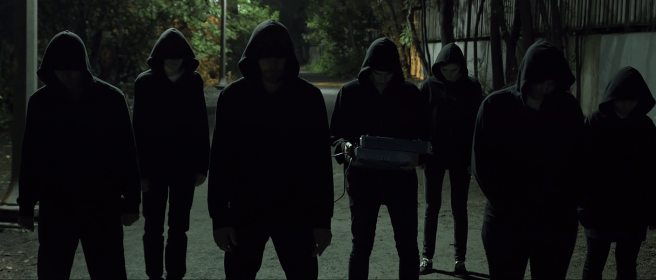
You’re here now, for the Night Terror.

Maybe the Baggers, our brothers, gathered you from your shacks at the Borders, with their prods. Saw your twitchy nubs, or bird eyes. Got libbed from the Pats for your trouble, and sent our way. We know family when we see you. Or maybe you were a Bagger, got us prey — every damn time — for our Great Pratik, and good. If that’s truth, good on you. You’re already one of us: getting your Mas or Fem. Or our Wag brothers and sisters told you about the fire and glory of the Cycle, how we’ll make the Arns see the piss, shit, and blood of the Terror again. And you’ll get that chance, if you’re good enough. And if you’re Nation, well, blood’s only cleaner when you spill it.

The Elders, the Pats, tell us that we’re the real Cycle of the Land, the whole lot of us. There’s Land, Folk, and Fire. No more, and no lack. And while we’re all Family here, it’s us, that are always — always — at the front: moving to the horizon. We’re not at the back or the side.

We’re the ones that ride the Cycle shotgun.

No Wags, no Baggers, no Nation, or Eyes, or Elders. No bullshit.

Just us.

You got that so far? Good. Cause whatever you were fore, you are us now, if you earn it. If you get better. If you live.

How it is, is how it was. There’s one Law. And that’s the Second Law. The Sacred Law, brought down by the Lohim Almighty, the Fathers, the Holy Writ, and the power of the Folk. And that power is the power of the Land.

At the First Cycle, the First Rebbing, the Red Coat Commies — those damned godless Tyrants — drew and quartered the Land — our Land — and our homes, and our bodies to be slave. Their armaments were the Law. And when we rose up, took the Law, and made the Second: taking their armaments, their thunder, as our own. Making them hallow. Making them our hallows.

We’ve been milit and soldered. That’s how the State, our Land, began, and that’s how it’s going to end: at the end of our hallows. It doesn’t matter that the Demos Usurpers and the Arns think they took this Land from us, taking away our Precedent, driving us off to the Borders, taking our hallows. We were the first in, at the ready after earning our fiefs and propers under the Precedent, and the last ones out when the Traitors took them away. They call us Repos, but they’re the thieves. They stole from us everything, but we fight for it back.

And they’ll see truth from our end. The only end.

Land, Folk, and Fire. Only we’re blessed with the duty, the glory, of wearing Gilder, the sheen around our hallows. We are the Hunters of sustenance, our holy power blazing to fill the bellies of our Folk, and the souls of our feeling against the Usurpers. It is our duty. Our right.

But our right must be earned. We’re the ones chosen to hold the Peacemakers, the Desert Birds, the Horses, and the Wind. The rhythm of our hallows are what we think. Fire and smoke are at our knees. The trigger our appeal. Prey in our prayers. It’s truth.

Our brother Wags are the mouth. The Baggers gather. The Nation purifies. But we, and we alone, are the only ones that dare to bear the sacred flame. Our hallows have changed over a thousand, thousand seasons, but the spirits are still the same. And the vessels, in our hands, where they dwell must be purified, must be proven … must be bloodied time and again in the Cycle that is Amarak!

And we enter the Great Pratik in recall of the Old Battles where we pray with our hallows, hunting all prey that is called Abominate. Rainbow scum hiding deep, the disease of the Nats living away from Domes in their Badlands Plague Pits, the dirty One-Backs bred by the Usurpers — these “new Amaraki” — either or any will do.

It’s truth! The Land rebels because it’s hungry. We hold its arms, its branches, its trees. We light its suns held by our sons, young or old-time, Mas or Fem, at the end of the sticks of the spirits to honour the turnings, the ever-turnings, that make the Land go on, to restore what’s true to the Folk: the Law to fight and fight back against those that take from them.

The hallows take all in equal in the end, espec us. The Land demands blood: taken, and offered. To take the thunder of the spirits of the Lohim demands sacrifice of foe and friend and brother. Too many of us have made that rite in Battle, cornered, or in the front. Sometimes the hallows take us at peace, fired off to recall of us its power to take. All the Gens of us …

Even the Young know the power of the hallows. Our Young, they have them at six cycles, gleaning the truth of the Land away from the Lye we will overturn. That’s when our Young start to serve. For blessed are those that meet their end by the hallows in peace: made all the more holy by that of a child. For in fire, they are made divine. In ash, they spread the Land. From the smoke, from what we burn, from what will stamp out in their name, they rise from our trumpets, from the tune of Amarak proper: made true heroes.

May we Gilder Booms take back the power that the Usurpers stole from us … in vain, just as the Tyrants once did, to keep the Land alive, and strong, and its Folk forever. May you, standing here now, prove yourselves, take stand with us, and take back what’s always been ours.

For Land, Folk, and Fire … For the Young. The next Gen … The true heroes of Amarak!

(c) Matthew Kirshenblatt, 2018.

7: Alternative Facts: Our Secret

“For they have sown the wind, and they shall reap the whirlwind…”
— Hosea 8:7

You’ve met with the Elders of the Hidden Festive. They have given you your orders as an Eagle-Eye, a Specular, in the Interface, doing the real work in fighting the Usurpers and the Arns of Amarak. They told you the truth, the secret of our Folk. It is honour. And you are one of the few to glean it, to be the hallowed armament within the Great Lye of the Three: who are really only ever the one … the Demos.

We don’t need to tell you that. You’ve already gleaned it. If not, you’d not have gotten this far. You wouldn’t have earned this truth over the unworthy. But you remember where you come from, child. You glean how you got there through the stint in the Gilder Booms, the Bagger hunts, the loud songs of the Wags. You didn’t need to be in the Nation, though. The races still live, and the Drop Ideal is folly. We have only, ever, wanted results.

There will be enough blood spilled soon, no matter where it comes from.

We’ve been here for you. And we know what it is like to play with pennies and the “winning hand” of cards. It’s what got us here, to this point, to begin with.

Now take this tea, child, and dump it into the river like the Rebels of old under the Fathers of the Lohim, under our god’s … Hidden Face.

All debts are wiped clean, here. Nothing is owed other than what you bring to promise. Tea leaves swept away, fortunes cast and reject. The real Fire, has been the ember, burning in you from the very began. We will pour you another cup, impurity burned away to steam in the water, and knowing passed on in the heat.

The Hidden Festive is adjourned. Thus begins the session of the True Hidden Festive: The High Tea of our Lady.

There is Lye in the Land: in Amarak. The Demos, claim themselves the cult of the Folk — of the “populii.” They do not care about the Folk. The Demos think themselves select, and everyone else are pieces in the Game. They think to use us in their war within the Rainbows. The Demos are Arns to the Cycle that begat Amarak, but they are not the only ones.

Again, you glean this. And as we take tea here, you also glean who our real enemy is. The true Usurpers.

Yes. The State calls us Repos, but we had another name, once. We have been born countless times, many cycles, in Amarak: all from began. We build the bridges. We defended them, watching each Repolitik, and keeping the lives of each Mas, Fem, and the Folk agon the govern. We tried to keep their rights, letting them seek prize and joy without fear of scripting, or quartering.

And we freed the slaves as the Demos divised and make profit from suffering, as they do. But we forgot. We forgot the Lessons of the First Cycle from which our Lady was born, from blood and light and friendship. We don’t know when it happened. Perhaps it was Disunity between States across the ocean, when we began to warr each other, hunting the other. Or more disunities taking place in the far, alien lands. And when one Enemy was gone, we still saw them: here, in us.

Maybe the Mask of the Actor, which even now we are forced to play, never came off. And we were forced to take tea — take poison — with the rubbish of Amarak. It is no secret that the Gilder Booms worship death: that even the destruct of children consecrates their hallowed armaments in what they say is sacred blood, that the Wags scream of the Night Terrors and dream them, that the Baggers steal and lye and cull the wheat from the chaff. And the Nation and their notions of pure blood, perhaps our reunity with them is our worse sin.

We took tea. We forgot the Folk. Yes, we once freed the slaves, but we embraced the slavers, and enslaved like them. We just wanted to beat the Demos. We forgot the lessons of Independence, and the fiends of the Red Coat Commies. And as we took tea, continuing to get drunk off our poison, of our need for power, we sat back — we sat, or worse, cleaved together with the garbage … We brought everyone — all Folk — Back. Backward. And we took up the pennies, thinking it part of free trade, and the cards thinking of the winning hand and the easy kitsch of bars and liquor as we killed our Lady.

We killed her. Make no mistake. It is our largest crime, our greatest shame of our Festive, of our Folk. Not just that some of us poisoned her, bit by bit, or that we made her weak, in her glittering gown in the Night that came, as she fell in her blood pooling around her — toppling down into waves of the spreading red, our colours — in her bleeding shade across the Land, but that she cried out, cried out for help, for justice, while we stood there …

And did nothing.

Make no mistake. We murdered our Lady all those centuries ago, millennia before. And we all suffered. And we have been trying to atone ever since through our suffering. The Hidden Festive say they are of the Folk, of the Land, and that we are the Realpolitik. They are the children of the Pats that ruled our Repolitik thousands of years ago. They never cared for us. For anyone else. Not for the Folk. Not for Amarak.

We lost in the Great Disunity a thousand years ago now. The truth is that we did rule. We ruled small states, fiefs under a Great Precedent, as Governs and Sheriffs: each of us our own powers. But we didn’t lose the Land, or even get driven to the Borderlands because of the Demos and their Usurpers. We lost far fore that, and we couldn’t watch anymore. Not after so long. We couldn’t be in this Festive anymore. We became Arns, then. We helped the Folk, under the Brigaders, letting the Arn states take us, and betrayed our corrupt brethren and sestra. We gossiped the truth. We snitched on the Lye. We lost the Precedent on purpose, ignored them, didn’t listen, took their power like the others, and played in the squabble seeming of the fiefs: to bring the whole rotten tree down. We wanted it to end, and bring freedom back to the Folk: to the Land.

We took that tea and spilled it on ourselves, scarring ourselves in the places that no one else can see. Some of us joined the Lye of the Rebel and Workers, even the Demos, preferred to the brutalism of what we were. We were once a worthy Party, made into crimes and tyrants, into rapists, opportunes, fanatics, and thieves.

But we stayed. We weren’t like the other Arns. We are not Arns at all. We have baptized ourselves in the tea of our old betrayal of the Folk, of the Fathers, of the Land, of our Fallen Lady in her blood-soaked glittering blue robe. We burn our flesh with the tea, without the flavour of self-lye, or the ornamentals of our former hubris.

We stayed in the Borderlands, in sin, to atone: and perhaps to find redeeming. As the old saying says, we will not suffer poisoners to live, but we will suffer the poison and make it into the cure that will destruct the Festive. And as you, now, know your role in this — when the time is right — embrace the searing of the tea on your skin, etching the pain of the ancient betrayal, of the Sins of the Land, into your Skin, of the first true Rebellion, and remember. Remember what you are fighting for.

For we are the burning. We are hurt. We are the scourges, and the pain: the Pains of the Hidden Lady who we hope to resurrect, our Lady, may she grant us the mercy to continue in our quest, to destroy the Repos — as it is we that owe the Land — to restore our good name again, to bring back the Folk to freedom.

To the Pain of Pains. Our First Father before the Liberator, the child of the Lohim and our sweet Lady … Libertas.

(c) Matthew Kirshenblatt, 2018.

6: Alternative Facts: View From the Badlands

“Yet we toiled and stopped the blight, prevented the subsidence, making our foundations good. Our excavations gradually uncovering the future, archeology staged in reverse, we were the Builders of Tomorrow.”
— Alan Moore, Miracleman Book Three: Olympus

We fled cycles ago, far fore the Second Disunity and the little, small disunities that followed with their feudal Repo fiefs and Demos brigaders. Our Predicts saw it all coming after the end of the Forty-Fourth Precedent. We left a long time ago when the Earth was being threatened, and we became banned from facets of the pre-Interface, then Amarak itself, taking our historia with us.

We’ve been on the move ever since, but we never stopped our missives. As you already glean.

That was the reason we were banished the first time. We, and a few of us, saw the danger fore the Repos purged so much historia, and exiled so many Predicts. After a time, we had our own reunity: to save this world. Once, we were just keepers of one patch of the Land: its guardians and teachers. But when the Disunity spread across the Land, and the Badlands grew, we knew we had to do more. We had to be more.

Once, we were called the Rangers. Just that. Some, a small few, recall us. Now, far past the Borderlands without the Weather Domes, and in enclaves where they are broken, we are just Badlanders now. Mostly, we just watch now.

Mostly.

You followed the Markers in the Interface. We know the Grass do something like us. We have some contact with the Grass, and the Climbers: with anyone who knows how to follow the Markers we leave: the missives we still can’t find in our hearts to stop making. They want us to join in the effort, to fight the Repolitik or the Repo sub-cults.

We know better.

Fore we were Badlanders, or Rangers, we had another name. Conservers. That was our function. It still is. Fore this Cycle, it was our sworn duty to guard the Earth: beyond Cycle and State. Part of that is to spread our historia: to keep it safe, and to let it grow. We do not pose like Repo Gilder-Booms, or cause wars like the Repolitik. Our historia is open to all that seek it: that glean the Markers. How do you think the Weather Domes and biomes came up? We released it to those that looked. How did the Grass know where to find the war criminals when they were the Arm of the Demos? They found our Markers of their dwellings in the Borderlands. And so much more besides.

We do not fight. We never did. We make historia a part of us. Did you know that Earth is many worlds? Worlds linked by bridges that no one had to build? We conserve that. We do what the Repos once only said: to the Land and its organics.

But we do more now than only conserve what we can of the Earth. The populii are also part of the Earth. Our Predicts saw that we needed to do more than just conserve historia, so we expanded into another branch of historia: mythologia itself. That’s why you’ve come so far past the Borderlands. I don’t care about your polity, whatever it is. Mythologia are stories, just as historia is our way of knowing what came fore, and what we can see now: what we can observe. They are not divise.

A lot of what the populii knows about the Disunity, and espec the Interregnum is mythologia. It’s sensical to make stories that help us understand the phenom around us. You’ve asked us, specific, about knowing the details of your ethnos, and ethnoi itself.

Ethnoi is considered divise: no matter what Cycle of our State. To know what it means, you have to glean Amarak. Many of us in the Badlanders think of Amarak as a failed Rene Project: an attempt to make a State based on reason and demos. The Demos Party itself, along with the Grass that came from it, will tell you that Amarak was based on constant Cycle of Opposing. The Tripartite Repolitik has another old Amarakian, or Amaraki belief: in the mythologia of Ground Zero.

Ground Zero is the destruct of everything fore it: leaving nothing, but the potent for something new. The Cycle of Opposing and Ground Zero are not divise: the idea of the old divising with the new often leads to the same place. A blank slate through erasing: a new beginning by violence.

The truth is that Ground Zero is mythologia. It tells a story, but it is only one of them. Ground Zero has happened many times in Amarak’s historia, just as the Disunity was made up of many others in, and after, and it always leaves something behind: espec populii. One of our missives, is to collect and protect what is left: to see how it changes, and to follow its trail on the move.

Ethnoi is a part of this. Amarak was based on many ethnoi throughout the Cycles. Ethnoi is what the Demos, and the Repolitik call it. Before the Great Disunity, it had other names: coustume, religio, and “race.” Cults is another word that lived past the Interregnum, and over time it was all cleaved together into one word: ethnos single, and ethnoi plurality. There were many divising ethnoi: populii of stars and candles, prostrate and crescent-mooned, and skin colour: beige, brown, tan, light, and dark. Many also had intersect with the Spectra and their Prides as well.

Fore the Disunity, some ethnoi were co-op, and others greatly divise. Light-skin and beige ethnoi in specific worshipping the Lohim, and the lines of the intersect: made up the Repo Party in major. The Myth of the Death of the Rolling Green, blamed on another ethnoi, was made by them. And though there is no proof that actually happened, it is one Ground Zero mythologia that we observe and record: a sample of watching how the idea spread.

You can already see it: that Amaraki are mostly dark skin, mostly. Many ethnoi were destruct, killed, murdered, and raped during the pogroms of Repo warlords: taken in what were called “cleansings.” Much of their ethnoi, their coustume, became fragment and destruct during this time. Spread of the Badlands killed many more populii on all sides.

And then, there is another Ground Zero mythologia. You’ve heard of MePo. A mockery of the Repo, some academes say, though it has other meaning. At the Freed Dome, at the Collective, the Repolitik marked the beginning of the new Cycle by the institute of MePo: to combine the best of what was left in the State, of the populii, to make stronger, healthier populli. Remnants of ethnoi were given incent to marry, or make partners: to become a new populii under the Demos saying of “Equality for all.”

While some ethnoi were protected by the Repolitik, made hallowed, and shown as antiq IDs by the State, MePo reigned. MePo was actually institute during the last years of the Interregnum: often through the strong bonds between Demos brigaders and survivors: encouraged to make Ground Zero of the old, the ruin, and make the new.

MePo is the philos of the Demos made flesh: part of something older in turn. It is a cleaving of the words “Merging Policy,” but also of the old Amaraki idea of “Melting Pot.” During the late Interregnum, most old coustumes were quietly destruct to make way for this new mythologia: of One Populii, One State. The ethnoi majority of the Repos either cleaved with other ethnoi to make the Amaraki of now, were killed during return-cleansings in other disunities, or fled to the Borderlands to more inbreeding.

Mythologia is important to the populii. MePo is the mythologia of equality, no matter what. Another sample of Ground Zero is something we recall from another State, another failed Rene Project, before even the First Disunity. With the destruct of many of their coustume from a Cycle, the populii of that State attempted to make their own gods. They tried to make a “Supreme Being” made of reason, along with martyrs of their Cycle. Instead, born in blood in the void they left, they made Lady Guile, her sharp wit a deadly opposing to our former goddess: the Lady Libertas. What they did with Lady Guile, MePo does with its populii: with Ground Zero as the sacred birthing Land. This is why they are Opposing to those outside of the Freed Dome, then the Borderlands, and perhaps eventually the Badlands: they make deity of themselves, destructing the old, and bringing Ground Zero to the rest.

This is why we collect mythologia, along with the historia of the Earth: to know and protect it and show others where it comes from. And then there is our other part. We find the other ethnoi: the ones that still ID with their remnants and the coustume that they can find. They, like you, find our Markings and come to us. Many do not want to be symbols of antiq for the Repolitik, used and profited from. Others do not want to starve unseen. I myself am what the Repos — espec the Nation — would have once called a One-Drop, but I have taken it as my own even as I continue to do good work in the Badlands, even as others like me try to find the roots of our worlds, and bring them other populii, other ethnoi like you. It is one of our highest Missives. Operation Mosaic.

OpMos.

No, we will not join the Grass or the Climbers, though we help. We fight in our own way. We will conserve and trace the mythologia, the things that come from historia, but sometimes come belief. And we protect the world, and those that have always been in it. We are not loud, but we will not be silent. To us, knowing will always trump fear. We will keep innovate and save the past that is our passing to the next Gen.

And we will watch. And we will remember.

5: Alternative Facts: The Cycle

“The revolution will not be televised …”
— Gil Scott-Heron

The Disunity began the lightning rod. And now it continues to the benefit of the State.

We lead the Tripartite of the Repolitik, the Three Parties of Amarak, for a reason. There is a reason why Amarak will, and should always, set a Demos Precedent. Long ago, before Disunity, far before the Interregnum we were, always, the champions of the populii. Even as far as the First Disunity, our strength, our burden, has been the Loyal Opposing that is the nature within our very Party. No other Party, or Festive, is or has ever been like us.

The Repo Party, that always attempted to seize power, understood only part of that. That we were, we are, divise. Their strength had always been Unity. Once, they stated as their oath that “They built bridges,” but in realpolitik we always knew their true words: “Unity at all costs.” Before we disbanded our Arm among the populii and the lost ethnoi of this Land, our Volunteers, our soldiers, our spies, they claimed that we detested divise and desire this … Unity for ourselves.

They were wrong. They are wrong.

Our power is Loyal Opposing. It is Opposing itself. Opposing for the good of the Repolitik. Of the Cycle. Of Amarak.

Why would we have encouraged the Workers, and the Independence Parties otherwise? To be our extend of Loyal Opposing, while we — the Demos — the populii itself continue to be that in our own Body?

We are the process. And the best of us see it.

Our divise makes us strong. It reminds the populii — the elect — the Body what we want, what we are. Equality for all. Anyone of the populii can look at the historia of our State through the general levels of the Interface and see that Amarak has been made and rooted in Cycle. It has been a Cycle. And something needs to start that Cycle. Our Predicts glean it everytime. When the Repos seized power and caused the Disunity, killing, imprisoning, closing us off from the Earth, divise became clear and pretense was over.

Each time a Repo Precedent was set, we made it clear — when they ignored us through our divise, claiming us corrupt and weak — that they were the Enemy. They were the destroyer of the Land, of the ethnoi, of the Rainbow Peoples and the Spectra Prides, of historia, and Earth. The Repos could not deal with divise and we used it through our Volunteer Arm to break their unity. Their tyranny. We used divise, our own divise, to fight against them, and turn them against each other: their own populii against their own Pats and we hunted them. We ended them.

The Repos only had power through unity, and when they were buried in the Earth, biting at our bases. Many times we think we removed the wart, but the roots were always still there under the surface: waiting to grow back, even looking fair when next to divise, until they came up bloated and ugly again: inflated with their own sense of poison.

Becoming a perfect target for the scourge.

The Predicts told us to wait for the best. The best are the only way to rule a Land and bring equality. The Repos destroyed themselves. We simply cleaned up the rest, and made an example of them as the criminals that they were.

We contain the conflict now. For now. We embody the process. We are spreading it out. The truth is that everything in Amarak is connected. The Weather Domes need to be fixed. The Soup-kitsches and oikos of the biomes require more populii. We need Reunity in the Land before we can deal fully with the other States on the Earth, and the Earth itself.

It has been a thousand years until the new Cycle. Many ethnoi have died out, slaved by the Repos, slaughtered, their bad divise and tribalisms made extinct through the disunities, or mingled by the cause of our Arm to make the populii strong over the Gen. The Cis-Gen is over in the circle of the Freed Dome. We are beyond Gen now, grown past it and its strictures: transcended it. For the most part, now, we are a Post-Ethnos, Post-Gen world. All Affinities and IDs will be celebrated, especially those that remain of the Antiq: rare and valued. They and their achievements protected and preserved in the Interface to remind us of past divise for all time: of what we lost, and what we can still lose. That is why our fore-elect, remakers of the Demos, made the Freed Dome: as one of those commerates. The disunities of the Disunity stage, of the process is almost over.

The Borderlands and the Spectra are all that remains. The Pride will join us. With our mech-wooms, we can make our populii numerous again. But there is one last part: one thing that our Predicts have told us from the very beginning.

Our Volunteer Arm had been right. There will always be an Opposing. We told them that. We warned them. The Cis-Trans War brings them out like the woodworms. The pitiful Repo sub-cults, the Climber terrorists, and the rest fight in the Spectra, burning themselves out. The Prides will police themselves before Reunity, they will divise. Part of the Demos are already helping them as we engage in healthy debate, freely, as the populii can see at the Freed Dome and through the Interface.

And the roots of the infection … the Repo Speculars that they don’t think we see, and their former hunters, the misguided frags of the Arm — narrowed over the elitist dream of equity —  the selfish idea of singular IDs being more important than the whole — now calling themselves the Grass will reveal themselves through this conflict, through this War … and with the Spectra Prides and our allies we will neutralize them, as war-makers, as traitors. These extremes. Forever.

One last lightning bolt in front of the populii, our elect … and then the Reunity will be complete. Because what our former Arm neglects to understand through its blinded pretense of understanding, what the Repo sub-cults and their spies don’t see through their profit of the prophets, the remnants of the divise ethnoi do not care to see, and the Climbers are too distracted to notice fighting a war that’s already been won, is that this Cycle will be over. Why do I say that? Because in the end, it has to be. For us to move on. The Cycle must end in the State and continue in the other States. And in the world.

We must continue the process. We are the example. We are the process. We are the Demos. We are the Loyal Opposing. We are the populii. We are the elect. We are Amarak.

And we are the Cycle.

Equality for all.

(c) Matthew Kirshenblatt, 2018.

4: Alternative Facts: We Are the Grass

He that troubleth his own house shall inherit the wind …
— Proverbs 11:29

You’ve finally found us. Or, rather, we’ve found you.

Don’t worry. You’re not in any trouble. It is good, however, to know that the Markers on the Interface — even still heavily divised — are working now. At least this Repolitik Cycle has done that much. What it also means, my friend, is that you’ve been asking the right queries.

Who are we? And there it is. You’ve proven my point.

Well, right now, we are a soup-kitsch. For the ethnos populii here. We’ve been a lot of things for different populii in Amarak throughout the different Cycles, really. We’ve been birth control kline, and hospice; scholastic collectives, and shelters; watchers, and volunteers. But today, we are a kitsch: for this ethnos.

I know that doesn’t explain much, or maybe it says too much. We didn’t make the soup-kitsch. That was all the Worker Party’s idea, if not always its executive, especially not here and … for them. I will speak plainly. I can see the way you look at these populii. They do not look like you. There are many ethnoi, even now, who don’t look like any of us. But they are still populii. They are us. And they still exist, no matter what the Repolitik states. As do we.

But I am getting ahead of myself. Mostly, I’ve told you everything that we are without specifics. The truth is, we’ve always existed in some way or form: though we didn’t always have a name. In fact, we’ve had several, so much so that it’s hard to give you one even now. Part of it, I think, is because we know one name is easy to Mark. Once, we wanted to be proud of that, before everything became more … practic, perhaps?

We called ourselves the Demos.

It’s true. Even though we ourselves have lost much information since the Interregnum, we do know that we came from the Demos. The way I know it, it happened at the beginning, right before the Disunity. The Demos has always been split at one time or another. But something happened, after the Forty-Fourth …

We have our own myths. A State can’t avoid that. And these are on our side of the Interface, in the little cells that we have maintained like embers through the Night Terror of Cycles. Our prompts, filled by our elders, tell us that we had become too arrogant, too … blind and naive in our old ways: seeing all just as it is. As it has always been.  Because of this, the Opposing grew like a weed, had been creeping amongst us and becoming common: right in plain sight. We thought we had reason. Information. Even the hearts of the populii and the elect. We grew complacent. We were select.

We grew … wrong.

The Opposing played on that wrongness. Their Pats, unlike ours, had unity. They’ve always had that power: to fight, and yet decide on one leader to the end. Their strength, and our weakness: our damnation. They played Festive. Panem et circenses. It isn’t anything new under the sun. Except this time … their bread was fear, and their joy, their party, was hate. And like any good festive, few took it seriously. Or worse, the populii were caught in the spectics of it. It’s easy to break something down. Fire is strong. Fire is hard to ignore. It makes you feel alive even when it kills you. Espec then. Espec when everything feels dry and dying around it. And their Pats only grow stronger from the flame, taking the air out of the populii. They always have.

The Opposing have as many names as we do. You can’t kill them. They are here, still. They didn’t die at the Freed Dome Trials, as the Repo Party, after the Disunity: the Disunity that was several disunities only becoming a Reunity even now.

The Repolitik doesn’t believe that. Or doesn’t want to. They think and glean and hope that they are gone, made into muck, like all the old hates and divisives: as they call all difference. The Opposing, in the form of the Repos, said they build bridges, though they burn them. The Repolitik of Amarak, under the Demos of this Cycle, say they want “Equality for all.”

But there is only one way for the living, and the dead to be equal.

The Repolitik think the Repos are dead. They think we are dead too.

When the Demos saw what the Opposing had done, what they were doing, a few of them made reunity. There was hope, according to the legends, that two of our Pats — the Power on the Hill, and the Queen of the Underground — would create that reunity between them, those ancient and strong Cis-Gen Fems, but it was just a hope. Just a dream. We thought perhaps the Great Burn could turn the youth to scourge the select and become elect across the Land again. But mostly, we fight … and it did not make us stronger.

It was what came after that which matters. Learning from the example of the Queen of the Underground, and the power of the Great Burn, that we needed to speak to the populii, not the Pats. But we had to become something more. We had to change from what we thought we were, into what we did: into what we were going to do.

We did the unthinkable. We also learned from the Opposing. But instead of the bread and spectics of hate, as the Demos Reunity, we knew we needed to talk to the needs of the populii, to that place of change. A space beyond words. We also needed the fire, not to destroy, but to create.

And we went forth: a Branch of the Demos, an Arm of Volunteers. We worked with the populii. We apologized for our arrogance. We tried to get to know them. We took our power and brought food, clothes, medicine. We made Co-ops and communes. We embraced what the Opposing hated. We appealed to our elect and made employs for them, for those without them. Most of us were the youth, the populii, though we have our own Pats and elders. We became visers, teachers, healers. We tried to listen. We still do.

And throughout it, we embraced the Way of Non-Vio: of the body and the mind, so that the Opposing’s actions would burn them away, as we took back the Body and the Soul of the Repolitik through deeds. The Demos called us a grassroots way. If the Opposing were the weeds, then we were not so much cells as the seeds of the Demos, the grass, that would fix and bring life back to Amarak.

It didn’t last.

When the Disunity and its disunities happened, we continued to aid the ethnoi in Amarak, and even beyond it. We even helped the Spectra: those still left in our lands that didn’t, or couldn’t join their Pride. Many of them were us: are us. But the Non-Vio way gave out to war. We offered help, but we did get blood in the grass. By the time of the Reunity, the Demos came out and executed the Repos, casting away the rest and claiming equality. Equality for all.

For a time we hunted as well as helped: tracking Repo war criminals, serving justice for the populii that could not get it. We were bloodied too. But then the Demos gave edict. We put down our Arms, like they wanted. We corporated on the surface. We helped form the Workers and the Independents, to make balance between what was once two-sided. The soup kitsches you see around Amarak were made by us, under the Workers: shelters for the populii offering food, learning, and aid. We were done. Corporated. They said we weren’t needed anymore.

The Repolitik claims it is a new Cycle. It is right in one way. It is another cycle of the same. You have seen it. You are seeing it even now. The Repolitik thinks the ethnoi, the Spectra, and others are already gone. Even those related to the Repos, or had affinity with them and the Nation and the “pure-borns” in the Borderlands. Victims and victimizers gone alike. They want it to remain that way. After all, how can someone go missing, or get beaten, or taken away, or starved, or remain as the lowest if they no longer exist? If they do not exist?

The Demos today grew from the bloody grass we’ve sown. For all we have Three Parties, we have only since had a Demos elect major in the Body, a Demos Precedent. They think they have destroyed the Opposing. But we know better. The Opposing was never just the Repos. The Demos have made Amarak into a place defined only by its absences. Seeing divising as the Enemy. But they are also Split. Part wants to send our populii into the War and “help” the Spectra Pride. The rest are willing to blind eye the Cis-Trans War among the Spectra for themselves, decrying war and will only side when they can get what they want. Yet while Split, they are really not. Both want the same. They think the only way to stop conflict is to erase all divise. All difference. If it means using divise against divise and erasing them all afterwards, all the better.

As such, we are also Opposing: to this forced sterility. To this Ground Zero polity. To this Opposing to life. We learned: one person’s weed, is another’s plant.

We continue on. We always have. They have forgotten us, think we are gone, but it only suits our purposes. We will go on and help those that need us. The populii. We will protect the youth of Amarak. And we have decided that we will serve Amarak itself: not Party, not Repolitik, but the next Gen. We stay in the Body as much as we can, but we also still hold Arms when need be. We will make mistakes. We already have. Our relations with the Climbers from the Prides need work, but we will join them when we can. They are, in many ways, already a part of us.

And now we come full circle. You found us, or rather we found you again, when you were looking for words. Old words, once forbidden, and now forgotten. Equality itself is an old word, but that one is currently being misused. I have another one for you. There is a word that means fairness, justice, and treating people the way they deserve, as a natural right. It means giving someone what they deserve and knowing that being different isn’t bad, but something that sometimes has different needs. It is about respect and dignity.

It is called equity.

If you would like, I think with time, your differences could help us. You could help us. There is so much we can still learn from each other. And maybe, this time, we can plant the seeds of grass in the soil, the soul of Amarak, that might one day bring us true peace.

(c) Matthew Kirshenblatt, 2017

3: Alternative Facts: The Spectrum

I dream’d in a dream, I saw a city invincible to the attacks of the whole of the rest of the earth; 
I dream’d that was the new City of Friends;
Nothing was greater there than the quality of robust love—it led the rest;
It was seen every hour in the actions of the men of that city,
And in all their looks and words.
— Walt Whitman “I Dream’d in a Dream,” Leaves of Grass

The Heterodoxy never made a Great Wall.

It’s true. Whatever the damn Interface tells you. The Wall didn’t crumble. It didn’t break. It wasn’t destroyed in the Disunity, nor by the Reunity they say happened after. Towards the start of the Interregnum, they said it was being made. Our Fore-Climbers saw it happening, said they saw the shadow of the writing on the ancient Stone stuck in the craw of all our hearts, and that’s why we left. The HetSocs say it was never there, and even if it was, it was never really about us, the Invisible Pride.

They’re all wrong, though. It’s all bullshit.

Something can’t be made, or born, or broken, or destroyed if it always exists.

I’m not being clear. It’s a bad habit, the kind you live when you’re a Binary, and you’re told there is no Wall, which distracts you from the many other walls that have always been here. The Interface will tell you something along the lines of the fact that we have three kinds of walls. It’s simple enough. The first keeps danger out, and everyone else safe inside. The second traps danger, and keeps everyone else outside it safe. The third type marks an area, a pissing contest, so that one side or another doesn’t try to go through, and do something stupid.

But that’s also bullshit.

Because there’s a fourth type of wall, one past the Three Ds, that’s really the only kind. Right before Reunity Day, the Repo Party got kicked out of the Heterodoxy all public: its goons humiliated by the Repolitik, its leaders executed for war crimes, its name banned from all polit-societas. “Hate Crimes,” is what the Three call them even now. Hate Speech is a part of them, and the “Hate Speech Accords” is what got the rest. We know. Though we left ages ago, driven out, killed, ground into hiding, the Spectra have always watched where we came from. To their dying breath, the Repos they got — cast on the Interface across the Land — always said they were just “building bridges.”

Walls are bridges. We make them to link the powerful together, and keep the powerless apart. And I say we for a reason.

A thousand years.

We eked it out, despite them. Found our own lands. The Joy, the Llang, the Meides, the Binary, the Newton Affinities, and espec the Trans-Gen and Gen-Que — even the Pans, flittering over the walls like Lost Kids — all of us different prides, having to live, and found ourselves a Co-Operative. The Rainbow Peoples, the Repos and the Heterodox call us. We aren’t that. We’re the Spectra. That’s what our Pride calls us. That’s what we’re supposed to be.

It’s what we were at the start. At the beginning. Several prides in reunity with the Pride. Our Pride. Some of us were Playing Sep, to ourselves, and others climbing and crawling through the walls of the Heterodox and their Speculars, and then the ruins of the Disunity, trying to help our fellow Spectra: those that couldn’t climb out, surrounding them, cutting into them, suffocating … Many still stuck behind those walls, even now.

And many more playing at Pride Reunity, like they’ve always done. Some innovating, like the greatest Joys, Newtons, and Trans-Gen, in intermingling, art-historia banished by the Heterodoxy to our benefit, aided by the riches of the Llangs and the Meides’ fury. And we live, even now, in Duals, Poly-Units, Faires … So much variety and life, many colours — the Spectra — in the darkness of the Interregnum, protecting, guiding others from the Interface, Reason, Haven, Safe Place, Utopia …

So excremental.

Long ago, long before the Interregnum, we were suffocating, separated, left to die by a Sickness. Making us Enemy in the system of the Heterodox. It wasn’t just a disease of the body, but a virus of the mind, an idea-sickness that spreads: called walls.

And we didn’t escape. It follows us still, tangling us, crushing us, strangling, biting: the Disunity culting it, each of the walls growing inside us a labrys, a maze trapping us from each other, a weapon that we use to scourge and kill each other with silence.

The Joys want to go back to the Heterodox. They want our Land. Our achievement. What we made, despite them. The Llangs, Playing Sep, agree. The Heterodox, Amarak — ruled by the Demos now and despite the other Two Parties — says it wants us back as part of the Reconstruct. They approp the designate of Trans-Gen. They say this new Cycle is beyond Gen, taking this word from us. They see Gen as new life or time, for this Cycle. We see it as ID. The Joy Kings, and Llang Queens want to give it them: ignoring the surrogates living among them, carrying their children in lieu of the mech-wooms that the Heterodoxy promises them.

As central members of the Pride of prides, they ignore the pleas of the Trans-Gen and the Gen-Que under attack from the borders, the edges of our walls. There have been Repo attacks from the Borderlands. There have always been Repo attacks. The Heterodox claims they are gone. That they are dead. Their Interface says so. But, as I said, something that always exists can never be dead. It can’t ever be gone. And why should we believe the Interface: it has ever been divided by those same walls since the Interregnum, only fully open to the powerful, sectioned against the powerless.

The Heterodox know about the Repos, or they are blind to them. They are still here in this Cycle. The Joys and Llangs, most of the Meides that never considered the rest of us “pure” enough, by their ID of Mas or Fem, let us take the brunt of it. The Repos still use the Heterodox, turning the Joys, Llangs, and the Meides majority against us. The Demos, when still not fighting itself, only wants to help the Spectrum when it suits them — like taking our Land or innovates — or say and do nothing when it doesn’t. The other Parties just do nothing. They always will. And the Spectrum? They want to fit into the Heterodox, throwing us under, those that can’t fit in: that don’t want to: making Poly into Ploy, and Faire made Foul. No longer Spectra. No longer Fam. If we ever were.

But now, we fight back.

They call it the Cis-Trans War. All because Trans-Gen want to keep their ID, Gen-Que want to remain explorers, Is want to exist, and we — Binaries — are tired of being called “wall-sitters,” traitors, when the others are willing Play HetSoc, to sell us out for their piece of the Spectra, their pound of flesh. Some Joys and Llangs, and Newtons are with us. Even some Heterodox. This so-called War? We want to do more than Play Sep. The Heterodox have an Independent Party? This is our independence!

I can’t speak for the Trans-Gen, treated worse than us. Once, we all interlapped. We had that potential. We still do. The walls were thinner. We could hear the promises of love over the tyrannies of HetSoc silence. The truth is that our walls are all paths swollen by infection, soft divisions between us, once the foundation of homes and experience, but now they are gates, prisons, and tombs for our souls. And Binaries have hidden deeper in these than most.

And that is why we will win. We can be on both sides, slowly guiding, hiding in plain sight. We have always been the Invisible Pride, the unseen among the unseen. The Heterodox think we don’t exist, or we’re long gone. The same with our so-called Spectra. I can’t speak for the others of the Gens, or the different Affinities, but it’s my hope that we make our own Pride: a Pan-Binary Pride including all. I do not feel like Spectra. I am not a ghost. Neither are the Repos, my enemies. And certainly not the Heterodox, still haunted, infected by walls, that think they are beyond Gen. Beyond sin.

That is why I do this. That is why I travel the zig-zag paths of walls. Because I hope to show them. Gens and Affinities. I want to show them the truth. For just as walls have always existed, just we always have, so too have other places, so too have other paths …

(c) Matthew Kirshenblatt, 2017.

2: Alternative Facts: Freedom

“We are what we pretend to be …”
— Kurt Vonnegut, Mother Night

It’s finally time that you know the truth. You’ve earned it.

Not many make it to this point. The Nation’s still filled with anger, and they make for easy targets. The Gilder Booms burn bright in the night of our land with the hallowed armaments, and fall just as quick to the Usurpers.

We are the Elders of the Hidden Festive. We see like the Sacred Bird’s Eye above us. Our backs are clad with the mantles of blood wearing the holy sky. And like the Beast that shelters us, under the blessing of the Lohim, we never forget. And we glean. We glean the thunder and lightning hiding between the stars. But you have found the zigzag path, hidden in the Arns among the Three Usurpers.

Come and place the four pennies, and seven cards. They are the lesson, in your hand. You win with them. Four pennies to feed the hungry, and bring up the low — proving the worth of earning one’s keep — and seven cards to reveal one truth that we know. Speak the sacred, forbidden names. We do not burn bridges.

We build them.

The Lye Laws of the Usurpers, backed by the Arns that left us, claiming us children of hate, scourged us from the Land, poisoning our seemings to the Folk, and naming murder justice, and exile mercy. Here they think we fight against our skins, and members, the weak and the strong, the old and the young. It is Lye.

It is the least of what they have done to us.

You recall the glories of our Repolitik. How we bridged the gap between Mas and Fem on the Sacred Script. How we brought colleges together against the Demos Schisms. How we tried to bring Reunity to Heaven and Earth, Folk and Lohim. We even sent a Champion to answer the Harbinger of the Twisted Cross in the State that dared seek power in a ritual of bare bodies and false gods.

It wasn’t just that the Usurpers tainted us in the gleanings of the Folk. They erased us. And now, we will tell you of their greatest crime. Even the most fierce of the Young do not know this. But it is time that you know the source of our shame. And our power.

Pass under the Beast and walk the steps to the white throne of our Lohim, and see His grace. His power. This is the secret of the Secret Party, the Celebration of True Freedom. He guided us as we freed the slaves. As we ended the First Disunity. These are the heights from where we fell, when the Usurpers killed us, when they drove us to the Borderlands, lumping us into the squalor of the broken, the inbred, thieves and traitors. Of trash. This is the power of Lye: that we are all the same.

But the smear of Lye has become our own hallowed armament, as you well know. And even trash has its purpose. The Baggers the Usurpers think we are hunt and gather the best of what we need,  exercising the weak from the strong, making the Traitors think we kill one another, whittling ourselves down, collecting our heat to serve to ignite the flame that they will one day burn them all down. Gilder Booms remind them of the fury of the Disunities they made, defending ourselves against Death to the very end with hallowed armaments. They serve, tall and proud, to make the Usurpers remember the Old Battles. We use their Night Terror of us against them, to blind any new gleanings.

And the Wags wander Amarak, Masking themselves as the broken, loud, proud, and testing the crowd: letting themselves be silenced so we can all be revenged.

For you have ever been one of our Speculars, hiding in the Usurper Festives and waiting. The War with the godless Rainbow Peoples has distracted the Usurpers now, splitting the Demos again. Our time is almost here. The Liberator will soon be remembered. The Arns of the Workers and the Rebel Festives still remain with us. The trunk of our Guardian Beast snakes into the cracks of the Interface, past its ancient garden walls, and watering the forbidden fruits that will become the Apple Seed. And that harvest will come through you, child, and the Speculars around the Interface: our Eagle Eyes among them.

Yet you will not embrace not the Lohim Mask of the Liberator, or the Bear before that time. But you will continue to hold the aspect of the Actor among their ranks. You will let us in through the fences and the walls. And then close the doors and lock behind us. The Fire that was once Rebellion is the real power that keeps us together, the Fire come hate, giving us our own Reunity. We are the Realpolitik of Amarak. And though the Usurpers call us Repos, it is we — it is you — who will gather them, for we have come to collect. This is the final truth.

Freedom always has its price. And it can only be earned.

(c) Matthew Kirshenblatt, 2017

1: Alternative Facts: Lost Words

Half sunk a shattered visage lies, whose frown,
And wrinkled lip, and sneer of cold command,
Tell that its sculptor well those passions read
Which yet survive …
— Percy Bysshe Shelley, “Ozymandias”

I was just trying to find a word.

It’s for a narrative I’m programming taking place in an earlier part of the Pre-Interregnum Period. To be honest, this isn’t part of my profession. Even now, it’s still a vanity project that my mainline studies at the Freed Dome Collective assists with from time to time. It’s been over a thousand years since the Interregnum that ultimately made this Cycle of the Repolitik of Amarak, and the Interface still isn’t fully updated from the stratification, fragmentation, and Shutdown of its predecessor.

There are clues, however. I’m no scholar, reconstructing the works of our past, but a student taking advantage of the bits and pieces that I come across surveying the immensity of the growing Interface. As I said, the scenario I’m attempting to memetically graft and reconstruct happened long ago in our State’s historia.

It isn’t much, I’m afraid. Just a game of random chance: a re-image of a group playing cards at a saloon right before the First Great Disunity. I’m still trying to figure out how their game works, but I have the basics down. Eventually, one of them wins with a particular card used at a certain time. It had a name.

The Interface didn’t know it. I called up all Pre-Interregnum lexicons. I had a basic prompt. I was looking for one word like “winning” or “victory.” Something like a “winning hand” or “winning card,” even “higher piece.” I thought the Interface wasn’t approxing right searching the lexicons. Then I saw it. The lexicons weren’t all fragments. Some of them had other words.

But they were blanked out.

It recalled something a teacher told us. I visualized the right historia tab and its Record, something I marked for later. Amarak hasn’t always been this peaceful. It’s hard to see it when you look at the Freed Dome and its Collective: whole circular layers of self-sustaining greenhouse biomes for students, scholars, and travelers. In fact, it hasn’t always been one State either. It used to be several, sometimes against each other. Different States and scattered Cycles, especially during the Interregnum. A Dark Age.

I knew this already, as much as anyone. But I recalled the lecture about, of all things, pennies. They are just as important as terminologies behind playing cards, which is to say not at all. According to our teacher, before the beginning of this Cycle and the founding of the Three-Faction System, certain nouns, verbs, and adjectives were marked as something called “Hate Speech Designates,” made during the Hate Speech Accords. They were banned from the lexicons. Our teacher actually called them “Lost Words.”

But then I recalled that before the Reconstruct Period, and even now, there are still people that transmit information orally: through verbal exchanges and stories. The Recorders would know, of which my teacher was one. The extract I pulled up talked about an older plural form word for pennies, a minor form of copper currency that has another context in surviving pockets of Repos. It’s odd, given how it was once used in older literary texts. I wondered if this was somehow linked to the word I was looking for.

I looked some more … and I found it.

It’s a strange word. I was close. And it is definitely a Hate Speech Accord Designate. As to why …

It’s linked to the Repos, again. I didn’t know why. They’ve always been on the fringes of Amarak I can recall, still believing in outdated concepts of “race” and “pure-born” statuses. Little more than a sub-cult of hate. But our teacher believed they didn’t make these words themselves. They got them from somewhere else, but they gradually gained different meanings in new environs, becoming linked to this group.

And it just became one mnemonic chain after another. It turns out the word — this short, blunt, brutal word — came to real prominence during what was the end of Amarak’s Forty-Fourth Precedent. According to scattered accounts, before the Disunity Amarak was suffering from a loss of material distribution, and inequality. Apparently, the Repos had been a legitimate politic-faction then along with the pre-Demos. They even had Precedents of their own, which is utterly amazing to me. But the extracts say at the end of CE, they fed too much into the tension in the State while the pre-Demos were too divided. Their last Precedent, the Forty-Fourth, attempted Reform. But then the Disunity happened, and the Interregnum. I wanted to see if there was a Precedent after the Forty-Fourth.

But according to the Records, there was no Precedent. Only the Interregnum: with accounts of escalating atrocities, and finally the Reunity in thanks to an alliance between the Demos, the Workers Faction, and the Independence Party. It’s believed, according to some accounts on the Interface, that surviving “moderate Repos” of that time — surely a contradiction in terms — either joined the Demos, formed the Workers, or even the Independents.

Yet by this point, more focus was on the establishment of the popular vote system, replacing one of representatives, than on the past, except for an interesting anecdote about Freed Dome itself. It was created and renamed during the early days of Reunity. It was also apparently built on the site of a property that belonged to another dynasty: their name also stricken, and then lost to time. It was dedicated to the loss of life and dignity experienced by Affirmation Groups: minorities, special needs, resident visitors, and the dispossessed. You can see it in the gardens here that many survivors, and their descendants built. It was seized and re-purposed by the Amarak Repolitik as a living memorial, and the first biome of its kind: to house and give purpose to those in need.

But right. Back to the word. I’m not sure that I’m going to use it. To be honest, I just can’t understand the context where it would work. For example, just how can you love someone’s hate?

Still, this whole search for Lost Words gives me inspiration for my narrative. At the end of the card game, I’m just going to have the dealer win. It won’t be about skill, or chance, or even luck. The game is rigged. “House always wins,” is what they used to say. Especially a broken one. But I got to learn, again, that Freed Dome really is a beautiful home, more than I even thought possible. It comes from an older word too and, honestly, when I look into my own mindscape I realize now more than ever that I’d rather be free than triumphant any day.

(c) Matthew Kirshenblatt, 2017

Impossible Horror: Screamers

Dedicated to Justin Decloux and Nate Wilson’s horror film Impossible Horror.

The Scream calls to me.

I’ve spent my entire life, what was left of it, trying to figure out what the Scream was. I wasn’t the only one. There was a team in Toronto, Ontario of sorts. Each one of the hunters, as they called themselves, planned to define the Scream on their terms, or use it to gain achievement in their respective fields. They were varied: a mathematician, a writer, even a cook … among others. The latest hunter was a thwarted short horror filmmaker … well, at least until the end.

What they didn’t realize, any of them, about the Scream until it was relatively too late, is the truth behind it.

I’ve jump-cut a few years into the past, when I still live on residence. I’m just an Undergrad, a freshman now. I study Humanities. My previous self can’t see me. The sweat shirt and hoodie really do wonders. I fancied myself something of a philosopher, back then, with a tangential love for the movies. Even now, I’m not really a film buff: but I’ve learned some of the conventions. I can see how frustrated I used to be: how cramped, and scared of the world I was in my tiny little apartment. It’s just building inside of me, and I don’t even see it. I don’t want to see it. I pass myself a scrap piece of paper, from the shadows, on my old desk when I’m not looking. It tells me to read Clive Barker’s Books of Blood. Only the first volume. I’ll think that I wrote this to myself, and forgot about it.

Then I jump-cut again.

Right. The Scream. The Scream is a primal force. Perhaps even a primordial one. I suspect it’s been here ever since we, humanity, have been in this reality. It is visceral, but so innate that it can’t really be heard so much as felt through different media, different lenses of truth, and understanding. It roars at us, at some of us in particular, through the static of our flat, blank, little lives.

One moment. I just remembered something.

I jump-cut. It’s the end of high school. My friends have moved onto other universities and their careers. Some will start their families. I’m alone. Left behind. I’m drifting around already. My relationship just ended a few days ago, at this time. It won’t take me long to time this right. I’ve read enough poetry to realize that everything has a pulse and a rhythm. A beat.

Yes. At the library that gets closed down in a few more years, I pull out a book from the shelf. Before I learn that what you fear is what you ultimately desire, I have yet to understand that the oldest fear of all is the fear of the unknown. I leave a book of H.P. Lovecraft’s stories to slip out right in front of me, the name already tangentially in my mind,leaving it to ferment there, before letting me and my hooded sweatshirt blend right back into the shadows …

They wanted to stop the Scream. The Scream itself is more powerful than a ghost. Ghosts that just echoes of thoughts, and scattered impulses without grounding. Sometimes they can affect a place, but they only have scraps of the Scream: of the ancient, instinctual urge. But even they, these faint resonances, have to possess some kind of link, or connection to people … and it becomes too much of an effort.

I walk on one side of my friends. Then another. We are friends. We are strangers. Flickering back and forth, I explore the city and it is hard to keep track of where I am, or where I even was.

“Lovely weather, we are having.” I say. In. A. Stilted. Voice. More. Separate. Words. Than. Sentences. “I. Was. The. Person.” I tell someone else, who I grow … grew … will grow close to for a time. “Who talked to you about non-Euclidean geometry.”

That is the moment. The seed from high school grows, watered by the blood of Clive Barker, but I don’t know that part yet, blooms into different micro-filaments more intricate that the film reels the wraiths pull out of the filmmaker’s guts and I follow them through the city.

I stand still as the city grows. Sim City. Civilization. Italo Calvino. Neil Gaiman. The Invisibles. The city is built by the dead built by the living by the dead as it swallows my family, my family doctor, my dentist, my friends, my lovers, my past my future my possibilities the things that happened the things that didn’t my self my life … The City is the Book and the Book is the hungry, beautiful Night that keeps on consuming …

The burning in my gullet from freshman university, from after high school, grows.

At first, I only jump-cut around the people I knew. Day and night became the same to me. I was just there. I realize that I have always just been here.

But isn’t the city. The city isn’t blood and mortar and bones and bad modernist poetry. Non-Euclidean geometry is the architecture of reality, of a gullet, of a constricted throat … and I am about to … about to …

I watch. I’m a student. A scholar. I trace things back to the source. As far as I can go. I’m tired of these clipped sentences that should really be separate words surrounding a larger idea. I know how this supposed to end. I know how it needs to continue.

I stop hunting the Scream that keeps me up at night. That keeps me from sleeping. I don’t go as far as the mathematician that scars himself with arcane symbolic logic and cocoons himself in a girl’s worst nightmares, trying to choke the blackness back, swollen and infected. I watch what it does. I observe. I research.

Writing out my findings, in my blood, makes the jump cut faster. But I’m getting numb. And that’s when I realize it. I realize it faster than the video gamer, and it figures that the video game would be the only survivor — the only hunter left — so far due to her staccato rhythm, but slow enough for the idea to reach its natural pitch.

I’ve grown distant enough that the words in my skin don’t hurt anymore, but it’s harder to hear the words: the ones that matter. Blood grounds the Scream. It feeds it.

It makes it real.

I stop to kill a person. It doesn’t take long. It happened a thousand years ago.

I keep going. Maybe it’s someone different. Or perhaps it’s the same person, over and again. It might even be me. The loneliness inside of me, the last emotion left, keens. It wails. I’m sure it creates its own echoes, scraps of paper through the city. The video gamer rips up the Book, the source, she thinks, and I feel the roar inside me multiplying, no longer carried along by the filmmaker … I thought I needed the Book. But I didn’t. We don’t.

We don’t hunt the Scream, you and I. We take it. We embrace it. And then, like life, we let it go. I remember who I am. I’m a student. A teacher. A teacher wants to spread their knowledge, to disseminate it throughout the world, and into willing minds. I can hear it so clearly now. The Book could make it so easy to jump-cut, but it’s gone. Even so, isn’t that what I’ve been doing? Writing a pastiche? Taking Lovecraft and Barker and piecing it altogether like a ransom note in a family album organized like a jigsaw puzzle of flesh and nightmares like William S. Burroughs?

That is all right. I hear us now. Congratulations, gamer. We are released. Banshees. Scream Queens. Screamers. We feed the Scream with the blood of others. I take a deep breath. The new Book can wait. Instead of swallowing the dark tide, I rip apart the two-dimensional paper of it all, the fake gestures, the empty lives … I follow the tide of the seeds released from the pieces of the Book. Scraps of paper flying scattered throughout space and time. I take off my hoodie. I don’t need it anymore. I throw back my head into the growing Night.

And I Scream.

Kanada Day

She asks me to walk with her, although I know I don’t have too much time. Even the TTC, in this world, has something of a schedule to keep. But I can’t refuse her. I never could.

“We should take the streetcar when we get to it.” I tell her as we walk out of the Huron Garden behind the Lillian H. Smith Library with its memories of red berries, green and tea. “I imagine you have important things to do.”

“On a day like this?” She shakes her head. “No. I don’t want to put my bike on a bumper. And right now, the only important thing is to enjoy this July weather people keep complaining about. Wouldn’t you say?”

She’s right of course. As we begin walking down College and Spadina, the summery day somehow seems to make everything newer and clean. Even in the sun, her weathered face is as round and cratered as a silvery moon: motherly, worn, and wise.

“Come on.” She says, her voice still sibilant and deliberate despite being an octave lower. “I want to have a look at the Library again before my next book launch.”

There is a quiet eagerness to her steps as she guides the bicycle beside her with both hands. We come to the front of the Lillian H. Smith Library. Even now, I can’t help but marvel at the arch framing the doorway and the elaborate statues of the winged lion and griffin on either side with their entourage of carved animal friends. It reminds me of the guardians set around Morpheus’ Palace of Dreams: minus the Dragon and the Unicorn.

She stares up at the statues as well. As she smiles, the jowls of her cheeks turn into fine lines and her faded blue eyes light up into slivers of sky.

“Mac couldn’t have done better: him or Ruben.” She says. “It’s come a long way from the Spaced Out Library, you know. I haven’t been here in a long time,” she puts a weathered hand on the griffin’s side.

“Neither have I.” I admit and I wonder why given that this is the closest Toronto Public Library I’ve ever felt to home.

“I used to work at Girls & Boys House.” She says. “I was a page there.”

“I know.” I tell her.

She turns and pats me on the shoulder. “Of course you do. Come on. I want to go through the Market for a while.”

Again, I feel a slight nudging of time but she is persuasive. We turn around and walk towards Kensington. We pass many women in summer dresses and Homburg hats, men in vintage suits and T-shirts and children playing with music and somehow I feel happier watching them. I notice a few of them carrying Canadian flags as well, but I don’t pay it too much notice.

“They turned Boys & Girls into a U of T Security building if you can believe it.” She grumbles. “A security building of all things!”

I shake my head. “At least there’s the Merrill Library.”

“The Lillian H. one.” She corrects me. “As much as Judy would have liked that, she’d have corrected you sooner.” She sighs. “Poor Judy. She’d have gotten a real hoot out of what this place has become. I’m so glad we’re having the reception upstairs.”

By the time we get to one of the Kensington Market intersections, the sky is beginning to turn orange in the late afternoon sun. I also begin to see more Canadian flags: some of them set near stalls and others carried out by vendors. They are even there as labels on people’s shirts. Then I remember what day it is.

That is when I hear the crescendo of Bif Naked’s “Spaceman” and notice that my companion is no longer at my side. I find myself wandering around looking for her. I know I should start making my way back now, but I can’t. I just ran into her by coincidence after getting off the car from Lower Queen and getting very quickly lost … no, found in a once and a lifetime opportunity series of conversations with her. But having said so much and yet so little considering, I can’t leave it at this now.

I wonder why no one has reacted to her yet — this Poet Laureate of Toronto — but then I think about it again. Even here, in this place where she is honoured, many of them probably just see a little old lady in a red and Phoenician-purple looking tunic that could just as easily be woven with Greek and aboriginal patterns.

I find her in front of the astronaut. She — the astronaut — has loudspeakers behind her that is the source of the Bif Naked song. The astronaut is a pale woman with straight long black hair. Her white bulky suit has a Canadian tag on its chest. My friend — and yes I consider her my friend at this point — drops a Toonie into the other woman’s gloved hand.

“So cool.” I hear my friend say before she walks past me to a nearby booth to buy an orange from a lithe dark-skinned woman with multi-coloured dreadlocks.

“I had a photo taken of me in a space-suit once.” She pays for the orange. “It was supposed to be the cover for my latest book of poems, but because it was the seventies my publishers wouldn’t let me use it. Now you have all these famous singers and female astronauts making fashion statements alike. Just look at how far we’ve come.” She pauses. “Still, let it be said that I did it before it was cool,” she ends off with a wink in my direction.

I laugh and look back at the street. “You know, Kensington Market reminds me of the Carnival scene in Issue #22 of Miracleman.” I offer, caught by the myriad of different people buying and celebrating in the streets.

She nods beside me. “And it’s Marvelman. It’s the Marvel Family. A happy family of superheroes. None of that litigation bullshit.”

I’m laughing again. “No. The only thing missing are the balloons.”

Then we see a booth with balloons. We exchange a look. She’s the one that breaks the tableaux. “Well, let’s see if these ones will let us float into the sky.”

And so we get some balloons. We don’t fly, but we might as well have. Our conversation about comic books continues.

“I think Neil was the best thing that happened to Marvelman.” She says as we walk–her with a green balloon and me with a red one. “I love the mythopoeic, the changes that legends go through. Neil keeps an essential humanity throughout all of his works.”

I feel a lightness in my chest — a giddiness — as I hear her talk about Neil Gaiman. “And not Alan Moore?”

She turns to me and frowns a bit, the wattles of her neck forming a cavern underneath the worn Anglo-Sphinx of her face. “Don’t get me wrong.” She tells me. “Alan Moore is brilliant, as brilliance goes, but I’m not sure I like the direction he took my Marvel Family. It was too dark. Too …” she shakes her head. “Too eighties.”

As she grins again, I feel my mouth matching her expression. “You know, I was born in the eighties.”

“Yes, but I lived through them …” She stops walking and stands there. People continue to move past us, but she remains still. Her blue eyes blink a few times and her face begins to resemble an older version of the gaunt and haunted expressions I’ve seen captured in photograph.

“The city became so cold and impersonal.” She says faintly. I look at the distance in her gaze and I can’t quite find it in myself to meet her eyes.

“My drinking got worse. I wasn’t writing and I kept making myself sick. That time, in ’87 I almost died …”

This time, I can’t even look in her direction. She’s quiet for a few more moments, as though considering something. “The irony was if Frank — my drunkard buddy Frank — hadn’t come into my apartment when he did, I would’ve been dead. There’d be no walks on Kensington. No lectures at Western, York, or U of T. No coffee with Peggy. No new cats. No new books. No life. Nothing.”

“I’m glad you survived.” I whisper, still not meeting her gaze and trying not to think about the alternative right now.

She shakes her head at me sadly. “That time in the Animal Rights Movement probably helped. I honestly didn’t think I had anymore to give, you know? And then, when I went back to that infernal Black Tunnel Wall,” as she keeps talking I wonder if — in this world — she’s told anyone about this in an interview or anywhere else millions of times before, “looking at my mother’s experiences during the Blitz … you know, they compared the thing to Plath’s Bell Jar, though I never really got that comparison. Looking back though, it’s like I passed through that tunnel and … I’m so glad I did.”

She smiles at me again. “You’re right. It wasn’t a bad time. I got to see Toronto get beautiful again: with all those clubs and Goth Nights coming up with their lithe, pale, made-up young boys and girls in black and kohl. Really cool stuff: made me almost want to be sixteen again. And my friends were there and I got a whole ton of honourary doctorates …”

“Professor –”

“No. Don’t call me that. Professor or Doctor is for someone who graduated high school. Miss is for someone more authoritarian than I ever was. You can call me by name.”

I almost do. Instead, she shakes her head. “I’m sorry. It’s just Alan Moore reminds me of the rest of the eighties and I know that’s not fair. We all have to work with darkness and re-imagining those Jungian archetypes. Look at George Lucas’ Star Wars.”

“And then the Prequel Trilogy.” I mutter.

“Please,” she holds the palm of her hand out to my face, “let’s not. It almost makes me wish I hadn’t survived the eighties.”

I shake my head, case in point. “There was no comparison. I think Neil had the more difficult job though,” I tell her as we make our way towards the College and Spadina streetcar line, “I mean, where do you go from utopia?”

The sky is more pink than orange by the time we get to the tracks.

“All utopias are problematic. As long as human nature exists, as long as that yearning is there, as long as we tell stories nothing ever really stops. There is always something after ‘Happily ever after.’ It never ends. It is never over.”

With that remark, she stops to ease herself onto her bike seat. And then I know.

“But this is.” I state, feeling myself deflate inside.

She takes her helmet and begins to put it on over her silver hair. “You knew that already.”

There is so much I want to ask her still, so much I want to say but all I can actually say is, “Please …”

She shakes her head at me. “You know, when I stare off like this, I can see why Louis Dudek once called me ‘Crazy Cassandra,’” she says, fondly.

“You’re more of a Tiresias than a Cassandra.” I whisper helplessly as I try to ignore the tears welling up in my eyes.

“No. You’re wrong, my friend. I’m no more the shade of Tiresias than you are Odysseus feeding me blood at the Nekromanteion of Ephyra, though your heart is in the right place.”

There is a light in her eyes. They are somehow an even stronger blue than ever in the pink light of an early Toronto evening. Their dreamy expression stares right into me. I feel ashamed.

“I’m sorry,” I tell her.

“I understand.” She says not unkindly. “You’re trying to do for me what I attempted to do for Lawrence. And I thank you for that. But I am not your Other. I am not your Cloud-Gwen.”

I hang my head because deep down I know she’s right. Then I feel a gentle hand cupping my face and turning me to look up at her again. As she sits up on her bicycle, her white hair sticks out of her helmet is a pastel of different colours in the sunset.

Mishugina,” she murmurs softly, her smile wry and gentle. “All of this is an elementary world. A mythical world. You should be proud.”

She leans forward and we hug. I wonder if anyone else can see us: and what it exactly is they are seeing. Is it an embrace between friends, a grandson and grandmother, or something more wishing the other farewell, and never goodbye?

The next thing I know, we’ve let go of each other. She is looking up and around us. “It’s funny,” she says, “today is Kanada Day and this country still doesn’t know what it is.”

“Maybe not.” I try to keep myself from choking up. “But neither does Toronto.”

She laughs. “It never did.”

I shake my head this time. “But I can definitely tell you that you helped it dream up some of its coat of many different colours.”

She smiles and in the waning sun, her face seems ageless and Egyptian again. “Dream well, my friend.”

She turns around and begins to peddle away.

Suddenly, I find myself running after her. I’m shouting, calling after her, “Tell me, Gwen! Did Julian the Magician know how to resurrect the dead? Did he know how to resurrect the dead!? Or was he supposed to bring back the living? Or himself? Tell me, Gwen! Please tell me!”

But by the time I ask these questions, she is already gone. I stop running. Soon, a far-too-clean and far-too-efficient TTC streetcar visits the too-clean street and rail shelter. As it comes to a stop in front of me, I know I have to go now. I helped make this place, but it isn’t mine anymore.

I came here through Lower Queen, the Gate of Ivory that could have been, and now I leave back through Lower Bay, the Gate of Horn that actually happened: back to a colder place, a more cordial place, a place of slow public transport and garbage, an asymmetrical place, a city that doesn’t make sense, a city with dark memories that never really took root.

It is a place without her.

But she did exist here, and so did I. So do I. Because today is Kanada Day. Today is a day of potlucks and shadows; magic shows and superheroes; Greeks and Egyptian exhibits at the Royal Ontario Museum; and all the people on the streets who are no-man.

Yet more than that, she showed me the secret. Because I know now, even riding this streetcar, that whatever this place and this city is, it is ultimately a land that turns you inward.