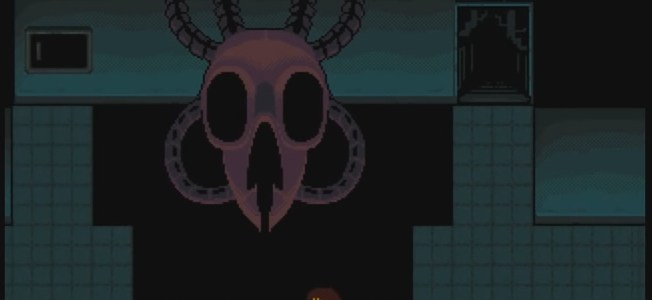
Some Nightmares Fail: Doctor Who’s Sleep No More

Doctor Who‘s “Sleep No More” had a brilliant start. First, there was the eerie fact that the episode lacked the usual thematic introduction that we’re so used to. The subdued, eerie atmosphere simply begins with the introduction to a man named Professor Rassmussen. He gives us, the audience, his account of what happened on the Le Verrier space station: where a rescue team was sent to find out what happened to them … and failed.

It’s definitely not the last time we will see Professor Rassmussen. The episode itself, written by Mark Gatiss, is patterned after a found-footage film, or even a piece of epistolary fiction: a story told from a first hand account. No matter which way you look at it though, from the very beginning where the Professor warns us not to watch his recordings, Gatiss attempts to tell a horror story through the tropes of Doctor Who. This is not the first time. Doctor Who has often verged on the horror genre with its vast selection of monsters.

Unfortunately, it’s not only the rescue team that fails in this episode.

It turns out that the good Professor had created machines called Morpheus pods: things that allow humans to have a good night’s sleep in just five minutes to increase productivity. It is such a banal reason to unleash such horror because, wouldn’t you know it, you know those grains you get in the corners of your eyes? That sleep dust? After you sleep? Well, it is actually the growth of a mucus lifeform that usually gets killed off by semi-regular human sleep but because of the Morpheus pods and their electric signals, these lifeforms aren’t stopped by the human immune system in slumber and consume their hosts … and everyone around them.

These Sandmen, Dustmen, or Sleepmen can’t even see: they need the eyes of those who have apparently used the pods to find their prey. Also, interfering with the electric impulse that keep together disintegrate their bodies into dry grains of sand.

To be honest, they are … kind of underwhelming: more of a parasite that grows from these electro-magnetic impulses more than anything. The team, with the exception of the Grunt — a human cloned specifically and only for combat — are pretty unmemorable and they die with very little fanfare. Even with the interesting twist of The Doctor and Clara actually meeting and getting involved with the rescue team — instead of arriving after they are gone — doesn’t offset this. Mind you, there are some good character moments from The Doctor and Clara if you can believe it: The Doctor referring to the Professor’s pods as an abomination, and Clara calling the creation of human life made and bred to fight and die in wars morally disgusting.

In the end, The Doctor and the others destroy the station and the Sandmen within it: after one of the soldiers on the the rescue team kills the good Professor for actually trying to help his inadvertent creations take over the universe. Because, you know, we totally didn’t see Rassmussen being evil and behind everything totally coming a mile away.

But then we realize the truth. You know how Rassmussen recorded his last living moments on the ship? Well, he did it after he was supposedly killed. It turns out Rassmussen was captured and at least partially converted — or replaced — by the Sandmen at some point in the episode and by virtue of leaving his found-footage and sending it across the Sol System, he will spread Sandmen through all life everywhere: including through us the viewers. In the immortal tradition of M. Night Shyamalan, ‘What a twist!”

So as Rassmussen, or whatever he has become, crumbles into dust — the happiest dying villain ever having apparently one-upped The Doctor — you begin to see what is wrong with this episode. It can summed up by having a fascinating premise that could have made it on the level of “Listen,” with a cautionary tale introduction, interesting found-footage segments, followed by disappointing monsters, confusing information about what they are and how they get destroyed, lackluster secondary characters, and the particularly disappointing reveal of Patient Zero whom — if you are really following the plot at this point somehow — should have totally been the good Professor himself. I mean, he is already insane and driven so why wouldn’t he have tested his Morpheus pod on himself first and perhaps the Sandman that came from his eyes had been manipulating them the whole time?

Whereas “Listen” was all about psychological terror and playing with perceptions, at best “Sleep No More” at best an attempt at a NoSleep meme using Doctor Who as a medium. And it was just as bad as a rushed and amateurish creepypasta failed to go viral. In fact, it’s almost like a choppy superficial parallel of what happens in The Russian Sleep Experiment creepypasta. It’s a shame because with more time and effort, this could have been a classic creepy Doctor Who episode. Still, it is a fascinating failure when you look at what the episode tried to be. And who knows? Perhaps the experiment isn’t yet because, after all, there are some nightmares need more than just five minutes of sleep to come into full fruition.
Anthony Martignetti From the Mouth of the Wolf

I met Anthony Martignetti in 2013. Actually, that is something of an exaggeration on all accounts. I read about Anthony at the time and not long afterwards I read his memoir Lunatic Heroes. Then I wrote a review of it and sent it to him. After all, he had put his email address and Twitter handle at the back of the book: and Amanda Palmer had his information on her Blog.

It was about that point that Anthony and I started talking. And while he took issue with the fact that I gave Lunatic Heroes a four out of five (I knew that he could do better: that he had more stories to tell), he liked my review. He put a link to it on his Endorsement page and he and Nivi Nagiel — his editor, writer peer, and friend — sent me a green Lunatic Heroes T-Shirt that I wear when I know I am going to be facing something particularly tough with which to deal.

Then we sometimes played games of witty pithy words on Twitter. There was even one point he accused me of getting my new budgie drunk as he wore his bell as a party hat. And then he challenged me to write a review of his next book: Beloved Demons. It was challenging: not just because it was about his adult life this time around, but also due to the fact that I had other projects and Toronto had been hit by a freak ice-storm that made me aware of just how powerless I really was. That pun was unintended, I assure you, but I suspect Anthony would have appreciated it.

The last time we really talked though, and I mean really interacted, was outside my parents’ house for a change. I was staying overnight at the Toronto Global Game Jam of 2014. I had my own computer and everything. So here I was at this computer at George Brown College’s School of Design, surrounded by creatives in a field that sort of related to my own, and having come from a particularly bad day with Ontario Works and bureaucracy when I got an email from Anthony.

He sent me a link and, sure enough, all the work I’d done with Nivi to polish my review of Beloved Demons had paid off and he included a link to that article on his Endorsement page as well. It inspired me. It encouraged me even more when I sent him something that I wrote and he gave me some feedback on it. He promised, when he had time, to give me a more indepth critique of the work and to look at some of the other things I sent him.

But there was one thing he sent me during that time, when my own loneliness was changed by into gentle solitude by the creatives around me, that I won’t forget. In response to the story that I sent him, Anthony quoted an old operatic and theatrical Italian saying:

“In Boca al Lupo . . . crepi il Lupo.”

I admit I actually took a while to find a good translation of the idiom, but ultimately it seems to amount to this: “In the mouth of the Wolf … may the Wolf die.”

I knew, somehow, that I could use this. I knew it even before I found a smooth enough translation and it was appropriate. In a small, but meaningful way that was the apex of our conversations: our relation to each other.

These words stayed in my head as I introduced my own therapist to Anthony’s work and they had actually had their own interaction. I am glad I did my part to help them meet at least on some level. But I wasn’t entirely accurate when I stated that the Game Jam was the last time Anthony and I interacted.

The last time we actually talked was when I sent him a copy of my first published story “When You Gaze Into An Abyss” in the Heroes in Hell anthology Poets in Hell.  It too was appropriate, all things considered. Anthony emailed me back to let me know that he got the book I mailed him and that he would read my story first.

I never met Anthony. I only talked with him online. He had touched many peoples lives: and that doesn’t even include the books he wrote after Amanda all but had to strong-arm him into doing so. I always knew he had been sick, and sick for a long time, but it’s weird. Even with that knowledge there are times I still find myself expecting to see something on his Facebook page, and I even ponder sending him more things. But I never really forget that he’s gone.

I’ve been sad for a little while and it took me a while to actually put one of the reasons into words. Last week, there was a memorial service for Anthony: held by his writing group the Souled Out Artists. I unfortunately couldn’t attend as it was in the States, in Boston, I have been dealing with anxiety issues, and I just didn’t have the logistics for a stay there. But I were to be perfectly honest, those are just part of the reason. Anthony said, once, that he and I should one day meet for owl sandwiches. He also said he wouldn’t have minded a phone call.

The fact is, I didn’t know whether or not he was being facetious. I didn’t dare ask, but jokingly said sure. But as I said, we never did physically meet. And I never phoned him. I regret that sometimes.

Many people that attended that service, or didn’t attend, actually knew Anthony personally. And, in retrospect, I would have felt weird being there. I was just a person on a fringe of lives that happened to appreciate his writing and influence. I wasn’t a family member, or a patient, or a student. At best, I’d to think we were casual friends that sometimes had time for each other for non-serious things and an appreciation for good writing.

I am glad that people went to Boston to the Souled Out Artists to celebrate Anthony’s life. His stories will continue on as living signs in the people that loved him. And his idiom of the Wolf will be an epigraph at the beginning of a novel that I plan to release one day: and it is all thanks to him.

Anthony understood the importance of mythology. He knew that the Wolf was symbolic of a great many dark things. And in so knowing, he created stories that fulfilled his old Italic proverb.

In the mouth of the Wolf … may the Wolf die.

Those are some words that I hope I will continue to live by. You can find more about Anthony’s stories here. Trust me: they are worth reading.

wpid-wp-1447229690679.jpeg

Doctor Who: Hail to the Zygon

Things looked pretty grim in the last episode of Doctor Who. UNIT was supposedly neutralized, at least in the United Kingdom, and a missile was headed towards The Doctor’s World Presidential plane from a Zygon assuming Clara Oswald’s form. I also mentioned, last time, that the plan of the Zygon radicals was worthy of HYDRA.

But perhaps “Hail Zygon!” was a little premature.

Take, for instance, what the Zygons did with Clara. They put her in a pod: her trapping her mind in a dreamscape to gather more information from her subconscious. And this is where the writers of “The Zygon Inversion” do something very … interesting. As it turns out, despite having a year to prepare and work itself into UNIT, the radical Zygon faction didn’t do their homework. They didn’t know about the events of “Last Christmas”: where Clara and The Doctor were held by dream crabs. Of course, that might not be entirely fair. I mean, they wouldn’t have had reason to know about “The Bells of Saint John” with the Great Intelligence or even “Asylum of the Daleks” and “The Name of The Doctor.” UNIT, assuming the faction even went as far as getting all of its information, didn’t even know about many of those events.

Clara has had her mind influenced before. It has been split across space and time. The Great Intelligence tried to synchronize it. And there have been many times she has been trapped somewhere: at the fringe between the damsel and refrigerator tropes. But “Last Christmas” in particular made Clara painfully aware of dreamscapes and the flaws within them. The Zygons did a shoddy job of making a dreamscape that was believable: a contrast to Steven Moffat and Peter Harness who use “the Gimmie” — the suspension of disbelief — to make us believe that she has a strong enough mind to resist and even influence the Zygon trying to access and steal her memories.

As unbelievable as it might sound, the way that Clara faces off against her Zygon counterpart Bonnie is nothing short of bad ass. Somehow Moffat, Harness, and Jenna Coleman make the character have this about face moment: leading you to realize just how screwed Bonnie — Clara’s Zygon duplicate — is going to be. Clara’s “schooling” of Bonnie is a hint of what Clara should have been from the very beginning.

Clara Turns Off the TV

But the epic element does not stop there.

You see, it’s really a combination of things. For instance, the show hits home exactly what the problem is with the Zygon radical faction. In my last recap, I likened them to HYDRA but I fear I might have grossly overestimated them. Oh, they shared HYDRA’s hubris, but their planning is only similar on a superficial level. The fact is: the radicals could have done a lot of damage in the longer term if they had been smart about it. They had about a year to prepare for an invasion without war. They are shapeshifters and are aware of what they are. Especially after one of the Osgoods died, they could have infiltrated UNIT across the world or — better yet — taken out the Zygon High Command first and dealt with UNIT later.

They could have appealed to the rest of their kind’s need to be more open, or to gain more resources through hit and run means. Meanwhile, they might have expanded their plan to use revealed Zygons — preferably “traitors” to their cause — as lightning rods to distract the humans and make a show of stopping them. Over time, they could have taken over places of human government and slowly improved human technology to make them more dependent on their innovation. And if they had taken UNIT in particular, it wouldn’t have taken much to place a bomb on, say, a World Presidential plane while its crew might have been … distracted by events.

The Zygon radical faction could have become the new Zygon High Command if they had been smarter: rallying the others of their kind by their example and using human civilization as its slave that they could monitor from within itself.

What happened instead was that Bonnie, as the leader of the radicals, wanted to make a statement. She wanted to reveal twenty million prepared and unprepared Zygons to seven billion humans right away. She didn’t care that those Zygons would most likely get slaughtered over time. Zygons are shapeshifters. Their greatest strength is hiding who they are until they have the advantage. Getting the Osgood Box would have only taken this advantage away by outing all of them.

The radicals are shown to be short-sighted and fueled by rage and a tremendous sense of self-entitlement. As The Doctor himself explains, they are more like rebellious children than anything else: rebels that are willing to destroy themselves and everyone else to be right rather than build anything lasting.

Bonnie is Mad

And this is where Peter Capaldi’s Doctor shines. He presents the radicals, through Bonnie, with a challenge. It seems as though The Moment affected him greatly as both humans and Zygons don’t merely have one box that could reveal or destroy them: but two. And it is almost a sick joke that both boxes have the radical motto on them: truth or consequences.

It is revealed that many threats to the Human-Zygon ceasefire have happened before. This is why The Doctor knows so much about Bonnie: because others had tried this before and he had erased their memories. But it goes further than that. He derails both Kate Lethbridge Stewart’s violence and Bonnie the Zygon’s fanaticism by showing them just how terrifying war is essentialized into two boxes with push buttons. He tells them about what real war is all about. And then he gives an excellent lesson to Bonnie. He teaches a shapeshifter that “thinking is a fancy way of changing your mind.” Of course. The Doctor himself is a much longer lived shapeshifter that did horrific things in the Time War so he would know all about it. The way he calls her out on the futility of revolutions and rebellion as a cycle and his own experiences in War made for a compelling and poignant moment in his own portrayal worthy of his other incarnations.

Doctor and Bonnie

But even when you put Clara and The Doctor aside, there is Osgood to consider. When asked if she is either a Zygon or a human, Osgood basically says, “Yes.” She holds her own to The Doctor, still respecting him, but recognizing his strengths and flaws. And she stands by her convictions. Many fans believe Osgood to be the Companion that he should have had, but now it’s clear that she has her own destiny as an agency in her own right. And it’s not everyday that someone discovers they have a new sister after the loss of their other sibling.

Osgood the Bad Ass

I do think that Bonnie got off very lightly for what she and the others had done to human and Zygon lives. If this was a learning experience for her, it was a costly one. One can only hope that she will continue to improve herself as the next Osgood. She has great shoes to fill.

“The Zygon Inversion” took the concept of a Zygon infiltration, and a wasteful revolution of radicals and turned it into something else entirely: an examination of the futility of war and the working towards something greater. Almost every character in this story had their bad ass moment and even The Doctor’s manipulation of the situation — in an almost terrifying manner — hits home one fact that may not have always been clear in the last season. Because in those lines, and in those words there was The Doctor. There he is.

SAVE FAILED

Dedicated to Toby Fox’s Undertale. There be Spoilers here. Do not say that you were not warned.

I’m not sure when it happened. Sometimes I forget … sometimes …

Yes. Recording. I don’t know how much time I have left. Or there’s too much time … to contemplate what happened. I’d reached Entry 17 of my Scientific Journal. I hope that you both found it in my attachment.

I remember now. I was examining the Souls. The Barrier was created around us: sealing us Underground with the power of human magic. There are two schools of thought on this matter: first, that humans only gained power through the consumption of Boss Monster Souls that exist longer than those of most Monsters. However, there have historically been few Boss Monsters among our kind and even they do not last as long as Human Souls.

Human Souls are energy sources that utilize a power known as Determination. Alphys, or perhaps you — Sans — will come up with this label. It makes sense that if the apex of Monsterkind can gift Humans with power, that any Human Soul grants us a far greater measure of possibility.

Undertale DT

I made plans for a DT Extractor, but I fear that won’t nearly be enough. But I have made a machine that allows me to utilize this energy in a limited capacity. I didn’t want to use the Souls themselves — that power was to be for His Majesty — but I distilled enough energy through the matrices to view the time lines: to see what possibilities there are to escape from the Barrier’s properties.

Through my machine, I was able to find the underlying codes and variables of reality. During the War, it was said that the Humans were able to cancel out previous actions, or come back from death itself. Some could even change events entirely and … confuse the memories of others. A truly terrifying, and magnificent power if there ever was one. One common theme in my research into the matter was that this Human SAVE function created a node in reality: a place that intersected between psionic, spiritual and geomantic dimensions. Essentially, a SAVE is a spot in the land itself created by the power of Determination.

I realized that seeing the timelines, and then the codes of existence — the “fun values” — was the first step. The second would be to observe and eventually manipulate said values. Eventually, if taken towards its inevitable conclusion, one could theoretically create a RESET: that same power that took victory away from us time and again: leaving all but a few without memory of our past achievements in the War and perhaps even the deaths of other Boss Monsters for Human ends. Truly, a distressing concept.

With a RESET, we wouldn’t even need to circumvent the Barrier with the correct number of Human Souls. Rather, we would restart reality itself and change history. We could rewrite the War. We could have made it so that the Humans had never won. Or perhaps that the elements that began the War never occurred. We could have made it so that we had never been imprisoned to begin with.

But before that final phase in our potential endeavours, there was the third phase: the SAVE function. This would be essential in case anything should go wrong. In fact, SAVING would be valuable in and of itself. Aside from the potential therapeutic qualities of spontaneous regeneration more potent than even healing magic, imagine if anything should happen to the Underground: if there were a calamity of some kind such as a sickness or even an invader that our magic isn’t capable of halting. The ability to LOAD from the SAVE would allow all denizens of the Underground to survive. Perhaps, over time, we could even begin to slowly and gradually absorb the powers of Determination from our SAVE points. If not in our generation, then certainly in further and future generations we had the potential to develop that power and free ourselves altogether. Certainly, learning from our previous mistakes and memories would only bolster our potential as a species.

The possibilities are endless. But so are the tribulations.

You couldn’t conceive of what I saw. When I extracted that small amount of Determination into my machine, I saw all the building blocks of life, space, and time. All of the possibilities. Well, that isn’t true. Sans, you know exactly what I’m talking about even now. The experience was greater than anything else I’d ever achieved: more than my Blasters, even more than utilizing the geothermal power of the Earth to create the Core seemed minuscule compared to this. Even so, the work that led to the Core, miniaturized, was just the first step in utilizing geomantic energy to make our first SAVE point.

I think you know the first mistake by now, you two. The darkness I warned you about earlier. There was … there is an anomaly. I can’t account for it. It threatens all the timelines. I’ll admit: it terrified me. That was when I knew. The Barrier was petty compared to the threat of this cosmological aberration. I had to make that SAVE. I had to override reality to save us all.

I should have spent more time … but that’s exactly what I have now. More time. Yes. I said that already. I accessed the fun values. I attempted to change them. I tried to focus the machine’s Determination energy into one area and then I SAVED.

It didn’t work.

I didn’t unify in one place as I know I should have. Instead, I felt my body, and my being, spreading thin … disintegrating … I scattered everywhere. I’m data in the Core. I’m a child who should have died. I am a man who, in another time, decided to walk away from a Spider Bake Sale. Or I’m a face from the ground talking about myself, listening to everything …

I’m right behind someone. I’m sailing down a river? And I’m in a grey version of a room that I changed with tainted SAVE data. Use it to store anything. Not even a RESET will erase the matter in there. Not even the broken machine …

Undertale Sans Lab

But there is, there was some strange creature in front of me … Perhaps that is the anomaly? I was so focused on understanding it, on stopping it.

But there is a difference between Determination and obsession.

My friends, I don’t know how coherent I’m going to remain. I don’t even know if I’m talking to you in one timeline, or another. Or all of them. But you are all in danger. The Darkness will come from either outside, or within … Don’t listen to the Flowers. Beware the Child … I don’t understand … I’m everything, I’m …

Sans. Papyrus … I’m you. I’m will try to find a way to find you. Take care, my … take … Stay determined. Stay Determined … stay de-terminated … deter … mine …

….

Doctor Who: Truth and Consequences

It’s actually extremely appropriate that Doctor Who‘s “The Zygon Invasion” came out on Halloween. After all, there is something incredibly symbolic about a species of shapeshifters, subtly infiltrating human society, on a holiday that — at least presently in North America — celebrates child, masks, costumes … and the dead.

This episode of Doctor Who encapsulates all of these things. It begins like a modern fairy-tale would: recapping the events of the Zygon-Human ceasefire back in “The Day of the Doctor” with all of its idealism and promise, and then gradually transitioning the introduction into the gritty horror of realizing that this tenuous peace is about to be destroyed. All costumes threaten to come off, even as the masquerade actually seems to expand.

Doctors Ten and Eleven, along with The War Doctor, have left the hopeful party long ago and it is up to Twelve to clean up and keep together the dirty remnants of their dream: and he has to work with UNIT to do so. It’s a dark mask for a grim situation, so perhaps it’s just as well that Osgood is there to help out.

Ah yes: Osgood. As it turns out, there were actually two Osgoods and both of them eventually identified as Zygon and Human. It was part of the peace process and they were entrusted with a device of last resort by The Doctor in case that cease-fire should ever be threatened. And things have gotten bad. Osgood died in “Death in Heaven,” murdered sadistically by Missy and the other Osgood had retreated into grief: completely forgetting about her role in maintaining the peace.

Also, The Doctor referred to Osgood as “something of a hybrid.” That word again. Just where are they going with this?

Osgood’s negligence, along with the bureaucratic incompetence of UNIT, and one accidental reveal of a child Zygon’s true form to an American town leads to … badness. Very contemporary, real world badness. As it turns out, the Zygons — who have been secretly integrated among humankind — have factions that wanted to walk free and openly as themselves. When the revelation of one child leads to that child’s death and the murder of others of their kind, this leads to a radical faction arising … and taking matters into their own hands.

“Truth and Consequences” becomes the buzzword of this new faction: willing to kill humans and “treacherous Zygons” alike. The young of the Zygons are rebelling and have been surprisingly adept at what they do: especially using the forms of their foes’ loved ones against them in an ingenious use of psychological warfare. It’s not so much that they have made an invasion so much as it is a grand level infiltration that almost, just almost puts HYDRA to shame.

Hell, we didn’t even know that Clara was acting more inconsistent than usual as a character until the end where she becomes too calm and collected and too much of a deadly stone-cold bad ass for it to be really her. And somehow even before her abduction she forgot how to answer her phone. But right now, things do not look good for the Earth: with UNIT seemingly all neutralized and infiltrated and the radical faction having masterfully manipulated their rivals into wild Zygon-chases allowing them to manuever their pieces up to this point. It was a diabolical place for a cliffhanger and we’re just going to have to see where they are going with this in “The Zygon Inversion.”

What I’ve Been Doing For Over A Month

It’s been a while since I’ve written here, so I think it’s about high time for an update.

A lot of things have happened during the time I’ve been gone. I’ll admit that some of my previous plans … didn’t go well. In fact, it’s not so much that they failed in that they just didn’t happen. I had some expectations and assumptions and while the results of these didn’t pan out, at least they were learning experiences.

Still, I admit I was disappointed. And there was a period of time where I honestly got fed up and depressed: where I was actually having panic attacks. I honestly didn’t really know what else to write in my Mythic Bios during that time: where I was regrouping and gathering up my strength again.

But it hasn’t been a total waste. I’m still writing my GEEKPR0N articles. In fact, I covered the beginning and end of the Toronto After Dark not too long ago. It’s always awesome to get to attend on GEEKPR0N’s behalf: to be among such enthusiastic horror and gorehounds and know that people are reading my reviews on those films. If you are interested, I wrote about Tales of Halloween, The Hallow, Patchwork, and Deathgasm.

In addition, I’ve been taking classes: specifically Ty Templeton’s How to Write Comics in his Comicbook Bootcamp Program. Working with Ty and my peers has been pretty awesome. It’s the first time in a decade that I felt like I was in a creative writing class that actually inspired me and genuinely felt constructive. The first seminar focused on writing techniques, story-making, and how to write for an audience. The second seminar, which I just started, focuses on how to world-build, create pitches, and write for a publisher. In all ways we are encouraged to think creatively: to work outside of the box while understanding just what that box is. I don’t know how much of this information I’m absorbing — as I’ve stated before that I have a different manner of learning and retaining knowledge — but what I have gleaned is excellent. And it is good to feel something to encourage my sense of purpose again: even if it is as bittersweet as finding it on College and Spadina with all those memories of that place.

In other news, I found a lawyer through the Social Justice system who is willing to take on my case to get me onto ODSP. It is a relief in a lot of ways and at least some of the pressure on me has been lifted. I know it is just a start, but a start is a good thing. Everything I’m doing is going to help me in some way.

I will admit it. I am not where I want to be right now. Sometimes, at my worst I honestly feel like I am in hell. But I have to keep reminding myself to moving forward. After all, the only time travel that any human being is capable of accomplishing is going towards the future. Slowly. Gradually. And inexorably.

Perhaps while I’m at it I’ll get to make more new memories in the process.

12065705_10153786689582125_5628166252022257967_n

Treat or Trap: Toby Fox’s Undertale

In honour of Halloween, tonight’s quick and dirty Mythic Bios article will be a video game review appropriate to the season at hand.

It is a fine game to play on an autumn afternoon or Halloween night. Imagine taking Maurice Sendak’s Where the Wild Things Are and combining it with Abby Howard’s The Last Halloween, apparently some Earthbound and some subversive turn-based RPG mechanics and what you might get is Toby Fox’s Undertale. And this description doesn’t do the game any justice.

Undertale

In Undertale, you play as a child who has climbed up Mount Ebott and found themselves in the Underground: the site of which the race of monsters was banished ages ago in an ancient war with humankind. Now, there are two ways you can play this game. However before I go on, I want to reiterate something. A long time ago, I mentioned that a friend of mine truly appreciates “games with consequences.”

So imagine the phrase “games with consequences” existing in a Dictionary somewhere. If you can do that, think of the picture right beside the entry. That picture would be Undertale.

The first way you can play this game is to utilize one of its unique mechanics. This Path is called the Pacifist Run. That’s right. You can play through the game by killing absolutely no one. But what fun is that, you might ask? Well, imagine a child’s world. Think of a child coming across an Underground world of monsters: each one with their own hopes, dreams, and fears. Consider how scared children can be, but also how curious they often become, and then think about how they might handle a situation with a strange and eccentric being compared to how an adult might — or might not — do so.

Ironically, in a lot of ways the Pacifist route is a lot harder than its … opposite. But if you play it right: if you get to know the monsters and realize they are not different from you — and if you pay very close attention to details — you will be well rewarded.

And then you have the other … route. The alternative isn’t that hard to figure out if you are a long-time gamer. Basically, when you encounter monsters you consider them enemies and you essentially kill them all. You kill them and take their EXP. You level up. You will also learn a lot about this world, but your lessons — for all the ease of killing and staying to the tried, tested, and true mentality of being a gamer — will ultimately be harder ones.

It might be all the difference between an epic fantasy adventure … and a personal horror game.

I’m not going to go into much more detail beyond any of this, I’m afraid. To be honest, I’m just not feeling it. Toby Fox and his team create an excellent archetypal world of almost cartoonish beings, but with a lot of heart and serious subject matter amid some silliness verging into the profound. Also … they play with the form of the medium and genres that they are working with: a lot.

I really appreciate the story and the surface level simpleness of the game belying its true complexities. It is a game filled, literally, with heart but also secrets, and mysteries: some of which have still not even been solved to this very day. The music and graphics hearken back to the 8-bit nostalgia prevalent in much of the independent game scene.

But if I had one major quibble with Undertale, it’s ironically with the core of what it is: that actions have consequences. I will tell you right now: as with real life, if you are not at all careful your actions will leave a permanent mark on your gaming experience. And no amount of Saving or Restarting will ever change this. In fact, you can count on Saving or Restarting to have consequences of their own.

It is amazing to see a game that is so moralistic to the point of being both forgiving at times, and completely unforgiving: while also not being particularly all that preachy. Sometimes, it will give you just a few opportunities to see something wonderful but if you’re slow or you don’t pay attention, you will miss it. Yet what’s worse is that you will not get the entire story through one playthrough. It’s just not possible. You will miss details if you only have one playthrough. But the Catch 22 of another playthrough is, well that …

Consequences will be on you.

I’m just going to say this: this game is a self-aware completionist’s bane. Perhaps the best way to explain this without spoilers is to talk about two other games. Gaming Pixie created her own RPG: She Who Fights Monsters. At the very end, depending on your choices — even those made in the blink of an eye — and how much you pay attention to details, you will have only a few chances to get a particular ending. Your actions will colour what you get.

At the same time, there is also the lesson inherent in Gaming Pixie’s Shadow of a Soul. Sometimes, the only way to play a game is to not play that particular game at all. Either way, I hope that you will play Toby Fox’s Undertale and that no matter what you do you will stay determined.

Doctor Who and Lady Me

Imagine you are immortal.

It is a common enough theme in fantasy and science fiction: especially when you consider Highlander or most modern vampire stories. You die unexpectedly and then get resurrected. And after a time you realize that you just can’t die. Perhaps you can be killed, but your instinct of self-preservation is still strong enough that you really don’t want to test that theory. Now imagine watching everyone else: everyone living and dying all around you. Then consider that for all you may live forever, you still have a human mind with human memory and feelings. You begin to forget things, either through time or trauma. But then it gets worse. The person that made you thought they were granting you a mercy. You see, they thought that by granting you the ability to make another immortal, like you, you’d have at least the potential to never be lonely.

But it’s too late. You already know what it’s like. You know what it would cost someone. Long ago, in a small Viking village, you told the man that made you that leaving your home would be like death. Well, you haven’t been home now for about eight hundred years. Could you do that to someone else? And worse: he only gave one opportunity to make someone immortal. Out of all the friends, lovers, and spouses you’ve had — the children you made — how can you pick just one?

Doctor Who Lady Me and Books

That had been the conundrum of the woman once known as Ashildr by the time of Doctor Who‘s “The Woman Who Lived.” You have to wonder, when you see the person who now calls herself Lady Me — as she is the only one who generally remembers who she is throughout time — if a longer life is always a better one, and just how many times she’s gotten tired throughout the years and centuries of her existence.

And The Doctor did this to her. In my last recap of “The Girl Who Died,” I was disappointed that Ashildr didn’t turn out to be another Time Lady. But perhaps it’s just as well. Instead the writer Catherine Tregenna did something else entirely with the character that Steven Moffat and Jamie Mathieson wrote. She took a hapless, but defiant girl from “The Girl Who Died” and made a complex character in “The Woman Who Lived.”

Lady Me, played by Maisie Williams, has reached a point where she realized that making another like herself or suffering from loneliness was no choice at all. So she decided to be alone. She distanced her feelings, wrote out the memories her brain couldn’t contain in a vast library in a mansion she bought with her riches, and tore out the pages of the most painful recollections of all. She robs people purely for the entertainment of it, even as she sometimes helps them.

Doctor Who Knightmare

And she wants out. She wants to get away from a world where she would have to watch her children and lovers die: having reached a point where she no longer wants the former. Everyone just seems like shades to her: mayflies already marked for the grave. She wants to go into space and travel with The Doctor. And the thing is: she would make an excellent Companion. Lady Me is realistic, somewhat jaded, but vastly knowledgeable, intelligent, and she knows how to adapt and survive.

But The Doctor will have none of it. And this is where Catherine Tregenna takes The Doctor. She shows us a man who cannot exist with others like himself, long-lived beings, for extended periods of time. He just doesn’t get that sense of … what, youth or vitality that he would from a shorter-lived Companion. His logic is that those with shorter lives value life more. And it’s a damning realization of the character. It shows us that his original aversion to Jack Harkness wasn’t just the strange way he felt in space and time. It illustrates why he left Gallifrey and how he generally avoided spending a lot of time with others of his own kind.

And then you consider the following. It would have been child’s play for The Doctor to get medical healing devices from beings like the Mira. The horrible fact of the matter is: The Doctor could have made any of his Companions immortal. He could have even made Rose Tyler an immortal and made the age-differences between them irrelevant. But he never did. You could argue that he didn’t do this because mortality was what made his Companions so plucky, so … human. Yet Tregenna seems to hint on the fact, at least through Lady Me, that there is a very selfish element underneath even the best of The Doctor’s intentions: something not unlike the stereotype of an older person dating only younger individuals to feel young again themselves. In The Doctor’s case, it has some very masculine connotations: even if he is not sexually attracted to his generally female Companions, or to Lady Me when she’s flirting with him, there is just this moment of realization — from Lady Me’s perspective and the audience’s — where you just know that she’s just not “his type.”

When you consider that The Doctor made Lady Me and that he is essentially rejecting her for being “too old for him,” and that you find out he had actually been watching her for a very long time without so much as helping her or offering to take her on the TARDIS, it comes across as a rather gross character flaw and connotation. Even Lady Me’s darkest actions and thoughts make a lot more sense in this vein: her impetus of loss and desperation giving you this strong inclination to sympathize a lot more with her than The Doctor.

Doctor Who Angry Lady Me

However, it is only when Lady Me almost repeats what was done to her village on another settlement in her desperate attempt to escape the Earth that she remembers the defiant courage of her ancient youth. And after that, he reconciles herself to The Doctor. There is even a hint of a possibility that she might meet Captain Jack one day. But even as The Doctor tells her to keep an eye out for another possible immortal, Lady Me makes her own intentions clear. She will watch the other immortal, but she will also observe The Doctor as well: and protect others from his “good intentions.”

I have to say that this was an excellent episode because it was less about The Doctor and more about Lady Me. The fact that Clara was hardly in it was only a bonus. Indeed, there was one point where — when Lady Me confronted The Doctor about just how many Claras he had lost — I was just waiting for him to state something along the lines of “Three or four, that I know of.”

And what is also excellent is that Lady Me is going to come back at some point. I think that a spin-off with Captain Jack, River Song, and a whole lot of “loose-end characters” like The Doctor’s Daughter Jenny and Susan would be an awesome idea. This episode of Doctor Who was a good one: a worthy follow-up to the story that came before it. Also, the word “Hybrid” came up again during this arc. Missy and Davros had been rather fixated on that word in “The Witch’s Familiar.” You have to wonder just how this might come into play in future episodes of Doctor Who.

TADFF 15 Review: Deathgasm

Deathgasm is hardcore. There is no other way of putting it. Even from its very beginnings, according to the Toronto After Dark’s Q and A with its director Jason Lei Howden and producer Sarah Howden, the film proved just how powerful it could be through a one sentence prompt and treatment that would ultimately allow it to win the Make My Horror Movie contest in 2013 and win the production money that it needed to scream into existence.

It is so loud and clear with what it is that you don’t even have to be a metal expert to enjoy what you see. After a beautiful animated sequence, Deathgasm shows itself to be a story about a group of teenage friends in a conservative town that essentially unlock a demonic power through acquiring and playing sheets of music. These sheets are being hunted by a cult and then by the demonically-possessed citizens of the teenagers’ home town.

Deathgasm Demon

You get what you can expect when you look at how the horror genre has influenced the growth of metal: tons of gore, angst, screaming, demonic zombie destruction, and lots of penises. Certainly the prosthetics and special effects are impressively twisted: especially when you consider that they are all mostly borrowed props. For instance, the audience in the Q and A were told that the penises were taken from Spartacus of all places.

Deathgasm Zakk and Brodie

But this is just the blood and gore that stains the raging metalhead bad ass. In a movie that plays with the age-old theme of anarchy and vulgar defiance against conformity and hypocrisy, you also get some interesting characters for your time. Brodie (Milo Cawthorne) and Zakk (James Blake) play well off and against each other. Zakk himself is a bit of an asshole but somehow manages to also be a friend and even something of an anti-hero: though as you become more aware of the plot, you will begin to see where he is going with all this. And Brodie comes into his own from being in Zakk’s shadow: claiming the song that he used to unleash hell in a fit of angst.

Deathgasm Brodie and Medina

Even the female lead in the film Medina (Kimberly Crossman) has her own excellent character development. She starts off as something of a popular girl at school but already demonstrates that she is kind, real, and open-minded. You actually get invested with seeing her and Brodie’s relationship and how it’s completely reciprocal. It even gets to the point where she rescues the rest of their band with an ax-pun of which Buffy the Vampire Slayer would be proud.

Deathgasm Medina the Slayer

The villains have excellent moments and conflicting agendas and these, along with Brodie, Medina, and Zakk make up for some of the more stereotypical characters that populate the movie. There is just this emotional complexity amid the gore that makes it all the more alive: its dark humour and irreverence for even the hellish powers animating the story far more than any demon ever could. Also, given that this is a metal movie the soundtrack, much of it made by Skullfist, is excellent. In fact, Howden made people aware that they will be releasing Deathgasm‘s music in a double vinyl record.

In the end, Deathgasm is a glorious, musical, blood-splattered journey into hell and the pointlessness of life and the bad-assness of what you can achieve when you stop caring about the things that don’t matter and begin loving the things that ultimately do. Also, you get to watch really bad people get their moral comeuppance in some graphic and disgusting ways. Karma has never been so metal.

TADFF 15 Review: Patchwork

Imagine you are a lonely businesswoman. Or perhaps you’re a college student that wants to belong. Or maybe you are a shy, quiet woman looking to better yourself.  And then, one night, you go out to seek the things that you want … and then you wake up the next day as three minds trapped in one, awkward, cobbled together body. What do you do?

This is the premise behind Tyler MacIntyre’s horror comedy movie Patchwork. It is an obvious hearkening back to Frankenstein on a classical Universal Studios level, but films such as Re-Animator and Dark Man have also been stated as influences. However both MacIntyre and his co-writer Chris Lee Hill succeed in challenging our expectations of what this story is going to be.

For instance, we get some back story into the lives of the three women that are stitched together. We see Jennifer (Tory Stolper), Ellie (Tracey Fairaway), and Madeleine (Maria Blasucci) as three very different personalities with often divergent goals. Even the scenes that explore their lives, and the moments before their deaths, seem to be stitched together in odd and interesting places.

Tory Stolper herself, who plays the amalgamation of the three girls known as “Stitch” in both the script and the original two-minute short from which Patchwork originated, manages to create a convincing lurching gait and the physical signs of her adaptation into activities such as eating, drinking, grooming, murder, and even sex. But where, in the words of an audience member at the Toronto After Dark, Patchwork might have become a “progressive take on Frankenhooker,” it verges into something else entirely towards the end. The key is examining just who was responsible for the creation of Stitch: and who her, or their, enemy might actually be. That dark twist in a series of shallow interactions with disgusting, chauvinist men, female empowerment that is almost subverted by said realization — and segments reminiscent of Memento and the resolution of Fight Club — was well-played.

In the fact, the only quibble here is that the audience becomes aware of the twist before the characters do: though it can be argued that this only serves to potentially make viewers more eager to see how they will deal with that revelation … and it doesn’t disappoint.

And somehow, through all the quirky humour, human caricatures, chicken fillets, righteous and recreational murder sprees, and gore porn Patchwork does have something of a happy ending. It is, in the words of MacIntyre, like looking at the beginnings of a female superhero’s origin story. After all, sometimes monsters are just people who haven’t found themselves yet outside of society and all they need to become comfortable with themselves, what they want, and who they want in their lives.