I Got Quoted, She Makes Comics, La-Mulana Cries, and A Pixie Is Making Games

This will be my first post written directly on schedule and I hope to make this a habit again. So what I’m going to do is the following. I missed you guys so much that in my haste to actually let you know what’s been going on with me lately, I’ve actually forgotten t mention a few things.

The first is that Anthony Martignetti, the author of Lunatic Heroes and now Beloved Demons, has created his own writer’s site and in its “Reviews and Endorsements” section is a blurb, at the very bottom of the page, taken from someone that all of you might find very familiar. Basically, Anthony quoted me. 🙂 I found this when I was at the Toronto Global Game Jam (which probably explains how I forgot to write about it with all the writing I had to do there and after) and in addition to all the positive energy that was already around me, it made my day. The fact of the matter is that I am honoured and feel kind of unworthy to be mentioned in such really august company.

That said, it still makes my day and reminds me that I am actually doing some good work here on Mythic Bios. I will tell you right now that it has been difficult to return back to my regularly scheduled posting. I still plan to do some writing outside of Mythic Bios and the Net and, regardless of even that, it took a while for the old, weird ideas to come back into my head and flow properly as they did. But I do have something to work with now.

And Anthony, I have not forgotten about you. You will all see something new about Anthony’s work relatively soon.

But here is what I am going to do for the rest of this post. I am actually going to be doing some very shameless plugging for some really cool things that haven’t been derived from me.

For first thing’s first. The Sequart Research & Literacy Organization is making a Kickstarter Campaign called She Makes Comics. Basically, this is a documentary about women in comics: specifically women as creators, editors, researchers, and publishers in the comics world. It really makes me frustrated that, despite all the comics I’ve read, I actually had to struggle to suggest some prominent female comics creators. In fact, it makes more than frustrated. It makes me sad. I am doing my part to support this Kickstarter. I even wrote a G33kPr0n article on She Makes Comics to give you another look or perspective on just why this is so important. I hope that you will support this campaign, or at least send the links out to those you know and, if you are Facebook or Twitter users, please do not hesitate to use the hashtag #SheMakesComics.

There is also another Kickstarter I would like to draw your attention. The La-Mulana 2 Kickstarter has reached its baseline goal. However, in order to unlock more goodies from chests not rigged with spikes, including the addition of extra character journals and story-modes to an already dangerous quirky puzzle and monster archaeological game of death, it requires more funding: with not much more time to spare. I always hated “timed levels” and I hope that someone here will make sure that this remains in reality and not in the game: which I hope to see funded as far as it will go.

I still hope PLAYISM will have time to post up my Twine fanfic in another Fan Art Update: as it has not happened yet. 🙂

Finally, last by not least there is a game-maker that you should be following. She is Gaming Pixie, whose work and process I reviewed in Life and Identity, Eden and Hell, and not only is she working on a video game that centres around a girl surviving seven days with her alcoholic father, but she has made offline versions of her Twine games Eden and Shadow of a Soul. The latter games are very complex and if you purchase them you will be able to store them on your hard-drive to play at leisure and also experience far less graphics and sound loading time. In addition, with the very modest prices that she offers for both games, you can also help to continue funding her endeavours. I cannot recommend Gaming Pixie’s work highly enough and it will only get better with time and aid. You can find both games here and, if you’re a Windows user, you can download “the first day” of her first major game Fighting the Monster for free.

are-you-sure

And that’s it for now. I had this all in my head for a while and there is still so much more work to do. I will speak with you all soon again I’m sure. Take care now, and have an excellent week.

She Makes Comics

It is a strangely ironic fact that in the early days of the comics medium, the majority of comics readers were women. During the period of the 1930s to the late 50s and before the Comics Code Authority inspired by the American psychiatrist Fredric Wertham came fully into effect there were many different genres of comics, such as romance comics, with some striking female protagonists and eventually works centered around superheroines.

Of course, that is only part of that past. In addition to Elizabeth Holloway Marston and Olive Byrne directly inspiring their mutual husband and partner William Moulton to create Wonder Woman, and Patricia Dingle, who was partially the physical inspiration for her husband Adrian’s Nelvana of the Northern Lights and ended up writing adventure stories in Triumph Comics’ works under a pseudonym, there were female creators of superheroine comics to consider such as Tarpé Mills and her Miss Fury. Even when you consider that the Golden Age of Comics wasn’t completely a “Golden Age” with regards to women and comics it is sometimes really hard to believe, after the decades-long idea of comics being an “all-boys club” permeating North American culture, along with sexism, misogyny, marginalization and violations of personal space at conventions afflicted on female comics creators and fans, that this was once a reality.

Then again, it isn’t that hard to believe. There are female voices in comics. They exist as artists, writers, editors, scholars, and above all, as fans. These are voices that need to be heard and can never be heard enough. And that is precisely what the Sequart Research & Literacy Organization intends to do by creating She Makes Comics.

She Makes Comics is a film Documentary and Kickstarter Campaign created to interview female creators and executives within the comics industry: to collect a series of oral histories and accounts from those women of various eras in comics history in order to accentuate their already considerable voices in the medium and community built around comics. Just as Hope Nicholson and Rachel Richey of Nelvana Comics endeavour to make Nelvana a household name again in Canada, if not the world, so too does She Makes Comics is intend to do the same for the women that have helped make comics as a medium, industry, and community possible.

However, in order to make this possible, this Kickstarter will need your help. To those of you who know that women in and around comics are more than just stereotyped images, subordinated side-kicks, love interests or “fake geek girls,” please take a look at this Kickstarter Campaign and consider that while it cannot speak for this generation of female fans and readers, it can definitely become something to inspire them.

And to all the ladies out there that love comics and the movies and media around them: you have been supporting all of this awesomeness for a very long time and I hope that you will continue to do so as our fellow geeks, and friends, and as the creators and industry movers that we can all admire.

So, with that serious business out of the way for the moment, I would like to ask you all something. She Makes Comics is looking to interview thirty-five more people in addition to those that they already list on their page. I myself want to see some more independent figures such as Alison Bechdel, Marjane Satrapi, Hope Larson, Aline Kominsky-Crumb, Melinda Gebbie, and Wendy Pini. I’d definitely like to see more interviews with more “Golden Agers” as well.

Who do you want to see interviewed for She Makes Comics?

Please follow She Makes Comics on its Kickstarter or its Twitter Profile for more updates.

When Reading High Fantasy, Travel Light

Back in the early twentieth century, two journeys began. They both began in England. One was the story of a Hobbit cleverly manipulated, though not necessarily against his will, into joining a company of Dwarves to confront a Dragon. The other story is one of a young girl, raised by bears and dragons, that sees heroes as her enemies, talks to a Valkyrie,  and must travel the world to find and understand her place in it. One of these stories was made by a male Anglo-Saxon and Linguistics professor, poet and novelist, while the other was created by a female Liberal, Socialist, novelist, poet, and an early founder of some of the first birth control clinics in London. One of these stories survived and helped found a genre of high fantasy. The other story, however, was all but forgotten.

But fantasy author Amal El-Mohtar has not.

Naomi Mitchison wrote the 1952 novel Travel Light. While Mitchison is an interesting figure in and of herself, and she possesses many contemporary sensibilities about war, sex, and women’s rights, it is this particular novel of hers that fascinates me even more. Obviously, up until I read the above linked io9 article I neither heard of her nor this story. Travel Light is the story of a young girl named Halla, formerly the daughter of a king, who is rejected by her family and fostered by bears before, finally, being raised by dragons. It is after living amongst dragons and legendary monsters, and being taught to despise the heroes that hunt them, that she is approached by the All-Father Odin (The Wanderer),  and is forced to make a choice: whether she wants to hold onto the parts of her life that define her, or to shed them and wander as well.

It is actually because of the io9 article and Amal El-Mohtar’s own beautiful article Crossroads And Coins: Naomi Mitchison’s ‘Travel Light’ that I read this book. It is an interesting story in a few ways. First of all, unlike Tolkien and his other contemporaries such as C.S. Lewis, Mitchison makes her mythological and historical references clear. Halla’s world is very overtly the world of Nordic and Mediterranean mythology. Also, there have been mentions of Greece, Constantinople, and Novgorod. Mitchison manages to subvert, perhaps tweak these beings ever so slightly and succeeds in making the reader look at them from another perspective. In fact, not only does she very smoothly subvert some tropes, she may well have made a few of her own. At the same time, she makes it so that Halla’s story seems to take place in our world, as much as fiction, fantasy or otherwise can allow, and that in itself speaks volumes.

As such, Mitchison also does not shy away from the very real dangers and moments of grief and vulnerability that Halla faces and comes to understand as a girl, a woman, and essentially as a human being. There is one quote that really gets to me after Halla faces a particularly horrible situation where it is stated “It was as though the murderers who had killed the old dragon had also killed a dragonishness in herself and she hated them all the more for it.” Mitchison makes sure that that while the dangers and consequences are not gratuitous in detail, she makes abundantly clear that they are serious and very real. At the same time, as all of these events happen to Halla, proving how strong and how vulnerable she really is, there is another element of Mitchison’s writing to consider.

While Halla is immune to fire, has knowledge of all languages that are animal or otherwise, and even comes to be given a piece of the Wanderer’s cloak, the most striking thing about her as a character is how many times she sheds her sense of identity, even as she collects epithets–surnames–to become and learn something new. It very much critiques and averts some parts of “the hero’s quest,” and heroes themselves, but at the same time Halla’s journey maintains its own rules. Simultaneously, when the story does come back full circle, it makes for a very awe-inspiring realization and where the narrative begins as a fairytale, and heroes and monsters fade into mutual legend, it all ends in mythology.

Travel Light is a story that works on so many different levels of physical detail and emotional depth: a tale with a sentence structure and language flow that you sometimes have to pay attention to, that doesn’t shirk away from background intrigue, or dare I say Byzantine scheming,  but at the same time provides dimensions to characters and an interesting notion of spirituality. I have this temptation to state, in a similar way to Amal El-Mohtar, that Mitchison’s novel makes an excellent story for young girls trying to find someone they can identify with in literature and fantasy. Unlike Tolkien’s heroines Eowyn, Arwen, or even Galadriel in Middle-earth Halla is the protagonist of her own world and her journey.

But what I really want to say is that Travel Light works on many different layers, as most great stories do, and Mitchison says something to everyone. I do think that young girls should read this story, but I also think that boys and adult audiences would also definitely appreciate the depth and resonance that it provides.  In fact, I would definitely classify this novel as an obscure classic, as a narrative that can be read by someone as a child and read again as an adult with a different kind understanding but still somehow managing to retain a sense of timelessness.

In the end, Travel Light is a work that deserves to be on a shelf next to Tolkien’s The Hobbit, C.S. Lewis’ The Chronicles of Narnia, Ursula K. LeGuin’s A Wizard of Earthsea, and all the great timeless stories of fantasy: that is, when a parent is not reading it to their child, or when their child is not reading it for themselves and imagining themselves stripping away all their preconceptions of reality … and traveling light.

2 to 3D Games, Strips and Alternative Comics: A Meditation on Perspective

And now for a bit of armchair medium theorizing: with a control of some sort in my hand.

I ran into something a little while ago now that I found really interesting. When I finally caved into the powers of darkness and bought myself a very discounted copy of La-Mulana, for a rainy day where I really want to be more of a masochist than the workaholic that I usually am these days, I came across something that its company NIGORO actually said with regards to the development of video games.

NIGORO states that it creates its games with one question in mind: “What if games had continued to evolve – but stayed in 2D?”

https://i0.wp.com/upload.wikimedia.org/wikipedia/en/b/b0/La-Mulana_gameplay.png

This is a really interesting question to me on more than a few levels. I looked at the issue, to some extent, in my old post How to Turn a Medium into a Genre: 8 to 16-Bit Video Games but I never quite heard it phrased this way before because, in the end, NIGORO looks at this change from a different perspective. While my original article briefly looked at and defined a medium as something with direct limitations that, when overcome became a genre, this one thematic question on NIGORO’s part not only made me realize that 2D and 3D games can still be considered different mediums based on what they can or can’t do within their own guidelines, there was also a turning point where the emphasis of video games moved away from two-dimensions into the three-dimensional. And this changed things.

I know: that last sentence was very profound in all of its simplicity. 😛 Certainly there were many popular 3D games and attempts at 3D in the past, Doom and Castle Wolfenstein coming to mind, but they were on computers as opposed to consoles. The console systems themselves were becoming dominated by 3D graphics. I’ll admit that my personal exposure to many games was relatively limited growing up and when you add to the fact that I lost interest in many of the new ones after a time–and in video games themselves at a certain point in my life–it certainly showcases some gaps in my own knowledge.

But it’s fascinating to consider that once we used to interact with two-dimensional realities with elemental sprites, always from a distance, and after a while three-dimensional games–successfully or no–attempted to expose us to a more immediate reality. Think about it: 3D games and their approximations allowed us first-person shooter games such as my previous examples and exploration scenarios such as those found in the Myst games. The discovery and approximation of 3D changed many of our gaming experiences and perspectives in various ways. Can you imagine any of these games in two dimensions? As side-scrollers? As platformers?

File:Doom gibs.png

Yet other things changed in the meantime. I do remember playing Mario 64 for the very first time and, while revelling in the advanced polygon graphics of the time, finding the controls extremely difficult to use. Perhaps that early period of adjustment, combined with the reliance of more detailed graphics to wow players, changed some gameplay mechanics. In many ways, these mechanics became more simplistic and remained that way. I do remember the time that Nintendo embraced three dimensions there was also a lot less emphasis on games with storyline, player reflexes and, again, gaming mechanics.

This is of course a generalization and one based on my own limited experiences, but NIGORO’s comment that there was a point where 2D games became very advanced and then all but stopped being created really resonated with me. For a while the 2D game, as a medium of game-play, became associated with “retro” games and recreations of said classic games. NIGORO, however, argues precisely what I just mentioned: that 2D games are not vintage classics, retro-games, or 8-bit dreams of lost nostalgia, but are rather representative of its own art form.

And I agree with this. It still makes me wonder though. It fact, it makes me look at parallels. It is no secret that one day I want to do a creative Comics Vs. Games project with a collaborator. The idea of comics and video games, comparing and contrasting them, has always intrigued me and all the more so ever since I found out about those exhibits. And NIGORO’s question makes me wonder: what would have happened if comics had remained solely in the comic strip form? Or, better yet, what if comics had never moved on from that experimental period very few people ever talk about.

Allow me to elaborate. While the developing comics industry focused on political caricatures, followed by compilations of strips into books and then superheroes and other stories, there were artists that experimented with what the form could actually do. There is a misconception that comics as a medium was inspired by film when, in fact, not only has it sometimes been the other way around but comics itself as a medium has its own unique characteristics. Art Out of Time: Unknown Comics Visionaries, 1900-1969 compiled by Dan Nadel is an example of the above and it makes you wonder what would have happened if many of these artists, some of whom didn’t even create traditional or linear panels and plots had been encouraged to continue their work: if, in most cases, their experiments had not been interrupted by financial concerns, industry-trends, and time. Certainly, newspapers used to afford a lot more space for the comic strip (which makes me wonder if 2D games might not, in themselves have space to do other things that 3D ones can’t). And while Underground Comix alternative movements grew to contain some of these ideas and different modes of graphic storytelling, it still makes me wonder “What if?”

Perhaps that isn’t even the best parallel. Of course, we know at least Alan Moore and his Watchmen’s idea of what might have happened if the Comics Code had never been enforced or created in the mid-1950s: specifically with regards to how comics could have evolved at that point. However, in the case of 2D games giving way to 3D it seems to be more a factor of marketing than changing social and political climes. Both mediums remained after these changes, but they were sometimes watered down compared to what they used to be: with some exceptions.

Of course, 2D games never really died out. They remained on computers and now they exist as phone games. And these are not remakes of classics, though they might be based on their designs, but entirely new games in themselves. Even as the Oculus Rift is being developed to take 3D further into virtual reality, perhaps the resurgence of 2D games is motivated by a sense of nostalgia in the 21st century: much in the same way that NIGORO’s decision to create games like La-Mulana was. It is also interesting to note that Stephanie Carmichael in her article Lovers in a Dangerous Spacetime takes Chris Ware to outer space, whether he wants to go or not determined that the creators of the Spacetime game had actually been influenced by Chris Ware’s experimental comics art aesthetic with its basic elemental shapes, and a sense of space and loneliness. In fact, if you look at the game itself, it almost subverts the trappings of a 3D aesthetic in a 2D world.


But still, I do wonder what kind of world we would have had if only comic strips existed, or there had been no Comics Code, or if comics that told alternative stories and presented its art-forms in non-linear ways had become mainstream far sooner in our history. Oh, and if all we had ever played or known were 2D games: 2D games that didn’t necessarily remain 8 or 16-bit (NIGORO’s decision to remake La-Mulana‘s aesthetics in a manner reminiscent of Super NES graphics in no way takes away from its old-school feel in my opinion) but just kept changing mechanics wise, and story wise alongside of us. It’s really amazing how things turn out when you think of it in that way. It really is all about perspective.

Time Travel and Retconning: Revisionism and Reconstructionism in Doctor Who

Just as the New Year is approaching, so is “The Time of the Doctor.”

Time of The Doctor

I’ve come out of hiatus again, essentially, because this is another thought that just won’t leave me alone. After I was exposed to Julian Darius of Sequart’s distinctions between Revisionism and Reconstructionism with regards to comics, I applied it to my article In a Different Place, a Different Time: Revision and Reconstruction in Comics Without Superheroes? Of course, I should have realized it was not going to end there.

I mean, come on: I already mentioned space and time in the aforementioned article’s title. And after a while of gestation and trying to stave it off, I knew what was going to happen. I was going to provide the distinctions of Revisionism and Reconstructionism, taken from Julian Darius, the latter term apparently coined from Kurt Busiek, to the development of the Doctor Who series. Let’s face it: this was just going to happen and, if we’re going to be honest with each other, it probably has in no so many words and in ways that have been covered far more exhaustively than I am going to be.

So let’s get to the point and quote River Song, as I tend to with a lot of the Doctor Who articles I’ve written, to say, “Spoilers.”

This is really going to be a brief case of looking at parallels between the development of the superhero comics genre and Doctor Who. Like the early comics versions of Batman, Superman and others, The Doctor as a character starts off as a relatively morally ambiguous character: someone who isn’t necessarily evil, but not always good. Certainly, they all have the power to impose their will on others whom they don’t agree with, or are quite willing to let someone destroy themselves as opposed to interceding on their behalf. The Doctor himself, in his very first incarnation was more than willing to abandon people to their deaths if they became “inconvenient” to his or his granddaughter’s own survival.

And this was in the 1960s. Superhero comics themselves, especially the ones I mentioned, existed from the 30s onward: from that Golden Age period where superheroes were still trying to get past their “might is right” mentality to reveal at least some of the heroism that we recognize. The Doctor, however, had an even more interesting challenge: in that he was a character in a science-fiction program that drew on a tradition of science-fiction programs and stories. He wasn’t exactly a hero then and never quite fit that mould well. He and his Companions were more explorers and, as such, the program was one of exploration that bordered on a weird sort of horror: the kind of horror that, well, basically came from the spectacle of science-fiction B movies, comics, and pulp stories before it. Even the early Doctor Who episodes, from I’m given to understand, have a very pulp and serial feel to them: with constantly interrelated chains if episodes making a story followed by standalone episodes and “monsters of the week.”

Of course, things changed for both superhero comics and Whoniverse respectively. It was the Comics Code Authority that greatly white-washed many of the darker elements away from superhero adventures. Some of them simply didn’t survive and became silly caricatures of their original selves. This wasn’t always the case and some stories managed to be told well even in the midst of not being able to question authority-figures among other things. Towards the sixties, however, there were many campy and downright silly elements amongst this genre of comics: particularly with regards to Batman and such.

Doctor Who, which started in the sixties, always had an element of the uncanny and the weird in itself. It also had elements of camp and strange, tangential adventures. For some time, the BBC had a low budget so they basically had to utilize B movie props and effects to make their monsters and their stories. And The Doctor himself became a lot more of a swashbuckling character or archetype: embodying different ideals but becoming somehow more human as time went on. The humanization of The Doctor, which began with his Companions from his early days, contributed to this and probably in no small part due to the fact that the program began as a children’s show.

But just as there were so many disparate elements and strangeness in the Silver Age of superhero comics, this was definitely the case with the original Doctor Who series. What is interesting to consider with regards to Doctor Who however is that many “silly costumes and props and styles” have become iconic in themselves and even popular in a vintage, classic, nostalgic sort of way among fans. The books and audio dramas also helped to expand many of these elements and add more to the quantum branch of reality that was the Whoniverse.

It was in the 1980s that things began to change for superhero comics. This was when Revisionism came into play. Writers like Alan Moore and Frank Miller asked themselves the question of what a superhero would be like, with the powers and abilities they possessed, in a realistic situation. They were also mindful of the pessimism, cynicism, and fear around in this particular time period and wondered how the hero would function in such a world: and what they would do to that world. This is the period in which the superhero really got dissected. Writers in this time and onward seemed to draw on the ancient classical designations of “hero”: of a person of spectacular power and skill that bordered on, or were totally amoral, to reshape the heroes of the 30s and 60s. This allowed much in the way of character development and the creation of truly epic story-lines. Of course, the danger was also created: that the dark grittiness of Revisionism would become a form onto itself and not a vessel to tell a carefully thought out story. Darkness for darkness’ sake, as it were.

With Doctor Who, I argue that its Revisionism came in 2005 with the beginning of the new series. After a gap from 1989, and television movie in 1996, The Doctor returned in 2005 under a very different premise from his earlier adventures. It is almost like producer and screenwriter Russell T. Davies created his own Crisis on Infinite Earths and destroyed much of the quantum and tangential branches of the old Whoniverse in order to create a very centralized, dark, and Byronic reality: as though he and others believed that the only way the program could survive would be to “mature” into this new spirit. It is as though they expected viewers to want something less silly and more “realistic.”

So there was a Time War, the Last Great Time War, that seemed to have obliterated many loose-ends (and cause no small heap of trouble in the loose-ends that did, in fact, continue to exist for the Universe) and leave a Doctor that was more gaunt, more lonely, and far angrier than many of his other incarnations before him. The children’s show origins of program seemed to have been burned away by rage, an attempt at a more serious tone, singular purpose, and Revisionism.

Even the inclusion of David Tennant as the next Doctor, who was a marked contrast to the sullen leather jacket-wearing Doctor who somehow began to lighten up a bit towards the end, only accentuated this kind of Miltonian grandiosity. He might as well, in a ridiculously sublime way, have been an angel from Milton’s Paradise Lost sailing through a perfect clockwork Universe skewed by Original Sin, or perhaps as a far livelier Virgil figure in a kind of Dante’s Inferno of wonders. When Steven Moffat took over as producer and the Matt Smith incarnation of The Doctor came in, the youngest depiction there has ever been (he is about my age), the dark elements were beginning to wear a little thin.

But there is something truly wonderful that was forming with Doctor Who, and its spin-offs Torchwood and The Sarah Jane Smith Adventures. Despite the darkness and the angst of The Doctor being “the last Time Lord,” there has been a great depiction of wonders. I’m not just talking about the more advanced CGI or sophisticated props and costuming provided to the program. I’m also talking about its embrace of diversity: about its inclusion of different cultures, race and even sexual orientations. And it doesn’t seem to display them as novelties but as givens. As science-fiction that, by its very nature, encompasses the future and its possible sensibilities in addition to all of space and time it is extremely encouraging to see. It might have something to do with the fact that Russell T. Davies is gay himself and wanted to include diversity, but there is also the fact that Doctor Who is the longest running science-fiction show in existence and it changes with the times and the attitudes in each era in which it finds itself.

https://i0.wp.com/static3.wikia.nocookie.net/__cb20130505044335/tardis/images/c/c6/Lizard_Woman_From_The_Dawn_Of_Time_And_Wife.jpg

But the sense of wonder that is, in the words of the program’s first producer Verity Lambert, “C.S. Lewis meets H.G. Wells meets Father Christmas,” is so much older than this and it wins out over the darkness every time. It is similar to the sense of nobility and kindness from Superman or the sure sense of justice from Batman. You can also call that sense of wonder hope.

By the time of Steve Moffat, whose episodes are strong in a self-contained short story fashion but whose overall structure begins to unravel the strong Miltonian clockwork of Davies with plot holes, much in the way that the Cracks in Time began to appear, or how the Weeping Angels feed off of temporal rifts and die from paradox-poisoning (which is ironic when you consider how Moffat created them in the first place and that his stories have many plot-holes), you may be witnessing a change beginning to happen. From 2005 and onward, most of Doctor Who has taken place on Earth or has focused almost solely on humans and has maintained a relatively linear story line and premise.

But then Moffat did something. By 1995, Julian Darius argues that Revisionism in comics began to change. Writers such as Grant Morrison began to look back on superhero comics before Revisionism and draw on the idealism and hope of those periods. They took the character-writing and plot development of Revisionism and combined it with the light-heartedness of heroes against the darkness. They, arguably, contributed to the creation of Reconstructionism.
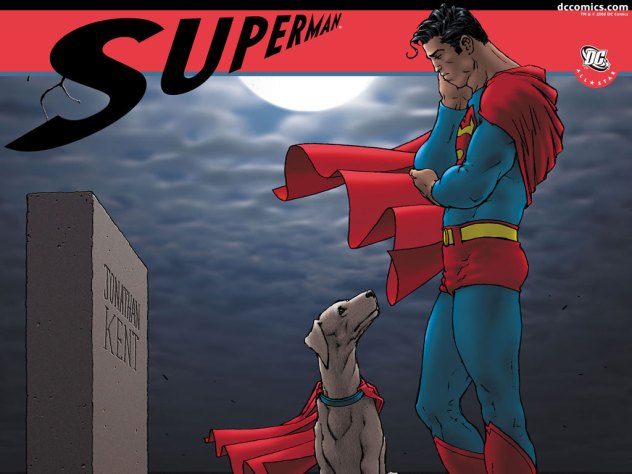
And Morrison himself was known to have really liked the strange and wacky DC elements that existed before what he considered to be a cynical Crisis plot: perhaps much in the way that some of The Doctor’s fans might view his present “gritty and realistic” situation.

Now look back at Steve Moffat. In “The Day of the Doctor” he took the premise of The Doctor having destroyed the Time Lords and, in a typical time-travelling fashion, changed and retconned time. He had The Doctor and his previous incarnations save Gallifrey. Now The Doctor has to go and find it. In one stroke, however it was executed, Moffat eliminated the heart of The Doctor’s modern angst. And in the next episode, in the Christmas Special “The Time of the Doctor” we are going to see him fall to his lowest as he is apparently on his “last incarnation” and is going to die. But we know that isn’t going to happen. We know he will survive. We know there will be a new Doctor.

And perhaps, just perhaps, this is Moffat’s attempt to apply Reconstructionism to Doctor Who. Certainly the inclusion of Tom Baker, the former Fourth Doctor that represented The Doctor’s kindliness, affability and wisdom, into “The Day of the Doctor”–representing what could be another future incarnation of the Time Lord–can be interpreted as a sign of that return to some the weird, and wacky adventures that possess no small amount of hope.

But whatever the case, we are going to see Peter Capaldi as an older, but perhaps wilder Doctor: someone who is not a soldier, a traumatized war veteran, a hero with an anguished dream, or a lonely boy but an adventurer and traveler. He is going to look for where he put Gallifrey. He is going to go out again. Perhaps he might even leave Earth in all time lines and we can see how the rest of the Universe has been doing, how other worlds and newer beings live, and how he will interact with them. Maybe after all the time that Davies has reforged the content of the program it will open up back into larger vistas beyond just Earth and the human.

There is just one last Battle of Trenzalore, a Regeneration rule to work around, and then perhaps the potential for some reconstruction, for something new, for something old, and for something new again. Either way, I look forward to the journey.

Bill Willingham’s Fables Ends Happily Ever After by Issue #150

Now, if the title of this article doesn’t entail an unreliable narrator, or at least false advertising, I don’t know what will. Nevertheless, you read most of that correctly. Not only is Bill Willingham–the creator of Fables–planning to end the entire series by issue #150, but he is even partially retiring from comics writing: so that he can become more “selective” about the projects he takes on.

Fables is a series that operates on the premise that all characters from Earth’s fairytales, children’s stories, mythologies and legends–such as the Big Bad Wolf, Snow White, Prince Charming, Blue Beard, and the Frog Prince–actually existed in other worlds and dimensions collectively referred to as the Homelands before they were driven out by the monstrous Adversary and his Empire. These Fables, as they actually call themselves, are immortal beings forced to hide on Earth in a secret colony in New York known as Fabletown, while the less human and more talking animal versions of these beings must live in a place in the countryside called The Farm so as to avoid being discovered by the human Mundies. Also, depending on the popularity of their stories, some of these Fables are not only immortal, but virtually indestructible.

For a long time, I actually collected the series in their trade paperback incarnations. I remember the first story beginning like a gritty noir detective or murder mystery story, only for the next to become one of political intrigue and revolution, and then the rest expanding outward into interpersonal dynamics, secrets revealed, outright epic warfare, terror, awe, and some really satisfying personal moments. Then Willingham also made Jack of Fables: in which Jack of the Beanstalk and so many other tales are amalgamated into one man who is basically an asshole without any of the charm whose personal quest is to gain more money, prestige, and power for himself. I have to say, it was the first comic that I read with a truly unlikable protagonist whom both I–and the narrative–constantly wanted to see get screwed over.

The Fables universe has a prose novel called Peter & Max, a Cinderella miniseries made by Chris Roberson, an anthology named 1001 Nights of Snowfall, the standalone Fables: Werewolves of the Heartland, an upcoming graphic novel Fairest in All the Land, and a female Fables-centric series aptly titled Fairest. There is even a video game called The Wolf Among Us created by Telltale Games and its “Episode One” in the mythos to consider as well.

To be honest, Willingham could have easily ended the series after the Fables finally defeated the Adversary in the War and Pieces story arc, but Willingham decided to expand the universe past the war stories and look at each of the worlds in the Homelands as well as some of the more … powerful and truly terrifying forces that exist in the Fables universe. After all, fairytales came from oral folktales which were neither sanitary nor pleasant tales. Even the more modern children’s stories were built on a foundation of cautionary darkness. But that all said, to me it isn’t too much of a surprise that Willingham is going to retire the series. After destroying an Empire, he and Mark Buckingham–with the latter’s lush and vibrant illustrative style–have made and portrayed so many worlds and characters in this one creative universe.

The image below is the cover for Fables issue #137: which is apparently scheduled for January 2014, while Fables itself is projected to end in early 2015. And while I admit that I will miss my favourite characters Prince Ambrose and the Black Forest Witch, and like the dark cautionary tales from around the fire Fables may not necessarily have “a happily ever after” for everyone,  it most certainly will be a series that many comics fans will talk and ruminate about for many years to come.

You can read the original story at Comic Book Resources, from the man himself on The Online Home of Bill Willingham, and the Newsrama Interview.

Fables

Help A Lonely Cat Feel Lonely No More: Tessa Kennedy’s Ghostcat and The World of the Incredibly Strange

I keep breaking my promises to just write stories on here for this month. However, the way I figure it I am talking about other people’s stories and looking specifically how they function. In addition, they are Halloween stories or narratives so attuned to the holiday that it might as well be.

So I have presented myself with another challenge. Not too long ago, I wrote a review called Sharing the Love From Ground Zero: Spread by Justin Jordan and Kyle Strahm for Sequart on a comics Teaser which I read, and then promptly wrote up that same day. However, this post will be on something a little less, shall we say … graphic than the above while, at the same time, illustrate the mystery, emotion, and sheer quirky weirdness that can be found in what looks like fragments of story and elemental cartoons in frame.

Not too long ago, British comics creator Tessa Kennedy of Kennedy’s Emporium Followed me on Twitter and asked if I could support her Indiegogo campaign: in which she is seeking funding to print and package as well as provide postage for her seventy-page comic Ghostcat and The World of the Incredibly Strange. While the book it features the black and white comics story of a cat that hunts for ghosts–not to banish or capture them, but rather to attempt to become their friend out of a sense of loneliness–there also seem to be a variety of different strange and weird tales illustrated in a seemingly rough and elemental manner not unlike Rich Burlew’s Order of the Stick, or even Jhonen Vasquez’s Johnny the Homicidal Maniac, but they are cuter somehow: cuter and more iconic.

Kennedy explains, in her description section, that her comics come from her “love of the dark and surreal mixed in with even darker and surreal humour hopefully giving the comic an extra dosage of nonsensical mirth.” Take this page excerpt as an example.

https://i0.wp.com/i40.tinypic.com/35byyk2.jpg

At first, I’d almost say that this is a collection of comics that you would get for children, and they can still well be, but there are definitely some nightmare fuel-inducing and subversive elements in Kennedy’s choice of diction that make this comic totally worth while for adult consideration as well. Also, depending on what you want to contribute, you will not only get a version of the book but also a pen, a mouse pad and even a mini-comic.

Tessa Kennedy’s comic is definitely worth checking out and it is about the season to do so: and by that when is Halloween not everyday? I don’t have too much money on hand at the moment, so I thought I would help by writing up this article on Ghostcat and The World of the Incredibly Strange’s Indiegogo and encourage everyone who reads me to check this out. You wouldn’t want Lonely Cat–as I call him (if he is a him)–to remain lonely do you?

After all, he has so many other ghosts to find …

An Interview with Bill Watterson in a Magical World

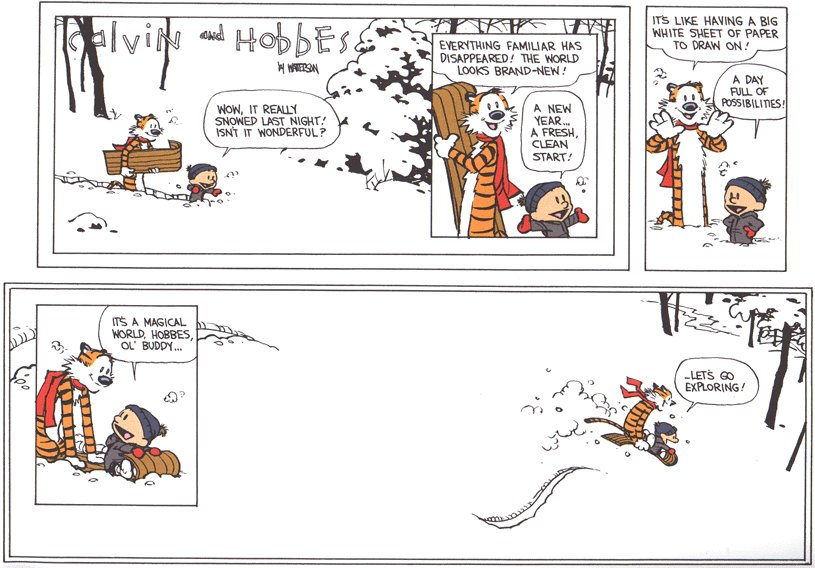
It has been seventeen years or so since Bill Watterson’s last Calvin and Hobbes strip hit the newspapers: the clipping of which still curls and yellows on my bulletin board. It was a comic strip of silliness, philosophy, introspection and–most importantly–pure exploration, adventure and imagination between an overactive child with big dreams and little taste for reality such as it is and his tiger with a penchant for eating tuna fish sandwiches that only he can talk to and play with.

In 1995, Bill Watterson ended off his Calvin and Hobbes newspaper strip series with the words, “It’s a magical world, Hobbes, Ol’Buddy … Let’s go exploring.” In the intervening years, the creator of the imaginative boy and his tiger friend, answered fifteen fan questions in 2005 for Andrews McMeel Publishing and had an interview with The Plain Dealer in 2010. Bill Watterson himself rarely grants interviews: partially because of his own intensely private nature but also due to his desire to distance himself from his completed comic strip. Certainly, many potential interviewers and authors such as Nevin Martell in his Looking for Calvin and Hobbes: The Unconventional Story of Bill Watterson and his Revolutionary Comic Strip had no such luck arranging a meeting with the reclusive artist: resorting to drawing material from The Calvin and Hobbes Tenth Anniversary Book as well as talking with Watterson’s contemporaries, members of his family, and those artistically inspired by his work. Watterson has, on many occasions, claimed he said everything he had to say about his work in the Anniversary book.

Mental Floss Magazine and interviewer Jake Rossen, on the other hand, seems to have had far better luck.

The magazine gives us a brief glimpse of the email exchange between Rossen and Watterson: in which the cartoonist addresses questions such as why he thinks it is so hard for readers to “let go” of his works, what he thinks of a company such as Pixar animating the characters of his strip, the critical point in which he decided his creativity was more important than licensing and syndicate interference, where he thinks the comic strip will fit in today’s society, and other matters. The rest of the interview will be published in the print version of Mental Floss come this December.

Bill Watterson ended Calvin and Hobbes while it was still good, after saying everything he had to say, gaining sole rights to his own creation, and prohibiting any kind of merchandising aside from the sales of the books of collected strips. While I was sad to see it go, it has lived on: becoming an archetype and legendary spot of golden warmth that has inspired the aesthetics and works of future cartoonists as well as countless others over the years long after it was finished.

But those last words that Calvin speaks to Hobbes still haunt me. After the strip ended, I didn’t know how “magical” the future would be afterwards. Certainly, a lot of very unpleasant and difficult things have happened since 1995 but now–in 2013–despite all of the challenges that still exist not much else has changed. There is still that child in all of us, that Calvin that likes to daydream and that need for a friend like Hobbes to always be in our minds. And when I look at the return of Miracleman, the next Sandman comic and so many new and geeky innovations I think back to Calvin’s last words created by Watterson and Watterson now granting this new interview when everything was thought to have been said and I think to myself that perhaps, just perhaps, this is a magical world after all: one that still bears some exploration.

Calvin and Hobbes

Miracleman Returns January 2014!

Miracleman Returns Jan 2014

It was in 1994 that the last official issue of Miracleman–a superhero series creatively revised by Alan Moore in 1982 and continued on by Neil Gaiman–hit the stands. The series was not yet finished but by the time issue #24 came out its publisher, Eclipse Comics, had become defunct. There were many attempts to resurrect this series about a superhero that discovers the unpleasant grittiness of his existence and eventually uses his power to rule the world, but there were many convoluted, legal complications that not only kept new issues from being created, but also prevented the rest of the series from being reprinted as well.

It is only now, nineteen years later, that Marvel Comics has announced at the 2013 New York Comic Con that starting January 2014 it will be republishing Alan Moore and Neil Gaiman’s run of the series and publishing all new Miracleman stories by Neil Gaiman and Mark Buckingham. According to Editor In Chief Axel Alonso, Marvel Comics and its Special Projects Team has been in the process of obtaining the original or the photo-static copies of the artwork as well restoring them to a quality of detail that is up to par with the standard of the Marvel Masterworks line. It is a truly fascinating bit of news especially when you consider that Neil Gaiman, who was given the reins to the comic after Alan Moore left it in a dubious utopia, last worked on it as a young writer and is now back into it as an experienced and best-selling author and storyteller. It is tempting to say that this journey from creation to legal controversy has come full circle for both Neil Gaiman and artist Mark Buckingham, who has since become known for his art work in Bill Willingham’s Fables series.

Above is a video posted by Bleeding Cool of Neil Gaiman talking about his love for Miracleman, Marvel’s republishing of it, and his own work in finishing what was given to him. To all the fans, old and new, I would like to leave you with this article by Julian Darius of Sequart called Why Miracleman Matters. Finally, the years of Miracleman‘s Silence will be broken once again by one word.

Kimota.

Miracleman Ascendant

We Interrupt These Stories to Bring You Andrez Bergen, Great Capes and GeekPron

Originally, I was going to make the month of October 2013 Storytime for Mythic Bios: if only because for the past three entries I have been posting up stories. And I was going to do it again today until it occurred to me that there are two updates that I need to make.

So first of all, I am friends with Andrez Bergen: an author and musician whose Blog you can find under a cap-locks version of his name right here with the subtitle: a wayward soapbox for author/hackwriter Andrez Bergen. He has written a few books, but the one that I have read is his new Who is Killing the Great Capes of Heropa?: of which you can either click on the previous link or look at Heropa itself. Basically, imagine a virtual reality world modelled after an original Silver Age comics universe where players can be either superheroes or villains. Then add to it with the fact that it operates on the Comics Code Authority rules: such as no swearing, fraternizing between hero and villain roles, drinking in public, revealing your secret identity, and then some. And then complicate it by having set in a dystopian offline society and have the dregs of it start to affect this ideal world.

I actually met Andrez in the WordPress Blogsphere when, I believe, I wrote My Best Friend Was a Sith Lord. What it seems like in this amateur version of Blog archaeology or psychogeography is that Andrez commented on my entry and I commented back, followed him to his site where his book was being promoted and still in the process of being finalized … and the rest is history that can be summed up into a continuing friendship and a consequent Sequart article published yesterday entitled Revisionism Comes to a Silver Age: Or Who is Killing the Great Capes of Heropa?

Suffice to say, I am really pleased with how the above article turned out and if you are interested please buy Andrez’s book, look at my article and read through Sequart’s really fascinating scholarship on the medium of comics and everything it has influenced. You can find the link to Sequart through my article or my Blogroll on the right-hand side of Mythic Bios proper.

It is just amazing how things can come together: and in ways that you didn’t even think of beforehand. I also have another element of news. As you might have seen from my Blogroll, I have been following G33kPr0n for some time now. What you might not know is that they were looking for some contributing writers and, after sending them some work, you are looking at one of the newest members of the G33kpr0n Contributing Writer Staff. 😀

I didn’t want to say anything until I posted my first article and made it official. It is different writing for G33kPr0n than for Mythic Bios, but it has opened various new avenues to me: if only out of sheer geeky enthusiasm. My first article actually covers The Dark Crystal Author Quest and outlines it for the readers of G33kPr0n. I am also getting revitalized for my work for the Quest as well in creating my story. I know what I want it to be about and the rest is now a question of details and time. Suffice to say, I have a whole lot of ideas for G33kPr0n articles, new space to collaborate with, and good awesome geeky people to share it with as well: both staff and readers.

I have wondered, however, if this will impact my writing of Mythic Bios: if I will have to cut down on articles in order to also work on my other projects … maybe to once a week instead of twice for a while. I still need to look for other avenues as well and we will just have to see where it goes. But in the meantime, yay: lots of links tonight, ladies and gentlemen and beings of all kinds. I believe I will have some other news if and when specifics are given to me as well. I have plenty of branching ideas and I just want to see how they bear fruit.

So stay turned everyone, as I become an even more obnoxiously speaking-Geek. Same Mythic time, same Mythic Bios …

Looking Outward