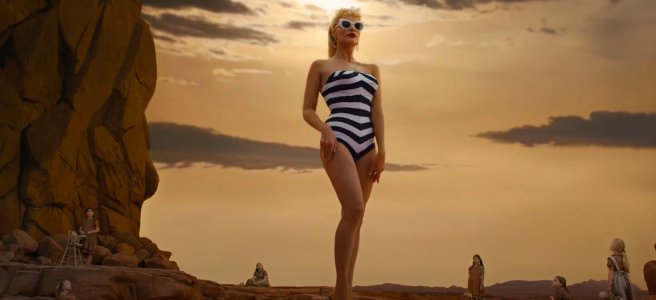
Fuck the Box: Greta Gerwig’s Barbie

If anyone told me that, one day, I would be writing something about Barbie I wouldn’t have believed them. Barbie was something that little girls played with, while boys of my generation had action figures like G.I. Joe, and Teenage Mutant Ninja Turtles instead. In the 1980s and 90s, if you were a child you mostly lived under this gender binary of a socialization of play, and toys. Barbie was pink, hyper and even stereotypically feminine, and seemed like playing house.

Mattel created Barbie, and produced her, her companions, and her accessories even though the company also made many other toys built for children of all genders. Mattel, as a toy company, wants to sell more of its products so that it can make more money. It recognizes social and political trends, even economic changes, and adapts Barbie and presumably its other toys accordingly. And the Barbie film is another vehicle, another accessory, by which this corporate entity can continue to do exactly that: make a profit. Warner Brothers cooperated with Mattel to also make money, and together they made a power ad campaign for the movie, and everything that comes after it.

And then, you have the big names working in this film. The insanely skilled Margot Robbie as Barbie, of course, Ryan Gosling as Ken, even Kate McKinnon’s Weird Barbie, kick ass Michael Cera as Alan, and so many others bring a presence to the movie, and make people want to see what happens. And Greta Gerwig herself, the director of the movie, is a well known independent filmmaker who wants to make a story about girls, and women, and their place in the world. 

I wrote a Letterboxd review of Barbie a while back, and while I feel like I captured a lot of initial thoughts, I’ve time to think about a lot of other elements and while my score – namely, three and half parties out of five – will remain the same, I feel like there is more to say. 

In my original review, I wrote that Gerwig, not unlike Barbie herself, walks like a ballerina – on her tiptoes – on a tight-rope between telling an independent feminist story, and working with the Mattel corporation. At the same time, there is that even thinner line between the esoteric, almost Pee-Wee’s Playhouse reality of Barbieland, and a commentary of our capitalist, consumerist patriarchal world. When you look at Gerwig’s depiction of Barbieland, it is a mystical and mythological place. Barbie is Wonder Woman, having not been born through the flesh of men and women, but as an artificial being made by another species in another plane of existence. She comes to Man’s World, or Los Angeles, and she represents her world of Paradise Island or Barbieland. As Margot Robbie portrays her, she is naive about Los Angeles or the rest of the human world, but she is intelligent and capable such as her punching out the man who slaps her ass, and when she escapes being put into a box. Amazons themselves, as they were originally made by William Moulton Marston, would lose their powers – and Wonder Woman herself would do so – if they let themselves be bound. And Barbie knows this on an intrinsic level, which is why she runs, and goes to the liminal spaces in the corporation of Mattel – an even more pronounced plane of Patriarch’s World – to get out of there, and find the spirit of her creator Ruth Handler: perhaps her Hippolyta, or one of the goddesses.

Barbie is innocent and blissfully ignorant of her gifts and existence before the Outside World – and her owner’s thoughts, intrude on her: changing her, making her graceful, floating, tip-toe feet flat and subjected to the humiliation of gravity, along with the cellulite of her skin instead of the perfection of plastic. At the same time, her Lasso of Truth is what Gloria, essentially her owner and an employee of Mattel drawing sketches of her, or versions of her, gives her when she reveals the maddening and ridiculously contradicting expectations of patriarchy for women, and towards the tools to which inform women’s – and girls’ – socialization: namely dolls. Namely Barbie. 

The metaphor gets tortured the more I write it, but you get the idea. Others have compared Gerwig’s Barbie and its existential situation to Adam and Eve eating from the Tree of Knowledge of Good and Evil, instead of the intrinsic immortality of plastic. This is a parallel made by Alissa Wilkinson in her Vox article In the beginning, there was Barbie, and it matches another mythological interpretation in the form of Barbie being the goddess of love and war Inanna with her trip to the Underworld and back in Meg Elison’s “Barbie” is the new Inanna. The ideas behind Barbie are old, just as dolls were arguably created to educate girls to become mothers for generations before – as the film does through its tribute (and not a rip-off) to Kubrick’s 2001 – so too does Barbie demonstrate the potential to become more than a potential mother, but that, and being beautiful, intelligent, and capable as one’s self as well. 

But Gerwig also manages to illustrate the problematic elements behind this idea as well, though navigating those meta-fictional layers can be tricky, and I nearly got lost in them. The Barbies of Barbieland are expected to be all things, all at once, all the time. Because they are not human and have no biological needs, perhaps they can do that but it is telling that when Ken comes back from Los Angeles with “patriarchy,” many of the Barbies go along with this overt version of it because it allows them to “relax” and “not think,” or “do anything,” for a while. There is a lot to be explored there, especially whether or not the Barbies were already under patriarchy by the nature of them being plastic and perfect, and partying and just having to be played with and playing at being independent, and nothing more before Barbie and Ken ever went on their journey. 

It is pretty telling that the film’s version of Mattel’s Board of Directors were desperate in keeping both the inhabitants of Barbieland out of the human world, and the human world from getting in there. As Ken is traveling through Los Angeles, he encounters a businessman who all but tells him that patriarchy’s greatest trick in their world is seeming like it has changed, but operating “behind the scenes,” appropriating the tokens of diversity and representation but using them as decorations or, again, accessories while business continues on as usual. The reason why Mattel in the film doesn’t want anything to change, even when Ken’s changes to to Barbieland into “Kenland” still sells toys, is that people will catch on that they are being overtly patriarchal, the Kens’ behaviour over the Barbies will be seen and questioned by girls and mothers. They want the dream to remain the same. They want the seeming of freedom to continue so that they continue making toys, making money, and keeping them – and the systems that they support in the human world – in control. Will Ferrel as the Mattel CEO wants to remain “Mother” and keep co-opting maternal and feminist icons for himself, and the company no matter the cost. 

So it is a good thing that Gloria and her daughter Sasha, as obnoxious as a teenage child can be, go back with Barbie and represent the women that Barbieland has influenced: to the place that they also influence.

I think the strongest part of the world-building that Gerwig creates is also one of its most vulnerable elements. The idea that Barbieland and the human world are planes that influence each other is great, but it is never explained how Barbieland came to be, and how these walking plastic dreams can actually crossover in this version of our world. The idea that a Barbie doll’s owner can influence them, and vice-versa is also inspired but it’s never explored just how far this goes, or if a doll can be affected by a generation of owners. I honestly believed that the twist of the whole film would have been that Barbie thought that Sasha had been her owner, only to realize that those memories of a girl playing with her weren’t of Sasha but a child version of Gloria who grew up, and was working for Mattel. I still think this was a missed opportunity, and could have led to more character development for Gloria and Sasha, as well as reinforcing that lesson Barbie had earlier about human mortality when she saw an old woman for the first time sitting on a bench, under a tree, confident in where she is in her life. I thought that was the foreshadowing there about Barbie not understanding human aging and frailty, and I think it is still a missed opportunity.

The film itself has many glib and clever moments, and scenes of grace too. For every madcap reference to the Barbie dolls being animated toys, there are statements about men talking too much about Zack Snyder’s Justice League Cut and Kubrick, and Barbie meeting her maker. And I don’t care what anyone says: Barbie being having feminist speeches is not a disingenuous thing that Mattel and Warner Brothers’ advertisements lied about. From the very beginning, we knew this wasn’t going to be a light romp in the park. Once you have a children’s doll in a children’s doll party asking “do you ever think about death,” Pandora’s Jar of pretty paper worms will spring open. If no one knew there were going to be serious nuances and poignancies to Barbie, they obviously were not paying attention. 

This isn’t a children’s film, even though it uses children’s things to tell the story. Does it do it well? For the most part, though it can get awkward at times. For example, what are the purposes of the Kens, and how do they work into the world of Barbieland, and the meta-narrative outside of it? Are the Kens the oppressed minority or the other half of the population? Are they representative of the self-entitled little boys, and Peter Pans, that men are supposed to be in our world? Did Ken, as an individual, have some genuine grievances in how he was treated but took matters too far in “correcting them,” to a point where once he knew patriarchy wasn’t about “horses” adding more to men’s shapes, he wanted to stop but he enacted a force he couldn’t control and committed his ego to something to the point where he was in far too deep to walk away? Are the Kens symbolic of the Trump regime and Supreme Court presence that overturned Roe v. Wade, or are they a class of people that will “one day get the same representation that women do in our world?” Perhaps the Kens exist, as accessories to Barbie on a good day, and also as silly mirrors to show men how dangerously ridiculous patriarchy actually is.

Is it true that once you take something out of the box, it is extremely difficult to put it back in again? Is it even all but impossible? Jars are similar to lamps, and lamps contain genies or jinn that grant powerful wishes – or dangerous wish fulfillment if you think about Patty Jenkins’ Wonder Woman 1984 –  and boxes have another derogatory connotation that patriarchy has associated with women’s bodies and genitalia. And while Barbie, in most of the film, doesn’t have human functions, the fact that Mattel’s Board of Directors wanted to put her back into the box, reducing her back into her “basic function,” speaks volumes.

Barbie is intellectual property, but also an idea. She’s both Athene bursting from the head of Zeus after he tries to eat Metis, but also Aphrodite who is both Zeus’ daughter, but somehow also the creation of the severed phallus of his grandfather Ouranos fallen into the primordial waters. Ruth Handler did create Barbie in 1959, but she was inspired to make her by the German doll Bild Lilli: the patents and copyrights of which were all bought later by Mattel in 1964, and therefore phasing Lilli out in favour of Barbie. Lilli is like Lilith, Adam’s legendary first wife, in that she was a character created with the Bild, with a newspaper, with knowledge lost while Mattel created a strange and disturbing version of Barbie’s friend Midge who was pregnant, and whose body and child could be taken apart not unlike the apocrypha of Adam watching his second wife be created by God. And Ken is the extension of Barbie just as Eve was made from the rib of Adam. Then Margot Robbie’s Barbie sees the truth of life by watching an old woman sitting under a tree, and later she gives her own plastic near-immortality to become Barbara Handler: the spiritual daughter of Ruth.  

Like I said, there are many layers to Gerwig’s film, even if sometimes it can be a bit all over the place and lost in the spectacle of slapstick comedy, and sometimes childlike fantasy. I feel like it could have become far more grim, but Mattel would not allow for that as, again, they want to sell toys to children. So what does this film say? I would argue that, as I mentioned in my Letterboxd review, that Barbie is consumerism talking about itself, while also critiquing itself and its patriarchal origins, and what it influences at the same time. Gerwig takes great pains to have Gloria and Sasha not only debate about Barbie disappointing and even representing fascism or a destruction of feminist progress to women, but how just as men have unrealistic expectations of women, women internalize unattainable perspectives on women, and treat each other badly, and that this is something they need to work on.

Does Barbie represent feminism? Or a form of feminism? Is it a form of token feminism exploited by capitalism or something not unlike LGBTQ+ issues of pinkwashing or rainbow capitalism: representing itself as enlightened while ignoring or continuing to promote structures of inequality and systemic abuse? Does it represent a form of women’s cinema, or a discussion on cinema as well? With the references to Kubrick and Snyder aside as male fans of their works mansplaining cinema to women, I particularly resonate with director Anna Biller’s thoughts on the matter. In a series of Tweets, she looks at the seeming contradiction between an independent female film auteur’s perspective and vision and its relation to having heavy corporate backing and influence. Or as Biller puts it: “The marketing, conflating indie auteur films with a hyper-corporate product, makes me a bit queasy, but I suppose this is what they were going for: the message that women’s cinema is as serious as film bro cinema.”

Barbie, for all of its visualizations of representation and diversity, still has problematic elements when you consider the capitalism involved, and even its own growing pains: with Handler having taken another design, and then her company buying it out years later, Handler and her husband leaving their company under criminal financial accusations, and leaving it all to mostly male directors for years. But it’s okay that it’s problematic. Nothing is perfect. That is the point, I feel. Gerwig’s film seems to say that it’s all right that Barbie isn’t perfect. That hard work isn’t effortless. That progress isn’t a linear process. Perhaps Barbieland is like some kind of ancient Mediterranean Dreamland,  or a Sybil’s Underworld as written by Virgil: a plane where the past and future, where what was and what will be, exist simultaneously. Maybe nothing changed after the Revolution of the Kens and the Barbies taking back their world: basically restoring their Party. Perhaps Barbies will still tip-toe around like ballerinas tapping empty cups to their faces, plastic books with nothing in them, looking at already made artificial pancakes, turning on invisible showers, and floating everywhere without the need for gravity, for shitting, for pissing, for digestion, or sleep, or sex. Maybe for all Barbieland says it will change, it will remain behind that Gate of Ivory, and stay the same. Perhaps our world is no different and just an extension of believing in these false dreams. Or perhaps it’s something that everyone in Barbieland are standing on the same ground, and actually talking about things now: even the Kens who will have lower court positions, and get to wear ridiculous robes.

And as for Barbie? Like Pinnochio, or Giselle in Enchanted, or Evelyn from Everything, Everywhere All At Once who believed she was the greatest failure of all the aspects of herself, of the Barbies, she exits the Dreamland through the Gate of Horn – of truths – and becomes real. She’s become flawed, complex, fallible. Her journey here isn’t perfect, just as this film is not. Maybe she represents an uncertain future, scary and messy, but inevitable. And just like Margot Robbie’s Barbie, Greta Gerwig’s film – madness and all – might, and as others hope, will be its own gateway to tell other prominent women’s stories in glorious colour.

I began this writing by saying I never understood Barbie growing up, and perhaps it’s not so much what Barbie is as a story, or even a film that’s important, but working with the elements of what girls and those that have grown up with it know, Greta Gerwig makes something that can represent the potential of more. Because at the end of the day, playing house isn’t a bad thing. And there is definitely nothing wrong with being feminine in any form. And there is nothing abnormal about the colour pink. Perhaps, as Aqua said it best in their song “Barbie Girl:” it’s all “Imagination. Life is your creation. C’mon Barbie, let’s go party …” 
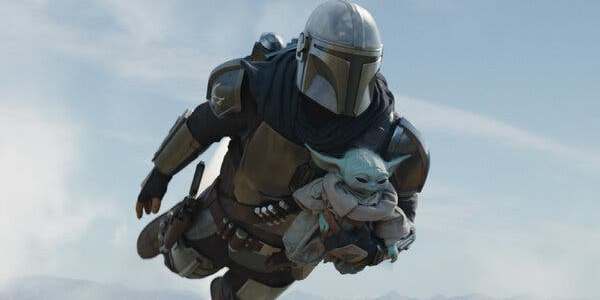
The Child is Star Wars

To all fellow former Infinity Warriors, and that would probably be most of you reading this, don’t read any further unless you have finished watching Season Two of The Mandalorian. Spoiler Alert.

Have you done so?

Good.

I first started watching Star Wars, the Old Trilogy, when I was about twelve. I’ve mentioned how my parents took us to Hollywood Movies, and we rented the VHS tapes. Before that, I grew up with Ewoks and Droids playing on Channel 3 Global Television whenever I went to my grandparents’ place that Saturday afternoon. Around that same time, and in that same area we would visit my uncle’s house and I would play with a giant shelved container shaped like Darth Vader’s helmet. In this container were action figures of Bossk, and IG-88, and a Snowtrooper. There were many toys missing. They looked old and, literally, from another world and another time. And I saw these labels on each alcove: Obi-Wan Kenobi and See-Threepio. It confused me, then. Was Obi-Wan a droid like Threepio?

It’s safe to say that I grew up with a lot of mysteries and a sense of magic in a world that didn’t really make sense, but seemed larger than I could even dream. And this was before I watched A New Hope, The Empire Strikes Back, and Return of the Jedi.

This was before I knew anything.

The Old Trilogy exploded my mind. This space fantasy shaped my brain forever once I saw it: from the crucible of the desert world of Tatooine, to the stark terror and mythology of Dagobah’s Jedi training to the horrifying duel over Bespin, and the redemption and celebration on the forested moon of Endor where my Ewok friends lived in a live-action sense.

And they grew on me: Princess Leia with her assertive power and fierce love and determination, Han Solo overcoming his world-weary cynical nature to save his friends and be a better person, and Luke. Luke Skywalker.

So many of us, I think, from that time saw ourselves in Luke. We followed this young man, this boy, who knew nothing about the world — much like us — as he continued making mistakes, but forever showed his loyalty, always persevering, always wrestling with his emotions to do the right thing. We saw his wonder as he looked at a lightsaber for the first time, the same time that we did. We felt his pain when he saw the charred remains of his aunt and uncle, and that sense of powerlessness in realizing just how brutal the galaxy was. And we were happy when he found his friends, when he started getting better at his Jedi training, and we were worried when Obi-Wan was gone, and wondered just how someone who could barely deflect the blaster bolt of a training remote and then pull a lightsaber to him on Hoth could fight Darth Vader.

I remember just his sense of frustration, and fear. It felt so real to me. But the fear wasn’t just for his life, or the lives of his friends and those he fought for. It was the fear that all he would ever get would be these scraps of a life and a tradition — of great and beautiful arts, powerful cultural tools — that his father had, and that he might not succeed in earning. It was the actual vicarious terror of seeing that there was a chance that Luke might not achieve or realize his full potential, and that he could fail.

Being a perfectionist child with learning disabilities and clear neurodiversity and frustration over my body’s cooperation with my mind, I could feel that so hard, and it made me root for Luke whenever he succeeded, kicked shlebs, and took names.

When Obi-Wan’s spirit told him that he couldn’t — or wouldn’t — help him if went to Cloud City to face Vader before his training, after his failure understanding his vision in the Dark Side Cave, I felt Luke’s frustration. Why wouldn’t Obi-Wan, his mentor and friend, help him against his enemy? And watching Luke lose … so badly, so brutally … I’ve written about it before, how I grew up on eighties and nineties cartoons where the hero always wins their conflicts and the villain runs away to fight another day, or gets put in jail. That didn’t happen. And then the way Luke received that reveal …

Luke didn’t learn from his failure at the Cave on Dagobah. But he learned from his encounter on Cloud City. I knew that Vader was Luke’s father going into this, as it’s been so seeded into the popular consciousness for years, but I didn’t know about Leia. And I didn’t know what was going to happen on the Second Death Star: another subversion of expectations, after so much lead up that ultimately paid off. And then we see Luke at the end: rescuing his father, only to lose him, but not really lose him in a metaphysical sense.

Leia and Han succeeded in their mission on Endor. They became a couple. The Ewoks dominated. The Empire was defeated. Luke had to “pass on what he had learned” and a whole new story began after the ending of an old one. This was in 1983. I watched these in the nineties after being confused about the numbering system.

We did not see another Star Wars film until 1999.

I want you to understand something. Many of us, and I am mostly speaking about myself though I know others felt the same way, wanted to see what happened to Luke, Leia, and Han. We wanted to see Han become a General of the Republic or continue to have adventures. We wanted to see Leia rule the New Republic, and the decisions she would make, and the life she and Han would have together.

And, most of all, I wanted to see Luke become a Jedi Master. I wanted to see him restore the Jedi Order, and what his Jedi would be like. I thought about all the enemies they could face, the challenges, and I just … I wanted to see my friends again.

I just wanted to see my friends again.

And we got that, in a way. We got it through Timothy Zahn’s Thrawn Trilogy, where Obi-Wan’s spirit tells Luke that he isn’t the last of the old Jedi, but the first of the new. We got more of it in further books of varying quality, comics, and video games. Not all of the continuity made sense, but we got the idea that Leia was the Chief of State of the New Republic, Han became a General, and he and Leia had children together that would carry on the legacy and burden of the Skywalkers. And Luke would become a powerful Jedi Grandmaster, and meet with all the remnants of the old Jedi and new Force-sensitives to build something entirely different: exploring the remnants of the old ways, giving us those hints of what time was like before the Empire and when the Jedi were numerous and whole, and showing us just how our hero evolved.

Luke would go on to fight many different adversaries, make mistakes, but always try to redeem those he could from Darkness. He even gets a love interest, after several disastrous relationships, who initially wants to assassinate him but has a son with her. And there were books that took place long after Luke’s time with Skywalker descendants and successor governments to the Republic and Empire, and a myriad of different ideas. There were cool books like Tales of the Jedi and Tales of the Bounty Hunters that fleshed out so much background stuff.

The thing is, this is all we had — for the most part — for literal years, and it was okay. We got to see our friends continue to struggle, but also grow. Was there a sense that nothing could happen to the Big Three? Of course. And I admit that could get tiresome. But they were … they were my friends growing up in a real world that, like I said, didn’t always make much sense. And I would have loved to see them come back in a Sequel Trilogy.

It wasn’t Disney’s fault that we didn’t get to see the Big Three together on film again. George Lucas was the one who made the decision to focus on the Prequel Trilogy. I’ve written on here before about an alternate reality where Lucas and Lucasfilm had made interquel cartoons while he perfected the technology for the Prequels. I sometimes wonder what would have happened if Lucas had made the Sequel Trilogy instead of the Prequels.

Unfortunately, we learned a lot over the years about George Lucas and, while his ideas and insights were good, a lack of oversight made his narratives unwieldy and his character and actor direction even worse. George Lucas wasn’t perfect, and the Prequels certainly were not even though I will always be grateful to him and his collaborators for creating the Star Wars universe.

So when Disney bought LucasFilm and made the Sequel Trilogy instead, I knew it was too late for Leia, Han, and Luke to be the protagonists. Carrie Fisher, Harrison Ford, and Mark Hamill were older then, and it was a better bet to have them as mentor characters to pass on what they had learned to the next generation.

I think the unease began with me when they rendered what was the Expanded Universe — all those books, cartoons, comics, and games — into non-canon status: into Legends. At the same time, I felt like there was an opportunity there: to tell a new story, and utilize the wealth of material there to do so, which seemed to be the plan.

The Force Awakens was like a breath of fresh air: with characters that had proper dialogue, great chemistry and interactions, much more subdued CGI and just that more lived in world that we had grown up with. And J.J. Abrams set up so many possibilities and questions. What happened to this world? Why was Leia leading a Resistance? Why did Han leave on his own with Chewbacca? And just what happened to Luke’s Jedi students, and Luke himself?

I have talked about this so much. The Sequel Trilogy, I felt, was supposed to be the heir to Skywalker: literally. It was the successor part to the Skywalker Saga. It had that heritage. Even without George Lucas, it had enough material and people working on it — the company that made it — to make it official. I recall hearing about Rogue One, and Boba Fett, and Obi-Wan, and Solo, and while I felt like they would be interesting, they were films that weren’t part of the Skywalker Saga that I grew up with. I thought of them as distant cousins, or relations that could add to the context of the others, but they were cadet branches of the main line: the central heritage. Some of these films, like Rogue One and Solo happened, and they were entertaining. The other two did not. At least, not at the time.

I reviewed The Force Awakens. I also reviewed Rian Johnson’s The Last Jedi. In retrospect, I saw my own experience paralleling this journey. I saw all the other films with other people: my family and friends. I saw The Last Jedi by myself. I saw Solo by myself.

I saw The Rise of Skywalker by myself.

The Last Jedi had some fascinating ideas, and interesting moments, but it is a controversial film, and with good reason. But it wasn’t the issue. It all comes down to the magic of Star Wars, of the Force, of the overarching story, and that sense of continuity. Yes, there were weird elements and oddities displayed throughout the cinematic series, but every scene felt like it wasn’t wasted: like they were telling their own stories, and they were just all interesting. Everything was built up to lead to a particular conclusion of some kind. But when the Sequel Trilogy went on, it became pretty clear that the plan was haphazard at best, and sometimes the message or the moral behind the story became more like transparisteel than actual character interaction, development, and storytelling. When you combine that factor with something that felt standalone added onto other material that led to a conclusion that just … didn’t have the momentum, that wasn’t earned, and felt sloppy and gimmicky, and full of special effects instead the back to basics approach of the first film, the magic was thinning. And the ending …

I think the ending of The Rise of Skywalker is emblematic of Luke Skywalker’s treatment. Because it always comes back to Luke. Imagine seeing a character you relate to, who you grow with, and you know he had a whole ton of stories where he excelled, continued and improved on an entire culture nearly wiped out through genocide, and even had a family and friends and loved ones, and then a company renders that all non-canon. It didn’t happen. And then you are left with someone who has lost everything, including his sense of redemption. And hope.

Luke Skywalker was the New Hope of Star Wars. You could argue Leia Organa was another, but Luke was that optimism despite all the odds, and defeats, that you could just … that many of us could just root for. And an interesting story could have been told about how he lost that hope, and we have a bit of it. Unfortunately … after growing up with the powerful Jedi Grandmaster who made other mistakes, but still recalled the lessons of the past, only to see him repeat them in the new canon films, basically knowing his adventures had been erased and replaced with a characterization that would strike down a boy for something he didn’t even do yet after trying to spare and redeem his mass-murderer father … You can see how it just didn’t sit right.

But around this time, after The Last Jedi and Solo, came … something else.

I didn’t know what to think about The Mandalorian, especially given how ambivalent I was to the idea of a Boba Fett film. I was still struggling with hope that the Sequel Trilogy could find its way after The Last Jedi’s sense of finality, and this series provided a distraction for me, and I imagine for many of us.

It felt … low-tech. It was rendered by Jon Favreau and Dave Filoni back to Star Wars’ roots in its Spaghetti Western influences: its weekly serials. There was just more sense of time. More pacing. So much more space to tell a story, and develop characters from simple premises and archetypes into something more. They had nods and Easter-eggs to Star Wars lore and fandom: letting us in on the Secret Club feeling that is an open secret. But it world-built, and slowly revealed mysteries and details to us about the Mandalorians and Mandalorian culture. And Din Djarin and Grogu … Grogu, the Child, was the make it, or break it element of The Mandalorian. He was an obvious reference to Yoda and his own mysterious origins, but also to the Jedi and the Force that we didn’t know would even be involved in this series. He was there for merchandising and fan service and the neoteny of his cuteness, and it could have been as blunt as a Tusken gaderffii stick to the face.

But it worked. Grogu was iconic for the magic of Star Wars. And Din himself mostly stayed in his beskar’gam, his armour. He could have just been a Boba Fett knock-off, or a video game character whose identity the audience could just assume as a surrogate in experiencing this world. But slowly, perceptively, over time we see these two characters bond. And it is endearing. Even their associations with other characters is just entertaining and heartwarming to watch. So many characters I thought would be enemies, became associates and friends. There would be a new story every week, but one that built into something bigger.

It was a slow burn. Season One was all about protecting Grogu and figuring out what the nine Corellian hells was going on. Season Two was about returning Grogu to the Jedi, whoever they were after the Empire purged most of them out of existence. We got to see different kinds of Mandalorians, disillusionment with the Republic, the general independent nature of the Outer Rim, and the genuine danger of even the Imperial Remnants. And we got to see Din’s humanity, and Grogu’s love for him. I felt more for Din and Grogu than I ended feeling for most of the characters in the Sequel Trilogy. Din was a warrior raised by a sect of Mandalorians called the Watch after his parents were killed by Separatist super-battle droids. He earned all of his skill, and even when we run into him he is still earning his beskar: his Mandalorian ore for his armour.

And Grogu? Grogu is hope. He is a child, young for being fifty years old by his species’ standards, but also something of a sacred living relic that survived the genocide of the Jedi all the way to the New Republic to be found again. He is the old, and the new. He has seen, and survived, darkness. And Din recognizes that, and yet protects him — rescues him after retrieving him for his first mission in the series because, at the end of the day, it was the right thing to do, and he was willing to risk his people’s location and turn against the Bounty Hunter Guild’s Code to do so.

The evolution of the characters these past two years, the Star Wars details and eye for continuity, and the continuing mysteries kept me going. It kept me interested. I didn’t like The Rise of Skywalker. At all. To give you an idea, I never reviewed it. Not once. It took my European friends calling me on Discord one day to even get me to talk about it, and I hadn’t said anything about it in a few days. I hadn’t wanted to talk about a Star Wars movie in a few days. I just felt … tired. Drained. Just let down. I almost didn’t even finish Season One of The Mandalorian around that same time. I was down to the last episode. I thought to myself: what was the point? The people and characters I loved for years were gone. They were desolate and disappointed by life. They were too close to what I was now. I just … didn’t want to think about it anymore. I didn’t want to deal with Star Wars anymore.

But then I watched that last episode with IG-11 heroically sacrificing himself for the Child he attempted to kill in the first episode of the whole series, the death of Kuiil the Ugnaught as he tried to protect Grogu, even Greef Karga’s redemption after the Child saved his life, and the disillusioned Republic trooper Cara Dune respecting Din enough after their first adventure and rivalry to help him save Grogu from the Imperials … I felt it then. It saved a part of me. It saved a part of me that loved that magic.

It saved a part of me that loved Star Wars.

And now, I come to the real reason I’m writing this, and reminding everyone that we were all once Infinity Warriors against the forces of Spoilers. Because I saw the last episode of Season Two.

I was already enjoying the series. Seeing Bo-Katan and Ahsoka Tano, and finding out more about Grogu already made the series great, especially with tie-ins to other potential stories in Ahsoka’s standalone live action series. That line about finding Grand Admiral Thrawn took me right back to Timothy Zahn. Hell, even the ending of the last episode and making us really look forward to “The Book of Boba Fett,” either another series or the next chapter to The Mandalorian more than I had ever been excited for a movie around him, was inspiring. The way they reintroduced Boba again, and showed us how bad ass he really was made up for a lot. And resurrecting Fennec Shand after her ignominious death in one episode of Season One, along with a whole development for the mercenary Mayfield really made me appreciate the storytelling. They could have left it there. They really could have.

But then …

They did it.

I remember seeing the X-Wing. And I knew.

I saw the black hooded figure with the green lightsaber, and I knew.

I was looking for that one black glove. And I wanted it to happen. I was downstairs in my basement, screaming at my computer screen. I was yelling at it. Please.

Please.

Please be him.

Please. Be. Him.

He moved like Darth Vader in Rogue One. But where Vader slaughtered Rebel troops, the figure destroyed insanely powerful Dark Trooper droids like they were nothing. He was the pay off of two episodes ago when Grogu was taken by Din to Tython, the supposed homeworld of the sects that led to the Jedi, to summon a Jedi Knight to protect him.

And Grogu reached for the screen, and it was only later I realized he was communicating with the figure telepathically. By the time he came in, to face Din and his companions, and Grogu …

It was him. It was the person we’d read about in books. It was the individual we’d played in games. It was the man we saw fighting alongside his friends in comics. He was young, just as we remembered him, but he had further growth. He was so much stronger. Much more skilled. He’d taken after his father’s fighting style after dueling him. There was CGI on the actor’s face portraying him but the voice was unmistakable.

We got to see Luke. We got to see Luke fight the way we’d always hoped. We got to see him in his process of rebuilding in a cinematic place where he wasn’t crushed by despair, or dissipating after using one momentous Force technique in a process of great metaphor.

We got to see Luke Skywalker again.

And when Din Djarin took off his helmet, against the Watch’s Code, to let Grogu see his face, and touch it when saying goodbye to him … It broke my karking heart. There was joy and sadness in that parting that will hopefully just be a farewell.

A lot of ossik — a lot of shit — has been happening in 2020. This year had been garbage. It is a far harsher crucible than Tatooine or Jakku ever was. These past four years have been pretty bad. It would be so easy to give up. To not care anymore. To just surrender to cynicism and bitterness and disappointment. To just give up hope.

But for one moment, after every Friday morning looking forward to the next episode, at 3 am in my basement I felt a sense of joy and wonder I hadn’t experienced in years. For just forty-seven minutes, I felt like a child again.

Din Djarin was called The Mandalorian, or Mando before we found out his name. And Grogu, when he wasn’t called Baby Yoda, was referred to as The Child. But The Child was not just literal. It was metaphorical. It’s in The Mandalorian that we find out the Star Wars universe has a name for those beings genetically engineered — either cloned or altered — from a previous donor: a strand-cast.

The Mandalorian is a strand-cast of the Star Wars Saga, more continuous than Rogue One and Solo, and almost a whole other species but having more in common with its originator than its supposed biological heir in the Sequel Trilogy. Grogu might be The Child, but I feel that The Mandalorian is The Child of Star Wars.

I know there will be more. It isn’t over yet. Even so, I think about how Din Djarin passed Grogu onto Luke: the Mandalorian fulfilling his almost holy quest, the child relic that is more than foregone story but a living, breathing story of possibilities. And all us — my friends that played our homebrew Star Wars game with Lego those after-school afternoons, the child I was with my old Return of the Jedi writing notebook, and my friend who met us in the park in high school wearing Jedi robes like Luke Skywalker — we got to see our hero again, in all his glory, at least one more time. It was all many of us wanted. And there he was.

So much world-building and meaning in just two seasons of an online serial about a warrior, and his child, and all the people they’ve touched along the way.

Because, in the end, as this continues I feel this truth. That this is the Way.