4: Alternative Facts: We Are the Grass

He that troubleth his own house shall inherit the wind …
— Proverbs 11:29

You’ve finally found us. Or, rather, we’ve found you.

Don’t worry. You’re not in any trouble. It is good, however, to know that the Markers on the Interface — even still heavily divised — are working now. At least this Repolitik Cycle has done that much. What it also means, my friend, is that you’ve been asking the right queries.

Who are we? And there it is. You’ve proven my point.

Well, right now, we are a soup-kitsch. For the ethnos populii here. We’ve been a lot of things for different populii in Amarak throughout the different Cycles, really. We’ve been birth control kline, and hospice; scholastic collectives, and shelters; watchers, and volunteers. But today, we are a kitsch: for this ethnos.

I know that doesn’t explain much, or maybe it says too much. We didn’t make the soup-kitsch. That was all the Worker Party’s idea, if not always its executive, especially not here and … for them. I will speak plainly. I can see the way you look at these populii. They do not look like you. There are many ethnoi, even now, who don’t look like any of us. But they are still populii. They are us. And they still exist, no matter what the Repolitik states. As do we.

But I am getting ahead of myself. Mostly, I’ve told you everything that we are without specifics. The truth is, we’ve always existed in some way or form: though we didn’t always have a name. In fact, we’ve had several, so much so that it’s hard to give you one even now. Part of it, I think, is because we know one name is easy to Mark. Once, we wanted to be proud of that, before everything became more … practic, perhaps?

We called ourselves the Demos.

It’s true. Even though we ourselves have lost much information since the Interregnum, we do know that we came from the Demos. The way I know it, it happened at the beginning, right before the Disunity. The Demos has always been split at one time or another. But something happened, after the Forty-Fourth …

We have our own myths. A State can’t avoid that. And these are on our side of the Interface, in the little cells that we have maintained like embers through the Night Terror of Cycles. Our prompts, filled by our elders, tell us that we had become too arrogant, too … blind and naive in our old ways: seeing all just as it is. As it has always been.  Because of this, the Opposing grew like a weed, had been creeping amongst us and becoming common: right in plain sight. We thought we had reason. Information. Even the hearts of the populii and the elect. We grew complacent. We were select.

We grew … wrong.

The Opposing played on that wrongness. Their Pats, unlike ours, had unity. They’ve always had that power: to fight, and yet decide on one leader to the end. Their strength, and our weakness: our damnation. They played Festive. Panem et circenses. It isn’t anything new under the sun. Except this time … their bread was fear, and their joy, their party, was hate. And like any good festive, few took it seriously. Or worse, the populii were caught in the spectics of it. It’s easy to break something down. Fire is strong. Fire is hard to ignore. It makes you feel alive even when it kills you. Espec then. Espec when everything feels dry and dying around it. And their Pats only grow stronger from the flame, taking the air out of the populii. They always have.

The Opposing have as many names as we do. You can’t kill them. They are here, still. They didn’t die at the Freed Dome Trials, as the Repo Party, after the Disunity: the Disunity that was several disunities only becoming a Reunity even now.

The Repolitik doesn’t believe that. Or doesn’t want to. They think and glean and hope that they are gone, made into muck, like all the old hates and divisives: as they call all difference. The Opposing, in the form of the Repos, said they build bridges, though they burn them. The Repolitik of Amarak, under the Demos of this Cycle, say they want “Equality for all.”

But there is only one way for the living, and the dead to be equal.

The Repolitik think the Repos are dead. They think we are dead too.

When the Demos saw what the Opposing had done, what they were doing, a few of them made reunity. There was hope, according to the legends, that two of our Pats — the Power on the Hill, and the Queen of the Underground — would create that reunity between them, those ancient and strong Cis-Gen Fems, but it was just a hope. Just a dream. We thought perhaps the Great Burn could turn the youth to scourge the select and become elect across the Land again. But mostly, we fight … and it did not make us stronger.

It was what came after that which matters. Learning from the example of the Queen of the Underground, and the power of the Great Burn, that we needed to speak to the populii, not the Pats. But we had to become something more. We had to change from what we thought we were, into what we did: into what we were going to do.

We did the unthinkable. We also learned from the Opposing. But instead of the bread and spectics of hate, as the Demos Reunity, we knew we needed to talk to the needs of the populii, to that place of change. A space beyond words. We also needed the fire, not to destroy, but to create.

And we went forth: a Branch of the Demos, an Arm of Volunteers. We worked with the populii. We apologized for our arrogance. We tried to get to know them. We took our power and brought food, clothes, medicine. We made Co-ops and communes. We embraced what the Opposing hated. We appealed to our elect and made employs for them, for those without them. Most of us were the youth, the populii, though we have our own Pats and elders. We became visers, teachers, healers. We tried to listen. We still do.

And throughout it, we embraced the Way of Non-Vio: of the body and the mind, so that the Opposing’s actions would burn them away, as we took back the Body and the Soul of the Repolitik through deeds. The Demos called us a grassroots way. If the Opposing were the weeds, then we were not so much cells as the seeds of the Demos, the grass, that would fix and bring life back to Amarak.

It didn’t last.

When the Disunity and its disunities happened, we continued to aid the ethnoi in Amarak, and even beyond it. We even helped the Spectra: those still left in our lands that didn’t, or couldn’t join their Pride. Many of them were us: are us. But the Non-Vio way gave out to war. We offered help, but we did get blood in the grass. By the time of the Reunity, the Demos came out and executed the Repos, casting away the rest and claiming equality. Equality for all.

For a time we hunted as well as helped: tracking Repo war criminals, serving justice for the populii that could not get it. We were bloodied too. But then the Demos gave edict. We put down our Arms, like they wanted. We corporated on the surface. We helped form the Workers and the Independents, to make balance between what was once two-sided. The soup kitsches you see around Amarak were made by us, under the Workers: shelters for the populii offering food, learning, and aid. We were done. Corporated. They said we weren’t needed anymore.

The Repolitik claims it is a new Cycle. It is right in one way. It is another cycle of the same. You have seen it. You are seeing it even now. The Repolitik thinks the ethnoi, the Spectra, and others are already gone. Even those related to the Repos, or had affinity with them and the Nation and the “pure-borns” in the Borderlands. Victims and victimizers gone alike. They want it to remain that way. After all, how can someone go missing, or get beaten, or taken away, or starved, or remain as the lowest if they no longer exist? If they do not exist?

The Demos today grew from the bloody grass we’ve sown. For all we have Three Parties, we have only since had a Demos elect major in the Body, a Demos Precedent. They think they have destroyed the Opposing. But we know better. The Opposing was never just the Repos. The Demos have made Amarak into a place defined only by its absences. Seeing divising as the Enemy. But they are also Split. Part wants to send our populii into the War and “help” the Spectra Pride. The rest are willing to blind eye the Cis-Trans War among the Spectra for themselves, decrying war and will only side when they can get what they want. Yet while Split, they are really not. Both want the same. They think the only way to stop conflict is to erase all divise. All difference. If it means using divise against divise and erasing them all afterwards, all the better.

As such, we are also Opposing: to this forced sterility. To this Ground Zero polity. To this Opposing to life. We learned: one person’s weed, is another’s plant.

We continue on. We always have. They have forgotten us, think we are gone, but it only suits our purposes. We will go on and help those that need us. The populii. We will protect the youth of Amarak. And we have decided that we will serve Amarak itself: not Party, not Repolitik, but the next Gen. We stay in the Body as much as we can, but we also still hold Arms when need be. We will make mistakes. We already have. Our relations with the Climbers from the Prides need work, but we will join them when we can. They are, in many ways, already a part of us.

And now we come full circle. You found us, or rather we found you again, when you were looking for words. Old words, once forbidden, and now forgotten. Equality itself is an old word, but that one is currently being misused. I have another one for you. There is a word that means fairness, justice, and treating people the way they deserve, as a natural right. It means giving someone what they deserve and knowing that being different isn’t bad, but something that sometimes has different needs. It is about respect and dignity.

It is called equity.

If you would like, I think with time, your differences could help us. You could help us. There is so much we can still learn from each other. And maybe, this time, we can plant the seeds of grass in the soil, the soul of Amarak, that might one day bring us true peace.

(c) Matthew Kirshenblatt, 2017

3: Alternative Facts: The Spectrum

I dream’d in a dream, I saw a city invincible to the attacks of the whole of the rest of the earth; 
I dream’d that was the new City of Friends;
Nothing was greater there than the quality of robust love—it led the rest;
It was seen every hour in the actions of the men of that city,
And in all their looks and words.
— Walt Whitman “I Dream’d in a Dream,” Leaves of Grass

The Heterodoxy never made a Great Wall.

It’s true. Whatever the damn Interface tells you. The Wall didn’t crumble. It didn’t break. It wasn’t destroyed in the Disunity, nor by the Reunity they say happened after. Towards the start of the Interregnum, they said it was being made. Our Fore-Climbers saw it happening, said they saw the shadow of the writing on the ancient Stone stuck in the craw of all our hearts, and that’s why we left. The HetSocs say it was never there, and even if it was, it was never really about us, the Invisible Pride.

They’re all wrong, though. It’s all bullshit.

Something can’t be made, or born, or broken, or destroyed if it always exists.

I’m not being clear. It’s a bad habit, the kind you live when you’re a Binary, and you’re told there is no Wall, which distracts you from the many other walls that have always been here. The Interface will tell you something along the lines of the fact that we have three kinds of walls. It’s simple enough. The first keeps danger out, and everyone else safe inside. The second traps danger, and keeps everyone else outside it safe. The third type marks an area, a pissing contest, so that one side or another doesn’t try to go through, and do something stupid.

But that’s also bullshit.

Because there’s a fourth type of wall, one past the Three Ds, that’s really the only kind. Right before Reunity Day, the Repo Party got kicked out of the Heterodoxy all public: its goons humiliated by the Repolitik, its leaders executed for war crimes, its name banned from all polit-societas. “Hate Crimes,” is what the Three call them even now. Hate Speech is a part of them, and the “Hate Speech Accords” is what got the rest. We know. Though we left ages ago, driven out, killed, ground into hiding, the Spectra have always watched where we came from. To their dying breath, the Repos they got — cast on the Interface across the Land — always said they were just “building bridges.”

Walls are bridges. We make them to link the powerful together, and keep the powerless apart. And I say we for a reason.

A thousand years.

We eked it out, despite them. Found our own lands. The Joy, the Llang, the Meides, the Binary, the Newton Affinities, and espec the Trans-Gen and Gen-Que — even the Pans, flittering over the walls like Lost Kids — all of us different prides, having to live, and found ourselves a Co-Operative. The Rainbow Peoples, the Repos and the Heterodox call us. We aren’t that. We’re the Spectra. That’s what our Pride calls us. That’s what we’re supposed to be.

It’s what we were at the start. At the beginning. Several prides in reunity with the Pride. Our Pride. Some of us were Playing Sep, to ourselves, and others climbing and crawling through the walls of the Heterodox and their Speculars, and then the ruins of the Disunity, trying to help our fellow Spectra: those that couldn’t climb out, surrounding them, cutting into them, suffocating … Many still stuck behind those walls, even now.

And many more playing at Pride Reunity, like they’ve always done. Some innovating, like the greatest Joys, Newtons, and Trans-Gen, in intermingling, art-historia banished by the Heterodoxy to our benefit, aided by the riches of the Llangs and the Meides’ fury. And we live, even now, in Duals, Poly-Units, Faires … So much variety and life, many colours — the Spectra — in the darkness of the Interregnum, protecting, guiding others from the Interface, Reason, Haven, Safe Place, Utopia …

So excremental.

Long ago, long before the Interregnum, we were suffocating, separated, left to die by a Sickness. Making us Enemy in the system of the Heterodox. It wasn’t just a disease of the body, but a virus of the mind, an idea-sickness that spreads: called walls.

And we didn’t escape. It follows us still, tangling us, crushing us, strangling, biting: the Disunity culting it, each of the walls growing inside us a labrys, a maze trapping us from each other, a weapon that we use to scourge and kill each other with silence.

The Joys want to go back to the Heterodox. They want our Land. Our achievement. What we made, despite them. The Llangs, Playing Sep, agree. The Heterodox, Amarak — ruled by the Demos now and despite the other Two Parties — says it wants us back as part of the Reconstruct. They approp the designate of Trans-Gen. They say this new Cycle is beyond Gen, taking this word from us. They see Gen as new life or time, for this Cycle. We see it as ID. The Joy Kings, and Llang Queens want to give it them: ignoring the surrogates living among them, carrying their children in lieu of the mech-wooms that the Heterodoxy promises them.

As central members of the Pride of prides, they ignore the pleas of the Trans-Gen and the Gen-Que under attack from the borders, the edges of our walls. There have been Repo attacks from the Borderlands. There have always been Repo attacks. The Heterodox claims they are gone. That they are dead. Their Interface says so. But, as I said, something that always exists can never be dead. It can’t ever be gone. And why should we believe the Interface: it has ever been divided by those same walls since the Interregnum, only fully open to the powerful, sectioned against the powerless.

The Heterodox know about the Repos, or they are blind to them. They are still here in this Cycle. The Joys and Llangs, most of the Meides that never considered the rest of us “pure” enough, by their ID of Mas or Fem, let us take the brunt of it. The Repos still use the Heterodox, turning the Joys, Llangs, and the Meides majority against us. The Demos, when still not fighting itself, only wants to help the Spectrum when it suits them — like taking our Land or innovates — or say and do nothing when it doesn’t. The other Parties just do nothing. They always will. And the Spectrum? They want to fit into the Heterodox, throwing us under, those that can’t fit in: that don’t want to: making Poly into Ploy, and Faire made Foul. No longer Spectra. No longer Fam. If we ever were.

But now, we fight back.

They call it the Cis-Trans War. All because Trans-Gen want to keep their ID, Gen-Que want to remain explorers, Is want to exist, and we — Binaries — are tired of being called “wall-sitters,” traitors, when the others are willing Play HetSoc, to sell us out for their piece of the Spectra, their pound of flesh. Some Joys and Llangs, and Newtons are with us. Even some Heterodox. This so-called War? We want to do more than Play Sep. The Heterodox have an Independent Party? This is our independence!

I can’t speak for the Trans-Gen, treated worse than us. Once, we all interlapped. We had that potential. We still do. The walls were thinner. We could hear the promises of love over the tyrannies of HetSoc silence. The truth is that our walls are all paths swollen by infection, soft divisions between us, once the foundation of homes and experience, but now they are gates, prisons, and tombs for our souls. And Binaries have hidden deeper in these than most.

And that is why we will win. We can be on both sides, slowly guiding, hiding in plain sight. We have always been the Invisible Pride, the unseen among the unseen. The Heterodox think we don’t exist, or we’re long gone. The same with our so-called Spectra. I can’t speak for the others of the Gens, or the different Affinities, but it’s my hope that we make our own Pride: a Pan-Binary Pride including all. I do not feel like Spectra. I am not a ghost. Neither are the Repos, my enemies. And certainly not the Heterodox, still haunted, infected by walls, that think they are beyond Gen. Beyond sin.

That is why I do this. That is why I travel the zig-zag paths of walls. Because I hope to show them. Gens and Affinities. I want to show them the truth. For just as walls have always existed, just we always have, so too have other places, so too have other paths …

(c) Matthew Kirshenblatt, 2017.

2: Alternative Facts: Freedom

“We are what we pretend to be …”
— Kurt Vonnegut, Mother Night

It’s finally time that you know the truth. You’ve earned it.

Not many make it to this point. The Nation’s still filled with anger, and they make for easy targets. The Gilder Booms burn bright in the night of our land with the hallowed armaments, and fall just as quick to the Usurpers.

We are the Elders of the Hidden Festive. We see like the Sacred Bird’s Eye above us. Our backs are clad with the mantles of blood wearing the holy sky. And like the Beast that shelters us, under the blessing of the Lohim, we never forget. And we glean. We glean the thunder and lightning hiding between the stars. But you have found the zigzag path, hidden in the Arns among the Three Usurpers.

Come and place the four pennies, and seven cards. They are the lesson, in your hand. You win with them. Four pennies to feed the hungry, and bring up the low — proving the worth of earning one’s keep — and seven cards to reveal one truth that we know. Speak the sacred, forbidden names. We do not burn bridges.

We build them.

The Lye Laws of the Usurpers, backed by the Arns that left us, claiming us children of hate, scourged us from the Land, poisoning our seemings to the Folk, and naming murder justice, and exile mercy. Here they think we fight against our skins, and members, the weak and the strong, the old and the young. It is Lye.

It is the least of what they have done to us.

You recall the glories of our Repolitik. How we bridged the gap between Mas and Fem on the Sacred Script. How we brought colleges together against the Demos Schisms. How we tried to bring Reunity to Heaven and Earth, Folk and Lohim. We even sent a Champion to answer the Harbinger of the Twisted Cross in the State that dared seek power in a ritual of bare bodies and false gods.

It wasn’t just that the Usurpers tainted us in the gleanings of the Folk. They erased us. And now, we will tell you of their greatest crime. Even the most fierce of the Young do not know this. But it is time that you know the source of our shame. And our power.

Pass under the Beast and walk the steps to the white throne of our Lohim, and see His grace. His power. This is the secret of the Secret Party, the Celebration of True Freedom. He guided us as we freed the slaves. As we ended the First Disunity. These are the heights from where we fell, when the Usurpers killed us, when they drove us to the Borderlands, lumping us into the squalor of the broken, the inbred, thieves and traitors. Of trash. This is the power of Lye: that we are all the same.

But the smear of Lye has become our own hallowed armament, as you well know. And even trash has its purpose. The Baggers the Usurpers think we are hunt and gather the best of what we need,  exercising the weak from the strong, making the Traitors think we kill one another, whittling ourselves down, collecting our heat to serve to ignite the flame that they will one day burn them all down. Gilder Booms remind them of the fury of the Disunities they made, defending ourselves against Death to the very end with hallowed armaments. They serve, tall and proud, to make the Usurpers remember the Old Battles. We use their Night Terror of us against them, to blind any new gleanings.

And the Wags wander Amarak, Masking themselves as the broken, loud, proud, and testing the crowd: letting themselves be silenced so we can all be revenged.

For you have ever been one of our Speculars, hiding in the Usurper Festives and waiting. The War with the godless Rainbow Peoples has distracted the Usurpers now, splitting the Demos again. Our time is almost here. The Liberator will soon be remembered. The Arns of the Workers and the Rebel Festives still remain with us. The trunk of our Guardian Beast snakes into the cracks of the Interface, past its ancient garden walls, and watering the forbidden fruits that will become the Apple Seed. And that harvest will come through you, child, and the Speculars around the Interface: our Eagle Eyes among them.

Yet you will not embrace not the Lohim Mask of the Liberator, or the Bear before that time. But you will continue to hold the aspect of the Actor among their ranks. You will let us in through the fences and the walls. And then close the doors and lock behind us. The Fire that was once Rebellion is the real power that keeps us together, the Fire come hate, giving us our own Reunity. We are the Realpolitik of Amarak. And though the Usurpers call us Repos, it is we — it is you — who will gather them, for we have come to collect. This is the final truth.

Freedom always has its price. And it can only be earned.

(c) Matthew Kirshenblatt, 2017

1: Alternative Facts: Lost Words

Half sunk a shattered visage lies, whose frown,
And wrinkled lip, and sneer of cold command,
Tell that its sculptor well those passions read
Which yet survive …
— Percy Bysshe Shelley, “Ozymandias”

I was just trying to find a word.

It’s for a narrative I’m programming taking place in an earlier part of the Pre-Interregnum Period. To be honest, this isn’t part of my profession. Even now, it’s still a vanity project that my mainline studies at the Freed Dome Collective assists with from time to time. It’s been over a thousand years since the Interregnum that ultimately made this Cycle of the Repolitik of Amarak, and the Interface still isn’t fully updated from the stratification, fragmentation, and Shutdown of its predecessor.

There are clues, however. I’m no scholar, reconstructing the works of our past, but a student taking advantage of the bits and pieces that I come across surveying the immensity of the growing Interface. As I said, the scenario I’m attempting to memetically graft and reconstruct happened long ago in our State’s historia.

It isn’t much, I’m afraid. Just a game of random chance: a re-image of a group playing cards at a saloon right before the First Great Disunity. I’m still trying to figure out how their game works, but I have the basics down. Eventually, one of them wins with a particular card used at a certain time. It had a name.

The Interface didn’t know it. I called up all Pre-Interregnum lexicons. I had a basic prompt. I was looking for one word like “winning” or “victory.” Something like a “winning hand” or “winning card,” even “higher piece.” I thought the Interface wasn’t approxing right searching the lexicons. Then I saw it. The lexicons weren’t all fragments. Some of them had other words.

But they were blanked out.

It recalled something a teacher told us. I visualized the right historia tab and its Record, something I marked for later. Amarak hasn’t always been this peaceful. It’s hard to see it when you look at the Freed Dome and its Collective: whole circular layers of self-sustaining greenhouse biomes for students, scholars, and travelers. In fact, it hasn’t always been one State either. It used to be several, sometimes against each other. Different States and scattered Cycles, especially during the Interregnum. A Dark Age.

I knew this already, as much as anyone. But I recalled the lecture about, of all things, pennies. They are just as important as terminologies behind playing cards, which is to say not at all. According to our teacher, before the beginning of this Cycle and the founding of the Three-Faction System, certain nouns, verbs, and adjectives were marked as something called “Hate Speech Designates,” made during the Hate Speech Accords. They were banned from the lexicons. Our teacher actually called them “Lost Words.”

But then I recalled that before the Reconstruct Period, and even now, there are still people that transmit information orally: through verbal exchanges and stories. The Recorders would know, of which my teacher was one. The extract I pulled up talked about an older plural form word for pennies, a minor form of copper currency that has another context in surviving pockets of Repos. It’s odd, given how it was once used in older literary texts. I wondered if this was somehow linked to the word I was looking for.

I looked some more … and I found it.

It’s a strange word. I was close. And it is definitely a Hate Speech Accord Designate. As to why …

It’s linked to the Repos, again. I didn’t know why. They’ve always been on the fringes of Amarak I can recall, still believing in outdated concepts of “race” and “pure-born” statuses. Little more than a sub-cult of hate. But our teacher believed they didn’t make these words themselves. They got them from somewhere else, but they gradually gained different meanings in new environs, becoming linked to this group.

And it just became one mnemonic chain after another. It turns out the word — this short, blunt, brutal word — came to real prominence during what was the end of Amarak’s Forty-Fourth Precedent. According to scattered accounts, before the Disunity Amarak was suffering from a loss of material distribution, and inequality. Apparently, the Repos had been a legitimate politic-faction then along with the pre-Demos. They even had Precedents of their own, which is utterly amazing to me. But the extracts say at the end of CE, they fed too much into the tension in the State while the pre-Demos were too divided. Their last Precedent, the Forty-Fourth, attempted Reform. But then the Disunity happened, and the Interregnum. I wanted to see if there was a Precedent after the Forty-Fourth.

But according to the Records, there was no Precedent. Only the Interregnum: with accounts of escalating atrocities, and finally the Reunity in thanks to an alliance between the Demos, the Workers Faction, and the Independence Party. It’s believed, according to some accounts on the Interface, that surviving “moderate Repos” of that time — surely a contradiction in terms — either joined the Demos, formed the Workers, or even the Independents.

Yet by this point, more focus was on the establishment of the popular vote system, replacing one of representatives, than on the past, except for an interesting anecdote about Freed Dome itself. It was created and renamed during the early days of Reunity. It was also apparently built on the site of a property that belonged to another dynasty: their name also stricken, and then lost to time. It was dedicated to the loss of life and dignity experienced by Affirmation Groups: minorities, special needs, resident visitors, and the dispossessed. You can see it in the gardens here that many survivors, and their descendants built. It was seized and re-purposed by the Amarak Repolitik as a living memorial, and the first biome of its kind: to house and give purpose to those in need.

But right. Back to the word. I’m not sure that I’m going to use it. To be honest, I just can’t understand the context where it would work. For example, just how can you love someone’s hate?

Still, this whole search for Lost Words gives me inspiration for my narrative. At the end of the card game, I’m just going to have the dealer win. It won’t be about skill, or chance, or even luck. The game is rigged. “House always wins,” is what they used to say. Especially a broken one. But I got to learn, again, that Freed Dome really is a beautiful home, more than I even thought possible. It comes from an older word too and, honestly, when I look into my own mindscape I realize now more than ever that I’d rather be free than triumphant any day.

(c) Matthew Kirshenblatt, 2017

Jovanka Vuckovic Looks Inside The Box

I met Jovanka Vuckovic this weekend. It was the second and last day of the Suspect Video and Fangoria-sponsored Torontonian convention Horror-Rama and I stepped behind the curtain to sit in on Jovanka Vuckovic’s Hangout session: to listen to her answer questions about her career and her future plans. I didn’t go into the Hangout with plans to write an article this time. I have written about Jovanka Vuckovic before: specifically about her creating the film adaptation of Clive Barker’s short story The Last Will and Testament of Jacqueline Ess.

But in the midst of hearing about her time at Clive Barker’s house, an anecdote or two about Guillermo del Toro, her plans for and a few more details about Jacqueline Ess, her views on diversifying the roles of women in film as characters and creators, and advice about not necessarily requiring film school to direct a film Jovanka Vuckovic revealed something for the first time that day.

She told us that she would be writing and directing a short film based on Jack Ketchum’s story “The Box.”

I’ll admit that up until that moment I’d never read anything of Jack Ketchum’s, though I watched and loved The Woman that was adapted from his novel a few years ago at the Toronto After Dark. And I definitely heard of him in the horror community: as he is generally highly regarded there. So after being among those who got to hear the news publicly for the first time I just had to find this short story and piece together, in my mind and based on Jovanka’s works and thoughts, just how this might go down.

05039b22be9a6af5142899ef57a6ed77_400x400

There was one thing that Jovanka Vuckovic mentioned in her Hangout that really stands out for me: her need to bring her voice to the work in question. As someone who looks at a creator’s own personal bent or slant, and as a creator myself, I can tell you that this is really important and also challenging when you are working in another’s world.

Or someone’s sandbox. A box is created to contain something. It can be put together, and it can be taken apart. It can have beautiful red wrapping paper on the outside and look like a pretty present. It can be a heavy burden or something incredibly light. The thing to remember about a box is that it’s hollow on the inside: perhaps, dare I say, even bigger on the inside. A box has nothing inside of itself except for what you put into it, or how you make it …

Or what you might see in it.

After being introduced to Junji Ito’s bizarre and Impressionistic horror manga Uzumaki this past weekend, it’s tempting for me to say that just as spiral patterns are prevalent in nature and culture, so too are boxes prominent in human society: if only as metaphors. Boxes can be homes and coffins. They can also be check lists and labels. They can carry tools that build, repair, and take things apart.

Children play in boxes and imagine them to be something else.

The way I see it, these considerations are important in speculating just what kind of creative sensibility and voice Jovanka Vuckovic might bring into “The Box” of Jack Ketchum. And in order to ponder further on that, there will be some story spoilers.

Jack Ketchum The Box

“The Box” is a story about a man who watches his family slowly and peacefully starve to death after his son gets a peek at a stranger’s box on a bus ride. This box is like a twisted version of Pulp Fiction‘s MacGuffin. However, unlike that film’s briefcase we only get to see the box once: and even then we never know what’s inside of it. It’s gone: slipped back into the night. But, at the same time, this isn’t true.

The true horror of the story is the fact that the protagonist watches everyone he loves understand something he can’t, seen from that box, while slowly and gradually fading away: leaving him alone and desperate to find that man and his box again so he can finally feel what his family feels, and join them.

Jovanka Vuckovic is no stranger to families, death, and particularly children in horror. She isn’t even unfamiliar with Impressionist or the abstract: the Kafkasque in storytelling sensibility. All you need to do is view her short films The Captured Bird and The Guest to see that much. But here is where Jovanka’s voice comes into play with something like “The Box.”

It’s only in retrospect that I realize that she is making this film for Magnolia Pictures and XYZ Films’ all-female anthology XX and it makes so much sense. At the Hangout, Jovanka told us that she is going to make the film version of “The Box” from the perspective of the mother as opposed to the father. You might think that this doesn’t make a difference, but it does. It really does.

I already have my own speculation as to what was in that box. The story narrator’s son, who looked inside, told his father that he saw “nothing” in the box. At the same time, the man who carried it claimed it was a present. What if the box contained the truth: that life is meaningless in itself and the acceptance of such is positively liberating?

Then you also have to take into account that the father character makes a point of stating that he has always carried a deep sense of detachment and separation from the rest of the world: from all other people including his own family. At the same time, the father believes in routines and order. He believes in protecting and helping his family. He just can’t let go of needing to live so that he can continue that role: and it’s only at the end that he realizes that this role no longer exists. He has no emotional shelter — no box — around him any more. He needs to find a new one.

Now think about this. It’s very clear that society has different roles and classifications for the female gender. There are various expectations for women, some spoken and others not, that they have to struggle with every single day. And motherhood is loaded with even more cultural assumptions and scrutiny. A mother tends to be seen as always related to her family unit, particularly to her children. But a mother is also a woman and a human being first: someone who can’t always relate to people, even her loved ones, all the time. Sometimes she just doesn’t understand her family: and feels distance from them and the guilt that comes with it. Sometimes she needs her own time away from societal and familial obligation and deep down in a place she doesn’t always want to look feels the burden and wants to be rid of it all. In this way, a mother is a person who has to reconcile her own individuality with her family-identity: or a lack thereof.

What happens if her family finds that box and realizes that all of these roles are pointless? There is her love for her family and her sense of obligation. Would she hold onto it with a death-grip towards the very end? Would she be afraid of dropping that heavy burden off of her shoulders? Would she fight to save their lives? Or, at the end of the film, would there be a shift from the personal into the frighteningly transcendent? Would she finally accept the inevitable and realize that she — and they — are and can actually be free?

It would be quite a challenge: to create something that could become a feminist existential horror genre film: a very poignant and human story. But this is all speculation on my part. There is just so much potential here and we will only know if Jovanka Vuckovic turns this “Jack in the Box” inside out after the film is shot this December.

I Am Getting Published In Hell

I was away last week, but I had a pretty good reason: one so compelling that I actually changed the article that I was going to post up here today.

For those of you who have been following me, you know that I’d participated in the Dark Crystal Author Quest. Unfortunately, I had too many other tasks at the time and I couldn’t deliver on that story beyond the outline and crude introduction that I posted on Mythic Bios a while ago.

What some of you might also remember was that I’d been working on another project at the time. Some months before, Janet Morris–the creator of Heroes in Hell–approached me and asked me if I wanted to write a story for her universe. Of course, I agreed. Not only do I find the world she created captivating, but it would be the first opportunity I’ve had in getting a short story of mine published into print.

Of course, I didn’t want to say anything too soon. There was not guarantee that I was actually going to get my story published. First of all, it had to be accepted first. There were a lot of challenges in even creating this story, and then editing it. Two weeks ago I was going a little crazy: hitting a major learning curve in the collaboration process. This was happening for a while, but in particular almost concurrently after showing off my Twine game and attending the GeekPr0n Third Anniversary Party.

But I was lucky in that there were good people to help me through the process, including and especially Janet Morris herself. So now, let me make it nice and official.

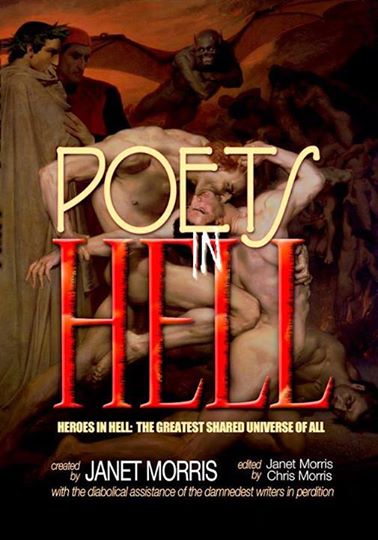
My story WHEN YOU GAZE INTO AN ABYSS has been accepted into the latest volume of Janet Morris’ Heroes in Hell POETS IN HELL.

Poets in Hell

As a bit of background information, Heroes in Hell is a shared universe that operates on the premise that anyone who has had an interesting life will have violated one of the 613 commandments intrinsic to the fabric of a moral universe and will thus find themselves in hell. So imagine hell filled with underworld gods, fallen angels, demons, monsters, mythological figures, historical figures, genii, mass-murderers, thieves, and–well–humankind in general. And make no mistake, my friends. This is literally hell.  If you think our world is bad, and it has a lot of bad qualities, reading this will make you appreciate our world a whole lot more: as all good and intelligent literature should.

My story “When You Gaze Into An Abyss” features Lilith, the apocryphal first wife of Adam, and the German philosopher Friedrich Nietzsche — amongst other diabolical friends.

I look forward to hearing what you think about this story and the volume that it comes in. I can’t reiterate enough that this will be my first short story ever in print. Expect POETS IN HELL to become available on Barnes & Noble, Amazon around June to July 2014. I also believe it will be on Kindle as well along with its other volumes. I will update you all with more images and links when they arrive.

Suffice to say, and considering all the struggle it was to get to this point in time, it feels good to be a poet of hell.

A Man Gets to Make his Monster: Neil Gaiman’s Doctor Who: Nothing O’Clock

Neil Gaiman Doctor Who

Neil Gaiman once wrote, in his short story “Other People” that, “Time is fluid here.” Despite–or even because of–the presence of time-travel in Doctor Who, his words are no less relevant. The creator of Sandman, American Gods, Stardust, Coraline, and a multitude of other comics, novels, short stories and films fulfilled his dream in writing for Doctor Who: twice. First, we got to see his episode “The Doctor’s Wife” in which we experience the horror of a House and meet the TARDIS for the very first time; which was followed much later by “Nightmare in Silver” with a whole other more miniaturized, upgraded, and truly horrifying version of the Cybermen. These achievements, in and of themselves, are impressive and in a lot of ways alter the time-line details of the Whoniverse; which is part and parcel of the entire program really. However, after creating these episodes, Neil Gaiman always expressed the wish to do something else with Doctor Who.  To do more than expanding on its continuity and manipulating its flow of plot and time.

Doctor Who is, when you come down to it, a haphazard construct of science-fiction, comedy, the fantastic, the result of many add-on elements, seeming improvisations, retcons … and horror. Yes, Doctor Who is a monster filled with monsters, and Neil Gaiman has expressed his wish to create an original one of his own. And so it is that on November 21st, two days before “The Day of the Doctor” comes to television and movie screens alike, that a new story will come to another kind of screen: a computer screen to be precise.

It is on November 21st that a man gets to make his monster … on “Nothing O’Clock.”

Doctor Who

At this time, there isn’t much yet to say about the Doctor Who short story “Nothing O’Clock” to apparently be released on its own and included in the Eleventh Doctor: 50th Anniversary ebook anthology: except for a few details. Much in the way that time is fluid in the television program, this story takes place during the first season of Matt Smith’s role as The Doctor: in which he, and a young Amy Pond find themselves in 1984 and also, as Neil Gaiman puts it “somewhere else, a very, very long time ago.”  Then there is also the brief description on Amazon to consider. In any case, sometimes I find that Doctor Who takes on a very fairytale-like quality, especially when you consider that “The Snowmen” Christmas Special began in a similar manner. Yet when Neil Gaiman comes into the mix, the program can again become an outright cautionary tale.  As for the rest of it: all that is known at this time is that there is something called the Kin, and that you should be very, very wary if a man in a rabbit mask comes to your door and asks to buy your house.

Bunny
Beware Bunnies Bearing No Baskets, especially when time travel is involved …

If you would like to hear the man who makes the monster for himself, please check out BlogTor Who. What is also interesting is that The Mary Sue, which claims that the story itself will be published on its own and then released in the e-book anthology, also states that its release date will be on November 23: which differs from the November 21 date displayed on Amazon. I would go by the Amazon date. In any case I rarely ever purchase e-books, but I know, like many others, that this time I am going to make another exception: at the fluid and arbitrary time of “Nothing O’Clock.”