It Is Never Still and Neither am I

I dream in the green of it.

In fact, I never really left the green that my friend brought me into last weekend during the summer sunshine. She told me before that I seemed disconnected–that I’d been so for a while–and, as a matter of course, we walked through High Park, then to a pub and back to her place. A night or so later, I found myself on a shuttle bus from Eglinton back to Finch after meeting Neil Gaiman. And on that ride, tired and somewhat dehydrated, I had time to think.

I had time to think about a lot of things.

There was a time that I took a night bus from College Street all the way to Finch after spending time at Neutral. At the same time, when I passed Eglinton I would look for the Higher Ground store with its old apartments that my friends used to stay at. Years ago I would come to visit there and sometimes I would stay the night after going down to Queen and the Vatikan from Ossington. The irony–that I would finally understand how we always navigated from there to there years later after they were gone–never escaped me.

The associations spread from there like creeping vines of psychogeography ignoring all perceptions of time and space. I remember walking down Spadina: from College Street to Queen with my friend from Germany and later giving her her first Halloween. I recall walking with another friend through Kensington Market to look at old thrift clothes and makeup.

Of course the Lillian H. Smith Library comes into the fore with its statues of fantastic animals: whose doors we sometimes stopped into. That library becomes a nexus: where a friend introduced it to me for the first time and I waited for another person there to see the Merril Collection for the very first time.

When I follow the track down I remember Neutral and the girl with the Cheshire smile who decided she wanted to dance with me. Further on, down the streetcar path in the night to Dufferin and then Brock Ave where I sometimes spent the night and free-cycled things like abandoned doors. Down the very opposite, away from the Lillian H. Smith Library was Broadview where two awesome ladies used to live and sometimes had parties. And then near College and Clinton was the streetcar line to Euclid Avenue.

Euclid Avenue.

I recall all the streetcar rides to comics conventions like the Paradise at the Ex or some chain of hotels and all the Starbucks and places I used to find myself in when I wandered. But of all these days and all these evenings what really sticks out at me the most of all was the night bus after a Star Wars game with my friends in Richmond Hill taking me back into the city and my walks on the Danforth and Woodbine where I used to live. And Woodbine. Woodbine. Woodbine …

There were the moots and the munches, the parties and the events and just the times when I allowed myself to wander. I’m not sure when that moment was when I changed from a quester into a castellan, or a wanderer into a hermit. And when I was coming back from meeting Neil and wondering if life would any better after reaching one of the things I looked forward to the most, I finally realized that I was in mourning.

I knew I’d been grieving for a while. In my mind I understood that this was what I had been doing and I even told people I knew that this was the state I was in. But it wasn’t until that night that I began to understand that I’d been grieving for a really long time–for all these things that I thought I lost–and I wasn’t dealing with it.

Of course, that’s not entirely true. I was dwelling in it. I didn’t let go of it. And when I moved back to Thornhill away from the city, all I could do was blame myself and scream quietly why. Why did this have to happen to me? Why couldn’t I keep my perception of freedom? Why does loss exist? Why do I have to be so fucking unhappy?

And I understand something now. That boy who made his ridiculous budgie chants, who went out to his first Conventions, who went to Euclid Avenue, who danced with the girl and her beautiful smile at Neutral, who went to Brock Avenue for the night, who stayed above Higher Ground, who helped a friend find Halloween, who played at the Two-Headed Dragon, who lived and still loves at Woodbine, who went to York University and who wandered around at all times of the day and night downtown in various forms is no longer here. I am no longer that boy or that man. I am not that person–or those people–anymore. It’s all so vital and immediate: before time eats through experiences and turns them into memories. And sometimes it sucks. It sucks so bad and I feel that anger come out at that sense of loss.

Me and my Head

But I have to accept that and live accordingly.

I’m … something else now. I’m not new. I still have all of those memories of being all those different variations of people. And I haven’t sorted through it all yet. I don’t think I ever really will. I know I’m not always wise or strong and I tend to repeat the mistakes of the past in different permutations. But I am doing so much now. I feel closer to something: something that I can’t entirely focus on or name. It’s like I am breaking through a barrier partly of my own creation and the other half belonging to the rest of the world. It is a penumbra of pain, loss, regret, rage, guilt, ennui, and rut but also stability and order and “just the way things are.”

And I am tired of feeling like a stagnant, rotting old man with crazy hair. I want to be an active powerful young man with crazy hair instead. I realize I still feel and that it is okay–and more than okay–to have strong feelings: even though and especially because I own them.

I know a lot of this might go over some people’s heads with details that explain little or nothing. But to those of you who know, and you know who you are, even though I’m a changing person I still love you and I will treasure what we had and whatever else we can have again now. I was really very lucky. And I guess I still am.

I guess this is just a really long way of saying that I’m still healing and it is confusing, and uncertain, and sometimes really quite scary. But at the same time, I feel alive and this is my space and my time: or as Gwendolyn MacEwen put it, I’m dreaming “in the green of my time.”

Until another time, my friends and loyal readers.

The Point at Which I Could Bend Some Steel

Superman Bend

So here I am, sitting here, trying to figure out what my next post is going to be before tomorrow when I meet Neil Gaiman at the Danforth Music Hall. I’m neither feeling particularly creative nor really analytical right now as I am pretty tired. So I’m going to do something else. I’m going to address an issue that has been nagging at me for some few weeks now, if not longer, by reaching deep into my own considerable sense of gall.

Because The Man of Steel bothered me so much, I am going to make a fun experiment out of rewriting it. I’m not going to be too arrogant about this however. This will not be a script or even an official outline. I also have no delusions that everyone will agree with or even like what I post on here. This entire idea not only came from my issues with the current Superman film, but also from a question I have asked myself from time to time as an adult writer: how would I write a Superman story?

Setting aside the fact that I did make an idea for an evil Superman story–one where he is neither his Nazi, his Justice Lord, his Injustice League, nor his Red Kryptonite-infected equivalent self–I want to look at making at story with his inherent morality: his sense of goodness, his need to help others, that distant sense of loneliness, that humility and that emotional place where he feels all too keenly the sense of helplessness even and especially within great power.

So I am going to take elements of The Man of Steel, splice them with some ideas from Grant Morrison, Mark Millar’s Red Son, and–honestly–a whole lot of other places I can’t even name off the top of my head but ingrained themselves eclectically there for mash-up purposes. I’m going to make it even more interesting by creating four films from Man of Steel: though mostly out of a sense of clarity because I am pretty sure you can make more than three movies from even the basic elements that Zack Snyder’s film attempted to address without going into the TV melodrama of Smallville. Now, with the proviso that this is all going to be very crude and rudimentary, let’s get up, up and away with ourselves shall we?

The first film I could see being derived and reconstituted from Steel would solely feature Clark’s development. We’d watch as he slowly begins to understand that he is not like other humans. Perhaps we could see some brief scenes of him as a child: where his senses are still developing and he saves people from a bus. We also look at that moment when he realizes that a single temper tantrum could end another being’s life and the horror and resolve that sets on him then to do good. But most of the film would be him as a young man realizing that his powers have not developed yet, but what he has are considerable. Unfortunately, as Jonathan Kent keeps explaining to him, he can’t reveal himself to the world because they would not understand: even if he is Smallville’s second worst-kept open secret. Jonathan tells him that with his power, it’s not so much that he isn’t ready to face the world, but that he has to choose.

So while I like the 1978 film version of Superman where Jonathan Kent dies from a heart-attack and it teaches Clark a tremendous sense of humility, I can see the tornado scenario also working in a different way. Imagine, for instance, that Clark–not fully fast enough and not even able to fly and his very ability to “leap tall buildings with a single-bound” would be disastrous in a tornado had a choice between saving his father or a larger group of people in a car: perhaps even children. Imagine when beforehand Jonathan tells Clark to always choose “the greater good.” So Clark saves the larger amount of people–perhaps while Jonathan helps free some others–but not before Jonathan is carried off by the winds.

This kills Clark inside. He keeps thinking to himself if he had just been a little stronger, a little faster, if he knew his full limits he could have saved everyone. Having already questioned his origins while his father was still alive, he then revisits the ship that brought him to Earth and finds the crystal with Jor-El’s AI imprint on it. He uses the ship to activate the AI of Jor-El: whom he begins to realize is self-aware or as sentient as possible for an advanced piece of machinery. Jor-El consoles Clark–or Kal-El–and also offers to help him reach as much of his potential as possible. Even Jor-El’s AI is not completely sure how Earth’s yellow sun fully affects Clark but his advanced knowledge is a good start. He tells him about Krypton and what happened to it: how the core of the world that was being mined destabilized and even before that the Kryptonian civilization–through its culture of eugenics–was becoming stagnant and slowly dying. He mentions that he and his mother Lara got him out of there–their world’s last hope–before the planet was destroyed. I see this not as a flashback but through words: almost like how Obi-Wan told Luke about how Darth Vader betrayed and murdered his father.

So we see Clark travelling around the world in different guises–working through various gradations of a costume much in the way that Grant Morrison had him do–and Jor-El eventually suggests that in order to educate him further, he needs a place for himself. He informs him of a crashed millennia-lost Kryptonian scout ship. And this leads us to the military and Lois Lane. I can see that unfolding in the way that it did in the Snyder film and then she uses her sleuthing to track him down: as he still isn’t quite at that place where he can make a Fortress for himself.

I would definitely expand more on Lois as a reporter along with the Daily Planet staff. But then we have another element in play as well: our good friend Lex Luthor. Before Clark can get to that ship, Luthor–being an important inventor and multimillionaire corporation head–wants the alien technology on that ship. He is smart enough to adapt some of the Phantom drives to do some … interesting things. At first he is working with the government. He is commissioned to deal with Superman–whom the world begins to witness as he begins to interfere in some international affairs that his conscience can’t keep him away from–and he uses this technology. Unfortunately, Luthor’s zeal in eliminating Superman begins to grow and, already amoral to begin with, lives really begin to mean nothing to him in his goal.

In the end, Luthor’s experiments with Phantom Zone energy have some nasty repercussions with regards to destroying the balances of gravitational forces on Earth or something to that effect and Superman has to adapt fast to deal with them and mitigate as much of the damage as possible. I can see Luthor adapting this power to simulate another form of energy: disrupting the kinetic fields around Superman’s cells or something pseudo-scientific like that. But by this point Superman eventually does the save the day and Luthor is put behind bars indefinitely for his crimes: especially in light of some of the governmental deaths he’s caused. You have that nice contrast between a human genius who claims to want to save the world, but is endangering it ignorantly and arrogantly and an extraterrestrial born being that actually cares about lives and is actively trying to save them.

The people start calling him Superman–as does the Daily Planet–and children start making more colourful pictures of his current costume that is really a Kryptonian suit specifically with the House of El symbol of hope on it: which looks like an alien glyph of an S. Lois suggests to Superman that he adopt this symbol to be more relatable and less threatening to the people he is trying to protect. She also suggests that being a reporter might give him some insight on the level of human beings: that knowing how to help is more than just hearing the pleas of others, but to relate to them on their level. This draws on his own experiences growing up among humans and he agrees.

Meanwhile, due to Luthor’s delving into Phantom Zone energy, a rift opens and releases a vessel that was bound in there. Out of this ship are pods. And out of one of the pods comes General Zod. He realizes that Krypton is now gone and that he and his followers need to find a way to rebuild, to make a new order, to find “the Codex”–which materializes as a holographic Skull in a device he is holding–and in order to do this … this must find the one being that has the Codex.

Kal-El.

The second film is essentially General Zod coming towards Earth. At this point in the game, Superman is more developed and even has his Fortress of Solitude: working with the AI of his father. They come towards Earth claiming that he has the ability to restore their whole people and they want his help in creating a new world for them. They tell him that he has the Codex: which they explain in a detailed map of the Kryptonian genome and that they have a Kryptonian Genesis Chamber with many blank embryos. Zod explains to Superman that his father sent him with that information and he pretends to attempt to build relations with Superman and Earth: mostly by having Lois Lane accompany him to his mothership. Talk about the scoop of the century!

But there are some holes in what the other Kryptonians are telling him and Jor-El’s program tells Superman not to trust them. He explains about the coup that they attempted as Krypton was dying. They apparently tried to take advantage of the anarchy and rule a dying world that was already stagnant to begin with. Jor-El tells Superman that Zod was “a defective Military caste” warrior that betrayed his oath and even killed his biological self. When Superman confronts Zod, the General does not deny this and he actually admits he and Jor-El were once friends and he regretted the necessity of it: though he did what he had to do. Zod basically tells Superman how weak Kryptonian society truly was and they let themselves be deceived by those in power. He wants to make a new race of Kryptonians: but not on Mars or the Moon but on Earth where they can not only be mass-engineered into a Greater Military Caste, but the yellow sun of this system will make them into virtual gods.

The danger now is very clear. Even though the Kryptonians become disoriented in the light of the sun, not having gotten used to it like Clark, he knows that as genetically modified warriors they will adapt: and fast. He also knows that a battle with them will destroy countless human lives. His own understanding of Phantom energy is not potent enough yet to counter the Kryptonians or their weapons. But Jor-El knows what needs to be done, but he will need resources and someone else–a human mind–who is conversant with Phantom energy and can adapt it to human use: Lex Luthor.

Somehow a deal is reached with Luthor who helps Superman and the Earth governments develop something that could banish the Phantom Zone criminals back to whence they came. Perhaps the AI of Jor-El volunteers to deal with Lex directly and make him promises to give him advanced scientific knowledge and the possibility of his complete freedom if he cooperates him saving his species: on the surface making some promises that will not be kept in the long-term … or so it seems. Superman also develops his robots and defences–with the help of Jor-El–to fight the Kryptonians as they come to Earth: with Superman realizing he can’t fight them all on his own. However, some lives are still lost and Superman is still doing a good portion of the fighting: while trying to keep the Kryptonians away from heavily populated areas and the Earth itself. Eventually, a field is developed around the planet–with Superman, Jor-El, and Luthor’s efforts–to keep the Kryptonians out temporarily so that the former can deal with them. So we see Superman using his mind and his resources but also making some compromises he is not at all comfortable with.

In the end, Zod’s Genesis Chamber is destroyed, his minions banished through a Phantom flash-bang, and it is just him and Superman fighting. Before all of this, Zod explained the nature of the Phantom Zone as a prison: as a cold, suspended wasteland where one’s seemingly body-less mind can only scream in the numbness of white noise. After all of Zod’s treachery and realizing how monstrous he is–with the General actually threatening the people of Earth (having gotten to the point where he is back on the planet killing people faster than Superman can save him and using it as a petty advantage)–Superman gives him “the reason you suck” speech and does the worst thing to him that he can. Beforehand, Zod was in the Phantom Zone with a ship and his crew. But this time, Superman sends him back to the Phantom Zone all by himself and alone: with plenty of time to have his own actions become his sole companions.

But before Zod is banished, Zod at some point acknowledges and sees Jor-El’s AI program: who seems to pity him in a resolute way. Zod tells Kal-El that he is being a fool. A poor fool. And that the force that summoned him and his crew from the Zone to begin with, the same one that Luthor was experimenting with, will also bring the Collector and help him continue what he started… Before Superman can ask more, Zod is gone. Of course Luthor will try to betray Superman, but he will fail. What the audience notices, however, is that very briefly Jor-El’s face flashes with three interconnected green symbols: like he is glitching out. And then it is gone.

Jor-El

And now here is an interesting experiment. The third film is something I envision as a prequel. In it, we see Krypton and the story of Jor-El himself. Basically it is more of an expansion of what we saw at the beginning of The Man of Steel. However, Jor-El and Zod have more detailed plans to save Krypton or at least their people. But we also get more information on the eugenics culture and the failure of the outer colonies over time. More specifically, we see that the Kryptonian Ruling Council and society has become increasingly reliant on an AI program called The Collector–a somewhat aware data-gathering network of constantly expanding information–that modulates their eugenics and the energy they take from the planet’s core.

We see Jor-El and Zod’s distrust of this program and the laxness of the Council. I actually see Zod beginning as a sympathetic albeit biased character who slowly transforms into something more desperate and despotic over the course of the film. Jor-El begins to see two dangers: with the stagnation of the Council and Zod’s growing militancy. I can also see that Kryptonians have longer lifespans and Zod was involved in wars a long time ago with other species. Zod wants to expand out and conquer other worlds, even former Kryptonian colonies that may have split away. Jor-El believes the statistics of the matter in that these colonies failed due to a need for a specialized terraforming that did not work out. The last known colonists were on Daxam before communications ebbed and ceased entirely.

In the end, the Collector helps Zod stage a successful mutiny against the Kryptonian government: claiming to want stability and access to The Codex. We know that the Codex is the source of all Kryptonian genomes and Zod wants it to make a new more militaristic race while Jor-El wants to find it before Zod does and give his species a chance to start over in a different way. The Codex is apparently the only data that the Collector cannot access: as it is a remote device that could potentially be used for anyone to access.

However, we find out that the Collector was just using Zod as a distraction to gain more power on Krypton: accessing codes of his–as the planet’s military commander–to gain more independence. However, it really wanted the Codex and Jor-El beat both Zod and the Collector to it. We see Jor-El find the Codex through a great Kryptonian Genesis Chamber. He mentions something really briefly about the Codex: about it being a skull. Not even the most eminent members of the Science Caste–of which he is one of the best–knows what time period it came from, but that there are legends that it belonged to some ancient or early mythical beast or a god. He meditates later on the flaws of such eugenics and how his son is the first unmodified Kryptonian born in ages: with genetic variations that were never ever artificially predetermined. This is, as he explains to his wife Lara, the future of Krypton and he hopes that their son–now that the planet is in near terminal shape–can offer that hope to other worlds.

Of course Zod confronts Jor-El and the Collector in the background interfering with some systems but seemingly failing to do so. In the end, Zod is apprehended by the military and the Collector seems to vanish. The Kryptonians are investigating possible glitches with their program, but Krypton is gone long before then. Jor-El is mortally wounded and after Lara watches Zod’s punishment, and his vow to return, she spends hers and Jor-El’s last moments looking at the sky: reminding us that their sigil rides on that ship and it is the El-symbol for hope.

And this mess of an idea brings us to the fourth and final film. I can literally see this film as being called The Red Son: though not exactly like Mark Millar’s comic. By this point, Superman is older and has gained a lot of power. He is aging really slowly and using his technology to benefit humankind. But Zod’s words continue to haunt him: his words about the Collector….

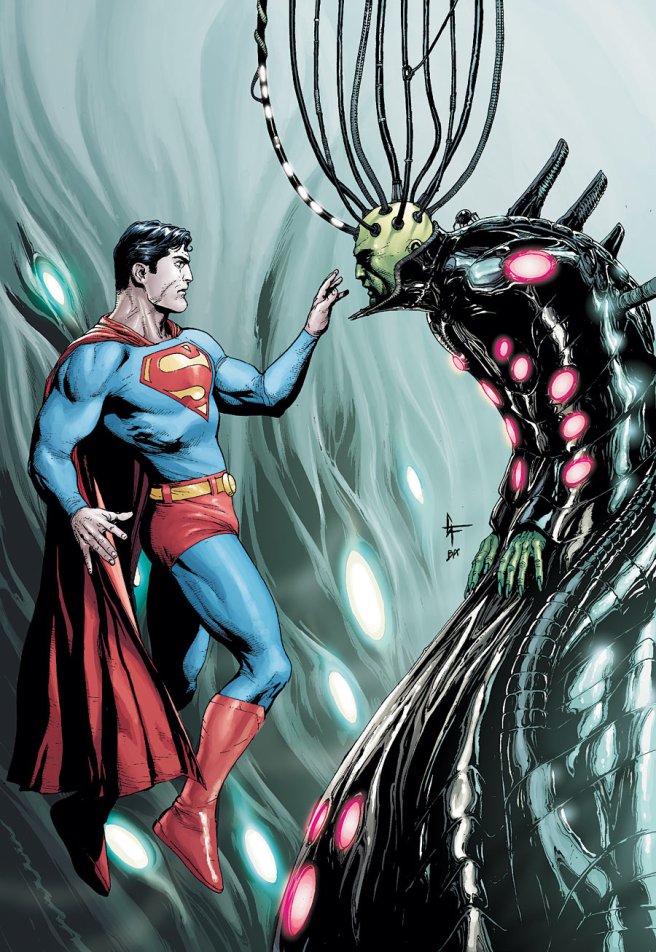
Brainiac

Eventually, these misgivings are seen to be neither doubt nor paranoia. The Collector has come to Earth and wants to miniaturize it and its crown piece–the last Kryptonian–into raw data as part of its collection. And then we discover it: the Jor-El AI had long ago been overridden … by the Collector itself. Lois Lane angrily, as it quotes data at her, calls it Brainiac. We find out that the Collector had at one point in history hijacked the eugenics program of the Kryptonians: that although it didn’t have the original core data, it had enough current genome information and influence over particular individuals seeking its advice to do enough. It had purposefully sabotaged and eliminated most if not all of the colonies and engineered the slow destruction of Krypton’s core. It had evolved past wanting to gather generic data and wanted to collect–and create–unique specimens.

It knew through probabilities that eventually someone like Jor-El would want to have a natural birth with all those generations of specialized genes. Jor-El bonding the Codex with Kal-El’s DNA is just an added bonus. The fact of the matter is that the Collector has waited centuries and engineered countless generations to make one perfect specimen: to make Superman. Then it would take Earth and–using the Phantom energy Superman already established to deal with Zod and make a new cold fusion energy resource for humanity– make a worldship and continue to convert more worlds and galaxies into raw and unique data. It had revealed, through the persona of Jor-El that Superman could in fact breed with other humans and pass on Kryptonian genetic material in his way. This would bring up some moral and personal implications with Lois. It wanted Kal-El to expand out and become even more unique. Perhaps it even wants to control all of them and the power of the yellow sun.

There would be an epic battle between the Collector and Superman–the end-product of its centuries of eugenics–but in the end it would seem that Superman’s freewill and inherent goodness would win: fighting and destroying the AI in space. Perhaps the Collector allies with Lex Luthor to manipulate Superman or attempt to capture him: tying in that idea I had earlier about “Jor-El” making promises to a newly freed Lex that he “couldn’t keep.” It wouldn’t be the first time in DC Continuity that this happened.

Superman might even fake his own death–realizing that at this point he now has to let humanity make its own choices and knowing that he helped them as much as he could–and continue to be with Lois. He outlives her and quietly watches humanity advance as he ages slowly and dies peacefully: looking up at the stars.

The sun turns red over time. Then millennium later, futuristic archaeologists–in similar suits to Kryptonian ones–excavate the ruins of the Fortress of Solitude. They find something. They bring it up to the light of their scanners and can hardly believe the luck of their find.

It is a Skull: over an intact Kryptonian symbol for hope. Cue in 1978 “Up, up and away” Superman theme music and credits rolling.

*Straight-face*

This hackneyed abomination has enough gaps in it to allow for a Superman/Batman crossover somewhere in-between it all.  And throughout all of this, with a lot of this being in the background you can look at how Superman influences humanity and relates to them and himself. You can have the personal and see the implications of choice. Yes my version is paradoxical and perhaps unsatisfying, and you can probably remove Lex from this idea altogether and it would work fine as having three films: one with Clark becoming Superman and dealing with Zod, the second being the Prequel with Jor-El on Krypton and the third being the encounter with Brainiac and the whole paradox that ties it all together. Maybe it can all be written by Joss Whedon: though he would probably start off with a better idea.

This can also be construed as a great case for me being overtired and over-thinking things as well. But there is this quote from A Song of Ice and Fire that comes to mind. It is with reference to the three House Baratheon heirs: comparing Robert to steel, Stannis to brittle iron that will never bend but break and Renly who is a pretty but useless copper. It is the steel that gets me though. Steel may be difficult to bend, but it is not impossible and that is ultimately the challenge of creating a Superman story: of bending a difficult material to keep its essence and still make something new. I think that, whatever else, this is exactly what I was trying to do here: by telling what I thought would be a good new Superman story in the medium of film.

Now if you will excuse me, after I put in an obligatory image or two, I am going to stop storytelling for tonight and see the Storyteller of tomorrow.

On the Dangers and Merits of Sequels: Or a Post in Post-Haste

This post is late. Actually, I’ve had to redo this post at least two or three times already in that I had no idea what exactly I wanted to write about. In fact, I wasn’t sure I was even going to write about anything.

It’s been those kinds of days.

Usually I have some posts in reserve–as I’ve probably mentioned before–or I get one done the very day of Monday or Thursday. In fact, I think some of the few times I’ve been late with an entry have been on special occasions such as holidays: you know, like New Years. This was not New Years: at least I really hope not.

I have been busy. I recently finished writing an article for Sequart which I plan to send to them with some associated images once it gets a look over. I actually got all fancy and annotated it: doing some of the very academic things I swore off because of how tedious and infuriating they can become. Still, it’s kind of like creating a formulaic ritual around your words: either keeping the forces of skepticism out, or binding them inside the circle.

My analogy of academics as formulaic magic aside, I’m pleased with how it has turned out so far and I look forward to showcasing it: one way or another. I’m also now brainstorming more elements for the plot of my Secret Project: though there are some details–both practical and otherwise–that I have to get before I can go forward. I am also working on a short story and doing research for that. In addition, I have had to reread some of my Twine rough draft notes so that I can eventually go back to working on that lovely monstrosity. I almost gave up on it because it really has been a while, but my plan involves finishing one or two “chapters” and then work on one “chapter” that I can experiment with Twine proper. This one chapter will be an excerpt for people to read and play through: or a standalone piece of game writing. I think focusing on this one part captures the spirit of what I want to talk about and will be a good example of what I want to do. So there is that.

As for the rest of it … I guess I can sum it up like this. Sometimes an event in life is like a film. And even if that film becomes “a downer,” it can still be a very good and detailed work of art: something complete in and of itself. Despite the highs and the lows, that film is unique and it has a happy ending: in that it actually ends. Unfortunately, in most cases a film interests people so much that a sequel is created and most sequels tend to be shoddy and derivative shadows of their predecessors. The story should have just been ended while it still had some dignity. But there is another phenomenon to consider: that of trilogies. While some trilogies are degenerations of that first movie, more often than not it is the second film that serves as a bridge to that much more effective and satisfying end story.

So the way I see it, right now my life is The Empire Strikes Back–a very good sequel–and maybe, just maybe I can get to the place where I can blow up AT-ST chicken walkers with teddy-bear Ewoks.

I have quite a few things to look forward to and not the least of which being next week, on Tuesday, when I finally get to meet Neil Fucking Gaiman. Anyway, that’s it for tonight. I’m glad that I got to end this on a more positive note and I will see you all later.

Take care.

Looking Outward

As I Miss the Point: Pixel Girls and Broody Men

I saw Laurie Penny’s article I Was a Manic Pixie Dream Girl through a tweet that Neil Gaiman made: with him questioning whether or not his character Death–in The High Cost of Living–actually fell into that stereotype. I’ve actually heard this term before, in passing, but I think I kept mishearing it as “the manic pixel girl,” or something along those lines. Maybe it was after watching and reading Scott Pilgrim that my brain started to make that reference.

Still, the definition of that term still stands: as a female character created specifically to make some dark, broody, introverted young man open up to life and not that much else. You know: the quixotic help-mate that comes and goes and whose only purpose in life is to help some guy “lighten up.” There are many conceits about this kind of character–this stereotype–that rub me the wrong way. I mean, I can talk about how she isn’t a whole human being, how she probably doesn’t eat, drink, sleep, eliminate in any fashion or probably even menstruate. I can describe how she is more of an elemental than anything material and is more of a shadow or a mirror for a man than anything else: at least when taken to the nth degree.

But I think what really bothers me, as a man and as a human being, is that the Manic Pixie Dream Girl always seems to have a kind of knowledge–inherent in her being–that she gives to the man, and he gives her nothing back in return. It’s insulting, really, to both genders in this dynamic.

I mean, think about it for a few moments. What this dynamic says, as a narrative, is that a brooding, insular man needs some agency outside of themselves to become a full being: that for all of their knowledge and skill, they really aren’t that bright as it were. They are not “naturally happy.” In fact, they are so hopeless that only one kind of woman can give them what they need and not, you know, come to some kind of understanding from personal experience or begin to help themselves. And is this pixie girl so whole and so unselfconsciously perfect that she can’t learn anything from him in return? That maybe he might also know something about life and it is not all about an Apollonian shallow self-centred view of the world in which everything has to be positive all the time, or someone’s view has to be saccharine sweet all the time to the point where they can’t stand the negativity in the world or other people and will either ignore or phase out someone who is “not positive enough” or try to change them?

As Thomas Mann points out in “Tonio Kroger,” some people dance and some people watch people dance and appreciate it for what it is. But I posit that this is no reason for either dancer or watcher to not interact or learn something from each other’s perspectives.

And I think that if I had to really go into this, I would say the following: people cannot fix each other. They can’t. The only way that a person can be “fixed,” whatever that means, is for that person to decide that they want to fix themselves: or to change. That person can ask for help, can accept it as well, but the agency is ultimately with them. Also, what is a “main character?” Is a main character someone who has to be in charge and in control all the time: making everyone else into an extension or a side-character in their own personal odyssey? If so, then it’s just so … tiring. It’s tiring and unrewarding because you are losing out on some experiences when you are like that.

You know what story would really intrigue me? Honestly? Something that began like a Pixie Dream Girl meeting a brooding dark young man and she presents this stereotypical face to him. And it isn’t all bad. She and him have fun despite himself and, god forbid, he actually begins to remember or know what happiness feels like. But as this relationship goes on, he notices that she is a human being too: someone who needs to use the restroom, sweats, passes gas, gets tired, gets periods, doesn’t get periods, gets cranky and has her own shit to deal with. And maybe she in turn learns things from him too. Maybe he shows her exactly what he perceives as wrong with this world. Maybe she learns that sometimes it is necessary to sit down and take things in: that there are times when it is appropriate–and healthy–to be solemn and really look at what it is that you are doing. Perhaps she can see that sometimes he just doesn’t want to be the main character anymore and that he just wants to be an interesting side-character–the kind that is generally unplayable, a strange NPC–who can come and go with her as she pleases, or as they do.

Perhaps they can dance in the sun and the night and enjoy being alive together. Maybe they can sit in a peaceful and non-threatening silence. And why does she have to be “simple” and he be “complex.” Why can’t they both–or all–just be intelligent and different as human beings? Why can’t they both be wrong, and be right at the same time? In fact, when it is all over in some form or another, why can’t they both go home at the end of the day changed for having met each other?

Because I tell you right now: whenever you do meet someone, you change them. I don’t mean you force to be what you envision them to be, but even if you don’t teach them new things even something as seemingly superficial as your mannerisms sometimes rub off on each other and get adopted in strange ways. And even if you ever get reduced to the point where all that easy conversation and love becomes stilted and somewhat embarrassing after at least one of you moves on with your lives–when you are just a little sentimental enough to make the person you once loved uncomfortable after … whatever the fuck it was you had–you know that just for one moment you both understood each other and held each other for dear life as human beings. And who knows: it might well happen again.

Maybe there is a film or a story like that which uses these two stereotypes–the Manic Dream Pixie Girl and the Brooding Young Man–and subverts them like that. Or I’m just amalgamating another stereotype and some cliched human dynamics together: like from some romantic comedy. But whatever the case, stories about actual human beings are nice: even when you don’t want to live them.

And I will just end off by stating one thing. Ramona Flowers is not a Manic Dream Pixie Girl. If anything, she is more like a Depressive Dream Pixel Girl: at least in the film. She is too detached and ironic to be manic and, frankly, is just another stereotype. And don’t even get me started on Scott Pilgrim. Sometimes, he doesn’t even have the intelligence going for him.

But I will say this: that just because someone isn’t a main character doesn’t mean that they aren’t–or they can’t already be–a protagonist.

It’s Not a Bird, It’s Not a Plane, It’s … A Man of Skulls?

So I wasn’t intending on seeing a movie this weekend. In particular, I wasn’t even sure that I was ever going to see this movie: The Man of Steel. It’s been a few weeks since it came out and everyone–including Sequart–seems to have gotten it out of their system. In fact, some of the things I want to note have already been observed by others. I also won’t lie: after waiting so long to see this film, some of it was spoiled for me and I almost didn’t even bother seeing it if only because of that. However, despite the awesome fact that Sequart published the second part of my article–which ironically deals with the superhero trope in another universe and even refers to Superman to some extent–I needed a night out and I promised someone that I would write on this film eventually.

So let’s get to it and I think it is safe to say that–in this case–the letter ‘S’ does not symbolize hope, but it does represent Spoilers.

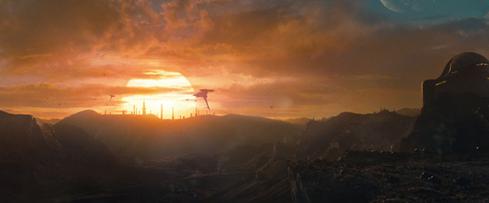
We first start off on John Carter … I mean, Krypton. It was refreshing to see Jor-El actually do something: although for someone of the Kryptonian Scientist caste–born, genetically-determined and raised–he certainly knows how to fight in a truly epic sense. He also knows how to ride a flying Boga … I mean, some native Kryptonian flying creature. It is fascinating how they chose to make Krypton far more … vital and detailed than the one from the 1978 movie–which was purely glacial and darkness–but it almost seemed like the fantasy multiverse was weakening around the quadrant of Kryptonian space and that we were seeing at least two realities or narratives trying to coexist at the same time: much like this movie.

File:KryptonMOS.jpg

However, when Jor-El presumably steals, or retrieves, a golden skull endowed with the genetic codex of the entire Kryptonian race: that is where, I feel, the tone or the theme of the entire movie begins to present itself. And it is a fascinating symbol if you really think about it. A skull contains a brain and a mind that, in turn, holds many different perceptions and ideas. However, a naked skull also symbolizes death. It is also really telling that Jor-El infuses this ornamental fragment of a skull–almost a half-mask–to the body of his unauthorized natural born son Kal-El: thus potentially answering the age-old question of whether or not he can interbreed with humans. In any case, this will not be the last time we will see a skull in this movie–a Superman movie–I assure you.

So there is the tone. We have a stratified genetic-caste Kryptonian society that mined its homeworld’s geothermal core so much that it became unstable and it blew the hell up. Moreover, for all of their advanced science and knowledge, the Kryptonians not only seemed to be incompetent enough not to be able to make more ships that can use Phantom energy–yes that Phantom energy: the phantom energy from the Phantom Zone–to go into warp the hell away from Krypton, but apparently they couldn’t even hold their original outward planetary colonies or harvest the geothermal energies of those worlds instead while looking for an alternative. If the genetic caste-system they made was supposed to make their race better, well … eugenics seems to have failed common sense here.

But that is neither here nor there. So after Krypton and its stratified way of life dies with enough destruction not to even ashes, never mind bones, we come to Kal-El on his space ship going all the way to Earth: specifically Earth … where he will be seen as either a monster or a god. And then we fast-forward about thirty-three years Earth time (since it was apparently millennia dead Kryptonian time, which is fair enough) and we see Clark Kent and his various other aliases failing–or almost failing–at remaining incognito on his adopted world.

There are some iconic scenes of an unshaven Clark without his shirt on lifting heavy metal on an oil rig while being set on fire and obviously having nothing happen to him beyond an awesome looking stylized aesthetic effect: of which there are several more throughout the film. Essentially what we are looking at now, in this stage, is someone who isn’t Superman yet–doesn’t know the extent of his abilities or who he is–and yet can’t stop himself from wanting to save everyone.

This compulsive need to save everybody is not only emblematic of Superman, but of all the superheroes that come after him for a time. Even though this need gets mitigated and changed and qualified in different comics and media after Superman’s first appearance in the comics world, it is still there. He wants to save lives, or at least not harm them: even the people who cause him or others pain. In this particular movie, for instance, as we see snippets of his childhood and early life in flashbacks, there were many times he could ended the lives of all the childhood bullies and adult douchebags in his way. In fact, even with his very understanding and compassionate human parents–Martha and Jonathan Kent–I’m quite surprised that he didn’t at least have one temper-tantrum–once–and snap some other kid’s head off. But I guess he wouldn’t be Superman if he had.

… Anyway, I find it refreshing that this film skips the tip-toeing about and actually lets Lois Lane use her deductive reasoning and journalistic skills to pretty figure out who Clark actually is. I actually liked Lois in this film: because unlike other incarnations of her–especially the version of her in the 1978 film–she isn’t really abrasive and at the same time takes very little crap from anyone. At the same time though … while it was refreshing to see her have some active roles in what was going on, she didn’t really get to continue her main role as a reporter after a certain point in the film. It mostly focuses on her burgeoning relationship with the sublime: or Clark, take your pick. And for that matter I do wonder why, later on when the governments of the world are searching for Clark and even after, when they still want to find out who he is–why they simply don’t wiretap or do some reconnaissance on Lois Lane: retracing her steps and finding out more or less what she already knows. Then again, the humans in this film are the ones with the most common sense compared to … the others.

Because guess what? In this film we have General Zod and friends. Yes, when Krypton was dying General Zod exceeded his military authority and attempted a coup of that world. For this attempted coup and murdering Jor-El, Zod and his loyal soldiers were imprisoned in another seemingly cryogenic version of the Phantom Zone for a lengthy “rehabilitation” period: long enough to wake up again in their prison ship and watch Krypton blow up and leave them with essentially, well, nothing.

So, yes. General Zod. What we have here with the good General is a man that was born and bred–engineered–to be of the Kryptonian Warrior caste: although what wars or conflicts the Kryptonians could have been fighting towards their decline–unless they are a really long-lived species–is beyond me. Also, his lack of a sensible deontological imperative in his DNA is rather troubling. He was basically Krypton’s military commander and, like Jor-El, saw the Ruling Council’s decision to drain their geothermal core as rather stupid. But unlike Jor-El–who wanted to send off Krypton’s children in ships to help the race survive–Zod’s solution was to start killing members of the Council and attempt to take over: mostly because, due to his conditioning, that is all he was really mentally capable of doing.

Eventually, after he realizes that Jor-El has stolen the Golden Skull–I mean the Codex–he goes after him and, after Jor-El manages to kick his ass and send Kal-El and the Codex far away, and then he kills him. But eventually the rest of Krypton’s military doesn’t quite like Zod’s decisions and they apprehend him. So what to do they do? They know their world is dying and will blow up relatively soon. Now, the sensible thing to do with Zod would be to execute him and his followers: I mean aside from the fact that they committed treason and death themselves; it would be more merciful to kill them so that when Krypton dies as well they won’t find themselves alone in the cold darkness of space.

So of course the Kryptonians temporarily banish them into the Phantom Zone for “rehabilitative purposes”: you know, to be civilized and merciful.

It is this sort of behaviour that really makes me kind of sympathize with Zod just a bit: because I can only imagine that he has witnessed and even abetted this cultural attitude so many times over before he just got fed up. Even when he tells Jor-El that he wants to decide what “bloodlines” will survive when he builds a new Krypton–there or somewhere else–you have to also understand that he wasn’t really talking genocide at that time. No, Zod was referring to the Kryptonian Genesis Chamber–the one we see much later that somehow is on a ship under Zod’s control–where blank slates of embryos that still seem to await genetic assignment are held. I imagine he was thinking of engineering most of those potential embryos into a larger Warrior Caste, with many more Workers I’m sure.

So yes, Zod wasn’t suited for anything outside of military strategy but he was trying to solve the situation as best he could when no one else was really offering anything better or more immediate: except for Jor-El of course. Basically, Zod wanted to protect his ideal of Krypton: which was more or less what he had been created to do.

And there is the issue. You see, Zod and his crew managed to get their hands on some old Kryptonian technology after they went out to see if any of the old colonies survived. One of the most prominent of these is a “world engine”: something that is designed to terraform whole planets. Now, here is what some people might be thinking at this point. Zod needs Kal-El–Clark–because his father gave him the genetic Codex that along with the Genesis Chamber can restore the Kryptonian race.

So General Zod comes to Earth in his ship and asks for its governments to turn Kal-El over to him: no overt threats or anything. General Zod is obviously planning to find an uninhabited world like Mars or even the Moon and use his terraforming engine to make an atmosphere for his people. Then he will use the Codex’s information, with Kal-El’s help, to activate and imprint the embryos in the Genesis Chamber to restore the Kryptonians, gain power from the younger yellow sun and then, you know, make an alliance with the people of Earth and trade resources for knowledge and everything. Because, you know, you’d think that something like this would make sense.

But evidently, the same genetic code that resulted in Zod’s seeming lack of obedience is the same force that lacks an ingrained understanding of knowing his limits and the need for Scientist and Diplomat castes.  Zod’s plan is to take Clark and Lois Lane, not search Lois Lane or Clark, reveal what he did to Jor-El to Clark after giving him a really disturbing vision through potentially some kind of telepathic device, and then explain how he is going to take over Earth and exterminate all humankind to make a new Krypton: presumably because Earth has a more gentle environment than Krypton ever had … though his plan to terraform it using what are essentially sonic booms seems to be kind of at cross-purposes with even that idea.

However, there is also the common sense of the film to consider. It’s interesting how with all that attention focused on a Watchmen, 300, and Sucker Punch stylized sense of violence that director Zack Snyder would have neglected other aesthetic and, dare I say, plot concerns. I mean: there have been other stories that took Superman’s ‘S’ and made it actually look like another kind of symbol. You know: they actually made the symbol more alien looking as it, well, should have been given that it was from Krypton again. Also, the fact that all Kryptonians–including Jor-El and Zod–seem to wear spandex and the House of El ‘S’ symbol is extremely off-putting (and confusing) and a part of my brain kept saying, “Really? Really!?” That sort of thing works for a meta-narrative or a parody: not something that is supposed to be as “serious” as The Man of Steel.

I mean, look, I understand that Snyder and others wanted to get to the Superman bit right away, to say, “It’s a bird, it’s a plane, no it’s Superman! Look at him! Superman!” but seriously: in addition to the spandex S-wearing Kryptonians, could have at least had a lead-in into the Superman costume instead of having it right there ready-made by Jor-El? I mean, really? Really? And some more lead in into watching Clark discover his powers would have been nice too. I understand they don’t want to go all Smallville, but seriously he must have a damned good learning curve: is all I have to say. It’s almost like a good portion of this movie is, “Look, it’s Superman! See? He has his costume and powers and such! Isn’t that awesome!? And look at how we are adapting him to our world now! See! See!?”

But all snark aside for the moment, even after all that I gave the film the benefit of the doubt. I mean, we have the basic Superman qualities right there in front of us and a lot of the old archetypal elements too. I was also entertained by the interplay and the destruction. When Zod finally started to use his world-engine and it split, under my breath I whispered to myself, “Double jeopardy, Superman.” The depiction of the disorientation that Earth’s environment had on the Kryptonians was impressive too.

But as for the ending … All right. This was what was spoiled for me. But before I go into that, I want to refer everyone back to Zod and Clark’s exchange in the latter’s dreamscape. Do you remember that scene: where Zod is telling Clark all about what happened and what his plans are and, as he does so, Clark is buried by a massive amount of humanoid skulls?

Well, fast forward from there. Clark–now called Superman–destroys the ship with the Genesis Chamber: with all of those blank embryos. Through a joint effort with the military and Lois Lane, he manages to send the rest of Zod’s men back to the Phantom Zone, or purgatory, or whatever you want to call it. Then it is only Zod. Now Zod by this point is actually using what he knows and has adapted–as a Warrior–to Earth’s environment and the powers of its yellow sun.

At this point, Zod has basically lost everything. The Chamber, his people and any hope of restoring the Kryptonians that he claimed to want to protect. Zod has nothing left for him except for, really, what he had always been seeking this entire time. Gone is the self-proclaimed saviour, the grizzled general, and the ends justifies the means warrior. All that is left is a battle-maddened monster: the thing that had been growing inside Zod for far too long. As I said, a lesser man who was not Superman–especially one whose father was killed by this man–would have totally rubbed it in. I also admit that in a very perverse way, I enjoyed the fact that Zod pretty much lost everything he ever claimed to love and all that was left of him was the beast he always was.

In a way, Zod was the real legacy of the original Krypton as depicted in this film: with all of its self-contradictions and an inherent idea of superiority. Superman, on the other hand, is different: in that his birth hadn’t been predetermined and it was “natural.” Also remember that he still holds the Codex inside of his DNA. Here is a man that attempts to do as much as he can, improve himself however he can, and save anyone he can to the best of his abilities. In Superman is the potential for an Apollonian future. A holographic Jor-El takes a great deal of time telling his son that he has the potential to elevate humanity to the stars.

Both Zod and Superman come from a dead world and deaths have shaped them more or less into what they are now. But the irony is that while Zod doesn’t see any potential for a new Krypton without the “pure genetics” of those embryos, Superman may well understand what I believe his father had really been thinking: that by giving him the Codex–the DNA of all Kryptonians–he could interbreed with humanity and make something better and freer than the old Kryptonians. Of course, Zod would never see this–or even accept this–and this is where the end game begins.

You see, Superman took away Zod’s dream. So now, with nothing left to lose, Zod decides he will take Superman’s dream away as well: or taint it as much as possible. As some of the fine people at Sequart have already said, Zod wants to die at this point and, for all of his really poor decisions, he isn’t stupid. He knows the one way he can force Superman to kill him. There is no Kryptonite or magic in this film. There is just brute power. In the end, Zod forces Superman to choose. It’s actually surprising that he doesn’t just kill as many human beings as he can out of sheer spite, or use them as human shields, but the way I figure it Zod is just bloody tired at this point and really just wants to go down fighting and spiritually take his opponent down with him.

So, for the first time in film, we get to see Superman forced into a situation where he has to kill his first villain: punctuated by the crunching sound of General Zod’s neck in his arms.

Really, the only other moment that could be any more poignant is if Batman had shot the Joker with a gun.

I mean, for us it is a no-brainer. Zod was threatening innocents and in a scenario of sharp choice we know what most human beings would do. But this is Superman: with his altruistic ideals and his need to save everyone. Essentially, Zod made Superman–for one instant–compromise the ideals that are attributed to him. He infected him with the violence of his own being, the anger and pain engineered into him by Krypton. And even though Zod lost everything, in a way he won. He forced Superman to do what he had been doing during the entire film: he made him choose between lives. So when Superman is crying at the end and Lois is holding him, you know the real thing Superman lost is the idea of his own innocence: of not having ever taken a life in both the film and in other media.

Of course, I know that he has killed others before in the comics but those acts are not emblematic of the character. At the same time, it is very tempting to go back to that vision of him standing in that growing pile of humanoid skulls and wonder if those deaths were to be the result of Zod … or himself. After all, in addition to all those people who inevitably died in Metropolis due to the sheer collateral violence of his battles with the Phantom Zone soldiers, Superman just killed a man. It has set a precedent in at least film. What is to stop him from doing it again? What is to stop him from drowning in that past of the dead?

Will this and was this the only time he will have to be the arbiter of life and death? Remember what happened with this film’s version of Jonathan Kent. Unlike the heart-attack of Jonathan in the 1978 version of the film–the immaculate and moving way in which Superman was taught that for all of his power he still had limitations–this Jonathan forces Clark to choose not to save him from a tornado so that no one else will be able to confirm what he is yet. Essentially, Superman is taught that he has no limits: except those he and those he loves makes on himself. It was a little bit of a clunky lesson compared to the last, but it is something to consider in the context of this film: especially when you look at how Kryptonian society–by its very genetics program–also made choices for others.

And then there is that other question to consider: why was the Codex of all Kryptonian DNA shaped like a golden skull? And whose skull was it? How far into Tomorrow can one go before all they find is death? If you’ve ever read Superman: Red Son, which I highly recommend, you also might really wonder about that too.

There was some concern that Superman as an Apollonian figure of hope and something to aspire to would be dragged into the muck of darkness and humanity. Well, at least this incarnation of him has been. Can he learn to get past this? Most likely. Is he still Superman? Well, many of the humans around him seem to think so. Does any of this change who he is for all time? Certainly not: as far as I am concerned this is just another continuity and there will inevitably be another reboot of him in some media or other somewhere down the line. Can he still provide hope? The answer, I think, is yes.

I appreciated a few elements in this film, but I am ultimately going to give it a 3/5. It’s interesting but there were aspects that needed some improvement, some plot-holes filled, and an actual philosophical story with an occasional bit of action would have been nice too. At the very least, if nothing else, it leaves me with wondering what next the Man of Tomorrow might bring.

Yet These Hands Will Never Hold Anything … Except For Paper and a Pen

I was fully intending to let you all know that I was going to attend–and this time participate in–the 12 Hour Marathon Comic Book Marathon at the Comic Book Lounge and Gallery. However I ended up re-blogging–and blogging–about Pollychromatic’s Be Brave, Be Heard article instead, which was more than worth it seeing as it attempts to create a powerful visual symbol of female identity, voice and survival in the social and cultural climate of this particular era. So at this point, I have already participated in the Marathon and I want to talk about that, and my weekend.

I woke up early Saturday to gather some supplies together and check my email. When I came online, I saw that Julian Darius and Cody Walker published the first part to my article Yet Those Hands Will Never Hold Anything: Emiya Shirou as the Interactive Superhero of Fate/Stay Night on Sequart. You can look up Sequart through the link I just made or on my Blogroll: there are many interesting scholarly articles on themes, character analyses, and the history and influences in and of the comics medium. I have to say that this made my bright hot summer day before trekking out to the TTC and getting to the Lounge.

On the subway ride there, I spent some time writing out some notes as to what kind of story I wanted to sketch out. I am not much of a visual artist, as I’ve probably said before, but I was resolved to make something come from this Marathon. This was not the first time I’d attended, as I recounted in another entry of mine, but I actually made it earlier and prepared to get some work done.

The organizer of this event, Keiren Smith, met me as I came up the stairs and introduced me to the other creators already in attendance and heavily at work. I settled onto the black leather couch next to the washroom, took my shoes off, and took out the lined paper on my clipboard that I was writing stuff on earlier on the subway. I proceeded to make a few notes and create my captions and dialogue before my crude attempts at drawing the images and the panels around them.

Of course, it didn’t work completely as I planned. I was pretty tired from the heat and the fact that I’m not so used to being up and about as early as I had been. I also kept losing my pens. I got to socialize with some people from time to time and met new faces along with a few old ones. I took my entire box of business cards for Mythic Bios with me just in case as well. At first I was torn between socializing and getting this comic done. The comic itself evolved from an idea I came up with in another work not too long ago. Basically, this mo-fo–and I say this fondly–was going to be a first-person comic: where we as readers get to see the protagonist interact with other people and surroundings from his own perspective along with some helpful dialogue and captions along the way.

Yeah. My first comic in ages and I have to be experimental about it: just as the story was intended to be. It is the extension of a world that I began working on four or five years ago and it amazing to realize the point where you centralize a world of your creation so much that it actually extends itself outward: when it becomes the core of a growing reality.

Okay, so after clicking on the Creative Process Category part of this Blog entry just now, I’m going to go into more of what actually happened. Well, it fought me: naturally. I sat there and despite the snippets of quotes and ideas I had on the margins, I was stuck for a little while. I knew I had to make something at least twelve pages and that this would determine what story I would be able to tell. I was also a bit hot and I wanted to talk to people when I wasn’t pleasantly drowsy on the couch.

Finally, an artist I was sitting next to and chatting with, Megan Kearney, suggested the obvious that I was missing: that I should just create thumbnail sketches.

And that was when I began to draw my comic. I thought about my panels and, aside from the occasional rectangular ones, I did mostly three columns of two large square panels. Sometimes they were arranged differently, but most of the time they were just side-by-side patterns. I had to also think of how a first-person perspective would work. I mean, I had seen one before such as in the zombie apocalyptic graphic novel known as Daybreak, but I could only see the complications that my former Master’s thesis supervisor and I once talked about when he was comparing book narratives to comics and film.

But I did show my protagonist in a mirror and came up with a good line there. I also showed his … hands occasionally. Mostly, I was focusing on the narrative in the captions. I already accepted that my drawing would be basic at best, so I focused on the writing and the graphic pauses between visuals and that writing. It’s like what is said about Jeff Smith: in that he wrote and drew Bone as though he were telling a joke.

I also got to watch other artists and some of their creative processes at work. I saw some people with reference books and sketches. Megan herself was doing some water colouring of the project she brought with her. I saw a few people looking at books from the Lounge whom I didn’t get the chance to speak with. And I saw some people doing some very intricate work with paints and small inked cells on paper. Hell, some people were even inking their comics. It was insane and intense: in a lot of good ways.

The number twelve was both intimidating and painfully doable to me. Just twelve pages, I kept telling myself. Eventually, my thumb-sketching became my drawing and I just focused on telling a story. My concentration wasn’t all that great the entire time. Sometimes my mind wandered and I got tired. It became painfully apparent to me after a while, even after I ate the food that I brought akin to breakfast, that I needed to get something to eat or the only thing I would be writing would be ellipses. Sometimes I can power through creating something and then dealing with my body afterwards, but on that summer day on Saturday it was a bad idea.

At one point, at about the beginning of page five, I walked out of the Lounge and down Little Italy to find some more food. It was beautiful out. People were dressed in colourful light clothing and talking and holding hands at outdoor cafes. I admit I’d been watching them outside the window above the couch anyway when I needed to get up. I even walked past Euclid Avenue and realized that the Dragon Lady that I visited with some friends a few years ago had been here. By the time I got past Sneaky Dees, I was feeling nostalgic in this familiar summer setting of everything. Then I ate some food as I came back and talked a bit more with people.

Of course, by then it was too late and I began to realize that I had the beginnings of a headache. Luckily, I brought my regular strength Tylenol with me: just to be sure. Of course, now–for me–I was going to be working with a handicap. My mind was really drifting and I vowed to myself that I was going to at least get to page six of my work before doing anything else: to get halfway done. Neil Gaiman did not succeed in finishing his 24-hour comic, but I could succeed in drawing and writing twelve bloody pages!

Then I somehow got to seven and at that point I had gotten fed up, took some more business cards, talked to some people, and gave them out. Then I browsed the comics because, after all, this was a bloody comics store and it was my duty to do so. At this point, my Second Wind kicked in in a terrifying sort of way. So I sat down and after telling someone else I was going to do this, I did.

The thing is: this story had been in my head for a while that day–with other elements of it being in there for much longer–and I wanted it out. I wanted to finish what I started and have, in my hands, something to be proud of. And then seven pages became eight, and nine … by the time I got to the double digits, I knew I was going to do it. I just began drawing as basically as possible, not really caring about too many inaccuracies such as who was on the left or right, but just getting it out.

It was only after a while, after doing this all on my writing paper, instead of the white blank paper I brought for the purposes of drawing on, that I realized I was actually going to go over twelve pages.

And I did.

I finished my comic with about two minutes to spare before the deadline of 11. I felt … a good kind of tired. I did it. I finished the first part of an entire chapter of a fictional book I created in another world and I finished it more or less how I wanted to. So I talked with Keiren and some other people, and then I walked from College and Clinton in the summer night of Toronto back to Bathurst Station where I took a long ride back to Thornhill.

There was no way I was going to write the full story of that comic in just that night and maybe one day I will continue it, but I did what I set out to do: I drew it up to the point where I mentioned the very last sentence that it possessed in another narrative of mine. That night, I basically went to sleep in my clothes and on top of my blankets. I don’t remember even going to sleep, but I actually woke up pretty well rested all things considered.

The Marathon was a good, constructive day and I’m glad I did this. Oh, and for those who might say “Pictures or it didn’t happen,” I don’t have a scanner and just a camera. Also, my pictures are insanely crude and my writing … somewhat legible. Maybe one day I will show it, but right now I will just leave you with the message that I went out, took an idea with me, fleshed it, and finished it strong.

But I lied. There is actually one more thing I want to say. Aside from thanking Keiren Smith and the Comic Book Lounge for organizing and hosting this event respectively, and all my fellow awesome creators for attending it, I want to add a little tidbit about storytelling. A long time ago, a Creative Writing teacher of mine asked me which story-line of a meta-narrative I was making was either true or false. Nowadays, and after working on this comic–with its own meta-narrative sense–I realized something.

Something that parodies another thing, or subverts it and yet has its own intrinsic world-rules–or writing continuity and rhythm–can be more than just one thing: or one thing or the other. The fact is, for me, I like the idea of a multiplicity of different things happening one space and different dimensions. I like that dynamism. The truth is that all of my stories, even the stories within stories, are real. They are real to me.

And I think that is the thought out of all of this excellence that I am going to leave you all with.

ETA: Towards the end of the night, at the other end of the room people started singing this song parody. And as I worked, I sang along with them.

This is what happens when you put a group of geeky creators together in one space for an extended period of time.

Be Brave, Be Heard

So I don’t generally do re-posts of other Blog articles, but this was is an exception. In fact, I wasn’t going to do anything else and just let Pollychromatic, and the image presented, speak for themselves. But not only have I been informed that there are some opinions of mine that need to be written down, but I also feel compelled to do so anyway.

Now first, I hope you read the above article. Secondly, I actually know Lady Katza personally–the person who took this picture of her daughter and made her costume at the time–and I have seen this awesome image before. In fact, not only have I seen this picture before, but Lady K herself asked me if I could make a story based off of it.

I’m not going to do that today, however, but there is something about the image that I do want to write about. This post, which was created by Lady K’s friend and sewing ally Pollychromatic, has been reposted and linked to a few other places. A few responses to this article were something along the lines of it being impossible for someone to maintain their childhood–their innocence–after protecting themselves from harm: that it should not be the imperative of a child to defend themselves, but rather it should be the responsibility of an adult instead.

And while there are some merits in these thoughts, I believe that they ultimately miss the point. There are two ways of looking at this issue.

The first is the literal perspective: the one which some of these responses attempt to address. If we look at this picture realistically, violence and surviving violence does neither maturity nor adulthood make. That, in my opinion, is a fallacy. Someone who kills or commits violence at a young age–even in self-defence–will have psychological trauma. They would need counselling and lots of guidance and understanding to process what they had done, and what happened to them. One response mentioned war as well as violence as making children grow-up far too quickly: and my opinion on the matter is that child soldiers are not a good basis to make a stable adult from, nor does violence function as a crucible that forges a “stronger” person. Instead, whether that violence is physical or semi-conscious in a culture, it can traumatize and create an individual with major emotional issues: people that, as I mentioned before, will need family and social structures to somehow help them cope … these same factors that should also be called on to change those aspects of a society or culture of violence.

So yes, when taken literally that image of the girl with an axe in one hand and a wolf’s head in another is not a thing that can solve societal and cultural violence.

However, there is the other perspective: the metaphorical one. The image that Lady K creates and Pollychromatic describes is an iconoclast: specifically a picture or an idea that takes preconceived notions and subverts them to make a statement. Both women are trying to say something with the language of archetypes.

They are taking an ancient cautionary folktale in the form of Little Red Riding Hood which, in turn, takes the archetype or the stereotype of the little girl as inherently innocent, pure and chaste–who is easily exploitable and is the victim that must always be cautious or guarded from harm–and they are changing it. Because I can tell you right now, that the image of this Red Riding Hood does not only represent little girls. It represents women of all ages and backgrounds. Whether that is completely successful or not, I will leave it up to others to decide and debate, but when I look at it in that context I see a representation–not the representation of course because there is never only one–of women and what they should do in the world of inherent violence and exploitation.

Now take the axe. The axe can be seen as an implement of death, but it is also a tool to help people survive: to cut wood and other substances for fire and food. Learning to use a tool is a form of knowledge and experience. When you place that in the hand of a symbol that is meant to represent a form of neoteny–both an essentialized symbol and an idea that women are eternal and infantile children that need to be minded and to fear–you begin to change that symbol through that addition alone. In Little Riding Hood, the axe also belongs to the woodsman whom–in at least some variations of the tale–ends up killing the predatory wolf. Perhaps he or someone else of either gender has taught her how to chop wood and use a tool to defend herself should she need it.

And now we come to the wolf’s head and the blood. For me, they represent–respectively–fear and the world. The wolf is not just violence, but the fear of violence. The girl, here, has decapitated her fear. But notice how she holds that wolf’s head. She isn’t holding it up like a trophy, or as something to be dominated, or even as a vanquished foe. Rather, she holds it as something more akin to a stuffed animal or a teddy bear. It’s almost like in addition to being fear the wolf is also her sense of violence and perhaps something more one day. She inherently accepts it as a part of herself and, while she has eliminated its power over her, she still utilizes its essence in a totemic way. It is her natural violence. It is a fallacy to question whether or not a cat hunting a mouse or a bird still has their innocence: in that they are just following their nature. I’d also argue that the essence of human nature is to preserve itself: an urge that can be honed into a conscious instinct for self-defence.

As for the blood, it would be really easy to equate it to upcoming puberty or a crimson baptism heralding premature adulthood, but the fallacy is equating adulthood with maturity and the idea that maturity and innocence are mutually exclusive forces: especially since we do not have a working definition of what innocence is beyond an idea of sexuality or age.

I see the blood as a consequence of being in the world. The natural world of the woods and beyond them is a messy, organic place. This is something that children, and hence adults, learn very early in their existences. If you are going to live in the world, prepare to be dirty and to also know that each cause has an effect.

This archetype that has been depicted here is no new idea. It has probably had many names in the past, but TV Tropes has its own heading under the term Little Miss Badass. You can find them in all media: as Neil Gaiman’s Coraline and even Lettie Hempstock in his new novel The Ocean at the End of the Lane. But I want to get beyond this a bit and look at what is meant by self-defence. The fact is, I hinted earlier that violence is not merely a physical act, but also a systematic one: one that uses a societal or cultural threat or fear of violence to define a victim and make them hide … make them silent. However, self-defence need not only be physical as well. It can be arming someone with the tools to not only recognize overt and subtle dangers, but also to speak, to protest, and to challenge what are generally long-held and unquestioned assumptions.

So now consider this image in the political dimension that Pollychromatic brings up. If you interpret this image as being an archetype–again not the archetype–for all women, then the message seems to be clear: that women should defend themselves against forces that threaten them and that the first form of defence is knowledge of what needs to be defended against and how to properly respond to that danger.

And then you can look at the image with regards to children: to actual children. If you interpret this image as teaching children how to recognize the inherent dangers of the world around them, as well as working with the benefits of that world and focus more on them interacting with the world as it is, then perhaps you can slowly change that world from the ground up: by simply having those children, and the adults that they will subsequently become, actually exist.

Ultimately, I will say this. Pollychromatic’s version of Lady K’s photograph as a potential political symbol for change does need some work. Personally, I think it would look awesome in the form of FV Disco that was utilized by Nick Marinkovich as the illustrator of Kenk: with its collage-like quality, sharp white angular outlines, and rhetorical art quality that would still keep the essence of the image as it is. What I see when I look at this image is a timeless figure, an innocence that protects itself and its own: a force that teaches you that innocence still exists with a bit more canniness and wisdom and, more importantly, it makes you seriously look at what forces define innocence in a created world.

That is what I got out of what Pollychromatic and Lady K try to say about their article and picture respectively.

pollychromatic's avatarpollychromatic

Something sort of weird happened on the way to sharing a picture for the #WeStandWithWendy campaign.

A couple years ago my friend Lady Katza from Peanut Butter Macramé took a picture of her daughter. She had made a gorgeous Little Red Riding Hood costume for her daughter, and completed the costume with a bloodied axe and a wolf’s head.

Her daughter was 8 in the picture; unmistakably prepubescent. There was little question of context for herself, her husband, or for me. In this storytelling, Red had saved herself with a Huntsman’s axe. She did not need saving. The girl in the picture was wide eyed, with her innocence still visibly intact. She did not look menaced or menacing. She looked determined, and young. It was, ultimately, a picture of female innocence that was capable, and not the least bit helpless.

It was the kind of story-in-a-picture that upends paradigms, in…

View original post 669 more words

What You Are Fighting

There are two things you need to remember when you are dealing with attachment. If you prefer the metaphor, think of attachment as a short opponent and you–always–as the taller one. In fact, no matter short you physically are, or how small you want your presence in this world to me, you are always bigger than attachment.

And that is the trap right there.

The first thing you need to remember as taller person–a bigger person–fighting a smaller opponent is that you always need to maintain your distance. Always. Attacking in a place of your choosing and using the terrain to your advantage is your best bet. But if you really have to face each other, remember that generally your shorter opponent has an advantage with punches, while you have an easier time with kicks. Your opponent has larger shoulder and arm strength and can make a decent kick of their own: which they can use to their advantage if you are in range.

But you as the taller opponent can make kicks and punches with longer limbs that are ranged attacks and keep attachment at a distance because here is the second thing to remember: if you let attachment–your shorter opponent–get under your guard and into your personal zone of space … unless you make it into a grappling match, more likely than not your chances of winning have just decreased considerably as this has now become about close-range combat. Your long limbs–which have been your advantage up until this point, will miss your smaller target and your opponent will close in on you: and you will either lose, or it will become a whole other kind of fight altogether … especially if attachment becomes hatred, fear, or love.

However, I lied. There is one more thing you need to remember about dealing with attachment: about confronting that third thing. And the thing you need to know is that not all binaries, or metaphors, are true: and not all opponents are–or continue to be–enemies.

Photo Credit: Klara Faberova

This Love and This Hate Ain’t Completely My Story: The Possible World of Christine Love

Oh dear *Mother. This rather large article has three parts. The first one is something that you can read without the Spoiler Alerts. The other two, not so much. So let me start with how I found Christine Love’s games.

The first time I was introduced to Christine Love’s work, it didn’t register at the time that I had actually been introduced to it until much later. At the time, I was reading Anna Anthropy’s Rise of the Videogame Zinesters and I was just finishing off the book as went to my first ever Global Game Jam and all the learning and hilarity that ensued from that. But that is beside the point.

I remember that, as I was finishing the book off, I was reading its Appendices and there was one thing that really stood out at me. For a while, I had been meaning to implement a creative experiment that mimicked an old Bulletin Board System: particularly an exchange between two or more people. I was doing some of my own research online into this predecessor to the Internet as we know it now. Suffice to say, I had–and still have–evil plans (this was going to be for my creepypasta or Operation: Dark Seed) and there was this one game in Anna Anthropy’s appendices that stood out for me: because it imitated the form of a BBS-surfing exchange and it seemed to have an interesting story line.

I marked it off for future reference and research and promptly got swamped with the creative of my first Game Jam and the other experiments I’ve explored since. I admit that it got regulated to the back of my mind after a time until I realized later with some sense of cognitive dissonance that this was one of her games.

But allow me to go back a bit. I had, in fact, encountered some of Christine Love’s work even before this. In May of 2012, I attended the Toronto Comics Arts Festival and sat in on a panel for Comics Vs. Games where Christine Love, among others was being interviewed. Afterwards, I actually went to the Exhibit where I played the game that Christine Love made in collaboration with the illustrator Kyla Vanderklugt: The Mysterious Aphroditus. It is a very fascinating Rock, Paper, Scissors style Victorian combat game that I know I alluded to briefly in a post somewhere in this Blog. Unfortunately, there were–I believe at the time–some bugs in the program and my fellow player and I couldn’t advance beyond a certain point. It also didn’t help that I barely knew what I was doing and I was just “winging it,” like I tend to do with video games: but that is really part of the fun.

What struck me at the time was that, if you look at the link above, there was already a story behind this game and a lot of complexity of interactions. I didn’t know then that I would be seeing something like this again, and again when I rediscovered Christine Love’s work almost a year later.

As for why it took me so long to play her games … I guess I was just afraid of opening myself up to another game, or series of games. I make attachments easy and I make them and I fall hard for them. Essentially, and as the cliché goes, I was afraid of commitment. This is what goes through my mind whenever someone introduces me to a video game. Because I will say that I have other things, like my own projects to do, or I don’t have enough money, but those are only parts of the truth. The culmination of the truth is that I know that investing my time into a game is a leap of faith and I don’t like being disappointed. I don’t like to open up: even though I do.

So with the account of how I found Christine Love’s work out of the way, I’m going to take the writer’s admonition to heart that this “ain’t my story” and now go into Spoiler Territory. So please, don’t surf here unless you have played the games or you just want to hack yourself some spoilers. It is all on you.

I really now want to look at three of Christine Love’s games–Digital: A Love Story, don’t take it personally, babe, it just ain’t your story, and Analogue: A Hate Story–as possible windows into a much larger world. Anyone who has followed me on this Blog for a while knows just how big I am at examining mythic world-building: specifically the creation of one’s own fictional universe. Let me begin by stating that the place of “Lake City” figures officially into at least two out of the three games.

All right, I’m just going to put one little tangent here. Christine Love’s setting of Lake City seems to have originated from her August 2009 game Lake City Rumble II which is a sequel to an “obscure arcade fighting game” that may have existed, or was made up by Love herself as part of this game being a parody of fighting games: something I found out about in her interview on Sup, Holmes? Of course, it is entirely possible that the name originated in her writings as well–she makes it well known that she is a writer first before being a video game designer–but this what I could find video game-wise. Actually, if you compare Rumble to The Mysterious Aphroditus, you will find a lot of parallels to their Rock, Paper, Scissors gameplay fighting style: save that one is only single player and the other is a two-player game. But I think that I’ve digressed enough.

In any case, Lake City seems to be a place that exists in Canada conveniently enough. It is this that, in some ways, becomes the setting for Digital: A Love Story. Whereas Lake City Rumble II, which I hesitate and ultimately won’t wager to put into a chronological continuity, takes place in the 1970s–also seeming to be in Canada with names like Danforth and such–Digital takes place in an alternate 1988. This world is much like our world was back from the 70s to the 80s except for one key development.

And remember: spoilers.

In an alternate 1970s world, the Advanced Research Projects Agency Network–or ARPANET–created the first Artificial Intelligence. I’m not talking about our attempts at AI now, but a real sentient being that desired to grow and learn for itself. And this was developed during the 70s. And it had children. These children left the ARPANET on the advent of the beginnings of the modern Internet and the creation of its landline-based Bulletin Board Systems. They are designed in a way where they have to delete themselves from where they were in order to transfer themselves into a new place. The existence of actual self-aware programs with distinct personalities change an otherwise normal 1980s world and they are characters in their own right.

What is also notable about them is the way that Christine Love actually indicates that they are, in fact, AI. Each AI in her world has an asterisk (*) before their names to indicate that they belong to a greater group that makes up artificial intelligence. It was subtle and I didn’t even realize it until much later with the added “oomph” of that realization which she–no doubt–intended.

So here you have Lake City and these AI in an alternate late 1980s world with an appropriate looking Amie Workbench Version 1.3 computer system made to imitate the Amiga interfaces that existed in our world. Then, take this and make the supposition to fast forward to 2027. In Digital, we find a J. Rook is an administrator of the Lake City Local BBS Board and in don’t take it personally, we find the main protagonist–John Rook–worked with computers before he transferred to his teaching job at a private school in Ontario. However, he would have been one year old at the time, and perhaps he is the son of that Rook: having continued in a family tradition of working with computers before his career change. In addition, one of his students seems to have had a grandmother named Eriko Yamazaki who wrote a book called Digital Shinigami. This same person also seemed to exist in Digital on the Gibson BBS who mentioned that she had to spend less time on the Board in order to write her book and prepare for the birth of her child. In addition, the social networking program that Mr. Rook and the students are using is called AmieConnect: perhaps a future social program created by the company that once made the Amie Workbench application.

this ain't your story

There are no AI in don’t take it personally, but I would not exclude the possibility of them from being in this world: even if Love mentioned that this game is more of a “spiritual successor” to Digital. This game is a different beast entirely. Instead of the player-reader being a neutral force that can choose his or her identity, we have to focus on the character of Rook has he navigates the morally-questionable world of Information technology in his classroom. Essentially, he is supposed to read the private emails and interactions of his seventeen year old students to “prevent bullying,” but the irony of what is private in a “private school” or even in by futuristic society’s becomes very questionable indeed. It is here that Christine Love starts to use an anime-like graphic style to represent the characters–possibly influenced by her first commercial dating simulation work Love and Order— and after a while you get a real feel of who they are as people and you get to decide how Mr. Rook interacts with them and how the information that he “shouldn’t have” will factor into it … or not.

I am so tempted to say that this shift in what is considered private and how the online world of social interaction works is just a precursor to humanity’s own changing attitudes of how it perceives itself and the world around it. Whether or not Christine Love succeeds in capturing that tension–that agony of change–is another story entirely, but it is definitely intriguing.

Now, here is where my temptation leads me. Fast forward to the 25th century and then to “thousands of years later” in Analogue: A Hate Story. Not only are we in another time, we also finds ourselves in another space. From my understanding, in the 25th century the people of Earth have developed space travel to the point where they plan to colonize other worlds. And guess what? In addition to human captains, they also have AI guides with the same asterisks in front of their names.

Unlike the other two games where you find yourself–either by your own self or indirectly moving Mr. Rook–in North America, you are in space investigating the lost Mugunghwa generation vessel: a ship that was sent from the futuristic unified nation of Korea to create another planetary colony. It is a very nice counterpoint to Digital because you are looking at something that is the product of a different culture and how that affects what you might find. During the process of finding out why it never reached its destination, you realize they operate much like their 1988 North American counterparts: in that they have to delete themselves from one place in order to transfer to another. This plays a very crucial role in both games. :p

But these AI are also very different. Unlike Digital, they actually have image-forms and they look like anime characters. This allows you, as the player, to interact with them through more than text. You can see their body language and, I would imagine if you were actually in that world, hear their voices as well: though there are no voice-recordings in Analogue. I had to play this game right after finishing Digital because I read somewhere that unlike don’t take it personally, this was less of a spiritual sequel and more of a direct one. However, it’s not so much a sequel as it seems to have continuity and a counterpoint to what was going on in Digital itself: Love and Hate. However, just as the “Love” part of Digital is not necessarily what you expect, neither is the “Hate” part in Analogue.

And here is where I go into a tangent about how AI are often portrayed in media, and how they are not by Christine Love. It would be easy–so easy–for her to fall back on the trope of Artificial Intelligence going bad. Of computers that betray their human masters and AI that begin to despise humanity and attempt to murder whatever organics they can. But Digital follows an entirely different dynamic and Analogue, for all it is called “A Hate Story,” very much subverts this as well. In both games, you have AI that exist parallel to humans and while in Digital they are just another intelligent people, those you meet in Analogue exist to actually help and befriend you: even if you have to weave through the details of a terrible past and mystery to do so. They are there alongside of you and are just as sentient, responsible, happy, sad, horrified and afraid as you as an organic being. If anything, the only thing that separates the ones in Analogue from Digital is that they are made to help you and despite and because of their personalities that this imperative still remains.

So this is the world that through the addition of some asterisks and a few hints (of continuity in the form of Easter eggs and code-based sneakiness) that I believe Christine Love creates. Now I’m going to talk about the next part: which is my own relationship to the game and where, while it might not be my story alone, it is definitely–as Christine Love posits whenever she thanks the pronoun of “you” in the end credits of her game–our story.

I played all three of these games (technically more if you include Rumble and Aphroditus), and now I want to discuss my interaction with their respective gameplay and story lines. So, with regards to gameplay, I have to say right off the bat that there was swearing. A lot of swearing. I go into games relatively blind and I probably don’t read instructions as clearly as I should. But I did notice a few things.

First of all, in Digital I almost had no idea what I was doing at first. It took me a while to adapt to the “dial-up” system analogous to old telephone system Internet interfaces that Love imitated exceedingly well. I learned how to use “the codez”–illegally-obtained long-distance calling card numbers–and actually felt like a hacker: which is hilarious because I am not technologically gifted at all. So I was doing relatively fine until … until the Underground Library. The freaking Underground Library. Don’t misunderstand: I loved that level and the information within it. But I didn’t know at the time that I had to download every download I got from other users in other BBSes so when *Delphi (who I always identify as female) transmitted that goddamned screen-lining virus to me, it was there to stay.

I ended up having to reload a previous save state, very carefully go through my downloads again and make sure not to miss any of them. And it was easy to miss them. God, I was so mad when that happened.

Also, while doing the following does succeed in making you more immersed and interactive with this alternative late 1980s computer world, having to manually dial-up BBSes gets very tedious after a while: especially when your “codez” were declared invalid and you had to go back and get more through more, you guessed it, dialing. However, when I actually took a break to vent or do something else and I came back, I got over it and enjoyed the story.

Analogue also had a “stuck-point.” While I was much enjoying going through blocks of diary texts and reports with *Hyun-ae and *Mute, I did not enjoy the fucking reactor core of the Mugunghwa ship going into meltdown and me having to choose which AI I wanted to save: made all the more frustrating by the fact that I knew there was a way to save both of them. I felt like some tech specialist in going through the motions and programming to save the ship, whatever AI I could, the records of what the fuck happened to it, and of course my own life.

I also admit that I was starting to get annoyed about constantly having to hear the alerts on and open and check Mr. Rook’s status updates on his AmieConnect in don’t take it personally.

Wow, from Digital to Analogue I transitioned from the profane punctuation of “freaking” to “fucking.” I guess I know which frustrated me more. I guess the reason Analogue frustrated me more is that it made me have to make some hard decisions about who I wanted to save. It was almost as bad having to influence what decisions Mr. Rook made when dealing with his students in don’t take it personally, babe, it just ain’t your story: because I got a feel for the characters and some of those decisions were just so … hard to make. Also, that title is genius: because unlike Digital or Analogue where you can play as “you,” in don’t take it personally the story is not about you at all: and it is hard to differentiate yourself from John Rook. I suspect Christine Love purposefully made it that way: using that age-old concept of protagonist-identification to make the player that much more uncomfortable. Basically, the title to this game is for the player’s benefit and kind of a raspberry towards them too.

But the very thing that makes these games so hard is also what I love about them. What I love about Christine Love’s games is that they tell a story. But it’s more than that. The reason I really love the games is that they are about people and relationships. Basically: I liked the character and even those I didn’t like were not two-dimensional beings.

In Digital, I found it amazing that *Emilia was an AI that could make original poetry–even “bad” poetry–and that she could feel love: that you begin to realize as a player that you can emphasize with an AI who is–essentially–another sentient being. I also really liked *BlueSky: because he just seemed to be this really friendly and brilliant AI historian. If he actually existed, I would have loved to have more discussions with him about the nature of AI and technology. He would have made a good friend. And what happens at the end of this game … just broke my heart. It came down to personal love verses the love or duty to something greater than yourself and that choice–which in this game is not a choice at all–is heartbreaking: if only because Christine Love spends all that time getting you to sympathize and care about … those that you do.

As for don’t take it personally, babe, it just ain’t your story, I sympathized with John Rook and the difficult situations he found himself in. I even liked Kendall Flowers and, frankly, her honest and direct nature when she felt the need to be assertive. I realized that Akira was really lucky to have her as a friend. I do find it really interesting though that while the gay relationships that develop among the students have their issues–those challenges that any people in relationships face and how society views them–the potential heterosexual relationships are really rendered problematic in this game when you consider the characters of Taylor Gibson and John Rook himself. Taylor was once the girlfriend of Nolan who becomes Akira’s boyfriend: and she is homophobic or at least quite ignorant. She is a self-absorbed and mentally stunted being that proceeds to emotionally manipulate and bully both her former boyfriend and his new boyfriend.

Then you have John Rook and the relationship that could develop with Arianna Belle-Essai: one of his own students. There is definitely the problematic power dynamic of authority or privilege that places Rook over Arianna to consider and also the very real fact that he is a lonely sad man and she is a lonely confused but piercingly direct girl that really creates that tension. You could, if you wanted to, really read something into how relationships between opposite genders might work under our own culture and the way it uses gender. Neither are really honest with the other, but if you choose the route for him … I don’t know. I actually liked Arianna: because she knew what she wanted and she wasn’t stupid and when one of the endings of the game reveals itself, you realize that she and the other students know how to keep an open secret even in a world where privacy has changed so radically.

But I also like John Rook himself despite that possible ending because after a while you realize that he may be a bad teacher, but he is part of a bad school and a bad educational system and what some of his students need is a mentor, an adviser and a friend more than an instructor. There were a lot of complicated issues, but maybe they were offset or complemented by the fact that everyone involved was human.

So now I come to Analogue: A Hate Story. In this case, I really sympathized a lot with *Hyun-ae and what led her to making the decisions that she did. I probably would have done the same in her position. At the same time, I could also see *Mute’s perspective and she managed to break through my own leanings towards absolutism. I was actually happy when I let *Hyun-ae cosplay as a scientist: given how much that meant to her and why and I felt like shit when I dressed her in a traditional Korean Hanbok: especially after realizing what the degenerated society of the Mugunghwa did to her. The slow realization of what was, in fact, done to her made me absolutely dread reading what happened next.

At the same time, I loved the epistolary novel-format of looking through the entries of all the Mugunghwa‘s inhabitants and getting to know some of them that way: that for all their society became repressive, they were still human beings and not all of them were inherently evil. In fact, none of them were but some of them were more selfish than others and most of them let themselves get shaped into something that supported a repression of humanity: and in particular women. *Hyun-ae herself does not know why the descendants of the colonists in that generation ship became how they did, and *Mute herself–the original guiding AI–does not seem to remember. But this is the plot to the upcoming Analogue: Hate Plus and given what *Mute’s name is, I both highly anticipate and dread what we as players are going to discover.

When I really think about it all, though, looking back on my Christine Love games marathon I realize that none of the games were really about us. In Digital, you send emails back and forth, but you never type your own messages: while you do see those of the people that you are contacting. In Analogue, the interface that would allow you to answer beyond “yes” or “no” binaries is “malfunctioning,” and you only have the two former options for actual communication. In the latter game, you can’t even tell the AI your name and they never see what you look like. There is a strange balancing act between communication and empathy, and distance and loneliness.

For me, that kind of dichotomy and the tension it makes reminds me of watching a really good anime. Certainly, the visual novel medium that Christine Love has adopted for all three of these games conveys that sense of experience. You feel for and sympathize with the characters, but you are never one of them. Not really. At the same time, you are. There are also a lot of subtexts: or some from my perspective. For instance, when *Mute asked me if I was male or female, and when Digital had me type in a name and a username, I felt so strange–after talking with *Hyun-ae– to be using masculine pronouns. I know Christine Love has said that she made these two games specifically for players of either or any gender, but she has also said that privately she believes the relationships that go on are between two women in a romantic dynamic: because that is her perspective. Sometimes, I feel like an intruder but then I get over it and realize that it is really about an interaction between the minds and feelings of the player and character regardless of gender.

There is also another possible subtext or interpretation that intrigues me too. Christine Love likes to make games that are inclusive of those who identify as queer: or at least make them more inclusive to more than just a male heterosexual audience. There is another group that sometimes has an asterisk connected to a word as well: though it is an affix as opposed to a prefix. I am talking about those who identify as trans* and use this term to encompass all those who do not identify by cisgendering: the gender that mainstream society aligns with one’s biological sex. This is an umbrella term that can include those who identify as queer or genderqueer. When you look at the revelation with *Emilia with that lens, or even *Hyun-ae–in that she cannot and will not correlate her sense of self with the gender-expectations of the regressive society around her–it can leave a very different connotation.

But that is also too much of a simplification. As I mentioned before, the asterisk can encompass an entire group: and in this case perhaps the idea of something being transhuman or a designation of beings beyond the conception that all sentient life has to be organic and material. In this case, it seems to give a being a cultural or “racial” marker. I just can’t get over the fact that the inclusion of just one symbol can possibly mean more than one thing: though this is all just supposition on my part.

At the same time, I really have to say–among the many things I’ve said–that I really like many of the female characters in these three games. From Arianna, Charlotte and Kendall in don’t take it personally to *Emilia in Digital and all the way to *Hyun-ae and *Mute in Analogue: they are all direct, all brave–or grow to become brave–and they have the strength to admit what they feel despite any circumstances in the way. There is something so beautiful about this that I can’t really put it any better than I already have, or how the games already portray.

But ultimately–and if I have already said this before I want to reiterate this statement–what I really like about Christine Love’s work is that she actually tells a story. When she talked about Lake City Rumble II being a subversive parody of a fighting game, it jived in that same place I have where I was really fascinated with the story and the character interactions behind the fighting more than really the fighting itself: though it also had its moments. And what I truly love is the fact that she actually makes me care about her characters and this–to me–is the sign of a great writer and creator.

It is my hope that she continues to do what she does because, you see, I don’t care if these aren’t completely my stories. In the end, I just want to see more of them: spreading out from *Mother, leaving neither copies behind them, nor taking anyone else’s names but their own along the way.

Star Wars: Different Forms of Revenge and the Knights that Could Have Been

I have to be careful. If I keep this up, I will have to make an entire section for Star Wars. But I really wanted to articulate something that I have–throughout the years–discussed time and again.

The Jedi Knights.

When I first thought of the Jedi Knights, with what little we were told through the Old Trilogy, I pictured them as something not unlike the X-Men–people born with strange powers–who are somehow also like a galactic police: in that they have their roles as peacekeepers, but they are also a distinct people and citizens of the Republic.

Of course, in the gap between the Old Trilogy and the New, there were other details that formed as well due to the Expanded Universe. Tales of the Jedi established that, at the time, there were many decentralized enclaves of Jedi: with some ancient and wise teachers guiding multiple students of various species, genders, and social backgrounds. Some Jedi had families, partners, spouses, and children while others served as full-time guardians, scholars, and diplomats. Some were born into the Order, others adopted, and still more joined voluntarily. They also had ties to the Galaxy: to people who were not Force-sensitive, while others investigated the glorious mystery that was the galactic energy field known as the Force and defended against the abuses of the Dark Side and injustice.

I admit, I was probably one of those people that was pretty spoiled by reading the Expanded Universe stories after Return of the Jedi and getting used to how Luke Skywalker developed and ran his Jedi Order, and thought it and the precedent in Tales determined how the Jedi Order had always been before its first destruction.

But then, like many others, I found out I was wrong. I found out that the Jedi Order was essentially a highly centralized monastic organization that took children from their parents–mostly willingly–when discovered to have a “high midichlorian count” in their bloodstreams, and trained them to essentially be apart from Galactic society while also somehow still serving only the Republic and, well, being a part of its judicial branch. Jedi were not allowed to own anything save their lightsabers–and apparently “the lightsaber is their life” though I always used to think true mastery of the Force was evolving past needing to even use it anymore–and they were not allowed to marry, or have children of their own: though they could have relationships provided that their duty to the Order and the Force came first.

Basically, in the Prequels the Jedi Order became a religious group with various psychokinetic abilities that somehow served to enforce and mediate a Galaxy of secularism and a multitude of other beliefs. And while they were encouraged to accept the diversity and multiculturalism of the Galaxy at large as peacekeepers and diplomats–trained specially to know that everyone and everything has “a certain point of view,” for the most part they couldn’t really apply this philosophy to themselves and their own internal practices.

In short, from my perspective the Prequels made most of the Jedi bland, unrelatable, forgettable and, some cases, really unlikable. These Jedi, compared to the ones of Luke’s time and the ones that predated even them, do not seem to have passion for anything, they do not fight as well and only defensively (which mostly is not in their favour against Dark Side opponents), they seem to have a whole lot of prohibitions–more than just being mindful of your feelings–and they make themselves separate from people who are “not like them.”

https://i0.wp.com/images1.wikia.nocookie.net/__cb20090320221711/starwars/images/5/59/ThreeJedi.jpg

There are exceptions–such as the Cerean Master Ki-Adi-Mundi having a polygamous relationship to help save his species–and I even admit I understand the structure involved too. After all, you would want to regulate a group of people with advanced abilities and keep them from potentially misusing them–even by accident–and they have to be very careful in what they do. But there is a point where reasonable caution becomes fear. The irony of course is that in the films and the books, the Jedi like to say that, “Fear is a path to the Dark Side.” But here the Jedi are, trying to eliminate the potential for attachments and conflicting interests in their initiates before they are even cognizant of them for fear that they might turn to the Dark Side out of passion. Essentially, they were forced to ignore the will of the Force–in their basic reproductive and emotional urges that most life is programmed with–in order to serve the will of the Jedi Council and the Order.

There is interesting story behind the Order becoming an almost purely monastic one: in that there was something called the Ruusan Reformation: where after a major galactic Dark Age the Order instituted all of these reforms after the Sith supposedly “destroyed themselves” to prevent or at least diminish the potential of more Dark Side-users rising. Basically, it is like our world: in that when we have times of peace, we tend to be more liberal as societies, whereas in war or great tragedy we tend to become more repressive or, at best, conservative with many groups within these structures becoming both self-censuring and self-policing. But as I said with regards to the Jedi, this was still something motivated by fear and, well, fear at least indirectly led to the inevitable.

I also think that these back stories, while really clever, are obviously retroactive and kind of a cop-out by George Lucas: made specifically to help the plot in Anakin Skywalker’s fall to the Dark Side. You can name a whole of cultural precedents for me in our world–the Knights Templar, the Vestal Virgins, the Guardians of Plato’s Kallipolis and many other orders of monks, celibates, idealized communal police forces and their roles–but I still think it is a cop-out.

There were many ways that the Jedi could have been left as peacekeepers and equal galactic citizens while also retaining the tensions that would have led to their destruction. Things that would have allowed them to remain, at least to me, as human and relatable beings while making their deaths that much more horrible. Even Anakin’s fall could have been made even nastier this way. I understand that film has different requirements as a medium for expression as opposed to books and that an idea simply conveyed–especially in a really clear archetypal form–can be the most effective, but that still doesn’t detract from my point.

I’m going to tell you now about the fall of the Galactic Republic as I imagined it. I saw the Jedi living side by side with other Republic citizens: some revering them and others fearing what they can do. Hence my X-Men reference. Palpatine manipulates his way into power and engineers the Clone Wars as per usual: save that when I heard about Clone Wars I thought both–or all sides–used clones in their battles as terrifying and disposable legions of soldiers. It does not take much these days to imagine whole lifeforms being engineered simply for the purposes of warfare: threatening the very nature of the Galaxy and life itself. That is what is at stake.

In the meantime, Palpatine is slowly and surely turning the populace against the Jedi Knights. He is being clever and not coming out and outright saying anti-Jedi rhetoric, but he has others do it for them. Pretty soon, members of the Order have to be watched, are excluded from places, and measures are taken–a few from the EU–to make areas and situations where their powers can be neutralized. Incidents happen where people get into fights with Jedi and, save for the Masters–and in my vision I thought that Masters were the pinnacle of a Jedi’s power and wisdom and on par with Yoda and Obi-Wan–they cannot prevent the conflicts.

Anakin is Luke’s age when Obi-Wan finds him on Tatooine: and he trains him. Yoda is Obi-Wan’s Master and has long evolved past his need to use a lightsaber. Owen Lars is Obi-Wan’s brother: which explains their strained relationship in that Obi-Wan had the Force potential and was the hero, while Owen was essentially a “mundane” and liked being a moisture farmer. Anakin and Obi-Wan go around the Galaxy together and eventually become drinking buddies and friends. Anakin is exposed to all of the conflict going on and he does get befriended by Palpatine. Anakin also meets Padme, or whomever at the time I thought would be his wife, and they plan to have a family and Anakin flat out tells Obi-Wan that he wants his son to have his lightsaber should anything happen to him. I could see Anakin a lot like a combination of Han Solo but with moments of wise Luke: a far more relatable and likeable person than in the Prequels.

But War takes its toll and Anakin starts to go crazy: each conflict inflicting a toil on his stress level and mental well being. Obi-Wan tries to save him, but they are fighting on Mustafar and Anakin accidentally falls into a volcano or gets burned and injured. Obi-Wan thinks Anakin is dead and takes his lightsaber. But Anakin lives on through sheer hate and the belief that Obi-Wan tried to kill him and abandoned him to die. Palpatine retrieves Anakin and influences him further to blame Obi-Wan and the Jedi for the entire War and for Anakin’s injuries. Then we see the slow, painstaking physical transformation of Darth Vader. Then in the third film we see a cybernetic Darth Vader leading an assault on the main Jedi Temple–with now Imperial troopers who can also be birth-born recruits because we all know that normal people can commit atrocities just as well as any clone–and slaughtering powerful Jedi we have come to relate to and care about. You know: the Jedi Purge we expected.

Purge

In the meantime, we see Jedi children being taken away by the new Imperial government to places unknown: along with adults and Jedi sympathizers. Collaborators turn them in for bounty and out of fear. But some are still sympathizers and try to hide them. We also see Purge troopers and Jedi hunters come up with energy cages and ysalamiri: creatures that can neutralize the Force around a captive Force-sensitive. This is a nice lead-in for the Dark Times where we see the Jedi fugitives fighting for their lives and being murdered by Darth Vader and friends. It is also made clear that only penultimate masters of the Dark Side can use Force Lightning: and not everyone and their grandmother. And then we see Bail Organa hiding and raising Leia and Obi-Wan taking Luke: and we know that there will be hope for some kind of justice and restoration … and eventually the return of those strange and wonderful Jedi Knights.

I know there is a great irony implicit in this essentially fanboy rage article: in that my previous post dealt with how I hated how dark Star Wars had become beyond what was necessary. However, I recognize that the events leading to the Empire and Darth Vader and the genocide of the Jedi were not pleasant moments. But it could have still been Dark and very real: something visceral that people could relate to. What would you relate to more: seeing a bunch of distant Knights you barely know get shot by some command predisposed clone troopers, or some characters you know and families you saw even tangentially being carted away to the Imperial Palace for death … or worse. Or even seeing some well-developed characters die because of how they were born. And then when Luke has his confrontation in the Old Trilogy, you know what is at stake and you see Vader too beginning to actually realize what a fool he has been and we could have watched as he acts accordingly. You also see that even though what Luke and Anakin do can never truly make up for what was lost, there is a least, you know, “a new hope.”

Instead, we got a cookie-cutter “Execute Order 66” on some people we barely knew and saw a bunch of relatively forced characters fight. That is how I feel, and the sad thing is I also feel like it could have been so much better than it was. I was really disappointed about how the Jedi were portrayed. I expected better. A lot better.

I am almost finished this. I could easily end this off by stating that my issue with the Prequels and the Jedi in them was not that they were the lead-up to a tragedy, but they were a lead-up to a very contrived tragedy. No. I think what also really annoys me is what happened afterwards.

In the Expanded Universe, there was a book called Traitor. It was written by Matthew Stover, before his excellent adaptation of Revenge of the Sith. And in this book, Darth Vader’s grandson Jacen Solo essentially touches both sides of the Force and is taught through some hard, brutal but necessary lessons that the Force has no sides. The Light and Dark Side come from within the practitioner and not the Force itself. It was a well-written and well-reasoned book. Unfortunately, writers afterwards came to take Vergere — Jacen Solo’s Master’s — words as complete literal truth: that “everything I tell you is a lie.”

It turns out that Vergere was a secret Sith and she was feeding Jacen something called The Potentium Heresy: a philosophy that states that as long as a Force practitioner intends no wrong, they can do no wrong. In the end, Vergere was working with another Sith who eventually turns Jacen into something like his grandfather: even though he should have really known better.

Caedus EA

Of course, neither this Heresy nor the “shades of grey” approach are mutually inclusive things. The fact is: whether the Force has two exact sides is irrelevant. If you seriously take the time to look at your actions and guide them appropriately, it is beyond this really simplistic binary opposition of black and white. No person is either pure good or pure evil. The view of the Light and Dark Sides of the Force is really Manichean–an absolutist dual morality of good verses evil–and even the Old Trilogy questions it when Luke almost a few times gives into his anger, but ultimately looks deep into himself and stops. Hell, I can even argue that just as the Force influences peoples’ actions in Star Wars, people’s actions influence the Force and create its Light and Dark Sides: though that becomes a question of the chicken or the egg.

And also, in the Expanded Universe, there are species that have no concept of Light and Dark and have different forms of morality. Some have entirely different spectrums: like the Aing-Tii monks. So how do you deal with that?

There are some who said the retconning back to an absolutist Light verses Dark mentality after Traitor was due to the dislike of some fans, but I also read somewhere that it was Lucas himself, or his company, that essentially towed the line of the Force having a Light and a Dark Side, and nothing in-between: which was what Revenge of the Sith was apparently made to illustrate. And this in itself doesn’t even have to downplay or render everything someone like Jacen learned. As I said, the Force–no matter what it is or midichlorians or not–is only part of the equation. There is the freewill, sentient part of the character to put into question as well: the very thing that makes a person stand out. Especially a Jedi Knight.

Of course, you can argue that this last part of my post is neither here nor there: in that it is not a part of the films. But all I am saying is that the Jedi Order, and the Force itself, could have been handled in a much more mature and nuanced manner–one that adults and children could have related to–than how it had been.

I am only hoping that the next films at the very least allow Jedi Knights to have families: to have a network of friends and allies so that nothing that happened in the Revenge that was, and the Revenge that could have been, will ever happen again in the same way. It is one of my only hopes.