Still Trying to Go Beyond Myth and Legend, Novels and Short Stories

It was in 2002 that I wrote my first complete “adult” novel. I put the word “adult” in quotation marks specifically because I was twenty years old at the time and I barely had any living experience. In fact, it wouldn’t be too much of a stretch to say that I had no living experience at all.

What I did have, however, was the opportunity to absorb a lot of academic experience. I had always been a pretty good student (in fact, I thought it would be the most sensible thing to do with my whole life) and I believed that University would just expand on my knowledge. And it did. I learned many more obscure ancient Greek and Latin roots of words, some mythology, and even more philosophy. To be honest, I had been learning of these elements back in Grade Twelve and the now-lost Canadian Grade OAC (or Grade 13 for those who might not be familiar with it).

Read Between the Realities: Beyond Myth and Legend was essentially a bildungsroman–or a “coming of age”–novel of 136 double-spaced computer pages. This was the point in my development as a writer where things began to really change for me.

Now, I’ve discussed a little of the background behind this novel’s creation, but there are a few more specific things I have to mention. Before this point, I had mostly been working with purely the fantasy genre: in as much of a way as someone at my skill level and knowledge at the time could. In fact, even in my first year of Undergrad I was still working on my fantasy series Deceptions of Nevermore before the change began.

First of all, I’d heard of York’s Creative Writing Program. It was–and as far as I know is–a program where you had to submit a portfolio of poetry and prose in order to be selected for a small number of spots. The Program also discouraged, if not outright rejected genre writing in its courses and, instead, wanted to focus on “realistic fiction.” Now, I was very interested in developing my writing skills in those days and I could only apply in my second year. But that was only part of what helped to create my novel.

The second crucial element in the creation of Read Between the Realities was my discovery of a book called American Gods made by a man named Neil Gaiman. That book, which only in retrospect I realize was Neil Gaiman’s own transition from the format of comic book script writing into solo novel writing, changed things for me in a very big, very real way.

I realized that there were things beyond the confines of genre as I understood it. Then I remembered the film Finding Forrester and how I wanted to write “the great 21st century novel.” So I did something new. Before I even entered the Creative Writing Program, I decided to create my first experimental “adult” novel: a great Canadian novel and all of the grandiosity I still haven’t quite grown out of even in my very early 30s of now.

In Read Between the Realities, I created a pastiche of different stories and attempted to sew them together into an open-ended patchwork reality where you could interpret the novel almost any which way you’d like. I worked on this sucker for a long, long time. I worked on it at home, in parks, on mall benches, at friends’ houses, during sleepovers, when I visited my girlfriend at the time or when she visited me, and even when I moved with my parents to our new house then. Some more marked developments in this novel was how I actually actively incorporated many of my own experiences and thoughts into the work. This was partially influenced by my interest or obsession with philosophy, but also from insights I was having from life.

I was really bad at explaining what my novel was about and I firmly believed that the only way someone could understand it is if they read the damn thing. It also didn’t help that I had the paradigm-shifting magic concept of Mage: The Ascension on my brain too, and I delved into that voraciously.

My book was essentially a story about different realities inter-lapping and how personalized they are. It was about a writer and his relationship issues with his life, a fragmented being seeking something for a demanding master in a labyrinthine subconscious world of ruin, a viciously sadistic monster hunting this being down, and two people on an Internet chat room who bickered all the time. The writer and the two chat room people both believed they were making the story, while the seeker and monster both thought they were living a reality. And none of it was real. And all of it was real.

Of course it all combined, or exploded together–because I always loved epic moments of spectacle–and I played at being profound. Yes, it was a meta-narrative: complete with the characters knowing they are characters or finding out they are and all that fun stuff.

Ten years ago, I thought it was the best thing I had ever written in my whole life, and I actually feared that I could never surpass it. Ever.

Years later after showing it to some friends, I found out that I could indeed “surpass” it. A lot of my characters were two-dimensional archetypes, I didn’t write female characters well, I certainly couldn’t write sex scenes worth a damn then, and I rambled: a lot. And when I tried to simulate experiences I never learned about or experiences I never had, it just fell flat. Also, I wrote combat and adventures as if they were video game levels: though that in itself makes sense given my interests then and now. So yes, I can safely say that I have done better since then, though …

I’ll let you in on a little secret. I actually haven’t really written any, at least official, novel-length works in a very long time. They take a lot of commitment and unique formulas to keep up. I also can’t just write anywhere at anytime anymore. Part of this is that I realized I had more of a life beyond my craft, but I also find that novels can be trapping. They can really take your time and energy. They always get on your mind all the time.

Short stories are explorations into more tightly-knit, self-contained worlds. You can spend less time on these than on a novel, though they take their own toll given that you really need to focus on tying them up all neat-like. On the other hand, sometimes I find short stories to be like little tidbits–even the more complex “four-course meal ones” that some of my friends like to call them–and not as satisfying as the meaty feel of an entire world in a novel. That is, of course, when the short story ideas aren’t overwhelming your bodily and mental limitations to write them all out.

So sometimes, despite my best intentions, I have found myself writing novel-length works because the ideas behind them are either too similar to be placed in anything other than an overarching structure, or they just too big to contain in one short story. And for now, that is all I will say for the others that came after Read Between the Realities.

What is notable about my twenty-year old writer’s novel was that this was about the point when I was also consciously playing with mythology and archetypes in addition to ideas and philosophies. I attempted to combine academics and creation together. I also very reluctantly put more of myself into the work, and–like I said–I went into meta-narrative and irony: which for someone who had just done generic well-meaning fantasy novels before was a big step. And Joss Whedon taught me to be more flippant and referential about popular culture and life too.

I would never have admitted that I created a coming of age novel. I always wanted to make other worlds and other people to get away from the ones I was experiencing–or not experiencing–but I can admit that this was what it was. And for something based on a whole lot of theoretical knowledge, incomplete understanding, video game and pop culture influences and a small if not sheltered, somewhat self-repressed and stagnant amount of personal growth at the time, I did pretty well. It was like building a small Star Gate from the scrap-metal in one’s basement. It did what it was designed to do.

Read Between Realities was made at a time where I went as far as I could go with what I had then–with what I was then–and now, whatever else, I know that I have and definitely can go farther.

Looking Outward

Credit: Beth Ann Dowler, the photographer of this image.

A Hesitant Hero or the Pause Before the Precipice: Alan Moore’s Miracleman and Virgil’s Aeneid

I always find it amazing when you set out to write one simple thing and then not only does it become more complex than you thought it was going to be, but the implications of what it might say can be very difficult to gauge as well.

When I first started reading Alan Moore’s run of Miracleman a while ago, I made a whole lot of notes on the margins of a piece of paper as strange literary parallels occurred to me. One of these, a comparison between the Moore Miracleman’s world, the Platonic World of Being and Aristophanes’ myth of love, made it into an article.

My comparison of the character of Miracleman to the protagonist of Virgil’s Aeneid did not.

Aeneas is depicted by the Roman writer Virgil as not only a demi-god and a high-ranking survivor of Troy after its Sacking by the Achaians, but also as the founder of another greater Empire: Rome. He has a son named Ascanius from his wife who dies during the end of the Trojan War, and has a few adventures dealing with the gods plans for him. In fact, he leads his son and the survivors of Troy to a new life: carrying his father Anchises with him out of the lost city. His father is also notable for having been a mortal man who had been chosen by and ultimately impregnated the goddess Venus (or Aphrodite): who is also the mother of Aeneas himself.

File:Aeneas' Flight from Troy by Federico Barocci.jpg

Later, Anchises dies but due to his intimate association with divine leaves him a whole other legacy: so in a way it is more than fitting that the hero carries his father on his back and ultimately later lays him to rest.

But while he is ultimately loyal to the gods–to their plan to make him the creator of a new Empire–he has his doubts: about himself and about how successful he will be. From what I remember, he mourns his old life and some of the decisions that his destiny forces him to make: such as leaving Queen Dido of Carthage whom he had fallen in love and had a relationship. Much later, he marries Lavinia of the Latins in what will one day become the city-state of Rome while his son becomes his heir.

But before this, Aeneas descends into the Underworld to see the future of the Empire that the gods decreed that he would help build: learning about the future of his people and descendants in immense detail from the spirit of his now deceased father Anchises. This is obviously a transformative experience for him–making him see that reality is far different than he had always known–but what strikes me is that the doubt never really leaves him in Virgil’s depiction. I will go more into that later.

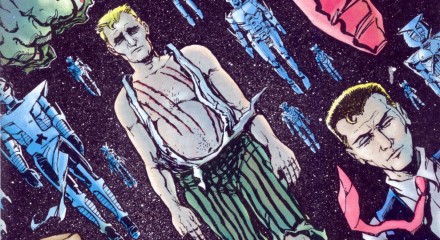
Miracleman, or Marvelman–also known as Mike Moran–is depicted by Alan Moore as a genetically altered human being that survives the destruction of his super-hero team with few of his memories intact. He was engineered with advanced alien organic matter and technology to fulfill a purpose that was ultimately taken away from him when the authorities that made him and his Marvel or Miracle Family believed them to be too dangerous: and sought to destroy them. Despite this, Miracleman and his Family were created by Project Zarathustra to help “save” the world: or at least the status quo version of it at the time.

Miracleman has a wife named Liz while he still believes he is a human being and eventually reawakens his power and many of his lost memories. At first he believes he is a superhero, but after a trip to the Spook Show bunker that created him and his Family, he realizes that he is the result of a physical and psychological weapons experiment: his first trip to the “Underworld,” if you will. Eventually, he meets his creator–and nemesis–Dr. Gargunza who reveals more about his true nature before trying to kill him.

Gargunza himself is a mortal human man that has also–in a way–delved into the divine by adapting crashed alien technology to create Miracleman and his Family. Miracleman also carries him: though in a somewhat different fashion than Aeneas and Anchises.

17

He both honours his nemesis creator and sends him directly into the Underworld where, at least in Neil Gaiman’s run of the comic, he remains in another Underworld … in a sense. 😉

The hero ends up having a child named Winter with Liz, who eventually leaves him when she can no longer relate to either him or his superhuman and intellectually advanced child. He also gains a new lover in the form of Miraclewoman. In the end after a time in his original base of operations–the Silence–to mourn his old life, he, the remainder of his Family, and other heroes he has assembled take it upon themselves to create a utopia on Earth: whether ordinary humans like it or not. This also ushers in the creation of a new race of humans created from his DNA: of which Winter is the first. At the same time, even though he discovers what he truly is and that he seemingly made his own destiny upon the world, Miracleman never loses his sense of doubt in his own motivations or what he has wrought.

So we have two demi-gods that survived the destruction of their way of life, losing loved ones and finding new ones, creating heirs to the Empires that they leave behind, finding knowledge and terrible enlightenment in the Underworld, and reshaping the status quo while always questioning their motivations in doing so. These are the superficial similarities and differences between the two figures, and you can definitely see some eerie parallels at work. I’m not saying that Alan Moore attempted to copy Virgil, or was even consciously inspired by this epic. In fact, I’d venture to say that it is more the case of the hero archetype that functions similarly in both an ancient novel and an early 1980s comics form.

But the implications, for me at least, go deeper than that.

I’m mainly thinking about how both stories end: especially how they end.

Aeneas is told that there are are two kinds of dreams that leave the Underworld from two different gates: prophecies from the Gate of Horn, and false dreams from the Gate of Ivory. After being shown Rome’s future history, Aeneas is shown the way out of the Elysian Fields and the Underworld: specifically through the Gate of Ivory. This act says a lot of things right off the bat and perhaps foreshadows the very end of The Aeneid itself.

It is a strange ending: almost a very abrupt one. Aeneas confronts Turnus, the King of the Rituli and former suitor of Lavinia, on the battlefield. The latter instigates a war with the Trojan survivors with his own subjects after he loses the hand of Lavinia to Aeneas. At the very end of their personal duel, Aeneas gains the upper-hand and Turnus begs for his life. Aeneas actually pauses for a few moments, and as a reader I can almost picture him looking right at the reader somehow, before he lets anger consume him and strike his enemy down. The last obstacle to Aeneas’ destiny over the Latin people and Rome is removed: but it is a troublesome and problematic ending in that Aeneas, despite fulfilling the will of the gods and having seen the future of his actions–or because he saw the future before he left through the Gate of Ivory–hesitated for that one moment of possible doubt.

File:Aeneas and Turnus.jpg

That is one possible reading of The Aeneid in any case. I mean, what could it possibly mean if you saw a glorious future and legacy before leaving it through a Gate of false dreams: of lies?

Then we have the way Alan Moore ended his run of Miracleman. Miracleman’s entire existence, despite his extraordinary powers and advantages, has been a layer of dreams and lies. People have constantly manipulated him in some way or form with either maliciousness, expectations, or even good intentions. Finally, he makes his own decisions: not merely for himself but for the species of fallible beings that created him.

He does this after killing his former friend, Family member, sidekick and now nemesis and mass-murderer Kid Miracleman–or Bates–having him return to his child form, promising to save him, and snapping his neck.

miracleman-kills-johnny

The beginning of a new utopia in Miracleman’s version of a 1980s world starts with him cradling the half naked brutalized child alter-ego of a friend that he failed to save and who he himself kills for the “greater good.” And even after he eliminates capitalism, ends world hunger, encourages the advancement of medical science, creates an Earth alliance with advanced aliens, as well as creating a process of giving normal human beings powers like his own, where he and his heroes have essentially taken rulership of the Earth for themselves in a benevolent dictatorship– they have become the embodiment of the human need to have gods to aspire to and worship–that he stares from a balcony at the very end of the story … and he ponders again, in his garden of horrors and wonders, if he actually did right.

This is the main reason why I see Miracleman as an Aeneas figure within Alan Moore’s and–to some extent–Neil Gaiman’s run of the comic. I was also willing to end it at this point as well: to merely show the parallel between these two heroes with problematic issues to the destinies they’ve taken on themselves. But there is something else that I find interesting.

In one of my courses at University, when I first read The Aeneid, there was this implication presented to us that Virgil may have had some other motivations when he wrote his book. Virgil was around during the time when the princeps Augustus of Rome reigned. Before Augustus, Rome had been a Republic with two consuls in governance, and sometimes a triumvirate after periods of civil unrest. There were many accusations that Augustus had, once becoming ruler of Rome, made it into a monarchy again or controlled it as a tyrant. Some scholars have seen Virgil’s act of writing the glory of Rome and Augustus through the Gate of Ivory and Aeneas’ supposed doubts of the future as a subversive criticism of Augustus’ regime and the way that Rome was heading. It may have been coincidence or premature death that left The Aeneid unfinished after the death of Turnus at the hands of Aeneas, or it may not have.

So what does any of this have to do with Miracleman? Aside from creating a narrative that uses a superhero to criticize and end the late-Cold War politics and social orders of the early 80s? Or Moore himself being an integral force in re-innovating the medium of comics? Well, this is where the theme of prescience–of seeing the future–becomes ironic. I’ve read somewhere that Alan Moore believed that the comics medium–at least that sponsored by the industry–has become stagnant and that it uses techniques and themes that were created about twenty-five or so years ago. He especially goes into this when he talks about DC’s decision to create the Watchmen prequel series: another work of his from the 1980s era. I think about this. Then I think about Miracleman. It was one of the earliest 1980s revisions of the superhero genre, and the comics medium, that Alan Moore ever undertook.

And then I wonder if the iconic Miracleman–Moore’s Aeneas–looked out over the balcony surveying the dark and yet promising structure his writer created around and before him … and found himself afraid.

Full Beings and Perfect Forms: Aristophanes and Plato in Miracleman

Before I begin, I would really like to point out that I’m aware of the fact that I’m talking about a comics series that few people have had the opportunity to read: though perhaps there are more readers of Miracleman out there than I assume. In addition, there will be some spoilers in this article, so for those still interested in reading the comics and can get access to them, read them first before reading this article. And for those who have no idea what I’m talking about, I talk enough about superheroes here and the philosophy of them to probably be followed. It’s up to you whether you want to read the comics.

Like I say every time I make this disclaimers, you have been warned.

Well before Alan Moore revised or deconstructed the figure of the superhero, people always assumed that even though superheroes have their official crime-fighting identities and their civilian alter-egos they are still ultimately the same person. The same was the said for Marvelman (later named Miracleman and possibly Marvelman again depending on whether or not Marvel Comics releases Alan Moore and Neil Gaiman’s runs) and his Family: that even though they spoke a magic word to change from human to superhero and back again, they always had the same personality.

Alan Moore challenges that assumption with his revisionism. We see a vast difference between Kid Miracleman and Johnny Bates: the child that he came from. Of course, that has a lot to do with the fact that Johnny switched into his Kid Miracleman persona as a child and let it grow up separately from his human child form. This, along with the event that forced him to hide and the circumstances of how he got his powers, might have warped his mind into two distinct personalities: though both have access to the same memories which is something to consider.

Moore even makes you begin to question if Miracleman and his alter-ego Mike Moran (though they both share the same initials) are in fact the same person. While both begin with a similar morality and are genuinely good people–and they share memories–key differences begin to occur to differentiate them. It’s probably even further complicated by the fact that Miracleman had been dormant for years after a traumatic event, while Mike Moran himself continued to age and live his own life until another traumatic event forced him to remember the key-word to bring his superhero persona back.

Then there is Young Miracleman–or Dick Dauntless–who died and was brought back to life. From Neil Gaiman’s run, or from what exists of it so far, there is no difference between Young Miracleman and his alter-ego at all. Finally, Miraclewoman seems to be the most balanced of the entire Miracle (or Marvel) Family in that as the doctor Avril Lear and Miraclewoman she also seems to be the same person and has learned a lot about her dual nature by exploring both.

As I read the entire series as it was, I began to notice certain elements that Alan Moore and to some extent Neil Gaiman incorporated into their work. In a lot of ways and I have Alan Moore in particular in mind, they brought the idea of the superhero back to its roots: to the mythologies that created it as they took it apart. The secret British government program that was created to make these super-beings is called Project Zarathustra: based off of Nietzsche’s idea of the ubermensch or the superman. The superman is supposed to be a being that has transcended all conventional morality and chooses to create their own code to live by: possessing the power to do so through sheer will. I talked about this a little bit with my Whoever Hates the Man of Tomorrow? article, but this is a theme that definitely plays out with Miracleman.

There are other mythological references in Miracleman: such as the heroes’ home base being called Olympus, the body-switching Qys as the supposedly unwitting genetic prototypes of the Miracle Family being referred to as the Titans or the Primordials that existed before the “superhero pantheon of gods,” and even the battle with the twisted Kid Miracleman supposedly mirroring Ragnarok or the “twilight of the gods.” Moore even creates a nice mythological analogy between superheroes and supervillains: the former being Heroes and the latter being known as Dragons or monsters to be vanquished. We see a lot of Nordic and Greek mythology being drawn on to create this version of Miracleman. But there is more.

As I continued reading Miracleman, I saw another parallel developing. It began when I saw the twisted fused twin skeletons inside of the British government’s secret Spookshow warehouse: where Miracleman and his kind were created. Originally, I was led to believe that these fused skeletons were the remains of Young Miracleman from his own death, but in reality they were the dual remnants of Young Nastyman: another experiment that went insane and died through mid-transformation within a volcano … or so Miraclewoman says.

That grotesque fusion of two skeletons reminded me of Aristophanes’ myth of love. I know how disturbing that may sound, but I didn’t actually start thinking of it that way until Miracleman himself began to explore his own identity and the line between himself and Mike Moran. According to Plato in his Symposium, Aristophanes explained why love existed by telling a story in which once upon a time mortals were larger beings with two-heads, two sets of genitals, and two sets of limbs. They were powerful and they defied the gods so much that Zeus split them into two. This myth was supposed to explain that love is that need for each person to look for the other person split from them or, as we hear it in our own popular culture, each person looks for “their other half.”

That was the resonance I got when Alan Moore really came to the finer details of how the switch between mortal and divine works with the Miracle Family. It’s almost as though Project Zarathustra, in analyzing the bodies and the technology of the Qys–of fluidly intersexual Titan progenitors–tapped into a place of mythical proportions to recreate that “lost existence” that Aristophanes goes on about. One very interesting thing to note about Aristophanes’ myth is that when human beings were once unified, greater beings it was implied that they could defy and potentially challenge the gods themselves: which was one reason why Zeus and Apollo divided and changed them. Therefore, it can also be implied that Project Zarathustra allowed mere mortals to tap into the divine, to a place beyond the divine, to become a lot more than what they already were and challenge the established order around them.

Aristophanes’ myth that was meant to examine the origins of love and humanity’s potential to divine power is argued by scholars to be a comedic or lampoonish idea to reflect its comedian creator. Yet I find nothing particularly hilarious about this, though it is interesting that it was considered a “comic” idea: one that has translated itself so well throughout the ages. There is also another saying in popular cultural with regards to love as reunion: that just as people are looking for their “other half,” there is also in a relationship reference to one’s “better half.”

This is where I begin to wonder, like a few scholars before me, if the myth of Aristophanes wasn’t created by Plato himself to add a nice neat argument to his Symposium. We can argue whether or not Socrates created his own philosophy too until the cows come home, but that’s not the point here. Plato himself had his own theories about reality and the subjects that exist in reality. He believed that there are two worlds: the World of Forms or Being and the World of Becoming. The World of Being is a plane of perfection. You can find the originals or the perfect forms of anything that has ever existed. You can find the ideal object–such as a chair–or subject–such as a man or a woman as well as thoughts, feelings and knowledge–here.

Then you have the World of Becoming, a gradation of said perfect forms into more worn and degraded shapes. They deviate or change from the ideal and ethereal prototypes that they come from. The idea is that we live in the World of Becoming and that we seek the World of Being. You can see here, and I’m sure my high school philosophy teacher would be proud of me at this moment, how this Platonic thought influenced the Western idea of Heaven and Earth, or Heaven and Hell.

When I read Miracleman, I saw an interesting parallel with this Platonic conception. Miracleman and his kind are the perfect forms. When they are not used, the forms are kept in a place of pure energy known as Under-Space: a nice analog to the World of Forms itself. They rarely ever age, they cannot be destroyed through conventional means, they have extraordinary clarity of thought, devastating power, and even their costumes are engineered from an alien material that cannot be destroyed and reflects the moods of their wearers. Their powers and natures are explained as being the result of a psychic field or harmonic around them that they can control. In other words, the Miracle Family practices mind over matter.

My reading of this is that human scientists–degraded imperfect people like the rest of us from the World of Becoming or matter–used a link to the World of Being or the spirit to reverse engineer near perfect forms that mortals can have access to. Even Miracleman explains that he has the same thoughts that Mike Moran does, but he can see them and perceive his world with far more clarity and insight. We can get even more Platonic or Gnostic and say that through science, the Miracle Family gained a greater link to their spiritual, real, celestial selves. It is also no coincidence that Alan Moore, their revisionist, began to embrace further mythological and spiritual elements in his later works and even in his own life.

So it seems clear cut that Miracleman and his Family are their own essential selves having been unified. Of course, it is not nearly so simple as that. Mike Moran, Johnny Bates, Dick Dauntless, Avril Lear and Young Nastyman (or Terrence Rebbeck) did not seek this enlightenment. They were kidnapped, kept in medically induced comas, experimented on, had essentialized clone bodies made for them, had said bodies transferred into Under-Space where their minds would be trained to switch back and forth to by a word command, and were brainwashed to believe they were superheroes in a comic book-like virtual world before being abandoned as too powerful and too dangerous and marked for a termination order which, inevitably, failed.

It all sounds so banal when I summarize their origins like that. In a lot of ways, the Miracle Family are more like the uncanny Freudian doubles or doppelgangers of the mortals which they are linked to. They have great powers and insight, but they do not always relate well to the World of Becoming around them. Some of them are malicious because of this and even the best-intentioned among them have the potential to cause immense and traumatic change to the world.

I personally think that they are all of these things and more. I think that Moore portrayed them as humanity’s need to reach for and become the divine: or to remember its divinity. What happens after the creation of said beings, their own realizations of what they are,  and how the affect and what to share their perspective with the world around and the people who made them is–in mythological retrospect–an inevitable conclusion.

ETA: After writing this article, I’ve realized that you can examine the Miracle Family with a particular focus on identity. Much in the way that Neil Gaiman’s A Game of You really plays with identity, gender and the fluidity and change of self-identity, his and Alan Moore’s Miracleman can also be examined in a similar light. Maybe one day someone will do that … when the damned thing is republished.

Abraxas, legal issues, Abraxas …

Legend of Zelda: Link’s Enlightenment

I’d like to say that this is another video game review, but that isn’t exactly true.

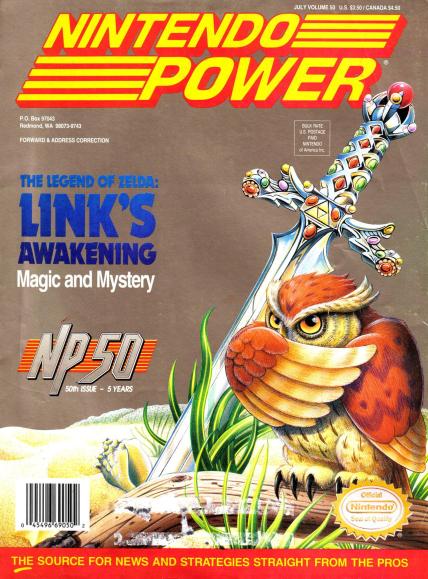
I first heard about Legend of Zelda: Link’s Awakening back when I used to get Nintendo Power Magazine. I remember that day. It was the summer time and the bus dropped me off from camp in front of my old elementary school. My Mom was there with Issue 50 of Nintendo Power that I’d been waiting impatiently for. This is what I saw:

http://countzeroor.files.wordpress.com/2010/10/magazine-nintendo-power-v6-7-of-12-legend-of-zelda_-links-awakening-1993_7-page-1.jpg

This mysterious owl sat near the sword. Originally I was annoyed that my copy of this issue got tattered, but it and the faded tan-bronze cover only added to the mystique that Nintendo no doubt wanted to build around this issue and the game they were featuring in particular. Well, for me, it worked.

It didn’t work in getting me to get the game however. Not initially. And when I did get it I didn’t really have as good a head for puzzles and video game combat strategy back then. By that point, my friend who’d gotten the game before me proudly spoiled the ending: or maybe I asked him. I don’t actually remember. So I don’t know why I picked up the game again years later, but I did. By that point I had a little more common sense and I’d played a few more games. Also, I’d read some philosophy: a lot more philosophy.

You are Link. You are on a ship in a storm that leaves you marooned on a strange Island. You figure out that the only way to get off of the Island is to awaken the Wind Fish in its egg on the top of the highest mountain.

There are puzzles and mysteries and secrets. You have many moments: most of them fun, a lot of them dangerous and you get to know the mysteries of Koholint Island. There are strange people, weird creatures, a talking owl that periodically advises you in riddles, a man who eats things he shouldn’t … and a girl who likes to sing and just spend some time on the beach with you.

I’m going to go into Spoiler Territory right now. Unlike Super Mario Brothers 2 where the “it is all just a dream surprise ending” just seems like a cop-out, in Link’s Awakening it is a gradual realization that comes with some sadness at the end of the game. In fact, the spirit of this game is perhaps even more emblematic of mono no aware–of understanding and having empathy towards the impermanent beauty in life–than even Terrangima.

Then you take the chronology that Nintendo claims the Zelda games all have into account. Personally, I liked the idea that each game in the series was a “legend”: a story with some elements of history but each being an account that has ultimately been changed over time as memory fades. However, in this case, I like that Link’s Awakening apparently happened after A Link to the Past as I’ve understood it.

Let me explain my take on Link’s Awakening and what I feel is really significant about it. From my North American understanding, there were three games before this one–the two Nintendo and the Super Nintendo ones–and all of them involved Link rescuing Zelda and dealing with the Triforce.

Here is how I see Link in this game. He has done all of these heroic things, but after he has completed them, he’s tired. In Hyrule, he is known as the rescuer of Zelda and the hero of the Triforce. If he had a normal life before this, it is gone. Maybe he just wants to get away. Maybe he lost much of what matters to him. Maybe he just doesn’t know who he is anymore.

The fact is, before this point Link didn’t seem to have an identity outside of being Zelda’s hero and the gatherer of the Triforce. Link’s Awakening, despite the franchise title, is Link’s story. It is not only a hero’s story, but the story of a man who journeys into his own subconscious. The owl that he finds on the Island is that part of him–the wise being or animal archetype–guiding him through this inner journey. Every creature and obstacle is his unconscious mind trying to keep him in a state of ignorance. Every time Link reclaims or gains a new item, he starts to remember more of who he is: or begin that process of knowing who he is.

You can  get even more Jungian and say that Marin–the girl he meets–is his anima: the feminine aspect of his mind that reveals things through subtle intuition and actually has him pay attention to the things he has taken for granted in the other games. He plays around, he laughs and he learns to enjoy the sunset and the sentiment that can feel when watching it. He also has to face Eight Nightmares that could represent emotions or attachments: seals of power that keep the Wind Fish–or Link–from waking up, while the ultimate Shadow Nightmare at the very end of the game symbolize the essence of his greatest personal fears and then ultimate universal horror.

He has to gather eight instruments to create music from a tune that Marin sings him to get into the egg that the Wind Fish sleeps in. And when the Wind Fish wakes up … it can fly. And it does.

It is a symbol of awakening: of enlightenment. It is a symbol you would find in some Eastern thought or even in a very mythological way. I know you can easily say that the Wind Fish dreamed Marin, the Owl, the Nightmares and the entire Island: that they were all aspects of its dreaming mind.  Link might even be a part of its mind and it has awakened to another reality. It is a valid interpretation given how Link physically wakes up on a floating rafter in the ocean. Does a man dream of being a pebble or does a pebble dream about being a man? Does Link dream about the sleeping Wind Fish and its Island, or does the Wind Fish dream about a sleeping Link?

The thing is, when I talk about all this, I believe I’m actually talking about Link as a symbol and not necessarily with regards to the ambiguous continuity that Nintendo is trying to make between games. I think, that at that moment above when Link destroys the last Nightmare and wakes up the Wind Fish, he is really awakening himself. At that moment, in that moment, Link is more than just a silent hero that goes around fulfilling tasks and doing what Zelda cannot or will not.

When Link wakes up the Wind Fish, when the illusion of maya that is the Island disappears, when Link regains consciousness: he actually gains consciousness. He expresses emotion through his interactions with everyone on the Island: each one of them aspects of himself. He realizes he has a whole world in himself that is a part of a reality outside of him as well. He experiences mono no aware: that sorrow and acceptance with regards to the passing of beauty in life. In one tiny hand-held 8-bit console with grey graphics or crayon-colours, Link is depicted as having achieved enlightenment and self-knowledge. For the first time, the hero of Hyrule knows who he is. He someone who dreams and is dreamed of. He is an archetype.

For the resources of the time that made this game, isn’t that just … beautiful? I’d really like to think so. I know many of you might think that I am reading too much into this and that it is just a game. Certainly I would not say that Link’s Awakening is a tool for personal enlightenment, though it is tempting to say in a creative sense, but it does depict some cultural depictions of it well. It is a beautiful artifact and I’m glad I knew it. Obviously, if this were an official review it would be getting five out of five.

I would like to leave you with just one more thought. When Link wakes up, it’s as though it was all a dream. When we finish playing a video game, the game is over. We put down the console or turn off the computer and go do something else. Our interactive electronic dream is over. Yet do all of those challenges and experiences: and those touching moments all fade away and mean nothing because they were not physically real? Did they not happen? Somehow, I don’t think so because, even when we finish sleeping, our dreams never really go away.

They continue stay with us. Because dreams are memories too.

https://i0.wp.com/www.projectcoe.com/wp-content/uploads/2012/04/tumblr_legu6rTqGz1qaaf7po1_500-300x269.png

Video Game Review: Terranigma

Imagine a game where you play as a person who needs to create–or resurrect–an entire world. With each challenge you solve, you restore not only continents but the cycle of life and the souls of all living beings as well. Then you find yourself in a battle between good and evil over what you have brought back. You find yourself between two worlds. You find a world awakening in yourself. Things are definitely not what they seem to be and eventually you wonder just what it is that you are fighting for.

You’re not exactly what might be considered hero or saviour-material. In your village, you’re known as a bit of a trouble-maker and something of a brat. You cannot leave things alone and this is what ultimately precipitates your ultimate quest and the strange, terrifying and wonderful places you will find yourself in.

Your name is Ark and your game is Terranigma. Terranigma was an action role-playing game created for the Super Nintendo in the mid-90s. It was never released in America: which is a really great shame, but it was launched in Japan and Europe.

To say I like this game would be an understatement. What I wrote above is merely a summary of a very fun and poignant story. This game has a wide range of emotional depth and covers a whole lot of themes like death, reincarnation, and life itself. I keep thinking myself whenever I think of Terranigma that if there was ever a video game with a Buddhist paradigm, this would be it. I do not exaggerate when I say that you, as Ark, have to create or recreate the world. You also help civilization evolve while becoming a part of it as well.

The character of Ark is interesting because with his mischievous and good-hearted nature and his staff weapon he reminds me a lot of Monkey in Journey to the West: a reluctant god-trickster hero–with something of a magic staff weapon–who is impelled by forces in the outer world to help others. So in some of that sense, Ark does fit the hero archetype. And believe me, this game does not skimp on archetypes or the hero’s quest.

https://i0.wp.com/rpgcorner.pagesperso-orange.fr/Terranigma/Terranigma_art.jpg

This is also an action game. It is not turn-based and you don’t gain spells when you level up. Instead, you fight. You have to think on your feet and adapt to your enemy. Defeated enemies explode into a satisfying cloud and often leave some gold behind for you. There are puzzles as well and those can be challenging but not difficult. I confess that when I played the game, I looked up a lot of guides to help me through it because I wanted to see how the story unfolded more than getting stuck in places at times.

What else can I tell you? The areas that you visit are great … fond stereotypes of places that exist in our world but they are fun to interact with. I wouldn’t learn history from this game though, just to warn you, but just take it as it is meant to be: a game with its own logic.

All this said, I feel I should definitely mention that in addition to its lush 16-bit graphics and memorable characters, Terranigma has one other very great element: its music. In fact, its music does what any video game music should: it complements the story and the characters. It is integral to the emotional complexity inherent in the game. The music can be playful, grandiose and conflictive, and sad. Really sad.

But there is something about “Terranigma Sadness” that is different. It portrays this … transitory sorrow, this acceptance of loss and gain as a cycle of life. It–and really the entire game–has this resonance with the Japanese concept of mono no aware: an awareness or an empathy towards the impermanence of life. You can really hear it at towards the end of the main musical theme in the above link. It reminds me of an old man dying peacefully in his sleep under a sunny tree or an unnamed and unsung warrior resting after a long life of battle: leaving forgotten but satisfied by the depth of his life and accomplishment.

As I mentioned before, the spirit of the game has an almost Buddhist nature or a distinct link with some aspects of Far Eastern culture: a perceptual lens which has a very unique way of looking at the world.  Being able to combine these elements with fun gameplay is a mark of genius as far as I am concerned.

All and all, after a few years of not playing this game, I would still give it a five out of five. A friend sent it to me and it only reinforced the fact that I’m glad I got over my reluctance to play old games. No, this isn’t an old game. Games like Terranigma are never old games. No, this game is a classic, and this is what a classic truly is.

I’m going to leave you with this last video. I don’t know how long it or the above link will be on here. The following was a fan video created by one TheStarOcean. I thought it was lost forever years ago and while it doesn’t use the original track, it truly captures the heart of this game. Do not watch if you don’t want spoilers and you want to play this wonderful game for yourselves. If you have played it though, I hope you will enjoy it for what it is.