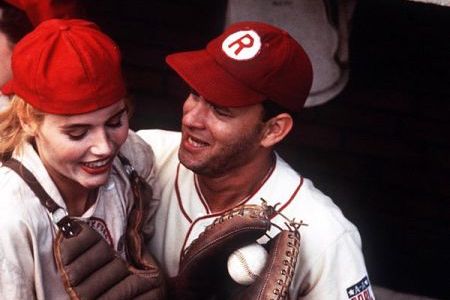
Jimmy spits non-existent tobacco onto the field, inclining his head to the side out of habit while also grunting as the other players take their leave. None of them stay, not even the grey, shadowy shapes that sometimes loiter on the turf. There aren’t many of those anymore, to be fair, as Jackson told them the owner – Kinsella – never really stops recruiting.
It’s rough, though. They’d been playing all day, and it was time to go home, Jimmy guessed. Even Bob Feller wouldn’t bat for a pitch. Still, Jimmy knows he can’t explain. He feels tall, his shoulders broad, and he fits in his old Cubs uniform despite all the years he left behind in ‘87. Hell, his damn uniform was actually crisp white – ignoring all the dirt and sweat from under the sun. But he’s standing up straight, feels all square-jawed, and he can actually breathe again. Practically All-American, as Mom used to say. Or one of his wives.
The floodlights are pretty good. The grass, and the stalks around the field rustle in the wind on this warm summer night as he picks up the ball. Between that, and the bleachers, and the tractor that comes through every once and a while, there isn’t much else that’s mechanical. Definitely nothing like a pitching machine.
Out of all the things in his former life, Jimmy never thought he’d miss a pitching machine, especially not with Bob and Jackson, and Ruth, and only God knew who else around these parts. But here he is. He takes the ball, and he throws it up into the air. Then, he puts both hands on his bat, swinging back, and striking the thing out into the farthest depths of the field. He crouches, and he can feel the difference as he puts his whole body into it.
A great thing, feeling cartilage in his knee again. All he had to do was pretty much just die for it.
He shakes his head under his helmet. He walks past the bases, and picks up another ball. Fellas should’ve cleaned up, but he basically volunteered to do the rest. He feels uneasy. He shouldn’t. He should feel great. He does feel great. Amazing even. But as he throws the ball, and hits it again, he feels something else that’s been at him this entire day. Something – someone – is watching him. Like eyes across the bar room. Or … something else. Something that feels familiar, but he lost the name.
Like a ball he just barely grazed that could’ve been a home run that he’d never had.
Fucking sentimental hogwash. He tried to shout that kind of junk out of the Peaches. Out of his girls. He hasn’t seen them here. Jimmy’s not sure if he’s disappointed, or happy. Maybe they’ll never come here. Maybe God doesn’t have Ladies’ Nights.
He takes up the ball again, before he notices the shadow.
The strike of the ball against his bat cracks throughout the air, as the figure holds up one hand … and catches the ball. No glove.
Just a bare palm.
Jimmy blinks in the lights. He slowly lowers the bat to his side, fainting tapping his white pants. The shadow was easy not to see in the night, even with the field lights. It is tall. Statuesque. It wears a white short-sleeved uniform, with a red insignia and cap. The uniform is all too familiar, except it is wearing pants.
The flash of golden ginger hair reminds him of the last late afternoon that he had seen her, before he went off in that bus to his next game, with the rest of his girls, with everything said and left between them.
“No skirts.” Jimmy points at her legs as he walks up, to meet her in the middle of the field.
She shrugs, looking at the ball in her hand, before turning up to regard him. “Easier on the legs.” She says. “No scrapes this time.”
“No splits either.” Jimmy shakes his head ruefully. “So much for Heaven.”
“Oh Jimmy.” Dottie says, her lips shaped into a thoughtful pout, a country girl trying not to say something more profane. “You still look like shit.”
Jimmy scratches his chin. Even now, he still forgets to shave. Or maybe given everything, it never occurs to him that he has to anymore. They’re both trying to be nonchalant, but he sees her flexing her jaw. An old tell if he ever saw one. She looks like she did in her twenties. Like they’d just said goodbye at the bus before going to two separate lives. “And you still look like you eat and breathe this game.”
This time, Dottie looks down. A smile flits at the corners of her lips. “I guess there’s part of me that never really left it.” She manages to glance up at him. By this point, they have closed the distance between space and time, between them.
“You look great.” She says, and somehow they are both back in ‘43 in front of the pitching machine where she is picking up. ”You look like you can still go.”
“I was locked in.” Jimmy doesn’t know why he said it, but it makes sense.
There is a moment of quiet between them.
“I thought you liked me.”
Jimmy never thought he’d hear those words again. He’d heard them every day of the week, all the way until the day his liver and his lungs couldn’t take it anymore. He’d told her that he’d tripped. It’d been ridiculous. Pathetic. An old drunk womanizer’s excuses, a disappointing shell of at least a decent ballplayer. The truth was, he’d tripped, and fell. And he’d been falling for a long time. And he’d kept falling, plummeting for what seemed like forever before he saw what the Peaches could do. And what she actually was.
“I did.” Jimmy wants to believe that it’s just his throat remembering what it was like to be choked up by tobacco, or just dust. “That was the problem.”
He doesn’t look at her. He’d made his decisions. She’d made hers. But damn. At least he said it this time. Then, she is right up to him. He feels a tap against his chest. He looks down and sees her hand, curled around the baseball, pressed against his uniform.
“Out.” She whispers, softly.
Seeing her reminds him of that pure and clean feeling of doing something right. Something that he’d been born to do. To act. It wasn’t just that she embodied it. She felt it too.
“I call foul.” He grumbles, without any rancor.
She puts a hand on his arm. “Maybe we should get a proper judgment call.”
“Maybe we should.” Jimmy chuckles. “But we know those umps are paid off anyway.” For a few moments, he stares back at the bleachers. And, somehow, he knows. He just does. She doesn’t look. She doesn’t have to. “Maybe we’ll have better luck with the Commish.”
*
Dottie Hinson sits on the bleachers as she watches them.
She’d only even seen Jimmy Dugan this young on a playing card. It makes her happy to see him standing up tall, and proud. He walks and moves smoothly, without his usual limping gait. And then, she saw the shadow of the figure in the field come into the light.
Dottie doesn’t know what to think of seeing her younger self, in that modified Rockford Peaches uniform, talking with a Jimmy in his prime, a man not run down by life and his own terrible choices, and her – her not a mother yet, or a grandmother.
“May I?”
Dottie turns her head slightly. Ray Kinsella is standing next to her on the stands, his hands in his pockets. The young farmer and owner of the field, squints down at the sight of the two figures. Dottie chuckles, shaking her head. She almost catches herself trying to pop her jaw. She nods to him. “Were there too many redheads at dinner for you?”
“Surrounded by them.” Ray laughs. “Nothing I’m not used to by now.”
It’s true. Dottie has seen Ray’s wife and brother-in-law, as well as his daughter Karin. But her daughter, and grandchildren, her sister and her own grandchildren are something else. They’d paid a nice twenty dollars for their ticket, which also included room and board for their stay. And Annie made a mean meal.
She doesn’t have to look at Ray, to see that he knows what’s going on. “Has this happened before?”
Ray sighs. “Not often. Apart from Doc Graham, well, I told you about that. It happened outside of the field first. He followed us here. But yeah. There was one other time. Almost like this”
Dottie’s eyes narrow at the two meeting down below. “And?”
There is a pause. “Do you see the mound down deep left field?”
“Yes.” Dottie hadn’t been sure, originally, what the plot of land had been in this strange baseball diamond in the middle of an Iowa farm, but now she already has a better idea.
“That’s Kid’s.” He looks at her. “Eddie Scissons. He called himself the oldest Chicago Cub.”
Dottie’s brow furrows, trying to remember while also focusing on the tableaux below them. “I don’t think I know him. Jimmy never talked about him …”
“He wouldn’t have known him. At least, I don’t think.” Ray rubs at his eyes. “I still don’t entirely know how it works.”
“I found out about your field through Mae. Mae Mordabito.” Mae had always been wild, but it hadn’t been until much later that Dottie realized just how superstitious, or into the occult that her former teammate had really been. “She’d read about you from Terrence Mann’s Shoeless Joe.”
Ray laughs. “He really did it. I knew he would.”
“So.” Dottie says. “What does this mean?”
“I … honestly don’t know.” She gives him a glance. “The announcer, or whoever, the voice isn’t saying anything. Do you hear anything?”
Dottie thinks about telling him that while she might be old, she’s not hearing voices yet. She shakes her head.
Ray rests his hands on his knees. “Eddie … He might have had more to do. Maybe …”
“He had some regrets?” She turns her gaze back to the ghosts of Jimmy and herself. And she thinks about it. “Is that what happened to him?”
“I don’t know.” Ray admits. “I think … we all, all of us, get something from the field. From the game. And I think it’s just between us, and the land.”
Dottie considers Ray’s words, the sight below them, and how she feels about it. Cooperstown had been a year ago. 1988 made her face a lot of what she had been doing, and who she had been in 1943. She’d almost not gone. She had tried to convince herself it hadn’t been important. But it was. All of it had been. It was how she reunited with her sister. With her friends. With her memories.
All of her memories.
She sees the younger Dottie tap Jimmy in the chest with the ball. She can’t hear much of anything that they say, but she can figure out enough. No one knows yet, except Kit and her daughter. Bob passed about a year ago. She had lived a full long life with him, and she didn’t regret a single thing. Not for their offspring or their grandkids. When she went – and she would – she would be with him.
But there would always be a part of her, deeply, intrinsically, spiritually, that was baseball. And Jimmy was also baseball. She smiles at him, at that young man he was and is now acknowledging her. And as she watches that part of her, that Dottie, free of responsibility and fear and anxiety taking Jimmy Dugan’s hand in hers, as they move through the corn stalks and vanish from view, a strange peace fills her that she didn’t know she needed. Something had told her to make this trip: a long trek from Oregon to Iowa for what could have been some tourist kitsch due to a metaphysical book from a former free love author. Now she can enjoy the rest of the time she has left. Now that part of her can truly move on.
Dottie slowly gets up. She waves Ray off as he attempts to help her. “Let’s go back inside.” She tells him. “My grandkids will be wondering about me. And Kit will want details. Otherwise she will never let me live it down.”
And while Dottie remembers, even now, that there is no crying in baseball there is still plenty of space to smile about it.
 Mythic Bios