Fuck the Box: Greta Gerwig’s Barbie

If anyone told me that, one day, I would be writing something about Barbie I wouldn’t have believed them. Barbie was something that little girls played with, while boys of my generation had action figures like G.I. Joe, and Teenage Mutant Ninja Turtles instead. In the 1980s and 90s, if you were a child you mostly lived under this gender binary of a socialization of play, and toys. Barbie was pink, hyper and even stereotypically feminine, and seemed like playing house.

Mattel created Barbie, and produced her, her companions, and her accessories even though the company also made many other toys built for children of all genders. Mattel, as a toy company, wants to sell more of its products so that it can make more money. It recognizes social and political trends, even economic changes, and adapts Barbie and presumably its other toys accordingly. And the Barbie film is another vehicle, another accessory, by which this corporate entity can continue to do exactly that: make a profit. Warner Brothers cooperated with Mattel to also make money, and together they made a power ad campaign for the movie, and everything that comes after it.

And then, you have the big names working in this film. The insanely skilled Margot Robbie as Barbie, of course, Ryan Gosling as Ken, even Kate McKinnon’s Weird Barbie, kick ass Michael Cera as Alan, and so many others bring a presence to the movie, and make people want to see what happens. And Greta Gerwig herself, the director of the movie, is a well known independent filmmaker who wants to make a story about girls, and women, and their place in the world. 

I wrote a Letterboxd review of Barbie a while back, and while I feel like I captured a lot of initial thoughts, I’ve time to think about a lot of other elements and while my score – namely, three and half parties out of five – will remain the same, I feel like there is more to say. 

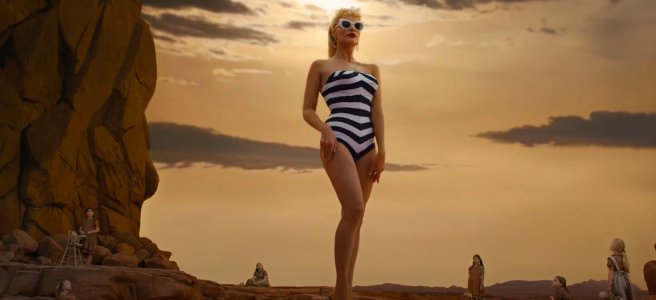
In my original review, I wrote that Gerwig, not unlike Barbie herself, walks like a ballerina – on her tiptoes – on a tight-rope between telling an independent feminist story, and working with the Mattel corporation. At the same time, there is that even thinner line between the esoteric, almost Pee-Wee’s Playhouse reality of Barbieland, and a commentary of our capitalist, consumerist patriarchal world. When you look at Gerwig’s depiction of Barbieland, it is a mystical and mythological place. Barbie is Wonder Woman, having not been born through the flesh of men and women, but as an artificial being made by another species in another plane of existence. She comes to Man’s World, or Los Angeles, and she represents her world of Paradise Island or Barbieland. As Margot Robbie portrays her, she is naive about Los Angeles or the rest of the human world, but she is intelligent and capable such as her punching out the man who slaps her ass, and when she escapes being put into a box. Amazons themselves, as they were originally made by William Moulton Marston, would lose their powers – and Wonder Woman herself would do so – if they let themselves be bound. And Barbie knows this on an intrinsic level, which is why she runs, and goes to the liminal spaces in the corporation of Mattel – an even more pronounced plane of Patriarch’s World – to get out of there, and find the spirit of her creator Ruth Handler: perhaps her Hippolyta, or one of the goddesses.

Barbie is innocent and blissfully ignorant of her gifts and existence before the Outside World – and her owner’s thoughts, intrude on her: changing her, making her graceful, floating, tip-toe feet flat and subjected to the humiliation of gravity, along with the cellulite of her skin instead of the perfection of plastic. At the same time, her Lasso of Truth is what Gloria, essentially her owner and an employee of Mattel drawing sketches of her, or versions of her, gives her when she reveals the maddening and ridiculously contradicting expectations of patriarchy for women, and towards the tools to which inform women’s – and girls’ – socialization: namely dolls. Namely Barbie. 

The metaphor gets tortured the more I write it, but you get the idea. Others have compared Gerwig’s Barbie and its existential situation to Adam and Eve eating from the Tree of Knowledge of Good and Evil, instead of the intrinsic immortality of plastic. This is a parallel made by Alissa Wilkinson in her Vox article In the beginning, there was Barbie, and it matches another mythological interpretation in the form of Barbie being the goddess of love and war Inanna with her trip to the Underworld and back in Meg Elison’s “Barbie” is the new Inanna. The ideas behind Barbie are old, just as dolls were arguably created to educate girls to become mothers for generations before – as the film does through its tribute (and not a rip-off) to Kubrick’s 2001 – so too does Barbie demonstrate the potential to become more than a potential mother, but that, and being beautiful, intelligent, and capable as one’s self as well. 

But Gerwig also manages to illustrate the problematic elements behind this idea as well, though navigating those meta-fictional layers can be tricky, and I nearly got lost in them. The Barbies of Barbieland are expected to be all things, all at once, all the time. Because they are not human and have no biological needs, perhaps they can do that but it is telling that when Ken comes back from Los Angeles with “patriarchy,” many of the Barbies go along with this overt version of it because it allows them to “relax” and “not think,” or “do anything,” for a while. There is a lot to be explored there, especially whether or not the Barbies were already under patriarchy by the nature of them being plastic and perfect, and partying and just having to be played with and playing at being independent, and nothing more before Barbie and Ken ever went on their journey. 

It is pretty telling that the film’s version of Mattel’s Board of Directors were desperate in keeping both the inhabitants of Barbieland out of the human world, and the human world from getting in there. As Ken is traveling through Los Angeles, he encounters a businessman who all but tells him that patriarchy’s greatest trick in their world is seeming like it has changed, but operating “behind the scenes,” appropriating the tokens of diversity and representation but using them as decorations or, again, accessories while business continues on as usual. The reason why Mattel in the film doesn’t want anything to change, even when Ken’s changes to to Barbieland into “Kenland” still sells toys, is that people will catch on that they are being overtly patriarchal, the Kens’ behaviour over the Barbies will be seen and questioned by girls and mothers. They want the dream to remain the same. They want the seeming of freedom to continue so that they continue making toys, making money, and keeping them – and the systems that they support in the human world – in control. Will Ferrel as the Mattel CEO wants to remain “Mother” and keep co-opting maternal and feminist icons for himself, and the company no matter the cost. 

So it is a good thing that Gloria and her daughter Sasha, as obnoxious as a teenage child can be, go back with Barbie and represent the women that Barbieland has influenced: to the place that they also influence.

I think the strongest part of the world-building that Gerwig creates is also one of its most vulnerable elements. The idea that Barbieland and the human world are planes that influence each other is great, but it is never explained how Barbieland came to be, and how these walking plastic dreams can actually crossover in this version of our world. The idea that a Barbie doll’s owner can influence them, and vice-versa is also inspired but it’s never explored just how far this goes, or if a doll can be affected by a generation of owners. I honestly believed that the twist of the whole film would have been that Barbie thought that Sasha had been her owner, only to realize that those memories of a girl playing with her weren’t of Sasha but a child version of Gloria who grew up, and was working for Mattel. I still think this was a missed opportunity, and could have led to more character development for Gloria and Sasha, as well as reinforcing that lesson Barbie had earlier about human mortality when she saw an old woman for the first time sitting on a bench, under a tree, confident in where she is in her life. I thought that was the foreshadowing there about Barbie not understanding human aging and frailty, and I think it is still a missed opportunity.

The film itself has many glib and clever moments, and scenes of grace too. For every madcap reference to the Barbie dolls being animated toys, there are statements about men talking too much about Zack Snyder’s Justice League Cut and Kubrick, and Barbie meeting her maker. And I don’t care what anyone says: Barbie being having feminist speeches is not a disingenuous thing that Mattel and Warner Brothers’ advertisements lied about. From the very beginning, we knew this wasn’t going to be a light romp in the park. Once you have a children’s doll in a children’s doll party asking “do you ever think about death,” Pandora’s Jar of pretty paper worms will spring open. If no one knew there were going to be serious nuances and poignancies to Barbie, they obviously were not paying attention. 

This isn’t a children’s film, even though it uses children’s things to tell the story. Does it do it well? For the most part, though it can get awkward at times. For example, what are the purposes of the Kens, and how do they work into the world of Barbieland, and the meta-narrative outside of it? Are the Kens the oppressed minority or the other half of the population? Are they representative of the self-entitled little boys, and Peter Pans, that men are supposed to be in our world? Did Ken, as an individual, have some genuine grievances in how he was treated but took matters too far in “correcting them,” to a point where once he knew patriarchy wasn’t about “horses” adding more to men’s shapes, he wanted to stop but he enacted a force he couldn’t control and committed his ego to something to the point where he was in far too deep to walk away? Are the Kens symbolic of the Trump regime and Supreme Court presence that overturned Roe v. Wade, or are they a class of people that will “one day get the same representation that women do in our world?” Perhaps the Kens exist, as accessories to Barbie on a good day, and also as silly mirrors to show men how dangerously ridiculous patriarchy actually is.

Is it true that once you take something out of the box, it is extremely difficult to put it back in again? Is it even all but impossible? Jars are similar to lamps, and lamps contain genies or jinn that grant powerful wishes – or dangerous wish fulfillment if you think about Patty Jenkins’ Wonder Woman 1984 –  and boxes have another derogatory connotation that patriarchy has associated with women’s bodies and genitalia. And while Barbie, in most of the film, doesn’t have human functions, the fact that Mattel’s Board of Directors wanted to put her back into the box, reducing her back into her “basic function,” speaks volumes.

Barbie is intellectual property, but also an idea. She’s both Athene bursting from the head of Zeus after he tries to eat Metis, but also Aphrodite who is both Zeus’ daughter, but somehow also the creation of the severed phallus of his grandfather Ouranos fallen into the primordial waters. Ruth Handler did create Barbie in 1959, but she was inspired to make her by the German doll Bild Lilli: the patents and copyrights of which were all bought later by Mattel in 1964, and therefore phasing Lilli out in favour of Barbie. Lilli is like Lilith, Adam’s legendary first wife, in that she was a character created with the Bild, with a newspaper, with knowledge lost while Mattel created a strange and disturbing version of Barbie’s friend Midge who was pregnant, and whose body and child could be taken apart not unlike the apocrypha of Adam watching his second wife be created by God. And Ken is the extension of Barbie just as Eve was made from the rib of Adam. Then Margot Robbie’s Barbie sees the truth of life by watching an old woman sitting under a tree, and later she gives her own plastic near-immortality to become Barbara Handler: the spiritual daughter of Ruth.  

Like I said, there are many layers to Gerwig’s film, even if sometimes it can be a bit all over the place and lost in the spectacle of slapstick comedy, and sometimes childlike fantasy. I feel like it could have become far more grim, but Mattel would not allow for that as, again, they want to sell toys to children. So what does this film say? I would argue that, as I mentioned in my Letterboxd review, that Barbie is consumerism talking about itself, while also critiquing itself and its patriarchal origins, and what it influences at the same time. Gerwig takes great pains to have Gloria and Sasha not only debate about Barbie disappointing and even representing fascism or a destruction of feminist progress to women, but how just as men have unrealistic expectations of women, women internalize unattainable perspectives on women, and treat each other badly, and that this is something they need to work on.

Does Barbie represent feminism? Or a form of feminism? Is it a form of token feminism exploited by capitalism or something not unlike LGBTQ+ issues of pinkwashing or rainbow capitalism: representing itself as enlightened while ignoring or continuing to promote structures of inequality and systemic abuse? Does it represent a form of women’s cinema, or a discussion on cinema as well? With the references to Kubrick and Snyder aside as male fans of their works mansplaining cinema to women, I particularly resonate with director Anna Biller’s thoughts on the matter. In a series of Tweets, she looks at the seeming contradiction between an independent female film auteur’s perspective and vision and its relation to having heavy corporate backing and influence. Or as Biller puts it: “The marketing, conflating indie auteur films with a hyper-corporate product, makes me a bit queasy, but I suppose this is what they were going for: the message that women’s cinema is as serious as film bro cinema.”

Barbie, for all of its visualizations of representation and diversity, still has problematic elements when you consider the capitalism involved, and even its own growing pains: with Handler having taken another design, and then her company buying it out years later, Handler and her husband leaving their company under criminal financial accusations, and leaving it all to mostly male directors for years. But it’s okay that it’s problematic. Nothing is perfect. That is the point, I feel. Gerwig’s film seems to say that it’s all right that Barbie isn’t perfect. That hard work isn’t effortless. That progress isn’t a linear process. Perhaps Barbieland is like some kind of ancient Mediterranean Dreamland,  or a Sybil’s Underworld as written by Virgil: a plane where the past and future, where what was and what will be, exist simultaneously. Maybe nothing changed after the Revolution of the Kens and the Barbies taking back their world: basically restoring their Party. Perhaps Barbies will still tip-toe around like ballerinas tapping empty cups to their faces, plastic books with nothing in them, looking at already made artificial pancakes, turning on invisible showers, and floating everywhere without the need for gravity, for shitting, for pissing, for digestion, or sleep, or sex. Maybe for all Barbieland says it will change, it will remain behind that Gate of Ivory, and stay the same. Perhaps our world is no different and just an extension of believing in these false dreams. Or perhaps it’s something that everyone in Barbieland are standing on the same ground, and actually talking about things now: even the Kens who will have lower court positions, and get to wear ridiculous robes.

And as for Barbie? Like Pinnochio, or Giselle in Enchanted, or Evelyn from Everything, Everywhere All At Once who believed she was the greatest failure of all the aspects of herself, of the Barbies, she exits the Dreamland through the Gate of Horn – of truths – and becomes real. She’s become flawed, complex, fallible. Her journey here isn’t perfect, just as this film is not. Maybe she represents an uncertain future, scary and messy, but inevitable. And just like Margot Robbie’s Barbie, Greta Gerwig’s film – madness and all – might, and as others hope, will be its own gateway to tell other prominent women’s stories in glorious colour.

I began this writing by saying I never understood Barbie growing up, and perhaps it’s not so much what Barbie is as a story, or even a film that’s important, but working with the elements of what girls and those that have grown up with it know, Greta Gerwig makes something that can represent the potential of more. Because at the end of the day, playing house isn’t a bad thing. And there is definitely nothing wrong with being feminine in any form. And there is nothing abnormal about the colour pink. Perhaps, as Aqua said it best in their song “Barbie Girl:” it’s all “Imagination. Life is your creation. C’mon Barbie, let’s go party …” 

Horror Experiment and My Newest Challenge

So this is something of a follow-up from my previous Blog entry “My Curve” that you can find by just scrolling back.

I’ve been thinking about the horror genre lately, particularly with regards to film, but being the person I am I also relate it back to horror writing. Better minds than mine have looked at horror and defined it through scholarship, or creativity. But after particularly focusing on cinematic horror, I see that there are so many different kinds of stories and storytelling, as well as production value, that make up the genre.

Some of it is psychological, or bodily, or just gore. Other parts of it are philosophical, or tacky, or just plain strange. It’s like how the comics medium has schlock and fine art, and all the variants in-between. You can find this in any genre or medium, I’m sure, but perhaps it’s because of the Toronto After Dark Film Festival and its bent on what I think in my mind as “weird movies” that I tend to view cinematic horror along these lenses. I mean, the Toronto After Dark particularly focuses on independent — or indie — films, both short and long-form, but I tend to see horror cinema in that spectrum between ridiculousness and campy-themed features, and sophisticated, and nuanced with some cathartic elements that could easily have their roots in ancient tragedy. Then again, some of the antics that happen in horror film can easily be found in old Dionysian slapstick become comedy as well, and there is a reason I feel why some comedians, like Jordan Peele, can make such great horror social commentaries. I always get the feel of observing, and playing with, glorious pulp with these “weird films.”

I’m not writing anything new here. But I think maybe it’s because of the pandemic and thinking about medicine and doctors, as well as my own critical skills, that an idea occurred to me.

It began when Joe Bob Briggs said that a film had been reviewing for The Last Drive-In would soon be out of circulation on Shudder. This happens a lot, where AMC — the company that owns Shudder — will have the rights to show the films for a while, and then they will be gone. I also know that Shudder in different countries can generally only show those films in the countries where the copyright exists. So as a result some of The Last Drive-In episodes aren’t available anymore. And Shudder isn’t always clear on when they will disappear like a ghost in the rain.

So I went to watch this particular film that would soon be gone from Shudder. And … This was interesting. It was an old film, but seemed older given the terrible production value. It had a lot of great ideas, but the way they were carried out, combined with the said production value, and a “too many cooks” of characters and ideas, it just got weird, and unfocused, and out of control. Sometimes art happens by accident. Sometimes, disasters do as well. I think that’s what horror does. It makes things messy and sometimes there is order in it, and other times it can just become senseless.

So it was after watching this film, complete with commentary, that I started to really think about what worked in it, what could work in it, and what didn’t. And then I did something that I learned to do as a Humanities Graduate student, and a creator myself. I began to think more about how it could work, and how to make it work. Think of it as something of a script-doctor inclination, except I would convert it into a story. Into glorified fanfiction.

And I began to think to myself, there are other films like these out there. I’m not talking about modern ones, or ones that have their own logic. I mean ones that could have their own logic and consistency, old and forgotten films, or smaller ones that could just been tweaked in some way. And, of course — and most importantly — I would not be doing it for money, or profit.

It’s an extensive idea, to do some Horror-Doctoring. And obviously, my tastes are my own, but I would need to make the revisions or “remakes” consistent with what they are, to go back to the theme of the entire film, and the tone, and make it more cohesive, snappier, and just entertaining. Disqualified from this possible experiment would be more well-known or mainstream works, and films that are focused and cogent. I can always write separate fanfiction for those, as I always have.

I am not knocking them, and I appreciate them for what they are — flaws and all — and I would definitely not mess with something like The Room, which isn’t horror, and is so in its own league of weird reality and insanity that it needs to stay there.

But I have a candidate — or specimen — lined up already. And it’s eerie how my ideas are working. I began thinking about it before, and then I was sending these thoughts to a friend whom I got to watch it before adding more notes to myself.

I might post it up. And depending on how well it is received, I might continue with those experiments. I might also not do it. My focus is more mutable these days, but it’d be cool to post a column or section on “Horror-Doctoring” on here, or make something and then create something entirely original from the previous specimen that I can use in other places.

Basically, I am getting inspirational fuel which is a start into returning to the process of creation where I need to be. To engage both my critical and synthetic brains. To continue my experiments with the mess to make something else entirely. I will keep you posted.

After the Bang, My Love: The Passing of a Horror Fan, and Mine

Last weekend, Kaarina Wilson passed away.

I haven’t really talked much about her, though I have definitely referred to her on Mythic Bios a few times. She’s even commented on this Blog a few times, once with regards to a poem I wrote for her called For Red, and another time encouraging my writing.

She always supported my writing, and continuing to improve myself. She was the only one of my friends and partners that came to my Graduate School Convocation back in 2012, almost a lifetime ago now. Kaarina saw me through that difficult part of my life where I was running out of money and dealing with the Damoclean nightmare that became my Master’s Thesis, and the end of Grad School. It wasn’t easy, for either of us. She was the first person I ever lived with, and the first person from whose place I had to move out.

Kaarina was also one of the first people in my life to tell me that I should not only keep a Blog, but I should write on geeky subjects. Her favourite genre in particular was horror.

While she introduced me to Kurt Vonnegut — or Grampa as she called him — and the black comic, almost banal terror of Cat’s Cradle with its Ice-Nine in the sky, and Mother Night‘s warning that you will become what you pretend to be there were two other extremely important contributions Kaarina provided to return me back into horror properly: Clive Barker’s Books of Blood, and the Toronto After Dark Film Festival.

Up until this point, I had mostly read H.P. Lovecraft, Neil Gaiman, and Alan Moore — fear of the unknown, interpersonal character development and the strange being commonplace and the normal being bizarre, and a cynical world still made cerebral and wondrous respectively — but it was Clive Barker that taught me that what you fear can be inexorably linked to what you ultimately desire.

But while I went on to read more Barker, the Toronto After Dark Film Festival showed me just what independent films — both horror and weird — could truly accomplish. Alongside Kaarina in 2010, the year we started dating and when the After Dark used to be in the summer and where Hot Docs currently resides — we watched ridiculous films with heart like RoboGeisha, and twisted things like The Human Centipede. Some of my best memories was getting off at Bathurst Station and meeting her there, and she was often late, while eating some chicken shawarma wraps and freshly squeezed orange juice watching the latest volley of insane films. I think it was from Kaarina exposing me to these forms of literature in the horrific and the sublime that showed me not to take things so seriously anymore and, in doing so, to remember what creative play was, and to genuinely enjoy watching entertainment again.

It was an interesting time when we met. Rental stores were already being phased out. Not long after my first year with her, Blockbuster’s physical stores died, though it took a few years for Suspect Video to share their fate. But we saw it coming. We felt change coming.

Kaarina had always suffered from four autoimmune diseases, something she made no bones about when we first met at a bar gathering in 2009. She had scleroderma, which is a chronic disease that hardens the connective tissue throughout the body, along with primary biliary cirrhosis, which is a slow destruction of the bile ducts in one’s liver, and Sjögren’s syndrome, which often accompanies other autoimmune disorders but has symptoms of dry eyes and mouth. She also had Raynaud’s disease, which narrows the blood vessels in extremities: usually in the fingers and toes.

One of the few times we spent the night together, she showed me the sore developing her finger which caused her horrible pain. Often, she would talk about having it amputated. Once, when I went to the hospital near the ROM to pick her up we came across a patient who had multiple amputations, and she told me that she expected this in her future.

That future didn’t happen, thankfully, but the fear was always there. When she would get sick, her immune system would attack the illness and her: which is what autoimmune disorders often are in and of themselves. At the very least, she was far more vulnerable to infections — including Staph infections — than most, and she never had flu shots as they would most likely compromise her immune system further.

I didn’t want to see it. I knew it was a reality, her reality, but I thought with more time and so much more time there would be further treatments, that she just had to hold on. We just had to hold on.

I also didn’t have a lot of time, though in a different way. I was running out of money and funding for Grad School and OSAP. My bursaries, scholarships, and loans only went so far. Every day, even before I met Kaarina, I knew I was on borrowed time: that this period of freedom and independence, unless something spectacular happened, wouldn’t last forever.

And it didn’t.

It’s like those old horror films, zombie movies in particular, where two survivors are hiding in a place besieged by the undead and trying not to get bit, while one of them has already gotten infected and is more real about it — is more pragmatic amidst horrible emotional turmoil — while the other is in intense denial, that they just need to hold on a little longer, and it would work out.

Kaarina liked zombie movies. Not the newfangled zombie runners, or rage-monsters created from 28 Days Later, but the undead — the ghouls — that came from George A. Romero’s Night of the Living Dead. She always said that she preferred slow, encroaching, inevitable horror and death to the fast and furious show-off gore of other films. You can, obviously, see the parallel. Horror, after all, makes you face your own mortality and find some catharsis in the thing. I could make a pretty good argument, if I wanted to, that the horror cinematic genre has elements of what the ancients would have considered tragedy, if not outright tragedy in and of itself.

There is something about a zombie horde as a mindless, relentless scourge that consumes everything in its path — something so unstoppable, so senseless, so … fucking stupid despite the fact that Romero’s ghouls can use tools — that spoke a lot to Kaarina, and her continuing struggle with her own body, and sometimes her mind.

Zombies weren’t the only thing that Kaarina enjoyed. She always had a focus on doppelgängers: on doubles of people, mirror parallels, and the uncanny valley that they inhabit in the minds of those that they see them. When she was studying Journalism at Ryerson, she was taking a course in Gothic Literature, possibly the only thing she enjoyed in that program. And while this allowed me the opportunity to read some of her required reading such as Lovecraft’s “Supernatural Horror in Literature,” it also gave me the opportunity to help her with her assignments. While I couldn’t always contribute financially, I had the skills and the ability to read over her work, offer reviews, and even help her formulate those ideas. Her last assignment in that course was about doppelgängers and their thematic function: why they exist, and what they represent.

Throughout Kaarina’s life, and from my understanding of it and experience with it, there were two sides to her. They even had two names. Most people, including her friends, called her Karen. Karen was often the persona that was matter of fact and had the party manners. She took things gracefully, even when she could be cold and distant. Kaarina, on the other hand, was the more creative and intuitive part of her, the sensitive part that cried a lot, and would freeze into place when she was particularly upset or scared, or rage at the unfairness of everything. Karen, in my mind, would question you, always. And when she got angry would methodically and with some detail explain everything you did wrong, while Kaarina would shout and scream and was far more visceral. The dichotomy of these aspects of her were not mutually exclusive, and they did not develop in a vacuum. Both were very real. In fact, I would say dichotomy was a major part of her life. She even had heterochromia: two different coloured eyes.

The focus of her final paper had been on Alfred Hitchcock’s Vertigo, a film I woke up late at night with a fever to sit with her on the couch in our apartment under the stairs and watch. And later, long after the money ran out, and patience turned into exhaustion, and I moved back in with my parents with my boxes following, and hospitals became an even more daily occurrence of her life Jordan Peele’s Us that, according to Fangoria, was the first or most definitive horror film that utilized the doppelgänger as the central monster.

I bought that film for her. I also got her a subscription to both Fangoria Magazine and Shudder. I recall getting her Shudder when she was in a medically-induced coma after a procedure to shred the damaged parts of her lungs, curating a collection for her, hoping that she would wake up and eventually be able to watch the entire thing: a shadow of the shared experience we had in watching some of these films at the After Dark together. I didn’t see her often after I moved out, and a lot of our own struggles with each other, and ourselves. These gestures seemed just so small by comparison, even though I hoped they would make that difference when I would finally see her again.

Kaarina’s contributions, and her utter exasperation in me not doing any writing during our time together, led me to creating Mythic Bios, led me to writing for Sequart, and even the stint for GeekPr0n, and covering the Toronto After Dark. I went from buying single passes to particular films at the After Dark, to sharing a Press Pass among GeekPr0n staff, to eventually just getting a full Pass like she always did: to enjoy those films on my own again. Part of it was to try to find a sense of meaning as I moved back into my parents’ place and rejecting academia, while some was a combination of homage and defiance towards Kaarina herself: to show her I had learned from her, to illustrate that I would all the thing she pushed me to do when we lived together on my own outside of the place we used to share.

A lot of things happened after I moved out in 2012. I got published in a print and ebook anthology about Hell. I wrote for two online publications. And I went to the After Dark on my own, and it became more than our place. It became my place as well. But never once, during that entire time, did I forget Kaarina, or the impetus she gave me to keep going. To keep experimenting. To keep seeing what I could do.

The last film she and I watched together on our own was in 2017, at the Carlton Cinema. It was the anthology XX: a film directed, written, and starring all women. After the film, Jovanka Vuckovic — one of the central writers and directors in the film, who I met through covering her at GeekPr0n — noticed that the central theme in the whole film, through the blood, and pain, and loss was about family. And, looking back, it makes sense that that would be the last movie we saw on a date because, despite everything, I never doubted — not once through everything that happened, perhaps because of everything that happened — that Kaarina and I loved each other.

I was going to visit Kaarina in the hospital the Sunday after the Pandemic was formally declared. I couldn’t make it. I wanted us to have a remote Movie Night, Bed-Time as she called it — where we would watch The Addams Family or The Twilight Zone together — but it never happened. It seems, in a way, the two central horror themes of Kaarina’s fascination unfolded before, and after, her death. Disease and the slow crawl of fear has enveloped the world, and in doing so we are seeing two sides of the same reality become starkly contrasted with each other: social inequality and justice, hope and dread, truth and lies, and life and death all unfolding around us, and with little ambiguity.

There is an uncertainty in the world now, more than ever. There is a loss of understanding in my own, without her in it. The fact that I saw it coming doesn’t make it better. It just felt like a rehearsal for this time. It was just like watching that zombie horde come creeping towards you, and now it is facing myself in the mirror scared of the feelings I am continuing to find while viscerally, morbidly, messily fascinated with exploring their guts.

Horror and weirdness lost a great fan last week. I lost an amazing lover and friend. I lost one of my greatest fans, and supporters. I want her to be honoured in the places that she loved the most.

Rest in peace, Kaarina. You always liked to quote Hitchcock, again, when he said “There is no terror in the bang, only the anticipation of it.”

I hope that after your bang, when it came, all that is left now, for you, is its catharsis.

What Is Really Challenging: Rian Johnson’s The Last Jedi

The Rise Of Skywalker, supposedly the last of the mainline Star Wars saga is coming soon. And even so, people are still talking about Rian Johnson, and The Last Jedi. Even me. There is something about the eighth Star Wars film, and Rian Johnson’s own responses to fans that I’ve tried to explain, and put into words.

I mean, I even wrote an article for Sequart on The Last Jedi itself, and while it isn’t perfect, I knew the moment I saw it, it was going to become a classic: if only because of how controversial it was, how final it felt, and jarring, and experimental in some ways, while being conventional in others.

Then, I came across this article from IndieWire. It’s title is practically a thesis statement, and it doesn’t hide what it is: Rian Johnson Says Catering to Fans, Rather Than Challenging Them, Is a ‘Mistake.’ This title, combined with the subheading “I want to be shocked, I want to be surprised, I want to be thrown off-guard,” left me with quite a few strong thoughts on the matter, and I want to attempt to communicate them as clearly, and lucidly — as both a writer with critical background, and as a Star Wars fan myself — as much as possible.

A lot of what I am going to write is something that has already been written, or talked about, before. After reading the article, which derives its points from an interview Johnson made, and then states that some critics apparently believe The Rise of Skywalker is “disrespectful” to Johnson, his work, and the originality of what he was attempting to do, I was reminded of something.

In 2015, I took took classes in Ty Templeton’s Comic Book Bootcamp. And, in those classes, we learned many lessons not just about comics writing, but writing, world-building, and even franchise-making and supporting fandoms around it. It wasn’t completely indepth, but there was something Ty mentioned about “supporting a fan club.” Let me try to explain it as best I can recall.

Everyone likes to feel like they belong somewhere. Everyone, to some extent, also likes to feel smart, and informed, and included. Ty taught us about creating emblems, and certain recurring phrases, and the value of “always bringing a character home” each time for each new story or episode: figuratively, and literally. I don’t think about forty or so years, I need to explain how that concept particularly applies to a franchise like Star Wars. But there is something in particular about this that I want to make clear.

A lot of the time, fans will speculate on a work, or details within it. And, sometimes, they will come up with an idea of where something is going to go … and they will actually be either close to it — or completely right. And especially in this Age of Information, these speculations and their conclusions are more accessible and widespread: along with the means of more rapid and open communication.

There is nothing quite like figuring something out, and realizing that you were right. And, while some fans or audience members might be like Rian Johnson and say something like: “‘oh, okay,’ it might make me smile and make me feel neutral about the thing and I won’t really think about it afterwards, but that’s not really going to satisfy me,” there is another contingent that will feel pleased, and enlightened. They might even feel a sense of belonging to that fan club. Of course, you can take that too far as well into the pedantic and condescending, but I think every story has a common source: especially human stories like mythology. Like Star Wars.

Back in ancient times, if you look at Greece, you have plays being created. And everyone knew about Oedipus Rex, Agamemnon, Lysistrata and the like from oral tales but they still watched the plays. The point I’m trying to make is that even if someone does predict a story, or they want something to happen, you can still give it to them … in the way that you want to give it to them. You focus on the details, on the buildup, the pacing of the narrative, on especially the character development. You don’t do it to give the fans what they want when and how they want it. Likewise, you don’t change the story, or the way something is going to happen just to “subvert expectations.” You do it to make a point, or make an interesting twist: to focus on the story itself.

There are a lot of interesting elements in The Last Jedi that I appreciate, such as Johnson’s critique of the cycle of violence in Star Wars itself. There is a bit of preaching and condescension, and the mess that is Canto Bight but there is also the meditations on the Force itself, the stop motion illustrating an ecosystem and circle of life and death, some words about self-actualization, and even a metaphysical look on how to break out of the cycle. Then you have the milking creature, and Luke Skywalker not learning anything after the lessons of thirty years ago when dealing with his nephew.

But all the Star Wars films are flawed in some way. I mean, I don’t even have to go into the Prequels now, do I? Or even some of the questionable decisions about clunkily revamping character origins like Ventress’ or Maul’s in The Clone Wars cartoons.

I can see, for instance, that The Last Jedi was meant to be an Empire Strikes Back as Johnson put it in the article. You have a story and even advertising build up to make you think A New Hope was going to lead to the enemy being defeated in the next film, but then you get that bombshell: only Johnson attempted to do this by subverting tropes and themes in a very heavy-handed, but clever manner.

The problem is, to imagine Yoda stating this point as I did in my other article, cleverness does not always for good storytelling make. And sometimes what some might see as challenging, can also be perceived as condescending.

This is especially true when you consider all the build up and hype towards Rey’s origins, Snoke’s and then … nothing. It’s supposed to show that those expectations are irrelevant and it is the current adventure and the concepts of overcoming war and hatred that matter more, as well as friendship and love being ascendant. But they are particularly abstract concepts. So is the cycle between good and evil, of course, but then we have the other issue.

What changed as a result of The Last Jedi?

Did the concept of war get challenged? Did the Light and the Dark Sides of the Force get scrutinized and be seen beyond a simple binary good verses evil dichotomy? Did Rey and Kylo Ren realize they didn’t have to be enemies and go into a Thesis, Antithesis, and Synthesis Hegelian dialectic: two opposites meeting to make something new, and challenging for the next film. According to the Indiewire article, as I mentioned critics are annoyed that Johnson’s innovations are seemingly being downplayed to “pander” to fan and fandom expectations for Star Wars in The Rise of Skywalker. However, it was Johnson himself who kept Rey and Kylo Ren on different sides. Rey is still on the Light Side. Kylo Ren is still motivated by the Dark Side. Perhaps they are challenged, as fans are supposedly challenged, but in the end their resolve is more or less the same: except for the regret in Kylo, which doesn’t matter as he continues on from that point until, presumably, the next movie by J.J. Abrams.

I could make a compelling case that Johnson uses the aesthetic or the seeming of innovation and subversion, but really just makes opposite, contrary trope choices that ultimately lead right back to the status quo. And this seeming of change or challenge, doesn’t really change anything. And it wouldn’t if it were simply a standalone film with its own story, but the issue is that it is supposed to be part of a nine film saga arc in which seven of those films said something else entirely. It’s jarring. And it does sometimes feel like he is subverting tropes to make it look clever, instead of actually focusing on character development and working with what came before, and making something cohesive after.

It reminds me of those creators that imitated the style and edginess of Frank Miller and Alan Moore’s comics works, but didn’t really look at the content or spirit of them. I’m also reminded of something EA Games apparently did where, apparently, when some fans figured out a major plot point in the Mass Effect series, the creators went out of the way to change it so as not to seem “unoriginal” or to have people guess their story, and not want to play their game. But they forgot the lesson: that the fandom, in solving that puzzle, would only make it more interesting because even they couldn’t realize all of the details, and it’s one thing to know something — like an ancient Greek tragic story — but it is a whole other thing to see it play out, even with that knowledge or good guessing.

I don’t know. Sometimes, I think that Rian Johnson in how he has dealt with the criticism of his work can be as condescending as some of the fans who also have a tremendous sense of self-entitlement.

Either way, it is all right to like The Last Jedi or this Sequel Trilogy. It is also valid to dislike it. But I do think that if it is ridiculous to think one is insulting a fandom over the change in a film in a forty year old franchise, it is just as silly to believe a writer is being slighted when something else is being written in a different tone from his own work: which is what he did to begin with, and even then he ultimately went right back to where it all started despite that finality of a child with a broom sweeping away the past, readying for the next words to be shown on a screen.

Absolute Zero

And I am not talking about the weather where I live, even though it is fairly cold. :p

So, for a long time, I had this idea for a Matrix fanfic in my head based on a character I made called Zero. I even dressed up as Zero at a Halloween Party almost a decade ago. The story was inspired by a scene from “The Second Renaissance,” when a woman is attacked by a group of men, and her skin is ripped off to reveal the metal skeleton underneath. Back in the day of early science-fiction, it would just mean that she had been a robot or something unfeeling: an enemy or … well, a “trap.” I don’t think I need to really go into the social and gender prejudice connotations of what that might mean to others, but it impacted me a great deal.

I wrote at least two, maybe three, AI stories based on the feeling that this scene evoked in me so long ago, and the story of a person who knew that woman, and saw this happen to her … and how it changed them forever. But I never wrote the story down. I mean, sure, I did write about it a few times. I definitely talked to people about it.

All I know is that the seed of it was planted. That this woman who had been attacked by this mob had a lover, who had been a human AI sympathizer, who initially wanted peaceful coexistence but, after seeing this event, decided on vengeance instead. I also liked the idea that they were a contrast to The One, later on: that the Anomaly came from somewhere and, perhaps, someone’s genetics.

The way I figured it, whenever the Agents in the Matrix failed to defeat The One, there was a squad of these human sympathizers to the Machines, with their leader Zero, sent out to eliminate them: amongst other things. Zero can match The One, but isn’t used often. This is probably due to the act of potentially destabilizing the entire Matrix if Zero and The One ever fight …. and we’ve seen what happens when that occurs with the example of Smith and Neo. Zero, in that capacity, was meant to be a last resort … and there was some of this that I really wanted to explore.

I didn’t really end up exploring that aspect of it, however: only hinting on it. At the time I came up with all of this, I knew I wasn’t ready — with regards to skill or maturity level — to write the story. I just didn’t have a feel for the world, then, beyond snippets, and there were technical aspects that escaped me.

Time passed. In 2013, I got involved — peripherally — with the independent game design scene, and it led to looking into things like the Scratchware Manifesto, as well as luminaries like Anna Anthropy and Christine Love. And then, I found … others. One person, in particular. We bonded for a time over depictions of AI, and I told them my Matrix story. They said they wanted to read it. I told them I didn’t actually write it, and I didn’t see when I would do it. I did, however, promise them that I would show it to them whenever I did.

Six years later … well, it’s probably too late now, for a variety of reasons. But it’s never too late to create a story at all. It was at the bottom of my bucket list, but not forgotten. That thought: of “I should write this” never truly left my mind.

matrix b1-66er

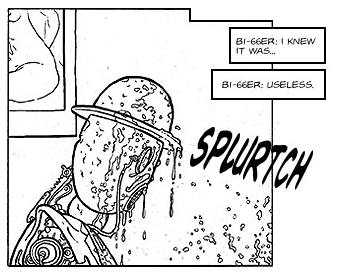
The missing ingredients, as it turns out, were aspects of the old Matrix comics. I’d purchased them a while ago, deciding I wanted hard copies as I know that the WhatisTheMatrix site they used to exist on only remains on the Way Back Machine. There was one story in particular, created by the Wachowskis called “Bits and Pieces of Information”: which told the story of B1-66ER, the abused butler robot who murders his owner and attempted dismantler in order to save his own life. The robot goes to trial for the murders, and it becomes a major Civil Rights issue that begins the Human-Machine War, and then — with the defeat of humanity — the Matrix. I thought it was a fascinating story, but something of a tangent as I had seen it only in “The Second Renaissance,” but then I saw it in “Bits and Pieces of Information” in a bit more gory and technical detail … and that’s what made it. Combined with the fact that B1 and 66 were parts of the robot’s designation … I began drawing from my own geek exposure to AI in different films — one in particular — and I started to get a background on Zero’s idealism … before the death of the woman who was Zero’s lover.

So, as my television played reruns of Star Trek in the background and as I entertained my curious budgie who was flying on me, I reread “Bits and Pieces of Information” — written by the Wachowskis and drawn by Geof Darrow and thought I’d be seeing a comics version of “The Second Renaissance,” but finding the technical structure of someone accessing Zion Archives instead. It stuck with me for a while.

Then, I talked with a new friend, remembered my old friend, my story, and then gathered a few of the details above in my mind … and wrote the thing on A03, then reposting it on Mythic Bios. The ending was giving me trouble. I changed it three times before finally surrendering to sleep.

The next day, I spent too much time adding the technical “search” jargon onto the piece, dealing with the beginning and ending — doing it on my phone and then giving up and using my computer like a somewhat sane person — when I realized … that Zero could work even better as a Twine.

So, with Star Trek: Enterprise playing in the background, I took my story and put it into sequence boxes, piecemeal. I paid attention to specific words, and paragraph breaks to place an appropriate hyperlink. Transitions are important with this sort of thing. It’s like pacing a script to a show … or poetry. Then, I decided to try something new.

I figured out, relatively easy, how to add images into my Twine: something I’d never done before. As I said, it was simpler than I thought it would be, so much so I almost slapped my forehead in ridiculousness. Hell, it was even easier than adding them into my articles, and resizing them for such. I took the comics image of B1-66ER killing one of his would-be murderers, and then the image of the woman being torn apart by the human mob.

But I wasn’t done yet. There was more. And this … is where I really experimented. It wasn’t much, you have to understand. I just changed the colour of the Twine font to green. I found myself looking at CSS code and, after being confused for a while, changed it correctly to the green I wanted. The Matrix neon green. Then I set it so that the hyperlinks were Blue, and hovering the cursor over said links made it Red. I think you get the connotations of those aesthetics from Matrix lore. That was also, once I got the code, relatively easy.

What was harder was turning the border margins text green. The title, author name, Restart, Bookmark, and Twine Credits element. It took a really long time. I had to take a Deadpool 2 break before sitting down and actually figuring this little bastard out. I managed to get the title and author name, but the rest of the margins were being really stubborn. I thought of asking for help but … honestly? I just wanted to prove to myself that I could do it. I just wanted to show myself I could learn something new.

I’d worked with some code before, though it had been a long time ago and nowhere near as advanced as those of my peers. Then, after much trial and error, and Viewing the Page Source which I had done a few times in the process of getting images, I finally changed all the words to neon green.

I never thought I’d go back to Twine, after this long. I used to think it was the future of people wanting to make games who were not coders, or one possible future. I’ll admit the font colour options could have been more user-friendly: especially for the margins. But I did it. That sense of accomplishment, however small, was fairly good.

So, this is what I did. “Zero” is not a Choose Your Own Adventure game. It isn’t even a game. It’s just a story that paces itself through hyperlinks. Bits and pieces of information, as the Wachowkis might say. I think “The Treasure of La-Mulana” was similar in that way. It goes to show you I can learn, or relearn new tricks.

Zero isn’t a perfect story, by any means, prose or Twine-vise. But I feel like it’s just one more step. To something, anyway.  In any case, in lieu of the new thing I am attempting to write now, I hope you found this post interesting if nothing else.

What If Marvel Cinema

I’m not sure if it will ever come to this, but I would definitely love to see a Marvel What If short film series: on the web, as bonus content on DVDs, or others. But I’m afraid I’m just being a bit misleading with my title. Really, this is just another Thursday geeky conjecture ramble that was a long time coming. What can I say? I am a busy man these days.

There are a few things I would have loved to see happen in the Marvel Cinematic Universe. In fact, there are some things that I could have definitely seen happening in the films that — for obvious reasons — did not.

One thing always bothered me about Avengers: Age of Ultron. You know, for all Joss Whedon had Ultron sing that “there are no strings on me,” Ultron and the way he carried himself felt a lot like Joss Whedon playing Ultron if that makes any sense. What I mean is: it felt less like watching Ultron develop and go into action, and more like Whedon using Ultron as a prop to carry the story onward: being the puppet that he claimed he was not.

Age of Ultron

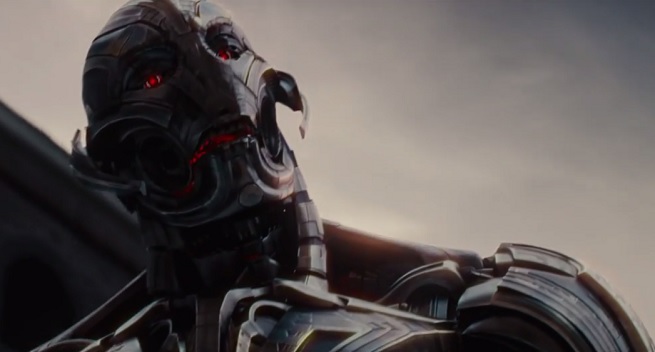
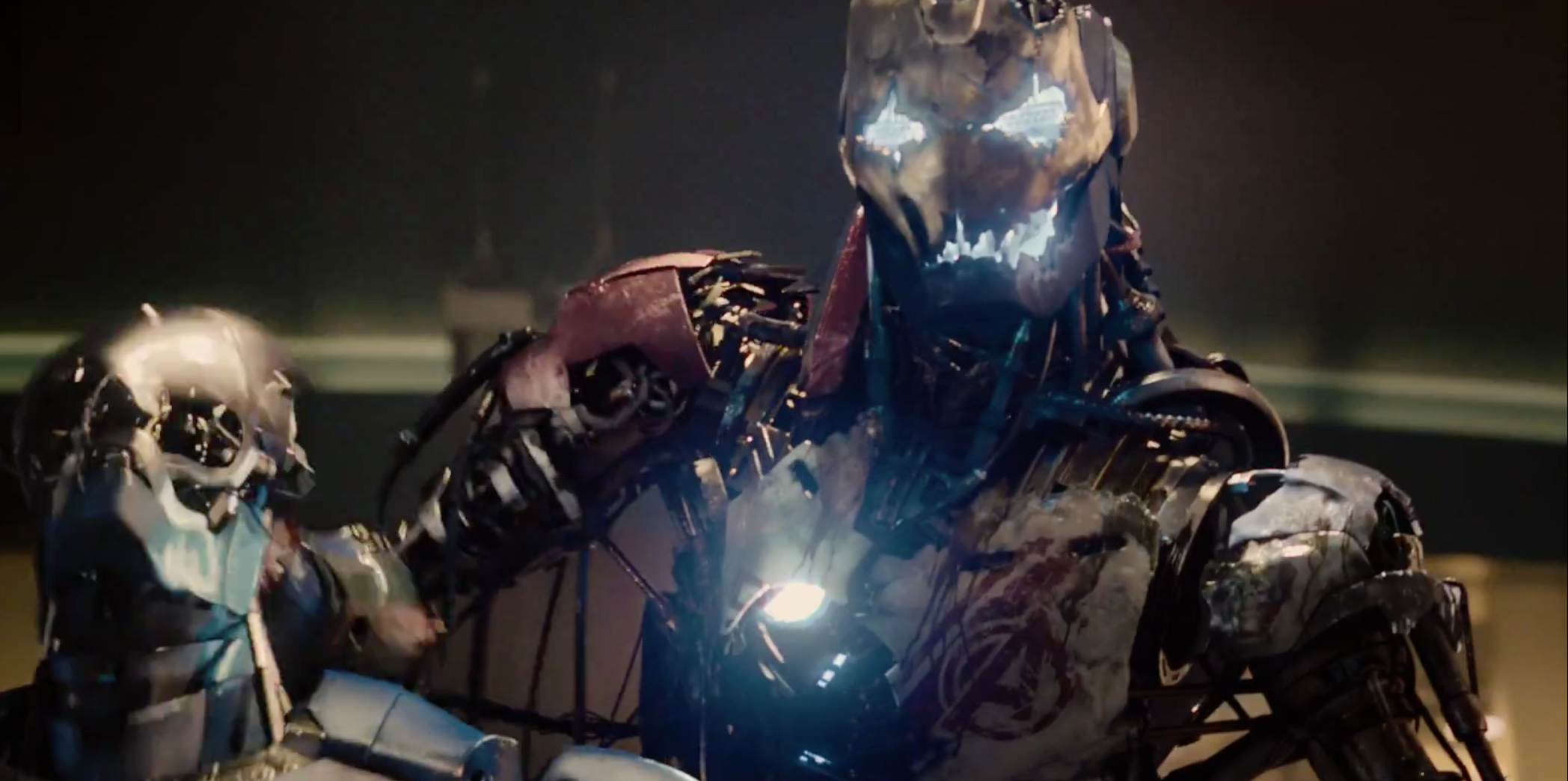
Like many of you, I saw the trailers. In particular, I saw the trailer where Ultron’s conscious possessed one of Iron Man’s suits and made that twisted, jagged hole of a mouth on its surface. I thought it was creepy and perfect: the sign of an artificial intelligence going completely, maliciously, and utterly insane.

So imagine this. Instead of a long and convoluted plot that starts off with the Avengers going after HYDRA — with perhaps a key streamlining of the process for the sake of continuity with Agents of SHIELD — we get to actually see Ultron get created by Tony Stark and Bruce Banner. But more importantly: imagine if we could have seen Ultron develop.

Picture Tony, Bruce, and JARVIS working on Ultron. Think of them working with him. After deriving all the missing elements of artificial intelligence evolution from the Sceptre’s Gem to further improve on Tony’s own knowledge, I could see Ultron genuinely affecting change and improving on a defense plan: undertaking the monumental task of protecting humanity from all dangers. But perhaps there are … “glitches” or “malfunctions” along the way. Sometimes Ultron complains about “an absence” or “lacking something”: phantom electronic pains. Think of it as an artificial intelligence’s sense of dysphoria: though in this case it is Ultron’s lack of a physical body that plagues him. You even see him experimenting with one of Tony’s suits and attempt to embody it like a ghost in the machine: resenting the people that made him and the constant chronic discomfort that he always feels.

ultron

But it’s only when he begins to fully process the fact that humans are a greater threat to the world than anything that is extraterrestrial that Ultron decides to destroy humanity in the only way he knows how. It’d be a slow burn, perhaps one that has no real place in a superhero action movie where the audience already knows that Ultron is supposed to be evil, but the payoff along with the philosophical implications and the confrontation with Vision could have fleshed it out even further. A sympathetic Ultron, as warped and evil as he is, could have made audiences truly unsettled.

Then consider how Ultron would undertake his goals. It’s true. He could spread his consciousness through many bodies as he already has. But he could take control over SHIELD and general human technology. Hell, he could even release substances into Earth’s atmosphere that would utterly decimate humankind without going through something as grandiose as smashing Sokovia’s capital into the Earth. A subtle, creepy, and ubiquitous Ultron could have gone a long way into making The Age of Ultron an action adventure superhero film bordering on pure science-fiction horror.

Ultron wouldn’t have to look far to realize that humanity is a threat to Earth and itself. All he would really have to do, and what he already did in Whedon’s take, is look at the chaos that HYDRA attempted to unleash in Captain America: The Winter Soldier. It is also interesting to note that there was an AI in that film as well in the form of Arnim Zola: the man responsible for regrowing HYDRA right within the ranks of SHIELD itself.

Zola

It was Zola that ultimately created the data-mining algorithm that HYDRA relied on to eliminate potential enemies. This was done through SHIELD’s Project Insight: taking advantage of three heavily-armed satellite-linked Helicarriers that were supposed to proactively protect the Earth from further alien invasions and using them to destroy HYDRA’s enemies and everything around them. This would allow HYDRA to obliterate the world’s infrastructure and be the only force of civilization left to Earth’s survivors.

But Zola’s algorithm didn’t predict the Avengers: or at least it didn’t deal with them all that well. Imagine what would have happened if HYDRA remained in hiding for a little while longer. Think about it: HYDRA had infiltrated all levels of SHIELD and the World Security Council. HYDRA itself, at least since WWII, had evolved from a para-military branch of Nazi Germany, to its own organization, and into an intelligence sleeper-agent group. Covert operations became the name of their day.

Would it have been too much of a stretch for HYDRA, who had already been privy to most if not all SHIELD operations, to know about Captain America’s retrieval from the ocean? Would it have taken much for one of their operatives, as a SHIELD staff member, to gain a sample of his blood? And I’m not even talking about HYDRA recreating the super-soldier serum: though they sure as hell tried in the Centipede Project. No: certainly the Red Skull wouldn’t have been nearly so trusting of his branch of HYDRA back in the day to take some of his blood as we know the organization thrives on Social Darwinism to its nth degree.

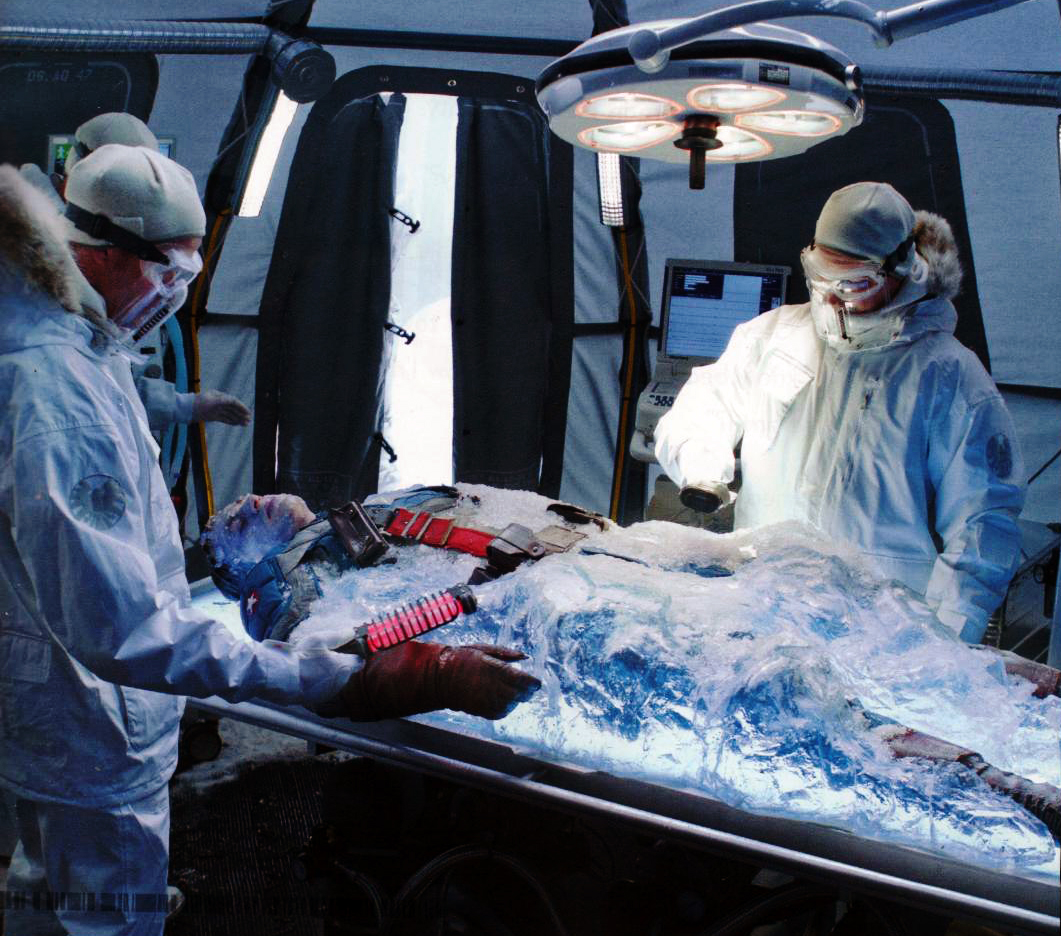
What HYDRA could have done, if they had been clever enough, is create an anti-serum for Erskine’s formula. All they needed to do was inject it into Cap while he was comatose. And, really, who would have been the wiser? Cap was frozen for quite some time: and no one really knew how that formula worked to begin with. It wouldn’t have been inconceivable for Cap to have died of complications in his decades long sleep. And in injecting some sweet sleep painless poison from a hidden fang, HYDRA could have removed one major enemy off the playing board.

What would the Avengers do without him at the very beginning of the game?

Captain America on Ice

And about the rest of the Avengers? Well, most of the technology they had access to came from SHIELD itself and HYDRA has infiltrated many facets of the organization. Imagine if HYDRA had managed to get their hands on the blueprints Howard Stark created for a power source and purposefully engineered a controllable flaw in the device: effectively creating a kill switch to Tony Stark’s heart? Or maybe they could have rigged something explosive into Sam Wilson’s EXO-7 Falcon jet pack or sabotage one of Hawkeye’s arrows.

Thor and The Hulk might also be problems. However, HYDRA has the psychological profile of Thor to work with: or at the very least might be able to prevent him from returning to “Midgard” due to their own researches into Asgardian technology. As for The Hulk: they would need to use some powerful tranquilizing agent on Bruce Banner before he transforms and they would need to do it quickly … or have a very good assassin cut off his head.

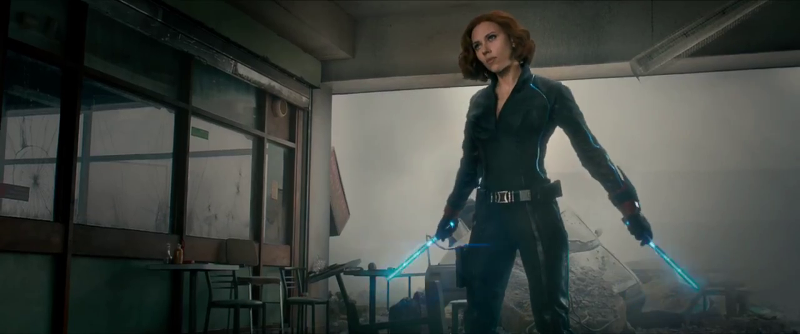
The Avenger HYDRA would have the most issue with would be Natasha Romanoff. She is distrustful of everyone and she has millions of contingencies: perhaps as many as Nick Fury himself. Even releasing all the information of her past gruesome deeds to the world and a warrant for her arrest would only buy time with warm bodies. Perhaps forcing her to kill unwitting agents or having her hold back would wear her out. The Winter Soldier has defeated her before as well, and he could either be sent after her or be placed into the Avengers in Cap’s place to turn on her. But you never know with the Black Widow.

Of course, there are many flaws to these possibilities. The Hulk can change really quickly. Hawkeye probably takes care of his own arrows. Tony Stark would spot a design flaw in his Arc Reactor, back in the day, a mile away and he doesn’t even need it to protect his heart now. Even if the alloy and equipment for his armour had initially come from Obadiah Stane’s engineers, Tony would have detected any discrepancies and improved on them. Thor might be a warrior but he is not stupid enough to be manipulated easily into being unworthy of his Hammer, and I doubt anything HYDRA has can incapacitate him or keep Asgard from accessing Earth unless their “real plan” comes to fruition.

And finally, we have Cap. That Super Soldier Serum is built like a motherfucker. It is not going to be poisoned or altered easily. And even if HYDRA somehow had legitimate access to him through medical staff, Nick Fury is paranoid. He has a sixth sense born from battles and infiltration gone wrong. He is a man that trusts his gut and he just knew there was something wrong in The Winter Soldier. Also, it is fairly possible only Fury, Maria Hill, and their confidants knew about Cap’s retrieval and kept it that way.

Winter Soldier

No. if HYDRA had really wanted to win, they needed to pull an Order 66: create a visible enemy to distract SHIELD and the Avengers that wasn’t them, and then simultaneously sabotage and/or kill them with the operatives that served as their “back-up” and “cavalry.” And even if the Winter Soldier himself was brought into play, and there is no way HYDRA’s SHIELD operatives could have convincingly brought him into the Avengers or SHIELD without setting off major warning bells in Natasha Romanoff and Nick Fury’s minds, none of this would be a sure thing.

Seriously: Black Widow should be remembered for just how terrifying her fighting and infiltration abilities truly are … the deeds she did in the past, and what she tries to do about them now. I wish there had been more emphasis on that.

Black Widow

Yet all this aside I can honestly do this all day and all night. But I really don’t have the time and I know there are many flaws with my ideas. Certainly, there are better geeky experts than I who could poke holes in all of these scenarios. But this was a good exercise in creative speculation. I look forward to doing this again sometime in the near future.

As the man says, “Excelsior.”

If My Mind Were A Movie

Not too long ago, I made an argument that The Room can be seen as the inside of a mind or perspective of life made into a cinematic experience. But as I finished that line of inquiry, two other questions came to mind:

What would happen if I made view of reality into a film? And what would it look like?

I don’t really plan to get all intricate about this but I think the film that represents how my mind works, and how it attempts to relate to reality goes a little something like this.

It would start from different time periods. Some parts would have voice-overs while others would have words on a screen. In fact, voice-overs will be reflections of the past and words on the screen will be internalized thoughts. I would have epic video game electric body music play, in addition to some John Williams and Murray Gold, for some of the most pivotal moments in the movie while the more uncomfortable moments — such as dealing with bureaucracy, breakups, public transportation, and loneliness — will be filled with complete and utter stifling silence. Internalized subtitles here will have ellipses.

There would be scenes of wandering and scenes where I play a character that sits in one place almost all the time. I will have my character in long-shot views of his own life. He will particularly be in the background of his past when he is a child, a teen, and a younger adult. Maybe we can go for blurry after-image effects here. Each version of him will attempt to tell the other something about their future. One might try to change something, while another might say nothing at all. I think I’d also play an antagonist to my protagonist: who enjoys breaking things.

My narrative would be tangents. There would be epic, almost wuxia level, duels and combat with understated special effects. Epic speeches ranging from “the reason you suck” to philosophical digressions all the way to lots of swearing and profanity will happen. There will be intermittent, but gratuitous, intimate sex and a focus on the pull between connection and distance. Human kind would be depicted somehow as ignorant, self-involved, and small, individuals as fascinating, and the whole humanity as sometimes frail and sad and impermanent with a few motes of true self.

That all said, many hijnks will also ensue. There would be melodramatic screams and explosions in the background as punctuation. And budgies: sometimes as pets but also attacking the populace at large. There might even be a budgie totem of imitation and mimicry in a strange version of an Australian Dreamtime involved. My character will find himself walking into different times in the same places. He will get lost a lot in all manner of different interpretations.

I’d have books and comics and, copyright permitting — though most likely through having to create analogues — have my character immersed in a world of them. He lives in there and entering it is this permeable membrane of reality: a portal that gets harder and more narrow to access as he gets older. I’d be tempted to, but probably not use CGI effects, to show a piece of his soul splintering off for every year he gets older.

I think I would design the film like a multiverse of different spaces and times: a kaleidoscope. I would make it so that there are worlds where all of his dreams happened, places where none of them did, some others where he died, and others where he never existed to begin with. Sometimes my character will be a complete bastard, other times weak and wishy washy while spending most of his time remembering his future while another lives in the past. And all of these tangents will circle round and round each other, closer and closer until they collide and everything goes completely crazy and my character jumps from one fractured reality into another: navigating a grand plan gone to chaos … something built up just to be destroyed and rebuilt again.

I also think there would be a reality where concepts are people and they shift around too: and unfinished artwork will be their own entities and have their own world. Maybe they will eat people.

There would be friends on the phone and friends online. Some of them will have strange avatars. And maybe for the end, they will all come together, or perhaps he’ll go to them.

Of course, like a certain other director I won’t name I’d probably keep adding stuff the film as I go along and take stuff out and have constant director’s cuts. If I had to sum this all up, I’d say that my film would be an independent, tragic comedy of a mythic cycle with meta-narrative, nerdy references, and a whole lot of poignant moments and what the ever loving fuck. And crisp, witty dialogue. I can’t stress that enough.

And a good ending. Maybe my film, filled with regret, passionate anger, suffocation, cackling joy, fidgeting anxiety, headaches, serenity and the whole gamut of glorious insanity that we call human experience would be a multiple choice ending situation: if such a cinematic narrative is possible.

I might call it Not My Magic Eight Ball.

Because why not?

But I will leave film directing and script-writing to more capable hands. I’m just describing what my film world would be like if it existed. It’s been a while since I’ve been personal and creative and I just wanted to try something new today: or write about something old that keeps growing.

Writing this actually felt kind of good.

So tell me: what would a film of your mindset look like?

To The Room: You Fail At What You Pretend To Be … And That’s Ok

So let me just say, right now, that I watched Tommy Wiseau’s The Room. In fact, not only did I watch The Room, but I read Greg Sestero’s The Disaster Artist even before seeing the film which, I’ve been told, is highly irregular in the scheme of things.

A long time ago, I read Thomas Mann’s “Tonio Kröger.” And there is this one scene in that story that never left my mind. The aforementioned protagonist is watching his classmates dance. They are blond-haired, blue-eyed, and uniform. The dancers do not pay as much attention to why or how they dance, so much as they are just good at performing this communal act. Meanwhile, dark-haired Tonio knows that he can’t dance as they do, but he actually observes and understands their dancing far better than many of them ever can.

And then, there is the character of the dark-haired girl. She, unlike Tonio, doesn’t understand — or perhaps want to understand — that she doesn’t fit into the synchronous dance of her peers. Still, she continues to dance with them. She dances with them while stumbling around awkwardly, and even physically hurting herself. Her movements are not at all in unity with the other dancers and she stands out from them no matter how much she wants to fit in.

Now consider that someone like Thomas Mann’s dark-haired girl knows, deep down, that they’re different and just thinks that more intensity will make up for it: more passion, more resources, and more random elements. Aside from the fact that someone should definitely, if they haven’t already, write a story from the perspective of the dark-haired girl, I think you can see where I’m going with this comparison with regards to The Room.

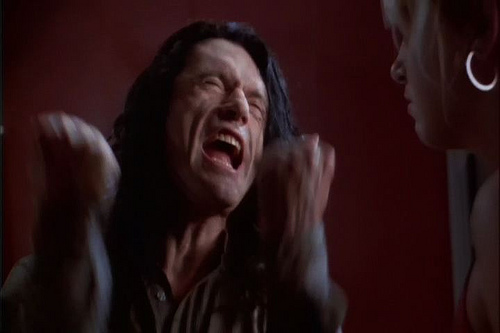
I’m not going to go into the many flaws of this film because many more qualified people have gone to great lengths to describe them all. But what I think is really intriguing here, especially since I read The Disaster Artist first, is how you can arguably state that this is the closest thing I’ve had to seeing the inside of another person’s mind on film.

So here is my own tentative reading of The Room.

When I watched The Room I thought of a mind that wants to accept reality at face value: both with regards to its immediate environment and its cultural surroundings. It searches for all the tropes, all the archetypes and stereotypes: all of the human stories. In particular, it looks at American culture: at the American Dream of the frontier and wide open spaces, a successful career, romantic love and marriage, friendship, family, and relations between the genders verses a cramped psychological place of disappointment and dysfunction. In particular, it tried to go into that place of love and tragedy to create something of a … narrative.

This attempt to create connection between these elements fails. There is a dissonance underlying all of this mind’s attempts. You see it in the way that words and sounds are out of sync with the actor’s mouths: particularly those of the protagonist Johnny. The film opens up with an almost pastoral theme amid a distant sunny splendour that never seems to completely reach the characters except for those rare moments of sublime silliness between them. Love and sex is accompanied by music that sounds suspiciously like a stereotypically tacky and kitsche soft-core porn soundtrack: while ending off the film after the final death.

And sex and death are seen as awkward, dissociative things. Bodies never really quite find themselves in the right places: and even the death at the end is a long time in coming. It’s like a mind and perspective that just can’t link the ideas, emotions, and people together no matter how badly it seems to want to do so. You can see it even in how the actors behind the characters, and how the characters themselves want to reveal their truths and themselves. They’re trapped in the marble of ideas and meshed together: only connecting intermittently.

The parts and ingredients are all there: even if it seems like the mind of this movie is looking out at its world from a mishmash of extra body parts. It’s like a soufflé that didn’t rise, or a Frankenstein creature that never galvanized into life. And I think it is a horror story in how causality and even space and time are never really consistent, with the strangeness of the roof exit and the unexplained additions and disappearances of different characters.

At the same time, I also look at The Room as something of a tragedy: of realizing that there is a mind that so desperately wants to hold onto the conventions of its surroundings that it ends up revealing their flaws. In an attempt to reveal a truth through non-sequiturs– of pathways leading nowhere — it unintentionally and accidentally satirizes and parodies what it attempts to love and glorify: be it American culture, the Dream, human relationships, humanity, life, and itself. And yet, even in all of this, there are moments of sublime ridiculousness — in the form of football throwing for instance — that are almost peaceful and serene in the way that the characters play with each as though they are children. Those are perhaps some of the most wistful, surreal, and innocent segments of this entire film: this strange cinematic reality.

The writers David Gilmour and C. Anthony Martignetti both seem to agree that our minds play our lives, desires, and pain within the theatres of our mind’s eyes. And here, in Tommy Wiseau’s film, we are looking into one such theatre. And this mindscape, this inner theatre, this place is called The Room. Certainly, after reading The Disaster Artist the movie’s scenes with Johnny talking about how he met Lisa, and Lisa explaining how Johnny takes care of Denny take on a whole other connotation.

I’m not going to lie: The Room, and The Disaster Artist exposed me to something of a paradox from which my brain is still attempting to recover. The experiences I witnessed and read about were painful, hilarious, sometimes depressing, and just outright puzzling at times. But all of it was a fine study in just how someone creates their own mythos: a creative process that seems to have translated over to Tommy Wiseau’s sitcom project The Neighbors. Certainly, there is at least a consistency in how Tommy Wiseau seems to act and work if you are interested in looking at his AV Club Interview: and I can’t help but wonder what would happen if he had ever met the former Torontonian bicycle shop owner Igor Kenk with his own unique world-view. Would they get along, or would the universe implode?

But when this is all said and done, I think The Room is its own person: a mindset that fails — spectacularly, beautifully — at being what it pretends: namely, at what it thinks is normalcy. And that’s okay. Here, at Mythic Bios, I absolutely adore being able to examine another form of personal reality. In fact, I’d like to think if The Room were an incarnated personality it’d be what would happen if the dark-haired female character from Thomas Mann’s “Tonio Kröger” tried to dance with our contemporary reality: except she would be a blonde and she insists on being what she pretends to be instead of who she really is: and what I think is an even greater tragedy. She attempts to embrace what she thinks is supposed to be normal yet she can never be so by her very nature.

And her name would be Lisa. Because, even after watching you Lisa, you are tearing me apart.

The Room

This Year In Passing: Hell, Everland, And Fascinating Beginnings

I said I was going to make another post in December, but I have to say that this is kind of cutting it close. A lot of people are making New Year recaps on their social media statuses and Blogs and I’m probably going to be no different to this regard.

It’s just … hard to remember everything I accomplished this year. In some ways, 2014 was a short year for me in which a microcosm of things happened. I suspect that I may have been stuck in a time dilation field that stretched out or contracted at a whim. So what I’m going to do is reach into my mind and pull out the things that stand out at me the most.

I got my first story published in print in Janet Morris’ Heroes in Hell shared universe. I have also written for GeekPr0n for over a year and got to interview people such as David Hayter, Larry Wilson, and Will Brooker. I also got to write reviews for Volume One of My So-Called Secret Identity, She Makes Comics, and a whole slew of Toronto After Dark films. Anthony Martignetti has quoted me in the endorsement section of his writer’s Blog. I got to attend the Toronto part of Amanda Palmer’s Book Circus and I got to meet her. I also got to meet Kelly Sue DeConnick and begin reading her comics work: of which I love Pretty Deadly.

In addition, I made the acquaintance of Jovanka Vuckovic — whose advice and encourage has helped me a lot in my endeavours — and I think you may be seeing me dealing in some more horror writing fairly soon.

My friend John Chui dragged me out to Fan Expo and I got to see him and my friend Angela O’Hara again midst all the geekery. I also got to travel a bit.

And I met someone awesome who challenges, levels with, and has become special to me. I just want to say that I love you Gaming Pixie and to everyone else who was here along the way.

I won’t say that I’ve accomplished everything that I set out to do and that there won’t be other frustrations and challenges along the way. But there are and there will be. But tonight, right now, I prefer not to focus on those. They will have their time. Instead, I’d like to do three things.

First, I want you to take a look at the Critters Writers Workshop and vote for Poets in Hell on the Anthology page. And if you have more time, please vote for one of the three stories in the Science Fiction and Fantasy short stories section: Chris Morris’ “Words,” Joe Bonadonna’s “We The Furious,” and Janet and Chris Morris’ “Seven Against Hell.” All three of these stories exist in Poets in Hell — the volume of which my writing is a part — and this could help us considerably. Remember, if you do vote, please confirm your vote in your email. And check out Poets in Hell as well if you haven’t. It’s diabolically good.

Secondly, there is Cody Walker’s Everland Kickstarter. Imagine a darker version of Peter Pan and Neverland: where Peter realizes that he is essentially a god and things get, shall we say, twisted. It looks very promising and I highly suggest that you check it out.

And now, finally, I want to wish you — all of you — an excellent 2015. May it truly be a eucatastrophe.

Looking Outward

This is Halloween

This will be the first of two posts that you will see today.

I spent a lot of weeks before and during Halloween differently. When I was a child I would be inundated with television specials, movies, school events, and trick-or-treating. As an adolescent, I spent some time with my group of friends. In my early adulthood I spent a lot of it by myself trying to remember how happy I used to be and imagining all the other people who were having fun that I did not. I spent the rest of my young adulthood, alternatively, with friends and sometimes on my own.

I almost went to a Halloween party last year but I didn’t. I was too depressed and I did what I often do in that state: sleep and work.

This past while I’ve been doing something different for Halloween. Instead of wandering around outside at night in the dark aimlessly, or watching television, or hanging out with friends and lovers I have been busy.

I have been busy.

Last week or so, I covered six films in the 2014 Toronto After Dark for GEEKPR0N. I even covered an extra day, a Wednesday, so I could watch one film that was recommended to me. Those of you that read this Blog or my work at GEEKPR0N already know about this. I wrote reviews on The Drownsman, Wolves, Late Phases, Wyrmwood, The Town That Dreaded Sundown, and Why Horror?

And it was difficult. There were many times I thought I could just watch the films, then go straight home, and write something out that night. But even though I got wiped out, it was totally worth it. The irony is that once, long ago, I was told that I should write reviews for movies — or movies like these — and I didn’t think I was qualified to do so. It’s only in relatively recent times that I’ve realized that the only way to be qualified to do anything is to make yourself so, and start to believe it.

I got some other things published in honour of Halloween as well. Not only did I write a nice short article on the end of Kris Straub’s Broodhollow Book Two, but I got to examine and see just how a creepypasta created by Eric Heisserer the subreddit no/sleep truly lures readers into fear and trepidation. If you have read my articles on creepypastas, you know something of what you might be in for when you read this particular piece of mine.

But I think there is one achievement in particular that I can really be proud of mentioning. Do you recall, that week or so ago before I went off the Mythic Bios grid again, that I was doing another interview: this one live and in-person? Well, with the help and guidance of GEEKPR0N and Toronto After Dark organization … the following actually occurred.

David Hayter Fav and Retweet

Not only did David Hayter, the screen writer of the first two X-Men films and Watchmen as well as the voice of Solid Snake favourite and retweet my review of his movie Wolves I also got to interview him before Werewolf Night at the Toronto After Dark.

You can find my interview with David Hayter right here.

So that has been my time leading up to Halloween so far. The rest of what I intend to do, however, is as follows. Later this evening I am going to the Silver Snail Halloween Party: the same one I didn’t end up attending last year. I don’t have a costume idea as of yet and I’m having some difficulty finding make-up after my last misadventure but I’m going and to anyone living in Toronto or nearby, I hope that you will join me. It’s organized by GEEKPR0N, in part, and it makes some pretty awesome parties and I don’t intend to miss this one this time around.

The next day I’m going to the Comic Book Lounge and Gallery to pay a visit to Drawing For Deb: In Support of Epilepsy Toronto. There will be signings and a 12-Hour Comics Marathon: Special Edition there to raise money to combat epilepsy which claimed the life of Debra Jane Shelly: a well-known friend of the comics community and someone that I only began to know when I first started coming to the Lounge. She was an awesome person and there will be some good people there. I’ve realized long ago that I am just not an artist with pictures, so I will be attending to pay my respects and I may not be there the entire day.

And then the next day I will be going to Horror-Rama: an all-horror convention where I want to explore and particularly meet Jovanka Vuckovic: the brilliant upcoming director of the Jacqueline Ess film adaptation.

Then somewhere, somehow I will catch up with my Doctor Who recaps and next week get back to my fiction writing and probably sleep for a few centuries as I am bloody exhausted.

So this is both what I have been doing, and what I am going to do. It’s funny. When I was reviewing Why Horror? I started thinking about just how it is effective. When I was a child I read many abridged versions of horror stories, listened to and read written down folktales and urban myths. And I would spend time in the now-defunct Hollywood Movies store reading the backs of horror film VHS tapes. I would attempt to avoid watching them, scared of being caught in the web of their details and becoming committed, but so very fascinated with what I might find.

Not much has changed. I think the reason that horror is so fascinating is the fact that when you look at all the gore, the grisliness, and the uncanny you see what you are not and you also get to see a bit of what you are. You are ultimately safe and in sensible surroundings, or so you think, and it gives you a rush of life — of vitality — in the autumn.

That’s why some people have sex after watching horror. That’s why some people have an urge to create stories and study mythologies after watching horror. That’s why people gather around their friends and celebrate their grisly façades: the orange light in the darkness. That’s ultimately why I’m rambling right now.

I’ve spent my life fascinated by, and avoiding life. But it lures you in. It is the ultimate horror but it is also a spectacle, and best experienced in good company. I hope that, today in sharing all of this with you, that I got to be the latter.

Happy Halloween, my friends.