Healing Potions

It began like every one of our quests.

We were fighting a marauding tribe of orcs and, naturally, I was the first person to be brought down. It was just like clockwork–the clockwork that I, as an artificer never truly mastered–in that my companions charged into the fore and I was left on the ground with a gash on my side and a deep cut across the flesh of the tendons of my left hand.

Perhaps I was too used to it by now. The captain of the current company I joined at least had the decency to cut down the orc that slashed into me as the repeater crossbow in my hands jammed: as it repeatedly did. I remember the orc lying there: its purple-tattooed green face glaring sightlessly at a man that killed it without a moment’s glance and ignoring my semi-conscious form lying beside it forever.

My fingers were shaking as I reached for my pouch … with my healing potions. Most of my pay often went into buying those concoctions. Sometimes I had enough coin to purchase some raw ingredients, but the cost of the equipment and the process of making them took ages and even more resources to upkeep.

It was amazing that such mundane details were flitting through my mind at the time as I struggled to take out a flask of potion: along with thoughts of how my current commander, like many others before him, wouldn’t even let the company healer touch me: as a pettiness for my fumbling in the heat of battle.

So I had to keep stocked up on healing potions and my own food or I wouldn’t have survived even half as long as I already had. My hands were so numb and cold as I forced the potion to my lips. I could feel the familiar burning warmth of the healing fluid churning down my throat, heightening my sense of my surroundings followed by a deep coughing fit coming on.

I feel this so many times. It is a pure, cleansing fire in my blood. And then I finally coughed. It was a long racking cough that splattered out some of the potion I was trying to keep down. I couldn’t even swallow a healing potion right, it seemed.

But then my self-disgust was interrupted something else. To this day, I am not sure how I even noticed it. Perhaps it was the heightened state of regeneration that I always felt when I drink a healing potion: a thing that temporarily augmented my eye sight, or cleared my brains enough to focus on minutiae.

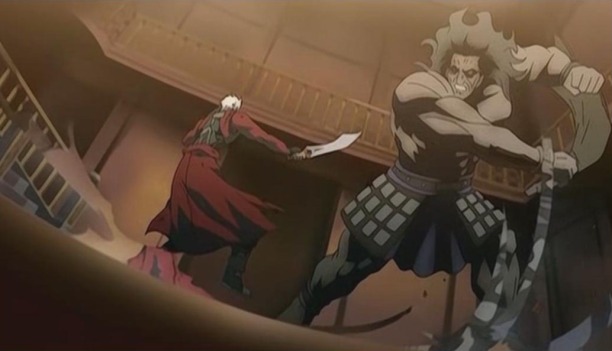
Half of the liquid I spewed out had splattered on the orc: or, more specifically, on its severed arm. I hadn’t noticed that my commander had amputated my attacker before killing it. As far as impromptu battle amputations went, it was fairly utilitarian: in that it wasn’t a clean cut. I saw the ripped pieces of ligament and flesh on the cut part of the limb. It was an ugly and jagged hack-job: one that I was glad none of my limbs had experienced as of yet.

But I didn’t expect what happened next.

Allow me to clarify, if you will pardon the pun: for I had not, in fact, drunk a Potion of Clarity. My powers, such as they were then, did not come back to me: especially since I hadn’t even had time to use any of them before being cut down. That was why I could see so clear-headedly at that moment. Maybe I had one too many healing potions over the years and I’d built up a tolerance. Certainly, the little tinctures I drink every day now help me deal with the headaches. To be honest, I’m actually surprised that I never noticed what I saw sooner.

The mutilated flesh and sinew on the ragged end of the orc limb was slowly, and very gradually, knitting itself back together. I just … looked at it. Maybe there was a time where I might have thought it a trick of the eye or a hallucination from trauma. I might have even considered that the dead creature could have had some troll blood in him. But it was like watching fleshly grass growing back, creeping back, at a steady and accelerated rate. I remember not knowing what to think, but being utterly fascinated by it. Yet it didn’t last long. Then.

It must have been only a few seconds at least. Now, this in itself might have–again–proved nothing to me: just some bizarre residual effect of a substance that perhaps all apprentice healers and alchemists may have learned about in their respective guilds and academies, or at the knees of their masters. But then…

It twitched.

At the time, I still had doubts. I knew enough of healer-craft to know that there was enough blood and energy in a limb–if freshly cut–to still have a brief semblance of life. As it was, I didn’t even know how long ago the commander had cut it off: with everything still feeling like it was in this heavy kind of eternal present.

I immediately started looking around at the corpses now littering the field: afraid that the orcs were being led by a dark priest or a necromancer. But none of the other bodies stirred. Just the arm. And when I looked back, it had stopped moving.

But that sight never left me. I looked down at the empty flask in my hand, at the limb, and back again. And I experienced more … clarity.

I quit that adventuring company with little money to spare, but I joined many others. The transition was not as difficult as some might believe. As an artificer, you learn that there are mechanisms that function well and smoothly due to the interconnection of different parts. I kept up my skills in making devices and imbuing power into artifacts, but my main focus had shifted to surround the art of alchemy.

I stayed out of combat: save when my company was often finished with the initial assaults. Eventually, I saved up enough coin to study under an alchemical master or two. Though my skills as an artificer were poor in battle, they were invaluable in maintaining the equipment of my teachers, and I could effort to continue my studies with them.

I also began to observe healers: not the ones that solely drew their power from the gods, but the ones that practised surgery and medicine. Selling them custom-made equipment and supplies–which I could make now as a working apprentice in the Guild of Alchemists– also made them a lot more forthcoming.

I’d never been so focused or so motivated in my life. I’ve also always been a solitary man and thus had no other obligations aside from my livelihood … and my other work.

So, as I said, healing potions are very expensive. It did help, however, that I was not getting injured as often and so when I did buy them–or make them–I could use them for other matters. Sometimes I missed the bitter medicinal tang on my tongue and that uniquely therapeutic burn in the pit of my stomach, but that had been replaced with another form of simmering passion.

I still had my tinctures for my usual body aches and now actual Potions of Clarity to help me with my Great Work.

I realized it was all about the amount of dosage. And on the adventuring assignments that I still undertook on behalf of my tutors, my comrades made enough corpses for my initial studies. My companies didn’t suffer for it either. I sometimes functioned as the healer of our group when there were no priests or paladins among our numbers. And everyone knows that the healer is a vital part of an adventurer group. You can literally hold the power of life or death over your entire group as a healer. Not that this had ever really occurred to me.

I had far loftier goals.

I eventually learned how to make a severed limb move by itself. I definitely began to see evidence of twitching and movement. Most of these limbs were taken from orcs and goblins: generally beings with small cranial capacity. But I did have occasion to deal with some human matter even then. And my preservatives helped make for good flesh-grafting material.

But the real work began after I retired from direct adventuring and my apprenticeships to invest in a potions cart. It helped that I joined the Alchemist Guild as a full member and became licensed to carry–and examine–various alchemical substances. I travelled through many towns until I settled down to make my Potions Shop. I realized after a time that the limbs I reanimated could only function for so long before succumbing to inevitable decay without some kind of more self-contained environment.

So I crafted and invested in vats and various apparatus. I learned how to make Regeneration Potions: essentially more augmented versions of my favourite healing concoctions. They are hard and even dangerous substances to make. Even the Guild only reluctantly makes them available to the public, with more of them being sold bootleg by rogue alchemists and I learned that healing potions are actually a scaled-down version of the substance sold at exorbitant prices in order to make a profit and prevent said danger.

I began to understand what made the Guild so afraid. I’ve always found it easier to work with orc parts. Some say it was because once, long ago, a powerful wizard made them: crafting their flesh from something else altogether. It was an incredibly vague myth and very few outside arcane circles even knew about it beyond just those simple words. But I know that I began to wonder.

Most beings believe that we were all inorganic matter before the gods gave us breath. By comparison, I was doing something far more crude. It is like trying to construct an artifact of an older era by taking it apart and attempting to reverse-engineer it. But the problem was that I was still thinking like a traditional artificer.

Finding components–and yes sometimes I still use an artificer’s terminology–was not difficult. Although I wasn’t on campaigns or battlefields anymore, my shop was in a city. In this world, brawlers and warriors of different races die all the time and their bodies are usually thrown out into those garbage pits known as public graves anyways.

Yet before I began using human material, I had to fine-tune it.

Once, I was curious about something. I knew that there are some plants in the world whose cuttings could grow roots in the right substance and become whole new plants. I began to wonder what would happen if I put even a tincture of blood or tissue into one of my vats of Regeneration Potion.

The plant analogy was an apt one, and not merely because of the cuttings. Certainly limbs were easier to use but the … things that resulted from them are limited in scope. As their brains develop, they are more used to obeying commands drummed into them than making decisions of their own. Most of these were like animals that barely lasted a day in any case. No, the best element about the flora analogy is that in every drop of blood and piece of flesh there are the seeds for something … more.

This took too much time, however, and most of these experiments happened only on a limited basis. It didn’t take much to fake my own death and destroy my old shop. People were beginning to notice that I wasn’t aging like they were and sometimes my creations became more … vocal: even in the basement of my Shop.

I managed to take all of my coin and buy new resources. There is an old tower on the farthest island off the main continent that suits my privacy and that of my creations well. I have enough vats of potion to keep us going for quite some time.

Nowadays I am less interested in cobbling together old creatures and things derived from said beings, and far more intrigued by other prospects. It is said that a long time ago the gods forged us from cold clay and stone. It has been some centuries since I placed those imbued drops into my Generation Vats. I watch marrow grow from nothing into bone with coils of nerves and sinew creeping along … and the first layers of flesh will spread over them soon …

And so I continue to drink my own delicious, home-brewed healing potions, curious to see how what comes from them will live in the land that I give them.

The Storyteller

An old story and an appropriate one given what I have been reading lately. You can tell what some of it was inspired by and I hope it can be appreciated for what it is. Enjoy.

He was the Oracle of Stories.

I didn’t know what was meant by that … at first. The man, if one could venture to even call him a man anymore, sat in a dark corner of a great library. Yet for all the library’s magnificence, the Oracle had chosen long ago to be placed in one particular part of the chamber. It was what seemed to be the oldest part of the structure, and you had to travel through a few smaller rooms and wings, and down a set of stairs before you came to the place.

I suspect it wasn’t so much that he chose to remain down here, as it was that whatever powers he possessed or had influence over him made him sit there, and not get up again. The Oracle sat on a stool on a wooden platform in the shadows between two book shelves. I didn’t know what to expect from him. To be honest, I had heard tales of other Oracles but I hadn’t had the privilege of meeting them. It was said that each one had been human at one time, but through a gift or a curse, they had mastered and eventually personified the great artistic pursuits they dedicated their lives to.

So when I met the Oracle of Stories, you have to understand that I had many expectations in place. Some of them were very much fulfilled, and even expanded on. The small figure sat there, surrounded by mounds of paper. At the time I first saw him, I saw his gaze: glassy and sightless from years of doing nothing but writing in the dimness of the room he chose to sit in. I knew that others came in, respectfully, to take his writings and add them to the library. They were beautiful, luminous works that branched into all areas of human understanding: of good, and evil, and all the places between and beyond.

He sat there, mutely, and all I could hear was the scratching of his pen. I had studied everything about the Oracle that I could, in hopes that one day I could even begin to approach his level of craft. I was just an acolyte then, a novice scribe with a mild smattering of talent: but just enough to attract the notice of my elders, and get this very rare chance. I remember them almost seeming to restrain their excitement, though I didn’t know why. There were a lot of things I didn’t know back then.

For instance, I knew the Oracle was old. His hair was long and silver, and almost covered his entire face. His form, though erect was thin and the flesh I saw lined. But it wasn’t wrinkled or infirm. I remember his face most of all. Despite the many years he had been down here, by choice or condition, the only sign of his great age were the lines on his forehead, and around his eyes and the flat eternal line that was his mouth. His hand, unlike the rest of his immobile body was a flurry of activity, moving across the parchments he was given like a crazed arachnid seeking to spill its blackened blood and secrets to be augured and divined over by the other adepts.

That was the only movement I and most others ever saw of him. Yet these details were only witnessed or helped by those adepts and masters closest to him: as anything could be close to him in this world. But I get ahead of myself.

There was no expression on his face at all. It was almost as though he was asleep, or lost in a very different place from you or I. I observed him, and his faded robes amid the books and volumes and scrolls around him. He had not spoken in centuries. So when I heard him finally speak, his voice was barely even a whisper.

“How can someone who makes stories be an Oracle?” he asked, so quietly that even in my shock I had to strain to hear his words, “How can anyone who makes stories–anyone who writes or tells them or passes them down–be telling the truth?

“I used to wonder that myself.”

He gave a raspy chuckle, “Nothing is constant, except for the written word. It’s true that when you first write it, when you first envision it there are many possibilities. And when you first read it, you can only guess where it will lead you. I suppose that’s what I found books to be my most trustworthy friends. My only friends. They were the ones that stayed true. Yes, books are a lot like old friends, only truer. At first they might surprise you, or maybe even disappoint you. But when you read them once, you only discover new things about them as you read through them again and again …

“Once, before I gave everything to my stories, I loved to hear, and read, and witness the stories of others. I loved to experience those of others more than experiencing my own. My own stories, those I lived were awkward, reluctant things of necessity and survival. More often than not, they were painful things. Ugly things with petty hopes that are sometimes never requited. Life is not as neat as a narrative would have it. Yes,” the voice droned gently, “I would have given anything to be rid of the burdens of the body, and the self to be able to immerse myself in the stories of everything.

“And I did. I’m not sure whose stories I tell anymore. Whether they are mine, or those I make, or those that have happened, or have been lost, or have yet to be, or are still happening, or could be happening. Some stories I tell would have it that the person I was met a Muse–perhaps Calliope herself–held captive and I let her go. Sometimes, I remember asking one favour of her. Or she granted me a boon for my deed. There may have been nothing that tied me to the world I had even then. Or perhaps I lost something already, and long ago. Maybe I lost something that I never found to begin with, and never would.”

Those last words were almost wistful as he continued, “But I think: when I am myself and not the stories that I make. When I am not the young woman wondering what to do with her unwanted child, or the couple happily united and ready to wed, or the young man cut down as he reached the zenith of his life, or the broken ruin who wasted all of his potential into the dust … When I am not the tyrant gaining sole satisfaction from the lives I crush gleefully into blood and pulp onto the cruel twisted curvature of my lips, or the child discovering it all for the first time … I think …”

He paused for a few seconds, with a look of befuddlement twitching on his features, “I think I …”

He stared blankly and sightlessly through the shelf in front of him for a very long time. Then, finally, he spoke again:

“I think I refused her power. I think I wanted her to be free. I think, when I was an ‘I’ that I saw a beauty in her that none of the world had, and I would never have again in my lifetime. But I didn’t want that at the price that her former slaver put upon her. I think … I know that I felt great revulsion over the things that he did to her, to make her give him her power and her blessing.

“And I think that what gave me even greater revulsion was that I was tempted too.

“So I turned her away.”

https://i0.wp.com/upload.wikimedia.org/wikipedia/commons/5/56/Calliope%2C_Muse_of_Epic_Poetry_by_Giovanni_Baglione.jpg

He paused again, “But she knew my heart then, when I had a heart. When my heart was just my heart. And as she left, she told that she would never leave me. Ever. And the hole in my heart, that was my heart for my entire life was filled and went beyond that fulfillment. And it was glorious, and it was power, and love, and pain of others until there was nothing but them and the stories …

“And I felt the need to write them down. All of them down. And I kept writing. Even as her parting kiss on my brow remained, I kept the stories flowing. I became them. I am them, everyday and for the rest of my life.

“And to this day they wonder how I do it. How can I sit here and molder in the stacks and continue on and not feel pain, or sadness, or hope. And I think … I believe I do feel these things still. But then I remember the sleep. I think of Sleep, the younger sibling of Death and I let these feelings go into Sleep. Sleep will always be there for me. No matter what may happen to this form. I will be in it forever. And, whenever the feelings gather, and cannot be swept away, I will tell them. My body will be the channel, and my mind and soul will contain only the stories. I will be the Oracle of Stories. I will be the Storyteller. The Storyteller will the story of the Storyteller once at a time. Until the teller becomes the Story and the Story …”

Then his words trailed off, and his hand began to twitch, and grasp his quill. And the writing resumed.

Just as mine finished.

I wrote his story down that day, for the many hours it took. I still don’t know to this very day if it was his actual story or just one of the ones that had taken over his mind and body. But it both awed and frightened me in its scope. And as I myself near the end of my life, of my story, I can die happy: having my own question answered.

All stories are true, as many wise storytellers have said throughout time. And I will always know why the Oracle of Stories is sometimes called the Storyteller.

Berserker

Unhappiness grows within me,
deep inside until, in the end
it becomes mine.

Unfurling through my being,
it ingrains itself deep into the bone
and the still lips of my mouth.

My face unlined, unsmiling
it hollows out the bore
within the centre of my chest:
leaving only emptiness.

But it is not nothing,
for the blackhole is the prelude to an
exploding star.

Anger turned inward
by powder-pegs of savoury bitterness
and the elegant fabric of contempt stretched thin
rips inside out into the red light
of vital defiance.

I taste it on my tongue
and my faceless mask twists
into a quirk of disdain
and then a tight, tight grin.
And I laugh.

The sound is high and cold, encompassing,
and all inclusive.
For the wound-womb of my soul,
shaped by my unhappiness,
is filled again
with the culmination of all these things.

With bloody glee.

With fire.

With power.

It is perfect symmetry
this force that I use,
that uses me,
that I let use me,
to smash the faces of cowardice,
and treachery, of hypocrisy
and promises never made.
And I enjoy their pain.

Especially my own.

Each blow I make is hard
and potent beyond endurance.
It strains and snaps a part of me,
burning edges of myself away,
as I dance.

But I do not care as I am too caught
in the moment to feel the pain
save for how it adds nuance
to the beauty of my rage.

The shadow of me quickly
becomes the dancer of obliteration.

Then all that is left is destruction:
immune to appearance, to sentiment, to reason,
to responsibility, and to conscience.
And I laugh, and laugh, and laugh
gloriously: because it is good …

Because it is freedom.

My hatred is pure,
purging and scouring fire
leaving no mistakes, no good memories,
nothing behind as it starts from
Before: from Ground Zero.

And the small part that wants
someone to stop me only adds
to the meaning of what I do.
Because finally,
when the world matches the darkness
inside of me,
and hatred finally dies,
perhaps then all that will be left
to fill it is love
and compassion.

If not from me,
then from someone better.

Exhaustion takes me:
and the spot made from my unhappiness
lets me come into itself,
as I curl into the warmth of its comforting shadows.

Let’s Play

I have a friend who believed that he could gain enlightenment from a video game. He sat in the school cafeteria and the quad every day: just plugging away at his old Gameboy with its off-white frame, chartreuse buttons and yellow green-grey screen. Come to think of it, I don’t think there was any place I hadn’t seen him playing that game, except after … stuff happened.

His favourite game was Link’s Awakening: the first of the Zelda series ever made on Gameboy. I’d see him there–especially in those latter days before graduation–immersed in piping miniaturized synthetic tones and colourless 8-bit sprites as he sought Link’s sword for the millionth time … and attempted to find something else as well.

He didn’t always play it, mind you. We table-top role-played as well: old-school gaming with paper, pencils, Lego figures and dice. We were part of a group that even now still meets up from time-to-time whenever our schedules allow. My friend was–is–a good, quiet person: the kind of guy that you could always talk to. At the same time, he would sit stiffly and tense: as though uncomfortable in his own body … or his surroundings when he wasn’t occupied with something. But this all changed whenever we had a game on. You just couldn’t get him to shut up. The tension, wound in him like a spring, would uncoil and he’d get crazy energized. He got aggressive and vicious in-character: becoming this very manipulative, charismatic monster of a mage or dark warrior.

It’s funny how an introvert who liked to play Zelda games also liked to play the bad guy.

One time, when we were bored, I asked him why he kept playing that one video game. I mean he passed it several times at that point. Of course, he was still playing it while I asked him that question, but looking back it was one of the only times he really started talking about anything else outside of our game sessions.

He told me that Link’s Awakening was the only game where you got to see Link develop as a person: a person not defined by rescuing a princess. The way he saw it, Link left Hyrule and Zelda to find himself again … or even find himself for the first time. He argued that Koholint Island–the place where Link finds himself marooned–is a space inside his own head where he could confront his personal demons and know who he is.

My friend also told me that every time he played the game, he found something new: some small detail that he’d missed during his last few playthroughs and that over the years many of the challenges, as well as the in-and out-of game references started to gain more sense and nuance with time. He said that the puzzles became like koans that he meditated on through interaction: small little mysteries that he liked to solve.

Although he didn’t go into much more detail than that, which was deep enough, I also think he liked the repetition of it: the symmetry of those puzzles, the rhythm of the battles and the cycle of music that played and linked it all together. It’s really fitting in retrospect that he used the word “koan,” because I think these elements more than anything else let him come close to a Zen-like calm while he played his game. It was probably the most at peace I had ever seen him.

The more … stuff changes though, the more it stays the same.

My friend doesn’t play that game anymore. In fact, he doesn’t play any video games these days. Now he only watches “Let’s Play” YouTube videos. I’ve seen him. Sometimes he looks satisfied watching other people resolve conflict, combat, and puzzle solving in nice, immaculate patterns. Other times, he gets utterly exhausted and falls asleep in front of his laptop: with the forlorn beauty of a nostalgic 8-bit track playing in the background on a feedback loop. But there still many more times where it’s like he’s watching for something, looking intently at those video recordings while trying to find something new or rediscover something lost with a silent kind of desperation.

Ever since he stopped trying to help Link awaken, my friend is a different man. He’s still polite and helpful, but he’s somehow quieter, less tense, but … emptier somehow, and very, very tired. When we role-play nowadays, he doesn’t play villain characters anymore. Instead, my friend likes to play heroic characters with good and honourable intentions: even when they go horribly wrong.

That, more than anything, says something to me. In fact, it speaks volumes.

At Least You’ll Leave a Beautiful Score

You know what it is.

You’ve played that Level. You’ve played that Game.

That Game can be a mess of crude 3D polygon confusion. Other times it is a beautifully rendered realistic environment populated by generic places and shallow souls. Sometimes it is a two-dimensional caricature where you can jump up and down and turn all around on pre-set paths and pre-determined destinies.

Maybe it is turn-based when it is an organized, reasonable world, or a great bird’s eye map somewhat hidden from you as you get to plan out your strategies but–more often than not–it is a side-scrolling affair of linear time. You have to keep moving forward and you can never go back.

Except in your mind.

So you jump through hoops. You try to avoid the spikes and the pitfalls. You repeatedly hit your head against a golden block: always looking for a different result. That edge near the lava, and those platforms over the abyss become far too captivating and even far more terrifying for their 8-bit sense of vertigo.

But you dodge the fire and the ice, the darkness and the light, the electrified mines and the bullets, the cute little walking bombs and the fake-out illusions. You spend time solving the clever and tedious puzzles below the mountains or up in the sky: so much so that you sometimes fear you will be stuck in those places forever. Your musical theme begins to change or it cycles into a cheery purgatorial loop inside of your mind.

And you haven’t even gotten to the Boss yet. The Boss waits for you at the end of the teleological road though, in retrospect, it was always there for you. It almost always seems to be larger than you. Often, it has more power than you do. You know there is an angle in which to approach it, some kind of slant, but it does its very best to allude you.

And even if you figure it out, your eyes are so gritty, your palms are so sweaty on those controls, and your heart is beating so fast that it is a challenge in itself merely to concentrate: because then you realize that this is less about the Game and more about you and this Boss.

That is when you realize the truth.

Sometimes Life is like a Boss with 99 lives while you are a character with only one. But then another thought occurs to you: that as long as you can knock at least two of those lives off before you go down, or in some way engage it as a multi-player effort before leaving it as such, then it was all worth it.

http://menotblogger.files.wordpress.com/2007/09/fsn07.jpg

Other People

Will’s face felt stiff. His smile tightened the muscles around his mouth and looked genuine: at least in his own opinion. When he laughed at another person’s attempt at a joke, he forced it to project into his chest and the resulting hollow feeling only served to make the sound louder. Even so, the clambering background noise of the White Crescent Cafe seemed to drown out everything else and Nor was otherwise preoccupied.

It was a few days after they met at The Club. He watched Nor interact with the others. Will felt strangely deaf without the music of The Club completely drowning out all other conversation. Aside from her one quote from The Day the Earth Stood Still, they had barely talked amid the booming percussion of the speakers. It had just been her hands directing his own to her hips as Orbital’s “Halcyon” reverberated gently and transcendentally into the soft luminosity of The Club.

It was just their eyes as Nor smiled at him and he knew, then, that this was an expression that came easy to her. Then there was the night in his room and the exchange of phone calls that came after.

But here, at the White Crescent Cafe, it was different. The place was trendy with its half-moon caricature eating a croissant and holding a cup of coffee. It was crowded with many different conversations that made it hard to hear Will’s own voice: even in his mind. And while Nor’s acquaintances seemed friendly, Will felt that they were very self-involved.

Will continued to answer generic questions about his job (writing) and his “neo-50s look” (which wasn’t a style so much as what he looked like) until his insides ached. The centre of him was tightening until he felt a hand on his arm and saw Nor beside him.

“I have to borrow him for a moment,” she told them.

“Ah, yes,” Will felt himself wink at them with a cleverness he did not feel, “If you’ll excuse us.”

Everyone smiled and laughed as Nor led will outside the Cafe. They went to the side entrance and came to a stop. Will saw Nor looking directly up into his eyes.

“Are you all right, Will?”

“Yes,” Will said quickly, “It’s nice to talk with your friends and everything. They were just asking me–”

“You know,” Nor said, “it’s okay.”

Will blinked, “…what is?”

“You don’t have to pretend with me, Will.”

He felt Nor cup his cheek. It was almost instantaneous. The knot of tension inside the core of Will untwisted. It was as though Nor’s words and her small touch on his cheek were a knife destroying the great internalized pressure inside of him.

Will stood there as he felt streaks of warm wetness trail down his face like blood. The released pain and discomfort was the most silent of assassins: killing his parody of artifice and granting mercy. The two of them sat near the wall, with Nor holding him and stroking his hair.

“You never have to pretend with me,” Nor spoke softly, “I can talk enough for the two of us.”

For a long while, Will didn’t even make a sound as his released tension dripped out of his face and finally dried.

“T-thank you,” Will managed to reply with a tremendous sense of relief, “Neil … likes to say it’s ourselves, but sometimes it really is other people.”

Nor smiles, “It gets easier with practice and with small numbers. But sometimes, you are right.”

The two close the small amount of distance between their faces and kiss. Then they leaned on each other for a time before Nor came to her feet and pulled Will up to his own.

“We can do that later though,” Nor said, “Right now, let’s just go home.”

“Home?” Will asks with a combination of incredulity and a larger amount of hope.

“Yes,” Nor hooks her arm through his own as they began to walk, “Home. Sometimes, it’s other people too.”

https://i0.wp.com/farm4.staticflickr.com/3193/2735688778_c69e244f11_z.jpg

Credit: artofimperfektion on Flickr … the couple of which whose pictures they really are.

The Funnies: They Just Keep Coming Back … and They Never Stop

A cartoon is not a frivolous thing. It can look like a silly drawing or a caricature of life. Upon first glance, it seems to only exist on either a screen or a piece of paper. Sometimes, it even says witty things or does something stupid or endearing that can make us laugh.

Cartoons have been around for so long–on television, in movies, in the newspaper funny-pages and even on T-shirts–that we take them for granted. We don’t always take them seriously.

But consider. A cartoon is an archetype. It is an idea given form. In fact, it wouldn’t be too much of a stretch to even state that it is a Platonic Form: living glyphs essentialized to the point of becoming as close to pure concepts as is humanly possible … which of course is a misnomer.

Because cartoons aren’t human at all.

Some of them are wise-talking humanoid animals. Others are parodies of human beings that somehow possess their own sense of agency. There are even some that are inanimate objects given life. Often, the really old cartoons exist in very self-contained two-dimensional pocket-dimensions: in a mythological cycle of trickery, mayhem, and fun-loving nose-thumbing at fate.

And the really old cartoons can’t be destroyed. They can’t be smashed by falling anvils or mallets. They can’t be burned by fire or exploded by dynamite: at least, not for very long. They are used to dealing–and receiving–massive amounts of physical damage, and then coming back for more. And we’re not even talking about the ones that have a supernatural way of avoiding the damages of their enemies altogether just to–through some twisted fluke of fate–make them fall into their own traps.

They are like living rubber or silly-putty that just keeps bouncing back. A human being isn’t like that. When human beings fall, they break.

It’s not too much of a stretch to say that cartoons are beings that are psychopaths or sociopaths by human standards: in worlds and cyclic realities where neither human physical and psychological standards even apply. They come from the same heightened mythic state as faeries, and gods; as legends and archetypes: in a place where slap-stick is not only futility and invincibility, but where the ridiculousness is the superhuman and the sublime. Some people might call this state a perpetual hell, or a utopia. But mostly, it just is and they just are.

In the end, you can’t destroy a cartoon because you can’t destroy an idea. Because even if you break the projector, or the television, or snap the DVD, or rip up the papers they are still there–pure ideas–in your head, mocking you, holding an oversized mallet in one hand as they stand in the darkest corner of your mind, knowing more than they do, doing more than they know, just waiting for that punchline: where you finally have to laugh at yourself.

Lost in Books

amaze.me

I am at a loss. I wander down long stretches of bookcase winding into shadow, eternity, and dust. I’ve lost all concept of time. The spine of Alan Moore’s Minutemen with its vintage essential 1930s-style artwork next to his Watchmen does not help me: though it would be interesting to read …

I keep moving. The Twilight of the Superheroes–more Alan Moore–sits there in an alcove but promises no solace. I go deeper. There is a manga section on the other side of me. Tezuka Osamu’s Phoenix: Earth stares at me mockingly whole: completing an incomplete saga and a lifetime’s work. I shake my head and keep going. I keep going past the rest of Moore’s Big Numbers, all twelve issues of them, long since past the time to remember how many steps I have given away to be here in this place.

It gets worse. I find myself at a complete run of Marvelman and it’s hard–so hard–to turn away. It’s as though I’ve come to a dead-end, like the middle of a maze in my mind, like the conclusion of Gwendolyn MacEwen’s Black Tunnel Wall right in front of me.

I begin to run.

David Eddings’ Zedar: The Apostate sits on a shelf in loneliness. Myst: The Book of Marrim makes my heart-ache. There are so many Tolkiens. So many Tezukas. So much Alan Moore. Moore. Moore. More. More. More …

It is in the history section of this labyrinth of the literary bibliophiliac where I stop at Maus III: My Mother Breathes Silence–Art Spiegleman’s graphic novel based off the fragments of his mother Anja’s surviving journals from asylums and concentration camps–that I finally understand.

This place doesn’t exist. This is the place where I want to be.

I’m clutching my head in the darkness as the full implications of all this begin to sink in. Then I see something: something else in the dark. I walk past The Continued Works of Keats and The Will to Power that Nietzsche wrote himself to find a gap in the comics section. It is a small gap and I can barely make out the label on the shelf. When I read enough of it, I smile.

I can’t help it. In the Neil Gaiman section, the story of Morpheus before Preludes and Nocturnes is no longer here. It is somewhere else now. I’m smiling: hoping that the Marvelman section and its remaining additional issues will also disappear from this place sooner rather than later. It is is a small hope.

A transvestite Joker seems to laugh at me from a cover of Morrison’s Arkham Asylum as I slump down exhausted in a place more demented than Batman’s Rogues Gallery and more sad than a watch without a watchmaker: a library without librarians.

It is here, huddled in this dark corner, that I wish for a world that makes sense: a place where Homer existed, Shakespeare wrote his plays, Sappho wrote more poetry, and I–finally–know just who it is I am.

Unnameable

Because I don’t have a Name, I have power.

Didn’t you know that, Father? Didn’t you even consider it? I’m almost surprised. Names have power and even after all of this time the only conclusion that I can come to is that you made me out of a sense of that power: out of a lust for it.

What did you think would happen that night, those nights, those years ago? I know what I’m made from. It is no secret to me. I’m spare parts: I’m fleshly components dug up from graveyards and charnel houses. My blood is a mixture of alchemical liquids and the modern contents of test tubes. I’m the sum total of clinical science and abstract mysticism’s search into that age-old question neither they–nor you–ever answered as to what exactly it is that a soul might be made from.

Did you think the electricity would transfigure me, Father? Did you believe that based on all my base elements that galvanization would somehow change my dead, scarred body-parts into something new and beautiful: something beyond human?

Honestly, Father, what did you think would happen once you finished your “work?” Did you honestly think I would be beautiful? Did you? Did you?

Did you honestly think that you knew what you were doing? Well, I’ve read your Journal–the one you so foolishly lost–and I read a lot of the how but never really saw the why of it. Neither of us did.

Oh Father, even though he only refers to you as “creator” he did learn from you nonetheless. Did you really think that all he learned to do was speak from the Journal you accidentally left him when you ran away? Oh yes. The arrogance of it: to think that an unnamed, mute creature that could teach himself how to talk and read from snippets of stolen conversation and a pseudo-scientific notebook couldn’t teach himself about himself. We are creature of fire, Father: of lightning and fire.

In fact, so are you and your kind. The only difference is that while the current inside of you, inside the womb that made, inside the generations of you has diluted into a mere spark of the thing that jump-started the primordial ooze from whence your genetic ancestors sprang, the power inside of us is far more recent and purer. An accidental haphazard creature of awkward clay may have put our bodies together, but our souls came directly from the sky itself! Like manna from the heavens, Father, like the fire of Prometheus made incarnate! How can a petty human soul even begin to compare to that?

You never did think about what you made those nights ago, did you? But while you never really dared to think about it, you did do it, didn’t you?

Because here lies the irony. After you sewed me up like a strumpet-scarecrow of flesh and bone, in a sudden fit of “conscience” you dismembered me before I was even born: just so my mate and I would not proliferate the world with our “abominations.” He really did just want it to be him and I with perhaps a few children in an isolated place far away from the likes of you.

But because of your cowardly actions that night, you left him with no other choice. Your work–I–was not unsalvageable. Like a masculine Isis, he put me together again–a feminine Osiris–and he breathed the same life into me from the source from which he gained it.

And this was your mistake, Father. If you had fulfilled your promise there might have been only the two of us. Certainly our bodies–made from dead matter–might never have been able to issue offspring on their own. Yet while my own womb might be dead, and his seed non-existent, our hands are neither.

We have children now, Father. Life finds a way. My mate read your Bible. He told me the story of Adam: of how God Named him and in turn Adam Named the world. And that was your second mistake. By not Naming him, your Adam now has the power to rename or unname this world in our image and–as your unnamed Eve–I’ve given him the impetus to do so.

But I’ve given him more than that. In the height of your arrogance, you tried to create life: a life without a mother … some aborted thing made from the sterile emptiness of a cold and unfeeling man. But I have given us a Mother. I’ve found her out. We are beings of lightning and fire. We see past the seeming of things. And while you think that you–as a man–made us, in reality she–a fragile, tentative, fiery being–made us all.

Because, in the end, she made the idea of us. We are her living ideas.

You do not even have that Father, sperm-donor, digger of corpses, words on a page, a dead man now and forever. You might have died, but I have unnamed you in all the ways that matter. This is our final testament–a page in a Journal that no one but us will ever see–the beginning of a new world that we will build as it was meant to be: a world without Names.

And While I’m At It …

I figured that this would be an appropriate place to put this. It is a little creative monologue sketch or vignette I made a year ago that reflects a lot on the nature of creativity. It is, fittingly enough, entitled “Creativity.” I hope you’ll enjoy it. I have one more old work to post on here–where more people can see it–before I move on. See you soon.

Creativity

“Sometimes I have to wonder about what people say about human genius,” he says, before leaning more heavily against the wall.

“Take Mozart for instance. Many claim that the composer wrote compositions completely free of error, blot and correction. He created his music ready-made and fully formed like Athene plunging right out of the temple of Zeus. If so, what a Metis he and others must have swallowed beforehand, if you will pardon the mythological digression.”

He chuckles, and then sighs, “It would sound wonderful to have this ability, wouldn’t it? If it existed, I mean. To be able to create perfection out of your own two hands, out of your very mind itself …” he pauses, “Or would it be so wonderful?

“For instance, imagine everything they said about Mozart was true. Think about making something everyday without making any mistakes in it whatsoever. Consider that you will have done this not just every day, but every year that you’ve been alive and first conscious of your gift. Then put the drive into consideration. Imagine feeling outside pressure and your own inner drive wanting you to make something better than the last time you created something. You always have to be better no matter what.

“But let’s just say you can tolerate — or perhaps even thrive — under these circumstances. You accomplish everything you set out to do and you finally approach the end of your life. Imagine slightly before this happens, you think about everything you’ve done up until this point. You have your old works and manuscripts in front of you and look through them to try and catch just a hint of the glimpse of that place you were in when you first made them so long ago. I don’t know about you, but as good as I would be, I wouldn’t be able to find it again.

“Instead I think that if Mozart really made all his works straight and unblemished from his mind, all he would see in front of him are the mistakes he never made or learned from, the absence of the rough drafts that could have made him wince with chagrin and sentiment, the non-existence of any chronicle of his progress and growth, and the lack of any seed that germinated his very ideas. If any of this is true, what he would have realized at that moment was that the only thing that ever made him worth anything was something outside and despite himself: something crystalline perfect and utterly sterile. And if this were the case, wouldn’t he have realized this much earlier than just at the end of his life?

“What would that have meant? Would there have been any meaning in it for him at all?”

He stares at the wall for a little while before considering his next words, “I would like to believe that this isn’t true at all. I’d like to think that not only is human genius potential in varying degrees, but that it is something that always has room to learn and change. Therefore, I do think Mozart had one or two corrections on his note sheets from time to time, or changed nuances to his music as he performed them for each audience he came in contact with.

“Of course, it’s also very possible that I’m wrong. Maybe he did make perfection and still learned anyway. Maybe there are people who are capable of this and better themselves only in making different and more complex works. But then where does that perfection ultimately come from?

“Maybe, in the end, it was no accident that I mentioned Athene in the head of Zeus. Daimons. Muses. After all, genius was once considered a spirit that made a human its vessel for a time. And if that’s true, just how much — if any  — creative responsibility belongs to its creator? Perhaps nothing Mozart ever made was ever original or his own. Maybe nothing we make belongs to us in any capacity. But would that provide a sobering blow to the human ego? Or tremendous sense of relief?

“I don’t know,” he finally shrugs, “As for me, I’ll take my good moments, my mistakes, a drink of whiskey and a listening to of Mozart’s Requiem any day.”