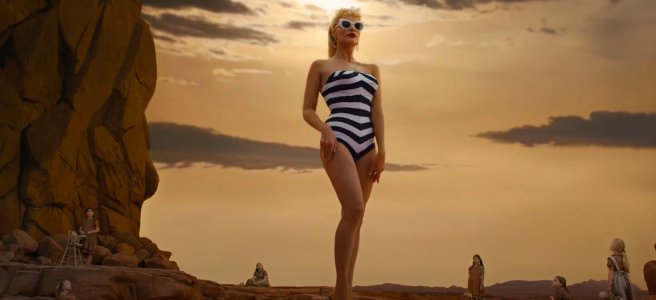
If anyone told me that, one day, I would be writing something about Barbie I wouldn’t have believed them. Barbie was something that little girls played with, while boys of my generation had action figures like G.I. Joe, and Teenage Mutant Ninja Turtles instead. In the 1980s and 90s, if you were a child you mostly lived under this gender binary of a socialization of play, and toys. Barbie was pink, hyper and even stereotypically feminine, and seemed like playing house.
Mattel created Barbie, and produced her, her companions, and her accessories even though the company also made many other toys built for children of all genders. Mattel, as a toy company, wants to sell more of its products so that it can make more money. It recognizes social and political trends, even economic changes, and adapts Barbie and presumably its other toys accordingly. And the Barbie film is another vehicle, another accessory, by which this corporate entity can continue to do exactly that: make a profit. Warner Brothers cooperated with Mattel to also make money, and together they made a power ad campaign for the movie, and everything that comes after it.
And then, you have the big names working in this film. The insanely skilled Margot Robbie as Barbie, of course, Ryan Gosling as Ken, even Kate McKinnon’s Weird Barbie, kick ass Michael Cera as Alan, and so many others bring a presence to the movie, and make people want to see what happens. And Greta Gerwig herself, the director of the movie, is a well known independent filmmaker who wants to make a story about girls, and women, and their place in the world.
I wrote a Letterboxd review of Barbie a while back, and while I feel like I captured a lot of initial thoughts, I’ve time to think about a lot of other elements and while my score – namely, three and half parties out of five – will remain the same, I feel like there is more to say.
In my original review, I wrote that Gerwig, not unlike Barbie herself, walks like a ballerina – on her tiptoes – on a tight-rope between telling an independent feminist story, and working with the Mattel corporation. At the same time, there is that even thinner line between the esoteric, almost Pee-Wee’s Playhouse reality of Barbieland, and a commentary of our capitalist, consumerist patriarchal world. When you look at Gerwig’s depiction of Barbieland, it is a mystical and mythological place. Barbie is Wonder Woman, having not been born through the flesh of men and women, but as an artificial being made by another species in another plane of existence. She comes to Man’s World, or Los Angeles, and she represents her world of Paradise Island or Barbieland. As Margot Robbie portrays her, she is naive about Los Angeles or the rest of the human world, but she is intelligent and capable such as her punching out the man who slaps her ass, and when she escapes being put into a box. Amazons themselves, as they were originally made by William Moulton Marston, would lose their powers – and Wonder Woman herself would do so – if they let themselves be bound. And Barbie knows this on an intrinsic level, which is why she runs, and goes to the liminal spaces in the corporation of Mattel – an even more pronounced plane of Patriarch’s World – to get out of there, and find the spirit of her creator Ruth Handler: perhaps her Hippolyta, or one of the goddesses.
Barbie is innocent and blissfully ignorant of her gifts and existence before the Outside World – and her owner’s thoughts, intrude on her: changing her, making her graceful, floating, tip-toe feet flat and subjected to the humiliation of gravity, along with the cellulite of her skin instead of the perfection of plastic. At the same time, her Lasso of Truth is what Gloria, essentially her owner and an employee of Mattel drawing sketches of her, or versions of her, gives her when she reveals the maddening and ridiculously contradicting expectations of patriarchy for women, and towards the tools to which inform women’s – and girls’ – socialization: namely dolls. Namely Barbie.
The metaphor gets tortured the more I write it, but you get the idea. Others have compared Gerwig’s Barbie and its existential situation to Adam and Eve eating from the Tree of Knowledge of Good and Evil, instead of the intrinsic immortality of plastic. This is a parallel made by Alissa Wilkinson in her Vox article In the beginning, there was Barbie, and it matches another mythological interpretation in the form of Barbie being the goddess of love and war Inanna with her trip to the Underworld and back in Meg Elison’s “Barbie” is the new Inanna. The ideas behind Barbie are old, just as dolls were arguably created to educate girls to become mothers for generations before – as the film does through its tribute (and not a rip-off) to Kubrick’s 2001 – so too does Barbie demonstrate the potential to become more than a potential mother, but that, and being beautiful, intelligent, and capable as one’s self as well.
But Gerwig also manages to illustrate the problematic elements behind this idea as well, though navigating those meta-fictional layers can be tricky, and I nearly got lost in them. The Barbies of Barbieland are expected to be all things, all at once, all the time. Because they are not human and have no biological needs, perhaps they can do that but it is telling that when Ken comes back from Los Angeles with “patriarchy,” many of the Barbies go along with this overt version of it because it allows them to “relax” and “not think,” or “do anything,” for a while. There is a lot to be explored there, especially whether or not the Barbies were already under patriarchy by the nature of them being plastic and perfect, and partying and just having to be played with and playing at being independent, and nothing more before Barbie and Ken ever went on their journey.
It is pretty telling that the film’s version of Mattel’s Board of Directors were desperate in keeping both the inhabitants of Barbieland out of the human world, and the human world from getting in there. As Ken is traveling through Los Angeles, he encounters a businessman who all but tells him that patriarchy’s greatest trick in their world is seeming like it has changed, but operating “behind the scenes,” appropriating the tokens of diversity and representation but using them as decorations or, again, accessories while business continues on as usual. The reason why Mattel in the film doesn’t want anything to change, even when Ken’s changes to to Barbieland into “Kenland” still sells toys, is that people will catch on that they are being overtly patriarchal, the Kens’ behaviour over the Barbies will be seen and questioned by girls and mothers. They want the dream to remain the same. They want the seeming of freedom to continue so that they continue making toys, making money, and keeping them – and the systems that they support in the human world – in control. Will Ferrel as the Mattel CEO wants to remain “Mother” and keep co-opting maternal and feminist icons for himself, and the company no matter the cost.
So it is a good thing that Gloria and her daughter Sasha, as obnoxious as a teenage child can be, go back with Barbie and represent the women that Barbieland has influenced: to the place that they also influence.
I think the strongest part of the world-building that Gerwig creates is also one of its most vulnerable elements. The idea that Barbieland and the human world are planes that influence each other is great, but it is never explained how Barbieland came to be, and how these walking plastic dreams can actually crossover in this version of our world. The idea that a Barbie doll’s owner can influence them, and vice-versa is also inspired but it’s never explored just how far this goes, or if a doll can be affected by a generation of owners. I honestly believed that the twist of the whole film would have been that Barbie thought that Sasha had been her owner, only to realize that those memories of a girl playing with her weren’t of Sasha but a child version of Gloria who grew up, and was working for Mattel. I still think this was a missed opportunity, and could have led to more character development for Gloria and Sasha, as well as reinforcing that lesson Barbie had earlier about human mortality when she saw an old woman for the first time sitting on a bench, under a tree, confident in where she is in her life. I thought that was the foreshadowing there about Barbie not understanding human aging and frailty, and I think it is still a missed opportunity.
The film itself has many glib and clever moments, and scenes of grace too. For every madcap reference to the Barbie dolls being animated toys, there are statements about men talking too much about Zack Snyder’s Justice League Cut and Kubrick, and Barbie meeting her maker. And I don’t care what anyone says: Barbie being having feminist speeches is not a disingenuous thing that Mattel and Warner Brothers’ advertisements lied about. From the very beginning, we knew this wasn’t going to be a light romp in the park. Once you have a children’s doll in a children’s doll party asking “do you ever think about death,” Pandora’s Jar of pretty paper worms will spring open. If no one knew there were going to be serious nuances and poignancies to Barbie, they obviously were not paying attention.
This isn’t a children’s film, even though it uses children’s things to tell the story. Does it do it well? For the most part, though it can get awkward at times. For example, what are the purposes of the Kens, and how do they work into the world of Barbieland, and the meta-narrative outside of it? Are the Kens the oppressed minority or the other half of the population? Are they representative of the self-entitled little boys, and Peter Pans, that men are supposed to be in our world? Did Ken, as an individual, have some genuine grievances in how he was treated but took matters too far in “correcting them,” to a point where once he knew patriarchy wasn’t about “horses” adding more to men’s shapes, he wanted to stop but he enacted a force he couldn’t control and committed his ego to something to the point where he was in far too deep to walk away? Are the Kens symbolic of the Trump regime and Supreme Court presence that overturned Roe v. Wade, or are they a class of people that will “one day get the same representation that women do in our world?” Perhaps the Kens exist, as accessories to Barbie on a good day, and also as silly mirrors to show men how dangerously ridiculous patriarchy actually is.
Is it true that once you take something out of the box, it is extremely difficult to put it back in again? Is it even all but impossible? Jars are similar to lamps, and lamps contain genies or jinn that grant powerful wishes – or dangerous wish fulfillment if you think about Patty Jenkins’ Wonder Woman 1984 – and boxes have another derogatory connotation that patriarchy has associated with women’s bodies and genitalia. And while Barbie, in most of the film, doesn’t have human functions, the fact that Mattel’s Board of Directors wanted to put her back into the box, reducing her back into her “basic function,” speaks volumes.
Barbie is intellectual property, but also an idea. She’s both Athene bursting from the head of Zeus after he tries to eat Metis, but also Aphrodite who is both Zeus’ daughter, but somehow also the creation of the severed phallus of his grandfather Ouranos fallen into the primordial waters. Ruth Handler did create Barbie in 1959, but she was inspired to make her by the German doll Bild Lilli: the patents and copyrights of which were all bought later by Mattel in 1964, and therefore phasing Lilli out in favour of Barbie. Lilli is like Lilith, Adam’s legendary first wife, in that she was a character created with the Bild, with a newspaper, with knowledge lost while Mattel created a strange and disturbing version of Barbie’s friend Midge who was pregnant, and whose body and child could be taken apart not unlike the apocrypha of Adam watching his second wife be created by God. And Ken is the extension of Barbie just as Eve was made from the rib of Adam. Then Margot Robbie’s Barbie sees the truth of life by watching an old woman sitting under a tree, and later she gives her own plastic near-immortality to become Barbara Handler: the spiritual daughter of Ruth.
Like I said, there are many layers to Gerwig’s film, even if sometimes it can be a bit all over the place and lost in the spectacle of slapstick comedy, and sometimes childlike fantasy. I feel like it could have become far more grim, but Mattel would not allow for that as, again, they want to sell toys to children. So what does this film say? I would argue that, as I mentioned in my Letterboxd review, that Barbie is consumerism talking about itself, while also critiquing itself and its patriarchal origins, and what it influences at the same time. Gerwig takes great pains to have Gloria and Sasha not only debate about Barbie disappointing and even representing fascism or a destruction of feminist progress to women, but how just as men have unrealistic expectations of women, women internalize unattainable perspectives on women, and treat each other badly, and that this is something they need to work on.
Does Barbie represent feminism? Or a form of feminism? Is it a form of token feminism exploited by capitalism or something not unlike LGBTQ+ issues of pinkwashing or rainbow capitalism: representing itself as enlightened while ignoring or continuing to promote structures of inequality and systemic abuse? Does it represent a form of women’s cinema, or a discussion on cinema as well? With the references to Kubrick and Snyder aside as male fans of their works mansplaining cinema to women, I particularly resonate with director Anna Biller’s thoughts on the matter. In a series of Tweets, she looks at the seeming contradiction between an independent female film auteur’s perspective and vision and its relation to having heavy corporate backing and influence. Or as Biller puts it: “The marketing, conflating indie auteur films with a hyper-corporate product, makes me a bit queasy, but I suppose this is what they were going for: the message that women’s cinema is as serious as film bro cinema.”
Barbie, for all of its visualizations of representation and diversity, still has problematic elements when you consider the capitalism involved, and even its own growing pains: with Handler having taken another design, and then her company buying it out years later, Handler and her husband leaving their company under criminal financial accusations, and leaving it all to mostly male directors for years. But it’s okay that it’s problematic. Nothing is perfect. That is the point, I feel. Gerwig’s film seems to say that it’s all right that Barbie isn’t perfect. That hard work isn’t effortless. That progress isn’t a linear process. Perhaps Barbieland is like some kind of ancient Mediterranean Dreamland, or a Sybil’s Underworld as written by Virgil: a plane where the past and future, where what was and what will be, exist simultaneously. Maybe nothing changed after the Revolution of the Kens and the Barbies taking back their world: basically restoring their Party. Perhaps Barbies will still tip-toe around like ballerinas tapping empty cups to their faces, plastic books with nothing in them, looking at already made artificial pancakes, turning on invisible showers, and floating everywhere without the need for gravity, for shitting, for pissing, for digestion, or sleep, or sex. Maybe for all Barbieland says it will change, it will remain behind that Gate of Ivory, and stay the same. Perhaps our world is no different and just an extension of believing in these false dreams. Or perhaps it’s something that everyone in Barbieland are standing on the same ground, and actually talking about things now: even the Kens who will have lower court positions, and get to wear ridiculous robes.
And as for Barbie? Like Pinnochio, or Giselle in Enchanted, or Evelyn from Everything, Everywhere All At Once who believed she was the greatest failure of all the aspects of herself, of the Barbies, she exits the Dreamland through the Gate of Horn – of truths – and becomes real. She’s become flawed, complex, fallible. Her journey here isn’t perfect, just as this film is not. Maybe she represents an uncertain future, scary and messy, but inevitable. And just like Margot Robbie’s Barbie, Greta Gerwig’s film – madness and all – might, and as others hope, will be its own gateway to tell other prominent women’s stories in glorious colour.
I began this writing by saying I never understood Barbie growing up, and perhaps it’s not so much what Barbie is as a story, or even a film that’s important, but working with the elements of what girls and those that have grown up with it know, Greta Gerwig makes something that can represent the potential of more. Because at the end of the day, playing house isn’t a bad thing. And there is definitely nothing wrong with being feminine in any form. And there is nothing abnormal about the colour pink. Perhaps, as Aqua said it best in their song “Barbie Girl:” it’s all “Imagination. Life is your creation. C’mon Barbie, let’s go party …”




 Mythic Bios