So you find yourself in a laboratory: faced down by creatures that have gotten off of tables with scaly skin and slimy mouths. They’re coming towards you. It’s dark and cold outside in the Arctic; you, a strange older man with a blue box, his Companion, and a scared looking science team with guns are all alone with this approaching unpleasantness when, suddenly …
There is an explosion as the Army of Misfit Toys — heralded by a tangerine, a rank of slinkies, and walking robots come into the grim fray! Then you get to see the majestic sight of a reindeer standing on his hind legs as Santa Claus climbs off his back surrounded by an elf with a rifle and another with an orange balloon animal. There is a music of wonder surrounding all of this as Saint Nicholas takes charge of the situation.
And all you can think about, even for Doctor Who, even for a Doctor Who Christmas Special is …
It’s as though Santa Claus is making up for the current Doctor’s grumpy and cynical nature, tinged with a latter bit of bitterness, by just being about everything the Eleventh Doctor was: albeit with a bit of gruffness and the ever-present threat of coal. I’m also pretty sure that tangerine-looking object was a dig at The Doctor who, in another trailer, said he hated Christmas tangerines.
I don’t know what those monsters are: who look like walking corpses with alien parasites attached to their faces. I don’t know why Rudolph the Red Nose Reindeer has an alarm system on his nose: and quite possibly a GPS. But I will tell you thing: if those creatures have any self-awareness, and if they share any of that awareness with the expressions on the faces of The Doctor, Clara, and that team, I think it can all be summed up under one word.
What?!
Doctor Who: Last Christmas will be coming out this December 25 on Space Channel and as with any Doctor Who episode but especially this, your guess is as good as mine.
I really wanted to like Clara Oswin Oswald. And I suspect that a lot of Doctor Who fans did, while others still do.
Between her introduction in “Asylum of the Daleks” as Oswin the brilliant and somewhat snarky Soufflé Girl and her assertive, plucky, and empathetic incarnation in “The Snowmen” as Clara Oswald — governess by day, bar maid by night — we had the makings of not only a mystery, but a fascinating character in her own right.
Oswin made a mean souffle when she put her mind to it.
Imagine: a person that can simultaneously exist in different areas of space and time. She has no time machine, or special powers, or any other kind of anomaly. What’s more is that, starting with “Asylum” she is a genius in a grim science-fiction story while, in another time of “Snowmen” she is a woman seeking a troubled Doctor seemingly out of no other impulse but sheer curiosity: a force that inspires her to ascend into the clouds to find a blue box in a fairytale.
Then consider the premise that Clara exists in many other timelines and that even if they are all echoes of one person throughout time, they are nevertheless part of an individual’s entire existence. Just imagine what each iteration of Clara has gone through: how many skills, experiences, and lifetimes she gathered. It would stand to reason, after all, that she did something in space and time beyond waiting for The Doctor to show up so that she could be with him: you know, beyond the overall plot arc assigned to her.
Perhaps we might have gotten a character who was a combination of Oswin:
And the Victorian Clara who, according to Neil Gaiman, was originally supposed to be The Doctor’s Companion:
So what did we get instead? We initially got a hapless Mary Sue stalked by the Eleventh Doctor and a mentality divided between skirting around the issue of what a strange conundrum Clara Oswald is, and yet more unconsummated romantic tension between The Doctor and another Companion. Because, you know, we haven’t seen that before. And for all there are even hints that Clara gets greater access knowledge from her time interfaced with the Great Intelligence’s “Spoonhead” network she is mainly a human female extension of The Doctor’s sonic screwdriver.
No, Clara: you’re not either of them.
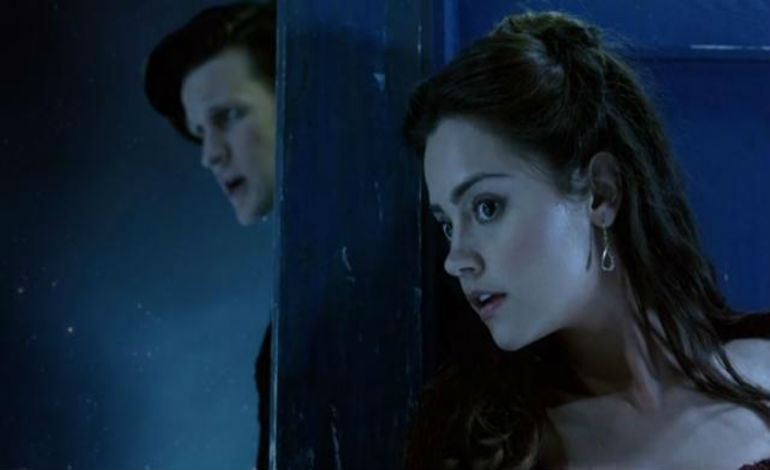
But there was evidence that Clara, and her dynamic with The Doctor was still salvageable. Jenna Coleman and Matt Smith managed to show some chemistry, or at least evidence of a strong emotional bond between these two characters. Perhaps if The Doctor had spent less time trying to unravel her mystery and realized that she was just Clara Oswald, and was more important because of that thought alone, they could have moved on.
Instead we finally discover how Clara can exist in other times and still be human, a realization come to at The Doctor’s personal time-stream when she states, in some of the most poorly thought out words ever:
“I was born to save The Doctor.”
For me, though I didn’t want to admit it to myself at the time, that was the beginning of the end of my hopes for Clara Oswin Oswald. Unfortunately, it pretty much summed up everything she had been after her previous incarnation’s death in “The Snowmen.” She is just a character that revolved around The Doctor, just a part of him: a woman dependent on a male character’s existence as opposed to also standing up in her own right. And while it is true that Companions are judged by their relation to The Doctor in any season, this was a moment that could have been written a lot better had there been more character-development on Clara’s part.
And never mind the fact that this wasn’t even followed up on: that there wasn’t an episode or a minisode dealing with the fall-out of Clara realizing what happened to her and coming to terms with it, or even addressing the fact that The Doctor had an incarnation she never saw before that point. For that matter, we don’t really even get to see the consequences of what happens when she falls through, scatters in, and survives The Doctor’s time-stream. I mean, you would think there would be some psychological effects of some kind. These are issues that could have been dealt with or at least touched upon at the beginning of “The Day of The Doctor”: to actually show some flow and continuity instead of a jarring situation where the characters seem to have moved on and found themselves in a different situation.
But now I’m digressing into plot as opposed to what I really wanted to see: character-writing. Perhaps, in the end, these two elements are not that far removed from one another.
So between “Day of The Doctor” and “Time of The Doctor” we, again, get little show of continuity save in a “tell, but don’t show” situation. Matt Smith, before his departure, has said that he could have done another year of Doctor Who. And I can’t help but wonder if another year of the Eleventh Doctor with Clara Oswald — in which he wasn’t trying to figure out what she was — and where they both figure who they are — might have made something of a difference in their character dynamic. Or not.
And then we have the regeneration.
Well … how are we going to deal with this?
After The Doctor’s regeneration into Twelve, Clara can’t seem to get over the fact that he looks like an older man now. Remember: she just went through the Time Lord’s personal time-stream, met previous incarnations of him, saw him actually age on Trenzalore, and actually existed as different people with other experiences. The parallel was right there. Had there been some more organic character development, maybe Clara having always in some way been able to draw on the memories of her other selves — or echoes — or only been able to after “Name of The Doctor,” his transformation might have taken some getting used to, but she could have seen The Doctor she had always really known beyond appearances and mannerisms.
Unfortunately, again, in “Deep Breath” Madame Vastra seemed to all too correctly deduce that Clara pined for her lost young boyfriend.
Moffat might have you believe that this was never intended, and Peter Capaldi himself wanted to portray a character that wasn’t involved romantically with his Companion. But the groundwork had already been laid out. Between Clara’s previous “milady doth protest too much” claims that he wasn’t her boyfriend and The Doctor’s proclamations of “Clara, my Clara!” that romantic bond already existed. It was there: or at least portrayed as such by the actors. So this subtext was either retconned away, the Eleventh Doctor always thought of her as something of a fascinating object, or the Twelfth Doctor’s feelings had changed and this — again — wasn’t really explored.
In addition, I think the show writers began to realize that once they revealed the true nature of Clara’s existence and pretty much eliminated that mystique, they now had to do some actual character development beyond its suspension in the 50th Anniversary and Christmas Specials.
All right. So the dynamic changes. Moffat and his crew decide, at this point, to give Clara more of a life outside of The Doctor. They began it when they gave her a job as a schoolteacher in “Day of The Doctor”: which is a natural extension of her work with children as a nanny. And she even gets a love interest in the form of Danny Pink. None of these things negate her relationship with The Doctor either. She has her time-travelling interest in The Doctor and her romantic arrangement with Danny while also having her own career where she actually learns how to take responsibility for her own actions, and realize that her students depend on her.
But of course, because of all this, Clara suddenly develops a potent case of shallowness and insensitivity. When she isn’t taking pot-shots at Danny’s military past, or constantly brushing him off to go sailing into the stars, she never even bothered to tell The Doctor about Danny, or wondered if this might actually change something in their dynamic. She becomes abrasive and rude when she’s not being outright entitled or completely self-righteous about Danny calling her on her behaviour, or The Doctor not acting the way she wants him to act.
Because, you know, apparently it would taken too much time and effort to show Clara struggling between these relationships, thinking about others, and actually having some honesty occur: where she, Danny, and The Doctor actually talk about what is going on. Moffat could have worked with this tension and conflict. Remember “Kill the Moon” where Clara delivered what was probably hoped to be an epic verbal beat down on The Doctor’s behaviour complete with the threat of actual physical harm?
Remember how before that, when The Doctor left her to decide what happened to the creature in the moon and it just seemed as though, after all of Clara and the other characters’ arguing with him, that he just got fed up with it all?
They could have talked about that because, from what I saw, that conflict was partially due to the fact that Danny Pink was brought into their relationship without Clara really talking about it with The Doctor, or asking him how he felt about that. Instead, The Doctor is portrayed as genuinely not understanding why Clara is so upset: and not being affected by this one way or another. It just feels disingenuous: because there is what Moffat and his team want to happen, and then there are the places where the character dynamic wants to go, or at least adapt itself into going.
And that would have happened if we saw Clara and Danny actually befriending each other and get to know one another. I’m not saying that there wouldn’t be conflict, but a sense of chemistry instead of that forced feeling of Danny being added onto Clara so that we, the audience, would know that she is “over” The Doctor.
I’m sorry but you are being a little bit boring. Excuse me while I’m about to go off on another adventure.
Then we have Clara’s lies and hypocrisy. She lies to Danny about who The Doctor is, then she lies to The Doctor about Danny supposedly being all right with their travelling after she tells Danny that they are done. And even though The Doctor is “a part of the Earth” and Clara seems to think she has the power to tell him to leave it, when he quotes her words right back at her “In The Forest of The Night,” apparently this doesn’t take away from the fact that she still thinks he should leave to save himself: because those words only seem to work when Clara wants them to do so.
But, for me, I think the death-knell came with “Dark Water.” You know the sequence: where, instead of asking for The Doctor’s help, she decides to betray him and force him to help her by threatening his age-old home to get a man back, whom apparently she is love with and “is the only person she will ever love” …
… because underpants gnomes?
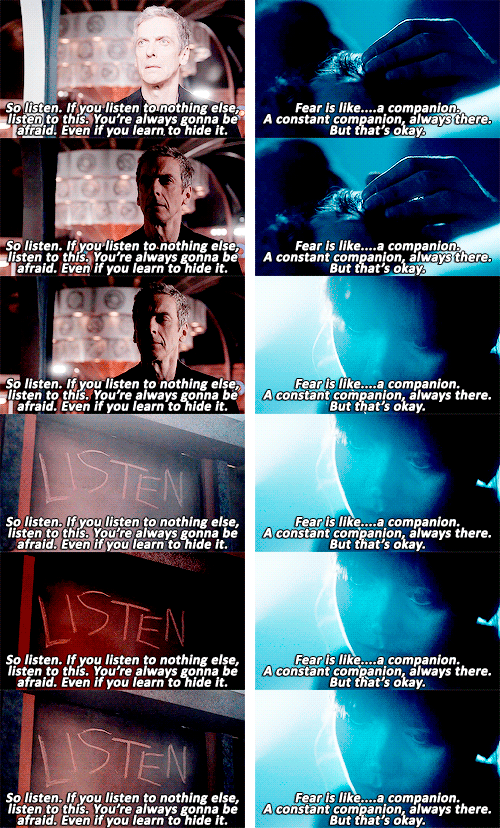
Steven Moffat has stated that, in this iteration of The Doctor’s and Clara’s relationship — as journeying with a time-traveller, that there should be actual consequences in doing so. Yet what consequences did Clara suffer as a result of her actions: especially in “Dark Water?” The Doctor kicked people out of his TARDIS for less than what she did in that episode. And barring that: The Doctor is Clara’s friend. She was there in all parts of his life. In fact, the only episode that I truly respected her in this iteration was “Listen” where she was there at both Danny and The Doctor’s very beginnings and provided them insight, inspiration, and strength while, in turn, she gained a whole other understanding of them. You know: character-development … or so it seemed at the time.
So why, realistically speaking, could Clara fall in love with a man she clearly doesn’t respect and then suddenly betray her best friend and threaten everything that made him who he is?
And even here, there was promise. We saw that Clara was part of Missy’s plan: that Missy had brought her and The Doctor together from the very beginning. Hell, we even saw that nice snippet from “Death in Heaven” where Clara tells a a Cyberman that “Clara Oswald doesn’t exist.”
Oh really. You don’t? You didn’t? Well, I guess Season Eight didn’t happen either.
But nothing happened with that, aside from it going to an extremely obnoxious and derpy place that doesn’t even convince a basic Cyberman.
It’s just like Moffat teasing that Orson Pink, the time traveller in “Listen” was just from a branch of the Pink family and not necessarily Danny and Clara’s descendant. Both have tension built up and both end with equally disappointing conclusions.
All of this is just downright frustrating to watch and I have to admit that while I was losing patience with Clara after “Kill the Moon” I lost all respect for the character after “Dark Water”: and the fact that she seemed to have learned nothing from her actions and that even after that she continued to bully The Doctor into other decisions.
Clara and her character dynamic has become more convoluted than any “Timey wimey, wibbly wobbly stuff” and I can sympathize with just why some Classic Doctor Who fans cannot stand the romance written into the program. In fact, I think it’s no coincidence that Steven Moffat, the very writer that created the “Timey wimey” idea of time-travel to explain away all temporal inconsistencies, would apply this same philosophy to character creation and relationships in his own run.
But, ironically, with time and patience we could have seen a very different Clara Oswald. As I said before, the ingredients were all there. The Doctor could have met her in more timelines. He might have tracked her down to 2013 where she was in a mental institution after being overwhelmed by all of her other memories. Perhaps he takes her out of there and, together, they explore how she can integrate those memories and just how this was all possible. Maybe The Doctor could have actually been Clara’s boyfriend because heaven forfend that he have a different relationship with a new Companion. Imagine how the rest of those events could have played out: with River Song wanting her husband to actually be happy and live on, and the impact of Clara saving The Doctor — again — by using her own sense of agency to jump into his time-stream without those very unfortunate words.
“Oh Clara … My Clara … I have chosen well.”
Or maybe Missy created Clara. I mean: just how did Missy know about Clara to begin with? Perhaps Victorian Clara died and Missy took her essence in the Nethersphere and used her hypnotic powers, which are canon, to re-engineer her into a new personality that would be The Doctor’s worst enemy. After all, Missy seemed to like violating the human dead for her ends. I mean, imagine The Doctor travels with Clara for all that time and even thinks he’s figured out how she existed in other times, only for her to betray him and claim that she had been Missy’s agent the entire time? It might have explained why the TARDIS was so dead set against her being there.
And just think of one sequence, modelled after the minisode “Clara and The TARDIS” where the TARDIS forces Clara to see all the echoes of herself: her past selves at different emotional points, her molten undead selves from “Journey to the Centre of the TARDIS” and even her iterations in other timelines to seemingly hurt her and protect her Doctor, but also to snap her out of that malignant, treacherous self and get her to accept those parts of herself, and take control of her own life.
Would the real Clara Oswald please stand up?
Perhaps Clara dies to save The Doctor and every time he goes to another timeline or world he has to be reminded of the fact that he will never see her again. But if you don’t want to go all potentially Women in Refrigerators on this, maybe she just leaves after finishing her own A Game of You: discovering her own sense of identity separate from The Doctor and both her and him realizing that he is not the person she fell in love with any more and she has to move on.
So long and thanks for all the jelly babies.
At the very least, when she betrayed the Twelfth Doctor he should have helped her get Danny back while telling her that there was a price for her actions: namely, never being allowed to travel with him again.
When I first started thinking about all this, I thought that Clara Oswald shouldn’t have been the Twelfth Doctor’s Companion. If anything, she felt like more a part of Eleven’s life and could have fit into that dynamic a lot more efficiently. But after a conversation with a friend of mine, I saw that she was just a reflection of both incarnations of The Doctor. Eleven’s Clara represented all of his wonder and his need for her. Twelve’s Clara is all the former in addition to his angst, conflict, and uncertainty magnified a thousand-fold: the ephemeral breath on Virginia Woolf’s mirror instead of the refracted crystal of herself that she could have been.
Because Clara is neither a reflection of The Doctor, a plot device of his, nor a heavy-handed hint of there being a female Doctor in the future at all …
I guess what I’m really trying to say here is that Clara Oswald’s main problem is the fact that she just isn’t written well. There were so many storytelling and character-driven possibilities that just weren’t even explored. The attempts to develop her character have been awkward and jarring to say the least and just thinking about some of her more lucid moments and what could have been just makes the experience all the more painful.
I will admit: when I heard that “Last Christmas” might be Clara’s last show, I felt a tremendous sense of relief: even as I feel some dread that due to rumours about Jenna Coleman wanting to return, she will be back. Despite some particularly touching moments, the character of Clara has gone from being a sonic screwdriver supplement to an attempt at a haphazard marionette portrayal of an actual human being.
It’s just sad. Clara started off with a lot of potential but it became clear that no one really knew what to do with her. Clara Oswin Oswald deserved much better than what she got, and I hope that Steven Moffat gives her at least the dignity of “Last Christmas” being her final adventure and letting us, and The Doctor, remember what could have been and finally move on.
There were hints of it when The Doctor regenerated at “The End of Time.” Neil Gaiman’s episode “The Doctor’s Wife” pretty much stated that Time Lords can change sex from regeneration. And then, of course, we have our friend Missy — or The Mistress — to consider from this past year’s Doctor Who. And according to Steven Moffat, the man who also wrote the two-episode comedy special Doctor Who and The Curse of Fatal Death — the role of The Doctor will eventually be played by a woman. According to Moffat, they have been laying down the groundwork to do this for some time, but it is a question of finding the right personality before they can make this an eventuality.
Doctor Who, particularly in the era of Russell T. Davies, has been pushing the envelope of just what future, and present, life can be: and how far it can be accepted as a given. There is, and there will be, resistance on the part of some fans. I mean, The Doctor has been consistently male for at least thirteen incarnations now — from 1963 all the way to the present — and even for those who are not outright dismissive or hateful towards the idea, it would take some getting used to.
But, at the same time, would it really?
Could it be time for a female Doctor? Steven Moffat says, “Possibly.”
The Doctor has changed a lot throughout the years. He is the Lego-equivalent of a protagonist: even though you can rearrange him into different shapes, sizes, and patterns the building blocks of him as a character — his core — will always be the same. This allows the people working with him to tell new stories about his character while always making it clear that he is The Doctor. And myths change over time: they adapt according to the times and even the culture of the audience.
There are some interesting implications, of course. There is the matter of LGBTQIA representation to consider with regards to sexuality and gender. For the most part, The Doctor has been portrayed as asexual and while it’s tempting to mention that in latter years he has become a lot more romantic and has displayed feelings and more physical expressions of love towards his Companions and other characters, these are not necessarily mutually exclusive ideas. Certainly asexuality does not exclude the possibility of platonic love — which seems to be a default setting of The Doctor’s character — and it also doesn’t outright dismiss the notion of romantic or even physical love.
So what if The Doctor has relationships with male or female Companions, or other characters? Does it really matter what body The Doctor has at the time? Certainly this wouldn’t affect The Doctor’s brilliance or core personality. In fact, this would make some good stories in and of themselves. I mean think about it: The Doctor changes into a woman for the first time in her life. Does it take some getting used to? Do her relationships change? Does this create discomfort in her Companions, or another level of relatability?
And this isn’t even going into gender. While Missy prefers to be called The Mistress or a Time Lady, would The Doctor want to be considered female? Would she insist on male pronouns: as gender does not necessarily equal sex? I’m thinking that she would adopt female pronouns as Steven Moffat and others probably wouldn’t delve too much into this nuanced issue for mainstream television. Personally, I could have seen Missy insisting on being called The Master and it would have definitely fit her core character to do so.
I think the idea I’ve been thinking about the most since the possibility of sex-changing in regeneration actually came about is whether or not The Doctor would be a good representation of a transgender — or gender-fluid — character. On one hand, I can see some transgender and queer fans completely supporting this idea and perhaps relating to this character more: expanding on the idea of a complex LGBTQIA universe that Davies himself brought to television.
But then there is the opposite side of the coin. Some fans have accused the creation of characters such as the female Thor, and the Black Captain America of being gimmickry: as something of a fascinating “What If?” oddity that will be retconned out or marginalized again once the status quo of those franchises are restored. Certainly, there is something to be said about making a story about an entirely original female character instead of temporarily gender-bending an established one. One concern I have in seeing a female Doctor is that she will, inevitably, regenerate again and that this last regeneration will either have less time on screen, or become something of a one-off.
I think that this can be done under a fine hand and certain degree of sensitivity, but whether or not Steven Moffat and his writers are up to the task is a whole other story entirely: though the fact that Doctor Who has hired Catherine Tregenna, its first female writer in about six years, might hopefully be a step in the right direction.
Personally, I want to see a female Doctor. I want to see what she would be like and to watch her dance toe-to-toe with the messed up intrinsically Lovecraftian madness of the Whoniverse. I want to see her laugh and cry, be silly, fierce, and terrifying, a fiery angel and a goofy clown, and loving hard, while pulling her sonic screwdriver on some Daleks. It could be another adventure for The Doctor: a new aspect of the character’s life that we can see unlocked in both external and self-exploration.
In the end, I want to see The Doctor give her Companions The Talk. You know the one. Whereas humans get the Birds and the Bees talk, Time Lords get The Timey wimey, wibbly wobbly Talk. I’d like to see her explain that just as she understands, or doesn’t understand, or intuits time so too does she understand, not understand, or intuit her own sense of sex and gender. So too does she understand, not understand, and intuit herself.
But really, I just want to see The Doctor’s happiness as she gets her ultimate wish: when, at long last, she finally gets to be ginger.
What is a preview to a seasoned time traveller, or Whovian, but an eye-blink in the future before a Weeping Angel temporarily sends you on your way? In this case, Christmas came early yesterday as BBC One made good on its promise and delivered a preview of the upcoming Doctor Who Christmas Special.
For someone who once knew Father Christmas to the point of calling him Jeff (whether or not this was a Time Lord joke or not is another matter entirely), The Doctor does not seem pleased to meet Santa Claus this time around. In fact, Clara herself doesn’t really look like a regular old bouncing ball of wonder when Santa and his elves are meeting her on a rooftop: for some reason.
I like how the story gets turned around: how parents giving their gifts to their children in lieu of Santa is the real story while Santa — whoever or whatever he is — seems to be the reality. It’s a pretty clever twist: especially when you consider how eerie it must feel for Clara when the elves are detailing elements of her childhood that only she would know, and Santa in particular asks an uncomfortable question.
I have to say that right now in this preview they look anything but friendly: sort of like a mask of innocence worn by a hint of menace. And there is one more thing to remember: Santa may generally be considered a benevolent figure, but does keep a list — which he checks twice — of who is naughty, and who is nice.
And, of course, there is the Krampus part of the Santa story that generally gets left out nowadays: much in the way that most fairytales — most ancient folktales — have become sanitized.
I’ll just leave you with that thought. Think of it as an early Christmas present.
Not me and probably not countless other Whovians either. According to Michelle Gomez, Missy will be returning to Doctor Who. Note: Missy won’t be returning in another incarnation or as The Master or another Mistress or in some of the weird forms that her previous incarnations in which her previous selves were forced to return.
It will be this Missy.
So, out of curiosity, how do you think she did it? Do you think that her brooch had something to do with her life being saved? Or perhaps one of the rings on her fingers? We know that this is how The Master survived after “Last of the Time Lords” and that one of The Master’s aliases back on Gallifrey, at least in some of the books, was Koschei: taken from the Russian folktale of Koschei the Deathless: a being who can’t die because his soul is held in an object somewhere else.
Or perhaps Missy sent an actual tactile hologram, or an android? Maybe it has something to do with the Nethersphere, which is supposedly running out of power and fading out of existence? Maybe Missy can convert herself into digital information. And let’s not forget that the Brigadier was using Cyberman technology that she, dare I say, upgraded herself. And we do know one thing about The Master: that when he was male, he certainly looked out for his own skin (and even looked for new skin in his failed regeneration) and if that well developed sense of self-preservation transferred over to Missy as it had so many other regenerations, she definitely has contingencies in place.
There are so many possibilities and, let’s face it, we’ve only just met Missy. There is so much that she can still do and having her as an ongoing nemesis, like she was back in the day, will only make Doctor Who stronger for it. I like the idea of Missy constantly hounding The Doctor. After all, there are still a few loose threads from the latter part of this series and the beginning of Doctor Twelve’s run.
The Doctor suspects that Missy has a TARDIS somewhere. But where or, chameleon-circuit withstanding, what is it? And who got The Doctor to go to the Oriental Express? Who created that politely malicious AI Gus? And did she write that classified ad for Clara and The Doctor back in “Deep Breath?” Were these part of Missy’s plans?
And let’s not forget another question. How did Missy survive? Yes, Gallifrey was saved but The Master’s DNA was destabilizing in a terrific way at “The End of Time.” Was there still enough of him and enough energy, which he had been expending much of, to regenerate properly? And how did Missy escape Gallifrey? Did she piggy-back transmat herself out when the Time Lords sent The Doctor a new regeneration cycle? Or go through the Gallifrey Falls No More painting?
Perhaps some of these answers will be revealed in the November 13th edition of Doctor Who Magazine but certainly, and in time, we will see what happens in the next season and just how Missy can outdo her own villainy this time around. I know I look forward to it.
There has been a lot of darkness, awkwardness, lies, uncertainty, and mayhem at the end of this season of Doctor Who. We’ve seen robots and balloons made of dead flesh, the insides of a Dalek, the monsters of the mind, a bank robbery, a rampaging weaponized alien robot, spider creatures and a creature hatching from the moon, an invisible mummy that attacks people in sixty-six seconds, and two-dimensional invaders manipulating our universe.
We’ve seen the loss of Danny Pink, who loved his young students, and Clara’s betrayal of The Doctor, and Missy. Just Missy.
So, you have to understand, after an arc with positively magical episodes that are few and far between (at least three of them), that when “Death In Heaven” ends on such a downer, that when Santa Claus decides to make an appearance (played by one Nick Frost and no, that is not a joke: that is really his name): who even says it shouldn’t end on this note and asks what The Doctor wants, you have to wonder where this is going.
This is not the first time Santa Claus has appeared in the Whoniverse. He has been in comics and stories and even got mentioned by the Eleventh Doctor as being called Jeff in “A Christmas Carol.”
The First Doctor first meets Santa Claus in the 1965 comic “A Christmas Story”
And now: here he seems to be in an actual episode.
There seem to be some pretty unfriendly and grotesque-looking creatures in the North Pole. If those are how elves are born, I don’t think I really wanted to know. Or maybe they are of Krampus’ species. But I wonder if, like Robin Hood, this really is Santa. Maybe he is an Eternal or some other immortal being. Verity Lambert once compared The Doctor to Father Christmas.
Perhaps, now, he needs someone to bring him the joy more than ever.
The Doctor and Santa Claus will be appearing this December for the Doctor Who Christmas Special.
Please, don’t read past this point if you haven’t seen this season’s finale of Doctor Who. It’d be something of an understatement to say that there will be spoilers.
I have to say that I think Missy, aside from this incarnation of The Doctor, has been my favourite character in this latest iteration so far. In fact, she is an excellent villain. Don’t misunderstand: I like the sinister, urbane, and hammy tones of Roger Delgado’s Master and the sheer bat-shit zany madness of John Simm’s Master but Michelle Gomez’s Missy manages to take those elements and make them understated and subtle with moments of vicious crazy as punctuation while conveying the Time Lady’s insanity in an overarching and truly horrifying scope.
I mean: what could be worse than decimating one-tenth of the human population and playing pop culture songs while making the survivors suffer in labour camps? Or duplicating one’s self to overwrite the DNA of an entire sentient species? How could anyone top that?
Well, try manipulating the fears of the rich and powerful into giving you their bodies, converting them into new forms of Cybermen, then going back in time and creating a concept of an afterlife (or manipulating existing ones) for an entire species so that you can store all of their consciousnesses onto a Gallifreyan hard-drive and then make a cloud substance — presumably composed of nano-technology — and resurrect all of that species’ dead as Cybermen.
And why? Why would you violate an entire species’ lives and even their deaths? Why would you manipulate your enemy into having a Companion that you can exploit as a weakness on a purely psychological level — to play on his compassion — kill some of his friends, and then turn over the army you made to him?
Poor Osgood. You would have made a dream Companion.
It’s very simple why Missy did all of that. She wanted to show The Doctor that they weren’t that dissimilar. She wanted his validation, his friendship, and even his love. This warped way of showing that love is to unleash as much pain on The Doctor as possible and even after Missy’s supposed “death” (and we have yet to see concrete evidence that she’s actually dead: meaning that given who she is, she probably isn’t) and that hearts-wrenching moment where The Doctor realizes she lied about Gallifrey being at those coordinates is all a part of that.
And I hope Missy isn’t dead because of the wasted opportunity that would be. After all, The Doctor did mention that she must have a TARDIS somewhere.
I like this character, this new incarnation of the being that used to be The Master, because she actually makes The Doctor more human again: bring him out of his cold and detached, even grumpy exterior and seeing him display the emotion of empathy more blatantly again. And the interplay of love, hate, and fear between them just really adds something to the show that has been lacking for a while.
I have to say: I’m still not very impressed with Clara. Her attempt to pretend to be The Doctor was rather underwhelming in itself: although it’s a nice teaser of The Doctor one day becoming a woman … as if Missy weren’t enough on her own for that. Seriously, I like the idea of Time Lords — or Gallifreyans — being able to change sex. There are just so many storytelling possibilities in that if handled right.
But that aside, Clara is just lacklustre and, if anything, it’s Danny’s transformation into a Cyberman that really hits home: and how he takes that and transforms what could have been a psychological mercy killing into something of salvation and personal redemption.
Some hard choices were made.
And, at the end, when you see The Brigadier … well, I would just love to see him become a Cyberman vigilante: protecting the Earth when The Doctor is away. After all, after saving his daughter and seemingly killing Missy, we never saw him self-destruct like the others. And oh man: he waited ages to shoot the being who was once The Master.
Brigadier, we and The Doctor salute you.
The episode almost ends much the way that Clara has been acting for most of this latter season: and The Doctor, arguably, has most of his life. Clara pretends that Danny has returned and The Doctor pretends that he found Gallifrey so that she can stay on Earth. To be honest: as a character I saw so much potential with, I was almost relieved that he didn’t want Clara to come with him. I think it’s time that this — whatever it is that Moffat has been trying to make — with Clara and The Doctor is over. Maybe he can actually go and search for Gallifrey now.
Hugs are just ways to hide one’s face
But I guess we’ll see what Santa Claus has to say about that. And so ends this recap of Doctor Who until Christmas. It’s been fun writing these up and I look forward to the next one. Travel well, fellow Whovians.
After doing my coverage for the Toronto After Dark Film Festival last week I didn’t really have time to go into the previous Doctor Who episodes “Flatline” and “In The Forest of The Night.” Between an episode dealing with denizens from a gritty revisionist and twisted graffiti version of Flatland and practically a children’s special about the specialness of children and the Earth saving itself respectively I found I didn’t have very much to say about the characters that wasn’t a continuation of previous insights.
Now, Missy — the erstwhile main antagonist of this story arc — did have some appearances in both of these previous episodes. In “Flatline” Missy looks at Clara through her tablet and calls her “Her Clara,” and that she chose her well. This already brought some questions as to who Missy actually is: especially given that she was calling herself The Doctor’s girlfriend. Her appearance “In The Forest of The Night,” expresses pleasant surprise over the world essentially saving itself. There is no lead up, no particular indication as to what is going to happen in “Dark Water.”
Between creepy beings from another dimension attempting to engineer lifeforms in ours and invade our space and a sunny fairytale hearkening back to the ancient tales of the Black Forest, what was about to be revealed in “Dark Water” is blacker than the blackest soul, and appropriate when you think about it in retrospect.
We are going into Spoilers now. Turn back if you have not watched “Dark Water.” Turn back while you still can and see it as soon as possible.
In “Dark Water,” Danny dies.
Even in the Whoniverse, cellphones can be a hazard.
That’s it. In the beginning of the episode he is talking to Clara, freaking out on the phone about telling him she loves him, and he gets hit by a car.
The End.
Now, Clara has already been exhibiting some rather questionable and immature behaviour. In “Flatline” she gets called on her dishonesty to Danny and The Doctor by The Doctor himself — through the backhanded compliment of saying she made a “good Doctor” — and we all know that The Doctor always lies. In “The Forest” Danny pretty well figures out that she had been lying to him about no longer adventuring with The Doctor as well, but he takes it in stride all things considered: as The Doctor is helping them deal with the situation, he is dealing with his duty in chaperoning his young students and, ultimately, tells her he is happy where he is. Personally, I think that Danny is a better man than most people would be in his situation: both then, and now.
And in “Dark Water,” so is The Doctor.
I know you can say that Clara is desperate to save her boyfriend’s life and is willing to destroy all space and time to do so. Very few people would be less than willing to do almost anything to save someone they love if they have the hope and the chance to do so.
But Clara’s character, as she has been written this entire time, seems to have come to a head. Tell me: how would you feel if your best friend, who hadn’t been returning your calls, who then shows up, who had been lying to you for some time, took all the spare keys to your ancient home, seemed to knock you unconscious, takes you to a dangerous place and threatens to destroy all your keys and leave you two there if you don’t break all the rules and potentially cause more pain and suffering than has already happened?
Remember: this is your friend who you searched for ages to find again, who had been with you in all your changes and all your life, and who you never thought would betray you. Ever. How would you feel?
I wonder if either of them remember that The Doctor can open the TARDIS with a snap of his fingers.
I won’t lie: in that time before the commercial break, I really hated Clara. I actually despised her: or at least the way that Moffat has been writing her and wrote her in this one part. And I also won’t lie: when The Doctor revealed that he had simulated all of it through a telepathic connection — after she thought she destroyed all the keys and ruined any chance of her finding Danny or getting anywhere again — and she had to face the fact that she had betrayed her friend, I felt a bit of satisfaction in seeing her crumble.
In fact, I almost wish that when The Doctor told her to, “Go to Hell” that he sincerely meant that …
Beyond, you know, actually being literal and helping her and attempting to take them into the afterlife to save Danny’s existence. To bring him back. Perhaps the afterlife is simply another dimension to the TARDIS, or maybe there is a reason why all TARDISes would, presumably, have safeties in place: even with a Time Lord pilot.
I guess it’s not that accurate to say that The Doctor is a better man than most people in that situation, when someone you love hurts you, but then again he isn’t human: and he did see how far she was willing to go.
So here we are. We follow The Doctor and Clara into a place called The Nethersphere which seems to be the afterlife. Now, we’ve seen this place before. We’ve seen Missy here in what she called The Promised Land dealing with seemingly dead people that encountered or had tangential contact with The Doctor.
But it’s here where we begin to understand how this place works: through Danny. Yes, Danny is now the one sitting at a desk being told that he is dead and the creepy seemingly metaphysical rules for how this afterlife works is just … creepy. It is here, however, that we seem to uncover Danny’s secret.
You know all the times that Danny reacts to his military past being brought up? Well, we get a glimpse as to why it is so devastating for him. And when you consider his previous occupation and what he had done compared to his current one working with children … I feel bad for him. As a viewer, I feel bad for Danny Pink and what he tries to atone for and how he tries to be strong for everyone: even after he is supposedly dead.
By the time you see The Doctor and Clara around the skeletons in their tubes, and if you’ve seen the trailers for this episode and how “the dead out number the living” and how they are told that the liquid in the tubes is dark water that makes all inorganic matter invisible: you can figure out just what those things are.
But then we have Missy.
Oh Missy. You know, I thought that the twelfth incarnation of The Doctor was the ultimate troll — the master of stirring up trouble — but watching Missy do that to The Doctor was nothing short of brilliant.
So yeah … that happened.
Imagine a warped version of Mary Poppins pretending to be a tactile AI simulation, providing hints that she isn’t and, well, manoeuvring The Doctor towards the punchline.
And the punchline is this.
All this time some people have thought that Missy meant “Miss C:” perhaps a corrupted version of Clara. Others thought that Missy was The Rani or Romana. We see all this evidence: the mind-machine interface Matrix-like technology of The Promised Land, the cruel meeting that Danny is introduced to, the most probable lie that he is actually dead and the option to erase his own feelings, even the mechanized sound that the Cybermen — who we knew were there — make when they march.
What do footsteps sound like when they march? Who has a derisive view on a human heaven, or utopia? Who likes to find the weaknesses of humankind and use them against them: changing humans into their own worst enemy?
Missy is not Miss C. Missy is short for Mistress. And Mistress, for all its other connotations, is the female noun for …
Master.
Quite a few people guessed that Missy is a female regeneration of The Master, but Steven Moffat said The Master and the Time Lords wouldn’t be playing a role for a while. Of course it has been said that Moffat lies. And so he did.
The sound of drums isn’t the only thing coming it seems.
So how did Missy survive attacking Rassilon in her previously unstable incarnation while, presumably, being sent to Gallifrey to get sealed into a pocket dimension? How long has she been working unseen and in the shadows? And does Gallifrey play a role in all of this? Missy claims that The Doctor abandoned her but why hasn’t she killed him yet? What are her plans in presumably controlling this army of Cybermen? Will Danny erase his feelings and join the Cybermen after bravely getting Clara to shut off communications between them? And how will Clara deal with facing down the Cyberman that is right behind her?
Where is this all going?
Well, whatever happens next it all seems to be leading into a “Death In Heaven.”
In the case of Doctor Who‘s “Mummy On the Orient Express”: five lives and sixty-six seconds each.
And now: beware spoilers.
From the beginning of the episode, on a futuristic space vessel bearing the name Orient Express, when you see that mummy lurching towards the old woman, a horrible spectre that only she can see and you look at the timer at the corner of the screen you think that you know what you’re going to be dealing with. It’s a monster: a rotting and dessicated creature of the horror film genre in a futuristic Agatha Christie murder mystery novel.
Of course, given the nature of Doctor Who, it is never that simple. In fact nothing is simple in The Doctor’s universe. I mean, there are mysteries, and then there are non-surprises. I suppose I really shouldn’t have been all that surprised to see Clara coming with The Doctor on this cruise: for what is supposedly going to be their last trip before she stops being his Companion… or so the plan goes.
You know that sexual tension we were told about? The one that wasn’t going to be happening between Clara and The Doctor? Well, it’s true: you can take their initial time together on the cruise as something of a father and daughter arrangement but it just doesn’t ring true. Perhaps sexual tension is the wrong term. Perhaps it is a tension of an uncertain relationship: of not really knowing where they stand after everything that happened in “Kill the Moon.” But there is just a way that, when Clara tells The Doctor she thought she hated him but realized she didn’t and never could while nestling herself on his arm that made, at least me, wonder what is going on here? Is this the final moment before a breakup as two people go their separate ways?
I admit I really did like the interplay between them: though I personally think Clara came back far too quickly. In my last review I totally thought they would be separate for at least one episode. That said, I’m glad there wasn’t a scene where he had to apologize to her or vice-versa. We got thrown right back into them being together. But I suppose it’s something we all should have seen coming: that this is not over yet and that this “last voyage” is not as it seems.
Just like everything else in this episode.
Here is what I’ve noticed about Doctor Who episodes should I ever want to write one. Basically, you start off with a weird premise of two ideas that ordinarily wouldn’t go together, but eventually blend well and do. You focus on interpersonal relationships and working dynamics as the characters realize something is strange and try to navigate their way through the situation. The Doctor, in the immortal words of the musician Voltaire “makes some shit up” after a while or throughout the episode while making weird references and banter, the situation becomes inverted and you discover what is really going on. The Doctor tries to reason with “the monster” who becomes relatable as a selfish, pitiable, or misunderstood being, whom he either saves that being or lets it destroy itself, while sometimes he is confronting with his dark side in the process. He ends up resolving some crisis through taking a major risk, there is some wrap up with regards to the other characters, and he and his Companion go off to a new place like “Barcelona” or he leaves alone to deal with his demons: all of which to emphasize just how important a Companion is to getting him to relate to existence. And this doesn’t even include the strange moments of workable paradox that you get by including time or time travel in some of these scenarios.
Does this sound about right to you? I suppose that transdimensional “mummy” only comes for you in sixty minutes instead of sixty-six seconds, but “Mummy on the Orient Express” pretty much follows that strange, weird, and wonderful formula: the invisible mummy on the space liner, the relations between Clara and himself, Clara and Danny on the phone, Clara and Maisie, the suspicion that he and Clara both come to as they sense something is wrong, the reveal that the liner is actually a hidden laboratory to gather scientists (who have been gathered there as guests) to seemingly replicate the effects of the mummy for war-like purposes, the sarcophagus that Clara finds is supposed to be where they put the mummy after successfully capturing it for their kidnapper and jailer, the horror and cruelty of the fact that the mummy attacks those who are sick or have psychological trauma, The Doctor brushing with his dark side in letting all those people die just to find out how to stop the mummy, finding out that the mummy is very pitiable (what is with this theme of soldiers fighting eternal and horrific wars?), and then The Doctor risks his life to deal with the situation.
I will leave the rest to your imagination if you haven’t watched the episode. But let me just add this bit. There is a reversal from “Kill the Moon.” This time, after almost putting Clara in another difficult place and making her think he is using her, while revealing some information that may have been pertinent for Clara to know beforehand, he decides to take it all on himself and put himself on the line. The episode ends where The Doctor is genuinely expressing regret for his seemingly callous actions. And for all he criticizes Clara for displaying two emotions at the same time at the beginning of the episode, he does the same through displaying both clear self-doubt and grim certainty over how he would have attempted to save as many lives as he could: even if some had to die for him to do so.
As for Clara: she still needs to find a healthy medium between her relationships and work on her honesty. A lot. In addition, we are left with more questions as to who arranged this entire situation: especially considering that he seems to have received a call about it at least once on the TARDIS when he was with Rory and Amy as The Eleventh Doctor. Is it Missy and her servant that arranged this? Or someone or something else entirely?
And I wonder if every climax and moment of crisis in Doctor Who has resolved itself in at least sixty-six seconds? Well, look at it this way: at least I didn’t make the obligatory mummy joke.
It’s hard to resist titles like that: even when they’re misnomers.
This weekend, on Doctor Who, we got to see “Kill the Moon” and the mess — the real mess — that came from it. And I’m not talking about the moon crumbling in 2049.
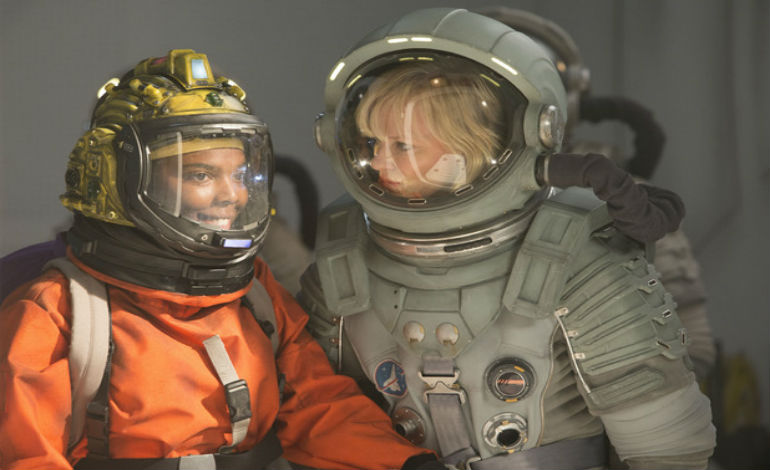
For me, the episode started off fairly slowly and, quite honestly, in a very predictable manner. The Doctor, Clara, and the young girl from “The Caretaker” episode Courtney Woods decide to travel onto the moon: so that Courtney would feel like she’s special and not just the misbehaving young girl that threw up on her first time in the TARDIS.
Then we find said company on a space ship where scientists have gone to the moon to blow it up with explosives because it is endangering the Earth below. Of course you have your obligatory monsters and a truth about the moon, that is the moon and yet not, that you begin to glean almost right away when The Doctor calls the aforementioned monsters — the spider creatures — bacteria.
Then humanity has a historical decision to make and …
The Doctor says screw this, leaves Clara, Courtney and the scientist Lundvik to decide whether kill a potentially innocent in order to save the Earth or take their chances with its survival, and leaves them. Just like that.
Yeah.
You could already tell that there was a conflict coming to a head in this episode and, as I said before, it is not the moon: unless you consider The Doctor’s ego and Clara’s self-righteous indignation as small orbital satellites in and of themselves.
The episode begins with Clara wanting to make The Doctor confront the fact that he made Courtney feel like she was “not that special.” Of course getting The Doctor to do anything, even on a good day, is slightly less difficult than herding a thousand cats. It also presents another conflict. Clara is not a tutor or babysitter any more. She is not a character is “born to save The Doctor.” She is a teacher and she has a responsibility to her students, including Courtney. The issue is that The Doctor does not, in fact, have a responsibility to Courtney or anyone despite Clara’s relationship with him: save for being captain of his own ship and being in charge of the safety of everyone in it. It is this tension between them that only gets worse as the episode progresses.
Much like The Doctor perceives Time and its eddies at the best of moments, and with further description of this Time Lord sense in the episode, you can see this moment coming a mile away. Courtney being exposed to danger is a failing on both The Doctor and Clara’s parts: The Doctor not being aware in this incarnation of what a child can perceive and Clara for, frankly, not telling Courtney to stay on the TARDIS sooner after they landed on the moon and she got what she wanted: being the first woman on it. Certainly, when straits look dire Clara gets another reality check when, in asking Courtney to call her by name, Courtney prefers to keep calling her “Miss.”
Make no mistake: Courtney is a child and Clara is supposed to be her teacher. They are not friends in that way. Clara is the adult and has to make her own decisions and take her own responsibility. And it seems as though that, by extension and according to The Doctor, so does all of humanity.
But let’s not kid ourselves here. While I do believe that The Doctor genuinely thought humanity should consider the moon’s fate, and that Clara exemplifies humanity in his eyes, there is a fairly large part of this that was the result of him being quite fed up with Clara’s attitude: at least in regards to their dynamic. The events that reached their crux in “The Caretaker” with regards to Clara, Danny Pink, and The Doctor, as well as Clara’s professional and traveling lives definitely affected The Doctor’s decision here.
The fact is, it’s quite clear that The Doctor is tired of babysitting children and, by extension, humanity. He may even be resentful of how Clara tried to hide Danny Pink from him and initially involve him in their dynamic against his knowledge and will. Perhaps he thinks that Clara still unfairly compares him to the Eleventh Doctor who, let’s face it, coddled Clara quite a bit or at least comparatively so. Perhaps he is fed up with Clara thinking he should take responsibility for sorting out her own priorities.
And Clara, at least how she has been written since The Doctor’s Regeneration, is also fed up. She can’t seem to deal with this new change of personality. In addition, what he does to her in “Kill the Moon” is just a large scale version of what he did to her in “Deep Breath”: seemingly abandoning her and breaking their trust. Her angry monologue at the end of the episode hits a lot of points home as to how this Doctor treats humans and what his place should be on Earth: at least from her perspective.
It’s painful to watch. Both characters seem to have regressed into immaturity and misunderstanding. I remember once thinking that The Doctor had grown up a lot since his early travelling days, but he is now more of a throwback to those more immature times. That said, I think that Clara has had to grow up for some time now. Travelling with The Doctor isn’t all fun and games and indulging his Companion’s whims. He asked her to act like an adult on behalf of humanity. And she did.
And it cost them.
Perhaps, in the end, it’s best that The Doctor travel alone for a while. He clearly has things that he needs to do and others seem to just be getting in his way at the moment. And as for Clara, she knew to some extent the potential consequences of traveling with The Doctor. She could have left him any time when she started her career and her relationship. I think that she has to ask herself just what she wants from him just as, conversely, The Doctor should give her some space to make those decisions.
It’s not a one-sided situation and I hope that when it comes up again, it’s dealt with in a mature manner without one side expecting the other to simply apologize.
That said, I think Danny Pink has been the only character who has been acting even close to rational between the three of them: becoming the voice of reason for this episode and I want to see more interaction with him. Even though the relationship between Clara and The Doctor was the highpoint of this episode for me, I truly appreciated that Bechdel moment where three women: a school teacher, a student, and a scientist decided the fate of the Earth and for some time talked only about the consequences.
I can be snide and make a reference to the title of a Heinlein book and state that “The Moon is a Harsh Mistress,” but sometimes it is something simply that heralds the end of the day and the promise of an interesting night.








 Mythic Bios