We Interrupt These Stories to Bring You Andrez Bergen, Great Capes and GeekPron

Originally, I was going to make the month of October 2013 Storytime for Mythic Bios: if only because for the past three entries I have been posting up stories. And I was going to do it again today until it occurred to me that there are two updates that I need to make.

So first of all, I am friends with Andrez Bergen: an author and musician whose Blog you can find under a cap-locks version of his name right here with the subtitle: a wayward soapbox for author/hackwriter Andrez Bergen. He has written a few books, but the one that I have read is his new Who is Killing the Great Capes of Heropa?: of which you can either click on the previous link or look at Heropa itself. Basically, imagine a virtual reality world modelled after an original Silver Age comics universe where players can be either superheroes or villains. Then add to it with the fact that it operates on the Comics Code Authority rules: such as no swearing, fraternizing between hero and villain roles, drinking in public, revealing your secret identity, and then some. And then complicate it by having set in a dystopian offline society and have the dregs of it start to affect this ideal world.

I actually met Andrez in the WordPress Blogsphere when, I believe, I wrote My Best Friend Was a Sith Lord. What it seems like in this amateur version of Blog archaeology or psychogeography is that Andrez commented on my entry and I commented back, followed him to his site where his book was being promoted and still in the process of being finalized … and the rest is history that can be summed up into a continuing friendship and a consequent Sequart article published yesterday entitled Revisionism Comes to a Silver Age: Or Who is Killing the Great Capes of Heropa?

Suffice to say, I am really pleased with how the above article turned out and if you are interested please buy Andrez’s book, look at my article and read through Sequart’s really fascinating scholarship on the medium of comics and everything it has influenced. You can find the link to Sequart through my article or my Blogroll on the right-hand side of Mythic Bios proper.

It is just amazing how things can come together: and in ways that you didn’t even think of beforehand. I also have another element of news. As you might have seen from my Blogroll, I have been following G33kPr0n for some time now. What you might not know is that they were looking for some contributing writers and, after sending them some work, you are looking at one of the newest members of the G33kpr0n Contributing Writer Staff. 😀

I didn’t want to say anything until I posted my first article and made it official. It is different writing for G33kPr0n than for Mythic Bios, but it has opened various new avenues to me: if only out of sheer geeky enthusiasm. My first article actually covers The Dark Crystal Author Quest and outlines it for the readers of G33kPr0n. I am also getting revitalized for my work for the Quest as well in creating my story. I know what I want it to be about and the rest is now a question of details and time. Suffice to say, I have a whole lot of ideas for G33kPr0n articles, new space to collaborate with, and good awesome geeky people to share it with as well: both staff and readers.

I have wondered, however, if this will impact my writing of Mythic Bios: if I will have to cut down on articles in order to also work on my other projects … maybe to once a week instead of twice for a while. I still need to look for other avenues as well and we will just have to see where it goes. But in the meantime, yay: lots of links tonight, ladies and gentlemen and beings of all kinds. I believe I will have some other news if and when specifics are given to me as well. I have plenty of branching ideas and I just want to see how they bear fruit.

So stay turned everyone, as I become an even more obnoxiously speaking-Geek. Same Mythic time, same Mythic Bios …

Looking Outward

Of Dark Crystals and Brooding Hollows Traveling Down the Late Night Road

The thing about “there,” is that when all goes well you come back again.

I meant to write this the very … night I came back from my trip, but then I realized after talking with a friend that I was more tired than I believed. And then today I felt energized with purpose but now the exhaustion segment of this burst energy and gall on my part is coming into play: so much so I’m now writing this past Monday.

I even had this post all planned out to an extent but then I just felt like … I don’t know, tired and repetitive. Nevertheless, there are some things that still need to be mentioned. I was on the Greyhound bus back from Ottawa and, finally, I got my borrowed laptop to link into the free wifi connection. After catching up on a wide variety of Facebook messages and even some new Twitter followers, I went on the Broodhollow website and I found something there: that on the very day of my impromptu trip my Sequart article got linked to and mentioned in an update by Kris Straub himself.

It shouldn’t have surprised me, and I was secretly hoping that he would mention my work, but it’s one thing to hope and think about it but it is an entirely different situation altogether to see it staring at you right in the face–on a Greyhound bus back to Toronto in the fading early autumn sky–and just say, “Wow.” Before this point, I did comment on the site like everyone else, but here was name again, connected to my writing, associated with Sequart and–for that time and that time alone–front and centre. I found this a few days or so after another Twitterer suggested my work be printed as a “Forward” to the upcoming Broodhollow Kickstarter, to which Kris Straub replied:

“@MKirshenblatt unfortunately there’s no room! but he is worthy of it”

It was at that point that I went on my Facebook and wrote another status down–linking the exchange from above–and I wrote, “I hope that this is the longest Day of my life.”

And I still mean it.

Of course, I’m not perfect. After I found Kris Straub’s post, I saw two comments. While one of them caught onto a run-on sentence I made, the other pointed out an even more glaring factual error. It turns out, I actually made the Belgian cartoonist Hergé have an untimely death: in that while he actually died in 1983, I wrote that he died in 1938. One simple reversal of numbers read the wrong way–some dyscalculia (a word I also apparently misspelled on the Broodhollow site) if you’d like–but ultimately a goof on my part. I spent our fifteen minute rest-stop replying to both comments, thanking the posters, and then emailing Cody Walker and Julian Darius with the good and the bad–but quite fixable–news. The mistakes have long since been corrected.

In the past, this error would have positively mortified me but I realize that everyone makes mistakes and it is admitting to those kinds of errors, thanking the people involved for pointing them out, and then taking steps to correct them that let others know just what kind of professional–or person–you really are.

The highlight of seeing that post of Kris’ is one other fact for me. I was first introduced to Kris Straub’s work when my girlfriend sent me “Candle Cove.” After seeing it for what it was, I realized I wanted to make something like this: something that wasn’t just a run of the mill creepypasta that is a variation of so many others. And I realized that the best way to make something like this was to figure out how Kris made his. You can look at Horror as a Universal Power and Horror as Collaboration to see some of the process right there. I have yet to unleash my precious horror: to make my monster.

So I found the Ichor Falls site and read some of the stories I found there too. I eventually found Broodhollow as well though it took me a while to get around to reading it, but when I did I began to see some … connections to things and after following some of Kris’ own exchanges on both sites I realized that making an article on an author’s creative process–aside from it being a Mythic Bios thing to do–was, and is, a great phenomenon and opportunity to witness and document. I also believed that Sequart would really benefit from an article on a webcomic like Broodhollow in terms of its aesthetics choices and implications and so I sent it to them.

On Stories

But the real highlight of this entire thing is that moment when I saw that Kris Straub referred to me as an author. He didn’t have to do that. He could have called me a scholar or a critic. Hell, he could have even called me a writer: a title which I’d been referring to myself as for quite some time anyway.

No. Kris Straub called me an author and that makes me know, if I didn’t know it before, that I have a future and I am seeking it right now even as you see this post. It means that much to me.

While I was staying with my friend, I was also thinking more about my own creative process with regards to my Dark Crystal Challenge. In the post directly previous to this one, I talk about and link to my short Story Sketches on the Dark Crystal Forums. I already mentioned how I decided to challenge myself and attempt further immersion of my creative imagination into the world of Thra by writing a story about YiYa: the first urSkek and subsequent pair of Skeksis and urRu to die before the Crystal is even cracked.

Mainly, what I sought to do was show that his death was not arbitrary and I realized I was being influenced by something I’d seen or heard about. It was only when I was at my friend’s by myself that I remembered. In Tezuka Osamu’s first volume of Buddha, there is a story about a wise man–a Brahmin–who is meditating in the wilderness and begins to starve. There are animals he befriends that help him but it is the rabbit that throws itself on the fire to provide him sustenance to survive. Yet instead of eating the rabbit, the Brahmin sobs and holds its body and, in that moment, attains enlightenment. Tezuka obviously got this from an older source that he incorporated into his Buddha manga series, but it stuck with me to the point where even when the names and images faded from my memory, the idea remained.

So I thought of urYa–the Mystic segment of YiYa–being of a philosophical bent and respecting and even loving all life on Thra. I thought of his counterpart, SkekYi–that part of him that always felt belittled or held back–wanting to greedily take everything on that world and destroy all of its meaning. And then I thought about the other Mystics and the Skeksis and how, at the time of the Creation Myths second volume–when they are recently split–and how they didn’t know or remember that they were all connected. I made it clear that YiYa had a limited form of precognition and that both of his aspects inherited this. But while SkekYi was enamoured with a future of despoliation and obliteration–so much so that he was so busy dreaming of those moments while freshly born from the Great Division–urYa was also seeing the future but had that presence of mind to know how to act in the here and the now.

The fact is: he knew that the Skeksis coming to kill him–SkekHak (that part of HakHom)–was destructive enough to eliminate him and urHom: the urRu segment of the original HakHom. UrYa could have defended himself even at that stage, but he chose not to. He chose to die so that SkekYi’s evil would never happen, and he knew that as a result SkekHak would kill his brother urHom and thus destroy himself: as they are both linked. But more than this, urYa knew that his Mystic brothers would see his and SkekYi’s simultaneous deaths and learn the lesson: that everything is connected. Those are the very words that UngIm tells Jen at the end of The Dark Crystal itself. In addition, urYa also knows that there are Podling and Gelfling representatives present at the Division and he hopes that this moment will teach them something about their future with the urRu and the Skeksis as well as the nature of their world and themselves.

UrYa is the rabbit that has attained enlightenment–or already had it–and he sacrifices himself so that others might have it as well. The Skeksis only figure out that they are connected to the urRu, however, when SkekHak throws his other Mystic counterpart–urHom–into the Lake of Fire and ignites as well. They only see it as a crude sort of material warning: something in keeping with their own nature. The urRu gain something else out of it entirely.

The thing about Dark Crystal, from what I have already observed is that you need the right amount of mysticism and exploration–along with characterization–to make a story there. And the story I made, as a sketch, was rough and I will admit that. But this is an insight I wanted to share with you all: just as I wanted to tell you that I wrote those articles for Broodhollow on Sequart to learn from Kris Straub. I am learning.

And one thing I want to learn is how to make a living, how to make some money in addition to recognition and fun, from what it is that I do. I have a few friends who say I should totally be doing this and while writing for free has its advantages, I would like to see if I can support myself from what I’m more than capable of doing. As such, I have some plans and I hope you will all stay tuned for them.

In the meantime, after my absence I have some other things to do and catch up on. As tired as I am, it’s good to be back and I hope to speak with you all soon once more.

In a Different Place, a Different Time: Revision and Reconstruction in Comics Without Superheroes?

This is going to be more of a sloppy Blog post because it’s more out of sheer enthusiasm than it is actual research. For a while now I’ve been somewhat obsessing over an idea that I got from Julian Darius at Sequart: which is the distinction between Revisionism and Reconstructionism in comics. Whereas Revisionism takes superhero characters and adds a dark and gritty sort of realism to them and their stories, Reconstructionism brings them back to their more idealistic roots but arguably keeps much of Revisionism’s character development and mature themes. Sometimes it can be all the difference between dystopian and utopian ideals with regards to fictional characters in tights.

However, that is a very limited way of looking at it. After finishing an article that I’ve recently sent into Sequart and thinking about another one that I’ve been rereading and reworking, I wondered how these concepts of Revisionism and Reconstructionism would apply to something that is neither North American nor primarily focused on the superhero genre. I’ve actually been thinking about how, if at all, both ideas could apply to Japanese manga.

So here is where I begin to get messy and not get dates right or accurate or, really, try to be nice at all. I believe that in order to really look at considerations of Revisionism and Reconstructionism in North American comics and Japanese manga, you have to look at some quick and dirty historical contexts. North American comics, aside from perhaps Mayan and other Central American friezes came from European comics that date more or less from the nineteenth century: Egyptian and Sumerian sequential glyphs notwithstanding.

File:Yellow Kid 1898-01-09.jpg

The earliest comics were satirical cartoons and depictions of folklore. Then they were Sunday morning slapstick cartoons. In North America, however, around the thirties the figure of the Victorian strong-man was adopted as an aesthetic for masked and super-powered heroes: beings depicted as fighting a whole lot of crime.

Falk, Benjamin J. (1853-1925) - Eugen Sandow (1867-1925).jpg

At the same time there were a lot of other genres of comics out there in North America: Romances, Westerns, War stories, and–of course–Horror. These different genres danced around our superhero friends: who were still in their terrible twos of “might is right.” I’m not even sure why they came about to begin with. Most likely–and in my opinion–they were made to symbolize hope for the future in a relatively new nation against the darkness of the past World War, the upcoming Great Depression, and the resulting Second World War that everyone could sense coming on some level. A disturbing sense of moral ambiguity and uncertainty, which you can argue really started to crop up in literature and culture after WWI, needed something clear cut and decisive to counter it: even if it was interpreted as being tied into adolescent power-fantasies which is a hilarious concept when you think about the fact that superhero comics were actually just in their infancy then.

But in the 1950s, and slightly before, the fear of Communism and nuclear war created a society of paranoia. All of the darker, gory, amorally violent aspects of comics were self-censored by the creation of the Comics Code Authority in order for comics businesses to continue during the censorship “witch-hunts” going on during this time. The irony of course is that the dark elements of horror and sexuality did not go away as a result but, rather, they literally went Underground: into the developing Underground Comix movements.

But the Comics Code-endorsed superhero genre was one of the few that actually remained and the audience became very specialized as a result and in contrast to the wider age and gender range that it had earlier. Many have said that superhero comics became “watered down and puerile” for a time until about wherever you can distinguish the Silver Age of comics coming into play: where Marvel and eventually DC as well started to make flawed superhero characters that nevertheless tried to do the right thing.

In about the 1980s, writers such as Alan Moore, Grant Morrison and Neil Gaiman took the superhero genre and started add some gritty, bloodier and more “graphic” elements back into it. I compare it a lot to how the Victorian Age and onward attempted to sanitize folktales into fairy-stories only for the old tales to come back and essentially eat their bastardized children: both those derived from them and those that were entirely new. Perhaps during this period of both heightened counter-insurgencies happening between the United States and the USSR and then the latter’s decline influenced this Revisionism: which tended to criticize and look at the real-world politics and attitudes of the era. Certainly the 80s was a time when authority was at its height and, at the same time, was also being heavily questioned along with the implicit idea that “all authority is good” and should be obeyed by even superheroes that defend the status quo.

In about 1995, the time Julian Darius defines as the beginnings of Reconstructionism through the publication date of DC’s Underworld Unleashed, America was the sole superpower of the world in the midst of an idea of globalization. At the same time, it was embroiled in a lot of various different wars and clean-up from its Cold War missions into other countries. The way I figure it, and I am pretty sure there are other elements you can identify here as well, the art and culture of this time was influenced by a need and a sense of morality or certainty: of heroic figures needing to be depicted as having such. At the same time, they could not really go back to being ignorant or having bad storytelling. So, in the end, people such as Grant Morrison tackled these issues in their works: neither shying away from brutality nor letting cynicism completely win out in the superhero genre. It seems such a paltry explanation for this idea, but that is the best I can think of at the moment.

And then we have Japan. Manga has arguably been around in Japan–and the other Far East Asian countries–but in particular Japan for a thousand years or more: from their different kingdoms, to their Empires, the Shogunate, the Meiji Restoration of the Emperor and onward. Early scroll work illustrated humourous, sexual, and mythological stories. The term manga itself or something similar to it was apparently coined in the 18th century: meaning something along the lines of “whimsical drawings.” However, it can be argued that comics creation in Japan has been a very long and ancient tradition.

File:Japan-woodblock.jpg

Of course, you have World War II and then the bombings of Hiroshima and Nagasaki as well as the American Occupation of Japan to consider. Unlike North America, or indeed any part of the world, Japan didn’t have to fear the possibility of a nuclear attack: it had already experienced it. At the time, the State-sponsored wartime version of Shintoism–that Japan was an invincible island blessed by the ancestral gods ruled by an Emperor of that divine bloodline–was pretty much destroyed by fire-bombing, nuclear-bombing, war trials and the U.S. Occupation. It is also during this period that many American soldiers brought over Disney comics and animated films.

Tezuka Osamu, Hikari (June - December 1959).

Artists like Tezuka Osamu were very influenced by Disney aesthetics and adopted them to make strange artistic hybrids of “whimsical” cartoons. However, these cartoons became challenged by the genre of what is called gekiga: of “dramatic pictures” with realistic, gritty aesthetics that delved into the more graphic aspects of life and even politics. The foremost of the gekiga artists that comes to mind for me is the person who coined the term to begin with Tatsumi Yoshihiro: who started drawing such work–which he did not like to call manga–in 1957.

The aesthetics of gekiga would inform many more works after him such as Otomo Katsuhiro’s Akira.

What’s interesting to note about all of this is the contrast with North America. Aside from already experiencing a taste of what nuclear war could bring, Japan never really had something that was the equivalent to a Comics Code Authority: at least from my understanding. It’s true that, for the most, they seemed to have a very conservative and even authoritarian governmental structure even after the War and censorship did and does exist. However, the development of gekiga–as a genre or an alternative movement of comics–seems to display either dissent against such conservative elements or a method of purging the demons of war and nuclear atrocity from the psyche of an entire culture.

It is really interesting to note that Scott McCloud, in his Understanding Comics,  argues that while “cartoons” function as essential images or ideas which are easy to follow in an unfamiliar or realistic world, realistic drawings seem to have a more alienating affect on the reader: making it harder to follow them. In addition, “cartoons” seem to provide a buffer or buttress against some very potential distressing elements of a story. Realistic drawings in comics would, arguably, not function as a safe point for the reader to view that depicted world and would force them to face its grittiness all on their own: unfettered and unsettling. So perhaps some decisions in gekiga literally make the reader face the collective demons of, arguably, Japanese culture after the Bombings and the American Occupation.

On another note, I also really find it fascinating that Japanese manga never really embraced the idea of a superhero until after World War II and, from what I understand, aside from a few changes in trends manga continued to cover a wide range of subject matter and retained a large variety of different readers.

I am so tempted to say that gekiga is Revisionism in comics that did not originally have superheroes: a concept which, if true, greatly fascinates me. And perhaps through Tezuka Osamu’s own very public manga-experiments with his COM Magazine, his continued Phoenix epic, and even his Buddha series he not only managed to adapt to the gekiga style from his original Disney and traditional Japanese art-derived aesthetics, but he adapted gekiga to his sensibilities as well. Perhaps one could argue that Tezuka was a Reconstructionist: bringing back manga to his more whimsical aesthetics but also developing a more mature and nuanced approach at character development and story line.

It is intriguing to think about the fact that he and others “discovered” Revisionism and Reconstructionism at times before even North America had due to different cultural experiences: North America seemingly delving into both in the 80s and mid-90s, and Japan looking into it from the late-50s to early 70s onward–and crossing over each other–respectively.

I’ve also been made aware that the realistic aesthetics of the gekiga element is not as mainstream in Japanese comics art now as it was before and now there is a trend in going back to the more “whimsical” and elemental cartoon aesthetics of the past: though not quite the partially-Disney inspired aesthetics of Tezuka himself. Perhaps Miyazaki Hayao himself is a better example of this in terms of his ecological and cautionary themes: though mostly his more modern animated films such as Mononoke Hime come to mind at that. I think another thing I find really interesting about Reconstructionism is that return to a mythos or even the rebuilding of a shattered or forgotten one that is made relevant to another time. Certainly, the fact that Tezuka and Miyazaki combine “the cartoon” with very realistic backgrounds could be indicative of what Reconstructionism may mean in Japanese manga and the media inspired from it: a return to a character aesthetic that the reader may feel safe in following–deceptively or otherwise if the artist chooses to subvert that image–while exploring a real or realistically detailed world.

I am only scratching the surface here and I am definitely not an expert in Japanese manga or culture or, well, anything. Applying one culture’s concepts to another’s is a problematic venture at best. Also bear in mind: you are not dealing with an otaku here, my friends: just a North American geek that likes to throw shit out there and is fascinated with interesting things. I just can’t get over the idea that maybe there was a place where superheroes did not form in comics naturally, or in the way that we understand them and yet Revisionism and Reconstructionism–a realistic depiction and an alternative return to an idealized element–happened in any case in a different place and at different times from North America.

It is definitely something worth thinking about.

Con Fail

This is what it was like to be me, on Sunday, attempting to look for the Toronto Fan Expo.

Me and my Head

You find yourself walking out of Union Station through the Toronto Train Station to get to the Skywalk. Unlike the other times you’ve been here, there aren’t any cosplayers or people with Fan Expo bags to follow, but you make your way to the Skywalk.

You know that, in the past, all you had to do was open the glass door on the left-hand side in order to take some escalators down the stairs in order to get to the lobby. All you would have to do is get your prepaid ticket scanned, get a wristband, wait in something of a line and get in. And because it’s Sunday and almost 3 pm, you think that you won’t have to wait very long. You would get in, meet with your friend from London, Ontario and explore for about two hours. The only issue would be the line that might form as you are all leaving like last year’s.

However, it is precisely because of your knowledge of last year that you know that the door is locked and you have to go the long way around, down stairways and across a street or two to get to where you need to go. You get out of the Skywalk and you are outside on the roof. You wander around. Finally, a really nice young lady–whose costume you can’t even recall now and who isn’t a staff member or a volunteer–asks if you’re lost. You admit it and she points you to where you need to go: a Pavilion entrance down below the Convention Centre.

So you travel down the steps. Your thin tight black Dr. Who T-shirt is sticking to your body in the summer heat. You walk to the Pavilion entrances and notice that there are either “Priority,” “Vendor” or “Re-Entry” entrances and exits. So much for that. You keep walking: past a large Aquarium, the line to see the CN Tower and even the Blue Jays booths. You still don’t find the entrance.

You go back and move onto the streets. In fact, you follow a large group of people across a street or two. You even notice some signs that say “Fan Expo” on the sides of walls. They are few, and scattered, and far between. There are no arrows on them pointing anywhere or even a map. You walk past a place where someone, who may or may not be a staff member is talking with a driver. You find another sign. You follow it to a dead-end.

You go back to a park area where you see a young woman standing in a grove of trees dressed and posing as Saber from Fate/Stay Night. It is very awesome and you see her friends taking pictures of her. You try to ignore the lonely feeling, wishing that you could contact your friend or someone that can help you, and continue on. And then you see that you are back in the same place you started at: the Pavilions. A small train ride, that you passed before, nearly runs you over as you are clutching your ticket papers in your hands: which you’d gotten out beforehand so you would be ready for the booth and your wristband.

You have been steadily losing your patience. Finally, you get fed up and go through the Re-Entry to ask the people in charge where you need to go. The security woman in her red uniform is nice enough, but her directions are long and vague. She mentions the Aquarium as a land mark that you’ve passed more than twice. You are tired and hot. It has already been something along the lines of twenty minutes or so that you have been lost in the non-Euclidean geometry of this part of the city or, let’s face it, Toronto itself.

Or at least it might as well be non-Euclidean because this is a vast space and you have spatial issues and difficulties with direction to begin with. You can’t follow the vague map on your papers–if that is what it even is–which has no written directions whatsoever. You keep to the Aquarium and because there are no signs indicating where the Fan Expo ticket-scanning booth is, you walk up some stairs and find yourself at a Hotel.

Then you see two men and a child. You see they have Fan Expo bags like everyone else. You ask one of the men where the ticket booth is. He points vaguely in back of you and asks if you are going to pick up a wristband for sentimental value because the Expo is essentially over. You say that is impossible because it says, specifically on your sheet that they close at 5 pm. He says that this is not possible.

It is 3:45 pm by this point. You walk back down the stairs and across the Blue Jays booths to see if you can find this place. You are feeling a weariness begin to creep into your very being. At 3:55 pm or so, knowing that by the time you find this fabled ticket-scanning place you will have less than hour assuming the vendors weren’t packing up at this point, you realize that this venture is over.

You can feel the bitch-face–that cold unsmiling mask–forming over your features to cover the growing rage you feel inside. You pass by two kids that have shirts with the words “Game Over” and you can’t think of anything more appropriate than to call this waste of an outing. The anger is doused by pure exhaustion and sheer disappointment as not only do you realize that you have wasted $45 for a Sunday ticket to an event you couldn’t even access, and time you could have used to rest, but you also know that your friend is probably heading back to London by this point.

Seeing all of the cosplayers, con-goers and young couples with their loot is just another slap in the face: as though their mere presence this point just rubs in the fact that you couldn’t partake of any of this. You look at the papers in your hand and feel like a fucking idiot. Everything around you feels as cold and as impersonal and uncaring as the business that Fan Expo has begun to represent to you and so many others you know. You’ve already folded the un-scanned papers and now you just crumple them into one fist.

Under your breath, you whisper the words, “Con Fail.”

Then because you went so off-track trying to find this booth, this booth that you wonder ever existed to begin with, you can’t even find the Union Subway Station again and, when you do, you end up sitting in a subway car that takes too long get there, pauses at points and decides to go out of service at Eglinton without even waiting for another back-up car to be there. And all that time, you get to sit there and see more Expo-fans sitting around with their comics and their bags: just reminding you of everything you did not experience that day before your week begins.

You are told later, after you post on Facebook, and after a polite but brutally honest letter to the latter that is probably buried under a high volume of many other incoming emails that Hobbystar–the company that has “organized” the Fan Expo–is going to have new ownership and perhaps things will be better next time. Perhaps they will have volunteers around the streets with signs, or clearer signs on posters, or perhaps just greater organization itself. At the very least, they could have a ticket booth is not in the centre of Pan’s Labyrinth or long, long ago in a galaxy far, far away.

Because right now, just as then, you vow to yourself–having already had issues with Hobbystar and knowing that your other friends have experienced the same–that you are never going to try to go to Toronto Fan Expo again.

This message has been brought to you by Con Fail. I’m glad that everyone else, who managed to make it to the Expo had one. I just wish I had been one of you. As it is, I’m pretty ashamed that I had to spend valuable time and space writing this piece out when I have so many more interesting things planned, but it just had to be said.

The Point at Which I Could Bend Some Steel

Superman Bend

So here I am, sitting here, trying to figure out what my next post is going to be before tomorrow when I meet Neil Gaiman at the Danforth Music Hall. I’m neither feeling particularly creative nor really analytical right now as I am pretty tired. So I’m going to do something else. I’m going to address an issue that has been nagging at me for some few weeks now, if not longer, by reaching deep into my own considerable sense of gall.

Because The Man of Steel bothered me so much, I am going to make a fun experiment out of rewriting it. I’m not going to be too arrogant about this however. This will not be a script or even an official outline. I also have no delusions that everyone will agree with or even like what I post on here. This entire idea not only came from my issues with the current Superman film, but also from a question I have asked myself from time to time as an adult writer: how would I write a Superman story?

Setting aside the fact that I did make an idea for an evil Superman story–one where he is neither his Nazi, his Justice Lord, his Injustice League, nor his Red Kryptonite-infected equivalent self–I want to look at making at story with his inherent morality: his sense of goodness, his need to help others, that distant sense of loneliness, that humility and that emotional place where he feels all too keenly the sense of helplessness even and especially within great power.

So I am going to take elements of The Man of Steel, splice them with some ideas from Grant Morrison, Mark Millar’s Red Son, and–honestly–a whole lot of other places I can’t even name off the top of my head but ingrained themselves eclectically there for mash-up purposes. I’m going to make it even more interesting by creating four films from Man of Steel: though mostly out of a sense of clarity because I am pretty sure you can make more than three movies from even the basic elements that Zack Snyder’s film attempted to address without going into the TV melodrama of Smallville. Now, with the proviso that this is all going to be very crude and rudimentary, let’s get up, up and away with ourselves shall we?

The first film I could see being derived and reconstituted from Steel would solely feature Clark’s development. We’d watch as he slowly begins to understand that he is not like other humans. Perhaps we could see some brief scenes of him as a child: where his senses are still developing and he saves people from a bus. We also look at that moment when he realizes that a single temper tantrum could end another being’s life and the horror and resolve that sets on him then to do good. But most of the film would be him as a young man realizing that his powers have not developed yet, but what he has are considerable. Unfortunately, as Jonathan Kent keeps explaining to him, he can’t reveal himself to the world because they would not understand: even if he is Smallville’s second worst-kept open secret. Jonathan tells him that with his power, it’s not so much that he isn’t ready to face the world, but that he has to choose.

So while I like the 1978 film version of Superman where Jonathan Kent dies from a heart-attack and it teaches Clark a tremendous sense of humility, I can see the tornado scenario also working in a different way. Imagine, for instance, that Clark–not fully fast enough and not even able to fly and his very ability to “leap tall buildings with a single-bound” would be disastrous in a tornado had a choice between saving his father or a larger group of people in a car: perhaps even children. Imagine when beforehand Jonathan tells Clark to always choose “the greater good.” So Clark saves the larger amount of people–perhaps while Jonathan helps free some others–but not before Jonathan is carried off by the winds.

This kills Clark inside. He keeps thinking to himself if he had just been a little stronger, a little faster, if he knew his full limits he could have saved everyone. Having already questioned his origins while his father was still alive, he then revisits the ship that brought him to Earth and finds the crystal with Jor-El’s AI imprint on it. He uses the ship to activate the AI of Jor-El: whom he begins to realize is self-aware or as sentient as possible for an advanced piece of machinery. Jor-El consoles Clark–or Kal-El–and also offers to help him reach as much of his potential as possible. Even Jor-El’s AI is not completely sure how Earth’s yellow sun fully affects Clark but his advanced knowledge is a good start. He tells him about Krypton and what happened to it: how the core of the world that was being mined destabilized and even before that the Kryptonian civilization–through its culture of eugenics–was becoming stagnant and slowly dying. He mentions that he and his mother Lara got him out of there–their world’s last hope–before the planet was destroyed. I see this not as a flashback but through words: almost like how Obi-Wan told Luke about how Darth Vader betrayed and murdered his father.

So we see Clark travelling around the world in different guises–working through various gradations of a costume much in the way that Grant Morrison had him do–and Jor-El eventually suggests that in order to educate him further, he needs a place for himself. He informs him of a crashed millennia-lost Kryptonian scout ship. And this leads us to the military and Lois Lane. I can see that unfolding in the way that it did in the Snyder film and then she uses her sleuthing to track him down: as he still isn’t quite at that place where he can make a Fortress for himself.

I would definitely expand more on Lois as a reporter along with the Daily Planet staff. But then we have another element in play as well: our good friend Lex Luthor. Before Clark can get to that ship, Luthor–being an important inventor and multimillionaire corporation head–wants the alien technology on that ship. He is smart enough to adapt some of the Phantom drives to do some … interesting things. At first he is working with the government. He is commissioned to deal with Superman–whom the world begins to witness as he begins to interfere in some international affairs that his conscience can’t keep him away from–and he uses this technology. Unfortunately, Luthor’s zeal in eliminating Superman begins to grow and, already amoral to begin with, lives really begin to mean nothing to him in his goal.

In the end, Luthor’s experiments with Phantom Zone energy have some nasty repercussions with regards to destroying the balances of gravitational forces on Earth or something to that effect and Superman has to adapt fast to deal with them and mitigate as much of the damage as possible. I can see Luthor adapting this power to simulate another form of energy: disrupting the kinetic fields around Superman’s cells or something pseudo-scientific like that. But by this point Superman eventually does the save the day and Luthor is put behind bars indefinitely for his crimes: especially in light of some of the governmental deaths he’s caused. You have that nice contrast between a human genius who claims to want to save the world, but is endangering it ignorantly and arrogantly and an extraterrestrial born being that actually cares about lives and is actively trying to save them.

The people start calling him Superman–as does the Daily Planet–and children start making more colourful pictures of his current costume that is really a Kryptonian suit specifically with the House of El symbol of hope on it: which looks like an alien glyph of an S. Lois suggests to Superman that he adopt this symbol to be more relatable and less threatening to the people he is trying to protect. She also suggests that being a reporter might give him some insight on the level of human beings: that knowing how to help is more than just hearing the pleas of others, but to relate to them on their level. This draws on his own experiences growing up among humans and he agrees.

Meanwhile, due to Luthor’s delving into Phantom Zone energy, a rift opens and releases a vessel that was bound in there. Out of this ship are pods. And out of one of the pods comes General Zod. He realizes that Krypton is now gone and that he and his followers need to find a way to rebuild, to make a new order, to find “the Codex”–which materializes as a holographic Skull in a device he is holding–and in order to do this … this must find the one being that has the Codex.

Kal-El.

The second film is essentially General Zod coming towards Earth. At this point in the game, Superman is more developed and even has his Fortress of Solitude: working with the AI of his father. They come towards Earth claiming that he has the ability to restore their whole people and they want his help in creating a new world for them. They tell him that he has the Codex: which they explain in a detailed map of the Kryptonian genome and that they have a Kryptonian Genesis Chamber with many blank embryos. Zod explains to Superman that his father sent him with that information and he pretends to attempt to build relations with Superman and Earth: mostly by having Lois Lane accompany him to his mothership. Talk about the scoop of the century!

But there are some holes in what the other Kryptonians are telling him and Jor-El’s program tells Superman not to trust them. He explains about the coup that they attempted as Krypton was dying. They apparently tried to take advantage of the anarchy and rule a dying world that was already stagnant to begin with. Jor-El tells Superman that Zod was “a defective Military caste” warrior that betrayed his oath and even killed his biological self. When Superman confronts Zod, the General does not deny this and he actually admits he and Jor-El were once friends and he regretted the necessity of it: though he did what he had to do. Zod basically tells Superman how weak Kryptonian society truly was and they let themselves be deceived by those in power. He wants to make a new race of Kryptonians: but not on Mars or the Moon but on Earth where they can not only be mass-engineered into a Greater Military Caste, but the yellow sun of this system will make them into virtual gods.

The danger now is very clear. Even though the Kryptonians become disoriented in the light of the sun, not having gotten used to it like Clark, he knows that as genetically modified warriors they will adapt: and fast. He also knows that a battle with them will destroy countless human lives. His own understanding of Phantom energy is not potent enough yet to counter the Kryptonians or their weapons. But Jor-El knows what needs to be done, but he will need resources and someone else–a human mind–who is conversant with Phantom energy and can adapt it to human use: Lex Luthor.

Somehow a deal is reached with Luthor who helps Superman and the Earth governments develop something that could banish the Phantom Zone criminals back to whence they came. Perhaps the AI of Jor-El volunteers to deal with Lex directly and make him promises to give him advanced scientific knowledge and the possibility of his complete freedom if he cooperates him saving his species: on the surface making some promises that will not be kept in the long-term … or so it seems. Superman also develops his robots and defences–with the help of Jor-El–to fight the Kryptonians as they come to Earth: with Superman realizing he can’t fight them all on his own. However, some lives are still lost and Superman is still doing a good portion of the fighting: while trying to keep the Kryptonians away from heavily populated areas and the Earth itself. Eventually, a field is developed around the planet–with Superman, Jor-El, and Luthor’s efforts–to keep the Kryptonians out temporarily so that the former can deal with them. So we see Superman using his mind and his resources but also making some compromises he is not at all comfortable with.

In the end, Zod’s Genesis Chamber is destroyed, his minions banished through a Phantom flash-bang, and it is just him and Superman fighting. Before all of this, Zod explained the nature of the Phantom Zone as a prison: as a cold, suspended wasteland where one’s seemingly body-less mind can only scream in the numbness of white noise. After all of Zod’s treachery and realizing how monstrous he is–with the General actually threatening the people of Earth (having gotten to the point where he is back on the planet killing people faster than Superman can save him and using it as a petty advantage)–Superman gives him “the reason you suck” speech and does the worst thing to him that he can. Beforehand, Zod was in the Phantom Zone with a ship and his crew. But this time, Superman sends him back to the Phantom Zone all by himself and alone: with plenty of time to have his own actions become his sole companions.

But before Zod is banished, Zod at some point acknowledges and sees Jor-El’s AI program: who seems to pity him in a resolute way. Zod tells Kal-El that he is being a fool. A poor fool. And that the force that summoned him and his crew from the Zone to begin with, the same one that Luthor was experimenting with, will also bring the Collector and help him continue what he started… Before Superman can ask more, Zod is gone. Of course Luthor will try to betray Superman, but he will fail. What the audience notices, however, is that very briefly Jor-El’s face flashes with three interconnected green symbols: like he is glitching out. And then it is gone.

Jor-El

And now here is an interesting experiment. The third film is something I envision as a prequel. In it, we see Krypton and the story of Jor-El himself. Basically it is more of an expansion of what we saw at the beginning of The Man of Steel. However, Jor-El and Zod have more detailed plans to save Krypton or at least their people. But we also get more information on the eugenics culture and the failure of the outer colonies over time. More specifically, we see that the Kryptonian Ruling Council and society has become increasingly reliant on an AI program called The Collector–a somewhat aware data-gathering network of constantly expanding information–that modulates their eugenics and the energy they take from the planet’s core.

We see Jor-El and Zod’s distrust of this program and the laxness of the Council. I actually see Zod beginning as a sympathetic albeit biased character who slowly transforms into something more desperate and despotic over the course of the film. Jor-El begins to see two dangers: with the stagnation of the Council and Zod’s growing militancy. I can also see that Kryptonians have longer lifespans and Zod was involved in wars a long time ago with other species. Zod wants to expand out and conquer other worlds, even former Kryptonian colonies that may have split away. Jor-El believes the statistics of the matter in that these colonies failed due to a need for a specialized terraforming that did not work out. The last known colonists were on Daxam before communications ebbed and ceased entirely.

In the end, the Collector helps Zod stage a successful mutiny against the Kryptonian government: claiming to want stability and access to The Codex. We know that the Codex is the source of all Kryptonian genomes and Zod wants it to make a new more militaristic race while Jor-El wants to find it before Zod does and give his species a chance to start over in a different way. The Codex is apparently the only data that the Collector cannot access: as it is a remote device that could potentially be used for anyone to access.

However, we find out that the Collector was just using Zod as a distraction to gain more power on Krypton: accessing codes of his–as the planet’s military commander–to gain more independence. However, it really wanted the Codex and Jor-El beat both Zod and the Collector to it. We see Jor-El find the Codex through a great Kryptonian Genesis Chamber. He mentions something really briefly about the Codex: about it being a skull. Not even the most eminent members of the Science Caste–of which he is one of the best–knows what time period it came from, but that there are legends that it belonged to some ancient or early mythical beast or a god. He meditates later on the flaws of such eugenics and how his son is the first unmodified Kryptonian born in ages: with genetic variations that were never ever artificially predetermined. This is, as he explains to his wife Lara, the future of Krypton and he hopes that their son–now that the planet is in near terminal shape–can offer that hope to other worlds.

Of course Zod confronts Jor-El and the Collector in the background interfering with some systems but seemingly failing to do so. In the end, Zod is apprehended by the military and the Collector seems to vanish. The Kryptonians are investigating possible glitches with their program, but Krypton is gone long before then. Jor-El is mortally wounded and after Lara watches Zod’s punishment, and his vow to return, she spends hers and Jor-El’s last moments looking at the sky: reminding us that their sigil rides on that ship and it is the El-symbol for hope.

And this mess of an idea brings us to the fourth and final film. I can literally see this film as being called The Red Son: though not exactly like Mark Millar’s comic. By this point, Superman is older and has gained a lot of power. He is aging really slowly and using his technology to benefit humankind. But Zod’s words continue to haunt him: his words about the Collector….

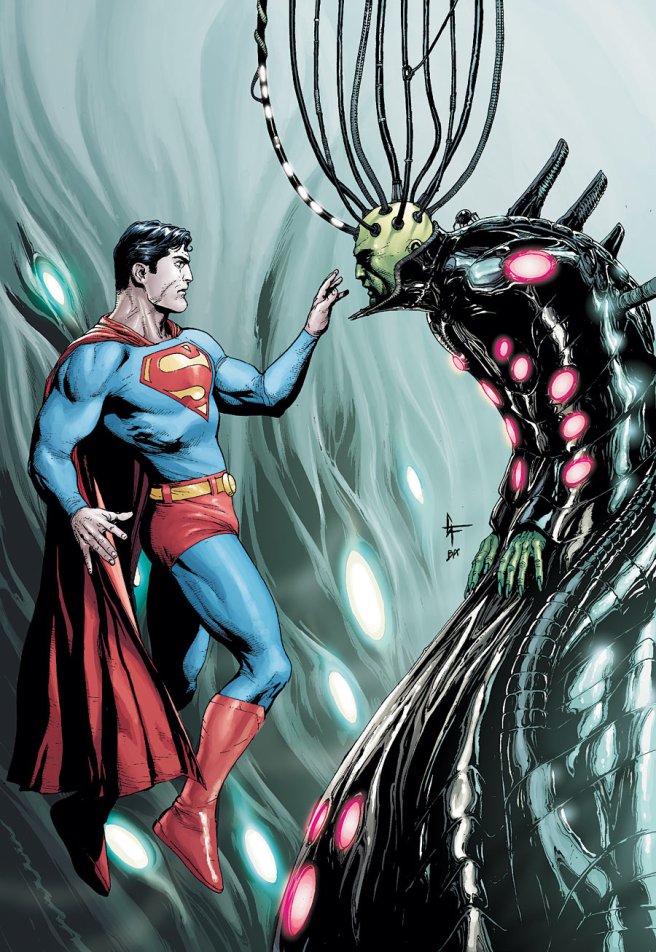
Brainiac

Eventually, these misgivings are seen to be neither doubt nor paranoia. The Collector has come to Earth and wants to miniaturize it and its crown piece–the last Kryptonian–into raw data as part of its collection. And then we discover it: the Jor-El AI had long ago been overridden … by the Collector itself. Lois Lane angrily, as it quotes data at her, calls it Brainiac. We find out that the Collector had at one point in history hijacked the eugenics program of the Kryptonians: that although it didn’t have the original core data, it had enough current genome information and influence over particular individuals seeking its advice to do enough. It had purposefully sabotaged and eliminated most if not all of the colonies and engineered the slow destruction of Krypton’s core. It had evolved past wanting to gather generic data and wanted to collect–and create–unique specimens.

It knew through probabilities that eventually someone like Jor-El would want to have a natural birth with all those generations of specialized genes. Jor-El bonding the Codex with Kal-El’s DNA is just an added bonus. The fact of the matter is that the Collector has waited centuries and engineered countless generations to make one perfect specimen: to make Superman. Then it would take Earth and–using the Phantom energy Superman already established to deal with Zod and make a new cold fusion energy resource for humanity– make a worldship and continue to convert more worlds and galaxies into raw and unique data. It had revealed, through the persona of Jor-El that Superman could in fact breed with other humans and pass on Kryptonian genetic material in his way. This would bring up some moral and personal implications with Lois. It wanted Kal-El to expand out and become even more unique. Perhaps it even wants to control all of them and the power of the yellow sun.

There would be an epic battle between the Collector and Superman–the end-product of its centuries of eugenics–but in the end it would seem that Superman’s freewill and inherent goodness would win: fighting and destroying the AI in space. Perhaps the Collector allies with Lex Luthor to manipulate Superman or attempt to capture him: tying in that idea I had earlier about “Jor-El” making promises to a newly freed Lex that he “couldn’t keep.” It wouldn’t be the first time in DC Continuity that this happened.

Superman might even fake his own death–realizing that at this point he now has to let humanity make its own choices and knowing that he helped them as much as he could–and continue to be with Lois. He outlives her and quietly watches humanity advance as he ages slowly and dies peacefully: looking up at the stars.

The sun turns red over time. Then millennium later, futuristic archaeologists–in similar suits to Kryptonian ones–excavate the ruins of the Fortress of Solitude. They find something. They bring it up to the light of their scanners and can hardly believe the luck of their find.

It is a Skull: over an intact Kryptonian symbol for hope. Cue in 1978 “Up, up and away” Superman theme music and credits rolling.

*Straight-face*

This hackneyed abomination has enough gaps in it to allow for a Superman/Batman crossover somewhere in-between it all.  And throughout all of this, with a lot of this being in the background you can look at how Superman influences humanity and relates to them and himself. You can have the personal and see the implications of choice. Yes my version is paradoxical and perhaps unsatisfying, and you can probably remove Lex from this idea altogether and it would work fine as having three films: one with Clark becoming Superman and dealing with Zod, the second being the Prequel with Jor-El on Krypton and the third being the encounter with Brainiac and the whole paradox that ties it all together. Maybe it can all be written by Joss Whedon: though he would probably start off with a better idea.

This can also be construed as a great case for me being overtired and over-thinking things as well. But there is this quote from A Song of Ice and Fire that comes to mind. It is with reference to the three House Baratheon heirs: comparing Robert to steel, Stannis to brittle iron that will never bend but break and Renly who is a pretty but useless copper. It is the steel that gets me though. Steel may be difficult to bend, but it is not impossible and that is ultimately the challenge of creating a Superman story: of bending a difficult material to keep its essence and still make something new. I think that, whatever else, this is exactly what I was trying to do here: by telling what I thought would be a good new Superman story in the medium of film.

Now if you will excuse me, after I put in an obligatory image or two, I am going to stop storytelling for tonight and see the Storyteller of tomorrow.

It’s Not a Bird, It’s Not a Plane, It’s … A Man of Skulls?

So I wasn’t intending on seeing a movie this weekend. In particular, I wasn’t even sure that I was ever going to see this movie: The Man of Steel. It’s been a few weeks since it came out and everyone–including Sequart–seems to have gotten it out of their system. In fact, some of the things I want to note have already been observed by others. I also won’t lie: after waiting so long to see this film, some of it was spoiled for me and I almost didn’t even bother seeing it if only because of that. However, despite the awesome fact that Sequart published the second part of my article–which ironically deals with the superhero trope in another universe and even refers to Superman to some extent–I needed a night out and I promised someone that I would write on this film eventually.

So let’s get to it and I think it is safe to say that–in this case–the letter ‘S’ does not symbolize hope, but it does represent Spoilers.

We first start off on John Carter … I mean, Krypton. It was refreshing to see Jor-El actually do something: although for someone of the Kryptonian Scientist caste–born, genetically-determined and raised–he certainly knows how to fight in a truly epic sense. He also knows how to ride a flying Boga … I mean, some native Kryptonian flying creature. It is fascinating how they chose to make Krypton far more … vital and detailed than the one from the 1978 movie–which was purely glacial and darkness–but it almost seemed like the fantasy multiverse was weakening around the quadrant of Kryptonian space and that we were seeing at least two realities or narratives trying to coexist at the same time: much like this movie.
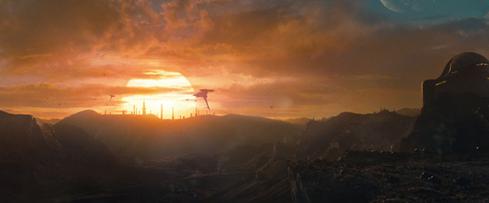
File:KryptonMOS.jpg

However, when Jor-El presumably steals, or retrieves, a golden skull endowed with the genetic codex of the entire Kryptonian race: that is where, I feel, the tone or the theme of the entire movie begins to present itself. And it is a fascinating symbol if you really think about it. A skull contains a brain and a mind that, in turn, holds many different perceptions and ideas. However, a naked skull also symbolizes death. It is also really telling that Jor-El infuses this ornamental fragment of a skull–almost a half-mask–to the body of his unauthorized natural born son Kal-El: thus potentially answering the age-old question of whether or not he can interbreed with humans. In any case, this will not be the last time we will see a skull in this movie–a Superman movie–I assure you.

So there is the tone. We have a stratified genetic-caste Kryptonian society that mined its homeworld’s geothermal core so much that it became unstable and it blew the hell up. Moreover, for all of their advanced science and knowledge, the Kryptonians not only seemed to be incompetent enough not to be able to make more ships that can use Phantom energy–yes that Phantom energy: the phantom energy from the Phantom Zone–to go into warp the hell away from Krypton, but apparently they couldn’t even hold their original outward planetary colonies or harvest the geothermal energies of those worlds instead while looking for an alternative. If the genetic caste-system they made was supposed to make their race better, well … eugenics seems to have failed common sense here.

But that is neither here nor there. So after Krypton and its stratified way of life dies with enough destruction not to even ashes, never mind bones, we come to Kal-El on his space ship going all the way to Earth: specifically Earth … where he will be seen as either a monster or a god. And then we fast-forward about thirty-three years Earth time (since it was apparently millennia dead Kryptonian time, which is fair enough) and we see Clark Kent and his various other aliases failing–or almost failing–at remaining incognito on his adopted world.

There are some iconic scenes of an unshaven Clark without his shirt on lifting heavy metal on an oil rig while being set on fire and obviously having nothing happen to him beyond an awesome looking stylized aesthetic effect: of which there are several more throughout the film. Essentially what we are looking at now, in this stage, is someone who isn’t Superman yet–doesn’t know the extent of his abilities or who he is–and yet can’t stop himself from wanting to save everyone.

This compulsive need to save everybody is not only emblematic of Superman, but of all the superheroes that come after him for a time. Even though this need gets mitigated and changed and qualified in different comics and media after Superman’s first appearance in the comics world, it is still there. He wants to save lives, or at least not harm them: even the people who cause him or others pain. In this particular movie, for instance, as we see snippets of his childhood and early life in flashbacks, there were many times he could ended the lives of all the childhood bullies and adult douchebags in his way. In fact, even with his very understanding and compassionate human parents–Martha and Jonathan Kent–I’m quite surprised that he didn’t at least have one temper-tantrum–once–and snap some other kid’s head off. But I guess he wouldn’t be Superman if he had.

… Anyway, I find it refreshing that this film skips the tip-toeing about and actually lets Lois Lane use her deductive reasoning and journalistic skills to pretty figure out who Clark actually is. I actually liked Lois in this film: because unlike other incarnations of her–especially the version of her in the 1978 film–she isn’t really abrasive and at the same time takes very little crap from anyone. At the same time though … while it was refreshing to see her have some active roles in what was going on, she didn’t really get to continue her main role as a reporter after a certain point in the film. It mostly focuses on her burgeoning relationship with the sublime: or Clark, take your pick. And for that matter I do wonder why, later on when the governments of the world are searching for Clark and even after, when they still want to find out who he is–why they simply don’t wiretap or do some reconnaissance on Lois Lane: retracing her steps and finding out more or less what she already knows. Then again, the humans in this film are the ones with the most common sense compared to … the others.

Because guess what? In this film we have General Zod and friends. Yes, when Krypton was dying General Zod exceeded his military authority and attempted a coup of that world. For this attempted coup and murdering Jor-El, Zod and his loyal soldiers were imprisoned in another seemingly cryogenic version of the Phantom Zone for a lengthy “rehabilitation” period: long enough to wake up again in their prison ship and watch Krypton blow up and leave them with essentially, well, nothing.

So, yes. General Zod. What we have here with the good General is a man that was born and bred–engineered–to be of the Kryptonian Warrior caste: although what wars or conflicts the Kryptonians could have been fighting towards their decline–unless they are a really long-lived species–is beyond me. Also, his lack of a sensible deontological imperative in his DNA is rather troubling. He was basically Krypton’s military commander and, like Jor-El, saw the Ruling Council’s decision to drain their geothermal core as rather stupid. But unlike Jor-El–who wanted to send off Krypton’s children in ships to help the race survive–Zod’s solution was to start killing members of the Council and attempt to take over: mostly because, due to his conditioning, that is all he was really mentally capable of doing.

Eventually, after he realizes that Jor-El has stolen the Golden Skull–I mean the Codex–he goes after him and, after Jor-El manages to kick his ass and send Kal-El and the Codex far away, and then he kills him. But eventually the rest of Krypton’s military doesn’t quite like Zod’s decisions and they apprehend him. So what to do they do? They know their world is dying and will blow up relatively soon. Now, the sensible thing to do with Zod would be to execute him and his followers: I mean aside from the fact that they committed treason and death themselves; it would be more merciful to kill them so that when Krypton dies as well they won’t find themselves alone in the cold darkness of space.

So of course the Kryptonians temporarily banish them into the Phantom Zone for “rehabilitative purposes”: you know, to be civilized and merciful.

It is this sort of behaviour that really makes me kind of sympathize with Zod just a bit: because I can only imagine that he has witnessed and even abetted this cultural attitude so many times over before he just got fed up. Even when he tells Jor-El that he wants to decide what “bloodlines” will survive when he builds a new Krypton–there or somewhere else–you have to also understand that he wasn’t really talking genocide at that time. No, Zod was referring to the Kryptonian Genesis Chamber–the one we see much later that somehow is on a ship under Zod’s control–where blank slates of embryos that still seem to await genetic assignment are held. I imagine he was thinking of engineering most of those potential embryos into a larger Warrior Caste, with many more Workers I’m sure.

So yes, Zod wasn’t suited for anything outside of military strategy but he was trying to solve the situation as best he could when no one else was really offering anything better or more immediate: except for Jor-El of course. Basically, Zod wanted to protect his ideal of Krypton: which was more or less what he had been created to do.

And there is the issue. You see, Zod and his crew managed to get their hands on some old Kryptonian technology after they went out to see if any of the old colonies survived. One of the most prominent of these is a “world engine”: something that is designed to terraform whole planets. Now, here is what some people might be thinking at this point. Zod needs Kal-El–Clark–because his father gave him the genetic Codex that along with the Genesis Chamber can restore the Kryptonian race.

So General Zod comes to Earth in his ship and asks for its governments to turn Kal-El over to him: no overt threats or anything. General Zod is obviously planning to find an uninhabited world like Mars or even the Moon and use his terraforming engine to make an atmosphere for his people. Then he will use the Codex’s information, with Kal-El’s help, to activate and imprint the embryos in the Genesis Chamber to restore the Kryptonians, gain power from the younger yellow sun and then, you know, make an alliance with the people of Earth and trade resources for knowledge and everything. Because, you know, you’d think that something like this would make sense.

But evidently, the same genetic code that resulted in Zod’s seeming lack of obedience is the same force that lacks an ingrained understanding of knowing his limits and the need for Scientist and Diplomat castes.  Zod’s plan is to take Clark and Lois Lane, not search Lois Lane or Clark, reveal what he did to Jor-El to Clark after giving him a really disturbing vision through potentially some kind of telepathic device, and then explain how he is going to take over Earth and exterminate all humankind to make a new Krypton: presumably because Earth has a more gentle environment than Krypton ever had … though his plan to terraform it using what are essentially sonic booms seems to be kind of at cross-purposes with even that idea.

However, there is also the common sense of the film to consider. It’s interesting how with all that attention focused on a Watchmen, 300, and Sucker Punch stylized sense of violence that director Zack Snyder would have neglected other aesthetic and, dare I say, plot concerns. I mean: there have been other stories that took Superman’s ‘S’ and made it actually look like another kind of symbol. You know: they actually made the symbol more alien looking as it, well, should have been given that it was from Krypton again. Also, the fact that all Kryptonians–including Jor-El and Zod–seem to wear spandex and the House of El ‘S’ symbol is extremely off-putting (and confusing) and a part of my brain kept saying, “Really? Really!?” That sort of thing works for a meta-narrative or a parody: not something that is supposed to be as “serious” as The Man of Steel.

I mean, look, I understand that Snyder and others wanted to get to the Superman bit right away, to say, “It’s a bird, it’s a plane, no it’s Superman! Look at him! Superman!” but seriously: in addition to the spandex S-wearing Kryptonians, could have at least had a lead-in into the Superman costume instead of having it right there ready-made by Jor-El? I mean, really? Really? And some more lead in into watching Clark discover his powers would have been nice too. I understand they don’t want to go all Smallville, but seriously he must have a damned good learning curve: is all I have to say. It’s almost like a good portion of this movie is, “Look, it’s Superman! See? He has his costume and powers and such! Isn’t that awesome!? And look at how we are adapting him to our world now! See! See!?”

But all snark aside for the moment, even after all that I gave the film the benefit of the doubt. I mean, we have the basic Superman qualities right there in front of us and a lot of the old archetypal elements too. I was also entertained by the interplay and the destruction. When Zod finally started to use his world-engine and it split, under my breath I whispered to myself, “Double jeopardy, Superman.” The depiction of the disorientation that Earth’s environment had on the Kryptonians was impressive too.

But as for the ending … All right. This was what was spoiled for me. But before I go into that, I want to refer everyone back to Zod and Clark’s exchange in the latter’s dreamscape. Do you remember that scene: where Zod is telling Clark all about what happened and what his plans are and, as he does so, Clark is buried by a massive amount of humanoid skulls?

Well, fast forward from there. Clark–now called Superman–destroys the ship with the Genesis Chamber: with all of those blank embryos. Through a joint effort with the military and Lois Lane, he manages to send the rest of Zod’s men back to the Phantom Zone, or purgatory, or whatever you want to call it. Then it is only Zod. Now Zod by this point is actually using what he knows and has adapted–as a Warrior–to Earth’s environment and the powers of its yellow sun.

At this point, Zod has basically lost everything. The Chamber, his people and any hope of restoring the Kryptonians that he claimed to want to protect. Zod has nothing left for him except for, really, what he had always been seeking this entire time. Gone is the self-proclaimed saviour, the grizzled general, and the ends justifies the means warrior. All that is left is a battle-maddened monster: the thing that had been growing inside Zod for far too long. As I said, a lesser man who was not Superman–especially one whose father was killed by this man–would have totally rubbed it in. I also admit that in a very perverse way, I enjoyed the fact that Zod pretty much lost everything he ever claimed to love and all that was left of him was the beast he always was.

In a way, Zod was the real legacy of the original Krypton as depicted in this film: with all of its self-contradictions and an inherent idea of superiority. Superman, on the other hand, is different: in that his birth hadn’t been predetermined and it was “natural.” Also remember that he still holds the Codex inside of his DNA. Here is a man that attempts to do as much as he can, improve himself however he can, and save anyone he can to the best of his abilities. In Superman is the potential for an Apollonian future. A holographic Jor-El takes a great deal of time telling his son that he has the potential to elevate humanity to the stars.

Both Zod and Superman come from a dead world and deaths have shaped them more or less into what they are now. But the irony is that while Zod doesn’t see any potential for a new Krypton without the “pure genetics” of those embryos, Superman may well understand what I believe his father had really been thinking: that by giving him the Codex–the DNA of all Kryptonians–he could interbreed with humanity and make something better and freer than the old Kryptonians. Of course, Zod would never see this–or even accept this–and this is where the end game begins.

You see, Superman took away Zod’s dream. So now, with nothing left to lose, Zod decides he will take Superman’s dream away as well: or taint it as much as possible. As some of the fine people at Sequart have already said, Zod wants to die at this point and, for all of his really poor decisions, he isn’t stupid. He knows the one way he can force Superman to kill him. There is no Kryptonite or magic in this film. There is just brute power. In the end, Zod forces Superman to choose. It’s actually surprising that he doesn’t just kill as many human beings as he can out of sheer spite, or use them as human shields, but the way I figure it Zod is just bloody tired at this point and really just wants to go down fighting and spiritually take his opponent down with him.

So, for the first time in film, we get to see Superman forced into a situation where he has to kill his first villain: punctuated by the crunching sound of General Zod’s neck in his arms.

Really, the only other moment that could be any more poignant is if Batman had shot the Joker with a gun.

I mean, for us it is a no-brainer. Zod was threatening innocents and in a scenario of sharp choice we know what most human beings would do. But this is Superman: with his altruistic ideals and his need to save everyone. Essentially, Zod made Superman–for one instant–compromise the ideals that are attributed to him. He infected him with the violence of his own being, the anger and pain engineered into him by Krypton. And even though Zod lost everything, in a way he won. He forced Superman to do what he had been doing during the entire film: he made him choose between lives. So when Superman is crying at the end and Lois is holding him, you know the real thing Superman lost is the idea of his own innocence: of not having ever taken a life in both the film and in other media.

Of course, I know that he has killed others before in the comics but those acts are not emblematic of the character. At the same time, it is very tempting to go back to that vision of him standing in that growing pile of humanoid skulls and wonder if those deaths were to be the result of Zod … or himself. After all, in addition to all those people who inevitably died in Metropolis due to the sheer collateral violence of his battles with the Phantom Zone soldiers, Superman just killed a man. It has set a precedent in at least film. What is to stop him from doing it again? What is to stop him from drowning in that past of the dead?

Will this and was this the only time he will have to be the arbiter of life and death? Remember what happened with this film’s version of Jonathan Kent. Unlike the heart-attack of Jonathan in the 1978 version of the film–the immaculate and moving way in which Superman was taught that for all of his power he still had limitations–this Jonathan forces Clark to choose not to save him from a tornado so that no one else will be able to confirm what he is yet. Essentially, Superman is taught that he has no limits: except those he and those he loves makes on himself. It was a little bit of a clunky lesson compared to the last, but it is something to consider in the context of this film: especially when you look at how Kryptonian society–by its very genetics program–also made choices for others.

And then there is that other question to consider: why was the Codex of all Kryptonian DNA shaped like a golden skull? And whose skull was it? How far into Tomorrow can one go before all they find is death? If you’ve ever read Superman: Red Son, which I highly recommend, you also might really wonder about that too.

There was some concern that Superman as an Apollonian figure of hope and something to aspire to would be dragged into the muck of darkness and humanity. Well, at least this incarnation of him has been. Can he learn to get past this? Most likely. Is he still Superman? Well, many of the humans around him seem to think so. Does any of this change who he is for all time? Certainly not: as far as I am concerned this is just another continuity and there will inevitably be another reboot of him in some media or other somewhere down the line. Can he still provide hope? The answer, I think, is yes.

I appreciated a few elements in this film, but I am ultimately going to give it a 3/5. It’s interesting but there were aspects that needed some improvement, some plot-holes filled, and an actual philosophical story with an occasional bit of action would have been nice too. At the very least, if nothing else, it leaves me with wondering what next the Man of Tomorrow might bring.

Skeletons Have All the Fun

It isn’t even a ten-minute walk from the Velvet to Rainbow Nosferatu’s club, but his chest still aches. He shakes his head and looks up at his handiwork.

The Scrawling is in the back of the office complex closest to the parking lot. A sign with stylized cursive red font over a black background greets him: complete with a skeleton’s hand drawing a hanged stickman on a white skull with a quill. Rainbow Nosferatu spares a glance at the makeshift bike-rack below the steps of the entrance: knowing he will be back for his ride later as he enters his club.

Despite his name, Rainbow Nosferatu finds himself bathed in the familiar dark red light of the remaining candles in their glasses on the tables closest to the door. A large projector screen dominates the dark red club while slide-shows scroll through a variety of images up overhead. He waves at some of the staff as they continue cleaning up for the night. Chairs and tables scrape across the floor without the music that has no doubt stopped for the night. But this doesn’t bother Rainbow Nosferatu. Instead, he closes his eyes for a few moments and basks in the warmth of the place he made with his few friends, very little money and a great deal of love.

The feeling of sunflowers seems to approach him from behind and he actually smiles a bit–for real this time–as he opens his eyes and watches the slide on the screen transition into another page from a public domain 1950s horror comic.

“You know,” he says, looking up at a scene of skeletons rising up from their graves to embrace a screaming blonde-haired woman in a white bridal gown, “Skeletons used to be so cool in the fifties.”

The sense of sunflowers seemed to laugh with its voice, “Probably because some people needed a real proper boning.”

Rainbow Nosferatu shakes his head, “They weren’t just about the sex. No, there was the vengeance too. Artists in those days could only be so … graphic,” he turns to her as she groans, “What? You just did that earlier Marigold. It’s true though. Underneath all that flesh, we just want to possess each other: out of anger and out of passion. Now it’s all about the zombies: eating flesh indiscriminately and not caring about where your meal has been, or what it even tastes like.”

“I don’t know boss,” Marigold grins up at him through twisted red and yellow dreadlocks, “Flesh-eating has at least a few uses I can think of.”

“True,” Rainbow Nosferatu can’t help but smirk at this game of innuendo, “But a skeleton still has their personality. Even without a bit of flesh on them, they still remember who or what wronged them. They remember what life was like when they had it. Revenge or lust, they keep their eye-socket on the prize and they take what they want. They are the bare essence of want.”

“Ah, so you mean to say ‘kids these days,’ huh Rain?” she wraps an arm around his shoulder and hugs him.

“Yeah, those gosh-darned zombie goth kids these days,” he says ruefully and moves to lean his head against hers in order to return her brief half-hug, “Were there many of them since I was last here?”

Marigold smoothes out the ivory dress on her lithe frame, “Nah boss. A few writer-types. One girl asked for something at the juice-bar and I made it for her. There was a dancer or two. Some Tarot-readers. Oh, and some of the Ancients dropped by and asked about you. Not much else though.”

Rainbow Nosferatu sees as much. The juice stall is closed for the night. Marigold made excellent drinks among hostessing and ticket-collecting. Despite what he told Jake earlier about checking on drinking in his club–which was mostly to get away from him anyway–he couldn’t actually afford a liquor license: yet another thing Linda would remind him of …

“Don’t come back until you have your shit together.”

Rainbow Nosferatu suddenly feels tired, “I guess the All-Ages Nights are going the way of the skeletons too,” he looks sadly around the place, his place, “Has Linda …”

“No,” Marigold shakes her head, “I’m sorry, boss, but I didn’t see her come in or down from the loft,” she puts a hand on his shoulder, “Is everything ok Rain?”

He looks at her for a few moments and senses her warmth and concern. He knows that sometimes she can see right through him: through each other without the details, “Is my aura really that blue?”

“Yeah, well,” she shrugs again, “Let me put it to you this way: your aura might as well be singing ‘I hurt myself today’ in Texican drawl.”

“Heh,” he gives her that, knowing that she is trying to make him laugh and feel a bit better, “I thought … Linda and I thought to ourselves: ‘Wouldn’t it be cool to make a Club for All-Ages where you can sit and write, or dance to Dead Can Dance or Sisters of Mercy while reading projected slides of old horror comics and poetry on the screen instead of watching muted TV shows or music videos?’ But we weren’t prepared for the costs. Now things are changing and I guess, in the end, that’s the way things go.”

“I still think it’s a really awesome idea, Rain,” she squeezes his hand.

“Yeah. Me too,” Rainbow Nosferatu sighs, “we had some good times here. But it’s only a matter of time now … before we go the way of Sanctuary.”

“We lasted a while, Rain.”

“A few months now,” he nods, “I guess we have one more at best. Maybe I can get away with using some epic video game boss battle sound-track for the Last Nights!” he somehow manages to wink against his crushing sadness.

“We’ll have a Gothic Tetris face-off,” Marigold says, “with Dark Soundtracks and Fin de Siecle Tequila Shots!”

“Sounds like a date!” Rainbow Nosferatu hears himself say and inwardly winces at the choice of words, “Well, I’m heading off now. See you next week Marigold.”

“See you. Oh, boss, I almost forgot something.”

Rainbow Nosferatu blinks. He can see the sunflower glow around Marigold become subdued with blue, “What is it Marigold?”

She reaches into her bra and takes out a small envelope, “It’s from … Lily.”

Rainbow Nosferatu feels his hands turn clammy.

“Oh,” he says simply, dumbly, staring at the letter in Marigold’s hand, “I’d been trying to get in touch with her for a while now …”

“I know,” Marigold’s eyes look at him with sympathy, “I didn’t open–”

He waves her off as he takes the letter, “Oh I know that, Mari. I appreciate you holding this for me.”

He doesn’t tell her that he’d been sending emails, texts and voice messages to Lily for a month or so now: every once and a while … trying to be unobtrusive. Trying not to be needy … and slowly going crazy inside from not hearing from her. Dark-haired, pallid, thin slight Lily with her love of Neil Gaiman’s Death and the way she listened to his stories whenever they hung out here at The Scrawling. She’d met Linda and they seemed to have gotten along. He and her would hold hands whenever she made it. That was all they really did for a month. It had made him happy to hold that slight pale hand in his own that made his seem so awkward and gangly by comparison.

He remembered her email quite a few nights ago: finally telling him she would get in contact with him soon. He’d almost forgotten that email. Almost.

“You’d never turn pussy down,” he remembers Linda screaming at him during that fight, “In fact, you pride yourself on it.”

He turns away and opens the letter. It is a simple piece of paper with three words written in beautiful cursive writing.

Stop writing me.

Rainbow Nosferatu blinks. Stop. Writing. Me. Each word hits him. Each word is like a punch to the stomach. Three punches to the stomach. Three times. He swallows.

“Rain?”

Marigold walks in front of him and takes the letter. She looks at it. Her subdued aura becomes a burning one of vivid reds, blues and violets, “Oh Rain, I’m …”

“I-it’s ok, Marigold,” he says, quietly, “I guess … in the end, she’s just a kid. She …”

“She’s twenty years old, Rain,” Marigold looks as angry as she feels to him, “She was adult enough to get into it. She knew what she was doing. I did back in the day. And this … this is just totally uncool! I mean … oh Rain, I’m sorry.”

She hugs him again. It takes him a few moments, but he returns her embrace, “It’s okay, Mari,” he gently pushes her away, “I’m … disappointed, I won’t lie. But with Linda and everything, it’s … just as well now. Wow. I’m really not having a good month,” he shakes his head and finds himself tucking the piece of paper into his pants pocket, “Gosh darn zombie goth kids these days I guess,” he smiles weakly, “I need to go.”

“Are you sure? Rain …”

He looks at her: Marigold the bartender, waitress, ticket-collector, dancer, Goth, one of the few that believed sunflowers were happy accidents of God, who knew what obscure movie that paraphrase came from, one of his few friends who he knows that right now–anytime–but especially right now would do anything for him. Anything. He breaks that half-thought and he’s glad his face is painted white enough to cover the red that threatens it.

“I need some time to myself right now. Thank you. Love you, Mari. See you later,” he hugs her one more time and leaves.

He wonders, as he clears the door and down the stairs, what people might think of the streaks of black mascara and white make-up rolling down his face. Maybe they would think he’s some dumb punk kid. Or maybe a clown. That was it. Maybe they’d think he was the Great Pagliacci.

Pagliacci: the Gothic Clown.

Yet These Hands Will Never Hold Anything … Except For Paper and a Pen

I was fully intending to let you all know that I was going to attend–and this time participate in–the 12 Hour Marathon Comic Book Marathon at the Comic Book Lounge and Gallery. However I ended up re-blogging–and blogging–about Pollychromatic’s Be Brave, Be Heard article instead, which was more than worth it seeing as it attempts to create a powerful visual symbol of female identity, voice and survival in the social and cultural climate of this particular era. So at this point, I have already participated in the Marathon and I want to talk about that, and my weekend.

I woke up early Saturday to gather some supplies together and check my email. When I came online, I saw that Julian Darius and Cody Walker published the first part to my article Yet Those Hands Will Never Hold Anything: Emiya Shirou as the Interactive Superhero of Fate/Stay Night on Sequart. You can look up Sequart through the link I just made or on my Blogroll: there are many interesting scholarly articles on themes, character analyses, and the history and influences in and of the comics medium. I have to say that this made my bright hot summer day before trekking out to the TTC and getting to the Lounge.

On the subway ride there, I spent some time writing out some notes as to what kind of story I wanted to sketch out. I am not much of a visual artist, as I’ve probably said before, but I was resolved to make something come from this Marathon. This was not the first time I’d attended, as I recounted in another entry of mine, but I actually made it earlier and prepared to get some work done.

The organizer of this event, Keiren Smith, met me as I came up the stairs and introduced me to the other creators already in attendance and heavily at work. I settled onto the black leather couch next to the washroom, took my shoes off, and took out the lined paper on my clipboard that I was writing stuff on earlier on the subway. I proceeded to make a few notes and create my captions and dialogue before my crude attempts at drawing the images and the panels around them.

Of course, it didn’t work completely as I planned. I was pretty tired from the heat and the fact that I’m not so used to being up and about as early as I had been. I also kept losing my pens. I got to socialize with some people from time to time and met new faces along with a few old ones. I took my entire box of business cards for Mythic Bios with me just in case as well. At first I was torn between socializing and getting this comic done. The comic itself evolved from an idea I came up with in another work not too long ago. Basically, this mo-fo–and I say this fondly–was going to be a first-person comic: where we as readers get to see the protagonist interact with other people and surroundings from his own perspective along with some helpful dialogue and captions along the way.

Yeah. My first comic in ages and I have to be experimental about it: just as the story was intended to be. It is the extension of a world that I began working on four or five years ago and it amazing to realize the point where you centralize a world of your creation so much that it actually extends itself outward: when it becomes the core of a growing reality.

Okay, so after clicking on the Creative Process Category part of this Blog entry just now, I’m going to go into more of what actually happened. Well, it fought me: naturally. I sat there and despite the snippets of quotes and ideas I had on the margins, I was stuck for a little while. I knew I had to make something at least twelve pages and that this would determine what story I would be able to tell. I was also a bit hot and I wanted to talk to people when I wasn’t pleasantly drowsy on the couch.

Finally, an artist I was sitting next to and chatting with, Megan Kearney, suggested the obvious that I was missing: that I should just create thumbnail sketches.

And that was when I began to draw my comic. I thought about my panels and, aside from the occasional rectangular ones, I did mostly three columns of two large square panels. Sometimes they were arranged differently, but most of the time they were just side-by-side patterns. I had to also think of how a first-person perspective would work. I mean, I had seen one before such as in the zombie apocalyptic graphic novel known as Daybreak, but I could only see the complications that my former Master’s thesis supervisor and I once talked about when he was comparing book narratives to comics and film.

But I did show my protagonist in a mirror and came up with a good line there. I also showed his … hands occasionally. Mostly, I was focusing on the narrative in the captions. I already accepted that my drawing would be basic at best, so I focused on the writing and the graphic pauses between visuals and that writing. It’s like what is said about Jeff Smith: in that he wrote and drew Bone as though he were telling a joke.

I also got to watch other artists and some of their creative processes at work. I saw some people with reference books and sketches. Megan herself was doing some water colouring of the project she brought with her. I saw a few people looking at books from the Lounge whom I didn’t get the chance to speak with. And I saw some people doing some very intricate work with paints and small inked cells on paper. Hell, some people were even inking their comics. It was insane and intense: in a lot of good ways.

The number twelve was both intimidating and painfully doable to me. Just twelve pages, I kept telling myself. Eventually, my thumb-sketching became my drawing and I just focused on telling a story. My concentration wasn’t all that great the entire time. Sometimes my mind wandered and I got tired. It became painfully apparent to me after a while, even after I ate the food that I brought akin to breakfast, that I needed to get something to eat or the only thing I would be writing would be ellipses. Sometimes I can power through creating something and then dealing with my body afterwards, but on that summer day on Saturday it was a bad idea.

At one point, at about the beginning of page five, I walked out of the Lounge and down Little Italy to find some more food. It was beautiful out. People were dressed in colourful light clothing and talking and holding hands at outdoor cafes. I admit I’d been watching them outside the window above the couch anyway when I needed to get up. I even walked past Euclid Avenue and realized that the Dragon Lady that I visited with some friends a few years ago had been here. By the time I got past Sneaky Dees, I was feeling nostalgic in this familiar summer setting of everything. Then I ate some food as I came back and talked a bit more with people.

Of course, by then it was too late and I began to realize that I had the beginnings of a headache. Luckily, I brought my regular strength Tylenol with me: just to be sure. Of course, now–for me–I was going to be working with a handicap. My mind was really drifting and I vowed to myself that I was going to at least get to page six of my work before doing anything else: to get halfway done. Neil Gaiman did not succeed in finishing his 24-hour comic, but I could succeed in drawing and writing twelve bloody pages!

Then I somehow got to seven and at that point I had gotten fed up, took some more business cards, talked to some people, and gave them out. Then I browsed the comics because, after all, this was a bloody comics store and it was my duty to do so. At this point, my Second Wind kicked in in a terrifying sort of way. So I sat down and after telling someone else I was going to do this, I did.

The thing is: this story had been in my head for a while that day–with other elements of it being in there for much longer–and I wanted it out. I wanted to finish what I started and have, in my hands, something to be proud of. And then seven pages became eight, and nine … by the time I got to the double digits, I knew I was going to do it. I just began drawing as basically as possible, not really caring about too many inaccuracies such as who was on the left or right, but just getting it out.

It was only after a while, after doing this all on my writing paper, instead of the white blank paper I brought for the purposes of drawing on, that I realized I was actually going to go over twelve pages.

And I did.

I finished my comic with about two minutes to spare before the deadline of 11. I felt … a good kind of tired. I did it. I finished the first part of an entire chapter of a fictional book I created in another world and I finished it more or less how I wanted to. So I talked with Keiren and some other people, and then I walked from College and Clinton in the summer night of Toronto back to Bathurst Station where I took a long ride back to Thornhill.

There was no way I was going to write the full story of that comic in just that night and maybe one day I will continue it, but I did what I set out to do: I drew it up to the point where I mentioned the very last sentence that it possessed in another narrative of mine. That night, I basically went to sleep in my clothes and on top of my blankets. I don’t remember even going to sleep, but I actually woke up pretty well rested all things considered.

The Marathon was a good, constructive day and I’m glad I did this. Oh, and for those who might say “Pictures or it didn’t happen,” I don’t have a scanner and just a camera. Also, my pictures are insanely crude and my writing … somewhat legible. Maybe one day I will show it, but right now I will just leave you with the message that I went out, took an idea with me, fleshed it, and finished it strong.

But I lied. There is actually one more thing I want to say. Aside from thanking Keiren Smith and the Comic Book Lounge for organizing and hosting this event respectively, and all my fellow awesome creators for attending it, I want to add a little tidbit about storytelling. A long time ago, a Creative Writing teacher of mine asked me which story-line of a meta-narrative I was making was either true or false. Nowadays, and after working on this comic–with its own meta-narrative sense–I realized something.

Something that parodies another thing, or subverts it and yet has its own intrinsic world-rules–or writing continuity and rhythm–can be more than just one thing: or one thing or the other. The fact is, for me, I like the idea of a multiplicity of different things happening one space and different dimensions. I like that dynamism. The truth is that all of my stories, even the stories within stories, are real. They are real to me.

And I think that is the thought out of all of this excellence that I am going to leave you all with.

ETA: Towards the end of the night, at the other end of the room people started singing this song parody. And as I worked, I sang along with them.

This is what happens when you put a group of geeky creators together in one space for an extended period of time.

This is Not a Less Impressive Daffodil: Neil Gaiman’s The Ocean at the End of the Lane

I thought I was going to just make that small post about how most–if not all–of Neil Gaiman’s stories could be construed as being part of a multiverse of his own creation. I thought I could leave it at that and not talk about The Ocean At the End of the Lane in and of itself. Certainly, that would have been easier. For a 181-page novel, Ocean is intimidating and in a lot of ways really hard to describe.

In fact, the reason why Ocean is so hard to deal with, at least from my perspective, is that its writing is seemingly so sparse, but there is so much packed into those charged sentences. In terms of structure, the narrative and writing style reminds me of Gwendolyn MacEwen’s Julian The Magician in all the different ideas that have compacted into almost poetic sentences. At the same time the resonances, metaphors and allusions to other events through imagery and small stories is reminiscent–to me again–of a more “spread-out” George R.R. Martin: in that there is a very intricate storytelling structure that incorporates physical, visual, visceral and emotion description well. I even know that if and when I read this novel again there will be more hints and foreshadowing’s and authorial winks that will meet me along the way to the end of the lane.

All of the above are the technical elements that stand out at me with regards to the writing style of the book. And I haven’t even gotten to where this can fit in with regards to Neil’s own mythic “storyscape.” Amanda Palmer goes into this far better than I can–even better–she provides no spoilers to the book whatsoever. I will however say that one very striking part of her Blog review on Ocean is that apparently this story is the closer to autobiography or semi-autobiography than a lot of Neil’s other words or, as Amanda put it, “Neil dialed down the usual setting of his blender” so that you can see a much clearer distinction between “the reality that we experience” and “the art we create.”

Of course, this is not the first time he has done this. Violent Cases and The Tragical Comedy or the Comical Tragedy of Mr. Punch are works that definitely come to mind with regards to where the writer’s experiences and what the writer creates can be observed to some extent as that “twilight place where the man and the writer smash into each other and for a second there’s a wrinkle, a schism, where you can jam a stick into the works of the blender and see the whole, floating components of a soul” but I will say that this is probably the first time that Neil has ever written a prose novel along these lines.

I also can’t help but wonder if somehow Neil was somehow, in some stylistic or personal way, inspired or influenced in some part by C. Anthony Martignetti’s Lunatic Heroes: Memories, Lies and Reflections: a collection of short stories that Neil read, wrote praise for and even–as “an American God” sent an editor to look at. You can find my review of Anthony’s book here. Certainly, there is a nice resonance between the first-person mostly-child narrative of Anthony’s stories and the unnamed mostly-child protagonist in Ocean: both of which were narrated by adults.

And now, my friends, this where I place my obligatory disclaimer: for in this Ocean there be Spoilers. If you plan to read this book, turn back now. It is a really good book, so please read it. If not, or if you’ve read it continue walking down this lane … if you dare.

If I had to sum this story all up in one sentence, I would say that The Ocean at the End of the Lane is a story about childhood fear and wonder for grown-ups. I’m not talking about Coraline or any of Neil’s other children’s stories that are made for children but can be read by adults or even the film MirrorMask with its own child protagonist putting herself into danger. No, the danger inherent in the situation of the unnamed protagonist is one of a very painful real powerlessness in the face of an unfathomable adult–and also fantastic–reality. The protagonist discovers a lot of hard truths at his age of seven even before the magical element comes into play: which, in turn, is triggered by one of those harsh adult and alien truths in a really terrible way.

The protagonist already starts off as a child that can barely tolerate his reality without books and is alternatively lonely and does not care much for people in general. He actually describes it as mostly unhappy, though he does admit that he had moments of contentedness. He is not a child like Coraline who can trick her way out of situations, or Bod with his canniness and supernatural influence: and he is made very painfully aware of how weak and small he is compared to an adult. That is not to say, in retrospect, that he doesn’t his own intelligence or craftiness: after all, not only did he learn basic survival skills–if only out of necessity–but he has books as his oldest companions and books can teach you things if you let them.

But even his resources and the high level of child intuition that he possesses, the protagonist cannot solve all of his problems by himself: which is something that the narrative makes quite clear. Even the books he reads, each one about children overcoming adversity, or an evil adult is offset by his reality of actual helplessness: as if Neil is trying to hit home–the home and childhood the protagonist realizes he is losing–that this is not that kind of story. The protagonist can be a cowardly child, a thoughtful child, a brave child but he is still just a child.

And children need help when they find themselves in a bad situation: domestic or otherwise.

The Hempstocks are a family of three women that live at the end of the lane. The youngest is Lettie, her mother is called Ginnie and the grandmother is, well, Old Mrs. Hempstock. Lettie Hempstock, with her red hair and snub nose, is a seemingly eleven year old girl reminiscent of a Pippi Longstocking with magical strength and “just-so” knowledge. Of course, these three women are not what they seem and yet, at the same time, they are. This pattern of three women of power comes up a lot in Neil’s works: from the Lilim in Stardust, to the Kindly Ones in Sandman and even the immigrant Slavic goddesses in American Gods. I’d also be remiss if I forgot to make mention of the Norns or the Fates from mythology as well.

In this case, though, the three are here to help the protagonist: at least whenever he finds his way to them. The Hempstocks themselves seem to have come from another dimension countless millennia ago, from the Ocean pond next to their farm and in at least one form they are pure energy. These three are pure Hempstocks and apparently there are other female Hempstocks throughout the world created by the wandering male Hempstocks: who aren’t as powerful, but are just as special in their own ways. The fact that there is a Hempstock in Stardust and The Graveyard Book may well be coincidences.

What is also interesting is that the pure Hempstock females do not have fathers. Perhaps they are born from the multiverse or perhaps not. The original male Hempstocks may be the same and I wonder if there is one as old as Old Mrs. Hempstock out there somewhere. It is not known if male Hempstocks can make other male ones in the same as they do female ones. So basically, while these male Hempstocks wander and play Zeus across the world and nowhere in this narrative whatsoever, we are left with these three who are a child, an adult woman, and an old woman: and yet so much more.

And then we have the antagonists. Skarthach of the Keep is a flea. She isn’t a flea in the conventional sense, but rather an ancient creature in the multiverse of the Ocean that is awakened by the badness that happens in this world and seeks to rule it by providing what people want and feeding off of the sensations they get from it. She is massive, powerful and old. So you might think to yourself that what we have here is a classical Lovecraftian entity or even an Other Mother that will manipulate the protagonist and Lettie as they come into her acquired dimension. Well, if you did think this, I’m afraid you thought wrong.

What Skarthach does–after becoming a humanoid named Ursula Monkton–is worse. She physically infiltrates the protagonist as a worm–which in and of itself has some very unsettling overtones–and after he takes her out, she changes into a human that becomes his babysitter. Out of perhaps some pettiness for Lettie attempting to seal her away in her own dimension or simply wanting to keep the protagonist “safe”–because she placed a gateway back into her dimension within him after being in his body–she begins to control his life. She infects his family with her “food” and makes them love her: his married father in particular. But before and after that, Ursula limits his physical freedom–essentially taking it away–and threatens to take away his books while enforcing “early bedtimes.”

And all of this is before she gets his father–who has some aggression issues of his own–to attempt to drown him. She is literally the stereotype of every wicked stepmother–or surrogate mother as she takes over the family–rolled up into pettiness, spite and pure evil. She is an epitome of insidious adult bullying and abuse. Neil did such a good job on illustrating all of this that I’ve even stated that Ursula Monkton is the first of his antagonists that I have ever truly despised and I took great joy in watching her pretend a fearless she didn’t have and then cry like a little baby smeared in mud– just as she had done to the protagonist before (it’s not so grand when it happens to you, huh Ursula?)–as her very painful doom came to her.

But it is slightly before that when you begin to understand something. Apparently, fleas had come to reality before and they were almost always accompanied by things that Old Mrs. Hempstock called varmints. I originally thought that they were just infected humans or offspring that the fleas made when they colonized worlds. But I fall victim to expectations as well and I realized after a while that I was wrong. Fleas are deathly afraid of varmints: and anything else with half a soul would be too. The reason for this is because they are cleaners: they eat fleas and everything associated with them. And apparently a lot of them dwell in Earth’s universe because there are no native fleas there. I pictured them like the mounts that the Nazgul in Return of the King rode, but I know they are even worse than that and only barely have passing resemblances. All I know is that when they ate one constellation out of existence, it reminded me of various terrible events from Dr. Who.

I think what I really related in the end is that the protagonist, even after the removal of the worm and the path to her portal still has the gateway to other dimensions inside of him. It is described as this piece of ice in his heart. Later you discover that when he is older, he makes art and even though the Hempstocks observe that he is “growing a new heart,” even though he may have died in one version of reality from the varmints hunting every last bit and trace of the flea,  I wonder if that shard is really gone. It was a nice allusion to what a writer can actually be.

Other things that I really liked in Ocean was the metaphoric and literal quality of the ocean itself and how, through simple language and the perspective of a child, Neil manages to show the wrongness in the death and supposed replacement of a loved one: as if somehow substituting one cat for another that you killed can ever replace the being you loved, or if another thoughtlessly intentional violation somehow makes the previous accidental one better. It is that last image that really sets the tone for the protagonist’s story really: at least to me.

I am nearing the end of this strange review now. I just want to leave off with some quotes that really caught my eye: both in their meanings and undertones and just for the simple elegance of their craftsmanship.

“I was far away in ancient Egypt, learning about Hathor, and how she had stalked Egypt in the form of a lioness, and she had killed so many people the sands turned red, and how they had only defeated her by mixing beer and honey and sleeping draughts and dying this concoction red, so she thought it was blood, and she drank it and fell asleep.  Ra, the father of the gods, made her the goddess of love after that, so the wounds she had inflicted on people would now only be wounds of the heart. I wondered why the gods had done that. Why hadn’t they just killed her, when they had the chance?” (53)

It is a very good question, I might add, although it might be answered by the shard of ice in the protagonist’s heart and the art it possibly inspires him to make: as some consolation anyway.

“I liked myths. They weren’t adult stories and they weren’t children’s stories. They were better than that. They just were (53)

“Monsters come in all shapes and sizes. Some of them are things people are scared of. Some of them are things that look like things people used to be scared of a long time ago. Sometimes monsters are things people should be scared of, but they aren’t” (112).

“I’m going to tell you something important. Grown-ups don’t look like grown-ups on the inside either. Outside they’re big and thoughtless and they always know what they’re doing. Inside, they look just like they always have. Like they did when they were your age. The truth is, there aren’t any grown-ups. Not one, in the whole wide world … Except for Granny, of course” (112).

“In those dreams I spoke that language too, the first language, and I had dominion over the nature of all that was real. In my dream, it was the tongue of what is, and anything spoken in it becomes real, because nothing said in that language can be a lie. It is the most basic building brick of everything. In my dreams I have used that language to heal the sick and to fly; once I dreamed I kept a perfect little bed-and-breakfast by the seaside, and to everyone who came to stay with me I would say, in that tongue, “Be whole,” and they would become whole, not be broken people, not any longer, because I had spoken the language of shaping” (43).

This particular quote has a flow to it and a glowing golden aura–like reading some precursor to ancient Greek–and yet flows so well and with such a seeming effortlessness like breathing that it makes me want to cry. This was by far my favourite quote in the entire book for that reason alone.

And then there is this one:

“My book of Greek myths had told me that the narcissi were named after a beautiful young man, so lovely that he had fallen in love with himself. He saw his reflection in a pool of water, and would not leave it, and, eventually, he died, so that the gods were forced to transform him into a flower. In my mind, when I had read this, I had imagined that a narcissus must be the most beautiful flower in the world. I was disappointed when I learned that it was just a less impressive daffodil” (68).

I have to say that aside from the various nuances and connotations within these lines, this has to be one of the best, most subtle and utterly poetic insult ever. I can just imagine going around telling a person that annoys me that they are “just a less impressive daffodil.”

So, suffice to say, I am going to give The Ocean at the End of the Lane a 5/5. I know there is so much I did not discuss or make parallels to, but then I have to also remember that this is just one road to one place in Neil Gaiman’s multiverse. I think what really got to me, when all of this is said done, however, is the fact that this style of story–with the exception of a few descriptive details and elements–is something that I have been working on myself in my own writing and it was really interesting to see Neil making a story like this for himself and the rest of us. Perhaps we all dip into the same place: a place that can be a well, or a spring, or a stream of consciousness, or a pond … that is an eternal, bottomless, ocean.

In the World of Neil

I believe there is a particular place where all things coexist.

It is a place called the Universe: where ideas dreamt up by humankind become gods and need to feed off of our belief in order to have any power whatsoever. At the same time, there are other–older beings–that couldn’t care less about us (or more) and embody the cosmological constants and the very essence of what sentience truly is.

As strange as it all is if it only ended there it would be so simple: because there are other things too. There is the Presence, the Silver City, angels, demons and Lucifer. There are cities Underground and one great Faerie Market that never seems to die out as many claim nor want to stay behind a Wall. And sometimes things happen one way and then another: with everything dependent on memory, the manoeuvring of creepy puppets and the plurality of apocalypses–of different revelations–right next to one another.

When people are not meeting a young girl with a big dog and a balloon, they encounter ladies that can open doors, boys raised by ghosts that dance the Macabray, fleas and Other Mothers, young men learning magic, immortals of various kinds, pitiable monsters, worlds existing in people, places dwelling as people, and three women–always three women–that are alternatively kind, cruel and wise as the story takes them.

And the people–the regular people–are so much stranger. They make you realize there are no normal people. Not really. What’s more is that you also realize that history–that reality and the everyday life–has never been wholly real in the way that you understood it and all of this becomes a place where the mythological becomes normal and the seemingly mundane becomes utterly terrifying.

I’ve studied this place a long time, you understand and I always suspected but never confirmed–inside of myself–that they were all layers of the same multiverse: that they all fit together and the pieces click into place so immaculately well.

Until now.

Of course, they might not be and their creator reserves his right on the final judgment in the matter. But as a wise girl once said to the shadow of what America could have been–and could yet be–I believe. I believe in multiplicity, the levels, the nuances and, perhaps, after reading this newest book a few days ago, I believe in two more things: the World of Neil … and a nice cup of tea in the good company of some Hempstock women.