Ladies’ Night

For DeLisa Chinn-Tyler and Mamie Johnson.

Dottie asked for a favour.

The remaining Rockford Peaches cackle to each other as the night comes on and the field lights blink into existence, even as her grandchildren shriek with delight and scramble with Ray Kinsella’s daughter Karin. Kit gives Dottie a meaningful look. 

It kind of astonishes Dottie, amongst everything else that led her to Iowa, which convinced her and Kit to get the others to come here, how she can almost smell the scent of Luttenburger Mustard on a hot dog, and taste that damned Harvey Bar on the tip of her tongue without there being anything in the way of concessions beyond what Annie’s given them.

Maybe that’s when she realizes it is time. She’s been listening to Ray, the owner of this baseball diamond in the middle of an Iowa cornfield so like and unlike the dusty land of her native Oregon, talk about seeing if players like Long John Willoughby, and The Stars of David will come to play. It was the last that made her remember, as if she could ever forget, a promise that she never spoke, but made deep down within herself. 

A lot of teams hadn’t been allowed to play during baseball’s past. America’s past. Dottie had only reluctantly joined to allow her sister a chance to get out of Oregon and make her own life. Dottie had taken it for granted: the opportunity, her skill, her own growing love of the game, of having the potential space to discover who she was. Not everyone had been allowed that privilege.

And that was when the memory of the foul ball, that never truly left, came back to her. 

Ray is animatedly discussing other possible players to bring to this field of Shoeless Joe Jackson, and the Eight Black Sox, and legends that should have been long gone, with Cappy. They’ve devolved into an argument about whether or not smalltown teams like Bayville and Central City should be allowed to compete in the same place again – if a sonnabitch pitcher like Herbie Satten would even be “eligible” to appear in this “sacred place” – when Dottie interrupts them. 

“Ray.” She just holds a hand up to Cappy’s irascible protests, looking out at a shape materializing from the corn stalks. “I think it’s time.” 

Ray looks out at the field. He sees what is happening. It’s as though he’s listening for a voice that neither of them can hear. He nods as he sees other forms come into the field. He smiles broadly at her, and she has to admit that it’s infectious, especially when she sees the other Peaches take notice. “Go on ahead. I think they’ve been waiting for you.”

“Dirt in the skirt!” Someone – she thinks it’s Mae, or Doris, calls out to more laughter. And then, there is silence. A low hum begins. Dottie’s not sure when it started. When they see what she sees, it begins.

The ambient sound becomes clear. It harmonizes. Then, she hears it. It sounds like Ellen Sue’s voice, but she can’t be sure. 

Batter up, hear that call.

The time has come for one and all…

To play ball.

Then, she knows. Dottie goes to her grandkids and kisses them. She holds her daughter as they take this all in. Kit does the same, and then grips her hand.

Cappy and Ira got them new versions of their old uniforms – red and white – and with pants. They go onto the field, Dottie leading the way, holding bats, balls, and mitts. There are other teams out there. The South Bend Blue Sox. The Kenosha Comets. And even some of the Racine Belles. 

She isn’t singing. But she feels the song, again, in her chest. In her throat. It pulsates. It glows. It rises. It is the smell of freshly cut grass. The sunshine of youth. The call of another generation’s soul.

We’re the members of the All American League.

We come from cities near and far.

We’ve got Canadians, Irish ones and Swedes.

We’re all for one, we’re one for all, we’re all American.

Some of them are singing, but it isn’t like that year ago in Cooperstown. Their song isn’t a gentle echo, or the warmth of a nostalgic ghost. It is present. It is real.

It continues as the Belles welcome Kit back with open arms, though she’s wearing a Peaches uniform. No hard feelings this time. Stilwell cries out from the bottom of the bleachers as he sees his mother again. Dottie also runs into Evelyn, holding her tightly, and promising that they’ll get her Angel to visit the field after this game. Given everything Ray told her about his own father, it is the least he – and the field – can do. They all embrace her, as Dottie sees the other player approach. She recalls Ray talking about the voice, the announcer, and wonders if somehow it is the one that is singing through this place: through them all.

Each girl stands, her head so proudly high.

Her motto “Do or Die”.

She’s not the one to use or need an alibi.

It was that foul ball. As she greets Linda “Beans,” Marbleann, Beverly, and Connie again, Dottie still makes her way down to the end of the field. She feels a momentum she hasn’t experienced in decades. For a long moment, her body doesn’t ache anymore, and her strides are effortless. She feels every inch the Amazon, the Valkyrie, the Boudica that Bob used to call her. It was everything that they were. Everything that they still are, and would always be. They were all warriors. They were all sisters on this ridiculous Elysian Field in Iowa. 

And so is the person she is coming to see.

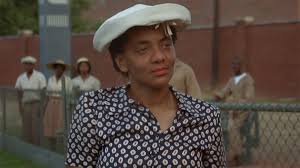
The other woman meets her. She’s small. Slim. But she isn’t in a black and white polka dot dress, or a large-brimmed hat this time. 

Somehow, it’s like what Ray told her when he first came across Shoeless Joe, and the others. Dottie can almost see the stats appear in her mind in a nice and neat bloc.

G –  228

R – 136

BA – .273

G by POS – RP-150

Pitcher. Second-Fielder. Outfielder. A 33-8 win-loss record over three years. She knows this. Now.

It’d been broad daylight when they’d first met. Now, it is a night lit up by the lights and the magic of this small ballfield. She wears a striped uniform with a C emblazoned on it surrounding the word “chicks.”

The Steel City Chicks.

For a few moments, Dottie feels stupid. Of course, she would have had a team of her own. It just wouldn’t have been recognized by the League. She didn’t need the Peaches or the Belles. She, and her teammates, had been fighting their own battle. It was a shame it took so long, that it literally took life, death, and a miracle to get them all here to where they are – right now – today in what feels like the summer that a part of Dottie never truly left. 

But Dottie resists stretching her jaw. Instead, she extends her hand. The other woman looks at her. She gives her the same level stare, that look of pure confidence, and a steady defiance she had so many years ago back in 1943, segregated by so many things. But they had that moment, when she threw that ball down the yard like thunder and nearly destroyed Ellen Sue’s hand and baseball career.

And then, she takes Dottie’s hand. And when she does, they smile. Now their game can truly begin. 

Out

Jimmy spits non-existent tobacco onto the field, inclining his head to the side out of habit while also grunting as the other players take their leave. None of them stay, not even the grey, shadowy shapes that sometimes loiter on the turf. There aren’t many of those anymore, to be fair, as Jackson told them the owner – Kinsella – never really stops recruiting. 

It’s rough, though. They’d been playing all day, and it was time to go home, Jimmy guessed. Even Bob Feller wouldn’t bat for a pitch. Still, Jimmy knows he can’t explain. He feels tall, his shoulders broad, and he fits in his old Cubs uniform despite all the years he left behind in ‘87. Hell, his damn uniform was actually crisp white – ignoring all the dirt and sweat from under the sun. But he’s standing up straight, feels all square-jawed, and he can actually breathe again. Practically All-American, as Mom used to say. Or one of his wives. 

The floodlights are pretty good. The grass, and the stalks around the field rustle in the wind on this warm summer night as he picks up the ball. Between that, and the bleachers, and the tractor that comes through every once and a while, there isn’t much else that’s mechanical. Definitely nothing like a pitching machine. 

Out of all the things in his former life, Jimmy never thought he’d miss a pitching machine, especially not with Bob and Jackson, and Ruth, and only God knew who else around these parts. But here he is. He takes the ball, and he throws it up into the air. Then, he puts both hands on his bat, swinging back, and striking the thing out into the farthest depths of the field. He crouches, and he can feel the difference as he puts his whole body into it. 

A great thing, feeling cartilage in his knee again. All he had to do was pretty much just die for it. 

He shakes his head under his helmet. He walks past the bases, and picks up another ball. Fellas should’ve cleaned up, but he basically volunteered to do the rest. He feels uneasy. He shouldn’t. He should feel great. He does feel great. Amazing even. But as he throws the ball, and hits it again, he feels something else that’s been at him this entire day. Something – someone – is watching him. Like eyes across the bar room. Or … something else. Something that feels familiar, but he lost the name.

Like a ball he just barely grazed that could’ve been a home run that he’d never had. 

Fucking sentimental hogwash. He tried to shout that kind of junk out of the Peaches. Out of his girls. He hasn’t seen them here. Jimmy’s not sure if he’s disappointed, or happy. Maybe they’ll never come here. Maybe God doesn’t have Ladies’ Nights. 

He takes up the ball again, before he notices the shadow.

The strike of the ball against his bat cracks throughout the air, as the figure holds up one hand … and catches the ball. No glove.

Just a bare palm.

Jimmy blinks in the lights. He slowly lowers the bat to his side, fainting tapping his white pants. The shadow was easy not to see in the night, even with the field lights. It is tall. Statuesque. It wears a white short-sleeved uniform, with a red insignia and cap. The uniform is all too familiar, except it is wearing pants. 

The flash of golden ginger hair reminds him of the last late afternoon that he had seen her, before he went off in that bus to his next game, with the rest of his girls, with everything said and left between them. 

“No skirts.” Jimmy points at her legs as he walks up, to meet her in the middle of the field. 

She shrugs, looking at the ball in her hand, before turning up to regard him. “Easier on the legs.” She says. “No scrapes this time.”

“No splits either.” Jimmy shakes his head ruefully. “So much for Heaven.”

“Oh Jimmy.” Dottie says, her lips shaped into a thoughtful pout, a country girl trying not to say something more profane. “You still look like shit.” 

Jimmy scratches his chin. Even now, he still forgets to shave. Or maybe given everything, it never occurs to him that he has to anymore. They’re both trying to be nonchalant, but he sees her flexing her jaw. An old tell if he ever saw one. She looks like she did in her twenties. Like they’d just said goodbye at the bus before going to two separate lives. “And you still look like you eat and breathe this game.”

This time, Dottie looks down. A smile flits at the corners of her lips. “I guess there’s part of me that never really left it.” She manages to glance up at him. By this point, they have closed the distance between space and time, between them.

“You look great.” She says, and somehow they are both back in ‘43 in front of the pitching machine where she is picking up. ”You look like you can still go.”

“I was locked in.” Jimmy doesn’t know why he said it, but it makes sense. 

There is a moment of quiet between them. 

“I thought you liked me.”

Jimmy never thought he’d hear those words again. He’d heard them every day of the week, all the way until the day his liver and his lungs couldn’t take it anymore. He’d told her that he’d tripped. It’d been ridiculous. Pathetic. An old drunk womanizer’s excuses, a disappointing shell of at least a decent ballplayer. The truth was, he’d tripped, and fell. And he’d been falling for a long time. And he’d kept falling, plummeting for what seemed like forever before he saw what the Peaches could do. And what she actually was. 

“I did.” Jimmy wants to believe that it’s just his throat remembering what it was like to be choked up by tobacco, or just dust. “That was the problem.” 

He doesn’t look at her. He’d made his decisions. She’d made hers. But damn. At least he said it this time. Then, she is right up to him. He feels a tap against his chest. He looks down and sees her hand, curled around the baseball, pressed against his uniform. 

“Out.” She whispers, softly. 

Seeing her reminds him of that pure and clean feeling of doing something right. Something that he’d been born to do. To act. It wasn’t just that she embodied it. She felt it too. 

“I call foul.” He grumbles, without any rancor.

She puts a hand on his arm. “Maybe we should get a proper judgment call.”

“Maybe we should.” Jimmy chuckles. “But we know those umps are paid off anyway.” For a few moments, he stares back at the bleachers. And, somehow, he knows. He just does. She doesn’t look. She doesn’t have to. “Maybe we’ll have better luck with the Commish.”

*

Dottie Hinson sits on the bleachers as she watches them.

She’d only even seen Jimmy Dugan this young on a playing card. It makes her happy to see him standing up tall, and proud. He walks and moves smoothly, without his usual limping gait. And then, she saw the shadow of the figure in the field come into the light. 

Dottie doesn’t know what to think of seeing her younger self, in that modified Rockford Peaches uniform, talking with a Jimmy in his prime, a man not run down by life and his own terrible choices, and her – her not a mother yet, or a grandmother. 

“May I?”

Dottie turns her head slightly. Ray Kinsella is standing next to her on the stands, his hands in his pockets. The young farmer and owner of the field, squints down at the sight of the two figures. Dottie chuckles, shaking her head. She almost catches herself trying to pop her jaw. She nods to him. “Were there too many redheads at dinner for you?”

“Surrounded by them.” Ray laughs. “Nothing I’m not used to by now.”

It’s true. Dottie has seen Ray’s wife and brother-in-law, as well as his daughter Karin. But her daughter, and grandchildren, her sister and her own grandchildren are something else. They’d paid a nice twenty dollars for their ticket, which also included room and board for their stay. And Annie made a mean meal. 

She doesn’t have to look at Ray, to see that he knows what’s going on. “Has this happened before?”

Ray sighs. “Not often. Apart from Doc Graham, well, I told you about that. It happened outside of the field first. He followed us here. But yeah. There was one other time. Almost like this”

Dottie’s eyes narrow at the two meeting down below. “And?”

There is a pause. “Do you see the mound down deep left field?” 

“Yes.” Dottie hadn’t been sure, originally, what the plot of land had been in this strange baseball diamond in the middle of an Iowa farm, but now she already has a better idea.

“That’s Kid’s.” He looks at her. “Eddie Scissons. He called himself the oldest Chicago Cub.”

Dottie’s brow furrows, trying to remember while also focusing on the tableaux below them. “I don’t think I know him. Jimmy never talked about him …”

“He wouldn’t have known him. At least, I don’t think.” Ray rubs at his eyes. “I still don’t entirely know how it works.”

“I found out about your field through Mae. Mae Mordabito.” Mae had always been wild, but it hadn’t been until much later that Dottie realized just how superstitious, or into the occult that her former teammate had really been. “She’d read about you from Terrence Mann’s Shoeless Joe.” 

Ray laughs. “He really did it. I knew he would.”

“So.” Dottie says. “What does this mean?”

“I … honestly don’t know.” She gives him a glance. “The announcer, or whoever, the voice isn’t saying anything. Do you hear anything?” 

Dottie thinks about telling him that while she might be old, she’s not hearing voices yet. She shakes her head.

Ray rests his hands on his knees. “Eddie … He might have had more to do. Maybe …”

“He had some regrets?” She turns her gaze back to the ghosts of Jimmy and herself. And she thinks about it. “Is that what happened to him?”

“I don’t know.” Ray admits. “I think … we all, all of us, get something from the field. From the game. And I think it’s just between us, and the land.”

Dottie considers Ray’s words, the sight below them, and how she feels about it. Cooperstown had been a year ago. 1988 made her face a lot of what she had been doing, and who she had been in 1943. She’d almost not gone. She had tried to convince herself it hadn’t been important. But it was. All of it had been. It was how she reunited with her sister. With her friends. With her memories.

All of her memories. 

She sees the younger Dottie tap Jimmy in the chest with the ball. She can’t hear much of anything that they say, but she can figure out enough. No one knows yet, except Kit and her daughter. Bob passed about a year ago. She had lived a full long life with him, and she didn’t regret a single thing. Not for their offspring or their grandkids. When she went – and she would – she would be with him. 

But there would always be a part of her, deeply, intrinsically, spiritually, that was baseball. And Jimmy was also baseball. She smiles at him, at that young man he was and is now acknowledging her. And as she watches that part of her, that Dottie, free of responsibility and fear and anxiety taking Jimmy Dugan’s hand in hers, as they move through the corn stalks and vanish from view, a strange peace fills her that she didn’t know she needed. Something had told her to make this trip: a long trek from Oregon to Iowa for what could have been some tourist kitsch due to a metaphysical book from a former free love author. Now she can enjoy the rest of the time she has left. Now that part of her can truly move on.

Dottie slowly gets up. She waves Ray off as he attempts to help her. “Let’s go back inside.” She tells him. “My grandkids will be wondering about me. And Kit will want details. Otherwise she will never let me live it down.”

And while Dottie remembers, even now, that there is no crying in baseball there is still plenty of space to smile about it. 

When Reading High Fantasy, Travel Light

Back in the early twentieth century, two journeys began. They both began in England. One was the story of a Hobbit cleverly manipulated, though not necessarily against his will, into joining a company of Dwarves to confront a Dragon. The other story is one of a young girl, raised by bears and dragons, that sees heroes as her enemies, talks to a Valkyrie,  and must travel the world to find and understand her place in it. One of these stories was made by a male Anglo-Saxon and Linguistics professor, poet and novelist, while the other was created by a female Liberal, Socialist, novelist, poet, and an early founder of some of the first birth control clinics in London. One of these stories survived and helped found a genre of high fantasy. The other story, however, was all but forgotten.

But fantasy author Amal El-Mohtar has not.

Naomi Mitchison wrote the 1952 novel Travel Light. While Mitchison is an interesting figure in and of herself, and she possesses many contemporary sensibilities about war, sex, and women’s rights, it is this particular novel of hers that fascinates me even more. Obviously, up until I read the above linked io9 article I neither heard of her nor this story. Travel Light is the story of a young girl named Halla, formerly the daughter of a king, who is rejected by her family and fostered by bears before, finally, being raised by dragons. It is after living amongst dragons and legendary monsters, and being taught to despise the heroes that hunt them, that she is approached by the All-Father Odin (The Wanderer),  and is forced to make a choice: whether she wants to hold onto the parts of her life that define her, or to shed them and wander as well.

It is actually because of the io9 article and Amal El-Mohtar’s own beautiful article Crossroads And Coins: Naomi Mitchison’s ‘Travel Light’ that I read this book. It is an interesting story in a few ways. First of all, unlike Tolkien and his other contemporaries such as C.S. Lewis, Mitchison makes her mythological and historical references clear. Halla’s world is very overtly the world of Nordic and Mediterranean mythology. Also, there have been mentions of Greece, Constantinople, and Novgorod. Mitchison manages to subvert, perhaps tweak these beings ever so slightly and succeeds in making the reader look at them from another perspective. In fact, not only does she very smoothly subvert some tropes, she may well have made a few of her own. At the same time, she makes it so that Halla’s story seems to take place in our world, as much as fiction, fantasy or otherwise can allow, and that in itself speaks volumes.

As such, Mitchison also does not shy away from the very real dangers and moments of grief and vulnerability that Halla faces and comes to understand as a girl, a woman, and essentially as a human being. There is one quote that really gets to me after Halla faces a particularly horrible situation where it is stated “It was as though the murderers who had killed the old dragon had also killed a dragonishness in herself and she hated them all the more for it.” Mitchison makes sure that that while the dangers and consequences are not gratuitous in detail, she makes abundantly clear that they are serious and very real. At the same time, as all of these events happen to Halla, proving how strong and how vulnerable she really is, there is another element of Mitchison’s writing to consider.

While Halla is immune to fire, has knowledge of all languages that are animal or otherwise, and even comes to be given a piece of the Wanderer’s cloak, the most striking thing about her as a character is how many times she sheds her sense of identity, even as she collects epithets–surnames–to become and learn something new. It very much critiques and averts some parts of “the hero’s quest,” and heroes themselves, but at the same time Halla’s journey maintains its own rules. Simultaneously, when the story does come back full circle, it makes for a very awe-inspiring realization and where the narrative begins as a fairytale, and heroes and monsters fade into mutual legend, it all ends in mythology.

Travel Light is a story that works on so many different levels of physical detail and emotional depth: a tale with a sentence structure and language flow that you sometimes have to pay attention to, that doesn’t shirk away from background intrigue, or dare I say Byzantine scheming,  but at the same time provides dimensions to characters and an interesting notion of spirituality. I have this temptation to state, in a similar way to Amal El-Mohtar, that Mitchison’s novel makes an excellent story for young girls trying to find someone they can identify with in literature and fantasy. Unlike Tolkien’s heroines Eowyn, Arwen, or even Galadriel in Middle-earth Halla is the protagonist of her own world and her journey.

But what I really want to say is that Travel Light works on many different layers, as most great stories do, and Mitchison says something to everyone. I do think that young girls should read this story, but I also think that boys and adult audiences would also definitely appreciate the depth and resonance that it provides.  In fact, I would definitely classify this novel as an obscure classic, as a narrative that can be read by someone as a child and read again as an adult with a different kind understanding but still somehow managing to retain a sense of timelessness.

In the end, Travel Light is a work that deserves to be on a shelf next to Tolkien’s The Hobbit, C.S. Lewis’ The Chronicles of Narnia, Ursula K. LeGuin’s A Wizard of Earthsea, and all the great timeless stories of fantasy: that is, when a parent is not reading it to their child, or when their child is not reading it for themselves and imagining themselves stripping away all their preconceptions of reality … and traveling light.

This is Not a Less Impressive Daffodil: Neil Gaiman’s The Ocean at the End of the Lane

I thought I was going to just make that small post about how most–if not all–of Neil Gaiman’s stories could be construed as being part of a multiverse of his own creation. I thought I could leave it at that and not talk about The Ocean At the End of the Lane in and of itself. Certainly, that would have been easier. For a 181-page novel, Ocean is intimidating and in a lot of ways really hard to describe.

In fact, the reason why Ocean is so hard to deal with, at least from my perspective, is that its writing is seemingly so sparse, but there is so much packed into those charged sentences. In terms of structure, the narrative and writing style reminds me of Gwendolyn MacEwen’s Julian The Magician in all the different ideas that have compacted into almost poetic sentences. At the same time the resonances, metaphors and allusions to other events through imagery and small stories is reminiscent–to me again–of a more “spread-out” George R.R. Martin: in that there is a very intricate storytelling structure that incorporates physical, visual, visceral and emotion description well. I even know that if and when I read this novel again there will be more hints and foreshadowing’s and authorial winks that will meet me along the way to the end of the lane.

All of the above are the technical elements that stand out at me with regards to the writing style of the book. And I haven’t even gotten to where this can fit in with regards to Neil’s own mythic “storyscape.” Amanda Palmer goes into this far better than I can–even better–she provides no spoilers to the book whatsoever. I will however say that one very striking part of her Blog review on Ocean is that apparently this story is the closer to autobiography or semi-autobiography than a lot of Neil’s other words or, as Amanda put it, “Neil dialed down the usual setting of his blender” so that you can see a much clearer distinction between “the reality that we experience” and “the art we create.”

Of course, this is not the first time he has done this. Violent Cases and The Tragical Comedy or the Comical Tragedy of Mr. Punch are works that definitely come to mind with regards to where the writer’s experiences and what the writer creates can be observed to some extent as that “twilight place where the man and the writer smash into each other and for a second there’s a wrinkle, a schism, where you can jam a stick into the works of the blender and see the whole, floating components of a soul” but I will say that this is probably the first time that Neil has ever written a prose novel along these lines.

I also can’t help but wonder if somehow Neil was somehow, in some stylistic or personal way, inspired or influenced in some part by C. Anthony Martignetti’s Lunatic Heroes: Memories, Lies and Reflections: a collection of short stories that Neil read, wrote praise for and even–as “an American God” sent an editor to look at. You can find my review of Anthony’s book here. Certainly, there is a nice resonance between the first-person mostly-child narrative of Anthony’s stories and the unnamed mostly-child protagonist in Ocean: both of which were narrated by adults.

And now, my friends, this where I place my obligatory disclaimer: for in this Ocean there be Spoilers. If you plan to read this book, turn back now. It is a really good book, so please read it. If not, or if you’ve read it continue walking down this lane … if you dare.

If I had to sum this story all up in one sentence, I would say that The Ocean at the End of the Lane is a story about childhood fear and wonder for grown-ups. I’m not talking about Coraline or any of Neil’s other children’s stories that are made for children but can be read by adults or even the film MirrorMask with its own child protagonist putting herself into danger. No, the danger inherent in the situation of the unnamed protagonist is one of a very painful real powerlessness in the face of an unfathomable adult–and also fantastic–reality. The protagonist discovers a lot of hard truths at his age of seven even before the magical element comes into play: which, in turn, is triggered by one of those harsh adult and alien truths in a really terrible way.

The protagonist already starts off as a child that can barely tolerate his reality without books and is alternatively lonely and does not care much for people in general. He actually describes it as mostly unhappy, though he does admit that he had moments of contentedness. He is not a child like Coraline who can trick her way out of situations, or Bod with his canniness and supernatural influence: and he is made very painfully aware of how weak and small he is compared to an adult. That is not to say, in retrospect, that he doesn’t his own intelligence or craftiness: after all, not only did he learn basic survival skills–if only out of necessity–but he has books as his oldest companions and books can teach you things if you let them.

But even his resources and the high level of child intuition that he possesses, the protagonist cannot solve all of his problems by himself: which is something that the narrative makes quite clear. Even the books he reads, each one about children overcoming adversity, or an evil adult is offset by his reality of actual helplessness: as if Neil is trying to hit home–the home and childhood the protagonist realizes he is losing–that this is not that kind of story. The protagonist can be a cowardly child, a thoughtful child, a brave child but he is still just a child.

And children need help when they find themselves in a bad situation: domestic or otherwise.

The Hempstocks are a family of three women that live at the end of the lane. The youngest is Lettie, her mother is called Ginnie and the grandmother is, well, Old Mrs. Hempstock. Lettie Hempstock, with her red hair and snub nose, is a seemingly eleven year old girl reminiscent of a Pippi Longstocking with magical strength and “just-so” knowledge. Of course, these three women are not what they seem and yet, at the same time, they are. This pattern of three women of power comes up a lot in Neil’s works: from the Lilim in Stardust, to the Kindly Ones in Sandman and even the immigrant Slavic goddesses in American Gods. I’d also be remiss if I forgot to make mention of the Norns or the Fates from mythology as well.

In this case, though, the three are here to help the protagonist: at least whenever he finds his way to them. The Hempstocks themselves seem to have come from another dimension countless millennia ago, from the Ocean pond next to their farm and in at least one form they are pure energy. These three are pure Hempstocks and apparently there are other female Hempstocks throughout the world created by the wandering male Hempstocks: who aren’t as powerful, but are just as special in their own ways. The fact that there is a Hempstock in Stardust and The Graveyard Book may well be coincidences.

What is also interesting is that the pure Hempstock females do not have fathers. Perhaps they are born from the multiverse or perhaps not. The original male Hempstocks may be the same and I wonder if there is one as old as Old Mrs. Hempstock out there somewhere. It is not known if male Hempstocks can make other male ones in the same as they do female ones. So basically, while these male Hempstocks wander and play Zeus across the world and nowhere in this narrative whatsoever, we are left with these three who are a child, an adult woman, and an old woman: and yet so much more.

And then we have the antagonists. Skarthach of the Keep is a flea. She isn’t a flea in the conventional sense, but rather an ancient creature in the multiverse of the Ocean that is awakened by the badness that happens in this world and seeks to rule it by providing what people want and feeding off of the sensations they get from it. She is massive, powerful and old. So you might think to yourself that what we have here is a classical Lovecraftian entity or even an Other Mother that will manipulate the protagonist and Lettie as they come into her acquired dimension. Well, if you did think this, I’m afraid you thought wrong.

What Skarthach does–after becoming a humanoid named Ursula Monkton–is worse. She physically infiltrates the protagonist as a worm–which in and of itself has some very unsettling overtones–and after he takes her out, she changes into a human that becomes his babysitter. Out of perhaps some pettiness for Lettie attempting to seal her away in her own dimension or simply wanting to keep the protagonist “safe”–because she placed a gateway back into her dimension within him after being in his body–she begins to control his life. She infects his family with her “food” and makes them love her: his married father in particular. But before and after that, Ursula limits his physical freedom–essentially taking it away–and threatens to take away his books while enforcing “early bedtimes.”

And all of this is before she gets his father–who has some aggression issues of his own–to attempt to drown him. She is literally the stereotype of every wicked stepmother–or surrogate mother as she takes over the family–rolled up into pettiness, spite and pure evil. She is an epitome of insidious adult bullying and abuse. Neil did such a good job on illustrating all of this that I’ve even stated that Ursula Monkton is the first of his antagonists that I have ever truly despised and I took great joy in watching her pretend a fearless she didn’t have and then cry like a little baby smeared in mud– just as she had done to the protagonist before (it’s not so grand when it happens to you, huh Ursula?)–as her very painful doom came to her.

But it is slightly before that when you begin to understand something. Apparently, fleas had come to reality before and they were almost always accompanied by things that Old Mrs. Hempstock called varmints. I originally thought that they were just infected humans or offspring that the fleas made when they colonized worlds. But I fall victim to expectations as well and I realized after a while that I was wrong. Fleas are deathly afraid of varmints: and anything else with half a soul would be too. The reason for this is because they are cleaners: they eat fleas and everything associated with them. And apparently a lot of them dwell in Earth’s universe because there are no native fleas there. I pictured them like the mounts that the Nazgul in Return of the King rode, but I know they are even worse than that and only barely have passing resemblances. All I know is that when they ate one constellation out of existence, it reminded me of various terrible events from Dr. Who.

I think what I really related in the end is that the protagonist, even after the removal of the worm and the path to her portal still has the gateway to other dimensions inside of him. It is described as this piece of ice in his heart. Later you discover that when he is older, he makes art and even though the Hempstocks observe that he is “growing a new heart,” even though he may have died in one version of reality from the varmints hunting every last bit and trace of the flea,  I wonder if that shard is really gone. It was a nice allusion to what a writer can actually be.

Other things that I really liked in Ocean was the metaphoric and literal quality of the ocean itself and how, through simple language and the perspective of a child, Neil manages to show the wrongness in the death and supposed replacement of a loved one: as if somehow substituting one cat for another that you killed can ever replace the being you loved, or if another thoughtlessly intentional violation somehow makes the previous accidental one better. It is that last image that really sets the tone for the protagonist’s story really: at least to me.

I am nearing the end of this strange review now. I just want to leave off with some quotes that really caught my eye: both in their meanings and undertones and just for the simple elegance of their craftsmanship.

“I was far away in ancient Egypt, learning about Hathor, and how she had stalked Egypt in the form of a lioness, and she had killed so many people the sands turned red, and how they had only defeated her by mixing beer and honey and sleeping draughts and dying this concoction red, so she thought it was blood, and she drank it and fell asleep.  Ra, the father of the gods, made her the goddess of love after that, so the wounds she had inflicted on people would now only be wounds of the heart. I wondered why the gods had done that. Why hadn’t they just killed her, when they had the chance?” (53)

It is a very good question, I might add, although it might be answered by the shard of ice in the protagonist’s heart and the art it possibly inspires him to make: as some consolation anyway.

“I liked myths. They weren’t adult stories and they weren’t children’s stories. They were better than that. They just were (53)

“Monsters come in all shapes and sizes. Some of them are things people are scared of. Some of them are things that look like things people used to be scared of a long time ago. Sometimes monsters are things people should be scared of, but they aren’t” (112).

“I’m going to tell you something important. Grown-ups don’t look like grown-ups on the inside either. Outside they’re big and thoughtless and they always know what they’re doing. Inside, they look just like they always have. Like they did when they were your age. The truth is, there aren’t any grown-ups. Not one, in the whole wide world … Except for Granny, of course” (112).

“In those dreams I spoke that language too, the first language, and I had dominion over the nature of all that was real. In my dream, it was the tongue of what is, and anything spoken in it becomes real, because nothing said in that language can be a lie. It is the most basic building brick of everything. In my dreams I have used that language to heal the sick and to fly; once I dreamed I kept a perfect little bed-and-breakfast by the seaside, and to everyone who came to stay with me I would say, in that tongue, “Be whole,” and they would become whole, not be broken people, not any longer, because I had spoken the language of shaping” (43).

This particular quote has a flow to it and a glowing golden aura–like reading some precursor to ancient Greek–and yet flows so well and with such a seeming effortlessness like breathing that it makes me want to cry. This was by far my favourite quote in the entire book for that reason alone.

And then there is this one:

“My book of Greek myths had told me that the narcissi were named after a beautiful young man, so lovely that he had fallen in love with himself. He saw his reflection in a pool of water, and would not leave it, and, eventually, he died, so that the gods were forced to transform him into a flower. In my mind, when I had read this, I had imagined that a narcissus must be the most beautiful flower in the world. I was disappointed when I learned that it was just a less impressive daffodil” (68).

I have to say that aside from the various nuances and connotations within these lines, this has to be one of the best, most subtle and utterly poetic insult ever. I can just imagine going around telling a person that annoys me that they are “just a less impressive daffodil.”

So, suffice to say, I am going to give The Ocean at the End of the Lane a 5/5. I know there is so much I did not discuss or make parallels to, but then I have to also remember that this is just one road to one place in Neil Gaiman’s multiverse. I think what really got to me, when all of this is said done, however, is the fact that this style of story–with the exception of a few descriptive details and elements–is something that I have been working on myself in my own writing and it was really interesting to see Neil making a story like this for himself and the rest of us. Perhaps we all dip into the same place: a place that can be a well, or a spring, or a stream of consciousness, or a pond … that is an eternal, bottomless, ocean.
In the World of Neil

I believe there is a particular place where all things coexist.

It is a place called the Universe: where ideas dreamt up by humankind become gods and need to feed off of our belief in order to have any power whatsoever. At the same time, there are other–older beings–that couldn’t care less about us (or more) and embody the cosmological constants and the very essence of what sentience truly is.

As strange as it all is if it only ended there it would be so simple: because there are other things too. There is the Presence, the Silver City, angels, demons and Lucifer. There are cities Underground and one great Faerie Market that never seems to die out as many claim nor want to stay behind a Wall. And sometimes things happen one way and then another: with everything dependent on memory, the manoeuvring of creepy puppets and the plurality of apocalypses–of different revelations–right next to one another.

When people are not meeting a young girl with a big dog and a balloon, they encounter ladies that can open doors, boys raised by ghosts that dance the Macabray, fleas and Other Mothers, young men learning magic, immortals of various kinds, pitiable monsters, worlds existing in people, places dwelling as people, and three women–always three women–that are alternatively kind, cruel and wise as the story takes them.

And the people–the regular people–are so much stranger. They make you realize there are no normal people. Not really. What’s more is that you also realize that history–that reality and the everyday life–has never been wholly real in the way that you understood it and all of this becomes a place where the mythological becomes normal and the seemingly mundane becomes utterly terrifying.

I’ve studied this place a long time, you understand and I always suspected but never confirmed–inside of myself–that they were all layers of the same multiverse: that they all fit together and the pieces click into place so immaculately well.

Until now.

Of course, they might not be and their creator reserves his right on the final judgment in the matter. But as a wise girl once said to the shadow of what America could have been–and could yet be–I believe. I believe in multiplicity, the levels, the nuances and, perhaps, after reading this newest book a few days ago, I believe in two more things: the World of Neil … and a nice cup of tea in the good company of some Hempstock women.