This was the question posed to us at the end of the last season of Doctor Who. It might as well be the quintessential Whovian question directed towards both The Doctor and the writers of the show. The program itself always explores what it is, always changing, while at the same time attempting to keep the core of itself the same. After watching “Deep Breath,” the first episode of Season Eight, this weekend I realize there are a lot of ways you can look at it.
A little while ago, I was examining the different eras of Doctor Who and comparing them to the Ages in comics. I had a theory that, after “Time of The Doctor,” we would be moving past the dark angst-ridden era of Doctor Who revisionism begun by Russell T. Davies and into a reconstructionist phase: a place where everything went back to basics with a modern sense of storytelling. I actually thought the presence of Tom Baker in “The Day of The Doctor” hinted on a season that was a return to wonder and adventuring. I thought, with the rescue and quest to find Gallifrey, that the darkness would finally be banished or at least heavily minimized.
Of course, I was very wrong.
You see, I forgot something when making these comparisons. I forgot about the so-called “Golden Age” of Doctor Who. Just like the Golden Age of comics, those early adventures could be dangerous, sinister, and downright creepy. And The Doctor himself was not always a trustworthy Time Lord and you always had to kind of watch your back around him. If the Eleventh Doctor’s run felt like witnessing a fairytale, then it really seems like the Twelfth Doctor is a throwback to the terror of the original: like the ancient cautionary folktales of old attempting eat their sanitized offspring … only far grittier and even more discomfiting.
“Deep Breath” is almost a warning to the audience. It starts off with a dinosaur running amok in Victorian England and spitting out the TARDIS that Peter Capaldi’s Doctor hasn’t yet learned to fly. You have the Paternoster Gang: complete with the Silurian detective Madame Vastra, her wife and maid Jenny, and good Sontaran Strax. It seems to begin like any strange wild, wacky Doctor Who adventure.
It’s not.
It’s no surprise that The Doctor is confused and disoriented in his new Regeneration. We’ve seen him deal with similar situations in the past. But this time, when you consider how he was an old man in “Day of The Doctor” and all the other events he survived, watching him attempt to remember things and fail is actually quite unsettling. The part where the Gang brings him to a bedroom at Vastra’s home really stands out at me as he was actually terrified of being in a small enclosed space that was small on the inside and separated by different rooms. He just couldn’t understand it and, if your last memories are of being in something like the TARDIS, this disorientation — along with his Time Lord conception of space and time around him — makes a fair amount of sense.
I think it was actually hard for me to watch Clara deal with this. She is watching her best friend, who she doesn’t even recognize any more, suffer from what looks like dementia. This new man is not The Doctor that she loves and it takes her a while to admit that to herself.
It takes Madame Vastra, with Jenny to moderate her patience, to make Clara face this. The Silurian makes a very fascinating point about how The Doctor’s previous Regeneration — if not the other two before it — were attempts to fit in among humankind: almost like a veil. For me as a fan, I was both sympathetic to Clara — as she was very much in love with the Eleventh Doctor — but just as annoyed with her too as Vastra was: though for a different reason. In the previous story arc it was very clear that Clara jumped into The Doctor’s timestream and created different versions of herself throughout his various timelines. While I’m not sure how extensive her memories are of her other scattered selves, the fact is she has seen him in all of his incarnations. Even in “Day of The Doctor” she met the Tenth Doctor and The War Doctor. She knew he could change and that he had been different people. But suppose what we are seeing here is the loss of her Doctor and her process of having to accept this.
Meanwhile, The Doctor himself is trying to get used to the person he has become: or rather becoming the person that he now is. Even though some of his traits are familiar, such as his need to talk to the point of babbling and getting lost in his own thoughts, his anger is much more apparent now. After running away from Vastra’s house, he calls everyone around him “pudding heads” and promptly dives into a river. At one point, when he demanded a man’s coat I was genuinely concerned that this person — whom many of us saw as a hero — was going to attack and rob some poor, scared drunk old man.
And then there was the part in the show when he seems to actually abandon Clara to their enemies.
I have to admit: even though I’d had some impatience with Clara before, and on some level I knew he wouldn’t just leave her I … actually wondered. Clara’s shock and grief were very clear and a part of me hoped that when she got out of her predicament, she’d get the chance to outright slap him.
That all said, I really loved the monsters in this episode. They were essentially Clockwork droids that had crash landed on Earth ages ago and used human flesh and organs as spare parts to keep them going. They mostly reacted to humans, but there is something very grisly about watching them move around jerkily wearing motley suits in various stages of decorum and decay. Basically, they are from the sister ship to the SS Madame de Pompadour and wear human skin. It’s even at a point where they have absorbed so much human matter that they believe they are attempting to rebuild their ship and find a “promised land.”
The fact that a “repaired escape-pod” of theirs utilizes a hot-air balloon made of human skin really tells you a lot about the spirit of this episode right there.
What I find fascinating is the clockwork element in this episode and potentially others. The introduction sequence is composed of a collection of synchronized golden-worked gears. At one point I was under the impression that Steven Moffat was attempting to sabotage the Miltonian clockwork perfect universe of Russell T. Davies by creating his “tears in space and time,” but it looks like I was wrong again. In fact, there is a very steampunk look to this episode: even and especially when you look at The Doctor’s new suit with its white shirt, black coat and red in-lining the very end.
I think that, for me, this episode actually — for the first time — made me afraid of Doctor Who. The monsters were genuinely disturbing. The Doctor himself seemed to display more anger, ruthlessness, and a lack of dependability hearkening back to the First. And there was one time I wondered if the Gang was going to survive.
I wondered if The Doctor was even going to come back for Clara: and that sense of abandonment of her and our expectations was a horror far more terrible than any human-harvesting robots.
This isn’t even mentioning the ad in the paper that brought Clara and The Doctor back together, or why The Doctor’s new face seems so familiar to him. There are some hints that go back to previous episodes on those little details alone. And then there is the presence of a mysterious woman named Missy at the very end of the episode.
It’s funny. When Doctor Who began in 1963, it was meant to be a children’s show. At the same time, however, the monsters were always meant to be terrifying and the adventures truly harrowing even as it was clear that The Doctor himself wasn’t necessarily meant to be a hero. In fact, his new musical theme such as it is — sounding like a wind raking the night with a hard cold edge — is something I still need to get used to.
So where might this all be going? Does Steven Moffat know how to fly this thing? In the past, the shaky episodes and moments of questionable continuity have made me wonder. But if “Deep Breath” is any indication of what we might expect in the future, we might be looking a season that isn’t going to pull any punches.
Because there is a difference between personal angst and dark speculative fiction, and while we might have moved past the former there is still a whole wide multiverse of uncanny adventure for which to look forward.
Star Trek would have you believe that, one day, Earth will become a virtual utopia. War, famine, and poverty will be eliminated. Advanced civilizations will come and help humanity solve its problems, and even explore the very stars themselves. Humanity, through a United Federation of Planets will encounter new species, societies, and ways of living. And while there will initially be conflict and fear, it will ultimately give way to tolerance, peace, and love.
Personally, I don’t find this realistic. Strip away the technology and science, even accepting the caveat that somehow unlimited resources and energy can be had, and you still have human beings that still feel greed, possess hubris, and fear what they don’t understand. And that is how we treat our own fellow human beings. I think that, if anything, our interactions with each other and other species would be a lot more like the scenario set in the universe of Babylon 5: where there are differences of opinion, internecine and squabbling politics, sanctions, and warfare but a degree of acceptance and understanding among individuals. But that is assuming that human nature will remain the same. Certainly, the anonymous reader that wrote a letter deriding the lesbian relationship between a Vulcan and Klingon in David Mack’s Star Trek novel Harbinger reflects some current human traits all too well.
It can be disheartening to consider that such bigotry exists — and has done so for some time — in speculative fiction and geek fandom. Even David Mack, in his epic open letter rebuttal of this reader’s email, admits that diversity is not nearly as represented in the Star Trek television series as it could have been. And even if the writer of the email to Mack wasn’t a hardcore Trekkie, this is not an original sentiment in whatever might constitute itself as geek culture or the various fandoms that make up some kind of community. I don’t think it is too much of a revelation to state that Star Trek — or speculative fiction itself — and fandoms can be problematic with regards to gender and cultural diversity.
But there is more to this. There always is. I think what really stands out at me is the Star Trek: Deep Space Nine series. Part of the reason I bring this up is because of the image that Katharine Trendacosta uses in her i09 article Star Trek Writer’s Defense of Diversity in Sci-Fi Is Damn Near Perfect. It depicts the episode “Rejoined” where Jadzia Dax encounters Lenara Kahn. In fact, both women are Trill hosts for their respective symbionts: whom had been married. I was either in the latter stages of elementary or in the middle of high school when I first saw this episode, and I didn’t understand it.
It wasn’t that I didn’t understand why Dax had feelings for Kahn. I assumed, then, that she was just experiencing echoes of emotion from her symbiont’s last host. Naively, I was more confused as to how she could even pursue a relationship with her even though the symbiont no longer had a male host and if disrupting the rules of their society was worth the trouble. I will even admit that, at the time, it made me uncomfortable. In retrospect, many adults seemed to feel the same way, or so Star Trek producers believed. Years later, of course, I realize that the Trill philosophy of wanting to prevent symbionts from “limiting their experiences by relationships from their previous lives” was another way of stating that people were uncomfortable with two pansexual beings — who both happened to be women this time around — from continuing and having new experiences with their relationship. You can say that it was the nineties and that we weren’t “quite there yet” (and we still aren’t in a lot of ways), but when I look back at that episode and even my own naivete and ignorance, I feel a kind of righteous anger that they couldn’t pursue that relationship further.
There are many other instances of how Star Trek poorly handled their depictions of gender and ethnic diversity, but there is one other story line that particularly got to me: though not, again, until recent years. There was a story arc between Miles O’Brien, his wife Keiko, and the Bajoran Major Kira Nerys embodied best by the episode “Looking for par’Mach in All the Wrong Places.” Due to a potentially lethal accident, the O’Briens’ unborn son had to be transferred into Kira’s womb. During this episode, Kira moves in with the O’Briens so that they can take care of her in the meantime. Miles and Kira end up spending a lot of time together, which Keiko actively supports. Their family dynamic changes during this time and Miles and Kira actually end up developing feelings for each other. Nothing comes of this, however, and after she carries the child to term Kira leaves the O’Briens.
I definitely remember being distinctly uncomfortable with this arrangement at the time: seeing the two characters bordering on cheating. Certainly, while life happens in chaotic ways, their situation was no time to develop a relationship. But now I can’t help but feel that there were a few possibilities in how that relationship could have turned out. While the resonance feels more like something Robert A. Heinlein would create as opposed to Gene Roddenberry or other like-minded writers, it would have been fascinating to see a polyamorous or non-monogamous relationship dynamic form from that particular episode: another kind of diversity and representation in a futuristic series priding itself on philosophical and human progress.
Even so David Mack, in his own open letter, states that “those of us who write the licensed Trek fiction continue to do our best to depict a more progressive, enlightened, open, and harmonious future, not just for humanity but for all sentient beings.” And maybe it was these words, along with seeing Dax and Kahn again, that reminded me that although the writers of Star Trek couldn’t be too radical, they pushed the envelope of diversity as far as they thought they could: particularly in Deep Space Nine.
It’s funny. When I think about it, Deep Space Nine and Babylon 5 both aired more or less during the same time period. Perhaps that’s why I mentioned both programs in the context of this article. Maybe it reminds me of how different I am from the child and adolescent I used to be. But I also learned something new. David Mack, in his rebuttal to his anonymous reader over the accusation of “remoulding the Vulcan persona to suit himself,” quotes the Vulcan philosophy of IDIC: Infinite Diversity in Infinite Combinations. It even has its own symbol worn by many Vulcans: including Spock himself. Whether or not Gene Roddenberry created the symbol to sell merchandise is kind of irrelevant but it reminds me of something else. I realized that even if that utopian ideal is unrealistic and will never happen, it is something to strive for. That sense of hope and wonder in the form of sheer possibility and diversity is what Star Trek is, and what it should ultimately be about.
This is what speculative fiction and geekdom should be about: what it should be the vanguard for.
David Mack, in not only being unashamed of the lesbian relationship between his two characters but even supporting and rejoicing in it, states that he will continue to support diversity in his writing. When you look at current fandom and some of its displeasure over other changes or recent iterations in franchises such as a Black Captain America, Thor now being a woman, and a female lead in a Spider-Man film you begin to realize something else. Not only is diversity important in representing various people in the franchises that they love, but it is utterly integral in keeping those worlds fresh and alive: keeping them changing. Closed mindsets will be maintained and never challenged. No one will care about stories that never change or make them feel a part of them.
Without diversity, without change, genres and mediums will die.
It is my hope that writers such as David Mack continue to travel these places and bring us along on the ride: to make a place where a story is judged by the quality of its writing and interactions and not solely by an idea that hasn’t been fully fleshed out, or reactionary responses.
To boldly go where no one has gone before, or to go to where other people go and you don’t. Frankly, if this is a journey that doesn’t suit you, then you shouldn’t come for the ride. As for me, I want to see where these explorations will take me.
(Ed’s Note: This is part 1 of our interview with Will Brooker. To read part 2, click here.)
GEEKPR0N: In addition to being a Batman, Star Wars, and popular culture scholar, Dr. Will Brooker, along with his artistic collaborators Suze Shore and Dr. Sarah Zaidan, is the creator of the ongoing comics series My So-Called Secret Identity. I’ve had the opportunity to cover his work for GEEKPR0N, but after an offer to let me ask him some “difficult questions,” I found it too much an opportunity to resist. So here we are now: talking about the story of a woman, a city, and an entire comics world.
My So-Called Secret Identityfeatures Cat, a young university student whose only power as you put it is that she is, “really, really goddamned smart.” She also exists in a really fascinating place known as Gloria City: where celebrity “superheroes, villains, and anti-heroes” seem to battle for prestige, money, and maintaining appearances. It’s, as you and Cat herself put it, become a “theater” for them: a play with a lot of collateral damage for its citizens. What and/or who was the inspiration behind the character of Cat? And how did you come up with the concept of Gloria City?
Will Brooker: I think there were various inspirations for Cat, which I’d have to think back and tease out now, as it’s two and a half years since the project’s inception.
The underlying premise, at one point, was ‘what if there had been a Vertigo title about Batgirl in the 1990s’, so in that respect, Cat is very much inspired by Barbara Gordon and the women of comics like Shade, Sandman and Doom Patrol.
In real life terms, I’d just started teaching a student called Babs, who — because it’s not a common name in my experience — made me start thinking what Babs Gordon might be like in real life, as an undergraduate; and I’d also just met a red-haired PhD student, Claire, which was no doubt also a factor. Again, one of the main ideas behind MSCSI was that Barbara Gordon had always been a PhD student, but her life never really seemed to resemble the lives of the students I knew.
So I wanted to try to bring the two ideas closer together, combining the concept of Batgirl with the largely female students I work with and am friends with.
Batgirl (c) DC Comics
Jennie Gyllblad recently painted us a lovely portrait of Batgirl with Cat, which demonstrates just how different they are and how they diverged: Barbara Gordon is really athletic and armored, and Cat is just averagely fit if that, wearing clothes she’s bought from regular stores. Although Batgirl was the original inspiration, Cat came to resemble much more a character from the Beano comic story ‘Billy the Cat and Katie’, who was the inspiration for Tammy (of ‘Tiger Tom and Tammy) in Grant Morrison’s series Zenith Phase III.
In terms of the name Gloria City, I was looking for something a bit like the city called Vanity in the short-lived comic book Aztek (Morrison again!) I liked the idea of Cat thinking of it as a friend or big sister, and the place having a woman’s name, like the city of Charlotte (and arguably, Sydney).
There is actually some Christian iconography in the Gloria University logo, and I like that the name captures a sense of joy, promise and becoming, even though clearly it’s a city with problems. As such, it is, like most comic book cities, somewhere between Metropolis and Gotham, which are themselves of course versions of New York City.
The map of Gloria is loosely based on NYC. The various districts are pretty much where you would find them in NYC — the bohemian Village, the theaters, the largely African American community, and so on. If you follow Cat’s routes in the comic, you can tell that she’s walking through areas which very much approximate Manhattan in their relation to each other.
In terms of the look, I think a lot of the detail, such as the hanging baskets and the streetlights, came from Suze. As she’s Canadian, it may well have a particular cultural angle to it. I think I suggested to Suze that it should be a bit like Vancouver in its atmosphere, with a music and cultural scene like Austin, TX. But as with a lot of things in MSCSI, it’s hard to be sure exactly who decided what.
GP: I definitely get the feeling that Cat thinks of herself as part of Gloria City as opposed to being above it, or her if you’d like to personify Gloria with a gender. I am really fascinated with your creation of Cat’s mind maps and how they fit into her sense of relation to Gloria. It’s kind of like an intersection of geography, her educational background, mnemonic devices (memory prompts and aids), and her own innate sense of exploration and a need for understanding. Is this partially what motivated you to create Cat’s mind maps? You mentioned in your interview with Julian Darius that Sarah Zaidan drew them, but was there anything in particular that inspired either of you to make these?
WB: Sarah created the MindMaps visually, from my directions in the script. All the details are there in the script, and a fair amount of information and suggestion about how the MindMap should look, and how the different elements should relate.
Again, a few different ideas prompted the MindMaps. I wanted to do something like Alias, where most of the story is told in a particular comic book narrative style, but there are sections where we dip out of the story into pastiche flashbacks, scrapbooks and magazine extracts, in an entirely different visual mode. (In a way,Watchmen did this with its endpapers, back in 1986).
MSCSI was always informed by the idea of scrapbooks. Ironically, it’s Jim Gordon, not Babs, who is working on a scrapbook when Joker arrives in The Killing Joke, but I felt that scrapbooking was more of a conventionally-female art form — Pinterest is the digital version — and part of the aim behind MSCSI was to foreground and celebrate alternative (again, conventionally-female) forms of art, craft and labour.
The scrapbook aesthetic works with our idea of collaboration and community, involving different, diverse versions of the cast members and a collective approach to their appearance and costumes. It embraces various art styles and encourages an approach to art as a process and work in progress, rather than just a finished page. It fits with our sense of workshopping.
Cat’s MindMaps are very much like an essay plan, I think, although they include everything in her life rather than just her academic work. They are meant to show how she makes sense of things and connects things. I imagine it’s a specifically arts and humanities way of reading the world: one reviewer compared it to Michel de Certeau’s notion of walking in the city. Her understanding of herself and her environment is visual and tactile, as well as just linguistic: it involves fabric, colours, scraps of paper, scrawled links.
One of the key ideas here was that while Batgirl is very, very clever, I didn’t think we often saw that in stories about her. How do you show thought processes, in comics? You can have someone piece a mystery together, but that requires a certain kind of detective plot, and Cat wasn’t going to be in that situation from the start: she’s just living a fairly normal life. So the MindMaps give us access to the way she thinks, even before she starts trying to investigate the enigmas surrounding Urbanite and Misper.
GP: That is very fascinating. I mean, in most detective comics — whether they are based on the Dark Knight or earlier and alternative stories — you have the characters telling other characters or, really, the reader the analytic and synthetic process by which they came to their deduction. It makes sense in that police forces are depicting as utilizing maps, newspaper clippings and notes on bulletin boards in order to link clues together and come to some kind of conclusion about a crime. And as for the comics medium itself, you can attempt to show processes through a thought-bubble or even some captioned flashbacks. But these maps really are the closest thing in comics to how a human mind really works: as we all think in a mixture of sounds, images, words and other senses.
The maps remind me of the concept ofpsycho-geography: of places being linked with past events and emotions. Speaking of Alan Moore’s work, he has drawn on this concept through Sir William Gull’s twisted personal paradigm inFrom Hell, while I also know that Grant Morrison and Daniel Vallely used the model in a flat-out collage aesthetic inBible John: A Forensic Meditation. When I say that now, I realize that these comics also deal with crime, but from very masculine perspectives — from a killer and potential investigators — and with regards to violence and murder against women. But you use the MindMap andthe multimedia (I am thinking of Watchmen) of the scrapbook differently with regards to Cat and even her relation to the time and place of Gloria City.
WB: It’s true that the MSCSI MindMaps are actually strikingly similar to the bulletin boards of images and links we see in crime drama — The Wire, for instance, or more recently True Detective andFargo— where a main character is trying to connect the dots of a murder or a conspiracy. I didn’t explicitly think of that, but it’s probably the most obvious visual echo. I’d have to check the script to see exactly what I specified and what Sarah added to the concept.
The MindMaps do recall Bible John and From Hell in a way. I didn’t have them explicitly in mind, but I’ve read and enjoyed them both. I was asked last year to write MSCSI as a script treatment for a movie, by an agency that ultimately didn’t take the project on, and in adapting the MindMaps for a new medium, I came up with an idea that’s again quite similar to the pentagram across the city in From Hell, and also the Riddler’s use of the city in Batman: Zero Year.
In fact, a lot of Zero Year reminds me strongly of MSCSI now — the dispersed power of the Red Hood gang, the grim joke about demolishing buildings as ‘dominoes’ — which I think demonstrates how these ideas just float around in the creative consciousness, recurring in different forms and different texts. It’s obviously a complete coincidence that aspects of Zero Year recall MSCSI, but it probably says something about the links between MSCSI and From Hell too — that echoes aren’t always deliberate.
It would be interesting to consider whether the MindMaps are any different from the other texts because of their female perspective. On a really superficial level, I doubt Batman would have swatches of material in his head, as he plans his outfit while also trying to remember where terrorist attacks took place. But someone like Tony Stark, who seems to take more genuine pleasure in his wardrobe and social life, might do.
The videos produced by Rebecca for our Kickstarter and Sound & Vision page probably come closest to showing what the MindMaps would ‘really’ look like, as they’re animated and include sound and music.
GP: I had no idea that you were asked to write a film treatment for MSCSI, but that said I can see through the videos that Rebecca created some of the MindMap material unfolding and animated. I do hope that, eventually, MSCSI and Cat get their chance to go from “the theater” to the theatre screen.
I’d like to focus a little bit on the theatre metaphor for MSCSI. There was a black and white scene in Issue #4 depicting a children’s show. This happened thirty years before the events of MSCSI. When a reader really looks at those MindMaps, they can get a hint of not only what will happen, but how things possibly relate to each other. And Carnival is mentioned in reference to this show. Did the theatre truly originate from that show? Do all the heroes, villains, and anti-heroes relate to Gloria City only through the metaphor of the theatre (aside from Carnival who, at best, thinks of it all as some kind of interactive game)?
WB: The theatre, as in the whole superhero culture of MSCSI, began in either 1945 or 1954. Nobody in Gloria City can easily remember exactly when it was — they just have those key historical dates in their head, from school or magazines, or it’s just something ‘everyone knows’, but when they try to pin it down they’re not quite sure where they heard it.
Anyway, there were some significant events that again, ‘everyone knows’ in the same way that we know JFK died and people landed on the moon, and after that, there were costumed figures who seemed to do things better, stronger, faster than normal folk, and it all progressed from there.
This is all my exploration of comic book continuity, and the fact that characters in comics have to deal with history being rewritten, rebooted and revised at regular intervals. We’ve already seen instances of this, where Dahlia can remember details about the Fleet and the female Misper that Cat’s forgotten. (Because Dahlia’s a little older and has a different sense of history). There’s further suggestion of the past in the newspaper page that recurs through Issue 3. I want to spell this out a lot more explicitly in Volume 2.
Dahlia Talks to Cat MSCSI
Carnival and Cat are, I’d say, the only ones who really recognise and admit that this whole superhero dynamic is a kind of theater or game. Carnival embraces and plays with the idea. Cat has really only just realised it, and to her that makes everything even more unethical and sickening — that other people are being damaged in a power-play between half a dozen larger-than-life figures.
Kyla, Connie and Miss Sparkle would accept that it’s all business, a staged conflict to sell product. Urbanite would stubbornly resist that idea. He needs to believe it’s a never-ending war on crime, and that it’s all entirely legitimate — that he is genuinely locked into battle with people like Carnival. Even if he might believe the truth deep down, he’d be reluctant to admit it even to himself, and would never say so out loud.
The ‘It’s Your Lucky Day’ show was Carnival’s TV series, back in more innocent times, when he was a cartoonish, avuncular persona. If we saw Urbanite guest star on that TV show, he’d be a figure like Adam West’s Batman (this would, of course, be another person in the Urbanite costume, as it all took place a generation ago). It would be pretty good to revisit that idea, in fact, and see what Urbanite was like in the 1960s.
My So-Called Secret Identity Issue 4 Part Four
GP: An Adam West-like Urbanite would be entertaining, to put it mildly. The theatre of Gloria City and its characters can say other things about our world behind the comics culture as well. Cat herself represents something new or at least seen less often in superhero comics. After seeing Cat working with her friends Kit and Kay on her costume and reading the Extras section of MSCSI’s website, it just reminds me of the fact that many comics fans become involved in the industry in some way themselves: either becoming a part of the structure or making their own fandoms. Not only can you become a creator, you can also be like or be your own hero. Could you interpret Cat as an in-universe representation of that idea? As that counterpoint to the corporate capes and crusaders: that line between a Do-It-Yourself movement of cosplaying fans and more independent and relatable heroes?
WB: I didn’t really have that interpretation at the front of my mind, but it definitely fits. It could be seen as exploring the kind of career path from fan to creator; a path many people have taken, within comics, novels and TV. Of course, a creator can still be (and should be) a fan, and still be critical. And in a way, Cat is engaging in a form of fan practice, or perhaps anti-fan practice: her logo is adapted directly from a commercially-bought Urbanite stencil kit. So she’s subverting official materials and making her own brand, and costume, from available materials. It’s exactly what fan scholars call ‘transformative works.’
One of the questions raised there is whether, by moving further ‘inside’ the structures, you lose some edge, distance and critical perspective. That is certainly an angle that could be applied to Cat’s position in Volume 2, which begins some months later, when her role as a kind of ‘hero’ is more established. She’s gained a certain degree of celebrity and respect from other costumed figures, and is on the level where she can actually talk to Kyla Flyte.
So if you apply that interpretation, MSCSI offers a commentary on the compromise and negotiation between becoming more popular and successful, and ‘selling out’.
Additional Text: Kat Poole and Tracey Ramsden
GP: That has definitely been a question on my mind as I’ve been following the series so far: as to how far Cat will play in the theatre and if she will change the system, or become a part of it. I can definitely see her bringing some kind of unique innovation to the theatre, and Gloria City: perhaps starting a trend in empowering its citizens — particularly its female citizens — through fandom and example and showing them that ordinary people can be heroes because, in MSCSI’s promotional words, “Smart is a superpower.”
In your interview with Nick Ford, you mentioned that your agreements with your collaborators and sponsorships for MSCSI are based off of something called “gift economy”: which you said was something prevalent in female fan communities and is a model with less emphasis on contracts and business deals and more about hand-shake agreements, networking, and exposure. Are there any examples of female fan community “gift economy” that influenced your MSCSI collaboration and, tying it back to fandom and culture, could this concept play some part in Cat’s own potential influence on Gloria City society?
WB: The question of how Cat will function within and change the nature of Gloria’s costumed community will be a key issue in Volume 2. She becomes a more prominent media figure and a role model to an extent, and feels she has new responsibilities.
However, the whole community will change during Volume 2 anyway, as one of the underlying plot points is that all the big hitters, who are male, have been lured away on another ‘mission’, so the people left in the city who qualify as ‘superheroes’ are second-stringers and predominantly female, of various generations from 18 to retirement age.
So because of that change, Cat finds she has an even more decisive role, as the newest and most prominent young female ‘costume’ on the scene.
I’ve just written a short chapter for a new book about crowdfunding, which says a little more about my debt to the notion of gift economies. Here’s an extract.
My approach was informed by what I knew about fan communities; specifically female fan communities, and even more specifically, the communities discussed by Karen Hellekson and Kristina Busse in their book Fan Communities in the Age of the Internet. They explained the process of ‘gift economy’, where one fan does something for another – writes a story, creates an avatar – in a system of informal, friendly trade, without any fixed arrangement or desire for financial reward. The items exchanged, gestures of time and skill, ‘have no value outside their fannish context […] Gifting is the goal. Money is presented less as a payment than as a token of enjoyment.’
Every week brings new examples of that in practice. I have a friendly agreement with the ethical underwear company Who Made Your Pants? that we will cross-promote and support each other, during this period at least. I’ve literally been sending gifts to a few MSCSI fans across the world, not for any kind of expected return — but nevertheless, it feels indirectly like a kind of thanks for their positive reviews and their continued support. There have been very, very few contracts between me and the artists, even those I’ve never met and have only dealt with once. I don’t have any form of written agreement with Sequart or Geeked; it is just about a mutually respectful admiration and a shared set of ideas.
Again, I think we could see some of this in Volume 2 of MSCSI, where I envisage Cat as — initially at least — being a little like Man-Of-Bats, the Native American Batman of Grant Morrison’s comic, who works on a very local level. The introduction of Radhika Shere, our analogue of John Constantine, and her relationship with Cat, will play into this idea — people doing each other favours within the community and knowing it’ll be repaid somehow.
As in Volume 1, though, we start off on a nice, easy-going local level, with people just hanging out and enjoying every day dynamics, but comic book drama kicks in and Cat is caught up in another larger-scale dilemma before long.
GP: I see. “Gift economy” kind of reminds me of the concept of bartering: of trading items and goods instead money. There is definitely a major element of networking and promotion involved in this model with regards to your fans and supporters — and I can see those favours coming in real handy between Cat and other heroes that were left behind in Gloria City. I’m definitely interested in seeing how you subvert the “lower-tier hero” and “all-star superheroines” trope story arcs for the next volume.
(Ed’s Note: This is part 2 of our interview with Will Brooker. To read part 1, click here.)
GEEKPR0N: So now, moving away from what forces Cat can represent, here is the question on my mind with regards to a core part of MSCSI. In your interview with Julian Darius you mentioned that you had a considerable number of female beta-readers. One thing I have always been told as a writer is that the best way to write women is to actually interact with women you know, ask them about their experiences, and listen. What kinds of advice did you get from them, and was there anything suggested to you in particular that really stood out for you in some way?
Will Brooker: A ‘considerable number’ might have been a vague response. To be more precise, three female fan-academics read and gave me feedback on the whole script, around Autumn 2011, before it was even drawn. They were Kate Roddy, Suzanne Scott and Carlen Lavigne, who then put together a scholarly interview-essay about MSCSI — again, this took place while Issue 1 was still in progress. It’s published here http://journal.transformativeworks.org/index.php/twc/article/view/476/362c
I also talked online with YA author Karen Healey while I was developing the ideas for MSCSI, and I specifically asked my friend Prof Bambi Haggins to read the script for Issue 3, and comment critically on the way I’d written the African American woman, Connie Carmichael.
Cat Meets Sekhmet MSCSI
And of course, Sarah Zaidan and Suze Shore read the scripts very carefully, and often gave me feedback and suggestions.
It’s hard to recall precisely what I was given by each person, but I remember Karen Healey steered me in a very important and valuable direction, away from a more conventional fate for Dahlia Forrester. Bambi Haggins tweaked some of Connie’s dialogue, and contributed one particular, small but vital point: she asked whether Cat was only realising now that she couldn’t inhabit Connie’s history, but could only observe it from outside. So I added two words, ‘of course’, to that caption, to indicate that this notion wasn’t suddenly occurring to Cat. Bambi also asked why Connie was let go from her role on a successful musical, which prompted me to provide a little more detail — she’d been replaced by a lighter-skinned performer, Stella Shelley — which in turn helped me to develop the backstory between Connie and Stella (who we now know is fellow costumed artist Miss Sparkle).On a similar note, Angel Kumar has written a detailed backstory for our newest character, British Asian consulting detective Radhika Shere.
My So-Called Secret Identity Cat’s Life
At least one of the incidents of sexist micro-aggression that Cat experiences in Issue 1 comes directly from a conversation with Sarah, and is drawn from a situation in her own life. I think it’s when her college tutor accuses her of cheating, because her work is too good. I’ve had one conversation with Suze in real life (and several online) and — over a few bottles of wine — we worked out loads of cool ideas for future MSCSI scenes and images, which fortunately I wrote down next day. Inevitably, the artists contribute a great deal — they are essentially co-creating the world and the characters, and their authorship of MSCSI is hard to quantify. That goes also for the guest artists. It was Rachael Smith who first drew Radhika Shere, for instance, and Laura Callaghan is currently drawing a portrait of her with Cat for the deluxe edition.
More generally, though, a lot of what happens in MSCSI is constructed from conversations with women, and just broadly, experiences with women — living with and listening to women. I’ve named the most specific and direct examples above, but if Cat and the other female characters in MSCSI are convincing and speak to people — if my writing shows any understanding of women’s identity and relationships, and experience in society — then that is thanks to the women in my life, from my mother to my students.
GP: I can imagine what Dahlia’s fate might have been and as a fan I, for one, am glad that Karen Healey helped her avoid it: whatever else might happen. Thank you for the link to the interview-essay with your colleagues and for pointing out that in addition to your artistic collaborators such as Suze Shore and Sarah Zaidan, that the women in your life have had other roles in addition to beta-reading for MSCSI.
Here is a more plot and character-related question: something I actually wondered about in my own review of MSCSI Issue #4. Getting back to Cat, just what were her intentions when she approached Carnival’s agents? Did she realize that, sooner or later, he was just going to bring her to him anyway and wanted to pre-empt it: to find some kind of advantage and perhaps disrupt a planned part of the theatre?
WB: When Cat approached Carnival’s people, it was out of a sense of inevitability. She spends that issue, essentially, touring everyone she can think of who might help her (not Sekhmet because I think she’s fairly clear of Connie’s position, just as she is about Urbanite’s) and realising, ultimately, that nobody’s going to do this but her.
As for what she intends to do: essentially Cat just hopes she can have some effect by showing Carnival she knows what’s going on, and confronting him to ask what exactly he wants. She’s solved his newspaper puzzle. It’s as if they were already having a conversation, which she realises he began, with a public message directed specifically at her. She knows he wants to connect with her. She hopes that by engaging, she can satisfy his curiosity and match him intellectually, and, by putting herself into the system as an obstacle and new, unknown element, stop him from carrying out his next move. She knows she’s the wild card, and she knows, or hopes, that she can throw off this course of events, this ‘domino’ game that otherwise is just going to play out as it usually does, with Urbanite making a lot of empty noise and thousands of people getting hurt.
She knows Carnival fascinated by her intelligence, so it’s not as if she’s planning on a big boss physical fight: she can handle herself against one or two half-hearted thugs, as we see, but she’s no match for his gang. Basically it’s like Batman with Joker in The Dark Knight: ‘you wanted me… here I am.’ She can’t see any other move to make, and nobody else is going to help her.
Coincidentally, there’s a very similar dynamic at work between Batman and Riddler in the current Zero Year,by Scott Snyder: Riddler setting challenges, and Batman solving them, then (as is Batman’s nature) roaring furiously ‘what do you want now, I played your game, I found the answer..this is the end, it’s over.’ Riddler then, at the end of the penultimate episode of Zero Year, simply shows that he still holds the cards and that the game ends when he decides it. It’s the same thing with Carnival. He doesn’t want the game to end. He’s enjoying this new development very much.
GP: It seems this game began a while ago: even when you get back to the creative aspect behind your series. In your article From Killer Moth to Killing Joke: Batgirl, a life in pictures on Mindless Ones, you pitched a hypothetical comics series for Batgirl that ended up evolving into your own original My So-Called Secret Identity. Since then, you have also mentioned how fashion magazine aesthetics inform your comic and the site that hosts it. How did your method of writing scripts evolve from that point and how does this inform the creative collaboration between your artistic partners? Do you write down general ideas or paneled scenes? Or do they panel it out and add details of their own? And to what degree does fashion inform your aesthetics, your creative process(es), Cat’s life and Gloria City?
MSCSI Cat Sketch
WB: I think of my method of writing comics as moving from macro to micro. For Volume 3, for instance, I have a central idea and a visual in my head of a few key scenes, which I see as comic book pages of completed art. That’s it, in terms of the third volume.
For Volume 2, I have a plotted out set of issues (1-5) with a description of what happens in those issues. Some of the description is far more detailed, some of it is sketchy. For instance, one page might actually be written in terms of panel breakdowns and captions, and another few pages might be something far more shorthand, like ‘Cat goes home — tells others what’s happened — domestic interaction here, quarrel, “you’re meant to be my clone”.’
So, first there’s a central idea of what’s going to happen, and some glimpses of the key moments; then I’d break down that plot into 5 episodes, and then I’d break down the episodes into pages. The final step is breaking down the pages into panels.
All of volume 1, of course, is written in full. I have a clear sense of how each page looks in my head, which I’m then simply trying to convey to the artists through direction and description, sometimes with links and visual references, and sometimes just in terms of prose and ‘shot’ instructions, like a film script.
Here’s an example, from issue 4.
My So-Called Secret Identity
Part Four: Anti-Life
PAGE 1
CAPTION [and these should be DISTINCT and different FONT from ‘CAT CAPTIONS’]: NOW.
Splash:
Close-up of Cat’s face. She’s frightened but frozen, not wanting to move an inch. There’s a knife-point resting against her eye, the blade held in an old man’s hand. There are traces of smoke and purple blossoms in the air.
This page is all about Cat’s expression – stiff, rigid, staring at the man holding the knife, but thinking, thinking, thinking: how did I get into this, how can I get out of it?
Voice off: Oh, CAT. You were such a PRETTY little thing.
PAGE 2
CAPTION: 30 YEARS AGO.
Four panels, with TV-screen rounded corners
1. We are seeing black and white, grainy footage of ‘Your Lucky Day’/’La Vida es un Carnaval’ (both logos are visible in the studio set), a TV show from the 1960s starring Feliciano Bonifacio Carnival as the presenter, making kids’ dreams come true.
Carnival is around 50 years old here, slightly bizarre and eccentric but not sinister.
Perhaps a leopard-skin coat, a big cigar, trademark glasses, flamboyant hand gestures.
Carnival is sitting in an elaborate, baroque throne, with kids around him – like a strange fairytale king (could even be wearing a kind of crown) or a fantasy school-teacher. One little boy is sitting on his knee, in a ‘talking to Santa’ pose.
CARNIVAL: OK, OK. Órale, chaparritos! Who do we have here, it’s BILLY BENSON from CENTRAL CITY, isn’t that right Billy? And what do you want most in the world, BILLY?
BILLY [small voice] Run fast, like MR SWIFT.
2. CLOSER on CARNIVAL and BILLY.
CARNIVAL: OK, OK, well is that so, well between you and me, Billy, I’ve got a little SECRET, if you can KEEP it, oh-ho. Would you like to guess who’s HERE to HELP me.
BILLY: … yes.
3. Now onto the stage springs Carnival’s sidekick, a teenage boy in a ridiculous uniform reminiscent of Burt Ward as Robin, or a pantomime Peter Pan:
No cape, but a tight top and little hotpants, pixie boots, predominantly red, yellow and green. His name is SONNY JIM.
SONNY JIM: I heard someone wants to run FAST, like JACK SWIFT, the FIRST OF THE FLEET?
CARNIVAL: Yes, yes, do you know who this is, BILLY and all the boys and girls here and at home?
BILLY [QUIET] Sonny Jim
KIDS: IT’S SONNY JIM!
4. All three together, looking at camera, as kids around go wild. Carnival is performing jazz hands
CARNIVAL: OK, OK, I’ve got something to tell you, Billy, this is SONNY JIM and you know what, it’s YOUR LUCKY DAY!
PAGE 3
SIX PANEL GRID
CAPTION: ONE WEEK AGO.
1. We’re in Castor’s café, from issue 2, back with Cat and Enrique. There are strong echoes of their earlier scene, in the framing and rhythm. Differences between then and now will only come across subtly. [She is in the Hanie Mohd-designed Fall sweater outfit – skirt could be longer, though]
Cat has clearly just asked Enrique something, and he is replying absolutely firmly:
ENRIQUE: NO.
2. CAT: It’s the ONLY –
ENRIQUE: No way. And YOU should forget about it too. If my BOSS sees you again, he’s going to put you in BEDLAM.
3. In the background now, behind them, we start to sense what’s different about the café this week. The front windows are half-covered in flyers and posters that we can read, backwards: they say ‘LOST’, ‘MISSING’, ‘LAST SEEN’, with text and photographs of people underneath.
CAT’s anger is now sparked: she’s not going to take this.
CAT: Your BOSS is quite literally a TOOL. And what does that make you?
ENRIQUE is silent.
4. In this frame we get a better sense of the posters, see a newspaper being read by another patron – ‘MAJOR DECLARES MARTIAL LAW’.
ENRIQUE: Anyway, you have NO chance, the way things are now, after DEMOS. The CURFEWS, the POLICE BLOCKS, you wouldn’t even be able to GET to him.
5. CAT stands up, leaving her coffee on the table. We can see the door (and the plate windows with their posters and flyers) in the background here. Enrique looks up at her, seeming helpless, slightly miserable.
CAT: Well, SOMEONE’s got to do it, Enrique. SOMEONE’S got to at least TRY.
CAT: I guess I’ll SEE you.
6. Same framing as #5. She walks briskly out of the door. Enrique stares at the table.
Cat Talks to Misper in MSCSI
In terms of fashion and design, I would say the artists add a great deal. I give a sense of what I’d like and they furnish the details. I had a great experience working with Stylist magazine, as their fashion editors actually sent me links, at my request, of current items that the characters could wear — an outfit for Dahlia, for instance, a t-shirt for Cat, various choices of shoes — and I picked my recommendations to send them to Rachael Smith, who drew that strip.
Most of the artists seem to have a very keen sense of clothes and design though, and enjoy the opportunity to provide our characters with convincing, real-world outfits, with a lot of plausible detail.
GP: Now, just for fun, what do you think would happen if a superhero like Batman or Superman found themselves in MSCSI? Or if Cat found herself in the Marvel or DC Universe?
WB: Batman would basically stomp, in the MSCSI universe. He would destroy pretty much anyone we’ve encountered so far. The Major and Urbanite are a joke compared to Batman. The Major is like Donald Trump with a cloak. He’d have private security but he’s no more threatening to Batman than the Penguin, at best. Urbanite is (as far as we’ve seen, at least) a really rich hobbyist, who can just about intimidate Cat if he swoops up on her with no warning, but really would be no match for Batman on any level. Sekhmet going up against Batman is like Solange Knowles going up against Batman.
As for Cat — I think she would intrigue him if he saw evidence of the way her mind works. I can imagine them developing a relationship something like Batman and Carrie Kelly or Harper Row — he begrudgingly learns to admire and respect her, and warns her to stay out of his dangerous business but probably tries to find a role for her — either in the ‘Batman Family’ or Batman Incorporated, depending what continuity we are in. Cat has nowhere near the strength, martial arts ability, athleticism or equipment of any of the Batgirls, so she would never work in that precise role, but she could be a kind of Oracle figure, a researcher and thinker. Maybe Batman could use an academically-trained theorist on his team. I think Cat would get along really well with Barbara in her Oracle role.
I don’t think Superman would be especially bothered by anyone in Gloria, including Cat. She’s very clever but he’s a Kryptonian and can presumably think at a speed, and on a dimension, beyond any human being. She doesn’t have the low cunning of Batman — or the wealth, or the science and technological abilities — so she wouldn’t pose that kind of risk to him; she’s not going to manufacture a Kryptonite ring. Yes, she no doubt notices things he doesn’t, and connects things in ways he doesn’t, and interprets the world in ways he doesn’t, but if we assume Superman can tap into a consciousness on the level of Dr Manhattan, I think the same rule would apply that she’s about as remarkable to him as a really clever small mammal. Granted, this is not always how Superman is written, but that’s how I personally feel Superman would operate — as a near-omniscient, near-omnipotent being who must have to scale down a lot to engage with human beings at all. Alan Moore’s Superman from the 1980s Swamp Thing series comes closest to this depiction, I think, though Morrison’s All-Star Superman also captures that benevolent, generous godliness.
However, we have seen instances (again, written by Alan Moore) where Superman and Batman face off against Swamp Thing, and it’s clear that they both have a healthy respect for plant elementals. So, given that there are characters of that nature in the MSCSI universe, they would, I think, be the only ones to present Superman or Batman with a genuine challenge.
GP: Now, here is the most important question. My So-Called Secret Identity has a Kickstarter Campaign that is going to end in about six days. In addition to funding, how else can fans support your Kickstarter and make more people aware of it? What can current and potential fans hope to expect from MSCSI? And what are some of your plans for the future?
In terms of the Kickstarter, I’d ask people simply to circulate our campaign on social media as much as they can, and also to spread the word by whatever methods they can — including just telling friends, family and colleagues. We get a lot of signal boost from generous celebrities and big-name professionals on twitter, so if our fans can put the link in front of people with a high follower count and profile, and ask for a retweet, that’s really helpful.
With about £1000 to go and one week until deadline, I do now feel we’re going to hit target; and I’m going to release details of our stretch goal very soon. But we do still have to reach that target, or MSCSI simply isn’t going to happen.
If and when we do hit the magic £8.5k, I’ll be sending the script to the art team and they’re going to start work on it immediately. We’re planning to have Issue 5 completed by September-October, and send the printed books out around November. The deluxe edition really will be very special, with full-colour art from an incredible range of guest creators, and we have a number of limited, signed prints of selected portraits and pin-ups.
In 2015, I’m hoping to develop MSCSI Volume 2, possibly as a single graphic novel of about 100-120 pages. But really, everything now depends on people pledging that final £1000.
GP: You can find Issues 1-4 of My So-Called Secret Identity, along with other goodies, on its website, but in order to see Issue #5 please support the Kickstarter Campaign. I’ve asked my questions. Now perhaps you have some of your own … along with a map to place where you can begin to have them answered.
During what many call the Golden Age of superhero comics, newspaper comic strips were still a force to be reckoned with. After all, before superhero and other genres of comics were even thought of, or implemented, it was from these strips from which the medium actually came.
Chris Sims in his Comics Alliance article IDW To Publish First Ever Collection Of Golden Age Wonder Woman Newspaper Comic Strips acknowledges this history and the fact that while we have seen the original Superman and Batman Weekday and Sunday reprinted many a time, we had yet to see the Amazon Princess’ newspaper adventures printed until now.
Compared to Superman’s 1939-1966 span and Batman’s on again, off again paper incarnations from 1943-1946, 1953, 1966-1974, 1978-1985 and even something as recently as 1989-1991, Wonder Woman’s 1943-1944 stint is a brief run indeed. In fact, when you really look at it, the newspaper adventures of Superman made it through the Gold and Silver Ages of comics while Batman continued from Gold, to Silver, Bronze and the modern period.
Wonder Woman’s time in the newspapers, her stories written by her creator Dr. William Moulton Marston and illustrated by Harry G. Peters resides solely in the Golden Age. But whereas we know that there are different stories of Batman and Superman in their strips compared to their comics, it is uncertain just what kinds of stories Wonder Woman’s run still holds. But it is an exciting prospect.
Here we have some long-unseen Wonder Woman adventures made by her original creators to be collected into a nice hard-cover edition titled Wonder Woman: The Complete Newspaper Strip: 1943-1944 for all fans to enjoy. I myself look forward to them with the hopes that they might inspire some new adventures of their own.
This is going to be a review of issue #4 of the comic My So-Called Secret Identity by Will Brooker, Suze Shore, and Sarah Zaidan. There will be spoilers and, as such, please read the series on their website first: it’s still ongoing and definitely worth the read.
Unfortunately and as you can see, as this latest issue of the series starts off, both of these qualities are called into question. In Issue #3 of the comic it becomes very clear that Carnival, one of the main antagonists in Gloria City’s “theatre of heroes and villains” created a public ad in a newspaper addressed specifically to Cat and her method of linking different ideas and elements together.
As personal responses go, I felt a chill go down my back as I began to wonder what this meant and if there was some link between Carnival and Cat: especially given how he seemed to know how her mind works. Feliciano Carnival, as a villain, is something of a mixture between the Joker, an old-style crime boss, and a game show host with a Spanish background. He is the direct antagonist towards two of Gloria City’s celebrity superheroes: the Major that rules the City as Mayor and the black-masked Urbanite, seemingly both Captain America and Batman analogues respectively. In my last article on My So-Called Secret Identity, I compared its heroes to those in Garth Ennis’ The Boys when, in fact, they and their antagonists also have some nice resonance with the ironic and public superhero parody team the Five Swell Guys and their nemesis the Painted Doll in Alan Moore’s Promethea series. They too play the same parts, the same hero and villain cycle over and again which Moore lampoons and subverts.
The situation with Cat and Carnival is different. Cat is different. Whereas Carnival’s other opponents have their agreed upon script with him, she actually wants to stop him from, presumably, blowing up the World Trade Center. The fact that this story seems to take place in a different but parallel world from our own aside, while Cat seems to disrupt the scripts of the heroes — the “theatre” that they have created for two decades — she greatly intrigues Carnival: to the point where you really begin to wonder what’s actually going on.
Where Urbanite symbolizes a rough and authoritative patriarchy that threatens citizens and spouts out empty platitudes for everyone’s “own good” — to the point of his chest monitor displaying some ridiculous words and onomatopoeia, Sekhmet represents a woman attempting to survive a male-dominated profession to the point of becoming viciously competitive with other women in addition to her status as a woman of colour, and the superheroine Kyla Flyte is more of a shallow and empty doll — a token symbol of female empowerment — Carnival is the opposite side of the coin that is patriarchy: violent, misogynist, casually racist and having no regard for human life. The only difference, of course, is that he is a lot more honest about these traits compared to his heroic counterparts.
After all, as Dahlia — Cat’s landlady and fast friend — pointed out in Issue #3, women in “the theatre” tend to become permanently injured, or die. DC’s Oracle, formerly Batgirl, is an antecedent that comes to mind along with all those who become women in refrigerators. I also admit that I almost forgot who Dahlia even was and considered her a superheroine herself when heard her name: confusing it with the historical figure of Black Dahlia. After the events that unfold in this issue of My So-Called Secret Identity, I wonder if this was intentional: and I truly hope I’m wrong.
The fact of the matter is, when it comes down to it, after Cat manages to disable Carnival it is Urbanite who takes him away — who threatened to “silence” Cat “permanently” a few times if she got in his way again and who wants to do “things by the book” and not let his organized “war descend into anarchy” — who ultimately loses Carnival on his way to the asylum of Bedlam (where he usually “escapes” from anyway). At best, this is what happens when a lunatic is allowed to exist in, or is even created by, a world of superhero and villain culture in the place of guns with blind-spots towards their overall behaviour. At worst, it is complicity: especially when you begin to wonder just where Carnival gets his resources from and how he recruits his cell-agents. Either way, it is useful to remember that Urbanite and Carnival are ultimately two sides of the same coin.
It should also be noted, again, that Will Brooker is a Batman scholar and it does make me wonder just how much his studies and perspective on Batman have informed his creation and psychology of characters like Urbanite.
Cat goes back to her home only to find it in burned ruins along with Carnival, who was supposed to be in custody by the authorities, waiting for her with a knife. Dahlia even warns Cat earlier in this issue that not only does she endanger her life in participating in this “theatre,” but the lives of all those around her as well: including Dahlia’s young daughter. But it becomes very clear that this “theatre” means something very different to both Cat and Carnival.
For Carnival, the addition of Cat is just another excuse to treat the “theatre” for what it is: a game with hers and other people’s lives. In this case, he doesn’t even need to keep on script to deal with her. Her continued life isn’t necessary. It isn’t even made clear if he even meant to go for the World Trade Center or just left that threat to lure Cat to him. And as for Cat, this entire situation is her life writ large. After having spent most of her life with her intelligence and insights ignored or disparaged, she enters a world she has no other resources to draw on ruled by men who maintain power through violence and silence. If she hides, she and the people she cares for might get injured or die in this power-struggle. If she participates or speaks out, she will definitely make herself — and others around her — vulnerable.
She can’t win.
She just can’t win. This isn’t a drama. This isn’t a mythic cycle. Rather, Gloria City has become a game which — by the nature of its creators and participants — Cat cannot win. Even Urbanite’s sidekick — the Misper — warns her that his boss will take her to Bedlam, effectively gaslighting her if she gets in his way again. This is, of course, assuming that he won’t actively or passively kill her by letting Carnival do the job for him. In some ways, however, gaslighting is even worse for Cat than death: as it would be a method of making her doubt the source and question her sanity with regards to her true powers: her intelligence, her memory and her sense of agency.
In the meantime, though, Cat finds herself at the mercy of a system where patriarchal officials turn their heads and cluck their tongues as a madman holds a knife to her face: making her into another play piece, another statistic. For someone who values literature and philosophy, this is the ultimate dehumanization. This is the structure of fear and debasement — this coerced choice between becoming a symbol or death — that she wanted to save Dahlia’s young daughter Daisy from growing up and living in. And, right now, it’s iffy if Daisy will even grow up and if Cat will continue to be.
So Issue #4 of My So-Called Secret Identity leaves us with a lot of questions. I won’t lie. I do think that there are areas of this story that I feel need improvement. Pacing in comics panels can be a very tricky business and sometimes I felt that Brooker’s storytelling was rushed and condensed at times. I’m talking about the entire series so far in addition this current issue. For instance, I wanted to see more interactions with Cat and Enrique — also known as The Misper — and see the growing relationship with her, Dahlia and her housemates.
Sometimes Brooker repeats himself as well: such as when Cat repeats the thoughts she narrates about Carnival and the other heroes. And I am really curious as to what Cat thought she was going to accomplish walking into Carnival’s lair without weapons, backup, or seemingly even a plan. Was she simply hoping to scan her surroundings for more information to use against him in a form of logical argument or manipulation? I don’t really know. Perhaps this will be addressed in later issues.
But I will say that I love the characterizations and the mysteries that Brooker continues to keep in reserve. For instance, that whole flashback dating thirty years ago to that children’s show. Was that host Carnival? Why are his sclera black? Is there some kind of relation between him and the current Misper? Is there any significance to the fact that this show occurred ten years before Gloria City’s “theatre” began? Is Carnival as responsible for the Meta and Trans drugs as The Major’s family?
In the reverse of what Painted Doll turned out to be for Alan Moore’s Five Swell Guys but no less a parallel, when I saw Carnival sitting on those crates like they made up his throne, it gave me this eerie feeling — in addition to Cat’s words about him being the “King of Gloria” — that I was looking at the real power in Gloria City: with all heroes as his figureheads and all civilians his playthings.
Because make no mistake. Carnival is no longer an actor: if he ever was. But while he is not an actor, he is definitely a player.
There are other questions too. Are there real superpowers in this world or just more smoke and mirrors? Also, who is Doll’s Eyes? Are Cat’s friends still alive? For that matter, where is Cat’s policeman father? We know that her mother is dead, but he is left ambiguous: though the fact that she wants to avoid his old colleagues might say something about this matter.
And, more importantly, how will Cat get out of this? Will there be long-term consequences for Cat as a result of this? It’s doubtful that The Misper will save her again, or at least it would be very repetitive. Will Brooker kill her off and have someone else learn her method and continue her work years later? Like Daisy (if she has survived)? Perhaps Cat’s character arc might go the Oracle route and teach other younger women to listen to City beyond merely recognizing its dangers: to actually save it.
I have to say that I doubt that Brooker will go all G.R.R. Martin or DC Comics on us given how much work and his collaborators put into Cat and how much that would border on the refrigerator woman trope: just as much I highly doubt as Carnival will kill her right now. At the moment, she is entertaining him. Her presence is, as he put it sickeningly enough, “porn”: an object to entertain and titillate him even in a non-sexual way. Is this the point where this story truly branches into a reality not unlike Mark Millar’s Kick-Ass: where a would-be hero truly and physically suffers, and dies for trying to be a superhero in an unforgiving reality?
Or will she survive and realize that she will need help and a different way to approach this game? Is there is another way of approaching this game? Is there a way to go beyond the mentality of losing and winning to deal with reality?
Is Cat another casualty, or has her presence changed the game?
Will Brooker, Suze Shore and Sarah Zaidan have some questions to answer and I look forward to finding out the answers to these questions, and more, in “Second Life.” It is a fitting title: as My So-Called Secret Identity is being launched soon on June 16. So please support it and remember to Like the series on its Facebook page.
Bill Watterson, the creator of Calvin and Hobbes, is often compared to Bigfoot: in that he is both legendary and reclusive.
But that being said, there has definitely been a “Bigfoot sighting” as of late and he has definitely left some of his prints in Stephan Pastis’ Pearls Before Swine: a syndicated comic strip running in 750 newspapers all around the world. According to Bill Watterson himself in Michael Cavna’s EXCLUSIVE: ‘Calvin and Hobbes’ creator Bill Watterson returns to the comics page — to offer a few ‘Pearls’ gems in the Washington Post, he wanted to do a “goofy collaboration” with Pastis that could be used to help fun raise the charity Team Cul de Sac: an organization founded by Chris Sparks and the comics illustrator Richard Thompson to combat Parkinson’s disease.
The original strips with Watterson’s collaboration will be on display at HeroesCon before they get auctioned off for the Cul de Sac charity. It is fascinating to read Watterson’s perspective on the collaboration, just as it is perhaps even more intriguing to look at Pastis’ own account of how it all happened in his Blog article aptly named Ever Wished That Calvin and Hobbes Creator Bill Watterson Would Return to the Comics Page? Well, He Just Did. There is so much he says about their collaborative and creative process and yet so tantalizingly little: given Watterson’s well-known love for intense privacy.
And looking at all of this, right now, and realizing that Watterson had been involved in drawing three new comic strips recently without anyone being the wiser reminds me of a conversation I had with a friend of mine about him in which we concluded that there might have been some kind of confluence, a series of events and inner workings that made Watterson realize that he might have something more to say.
But while our conversation was with regards to him actually briefly revisiting Calvin and Hobbes, it can also be applied to the rest of what he has been doing lately. If you follow Pastis you will see that a few events and needs came together to make this collaboration — and indeed this communication — happen. And indeed, it’s no secret that Bill Watterson never stopped making art, or watching the comic strip medium continue after his departure.
As for Bill Watterson’s privacy, it’s a lot like the myth of Bigfoot. He never really left.
And sometimes the best place to hide is right in plain sight.
George Lucas always said that Joseph Campbell and his idea of “the monomyth” — of the hero’s journey that exists in all the myths and legends of the world — greatly influenced Star Wars. In that sense, long, long ago in a galaxy far, far away doesn’t merely evoke the sentiment of “once upon a time,” but both of these opening sentences draw on something older and archetypal in human storytelling. However, Star Wars is only one of the many stories that draw from this pool of myth and, in turn, many of these short stories, novels, comics, television series and films have informed George Lucas’ creative mind as well as those of his artistic team and his mythos.
Long, longer ago, there were other galaxies that existed far and farther away and Michael Heilemann has taken it upon himself to trace them to before Lucas’ opening crawl recedes into the distance: to those places that came before they even roll onto screen. Heilemann, an interface director of the content management system Squarespace, is in the process of tracing The Ancestry Of Star Wars through an ongoing work that will become the e-book Kitbashed.The latter is a title taken from the concept of kitbashing of taking pieces of different models and making something new from one’s own unique engineering and creativity. These new pieces can be added to a model that already exists or can be made to create something entirely new.
It is a nice analogy for Star Wars and myth-making in general: especially in that Heilemann himself goes into explain in the About section of his site that “using existing model-kits to detail spaceship models for films” is a “technique” that was perfected during the production of Star Wars. But Heilemann takes the point further. Armed with a “Despecialized Edition” of Star Wars: A New Hope (for we all know how difficult it is to find an original version of the Trilogy of any decent graphic quality), Heilemann has managed to illustrate his points in video form: juxtaposing and sometimes transitioning scenes, images and sounds from different films and media so that we can see how they might be related side-by-side.
The AV Club’s title of their own article about Heilemann’s work says it all: This annotated Star Wars video is the best special feature the DVDs don’t have. And, unfortunately, the writer of the article John Teti also makes a valid point in that “It’s the kind of thing that ought to be on a special-edition Blu-Ray release but never will be because of copyright issues.”
These copyright issues are not merely the result of LucasFilm when you consider that Heilemann includes elements from films, television serials and comics such as Lucas’ THX 1138, Star Trek, Flash Gordon, Forbidden Planet, The Hidden Fortress, The Searchers and many other works. As such, if you are interested in viewing the video links in this article please do so soon before they are removed. While the sample that Heilemann provides is, by his own admission, not as complete as it could be it certainly illustrates what he is trying to do.
Because Heilemann’s work isn’t kitbashing. Lucas and his artists were the kitbashers here. No, what Heilemann is attempting to do is go beyond even Lucas’ prototypical The Star Wars rough scripts and give us something of a blue print: not for Star Wars, but for the creative and historical process that went into making this mythology. As someone who is fascinated with the origins of myths and geekery, who explores as much as possible, I have to admit that this understanding and the work he has done so far makes me feel somewhat jealous.
But ultimately and if nothing else, what Michael Heilemann demonstrates is that no one ever truly shoots first.
“Well, if you don’t like how women are portrayed in comics, why don’t you make your own comic?”
You can substitute the subject of this knee-jerk reaction in the form of a question to other media such as film, television, or video games, but the gist of it is pretty much the same. Usually this question is “asked” in an attempt to silence critics, or to reduce their observations about pop culture into “nitpicking” or something completely non-constructive. Most critics ignore this loaded question because creative works — at least in the area of fiction — are not their focus or area of expertise.
However Dr. Will Brooker, popular culture expert and Batman scholar, decided that in addition to criticism he was going to actually answer this question: in the form of My So-Called Secret Identity.
Brooker and his fellow artistic collaborators the illustrator Suze Shore and PhD in superhero art Dr. Sarah Zaidan, realized that while it wasn’t nearly enough to criticize the portrayal of women in mainstream comics, it would definitely be a step forward to create a comic that could represent them as three-dimensional human beings. They, along with an extensive and predominantly female creative team, are managing to accomplish this and more.
So what is My So-Called Secret Identity about? It is a comic about Cat: a student of philosophy and literature and daughter of a policeman. She is a young woman who sees and understands the links between different subjects and is sick and tired of pretending to lack the intelligence that she truly possesses: that many have underestimated or believe that she fakes.
Cat, also known as Catherine Abigail Daniels, loves her home of Gloria City and wants to do her part to save it from the terrorism of the supervillains that also dwell within it. Unfortunately, her other obstacles seem to be the self-styled “superheroes” of Gloria City: posturing and brittle celebrities not unlike those you might see in Garth Ennis’ The Boys that, along with their villainous counterparts, use the City and its citizens as “a theatre” (complete with “a backstage” metaphor reminiscent of Neil Gaiman) and props respectively in their “morality war.”
What I really like about Cat as a character are three elements. First, she is a woman that knows what and sometimes even who she wants and will pursue them with assertiveness instead of over-exaggerated aggression. Second, she will call people out on their actions and words but also be reasonable enough to forgive and recognize that same person as a human being. She is a person that cares about people and it shows. But lastly, I am very intrigued by how Brooker and his team handle her genius. Without spoiling too much of the comic, Cat seems to have a very Humanities or interdisciplinary approach to how she attempts to solve crime: linking ideas, geography, culture, history, and facts all together in the form of a “mind-map”: in a style of collage reminiscent of Dave McKean, Eddie Campbell, or even Daniel Vallely.
It’s very psychogeographical. God, I love that word.
In a sense, Cat’s method of learning is actually through creating art: synthesizing different elements and their connections together as opposed to analyzing and taking details apart. It is, in my opinion, simply beautiful. Unfortunately, you can also see why other people — especially her teachers and bosses throughout her life — underestimate her or simply do not recognize her genius for what it is. It is frustrating to watch and understand that this stigma against her is not merely because of her unorthodox thinking: but there are unspoken gender expectations she keeps breaking because she is smart and female.
But Cat doesn’t let the expectations of others stop her. At this stage in her life she is determined to live her life and keep Gloria City safe: even if it means becoming an actor in the theatre of villains and heroes and especially, I suspect, when she ignores, subverts, and outright discards their rules by her very nature. I myself suspect that Cat’s story isn’t about the chic of “a secret identity” or playing the hero, but rather doing the right thing and being accepted for who she is and what she can do. Cat is not a secret. She just is, and she should be.
According to its Facebook Page, not only will My So-Called Secret Identity have a June 16th Kickstarter Campaign, the fourth issue of My So-Called Secret Identity Volume One will be coming out Sunday June 8, 2014. You can also buy hard-copies of the issues so far or read them online. So please, Like this comic on Facebook and read it. I look forward to seeing where Cat, and Gloria City’s story, goes.
It seems that after 2011 and the end of the second part of Harry Potter And The Deathly Hallows, we will get to look forward to the return of cold, darkness, winter, and the warmth of the Potterverse coming once again to the theatres near us.
Since September of 2013, it’s already been established that the Fantastic Beasts And Where To Find Them trilogy, based on J.K. Rowling’s supplementary in-universe book, will take place in the 1920s and focus on the ventures of Newton Scamander: the famous Magizoologist that examines and explores the nature of magical creatures and eventually creates his book: which is standard text-book reading in Hogwarts and the Potterverse.
I have to admit that I didn’t really expect a film like this to be made. As I mentioned earlier, Fantastic Beasts And Where To Find Them is a lore compendium created by Rowling to expand on her universe beyond the main Harry Potter narrative. It was created for the Comic Relief Charity back in 2001. I’d seen the book around, but I didn’t focus on it in particular and I never dreamed that J.K. Rowling would write a screenplay from it. Nevertheless, there are a lot of possibilities here. Fantastic Beasts itself illustrates the fact that the universe created around Harry Potter can be considered a fully realized and complex place in and of itself without its protagonist.
Rowling herself has said that this story is neither a prequel nor a sequel to Harry Potter. Even so, it’s interesting to look at the timeline of this book in the Wizarding world. In the 1920s Dumbledore was still a young man and hadn’t had his epic duel with Grindelwald yet. And Voldemort himself wouldn’t be born until 1926. As a result of these mainstays being either too young or non-existent yet, there is a lot of ground that can be explored here.
And look at Scamander himself. Not only is a wizard that specializes in magical creatures, but when he attended Hogwarts he was actually part of House Hufflepuff. Think about that for a few moments. For those of us that have read the books and seen the films, we have seen some very notable members of Houses Gryffindor, Slytherin and even Ravenclaw. But the Hufflepuffs, at least in my opinion, have always been given the short end of the wand, as it were: even though they are known for hard work, honesty, and loyalty.
For some reason, I keep thinking to myself that a great majority of wizards and witches in Rowling’s Wizard world have come from Hufflepuff (at least in Britain) and while the Gryffindors act courageously, the Slytherins plot, and the Ravenclaws study and innovate the Hufflepuffs keep everything running. The best geeky analogy I can think of is that while the other groups are like the Jedi Knights, Hufflepuffs are the original clone troopers and commandos: the rank and file of the Wizarding world that get the job done and thoroughly so. So to see a character from that House as what seems to be the protagonist of this trilogy will definitely be something for which to look forward.
I think, in the end, Rowling’s decision to expand on this book into a new film trilogy also hits something home: namely, it is more of a misnomer to call her universe the Potterverse than it would be to consider it her own Wizarding World. It is definitely a place where you can tell a lot more stories. I, for one, would definitely not mind seeing some Rowling Wizarding World films based off of the dark witch and wizard fairy stories within The Tales of Beedle The Bard. In some ways, I liked those stories even more than her entire Harry Potter story arc.


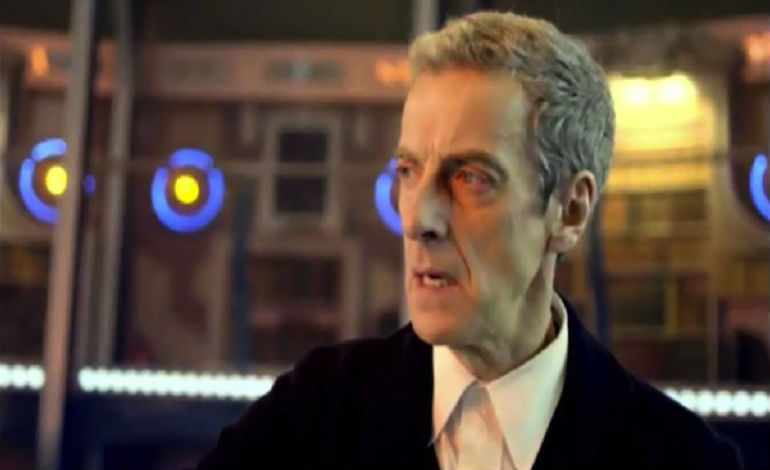


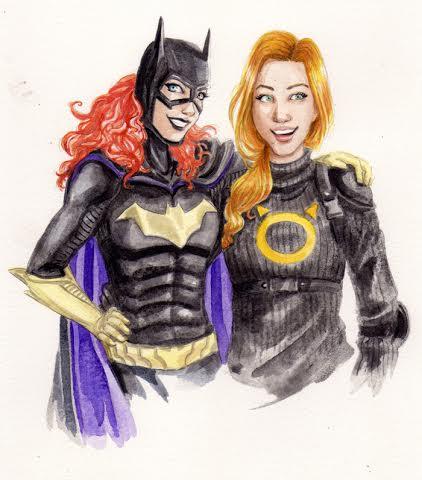
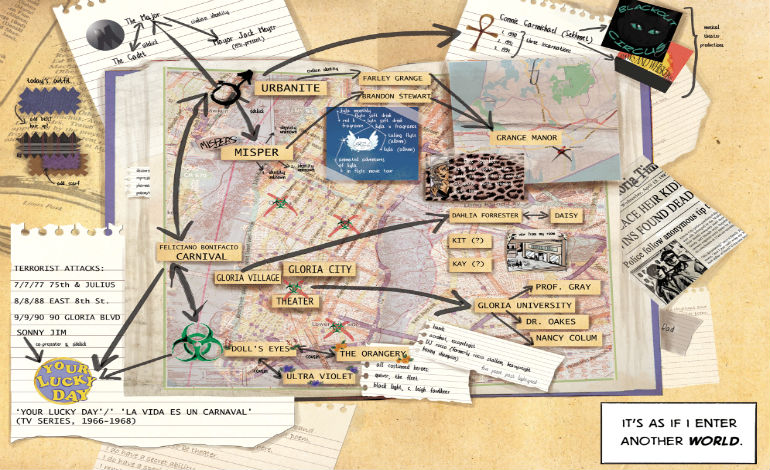
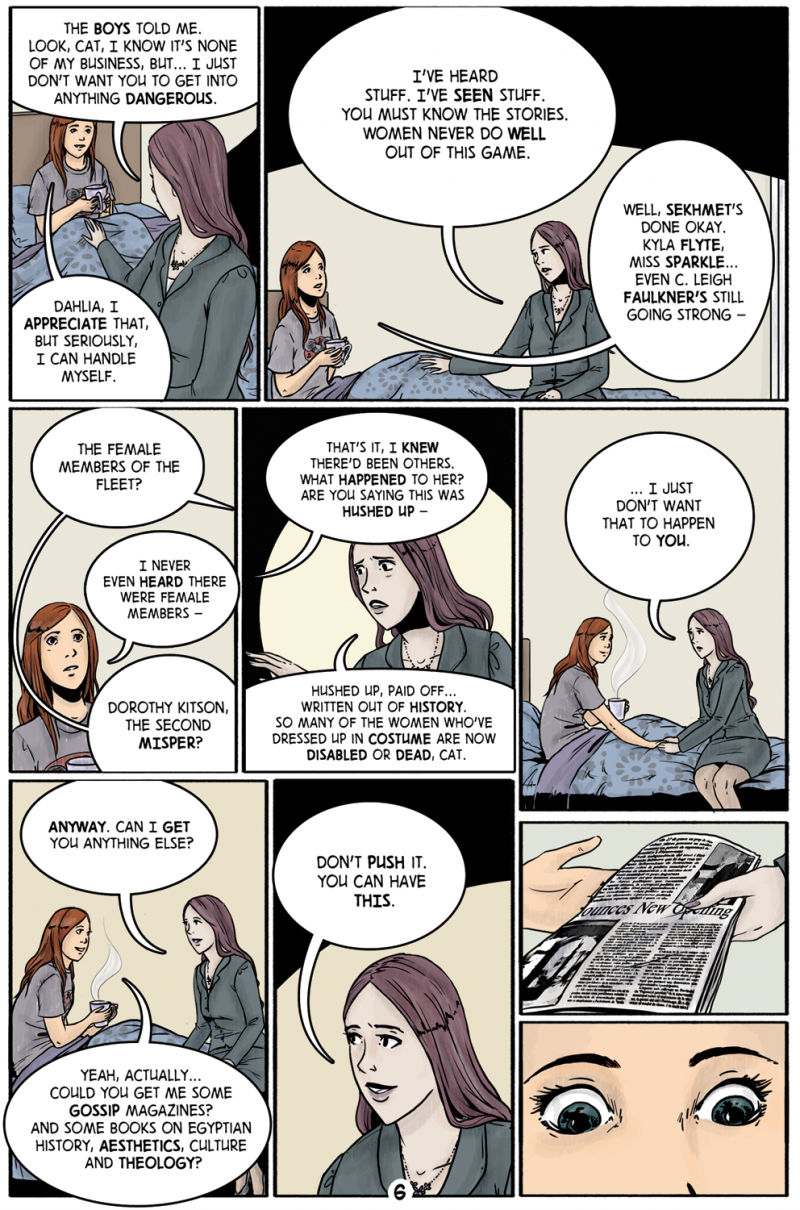
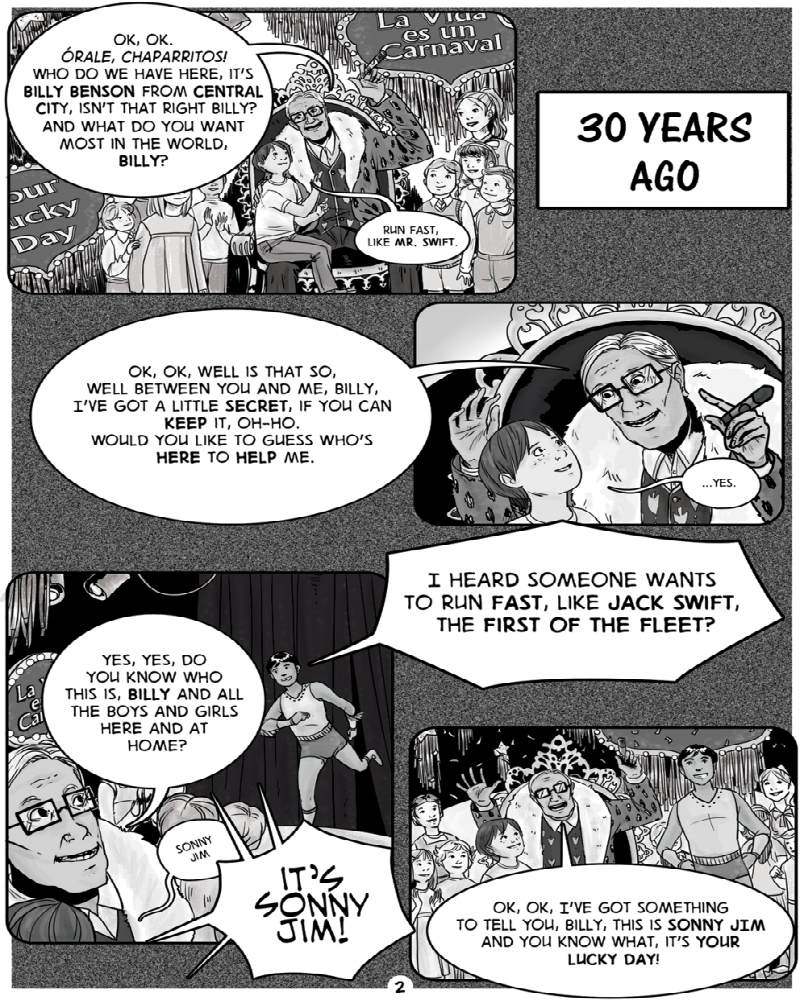
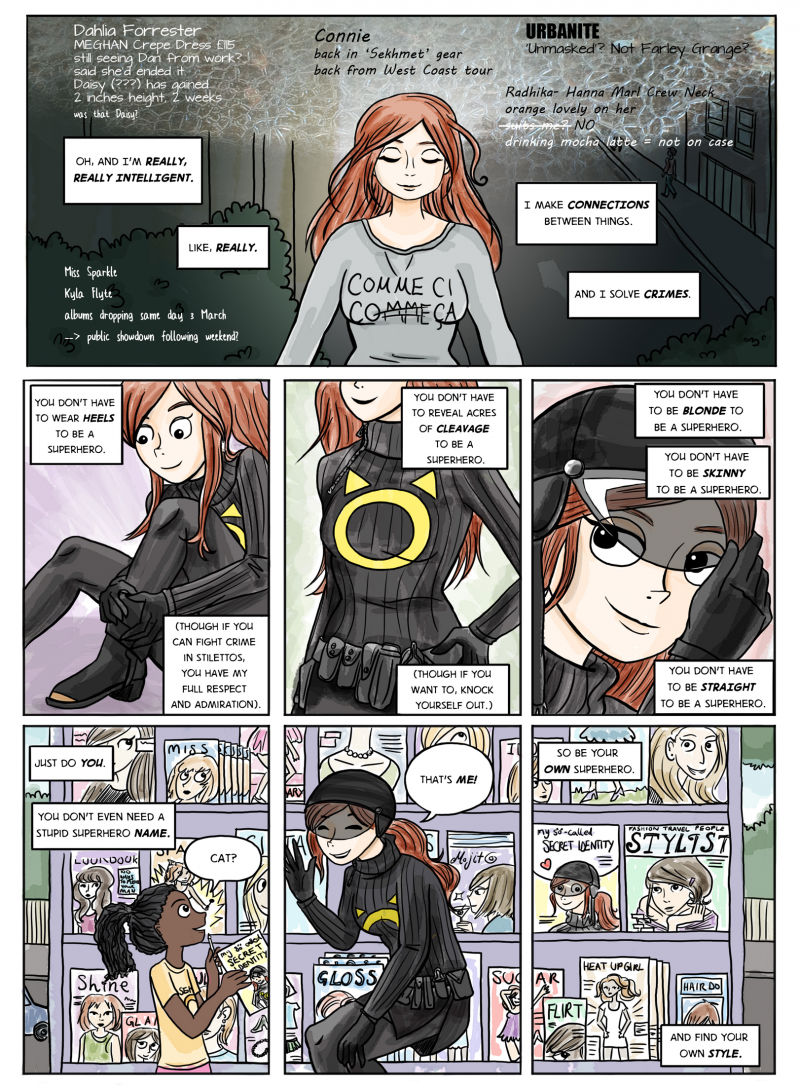
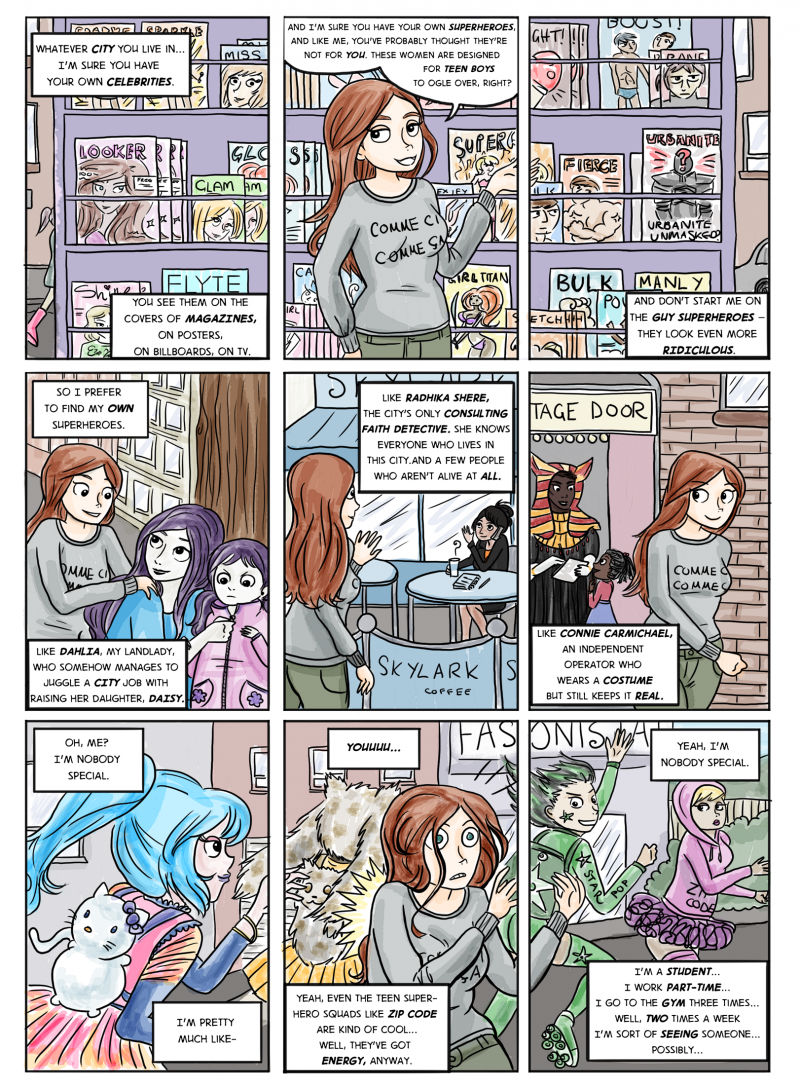


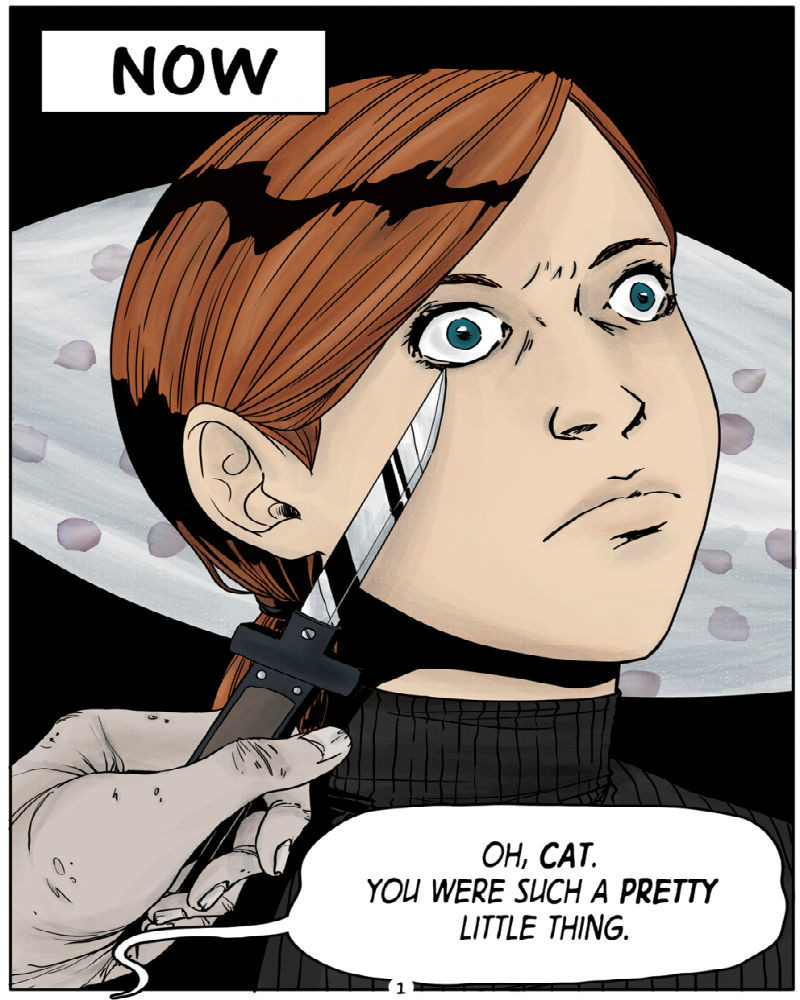


 Mythic Bios