Kris Straub’s Broodhollow: Luring Readers In With an Angleworm

I’ve said this before in other forums, but horror and comedy have a lot in common. You start off in an innocuous or, conversely, a bizarre place and then escalate the scenario until, right at the end, you deliver the twist: or the punchline.

Kris Straub has managed to do this, at least twice in a major way, for Broodhollow. I have been following this web comic for a while now ever since its start in 2012 and, I have to say, its level of storytelling pushes the envelope on what comics can actually portray. Unlike the other times I’ve talked about Broodhollow, I really don’t want to reveal any spoilers as suspense and reader anxiety, broken only a few times by laughter and warmth, are key to Straub’s work.

Here is what you need to know about the plot. Wadsworth Zane is a young encyclopedia salesman with a behaviour called The Pattern, something bordering on if not outright a symptom of obsessive compulsive disorder, trying to survive during the Great Depression. He gets a letter from his late great-uncle wanting him to claim his inheritance from the strange city of Broodhollow. Wadsworth encounters eccentrics, angry and suspicious citizens, strange creatures, and ghosts.

And it only gets weirder and more disturbing from there.

There is something light, airy, and innocent about the cartoon style in which Kris Straub draws the human denizens of Broodhollow and the daytime of the city itself. It is a nostalgia reminiscent of the old newspaper strips and Disney cartoons of the 1930s: a cheeriness slowly and terrifyingly subverted into warped and twisted Lovecraftian aesthetics of red and fear. Even the juxtaposition of cartoon drawings and serious dialogue, coupled with questionable memories and conflicts of dialogue and thought bubbles makes the reading experience truly jarring: in a way that truly works.

And now the second arc, Broodhollow Book Two: Angleworm, has recently come to a close. And I still don’t even know what to make of it. You can read Book One: Curious Little Thing on the Broodhollow website or purchase it and other sundry, evil things from Kris Straub’s Chainsaw Suit store. Book Two: Angleworm is only available online at the moment, but perhaps come December or so there might be a Kickstarter Campaign to make a book form possible: just as there had been for the first.

In the meantime, keep an eye out on the Broodhollow website for updates. In addition to creating comics, Kris Straub likes to create horror stories and they operate on the same principles of slowly creeping dread and “long game” punchlines as they do in his other works. For instance, he is the creator of Candle Cove.

But let me leave you with a pleasant thought for the season. While I won’t tell you what Book Two is about, I will say this. The thing you need to understand about angleworms is that they come from the soil, they feed off living and dead matter, and they are used as bait … to lure prey to a predator.

Or perhaps, in this case, an opening line bringing sleeping minds to nightmare fuel.

Oh and Kris Straub has announced that Book Three of Broodhollow will be coming out sometime in early 2015 running parallel to the Kickstarter for Book Two. It’s called A Game of Oubliette. Pleasant dreams everyone.

From The Darkness Of The 2014 TADFF: Why Horror?

It’s only fitting that the last film I viewed for the 2014 Toronto After Dark dealt with the first question that exists in every horror movie viewer’s mind in some way or form: why horror?

This documentary’s debut at the festival was an event in and of itself. It got an introduction from Rue Morgue managing editor David Alexander along with the team of writer, journalist, actor and film-maker Tal Zimerman and directors Rob Lindsay and Nicolas Kleiman. Why Horror? itself focused on Tal Zimerman, an utter horror fanatic and his interviews with many prominent figures in the horror film genre along with psychological experts and scholars examining the nature of horror in human life and how that translates over into why people like horror films.

This man really likes his horror.

Why Horror? spans a lot of territory and cultural background in Toronto, Tokyo, Mexico City, Xochimilco, London, New York, Vancouver, and Waterloo. We got some fascinating insights into Zimerman’s childhood, with his very understanding family (and long suffering but good sport of a mother), as he experimented with makeup effects creation on his brothers along with seeing his young son play with gruesome action figures while watching Godzilla films.

We got to see if people’s brains functioned differently through immersing themselves in horror movies through some tests that Zimerman (and at one point his mother who generally avoids horror movies) underwent and we got some history lessons as to how humans in different places used art and folktales to deal with themes of horror before the creation of film. And yes, the beautifully grisly paintings of the artist Goya is definitely used as an example of the former.

Some familiar interview subjects indeed.

But there were a few things in particular that caught my eye in the midst of conversations with George A. Romero, John Carpenter, and witnessing events like the Mexican Day of the Dead.

For instance, there was a discussion with some interview subjects about gender in horror. It was something of a mixed balance. On one hand you had actual dialogue with female participants in the horror genre such as the actress Barbara Crampton and directors Jen and Sylvia Soska. These conversations, if nothing else, cement the fact that women not only watch and enjoy horror, but they are definitely a part of it: and they have been a part of the horror film genre for quite some time. Indeed, there was even a fascinating segment of the documentary where women in Japanese horror are discussed: particularly in how female ghosts can embody the resentment and hatred of a life of, at least traditionally, enforced passivity bleeding into a need for vengeance even beyond the grave.

Yet on the other hand, much of the documentary was very male-centric in scope. In some ways perhaps it can’t be helped considering that the main interviewer, instigator and focus of the Why Horror? documentary is Tal Zimerman and, as such, there is a definite emphasis on how horror affected his developing years as a young male and, by extension, those of other men in the field. Perhaps that’s what led to discussions with subjects about how horror film supposedly elicits fear and sexual arousal in women. There is even a study of sorts in the film focusing on how women, again supposedly, are either impressed with a man’s stoicism in watching such a movie with them or seeking comfort in them as a protector-figure out of fear. There are definitely some gender stereotypes in some of these segments, though it does tend to highlight the presence of the ultimate assumption: that horror is a male-dominated field.

It also brings home the fact that even if horror is a universal human feeling, both perspectives of fear and lived experiences are determined by one’s cultural standards.

Indeed, I think that these segments bring up a lot of questions and thought in the viewer and they lead to other places. After all, there is the title of the documentary to consider here. Why does horror as a film genre or as any kind of genre even exist?

Each interview subject had a fascinating insight into the matter: ranging from horror films functioning as initiation rituals that we no longer have in modern society, to a mode that facilitates the safe catharsis of fear and potentially latent sadism, all the way to being a place that allows us to engage with the inevitability of our own mortality and death: of knowing and coming to terms with the trauma of death that is ultimately inherent in our lives as human beings. Really, fear itself is a force that makes us feel more alive and depictions of danger and death make us more aware of what we are not: and perhaps providing a little more closure from that truth.

One other thing that really got to me personally was another question that got posed throughout the film: what was your first horror movie? I actually had to think about this quite a bit myself based on everything I’d seen in the documentary. My first horror film was actually Gremlins. I remember being very fascinated with the story behind them, the different personalities that developed and multiplied, and being immersed into that campy 1980s night world of very specific world-building rules while wondering how Gizmo got to a point where he never tried to eat after midnight.

I wonder what happens when you review movies after midnight.

But I also know that some don’t consider Gremlins, or its strange sequel, to be a proper horror film: whatever that is. I think, in terms of the “coming of age” discussions that spanned throughout Why Horror? my first ever film was actually Tales From The Crypt: Demon Knight. It was at that point in my youth that I actually first witnessed sex, questionable morality, and profanity combined with the monstrous, the supernatural, and the gory. I remember almost having a panic attack over seeing it: but in retrospect it was more from my own father’s negative reaction to the swearing and graphic themes than it was to the film itself. I think that it was at that point, in my life, that I “awoke” in a fashion: and it’s apparently commonplace for that to happen with adolescents and horror movies.

I suppose Why Horror? is on to something when it seems to hint on the fact that your first horror films say something about you. I’ve always been fascinated with horror from a very early age. In fact, I would go as far as to say that all human story and myth ultimately comes from trauma — from the basic trauma of realizing your own vulnerability and mortality — and that this realization will alter your consciousness and help you integrate with the rest of this strange, uncertain, arbitrary world of why. Perhaps horror is the original darkness from where we got all of our stories out sheer necessity.

Even though I’d be hard pressed at this time to attempt to describe the narrative organization of Why Horror? I would say that Zimerman begins a fascinating journey into the origin of horror as stories. In the Question and Answer period after the documentary, someone from the audience asked Zimerman if he predict horror’s future. This actually prompted Zimerman to bring up the presence of horror stories online in the form of creepypastas: how they seem to have gone back to a new kind of oral storytelling (which the scholar Walter Ong might see as products of “secondary orality”) or an online urban mythical structure. I believe he expressed an interest in perhaps making a documentary on creepypastas one day.

If so, I definitely look forward to it.

TADFF 2014: Late Phases

I guess it’s only fitting that I should write this review past five in the morning given the title of the movie. Adrián García Bogliano’s Late Phases was the second film shown at the Toronto After Dark’s Werewolf Night and the third and last film of the day.

What can I tell you about it? Imagine the following situation, if you will: you are a blind elderly man. You find yourself in a retirement residence surrounded by people who just want to go through a nice and steady rhythm of life. You deal with younger people patronizing: wanting to help you, but not really spend time or actually listen to you. Your only friend is your seeing-eye dog Shadow. Most of the residential people you meet generally keep to themselves, but a few are friendly.

Then one night some creature, some giant beast, comes in and starts killing. And no one knows what it is or does anything about it.

Your name is Ambrose  and you are also a former soldier: an American veteran of Vietnam. And while you did some terrible things during that war, while you might have failed to protect life and, indeed, took many lives, you just can’t sit back and do nothing. This is the premise of Late Phases. Do not expect Bubba-hotep here: aside from occasionally laughing at Ambrose’s curmudgeonly smart-ass remarks, there neither fame nor comedy in this story, though the heroism is definitely real.

The first part of the film establishes Ambrose, played by Nick Damici, along with his son Will and some of the other retirees. The werewolf is introduced relatively quickly, though never fully revealed until later. There is heartbreak almost immediately. The second part of the film, roughly, covers a month in which Ambrose finds out about the full moon the night of the attack and without any hesitation believes in and knows exactly what he is dealing with. This is a refreshing element in a werewolf or supernatural film: where it takes the protagonist a while to accept that the supernatural even exists. But Ambrose, if nothing else, is no-nonsense and right to the point.

He mostly knows his enemy. And what he doesn’t know, he slowly and circumspectly, begins to find out. It is so tempting to compare Late Phases with David Hayter’s Wolves: especially as the latter was shown right after the former. Whereas Wolves takes the trope of the werewolf movie and teenage life and subverts their forms into something else, Bogliano fits into the trope of werewolf horror and adds dramatic elements of human relationships and humanity into the mix. Ambrose is an aging man who has lost his sight but retains enough of his senses and military training to fight this werewolf. And the werewolf in this film is not something misunderstood. It is an angry, hungry, twisted thing that rips off its human flesh at a full moon. And it’s human form is not that much better. In fact, I’d say that if there is one thing Wolves and Late Phases has in common it’s the idea that sometimes the human element can be even worse than the animal element in a werewolf.

It takes a far amount time to play the who-done-it and who-is-it werewolf part of the film but after Ambrose gets some silver bullets made and figures out that someone else requested some before him, Bogliano gets right into who that werewolf is. At same time, for all of Ambrose’s careful planning he is still blind and can’t perceive everything going on around him. While his lack of sight is supplemented by improved other senses, he doesn’t always know when someone is looking at him, or if they can see something he doesn’t.

Again, what I think really brings this movie into the fore is, like Wolves, another reference to The Lone Ranger. This time Ambrose talks with a gunsmith about the character and his silver bullets. They also talk about how the ranger doesn’t shoot to kill. Ambrose is unromantic and while he might want to save lives like the Ranger he is not hesitant over doing what he’s spent his whole life doing.

The film ends much like Ambrose has lived a good portion of his life. There is gore, and blood, and ubiquitous evil and animal rage, hypocrisy, and ultimately honour. You get to see a widower put on his ring, a man honouring his dog, and a soldier shooting some motherfucking werewolf monsters with silver bullets, and a rare and heartfelt message left on an answering machine for his son.

Perhaps Ambrose becomes a hero late in his life. But he does his best to save his fellow retired neighbours from a fate worse than death, and he does what he has to do. I couldn’t recommend this movie highly enough. The full moon always rises, but it won’t always be night.

Do What You Fear. Do What You Desire. Write For Clive Barker

Sometimes what you’re scared of the most is the very thing that you desire.

This is the first lesson from horror and fantasy writer Clive Barker: a lesson that branches off into mystery and mythos. So many of his stories have inspired countless other writers and creators. Jovanka Vuckovic, for instance, is in the process of creating a film adaption of Barker’s short story Jacqueline Ess. In fact, last year Clive Barker called out writing submissions for an anthology based on the world of Night Breed.

And now Clive Barker wants to read your writing.

Yes. You read that sentence correctly. You see, Clive Barker is not only an excellent story maker, but he is a talented artist as well. Your task prospective writers, should you accept it, is to look at and keep track of Clive Barker’s drawings on Deviantart, activate or make your login and write a story of anywhere up to two thousand words. Barker will go through your posted entries and decide which words capture the spirit of his artwork the most. He will read all of these stories by October 31.

Now if this isn’t a Halloween Event, I don’t know what is.

I’ll be honest with you ladies, gentlemen, and other beings. The idea of this event both terrifies and excites me. I myself am a writer and I have many projects that I need to do. And it is a rather intimidating prospect to have Clive Barker look at something I wrote. There is a part of me that is actually afraid to try this: for fear of whatever I make not being good enough. But then this is Clive Barker we are talking about here and not only would it be awesome for me to see something I made — even if it doesn’t embody his work — but he gives all of us writers something even more valuable than readership and potential critique and suggestions.

He gives us an excellent prompt to keep writing brilliant stories.

Sometimes that old lesson is true. Fear and desire are often the same sides of the coin, and when they are embraced, that’s where some of the best stories come from. I hope to see everyone in the Deviantart Comments. Oh and the above graphic in this article? It’s taken from the site. And that is your first prompt.

Image Credit: Clive Barker

Larry Wilson’s CINDY Kickstarter Campaign Needs Some Dust

Larry Wilson is the co-writer and co-producer of Beetlejuice, co-writer of The Addams Family, and writer and director for six seasons of Tales From The Crypt. Many of these shows informed our childhoods as geeks. Certainly, they did mine. Larry is working on a new Kickstarter Project. It is a web series called CINDY: a quirky dark fantasy and comic twenty-first century retelling of Cinderella. Larry has been good enough to take the time to tell us more about his current work and some details about his crowdfunding campaign.

GEEKPR0N:  So Larry, what is it about the story of Cinderella that motivates you to use it as the basis of your show? 

Larry Wilson: Once I had a “body of work” and enough years to look back on it, I realized that almost everything I write has this dysfunctional family at the center of it. (I’ll let you figure out what that means about how I grew up!)  For me that what’s Cinderella is really about.  If you watch the CINDY preview you see that Cindy’s first line is “I’m an orphan with no friends.” Family doesn’t get more dysfunctional than that!

GP: What inspired you to include elements from the Reality TV medium in CINDY?

LW: Well, Reality TV is the Zeitgeist, right?  And a certain amount of it makes me cringe!  So I thought it would be fun to satirize and I think we’ve done a really good job!

GP: Why have you chosen a web series as your show’s medium?

LW: I chose a web series because of the flexibility and creative freedom and also because I am HONESTLY BORED with pitching things in Hollywood the way it’s always been done.  Thanks to DIY & the Digital Age the “put your hat in your hand and go beg for money” pitch is slowly becoming archaic.  Hurray to that!

GP: To what extent do you think that your previous projects, your work with “the strange and unusual” might influence the spirit of CINDY

LW:  CINDY is full of “the strange and unusual”.  It’s the creative world I inhabit.  Again, looking back, the couple of times I’ve written “straight” comedy or drama, it’s not been bad, but it’s not been particularly good either.  So I’ve typecast myself and embraced my weirdness.  Guess what?  I like it!

GP:  Let’s talk about a reward on your Kickstarter for CINDY. Is it true that not only will you sign some of posters for your previous films, but Caroline Thompson — writer of Edward Scissorhands and The Nightmare Before Christmas — is going to sign some movie posters of her work as well? 

LW: Yes.  It’s very true.  Caroline is not only my sometimes writing partner but my all the time good friend.  She wants to help CINDY succeed, God love her!

GP: Two of CINDY‘s Kickstarter pledge tiers revolve around screenwriting: one a screenplay development consultation and a personal development session with you. Basically you are offering to help donors for those tiers look over their script ideas and drafts. Many of us, including myself, are writers. Can you give us more information on what both of these rewards entail?

LW: I’ve taught screenwriting, in various classes, for over 25 years now.  I teach when my writing career is hot, cold and every temperature in between.  I’m not a screenwriter who staggered into teaching after an epic screenwriting career fail!  I teach because I love it and I think my methods are unique & inspirational.  It’s a bit of hype but not much to say I think the CINDY screenwriting consultation premiums are the biggest bargains on our list of goodies.

Fairy Manual

GP: What can fans do to help in funding your Kickstarter and making CINDY possible?

LW: JUST SEND MONEY AND SPREAD THE WORD, PLEASE, PRETTY PLEASE!

GP: These are some very impressive incentives to back CINDY.  You can find more information about CINDY on its Kickstarter Campaign page as well as some actor, staff, and character interview snippets on its Youtube channel the Cindy Series. At the moment this show is still trying to fit into some glass slippers. You still have time to donate more than a pair … along with a little bit of Dust: for fairy motivation.

Doctor Who: Gone In Sixty-Six Seconds

How much can a mystery cost you?

In the case of Doctor Who‘s “Mummy On the Orient Express”: five lives and sixty-six seconds each.

And now: beware spoilers.

From the beginning of the episode, on a futuristic space vessel bearing the name Orient Express, when you see that mummy lurching towards the old woman, a horrible spectre that only she can see and you look at the timer at the corner of the screen you think that you know what you’re going to be dealing with. It’s a monster: a rotting and dessicated creature of the horror film genre in a futuristic Agatha Christie murder mystery novel.

Of course, given the nature of Doctor Who, it is never that simple. In fact nothing is simple in The Doctor’s universe. I mean, there are mysteries, and then there are non-surprises. I suppose I really shouldn’t have been all that surprised to see Clara coming with The Doctor on this cruise: for what is supposedly going to be their last trip before she stops being his Companion… or so the plan goes.

You know that sexual tension we were told about? The one that wasn’t going to be happening between Clara and The Doctor? Well, it’s true: you can take their initial time together on the cruise as something of a father and daughter arrangement but it just doesn’t ring true. Perhaps sexual tension is the wrong term. Perhaps it is a tension of an uncertain relationship: of not really knowing where they stand after everything that happened in “Kill the Moon.” But there is just a way that, when Clara tells The Doctor she thought she hated him but realized she didn’t and never could while nestling herself on his arm that made, at least me, wonder what is going on here? Is this the final moment before a breakup as two people go their separate ways?

Doctor and Clara Orient Express

I admit I really did like the interplay between them: though I personally think Clara came back far too quickly. In my last review I totally thought they would be separate for at least one episode. That said, I’m glad there wasn’t a scene where he had to apologize to her or vice-versa. We got thrown right back into them being together. But I suppose it’s something we all should have seen coming: that this is not over yet and that this “last voyage” is not as it seems.

Just like everything else in this episode.

Here is what I’ve noticed about Doctor Who episodes should I ever want to write one. Basically, you start off with a weird premise of two ideas that ordinarily wouldn’t go together, but eventually blend well and do. You focus on interpersonal relationships and working dynamics as the characters realize something is strange and try to navigate their way through the situation. The Doctor, in the immortal words of the musician Voltaire “makes some shit up” after a while or throughout the episode while making weird references and banter, the situation becomes inverted and you discover what is really going on. The Doctor tries to reason with “the monster” who becomes relatable as a selfish, pitiable, or misunderstood being, whom he either saves that being or lets it destroy itself, while sometimes he is confronting with his dark side in the process. He ends up resolving some crisis through taking a major risk, there is some wrap up with regards to the other characters, and he and his Companion go off to a new place like “Barcelona” or he leaves alone to deal with his demons: all of which to emphasize just how important a Companion is to getting him to relate to existence. And this doesn’t even include the strange moments of workable paradox that you get by including time or time travel in some of these scenarios.

Does this sound about right to you? I suppose that transdimensional “mummy” only comes for you in sixty minutes instead of sixty-six seconds, but “Mummy on the Orient Express” pretty much follows that strange, weird, and wonderful formula: the invisible mummy on the space liner, the relations between Clara and himself, Clara and Danny on the phone, Clara and Maisie, the suspicion that he and Clara both come to as they sense something is wrong, the reveal that the liner is actually a hidden laboratory to gather scientists (who have been gathered there as guests) to seemingly replicate the effects of the mummy for war-like purposes, the sarcophagus that Clara finds is supposed to be where they put the mummy after successfully capturing it for their kidnapper and jailer, the horror and cruelty of the fact that the mummy attacks those who are sick or have psychological trauma, The Doctor brushing with his dark side in letting all those people die just to find out how to stop the mummy, finding out that the mummy is very pitiable (what is with this theme of soldiers fighting eternal and horrific wars?), and then The Doctor risks his life to deal with the situation.

I will leave the rest to your imagination if you haven’t watched the episode. But let me just add this bit. There is a reversal from “Kill the Moon.” This time, after almost putting Clara in another difficult place and making her think he is using her, while revealing some information that may have been pertinent for Clara to know beforehand, he decides to take it all on himself and put himself on the line. The episode ends where The Doctor is genuinely expressing regret for his seemingly callous actions. And for all he criticizes Clara for displaying two emotions at the same time at the beginning of the episode, he does the same through displaying both clear self-doubt and grim certainty over how he would have attempted to save as many lives as he could: even if some had to die for him to do so.

Doctor Talks To Clara

As for Clara: she still needs to find a healthy medium between her relationships and work on her honesty. A lot. In addition, we are left with more questions as to who arranged this entire situation: especially considering that he seems to have received a call about it at least once on the TARDIS when he was with Rory and Amy as The Eleventh Doctor. Is it Missy and her servant that arranged this? Or someone or something else entirely?

And I wonder if every climax and moment of crisis in Doctor Who has resolved itself in at least sixty-six seconds? Well, look at it this way: at least I didn’t make the obligatory mummy joke.

Are you my Mummy

Until next week, fellow travellers.

Myst: A Television Series

It was 1995. I was finishing elementary and headed for high school and I had a major need to fill myself with epic fantasy. I remember going on yet another shopping spree through Coles and I came across a book. It looked like a battered brown notebook with a strange crest in its centre. For me, Myst: The Book of Atrus contained all the elements of a brilliant world: a universe with Descriptive Books that led to alternate worlds — called Ages — linked to by the imagination and skill of a writer through the lost art of D’Ni writing. Just the idea of a civilization that could create worlds through writing books was enough to get me hooked: that and the character of Atrus as he deals with the intrigue behind his family and the reconstruction of an entire way of life.

I was hooked. As I read The Book of Ti’ana and discovered just why D’Ni fell and then The Book of D’Ni in which we get to see an adult Atrus attempt to rebuild D’Ni and uncover more than he bargained for, I was left with many more mysteries. Then I played Myst. Oh yes. I played Myst and Riven and kept writing in the notebooks thoughtfully provided by Cyan as I found alternate amounts of wonder and frustration in navigating my way through both games. I got to discover what happened to Atrus, his father Gehn, his grandmother Anna, his wife Catherine, their children, and the fate of D’Ni. I had a very different experience playing the games after reading the books and it made me both sad and curious to know more: to interact with the world that Cyan created.

I didn’t play the other games due to technological constraints, but I followed what happened in them. I was on a forum about Riven and I always wanted a Book of Gehn: to know about the years between the fall of D’Ni and his own travels and his fateful meeting with his wife Keta. I even created a fanfic idea: a lost Age and enemy as it were.

Myst is a world of possibility. I was lucky in that just last year I backed the Unwritten: Adventures in the Ages of Myst and Beyond Kickstarter and got to write a scenario for that table-top version of the universe I love. Just once, for a moment in time, I got to be part of the D’Ni Guild of Writers that I dreamed so much of joining when I was young. I got to make the Age I dreamed of making so many years ago.

I also wanted to see more of Myst. I’m one of those people still waiting for The Book of Marrim to come out: however long it takes. And I’ve heard about the Mandalay Television Pictures program, the Delve Films DVD movie adaptation of The Book of Ti’ana, and even the Dark Horse comics prequels to Myst that never materialized or simply didn’t work out.

But they are trying again.

Legendary TV & Digital Media has made a deal with Cyan Worlds to create a Myst television series and make a companion video game: perhaps to make the show more than just a viewing experience, but an interactive one as well. I’m not entirely sure, but I’m guessing that they are making the game a mobile app to interface with during, before, or after the airing of the program. Or hopefully something that can be on a computer as well. It is definitely an interesting idea and something that I would very much like to see happen.

When you think about it, we live in a world of linking now. The Internet is all about hyperlinks and mobile apps only increase the experience. In Myst, traveling into other Ages through Descriptive Book is called linking. Hopefully, if all goes well, we will all soon be able to link to another world of Myst.

Doctor Who: That’s No Moon …

It’s hard to resist titles like that: even when they’re misnomers.

This weekend, on Doctor Who, we got to see “Kill the Moon” and the mess — the real mess — that came from it. And I’m not talking about the moon crumbling in 2049.

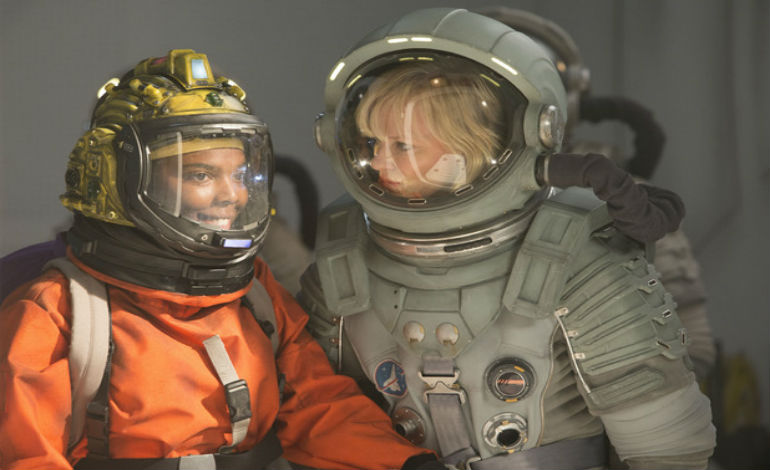
For me, the episode started off fairly slowly and, quite honestly, in a very predictable manner. The Doctor, Clara, and the young girl from “The Caretaker” episode Courtney Woods decide to travel onto the moon: so that Courtney would feel like she’s special and not just the misbehaving young girl that threw up on her first time in the TARDIS.

Courtney Kill the Moon

Then we find said company on a space ship where scientists have gone to the moon to blow it up with explosives because it is endangering the Earth below. Of course you have your obligatory monsters and a truth about the moon, that is the moon and yet not, that you begin to glean almost right away when The Doctor calls the aforementioned monsters — the spider creatures — bacteria.

Then humanity has a historical decision to make and …

The Doctor says screw this, leaves Clara, Courtney and the scientist Lundvik to decide whether kill a potentially innocent in order to save the Earth or take their chances with its survival, and leaves them. Just like that.

Yeah.

Clara Kill the Moon

You could already tell that there was a conflict coming to a head in this episode and, as I said before, it is not the moon: unless you consider The Doctor’s ego and Clara’s self-righteous indignation as small orbital satellites in and of themselves.

The episode begins with Clara wanting to make The Doctor confront the fact that he made Courtney feel like she was “not that special.” Of course getting The Doctor to do anything, even on a good day, is slightly less difficult than herding a thousand cats. It also presents another conflict. Clara is not a tutor or babysitter any more. She is not a character is “born to save The Doctor.” She is a teacher and she has a responsibility to her students, including Courtney. The issue is that The Doctor does not, in fact, have a responsibility to Courtney or anyone despite Clara’s relationship with him: save for being captain of his own ship and being in charge of the safety of everyone in it. It is this tension between them that only gets worse as the episode progresses.

Much like The Doctor perceives Time and its eddies at the best of moments, and with further description of this Time Lord sense in the episode, you can see this moment coming a mile away. Courtney being exposed to danger is a failing on both The Doctor and Clara’s parts: The Doctor not being aware in this incarnation of what a child can perceive and Clara for, frankly, not telling Courtney to stay on the TARDIS sooner after they landed on the moon and she got what she wanted: being the first woman on it. Certainly, when straits look dire Clara gets another reality check when, in asking Courtney to call her by name, Courtney prefers to keep calling her “Miss.”

Make no mistake: Courtney is a child and Clara is supposed to be her teacher. They are not friends in that way. Clara is the adult and has to make her own decisions and take her own responsibility. And it seems as though that, by extension and according to The Doctor, so does all of humanity.

But let’s not kid ourselves here. While I do believe that The Doctor genuinely thought humanity should consider the moon’s fate, and that Clara exemplifies humanity in his eyes, there is a fairly large part of this that was the result of him being quite fed up with Clara’s attitude: at least in regards to their dynamic. The events that reached their crux in “The Caretaker” with regards to Clara, Danny Pink, and The Doctor, as well as Clara’s professional and traveling lives definitely affected The Doctor’s decision here.

The fact is, it’s quite clear that The Doctor is tired of babysitting children and, by extension, humanity. He may even be resentful of how Clara tried to hide Danny Pink from him and initially involve him in their dynamic against his knowledge and will. Perhaps he thinks that Clara still unfairly compares him to the Eleventh Doctor who, let’s face it, coddled Clara quite a bit or at least comparatively so. Perhaps he is fed up with Clara thinking he should take responsibility for sorting out her own priorities.

Dr. Who Kill Moon

And Clara, at least how she has been written since The Doctor’s Regeneration, is also fed up. She can’t seem to deal with this new change of personality. In addition, what he does to her in “Kill the Moon” is just a large scale version of what he did to her in “Deep Breath”: seemingly abandoning her and breaking their trust. Her angry monologue at the end of the episode hits a lot of points home as to how this Doctor treats humans and what his place should be on Earth: at least from her perspective.

It’s painful to watch. Both characters seem to have regressed into immaturity and misunderstanding. I remember once thinking that The Doctor had grown up a lot since his early travelling days, but he is now more of a throwback to those more immature times. That said, I think that Clara has had to grow up for some time now. Travelling with The Doctor isn’t all fun and games and indulging his Companion’s whims. He asked her to act like an adult on behalf of humanity. And she did.

And it cost them.

Clara's had enough

Perhaps, in the end, it’s best that The Doctor travel alone for a while. He clearly has things that he needs to do and others seem to just be getting in his way at the moment. And as for Clara, she knew to some extent the potential consequences of traveling with The Doctor. She could have left him any time when she started her career and her relationship. I think that she has to ask herself just what she wants from him just as, conversely, The Doctor should give her some space to make those decisions.

It’s not a one-sided situation and I hope that when it comes up again, it’s dealt with in a mature manner without one side expecting the other to simply apologize.

That said, I think Danny Pink has been the only character who has been acting even close to rational between the three of them: becoming the voice of reason for this episode and I want to see more interaction with him. Even though the relationship between Clara and The Doctor was the highpoint of this episode for me, I truly appreciated that Bechdel moment where three women: a school teacher, a student, and a scientist decided the fate of the Earth and for some time talked only about the consequences.

I can be snide and make a reference to the title of a Heinlein book and state that “The Moon is a Harsh Mistress,” but sometimes it is something simply that heralds the end of the day and the promise of an interesting night.

Doctor Who: Things Get Messy

A caretaker is someone that maintains a particular space and cleans up messes. The Doctor manages to almost spectacularly fail in both of these roles: at least for this episode. For a Time Lord who is excellent at running, he is dismal at hiding for extended periods of time without drawing a great deal of attention. For a Doctor Who episode that is called “The Caretaker,” the events that unfold are the antithesis of that word.

Doctor Caretaker

In fact, it seems as though The Doctor is not the only one good at making messes for the purposes of attempting to fix them. Even as The Doctor — and I use the term lightly — infiltrates Clara Oswald’s school in order to lure an alien weapon called the Skovox into neutralization, Clara herself is on a tight-rope balancing act between not telling The Doctor about her boyfriend Danny Pink and not telling Danny Pink about The Doctor. It’s in this episode in particular that we get to see the complexities of the relationships between these three characters and just how messed up they become, at least initially, when they finally reach a head.

Clara … does not handle this well. For someone who is a Companion to a two thousand year old Time Lord, who has reached the point of opening the TARDIS with a flick of her own fingers, who had her sense of self spread throughout space and time, she comes across as quite immature in dealing with and making sense of romantic and even platonic love relationships. However, I’d like to think that this can be forgiven to some extent as Clara has spent most of her life, with or without The Doctor (if the latter is at all possible) doing other things and not focusing on relationships. She might be an excellent Companion, but as a girlfriend she is still learning. And as a character outside and away from The Doctor she is still growing too.

But The Doctor has far less of an excuse: especially with his hostility towards Danny Pink. I think, however, that Danny Pink opens up another facet to the show and this is the episode, where everyone is stepping on each other’s toes, that he really starts to shine. It’s here, when he finally confronts The Doctor that we learn two things. First, that The War Doctor still exists inside of our favourite Time Lord in a lot of ways and, second, there may be something of a story behind Danny’s hesitancy in talking about his past as a soldier. This man is no Brigadier or Wilfred Mott and The Doctor is not the same being he was before he left Earth in his fateful Eighth incarnation. I will say that the words “soldier” and “officer” come into play and they explain a lot about those two characters.

Danny Vs. The Doctor

In a way, the monster in this episode was almost quite incidental and just a plot point to get all three characters truly acquainted. I do find it ironic that The Doctor, who creates an invisibility watch, is really bad at hiding and the mechanism that he wears on his back to deal with the second coming of the creature looks like a Ghostbuster proton-pack. I also think the question, “What’s a policeman without a death-ray?” truly made my day.

Doctor Pack

It was also fascinating to see this Doctor deal with elements of his past: particularly his reference to River Song (the first time this incarnation ever refers to her), the adoption of his age-old moniker John Smith, and the red herring in the form of an excitable younger man in a bow-tie whom he believes that Clara is in love. Even the title of this episode is a misconception, “The Caretaker” being a word sounding awfully close to Tom Baker’s “Curator,” but The Doctor is a long way from becoming a kindly, sedentary old man. Right now, he can barely even deal with a small child throwing up in his TARDIS.

As a result “The Caretaker” ends up leaving more loose ends than resolutions. We have yet to see the further dynamic between Danny and The Doctor: or just what orders might have been too much for Danny to follow back in the day. And then there is Missy again, and someone else who is working for her in the Promised Land … dealing with the dead.

No matter what you think of this series, I think we can all agree that no matter what this is going to be messy indeed.

Doctor Who: We Go Into The Dalek

When The Doctor tells Clara that they are going to travel “into darkness,” what is the first thing on your mind? Is it a blackhole? An abyssal planet? A pocket dimension of death or pure nothingness? And what does this have to do with Daleks?

Well, in the case of the second episode of Doctor Who season eight we have the answer in the title.

“Into The Dalek.”

Dalek Eyestalk

But what does that mean? In my recap of “Deep Breath” I talked about Doctor Who becoming less a fairytale now and more of a folktale: a cautionary tale or a horror story. Now, since 2005 we have seen hints of what is “inside” of a Dalek: the ultimate bogeyman of the Whoniverse. We know they are genetically engineered beings of pure hatred that were once humanoid, either Kaled or even in some instances human. They are bred to destroy anyone that is not them and even those among them that aren’t “pure.” Moreover, they are placed into advanced cybernetic carapaces — essentially miniature tanks — that allow them to obliterate anything at will. They rarely feel touch or light. They are just plain self-hatred and living bile made to kill everyone and everything else in all existence.

Russell T. Davies truly explored that Dalek condition and the horror of them. But Steven Moffat’s attempts to do something of the same somewhat pale in comparison. This time, however, Moffat attempts to do something particularly ambitious. This time he makes us see what a Dalek is from the inside out.

It’s pretty much a misnomer to call any Dalek a “good Dalek.” By the time The Doctor finds himself captured at a secret base studying a damaged Dalek that claims to desire the destruction of its own species most fans aren’t really taken by the novelty. I mean, you had the episode of “Dalek” with the “last Dalek” becoming “infected” by Rose Tyler’s DNA and therefore developing more complex feelings: actually making you feel sorry for it. Then there is Dalek Caan who, after viewing all of time and space, goes insane (or sane) and plots the destruction of his own species.

So it is not new to see a Dalek that hates its own kind. Most of them do so anyway. And honestly, when it explains to The Doctor and the team attempting to repair it, about how it saw the birth of a star and understood the concept of beauty, I was thinking Dalek freaking Caan and all of time.

Even The Doctor’s revelations about his (hopefully) evolving new self hearken back to “Dalek” where he is told that he would make “a very good Dalek” though in this case the Dalek in question tells him that while it is a “bad Dalek” he is “a good Dalek.”

That said, I can appreciate what they attempted to do with this episode. The technology to shrink The Doctor, Clara and their team into the Dalek’s very body, its cybernetic nervous system, is a throwback to some vintage and often B-rated science fiction film. However, I still think a lot more detail could have been put into the function of the Dalek’s immune system: elaborating on the ghastliness of its construction in a more visceral way and the horror of it. It’s actually very similar to some of my issues with the “Asylum of The Daleks” episode where, again, I definitely thought that Moffat could have expanded on the horror of, well again, insane and broken Daleks.

Broken Dalek

It is fascinating to see The Doctor investigating a Dalek from the inside considering his long history with their species and, of course, the inevitable issue that by doing so he is also exploring himself. And, oh boy, does The Doctor deliver for us.

His other incarnations had their moments of sheer terrifying presence: from Nine to even Eleven. But there is something cold about Peter Capaldi’s Doctor: particularly in the way that he clinically and detachedly informs a female soldier of the death of her brother, and writes off a member of their party as dead and even expendable. Not even The War Doctor himself, a battle-hardened ancient forged in the awfulness of the Time War was this seemingly callous.

Doctor 12 and Clara

We remember, again, why The Doctor needs to have his Companions when Clara does something that I totally thought she would do in the first episode and pretty much slapped The Doctor hard across the face. This, of course, serves to get him to help deal with the Dalek, but I will say that if the happy conclusion of this story is the creation of a Dalek serial killer of its own kind — inspired by “the beauty of The Doctor’s hatred” — it speaks volumes about him at this point.

There are two other things of note. The Daleks in this episode do not seem to know who The Doctor is: or at least not this Dalek. I thought that by “The Time of The Doctor” they would have disseminated that intelligence back into their collective conscious across space and time. But one element I found very fascinating was The Doctor’s very heavy-handed and vocal dislike for soldiers. Perhaps this can be explained by his memories of what he did during the Time War, but perhaps seeing the female soldier Journey Blue reminded him of his Eighth incarnation and the encounter he had with the pilot Cass during “The Night of the Doctor.” There were definitely some nice resonances there: not to mention some potential foreshadowing with Clara’s new attraction to the former soldier and current school teacher Danny Pink.

It seems like “Into The Dalek” might as well have been called “Into The Dark” and it does make you wonder where The Doctor’s sheer near-ruthless drive to “correct his mistakes,” as a comparison and contrast to that of his arch-enemies, will actually take him.