Film Review: Oz The Great and Powerful

So I went off to see the Wizard this past weekend.

I was very eager to see it. I’ve loved The Wizard of Oz for most of my conscious life. I was introduced to it through the famous 1939 film that many know and love. Then I read as many of the books as I could to stay with my friends as much as possible. I also read and saw the Musical version of Wicked: the former of which I respected, and the latter of which I utterly loved.

Now, my two favourite Oz characters have always been the Scarecrow and The Wizard himself. I liked The Wizard because he, well, had a hot air balloon that took him into a magical land. I actually tried weaving a balloon (out of felt and other cloth, not completely aware of what materials a hot weather balloon actually required) but it never got far. Even then, in those days, I wanted to escape this world and go to a better one.

But later on, I liked The Wizard for other reasons. He lacked any magical abilities, but he was a master of sleight-of-hand, illusions and artifice. And for all of his manipulative and deceptive aspects, he just seemed like a kindly old man that actually helped Oz through making himself a symbol if nothing else. He was the one who taught me that the seeming of power can create the greatest form of hope to others. Also, I would like to posit that he was in addition to being a highly flexible thinker and canny stage magician that tricked others–including beings with actual magic–he also was a brilliant artificer: because I am pretty sure the Emerald City’s technological innovations were his doing from his knowledge of late nineteenth century Earth life.

Suffice to say, he was a crafty old man that created a brilliant show as The Wizard of Oz. The Wizard has been depicted in a few ways: as a charlatan, as a villain, and a hapless man trying to figure out what to do in a strange magical land. So I wanted to see what he would be like, as the main character and hero no less, in Oz The Great and Powerful.

Now, I would suggest that, if you do not like Spoilers, you stop following this yellow brick road any further.

All right. So when when we first come across Oscar Diggs, or The Great and Powerful Oz as his magician stage name goes, he is in this black and white world representing 1880s Kansas and looking not unlike the Impressionist world of The Cabinet of Dr. Caligari.

As for Oscar Diggs … what can I tell you? He is supposed to be a complicated man: a rogue and a con artist, a consummate huckster, illusionist and magician, a master of misdirection, a womanizer, but also someone who knows that he is a bad man and feels powerlessness when he can’t help a child and acceptance when a woman that he actually loves is going to marry a better man.

Unfortunately, for the most part the slimy elements outweigh the charm and … he really just comes off as rather, well, less than endearing. Think … less humbug and more … scumbag. Even his jokes, and indeed a lot of the jokes in the world movie situated around him fall a little flat when you right down to it: so much so that you have to force yourself to laugh at them.

Structurally, the film is clever and deals with a lot of misdirection and hood-winks. Aside from the change from black and white to colour–a homage to the 1939 version of Oz–there is also the fact that most of the Wizard’s companions are Oz versions of the people he knew and met in Kansas: much like Dorothy, the farmhands, the travelling conjurer and the mean old woman Elmira Gulch. And then there was the matter of the villain, as far as I’m concerned the person who was becoming the star of the antagonist role …

All right. I liked the scene with the China Girl, Oscar laughing at the people pursuing him as he escaped in a hot air balloon, the little bit of misdirection that Evanora used to try and get Oscar Diggs to do her dirty work for her, Evanora’s green Force lightning, Glinda’s cleverness with the wind and the field of poppies, the Wizard’s scheme in making himself appear to be much more than human towards the end through his old friend misdirection, and some of the more touching scenes like Oscar admitting to what he is. I also really like the parts where he realizes that he has a great advantage over the Witches in terms of technological knowledge and trickery. Oscar asks Glinda, who helps him gather a group of farmers, bakers, inventors, and munchkins together how he is going to defeat the Emerald City’s armies with what he has. But the good Wizard, given the time period where he came from, should have remembered that the most powerful empire in the world at the time was at one point “a nation of shopkeepers”: carrying or having access to most of the resources to not only win a war, but rule a kingdom.

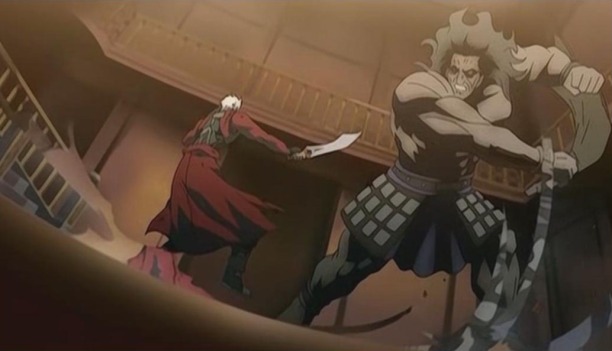
But there were points that really annoyed me. I mean, really annoyed me. For instance, when Oscar finds himself in Oz and hears Theodora talking about how she is a Witch, and then later seeing that she can throw a fireball, my first thought would have been acted out something like this.

Diggs: So … you are a Witch.

Theodora: Yes.

Diggs: And you can use magic?

Theodora: Yes, well, I can.

Diggs: Well okay. I showed you mine. Now show me yours.

Theodora: Um …

Diggs: Show me some magic.

Theodora: Oh ok.

Theodora throws a fireball at something. The Wizard’s jaw drops.

Diggs: That was … incredible …

Theodora: Oh, really?

She blushes.

Diggs: No I mean, you can throw fireballs. Effing fireballs. I mean, pardon my cussing and all, but … just … wait a minute. Just wait one moment. You mean to tell me that you could have thrown fireballs–fireballs–at the winged monkeys attacking us at any time–any freaking time–and you waited for me to sacrifice my poor bird instead?

Theodora: And it was brilliant magic. As expected from the Wizard of prophecy.

Diggs: Yes but … oh dear god, I faced a lion down with a parlour trick and you could have just thrown a fireball at …

The Wizard of Oz spends most of the time walking back trying not to bite through his own tongue at Theodora’s stupidity.

Or something like that. Not that I have anything against Theodora, mind you. She was naive, but really nice: almost unrealistically innocent and Oscar screwed that trust up pretty royally. In fact, I had more sympathy for her than I did for him and turning into the fucking Wicked Witch of the West with a green apple seemed almost as much of a cop-out–and an excuse to place another major iconic Hollywood fictional figure into a movie to give it credence–as it was magically putting Anakin Skywalker into a freaking Darth Vader suit that just happened to be there in case he got amputated and burned alive. I mean … Gah!

I do like the hint of her nature and it works: that her own tears burn her like acid and she wields fire. There were hints and I erroneously believed she would be the Witch of the East at that point and Evanora was the Witch of the West.

In fact, I thought that Theodora was the North Witch and Glinda the South and Evanora the West with the evil Witch in the outlands being the Eastern one, but Disney decided–like the 1939 film–to just have three witches instead of the four from the books. What I can say: even before this film started I over-thought it.

But anyway, aside from the fact that Evanora could have probably had Glinda killed whenever she wanted, given that she could probably find her in the Crystal Ball, and waited for a man who she knew was a fake Wizard to do it anyway, and the fact that her winged Monkeys are freaking incompetent in not following Glinda and the others off the cliff they jumped from, I have another “What the hell are you doing, you are a Witch!” moment.

So yes, speaking of Glinda. She, Oscar, the China Doll, and Finley the Winged Monkey (what is he anyway, a less feral version of the Winged Monkeys of the Witches or another more docile species?) find themselves surrounded by Winkie soldiers and then the monkeys. So here is another hypothetical scene.

Diggs: So, we’re surrounded by soldiers and flying monkeys.

Glinda: Yes. That seems to be the case.

Diggs: Well, you are a Witch, right? I mean, I know you ladies aren’t warty or fly broomsticks but … you do have powers right?

Glinda: Well yes. Perhaps you have a power we can use here Wizard?

Diggs: … um, my powers work a bit differently from where I come from. Maybe you can do something?

Glinda: Hmmm …

So they run to the cliff and the Wizard freaks out about having to jump off a cliff after Glinda jumps. Then he follows them all and they come up in floating bubbles.

Diggs: Wow! Now this is impressive trick! Woooo! Hey wait … couldn’t …

He dodges a cloud.

Diggs: Couldn’t you have done this before!? You know, like when we were all on the ground running from enemies in the fog?

Glinda just smiles at Diggs.

Or later when we see that Glinda’s wand can Force push or block magic. You know, a good Force push might have been excellent against, well, an army. Of course, we can be nicer about this. Glinda did mention later, much later, that no citizen of Oz can kill anyone. I would imagine that the Wizard and anyone outside of Oz is exempt from this geis: this magical rule that keeps all of this from happening? Maybe Theodora also knew this or was too self-conscious to use her destructive magic to defend her and the Emerald City’s potential saviour. If she did, she and Evanora neglected to tell him that. And, for that matter, if no one in Oz can kill anyone, doesn’t that just neutralize the point to an army of Winkies or Winged Monkeys? Does Glinda mean that Oz is a world that prohibits killing, or is Oz just concerned to be the land around the Emerald City and killing happens everywhere? Also, wouldn’t the destruction of the China Girl’s whole village be considered killing? Or the murder of the original Wizard King of Oz?

Perhaps I was missing something. I have been told that the Witches, while they are also citizens of Oz, are also exempt from this rule due to their unique nature. But let’s operate on the assumption that Oz–in this film–prohibits killing from its residents and the Wizard can in fact kill. There is one scene where the Wizard is teaching engineers how to make black powder. Black powder is used–as it was in the film–in fire works, but also as gunpowder and … explosives.

If the Witches’ army if hand-held ornamental weapon wielders and winged monkeys encountered a group of people with muskets and hidden explosives, they would have been decimated. Period. If I had been Diggs and I was being threatened by Theodora *coughtheWickedWitchoftheWestcough* I would have shown no hesitation in destroying their armies. And maybe Oz Witches are immune to explosives or guns, but considering how the Witch of the East got squashed by a falling house and the other one would have to avoid rainfall and I am sure that Glinda knows their weaknesses (such as she did with Evanora), this could have been a whole other kind of story.

Of course, this was supposed to also be a child-friendly film and Disney had to follow certain legal matters. You know, the ones that kept the ruby or silver slippers from being on Evanora: the Witch of the East. It also makes me wonder if that’s why she didn’t have the Golden Cap: the artifact that allowed the Wicked Witch of the West to even control the Monkeys to begin with … although the 1939 film didn’t have that one. I also feel somewhat sad about those cynical ideas above because I would never have suggested them being implemented in the books or the 1939 film.

But this film just … I really wanted to like it. But it is getting a 3/5. I liked the art and the structure and I recognize what they tried to do, but the Wizard was less a lovable scoundrel and more of a douchebag, Theodora’s transformation was forced, and as a friend of mine stated it didn’t have that resonance of a gauche “camp” feeling that is identified with the film and the Wicked Musical too. It is its own world and it wouldn’t really fit into the main series of Oz, but it was an interesting attempt to make a new story.

Even so, I have to state that in the end, if you have followed the old film or the books, there is no place like home.

Let’s Play

I have a friend who believed that he could gain enlightenment from a video game. He sat in the school cafeteria and the quad every day: just plugging away at his old Gameboy with its off-white frame, chartreuse buttons and yellow green-grey screen. Come to think of it, I don’t think there was any place I hadn’t seen him playing that game, except after … stuff happened.

His favourite game was Link’s Awakening: the first of the Zelda series ever made on Gameboy. I’d see him there–especially in those latter days before graduation–immersed in piping miniaturized synthetic tones and colourless 8-bit sprites as he sought Link’s sword for the millionth time … and attempted to find something else as well.

He didn’t always play it, mind you. We table-top role-played as well: old-school gaming with paper, pencils, Lego figures and dice. We were part of a group that even now still meets up from time-to-time whenever our schedules allow. My friend was–is–a good, quiet person: the kind of guy that you could always talk to. At the same time, he would sit stiffly and tense: as though uncomfortable in his own body … or his surroundings when he wasn’t occupied with something. But this all changed whenever we had a game on. You just couldn’t get him to shut up. The tension, wound in him like a spring, would uncoil and he’d get crazy energized. He got aggressive and vicious in-character: becoming this very manipulative, charismatic monster of a mage or dark warrior.

It’s funny how an introvert who liked to play Zelda games also liked to play the bad guy.

One time, when we were bored, I asked him why he kept playing that one video game. I mean he passed it several times at that point. Of course, he was still playing it while I asked him that question, but looking back it was one of the only times he really started talking about anything else outside of our game sessions.

He told me that Link’s Awakening was the only game where you got to see Link develop as a person: a person not defined by rescuing a princess. The way he saw it, Link left Hyrule and Zelda to find himself again … or even find himself for the first time. He argued that Koholint Island–the place where Link finds himself marooned–is a space inside his own head where he could confront his personal demons and know who he is.

My friend also told me that every time he played the game, he found something new: some small detail that he’d missed during his last few playthroughs and that over the years many of the challenges, as well as the in-and out-of game references started to gain more sense and nuance with time. He said that the puzzles became like koans that he meditated on through interaction: small little mysteries that he liked to solve.

Although he didn’t go into much more detail than that, which was deep enough, I also think he liked the repetition of it: the symmetry of those puzzles, the rhythm of the battles and the cycle of music that played and linked it all together. It’s really fitting in retrospect that he used the word “koan,” because I think these elements more than anything else let him come close to a Zen-like calm while he played his game. It was probably the most at peace I had ever seen him.

The more … stuff changes though, the more it stays the same.

My friend doesn’t play that game anymore. In fact, he doesn’t play any video games these days. Now he only watches “Let’s Play” YouTube videos. I’ve seen him. Sometimes he looks satisfied watching other people resolve conflict, combat, and puzzle solving in nice, immaculate patterns. Other times, he gets utterly exhausted and falls asleep in front of his laptop: with the forlorn beauty of a nostalgic 8-bit track playing in the background on a feedback loop. But there still many more times where it’s like he’s watching for something, looking intently at those video recordings while trying to find something new or rediscover something lost with a silent kind of desperation.

Ever since he stopped trying to help Link awaken, my friend is a different man. He’s still polite and helpful, but he’s somehow quieter, less tense, but … emptier somehow, and very, very tired. When we role-play nowadays, he doesn’t play villain characters anymore. Instead, my friend likes to play heroic characters with good and honourable intentions: even when they go horribly wrong.

That, more than anything, says something to me. In fact, it speaks volumes.

A Game of Statues: Amanda Palmer, Persona, Expression and Life

When I was in Kindergarten, in a school called Adventure Place, we used to play something called “A Statue Game.”

I knew it as The Statue Game. We would listen to this song–which I now know to have been created by Sandy Offenheim and Family–move around and when the song would tell us to stop, we would freeze in mid-motion. We couldn’t move and the song would tease us, play games with our minds by implanting the suggestion of itchiness or needing to scratch our heads, and then it would start again and we would be allowed to dance and hop around as we did before. It turns out that this music and this game are still being played to this very day: and it is a fact doesn’t surprise me.

There is a reason why I’m bringing this up and I will get to it soon. During Amanda’s Art of Asking TED Talk, we got to see a picture and a little bit of a demonstration of Amanda in her previous occupation as a living statue. This is not the first time I heard her mention this: chances are I probably read it on her Blog or in her Introduction to The Absolute Death. But there were two things that struck me about her time as a living statue.

The first is how, in a way, we are all conditioned to be living statues. At least, that is what looking at “Let’s Play a Statue Game” as an adult makes me feel. I mean, think about it: the song and game is really rather instructional. It teaches children pacing and rhythm. It delineates a time for play and then moments of formalism: of needing to be still and having to listen. Making it a group game also socializes children into a group calisthenic: tapping into that unconscious place where we all unknowing imitate and synchronize with each other. It teaches a time for play and stillness, but it also allows us the space and the capacity to laugh at ourselves. I’d argue that it is one of those early methods of making social interaction into a game that everyone plays along with and is both half-joking, and half-seriousness.

Yet what really grabs my attention is that rituals like “The Statue Game” encourage us to build those early personas: a social facade that allows us to interact with fellow human beings. Personas are not illusions nor are they fake in any way. They are just different aspects of us or personalized mask-tools that we use in different situations of interaction. We make these masks from childhood and things like “The Statue Game” allow give us the basic tools, mental shapes, and situations to do so. In other words, you can look at all of this as an experiment not only in socialization, but in communal art as well.

Of course, some of us have a lot of difficulty with these games. Some children do move under suggestion of the song. Other children have slower reaction time or a different sense of movement, balance, and rhythm. And some just plain get itchy regardless of any song or suggestion. Yet the rules of “The Statue Game” still have an effect on them: they either learn the communal rhythm or make one of their own.

That is what artists do.

So let’s get back to Amanda Palmer. I have imagined her, and now seen images of her as this eight-foot living bride statue holding out a flower and trying to make eye-contact with those people who passed her by. On an intellectual level, I think it was brilliant and an excellent metaphor for an artist learning to keep being relatable to a prospective audience.

Also, it was very subversive of her. Think about it like this: what is an eight-foot living statue of a bride? It–and she–are symbols of of a communal making: an archetype of certain expectations and theoretically immutable traditions. Yet there Amanda was, in a role of monetary exchange granted, using eye-contact and a simple gesture of holding out a flower to appeal to an individual on a basic, human, empathic level. It is ingenious: just as ingenious as making a game for children teaching them how to learn to act as statues and feeling people at the same time. And she was taking that philosophy and applying it to the rest of her work.

She appeals to people directly: or as directly as one artist can to her audience. In addition, she takes the role of a statue–of an untouchable celebrity–and subverts it to remain relatable and to appeal her present and potential fans. Originally, what she did with a statue pose and costume she now does through Kickstarter Projects and her Blog. But one lesson that seems paramount for me is that she originally managed to create this appeal, to hone and develop her own art of asking, but not saying a word. She simply held out a hand and expressed emotion through her facial features and her eyes. It is an experiment in empathy: in relating to people through song, action, and expression through gesture.

Now I’m going to look at how this relates to me.

In a similar way to how her own Blog and Kickstarters function, I have my own 8-foot statue through Mythic Bios. I have admitted that I combine a lot of myself and my observations to make this Blog. I’ve also admitted that I make this Blog to order to find an audience and to relate to them. However much I’m successful is a subjective question. I mean, after all, this Blog still accords me a certain level of distance from everyone else and the role that divides us is still there. I am a writer and you are an audience and sometimes we correspond and sometimes we don’t.

This also functions the same for me offline. One thing that “The Statue Game” does teach children who grow into adults is that there is a distance between us–as fellow statues–but also a closeness in our similar natures. In our statue roles and in a best case scenario, we are polite and formal with a certain social ingrained amount of common decency. But when we get to know each other and playtime happens, we bounce around and jump and sing and dance and cuddle and do all of things kinds of things.

For me, it goes further. Sometimes I feel more like a Weeping Angel from Doctor Who: in which eye contact will freeze me into my vaguely uncomfortable distantly formal polite statue-form, but when others turn their backs I am more like my crazy, warped creative self. Then people leave and I eat the time potential that they leave behind: writing up whatever I glean in different kinds of stories.

Amanda mentioned in her TED Talk that sometimes when she was a statue, people came her way who probably hadn’t talked to anyone in weeks. The Doctor once described the Weeping Angels as “the loneliest beings in the universe since their quantum-lock reaction makes it difficult for them to socialise.” It gets too easy to be the statue and to regain animation when other people are no longer around: a statue that forgets to play or can only dance by themselves now.

https://i0.wp.com/www.caddicks.com/blog/wp-content/weeping-angel-hands-e1351558624422.jpg

I’ve been, and I am one of those statues. So I ask myself what I would feel when someone like Amanda Palmer can actually see through that facade and acknowledge my feelings? I would … feel some discomfort, to be perfectly honest. A statue is often also how we like to present ourselves to the world. And having someone see how I feel makes me feel very … vulnerable.

Don’t misunderstand. I have a lot of people who just see the statue or simply do not get what they see, or ascribe characteristics to it that frankly do not exist. Whenever I acknowledge them, I have plenty of ignorant and misguided people telling me how I feel to last for sometime. But having someone see me for what I am–feeling as though they can see my anger, bitterness, sadness, awkwardness, and general bullshit–makes me feel vulnerable.

I’ve been taught to view the world a potentially hostile place where you always need to have your guard-up–where you always need to save face–and where vulnerability is seen as an exploitable weakness … even when you want, and have the need, to reach out.

On the other hand, I am also an artist. I can write about all of the above through the medium of my Blog and find people who relate who can relate to at least some of it. Artists, to some extent, are empathic beings and have the potential to take their statue-form and open it up to relation. I imagine extroverts and positive, optimistic thinkers who wholeheartedly trust people are better at this.

I am obviously not one of these.

However, I can cheat. I can pretend to be optimistic for a while. I can, as Kurt Vonnegut warns, become what I pretend to be. And I don’t have to pretend to like what I do: because that much of it is true. Also, there are many ways to express vulnerability as strength and I’ve already found a few of these. And as long as I can express it in the best way I know how–through writing–then I will be okay. But more importantly, I am building up to the point where I can ask for help when I need it.

Make no mistake, if I want to move forward in my creative endeavours I will one day need help and I will ask for it. And if I can express vulnerability to the point that Amanda Palmer as: to the point of making other people smile, cry, or feel an uncomfortable, awkward, and twisting form of sympathy–of realness–then I will have begun to do my own job.

So when you get right down to it, and look past all the mixed metaphors, analogies, and references here I’m going to say this: for just as Amanda Palmer states that there should be no shame in asking for help, there should also be no shame in striking an honest pose … itching, sneezing, and all.

P.S. I just want to illustrate what happens when Weeping Angels play the Statue Game.

It’s not very pretty. Or maybe it is. They did ask for it after all.

The Art of Asking, Spreading the Love, and Sarah’s Walking Dead One of a Kind

A few days ago I watched Amanda Palmer’s TED Talk The Art of Asking twice. It left me with a few thoughts and I have to be honest with myself and say that there is no way in hell that I am going to make all of those thoughts into one cohesive post: it is just not going to happen.

Instead, I’m going to do something else. Amanda mentions in her Talk that it is very hard to ask for help and while in context she was actually referring to artists–and I will definitely be getting back to that point in another Blog entry–I think this can be applied to the main act of asking those to help you attain your dream.

It is hard. It has certainly been hard for me for a variety of reasons that can ultimately be shored up to shyness, introversion, and a need to not intrude on other people’s space. I also tend to fall back on the mindset that most people are self-interested and will only help if they see that they can get something out it for themselves. And that’s okay. The fact of the matter is a mutual exchange of getting what you want and need is a good thing. In fact, in a lot of ways it is how we relate to other people.

A little while ago, I found this WordPress Blog called Sarah On The Go! during the great influx of people, Followers and “Likers” that were reading my own Blog when I got Freshly Pressed. [Edit: Actually Sarah found me through my What is FV Disco? post but anyway … :)] I came to know after perusing this Blog that Sarah is a major Walking Dead fan. I’ve heard enough about the show and the comics to be really intrigued by this series. In fact, I’ve been meaning to actually find a way to access the comic books first before watching anything.

But the main point that I want to make is that Sarah is essentially a Walking Dead fanatic who has entered The Walking Dead Always One of a Kind Fan Contest. The grand prize of this contest is for the winner and their friends to be flown down to Los Angeles in order to meet the cast of the show at premier of Series Four. Each contestant creates a 60 second video explaining why they are “the greatest fan” of the show and why they should win the contest. Then, every 24 hours someone can click to vote for this person and the videos with the most votes will be judged by the series’ writer and producer Robert Kirkman. It is, more or less, that simple.

I happen to like zombies. I even like writing zombie stories. I also know what it is like to really want something–with all your heart–and have draw on your own sheer will to ask for the help in getting it. This is Sarah’s Video entry and you can examine her amount of enthusiasm for yourself.

But I am voting for her. Why? Well I can say that if she does win, I can imagine that she would make a good write-up for the experience on her Blog: along with her detailed reviews of each Walking Dead episode so far as I can see. But that’s not it. I do not follow her Blog as often and I don’t really know her that personally.

Ultimately, the reason I want to help her–to get her entry out there for more people to see–is because I want to.

Or, more simply, because I can.

It is an empowering feeling: probably almost on par with the zombie urge to “spread the love.” Either way, I look forward to seeing where this goes. I admire your continued courage to express what you want, Sarah, and I wish you luck. May your own fans continue to spread the love … and continue to ask for it. 🙂

At Least You’ll Leave a Beautiful Score

You know what it is.

You’ve played that Level. You’ve played that Game.

That Game can be a mess of crude 3D polygon confusion. Other times it is a beautifully rendered realistic environment populated by generic places and shallow souls. Sometimes it is a two-dimensional caricature where you can jump up and down and turn all around on pre-set paths and pre-determined destinies.

Maybe it is turn-based when it is an organized, reasonable world, or a great bird’s eye map somewhat hidden from you as you get to plan out your strategies but–more often than not–it is a side-scrolling affair of linear time. You have to keep moving forward and you can never go back.

Except in your mind.

So you jump through hoops. You try to avoid the spikes and the pitfalls. You repeatedly hit your head against a golden block: always looking for a different result. That edge near the lava, and those platforms over the abyss become far too captivating and even far more terrifying for their 8-bit sense of vertigo.

But you dodge the fire and the ice, the darkness and the light, the electrified mines and the bullets, the cute little walking bombs and the fake-out illusions. You spend time solving the clever and tedious puzzles below the mountains or up in the sky: so much so that you sometimes fear you will be stuck in those places forever. Your musical theme begins to change or it cycles into a cheery purgatorial loop inside of your mind.

And you haven’t even gotten to the Boss yet. The Boss waits for you at the end of the teleological road though, in retrospect, it was always there for you. It almost always seems to be larger than you. Often, it has more power than you do. You know there is an angle in which to approach it, some kind of slant, but it does its very best to allude you.

And even if you figure it out, your eyes are so gritty, your palms are so sweaty on those controls, and your heart is beating so fast that it is a challenge in itself merely to concentrate: because then you realize that this is less about the Game and more about you and this Boss.

That is when you realize the truth.

Sometimes Life is like a Boss with 99 lives while you are a character with only one. But then another thought occurs to you: that as long as you can knock at least two of those lives off before you go down, or in some way engage it as a multi-player effort before leaving it as such, then it was all worth it.

http://menotblogger.files.wordpress.com/2007/09/fsn07.jpg

I Wanna Cast Magic Missile: Art, Science, Spellcasting, and Making Things

The Dead Alewives comedy skit reference aside, there are two classes of spell-caster in Dungeons and Dragons that have always interested me. I would imagine that most people who are familiar with the fantasy genre know what mages are. Mages are essentially spell-casters that use magic through rigorous study, research, and memorization of rotes and ritual. Much of the phenomenon that they create and observe is practised in a manner not unlike science: although inevitably it is a science based on a different kind of reality and series of physics intrinsically different from our own. Essentially, add animism–the idea of a sentient or semi-sentient spirit–inside all organic and inorganic matter and you see how mages can create a science of pacts, magic circles, and artifacts to understand, classify, and control their surroundings.

Then you have sorcerers. Sorcerers are also people who use magic. However, they can’t learn to harness their power through textbooks or even teachers. Whereas mages have a very stratified and hierarchical arrangement of knowledge–of learning and politics–sorcerers tend to be loners, and have to learn how to use their power through trial and error. You will notice that I make a distinction. Mages use magic and work with or twist the rules that exist around them. Sorcerers have their own power. It is, at least in some depicted worlds, inherent within them. In some D&D worlds, they are considered Dragon-Blooded or something along those lines. Essentially, sorcerers have a power that they can only access through experimentation and direct experience: and the power expresses itself differently depending on the personality and the focus of the person that harnesses it.

I’m also not saying that sorcerers can’t have teachers, but these teachers are generally more like mentors: in that they can give them hints and show them how they use their power, but in the end it is ultimately up to the sorcerer to find their own way.

As you can imagine, mages have an advantage with regards to resources and guidance. They have a craft or a science with very clear rules that they can work with or seek to circumvent entirely. Basically, the most ambitious mage operates on the principle that it is only by knowing the rules that you can eventually get around them, make new rules, or surpass all of them entirely.

However, the sorcerer does not solely depend on a book of spells or external sources to empower them. They have that spark inside of them and, if they survive long enough or adapt to that point, they can summon the power they need and do it in a way that is customized solely to their touch. In other words, no one else can cast magic the way that one sorcerer can. In addition, they do not have centuries of tradition or hierarchy to limit their very perception of what can be experimented with.

Mages are usually part of an academy. Sorcerers are often autodidacts: those people who teach themselves what they need to know. You could make an even greater generalization and state that mages are the academics of a relatively established system of magic while sorcerers are artists of their own personalized mystical arts.

But here is the thing that always strikes me: where is the line?

Let’s say that writing is magic. There is a large amount of theory and documentation about writing. Universities and colleges teach one about grammar, spelling, and various conventions and genres. Schools have teachers. You are taught to view something analytically and you are exposed to various selected texts to influence you. It is also argued that at least in the Modernist era many writers had this form of formal education and knew what the rules were before experimenting with them. You can also apply this model to fine art: learning the basic shapes of various elements before you can experiment with them.

It might be tempted to say that people that work with such matters would be the equivalent of mages. But then consider this. After the academy, the mentorships, and the peer-reviews you are left to your own devices. Or better yet: you were never exposed to these. You were taught just enough to know the basics and then encouraged by something inside of you to seek out those things that greatly interest and resonate with you and work with them. You are not in the classroom with its specialized language and jargon. You often find yourself in strange and unconventional places: perhaps doing even more unorthodox things. You keep recording these experiences inside of you and you express them in different ways: making as though you are dreaming, or screaming, or just being.

But where is the line? Isn’t it possible to have that spark in you from the very beginning: to learn the rules and conventions of an established system and then go out into the world and learn your own words with and beyond that structure? I know that I may have merely described another mage with this extended analogy, but consider when a science and craft verges past that line into personal art. Sometimes a person can’t learn how to use their power of expression through established or conventional means. Sometimes you make or conceive something that can’t be replicated through a formula.

But is it at all possible to learn the basics from a formal education and then use personal experience and that spark–whatever it is and if it even exists–to make something new: or at least a really interesting variant of something that already exists?

I think, for me–in this analogy–that I was born a sorcerer but trained as a mage for most of my life. In my time at the academy, I sought to follow my own work through less travelled paths and eventually came to a point where I realized that I needed to pursue the knowledge I needed on my own. My teachers and my University gave me tools and selected readings and their own perspectives. But I know, after my time in a Creative Writing Program, that while teachers can teach you how to write or how something works, it is ultimately up to you to express your own personal voice. No other writer, artist, academic, book or work can do that for you. It is both a difficult challenge and an incredibly awesome task which, in the end, is entirely up to you.

Therefore, in the end–having gone far past the danger of making faulty analogies and false dichotomies–I feel like a mage with the heart of a sorcerer.

And with that, I cast magic missile into the darkness.

At Night

It’s past three in the morning. Usually, with a rare few exceptions, I’m not up this late these days. But I am usually awake past everyone else.

It is about the only time I have any peace. At this time of night during the weekday everyone goes to bed, the phone stops ringing, my obligations wait for the next day, and I finally have some time to myself: where I can finally have my own mind again for a while … where I can be me for a few hours.

During this time I write something, or catch up on social networking and emails. Other times I just listen to music or pace around articulating some ideas to myself. Sometimes I used to talk to people online, but I don’t do that as much anymore. Sometimes I even dance: like I used to at clubs in downtown Toronto.

It is generally the time where my mind is at its most clear: where things come together more easily and with fewer external distractions. This doesn’t always happen at night however. There are also times when I first wake up when my mind is more intuitive and still far enough into that dream-state where connections and ideas flow far more naturally and I can write something down that’s either been in my head for far too long, or just occurred to me right then.

But it is harder to do that these days. Perhaps it is the late night mitigating my waking time. Maybe it’s just that I have more things to do now. For the most part, I do feel like a new person whenever I wake up: before the memories of the previous day really come back.

As for the night, sometimes it’s like Londo Mollari from Babylon 5 drinking to reduce to the influence of the Drakh Keeper attached to him while at others … it’s more like remembering the times when I felt a lot more alive, the moments when I still do, and the times when I plan to be again.

Considerations and Experiments

Me and my Head

I’ve been busy and thinking about some things this past while.

This in itself is nothing new, of course. I still have my collaboration with Angela to consider–which I have to flesh out into something like a comics script form (the details of which you can find under the “Project” Category of my Blog)–as well as continuing my quest for further publication and employment.

Ironically, I have been going out a lot more often and I will be doing so in the near future. My friends and I have been playing no less than two role-playing games–of which yesterday we played two sessions in a row–and I have been writing stories of our exploits in at least one of those worlds so far. Sometimes I feel guilty about that. I mean, I have sent stories out to magazines and such, but I feel like I am at a place in my life right now where I need to keep making stories that I can actually send out to places.

As such, I have a few experiments (I always feel like Darth Plagueis when I say “experiments” or some kind of ruthless mad alchemist) that I have not really been undertaking because I have been distracted with some pragmatic concerns, which ironically makes them harder to deal with, and so on.

I actually feel like I need to write more about my own life again. This was partially one principle that “Mythic Bios” was founded on, but I think there are some things that I need to express and there are certain ways of doing that that really intrigue me. It wasn’t too long ago that I wanted to make a Twine game or two based on some experiences or “day in the life thereofs” that people like Anna Anthropy have totally inspired me to do. I do know that I am at the point in my life where I can begin to really express my perspective through my writing. I have done so, and I am continuing to do it as well.

However, I’m not sure all of it can be placed on here. What I like about this “Mythic Bios” is that it is safer. It is a purely theoretical place, but one where I can ponder about different things and maintain that veneer of optimism and positivity. A few of my friends and people who know me are probably finding this one sentence hilarious because for the longest time I have not been a very positive person. I’ve been angry, confused, bitter for sure, and definitely sad.

In every incarnation of “Mythic Bios” I have created–both here online and offline in my written notebooks–I have made a point of trying to not let those other aspects completely consume this space. Believe me, I deal with them more often than not and in private. I need to have a space where I can feel safe while expressing a reasonable and somewhat logical mindset: while making the boundary between fact and fiction a little more clear. But I also need to recognize that other side: the side that knows that stories and reality are not that far removed from each other. I need that place of emotion and expression of that emotion and the messiness that comes with being a human being.

I still find myself in that place where I’m torn between wanting to express that aspect and wondering how this will affect my current–and future–audience’s perception of my writing. While I do feel like I should have a separate space and maybe an aspect, I also feel somewhat cheated by that: as though I feel somehow that I can’t be a whole person. Because, like I said before, this–all of this–is not all of who I am.

At the same time, I want to leave some personal space to myself and even make things that I find interesting and aren’t necessarily related to me personally. I do believe that our writing is an extension of who we are and what we’ve done. On the subject of the personal, I know I still get concerned with offending people with what I can make as well.

But let me repeat: I do feel like I have something, or several somethings, to say. And I have this growing suspicion that there are people out there who will totally want–or even need–to read these “somethings.” I also know there are people who will always disagree with whatever I say, or simply not read these things. It would be almost easier if it were always the latter and not the former.

To be a writer, you have to travel that nebulous territory between the personal and the public, as well as the intellectual and the earthy and perhaps more … uncomfortable places that I’ve only touched on. I know, more or less, what I have to do. The rest of it is just details and finally sitting down to replenish my collection of stories.

I can’t sit around all the time and write. It’s just like never sitting down and writing. Something just has to happen. So I plan to write a story or two that’s been on my mind for a while, work on my part of the collaboration with Angela, send a few more things out and … see what I can do.

Other People

Will’s face felt stiff. His smile tightened the muscles around his mouth and looked genuine: at least in his own opinion. When he laughed at another person’s attempt at a joke, he forced it to project into his chest and the resulting hollow feeling only served to make the sound louder. Even so, the clambering background noise of the White Crescent Cafe seemed to drown out everything else and Nor was otherwise preoccupied.

It was a few days after they met at The Club. He watched Nor interact with the others. Will felt strangely deaf without the music of The Club completely drowning out all other conversation. Aside from her one quote from The Day the Earth Stood Still, they had barely talked amid the booming percussion of the speakers. It had just been her hands directing his own to her hips as Orbital’s “Halcyon” reverberated gently and transcendentally into the soft luminosity of The Club.

It was just their eyes as Nor smiled at him and he knew, then, that this was an expression that came easy to her. Then there was the night in his room and the exchange of phone calls that came after.

But here, at the White Crescent Cafe, it was different. The place was trendy with its half-moon caricature eating a croissant and holding a cup of coffee. It was crowded with many different conversations that made it hard to hear Will’s own voice: even in his mind. And while Nor’s acquaintances seemed friendly, Will felt that they were very self-involved.

Will continued to answer generic questions about his job (writing) and his “neo-50s look” (which wasn’t a style so much as what he looked like) until his insides ached. The centre of him was tightening until he felt a hand on his arm and saw Nor beside him.

“I have to borrow him for a moment,” she told them.

“Ah, yes,” Will felt himself wink at them with a cleverness he did not feel, “If you’ll excuse us.”

Everyone smiled and laughed as Nor led will outside the Cafe. They went to the side entrance and came to a stop. Will saw Nor looking directly up into his eyes.

“Are you all right, Will?”

“Yes,” Will said quickly, “It’s nice to talk with your friends and everything. They were just asking me–”

“You know,” Nor said, “it’s okay.”

Will blinked, “…what is?”

“You don’t have to pretend with me, Will.”

He felt Nor cup his cheek. It was almost instantaneous. The knot of tension inside the core of Will untwisted. It was as though Nor’s words and her small touch on his cheek were a knife destroying the great internalized pressure inside of him.

Will stood there as he felt streaks of warm wetness trail down his face like blood. The released pain and discomfort was the most silent of assassins: killing his parody of artifice and granting mercy. The two of them sat near the wall, with Nor holding him and stroking his hair.

“You never have to pretend with me,” Nor spoke softly, “I can talk enough for the two of us.”

For a long while, Will didn’t even make a sound as his released tension dripped out of his face and finally dried.

“T-thank you,” Will managed to reply with a tremendous sense of relief, “Neil … likes to say it’s ourselves, but sometimes it really is other people.”

Nor smiles, “It gets easier with practice and with small numbers. But sometimes, you are right.”

The two close the small amount of distance between their faces and kiss. Then they leaned on each other for a time before Nor came to her feet and pulled Will up to his own.

“We can do that later though,” Nor said, “Right now, let’s just go home.”

“Home?” Will asks with a combination of incredulity and a larger amount of hope.

“Yes,” Nor hooks her arm through his own as they began to walk, “Home. Sometimes, it’s other people too.”

https://i0.wp.com/farm4.staticflickr.com/3193/2735688778_c69e244f11_z.jpg

Credit: artofimperfektion on Flickr … the couple of which whose pictures they really are.

What You Are Left With

So not too long ago I read this post from Amanda Palmer which talks about a few things: but more specifically how Bloggers may be “the next writers,” emails are replacing letters as personal correspondence and how it will be challenging for historians and outside archivists to preserve all of this.

You know, sometimes I look at this. Right here. I look at this: I look at all of this–my Blog, social sites, email and the Internet itself–and I realize how really ephemeral it all is.

I am not a technological or computer expert, but some days I just imagine there being some kind of event that overloads information and backups to the point where this–all of this–is gone. It makes me remember that I don’t back-up any of my Blog posts on here. What I mean is, they are all essentially sent directly onto my WordPress, and if anything happens this would all be gone.

Then I think about the reverse. I think about the Internet and computer technology continuing to evolve: to points where we can’t even dream it will go. Imagine a future where technology becomes more intuitive–as though it is an extension of the human body in how you can easily access it like moving your arm–and all that old information comes with it. Or will it? Will old data from ancient systems survive into newer ones? Would it be the same? I know even from my limited knowledge and terrible chagrin that something like an old USB key can go obsolete.

But let’s say that technology will change to a point where obsolete technology and information on it can be easily passed onward: and accessed by anyone with any degree of knowledge. Let’s also say that this information will be documented and recorded by other people who want to write biographies or otherwise examine the lives of users from this time.

I mean, it is already happening to an extent. Archivists are tackling the gathering of emails and data from websites and online archives. Sometimes, as an exercise, I think about and look at everything I’ve typed up on Mythic Bios and I imagine someone in the future–or even now–trying to reconstruct what I was like as a person through what I allowed to be on here.

Does Mythic Bios represent my entirety as an individual?

I would have to say no.

It does represent a part of me. It represents my interests, some of my thoughts, and even some feelings but it definitely doesn’t have the full breadth and width of me. Sometimes it feels like a really carefully crafted shell or a layer of created artifice. And I enjoy crafting that artifice almost as much as I enjoy writing things on here, if that makes any sense, at least from a writer’s perspective. Amanda also mentions on her Blog that she doesn’t like to tell everyone about what she is doing, or reading, or listening to all the time because she wants a piece of herself for her and her loved ones alone. I think that is part of it too with me.

I think it’s also that I know I am just as ephemeral as my Blog. I am going to change. I am changing even at this moment. I don’t have it all figured out either because of this fact. There is something really comforting about writing a narrative where you place down the facts–“just the facts” of your interests and goals–with hints of the person shining out between them from time to time. I am, if nothing else, also a tease. 😉

But facts and stories can be so much more orderly–and comforting in that order–than an actual human life can be when you are in the process of experiencing it: especially when your other impulse is to chaos and destruction in not always a super-villain kind of way.  So I would be almost comforted if this Blog were to be all that was really left of me, but those human moments of ambiguity–that small amount of embossing–would make me feel a lot better about it.

Now if the Net went down, or suffered a few memory-wipe phases of cataclysm and all everyone had to go by me were the personal things I have written down that would be an entirely different story altogether. I mean, assuming they didn’t think I was crazy, they probably wouldn’t be able to understand me: if only because my handwriting is in ancient Sumerian … also known as messed up scribbling.

Sometimes your hand and pen cannot move as fast as your mind or your imagination.

In some of my more depressed moments, I think all I am going to leave behind are papers and electronic weirdness. Sometimes I think these are the best things about me. I don’t really know just how “inspirational” I actually am when you take the rest of this stuff away. I’m not really doing anything that anyone else can’t do. But maybe it’s just the way that I do it, or that others do it that differentiates us. It’s that mystery of “You-ness” or “I-ness.” I still haven’t solved that mystery yet and you know what? Maybe that’s a good thing:  because that means I’ll keep writing and doing what I need to do. I’ll keep going and when I am not angsty or introspective, I’ll just be ad hoc and silly.

And if that’s what comes through, like I said before, I will be more than okay with that: especially if someone else can relate to it.

https://i0.wp.com/www.photos-public-domain.com/wp-content/uploads/2010/12/spiral_notebooks.jpg