Snow: Based on the Graphic Novel about Queen Street West in Toronto

All things considered, it’s an appropriate time of year to talk about snow. While some people think that snow is beautiful and almost a permanent fixture in cold places like Canada, it’s actually incredibly transitory: much like Toronto and, in particular, Queen Street West.

I found Benjamin Rivers’ graphic novel Snow at Bento Miso two years after I moved away from Toronto: which is funny in some ways because Rivers created it in 2008 when I first moved onto York University Campus and, technically, to Toronto. But I didn’t know it at the time. I didn’t, for instance, know that in February 2008 that Queen and Bathurst (which was referenced by Rivers) and that — among other stores — there had been another Suspect Video that no longer exists. But even before that I’d explored Toronto in a limited way and knew about the Silver Snail in that location.

But I didn’t know impermanent it was until I moved to Toronto and then truly explored it — especially Spadina and Queen — only to have to move. So it was fitting that I read Benjamin Rivers’ book and found out about Ryan Couldrey’s close film adaptation of it when I came back to Toronto on my own: to see if I could find some place in it again. Snow as a graphic novel truly hit me hard in that sense of nostalgia and Toronto’s ever-hidden, ever-fleeting spirit and this film managed to capture exactly the same idea.

On the surface, Snow‘s narrative focuses on Dana: a young woman who lives on Queen Street West and works at a small book store called Abberline’s. She is quiet and she likes to have her comfort and the homegrown quality of Toronto’s neighbourhood, stores, and clubs. But she begins to notice the gentrification of the street — the rise in rent and the influx of people from upper-classes — and the many closed and empty stores. Her sense of equilibrium and habit is being impinged upon. And she also notices that the bubble of self-involvement, which she herself has possessed — that covers all of denizens of her locale is growing.

Dana’s bubble ends up getting stretched to its limits as she actually actively begins to question why all of this is happening. And then it gets strained past its safe limits as she encounters a darker place. Couldrey manages to maintain the tone and pacing of Rivers’ comics narrative. There is no spectacle here, or supernatural happenings. The menace is subtle and very real and in the midst of Dana trying to make sense of a senseless situation: from human violence to slow and civil death, her own quiet determination and personal goals come to the fore.

I like how Couldrey managed to cast Snow’s other characters as well: from Dana’s friend Julia to her co-worker Chen and her boss and “city dad” Abberline himself. You get a major sense that in the backdrop of this changing city that these people all genuinely care about each other. Couldrey maintains the black and white aesthetic of Snow from the graphic novel onto the film. It has a sense of age and funkiness that captures parts of Toronto well. I really liked how, in one scene where Dana and Julia were talking — with Julia separated from Dana in Dana’s kitchen — how Couldrey managed to capture the cosiness of some Torontonian apartments against the transitory gritty nature of the outside city as well as, in this particular case, simulate a comics panel.

And it is all realistic: just like the graphic novel there is no romance, no major action, or anything. There is just tragedy, fear, friendship, life, and moving on. It also goes without saying that if Toronto itself is a character, and in particular Queen Street West then from my experience Couldrey managed to capture that spirit well.

It’s interesting to note that in edition to being a comics creator, Benjamin Rivers is also a video game developer and isn’t that just like the nature of snow? To spread from one place to another when the climate is just right: in this case from comics, to games, and to film? And Couldrey and his team shot this film without any grants or loans: just on their own budget. It’s just something that Queen Street West itself might have appreciated in its more bohemian and independently artistic days.

Toronto is an interesting city. It’s a place that is old and still developing, that has layers of different interactions, and landmarks that get erased under a literal and figurative blank canvass of snow. That said, even the thickest level of snow leaves footprints: just this film ends on perhaps a little bit of hope. Amy Lavender Harris in her book Imagining Toronto once said that Toronto suffers from a form of amnesia: from a loss of memory. Yet perhaps, at least one small part of Queen Street West knows itself. At least one small part can remember, and dream beyond winter.

But don’t just take my word on any of this. You can watch the entire film online for free and if you are interested, you can buy the entire VOD package — which includes the video, the graphic novel, the soundtrack, scripts, and video game at the Snow website.

Super Zero: It Gets Better

“You never hear about how the apocalypse smells like total ass. But it does.”

And so do some stereotypes. We all know this one: about the geek who thinks they are so prone to so many physical and emotional weaknesses that they will slow down everybody else if they are even noticed at all.

Mitchell L. Cohen’s short zombie film Super Zero starts off just like that age-old trope. You know the one: about the stereotypical geek boy whose crush and attractive female love interest doesn’t seem to notice him, who he doesn’t have the courage to even talk to, and who views himself as almost completely useless. It’s a story told so many times by our culture and literature that it is essentially a very typical narrative. But Cohen adds two more elements to this story.

Josh Hershberg doesn’t view himself as that passive-aggressive stereotype of “the nice guy.” He doesn’t think he is owed anything by Page Reynolds or even society. In the year 2017, as a sample of water is discovered and taken from a Mars expedition, he can’t even enjoy this development of science in his geeky life. Why?

Because is geeky is going to be over in a very terminal sense. In the society that exists before the apocalypse, Hershberg has brain cancer: the kind that doesn’t have a cure. Hershberg ends up quoting Theodore Roosevelt when he states “do what you can, with what you have, where you are” in a self-derisive way: because he doesn’t have that much time left. The initial tones of Hershberg’s first-person narration in Super Zero are laced with an irreverent black humour and an infusion of despair as he decides to end his story.

It’s funny, however, just how the reminder and slogan of “It gets better” becomes so prevalent as the zombie apocalypse part of the story begins.

It gets better ... at least for some.
It gets better … at least for some.

Cohen plays up Hershberg’s adaptation to a foul-smelling post-apocalyptic world with a slow and careful pace. You wonder just how a slow-moving cancer victim with seemingly no fighting or survival experience would even last a minute after an outbreak of fast moving zombies: yes, that kind of zombie. Certainly the stock survivalist jock Nate Bishop and the wise-cracking obnoxious Gary Amante characters see him as more of a liability even though Page, who has survived this far, seems to be a popular girl with a “heart of gold” or at least common human decency. In fact, from the very beginning you see that she does indeed notice that he exists and has an inkling of what he’s capable of even before he reveals it.

Because when you realize that Josh Hershberg is a hard-core engineering geek genius and you see just what he can do with a brain disease that makes him unpalatable, a walking stick and something that looks like a flux-capacitor, you will not be disappointed. All in all, I think that while Super Zero does use some age-old high school zombie survival group stereotypes — complete with the compassionate woman, the stoic jock, the annoying and loud meat-shield, and the nerd — it has the potential to utterly subvert them. In our day and age, we’ve seen a lot of bad-ass geeks and nerds of all genders, so to some degree we are rather spoiled.

And wow is that musical score ever bad-ass.

After watching this film I want to see what happens next as Cohen wants to grow Super Zero into a series. Does Josh Hershberg’s biological advantage overcome him in the end? Would that affect any relationships that he may make? What happens if the group loses him? Will he leave a legacy or will this all get changed somehow? And would we see more development for the other characters?

And as a geek, how do you think you would survive a zombie apocalypse? Personally, my fantasies have wavered between learning necromancy and controlling the zombies, dying first because I slowed people down, or finding my way to a group of my friends where I can tell stories for morale. But while I don’t know about myself or the rest of you, I do think that if Josh Hershberg could give this film a subtitle it would be the following:

Who's Useless Now?
Who’s Useless Now?

An Early Christmas Present: A Preview of A Doctor Who Christmas

What is a preview to a seasoned time traveller, or Whovian, but an eye-blink in the future before a Weeping Angel temporarily sends you on your way? In this case, Christmas came early yesterday as BBC One made good on its promise and delivered a preview of the upcoming Doctor Who Christmas Special.

For someone who once knew Father Christmas to the point of calling him Jeff (whether or not this was a Time Lord joke or not is another matter entirely), The Doctor does not seem pleased to meet Santa Claus this time around.  In fact, Clara herself doesn’t really look like a regular old bouncing ball of wonder when Santa and his elves are meeting her on a rooftop: for some reason.

I like how the story gets turned around: how parents giving their gifts to their children in lieu of Santa is the real story while Santa — whoever or whatever he is — seems to be the reality. It’s a pretty clever twist: especially when you consider how eerie it must feel for Clara when the elves are detailing elements of her childhood that only she would know, and Santa in particular asks an uncomfortable question.

I have to say that right now in this preview they look anything but friendly: sort of like a mask of innocence worn by a hint of menace. And there is one more thing to remember: Santa may generally be considered a benevolent figure, but does keep a list — which he checks twice — of who is naughty, and who is nice.

And, of course, there is the Krampus part of the Santa story that generally gets left out nowadays: much in the way that most fairytales — most ancient folktales — have become sanitized.

I’ll just leave you with that thought. Think of it as an early Christmas present.

Doctor Who: Missing You Missy

So: who is surprised by this revelation?

Not me and probably not countless other Whovians either. According to Michelle Gomez,  Missy will be returning to Doctor Who. Note: Missy won’t be returning in another incarnation or as The Master or another Mistress or in some of the weird forms that her previous incarnations in which her previous selves were forced to return.

It will be this Missy.

So, out of curiosity, how do you think she did it? Do you think that her brooch had something to do with her life being saved? Or perhaps one of the rings on her fingers? We know that this is how The Master survived after “Last of the Time Lords” and that one of The Master’s aliases back on Gallifrey, at least in some of the books, was Koschei: taken from the Russian folktale of Koschei the Deathless: a being who can’t die because his soul is held in an object somewhere else.

Or perhaps Missy sent an actual tactile hologram, or an android? Maybe it has something to do with the Nethersphere, which is supposedly running out of power and fading out of existence? Maybe Missy can convert herself into digital information. And let’s not forget that the Brigadier was using Cyberman technology that she, dare I say, upgraded herself. And we do know one thing about The Master: that when he was male, he certainly looked out for his own skin (and even looked for new skin in his failed regeneration) and if that well developed sense of self-preservation transferred over to Missy as it had so many other regenerations, she definitely has contingencies in place.

There are so many possibilities and, let’s face it, we’ve only just met Missy. There is so much that she can still do and having her as an ongoing nemesis, like she was back in the day, will only make Doctor Who stronger for it. I like the idea of Missy constantly hounding The Doctor. After all, there are still a few loose threads from the latter part of this series and the beginning of Doctor Twelve’s run.

The Doctor suspects that Missy has a TARDIS somewhere. But where or, chameleon-circuit withstanding, what is it? And who got The Doctor to go to the Oriental Express? Who created that politely malicious AI Gus? And did she write that classified ad for Clara and The Doctor back in “Deep Breath?” Were these part of Missy’s plans?

And let’s not forget another question. How did Missy survive? Yes, Gallifrey was saved but The Master’s DNA was destabilizing in a terrific way at “The End of Time.” Was there still enough of him and enough energy, which he had been expending much of, to regenerate properly? And how did Missy escape Gallifrey? Did she piggy-back transmat herself out when the Time Lords sent The Doctor a new regeneration cycle? Or go through the Gallifrey Falls No More painting?

Perhaps some of these answers will be revealed in the November 13th edition of Doctor Who Magazine but certainly, and in time, we will see what happens in the next season and just how Missy can outdo her own villainy this time around. I know I look forward to it.

Death of A Shining Prince

Dedicated to the four-episode long OVA Love Princess Koihime. Perhaps, one day, I will find you again. This story has some graphic and mature references. Reader’s discretion is advised. 

Musashi was dying.

Musashi knew he was dying. He knew because after all those years of college and medical school — after becoming a doctor — he recognized the signs. He knew because each rattling gasp out of his lungs was like the orgasms that young people — and older — lived for.

But most of all, Musashi knew because he was lying in his futon, surrounded by his wives, and not fucking them. Instead, he was dying.

His long white-haired head, now devoid of its ponytail, lay on Nami’s lap where her cool slender hands gently cradled his head. Anzu rested her own head on his right shoulder, while Suzaku grasped his hand while curled up into his left side. Mayuki lay on top of him, and even in his weakened state she was barely even a weight on his body. The small slender woman had her arms wrapped around his torso and her face buried into his chest. He could feel the frigid cold of her tears on his skin.

Musashi smiled sadly. He knew that all of them would take his death hard, but none harder than Mayuki. He was always her Sir Musashi: her Musashi-sama. This didn’t change when they all married. If anything it added another edge to their deeply intimate exchanges, and lovemaking. He brushed worn but strong slender fingers through her long hair, experienced hands in healing and pleasure, and felt an inevitable loss well in his chest before he swallowed it down back to a tired but content smile.

He saw them: forcing his gaze to grasp them where his flesh now failed him. They were trying to be strong for him now, but he could tell their hearts were breaking, and their mortal masks were slipping off of them. Nami’s golden horns sparkled through her greying dark hair and tears glittered in the careworn lines of her mouth and the crow’s feet of her eyes. Even Anzu’s emerald hair was faded and Mayuki’s once light blue hair turned just as white and icy as the flowers she used to wear in it and the element that she represented. Only Suzaku’s hair remained the same colour as before — a deep, brash and angry red that matched the scowl on her lined features as if she could read his mind right now: which — of course like her grandfather before her — she could.

Where once she would have punched him in the gut a few times for his stupidity, instead it was now her frown that seemed to tell him that he was an idiot, and it wasn’t his fault for dying, that it was something mortals do, and that they’d all made peace with that long ago and she would not abide by him belittling their commitment to him with such stupid doubts. Of course, that same expression on her face was also a very stubborn attempt to keep from bawling her eyes out and a promise to herself that she would do it later.

He managed to smile again at her chastisement and knowing her so well after all these years. Musashi remembered just how angry he’d gotten at their parents — the divine nature spirits themselves — over erasing his memories of them. He recalled going through life, doing well in school, even having other relationships and yet feeling a hole inside of him: sensing something missing after he visited his grandmother’s village all those years ago. Musashi recalled being furious at the spirits for making him forget about these girls from his childhood and was positively livid at Mayuki for voting to remove his memories of them.

She’d told him, later, that they knew he was mortal and that he would grow old while they would not. She told him that she didn’t want to keep him from his potential.

But it wasn’t your decision to make! he had shaken her shoulders hard that time and glared into her eyes, remembering childhood vows to all of them, recalling how he stood up to the very gods themselves for his love for them, It wasn’t your right.

He remembered her crying and almost turning the world into another Ice Age before taking her onto the futon and fucking her more fiercely than he ever had before. But that was a long time ago now, and he knew that it was Mayuki who ultimately changed her mind and wanted him back. He smiled back at his youthful passions, and the rash and ignorant blood-vows he made to them when they were all children, and that very confusing and frightening yet incredibly satisfying time he came back and made love to all of them.

Then they left the village, he earned his doctor’s degree and by some silent agreement between them his wives decided to grow old for him. They never had what would be considered to be a traditional life. Sometimes Musashi felt like the Shining Prince from Murasaki’s Genji Monotagari with all of his princess-wives. Yet unlike Genji, Musashi liked to think that he had a much less tragic life. Certainly, it hadn’t been easy. Unlike their lives back in his grandmother’s village, Musashi and his wives could not always be so public — with Nami as his legal spouse and the others considered family — yet it was a “secret” that they always hid in plain sight and not at all among their friends and children.

They had also fought, and bickered, and driven each other — and Musashi — insane. Sometimes he honestly wished their parents had killed him with their elemental powers back in the village. But there had also been the talks and sunny walks under the cherry blossoms with Mayuki in her frilly nineteenth century Western sun dress and parasol; the sparring matches and races with Suzaku that she always won; the movies and video games he and Anzu played together; and the home cooked meals and warm maternal arms and comfort of Nami to look forward to.

And then there was the sex. He recalled the coy submissiveness of Nami as he mounted her and the energy that crackled around her horns as he stroked them. He recalled Anzu as she wrestled him like a bratty little sister (he had long since gotten used to her calling him onii-chan even though they were the same age and not even remotely related by blood), ridden him like a demon, and loved to take him into her mouth. He grinned to himself as he thought of Suzaku riding astride him and in various positions, and knowing that he had at least one competitive sport he could match her in: if not completely surpass at times.

Then there was Mayuki — his Mayuki-sama — who he had almost always made slow, gentle and passionate love to her: the feeling of her cool skin burning heatedly under his touch. He looked at them all now and he knew that they were remembering the same things he did. Somehow, he could still see the strong broad-shouldered youth with his long shaggy dark hair in his ponytail. He could still see himself using his hands to gently spread their legs, and the intensity of his buttocks as he thrust into them.

Even though they let themselves age, they were still beautiful: his princesses. He looked at his own body and what time had did to it. Loving four goddesses had been kind to him. His body was heavily lined but not as broad as it once had been. Anzu said the lines around his eyes and mouth made him look distinguished. They had all laughed at the possibility of him wanting to grow a beard and moustache. Musashi knew he’d been a beautiful young man and that now he was a far cry from that time. Yet he also knew without looking at Suzaku’s fiercely admonishing glare that they still thought he was beautiful, and that they always would.

Musashi was afraid now. The light around him seemed dimmer. He knew he had been — that he was — a lucky man. Not many people could have done what they all did together. He knew that many relationships like these had failed; that unlike ordinary human beings his wives may have possessed different mentalities to allow for this. He also knew that many men never found true love in their lifetimes and that some died lonely and forgotten. Some never found one soul mate: never mind four.

The fact of the matter now was that Musashi wasn’t afraid for himself. He had all the love with him that he needed. Rather, he was afraid for others. He was afraid for his children — his many children — who might not find the happiness that he gained in the human world they lived in. He was afraid that they wouldn’t find that understanding and empathy. He’d told them about how most humans lived and how they usually took only one mate. Yet they always pointed out that he had been an ordinary human and that he found their mothers anyway.

Somehow, Musashi knew they would be fine. They had all visited him earlier and it was now just him and their mothers: just as it had all began. Yet the truth was, Musashi was afraid of leaving his wives: of leaving them alone and immortal to take care of immortal children in a mortal world. He was afraid of abandoning them and his blood-vows to the four of them. But more than that, he was deathly afraid of causing them pain by the mere existence of his own mortal death. Sometimes, when he and Mayuki sat under the trees and listened in companionable silence to the chirping of the cicadas, he could sense that fear of hers there and he wondered if that was part of the reason she had him sent away all those years ago: to avoid the pain of knowing his death.

“Onii-chan,” it was Anzu who spoke in his hair, “you can let go now.”

“You’ve always tried to please everyone,” Nami murmured, brushing his hair back, “It’s all right, Musashi. It’s your time now.”

“Stop being such a stubborn idiot,” Suzaku choked out, her eyes streaming but still burning into his own, “We’ll be just fine.”

Mayuki looked up at Musashi. The other three women regarded her still pale face with obvious concern until she spoke.

“We love you, Musashi-sama. Always.”

Musashi’s eyes began to blur. Then he smiled. They’d all known the risks in having a relationship with a mortal man. A part of Musashi in his later years wondered if a part of them had always regretted their decision, but he knew it was a stupid part. And as Musashi’s vision of the women he’d challenged the very gods for … whom he loved so much … began to fade away, he knew that whatever awaited him now this time he would never, ever forget them.

*

Musashi cursed.

He’d tripped over the last branch, but finally he was at the village. The cicadas sang in the woods under the bright summer sun. Musashi wiped his brow as he walked down towards his grandmother’s house. He hadn’t seen her in a very long time.

Yet as he came down, he noticed his grandmother waiting for him outside. She was the same as he’d always remembered: with her grey hair and kimono neat, and a kindly smile on her face. Next to her was a floating winged old man with long grey hair and a beard.

What is Soba doing with the old man?

“Who are you calling an old man, old man?”

Musashi was about to respond and then had his realization as he looked down at himself. “Oh.”

Grandfather Tengu smiled, “It’s all right. You are still much younger than me.”

Musashi stared at the winged old man, then back down at his now younger, broader and taller body.

“What? Did you honestly think we’d abandon the husband of our daughters and the father of our descendants?” he tapped a finger to his temple, “We are nature spirits, boy. Greater yokai. Divine kami. We spend time with a lot of souls: the ones that reincarnate and those that do not …” the old man shook his head, “All right. Maybe you girls can knock some sense into him.”

“Told you he’d still be stubborn, Grandfather,” a young Suzaku told him, stepping out from behind Musashi’s grandmother’s dwelling, followed by the other three girls.

Musashi stares at them in shock: daring not to hope.

“Now dear,” his grandmother told him, “surely you remember your old childhood friends?”

“Your Obaasan is the only human we let live among us,” Grandfather Tengu smiled, “She always knew of our ways and respected us. We should have known her grandchild would be special as well.”

“Musashi-sama?”

“Don’t make us have to knock some sense back into you,” Suzaku cracked her knuckles.

Nami sighed, “Now you three, don’t be disappointed if he doesn’t remember …”

“Oh don’t worry,” Anzu skipped right up to a dumbfounded Musashi, “I know exactly how to make Onii-chan remember!”

But before the green-haired girl could kick his groin, Musashi blocked it with his hand, “Of course I remember you, you idiots!”

Then Musashi spread out his arms and smiled.

Doctor Who Meets Santa Claus

There has been a lot of darkness, awkwardness, lies, uncertainty, and mayhem at the end of this season of Doctor Who. We’ve seen robots and balloons made of dead flesh, the insides of a Dalek, the monsters of the mind, a bank robbery, a rampaging weaponized alien robot, spider creatures and a creature hatching from the moon, an invisible mummy that attacks people in sixty-six seconds, and two-dimensional invaders manipulating our universe.

We’ve seen the loss of Danny Pink, who loved his young students, and Clara’s betrayal of The Doctor, and Missy. Just Missy.

So, you have to understand, after an arc with positively magical episodes that are few and far between (at least three of them), that when “Death In Heaven” ends on such a downer, that when Santa Claus decides to make an appearance (played by one Nick Frost and no, that is not a joke: that is really his name): who even says it shouldn’t end on this note and asks what The Doctor wants, you have to wonder where this is going.

This is not the first time Santa Claus has appeared in the Whoniverse. He has been in comics and stories and even got mentioned by the Eleventh Doctor as being called Jeff in “A Christmas Carol.”

The First Doctor first  meets Santa Claus in the 1965 comic "A Christmas Story"
The First Doctor first meets Santa Claus in the 1965 comic “A Christmas Story”

And now: here he seems to be in an actual episode.

There seem to be some pretty unfriendly and grotesque-looking creatures in the North Pole. If those are how elves are born, I don’t think I really wanted to know. Or maybe they are of Krampus’ species.  But I wonder if, like Robin Hood, this really is Santa. Maybe he is an Eternal or some other immortal being. Verity Lambert once compared The Doctor to Father Christmas.

Perhaps, now, he needs someone to bring him the joy more than ever.

The Doctor and Santa Claus will be appearing this December for the Doctor Who Christmas Special.

Doctor Who: Missy Takes The Season Finale

So …

“Death In Heaven.”

Please, don’t read past this point if you haven’t seen this season’s finale of Doctor Who. It’d be something of an understatement to say that there will be spoilers.

I have to say that I think Missy, aside from this incarnation of The Doctor, has been my favourite character in this latest iteration so far. In fact, she is an excellent villain. Don’t misunderstand: I like the sinister, urbane, and hammy tones of Roger Delgado’s Master and the sheer bat-shit zany madness of John Simm’s Master but Michelle Gomez’s Missy manages to take those elements and make them understated and subtle with moments of vicious crazy as punctuation while conveying the Time Lady’s insanity in an overarching and truly horrifying scope.

I mean: what could be worse than decimating one-tenth of the human population and playing pop culture songs while making the survivors suffer in labour camps? Or duplicating one’s self to overwrite the DNA of an entire sentient species? How could anyone top that?

Well, try manipulating the fears of the rich and powerful into giving you their bodies, converting them into new forms of Cybermen, then going back in time and creating a concept of an afterlife (or manipulating existing ones) for an entire species so that you can store all of their consciousnesses onto a Gallifreyan hard-drive and then make a cloud substance — presumably composed of nano-technology — and resurrect all of that species’ dead as Cybermen.

And why? Why would you violate an entire species’ lives and even their deaths? Why would you manipulate your enemy into having a Companion that you can exploit as a weakness on a purely psychological level — to play on his compassion — kill some of his friends, and then turn over the army you made to him?

Poor Osgood. You would have made a dream Companion.

It’s very simple why Missy did all of that. She wanted to show The Doctor that they weren’t that dissimilar. She wanted his validation, his friendship, and even his love. This warped way of showing that love is to unleash as much pain on The Doctor as possible and even after Missy’s supposed “death” (and we have yet to see concrete evidence that she’s actually dead: meaning that given who she is, she probably isn’t) and that hearts-wrenching moment where The Doctor realizes she lied about Gallifrey being at those coordinates is all a part of that.

And I hope Missy isn’t dead because of the wasted opportunity that would be. After all, The Doctor did mention that she must have a TARDIS somewhere.

I like this character, this new incarnation of the being that used to be The Master, because she actually makes The Doctor more human again: bring him out of his cold and detached, even grumpy exterior and seeing him display the emotion of empathy more blatantly again. And the interplay of love, hate, and fear between them just really adds something to the show that has been lacking for a while.

I have to say: I’m still not very impressed with Clara. Her attempt to pretend to be The Doctor was rather underwhelming in itself: although it’s a nice teaser of The Doctor one day becoming a woman … as if Missy weren’t enough on her own for that. Seriously, I like the idea of Time Lords — or Gallifreyans — being able to change sex. There are just so many storytelling possibilities in that if handled right.

But that aside, Clara is just lacklustre and, if anything, it’s Danny’s transformation into a Cyberman that really hits home: and how he takes that and transforms what could have been a psychological mercy killing into something of salvation and personal redemption.

Some hard choices were made.

And, at the end, when you see The Brigadier … well, I would just love to see him become a Cyberman vigilante: protecting the Earth when The Doctor is away. After all, after saving his daughter and seemingly killing Missy, we never saw him self-destruct like the others. And oh man: he waited ages to shoot the being who was once The Master.

Brigadier, we and The Doctor salute you.

The episode almost ends much the way that Clara has been acting for most of this latter season: and The Doctor, arguably, has most of his life. Clara pretends that Danny has returned and The Doctor pretends that he found Gallifrey so that she can stay on Earth. To be honest: as a character I saw so much potential with, I was almost relieved that he didn’t want Clara to come with him. I think it’s time that this — whatever it is that Moffat has been trying to make — with Clara and The Doctor is over. Maybe he can actually go and search for Gallifrey now.

Hugs are just ways to hide one's face
Hugs are just ways to hide one’s face

But I guess we’ll see what Santa Claus has to say about that. And so ends this recap of Doctor Who until Christmas. It’s been fun writing these up and I look forward to the next one. Travel well, fellow Whovians.

Jovanka Vuckovic Looks Inside The Box

I met Jovanka Vuckovic this weekend. It was the second and last day of the Suspect Video and Fangoria-sponsored Torontonian convention Horror-Rama and I stepped behind the curtain to sit in on Jovanka Vuckovic’s Hangout session: to listen to her answer questions about her career and her future plans. I didn’t go into the Hangout with plans to write an article this time. I have written about Jovanka Vuckovic before: specifically about her creating the film adaptation of Clive Barker’s short story The Last Will and Testament of Jacqueline Ess.

But in the midst of hearing about her time at Clive Barker’s house, an anecdote or two about Guillermo del Toro, her plans for and a few more details about Jacqueline Ess, her views on diversifying the roles of women in film as characters and creators, and advice about not necessarily requiring film school to direct a film Jovanka Vuckovic revealed something for the first time that day.

She told us that she would be writing and directing a short film based on Jack Ketchum’s story “The Box.”

I’ll admit that up until that moment I’d never read anything of Jack Ketchum’s, though I watched and loved The Woman that was adapted from his novel a few years ago at the Toronto After Dark. And I definitely heard of him in the horror community: as he is generally highly regarded there. So after being among those who got to hear the news publicly for the first time I just had to find this short story and piece together, in my mind and based on Jovanka’s works and thoughts, just how this might go down.

05039b22be9a6af5142899ef57a6ed77_400x400

There was one thing that Jovanka Vuckovic mentioned in her Hangout that really stands out for me: her need to bring her voice to the work in question. As someone who looks at a creator’s own personal bent or slant, and as a creator myself, I can tell you that this is really important and also challenging when you are working in another’s world.

Or someone’s sandbox. A box is created to contain something. It can be put together, and it can be taken apart. It can have beautiful red wrapping paper on the outside and look like a pretty present. It can be a heavy burden or something incredibly light. The thing to remember about a box is that it’s hollow on the inside: perhaps, dare I say, even bigger on the inside. A box has nothing inside of itself except for what you put into it, or how you make it …

Or what you might see in it.

After being introduced to Junji Ito’s bizarre and Impressionistic horror manga Uzumaki this past weekend, it’s tempting for me to say that just as spiral patterns are prevalent in nature and culture, so too are boxes prominent in human society: if only as metaphors. Boxes can be homes and coffins. They can also be check lists and labels. They can carry tools that build, repair, and take things apart.

Children play in boxes and imagine them to be something else.

The way I see it, these considerations are important in speculating just what kind of creative sensibility and voice Jovanka Vuckovic might bring into “The Box” of Jack Ketchum. And in order to ponder further on that, there will be some story spoilers.

Jack Ketchum The Box

“The Box” is a story about a man who watches his family slowly and peacefully starve to death after his son gets a peek at a stranger’s box on a bus ride. This box is like a twisted version of Pulp Fiction‘s MacGuffin. However, unlike that film’s briefcase we only get to see the box once: and even then we never know what’s inside of it. It’s gone: slipped back into the night. But, at the same time, this isn’t true.

The true horror of the story is the fact that the protagonist watches everyone he loves understand something he can’t, seen from that box, while slowly and gradually fading away: leaving him alone and desperate to find that man and his box again so he can finally feel what his family feels, and join them.

Jovanka Vuckovic is no stranger to families, death, and particularly children in horror. She isn’t even unfamiliar with Impressionist or the abstract: the Kafkasque in storytelling sensibility. All you need to do is view her short films The Captured Bird and The Guest to see that much. But here is where Jovanka’s voice comes into play with something like “The Box.”

It’s only in retrospect that I realize that she is making this film for Magnolia Pictures and XYZ Films’ all-female anthology XX and it makes so much sense. At the Hangout, Jovanka told us that she is going to make the film version of “The Box” from the perspective of the mother as opposed to the father. You might think that this doesn’t make a difference, but it does. It really does.

I already have my own speculation as to what was in that box. The story narrator’s son, who looked inside, told his father that he saw “nothing” in the box. At the same time, the man who carried it claimed it was a present. What if the box contained the truth: that life is meaningless in itself and the acceptance of such is positively liberating?

Then you also have to take into account that the father character makes a point of stating that he has always carried a deep sense of detachment and separation from the rest of the world: from all other people including his own family. At the same time, the father believes in routines and order. He believes in protecting and helping his family. He just can’t let go of needing to live so that he can continue that role: and it’s only at the end that he realizes that this role no longer exists. He has no emotional shelter — no box — around him any more. He needs to find a new one.

Now think about this. It’s very clear that society has different roles and classifications for the female gender. There are various expectations for women, some spoken and others not, that they have to struggle with every single day. And motherhood is loaded with even more cultural assumptions and scrutiny. A mother tends to be seen as always related to her family unit, particularly to her children. But a mother is also a woman and a human being first: someone who can’t always relate to people, even her loved ones, all the time. Sometimes she just doesn’t understand her family: and feels distance from them and the guilt that comes with it. Sometimes she needs her own time away from societal and familial obligation and deep down in a place she doesn’t always want to look feels the burden and wants to be rid of it all. In this way, a mother is a person who has to reconcile her own individuality with her family-identity: or a lack thereof.

What happens if her family finds that box and realizes that all of these roles are pointless? There is her love for her family and her sense of obligation. Would she hold onto it with a death-grip towards the very end? Would she be afraid of dropping that heavy burden off of her shoulders? Would she fight to save their lives? Or, at the end of the film, would there be a shift from the personal into the frighteningly transcendent? Would she finally accept the inevitable and realize that she — and they — are and can actually be free?

It would be quite a challenge: to create something that could become a feminist existential horror genre film: a very poignant and human story. But this is all speculation on my part. There is just so much potential here and we will only know if Jovanka Vuckovic turns this “Jack in the Box” inside out after the film is shot this December.

Doctor Who: Mischief, Misrepresentation, Misrule, And Missy

Wow.

Just … wow.

After doing my coverage for the Toronto After Dark Film Festival last week I didn’t really have time to go into the previous Doctor Who episodes “Flatline” and “In The Forest of The Night.” Between an episode dealing with denizens from a gritty revisionist and twisted graffiti version of Flatland and practically a children’s special about the specialness of children and the Earth saving itself respectively I found I didn’t have very much to say about the characters that wasn’t a continuation of previous insights.

Now, Missy — the erstwhile main antagonist of this story arc — did have some appearances in both of these previous episodes. In “Flatline” Missy looks at Clara through her tablet and calls her “Her Clara,” and that she chose her well. This already brought some questions as to who Missy actually is: especially given that she was calling herself The Doctor’s girlfriend. Her appearance “In The Forest of The Night,” expresses pleasant surprise over the world essentially saving itself. There is no lead up, no particular indication as to what is going to happen in “Dark Water.”

Between creepy beings from another dimension attempting to engineer lifeforms in ours and invade our space and a sunny fairytale hearkening back to the ancient tales of the Black Forest, what was about to be revealed in “Dark Water” is blacker than the blackest soul, and appropriate when you think about it in retrospect.

We are going into Spoilers now. Turn back if you have not watched “Dark Water.” Turn back while you still can and see it as soon as possible.

In “Dark Water,” Danny dies.

Even in the Whoniverse, cellphones can be a hazard.

That’s it. In the beginning of the episode he is talking to Clara, freaking out on the phone about telling him she loves him, and he gets hit by a car.

The End.

Now, Clara has already been exhibiting some rather questionable and immature behaviour. In “Flatline” she gets called on her dishonesty to Danny and The Doctor by The Doctor himself — through the backhanded compliment of saying she made a “good Doctor” — and we all know that The Doctor always lies. In “The Forest” Danny pretty well figures out that she had been lying to him about no longer adventuring with The Doctor as well, but he takes it in stride all things considered: as The Doctor is helping them deal with the situation, he is dealing with his duty in chaperoning his young students and, ultimately, tells her he is happy where he is. Personally, I think that Danny is a better man than most people would be in his situation: both then, and now.

And in “Dark Water,” so is The Doctor.

I know you can say that Clara is desperate to save her boyfriend’s life and is willing to destroy all space and time to do so. Very few people would be less than willing to do almost anything to save someone they love if they have the hope and the chance to do so.

But Clara’s character, as she has been written this entire time, seems to have come to a head. Tell me: how would you feel if your best friend, who hadn’t been returning your calls, who then shows up, who had been lying to you for some time, took all the spare keys to your ancient home, seemed to knock you unconscious, takes you to a dangerous place and threatens to destroy all your keys and leave you two there if you don’t break all the rules and potentially cause more pain and suffering than has already happened?

Remember: this is your friend who you searched for ages to find again, who had been with you in all your changes and all your life, and who you never thought would betray you. Ever. How would you feel?

I wonder if either of them remember that The Doctor can open the TARDIS with the click of his fingers.
I wonder if either of them remember that The Doctor can open the TARDIS with a snap of his fingers.

I won’t lie: in that time before the commercial break, I really hated Clara. I actually despised her: or at least the way that Moffat has been writing her and wrote her in this one part. And I also won’t lie: when The Doctor revealed that he had simulated all of it through a telepathic connection — after she thought she destroyed all the keys and ruined any chance of her finding Danny or getting anywhere again — and she had to face the fact that she had betrayed her friend, I felt a bit of satisfaction in seeing her crumble.

In fact, I almost wish that when The Doctor told her to, “Go to Hell” that he sincerely meant that …

Beyond, you know, actually being literal and helping her and attempting to take them into the afterlife to save Danny’s existence. To bring him back. Perhaps the afterlife is simply another dimension to the TARDIS, or maybe there is a reason why all TARDISes would, presumably, have safeties in place: even with a Time Lord pilot.

I guess it’s not that accurate to say that The Doctor is a better man than most people in that situation, when someone you love hurts you, but then again he isn’t human: and he did see how far she was willing to go.

So here we are.  We follow The Doctor and Clara into a place called The Nethersphere which seems to be the afterlife. Now, we’ve seen this place before. We’ve seen Missy here in what she called The Promised Land dealing with seemingly dead people that encountered or had tangential contact with The Doctor.

But it’s here where we begin to understand how this place works: through Danny. Yes, Danny is now the one sitting at a desk being told that he is dead and the creepy seemingly metaphysical rules for how this afterlife works is just … creepy. It is here, however, that we seem to uncover Danny’s secret.

You know all the times that Danny reacts to his military past being brought up? Well, we get a glimpse as to why it is so devastating for him. And when you consider his previous occupation and what he had done compared to his current one working with children … I feel bad for him. As a viewer, I feel bad for Danny Pink and what he tries to atone for and how he tries to be strong for everyone: even after he is supposedly dead.

By the time you see The Doctor and Clara around the skeletons in their tubes, and if you’ve seen the trailers for this episode and how “the dead out number the living” and how they are told that the liquid in the tubes is dark water that makes all inorganic matter invisible: you can figure out just what those things are.

But then we have Missy.

Oh Missy. You know, I thought that the twelfth incarnation of The Doctor was the ultimate troll — the master of stirring up trouble — but watching Missy do that to The Doctor was nothing short of brilliant.

So yeah ... that happened.
So yeah … that happened.

Imagine a warped version of Mary Poppins pretending to be a tactile AI simulation, providing hints that she isn’t and, well, manoeuvring The Doctor towards the punchline.

And the punchline is this.

All this time some people have thought that Missy meant “Miss C:” perhaps a corrupted version of Clara. Others thought that Missy was The Rani or Romana. We see all this evidence: the mind-machine interface Matrix-like technology of The Promised Land, the cruel meeting that Danny is introduced to, the most probable lie that he is actually dead and the option to erase his own feelings, even the mechanized sound that the Cybermen — who we knew were there — make when they march.

What do footsteps sound like when they march? Who has a derisive view on a human heaven, or utopia? Who likes to find the weaknesses of humankind and use them against them: changing humans into their own worst enemy?

Missy is not Miss C. Missy is short for Mistress. And Mistress, for all its other connotations, is the female noun for …

Master.

Quite a few people guessed that Missy is a female regeneration of The Master, but Steven Moffat said The Master and the Time Lords wouldn’t be playing a role for a while. Of course it has been said that Moffat lies. And so he did.

The sound of drums isn't the only thing coming it seems.
The sound of drums isn’t the only thing coming it seems.

So how did Missy survive attacking Rassilon in her previously unstable incarnation while, presumably, being sent to Gallifrey to get sealed into a pocket dimension? How long has she been working unseen and in the shadows? And does Gallifrey play a role in all of this? Missy claims that The Doctor abandoned her but why hasn’t she killed him yet? What are her plans in presumably controlling this army of Cybermen? Will Danny erase his feelings and join the Cybermen after bravely getting Clara to shut off communications between them? And how will Clara deal with facing down the Cyberman that is right behind her?

Where is this all going?

Well, whatever happens next it all seems to be leading into a “Death In Heaven.”

The Spooky Ghost, The Spider, The Bat, And The Count

I promised you all a second Halloween post a few hours ago and so, somewhat against my better judgement, I am going to show you the first Halloween story I ever made.

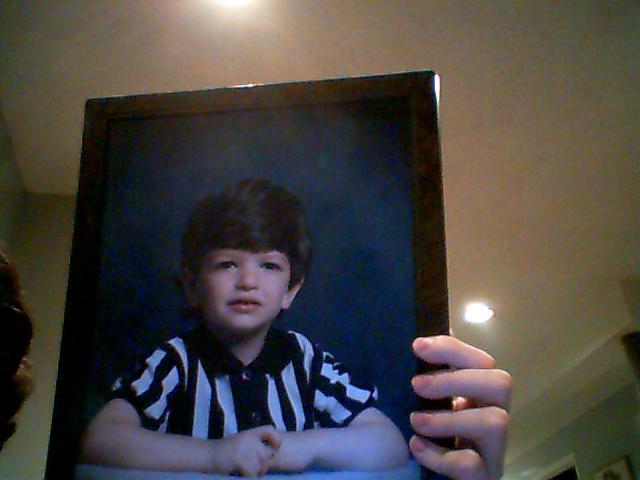
And when I say the first I mean the first. I don’t know how old I was when I wrote it, but I must have been extremely young because someone had to transcribe it for me. They may have even helped guide my ideas while somehow letting me keep my child voice. I found this creased and rusted paper wedged somewhere in my old desk drawer. I can also barely remember having toys or some figures that inspired the characters. 

And no matter how much parts of this very short bit of juvenilia make me wince, no matter how many parts of it make me want to edit it and shake my head, I have to remember that we all start from somewhere. So in honour of this Halloween and all the progress I’ve made, I just want to show you a little bit of where I used to be.

Trick-or-treat my friends. Happy Halloween, Past Child Me. 

Once upon a time there was a castle and there lived a spider, a spooky ghost and a red bat. And then count was visiting the witch. The count won’t take too long.

The next day when it was nighttime it was dark in the castle. The bat was sleeping.

“Oh!” Somebody open the door. I’m getting scared!” said the count.

The candle was lighted and one candle was turned off, and one was on, and one was dead. Then the count was sleeping, the spider was sleeping, the bat was sleeping, and the ghost was sleeping.

“What was that?”

They were all afraid.

Something said, “Oww!”

It was a wolf.

“Help!” said the bat and the spider to the count.

“There’s nothing to be afraid of,” said the count, “Just go to sleep.”

The ghost said, “Boo!”

The bat said, “Eee!”

The candles burned and they chased the wolf away. They lived happily ever after.

The end

Child Me