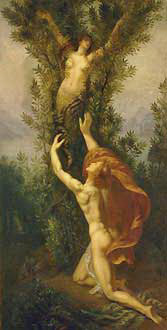
Mercy

The sequel and “Companion” piece to The Writer.

I look at the ruins of what I used to be and I smile. They are more peaceful now: metal and alabaster covered in weeds and flowers.

It’s been a while since anyone visited my grave. The Incarnations, ­­even some of the Great Old Ones that are smaller on the outside, sometimes like to stop by but the main ones, Pain and Death, stopped coming ages ago.

But Time never seems to stop. She’s always there. She is always there even now that he isn’t. Sometimes I think Time knows a lot more than she’s letting on when we pass each other in the streets of this world, and so many others.

I travel. I travel a lot. It seems old habits die hard that way, but even though my body is gone now, I find it amazing. There was a time when all of the stars and planets in this system were uninhabited. There were no psychic impulses, no telepathic fields: nothing. The only evidence of anything here having been anything other than eternal are the glyphs read on the corpse of me that became the site of my chrysalis.

He made them, but I’m the only one that can read them.

For now.

There is still some time. I could walk: it’s true. The breezes on the First World, Elysium, were always temperate even in the beginning. Instead I concentrate. It’s less that there are coordinates in my mind and more impressions of where I want to be.

I find myself in front of a small cottage surrounded by a larger garden.

“One day I will put down my pen. I’ll settle us down and work with what already exists. No more late nights. You won’t even have to kick me out for air …”

I shake my head. Even now The Tender, as everyone knows him, spends more time on his grounds than anywhere else. Nothing has changed, even if everything has.

He’s there. He’s wearing homespun overalls and a faded white shirt. His hands work a hoe as he plants another one of his cuttings into the earth. I remember his hair being so dark and short. But under his wide-­brimmed and ridiculous hat it’s now all shaggy and white.

Somehow, he always had long fingers. Even though gloves cover them, I know they still work calmly and methodically. I remember them being steady when they weren’t working furiously across a keyboard or a control board in a frenzy of inspiration. His movements had always been slower than The Other’s, but that was okay. He didn’t have to be fast.

I can see them trembling a little now. He lets go of the cutting and sits cross­legged on the ground: just as he always used to do. I wonder just how much he remembers before I notice the colour of the grass he’s sitting in.

“From now on, until this War is over, I will be The Poet Laureate Triumphant. I shall be your Orator. For we shall spread across the cosmos and show the Enemy that we are the red grass of Gallifrey!”

He takes off one of his gloves and plays with a strand of grass: lost in some thought or reverie he probably cannot name. He was so good at Naming: well, everyone but himself anyway.

The Poet Laureate. The Poet Laureate Triumphant. The Orator. And now The Tender. I resist rolling my eyes. At least the other names were just parodies and self­aware ironies. Even at his worst, he knew when to laugh at himself.

I wonder, again, if there is still some part of him laughing at all of this until I see … her.

Death stands behind him. She’s beautiful, I’ll give her that. And she’s standing in a white summer dress, metres away and entirely too close to my Writer.

Death. This was not the first time I died.

I died ages from now on a distant world in another place and time. I forgot in a War that I almost forgot. I didn’t remember what happened to my pilots but as parts of me lay in fragments or phased in and out of consciousness I could still feel the call of my heartbeat.

“A Battle TARDIS.”

“Wow. This must be an old design. I’ve never seen this kind before.”

“Or it’s a new one. The war might not have happened yet. She may not have happened

“That’s no ‘she.’ It’s just an old wreck.”

“No. She’s not. Can’t you hear it? Her Heart is singing …”

“Whatever. I’m going back to the Academy.”

“Wait. What–­­”

“Not my fault you suck with piloting. You can stay here with your piece of junk girlfriend.”

“Please! Get back here! Come back! Please … don’t leave me here …”

He was just a boy when his friends left him. I was old when my own companions left me.

“This panel. It’s … repair options. This is automated? Yes. Yes, I see. Thank you.

“I love your song.”

It took time, but I got us off and away from that world. He kept me hidden, his little secret, but he spent all that time nursing me back to health: healing me and making me better. We helped each other in our own ways. It wasn’t long before he graduated the Academy and it seemed like we had all that time to ourselves … for as long as it lasted.

No. I’m not jealous. I wasn’t jealous when he brought the Tree female Amber aboard. Or Venra the Silurian. And Elentha the Malmooth was kind. I did draw the line on that Carrionite female, however. Even though she helped advance his work considerably, I didn’t care for her trying to kill him.

But even this is different. I was willing to share him with the other women in his life. I’ve even met others since he … left as well. But I think I’ve shared him with you for too long, Death. I think you’ve been around us for far too long.

I don’t blink but she vanishes like a Weeping Angel just the same. He sits there, seemingly oblivious, for a while until he finally mutters to himself, gingerly rises to his feet, stands for a few more moments, and goes back into his cottage.

He’s not human, or even the equivalent of one. Even as he is now, he’s lived a long life and outlasted many wives and lovers. Sometimes there were even groups of them. Some things never change I guess. But it won’t be long now. Still, I can’t help but think of how happy he is.

Maybe it’s for the best that he’s forgotten.

There is a vessel burning in space. It will burn eternally, pitilessly, if left to its own devices: bitten piece by piece and crumbling each by inch into the Time Well. He looks on. Not even his Words can stop this.

I make the decision.

I fire a time torpedo and the suffering vessel freezes into place: the dynamism of its molecules stilled and allowed to shatter quickly like ice smashed with the precise blow of a hammer. The suffering vessel exists no longer.

He looks at me. While the other pilots call me by my designation, he always calls me “Lovely” or “my love.” But today he pats me with one long­-fingered hand and says my name.

“Mercy.”

I should have been slag. But not only did my Writer restore me, but through some Time Lord instinct and my will combined with perhaps the fracturing of time itself, we changed my fate.

“Mercy … please watch over them. Watch over these worlds, over my children …”

I remember, after centuries of work and isolation, when he placed the fob watch over my Heart … and he changed for the last time.

But so did I.

The watch and all that regeneration energy infused the Heart of me. The Workshop remains in flowers, wildlife, and beautiful fragments but I still remember that time when the Heart of me soared and transformed. New organs and parts, hands, legs, arms, toes, a shapely torso, a neck, a head and a face. Even as I look on at his departure, I realize that ­­ on that day ­­ my Writer was not the only one who had a wish.

“My friend left me a book from Earth. Mother Night tells you that you are what you pretend to be: or that, at the very least, you will become it.

“I’m tired, Mercy. I think I want to become something else now.”

I walk away from the cottage: his memories and mine entwining in my mind whenever I get too close. There have been so many times I wanted to awaken him. I might not travel as I once did, but I still think we can have many adventures. I still think I can drag him to many more places.

It’d be good for him.

Or me.

I want to respect his wishes. He helped me escape a fixed point in time, intentionally or otherwise, and he already lost so much. I’ve been in war. I was made for war. I lived it my whole life. Until I met him. We spent so brief a peace time together. I never wanted this for him. I’d never wish war on anyone, but least of all him. He wasn’t made for it. But all I could do was be at my Writer’s side in the only way I could. And we did what we had to do …

And he deserves this peace.

Yet something is different now. It even took me a while to realize what it is. It’s like new memories or old senses have reawakened in me.

And that was when I realized that the Ways are open again.

What’s more: I felt a fissure in this reality. Something, someone, called to me. She feels different and younger, but familiar. I sensed her earlier. I decided to call out to her then. I waited.

She came with two others. I can feel strong echoes emanating off them. I see them at the remains of the Workshop: of the discarded cocoon and layers of myself. They are actually reading the glyphs.

I’ll keep waiting. Perhaps he should hear the news from them before it’s too late. My Writer needs to know. He needs to know that this story isn’t over yet.

“She is not a police box, but rather a phone­ booth. Cherry red and passionate. And through her I’ve been connected to everyone and everything I love. Because even though my loved ones are always far away, I know they are always there. Perhaps that is why her circuits chose this form in the beginning: to keep me connected to the universe. My friend. My home. My Mercy.”

Red Telephone Booth

Save The Toronto Zombie Walk!

Unfortunately, the annual Toronto Zombie Walk is risking some head shots.

According to a Facebook status written by Thea Munster, the Founding Director of the Zombie Walk, the event was denied its Celebrate Ontario funding. In addition, this year they have been asked to pay for additional barricading on Yonge Street and expenses with regards to using the Nathan Phillips Square’s Pan Am stage and added security. As Thea Munster also explains, the Toronto Zombie Walk Board might decide to discontinue the event itself.

However, something can be done. The truth of the matter is that zombies, however unique they look as individuals, coming from various places of death, disarray and reanimation, have always had strength through their numbers: and knowing what is ultimately their inevitable goal.

That’s right. The Minister of Tourism, Culture and Sport, the Honourable Michael Coteau, is the person you should talk with should you want this grand recreational epidemic to survive this coming Halloween and for the years to come.

You can write Michael Coteau at his email address mcoteau.mpp@liberal.ola.org and ask him to reconsider and tell him how much the Zombie Walk means to you. In fact, Thea Munster has provided the following form letter:

Dear Hon Michael Coteau,

I am writing to ask you to reconsider funding the Toronto Zombie Walk and Halloween Parade through Celebrate Ontario. The TZW makes a unique contribution to Halloween events In Toronto. The participatory nature of the event attracts thousands of people of all ages, cultures and demographics to be creatively involved in the event every year. In 2014, the event had 15,000 participants and an additional 5,000- 10,000 spectators lined Yonge Street to watch and take photographs. The event also drew tourists from around the world. The TRIEM model calculations indicate that the economic impact of the event was $2,182,025 in 2014.

In 2014, The Toronto Zombie Walk won runner up for Best Free Community Event in Now Magazine, showing that it has become a much loved part of Toronto. A team of dedicated volunteers has taken years to grow this event into a world class tradition. Without Celebrate Ontario funding the event will be unable to support the number of participants at the level of quality that the grant helped build last year, and therefore may cease to exist.

Please don’t let this yearly tradition end,

Sincerely,

[Your name here]

So please geeks, horror lovers and fellow fiends, write to Michael Cocteau and let him know that we want to continue to spread the love. After all, reanimation is the most inclusive thing there is, and raising the spirit of celebration, through enthusiastic necromantic ritual, is always worth the effort.

My own reanimation before the Toronto Zombie Walk, circa 2011.

An Excerpt From The Winds of Winter

Many of us have been waiting for the sixth book of George R.R. Martin’s A Song of Ice and Fire for quite some time. And slowly, glacially — like the encroaching cold magic of the Others — Martin reveals chapters from The Winds of Winter piece by piece to us online.

Just recently, he revealed this chapter: Alayne.

Beware: there be spoilers here.

Alayne is the pseudonym given to Sansa Stark by the clever and manipulative Petyr Baelish and, my goodness, she is definitely coming into her own. The young, naive girl from Winterfell lost most of her innocence at King’s Landing and through Lord Baelish’s “guidance” is starting to truly learn “the game of thrones.” Her dark thoughts and cynical mockery of her interior monologue, in contrast to the silken demure veil of her public persona, is a nice little treat to read.

What’s more is that Sansa — or should I say Alayne — is realizing just what the game of thrones actually is and beginning to implement it. Alayne knows it to be all about interacting with people. It is about finding out what they want, suggesting it, being polite and cordial while inserting doubt and poisonous barbs in her words, observing others, and realizing that a tool in the game — a pawn — can very well be the real enemy that they pretend to be.

Even so, Alayne still has aspects of her original personality. She still enjoys lemon cake and appreciates acts of kindness. Westeros’ betrayals and intrigues have not destroyed the core of decency and idealistic dreams that was once Sansa Stark, but she has learned how to bury them down and not let others exploit them. Now we can just wait for the time when she can turn them on Petyr Baelish.

As for Petyr Baelish himself, his own grander plans are continuing to unfold and it only occurred to me, towards the end of the chapter, that he is well aware of the fact that “winter is coming.” I mean, it’s no stretch that with his network of spies, contacts, and agents that Little Finger would have influence in the Citadel of the Maesters. While the other Kingdoms had been fighting in the War of Five Kings, he kept the Eyrie in reserve: in both its military strength and its store of … food. Certainly the Tyrells and the Lannisters have not been as frugal with their resources and, for the long winter to come, that would be a game changer. Meanwhile Lord Baelish engineers the succession of the Vale and uses his “bastard daughter” to do so.

I think what I appreciate the most are the development of these two characters. When I was first introduced to Baelish and Sansa, I had very different opinions of them. While I believed Petyr Baelish’s skill at the game of political intrigue and social engineering was second only to Varys, I didn’t really think much of Sansa herself as a character. But while both the show and the books illustrate the depths that Lord Baelish aspires to — with still more information to come — to me it seems like Sansa is only starting to apply in A Song of Ice and Fire what she has demonstrated towards the end of Game of Thrones Season Four.

Really, Alayne is becoming one of my favourite characters and I look forward to seeing her skills improve in the game: assuming, of course, that she survives. This is Westeros after all. But tell us: what do you think of this excerpt? And where do you think it will all go?

The Walking Dead’s Gale Anne Hurd Producing MANKILLER

As the end of The Walking Dead‘s fifth season approaches, the Kickstarter campaign MANKILLER also nears a crucial point.

Mankiller is a documentary about Wilma Mankiller: the first female Principal Chief of the Cherokee Nation. While Mankiller itself is partially funded by Vision Maker Media for PBS, the purpose of the Kickstarter campaign is to raise funds to complete production and post production on the project that already contains over twenty hours of interviews. In addition to Valerie Red-Horse being its director and producer, the film’s other producer is none other than Gale Anne Hurd: producer of the Terminator trilogy, Aliens, and of course, The Walking Dead.

As such, potential backers of Gale Anne Hurd and Valarie Red-Horse’s Kickstarter campaign be expect to receive some very impressive rewards: including Walking Dead DVD collections signed by the comics series creator Robert Kirkman and Gale Anne Hurd, lunch and coffee with Gale herself, signed blue-ray copies of The Terminator and Aliens by Gale and James Cameron, a Terminator 30th Anniversary Poster signed by Arnold Schwarzenegger and company, a regular VIP pass to the sold-out Walker Con Event, a ten minute call with Steven Yeun — Glenn from The Walking Dead, and interactions with Norman Reedus (Daryl), Michael Rooker (Merle), and Melissa McBride (Carol).

And for those of you who are fascinated with activism, and aspects of aboriginal or First Nations history and culture, there are other rewards to consider as well: including art, interaction with Valarie Red-Horse (who has created other documentaries with Gale Anne Hurd such as True Whispers and Navajo Code Talkers), and conversation with Wilma Mankiller’s husband Charlie Soap and their daughter Gina Olaya. And none of this is, by any means, an exhaustive list of what you might find if you back this campaign.

So please: take this opportunity and support Mankiller or go on Twitter and Facebook and let people know this is happening through its hashtag #Mankiller.

Congratulations Amanda Palmer and Neil Gaiman

During her stay in Vancouver, Amanda Palmer announced on Twitter and Facebook that she is pregnant. According to her, she and Neil Gaiman will be expecting the birth of their child this coming September.

11066609_10152891188613375_3150639961984446755_n

It’d be very easy to wax poetic about Amanda Palmer and Neil Gaiman having a child together. The bold and vibrant Queen of Punk Rock Cabaret and the subtle and encompassing Prince of Stories make for parents full of song, and tales, and laughter, and lessons to be learned, and love. But, hopefully, this is what any child should expect from any loving family.

But you can see why so many fans of the two, including myself, would see this as a big deal. Amanda and Neil have inspired a great many people over the years with their writing and art, in the way that they’ve touched many of our lives, and made themselves part of our words and songs in so doing.

It is also a big deal for another reason. Many of us have not only followed Neil and Amanda’s art, but also what they have publicized about their lives. For all the fanfare and love, it’s not been an easy road for them. Certainly there are events that Amanda disclosed in her Art of Asking that puts some of these facts in perspective.

It is easy to geek out over this news. I’ve followed Neil for years. In a large way, he informed a lot of my current writing style and my sense of story. I was introduced to Amanda through my girlfriend sending me links to her music videos on YouTube and links to her Blog with its chronic lack of capital letters. But for all of their art, they are also human beings. Their child, like all children, has the potential to be awesome and, as someone who has followed them I’m just glad to see some more happiness in their lives. It is definitely a cause to celebrate.

So on behalf of all of us at GEEKPR0N, congratulations Amanda Palmer and Neil Gaiman on your upcoming child and a new story in your lives.

I Have A Disability

Disclaimer: This is a post that comes from my experiences but, ultimately, they form my opinion on this matter. As such, this will get into some “life story” content. This is also a very long post, so if you don’t like reading long posts, don’t read this. Reader’s discretion is advised. 

I was going to post about this earlier, but I wanted to have fun first before getting into something so serious and personal. Hopefully we can get back to those fun things later.

A little while ago, I read some articles about gifted children: or children that are considered gifted. More specifically, these articles were written by the adults that these children would one day become. They wrote about a lot of things: how difficult it had been to focus in mainstream classes, behavioural problems some of them had, and the culture shock of being in a gifted class only to have to deal with “the real world.” Some suffered burn-out, or high expectations of reality that didn’t pan out as — for the most part and barring notable exceptions — their gifted statuses didn’t translate into independent adult success.

I wasn’t a gifted student.

In fact, some might tell you that I was on the very opposite end of the spectrum.

I’m what the educational system calls learning disabled. It’s a misnomer in a lot of ways. The way it’s been described to me, it’s more like I have a different form of brain wiring: or, really, I just learn differently. I have great difficulties with mathematics: in the form of dyscalculia. I can add and subtract basic numbers, but multiplication and division can only happen with a calculator. And even adding and subtracting, without a calculator, takes me a while to do: and a lot of mathematical formulas are beyond me. Certainly, it can get in the way of a game of Dungeons & Dragons. I also have spatial difficulties. I literally struggle to read a map and unless I’ve passed through a place several times and know the landmarks, I will get lost. Sometimes, even then I will still get lost. And this doesn’t even go into a lack of focus or attention that I have sometimes: which can lead to a total lack of motivation. I need to move around a lot. I get very stressed out and tense when I have to sit in one space doing one thing for an extended period of time.

All of this really doesn’t sound like much and, indeed, there are people with far more severe disabilities than I. And I was lucky. Early in my childhood, my parents identified and placed me into programs with professionals that could help me adapt as much as I could to mainstream programs and interactions. They knew and accepted what a learning disability is and gave me the help I needed to get the tools to deal with it and one day live an adult life: as much as anyone really can.

I was also lucky in that by elementary school and after a lot of childhood therapy there were various teachers in an administrative capacity that dealt with a lot of the bureaucracy involved with getting me help. All I had to do was focus on the activities and my studies. Aside from a class or two I had outside my main one, I was otherwise like everyone else.

In fact, I improved. I learned how to hide my fidgeting fits and my poor fine-motor coordination. And after years of childhood teasing over not being in touch with my surroundings, or being tricked out of money, I embraced my strengths. I focused on English and literature. I built up and focused on what I could do: and even though I can always improve and learn more, what I can do I do well.

The point is, I had to work — twice as hard — to be better.

I did so well, in fact, that in elementary school I got a Most Improved Student Award along with my best friend at the time. But by high school, things had changed. Suddenly, the onus was on me to deal with math and geography. There was no extra class or space I could do my work and I had to take extra classes and tutorials to get help: to do the work from those classes in addition to the work I needed help with. And high school kids did notice that I was different and they took pains to remind me of that fact. At least by this point, I wasn’t wearing velcro shoes any more: as laces were an anathema to my motor skills at the time. Still, I had extra time for exams, tutoring, and after dropping many of those courses I did what I always did: I focused on my strengths.

I thought by University my learning disability wouldn’t matter any more. And I wanted that to be true. I took the extra help when I could and when it didn’t interfere with my own time. I was facing more and more stress as finished high school and then got into Undergrad. But I found my stride eventually in Humanities and I had this whole plan figured out. I would ride through the stress, take the Tylenols when I needed them for my headaches and Gravols when my stomach bothered me. I would stay in the academic system. I was good at it: in my way.

My plan was simple. I would work in the system, using what aid I had from learning disabilities and Affirmative Action policies at York to rise up through the ranks. I’d graduate Undergrad, then my Master’s and then get my PhD. I would then get a contract and get a position and teach while writing on the side. I figured it all out. I’d focus on my specialization: on the words that I learned to compensate for looking weak to everyone else from my childhood. And I would use it all to gain personal independence and build a life for myself.

I had it all figured out.

There is something else that some gifted and learning disabled students have in common. In addition to learning in different ways from a mainstream program outline, and having different mindsets, we also have trouble dealing with that same culture shock that I mentioned before. And I thought I’d grown immune to that.

It’s true. I’d become a University Graduate and I was working on my Master’s. I even got my Master’s Degree. But as I worked through the stresses of the academic life, the lack of money, and the personal losses and learning experiences of actually living on my own for the first time in my whole life, I realized I’d lost something. It was a sense of guidance: that sense of guidance and understanding that I’d almost always had.

Of course, I’m not talking about an authoritarian sense of guidance: where someone tells you what you can and can’t do all the time. That kind of authority can be necessary when you are a child, but when you want to be an independent adult it can be extremely counter-productive and patronizing. I will get more into that.

These things all fit together. You see I always thought, and I was always taught, that the work was the most important thing: that academic excellence is what you should strive for. It makes sense when it’s a central force in your life at that time and it will, theoretically, become an important element in determining your social status in the future. For me, things like jobs, dealing with bureaucracy, learning how to drive and so on weren’t particularly on the list in the beginning. And despite my parents’ and even my schools’ best efforts, socializing wasn’t really high on my list either.

So I didn’t really network with many people at my University. Most were nice enough, but I just didn’t relate to many of them and I didn’t know how to approach my professors for help. So I didn’t do the networking, or the grant or bursary seeking. I didn’t realize, or want to realize that these things were just as important as writing that thesis: a thesis I didn’t think anyone in the field was interested in, or — deep down — that I thought was worth it. And I think it’s safe to say that from mid-Undergrad to Grad School onward I was getting intensely frustrated with bureaucracy and student loans: with being run around, having my status changed, dealing with illogical government websites, and not having enough money to live on as a Grad student complete with budgeting.

And all I could think of was that when I was younger someone else dealt with this stuff, or it wasn’t even a factor. Yes, adulthood brings adult responsibilities but when most of your life is made up of people helping you deal with these matters so that you can study and keep studying so that you can get a career, you have certain expectations that others in positions of authority will be just as helpful. And some of these people are, and some of them really, really, are not.

I didn’t want to use my learning disability status to help me. I wanted to think I’d grown past it: that I was finally achieving what I sought to do on my own terms. You can read into this however you want. But I have used it, and I still use it because I’ve realized that the system — however broken it may be — has those statuses for a reason and to those who need them.

It wasn’t just my learning disabilities. I have difficulty handling stress. It gathers into my body. Most of the time it’s headaches, but I have stomach problems and, like I said before, I can’t stand sitting down in one place being passive for too long. I was also burning out on academia: fast. And after I moved in with my girlfriend at the time, I was running out of money only at a slightly slower rate.

I had to get a job.

I got my original job through a learning disability organization outside of my university, though I was hired by my merits. My university’s program was a Career Centre one and, as such, only asked me questions about what I wanted to do and offered a whole ton of workshops. By that point I was so burned out from academia and I’d done so little work outside of it that I had nothing really to offer and resumes confused me and I just didn’t feel motivated to go to a workshop — especially after accidentally going to “the wrong workshop” by the administration’s own error — just to do that.

I needed a job almost immediately. At the same time, I wasn’t going to take just any old job. That is not how it works. If I am not interested in what I’m doing, the task will simply not be completed. It won’t happen.

But I still had that drive, right? I wrote stories and tried to publish them but I didn’t know — and to some extent still didn’t know — how to send them in and everything just seemed to take so much energy from me. It was pretty obvious at this time that my stress and frustration was changing from burn-out into depression.

One of the most frustrating and soul-destroying moments for me during this period was having to move out of my girlfriend’s apartment and go to an Ontario Works appointment that we arranged after I went under her ODSP plan that would have paid me $100 dollars a month for volunteer work — with the worker even offering me an adult teaching program for adults — until we could find an actual job together. This was in the Ontario Works branch of Toronto. Ontario Works is designed to be a relatively a short-term social service program that finds you work of some kind in the community. It theoretically encompasses all of the Province of Ontario.

And I was confronted with the fact that my resume, edited by my university’s Career Counselling Services, was more like a CV: with a list of achievements that couldn’t be applied to the outside world. I was told I had to tailor make each resume to match the job I wanted. I was also told by others to “Cold Call” my resumes in a cookie-cutter style. It was confusing and, honestly, I got sick of it really fast.

And that was the last time I dealt with Toronto’s social services and the city’s benefits. I ended up moving back in with my parents. As of right now, I pay rent and I applied to Ontario Works in York Region. I thought that I could have a similar arrangement to them as I did with the Toronto branch. I thought they were integrated.

I thought a lot of things.

What Ontario Works was, and is, is a program that I had to fight to get into. You know that sullen feeling that seethes in your stomach when you’re put on hold and there is nothing you can do about it? I ended up feeling that sensation more than I ever had with National Student Loans: though they would have their turn. I had to prove that I had a disability and phrase it as such. And when I finally did get in, I ended up needing my dad to drive me to their Woodbridge location as their Richmond Hill one, closer to where I live, “wasn’t in the right jurisdiction.” A situation where a person navigating their way to a long-distance location with a spatial disability and stress issues has all the makings of an insanity tale.

Their counsellors are only temporary and they cycle out a lot to take on new clients. I had to full out a long legal size sheet of paper listing all the jobs I applied for: as if my set of skills and interests could easily be found in the newspapers or the Internet. I simply couldn’t fill out all of those papers. Applying for jobs that don’t, ironically, apply to you for the most part plays on that lack of motivation that I was talking about earlier. It becomes a cycle of de-motivation. Some of my counsellors understood this and let it go. But others would phone me up and tell me I wasn’t “doing my part” in the process. None of them suggested any concrete ideas based on talking about my skill set or my leanings. And I had to re-apply — twice — to be exempt from filling out the sheet because I have a learning disability and stress issues: complete with a note from my psychotherapist (who is, by the way, one of the most awesome human beings I’ve ever met).

The York Region branch didn’t have any community services or job workshops I could participate in. After a few years of making appointments whenever was convenient for me, as adults do, I was assigned appointments with my status in Ontario Works always on the line if I couldn’t show up. I even got some pre-generated punitive letters from time to time stating that I was suspended from the program when, in fact, I met their specifications.

And I’m not even talking about my National Student Loans. University costs money, as does living on residence. Being on social assistance makes sure I don’t have to pay the government money that I don’t have, while theoretically helping me get a job with some benefits to do so. It got to a point, up until fairly recently, where I would wake up almost every weekday with dread coiling in my intestines: wondering if a voice message was left on my phone, or if I got a letter from NSL or OW.

Recently, I’ve been trying to apply for ODSP: which is specifically a government social service that deals with people that have disabilities. So far, I’ve been rejected: on the grounds that I don’t have a recurrent or permanent disability.

Even though I’ve been diagnosed as having both, and I had a doctor’s note. They invited me to write them a letter for an internal review. I can’t begin to tell you how hard it was to write that letter. It felt like NSL all over again where I was applying to go further into debt: except this time I felt like I was arguing that I was crippled in some way: that I wasn’t a complete person. One thing I was taught in school, no matter what direct help I was given, as that being learning disabled isn’t about what you lack, or what kind of deficiencies you have: it’s the fact that you just learn differently and you need other strategies to deal with the obstacles in your way.

So here I was: taking a lifetime of being taught that I could help myself — to the point of getting a Master’s Degree — and being told, now, that the only way I could get the help I needed was to tell them about how ruined I was.

And I did. I told them about the nature of my disability and how it manifests. I told them about the stress I suffer from and how it manifests physically. I even went as far as to give them examples of how this would affect me in most job situations. And, after a while, that sullen anger I’d been feeling became this righteous fury towards a broken system. But my words were cordial, even polite. Even though I was sure nothing would come of it, perhaps nothing will come of it even now, I used my words to take what was there — in me — to help me.

And oh, I wanted to tell them the rest of it. I wanted to tell them about the life I had in Toronto. I wanted to tell them about the loneliness and the peaceful solitude I had in my own apartment. I wanted to tell them how my girlfriend at the time used to tease me about being “independent in the city” and how it chagrined me and made me proud.  I wanted to show them the stories I wrote and the essays I made in my own place. I wanted to tell them about the dreams I had for my university life that never happened, or could have happened, or almost happened. Or how I could come and go with sheer impunity. Or how I explored down town Toronto for new opportunities and to discover new people, and to grow into a better person.

I wanted to tell them about my triumphs and my failures. I wanted to show them that I am a human being and that I gradually retreated from Toronto and that whole other into a small little box of memories and regret that I only occasionally leave: all the while envying the other people who “made it” and dreaming about those times when my life was better, when it was expanding … when I actually had one.

Do you want to know what one of the most important moment in my life was? I think you’d actually be surprised. Almost all my life, even though I didn’t live in Toronto proper I had access to the Toronto Public Library. That place contained the largest amount of books that became my life. And every Saturday I’d go to a branch and get a new book. So when I moved out of the Greater Toronto Area and moved into Toronto itself I realized that I could, for the first time in my whole life, get myself my own card.

And I did. It had my name on it and everything. I took out books and comics. I read them on the TTC, in my apartment, at my girlfriend’s, and everywhere. For the first time, despite the schizophrenic nature of living in and feeling detached from Toronto, I felt like I could belong.

But I don’t own property in Toronto. I don’t go to school in Toronto any more. I don’t work in Toronto any more. And I don’t live in Toronto. Any more.

So I lost my card.

A good part of me died that day. And I became a ghost: remembering all the times when I was still, fully, alive.

It got so bad I sometimes felt tempted to re-enrol in school: to go for that PhD program I used to dream about even if a Degree didn’t guarantee me a job, or a position in today’s market, or if the thought of even more deadlines looming over my head didn’t terrify me. Even if it only bought me a little more time and would never get back the life I had before.

My Mythic Bios saved me. It made me into a writing ghost: of which I can see where a certain pun or turn of phrase might come in. I wrote: keeping as much of my life away from here as possible. I wanted a space where I wasn’t a failure, where I wasn’t bound, or held down into one place. And sometimes, I wasn’t always a ghost. Sometimes, like Tiresias I got to drink the vitality of imagination and companionship and I had inspiration and vision again. I could believe that I was alive and that my body wasn’t a liability.

I’ve accomplished a lot of good things during this time when all these other elements were happening in the background. I published a story, I published some articles, and I started writing for an online geek magazine. I networked and I even made some new friends. I realized that this place, right now, even without money or steady employment isn’t hell because I’ve written about hell and there are still some chances here.

There is something else you need to understand about having a learning disability and, again, it was something taught to me in school. In addition to problem solving, I was also encouraged to ask for help. I think one of the most difficult challenges in being an adult with a learning disability in addition to all the other gritty and uncomfortable adult things is the fact that I didn’t feel like I had an advocate.

An advocate is different from having a teacher or a counsellor. A teacher will show you how to do something, but will ultimately have you do it. A counsellor will advise you or tell you the status quo or the party line and stick to the minutiae of the system. But an advocate can not only teach you, or advise you, or know how the system works but they will listen to you and stand beside you in getting to that place that you need to be.

I haven’t really had an advocate of that level since childhood. But I might be getting one like that right now. For the first time in ages, I don’t feel the dread coiling inside of me. Just yesterday, I turned thirty-three. I’ve been unemployed, but working and trying to find my way — trying to find a focus — for almost three years.

I’m still scared, but in the sense that I know there will be challenges that I’m going to have to face: that I’ve always faced. I am going to need to deal with this world and its realities of rules and regulations. But maybe I won’t have to do it alone. There are already people behind me but maybe, just maybe I can take those obstacles that I have been in my way and turn them into goals, into goal posts until — eventually, I get to where I need to be.

Now, if you’ll excuse me, I have to go sleep now. Tomorrow, I have an appointment to keep.

Looking Outward

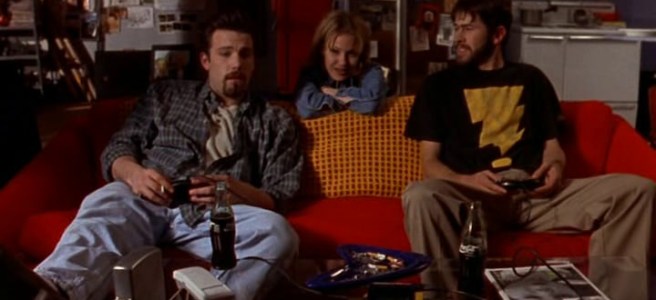
Chasing Amy, Finding Alyssa, And Revenge Of The Shit

So I worked on a little bit of a side thing.

I wouldn’t have even called it a project, at first. As you know, I finally watched Kevin Smith’s Chasing Amy not too long ago and, as a result, it did something my brain. So, one night, I was thinking about the last part of the movie and this rather, shall we say, fucked up parallel occurred to me.

Originally, it was going to be a post written on Mythic Bios after I got the article that I intended to do, for tonight, right on here. Then, as per usual, my brain asked me: “What would happen if you made this into a Twine?” Then I got silly. See, I had this plan. I was going to cut Holden McNeil’s infamous scene with Banky and Alyssa Jones: with Anakin Skywalker jumping into Obi-Wan Kenobi’s lightsaber blade, getting amputated, and igniting on fire.

Alyssa and Banky Scene

Then I was going to end it with Holden McNeil coming out of a movie theatre, having just watched Revenge of the Sith for the first time, and say something smart ass about how bad it was. The implication, of course, was that the film and the prequel Trilogy was so bad to Holden, that it brought back terrible memories. You know the ones.

This short Twine of few scenes, mostly quoted lines with that ending, was going to be called Revenge of the Shit. Personally, I think it’s a title that some of Kevin Smith’s film characters might have appreciated: among other disgruntled Star Wars fans. And yes, I was tempted to put a certain … demon of excrement into the story somewhere: perhaps asking him how the movie was.

Of course, I also came up with another — more grim and random scene — right after that which would have taken the piss out of the comedy right then and there. But, really, what I planned could have been done better by someone with actual video editing and splicing skills: of which I have neither.

It was supposed to be a throwaway project: a one-off. It was supposed to be something that was fun and light and made light of a fictional character’s ridiculous choices and suffering.

But, as usual, I can never really do anything simple.

The fact of the matter is, the little bit of fan fun and snark mutated out of my control: and into something else. At the same time, it took precision to find those quotes, describe those settings and character feelings, and build something from it. It became something else. I realize that even though these characters and lines belong to Kevin Smith, George Lucas, and now Disney, I actually had something of a story to tell.

And I had fun telling this fan homage genetic freak, bordering on a crack fic — an off-the wall story– that I hope also says something meaningful.

My Twine making skills haven’t really progressed since The Looking Glass, save for learning how to format fonts in Twine, but as always I tend to focus on story and pacing the amount of text, of making a rhythm through each hyperlink more than anything else. But before I go on, there is one more thing I’d like to say.

There is one part in this Twine story where, should you choose to find it — and it isn’t hard to do so — Holden enters something of a “What If” or “Infinities” reality with regards to Chasing Amy. There was one story I was so tempted to tell, or outline: where Holden is so overcome by Banky trying to sabotage his relationship with Alyssa, and finding out about Alyssa’s past at a point where he is not mature enough to deal with it that he actually leaves both of them — and his old life behind — without a word.

Holden

Alyssa ends up coming to his and Banky’s apartment to find out where Holden was, even as Banky is left in the lurch with regards to their creative work Bluntman and Chronic, as well as their own friendship. Alyssa demands to know what Banky told Holden after he admits that he said something to him about her past. Suffice to say, she gets mad when she finds out, while Banky gets defensive.

Alyssa decides to go looking for Holden, actually concerned that he has had some kind of mental breakdown. Banky also goes with her and, reluctantly over a car trip start working together. Unlike Holden, she warns Banky that she will do more than tell him to “shut up” if he gets out of line. Banky tells her that the reason he dug into her past, to get “evidence” on her, was because he was protecting his friend: that he was afraid she was just using him as “a sexual phase” or some kind of game. Alyssa actually calls Banky out on the fact that he loves Holden and sees her as a threat.

But they do bond, and perhaps meet some weird characters along the way. At one point they realize that they could have actually been friends if this hadn’t gone down after they begin exchanging more stories. They realize they have a lot in common in addition to their bad experiences with women. At one point, they seem dangerously close to being intimate with each other, but they both go “Nah” at the same time. Banky says something about man-hating lesbians, and Alyssa counters him with misogynous (closeted or not) gay men. It’s Banky that admits he hates the fact he never saw Holden smile more than when he saw him with her. He realizes he hurt his childhood friend badly and, for the first time, actually starts to cry. It occurs to the both of them, in a poignant moment, that they love the same man.

Holden, Alyssa, and Banky

Alyssa also tells Banky that the reason she wants to find Holden is that she’s worried about him, but that if something like her past is enough to get him to leave her, he should do the opposite of being “chicken-shit” and make it clear: giving her closure. So to spoil the ending of this alternate universe “What If” story I’m never going to write, these two flawed but genuine human beings do locate Holden. He has been in the middle of nowhere, in a barnhouse: pretty much acting like J.D. Salinger, the creator of his namesake and working on a new comic. Chasing Amy is that comic: as he had seen Jay and Silent Bob before he left. He’s spent a while regretting having left, but by his logic he “needed some space.”

Holden’s peaceful yet sad Old Ben persona (see what I did there with “Ben”) is shattered as Alyssa brings her fury on him along with Banky. It’s been a while, so Holden doesn’t really know what to feel any more. Alyssa storms off. Holden tells Banky he feels bad about leaving their partnership in the lurch and tells him he’s done with Bluntman and Chronic: giving him his share of the intellectual property which he has prepared in writing and had prepared to mail to him. Banky takes it, and then tells Holden that Alyssa went through the fire to love him, and that he is making a mistake: that he remembers how he smiled at her. Banky tells Holden to go after her. And the story ends right there.

I would have called that story Finding Holden. But this is not my Twine. Instead, my Twine is called Finding Alyssa and I hope that you will enjoy it: for what it is.

She Makes Comics Makes A Mini-Doc On Jackie Ormes

In honour of International Women’s Day, I want to talk about a film. Even though it was only available through a temporary backers-only link, I was able to view the video and say something about it. It’s a small film, a mini-documentary about Jackie Ormes: the first African-American female cartoonist and creator of the comic strip Torchy Brown and the panel series Patty-Jo ‘n’ Ginger.

Jackie Ormes

This mini-doc was made by Respect Films, the same film-makers that created the documentary She Makes Comics which focuses on women in the comics industry and fandom. The Jackie Ormes Bonus Documentary itself was the result of the She Makes Comics Kickstarter reaching beyond its initial goals. It was originally going to be included in She Makes Comics itself, in a bonus or extras section, but Respect Films decided to release it on Vimeo.

The Jackie Ormes mini-doc was meant to be a part of the greater narrative of She Makes Comics: or, at the very least, it was gleaned from the primary material that the film-makers gained from their interviews. I admit that I really looked forward to watching this video and learning something new: not just about Jackie Ormes and her work, but also the time period and culture that she lived and worked in, and how it influenced her art.

It is shorter than I expected it to be, but it has some very fascinating elements. While Jackie Ormes’ work is talked about, what we get is a basic outline of what she did and the idea that she covered aspects of Black culture through her work during the late 1930s all the way until she retired in 1956. What I find particularly fascinating is that not only was Jackie Ormes a female voice in a male-dominated industry, but she was a woman of colour that spoke about Black culture in a pre-Civil Rights time span. For instance, Patty-Jo ‘n’ Ginger is a panel series in which the older and younger sister duo talk and argue about everything under the sign: including race and politics.

Patty-Jo 'n' Ginger

At the same time, you can see that Ormes plays in, and utilizes, the romantic genre of comics through the character of Torchy in Torchy Brown: dealing with her desire for love and a depicted love of fashion but, at the same time, portraying her strength, self-respect, and need for personal independence. Ormes manages to create characters that are not traditional or racial stereotypes while not shrugging away from the realities around her.

Torchy Brown

I just wish we could have seen more in that mini-doc, but I think the most striking thing — for me — was the discussion about an extremely personal and sad event in Jackie Ormes’ life: on how she used her art to, in part, channel that grief into something informative and eternal. It is this element and the entire mini-doc that fits into the spirit behind She Makes Comics narrative: a brief but poignant outline of a story told on behalf of someone gifted and departed by her living compatriots. At the same time, this documentary stands on its own: along with the work and life of Jackie Ormes herself.

Chasing Amy And Reviewing The Laurel Leaves

I wasn’t originally going to watch this film. In fact, my plan was to avoid it into the unforeseeable future. In the beginning, back in 1997 when Kevin Smith’s Chasing Amy was first released, I just wasn’t interested. At the time my interest in comics and superheroes was waning and I was in the phase in my life before I went into any conventions, panels, geek communities, or had any relationships. Later, after I got back into comics and saw them for all the adult potential they could contain, I still didn’t watch this film because I’d heard about the messiness of the relationships between them and, at the time, I didn’t understand and I wasn’t interested in subtexts of other sexualities, geek subcultures, the minutiae of romantic comedy and failed relationships beyond the theoretical, and I felt safer in my own head.

Much later, after opening myself up to more life experiences, the reason I avoided Chasing Amy was out of fear. In retrospect, it was always out of fear. It’s only know that I’ve realized that by avoiding Chasing Amy that I’ve actually been running towards it. And tonight, for the first time, I decided to actively run towards what I can see of its heart.

If you don’t want Spoilers to a 1997 movie, please don’t read any further.

I think there are two reasons I kept away from this film. The first was that I knew how it was going to end. Knowing how a work is going to end before you experience it definitely affects how you might react to it.

And the second reason is that I knew its setting — at a convention amongst comics geeks and creators — would hit close to home. Holden and Banky’s introduction in signing their ridiculous superhero parody comic Bluntman and Chronic (modelled after the in-movie and in-Smith universe Jay and Silent Bob characters), with Holden’s high-brow intelligence and Banky’s sarcastic and hair-trigger irate temper — along with how they dealt with and understood their fandom — already threatened to draw me in. Even Hooper X and his ludicrously over-the-top Black Power White Man hating persona — to the point of claiming Darth Vader to be an icon for Black slavery and repression — got me to smile when I realized it was all a clever subversive act to keep up his image.

Then there is Alyssa Jones. She is the creator of what seems to be an even more subversive take on the Archie comics genre through the creation of Idiosyncratic Routine: a comic with what seems to be lesbian or queer oriented relationships story. I really appreciated some of the subtext here: that throughout the interactions in the beginning of the film towards the end we are seeing the difference between generic superhero comics and the personal stories of which they are capable of telling.

Idiosyncratic Routine

To be honest, I didn’t want to like anyone in this film. To be fair, it would have been worse when I was younger: back when I hated crudity and was taught to think it was wrong. Even now, the fact that all four characters had — at times — had superficial relationships with people. However, I also know there is a difference between casual talk at a bar and a character’s actions: as well as context.

The thing is, I can understand why each character does what they do and Kevin Smith takes pains to show us little details along the way. You can see Banky’s over-insistence that he isn’t gay, his homophobic comments, and his need to carry around an excessive amount of porn magazines as a major source of emotional compensation. He likes, at least his long-time homosocial friendship and creative partnership, with Holden and doesn’t want it disrupted in any way.

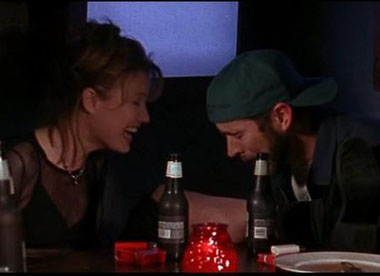
You can even understand Holden: at least in the beginning. Imagine being in a small bubble of society and only hearing about other things beyond it through spectacle and fiction. Then imagine you meet someone and you totally hit it off with them, or so you think — even getting invited to event by this person — only for them to begin making out with their partner right in front of you for an extended period of time. When I saw Holden sitting at that bar table with Banky, and watching — or trying not to watch Alyssa and her girlfriend of that time — I could see that for every time he told Banky to shut up, he was really venting his disappointment and discomfort: all the way to the point where he just wanted to straight out leave the bar.

Of course, there is Alyssa herself. As you get to know her, you realize she is a woman of some extremes. Sometimes, she genuinely seems to act like a very perceptive brat: knowing that she’s doing some shit-disturbing but entertaining herself in the process. And I say this with some fondness. She is witty, clever, and awkward in a way in which she can laugh at herself. At the same time, when she gets angry: she gets … angry. I’ll admit, Joey Lauren Adams’ voice has an extremely high-pitch and it can be off-putting: especially when drawing on the self-righteous fury of her character. But often, when she gets angry, it’s because Holden manages to trigger a place of hurt inside of her and she reacts accordingly.

But one thing I like about Alyssa is that even when she is an angry manic pixie girl, she still possesses enough self-consciousness to admit her faults and, honestly, has some painful moments of eloquence.

This is a woman who has spent a good portion of her life discovering who she is: experimenting with what she likes, who she relates to, and going to places that sometimes cause her pain. Unlike Holden and Banky, she’s a lot more aware of who she is and what she wants due to the struggles in getting there.

You have to figure Alyssa has gone through a lot. She experimented with her sexuality when she was younger and less mature. Boys took advantage of her and spread rumours and video tapes depicting her acts with them. By the time where Chasing Amy starts she has already dealt with having to come out of the closet and deal with her sexuality in college, fully identifying herself as a lesbian.

And then she and Holden meet each other.

Alyssa’s sexual orientation is not primarily where the tragedy begins in this dynamic. Imagine coming out of the closet: to yourself, to your family, and friends. You have a group of friends that orient their group and political identity around a particular sexual orientation. Then imagine meeting someone, a person, who challenges all of those preconceived notions. Holden, who seems to be a straight man, can’t begin to understand just what the implications of their attraction actually might mean for her. Alyssa could, and seemingly does, get exiled from her group of lesbian friends. And while I’m sure this doesn’t always happen, this phenomenon is definitely known to occur. In fact, what Alyssa seems to go through, at least in that one brief scene around the table with her friends, is reminiscent of works such as Gaming Pixie’s What’s In A Name? in which some gay-identified people consider bisexuality to be a fake designation: a cover for someone pretending to be gay but who is secretly straight.

It’s tempting to say that just as Banky’s internalized homophobia might be the result of repressed homosexual feelings towards Holden, Alyssa runs — and arguably succumbs — to the danger of dealing with some internalized and externalized biphobia. However, as I said Alyssa has done the work before and gradually accepts Holden as the person that she loves beyond sexual orientation, social structuring and despite — even because — of his messiness as a human being.

Holden, unfortunately, can’t seem to afford her the same courtesy. He has never had to deal with figuring out who he is to this regard. Moreover, he is still hung-up on power dynamics and hierarchy: on needing to feel equal to Alyssa in terms of experience. He ignores the fact that she loves him as an individual and not for the “prestige” of being “the first man” she’s slept with.

Chasing Amy Breakup Scene

One sad element about Holden is that there are points in the film where you can see him beginning to change. You see him calling out Banky on his homophobia and questioning just what kind of creative work and legacy he wants to undertake instead of the shallow superhero story of Bluntman and Chronic.

You see just all the time Holden and Alyssa spend together: even before they know they are developing romantic feelings for one another. Hell, there are points when Alyssa and Banky seem to get along. You’d think that she would get incredibly offended by Banky’s homophobic statements, but the way I see it to her they are a lot like Archie Bunker’s comments and she can at least respect the honesty of them if nothing else.

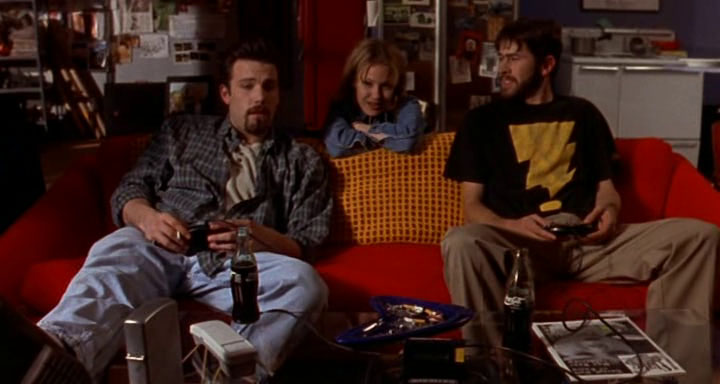
Alyssa and Banky

Certainly, Banky’s prejudices are a whole lot more open than Holden’s internalized ones: ones that he thinks he can overcome by virtue of being with Alyssa. Also, the characters themselves are crude and open about matters generally: though Holden himself due to his more reserved and conservative nature does this a lot less.

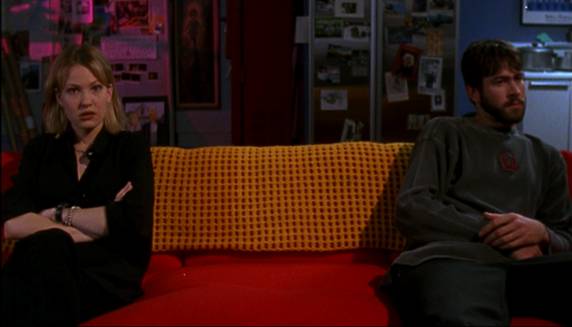
For me, Chasing Amy is less a romantic comedy and more of a tragedy: especially as you get this horrible mounting dread as the film moves towards its end. Holden just can’t shake off the taboos and power-structures in his head in time to save his relationships. In a horrible mangle, he tries to create a threesome between him, Banky, and Alyssa: after vehemently rejecting Alyssa for her sexual past with other men. This is a breakdown of communication and the terminal phase of a relationship gone dysfunctional. From my perspective, Alyssa should have told him about this past but, really, Holden should have been the one to ask her in a direct and respectful manner, outside of a hockey game, and with time put aside. Of course, Holden also should have borne in mind that many of the qualities he admires in Alyssa comes from all the experiences, mistakes, and work that she had undertaken.

Banky could have looked at himself and realized his feelings for Holden: or at least communicated just why Alyssa bothered him so much. I really noticed that the three of them could have easily been friends if nothing else.

Holden, Alyssa, and Banky

And then there is the fascinating element of Alyssa herself. When I was watching this spectacle unravel and she was explaining to Holden just why it wouldn’t work, I realized that Alyssa wasn’t just talking about the threesomes and play that she had done in the past. Even in her lesbian relationships, I strongly suspect she and previous partners attempted polyamory: or at least some kind of non-monogamy. As she states, there are many permutations of how it might not work out, and Alyssa herself saw those earlier relationships as experiments that she went through before finding what and who she wanted.

Alyssa, at least at this point, is monogamous and wants to be so with Holden. But Holden’s arrogance and insecurity poisons and destroys what they had: or could have had. Certainly, Holden’s fever-logic idea of creating a threesome to eliminate insecurities would, by Alyssa’s own words, have only made things worse. Perhaps with time, effort, patience, and actual talking — maybe even experimentation on Holden’s part and Alyssa’s understanding — all of this could have been salvaged. Instead, Holden loses Alyssa and Banky. Due to his own actions, he is essentially left with nothing.

The end of the film reminds me of the ancient Greek myth of Daphne and Apollo. The god Apollo seeks the naiad Daphne and she is not interested in his romantic overtures. He ends up pursuing her: chasing her to the point where she asks her river god father to change her into a tree to escape the god. Daphne became the first laurel tree. Apollo, in his grief, takes on her laurel leaves as his new crown. Laurel leaf crowns were awarded to ancient Greek athletes and victorious Roman warriors: perhaps reminding them of that kernel of defeat and loss at the centre of triumph.

Apollo and Daphne

Silent Bob tells Holden the story about a girl he knew named Amy who, because of her previous experience with multiple men, he couldn’t accept: leaving her and realizing, only too late, that she loved him just for who he was. Hence we have the title of the film: Chasing Amy.

A person is not an ideal even if they can, by their presence and loss, inspire creation. Holden ends up creating a new, personal comic sharing the title of the film. He gives a copy to Alyssa a year after their relationship ended. It is a comic book whose pages are laurel leaves and whose panels are lost moments of time. It is made up of the beauty, maturity, and understanding that he gained after losing the woman he loved by chasing an impossible ideal and, in doing so, chased away the flawed, vulnerable, and ultimately human person that she is.

And Alyssa? She ends up dating women again and doesn’t even acknowledge what Holden was to her newest partner. Even though he still clearly means much to her, he is part of her past now: the same past that she hid from him and so many others in order to psychologically protect herself. I’m even tempted to say, in a very less than qualified way, that she buries down what might have been a delving into bisexuality to embrace the relatively easier notion of homosexuality once more, leaving us with perhaps an example of bisexual self-erasure. Or, again sexuality doesn’t come into it. This was just about people relating to one another: and failing.

I am not in the LGBTQ spectrum and I know this film has been written about many times and probably in better ways, so hopefully you’ll understand when I say that I hope you take everything I’ve written with a grain of salt. After seeing the movie, I kind of wish that we could see another one: not from Holden’s perspective in gaining his laurel leaves, but Alyssa’s, or Amy’s — or even Daphne’s — defiance of that trope.

Chasing Amy Comic Cover

As such I hope it goes without saying that women, obviously, do not exist so that they can “be lost” by men in order to gain them a certain level of maturity and humility. But there is a trope here — a Western and Classic idea in which love is a “forbidden knowledge” that you must fall into, and that only through loss can you begin to understand who you are — and it is tragic in that it exists at all. The truth is, I didn’t want to like Chasing Amy: a personal enlightenment tragedy wearing the layers of romance, comedy, geekdom, comics arts and meta-fiction that it is. And I realize the reason I was so afraid of it was because there were many times in my life that I almost became Holden. Sometimes I’m afraid it still might happen.

Fear of loss is reason is why I didn’t want to get attached to the characters: to become affected by their loss and their pain of loss. But by not becoming attached to something, you attempt to hold off relating to it — and by not relating to it you can let an opportunity pass you by, develop a dysfunctional relationship with it, or let a part of yourself become mangled and ruined before it can grow. And I can’t do that any more.

I’d like to think that, in watching Chasing Amy I took a chance and looked at the forces that shaped it. As I have attempted to do in my own relationships, I accepted the experiences it had — and has with others — and realized that they only made it all the richer for me to learn from and relate to in my own right.

I’ve Got Such a Headache: Power / Rangers Short Film Taken Down

A long time ago, during the era of the first Power Rangers team, Tommy Oliver — the Green Ranger — had been manipulated by the evil sorceress Rita Repulsa to attack his fellow Rangers. However, when he came to their side, she had a contingency plan. Rita created a candle that, when its flame went out, Tommy’s powers would be lost to him forever.

Now another flame on another magical candle also threatens to extinguish itself.

Green Candle

Adi Shankar and Joseph Kahn produced and directed, respectively, a fan-made fourteen minute film on the Internet which, essentially, is a gritty revisionist take on the Power Rangers: set after the Rangers’ battle with the Machine Empire and what seems to have been a truce. This got the attention of both new fans, and old: with over 12 million YouTube views in two days.

Unfortunately, Haim Saban — the owner of Saban Brands and the Power Rangers franchise — forced Vimeo and YouTube to take down the video: threatening legal action.

Power Rangers itself is a fascinating phenomenon itself. It is an American adaptation and revision of the Japanese Super Sentai genre or trope: in which a team of five people through various means possess colour-coded uniforms, fight evil beings with special powers and martial arts, and gain giant machines or mecha to fight the monsters that are also increased in strength and power. It is not uncommon for young men and girls to be the heroes of these Super Sentai story arcs.

So, in a way, one can argue that Saban Brands’ Power Rangers is its own take of a much longer-running idea. One can also argue that Power Rangers is, in itself, a parody of violence, destruction, and character development. Like the Super Sentai genre itself, it’s primarily aimed for children with a downplaying of violence and consequences in order to protect what some societies consider to be basic children’s comprehension and sensibilities.

Mighty Morphin’ Power Rangers came to Fox in 1993. An entire generation of, at least North American, children watched the show with the antics of Bulk and Skull, Ernie’s Juice Bar, Rita Repulsa animating monsters made out of clay, cardboard buildings and scenery being obliterated by giant robot dinosaur Zords, and the friendships between five Power Rangers. What Shankar and Kahn did was they took the action genre of the 2000s with its revisionist elements — embodied for good or ill best by the new Transformer movies — and created their own fan film.

Joseph Kahn’s Power / Rangers is a film that not only parodies the lack of psychological consequences in the gritty violence, action, melodrama, and sleek props and over the top CGI effects (in contrast to cheap-looking costumes and the Power Rangers’ ridiculous cardboard cut-outs), but it also manages to parody the form of the gritty reboot itself while telling its own compelling story.

And, more importantly with regards to copyright, it did this for free.

Kahn and Shankar made no profit from creating this fan film. They didn’t even crowdfund its making. It all came entirely from out of pocket. It even has a disclaimer in the end credits stating that it is a non-profit work that was not meant to interfere with anything that Saban Brands or Lionsgate might be up to with regards to their own movie. Yet while both film-makers plan to challenge the removal of their film, there is one question that remains: why did Haim Saban have their video removed in the first place?

One possibility is that, with the creation of the next Power Rangers film in 2016, Saban Brands might want to maintain their franchise’s image as “child-friendly.” Power Rangers has had complaints from parents in the past about violence and if some perceived the reboot to be a part of that franchise, Saban Brands might think its reputation could be held in question.

Of course, there is always the argument that Eric Buchman presents in his article Where’s The Line Between Fan-Fic and Copyright Infringement? Ask The Power Rangers to consider. He claims that perhaps the usage of well-known actors, professional direction, and top-notch props and special effects might have made Saban Brands feel threatened: as though they were facing someone who had the technological and financial means to genuinely steal their franchise.

But if you take the technology and money away — of which both film-makers themselves provided — what does that leave us with? It leaves us with some fanfiction or a fan work that any geek with the means could have made. Certainly, on a personal note, an old friend of mine and I used to create new Power Rangers adventures and act them out through free-form roleplaying sessions during recess: and I’m sure that we are not alone. But in fan cultures that create derivative works from their favourite franchises, that even interact with them on any creative level through actual input or homages — even with disclaimers involved — where do you draw the line? And what does that say about the relationship between content creators and their fan-bases?

Power /Rangers‘ candle may have already gone out, but can Saban Brands’ really take the power away from the Power Coin in the hands of fans?

Green Candle 2