Participant in One Marathon, A Spectator at Another

Originally this weekend I was going to participate in the 12-Hour Comic Book Marathon at the Comics Lounge and Gallery. I didn’t end up writing anything or collaborating with any artists there. If my experience at the Global Game Jam taught me anything it was that most people there probably already knew each other and either way they would have come in some pre-made teams: those that needed them anyway.

As I’ve said before, I am not much of a graphic artist.

Really, I didn’t want to potentially take up someone’s space on the possibility that I couldn’t find a partner and–to be perfectly honest–I didn’t want to be the odd one out: feeling painfully self-conscious.

Later on, I found out that there were still a few writers and artists who cancelled or were actually still looking for a partner, but by then it was too late. However, it was just as well that I decided not to do it because my brain is full with all the work I’ve been doing and I had never actually been to the Lounge before. I would most likely have gotten lost trying to find it.

Essentially: I wanted to get there, get a feel for the space, meet some of the people there, talk a bit with them, maybe make some connections so that I could participate in a later event, or–really–just get to know people who have similar interests to my own.

I still felt bad, though, that I hadn’t participated as I intended and looked forward to doing. Keiran Templeton–who I saw in her tiara as she held court over an assortment of writers and artists–not only organized the entire event, she also had time to go face book and ask if there were any people that wanted to work with others, and she even told me by email that she would keep my name on a list to let me know about next time.

As it was, I made it up to myself by punching some of my procrastination out and starting to really script out my own collaboration with Angela O’Hara: you know, the comic I keep saying that I am working on. In my defence, I have been working on it on and off with little tidbits of notes here and there: much like every other long-standing story I’ve been dealing with. In fact, for The Project I actually made a rough outline of everything that I want to happen in our first issue.

The key of course was actually beginning to flesh it out. I’m beginning to realize that in industry terms, I work entirely too slow on comics scripts. Even from my limited understanding I can see that they take time and a lot of concentration. But the day before the Marathon, I decided to get into the spirit of it and expand on the very first part: to actually take one segment and go wild with some descriptions and leave room to artistic interpretation in others.

And that Friday before the Marathon, I sent something to Angela via inline text and–if it’s not perfect–it is at least something to start from and a good subject for us to discuss. I look forward to talking with her about it when we find the time and see what she will make of it.

So I had this little bit of positive energy to tide me over as I finally did leave to find the Comics Gallery and Lounge I’d been hearing about for so long. The journey was ironic for me. It seems like so long ago that I used to live on the Bloor-Danforth line: specifically close to Woodbine Station. Even before that, when I was at York, I always found that energy to take various transit to get to find my away to College and Clinton: where the Lounge actually is. It’s only now that I’m in Thornhill–in York Region–again that I decided to go somewhere cool that I’d been putting off for so long.

When I found myself outside the shop, I paced around a bit: suddenly really feeling the nervousness. It was strange: being back downtown on the streets again after basically huddling away in Thornhill. And here I was outside a place with people who obviously loved comics and other Geekery and I was hesitating. It would be helpful to mention that I’ve developed some very crippling social anxiety over the years. It probably has roots to older sources, but after so long dealing with Grad School and being by myself a lot I kind of really retreated into myself. It also doesn’t help that I was shy to begin with and … it’s hard for me to put myself out there.

I also was thinking to myself: what if I go in there and no one likes me? I know: it’s a pretty irrational series of thoughts and I have gotten better at dealing with them. I knew that if I needed to, I could leave at any time I wanted and–it being a Lounge–I brought some work to do as well. My plan was to stay there for the party that was going to happen after 11 pm–when the Marathon was officially over–talk with some people and then leave.

So I walked up the stairs and everyone was friendly. I had to get used to, well, being in a new place and around people I didn’t know but I browsed around the shop and entertained myself looking at comics. There was a very comfortable black couch–most of the inner room was set up with benches so people could work–and I sat down to write. I actually started to feel a lot more comfortable writing and having something to do.

It was strange at first. I’d seen a lot of the people around me on Facebook or the Internet when I was finding out more about the Lounge, but actually being around them in person was just different and cool. It turns out some people were late for the Marathon anyway and, really, they just seemed to have a whole lot of fun doing what they did, browsing comics, and just socializing. I didn’t talk with as many people as I wanted to, but my cousin Shane Kirshenblatt–who made such awesome comics as Dorothy Gale: Journey to Oz–and his wife Sari came in and we talked for a while about comfortable things like comics and writing and creation and all that fun stuff.

Coincidentally, I wrote my first Conference paper partially on Shane’s Oz comic and he inspired me through a conversation to write my first ever science-fiction story in ages: one that didn’t win the Friends of the Merrill Short Story Contest granted, but I am still proud of it to this day. He actually talked with me about looking at a script of his to see what I could do with it: something that really intrigues me.

I even briefly talked with Keiran as she was managing her Empire of comics creators and there was a dog or two, and some cheering, and various geeky discussions. I ended up having a really good conversation that night with Debra Jane Shelly. I had seen her before, like many of the other denizens of the Lounge, on their Blog and Facebook. She really stuck out at me the first I saw her and I knew before I ever talked with her that she was a hard-core comics geek. But it is one thing to know that intellectually, but experience it first-hand in a conversation was entirely different and enjoyable. I barely got a word in edge-wise, but I enjoyed listening to what she had to say and I learned a few things.

For instance: I never thought about the first-impression that people got of Watchmen when it came out in the 1980s. As Debra pondered this, I remember thinking that it was true: it was during this time period that meta-narrative and pastiching were being implemented into comics narrative along with a certain more blatant kind of adult irony.

When you think about the comics that came before, during the heyday of the Comics Code–of comics industry self-censorship–and then you look at something like Watchmen you can definitely imagine a kind of “culture shock” for some readers. But, as Debra put it, we will never really know that feeling ourselves: you know, aside from reading about it through secondary sources. It’s like those accounts you hear about from famous writers and comics creators about growing up with the old Pre-Code Horror Comics: with EC Comics’ Tales from the Crypt, Creepshow, and all of that really fun and twisted stuff. But even though we can read a lot of those twistedly ironic and morbid goodies now, the spirit of Zeitgeist of the times where they were written are not really as accessible to us or perceived the same as someone who was there.

I think it was good to talk with someone who knew as much–if not more–about comics: someone who had read some really good and memorable works. It was sort of humbling, to be honest: to know that wasn’t the only one as insane about this stuff as I sometimes delude myself into thinking. There was a whole room of them. :). I did talk with some more people and then I took my leave as it was about that time. Debra actually made me pose for a picture where I am holding Alan Moore’s Nemo: Heart of Ice: a book I actually got there. As for the reason that she took it, if one is needed, she told me that she likes to take pictures of people having found their favourite books: or something to that effect.

It occurred to me–or I remembered–as I smiled at the camera that I rarely ever smile when I’m in public: especially in Toronto. Sometimes the exhaustion, and anger, and sadness ingrains itself in you so bone-deep that it’s difficult to even smile for real. I thought about just how sad that fact really was.

In any case, I said some goodbyes and then I left to find the streetcar back to Bathurst Station. I missed the car, so I decided: “Screw it! I’m going to walk the fucker!” So I walked by myself all the way from Clinton and College to Bathurst Station. I hadn’t walked that long or been in this area in ages. And as I did so, with my travel bag on my shoulder and my black winter coat covering me I felt more alive than I have in a really long time.

Coincidentally, it took me 16 minutes and there was no other streetcar during that entire time.

I know when I wake up tomorrow, or later, I’m going to be very embarrassed by some of the sentimentality and haphazard writing I’ve left here. It’s no new thing, to be fair. Actually, I’m surprised I wrote so much about–well–doing so little: by my standards anyway. However, I really felt the need to write this out while it is still fresh.

I am definitely going to check out the Lounge again. Here is the Toronto Comics Lounge and Gallery Blog in case you are interested and you didn’t see it on my Blogroll section. Thank you for reading this and, next time, I do plan to make something.

Excelsior, ladies and gentlemen.

For Red

Her first eye is Gaia and her second is Oceanus.

This, above all else, is the gaze I recollect underneath the plumage of the firebird and the lash of the Eumenides that occasionally comes out from her generous mouth. Yet the red also reminds me of Prometheus: of audacity and the cackling thievery of fire. However, even the Titan himself was punished by the slow, cyclical eating of his liver … save that her fate is more arbitrary than the whims of gods and her own body is not as infinite. I always fear for the day when Medusa might catch her chimeric gaze and the reversal of Galatea might come fully upon her.

Yet even the Gorgon cannot fully meet the eyes that mirror the ancient and glorious horrors of the Bacchanalia. For she who drinks the wine of blood and bathes in its ochre depths dances around the whole of humanity as though skipping through a grove of statues.

So full of utter gall and mocking bile from her revels, she grins at the carnal carnage before her and the perfect white sickle of her smile becomes the blade that castrates her own fear.

I Am Made of Words

About five or six years ago in Niagara Falls, I received a Tarot reading from a lover of mine: the first person I ever went to visit on my own. There aren’t many details I remember from the time except for one thing: the majority of the cards that she drew from her deck–a deck that she ultimately gave to me–had a Sword aspect.

File:Swords01.jpg

We were sitting on my bed and here I was staring at a hand of Swords in front of me. I know we had theories as to what it might mean in the purely open-ended mode of interpretation that you have to use when examining any kind of symbol. And while we agreed on a few things, in the end it was left to me to link things together and make patterns that were–or were not–there.

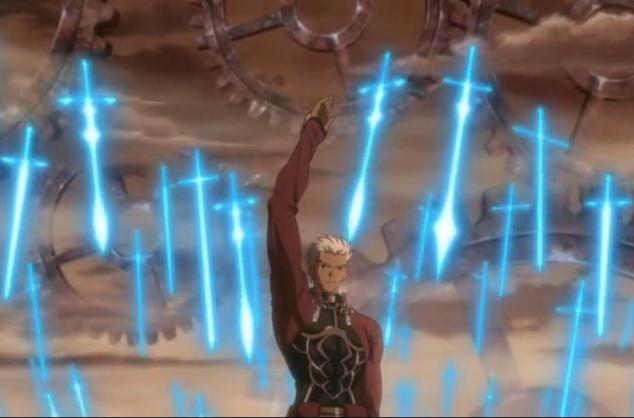
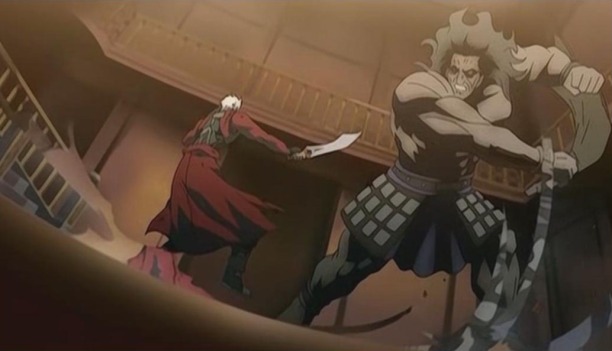
During or after the time we met, I began watching this anime at the York Anime and Manga Association (or YAMA) called Fate/Stay Night. In this anime was a character named Archer: a heroic spirit who could project and create bladed weapons. He gained these from a Reality Marble: a small pocket-universe that developed inside of him due to his dedication and sheer strength of will. When he fully summoned this place, a sphere of flame, turning cogs, and blades consumed the area that he and his opponent were fighting in. In other words, Archer took his inner world and imposed it on the external for a brief period of time.

In this world I describe, he has access to every mortal bladed weapon–every sword–that he has examined and ever replicated with his magic. He stores them all in there and either uses them one at a time–knowing what its history is, the thoughts of its owners, and even their secret abilities–or he can summon and throw them at his opponent all at once. I really admired this anime character and when I did further research on him … I realized that I related to him a lot more than I thought.

I still think that Archer could have done a lot more than simply imitate weapons and memorize their patterns. I think that, even modifying some of them into arrows, he could have used his knowledge of them to create new weapons entirely: new tools and devices to accomplish his goals. He even admitted that his weapon was his own imagination and we all know that the imagination is limitless.

You see, I make weapons too. I make weapons and tools. And they are my words. I’ve spent years honing them: making prototypes, re-making others, imitating more, and learning from my mistakes. I seek to bury my demons in a torrent of words. I desire to make an Empire out of them: to expand my own little world into this one in the best way that I know how.

For a really long time, I have been a very passive individual on the surface. But after Niagara Falls I decided to stop ignoring my natural aggression, my dominant side, my ambition, and the fierce defiance that I realized I’ve always had inside of me. I think that sometimes the manner in which I honed and sharpened my words and that ferocity I view the world at times–as though to defend my own childhood awkwardness and lack of social skill years ago–has ingrained itself in me so much that I seem aloof to people and perhaps a little intimidating. Perhaps that is why I might seem so combative towards life at times.

I grew into my own. I began to see that I was physically attractive, intelligent, creative, and I build a whole world that I can sometimes share with other people. I was told by a friend that in some ways it made me dangerous, but in other ways she greatly admired what I was becoming: whatever that is. When I look back, “aggression” might be too strong word. Perhaps what I was really looking for, and what I still have to fight for– is “confidence.”

Not too long ago, Cristian Mihai wrote a post called Art and Life: where he talks the fact that while he may have done many things in his life he might have regretted, he never regretted any of his stories. It’s very close to those moments where I think the best thing I have ever done with this life of mine so far is write.

So I keep building my world, every day, one blade at a time: because underneath this inconstant fleshy matter of mine and to quote a fictional character, “I am made of swords.” And even though I know I’m not made of weapons, even though I’ve suffered defeat and pain, I’m going to keep fighting because–in the end–I know I am going to win.

File:Swords14.jpg

So when you take the “S” away from Swords, that is what I am made of.

It Was My Birthday and What the Hell …

I turned thirty-one this weekend.

I’d like to say that it came at me by surprise, but I did manage to see it coming. 🙂 It makes me realize that a lot of things have happened between thirty and thirty-one.

I’ve gone from just talking about sending stories out as magazine submissions to actually doing it. I’ve also went from just talking to actually creating a Writer’s Blog with over a hundred articles that has been Freshly Pressed and I’ve gotten peer Awards from some of my most devoted readers. I made a place to put ideas that I originally had no room for. I participated in my first Game Jam. I wrote two ad hoc mini-operas for a contest that Neil Gaiman was one of the judges for. I also got my Master’s Degree and decided not to go back to University.

I wrote some articles for some really excellent producers and writers and on subjects that deserved more information on them. I helped someone in a contest to achieve their dream and made a new friend in the process. I’ve reconnected with my old friend Angela and I will continue my part in working on our comics collaboration once I’ve done some more of my own work. And there is so much that I still have to do, you know? It’s ridiculous. I know I have made a lot of progress and growth this past year, but I feel like I have to keep at it because sometimes it just doesn’t feel like enough.

I’ll admit: this is not where I thought I would see myself at thirty-one. Sometimes I feel like I didn’t have enough time to experiment with my life and now I somehow have to be an adult and, you know, be more responsible in some way. I don’t have a paying career yet and I live with my parents again. A lot of other things changed during that time as well and I feel like I lost a lot of what I once cared about. I’ve been more anxious and more shut-in these days while also working on my projects, sitting on the Internet, and just enveloping myself into a steadier routine. I know I will be facing some more challenges–some of them uphill battles–and I miss the things, relationships, and people that I did lose along the way. It cost a lot to get to this point in my life: as I suspect it always does and it always will.

But these are the things that happened, the things I did during a year’s time, and what I am thinking about now. Sometimes I think that my options are more limited now that I am older. But let’s face it: I was a grumpy old man even before I had a thirty-one year old body and I am set in my ways about some things … more specifically things that I plan and I want to do. I know I want, and I am going to seek for more. So in conclusion, as if this were some kind of formal essay, all I can add is that I will continue doing what I have to do or, as a character of mine once said, I will do what I feel that I have to.

Thank you for reading me, liking me, and Following me. I hope to continue some good journeys and explorations together. Take care, my friends.

Looking Outward

A Game of Statues: Amanda Palmer, Persona, Expression and Life

When I was in Kindergarten, in a school called Adventure Place, we used to play something called “A Statue Game.”

I knew it as The Statue Game. We would listen to this song–which I now know to have been created by Sandy Offenheim and Family–move around and when the song would tell us to stop, we would freeze in mid-motion. We couldn’t move and the song would tease us, play games with our minds by implanting the suggestion of itchiness or needing to scratch our heads, and then it would start again and we would be allowed to dance and hop around as we did before. It turns out that this music and this game are still being played to this very day: and it is a fact doesn’t surprise me.

There is a reason why I’m bringing this up and I will get to it soon. During Amanda’s Art of Asking TED Talk, we got to see a picture and a little bit of a demonstration of Amanda in her previous occupation as a living statue. This is not the first time I heard her mention this: chances are I probably read it on her Blog or in her Introduction to The Absolute Death. But there were two things that struck me about her time as a living statue.

The first is how, in a way, we are all conditioned to be living statues. At least, that is what looking at “Let’s Play a Statue Game” as an adult makes me feel. I mean, think about it: the song and game is really rather instructional. It teaches children pacing and rhythm. It delineates a time for play and then moments of formalism: of needing to be still and having to listen. Making it a group game also socializes children into a group calisthenic: tapping into that unconscious place where we all unknowing imitate and synchronize with each other. It teaches a time for play and stillness, but it also allows us the space and the capacity to laugh at ourselves. I’d argue that it is one of those early methods of making social interaction into a game that everyone plays along with and is both half-joking, and half-seriousness.

Yet what really grabs my attention is that rituals like “The Statue Game” encourage us to build those early personas: a social facade that allows us to interact with fellow human beings. Personas are not illusions nor are they fake in any way. They are just different aspects of us or personalized mask-tools that we use in different situations of interaction. We make these masks from childhood and things like “The Statue Game” allow give us the basic tools, mental shapes, and situations to do so. In other words, you can look at all of this as an experiment not only in socialization, but in communal art as well.

Of course, some of us have a lot of difficulty with these games. Some children do move under suggestion of the song. Other children have slower reaction time or a different sense of movement, balance, and rhythm. And some just plain get itchy regardless of any song or suggestion. Yet the rules of “The Statue Game” still have an effect on them: they either learn the communal rhythm or make one of their own.

That is what artists do.

So let’s get back to Amanda Palmer. I have imagined her, and now seen images of her as this eight-foot living bride statue holding out a flower and trying to make eye-contact with those people who passed her by. On an intellectual level, I think it was brilliant and an excellent metaphor for an artist learning to keep being relatable to a prospective audience.

Also, it was very subversive of her. Think about it like this: what is an eight-foot living statue of a bride? It–and she–are symbols of of a communal making: an archetype of certain expectations and theoretically immutable traditions. Yet there Amanda was, in a role of monetary exchange granted, using eye-contact and a simple gesture of holding out a flower to appeal to an individual on a basic, human, empathic level. It is ingenious: just as ingenious as making a game for children teaching them how to learn to act as statues and feeling people at the same time. And she was taking that philosophy and applying it to the rest of her work.

She appeals to people directly: or as directly as one artist can to her audience. In addition, she takes the role of a statue–of an untouchable celebrity–and subverts it to remain relatable and to appeal her present and potential fans. Originally, what she did with a statue pose and costume she now does through Kickstarter Projects and her Blog. But one lesson that seems paramount for me is that she originally managed to create this appeal, to hone and develop her own art of asking, but not saying a word. She simply held out a hand and expressed emotion through her facial features and her eyes. It is an experiment in empathy: in relating to people through song, action, and expression through gesture.

Now I’m going to look at how this relates to me.

In a similar way to how her own Blog and Kickstarters function, I have my own 8-foot statue through Mythic Bios. I have admitted that I combine a lot of myself and my observations to make this Blog. I’ve also admitted that I make this Blog to order to find an audience and to relate to them. However much I’m successful is a subjective question. I mean, after all, this Blog still accords me a certain level of distance from everyone else and the role that divides us is still there. I am a writer and you are an audience and sometimes we correspond and sometimes we don’t.

This also functions the same for me offline. One thing that “The Statue Game” does teach children who grow into adults is that there is a distance between us–as fellow statues–but also a closeness in our similar natures. In our statue roles and in a best case scenario, we are polite and formal with a certain social ingrained amount of common decency. But when we get to know each other and playtime happens, we bounce around and jump and sing and dance and cuddle and do all of things kinds of things.

For me, it goes further. Sometimes I feel more like a Weeping Angel from Doctor Who: in which eye contact will freeze me into my vaguely uncomfortable distantly formal polite statue-form, but when others turn their backs I am more like my crazy, warped creative self. Then people leave and I eat the time potential that they leave behind: writing up whatever I glean in different kinds of stories.

Amanda mentioned in her TED Talk that sometimes when she was a statue, people came her way who probably hadn’t talked to anyone in weeks. The Doctor once described the Weeping Angels as “the loneliest beings in the universe since their quantum-lock reaction makes it difficult for them to socialise.” It gets too easy to be the statue and to regain animation when other people are no longer around: a statue that forgets to play or can only dance by themselves now.

https://i0.wp.com/www.caddicks.com/blog/wp-content/weeping-angel-hands-e1351558624422.jpg

I’ve been, and I am one of those statues. So I ask myself what I would feel when someone like Amanda Palmer can actually see through that facade and acknowledge my feelings? I would … feel some discomfort, to be perfectly honest. A statue is often also how we like to present ourselves to the world. And having someone see how I feel makes me feel very … vulnerable.

Don’t misunderstand. I have a lot of people who just see the statue or simply do not get what they see, or ascribe characteristics to it that frankly do not exist. Whenever I acknowledge them, I have plenty of ignorant and misguided people telling me how I feel to last for sometime. But having someone see me for what I am–feeling as though they can see my anger, bitterness, sadness, awkwardness, and general bullshit–makes me feel vulnerable.

I’ve been taught to view the world a potentially hostile place where you always need to have your guard-up–where you always need to save face–and where vulnerability is seen as an exploitable weakness … even when you want, and have the need, to reach out.

On the other hand, I am also an artist. I can write about all of the above through the medium of my Blog and find people who relate who can relate to at least some of it. Artists, to some extent, are empathic beings and have the potential to take their statue-form and open it up to relation. I imagine extroverts and positive, optimistic thinkers who wholeheartedly trust people are better at this.

I am obviously not one of these.

However, I can cheat. I can pretend to be optimistic for a while. I can, as Kurt Vonnegut warns, become what I pretend to be. And I don’t have to pretend to like what I do: because that much of it is true. Also, there are many ways to express vulnerability as strength and I’ve already found a few of these. And as long as I can express it in the best way I know how–through writing–then I will be okay. But more importantly, I am building up to the point where I can ask for help when I need it.

Make no mistake, if I want to move forward in my creative endeavours I will one day need help and I will ask for it. And if I can express vulnerability to the point that Amanda Palmer as: to the point of making other people smile, cry, or feel an uncomfortable, awkward, and twisting form of sympathy–of realness–then I will have begun to do my own job.

So when you get right down to it, and look past all the mixed metaphors, analogies, and references here I’m going to say this: for just as Amanda Palmer states that there should be no shame in asking for help, there should also be no shame in striking an honest pose … itching, sneezing, and all.

P.S. I just want to illustrate what happens when Weeping Angels play the Statue Game.

It’s not very pretty. Or maybe it is. They did ask for it after all.

At Least You’ll Leave a Beautiful Score

You know what it is.

You’ve played that Level. You’ve played that Game.

That Game can be a mess of crude 3D polygon confusion. Other times it is a beautifully rendered realistic environment populated by generic places and shallow souls. Sometimes it is a two-dimensional caricature where you can jump up and down and turn all around on pre-set paths and pre-determined destinies.

Maybe it is turn-based when it is an organized, reasonable world, or a great bird’s eye map somewhat hidden from you as you get to plan out your strategies but–more often than not–it is a side-scrolling affair of linear time. You have to keep moving forward and you can never go back.

Except in your mind.

So you jump through hoops. You try to avoid the spikes and the pitfalls. You repeatedly hit your head against a golden block: always looking for a different result. That edge near the lava, and those platforms over the abyss become far too captivating and even far more terrifying for their 8-bit sense of vertigo.

But you dodge the fire and the ice, the darkness and the light, the electrified mines and the bullets, the cute little walking bombs and the fake-out illusions. You spend time solving the clever and tedious puzzles below the mountains or up in the sky: so much so that you sometimes fear you will be stuck in those places forever. Your musical theme begins to change or it cycles into a cheery purgatorial loop inside of your mind.

And you haven’t even gotten to the Boss yet. The Boss waits for you at the end of the teleological road though, in retrospect, it was always there for you. It almost always seems to be larger than you. Often, it has more power than you do. You know there is an angle in which to approach it, some kind of slant, but it does its very best to allude you.

And even if you figure it out, your eyes are so gritty, your palms are so sweaty on those controls, and your heart is beating so fast that it is a challenge in itself merely to concentrate: because then you realize that this is less about the Game and more about you and this Boss.

That is when you realize the truth.

Sometimes Life is like a Boss with 99 lives while you are a character with only one. But then another thought occurs to you: that as long as you can knock at least two of those lives off before you go down, or in some way engage it as a multi-player effort before leaving it as such, then it was all worth it.

http://menotblogger.files.wordpress.com/2007/09/fsn07.jpg

I Wanna Cast Magic Missile: Art, Science, Spellcasting, and Making Things

The Dead Alewives comedy skit reference aside, there are two classes of spell-caster in Dungeons and Dragons that have always interested me. I would imagine that most people who are familiar with the fantasy genre know what mages are. Mages are essentially spell-casters that use magic through rigorous study, research, and memorization of rotes and ritual. Much of the phenomenon that they create and observe is practised in a manner not unlike science: although inevitably it is a science based on a different kind of reality and series of physics intrinsically different from our own. Essentially, add animism–the idea of a sentient or semi-sentient spirit–inside all organic and inorganic matter and you see how mages can create a science of pacts, magic circles, and artifacts to understand, classify, and control their surroundings.

Then you have sorcerers. Sorcerers are also people who use magic. However, they can’t learn to harness their power through textbooks or even teachers. Whereas mages have a very stratified and hierarchical arrangement of knowledge–of learning and politics–sorcerers tend to be loners, and have to learn how to use their power through trial and error. You will notice that I make a distinction. Mages use magic and work with or twist the rules that exist around them. Sorcerers have their own power. It is, at least in some depicted worlds, inherent within them. In some D&D worlds, they are considered Dragon-Blooded or something along those lines. Essentially, sorcerers have a power that they can only access through experimentation and direct experience: and the power expresses itself differently depending on the personality and the focus of the person that harnesses it.

I’m also not saying that sorcerers can’t have teachers, but these teachers are generally more like mentors: in that they can give them hints and show them how they use their power, but in the end it is ultimately up to the sorcerer to find their own way.

As you can imagine, mages have an advantage with regards to resources and guidance. They have a craft or a science with very clear rules that they can work with or seek to circumvent entirely. Basically, the most ambitious mage operates on the principle that it is only by knowing the rules that you can eventually get around them, make new rules, or surpass all of them entirely.

However, the sorcerer does not solely depend on a book of spells or external sources to empower them. They have that spark inside of them and, if they survive long enough or adapt to that point, they can summon the power they need and do it in a way that is customized solely to their touch. In other words, no one else can cast magic the way that one sorcerer can. In addition, they do not have centuries of tradition or hierarchy to limit their very perception of what can be experimented with.

Mages are usually part of an academy. Sorcerers are often autodidacts: those people who teach themselves what they need to know. You could make an even greater generalization and state that mages are the academics of a relatively established system of magic while sorcerers are artists of their own personalized mystical arts.

But here is the thing that always strikes me: where is the line?

Let’s say that writing is magic. There is a large amount of theory and documentation about writing. Universities and colleges teach one about grammar, spelling, and various conventions and genres. Schools have teachers. You are taught to view something analytically and you are exposed to various selected texts to influence you. It is also argued that at least in the Modernist era many writers had this form of formal education and knew what the rules were before experimenting with them. You can also apply this model to fine art: learning the basic shapes of various elements before you can experiment with them.

It might be tempted to say that people that work with such matters would be the equivalent of mages. But then consider this. After the academy, the mentorships, and the peer-reviews you are left to your own devices. Or better yet: you were never exposed to these. You were taught just enough to know the basics and then encouraged by something inside of you to seek out those things that greatly interest and resonate with you and work with them. You are not in the classroom with its specialized language and jargon. You often find yourself in strange and unconventional places: perhaps doing even more unorthodox things. You keep recording these experiences inside of you and you express them in different ways: making as though you are dreaming, or screaming, or just being.

But where is the line? Isn’t it possible to have that spark in you from the very beginning: to learn the rules and conventions of an established system and then go out into the world and learn your own words with and beyond that structure? I know that I may have merely described another mage with this extended analogy, but consider when a science and craft verges past that line into personal art. Sometimes a person can’t learn how to use their power of expression through established or conventional means. Sometimes you make or conceive something that can’t be replicated through a formula.

But is it at all possible to learn the basics from a formal education and then use personal experience and that spark–whatever it is and if it even exists–to make something new: or at least a really interesting variant of something that already exists?

I think, for me–in this analogy–that I was born a sorcerer but trained as a mage for most of my life. In my time at the academy, I sought to follow my own work through less travelled paths and eventually came to a point where I realized that I needed to pursue the knowledge I needed on my own. My teachers and my University gave me tools and selected readings and their own perspectives. But I know, after my time in a Creative Writing Program, that while teachers can teach you how to write or how something works, it is ultimately up to you to express your own personal voice. No other writer, artist, academic, book or work can do that for you. It is both a difficult challenge and an incredibly awesome task which, in the end, is entirely up to you.

Therefore, in the end–having gone far past the danger of making faulty analogies and false dichotomies–I feel like a mage with the heart of a sorcerer.

And with that, I cast magic missile into the darkness.

At Night

It’s past three in the morning. Usually, with a rare few exceptions, I’m not up this late these days. But I am usually awake past everyone else.

It is about the only time I have any peace. At this time of night during the weekday everyone goes to bed, the phone stops ringing, my obligations wait for the next day, and I finally have some time to myself: where I can finally have my own mind again for a while … where I can be me for a few hours.

During this time I write something, or catch up on social networking and emails. Other times I just listen to music or pace around articulating some ideas to myself. Sometimes I used to talk to people online, but I don’t do that as much anymore. Sometimes I even dance: like I used to at clubs in downtown Toronto.

It is generally the time where my mind is at its most clear: where things come together more easily and with fewer external distractions. This doesn’t always happen at night however. There are also times when I first wake up when my mind is more intuitive and still far enough into that dream-state where connections and ideas flow far more naturally and I can write something down that’s either been in my head for far too long, or just occurred to me right then.

But it is harder to do that these days. Perhaps it is the late night mitigating my waking time. Maybe it’s just that I have more things to do now. For the most part, I do feel like a new person whenever I wake up: before the memories of the previous day really come back.

As for the night, sometimes it’s like Londo Mollari from Babylon 5 drinking to reduce to the influence of the Drakh Keeper attached to him while at others … it’s more like remembering the times when I felt a lot more alive, the moments when I still do, and the times when I plan to be again.

Considerations and Experiments

Me and my Head

I’ve been busy and thinking about some things this past while.

This in itself is nothing new, of course. I still have my collaboration with Angela to consider–which I have to flesh out into something like a comics script form (the details of which you can find under the “Project” Category of my Blog)–as well as continuing my quest for further publication and employment.

Ironically, I have been going out a lot more often and I will be doing so in the near future. My friends and I have been playing no less than two role-playing games–of which yesterday we played two sessions in a row–and I have been writing stories of our exploits in at least one of those worlds so far. Sometimes I feel guilty about that. I mean, I have sent stories out to magazines and such, but I feel like I am at a place in my life right now where I need to keep making stories that I can actually send out to places.

As such, I have a few experiments (I always feel like Darth Plagueis when I say “experiments” or some kind of ruthless mad alchemist) that I have not really been undertaking because I have been distracted with some pragmatic concerns, which ironically makes them harder to deal with, and so on.

I actually feel like I need to write more about my own life again. This was partially one principle that “Mythic Bios” was founded on, but I think there are some things that I need to express and there are certain ways of doing that that really intrigue me. It wasn’t too long ago that I wanted to make a Twine game or two based on some experiences or “day in the life thereofs” that people like Anna Anthropy have totally inspired me to do. I do know that I am at the point in my life where I can begin to really express my perspective through my writing. I have done so, and I am continuing to do it as well.

However, I’m not sure all of it can be placed on here. What I like about this “Mythic Bios” is that it is safer. It is a purely theoretical place, but one where I can ponder about different things and maintain that veneer of optimism and positivity. A few of my friends and people who know me are probably finding this one sentence hilarious because for the longest time I have not been a very positive person. I’ve been angry, confused, bitter for sure, and definitely sad.

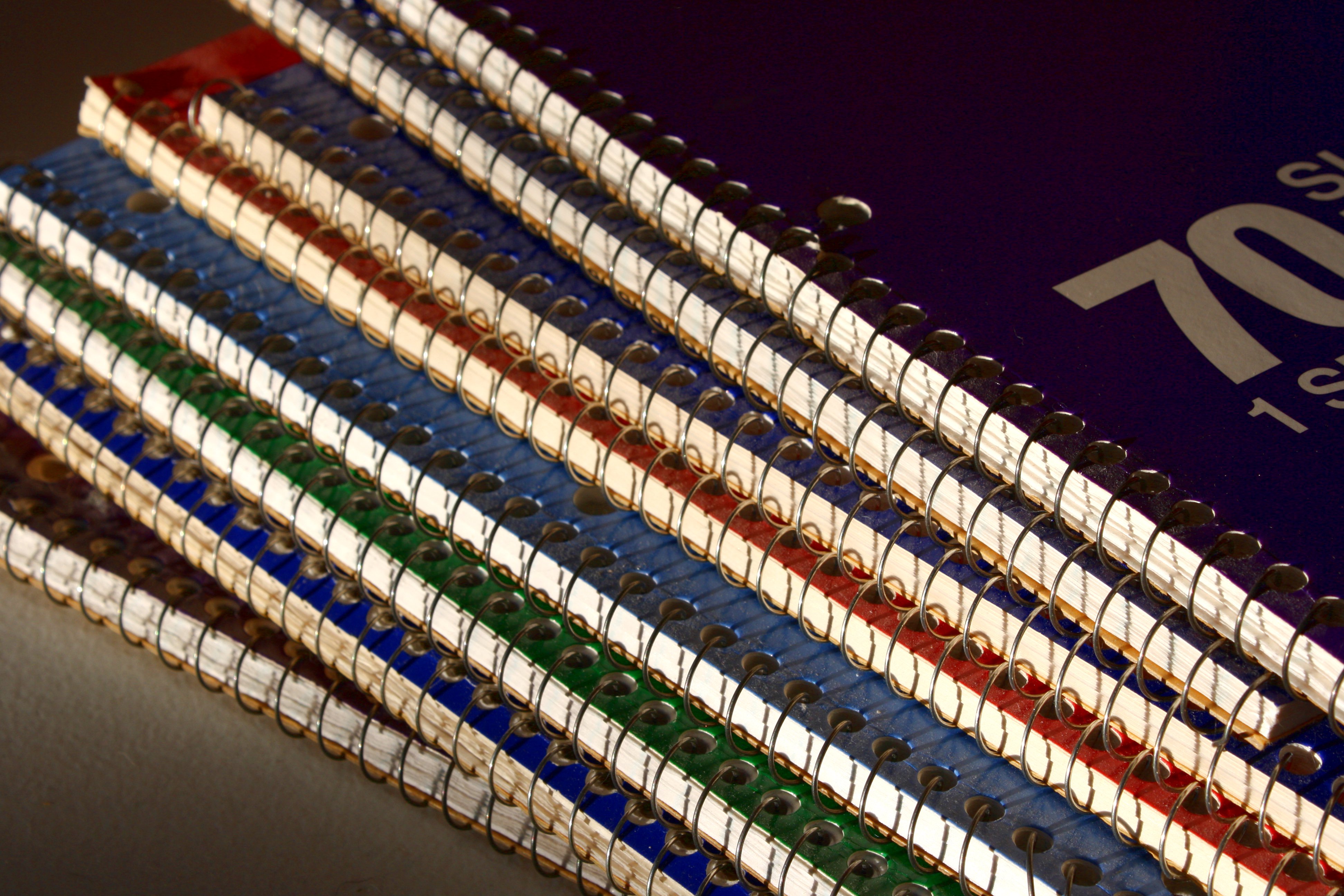
In every incarnation of “Mythic Bios” I have created–both here online and offline in my written notebooks–I have made a point of trying to not let those other aspects completely consume this space. Believe me, I deal with them more often than not and in private. I need to have a space where I can feel safe while expressing a reasonable and somewhat logical mindset: while making the boundary between fact and fiction a little more clear. But I also need to recognize that other side: the side that knows that stories and reality are not that far removed from each other. I need that place of emotion and expression of that emotion and the messiness that comes with being a human being.

I still find myself in that place where I’m torn between wanting to express that aspect and wondering how this will affect my current–and future–audience’s perception of my writing. While I do feel like I should have a separate space and maybe an aspect, I also feel somewhat cheated by that: as though I feel somehow that I can’t be a whole person. Because, like I said before, this–all of this–is not all of who I am.

At the same time, I want to leave some personal space to myself and even make things that I find interesting and aren’t necessarily related to me personally. I do believe that our writing is an extension of who we are and what we’ve done. On the subject of the personal, I know I still get concerned with offending people with what I can make as well.

But let me repeat: I do feel like I have something, or several somethings, to say. And I have this growing suspicion that there are people out there who will totally want–or even need–to read these “somethings.” I also know there are people who will always disagree with whatever I say, or simply not read these things. It would be almost easier if it were always the latter and not the former.

To be a writer, you have to travel that nebulous territory between the personal and the public, as well as the intellectual and the earthy and perhaps more … uncomfortable places that I’ve only touched on. I know, more or less, what I have to do. The rest of it is just details and finally sitting down to replenish my collection of stories.

I can’t sit around all the time and write. It’s just like never sitting down and writing. Something just has to happen. So I plan to write a story or two that’s been on my mind for a while, work on my part of the collaboration with Angela, send a few more things out and … see what I can do.

What You Are Left With

So not too long ago I read this post from Amanda Palmer which talks about a few things: but more specifically how Bloggers may be “the next writers,” emails are replacing letters as personal correspondence and how it will be challenging for historians and outside archivists to preserve all of this.

You know, sometimes I look at this. Right here. I look at this: I look at all of this–my Blog, social sites, email and the Internet itself–and I realize how really ephemeral it all is.

I am not a technological or computer expert, but some days I just imagine there being some kind of event that overloads information and backups to the point where this–all of this–is gone. It makes me remember that I don’t back-up any of my Blog posts on here. What I mean is, they are all essentially sent directly onto my WordPress, and if anything happens this would all be gone.

Then I think about the reverse. I think about the Internet and computer technology continuing to evolve: to points where we can’t even dream it will go. Imagine a future where technology becomes more intuitive–as though it is an extension of the human body in how you can easily access it like moving your arm–and all that old information comes with it. Or will it? Will old data from ancient systems survive into newer ones? Would it be the same? I know even from my limited knowledge and terrible chagrin that something like an old USB key can go obsolete.

But let’s say that technology will change to a point where obsolete technology and information on it can be easily passed onward: and accessed by anyone with any degree of knowledge. Let’s also say that this information will be documented and recorded by other people who want to write biographies or otherwise examine the lives of users from this time.

I mean, it is already happening to an extent. Archivists are tackling the gathering of emails and data from websites and online archives. Sometimes, as an exercise, I think about and look at everything I’ve typed up on Mythic Bios and I imagine someone in the future–or even now–trying to reconstruct what I was like as a person through what I allowed to be on here.

Does Mythic Bios represent my entirety as an individual?

I would have to say no.

It does represent a part of me. It represents my interests, some of my thoughts, and even some feelings but it definitely doesn’t have the full breadth and width of me. Sometimes it feels like a really carefully crafted shell or a layer of created artifice. And I enjoy crafting that artifice almost as much as I enjoy writing things on here, if that makes any sense, at least from a writer’s perspective. Amanda also mentions on her Blog that she doesn’t like to tell everyone about what she is doing, or reading, or listening to all the time because she wants a piece of herself for her and her loved ones alone. I think that is part of it too with me.

I think it’s also that I know I am just as ephemeral as my Blog. I am going to change. I am changing even at this moment. I don’t have it all figured out either because of this fact. There is something really comforting about writing a narrative where you place down the facts–“just the facts” of your interests and goals–with hints of the person shining out between them from time to time. I am, if nothing else, also a tease. 😉

But facts and stories can be so much more orderly–and comforting in that order–than an actual human life can be when you are in the process of experiencing it: especially when your other impulse is to chaos and destruction in not always a super-villain kind of way.  So I would be almost comforted if this Blog were to be all that was really left of me, but those human moments of ambiguity–that small amount of embossing–would make me feel a lot better about it.

Now if the Net went down, or suffered a few memory-wipe phases of cataclysm and all everyone had to go by me were the personal things I have written down that would be an entirely different story altogether. I mean, assuming they didn’t think I was crazy, they probably wouldn’t be able to understand me: if only because my handwriting is in ancient Sumerian … also known as messed up scribbling.

Sometimes your hand and pen cannot move as fast as your mind or your imagination.

In some of my more depressed moments, I think all I am going to leave behind are papers and electronic weirdness. Sometimes I think these are the best things about me. I don’t really know just how “inspirational” I actually am when you take the rest of this stuff away. I’m not really doing anything that anyone else can’t do. But maybe it’s just the way that I do it, or that others do it that differentiates us. It’s that mystery of “You-ness” or “I-ness.” I still haven’t solved that mystery yet and you know what? Maybe that’s a good thing:  because that means I’ll keep writing and doing what I need to do. I’ll keep going and when I am not angsty or introspective, I’ll just be ad hoc and silly.

And if that’s what comes through, like I said before, I will be more than okay with that: especially if someone else can relate to it.

https://i0.wp.com/www.photos-public-domain.com/wp-content/uploads/2010/12/spiral_notebooks.jpg