In honour of International Women’s Day, I want to talk about a film. Even though it was only available through a temporary backers-only link, I was able to view the video and say something about it. It’s a small film, a mini-documentary about Jackie Ormes: the first African-American female cartoonist and creator of the comic strip Torchy Brown and the panel series Patty-Jo ‘n’ Ginger.
This mini-doc was made by Respect Films, the same film-makers that created the documentary She Makes Comics which focuses on women in the comics industry and fandom. The Jackie Ormes Bonus Documentary itself was the result of the She Makes Comics Kickstarter reaching beyond its initial goals. It was originally going to be included in She Makes Comics itself, in a bonus or extras section, but Respect Films decided to release it on Vimeo.
The Jackie Ormes mini-doc was meant to be a part of the greater narrative of She Makes Comics: or, at the very least, it was gleaned from the primary material that the film-makers gained from their interviews. I admit that I really looked forward to watching this video and learning something new: not just about Jackie Ormes and her work, but also the time period and culture that she lived and worked in, and how it influenced her art.
It is shorter than I expected it to be, but it has some very fascinating elements. While Jackie Ormes’ work is talked about, what we get is a basic outline of what she did and the idea that she covered aspects of Black culture through her work during the late 1930s all the way until she retired in 1956. What I find particularly fascinating is that not only was Jackie Ormes a female voice in a male-dominated industry, but she was a woman of colour that spoke about Black culture in a pre-Civil Rights time span. For instance, Patty-Jo ‘n’ Ginger is a panel series in which the older and younger sister duo talk and argue about everything under the sign: including race and politics.
At the same time, you can see that Ormes plays in, and utilizes, the romantic genre of comics through the character of Torchy in Torchy Brown: dealing with her desire for love and a depicted love of fashion but, at the same time, portraying her strength, self-respect, and need for personal independence. Ormes manages to create characters that are not traditional or racial stereotypes while not shrugging away from the realities around her.
I just wish we could have seen more in that mini-doc, but I think the most striking thing — for me — was the discussion about an extremely personal and sad event in Jackie Ormes’ life: on how she used her art to, in part, channel that grief into something informative and eternal. It is this element and the entire mini-doc that fits into the spirit behind She Makes Comics narrative: a brief but poignant outline of a story told on behalf of someone gifted and departed by her living compatriots. At the same time, this documentary stands on its own: along with the work and life of Jackie Ormes herself.
In terms of Doctor Who‘s “Last Christmas” episode, I’ll tell you later — I mean, it’s a long story.
… right.
Actually, the episode itself was very good. On the surface, you have The Doctor and Clara at the North Pole with a science team dealing with some creatures attached to people’s faces, and Santa Claus coming to the rescue. Of course, as with any Doctor Who episode of any kind, nothing is ever as it seems: especially if it is completely and utterly insane.
My introduction at the beginning of this recap is not a coincidence. The science team’s response to The Doctor of “It’s a long story” is very reminiscent of the line “I’ll tell you later” in Moffat’s Doctor Who and The Curse of Fatal Death. The dream crabs were interesting creatures, though I’m not sure how they coincidentally found all of those people scattered across space and time: a detail I might have missed or something put aside for the emotional impact of the entire story.
Think of the dream crabs as beings that feed off of your mind and give you pleasant dreams of safety or reality until you grow weaker from an ice cream headache at the right side of your skull as they drill into it and feed off of your existence until you die. They also create a scenario where if you die in this state they placed you in, you will die in reality: or, if you’d like: if you die in the game, then you die in real life.
The rest of the episode was combination of Miracle on 34th Street, Aliens, and some Inception and The Matrix for good measure. Everything is basically a dream. As for Santa Claus … think of it like this: the dream crabs have a collective consciousness that networks all of their victims together in order to feed off of them properly. Santa Claus and his elves are, at least at this time of year, a large portion of humanity’s collective unconsciousness attempting to help these victims resist the feeding and potentially wake up and therefore kill the creatures.
Think of Santa as something of a meme that exists in a considerable number of humans: even those that don’t believe in him. He is an ultimate archetype, and has a great sense of humour to boot. And as The Doctor, Clara and the others wake up from dream to dream there is an excellent festive, almost transcendent moment where they are on Santa’s sleigh after he rescues them from the entities in the final dream and you actually see a rare occurrence: the Twelfth Doctor actually driving dream-Santa’s sleigh and, dare I say it …
Actually looking happy.
It all flowed almost seamlessly together and even the ending where the Twelfth Doctor finds … Clara.
Well, it’s no secret that I am really disappointed with how Clara has been portrayed for this past while. But seeing her old and frail, realizing The Doctor left her for sixty-two years, and pulling apart a Christmas cracker with her much in the way that she did with his elderly Eleventh incarnation on Trenzalore … I actually felt sorry for her. It was artfully done, this parallel between “Last Christmas” and “The Time of The Doctor” and I’d heard rumours of this scene happening but seeing it was actually emotional: especially when Clara flat-out states that there were actually two men in her life that no one could actually match.
I even liked the dream scene with Danny and the realization that Danny — whether he was a dream or not — was very real. Poor Danny. I would have really liked to see more with him but I knew he wouldn’t be coming back. And for the first time we see Clara even apologizing to him for the lies. It’s like even she knew that he was just too good for her. No so much The Doctor, as he lied to her too, but there you go.
So … readers and Doctor Who viewers. Did you see the real end coming?
Did you know what I was going to happen to Clara Oswin Oswald?
I know I did. Or at least I wasn’t surprised. The fact of the matter is “Last Christmas” was self-referential, with some funny and terrifying moments, but also pretty clever and relatively put together. But when you look at how it ended, and what was teased — both Clara’s apparent end and the degrees of separation between The Doctor’s and Clara’s faces — and Santa coming back one more time …
Honestly, we’ve seen Moffat’s writing and his responses to the press before.
Just what did you think was going to happen?
Honestly: a teaser towards the episode of an episode and even some tear-jerking manipulation with a “too bad everyone, I am writing what I want at the end and Clara Oswin Oswald stays” at the finale. She even got to look at her face, at one point, in a tiny mirror.
It was some well-played trolling on Moffat’s part.
After we watched the episode, a friend of mine noted the Christmas tangerine on the snowy windowsill in the final scene of “Last Christmas.” He hoped this was all a dream. But here is where I think that tangerine is fascinating. You’ll notice that it is neither Clara nor The Doctor that sees it. It’s the audience. It’s us. Just as the dream crabs facilitated an interactive dream between its victims, between its members of its captive audience, so too — in a generally less grim and cynical way — does Doctor Who exist as a communal dream which we all participate in: some of us as long as sixty-three years. That tangerine — representing hope, the human imagination, the promise of Spring, and a Midwinter Night’s Dream — was well shown: well said.
And that being said, I don’t think I’m having any icy pains on the right side of my skull. I don’t think anyway.
So you find yourself in a laboratory: faced down by creatures that have gotten off of tables with scaly skin and slimy mouths. They’re coming towards you. It’s dark and cold outside in the Arctic; you, a strange older man with a blue box, his Companion, and a scared looking science team with guns are all alone with this approaching unpleasantness when, suddenly …
There is an explosion as the Army of Misfit Toys — heralded by a tangerine, a rank of slinkies, and walking robots come into the grim fray! Then you get to see the majestic sight of a reindeer standing on his hind legs as Santa Claus climbs off his back surrounded by an elf with a rifle and another with an orange balloon animal. There is a music of wonder surrounding all of this as Saint Nicholas takes charge of the situation.
And all you can think about, even for Doctor Who, even for a Doctor Who Christmas Special is …
It’s as though Santa Claus is making up for the current Doctor’s grumpy and cynical nature, tinged with a latter bit of bitterness, by just being about everything the Eleventh Doctor was: albeit with a bit of gruffness and the ever-present threat of coal. I’m also pretty sure that tangerine-looking object was a dig at The Doctor who, in another trailer, said he hated Christmas tangerines.
I don’t know what those monsters are: who look like walking corpses with alien parasites attached to their faces. I don’t know why Rudolph the Red Nose Reindeer has an alarm system on his nose: and quite possibly a GPS. But I will tell you thing: if those creatures have any self-awareness, and if they share any of that awareness with the expressions on the faces of The Doctor, Clara, and that team, I think it can all be summed up under one word.
What?!
Doctor Who: Last Christmas will be coming out this December 25 on Space Channel and as with any Doctor Who episode but especially this, your guess is as good as mine.
I really wanted to like Clara Oswin Oswald. And I suspect that a lot of Doctor Who fans did, while others still do.
Between her introduction in “Asylum of the Daleks” as Oswin the brilliant and somewhat snarky Soufflé Girl and her assertive, plucky, and empathetic incarnation in “The Snowmen” as Clara Oswald — governess by day, bar maid by night — we had the makings of not only a mystery, but a fascinating character in her own right.
Oswin made a mean souffle when she put her mind to it.
Imagine: a person that can simultaneously exist in different areas of space and time. She has no time machine, or special powers, or any other kind of anomaly. What’s more is that, starting with “Asylum” she is a genius in a grim science-fiction story while, in another time of “Snowmen” she is a woman seeking a troubled Doctor seemingly out of no other impulse but sheer curiosity: a force that inspires her to ascend into the clouds to find a blue box in a fairytale.
Then consider the premise that Clara exists in many other timelines and that even if they are all echoes of one person throughout time, they are nevertheless part of an individual’s entire existence. Just imagine what each iteration of Clara has gone through: how many skills, experiences, and lifetimes she gathered. It would stand to reason, after all, that she did something in space and time beyond waiting for The Doctor to show up so that she could be with him: you know, beyond the overall plot arc assigned to her.
Perhaps we might have gotten a character who was a combination of Oswin:
And the Victorian Clara who, according to Neil Gaiman, was originally supposed to be The Doctor’s Companion:
So what did we get instead? We initially got a hapless Mary Sue stalked by the Eleventh Doctor and a mentality divided between skirting around the issue of what a strange conundrum Clara Oswald is, and yet more unconsummated romantic tension between The Doctor and another Companion. Because, you know, we haven’t seen that before. And for all there are even hints that Clara gets greater access knowledge from her time interfaced with the Great Intelligence’s “Spoonhead” network she is mainly a human female extension of The Doctor’s sonic screwdriver.
No, Clara: you’re not either of them.
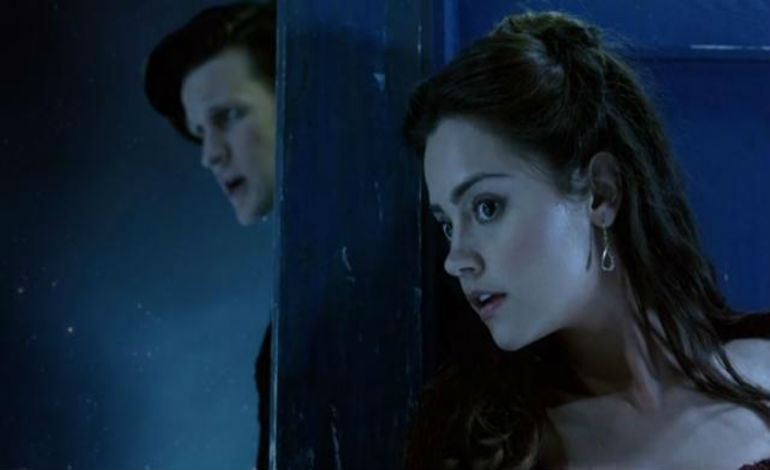
But there was evidence that Clara, and her dynamic with The Doctor was still salvageable. Jenna Coleman and Matt Smith managed to show some chemistry, or at least evidence of a strong emotional bond between these two characters. Perhaps if The Doctor had spent less time trying to unravel her mystery and realized that she was just Clara Oswald, and was more important because of that thought alone, they could have moved on.
Instead we finally discover how Clara can exist in other times and still be human, a realization come to at The Doctor’s personal time-stream when she states, in some of the most poorly thought out words ever:
“I was born to save The Doctor.”
For me, though I didn’t want to admit it to myself at the time, that was the beginning of the end of my hopes for Clara Oswin Oswald. Unfortunately, it pretty much summed up everything she had been after her previous incarnation’s death in “The Snowmen.” She is just a character that revolved around The Doctor, just a part of him: a woman dependent on a male character’s existence as opposed to also standing up in her own right. And while it is true that Companions are judged by their relation to The Doctor in any season, this was a moment that could have been written a lot better had there been more character-development on Clara’s part.
And never mind the fact that this wasn’t even followed up on: that there wasn’t an episode or a minisode dealing with the fall-out of Clara realizing what happened to her and coming to terms with it, or even addressing the fact that The Doctor had an incarnation she never saw before that point. For that matter, we don’t really even get to see the consequences of what happens when she falls through, scatters in, and survives The Doctor’s time-stream. I mean, you would think there would be some psychological effects of some kind. These are issues that could have been dealt with or at least touched upon at the beginning of “The Day of The Doctor”: to actually show some flow and continuity instead of a jarring situation where the characters seem to have moved on and found themselves in a different situation.
But now I’m digressing into plot as opposed to what I really wanted to see: character-writing. Perhaps, in the end, these two elements are not that far removed from one another.
So between “Day of The Doctor” and “Time of The Doctor” we, again, get little show of continuity save in a “tell, but don’t show” situation. Matt Smith, before his departure, has said that he could have done another year of Doctor Who. And I can’t help but wonder if another year of the Eleventh Doctor with Clara Oswald — in which he wasn’t trying to figure out what she was — and where they both figure who they are — might have made something of a difference in their character dynamic. Or not.
And then we have the regeneration.
Well … how are we going to deal with this?
After The Doctor’s regeneration into Twelve, Clara can’t seem to get over the fact that he looks like an older man now. Remember: she just went through the Time Lord’s personal time-stream, met previous incarnations of him, saw him actually age on Trenzalore, and actually existed as different people with other experiences. The parallel was right there. Had there been some more organic character development, maybe Clara having always in some way been able to draw on the memories of her other selves — or echoes — or only been able to after “Name of The Doctor,” his transformation might have taken some getting used to, but she could have seen The Doctor she had always really known beyond appearances and mannerisms.
Unfortunately, again, in “Deep Breath” Madame Vastra seemed to all too correctly deduce that Clara pined for her lost young boyfriend.
Moffat might have you believe that this was never intended, and Peter Capaldi himself wanted to portray a character that wasn’t involved romantically with his Companion. But the groundwork had already been laid out. Between Clara’s previous “milady doth protest too much” claims that he wasn’t her boyfriend and The Doctor’s proclamations of “Clara, my Clara!” that romantic bond already existed. It was there: or at least portrayed as such by the actors. So this subtext was either retconned away, the Eleventh Doctor always thought of her as something of a fascinating object, or the Twelfth Doctor’s feelings had changed and this — again — wasn’t really explored.
In addition, I think the show writers began to realize that once they revealed the true nature of Clara’s existence and pretty much eliminated that mystique, they now had to do some actual character development beyond its suspension in the 50th Anniversary and Christmas Specials.
All right. So the dynamic changes. Moffat and his crew decide, at this point, to give Clara more of a life outside of The Doctor. They began it when they gave her a job as a schoolteacher in “Day of The Doctor”: which is a natural extension of her work with children as a nanny. And she even gets a love interest in the form of Danny Pink. None of these things negate her relationship with The Doctor either. She has her time-travelling interest in The Doctor and her romantic arrangement with Danny while also having her own career where she actually learns how to take responsibility for her own actions, and realize that her students depend on her.
But of course, because of all this, Clara suddenly develops a potent case of shallowness and insensitivity. When she isn’t taking pot-shots at Danny’s military past, or constantly brushing him off to go sailing into the stars, she never even bothered to tell The Doctor about Danny, or wondered if this might actually change something in their dynamic. She becomes abrasive and rude when she’s not being outright entitled or completely self-righteous about Danny calling her on her behaviour, or The Doctor not acting the way she wants him to act.
Because, you know, apparently it would taken too much time and effort to show Clara struggling between these relationships, thinking about others, and actually having some honesty occur: where she, Danny, and The Doctor actually talk about what is going on. Moffat could have worked with this tension and conflict. Remember “Kill the Moon” where Clara delivered what was probably hoped to be an epic verbal beat down on The Doctor’s behaviour complete with the threat of actual physical harm?
Remember how before that, when The Doctor left her to decide what happened to the creature in the moon and it just seemed as though, after all of Clara and the other characters’ arguing with him, that he just got fed up with it all?
They could have talked about that because, from what I saw, that conflict was partially due to the fact that Danny Pink was brought into their relationship without Clara really talking about it with The Doctor, or asking him how he felt about that. Instead, The Doctor is portrayed as genuinely not understanding why Clara is so upset: and not being affected by this one way or another. It just feels disingenuous: because there is what Moffat and his team want to happen, and then there are the places where the character dynamic wants to go, or at least adapt itself into going.
And that would have happened if we saw Clara and Danny actually befriending each other and get to know one another. I’m not saying that there wouldn’t be conflict, but a sense of chemistry instead of that forced feeling of Danny being added onto Clara so that we, the audience, would know that she is “over” The Doctor.
I’m sorry but you are being a little bit boring. Excuse me while I’m about to go off on another adventure.
Then we have Clara’s lies and hypocrisy. She lies to Danny about who The Doctor is, then she lies to The Doctor about Danny supposedly being all right with their travelling after she tells Danny that they are done. And even though The Doctor is “a part of the Earth” and Clara seems to think she has the power to tell him to leave it, when he quotes her words right back at her “In The Forest of The Night,” apparently this doesn’t take away from the fact that she still thinks he should leave to save himself: because those words only seem to work when Clara wants them to do so.
But, for me, I think the death-knell came with “Dark Water.” You know the sequence: where, instead of asking for The Doctor’s help, she decides to betray him and force him to help her by threatening his age-old home to get a man back, whom apparently she is love with and “is the only person she will ever love” …
… because underpants gnomes?
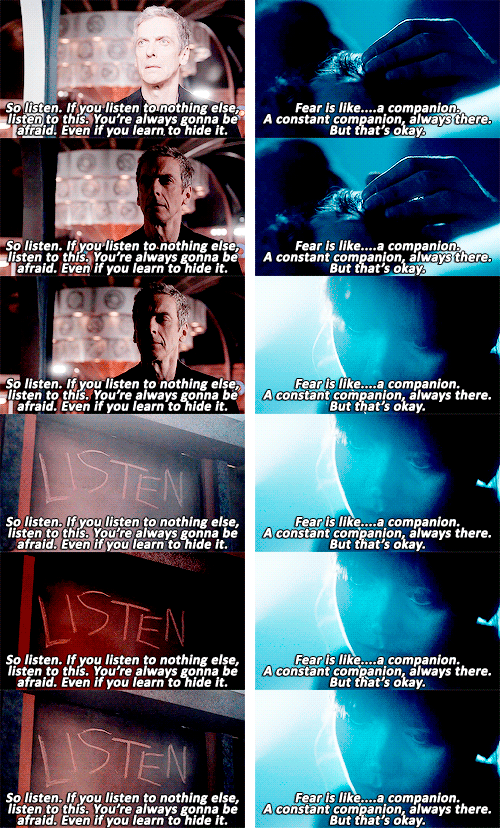
Steven Moffat has stated that, in this iteration of The Doctor’s and Clara’s relationship — as journeying with a time-traveller, that there should be actual consequences in doing so. Yet what consequences did Clara suffer as a result of her actions: especially in “Dark Water?” The Doctor kicked people out of his TARDIS for less than what she did in that episode. And barring that: The Doctor is Clara’s friend. She was there in all parts of his life. In fact, the only episode that I truly respected her in this iteration was “Listen” where she was there at both Danny and The Doctor’s very beginnings and provided them insight, inspiration, and strength while, in turn, she gained a whole other understanding of them. You know: character-development … or so it seemed at the time.
So why, realistically speaking, could Clara fall in love with a man she clearly doesn’t respect and then suddenly betray her best friend and threaten everything that made him who he is?
And even here, there was promise. We saw that Clara was part of Missy’s plan: that Missy had brought her and The Doctor together from the very beginning. Hell, we even saw that nice snippet from “Death in Heaven” where Clara tells a a Cyberman that “Clara Oswald doesn’t exist.”
Oh really. You don’t? You didn’t? Well, I guess Season Eight didn’t happen either.
But nothing happened with that, aside from it going to an extremely obnoxious and derpy place that doesn’t even convince a basic Cyberman.
It’s just like Moffat teasing that Orson Pink, the time traveller in “Listen” was just from a branch of the Pink family and not necessarily Danny and Clara’s descendant. Both have tension built up and both end with equally disappointing conclusions.
All of this is just downright frustrating to watch and I have to admit that while I was losing patience with Clara after “Kill the Moon” I lost all respect for the character after “Dark Water”: and the fact that she seemed to have learned nothing from her actions and that even after that she continued to bully The Doctor into other decisions.
Clara and her character dynamic has become more convoluted than any “Timey wimey, wibbly wobbly stuff” and I can sympathize with just why some Classic Doctor Who fans cannot stand the romance written into the program. In fact, I think it’s no coincidence that Steven Moffat, the very writer that created the “Timey wimey” idea of time-travel to explain away all temporal inconsistencies, would apply this same philosophy to character creation and relationships in his own run.
But, ironically, with time and patience we could have seen a very different Clara Oswald. As I said before, the ingredients were all there. The Doctor could have met her in more timelines. He might have tracked her down to 2013 where she was in a mental institution after being overwhelmed by all of her other memories. Perhaps he takes her out of there and, together, they explore how she can integrate those memories and just how this was all possible. Maybe The Doctor could have actually been Clara’s boyfriend because heaven forfend that he have a different relationship with a new Companion. Imagine how the rest of those events could have played out: with River Song wanting her husband to actually be happy and live on, and the impact of Clara saving The Doctor — again — by using her own sense of agency to jump into his time-stream without those very unfortunate words.
“Oh Clara … My Clara … I have chosen well.”
Or maybe Missy created Clara. I mean: just how did Missy know about Clara to begin with? Perhaps Victorian Clara died and Missy took her essence in the Nethersphere and used her hypnotic powers, which are canon, to re-engineer her into a new personality that would be The Doctor’s worst enemy. After all, Missy seemed to like violating the human dead for her ends. I mean, imagine The Doctor travels with Clara for all that time and even thinks he’s figured out how she existed in other times, only for her to betray him and claim that she had been Missy’s agent the entire time? It might have explained why the TARDIS was so dead set against her being there.
And just think of one sequence, modelled after the minisode “Clara and The TARDIS” where the TARDIS forces Clara to see all the echoes of herself: her past selves at different emotional points, her molten undead selves from “Journey to the Centre of the TARDIS” and even her iterations in other timelines to seemingly hurt her and protect her Doctor, but also to snap her out of that malignant, treacherous self and get her to accept those parts of herself, and take control of her own life.
Would the real Clara Oswald please stand up?
Perhaps Clara dies to save The Doctor and every time he goes to another timeline or world he has to be reminded of the fact that he will never see her again. But if you don’t want to go all potentially Women in Refrigerators on this, maybe she just leaves after finishing her own A Game of You: discovering her own sense of identity separate from The Doctor and both her and him realizing that he is not the person she fell in love with any more and she has to move on.
So long and thanks for all the jelly babies.
At the very least, when she betrayed the Twelfth Doctor he should have helped her get Danny back while telling her that there was a price for her actions: namely, never being allowed to travel with him again.
When I first started thinking about all this, I thought that Clara Oswald shouldn’t have been the Twelfth Doctor’s Companion. If anything, she felt like more a part of Eleven’s life and could have fit into that dynamic a lot more efficiently. But after a conversation with a friend of mine, I saw that she was just a reflection of both incarnations of The Doctor. Eleven’s Clara represented all of his wonder and his need for her. Twelve’s Clara is all the former in addition to his angst, conflict, and uncertainty magnified a thousand-fold: the ephemeral breath on Virginia Woolf’s mirror instead of the refracted crystal of herself that she could have been.
Because Clara is neither a reflection of The Doctor, a plot device of his, nor a heavy-handed hint of there being a female Doctor in the future at all …
I guess what I’m really trying to say here is that Clara Oswald’s main problem is the fact that she just isn’t written well. There were so many storytelling and character-driven possibilities that just weren’t even explored. The attempts to develop her character have been awkward and jarring to say the least and just thinking about some of her more lucid moments and what could have been just makes the experience all the more painful.
I will admit: when I heard that “Last Christmas” might be Clara’s last show, I felt a tremendous sense of relief: even as I feel some dread that due to rumours about Jenna Coleman wanting to return, she will be back. Despite some particularly touching moments, the character of Clara has gone from being a sonic screwdriver supplement to an attempt at a haphazard marionette portrayal of an actual human being.
It’s just sad. Clara started off with a lot of potential but it became clear that no one really knew what to do with her. Clara Oswin Oswald deserved much better than what she got, and I hope that Steven Moffat gives her at least the dignity of “Last Christmas” being her final adventure and letting us, and The Doctor, remember what could have been and finally move on.
She Makes Comics is a documentary directed by Marisa Stotter, and produced by Patrick Meaney and Jordan Rennert of Respect! Films. It is also executive produced by Sequart’s Julian Darius and Mike Phillips and comics librarian Karen Green of Columbia University.
It’s hard to review a documentary. I think it’s even more difficult review a documentary that you like. In the interests of full disclosure, I backed the She Makes Comics Kickstarter. I even wrote about it twice here on GEEKPR0N and promoted it before I knew what film I was going to see. I was utterly fascinated with the concept of a documentary that focuses on not only the past, but the present history of women in comics: as creators, publishers, and fans.
Unlike other documentaries I’ve seen, the interviewers aren’t present. There is no presence of a single interlocutor or a primary voice. In fact, there are several voices that create the narrative of She Makes Comics: both in terms of the film’s structure and the history of women in comics. What I found fascinating was how each figure interviewed not only seemed to bring a particular topic or issue, but they interlapped with each other, and sometimes talked about one another in each cut, and even attempted to give a voice to the women in the comics industry who had long since passed. While the first and middle part of the film focused particularly on creators and historians and women who are, and were, in the industry, this gradually gives way to a multitude of newer and more contemporary presences in comics.
Also She Makes Comics was edited extremely well. Sequences with interviewed figured were accompanied by cuts of these creators interacting with their fans, of cosplayers at conventions, of segments of historical filming and popular cultural scenes, and even dramatic re-enactments. I do feel that the section about a woman feeling uncomfortable in a comics store, while definitely a valid experience, was overwrought and could have been portrayed much more realistically: though the discussion about it made up for that somewhat jarring, almost kitsch portrayal.
There were different section in this documentary, though the segues to each were so smooth and organic that it takes more than one viewing to identify where the topic begins to shift. Roughly speaking, She Makes Comics starts with the history of women on comics, the formation of Comic Cons and women trying to find a place in them, a powerful section on X-Men and its inspiration on female creators and fans, women in comics publishing positions, difficulties dealing with the insular chauvinism and misogynist mentality of “all-boys clubs” shops, the advent of groups supporting women in comics, some insights into the creative processes of the female artists that make comics, the treatment of female characters in comics in relation to their male counterparts, the importance of discussion of sexism and an emphasis on diversity in the comics medium, the importance of Internet communities, the acceptance of the graphic novel in mainstream culture but women still not being taken seriously in that field, the cultural difficulties of women pitching comics ideas in the industry, the creation of female comics spaces, a section focusing on harassment, and a final segment ending off with a focus on female-led or created comics and geekdom.
As you can see, this covers a lot of territory though by no means is it exhaustive: and these places definitely interlap. There were many things of note, but here are some of the few that stood out for me. The earlier history portion of the film particularly focuses on Jackie Ormes: the first female African-American cartoonist who will actually be getting her own mini-documentary by the creators of She Makes Comics due to them meeting their Kickstarter goals.
Jackie Ormes: creator of the Torchy Brown strip and the single-panel cartoon Patty-Jo ‘n’ Ginger.
There was mention of the fact that there were more women creating comics when men went off to war and how female readership began to decrease after the Comics Code was enforced and superhero comics were supported over other genres. It was interesting to learn about the Marvel and EC comics artist Marie Severin in addition to Ormes, though I would have liked a little more information on Miss Fury creator Tarpe Mills.
The discussion of Comic Cons and cosplay is really timely, however, based on the recent flak the latter has been getting from some industry artist. Wendy Pini hits home the fact that, as a cosplaying pioneer — specifically of Red Sonja — she managed to create the persona for herself necessary to make her art, get into the industry, and essentially become completely independent with Elfquest.
Wendy Pini and so many others after her identify so much with their cosplay and fandom that they create works and spaces for others.
She is an interesting parallel to Gail Simone who got into comics through her critical work in Women in Refrigerators: analysing how dead or traumatized female characters were used to advance male plots and eventually making nuanced female heroes herself. Both creators got into the industry in different ways through geek culture and their insights and I just thought it was truly awesome to have that reminder that fandom and criticism can lead to creation.
Some male figures in comics were also interviewed such as Chris Claremont, Paul Levitz, and Richard Pini: but the focus was on them in relation to their female influences, employees, and creative partners. Certainly, Ann Nocenti and Louise Simonson, both editors of Claremont’s X-Men run, influenced his work considerably: a series many of us have related to as marginalized geeks and nerds in our time. And Nocenti’s anecdote about initially thinking she was tapped to help write porn was rather hilarious. Karen Berger was also interviewed and her comment about liking “psychological stories and weird shit” as inspiration for what she helped to promote and publish in her Vertigo imprint made me smile as well.
Even though queer creators in comics were mentioned in the same place as online spaces, I feel there wasn’t as much focus on them. In addition, there were a few creators I was hoping to see such as Alison Bechdel and Aline Kominsky-Crumb that didn’t make it into the film: though the former was mentioned. Carla Speed-McNeil and Hope Larson made brief appearances, which was nice to see.
According to Kelly Sue DeConnick in She Makes Comics, there is even a rocket scientist in the ranks of those who idolize Carol Danvers and what she represents to them.
But there were two things She Makes Comics truly did for me. The first is that it introduced me to all-female fan groups like the Carol Corps, organizations that support women reading and making comics such as the Friends of Lulu, and even spaces like the Brave New World Comics Geek Boutique that challenge the very form of what a comics store is. And I want to read Marjorie Liu, G. Willow Wilson, Gail Simone, and Kelly Sue DeConnick. They are not talked enough nearly enough in mainstream comics geekdom, even now, and while I was curious about them before, I’m definitely inspired to look at Birds of Prey, Captain Marvel, Ms. Marvel, Pretty Deadly, and others now.
I feel as though, even and especially if, you are a comics aficionado you will learn a lot from She Makes Comics. And if you are completely new, this is even better for you: for while it doesn’t give you everything, it is an excellent starting point into some works with different perspectives and interesting stories. I would definitely like to think that She Makes Comics hits home the fact that not only have women contributed to comics and geekdom, but they still do and they will.
Wendy Pini at one point shared an anecdote about a young woman who, despite her skill, didn’t have the confidence to acknowledge her art work as good: and even had difficulty presenting it to her without urging. Janelle Asselin, former editor at DC, mentions that she had very few women give her pitches. I hope that this documentary — and other works and groups and people of similar spirit — help to change this climate and culture, and make something as multifaceted as the film I had the privilege to finally see.
Writer and director Nick Szostakiwskyj plays the long game in his horror film Black Mountain Side.
It begins, and ends, in the northern most part of the Taiga Cordillera: a place situated on the border between the Yukon and the North West Territories. Only a few hundred people live in the area, its summers are short and cool, and its winters are quite long. In the film itself, there is a lot of wilderness, the considerable presence of forests, mountains, and silence. Certainly the trope of Canada being a large and wide open icy terrain is not lost in this film.
Black Mountain Side‘s story focuses on a team of archaeologists at a site in the Cordillera. The snow and wide expanse of their surroundings always seems to threaten swallowing them up along with their small outpost. Nature is not their friend. It is a patient Other: an enemy that slowly whittles away any warmth, or light that they can get. Even so, there are marks of human inhabitation that even the territory can’t completely erase.
This is the puzzle that Szostakiwskyj initially poses: how can an ancient and long established structure with what seem to be very southern Mesoamerican symbols exist buried in the earth and snow of the far north? How can architecture dating from the Ice Age even exist? These are academic questions that become tinged with anxiety, paranoia, then outright fear, and blood.
This structure, which the team never succeeds in unearthing completely, is far from home if it is Mesoamerican. Even the local workers that the team utilize seem to be the aboriginal Dogrib: from the Dene First Nations. Yet this is only a supposition, however, as one of the archaeologists points out that these workers, employed from an arrangement with their band council, speak the language of Dogrib. Certainly, it may be this people, or their ancestors, that created the marker stones around that area to keep it in memory: though the fact that it may indicate a hunting ground for deer speaks volumes later on in the film.
In fact, the ground is a space that screams isolation so loudly that there is almost absolute quiet. As the site’s communications with other outposts ceases, as sickness spreads, and tensions crystallize into infighting and fracture into a voice that isn’t there and murder there is no soundtrack. Black Mountain Side, for a film that coincidentally shares a title with an instrumental piece, has no music. Instead, it is a movie that eats chronology, the days and months that the archaeological team degenerates from playing cards together into fear and horror, and the sounds of their deaths and the ending of their selves.
There have been a few other reviews on this film. Some compare it to John Carpenter’s The Thing or even H.P. Lovecraft’s At The Mountains of Madness. I would even say that the film is mildly reminiscent of a 2010 movie called The Corridor: where a group of friends go up to a cabin and become exposed to some force that changes them and drives them murderously insane. Certainly, the scenes in Black Mountain Side with one of the archaeologists have something squirming in his skin, the revelation of a structure that may have existed before human civilization, and even the team doctor’s diagnosis that some of the crew has been infected with a cephalopod-like organism definitely leans towards Carpenter and Lovecraft before him.
In fact, the gruesome apparition of the deer god that the latter survivors of the team keep seeing and hearing — what with his comments on the cosmos and actually looking at reality — definitely harken back to a kind of Lovecraftian cosmicism: in which the universe is inherently meaningless and filled only with malignant and indifferent entities of considerable power in which human beings are but small insects by comparison.
But it’s also possible that Black Mountain Side is another kind of story: and it is in what it doesn’t say, or say entirely, that might determine just what kind of horror film this really is. For example, the viewer never really knows if anything the archaeological crew is seeing is actually empirically true. Perhaps the structure they are excavating released an ancient disease. Maybe it is a larger and more complex version of the stone markers warning others in the area of malevolent spirits or forces. The structure might even be a tomb containing a vast evil. Or maybe there are technological problems and the crew are truly mass-hallucinating from a possible lack of sustenance and extreme isolation.
Yet there are other elements at play here that is hard to put a finger on. It’s notable that everyone in the archaeological team is male. It kind of makes me, as a viewer, wonder just why that is the case. Certainly older films and stories often had an all-male cast (such as At The Mountains Of Madness), though sometimes this works against the characters in this movie: as they are a little harder to relate to beyond basic empathy and it’s easy to lose track of who they are. It’s also notable that there is only one non-Caucasian member of the crew as well — a Black man — who ends up going on a shooting spree towards the end of the film (though, granted, two other team members go berserk long before he does). As paranoia takes him, he doesn’t trust the leader of the group and says he has seen his “sociopathic kind” before. This could be seen as him distrusting a certain personality-type under duress, but it is worth further thought. And this isn’t even mentioning the fact that the team makes a point of stating that their aboriginal workers are “superstitious” and immediately come to the conclusion that they ran away from the site due to those beliefs.
There is something really compelling about looking at what happens to the protagonists of Black Mountain Side as a distorted view of their own innate, or unconscious, cultural assumptions: from a possible post-colonial perspective. Certainly, it’s no new idea that the niceties of social morality and behaviour fall away from isolation and a real fear of starvation, a lack of shelter and safety, and imminent sickness to reveal the unspoken human ugliness underneath. And this is where the blatantly Lovecraftian branches out into something deeper in the darkness of the human psyche.
It’s the figure of the deer god that really gets me. When I first saw it, I had to know if there was some kind of basis for it in aboriginal, or First Nations, mythology. I looked into any Dogrib and Dene stories on hand but there was nothing on a deer god. However, deer do have some mythological significances that span beyond North America. For instance, some deer are seen as guardians of the earth while others represent learning and wisdom. Certainly with regards to a Native American connotation, the way that the film’s protagonists encounter the deer god –with its voice sounding like a Nazgul or Sauron himself — is reminiscent of a waking vision or spirit quest gone horribly wrong.
The deer god seems to offer wisdom, but only encourages maiming and murder: senseless trauma without enlightenment. It derides its victims’ expectations of it offering them knowledge or understanding. It seems to hint upon the fact that it is older than humankind and everywhere. It challenges and ruthlessly takes apart what they think they know about other cultures, their empirical subject matter and, indeed, their own perceptions of the world. It’s a subversion of what others might think a spirit animal or totem should be, or indeed the idea of some Great Spirit that is inherently benevolent. If anything, the deer god seems to be a human understanding of the land and how it is killing the protagonists. This deer hunts humans.
And even then, the film follows the tradition of not completely revealing or explaining the nature of the monster in that it is ambiguous as to whether or not this entity really exists, if it’s being hallucinated, or if — indeed — it is the real horror of this situation. Certainly, you could argue that the real terror is Black Mountain Side‘s possible critique of Western cultural values, concepts of race, science, and even a sense of reality.
In any case, when the last survivor gets caught by a 1930s bear-trap while fleeing for help, the atmosphere comes full circle. The environment, which is slowly eroding away their senses of self, wins as the last man realizes he’s trapped and lies in the snow, in silence, giving into oblivion. The lack of music, when the credits start rolling, is poignant. At the beginning of this review, I said that this film was a long game, but perhaps it is more of a slow burn or the slow encroachment of frost bite: of a terror and pain that ultimately turns into numbness and falls off into the darkness. Sometimes that is a limb, or piece of one’s sanity, or even one’s own soul. Snow covers all traces of human traps and tracks.
And in Black Mountain Side, only the silence is left to claim anything.
All things considered, it’s an appropriate time of year to talk about snow. While some people think that snow is beautiful and almost a permanent fixture in cold places like Canada, it’s actually incredibly transitory: much like Toronto and, in particular, Queen Street West.
I found Benjamin Rivers’ graphic novel Snow at Bento Miso two years after I moved away from Toronto: which is funny in some ways because Rivers created it in 2008 when I first moved onto York University Campus and, technically, to Toronto. But I didn’t know it at the time. I didn’t, for instance, know that in February 2008 that Queen and Bathurst (which was referenced by Rivers) and that — among other stores — there had been another Suspect Video that no longer exists. But even before that I’d explored Toronto in a limited way and knew about the Silver Snail in that location.
But I didn’t know impermanent it was until I moved to Toronto and then truly explored it — especially Spadina and Queen — only to have to move. So it was fitting that I read Benjamin Rivers’ book and found out about Ryan Couldrey’s close film adaptation of it when I came back to Toronto on my own: to see if I could find some place in it again. Snow as a graphic novel truly hit me hard in that sense of nostalgia and Toronto’s ever-hidden, ever-fleeting spirit and this film managed to capture exactly the same idea.
On the surface, Snow‘s narrative focuses on Dana: a young woman who lives on Queen Street West and works at a small book store called Abberline’s. She is quiet and she likes to have her comfort and the homegrown quality of Toronto’s neighbourhood, stores, and clubs. But she begins to notice the gentrification of the street — the rise in rent and the influx of people from upper-classes — and the many closed and empty stores. Her sense of equilibrium and habit is being impinged upon. And she also notices that the bubble of self-involvement, which she herself has possessed — that covers all of denizens of her locale is growing.
Dana’s bubble ends up getting stretched to its limits as she actually actively begins to question why all of this is happening. And then it gets strained past its safe limits as she encounters a darker place. Couldrey manages to maintain the tone and pacing of Rivers’ comics narrative. There is no spectacle here, or supernatural happenings. The menace is subtle and very real and in the midst of Dana trying to make sense of a senseless situation: from human violence to slow and civil death, her own quiet determination and personal goals come to the fore.
I like how Couldrey managed to cast Snow’s other characters as well: from Dana’s friend Julia to her co-worker Chen and her boss and “city dad” Abberline himself. You get a major sense that in the backdrop of this changing city that these people all genuinely care about each other. Couldrey maintains the black and white aesthetic of Snow from the graphic novel onto the film. It has a sense of age and funkiness that captures parts of Toronto well. I really liked how, in one scene where Dana and Julia were talking — with Julia separated from Dana in Dana’s kitchen — how Couldrey managed to capture the cosiness of some Torontonian apartments against the transitory gritty nature of the outside city as well as, in this particular case, simulate a comics panel.
And it is all realistic: just like the graphic novel there is no romance, no major action, or anything. There is just tragedy, fear, friendship, life, and moving on. It also goes without saying that if Toronto itself is a character, and in particular Queen Street West then from my experience Couldrey managed to capture that spirit well.
It’s interesting to note that in edition to being a comics creator, Benjamin Rivers is also a video game developer and isn’t that just like the nature of snow? To spread from one place to another when the climate is just right: in this case from comics, to games, and to film? And Couldrey and his team shot this film without any grants or loans: just on their own budget. It’s just something that Queen Street West itself might have appreciated in its more bohemian and independently artistic days.
Toronto is an interesting city. It’s a place that is old and still developing, that has layers of different interactions, and landmarks that get erased under a literal and figurative blank canvass of snow. That said, even the thickest level of snow leaves footprints: just this film ends on perhaps a little bit of hope. Amy Lavender Harris in her book Imagining Toronto once said that Toronto suffers from a form of amnesia: from a loss of memory. Yet perhaps, at least one small part of Queen Street West knows itself. At least one small part can remember, and dream beyond winter.
But don’t just take my word on any of this. You can watch the entire film online for free and if you are interested, you can buy the entire VOD package — which includes the video, the graphic novel, the soundtrack, scripts, and video game at the Snow website.
“You never hear about how the apocalypse smells like total ass. But it does.”
And so do some stereotypes. We all know this one: about the geek who thinks they are so prone to so many physical and emotional weaknesses that they will slow down everybody else if they are even noticed at all.
Mitchell L. Cohen’s short zombie film Super Zero starts off just like that age-old trope. You know the one: about the stereotypical geek boy whose crush and attractive female love interest doesn’t seem to notice him, who he doesn’t have the courage to even talk to, and who views himself as almost completely useless. It’s a story told so many times by our culture and literature that it is essentially a very typical narrative. But Cohen adds two more elements to this story.
Josh Hershberg doesn’t view himself as that passive-aggressive stereotype of “the nice guy.” He doesn’t think he is owed anything by Page Reynolds or even society. In the year 2017, as a sample of water is discovered and taken from a Mars expedition, he can’t even enjoy this development of science in his geeky life. Why?
Because is geeky is going to be over in a very terminal sense. In the society that exists before the apocalypse, Hershberg has brain cancer: the kind that doesn’t have a cure. Hershberg ends up quoting Theodore Roosevelt when he states “do what you can, with what you have, where you are” in a self-derisive way: because he doesn’t have that much time left. The initial tones of Hershberg’s first-person narration in Super Zero are laced with an irreverent black humour and an infusion of despair as he decides to end his story.
It’s funny, however, just how the reminder and slogan of “It gets better” becomes so prevalent as the zombie apocalypse part of the story begins.
It gets better … at least for some.
Cohen plays up Hershberg’s adaptation to a foul-smelling post-apocalyptic world with a slow and careful pace. You wonder just how a slow-moving cancer victim with seemingly no fighting or survival experience would even last a minute after an outbreak of fast moving zombies: yes, that kind of zombie. Certainly the stock survivalist jock Nate Bishop and the wise-cracking obnoxious Gary Amante characters see him as more of a liability even though Page, who has survived this far, seems to be a popular girl with a “heart of gold” or at least common human decency. In fact, from the very beginning you see that she does indeed notice that he exists and has an inkling of what he’s capable of even before he reveals it.
Because when you realize that Josh Hershberg is a hard-core engineering geek genius and you see just what he can do with a brain disease that makes him unpalatable, a walking stick and something that looks like a flux-capacitor, you will not be disappointed. All in all, I think that while Super Zero does use some age-old high school zombie survival group stereotypes — complete with the compassionate woman, the stoic jock, the annoying and loud meat-shield, and the nerd — it has the potential to utterly subvert them. In our day and age, we’ve seen a lot of bad-ass geeks and nerds of all genders, so to some degree we are rather spoiled.
And wow is that musical score ever bad-ass.
After watching this film I want to see what happens next as Cohen wants to grow Super Zero into a series. Does Josh Hershberg’s biological advantage overcome him in the end? Would that affect any relationships that he may make? What happens if the group loses him? Will he leave a legacy or will this all get changed somehow? And would we see more development for the other characters?
And as a geek, how do you think you would survive a zombie apocalypse? Personally, my fantasies have wavered between learning necromancy and controlling the zombies, dying first because I slowed people down, or finding my way to a group of my friends where I can tell stories for morale. But while I don’t know about myself or the rest of you, I do think that if Josh Hershberg could give this film a subtitle it would be the following:
What is a preview to a seasoned time traveller, or Whovian, but an eye-blink in the future before a Weeping Angel temporarily sends you on your way? In this case, Christmas came early yesterday as BBC One made good on its promise and delivered a preview of the upcoming Doctor Who Christmas Special.
For someone who once knew Father Christmas to the point of calling him Jeff (whether or not this was a Time Lord joke or not is another matter entirely), The Doctor does not seem pleased to meet Santa Claus this time around. In fact, Clara herself doesn’t really look like a regular old bouncing ball of wonder when Santa and his elves are meeting her on a rooftop: for some reason.
I like how the story gets turned around: how parents giving their gifts to their children in lieu of Santa is the real story while Santa — whoever or whatever he is — seems to be the reality. It’s a pretty clever twist: especially when you consider how eerie it must feel for Clara when the elves are detailing elements of her childhood that only she would know, and Santa in particular asks an uncomfortable question.
I have to say that right now in this preview they look anything but friendly: sort of like a mask of innocence worn by a hint of menace. And there is one more thing to remember: Santa may generally be considered a benevolent figure, but does keep a list — which he checks twice — of who is naughty, and who is nice.
And, of course, there is the Krampus part of the Santa story that generally gets left out nowadays: much in the way that most fairytales — most ancient folktales — have become sanitized.
I’ll just leave you with that thought. Think of it as an early Christmas present.
Not me and probably not countless other Whovians either. According to Michelle Gomez, Missy will be returning to Doctor Who. Note: Missy won’t be returning in another incarnation or as The Master or another Mistress or in some of the weird forms that her previous incarnations in which her previous selves were forced to return.
It will be this Missy.
So, out of curiosity, how do you think she did it? Do you think that her brooch had something to do with her life being saved? Or perhaps one of the rings on her fingers? We know that this is how The Master survived after “Last of the Time Lords” and that one of The Master’s aliases back on Gallifrey, at least in some of the books, was Koschei: taken from the Russian folktale of Koschei the Deathless: a being who can’t die because his soul is held in an object somewhere else.
Or perhaps Missy sent an actual tactile hologram, or an android? Maybe it has something to do with the Nethersphere, which is supposedly running out of power and fading out of existence? Maybe Missy can convert herself into digital information. And let’s not forget that the Brigadier was using Cyberman technology that she, dare I say, upgraded herself. And we do know one thing about The Master: that when he was male, he certainly looked out for his own skin (and even looked for new skin in his failed regeneration) and if that well developed sense of self-preservation transferred over to Missy as it had so many other regenerations, she definitely has contingencies in place.
There are so many possibilities and, let’s face it, we’ve only just met Missy. There is so much that she can still do and having her as an ongoing nemesis, like she was back in the day, will only make Doctor Who stronger for it. I like the idea of Missy constantly hounding The Doctor. After all, there are still a few loose threads from the latter part of this series and the beginning of Doctor Twelve’s run.
The Doctor suspects that Missy has a TARDIS somewhere. But where or, chameleon-circuit withstanding, what is it? And who got The Doctor to go to the Oriental Express? Who created that politely malicious AI Gus? And did she write that classified ad for Clara and The Doctor back in “Deep Breath?” Were these part of Missy’s plans?
And let’s not forget another question. How did Missy survive? Yes, Gallifrey was saved but The Master’s DNA was destabilizing in a terrific way at “The End of Time.” Was there still enough of him and enough energy, which he had been expending much of, to regenerate properly? And how did Missy escape Gallifrey? Did she piggy-back transmat herself out when the Time Lords sent The Doctor a new regeneration cycle? Or go through the Gallifrey Falls No More painting?
Perhaps some of these answers will be revealed in the November 13th edition of Doctor Who Magazine but certainly, and in time, we will see what happens in the next season and just how Missy can outdo her own villainy this time around. I know I look forward to it.






 Mythic Bios