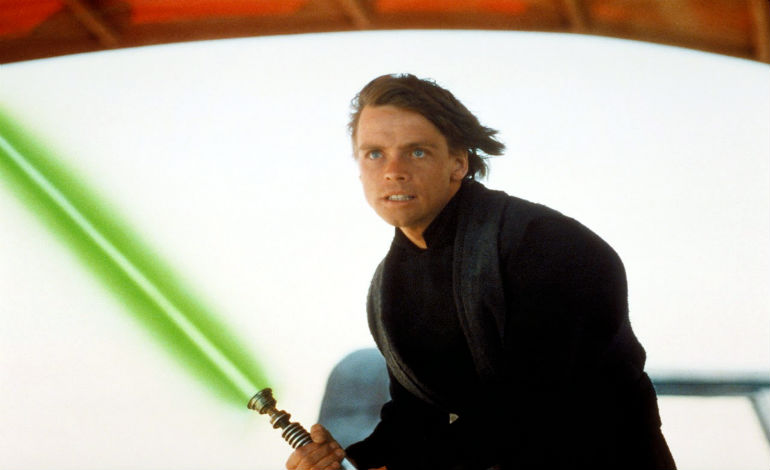
Long, Long Ago is Now: Star Wars The Force Awakens

If love and hate are two sides of the same impulse, then so was the prospective hope and dread that many fans potentially felt — that I certainly experienced — while waiting for the release of Star Wars Episode VII: The Force Awakens. The fact is, if you read this article, right now, you will be skittering close to the dark side of The Force Awakens reviews known also as Spoilers. Remember, you can draw back from the abyss and recall the patience and calm that you need to actually watch the film, if you haven’t already. Or you can succumb to the quick and easy path, right now, if random comments on the Internet didn’t cut off your hand and leave you wailing like Luke in despair on Cloud City.

First, let’s start with what really works in this film.

The introduction.

I’m not kidding. Instead of the Prequels, where we got deluged with taxes, politics, and nebulous “heroes on both sides” that didn’t happen in the actual movies, we have the place where Return of the Jedi left off: namely, Luke Skywalker is missing and the Resistance against the First Order is searching desperately for the last Jedi. There. Right there you have an introduction, after the monumental “Long long ago, in a galaxy far far away” and the glory of the Star Wars logo that hooks you. It feeds into the questions that the film’s multimedia campaign has raised in many of us. Where is Luke? What is going on? And where in the nine Corellian hells that may, or may not still be canon, is this going?

Force Awakens Attack on Jakku
The First Order likes to make a dramatic first appearance, just like the Empire before it.

Then we see the slow reveal of the First Order and their deployment on the desert world of Jakku. The First Order also wants to find Luke Skywalker: so that they can outright kill him. Three characters are introduced at this stage: Poe Dameron, Finn, and of course Kylo Ren. Poe Dameron is with his now iconic droid BB-8 getting part of a map to find Luke Skywalker, while Kylo Ren and his First Order troops are there to also get that information and kill all witnesses. It seems pretty standard, at first when you consider how events in Star Wars movies often go: but it establishes right off the bat who the heroes and the villains are in this saga. Or so it seems.

"It was a pleasure to burn."
“It was a pleasure to burn.”

This is where J.J. Abrams begins to change the script a little bit, as it were. As Kylo Ren executes the leader of this settlement and orders the deaths of the villagers, and Poe Dameron hides but also tries to defend them, something else happens. Even as stormtroopers and flametroopers are causing death left, right, and centre, we see Poe kill some stormtroopers. Now normally that would be the end of it. Stormtroopers are generally a dime a dozen, but then … one of them falls into the other’s arms. You see blood come from the fallen trooper as his comrade holds him and he dies in his arms. Three streaks of blood mar his comrade’s helmet and you see the latter genuinely shaken.

That is the beginning of Trooper FN-2187: whom we find out later is one soldier out of many who were recruited and indoctrinated into the Storm Trooper Corps and assigned only serial number designations by the First Order as children. Abrams manages in that one scene to do something none of the films really had done. He shows us that the stormtroopers are thinking and feeling beings just like anyone else: and that they can suffer pain and post-traumatic stress like any soldier … and begin to question orders.

" Take four red capsules. In 10 minutes, take two more. Help is on the way."
” Take four red capsules. In 10 minutes, take two more. Help is on the way.”

We also get a look at some new Force powers and a visual cinematic representation of some old ones as Kylo Ren manages to casually freeze a blaster bolt in midair for several minutes, and use telepathy and mind-probing on a captive Poe Dameron. The first Force application was definitely something I wasn’t expecting and it actually raised my expectations of Kylo Ren just a little bit. And that mind-probe skill comes into play later: for all the reasons that Kylo Ren doesn’t want it.

Mind probes: for when you can't find the droids you're looking for.
Mind probes: for when you can’t find the droids you’re looking for.

Of course, our trooper friend finishes questioning orders after a cold encounter with his commanding officer Captain Phasma and actually decides to act against them. He ends up freeing Poe and they escape in a new and modified TIE Fighter that actually has two seats, and may well even possess a hyperdrive. The banter between Finn and Poe is excellent. Poe is a hotshot pilot and soldier for the Resistance, but that is only one part of who he is. While many people call him this film’s Han Solo, he is actually the opposite of the smuggler’s jaded and cynical nature: still managing against capture, torture, and conflict to be idealistic, optimistic, and overwhelmingly positive. He is the one that gives Finn his name and they celebrate their escape with adrenaline-fueled screaming together even before they are shot down and they crash land onto Jakku in order to find Poe’s droid: who has part of the location of Luke Skywalker in his databanks.

And all of this happens even before we are introduced to Rey.

There is some very excellent character development and promise in The Force Awakens to look at. I’ve already talked about Poe’s incorrigible spirit, and Finn’s sense of conscience. But then we have Rey. Rey is a scavenger on Jakku. You have probably heard enough about her at this point: she is self-sufficient, hardened by the desert world of Jakku, canny, and curious. You can also tell that she has a great of experience in self-defense: particularly in wielding her staff. But it’s not until she meets BB-8, who finds her in the middle of the desert, and she has the choice to sell him for a massive amount of food rations — as that is how the scavenging economy on Jakku seems to work — and she decides to keep him that you see her real character: her sense of integrity.

Some things are worth more than rations.
Some things are worth more than extra rations.

Right here, we have our hero. Anakin Skywalker was an idealistic slave child with his mother on Tatooine who flew in deadly podraces. Luke Skywalker was a moisture farmer on that same world who was raised by his aunt and uncle while whining and dreaming of greatness. Rey seems to have been raised by no one after being abandoned on Jakku when she was five. Her dream is the hope that one day her family will come back for her: whoever they are. In the meantime she grows up a free and solitary woman on a harsh world where just survives … until a little droid comes into her life and changes everything.

He kind of grows on you.

It’s hard to talk about one character without looking at how they interact with others. This is another strength of The Force Awakens: interpersonal development. Finn is stranded on Jakku after his stolen ship is destroyed and Poe Dameron seems to have died: his newest friend and fellow liberator since the death of his stormtrooper comrade. He has no idea what to do now and is constantly afraid of being hunted for his betrayal. When he encounters Rey and BB-8, he is wearing Poe’s jacket and they think he is a thief. Then he pretends to be part of the Resistance, which encourages Rey to help him as she wants to get BB-8 back to the Resistance: realizing that there is more to her life than just waiting for the family that seemingly abandoned her. She makes that active choice because, again, it is the right thing to do.

Sometimes doing the right thing is hard.

In fact, aside from the absent and presumed dead Poe Dameron, Rey is the only one who sets out from her familiar life to do exactly that: the right thing. Finn runs because he is afraid and also wants a sense of belonging. Even Han Solo and Chewbacca, who they meet after finding the Millennium Falcon appropriately in a junkyard, are just on their next job on the fringes: having become alienated from Leia Organa and the Republic years ago. She is the unifying point to remind them of what is important: and she doesn’t stop there.

Starting, and continuing, down the dark path ...
Starting, and continuing, down the dark path …

In contrast to Rey is Kylo Ren. Unlike Rey, he knows exactly where he comes from. But right now, he is following what he thinks is a legacy. In fact Ren is actually the product of a few legacies. Being born to a founder of the New Republic, a legendary smuggler and General, and the nephew of the last Jedi are just a few of the expectations he has discarded. You can imagine the amount of pressure to conform to those expectations too and perhaps the role they’ve played in Ren’s decision: especially when you consider the one legacy everyone involved wanted him to avoid.

h
“I will finish what you started … minus losing all my organic limbs, getting burned all over my body, accidentally destroying everyone I love and, well … having children I knew nothing about.”

But Kylo Ken is not Darth Vader. On first glance he seems like a shadow of the Sith Lord. He displays perfect control and ruthlessness when dealing with a situation well in hand. When he’s told by a subordinate that they lost BB-8, you think he is going to pull a Vader: that he’s going to Force-choke the man and levitate him off the ground and let him die in midair for his failure. Instead, after a pause, he draws out his lightsaber and proceeds to slash the computers and technology around him in a purely psychotic rage. It’s that moment that makes you realize that there is a major difference between Darth Vader and his successor: that when Vader caused damage, it was purely calculated to punish incompetence and cause fear, whereas Ren lacks focus and control. He is a young man who is perpetually angry and follows Supreme Leader Snoke and the legacy of Darth Vader in an attempt to actually deal with the insecurity and instability inside of himself: and for most of The Force Awakens it isn’t working when he needs it to be.

Everyone has a Kylo Rage once and a while. Some more than they'd like to admit.
Everyone has a Kylo Rage once and a while. Some more than they’d like to admit.

What we have with Kylo Ren, at least through most of the film, is a young man who hasn’t proved himself yet. It’s like seeing Padawan Anakin Skywalker alternatively whining and raging, or Luke Skywalker whining and fumbling to find his own heritage: except that while the first two sought to grow in the light side of the Force, Kylo Ren chooses the darkness for reasons that haven’t been yet revealed: which are hopefully more than just impatience and for the sake of rebellion. We are looking at the growth of a darksider and his own self-perceived hero’s journey into realizing what he is, and the prices he will pay for getting there.

I won’t go further into a recap of the film, except to say that there are a few scenes that were utterly striking. The first and foremost was Rey gaining a hint of what her destiny truly is: with the vision she gained as Luke’s old lightsaber — which we could sense from its treasure chest with all the sounds of screaming and agony — summoned her to it.

Your father wanted you to have this ... whoever he is ...
Your father wanted you to have this … whoever he is …

There was also the apex of Kylo Ren’s own character arc where he kills Han Solo — his own father — as his personal sacrifice to the dark side in order to drive the light away from him forever: and to earn the undying enmity of fans everywhere. It was … hard, watching the Solo Luck finally run out in the worst possible way.

But watching Chewbacca shoot Ren with his bowcaster is utterly satisfying. The only thing more satisfying, would have been if Han had already known his son was irredeemable from the start and as Ren thanks him, a dying Han touches his face and says, “Don’t thank me”: pressing a trigger to the series of thermal detonators he was wearing under his vest: trying to take his murdering son down with him.

But what actually happens next is epic.

We have Finn actually facing his fear, after running for so long, and fighting and losing against Ren: only to have Rey step up and take her destiny.

It's on now.
It’s on now.

The Force Awakens is primarily about Rey’s own awakening. After Kylo Ren captures her and tries to tear the information on Luke’s whereabouts from her mind, he inadvertently activates her latent Force potential: which she uses to mind-trick and rescue herself. She sees into his mind: and sees his fear. She makes him confront it.

Up until this point, you have to figure: Kylo Ren has only dealt with non-Force sensitives. He has encountered other Force-sensitives through his seemingly untrained mother, his fellow Knights of Ren, and his former fellow Jedi trainees that he slaughtered. The only people that he perceives to be more powerful than him, with his Skywalker bloodline, is his uncle Luke and his Master Snoke. At Starkiller Base, Kylo Ren is wounded but he draws on his physical pain, pounding his ribs where Chewbacca shot him, and uses it to augment his power in the dark side. He has been trained, he has defeated the obstacle of killing the man he loved — his own father — and it is still raw and untempered. And he thinks he is the only one, perhaps even the Chosen One, that can do what must be done.

"You're afraid you'll never be as powerful as Darth Vader."
“You’re afraid you’ll never be as strong as Darth Vader.”

In an inadvertent way, Rey also helped him. She revealed his fear: that he would never be as powerful as Darth Vader. But he did something that not even his grandfather could do: he killed someone he loved in order to embrace what he thinks is his destiny. Rey has also helped him to awaken in a warped and twisted way. But he severely underestimates her. At her age, Luke was still getting his ass handed to him by training remotes. And even Anakin was still a Padawan with questionable judgment. Also remember that Rey grew up on a desert world with no luxuries, and where battle is not training and is ultimately a matter of life or death. She has incredible Force potential, she’s already already learned not to shoot blaster bolts at Ren, and she is fighting to save her new found friends. I know I rooted for her when she brutally and efficiently beat Ren down.

And it could have ended right there. It could have ended with the destruction of Starkiller Base and Rey returning to a grieving Resistance General Leia Organa — a development that I thought was excellent given Leia’s background in guerrilla warfare and rebellion compared to her previous political fate in the now Legends continuity — and promising to see an unconscious Finn again before riding off on the Falcon — the ship she basically inherited from Han — to find Luke Skywalker.

But the film doesn’t stop there. Instead, it stops at that point in time where she finds him. She actually finds Luke Skywalker: and presents to him his old lightsaber. The look of grief and heartbreak on Luke’s face after the destruction of his Order before it even began by his own nephew, his possible farsight of what occurred in his absence, the sudden appearance of a blade that had a mixed place in his own past, and the look of hope and desperation on Rey’s face says it all. It all comes full circle and you can see — right there — that the legacy is going to continue.

Luke having memories about the good old days with his lightsaber: getting shot by training remotes, barely being able to summon the lightsaber to him in the Wampa's cave, his own father cutting off his hand, not to mention the lightsaber ending the lives of children by his father's hand. Ah, those were the days.
Luke having memories about the good old days with his lightsaber: getting shot by training remotes, barely being able to summon the lightsaber to him in the Wampa’s cave, his own father cutting off his hand, not to mention the lightsaber ending the lives of children by his father’s hand. Ah, those were the days.

Of course, there are the other aspects of the film to consider as well. I have to admit that seeing Poe Dameron just appear out of nowhere after he supposedly died did seem kind of anticlimactic: though it was also good to know he is going to stay around.

Don't worry. Not only do I explain how I escaped, but you might be able to see how it happened in the novelization.
Don’t worry. Not only do I explain how I escaped, but you might be able to see how it happened in the novelization.

But I think my main quibble with The Force Awakens is Starkiller Base and the New Republic. The Republic really dropped the ball on this one: underestimating the First Order as an Imperial remnant with all of these resources clearly on hand. It also strikes me as hilarious that Snoke seems to order the use of the Base’s star system destroying lasers as something of an afterthought. And it is never clear in the film if it was just the Republic’s capital world and Starfleet destroyed by the lasers: or if it was all of it. If the First Order just destroyed all of the New Republic in one shot, it just seems to be a little bit of a cop-out to me: not the least of which being the fact that this film didn’t really need another “Superweapon of the Month” my Death Star is bigger than yours element.

"You'd think we would have seriously learned by now."
“You’d think we would have seriously learned by now.”

Also, Supreme Leader Snoke’s CGI Voldemort meets Gollum appearance was a little off-putting in a movie that used less computer-generated special effects. And there are many things that have happened, gaps in the thirty years between Return of the Jedi and The Force Awakens that have yet to be explained.

But these are minor quibbles really.

Many fans and writers have already covered one other aspect of Star Wars The Force Awakens. They say that it is highly derivative. But perhaps it is more apt to state that it parallels elements from the other films. And even if it is derivative, with its hearkening to deserts, ice planets, forest worlds, Force visions, the wise old mentor dying, rebellions, the destruction of life, heroes journeys, and light and darkness vying against each other in self-referential ways, or with acute self-awareness of their tropes, so what? Mythology itself is derivative. Storytelling is derivative. Stories come from somewhere: from a convention of ideas, events, and feelings.

Star Wars is a mythology that draws on the archetypes of interactions with certain environments and situations and certain characters. Of course its latest movie is derivative. But I think there is another consideration to take in when thinking about mythology. Even though stories are derived from other stories, the best ones are those that tend to add something new to the mythos. The question you have to ask yourself is this: does Star Wars: The Force Awakens add anything new to the Star Wars cinematic universe?

Personally, I think that if it already hasn’t with the way it is has subverted some of the tropes, I think it will. After all, Kylo Ren had clearly been suffering from a lack of focus or certainty in embracing his power: and he is not going to stay that way. He will awaken too and hopefully realize that he should do more than live up to Vader. He has to surpass him.

Still a better antagonist than Jacen Solo from the Star Wars Legends continuity.

And as for Rey, it is pretty clear she is going to learn the ways of the Force, continue to kick some ass and struggle with what is important. She might even learn about what she came from and integrate it into where she is going. And I look forward to seeing what J.J. Abrams, LucasFilm, and Disney will build from this impressive beginning.

Rey is a bad ass.
Rey is a bad ass.

They Lived Happily: The Husbands of River Song

I’m just going to say it right now: after watching “Hell Bent,” I really didn’t know what to expect from Doctor Who‘s Christmas Special “The Husbands of River Song.” This is especially true as it was Steven Moffat that wrote the episode.

I mean, it could have been an entire episode where River doesn’t even know who The Doctor is and after a fanciful waltz of not knowing who he is, dealing with science-fictional talking decapitated heads he doesn’t say anything and she never knows: and somehow we’d be expected to get something some moral lesson from the entire thing as The Doctor sails, alone, throughout the cosmos until the next Companion comes along. I strongly suspect that I’m not the only one who was thinking that it could have very easily gone in this direction: a timey-wimey circuit winding nowhere.

But then something happened. It’s very easy to do, when you think about it. Doctor Who is often seen to be the journey of one Time Lord and his Companions, but we often forget that there is another party. That’s right. Sexy the TARDIS takes The Doctor to wherever he needs to be. This is an established fact from Neil Gaiman’s Doctor Who episode “The Doctor’s Wife.”

So here is how I choose to see what happened in “The Husbands of River Song.” Sexy pretty much figured Clara to be a phase in The Doctor’s life. You know: the date that your parent knows isn’t necessarily good for you, and will probably not be around forever but decides after a while to not interfere and just let the phase run its course. So here Sexy is by the end of “Hell Bent,” getting rid of all that graffiti from her surface, and deciding that The Doctor should have a new screwdriver and give those glasses something of a rest.

Then, eventually, she probably gets tired of his moping and takes him into the future on another world where, coincidentally, his parallel-travelling wife also finds herself in the midst of another scheme. She’s even playful about it: putting antlers on The Doctor’s head when someone approaches them to ask for a doctor.

Doctor Antlers

And The Doctor, predictably, starts off as his usual grumpy old man self: perhaps even more so than usual as he knows his memory has been tampered with. But then he is reintroduced to River Song in the middle of another madcap scheme of hers, and she doesn’t even know who he is.

And then he meets her husbands: well, at least two of them in name. One is a tyrant who is a head on a robot body more malevolent than he is, who has a diamond stuck in his head that River is ultimately married to, and the other is a poor man who gets interrogated by the tyrant’s robot body and made into a talking head as well. At first, The Doctor is jealous: madly, quietly, seethingly jealous.

But then he takes that jealousy and decides to revert to his best feature from the beginning of his incarnations: being a troll. He goes along with River’s schemes, hams up a reaction to being in a ship that is “bigger on the inside” and generally asks snide questions and makes clever insights about River’s state of being. Finally, here, the tables have turned. When he first met River, he had no idea who she was and she had all the spoilers. Now, The Doctor is the one who has the keys to her Star Wars Episode VII so to speak, and begins to make the best of a bad situation: essentially having the time of his life.

It could continued something along these lines for a while: or even had their reunion trollishly teased and then subverted. Instead, they carried the tyrant’s head in a bag (The Doctor hilariously calling him a talking bag and in a rare of genuine mirth laughing hysterically at the situation) and they go to a luxury liner ship that is exclusively the domain of rich and powerful dictators and mass murderers to sell the diamond in the tyrant’s head.

As an aside, I would posit that The Doctor, having exterminated the Daleks and other evil races over and again, should have had a royal suite reserved exclusively for him on that ship. But anyway.

It turns out the buyers of the gem are all worshipers of the tyrant and it is when that revelation and all the mummery before it comes to a head, along with a poetic rendition of River Song’s love for The Doctor, that she finally realizes that her companion is her husband. Then they bicker like a married couple, outsmart all the baddies, complete with a line from River stating that she is an archaeologist from the future who has already seen their dead bodies four hundred years later, and they escape.

But it doesn’t end there. You see, The Doctor takes the diamond and finances the creation of a fine restaurant and hotel near the Singing Towers of a planet that he always promised to take River to, except he knew this would be their last night together ala “Silence in the Library.”

Doctor and River Christmas

Finally, he brings her to this place that he made long ago. And, for the first time ever, we actually see this Doctor do something that he had never done before. We’d seen the Twelfth Doctor laugh, rage, scream, detached, bitter, and sarcastic. But we had never seen him cry. It’s at this point that we see him say something to his wife. This is the woman to whom he told his true name, and the one person who knows all of his regenerations: including the one that he never talked about to anyone else from The Time War.

He says something to her that challenges if not outright blows all of the best one-liners of Casablanca right out of the water. And we find out on this planet, with their last night together, that nights on this planet last … twenty-four years. Suffice to say, as the episode ends, it is no coincidence that The Doctor has also brought her a sonic screwdriver.

Doctor New Sonic Screwdriver

It seems as though The Doctor’s other wife, Sexy, knows what’s best.

“The Husbands of River Song” almost make up for the events of “Hell Bent.” Almost. As I’ve stated before, I hope that River Song manages to find a way to re-evolve herself from the Library database and incarnate once again: so that we can definitely see her continue to interact with The Doctor. Or at the very least we know that she underwent life-extension treatments to add two hundred years to her own lifespan in lieu of the regenerations she seems to have lost. Anything could happen with those addition two centuries: if not more.

It was a good episode to end off the year with and one that was completely and utterly deserved by The Doctor and Doctor Who fans alike.

Doctor Who Hell Bent On Keeping Its Black Hole Sue

In the words of the Dalek trapped by the Cloister Wraiths near the Matrix, “Exterminate … me …”

Dalek Extermine Me ...

This week, on “Hell Bent” the season finale of Doctor Who, we see The Doctor return to Gallifrey — the world he thought he destroyed but ultimately saved — with the fire of wrathful self-righteousness. It is in the deserts of the outside of Arcadia that the common Gallifreyans, the people who were not fortunate enough to become Time Lords, celebrate the hero of Gallifrey’s salvation. As The Doctor comes home, the Chancellery Guard — still militarized with Time Lord-destroying stasers — surround him: demanding that he go meet the Lord President and High Council and reveal what he knows about the Hybrid.

After telling the multitude of Gallifreyan denizens to stand down with a wave of his hand, he leaves with the Guard: without any weapons, unnerving them all with his presence and the stories of what he has done. They respect him. They are afraid of him. It is there, at the Council that both the Councilors and the Sisters of Karn stand in attendance. The Doctor puts on his glasses as Rassilon, still Lord President of Gallifrey, comes into the chambers and both congratulates and threatens The Doctor. The Doctor asks why the High Council has not been disbanded, and Rassilon executed for attempting to destroy all of reality and betray their sacred oaths to watch over all of space and time. Rassilon makes a whole lot of self-serving remarks about how he is Time Lord society’s founder, creator, and liberator. He blames The Doctor for trapping them all in a pocket dimensional purgatory in which they cannot get out and for using The Moment to summon the Hybrid: to kill them all.

It is then that out of the shadows that Rassilon reveals the person who managed to get him here: by “revising” his confession dial. It’s Missy. In exchange for the repair of her destabilized body and another batch of regenerations, she lured The Doctor here through the manipulation of Lady Me: for the Council to interrogate him about The Hybrid. This and Missy’s “methods of persuasion” are why there are sections missing from Me’s books of memories. Of course, The Doctor is not fooled. He knows why Missy really brought him here. It turns out The Doctor had used his glasses to broadcast this whole interrogation to all of Gallifrey. The Chancellery Guard comes in. Rassilon orders them to kill The Doctor. But they ignore him. The General comes in after them.

Then the Guard surrounds Rassilon and point their stasers at him. The Doctor reveals that during this entire time, he also erased all of Rassilon from the Matrix and the Dark Matrix. He mentions that something that is dead and obsolete should remain dead and obsolete: that he cost him the life of his best friend. Rassilon tries to use his gauntlet, but The Doctor reveals that he has negated that too with his glasses. Rassilon commands the Guard to stand down, but eventually realizes they won’t. He pleadingly reminds them of who he is. The Doctor turns away as the General condemns Rassilon to death.

The Doctor exiles the rest of the High Council. Missy and The Doctor reluctantly work together in order to get Gallifrey out of its pocket dimension. This leads to The Doctor calling his graffiti-decorated TARDIS back using Gallifrey’s command functions. But they have some work to do first. They have to travel back in time just to help the other Doctor incarnations save Gallifrey during The Time War. And right after, he works with Missy and the other Time Lords on Gallifrey – many of whom he knows and trusts from his many incarnations – to bring the planet out again.

The Doctor, as Lord President, commands that Clara Oswald be brought back for her part in helping them save Gallifrey during “The Day of The Doctor.”

And it is then that The Doctor realizes the truth about The Hybrid. There are flashbacks to every interaction he had with all iterations of Clara: and how they met. They are at the Chamber: where someone can get called back from their time for just a few minutes. He realizes that Clara had been in his time stream. She had been introduced to him by Missy. Missy has done something to her. Even as he calls her back to save her, as Clara almost manifests again – changing this fixed point in time – she begins to destabilize time at the centre of Gallifrey. They just have a few moments. Clara tells The Doctor to let her go and something else we don’t hear.

The Doctor heartrendingly returns Clara to her death and turns on Missy who, in the confusion of the time displacement energy Clara was making as The Hybrid, has escaped. The Doctor’s glasses have broken. He leaves Gallifrey: utterly disheartened. But he sees the blackboard on his ship with Clara’s words: “Be a Doctor,” and a sonic screwdriver on the control panel of the TARDIS. The TARDIS then wheezes away out of reality to parts yet unknown.

This was an excellent season finale of Doctor Who …. that never happened.

Clara in a Diner

What actually happens in “Hell Bent” is The Doctor came back to Gallifrey. Then we have a segue where he meets someone who looks like Clara at a diner. We think that she is just one of Clara’s echoes in Arizona. The Doctor goes back to the shack where he was raised. And it’s interesting because, as Lady Me says later on, why would a Time Lord from the high society of Gallifrey spend so much time around humans on Earth? Certainly, from “Listen,” we have to wonder just where The Doctor came from, and his origins as part of the family that is the House of Lungbarrow in the books was ultimately a pleasant and noble lie.

Doctor Who Coming Home

But the rest of it is true. The people, including the woman who raised him, meet him and celebrate. And then the Time Lords simultaneously praise and threaten him: particularly Rassilon who is still Lord President for some reason. There is some epic and foreboding music and you think: Oh, this is on now. But then they do turn on Rassilon, but instead of executing him for his crimes, The Doctor tells him to “Get off his planet.”

Rassilon whines so pathetically that you almost feel sorry for him. Almost. Then The Doctor goes to Arcadia and banishes the High Council as well. From this point on, and before, we are given the mystery of the Cloister Wraiths — that are very reminscient of Rassilon’s Time Lord Interstitials from the novel Engines of War — that guard the Matrix and why they are now active. Leave it to Moffat to create yet another monster of the week.

Doctor Who Cloister Wraith

And then … and then … as Lord President of Gallifrey The Doctor calls back an … old friend: from moments before her death.

Yep. You guessed it.

Clara in a Classic TARDIS

Then he runs off with her, and the secret in the Matrix of this episode — a fascinating place of ghosts guarded by more ghosts utilizing Wraiths and enslaved Daleks, Cybermen, and giving Weeping Angels something to really weep about —  being that there is an old TARDIS hidden in the tunnel under there. Granted, there is a touching scene where Clara actually asks The Doctor and the other Time Lords there what they actually did to him in the confession dial whereupon she tells them that the reason they suck is that they are “hated.”

Pot, kettle, black, but I digress.

They run off to the end of the universe where The Doctor meets Lady Me and we discover that The Hybrid is neither of them, but actually two people of similar temperament and hobbies: namely, Clara and The Doctor because The Doctor is willing to risk fracturing all of space and time to keep her alive.

But apparently The Doctor’s plan is to erase all of Clara’s memories of him specifically so that the Time Lords or reality can’t harm her: so that she can’t be tracked. Basically it’s Donna Noble all over again. So Clara doesn’t like this and they both decide to flip the memory-erasing device to see whose memories of whom will be erased instead.

Clara and Me

And guess what happens? No seriously: guess. The Doctor’s memories of Clara are erased and Clara and Lady Me have a new TARDIS that looks like an Arizona diner. Clara has no pulse because she is still dead even though they travelled to the end of time itself so she has to stay on … her TARDIS in order to survive. I mean: at least Bill in Kill Bill had the decency to walk five steps afterwards, no?

So The Doctor isn’t talking to an echo of Clara, or a mind-wiped Clara at the diner that is a TARDIS, but rather Clara herself as he can’t even perceive her anymore. Then she and Lady Me leave: dematerializing around him and having not question it at all. And surprise: Clara brought back The Doctor’s TARDIS, with the blackboard’s inspirational message and a new sonic screwdriver that just happens to pop out and be waiting for him.

Doctor New Sonic Screwdriver

The blue box TARDIS and the diner TARDIS happen to pass each other in the night of the universe as they travel and … exeunt!

That’s “Hell Bent,” gentle-beings. No Missy. No Time War timey-wimey. No getting Gallifrey out of the pocket dimension because they already did it. Nothing more.

Rassilon Defeated

Honestly, I don’t really know what else to say here. It makes me wish that someone would go find Rassilon in his exile where he is totally not going to be plotting revenge against The Doctor, and beg him to destroy reality. To all the people out there that were hoping to see something spectacular about Gallifrey returning, well congratulations. You remember the Clara Oswald show that mercifully got cancelled? Well, we got a whole new bonus episode of that program instead.

At this point, Clara Oswald is a character that goes beyond being a Mary Sue. She is actually, more aptly, Steven Moffat’s Untempered Schism Sue or – more accurately – a Black Hole Sue. Google it: or better, yet, you can find what a Black Hole Sue is on TV Tropes: namely a character that the author likes so much and ascribes so much importance to even if there is no evidence of this importance aside from being told they are important to the point of warping all characters and plot around them.

“Hell Bent” was a terrible episode. If “Last Christmas” was one middle-finger to many Whovians, then this was easily two middle-fingers: especially when you consider that this was the finale of an otherwise better season. And if I had to rate this episode, that is precisely what I would give it.

“Hell Bent” can get bent with two middle fingers up.

At the very least, right now, The Doctor will no longer have to remember the Clara Oswald Show. If only the rest of us were so fortunate.

Clara Turns Off the TV

Luke Skywalker Did Not Fall to the Dark Side

There is going to be an awakening, gentle-beings. That’s right. In just a few weeks we are going to be seeing Star Wars VII: The Force Awakens come to a theatre near us. But in all the promotions, teaser-trailers, trailers, TV spots, and promotional material we haven’t seen any sign of the Old Trilogy’s central hero: Luke Skywalker.

Luke Skywalker

As such, there have been a whole slew of online articles and videos focusing on one idea: that Luke Skywalker has gone to the dark side and has become “an agent of evil.” Their arguments are similar, more or less. There are claims that Luke had fallen to the dark side by the end of Return of The Jedi. Yoda gets quoted for stating that, “Once you start down the dark path, forever will it dominate your destiny.” It’s also pointed out that Luke didn’t finish his Jedi training before rashly going out to rescue his friends at Cloud City during The Empire Strikes Back. We have the “he is too old to begin the training” sentiment. His actions at Jabba’s Palace and his choice of wardrobe attire are referenced. Luke also apparently fails the test at the Cave on Dagobah. Then there is the fact that Mark Hamill pitched the idea that he could see his character falling to the dark side and that the film-maker and producer of the first two films Gary Kurtz states that the original ending to Star Wars was going to be grim and more nuanced.

The arguments go on. However, I can sum up my baseline opinion of these ideas in one word taken from an essay whose thesis statement we had to pinpoint on an exam back in Grade 11:

Baloney.

First, Luke Skywalker does have a presence in the promotional material. First, we hear his voice in one of the first initial teaser trailers:

However, it can be reasonably argued that these are just edited and remastered versions of his lines to Leia Organa from Return of the Jedi. But then we have this image to consider along with its possible implications:

Star Wars VII Artoo

Who do we know that spends a lot of time with Artoo-Deetoo, has a bionic hand, and wears a cowl? We don’t know the context of this image, or that it’s necessarily Luke with Artoo, but it seems pretty likely. And if we really have to go into colour wardrobe schemes, while this figure is garbed in a dark coloured hood, he also seems to be wearing white underneath. Take from that what you will.

It admittedly isn’t very much, even if the trailer stopped at this image when look states with regards to the Force, “I have it.” But let’s look at the arguments that Luke had already been falling to the dark side from the Old Trilogy.

So first we have Yoda, in The Empire Strikes Back, stating that Luke is “too old” to begin Jedi training. Most Jedi are taken from their parents from infancy or six years of age to be trained in the Temple proper. There was obviously a lot of hesitation to do so with Anakin Skywalker as he was already nine and full of attachment and fear for his mother. But was Anakin the only Jedi that fell to the dark side during the Clone Wars?

Not at all. Barriss Offee was a model Jedi Padawan who embraced the dark side to stop the Jedi Order from being involved in the Wars: planting a bomb at the Temple, killing others, and framing her friend Ahsoka Tano for her crimes. Pong Krell was a Jedi Master and General who decided to defect to the Confederacy and kill his clone troopers so that he could be on “the winning side.” 

And Count Dooku? Dooku was once a respected Jedi Master and one of the Order’s Lost Twenty. He was Yoda’s Padawan and Qui-Gon Jinn’s Master until his differences with the Order’s politics and the death of his former apprentice. Then he became the Sith Lord known as Darth Tyranus. 

So what do all of these fallen Jedi have in common? Most, if not all of them were presumably raised and trained by the Jedi Order from infancy to early childhood – and all three of them fell despite it.

But all right: at least most of them finished their Jedi training, right? Luke already had much anger in him and could be construed as an “accident waiting to happen.” All right. Well look at the so-called failure at the Cave on Dagobah. It was there that Luke confronted his fear and possible future. Recall that Yoda stated that “Always in motion, the future is.” When Luke cut down the phantom of Vader and saw his own face in his smashed up helmet, he was visibly shaken. This event, this vision, is something that Luke would probably have on his mind for a long time to come.

Luke in Vader

He didn’t just walk away from this and not learn anything. Even when he ignored Yoda and brought his weapons in with him, he learned something in that Cave. And if Luke did fail in the Cave, failure is an excellent teaching tool. It can be argued that you learn a lot more from failure, and correcting it, or understanding it than you would just by succeeding each time. After all, Luke certainly learned something when he failed and almost gave up on levitating his X-Wing after it sank into the swamp.

As for Yoda’s words to Luke as he had visions of his friends suffering, they were a warning. He was at a delicate stage in his training and mindset: and there were things that neither he nor Obi-Wan revealed to him yet about Vader. Also remember this: Yoda is not infallible. Palpatine hid his true nature under Yoda’s nose for decades. Yoda immediately told a nine year old Anakin Skywalker and Qui-Gon Jinn that he was too dangerous to be trained. Imagine what would have happened if the Order hadn’t taken Anakin in: especially after being told the Sith had returned … and ignoring Qui-Gon’s warning. He most certainly didn’t see Dooku turning to the dark side. And while Yoda has a tremendous sense of farseeing, it is almost a self-fulfilling prophecy: in that by alienating Anakin when he was young and fresh from slavery, he and the Council planted those seeds of mutual distrust. And not to mention the fact that Yoda and the Council exiled Ashoka Tano, Anakin’s apprentice, from the Order and let her go on trial for crimes she did not commit.

Even in the Old Trilogy Yoda believed that once you start down the dark path, it will dominate your destiny. But look at what happened to Vader by the end of Return of the Jedi. Unless all of Yoda’s and Obi-Wan’s warnings to look were the equivalent of martial artist genre psychological tests of will and “benevolent manipulations” in the form of making Luke embrace the philosophy of “a certain point of view,” either way the fate of the galaxy and the future of the Jedi was ultimately up to Luke’s judgement.

But let me just stop here and pose a hypothetical scenario. What if Luke did turn to the dark side? Let’s ignore the now non-canon Dark Empire series (where he wasn’t even fully corrupted), and argue that this did happen in the Old Trilogy. All right. When did this take place?

Was it … when he had telekinetic debris thrown at him and his hand brutally cut off by the Sith Lord who would destroy his dreams and reveal himself to be his own father? Because that would have been a really good time for Luke to turn. He was physically battered and critically injured, he didn’t know if his tormented friends were all right, and he was psychologically damaged by the revelation. Imagine finding out that the father you idolized, that Obi-Wan built up to be some kind of hero, was alive, a mass-murderer, and cut off your freaking hand. Then think about the fury that the dark side would offer you at that point and a horrible temptation to join a being that actually seems to understand you and even offer to change the Empire and save your friends.

Luke at Cloud City

So what did Luke do? Did he call on the dark side of the Force? Did he join Vader in hopes of turning on him for the sake of his friends and the Rebellion? No. Luke decided to fall down the shaft of Cloud City and accept death rather than become like his father. Because, you know, that is something a potential Sith Lord would totally do.

But let’s get to the meat of it: namely Return of the Jedi. It’s true that Luke uses Jedi mind tricks and even Force choking to get into Jabba’s Palace. He is definitely skirting on the edge between both sides of the Force though, if you recall, so did Mace Windu against General Grievous in the first Clone Wars cartoons. Even Old Ben Kenobi – the model Jedi himself — in Mos Eisley, despite the fact that he warned them, had no qualms about cutting down and amputating the criminals threatening Luke’s life.

Yet it’s what happened on the Second Death Star that gets cited a lot about Luke’s supposed turning. Before he went to confront Vader and Palpatine, Yoda told Luke that once he confronted his father his Jedi training would be complete. And that is, more or less, what happened.

Did Luke almost give into the dark side on the Second Death Star? Of course he did. At the very least, he gave into his anger and rage. The first time was Palpatine who had, very admittedly, orchestrated an entire massacre of his friends and everything he believed in. There was no other way that Luke could deal with the Sith Lords aside from continuing to run and hoping both of them would find him and he could strike them down separately.

So here is Palpatine gloating and enjoying in the suffering of all these beings fighting in the Battle of Endor. Of course Luke is angry, but in the self-righteous anger that is similar to what his sister Leia feels. If you recall Revenge of the Sith, Yoda said to Obi-Wan, “Destroy the Sith, we must.” Perhaps they didn’t give into anger, though I’m sure they felt it after their Order was murdered, they were quite willing to destroy a life to save many others. And the only difference with Luke is that he is inexperienced and his emotions are affecting him: and it is damn personal.

Just like a certain other Jedi whose mentor and father-figure got cut down in front of him and was none too pleased about the situation.

Obi-Wan Verses Darth Maul

But when Vader intercepts him, he actually evades Vader for quite some time before the Sith Lord threatens his sister. And now we have the breaking point, right? Here we are. Luke is genuinely furious in a manner similar to Anakin. He defeats his father, leaving him on the ground with one less hand. The dark side is beckoning. So what does Luke do?

Well, naturally he kills Vader right? He cuts him down and then joins Palpatine in despair and rage with the hopes of destroying him later on. Or maybe he kills Palpatine as well: reflecting his own lightning back at him with his lightsaber and cutting that cackling old tyrant down and taking control of the Death Star. It’s perfect right? Luke no longer has to lie to himself about his rage and he has a Sith Master who will teach him how to use it: whether it’s his father who he rejected before and whom he teams up with to destroy Palpatine in the false visions of Mara Jade in the now non-canon Thrawn Trilogy by Timothy Zahn, or he takes Palpatine’s side instead. Or just uses the Death Star to destroy all of the Empire’s space fighters.

Luke Looks at his Hand

Except none of these things happened. Instead, we know what happens. Luke looks at his artificial hand, at his father’s cauterized stump, and realizes that if he keeps this up he’s going to become “an agent of evil.” So he stops what he’s doing and throws his lightsaber away. Because that is what a potential Sith Lord does right? A young man in his twenties who just met his father about a year ago after the man chops off his hand then spares his life, throws away the one thing that could protect him against the Sith Master, and hopes that those conflicting feelings in his father will make him throw his Master down into the Death Star shaft.

It’s a brilliant plan made on the spot and worthy of Jar Jar Binks, right?

Darth Jar Jar

And there it is. Luke’s grand plan, made in the last couple of minutes, is to manipulate his father into redeeming himself from the dark side and save him. And when Luke burns his armour on Endor, Luke looks totally angry and filled with self-loathing instead of a sad, but calm resignation for the Jedi that he knew his father was in his best moments instead of the monster he had allowed himself to become.

Luke Skywalker on Endor

Also, I am pretty sure that Force ghosts – the spirits of at least Jedi – who can only ascend when they eschew greed and embrace love and self-sacrifice will totally watch a future Sith Lord with smiles of acceptance on their faces: including the former Sith Lord who is his father who has now been redeemed. And yes: when the Rebels and the Ewoks are all celebrating along with Luke’s friends you can totally see the false smile of serene happiness on Luke’s face as he sees Anakin Skywalker join his mentors in the afterlife.

I mean, you can totally see Luke rejecting the mysteries and everlasting peace and consciousness in the Force alongside his mentors and family out of a sense of petty vengeance by the end of Jedi, right?

Force Ghosts

So now that we’ve looked at Luke in the Old Trilogy and seen his “corruption” and all of his opportunities to further it occur, let’s address the structural issues of the Star Wars series itself for clues. George Lucas liked to create mirrors of situations and characters in the series such as it was: Qui-Gon and Obi-Wan, Chancellor Palpatine cuffed to the chair on The Invisible Hand and Emperor Palpatine sitting on his throne on the Second Death Star, Dooku and Vader, and Anakin and Luke.

But here’s the thing. The Prequel and Old Trilogies did not tell the same story. While many characters shared the same roles, they were not the same. While the others were mirrors, perhaps it’s more accurate to call them parallels. Luke and Anakin start off in similar, but different places. Anakin was a child slave who lost his mother and Luke begins as an eighteen year old young man who had an early life of family, ethics, morality, and love. When Anakin’s mother dies, he slaughters the entire Tusken Camp that killed her. When Luke finds Aunt Beru and Uncle Owen, he is devastated but looks utterly determined to find justice for this. Anakin never forgives: ever. Luke tries to find the good in Vader even after everything he has done.

Luke Saves Anakin

The Prequel Trilogy was supposed to be about tragedy: about a good man with power who starts out with good intentions and ends up destroying himself and the Galaxy. The Old Trilogy is about the hero’s journey and the genuine miracle of redemption: about a young man who defends his friends, reaches out to his father, and shows him that it is never too late to do the right thing. Luke Skywalker is not his father.

As for Mark Hamill, he made Lucas a pitch. He said he would have enjoyed playing a Luke that went to the dark side. Hamill, as Luke’s actor, could see this happening. And even though he “pitched” this to J.J. Abrams, Abrams was in no way influencing Star Wars at that time.

https://youtu.be/W5EU5kM2pX0?t=710

As for Gary Kurtz, he actually provides us with a fascinating look at what could have been. Except even here all he says is that the Rebels would have been in tatters, the Princess Leia would have to get used to being a Queen, Han Solo would have died, and Luke would have gone off by himself into the sunset in a Clint Eastwood fashion. Nowhere in that explanation was there any mention of Luke turning to the dark side of the Force. If anything, by that interpretation Luke would be assuming Obi-Wan’s place somewhere along the line as the wise old Master in exile: reluctantly waiting to teach the next generation, find inner meditative peace, and hope not to repeat the mistakes of the past.

Of course, I could be wrong. According to what we’ve been told, The Force Awakens takes place thirty years after the Battle of Endor. A lot of things have happened during that time that we don’t know about yet. Perhaps Luke could have changed during that time. Maybe the seeds of it were planted during the Old Trilogy. However, in response to those who felt that the ending of Return of the Jedi was something of a cop-out with celebration instead of tragedy, let me ask you this:

Don’t you think that after everything Luke Skywalker has gone through that it would be even more of a cop-out to just suddenly show him as a dark side adept or Sith Lord with no explanation aside from what we’ve seen in the Old Trilogy? Wouldn’t that feel disingenuous after all those years?

And we know that someone wants to finish what Vader started. It is Kylo Ren whom we know for a fact is not Luke Skywalker. Even Supreme Leader Snoke of the First Order is played by Andy Serkis: though he could, admittedly, only be voicing the character. So perhaps Kylo Ren is working for Luke?

Darth Vader Helmet

What I do know is that we all have a lot of questions. And unlike the identity of Khan from Star Trek: Into Darkness, J.J. Abrams is keeping these secrets well. We will just have to see what happens, then, on December 18, 2015.

The Force be with you. Always.

ETA: At the time I wrote this, I didn’t realize that Genndy Tartakovsky’s Clone Wars mini-series was no longer considered canon by the Lucasfilm Story Group. So, perhaps, Mace Windu’s Force-grip of General Grievous did not happen. However, during the height of the War itself Anakin, Obi-Wan, and Mace Windu did attempt to use the Force to compel Cad Bane’s mind: causing him pain and eventually just getting him to volunteer to bring the children he helped steal for Sidious in “Children of the Force.” While it was, from my understanding, utterly necessary and Bane himself was a ruthless bounty hunter and killer, I would not exactly say that these actions were completely benevolent — or considered in tune with the Light Side — so this in itself can be seen as a precedent for some of Luke’s subsequent actions as well.

The Doctor Goes Through Hell In Heaven Sent

Back during “The Zygon Inversion,” I thought I finally saw Peter Capaldi’s Doctor shine through. It was also around that point, when he truly became poignant, that I worried about the character’s upcoming fate. After all, almost every time The Doctor has a particularly striking moment, it heralds the beginning of his next regeneration.

Well, perhaps I was wrong. Maybe it was an omen for something else entirely. Certainly, Clara as a Doctor substitute would suffice here: she died attempting to imitate him. But we see in “Heaven Sent” that there are many other ways you can die which do not necessitate regeneration.

Perhaps you were expecting the righteous wrath of a furious Doctor being unleashed on an opponent after “Facing the Raven.” Instead, after The Doctor appears in a teleport tube with his Time Lord threats quite clear in the air is a particularly vicious and cerebral form of torture: tailor-made specifically for this current incarnation. There is a lot that is excellent about “Heaven Sent.”

For instance, we get to see — intimately and in detail — precisely just how The Doctor’s mind actually works. It’s no mean feat. Steven Moffat truly brings out an advanced and alien mindset that is still affected by intense emotion. His mind is specifically assembled, probably through mnemonic training, like his TARDIS and he retreats and interacts with this fortress — his safe place and home — in his psyche even as he deals with death-dealing situations with a sharp and analytical mind.

But this episode is brutal. It didn’t take me long to realize who the person who activated the teleporter at the beginning truly was. There also was too much time to figure out whom each of those skulls in the bottom of the sea in the abandoned castle and its turning gears also belonged. In early stories pertaining to The Doctor, he dealt with the Eternals of Time and Death: which makes the shuffling monster surrounded by flies coming after him a bad pun and something eerie altogether. Even the music sometimes veers into strange eighties synthesized tones.

Moffat could have seriously ended “Heaven Sent” on a major down note. He was quite capable of having The Doctor get out of this in the upcoming “Hell Bent.” But that would be nonsense. Instead, through watching The Doctor fall over and again, you have a reminder of precisely how strong-willed and relentless he truly is. The way his prison works is that he would get a moment’s respite for every fear-based truth he told. But it was a losing proposition.

Think about it. If The Doctor told all of his truths, he would still die over and again. He would continually go insane. And his enemies, whomever they are, would know everything about him. If he just continued moving throughout the castle, he would still die and come back to life each time. A lesser mind would break either way.

But then The Doctor realizes something. He notices, each time after he brings himself back through the teleporter, that the stars are not in the right alignment as his innate Time Lords senses tell him. He also keeps punching a crystal in front of him: whittling it away through each incarnation, dying again, and crawling back to resurrect himself. The gears in the castle turn. It’s as though the entire prison is a puzzle calibrating precisely at certain temporal and spatial coordinates.

By the time The Doctor smashes through the crystal and finds himself in a desert, he doesn’t seem at all surprised by the revelation. First, we find that his prison was actually his confession dial. Second, he is back on Gallifrey.

The third truth is for us though. You know that Hybrid we’ve been hearing about from Davros onward this season? Well, apparently, it’s The Doctor. And from the way he looks at the end of the episode, there is going to be a reckoning.

For all the brilliance of this Doctor Who episode made by Sisyphus, there are still some issues. If The Doctor drowned in several incarnations — becoming those stacks of skulls underwater — how did he get to the teleporter to bring himself back those times? And, I’m sorry, but even in death Clara seems to be tagged on by the writer: a continuation of how important she actually is, while you just don’t really … feel it. Even her dialogue from the subconscious of The Doctor is contrived and outright callous. The episode keeps telling us we should care about Clara but it’s hard to when you already weren’t doing so. It just makes you aware that even though she’s gone, the badly written Clara Oswald is unfortunately going to linger on for a while.

All that said, however, here are some questions to consider. Who last held The Doctor’s confession dial? And is The Doctor lying for the benefit of whom might have done this to his dial? Are long time fan theories and certain lines from the 1996 Doctor Who movie about The Doctor’s origins true? Just how did Missy get out of Gallifrey exactly? Why did The Doctor leave Gallifrey to begin with? Who else did he leave with? And when he says “The Hybrid is me,” does he mean “Lady Me?” The same Lady who had a vast portion of pages torn out of one of her journals?

Perhaps we will find out next time on Doctor Who: “Hell Bent.”

Jessica Jones Gets Real

On November 20th, Season One of Marvel’s Jessica Jones launched on Netflix. I admit I was fairly ignorant of the character and I didn’t know how the beginning of this series would play out. Even though it takes place in Hell’s Kitchen, and Daredevil on Netflix more than proved itself, I’d only known about Luke Cage in passing — and only realized he would be in the series by the second episode — and I knew a whole lot less about Jessica herself.

But there is an advantage in that. First, I had no preconceived notions about Jessica Jones as a character. I was allowed to see how her adventures would play out in a realistic, gritty cinematic version of the Marvel Universe. And, second, I find there is something creatively liberating about reinventing or reintroducing characters who aren’t necessarily “top-tier superheroes.” There are so many stories inherent in their struggles and in themselves that you can tell in a distinctly modern fashion: and this is definitely the case with Jessica Jones.

Jessica Jones

And from the very beginning the series creator and screenwriter Melissa Rosenberg recreates an uncomfortable reality for Jessica. Jessica Jones is a former superhero and current private investigator. She possesses superhuman strength and the ability to leap far distances. At the same time Jessica is an orphan, former abuse victim and survivor. She copes with this through copious amounts of alcohol, disillusionment, and biting sarcasm. Her dual rundown apartment and office’s constantly broken front door says a lot about her personality. Yet while Jessica’s persona is brittle and often unpleasant, underneath it she is a good and decent person that wants to save people’s lives.: who ultimately still wishes to do the right thing. It this combination of physical and emotional vulnerability and strength at play with one another that makes her so captivating. The fact is: Jessica doesn’t always have to be a likable person, but that just makes her more human.

Jessica Jones 2

In addition, Jessica Jones has symptoms of post-traumatic stress: from flashbacks to her abuser and interrupted childhood to having to constantly repeat street names to remind herself of something material and concrete to hold onto when her panic attacks set in. She is an abused woman in the process of coping with the events and trauma that led her to this point in her life. Krysten Ritter portrays this well in how these facts affect Jessica’s behaviour and relationships. And she isn’t the only one.

Jessica’s friend Patricia Walker, or Trish, is a radio talk show host who became Jessica’s adoptive sister. She was abused constantly by her mother, physically and emotionally, as a child star. This has led her to adopting a friendly public facade while letting few people into her private life: an existence made up of a high security apartment and intense Krav Maga martial arts training. Whereas Jessica protects herself with superficial abruptness, Trish does the same with a literal fortress. Jessica doesn’t want, or have to smile to please anyone. Trish wears her smile as another shield.

It is just one more thing the two women both have in common, but it’s not the main element that brings them together. Both of them protect one another as much as they can and, even with Jessica pushing Trish away, they are the closest people to each other that they have. Jessica herself tries to remain emotionally detached from the other people she knows, while Trish tends to call her lover by his last name. And even so, both try to do good with power they have: and cope with their surroundings.

And then there is the antagonist of the first Season. Kilgrave.

Kilgrave

Imagine a man who has the power to mind control anyone he wants by simple verbal commands. Consider the fact that for his entire life he is used to being obeyed: that his every whim never goes unfulfilled. Consent doesn’t matter to a being like him. People are barely sentient beings in his eyes. For the most part, they are objects for his use and nothing more. Kilgrave casually violates the free will of his victims and leaves shattered lives in his wake. What makes his villainy even more terrifying is how David Tennant plays him. Consider the whimsy and man-child demeanour of the Tenth Doctor, with his gentle British accent, and his razor sharp intelligence except it’s warped by sociopathy, psychotic temper tantrums, and a tremendous sense of self-entitlement. He even goes as far as dressing in a purple uncomfortably close to the blue suits The Doctor used to wear. Kilgrave also wears pajamas.

Even if you disregard the dissonance between Tennant’s role as The Doctor and Kilgrave for the Whovian fans out there, there is this sliminess underneath all the flair and brilliance — this lack of personal responsibility and even the shunting the blame on his victims — that just makes you ardently wish for his imminent death.

Jessica Jones and Kilgrave

And he is the one who violated Jessica Jones. He is her abuser and he has come back into her life. Kilgrave claims that she and others actually wanted or “asked for it.” And no one in law enforcement or society would believe her or his other victims. It becomes Jessica’s mission to save another victim, that of a young woman whose life Kilgrave ruined, prove what Kilgrave can do to the world at large, bring him to justice, protect her loved ones, and bring closure to her demons. It is no tall order for a woman, even with superpowers, to confront her abuser and the insidious systems that surround him, as well as the expectations around her to do what she must to survive and save the lives of others.

Jessica Jones is a series about a group of flawed characters, some completely selfish and others wanting to make a difference: even achieving the bare minimum goal of living another day and maintaining a broken and ramshackle apartment building in the worst side of New York. But, among other things, it is also a narrative arc about superpowers almost being secondary to the true nature of evil — of separating and silencing, of not being believed — and, most importantly, the strength decent people have when they are allowed to speak out and when they can stand together: if only for a time.

It is definitely a show that bears watching.

Doctor Who: Clara Dies in Face the Raven

A few episodes ago in Doctor Who we had the phrase “truth and consequences” to ponder over. But if “Face the Raven” can be summarized in a few words, it would be “actions and consequences.” The episode begins as most Doctor Who episodes with Clara Oswald do: with an off-screen adventure and praising of each other’s abilities. It’s only when the spray painter Rigsy, from “Flatline” phones the TARDIS directly that things become serious fast.

Facing the Raven Plans

And I do mean fast. Rigsy has a number tattoo that keeps counting down towards … something. This “something,” of course, is Rigsy’s imminent death. This is obviously something that neither The Doctor nor Clara can tolerate as Rigsy has a family and, in particular, a small child. He also doesn’t remember how he even got this strange black tattoo. This leads to some fascinating research and the discovery of a hidden street and neighbourhood on par with Neil Gaiman’s London Underground in Neverwhere.

It turns out there is a hidden refuge for aliens and other beings on Earth. It is has a “misdirection circuit” that protects it from outsiders with any knowledge of its existence. It has existed for about a century and guess who operates as its Mayor?

Lady Me Facing the Raven

That’s right: our old friend Lady Me.

One way she decided to protect the world against The Doctor’s “good intentions” was to create this refuge. And it contains quite a number of beings shrouded in advanced holograms: including and not limited to a Cyberman. But the real mystery begins here. It turns out that Rigsy apparently murdered someone in the refuge, a model citizen, even though he has no memory of this. As such, Lady Me is responsible for the tattoo on his neck that will summon what looks like a raven to enter his body and kill him with excruciating slowness: the price of any crime that would endanger the refuge.

So of course The Doctor and Clara seek to prove that Rigsy, who had no way of even finding this place on his own to begin with, is innocent so that Lady Me will remove his tattoo. The good news is they prove that not do they prove that Rigsy didn’t murder anyone, but that his supposed murder victim is still alive in stasis.

The bad news is that it had all been a trap.

Face the Raven Trap

It turns out that Lady Me, having watched The Doctor’s doings for centuries, found out about Rigsy and lured him to the refuge and faked the entire crime: just to lure The Doctor to her. She then captured him: for a mysterious benefactor who gave her the misdirection circuit and cloaking technology that she uses to protect the refuge. Further, she also takes his Confession Dial away from him: though whether or not it was for her benefactor, or herself remains uncertain.

And then … it gets worse. As if Lady Me not learning from her last negotiation with an alien benefactor weren’t enough, Clara also didn’t learn … until the end.

The symbolism is heavy. After all, it is no coincidence that the alien woman supposedly murdered is a Janus. In addition to having two faces that can see the past and the future, Janus himself — the deity which the species is based from — is a god of beginnings, transitions, and endings. Before they solved the murder that didn’t happen, Clara and Rigsy had figured out that the Raven’s mark could be transferred to a willing host. And so Clara decided that she would take Rigsy’s mark: figuring that The Doctor would succeed and thus save her as he always did.

Except he doesn’t.

As it turns out, Lady Me can’t remove a tattoo from someone who accepts it willingly. There is literally nothing she can do. It is only in those last moments that Clara begins to understand. It is a hard lesson. More often than not, The Doctor has always managed to outsmart both their opponents and threats that come their way. In fact, The Doctor has saved Clara from quite a few moments that should have led to her death and, after a time, she started to take this for granted. It is only at the end, realizing that The Doctor can’t save her that Clara understands that her actions have consequences.

Clara's Last Moments

It is a fairly tragic end to the character for a number of reasons. Even as she processes and accepts her impending doom she still acts as a mirror to The Doctor: stating that she wanted to be like him. She also grimly mentions that perhaps all of her risk-taking was, in reality, leading to this moment: or that maybe she can find meaning in her sacrifice as Danny Pink had done.

To be honest, all of these possible explanations seem pretty tacked on to a character who alternated between self-righteousness, tagging along, becoming a joke in this season, and having one moment of genuine grace in “The Zygon Inversion.” Even so, when she dies she goes out with a certain degree of dignity as the raven kills her very slowly in the refuge.

Clara Dies

Suffice to say, The Doctor is teleported away to meet his new captor but not before it becomes very clear that Lady Me should hope to never, ever, meet him again. The episode ends after a pause where Rigsy leaves the TARDIS with beautiful graffiti commemorating Clara’s sacrifice.

What makes this episode so sad is how cleverly it begins and how it ends much in the way that Clara’s time with The Doctor began: with bravery, impetuousness, and stupidity. Clara didn’t have to die. If she had just waited and continued to do her part to help The Doctor, they could have saved Rigsy and left the refuge intact. If there had been symmetry to her character arc such as it was, she could have died peacefully in old age at a fixed point in time in “Last Christmas.” If Clara’s actions as “The Impossible Girl” had been shown to viewers, rather than told perhaps her death would have more impact than attempting to elicit pathos through three slow frames of motion. Just her final words themselves to The Doctor would have been more than enough.

The real tragedy of Clara Oswald, when it comes down to it, is that she could have been so much more and as abruptly as she came into Doctor Who she was just as arbitrarily removed. Frankly, she deserved better. Despite this, at the very least she faced her death as bravely as any Companion: and her exit from the show leaves an emptiness that we will have to see bridged in some way.

Because one thing is certain. Perhaps Clara was successful in keeping The Doctor from becoming the Warrior again, and convince him to “heal thyself,” but while he may not unleash vengeance he is most certainly going to seek justice next time, on Doctor Who.

Some Nightmares Fail: Doctor Who’s Sleep No More

Doctor Who‘s “Sleep No More” had a brilliant start. First, there was the eerie fact that the episode lacked the usual thematic introduction that we’re so used to. The subdued, eerie atmosphere simply begins with the introduction to a man named Professor Rassmussen. He gives us, the audience, his account of what happened on the Le Verrier space station: where a rescue team was sent to find out what happened to them … and failed.

It’s definitely not the last time we will see Professor Rassmussen. The episode itself, written by Mark Gatiss, is patterned after a found-footage film, or even a piece of epistolary fiction: a story told from a first hand account. No matter which way you look at it though, from the very beginning where the Professor warns us not to watch his recordings, Gatiss attempts to tell a horror story through the tropes of Doctor Who. This is not the first time. Doctor Who has often verged on the horror genre with its vast selection of monsters.

Unfortunately, it’s not only the rescue team that fails in this episode.

It turns out that the good Professor had created machines called Morpheus pods: things that allow humans to have a good night’s sleep in just five minutes to increase productivity. It is such a banal reason to unleash such horror because, wouldn’t you know it, you know those grains you get in the corners of your eyes? That sleep dust? After you sleep? Well, it is actually the growth of a mucus lifeform that usually gets killed off by semi-regular human sleep but because of the Morpheus pods and their electric signals, these lifeforms aren’t stopped by the human immune system in slumber and consume their hosts … and everyone around them.

These Sandmen, Dustmen, or Sleepmen can’t even see: they need the eyes of those who have apparently used the pods to find their prey. Also, interfering with the electric impulse that keep together disintegrate their bodies into dry grains of sand.

To be honest, they are … kind of underwhelming: more of a parasite that grows from these electro-magnetic impulses more than anything. The team, with the exception of the Grunt — a human cloned specifically and only for combat — are pretty unmemorable and they die with very little fanfare. Even with the interesting twist of The Doctor and Clara actually meeting and getting involved with the rescue team — instead of arriving after they are gone — doesn’t offset this. Mind you, there are some good character moments from The Doctor and Clara if you can believe it: The Doctor referring to the Professor’s pods as an abomination, and Clara calling the creation of human life made and bred to fight and die in wars morally disgusting.

In the end, The Doctor and the others destroy the station and the Sandmen within it: after one of the soldiers on the the rescue team kills the good Professor for actually trying to help his inadvertent creations take over the universe. Because, you know, we totally didn’t see Rassmussen being evil and behind everything totally coming a mile away.

But then we realize the truth. You know how Rassmussen recorded his last living moments on the ship? Well, he did it after he was supposedly killed. It turns out Rassmussen was captured and at least partially converted — or replaced — by the Sandmen at some point in the episode and by virtue of leaving his found-footage and sending it across the Sol System, he will spread Sandmen through all life everywhere: including through us the viewers. In the immortal tradition of M. Night Shyamalan, ‘What a twist!”

So as Rassmussen, or whatever he has become, crumbles into dust — the happiest dying villain ever having apparently one-upped The Doctor — you begin to see what is wrong with this episode. It can summed up by having a fascinating premise that could have made it on the level of “Listen,” with a cautionary tale introduction, interesting found-footage segments, followed by disappointing monsters, confusing information about what they are and how they get destroyed, lackluster secondary characters, and the particularly disappointing reveal of Patient Zero whom — if you are really following the plot at this point somehow — should have totally been the good Professor himself. I mean, he is already insane and driven so why wouldn’t he have tested his Morpheus pod on himself first and perhaps the Sandman that came from his eyes had been manipulating them the whole time?

Whereas “Listen” was all about psychological terror and playing with perceptions, at best “Sleep No More” at best an attempt at a NoSleep meme using Doctor Who as a medium. And it was just as bad as a rushed and amateurish creepypasta failed to go viral. In fact, it’s almost like a choppy superficial parallel of what happens in The Russian Sleep Experiment creepypasta. It’s a shame because with more time and effort, this could have been a classic creepy Doctor Who episode. Still, it is a fascinating failure when you look at what the episode tried to be. And who knows? Perhaps the experiment isn’t yet because, after all, there are some nightmares need more than just five minutes of sleep to come into full fruition.

Doctor Who: Hail to the Zygon

Things looked pretty grim in the last episode of Doctor Who. UNIT was supposedly neutralized, at least in the United Kingdom, and a missile was headed towards The Doctor’s World Presidential plane from a Zygon assuming Clara Oswald’s form. I also mentioned, last time, that the plan of the Zygon radicals was worthy of HYDRA.

But perhaps “Hail Zygon!” was a little premature.

Take, for instance, what the Zygons did with Clara. They put her in a pod: her trapping her mind in a dreamscape to gather more information from her subconscious. And this is where the writers of “The Zygon Inversion” do something very … interesting. As it turns out, despite having a year to prepare and work itself into UNIT, the radical Zygon faction didn’t do their homework. They didn’t know about the events of “Last Christmas”: where Clara and The Doctor were held by dream crabs. Of course, that might not be entirely fair. I mean, they wouldn’t have had reason to know about “The Bells of Saint John” with the Great Intelligence or even “Asylum of the Daleks” and “The Name of The Doctor.” UNIT, assuming the faction even went as far as getting all of its information, didn’t even know about many of those events.

Clara has had her mind influenced before. It has been split across space and time. The Great Intelligence tried to synchronize it. And there have been many times she has been trapped somewhere: at the fringe between the damsel and refrigerator tropes. But “Last Christmas” in particular made Clara painfully aware of dreamscapes and the flaws within them. The Zygons did a shoddy job of making a dreamscape that was believable: a contrast to Steven Moffat and Peter Harness who use “the Gimmie” — the suspension of disbelief — to make us believe that she has a strong enough mind to resist and even influence the Zygon trying to access and steal her memories.

As unbelievable as it might sound, the way that Clara faces off against her Zygon counterpart Bonnie is nothing short of bad ass. Somehow Moffat, Harness, and Jenna Coleman make the character have this about face moment: leading you to realize just how screwed Bonnie — Clara’s Zygon duplicate — is going to be. Clara’s “schooling” of Bonnie is a hint of what Clara should have been from the very beginning.

Clara Turns Off the TV

But the epic element does not stop there.

You see, it’s really a combination of things. For instance, the show hits home exactly what the problem is with the Zygon radical faction. In my last recap, I likened them to HYDRA but I fear I might have grossly overestimated them. Oh, they shared HYDRA’s hubris, but their planning is only similar on a superficial level. The fact is: the radicals could have done a lot of damage in the longer term if they had been smart about it. They had about a year to prepare for an invasion without war. They are shapeshifters and are aware of what they are. Especially after one of the Osgoods died, they could have infiltrated UNIT across the world or — better yet — taken out the Zygon High Command first and dealt with UNIT later.

They could have appealed to the rest of their kind’s need to be more open, or to gain more resources through hit and run means. Meanwhile, they might have expanded their plan to use revealed Zygons — preferably “traitors” to their cause — as lightning rods to distract the humans and make a show of stopping them. Over time, they could have taken over places of human government and slowly improved human technology to make them more dependent on their innovation. And if they had taken UNIT in particular, it wouldn’t have taken much to place a bomb on, say, a World Presidential plane while its crew might have been … distracted by events.

The Zygon radical faction could have become the new Zygon High Command if they had been smarter: rallying the others of their kind by their example and using human civilization as its slave that they could monitor from within itself.

What happened instead was that Bonnie, as the leader of the radicals, wanted to make a statement. She wanted to reveal twenty million prepared and unprepared Zygons to seven billion humans right away. She didn’t care that those Zygons would most likely get slaughtered over time. Zygons are shapeshifters. Their greatest strength is hiding who they are until they have the advantage. Getting the Osgood Box would have only taken this advantage away by outing all of them.

The radicals are shown to be short-sighted and fueled by rage and a tremendous sense of self-entitlement. As The Doctor himself explains, they are more like rebellious children than anything else: rebels that are willing to destroy themselves and everyone else to be right rather than build anything lasting.

Bonnie is Mad

And this is where Peter Capaldi’s Doctor shines. He presents the radicals, through Bonnie, with a challenge. It seems as though The Moment affected him greatly as both humans and Zygons don’t merely have one box that could reveal or destroy them: but two. And it is almost a sick joke that both boxes have the radical motto on them: truth or consequences.

It is revealed that many threats to the Human-Zygon ceasefire have happened before. This is why The Doctor knows so much about Bonnie: because others had tried this before and he had erased their memories. But it goes further than that. He derails both Kate Lethbridge Stewart’s violence and Bonnie the Zygon’s fanaticism by showing them just how terrifying war is essentialized into two boxes with push buttons. He tells them about what real war is all about. And then he gives an excellent lesson to Bonnie. He teaches a shapeshifter that “thinking is a fancy way of changing your mind.” Of course. The Doctor himself is a much longer lived shapeshifter that did horrific things in the Time War so he would know all about it. The way he calls her out on the futility of revolutions and rebellion as a cycle and his own experiences in War made for a compelling and poignant moment in his own portrayal worthy of his other incarnations.

Doctor and Bonnie

But even when you put Clara and The Doctor aside, there is Osgood to consider. When asked if she is either a Zygon or a human, Osgood basically says, “Yes.” She holds her own to The Doctor, still respecting him, but recognizing his strengths and flaws. And she stands by her convictions. Many fans believe Osgood to be the Companion that he should have had, but now it’s clear that she has her own destiny as an agency in her own right. And it’s not everyday that someone discovers they have a new sister after the loss of their other sibling.

Osgood the Bad Ass

I do think that Bonnie got off very lightly for what she and the others had done to human and Zygon lives. If this was a learning experience for her, it was a costly one. One can only hope that she will continue to improve herself as the next Osgood. She has great shoes to fill.

“The Zygon Inversion” took the concept of a Zygon infiltration, and a wasteful revolution of radicals and turned it into something else entirely: an examination of the futility of war and the working towards something greater. Almost every character in this story had their bad ass moment and even The Doctor’s manipulation of the situation — in an almost terrifying manner — hits home one fact that may not have always been clear in the last season. Because in those lines, and in those words there was The Doctor. There he is.

Doctor Who: Truth and Consequences

It’s actually extremely appropriate that Doctor Who‘s “The Zygon Invasion” came out on Halloween. After all, there is something incredibly symbolic about a species of shapeshifters, subtly infiltrating human society, on a holiday that — at least presently in North America — celebrates child, masks, costumes … and the dead.

This episode of Doctor Who encapsulates all of these things. It begins like a modern fairy-tale would: recapping the events of the Zygon-Human ceasefire back in “The Day of the Doctor” with all of its idealism and promise, and then gradually transitioning the introduction into the gritty horror of realizing that this tenuous peace is about to be destroyed. All costumes threaten to come off, even as the masquerade actually seems to expand.

Doctors Ten and Eleven, along with The War Doctor, have left the hopeful party long ago and it is up to Twelve to clean up and keep together the dirty remnants of their dream: and he has to work with UNIT to do so. It’s a dark mask for a grim situation, so perhaps it’s just as well that Osgood is there to help out.

Ah yes: Osgood. As it turns out, there were actually two Osgoods and both of them eventually identified as Zygon and Human. It was part of the peace process and they were entrusted with a device of last resort by The Doctor in case that cease-fire should ever be threatened. And things have gotten bad. Osgood died in “Death in Heaven,” murdered sadistically by Missy and the other Osgood had retreated into grief: completely forgetting about her role in maintaining the peace.

Also, The Doctor referred to Osgood as “something of a hybrid.” That word again. Just where are they going with this?

Osgood’s negligence, along with the bureaucratic incompetence of UNIT, and one accidental reveal of a child Zygon’s true form to an American town leads to … badness. Very contemporary, real world badness. As it turns out, the Zygons — who have been secretly integrated among humankind — have factions that wanted to walk free and openly as themselves. When the revelation of one child leads to that child’s death and the murder of others of their kind, this leads to a radical faction arising … and taking matters into their own hands.

“Truth and Consequences” becomes the buzzword of this new faction: willing to kill humans and “treacherous Zygons” alike. The young of the Zygons are rebelling and have been surprisingly adept at what they do: especially using the forms of their foes’ loved ones against them in an ingenious use of psychological warfare. It’s not so much that they have made an invasion so much as it is a grand level infiltration that almost, just almost puts HYDRA to shame.

Hell, we didn’t even know that Clara was acting more inconsistent than usual as a character until the end where she becomes too calm and collected and too much of a deadly stone-cold bad ass for it to be really her. And somehow even before her abduction she forgot how to answer her phone. But right now, things do not look good for the Earth: with UNIT seemingly all neutralized and infiltrated and the radical faction having masterfully manipulated their rivals into wild Zygon-chases allowing them to manuever their pieces up to this point. It was a diabolical place for a cliffhanger and we’re just going to have to see where they are going with this in “The Zygon Inversion.”