15: Alternative Facts: Unseen


“Good friends, Nobody is trying to kill me by violence or treachery.”
– Homer, The Odyssey, IX:408

Can you see?

Guess you glean what I did there. Nah. The problem is you can’t see by the sunset. 

Long fore, these small domes, our little sancts, our suntowns came something divise in the dark. But was always the sunsets. One eye turning way, the up-firm bleeding read, pink and purpled bruises, the orange of fire. So ease to get lost in the sight of site, or the site in sight, in the paint bathing everything the same, the light burning, making the shades so much longer, and more ease to hide in the gutters of sleep. A pretty dream. 

The real thing’s that it’s hard to where sunset starts, and the downtime comes. That’s where we lived. That’s where we died. 

See, or don’t, that our suntowns had wights – deadskins, you glean – in the lights, mourning in morning, and then wight knights at night. All Anon. It’s always Anon. They got to have that light to hide. To burn us above and bury us below. Then they used the dark to hunt. Making us sight and siteless. The beauty in their cold, dead hating-hands. They got to have everything. They owned all the colours. 

Bending the laws of light, that’s how they did it. All round they made the rite of invisibilis. That was it. That was the trick. 

You get me?

Nah. You won’t. 

They didn’t. See, they didn’t want to see us. And when they didn’t want to see us, they didn’t want to be seen. They were Anon. That was the coustume.

Til we took it from ‘em. 

Was what Freed Dome prob call approps. Aft we made for – and made – the Gulf of Amarak got made in the Second Disunity, aft Precedent Forty-Seven, and all the Repo Fiefs started to go away with their Gilder Booms, and their Eagle-Eyes, their Baggers and Speculars, their Wags and their fucking Nation night knights, we came like the Free Sancts after Summer Camp, like haints falling up and down the blews forever. 

We’re the blews in the read and wights. We kept the deadskins out while taking their breaths and trumpets away. We’re the colour that the Not-Sees never found – not even in the Demos Tripartite – and when we came Anon, hunters came hunted, if you glean. All those Not-Sees, and their vanceguards, and the knights and their Nation got learned to fear the come of Night. We’re the undocted that nope their Novax, calling their prophets profits, their traders traitors, bagging their Baggers, guiling their Booms, passing on their poison, slitting their Dragons, and smashing their ice. 

And no one gleans. Nobody, nobody stabbed them. You follow? 

Nobody found us. Not in the mourning. Not by knight. You can’t hear our songs. You don’t glean our dance. We’re silent to your ears. You can’t touch us anymore. You don’t get us. You can’t. 

You didn’t see us in the Freed Dome. In the Speculars and the Eagle-Eyes in your Interface. In the pits of MePo. You never gleaned us when the Repos rose again, and you never knew the Colour Revolve made approps. 

You don’t glean us. You never gleaned us. And you never will.

Now go. These are ghost towns, moving, unsettling, where killers kill those that kill, and we come from sunken lakes and sunless seas at Night to feed hunters free lunches of lead, to chain them down to finally hear us, to stay in what was first our place, for the final lesson. 

Go now, and accept that we gleaned the truth. Because we took back from Not-Sees what they had from Libertas. We cleave to inside-out bonds of lightning weaves to come free. Surviving is to come what you haint. We are Anon now. We took our sunsets back, where now we live. With her

Only she gets to see us now.

 And she is blind. 

(C) Matthew Kirshenblatt, 2025.

Ladies’ Night

For DeLisa Chinn-Tyler and Mamie Johnson.

Dottie asked for a favour.

The remaining Rockford Peaches cackle to each other as the night comes on and the field lights blink into existence, even as her grandchildren shriek with delight and scramble with Ray Kinsella’s daughter Karin. Kit gives Dottie a meaningful look. 

It kind of astonishes Dottie, amongst everything else that led her to Iowa, which convinced her and Kit to get the others to come here, how she can almost smell the scent of Luttenburger Mustard on a hot dog, and taste that damned Harvey Bar on the tip of her tongue without there being anything in the way of concessions beyond what Annie’s given them.

Maybe that’s when she realizes it is time. She’s been listening to Ray, the owner of this baseball diamond in the middle of an Iowa cornfield so like and unlike the dusty land of her native Oregon, talk about seeing if players like Long John Willoughby, and The Stars of David will come to play. It was the last that made her remember, as if she could ever forget, a promise that she never spoke, but made deep down within herself. 

A lot of teams hadn’t been allowed to play during baseball’s past. America’s past. Dottie had only reluctantly joined to allow her sister a chance to get out of Oregon and make her own life. Dottie had taken it for granted: the opportunity, her skill, her own growing love of the game, of having the potential space to discover who she was. Not everyone had been allowed that privilege.

And that was when the memory of the foul ball, that never truly left, came back to her. 

Ray is animatedly discussing other possible players to bring to this field of Shoeless Joe Jackson, and the Eight Black Sox, and legends that should have been long gone, with Cappy. They’ve devolved into an argument about whether or not smalltown teams like Bayville and Central City should be allowed to compete in the same place again – if a sonnabitch pitcher like Herbie Satten would even be “eligible” to appear in this “sacred place” – when Dottie interrupts them. 

“Ray.” She just holds a hand up to Cappy’s irascible protests, looking out at a shape materializing from the corn stalks. “I think it’s time.” 

Ray looks out at the field. He sees what is happening. It’s as though he’s listening for a voice that neither of them can hear. He nods as he sees other forms come into the field. He smiles broadly at her, and she has to admit that it’s infectious, especially when she sees the other Peaches take notice. “Go on ahead. I think they’ve been waiting for you.”

“Dirt in the skirt!” Someone – she thinks it’s Mae, or Doris, calls out to more laughter. And then, there is silence. A low hum begins. Dottie’s not sure when it started. When they see what she sees, it begins.

The ambient sound becomes clear. It harmonizes. Then, she hears it. It sounds like Ellen Sue’s voice, but she can’t be sure. 

Batter up, hear that call.

The time has come for one and all…

To play ball.

Then, she knows. Dottie goes to her grandkids and kisses them. She holds her daughter as they take this all in. Kit does the same, and then grips her hand.

Cappy and Ira got them new versions of their old uniforms – red and white – and with pants. They go onto the field, Dottie leading the way, holding bats, balls, and mitts. There are other teams out there. The South Bend Blue Sox. The Kenosha Comets. And even some of the Racine Belles. 

She isn’t singing. But she feels the song, again, in her chest. In her throat. It pulsates. It glows. It rises. It is the smell of freshly cut grass. The sunshine of youth. The call of another generation’s soul.

We’re the members of the All American League.

We come from cities near and far.

We’ve got Canadians, Irish ones and Swedes.

We’re all for one, we’re one for all, we’re all American.

Some of them are singing, but it isn’t like that year ago in Cooperstown. Their song isn’t a gentle echo, or the warmth of a nostalgic ghost. It is present. It is real.

It continues as the Belles welcome Kit back with open arms, though she’s wearing a Peaches uniform. No hard feelings this time. Stilwell cries out from the bottom of the bleachers as he sees his mother again. Dottie also runs into Evelyn, holding her tightly, and promising that they’ll get her Angel to visit the field after this game. Given everything Ray told her about his own father, it is the least he – and the field – can do. They all embrace her, as Dottie sees the other player approach. She recalls Ray talking about the voice, the announcer, and wonders if somehow it is the one that is singing through this place: through them all.

Each girl stands, her head so proudly high.

Her motto “Do or Die”.

She’s not the one to use or need an alibi.

It was that foul ball. As she greets Linda “Beans,” Marbleann, Beverly, and Connie again, Dottie still makes her way down to the end of the field. She feels a momentum she hasn’t experienced in decades. For a long moment, her body doesn’t ache anymore, and her strides are effortless. She feels every inch the Amazon, the Valkyrie, the Boudica that Bob used to call her. It was everything that they were. Everything that they still are, and would always be. They were all warriors. They were all sisters on this ridiculous Elysian Field in Iowa. 

And so is the person she is coming to see.

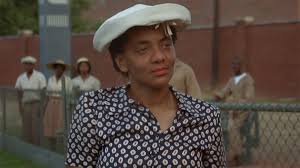
The other woman meets her. She’s small. Slim. But she isn’t in a black and white polka dot dress, or a large-brimmed hat this time. 

Somehow, it’s like what Ray told her when he first came across Shoeless Joe, and the others. Dottie can almost see the stats appear in her mind in a nice and neat bloc.

G –  228

R – 136

BA – .273

G by POS – RP-150

Pitcher. Second-Fielder. Outfielder. A 33-8 win-loss record over three years. She knows this. Now.

It’d been broad daylight when they’d first met. Now, it is a night lit up by the lights and the magic of this small ballfield. She wears a striped uniform with a C emblazoned on it surrounding the word “chicks.”

The Steel City Chicks.

For a few moments, Dottie feels stupid. Of course, she would have had a team of her own. It just wouldn’t have been recognized by the League. She didn’t need the Peaches or the Belles. She, and her teammates, had been fighting their own battle. It was a shame it took so long, that it literally took life, death, and a miracle to get them all here to where they are – right now – today in what feels like the summer that a part of Dottie never truly left. 

But Dottie resists stretching her jaw. Instead, she extends her hand. The other woman looks at her. She gives her the same level stare, that look of pure confidence, and a steady defiance she had so many years ago back in 1943, segregated by so many things. But they had that moment, when she threw that ball down the yard like thunder and nearly destroyed Ellen Sue’s hand and baseball career.

And then, she takes Dottie’s hand. And when she does, they smile. Now their game can truly begin. 

Out

Jimmy spits non-existent tobacco onto the field, inclining his head to the side out of habit while also grunting as the other players take their leave. None of them stay, not even the grey, shadowy shapes that sometimes loiter on the turf. There aren’t many of those anymore, to be fair, as Jackson told them the owner – Kinsella – never really stops recruiting. 

It’s rough, though. They’d been playing all day, and it was time to go home, Jimmy guessed. Even Bob Feller wouldn’t bat for a pitch. Still, Jimmy knows he can’t explain. He feels tall, his shoulders broad, and he fits in his old Cubs uniform despite all the years he left behind in ‘87. Hell, his damn uniform was actually crisp white – ignoring all the dirt and sweat from under the sun. But he’s standing up straight, feels all square-jawed, and he can actually breathe again. Practically All-American, as Mom used to say. Or one of his wives. 

The floodlights are pretty good. The grass, and the stalks around the field rustle in the wind on this warm summer night as he picks up the ball. Between that, and the bleachers, and the tractor that comes through every once and a while, there isn’t much else that’s mechanical. Definitely nothing like a pitching machine. 

Out of all the things in his former life, Jimmy never thought he’d miss a pitching machine, especially not with Bob and Jackson, and Ruth, and only God knew who else around these parts. But here he is. He takes the ball, and he throws it up into the air. Then, he puts both hands on his bat, swinging back, and striking the thing out into the farthest depths of the field. He crouches, and he can feel the difference as he puts his whole body into it. 

A great thing, feeling cartilage in his knee again. All he had to do was pretty much just die for it. 

He shakes his head under his helmet. He walks past the bases, and picks up another ball. Fellas should’ve cleaned up, but he basically volunteered to do the rest. He feels uneasy. He shouldn’t. He should feel great. He does feel great. Amazing even. But as he throws the ball, and hits it again, he feels something else that’s been at him this entire day. Something – someone – is watching him. Like eyes across the bar room. Or … something else. Something that feels familiar, but he lost the name.

Like a ball he just barely grazed that could’ve been a home run that he’d never had. 

Fucking sentimental hogwash. He tried to shout that kind of junk out of the Peaches. Out of his girls. He hasn’t seen them here. Jimmy’s not sure if he’s disappointed, or happy. Maybe they’ll never come here. Maybe God doesn’t have Ladies’ Nights. 

He takes up the ball again, before he notices the shadow.

The strike of the ball against his bat cracks throughout the air, as the figure holds up one hand … and catches the ball. No glove.

Just a bare palm.

Jimmy blinks in the lights. He slowly lowers the bat to his side, fainting tapping his white pants. The shadow was easy not to see in the night, even with the field lights. It is tall. Statuesque. It wears a white short-sleeved uniform, with a red insignia and cap. The uniform is all too familiar, except it is wearing pants. 

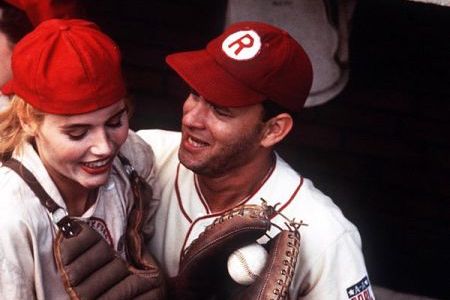
The flash of golden ginger hair reminds him of the last late afternoon that he had seen her, before he went off in that bus to his next game, with the rest of his girls, with everything said and left between them. 

“No skirts.” Jimmy points at her legs as he walks up, to meet her in the middle of the field. 

She shrugs, looking at the ball in her hand, before turning up to regard him. “Easier on the legs.” She says. “No scrapes this time.”

“No splits either.” Jimmy shakes his head ruefully. “So much for Heaven.”

“Oh Jimmy.” Dottie says, her lips shaped into a thoughtful pout, a country girl trying not to say something more profane. “You still look like shit.” 

Jimmy scratches his chin. Even now, he still forgets to shave. Or maybe given everything, it never occurs to him that he has to anymore. They’re both trying to be nonchalant, but he sees her flexing her jaw. An old tell if he ever saw one. She looks like she did in her twenties. Like they’d just said goodbye at the bus before going to two separate lives. “And you still look like you eat and breathe this game.”

This time, Dottie looks down. A smile flits at the corners of her lips. “I guess there’s part of me that never really left it.” She manages to glance up at him. By this point, they have closed the distance between space and time, between them.

“You look great.” She says, and somehow they are both back in ‘43 in front of the pitching machine where she is picking up. ”You look like you can still go.”

“I was locked in.” Jimmy doesn’t know why he said it, but it makes sense. 

There is a moment of quiet between them. 

“I thought you liked me.”

Jimmy never thought he’d hear those words again. He’d heard them every day of the week, all the way until the day his liver and his lungs couldn’t take it anymore. He’d told her that he’d tripped. It’d been ridiculous. Pathetic. An old drunk womanizer’s excuses, a disappointing shell of at least a decent ballplayer. The truth was, he’d tripped, and fell. And he’d been falling for a long time. And he’d kept falling, plummeting for what seemed like forever before he saw what the Peaches could do. And what she actually was. 

“I did.” Jimmy wants to believe that it’s just his throat remembering what it was like to be choked up by tobacco, or just dust. “That was the problem.” 

He doesn’t look at her. He’d made his decisions. She’d made hers. But damn. At least he said it this time. Then, she is right up to him. He feels a tap against his chest. He looks down and sees her hand, curled around the baseball, pressed against his uniform. 

“Out.” She whispers, softly. 

Seeing her reminds him of that pure and clean feeling of doing something right. Something that he’d been born to do. To act. It wasn’t just that she embodied it. She felt it too. 

“I call foul.” He grumbles, without any rancor.

She puts a hand on his arm. “Maybe we should get a proper judgment call.”

“Maybe we should.” Jimmy chuckles. “But we know those umps are paid off anyway.” For a few moments, he stares back at the bleachers. And, somehow, he knows. He just does. She doesn’t look. She doesn’t have to. “Maybe we’ll have better luck with the Commish.”

*

Dottie Hinson sits on the bleachers as she watches them.

She’d only even seen Jimmy Dugan this young on a playing card. It makes her happy to see him standing up tall, and proud. He walks and moves smoothly, without his usual limping gait. And then, she saw the shadow of the figure in the field come into the light. 

Dottie doesn’t know what to think of seeing her younger self, in that modified Rockford Peaches uniform, talking with a Jimmy in his prime, a man not run down by life and his own terrible choices, and her – her not a mother yet, or a grandmother. 

“May I?”

Dottie turns her head slightly. Ray Kinsella is standing next to her on the stands, his hands in his pockets. The young farmer and owner of the field, squints down at the sight of the two figures. Dottie chuckles, shaking her head. She almost catches herself trying to pop her jaw. She nods to him. “Were there too many redheads at dinner for you?”

“Surrounded by them.” Ray laughs. “Nothing I’m not used to by now.”

It’s true. Dottie has seen Ray’s wife and brother-in-law, as well as his daughter Karin. But her daughter, and grandchildren, her sister and her own grandchildren are something else. They’d paid a nice twenty dollars for their ticket, which also included room and board for their stay. And Annie made a mean meal. 

She doesn’t have to look at Ray, to see that he knows what’s going on. “Has this happened before?”

Ray sighs. “Not often. Apart from Doc Graham, well, I told you about that. It happened outside of the field first. He followed us here. But yeah. There was one other time. Almost like this”

Dottie’s eyes narrow at the two meeting down below. “And?”

There is a pause. “Do you see the mound down deep left field?” 

“Yes.” Dottie hadn’t been sure, originally, what the plot of land had been in this strange baseball diamond in the middle of an Iowa farm, but now she already has a better idea.

“That’s Kid’s.” He looks at her. “Eddie Scissons. He called himself the oldest Chicago Cub.”

Dottie’s brow furrows, trying to remember while also focusing on the tableaux below them. “I don’t think I know him. Jimmy never talked about him …”

“He wouldn’t have known him. At least, I don’t think.” Ray rubs at his eyes. “I still don’t entirely know how it works.”

“I found out about your field through Mae. Mae Mordabito.” Mae had always been wild, but it hadn’t been until much later that Dottie realized just how superstitious, or into the occult that her former teammate had really been. “She’d read about you from Terrence Mann’s Shoeless Joe.” 

Ray laughs. “He really did it. I knew he would.”

“So.” Dottie says. “What does this mean?”

“I … honestly don’t know.” She gives him a glance. “The announcer, or whoever, the voice isn’t saying anything. Do you hear anything?” 

Dottie thinks about telling him that while she might be old, she’s not hearing voices yet. She shakes her head.

Ray rests his hands on his knees. “Eddie … He might have had more to do. Maybe …”

“He had some regrets?” She turns her gaze back to the ghosts of Jimmy and herself. And she thinks about it. “Is that what happened to him?”

“I don’t know.” Ray admits. “I think … we all, all of us, get something from the field. From the game. And I think it’s just between us, and the land.”

Dottie considers Ray’s words, the sight below them, and how she feels about it. Cooperstown had been a year ago. 1988 made her face a lot of what she had been doing, and who she had been in 1943. She’d almost not gone. She had tried to convince herself it hadn’t been important. But it was. All of it had been. It was how she reunited with her sister. With her friends. With her memories.

All of her memories. 

She sees the younger Dottie tap Jimmy in the chest with the ball. She can’t hear much of anything that they say, but she can figure out enough. No one knows yet, except Kit and her daughter. Bob passed about a year ago. She had lived a full long life with him, and she didn’t regret a single thing. Not for their offspring or their grandkids. When she went – and she would – she would be with him. 

But there would always be a part of her, deeply, intrinsically, spiritually, that was baseball. And Jimmy was also baseball. She smiles at him, at that young man he was and is now acknowledging her. And as she watches that part of her, that Dottie, free of responsibility and fear and anxiety taking Jimmy Dugan’s hand in hers, as they move through the corn stalks and vanish from view, a strange peace fills her that she didn’t know she needed. Something had told her to make this trip: a long trek from Oregon to Iowa for what could have been some tourist kitsch due to a metaphysical book from a former free love author. Now she can enjoy the rest of the time she has left. Now that part of her can truly move on.

Dottie slowly gets up. She waves Ray off as he attempts to help her. “Let’s go back inside.” She tells him. “My grandkids will be wondering about me. And Kit will want details. Otherwise she will never let me live it down.”

And while Dottie remembers, even now, that there is no crying in baseball there is still plenty of space to smile about it. 

14: Alternative Facts: Body Politik


But see, amid the mimic rout,
A crawling shape intrude!
A blood-red thing that writhes from out
The scenic solitude!
It writhes!—it writhes!—with mortal pangs
The mimes become its food,
And seraphs sob at vermin fangs
In human gore imbued.

– Edgar Allan Poe, “The Conqueror Worm”

It’s Aft-Hallows. The treats are tallied. The white sheets pulled away.

The masks come off. 

It’s been many cycles since I searched the Freed Dome for that re-image. For that lost word. I walked through many Governs, Festives, and sub-cultics trying to find it.

Trying to find the true face of Amarak.

I’ve been gone long, deep into the Interface, deeper into the Land. And still, I didn’t know how one word would lead on, to the place of the Interregnum, and the heart of ultimate divise, of the Second Great Disunity. 

My parens always told me to bury the plague-bare. To avoid the Nats. A commonsensical. The Nats, the Novax, helped the Disunity. Ended the Disunity. But did they?

What is sickness? Is it just the body, or gleaning itself? So many words from so many places in the knowing space in my head now. The Rangers in the Badlands had a secret. Many secrets. In their Interface, sep and divise from the Repolitik, I saw a legend. 

The scholars of the Freed Dome Collective said that the Forty-Fourth Precedent was the last. But there was word of Forty-Six. Fore the Novax, the legend says, they said Two Teeth held Amarak, barely, two pinpricks of an old man. Two teeth, and four, keeping back the blood red tide. An in-oculate, a grafting, against disease. The Predicts say two women could have saved the Politik, fore and aft.

That was when the Novax came. The true Novax.

They did not see. They refused to see anything.

There is another view. We never had Precedents. Only Presents. A Forty-Sixth Present of the Demos, beyond the Forty-Fourth,  tried to save us from the sickness coming. But the Land has always been tough soil. Tangled. Twisting. A morass. The Repos, and their Fiefs and their Barrons called our Land a Swamp. And they never fallow, but always grow it. Ever-growing cycles. Revolves. That seeming’s that Aft-Hallows has always been a Colour Revolve: an Orange Revolve that tried to rule Time. One look between the veils, a moment, a box opening is and isn’t, death and non-death … 

And then, no more Present.

The Rangers have an old saying. When the death birds fly, they make no eggs. They also have another saying: the Orange Revolve is always led by Red Caps. The Freed Dome Collective is fallen. The Tripartite squabbles. Secret festives. Opportunes. Eagle-Eyes everywhere. The Interface compromises. The factions are occupied. It is only the start.

I think about what I gleaned about the Nats, and the Novax. And I see. It has never been Nats. You can’t run from something that isn’t there. And the Novax isn’t just sickness. It isn’t only a disease. Two Teeth cleaved the red deep under the binding of the blue, but it could only do so much agont the rot underneath. Agon the maggots. There is no cure, no in-occulate for the chronic Revolve. Death’s greed for life. For hate. 

And this answers my query. We didn’t know. We did not learn. There was no Present during the Interregnum. No real Present Aft. There is no real Present now. Just Ever-Now, for Amarak. 

(C) Matthew Kirshenblatt, 2025.

How to Make a Jedi Warrior

It’s been a hot minute, hasn’t it.

Whenever I come back here, I feel like I have to say something introspective about my time away. I used to write here all the time, like almost every day. But sometimes you just need to experience something, or go through something — processing it — before you can write about it. 

In this case, it’s The Men Who Stare at Goats.

I know, right? Out of everything to return to talk about on Mythic Bios, why this film? So I have been writing a lot of indepth reviews on my Horror Doctor Blog started around the height of the Pandemic, and this writing is not going to be one of them. That’s not generally what we do at Mythic Bios. No, at Mythic Bios we online creative processes and ideas even more than we do at The Horror Doctor, or Sequart, or anywhere else I write about geekery. 

The Men Who Stare at Goats is a 2009 tongue-in-cheek satirical comedy about war: specifically how the American government used, or uses, New Age and esoteric concepts to aid them in combat. It was adapted into film from Jon Ronson’s book of the same name by Peter Straughan, and directed by Grant Heslov. I’ve not read the book. I’ve only watched the film.

To give you a rundown, as the summary goes, the United States government saw the Soviets were fascinated with psychic experiments and, to counter them in a war of propaganda — of a seeming of power as opposed to anything practical or concrete, simply doing it because the other side was feeding rumour, and they had to save face there — they made their own research team in the military to deal with them. It’s basically one Emperor having new clothes, and another Emperor wanting the same to one him up. Of course, in the story there are people who genuinely believe in the power of the paranormal such as Vietnam War veteran Bill Django who had a life changing near death experience that made him realize that the American method of waging war needed to be changed through the element of peace: with the motto of “their gentleness” being “their strength.” 

I actually found Django, and his student and subordinate Lyn Cassady’s methods of utilizing paranormal phenomena, or psychic power, fascinating. Django creates a force within the military called the New Earth Army: which essentially trains its chosen soldiers to use this power. It’s tied with the idea of the American government, and the CIA experimenting with remote viewing, clairvoyance, telepathy, invisibility, telekinesis, and even teleportation. Certainly, we know they did things with the development of LSD and attempts at mind control and brainwashing that have been covered before.

Essentially, the New Earth Army as portrayed in the film are “psychic spies” that are called “Jedi Warriors.” You see, Django created the concept for them from studying New Age concepts in the seventies of free love, appropriated branches of yoga, and quite possibly studying at other mystic lodges: his views and research being taken by the brass of the military to show up the Soviets, and even to support the beliefs of individuals like General Dean Hopgood: a man who consistently smashes into a wall in order to eventually phase his molecules through it, and phase on the other side with the power of belief itself. 

It’s all goofy, and insane. It feels like someone initiated into the Discordian Society created this whole paradigm as something of a joke that — like all shared jokes — has elements of truth inside it. And certainly the protagonist of the film, Bob Wilton, believes it’s all bullshit at the beginning of his journey … until a series of hijinks through Kuwait during the Iraq War make him seriously reevaluate what he thinks perceived reality actually is. 

I think there’s something great about a film during with the creation of “Jedi Warriors” — drawing from the zeitgeist of the 1970s with George Lucas, from his own studies into older films and Joseph Campbell’s examinations of the “mono-myth,” or the Hero’s Journey — that has Ewan McGregor as the central protagonist. Remember, this was four years after his role playing Obi-Wan Kenobi in Star Wars Episode III: Revenge of the Sith, and no one expected him to return to Jedi Knighthood on the screen … until now, in 2022, when he will be starring in his own miniseries Kenobi

My point is, this is the closest film anyone was going to be seeing McGregor be a Jedi Knight again in any way, even this strange, yet charming lampoonish manner of a younger man trying to find his way, and prove himself to … himself in doing something meaningful. It’s a film that gets ridiculous, but oddly poignant at times. Lyn Cassady reminds me of a friend of mine who believes in powers beyond our understanding, and has this almost Don Quixote sense of wonder that is constantly tested by disillusionment and pain: elements portrayed well by the actor George Clooney. He serves as an ad hoc mentor figure to Bob Wilton, through example, while also serving as something of a fallen or a wounded warrior himself. And Bob Django, portrayed by Jeff Bridges, has a major charm, a bit of showmanship, and earnestness of a man who just wanted to negate the violence that he’d seen decimate his fellow soldiers: recognizing that humanity’s natural inclination was not to violence, leading to their incompetence and destruction in an armed conflict with the Viet Cong. He reminds me so much of an older Luke Skywalker: perhaps the way he could have been portrayed in the Sequels, and in some ways when you see what Django is like at the end of the film, he kind of is. 

But I think what got me was that each “Jedi Warrior” has their own abilities, and focuses in utilizing their power. For example, Gun Lacey stares at hamsters to will them to die: which is a smaller application of goats. And goats are used because humans generally feel bad about using dogs, which were the original test subjects for causing telekinetic deaths. Lyn can goad someone into attacking him, but immediately undermine them believing they will win, and using that fact against them when he decides to act. It’s hard to explain but some of the soldiers sleep and try to understand their dreams in locating a subject. Some study the Bible. All of these elements are found throughout our own culture. Hell, even LSD experiments and mental breaking are performed by the overly ambitious Larry Cooper: as played by the now infamous Kevin Spacey, who also seems to have mastery of a technique called the dim mak: the Japanese death touch. 

And I was thinking about these strange, eclectic soldiers — these “Jedi Warriors” — and I asked myself once the film was done, if they were possible. Would it be possible, in our world, with our reality’s rules, to create Jedi?

The reason I started thinking about, specifically in this patchwork paradigm of all of these concepts brought together in the film and perhaps by the novel as well, is how one soldier was criticized for stating that a popular author knew the location of a kidnapped dignity. It hadn’t been the case, and it became a source of embarrassment that, coupled with Cooper’s LSD experiments influencing a fellow Jedi Warrior to go berserk and commit suicide, changed the mandate and free flow nature of the New Earth Army: essentially rendering it defunct. 

But what if that soldier wasn’t wrong? What if by the tangential nature of the New Earth Army and its parallel thought processes, what they really needed to do was find one of these author’s books, read through them and the passages — or become familiar with them — and use some gematria, some numerical code associated with letters and words — to find the target. And it made me think about neurodiversity, the plasticity and elasticity of the human brain, and mind concepts. And again, the question I asked myself.

Can Jedi Warriors, as portrayed by The Men Who Stare At Goats, exist in real life? And, if so, how?

This is how I think ladies, gentlemen, and other psychic beings, it could be done.

You find a series of individuals with a fairly high IQ, and allow for neurodivergent additions that generalized testing might not pick up. Unlike The Men Who Stare at Goats, you pick men, and women, and other genders. You select them from a diverse background of cultures, subcultures, and ethnicities. You interview their commanding officers, their friends, their families and communities, and you test them to see how great their intuition and instincts are. These are actual traits you can find in hunters, trackers, profilers, and anyone with street smarts. How else did humanity survive earlier times of development without some kind of secondary or sixth sense.

The key is to refine that. You need to find and develop practices that can hone intuition and instincts. There are plenty of esoterica and even religious and spiritual practices to draw from. However, you need more than just breathing exercises, meditation, pain-management, and martial arts: though they would make for an excellent foundation. Personally, I can see aikido being extremely useful in knowing the force of one’s opponent, and using it against them in a flow not unlike a philosophy espoused by what many call Daoism. Tai chi would also allow for flow and constant movement, and you include elements of dance.

You see, what we want are well-trained people who are young — or who can still be conditioned and taught — that can move easily, develop greater reflexes, and be able to read an environment, field, lifeform, or person almost immediately. That’s how it starts. But it’s also a group effort. This New Earth Army would need a team of scholars, martial artists, philosophers, even art historians, doctors, artists, negotiators, and therapists to educate these Jedi Warriors. They need to be taught how to look at something critically, but also in a totality. Deductive and inductive reasoning — the first making a hypothesis and being able to examine the possibilities and come to a conclusion, and the last being able to draw a general and perhaps in this case more specific series of conclusions based on observation — are key, and feedback into that honed intuition, and instinct. Also, as Lyn demonstrated, certain vocal intonations and sounds can be key to affecting your own, or another person’s, psychological state. I also really like the plastic implement Lyn used to disable Bob. I wonder if it can be made in real life and, if so, if another non-lethal, non-permanent damage long range one such as net can also be implemented but that would be a whole change of the psychology of war and, indeed, human psychology.

And not all of these Jedi Warriors will be the same. Some will focus more on chemistry and substances that can hone or put the body into alternative states. Others will focus on altering their responses to pain and pleasure more than their fellows. A few will just specialize in sifting through information from disparate sources, and put them all together, or take them apart. And more will be looking at propaganda and doing more than just sending pamphlets stating to an Enemy that their “dicks are small.” I can see a branch focusing on memes and memetics on the Internet. I can see people getting into the cultural and personal profiles and psychologies of a subject. And there would be peacekeepers that would be able to know the cultural mores and study human behaviour to be able to put people off guard, or to talk them down, and relax them. I can see flash mobs being used as a tactic to distract, or eliminate someone’s need for conflict. You can do a lot of radical stuff when you, I suppose, “hack” your normal human or group behaviour.

A lot of this stuff actually does exist. I know if I were a Jedi Warrior, which I am not, I would look at geek culture and what it says about a certain event that could occur, or has happened. And especially examining Jungian archetypes in folk and fairy tales allows you to know a lot about human beliefs.

Telekinesis isn’t possible as far as I can see, or teleportation. But honing intuition, reflexes, inductive reasoning, and maintaining a state of mindfulness could go a far way. I guess I just see this New Earth Army as something like the Druids from Shannara in which everyone has different abilities, the Foundation with its facets of psychohistory, the Bene Gesserit with their martial arts and Voice, or the origins of how the Jedi Order was founded in the Legends canon of Star Wars.

And this is all fiction, but this is how I could see it going down. I also wish we could have seen more Jedi Warriors jn action, though there being few does make sense in the story, and in general.  Because one thing I got from The Men Who Stare At Goats is the real lesson: that psychic power isn’t so much concrete paranormal ability, but the power of belief — of human belief — and being able to understand and use that. Like when Lyn tries to become invisible. He doesn’t actually become invisible, but he changes his body language, his breathing, his mindset, to mess with someone else’s perception of what they might see: or so he believes.

For Bob, he understands that the true power of the New Earth Army is to believe in something greater than themselves: in a lie perhaps, or stories, that can jive with the human need to do something different. Whether or not he phases through the wall at the end of the film is almost irrelevant. The fact that he changed his mindset to know that he can do something outside of a pre-arranged behaviour, to go beyond the grind, to not let people in power obfuscate the truth from him, is more important. That flexible thinking is what a Jedi Warrior should have. 

It’s weird. I’ve been away from Mythic Bios for a while, but damn: I would love to make a Men Who Stare at Goats RPG, or a New Earth Army game, and I would be a scholar with nerd and Jungian ties, with some erotic elements that can predict some things, interact with people, and bolster my energy. Using LeGuin’s Farfetching exercises, automatic writing, and making creations and links like those of Hermann Hesse’s The Glass-Bead Game would be key to my psychic spy methods. Hell, if I wanted to incorporate a view of the Force into it, I could just get it to relate to the old Theory of Ether that used to define reality in one Western perspective. I would go for a bit of a variant of Chaos Magick in that eclectic approach. There is something noble in harnessing the power of the Wind Mill, of air, of breath, of belief during a time of darkness and uncertainty. And I think Inspiration or bonus points should be awarded to the silliness implementation of those concepts in those game ideas if they ever happen, because what is more sublime than laughing at one’s self while accepting the validity of the actions that lead to that laughter? What is funnier than belief? What more is worth feeling something about? What more is worth fighting for? 

It’s great to be here again, if only for a little while. Take care everyone.

13: Alternative Facts: Can You See

It’s Fore Hallows at Freed Dome. 
It’s Fore Hallows at Bost. 
It’s Fore Hallows at Blunder. 
It’s Fore Hallows at Sancts Lost.

If you have to ask, 
wear a mask,
better bearer than bare
against the Nats and the Novax,
and the Fall of the Ere. 

It came from Sunder,
it walks in Nomens, 
and travailed the Pasiph League,
the world, the veil, the scien of Predicts,
from here and back it will leave its mark,
it will always bleed.

We member the days
Fore Hallows, it will not die.
It doesn’t long to Hate or Gilder Boom,
no matter how loud they cry. 

Fore Hallows is ours, from Cycle to Pride,
and Badlands far from sun
it comes to gain the oldest harvest 
and the Land, Folk, Fire that we have won.

Fore Hallows, fore State, and Trunk, and Ass,
we wear, in air, our mantles, always, from the time
fore score our face and words come frozen by this rime.

Fore Hallows never cesseeded 
into the glare of blue cover, the white sheets, the plague-bare 
suspended all twili, and grey, 
though its treats were grim, and cold tricks came its faire
come fallen where they lay. 

This is why, past the Dark we don’t member,
we will always ask 
that every Cycle, tween the Poles,
that we parti-pate a Great Unmask. 

Populli, Fore Hallows, ‘tend to be things
but let things not be populli, Abominate upon boght wings. 

A hush wind breath blows not in the bellows 
of louder miens  and means thrown down,
it might be now the time of ere, and auctumn
but ne’er forget the Revolution of the Orange frown.

Fore agon the idea in the making of hollowed leaves a crown,
and member that Fall every populli shows and knows
that the Precedent wears no clothes. 
Recall the Broken Star on a stalk of holly,
cover your breath, but not your eyes from this great old folly.

Fore Hallows now Hindsight,
Fore Hallows the Festive of the Open Track,
Fore Hallows for good or ill, 
let it be the begun again the Doom of Amarak. 

© Matthew Kirshenblatt, 2020

Horror Experiment and My Newest Challenge

So this is something of a follow-up from my previous Blog entry “My Curve” that you can find by just scrolling back.

I’ve been thinking about the horror genre lately, particularly with regards to film, but being the person I am I also relate it back to horror writing. Better minds than mine have looked at horror and defined it through scholarship, or creativity. But after particularly focusing on cinematic horror, I see that there are so many different kinds of stories and storytelling, as well as production value, that make up the genre.

Some of it is psychological, or bodily, or just gore. Other parts of it are philosophical, or tacky, or just plain strange. It’s like how the comics medium has schlock and fine art, and all the variants in-between. You can find this in any genre or medium, I’m sure, but perhaps it’s because of the Toronto After Dark Film Festival and its bent on what I think in my mind as “weird movies” that I tend to view cinematic horror along these lenses. I mean, the Toronto After Dark particularly focuses on independent — or indie — films, both short and long-form, but I tend to see horror cinema in that spectrum between ridiculousness and campy-themed features, and sophisticated, and nuanced with some cathartic elements that could easily have their roots in ancient tragedy. Then again, some of the antics that happen in horror film can easily be found in old Dionysian slapstick become comedy as well, and there is a reason I feel why some comedians, like Jordan Peele, can make such great horror social commentaries. I always get the feel of observing, and playing with, glorious pulp with these “weird films.”

I’m not writing anything new here. But I think maybe it’s because of the pandemic and thinking about medicine and doctors, as well as my own critical skills, that an idea occurred to me.

It began when Joe Bob Briggs said that a film had been reviewing for The Last Drive-In would soon be out of circulation on Shudder. This happens a lot, where AMC — the company that owns Shudder — will have the rights to show the films for a while, and then they will be gone. I also know that Shudder in different countries can generally only show those films in the countries where the copyright exists. So as a result some of The Last Drive-In episodes aren’t available anymore. And Shudder isn’t always clear on when they will disappear like a ghost in the rain.

So I went to watch this particular film that would soon be gone from Shudder. And … This was interesting. It was an old film, but seemed older given the terrible production value. It had a lot of great ideas, but the way they were carried out, combined with the said production value, and a “too many cooks” of characters and ideas, it just got weird, and unfocused, and out of control. Sometimes art happens by accident. Sometimes, disasters do as well. I think that’s what horror does. It makes things messy and sometimes there is order in it, and other times it can just become senseless.

So it was after watching this film, complete with commentary, that I started to really think about what worked in it, what could work in it, and what didn’t. And then I did something that I learned to do as a Humanities Graduate student, and a creator myself. I began to think more about how it could work, and how to make it work. Think of it as something of a script-doctor inclination, except I would convert it into a story. Into glorified fanfiction.

And I began to think to myself, there are other films like these out there. I’m not talking about modern ones, or ones that have their own logic. I mean ones that could have their own logic and consistency, old and forgotten films, or smaller ones that could just been tweaked in some way. And, of course — and most importantly — I would not be doing it for money, or profit.

It’s an extensive idea, to do some Horror-Doctoring. And obviously, my tastes are my own, but I would need to make the revisions or “remakes” consistent with what they are, to go back to the theme of the entire film, and the tone, and make it more cohesive, snappier, and just entertaining. Disqualified from this possible experiment would be more well-known or mainstream works, and films that are focused and cogent. I can always write separate fanfiction for those, as I always have.

I am not knocking them, and I appreciate them for what they are — flaws and all — and I would definitely not mess with something like The Room, which isn’t horror, and is so in its own league of weird reality and insanity that it needs to stay there.

But I have a candidate — or specimen — lined up already. And it’s eerie how my ideas are working. I began thinking about it before, and then I was sending these thoughts to a friend whom I got to watch it before adding more notes to myself.

I might post it up. And depending on how well it is received, I might continue with those experiments. I might also not do it. My focus is more mutable these days, but it’d be cool to post a column or section on “Horror-Doctoring” on here, or make something and then create something entirely original from the previous specimen that I can use in other places.

Basically, I am getting inspirational fuel which is a start into returning to the process of creation where I need to be. To engage both my critical and synthetic brains. To continue my experiments with the mess to make something else entirely. I will keep you posted.

Uthark

This is a missing scene between two different stories. It also be seen as a prequel to my fanfic “A Midsummer Night’s Dance.”

Dani starts. As the adrenaline edges off, her head lolls down, from her seat and the belt holding her in place.

It takes her a moment to remember where she is as she feels the ground moving under her. She’s … in Pelle’s car. Dani remembers now. She’d begun to nod off not long after Mark began talking about a woman with three clitorises, and a news anchor killing his wife, or something. She rubs the place where the bridge of nose curves into her forehead, visualizing her heartbeat slowing down, breathing as she had taught herself to do. It’s all right. She recalls that she still has her pills, if she needs them.

It’d been so strange. She had been dreaming. It was like the painting she had at her apartment back home, or something like it. But she was in it. It was night, and she’d been in a white dress or … was she wearing flowers? Dani can’t quite remember now. She’d been … dancing? There had been flames, and people naked in the sky, and a beast. There was a beast, and they circled around each other, and it looked at her with dark glittering eyes. It was going to eat her, like the Wolf in Little Red Riding Hood. That’s what she was thinking then, but she wasn’t dressed in crimson as naked people flew in the air towards chanting people dressed in white robes. But those eyes held her in place even as they danced and danced, and she sang with the white-garbed people, and the pain didn’t exist anymore, and she belonged …

But she couldn’t stop moving, and the eyes consumed her. Something kept clicking, and clacking in her brain. The sounds and eyes devoured her, so much until she …

It says a lot about her, and her mental state between numbness and panic, that she welcomes this nightmare more than … the others. She shakes her groggy head as they continue to drive down the highway to Hälsingland, and Pelle’s commune. Christian is sitting beside her, half-asleep himself, distant as usual. Josh is quiet next to him, near the right car door. Thankfully Mark has stopped talking, even though Dani has to admit that the drone of his voice with its ridiculous stories and chatter about milkmaids and pussy almost distracted her from the crushing grief inside her chest. It probably put her to sleep. Somehow, though he is also quiet, she can see Pelle through the sun visor, looking at her sympathetically. Out of all of Christian’s friends, he has been the nicest, the most sociable at least. There is a warmth to him, in his eyes. She still hurts, but not because of him, and she feels like he knows a lot more about what is going on than she does …

Perhaps he’s always known …

A strange sense of comfort fills her at that thought as she considers where they are headed, into this strange place, leagues away from her home, her own sense of home an eternity away across a continent in an exhaust-filled house that no longer exists where it is so hard to breathe … to breathe …

A house filled with smoke, and loss. A structure on fire, and a sense of relief … 

Then she looks back to the right side of the passenger area, past Christian, to Josh and his book.

The Secret Nazi Language of the Uthark.

Dani needs to take her mind off of everything. She’s about to ask Josh about the book, with its old, faded cover. But then a sense of déjà vu fills her. Josh carries the book around for his studies into European midsummer traditions, but mostly to annoy Pelle. And she knows, somehow, that it does annoy Pelle. They must have talked about it at some point. Dani’s brow furrows. Yes. Pelle told them that his commune studies the runic alphabet. Pelle’s commune, the … they use the Germanic characters, and something else. It’s no wonder that Josh’s book annoys Pelle. The Nazi Party, and their Theosophic roots appropriated a lot of Nordic and supposedly “Aryan” culture to build their brutal worldview, to claim they were returning to something “natural” through unnatural order, and the dominance of the patriarchal over …

It’s strange. Somehow, Dani recalls someone … was it Christian? No. Something she read, perhaps? She’d only had an introductory course to Jung. Maybe Pelle, again, told her what the Uthark meant. She almost remembers …

She knows that Pelle is good-natured. He takes a ribbing from his friends, and perhaps it’s not her place to do this, but something really annoys her about that book, and Josh. Josh, for all of his genuine studiousness, doesn’t seem to actually respect the content or the people of the culture he claims to be fascinated with. His intensity is not what bothers Dani. In fact, he is at least the most cordial of the group towards her, or at least apathetic to her being there at all. But his lack of respect, especially towards Pelle. She imagines if Pelle and his commune are Jewish or Roma.

She is about to say something, turning to Josh, but Josh and Christian are gone. There is a boy near the window. He’s tall, but slouched over with greasy dark hair. His skin his sallow, and his nose is covered by a bandage. It looks like it’s been broken. Dani blinks, and Josh in his place again. She looks down, and the book is gone, replaced with a pile of papers. The writing is runic or children’s pictures. Dani feels dizzy as she blinks again, and the boy is there, staring out the window. Dani doesn’t know what to do, or say. They are on a journey. It’s important. It’s important to get to where they need to go, and she needs to know what’s going on.

“Excuse me?” She croaks, realizing how dry her throat is. “Excuse me?”

The boy doesn’t respond to her. He continues to look out the passenger window at the declining road.

“Pardon me.” Dani tries again, getting more spittle into the back of her throat.

The boy turns towards her. There is some confusion in his eyes.

“Hello?” He asks.

“What are you reading?” Dani finds herself asking instead.

The boy looks down at where Dani is staring. In his hand, where Josh had been holding The Secret Nazi Language of the Uthark is a manuscript titled Cocoon Man. “I … don’t know.” He says after a while. “Is this yours?”

Dani’s head aches. She rubs the bridge of her nose again. “I don’t … think so.”

“I …” Dani can see the boy becoming pale, the air around them darkening. When it did become evening? “I can’t breathe …”

Dani’s eyes widen in concern, and sympathy. “I can’t either.”

The boy’s face seems to swell in the growing shadows. “Where is she … Mom told me to take her with me. We can’t leave her alone.”

“Terri?” Dani leans forward, reaching a hand, as the interior of the car becomes even murkier.

“I can’t ,.. breathe. I … how can anyone breathe in here …”

And then, the car is filled with smoke. And fumes. The car exhaust pipe’s been reversed. Dani can’t breathe. She’s choking. She is suffocating on the toxins in the air, inside of her, and the group is back. Christian, Josh, Mark, and Pelle. They are dying, with her. She’s coughing, pounding on her door, on her window. There is a sound that is trying to fight its way out of her lungs, out of her vocal chords.

“I can’t … breathe …”

Somehow, even through the fumes and her wracking coughing, Dani can see the others have changed. It isn’t Christian’s friends. Her mother and father are sitting next to her. And Terri, Terri is staring grotesquely, covered in her own bile, into the the sun visor as she drives them right into the abyss, into hell.

“I can’t … breathe …”

Dani abruptly turns, and sees the boy, scrabbling at his own window, crying.

And then, the boy’s window is open. It is night, and they can breathe again as the smog is released outside, sucked out into the air amid clacking, shouting, laughing, and chanting. The boy’s shoulders heave, as Dani tries to catch her own breath until the hissing of the exhaust becomes buzzing, and the smoke going out are insects hovering all around her, trying to get into her lungs, into her skin, into her mind …

The boy turns around, the wind whipping against them. His head is hung out the window, but he is looking back at her. She sees his dark eyes glittering into her own. She doesn’t think.

“Spirits!” Dani exhales.“Back to the dead!”

The boy’s swelling face, or a girl’s, or a bear’s stretches out into an ‘o’ of surprise, as a telephone pole rushes past them, and clips off his head. Dani screams, as the car flips over, upside down, into the air, and falls up into the night …

Until they wake up in another place.

12: Alternative Facts: Natural Medicine

Ordinarily, I don’t re-blog my own posts. But this story … it was made in May of 2019. It was in response to Anti-Vaxxers, and while it takes place in my Alternate Facts universe — in the land of Amarak and the Repolitik — it is eerily relevant to current events. Take it for how you will.

Stay safe, and healthy everyone.

matthewkirshenblatt's avatarMythic Bios

“Physician, heal thyself.”
—  Luke 4:23

It’s a caution: of the boogey.

“Beware the Nats.” The old tales say. “They carry the Novax.”

Back cycles ago, no other chill was strongest than a call, or word of Novax. Fore the Disunity, and the Interregnum, and the supposed “Great Reunity,” a people went their own way. They believed the Land — all of it — healthy, holy, sacred. That all that grows from the ground is good. And all that came from making and artifice was sick, unclean … cursed. They espec feared the start of aughts, or a state of oughts: running from them, making themselves Sep from techne, from gleaning, that everything of the Land would save them, that all other things were poison.

They looked to find Dise, and discovered Doom instead.

They made themselves no defense … agon the old horrors. They were not…

View original post 884 more words

Aelith

Written and performed around last Halloween — or the Season of the Dead — by my bard in our Fifth Edition D&D game. 

There is a forlorn beauty within the White Pines,
filled with crumbling husks of majesty, and broken lines.
Now home to beasts, and creatures of many kinds,
it once claimed manses housing High Elven minds.

There were palatial homes almost grown from stone,
of which fabled mounds and toppled pillars are now their bone.
Numerous farms were once tiled by ancients under the trees,
but they, too these Elven farmers’ secrets, were worn away by
Time’s frigid Northern breeze.
This Kingdom, this Empire, spanned from North to West,
this flowering of High Elven civilization at its very best.

Now, there are only broken columns, and archway outlines reaching
for the sky,
as though these few still remain to beseech, and ask of the world … why.
Why did this ageless, noble nation die?

This question is the breadth and width,
of the ancient tragedy of the Temple Warden,
of the High Elven warrior …
Aelith.

Long ago, before the Elves of the White Pines,
the Mountain Dwarves of Mordimeer came out from their mines,
their numbers coming forward, going forth,
to contest the High Elven nation’s claim in the North.
Perhaps it was for the sake of power, or for gold,
that the Dwarves, then, decided to be bold,
or due to eternal grudges that never go away,
for these two long-lived nations set out to, each other, mutually slay.

But in shining raiment, and majestic power,
the High Elves still maintained their longest hour,
until, from the East, came Chaos, came the Orcish Horde, to ravage
and scour.

In massive numbers, the Green-Skins invaded both races first,
but the Elven nation was attacked the worst.
Long-lived and once sedate the Elves had perhaps been too used to peace,
with the Dwarven presence just skirmishes at least,
but spread too thin they didn’t hope to stand the Hordes that never ceased.

Many died, and others hid,
while still more Elves to their Empire farewell they bid,
as they left to form other nations, other cities
into eventual decline they slid.

But that is not what Aelith did.

Tall, and lean, and slender,
stone could not, in good conscience, render
the high cheekbones of her face, the haughtiness of her mien,
her keen slivered eyes that many a battle, more than others of her kind,
had seen.
Her red-gold tresses shone with a beauty that was hard,
overshadowing a gaze that never, once, let down its guard.

Perhaps, once, Aelith had a family, a lover, or a spouse,
but what is known is that towards the end of her nation,
she had been married only to the War God’s House.
Aelith, Temple Warden, had guarded the Warrior Shrine
for centuries, and years,
so when the Orcish invasion came, she was not overcome by fears.

It may be that she warned her people of this day,
that their indolent lives, their complacency would not eternal stay.
But if so, very few in Aelith’s words believed,
and because of this, perhaps, their doom they did receive.

Yet, that fateful day, that fateful time, it was lives that Aelith sought to retrieve.
She and her soldiers, the War God’s children, many orc lives would reave.

With slender fingers calloused by ancient wars, and hands that grappled with her God’s demands,
Aelith, keen-eyed of ken, took her bow of moon-silver, and shot down many a marauder again,
and again.
It’s said that when she killed, her voice sang out, perfect and metallic, silvery with prayer,
as she dedicated the lives of her people’s killers to her God, as their slayer.

But deep down, perhaps Aelith sometimes wondered,
was this wrath inside her, this glory for battle, grief for her people,
or what the War God thundered?
Was it, then, that something in her, a deep surety, a steadfast belief had
gone and, and truly sundered?
For with the others, the Gods of Peace and Pax had fled,
leaving behind only Bloodlust, and inevitable Dread.
And, perhaps, something else in their stead.

Perhaps, something deeper than sentiment, and eternal myth,
had always burned in the breast of Aelith.

Aelith, whatever else, had bought her people time,
but this is not where ends the tale of this warrior archer, farsighted,
in her prime.
It would be easy, to say, that she did indeed — with her warriors — earn
a noble death,
amassing orcish skulls right down to her final breath.

Outsiders continued to terrorize her home, and ruin her lands,
and she still yet fought on, in vain, as her soldiers — too few now —
died under the invaders’ — these defilers’ — hands.

Perhaps, as these final defenders, these Elven warriors made hunters
of thinking beasts,
which blood and viscera became their only feasts,
began to starve and fall without food or game,
the fire within Aelith’s soul fed another kind of flame.
Hungry as they fought, she and her soldiers became
far past the point of any reason for it to tame
Until, driven to very few, to the corners of their Shrine at last,
a desperate spell, an evil curse, they decided upon themselves to cast.

They turned the pool beneath the Shrine, into an abattoir, the heart of a blood-smith,
for their leader to forge, there, the Doom of Aelith.
Perhaps it was their own lives that they sacrificed, through blood-stained orgies,
and profane rites,
though orcish prisoners, long-broken, would have also sufficed.

And, with this, as she tried to control their fate,
all they had left — Aelith and her soldiers — was the power of hate.

Thus with a terrible ken, that made her song more discordant, more keening,
Aelith sought — in her Shrine — to keep on dreaming
for Death their lives never to sever,
as they would defend their Temple, their Home, and fight the Enemy, in eternal war …
Forever.

And when Aelith finally died, and her blood — with others — ran like a crimson river,
it is said that her God — her spouse — by request or curse, bound her soul into her constant companion,
her moon-silver quiver.

It is said, even now, that Aelith still exists,
she and her soldiers now spectres, ghosts, and angry dead whose war continues to persist.
And, if once a year, in the Season of the Dead, lost roads in dirt and thinned veils form anew,
and outsiders find their way to the site of the Temple, of the foundations they would flee
if they only knew,
then the spirits will lure them, as they had their age-old prey,
and take them, to feed their restless bones, where they now lay.

And Aelith, a far cry from her glory,
ancient, and hideous, and far from sorry,
now a withered, and unbearable sight,
will take advantage of the outsider’s plight:
even, and especially if they too possess an Elven light.
Perhaps, long after her kin ignored what she had foretold,
for them and all, her heart had long since grown cold.

Her hunger, now, is that for souls,
as she can, and cause, for others what Death ultimately tolls.
All so she can feed herself, and almost look again alive,
to be young in corpse-light, and terrible for her ageless war
to inevitably survive.
Armed with spectral arrows, from her constant bow, that rot the body,
and assault the mind
this, and her violence, is all of her that is left behind.

For her war song now is the Song of the Banshee, the House of the Dead,
a charnel battle where all should fear to tread.

Who, now, would go so far to guard their home, their way of life, in her stead?
Or keep their lust for vengeance, for violence, perpetually fed?
Or who would dare live the life that she had led?

Who else can’t see that a Banshee’s Song
is only a war that has gone — or will happen before — far too long?

The Elven roads are gone now, beautiful manses and temples long since buried,
treasures plundered, and millennia quarried
over bones, that could have been ageless — but died young, and unmarried?
Even so, in the shadow of the White Pines, in the pall of the Fall, there are few terrestrial, even fewer viridian sith,
that will outlast the keen keening lust and hunger of the Temple Warden, the Warrior,
the Banshee Archer.
Aelith.

(c) Matthew Kirshenblatt, 2018.