15: Alternative Facts: Unseen


“Good friends, Nobody is trying to kill me by violence or treachery.”
– Homer, The Odyssey, IX:408

Can you see?

Guess you glean what I did there. Nah. The problem is you can’t see by the sunset. 

Long fore, these small domes, our little sancts, our suntowns came something divise in the dark. But was always the sunsets. One eye turning way, the up-firm bleeding read, pink and purpled bruises, the orange of fire. So ease to get lost in the sight of site, or the site in sight, in the paint bathing everything the same, the light burning, making the shades so much longer, and more ease to hide in the gutters of sleep. A pretty dream. 

The real thing’s that it’s hard to where sunset starts, and the downtime comes. That’s where we lived. That’s where we died. 

See, or don’t, that our suntowns had wights – deadskins, you glean – in the lights, mourning in morning, and then wight knights at night. All Anon. It’s always Anon. They got to have that light to hide. To burn us above and bury us below. Then they used the dark to hunt. Making us sight and siteless. The beauty in their cold, dead hating-hands. They got to have everything. They owned all the colours. 

Bending the laws of light, that’s how they did it. All round they made the rite of invisibilis. That was it. That was the trick. 

You get me?

Nah. You won’t. 

They didn’t. See, they didn’t want to see us. And when they didn’t want to see us, they didn’t want to be seen. They were Anon. That was the coustume.

Til we took it from ‘em. 

Was what Freed Dome prob call approps. Aft we made for – and made – the Gulf of Amarak got made in the Second Disunity, aft Precedent Forty-Seven, and all the Repo Fiefs started to go away with their Gilder Booms, and their Eagle-Eyes, their Baggers and Speculars, their Wags and their fucking Nation night knights, we came like the Free Sancts after Summer Camp, like haints falling up and down the blews forever. 

We’re the blews in the read and wights. We kept the deadskins out while taking their breaths and trumpets away. We’re the colour that the Not-Sees never found – not even in the Demos Tripartite – and when we came Anon, hunters came hunted, if you glean. All those Not-Sees, and their vanceguards, and the knights and their Nation got learned to fear the come of Night. We’re the undocted that nope their Novax, calling their prophets profits, their traders traitors, bagging their Baggers, guiling their Booms, passing on their poison, slitting their Dragons, and smashing their ice. 

And no one gleans. Nobody, nobody stabbed them. You follow? 

Nobody found us. Not in the mourning. Not by knight. You can’t hear our songs. You don’t glean our dance. We’re silent to your ears. You can’t touch us anymore. You don’t get us. You can’t. 

You didn’t see us in the Freed Dome. In the Speculars and the Eagle-Eyes in your Interface. In the pits of MePo. You never gleaned us when the Repos rose again, and you never knew the Colour Revolve made approps. 

You don’t glean us. You never gleaned us. And you never will.

Now go. These are ghost towns, moving, unsettling, where killers kill those that kill, and we come from sunken lakes and sunless seas at Night to feed hunters free lunches of lead, to chain them down to finally hear us, to stay in what was first our place, for the final lesson. 

Go now, and accept that we gleaned the truth. Because we took back from Not-Sees what they had from Libertas. We cleave to inside-out bonds of lightning weaves to come free. Surviving is to come what you haint. We are Anon now. We took our sunsets back, where now we live. With her

Only she gets to see us now.

 And she is blind. 

(C) Matthew Kirshenblatt, 2025.

Ladies’ Night

For DeLisa Chinn-Tyler and Mamie Johnson.

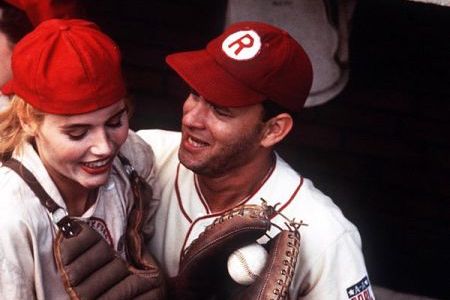
Dottie asked for a favour.

The remaining Rockford Peaches cackle to each other as the night comes on and the field lights blink into existence, even as her grandchildren shriek with delight and scramble with Ray Kinsella’s daughter Karin. Kit gives Dottie a meaningful look. 

It kind of astonishes Dottie, amongst everything else that led her to Iowa, which convinced her and Kit to get the others to come here, how she can almost smell the scent of Luttenburger Mustard on a hot dog, and taste that damned Harvey Bar on the tip of her tongue without there being anything in the way of concessions beyond what Annie’s given them.

Maybe that’s when she realizes it is time. She’s been listening to Ray, the owner of this baseball diamond in the middle of an Iowa cornfield so like and unlike the dusty land of her native Oregon, talk about seeing if players like Long John Willoughby, and The Stars of David will come to play. It was the last that made her remember, as if she could ever forget, a promise that she never spoke, but made deep down within herself. 

A lot of teams hadn’t been allowed to play during baseball’s past. America’s past. Dottie had only reluctantly joined to allow her sister a chance to get out of Oregon and make her own life. Dottie had taken it for granted: the opportunity, her skill, her own growing love of the game, of having the potential space to discover who she was. Not everyone had been allowed that privilege.

And that was when the memory of the foul ball, that never truly left, came back to her. 

Ray is animatedly discussing other possible players to bring to this field of Shoeless Joe Jackson, and the Eight Black Sox, and legends that should have been long gone, with Cappy. They’ve devolved into an argument about whether or not smalltown teams like Bayville and Central City should be allowed to compete in the same place again – if a sonnabitch pitcher like Herbie Satten would even be “eligible” to appear in this “sacred place” – when Dottie interrupts them. 

“Ray.” She just holds a hand up to Cappy’s irascible protests, looking out at a shape materializing from the corn stalks. “I think it’s time.” 

Ray looks out at the field. He sees what is happening. It’s as though he’s listening for a voice that neither of them can hear. He nods as he sees other forms come into the field. He smiles broadly at her, and she has to admit that it’s infectious, especially when she sees the other Peaches take notice. “Go on ahead. I think they’ve been waiting for you.”

“Dirt in the skirt!” Someone – she thinks it’s Mae, or Doris, calls out to more laughter. And then, there is silence. A low hum begins. Dottie’s not sure when it started. When they see what she sees, it begins.

The ambient sound becomes clear. It harmonizes. Then, she hears it. It sounds like Ellen Sue’s voice, but she can’t be sure. 

Batter up, hear that call.

The time has come for one and all…

To play ball.

Then, she knows. Dottie goes to her grandkids and kisses them. She holds her daughter as they take this all in. Kit does the same, and then grips her hand.

Cappy and Ira got them new versions of their old uniforms – red and white – and with pants. They go onto the field, Dottie leading the way, holding bats, balls, and mitts. There are other teams out there. The South Bend Blue Sox. The Kenosha Comets. And even some of the Racine Belles. 

She isn’t singing. But she feels the song, again, in her chest. In her throat. It pulsates. It glows. It rises. It is the smell of freshly cut grass. The sunshine of youth. The call of another generation’s soul.

We’re the members of the All American League.

We come from cities near and far.

We’ve got Canadians, Irish ones and Swedes.

We’re all for one, we’re one for all, we’re all American.

Some of them are singing, but it isn’t like that year ago in Cooperstown. Their song isn’t a gentle echo, or the warmth of a nostalgic ghost. It is present. It is real.

It continues as the Belles welcome Kit back with open arms, though she’s wearing a Peaches uniform. No hard feelings this time. Stilwell cries out from the bottom of the bleachers as he sees his mother again. Dottie also runs into Evelyn, holding her tightly, and promising that they’ll get her Angel to visit the field after this game. Given everything Ray told her about his own father, it is the least he – and the field – can do. They all embrace her, as Dottie sees the other player approach. She recalls Ray talking about the voice, the announcer, and wonders if somehow it is the one that is singing through this place: through them all.

Each girl stands, her head so proudly high.

Her motto “Do or Die”.

She’s not the one to use or need an alibi.

It was that foul ball. As she greets Linda “Beans,” Marbleann, Beverly, and Connie again, Dottie still makes her way down to the end of the field. She feels a momentum she hasn’t experienced in decades. For a long moment, her body doesn’t ache anymore, and her strides are effortless. She feels every inch the Amazon, the Valkyrie, the Boudica that Bob used to call her. It was everything that they were. Everything that they still are, and would always be. They were all warriors. They were all sisters on this ridiculous Elysian Field in Iowa. 

And so is the person she is coming to see.

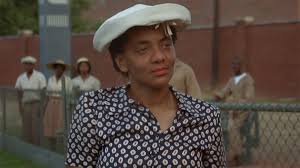
The other woman meets her. She’s small. Slim. But she isn’t in a black and white polka dot dress, or a large-brimmed hat this time. 

Somehow, it’s like what Ray told her when he first came across Shoeless Joe, and the others. Dottie can almost see the stats appear in her mind in a nice and neat bloc.

G –  228

R – 136

BA – .273

G by POS – RP-150

Pitcher. Second-Fielder. Outfielder. A 33-8 win-loss record over three years. She knows this. Now.

It’d been broad daylight when they’d first met. Now, it is a night lit up by the lights and the magic of this small ballfield. She wears a striped uniform with a C emblazoned on it surrounding the word “chicks.”

The Steel City Chicks.

For a few moments, Dottie feels stupid. Of course, she would have had a team of her own. It just wouldn’t have been recognized by the League. She didn’t need the Peaches or the Belles. She, and her teammates, had been fighting their own battle. It was a shame it took so long, that it literally took life, death, and a miracle to get them all here to where they are – right now – today in what feels like the summer that a part of Dottie never truly left. 

But Dottie resists stretching her jaw. Instead, she extends her hand. The other woman looks at her. She gives her the same level stare, that look of pure confidence, and a steady defiance she had so many years ago back in 1943, segregated by so many things. But they had that moment, when she threw that ball down the yard like thunder and nearly destroyed Ellen Sue’s hand and baseball career.

And then, she takes Dottie’s hand. And when she does, they smile. Now their game can truly begin. 

Out

Jimmy spits non-existent tobacco onto the field, inclining his head to the side out of habit while also grunting as the other players take their leave. None of them stay, not even the grey, shadowy shapes that sometimes loiter on the turf. There aren’t many of those anymore, to be fair, as Jackson told them the owner – Kinsella – never really stops recruiting. 

It’s rough, though. They’d been playing all day, and it was time to go home, Jimmy guessed. Even Bob Feller wouldn’t bat for a pitch. Still, Jimmy knows he can’t explain. He feels tall, his shoulders broad, and he fits in his old Cubs uniform despite all the years he left behind in ‘87. Hell, his damn uniform was actually crisp white – ignoring all the dirt and sweat from under the sun. But he’s standing up straight, feels all square-jawed, and he can actually breathe again. Practically All-American, as Mom used to say. Or one of his wives. 

The floodlights are pretty good. The grass, and the stalks around the field rustle in the wind on this warm summer night as he picks up the ball. Between that, and the bleachers, and the tractor that comes through every once and a while, there isn’t much else that’s mechanical. Definitely nothing like a pitching machine. 

Out of all the things in his former life, Jimmy never thought he’d miss a pitching machine, especially not with Bob and Jackson, and Ruth, and only God knew who else around these parts. But here he is. He takes the ball, and he throws it up into the air. Then, he puts both hands on his bat, swinging back, and striking the thing out into the farthest depths of the field. He crouches, and he can feel the difference as he puts his whole body into it. 

A great thing, feeling cartilage in his knee again. All he had to do was pretty much just die for it. 

He shakes his head under his helmet. He walks past the bases, and picks up another ball. Fellas should’ve cleaned up, but he basically volunteered to do the rest. He feels uneasy. He shouldn’t. He should feel great. He does feel great. Amazing even. But as he throws the ball, and hits it again, he feels something else that’s been at him this entire day. Something – someone – is watching him. Like eyes across the bar room. Or … something else. Something that feels familiar, but he lost the name.

Like a ball he just barely grazed that could’ve been a home run that he’d never had. 

Fucking sentimental hogwash. He tried to shout that kind of junk out of the Peaches. Out of his girls. He hasn’t seen them here. Jimmy’s not sure if he’s disappointed, or happy. Maybe they’ll never come here. Maybe God doesn’t have Ladies’ Nights. 

He takes up the ball again, before he notices the shadow.

The strike of the ball against his bat cracks throughout the air, as the figure holds up one hand … and catches the ball. No glove.

Just a bare palm.

Jimmy blinks in the lights. He slowly lowers the bat to his side, fainting tapping his white pants. The shadow was easy not to see in the night, even with the field lights. It is tall. Statuesque. It wears a white short-sleeved uniform, with a red insignia and cap. The uniform is all too familiar, except it is wearing pants. 

The flash of golden ginger hair reminds him of the last late afternoon that he had seen her, before he went off in that bus to his next game, with the rest of his girls, with everything said and left between them. 

“No skirts.” Jimmy points at her legs as he walks up, to meet her in the middle of the field. 

She shrugs, looking at the ball in her hand, before turning up to regard him. “Easier on the legs.” She says. “No scrapes this time.”

“No splits either.” Jimmy shakes his head ruefully. “So much for Heaven.”

“Oh Jimmy.” Dottie says, her lips shaped into a thoughtful pout, a country girl trying not to say something more profane. “You still look like shit.” 

Jimmy scratches his chin. Even now, he still forgets to shave. Or maybe given everything, it never occurs to him that he has to anymore. They’re both trying to be nonchalant, but he sees her flexing her jaw. An old tell if he ever saw one. She looks like she did in her twenties. Like they’d just said goodbye at the bus before going to two separate lives. “And you still look like you eat and breathe this game.”

This time, Dottie looks down. A smile flits at the corners of her lips. “I guess there’s part of me that never really left it.” She manages to glance up at him. By this point, they have closed the distance between space and time, between them.

“You look great.” She says, and somehow they are both back in ‘43 in front of the pitching machine where she is picking up. ”You look like you can still go.”

“I was locked in.” Jimmy doesn’t know why he said it, but it makes sense. 

There is a moment of quiet between them. 

“I thought you liked me.”

Jimmy never thought he’d hear those words again. He’d heard them every day of the week, all the way until the day his liver and his lungs couldn’t take it anymore. He’d told her that he’d tripped. It’d been ridiculous. Pathetic. An old drunk womanizer’s excuses, a disappointing shell of at least a decent ballplayer. The truth was, he’d tripped, and fell. And he’d been falling for a long time. And he’d kept falling, plummeting for what seemed like forever before he saw what the Peaches could do. And what she actually was. 

“I did.” Jimmy wants to believe that it’s just his throat remembering what it was like to be choked up by tobacco, or just dust. “That was the problem.” 

He doesn’t look at her. He’d made his decisions. She’d made hers. But damn. At least he said it this time. Then, she is right up to him. He feels a tap against his chest. He looks down and sees her hand, curled around the baseball, pressed against his uniform. 

“Out.” She whispers, softly. 

Seeing her reminds him of that pure and clean feeling of doing something right. Something that he’d been born to do. To act. It wasn’t just that she embodied it. She felt it too. 

“I call foul.” He grumbles, without any rancor.

She puts a hand on his arm. “Maybe we should get a proper judgment call.”

“Maybe we should.” Jimmy chuckles. “But we know those umps are paid off anyway.” For a few moments, he stares back at the bleachers. And, somehow, he knows. He just does. She doesn’t look. She doesn’t have to. “Maybe we’ll have better luck with the Commish.”

*

Dottie Hinson sits on the bleachers as she watches them.

She’d only even seen Jimmy Dugan this young on a playing card. It makes her happy to see him standing up tall, and proud. He walks and moves smoothly, without his usual limping gait. And then, she saw the shadow of the figure in the field come into the light. 

Dottie doesn’t know what to think of seeing her younger self, in that modified Rockford Peaches uniform, talking with a Jimmy in his prime, a man not run down by life and his own terrible choices, and her – her not a mother yet, or a grandmother. 

“May I?”

Dottie turns her head slightly. Ray Kinsella is standing next to her on the stands, his hands in his pockets. The young farmer and owner of the field, squints down at the sight of the two figures. Dottie chuckles, shaking her head. She almost catches herself trying to pop her jaw. She nods to him. “Were there too many redheads at dinner for you?”

“Surrounded by them.” Ray laughs. “Nothing I’m not used to by now.”

It’s true. Dottie has seen Ray’s wife and brother-in-law, as well as his daughter Karin. But her daughter, and grandchildren, her sister and her own grandchildren are something else. They’d paid a nice twenty dollars for their ticket, which also included room and board for their stay. And Annie made a mean meal. 

She doesn’t have to look at Ray, to see that he knows what’s going on. “Has this happened before?”

Ray sighs. “Not often. Apart from Doc Graham, well, I told you about that. It happened outside of the field first. He followed us here. But yeah. There was one other time. Almost like this”

Dottie’s eyes narrow at the two meeting down below. “And?”

There is a pause. “Do you see the mound down deep left field?” 

“Yes.” Dottie hadn’t been sure, originally, what the plot of land had been in this strange baseball diamond in the middle of an Iowa farm, but now she already has a better idea.

“That’s Kid’s.” He looks at her. “Eddie Scissons. He called himself the oldest Chicago Cub.”

Dottie’s brow furrows, trying to remember while also focusing on the tableaux below them. “I don’t think I know him. Jimmy never talked about him …”

“He wouldn’t have known him. At least, I don’t think.” Ray rubs at his eyes. “I still don’t entirely know how it works.”

“I found out about your field through Mae. Mae Mordabito.” Mae had always been wild, but it hadn’t been until much later that Dottie realized just how superstitious, or into the occult that her former teammate had really been. “She’d read about you from Terrence Mann’s Shoeless Joe.” 

Ray laughs. “He really did it. I knew he would.”

“So.” Dottie says. “What does this mean?”

“I … honestly don’t know.” She gives him a glance. “The announcer, or whoever, the voice isn’t saying anything. Do you hear anything?” 

Dottie thinks about telling him that while she might be old, she’s not hearing voices yet. She shakes her head.

Ray rests his hands on his knees. “Eddie … He might have had more to do. Maybe …”

“He had some regrets?” She turns her gaze back to the ghosts of Jimmy and herself. And she thinks about it. “Is that what happened to him?”

“I don’t know.” Ray admits. “I think … we all, all of us, get something from the field. From the game. And I think it’s just between us, and the land.”

Dottie considers Ray’s words, the sight below them, and how she feels about it. Cooperstown had been a year ago. 1988 made her face a lot of what she had been doing, and who she had been in 1943. She’d almost not gone. She had tried to convince herself it hadn’t been important. But it was. All of it had been. It was how she reunited with her sister. With her friends. With her memories.

All of her memories. 

She sees the younger Dottie tap Jimmy in the chest with the ball. She can’t hear much of anything that they say, but she can figure out enough. No one knows yet, except Kit and her daughter. Bob passed about a year ago. She had lived a full long life with him, and she didn’t regret a single thing. Not for their offspring or their grandkids. When she went – and she would – she would be with him. 

But there would always be a part of her, deeply, intrinsically, spiritually, that was baseball. And Jimmy was also baseball. She smiles at him, at that young man he was and is now acknowledging her. And as she watches that part of her, that Dottie, free of responsibility and fear and anxiety taking Jimmy Dugan’s hand in hers, as they move through the corn stalks and vanish from view, a strange peace fills her that she didn’t know she needed. Something had told her to make this trip: a long trek from Oregon to Iowa for what could have been some tourist kitsch due to a metaphysical book from a former free love author. Now she can enjoy the rest of the time she has left. Now that part of her can truly move on.

Dottie slowly gets up. She waves Ray off as he attempts to help her. “Let’s go back inside.” She tells him. “My grandkids will be wondering about me. And Kit will want details. Otherwise she will never let me live it down.”

And while Dottie remembers, even now, that there is no crying in baseball there is still plenty of space to smile about it. 

14: Alternative Facts: Body Politik


But see, amid the mimic rout,
A crawling shape intrude!
A blood-red thing that writhes from out
The scenic solitude!
It writhes!—it writhes!—with mortal pangs
The mimes become its food,
And seraphs sob at vermin fangs
In human gore imbued.

– Edgar Allan Poe, “The Conqueror Worm”

It’s Aft-Hallows. The treats are tallied. The white sheets pulled away.

The masks come off. 

It’s been many cycles since I searched the Freed Dome for that re-image. For that lost word. I walked through many Governs, Festives, and sub-cultics trying to find it.

Trying to find the true face of Amarak.

I’ve been gone long, deep into the Interface, deeper into the Land. And still, I didn’t know how one word would lead on, to the place of the Interregnum, and the heart of ultimate divise, of the Second Great Disunity. 

My parens always told me to bury the plague-bare. To avoid the Nats. A commonsensical. The Nats, the Novax, helped the Disunity. Ended the Disunity. But did they?

What is sickness? Is it just the body, or gleaning itself? So many words from so many places in the knowing space in my head now. The Rangers in the Badlands had a secret. Many secrets. In their Interface, sep and divise from the Repolitik, I saw a legend. 

The scholars of the Freed Dome Collective said that the Forty-Fourth Precedent was the last. But there was word of Forty-Six. Fore the Novax, the legend says, they said Two Teeth held Amarak, barely, two pinpricks of an old man. Two teeth, and four, keeping back the blood red tide. An in-oculate, a grafting, against disease. The Predicts say two women could have saved the Politik, fore and aft.

That was when the Novax came. The true Novax.

They did not see. They refused to see anything.

There is another view. We never had Precedents. Only Presents. A Forty-Sixth Present of the Demos, beyond the Forty-Fourth,  tried to save us from the sickness coming. But the Land has always been tough soil. Tangled. Twisting. A morass. The Repos, and their Fiefs and their Barrons called our Land a Swamp. And they never fallow, but always grow it. Ever-growing cycles. Revolves. That seeming’s that Aft-Hallows has always been a Colour Revolve: an Orange Revolve that tried to rule Time. One look between the veils, a moment, a box opening is and isn’t, death and non-death … 

And then, no more Present.

The Rangers have an old saying. When the death birds fly, they make no eggs. They also have another saying: the Orange Revolve is always led by Red Caps. The Freed Dome Collective is fallen. The Tripartite squabbles. Secret festives. Opportunes. Eagle-Eyes everywhere. The Interface compromises. The factions are occupied. It is only the start.

I think about what I gleaned about the Nats, and the Novax. And I see. It has never been Nats. You can’t run from something that isn’t there. And the Novax isn’t just sickness. It isn’t only a disease. Two Teeth cleaved the red deep under the binding of the blue, but it could only do so much agont the rot underneath. Agon the maggots. There is no cure, no in-occulate for the chronic Revolve. Death’s greed for life. For hate. 

And this answers my query. We didn’t know. We did not learn. There was no Present during the Interregnum. No real Present Aft. There is no real Present now. Just Ever-Now, for Amarak. 

(C) Matthew Kirshenblatt, 2025.

Fuck the Box: Greta Gerwig’s Barbie

If anyone told me that, one day, I would be writing something about Barbie I wouldn’t have believed them. Barbie was something that little girls played with, while boys of my generation had action figures like G.I. Joe, and Teenage Mutant Ninja Turtles instead. In the 1980s and 90s, if you were a child you mostly lived under this gender binary of a socialization of play, and toys. Barbie was pink, hyper and even stereotypically feminine, and seemed like playing house.

Mattel created Barbie, and produced her, her companions, and her accessories even though the company also made many other toys built for children of all genders. Mattel, as a toy company, wants to sell more of its products so that it can make more money. It recognizes social and political trends, even economic changes, and adapts Barbie and presumably its other toys accordingly. And the Barbie film is another vehicle, another accessory, by which this corporate entity can continue to do exactly that: make a profit. Warner Brothers cooperated with Mattel to also make money, and together they made a power ad campaign for the movie, and everything that comes after it.

And then, you have the big names working in this film. The insanely skilled Margot Robbie as Barbie, of course, Ryan Gosling as Ken, even Kate McKinnon’s Weird Barbie, kick ass Michael Cera as Alan, and so many others bring a presence to the movie, and make people want to see what happens. And Greta Gerwig herself, the director of the movie, is a well known independent filmmaker who wants to make a story about girls, and women, and their place in the world. 

I wrote a Letterboxd review of Barbie a while back, and while I feel like I captured a lot of initial thoughts, I’ve time to think about a lot of other elements and while my score – namely, three and half parties out of five – will remain the same, I feel like there is more to say. 

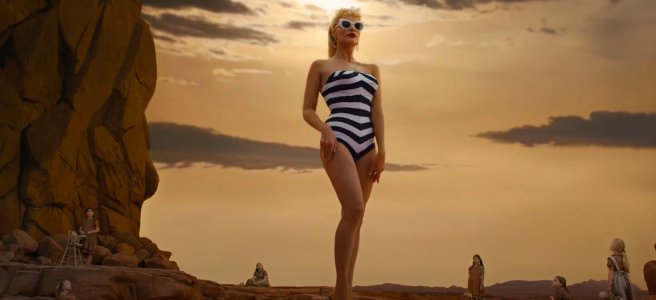
In my original review, I wrote that Gerwig, not unlike Barbie herself, walks like a ballerina – on her tiptoes – on a tight-rope between telling an independent feminist story, and working with the Mattel corporation. At the same time, there is that even thinner line between the esoteric, almost Pee-Wee’s Playhouse reality of Barbieland, and a commentary of our capitalist, consumerist patriarchal world. When you look at Gerwig’s depiction of Barbieland, it is a mystical and mythological place. Barbie is Wonder Woman, having not been born through the flesh of men and women, but as an artificial being made by another species in another plane of existence. She comes to Man’s World, or Los Angeles, and she represents her world of Paradise Island or Barbieland. As Margot Robbie portrays her, she is naive about Los Angeles or the rest of the human world, but she is intelligent and capable such as her punching out the man who slaps her ass, and when she escapes being put into a box. Amazons themselves, as they were originally made by William Moulton Marston, would lose their powers – and Wonder Woman herself would do so – if they let themselves be bound. And Barbie knows this on an intrinsic level, which is why she runs, and goes to the liminal spaces in the corporation of Mattel – an even more pronounced plane of Patriarch’s World – to get out of there, and find the spirit of her creator Ruth Handler: perhaps her Hippolyta, or one of the goddesses.

Barbie is innocent and blissfully ignorant of her gifts and existence before the Outside World – and her owner’s thoughts, intrude on her: changing her, making her graceful, floating, tip-toe feet flat and subjected to the humiliation of gravity, along with the cellulite of her skin instead of the perfection of plastic. At the same time, her Lasso of Truth is what Gloria, essentially her owner and an employee of Mattel drawing sketches of her, or versions of her, gives her when she reveals the maddening and ridiculously contradicting expectations of patriarchy for women, and towards the tools to which inform women’s – and girls’ – socialization: namely dolls. Namely Barbie. 

The metaphor gets tortured the more I write it, but you get the idea. Others have compared Gerwig’s Barbie and its existential situation to Adam and Eve eating from the Tree of Knowledge of Good and Evil, instead of the intrinsic immortality of plastic. This is a parallel made by Alissa Wilkinson in her Vox article In the beginning, there was Barbie, and it matches another mythological interpretation in the form of Barbie being the goddess of love and war Inanna with her trip to the Underworld and back in Meg Elison’s “Barbie” is the new Inanna. The ideas behind Barbie are old, just as dolls were arguably created to educate girls to become mothers for generations before – as the film does through its tribute (and not a rip-off) to Kubrick’s 2001 – so too does Barbie demonstrate the potential to become more than a potential mother, but that, and being beautiful, intelligent, and capable as one’s self as well. 

But Gerwig also manages to illustrate the problematic elements behind this idea as well, though navigating those meta-fictional layers can be tricky, and I nearly got lost in them. The Barbies of Barbieland are expected to be all things, all at once, all the time. Because they are not human and have no biological needs, perhaps they can do that but it is telling that when Ken comes back from Los Angeles with “patriarchy,” many of the Barbies go along with this overt version of it because it allows them to “relax” and “not think,” or “do anything,” for a while. There is a lot to be explored there, especially whether or not the Barbies were already under patriarchy by the nature of them being plastic and perfect, and partying and just having to be played with and playing at being independent, and nothing more before Barbie and Ken ever went on their journey. 

It is pretty telling that the film’s version of Mattel’s Board of Directors were desperate in keeping both the inhabitants of Barbieland out of the human world, and the human world from getting in there. As Ken is traveling through Los Angeles, he encounters a businessman who all but tells him that patriarchy’s greatest trick in their world is seeming like it has changed, but operating “behind the scenes,” appropriating the tokens of diversity and representation but using them as decorations or, again, accessories while business continues on as usual. The reason why Mattel in the film doesn’t want anything to change, even when Ken’s changes to to Barbieland into “Kenland” still sells toys, is that people will catch on that they are being overtly patriarchal, the Kens’ behaviour over the Barbies will be seen and questioned by girls and mothers. They want the dream to remain the same. They want the seeming of freedom to continue so that they continue making toys, making money, and keeping them – and the systems that they support in the human world – in control. Will Ferrel as the Mattel CEO wants to remain “Mother” and keep co-opting maternal and feminist icons for himself, and the company no matter the cost. 

So it is a good thing that Gloria and her daughter Sasha, as obnoxious as a teenage child can be, go back with Barbie and represent the women that Barbieland has influenced: to the place that they also influence.

I think the strongest part of the world-building that Gerwig creates is also one of its most vulnerable elements. The idea that Barbieland and the human world are planes that influence each other is great, but it is never explained how Barbieland came to be, and how these walking plastic dreams can actually crossover in this version of our world. The idea that a Barbie doll’s owner can influence them, and vice-versa is also inspired but it’s never explored just how far this goes, or if a doll can be affected by a generation of owners. I honestly believed that the twist of the whole film would have been that Barbie thought that Sasha had been her owner, only to realize that those memories of a girl playing with her weren’t of Sasha but a child version of Gloria who grew up, and was working for Mattel. I still think this was a missed opportunity, and could have led to more character development for Gloria and Sasha, as well as reinforcing that lesson Barbie had earlier about human mortality when she saw an old woman for the first time sitting on a bench, under a tree, confident in where she is in her life. I thought that was the foreshadowing there about Barbie not understanding human aging and frailty, and I think it is still a missed opportunity.

The film itself has many glib and clever moments, and scenes of grace too. For every madcap reference to the Barbie dolls being animated toys, there are statements about men talking too much about Zack Snyder’s Justice League Cut and Kubrick, and Barbie meeting her maker. And I don’t care what anyone says: Barbie being having feminist speeches is not a disingenuous thing that Mattel and Warner Brothers’ advertisements lied about. From the very beginning, we knew this wasn’t going to be a light romp in the park. Once you have a children’s doll in a children’s doll party asking “do you ever think about death,” Pandora’s Jar of pretty paper worms will spring open. If no one knew there were going to be serious nuances and poignancies to Barbie, they obviously were not paying attention. 

This isn’t a children’s film, even though it uses children’s things to tell the story. Does it do it well? For the most part, though it can get awkward at times. For example, what are the purposes of the Kens, and how do they work into the world of Barbieland, and the meta-narrative outside of it? Are the Kens the oppressed minority or the other half of the population? Are they representative of the self-entitled little boys, and Peter Pans, that men are supposed to be in our world? Did Ken, as an individual, have some genuine grievances in how he was treated but took matters too far in “correcting them,” to a point where once he knew patriarchy wasn’t about “horses” adding more to men’s shapes, he wanted to stop but he enacted a force he couldn’t control and committed his ego to something to the point where he was in far too deep to walk away? Are the Kens symbolic of the Trump regime and Supreme Court presence that overturned Roe v. Wade, or are they a class of people that will “one day get the same representation that women do in our world?” Perhaps the Kens exist, as accessories to Barbie on a good day, and also as silly mirrors to show men how dangerously ridiculous patriarchy actually is.

Is it true that once you take something out of the box, it is extremely difficult to put it back in again? Is it even all but impossible? Jars are similar to lamps, and lamps contain genies or jinn that grant powerful wishes – or dangerous wish fulfillment if you think about Patty Jenkins’ Wonder Woman 1984 –  and boxes have another derogatory connotation that patriarchy has associated with women’s bodies and genitalia. And while Barbie, in most of the film, doesn’t have human functions, the fact that Mattel’s Board of Directors wanted to put her back into the box, reducing her back into her “basic function,” speaks volumes.

Barbie is intellectual property, but also an idea. She’s both Athene bursting from the head of Zeus after he tries to eat Metis, but also Aphrodite who is both Zeus’ daughter, but somehow also the creation of the severed phallus of his grandfather Ouranos fallen into the primordial waters. Ruth Handler did create Barbie in 1959, but she was inspired to make her by the German doll Bild Lilli: the patents and copyrights of which were all bought later by Mattel in 1964, and therefore phasing Lilli out in favour of Barbie. Lilli is like Lilith, Adam’s legendary first wife, in that she was a character created with the Bild, with a newspaper, with knowledge lost while Mattel created a strange and disturbing version of Barbie’s friend Midge who was pregnant, and whose body and child could be taken apart not unlike the apocrypha of Adam watching his second wife be created by God. And Ken is the extension of Barbie just as Eve was made from the rib of Adam. Then Margot Robbie’s Barbie sees the truth of life by watching an old woman sitting under a tree, and later she gives her own plastic near-immortality to become Barbara Handler: the spiritual daughter of Ruth.  

Like I said, there are many layers to Gerwig’s film, even if sometimes it can be a bit all over the place and lost in the spectacle of slapstick comedy, and sometimes childlike fantasy. I feel like it could have become far more grim, but Mattel would not allow for that as, again, they want to sell toys to children. So what does this film say? I would argue that, as I mentioned in my Letterboxd review, that Barbie is consumerism talking about itself, while also critiquing itself and its patriarchal origins, and what it influences at the same time. Gerwig takes great pains to have Gloria and Sasha not only debate about Barbie disappointing and even representing fascism or a destruction of feminist progress to women, but how just as men have unrealistic expectations of women, women internalize unattainable perspectives on women, and treat each other badly, and that this is something they need to work on.

Does Barbie represent feminism? Or a form of feminism? Is it a form of token feminism exploited by capitalism or something not unlike LGBTQ+ issues of pinkwashing or rainbow capitalism: representing itself as enlightened while ignoring or continuing to promote structures of inequality and systemic abuse? Does it represent a form of women’s cinema, or a discussion on cinema as well? With the references to Kubrick and Snyder aside as male fans of their works mansplaining cinema to women, I particularly resonate with director Anna Biller’s thoughts on the matter. In a series of Tweets, she looks at the seeming contradiction between an independent female film auteur’s perspective and vision and its relation to having heavy corporate backing and influence. Or as Biller puts it: “The marketing, conflating indie auteur films with a hyper-corporate product, makes me a bit queasy, but I suppose this is what they were going for: the message that women’s cinema is as serious as film bro cinema.”

Barbie, for all of its visualizations of representation and diversity, still has problematic elements when you consider the capitalism involved, and even its own growing pains: with Handler having taken another design, and then her company buying it out years later, Handler and her husband leaving their company under criminal financial accusations, and leaving it all to mostly male directors for years. But it’s okay that it’s problematic. Nothing is perfect. That is the point, I feel. Gerwig’s film seems to say that it’s all right that Barbie isn’t perfect. That hard work isn’t effortless. That progress isn’t a linear process. Perhaps Barbieland is like some kind of ancient Mediterranean Dreamland,  or a Sybil’s Underworld as written by Virgil: a plane where the past and future, where what was and what will be, exist simultaneously. Maybe nothing changed after the Revolution of the Kens and the Barbies taking back their world: basically restoring their Party. Perhaps Barbies will still tip-toe around like ballerinas tapping empty cups to their faces, plastic books with nothing in them, looking at already made artificial pancakes, turning on invisible showers, and floating everywhere without the need for gravity, for shitting, for pissing, for digestion, or sleep, or sex. Maybe for all Barbieland says it will change, it will remain behind that Gate of Ivory, and stay the same. Perhaps our world is no different and just an extension of believing in these false dreams. Or perhaps it’s something that everyone in Barbieland are standing on the same ground, and actually talking about things now: even the Kens who will have lower court positions, and get to wear ridiculous robes.

And as for Barbie? Like Pinnochio, or Giselle in Enchanted, or Evelyn from Everything, Everywhere All At Once who believed she was the greatest failure of all the aspects of herself, of the Barbies, she exits the Dreamland through the Gate of Horn – of truths – and becomes real. She’s become flawed, complex, fallible. Her journey here isn’t perfect, just as this film is not. Maybe she represents an uncertain future, scary and messy, but inevitable. And just like Margot Robbie’s Barbie, Greta Gerwig’s film – madness and all – might, and as others hope, will be its own gateway to tell other prominent women’s stories in glorious colour.

I began this writing by saying I never understood Barbie growing up, and perhaps it’s not so much what Barbie is as a story, or even a film that’s important, but working with the elements of what girls and those that have grown up with it know, Greta Gerwig makes something that can represent the potential of more. Because at the end of the day, playing house isn’t a bad thing. And there is definitely nothing wrong with being feminine in any form. And there is nothing abnormal about the colour pink. Perhaps, as Aqua said it best in their song “Barbie Girl:” it’s all “Imagination. Life is your creation. C’mon Barbie, let’s go party …” 

What I Meant to Send: ElfQuest

So Richard and Wendy Pini have been sending out an email newsletter for a while called “matter of oPINIon”: where they talk about ElfQuest retrospectives and current news in the world of Abode. But what they also do is encourage comments and discussions, as well as feedback that they will sometimes share in future newsletters.

I was fortunate to get a part of my letter reprinted.


Please forgive how small this is. WordPress’ layout has changed over time, and this is the best I could manually enlarge this. But this made my morning. But what I want to add is that there was more to this message, and I would very much like to share with you what I Sent. Perhaps there are other Elves out there that might share Recognition with my words. The topic was called “What If.”

This is what I meant to Send.

Hello Richard and Wendy:

I love “What Ifs.” So many of my own stories started from What Ifs. So in honour of your speculations, let me tell you about what my life would have been like without ElfQuest: if the comic came out in 2023 instead of 1978. Well, for starters, I would never have heard of Two Moons. There would have been no mention of it in Piers Anthony’s Xanth, and there would have been no Jenny Elf and she might have written to Anthony making herself into another kind of Elf that did not know Sending, or Recognition. 

Then, after the Nineties in the early aughts, I would have never seen the ElfQuest Archives at Cyber City Comics and contemplated buying those pricey, beautiful volumes in the late afternoon sunlight. The strange American Eighties style cartoons reminiscent of the days of Smurfs, Ewoks, Gummy Bears, and Teddy Ruxpin married to the manga style of Astro Boy and The Little Prince would not have stayed in the corners of my mind save only from my childhood. 

But, more importantly, in the ’10s — after my University unenrolled me from my part-time studies and wouldn’t release my student loan, when I was still living on campus as a Graduate student of York University’s Humanities Program in Canada, I would have gone to Seneca College and bought Mark Millar and Tommy Lee Edwards’ Marvel 1985 at a comics sale stand: regaling myself with Marvel’s villains unleashing themselves in the real world while a young boy is the only one that can stop them, and potentially made the whole thing happen. Toby was a lost boy, who later in other stories becomes a reality-destroying villain himself. That is the story I would have been reading in my apartment, with the last bit of my free money, had ElfQuest Archives Volume 1 not been there, and made me realize that it inspired Jenny the Elf from Xanth, and had themes of polyamory and non-monogamy that were — and are — quite relevant to my life at that time. I would never have written years later, When I Recognized Elfquest for my Mythic Bios, or When I Found “The Heart’s Way” in the World of Two Moons for Sequart: because “The Heart’s Way” was the moment where the wonder of my past imagination, and the present of my love and intimate life intersected. I would have had to discover feeling seen, being represented, in smaller web comics. In fact, the closest I would have come to knowing Sending and Recognition in Elfquest and the Wolfriders would have been grokking and water brotherhood from Robert A. Heinlein’s Stranger in a Strange Land

And I think, by the time ElfQuest came about in in this alternative 2023, I would have seen Steven Universe and thought it influenced by that cartoon by Rebecca Sugar: the LGBTQ+ Fraggle Rock of this generation, and perhaps it’d be more futuristic and start out with Jink as the protagonist discovering a world where immortals once crashed and found prejudice, but for a time found adaptation with the wolves … where she is hoping to find her way from the fragments left, and the strange people she encounters while teleporting in strange, short distances seemingly without patterns here and there. Perhaps it would have best mirrored how I feel in my own life right now. 

So many speculations. As Wendy posed to Stan Lee with regards to how the Silver Surfer views humanity and other sentients, perhaps Jinks’ futuristic grittier world wouldn’t have been so bad, and she wouldn’t be — and isn’t — so lost. There is still wonder. Still friends to make. Still adventures to have. I think I would have liked that 2023 world. But I appreciate this one more, on this facet of the multiverse. 

Sending much love.

— Matthew Kirshenblatt


A Jewish Neurodivergent Looks At Lovecraft

This is one of my few Reblogs on both my Mythic Bios and my Horror Doctor Blogs. Bobby Derie of Deep Cuts is a brilliant Lovecraft scholar and creative writer in his own right. Out of everyone in my Haunted Library on my Horror Doctor Blog, he is the only one aside from Darcy the Mailgirl (or Diana Prince), and even to some extent Joe Bob Briggs himself of which I have any interaction.

I came into contact with Bobby through the Commentaries on Facts in the Case of Alan Moore’s Providence, and I have not looked back since. He is the first person to not only publish a horror article of mine, but also to pay me for the privilege. It means a lot to me. I never thought I would write an article, back in the day, focusing on my interaction with Lovecraft as someone of Jewish background and neurodivergence. I was so focused on “passing” back in the day, of not seeming like too much of a freak, that I would never have considered it. But even if sometimes I feel some chagrin, and even awkward self-consciousness at what I wrote here, it is all true and what is embarrassment over a human life in the grand scheme of cosmicism, and interacting with so amazing and terrifying a universal view?

I hope you enjoy reading this as much as I did writing and rewriting, and adding to it myself with Bobby’s help. With strange aeons, my friends.

greyirish's avatarDeep Cuts in a Lovecraftian Vein

A Jewish Neurodivergent Looks At Lovecraft
by Matthew Kirshenblatt

The population [of New York City] is a mongrel herd with repulsive Mongoloid Jews in the visible majority, and the coarse faces and bad manners eventually come to wear on one so unbearably that one feels like punching every god damn bastard in sight.
H. P. Lovecraft to J. Vernon Shea, 19 Nov 1931, Letters to J. Vernon Shea et al. 81

I have mixed feelings about H.P. Lovecraft. I remember when I was an adolescent seeing his works in bookstores, and wondering just what kind of writer would have a last name such as his. As I got older and more fascinated with horror I just assumed that Lovecraft was a writer that focused on murder and the macabre, not unlike Edgar Allan Poe. This quaint idea was challenged when I began to encounter the idea of Cthulhu in…

View original post 2,985 more words

Stolen Worlds, Instagram Hacked, and Accountability

You’ve seen these articles around the Internet for some years now. How successful they’ve been in dealing with this matter, I can’t even imagine, and I wouldn’t venture to guess. But sometimes I think there is a place for constructive thoughts, and then a place for venting – and more specifically, a public space to bring a long-standing issue to attention. 

My Instagram got hacked. 

It’s so mundane. So banal. But it’s true. On April 2, I just woke up and a friend of mine messaged me on the platform and wanted help with being voted for an influencer. It seemed pretty legitimate, even though in retrospect it was a formulaic thing. What I didn’t know was that their account had been hacked, and that they basically phished me. 

As a result, they logged me out of my account and took it over. They also enabled Two-Step Authentication and, ingeniously, they deactivated my account and then reactivated and renamed it with a downward hyphen so as to completely eliminate my ability to revert my email back to my account. Basically, what this hacker did – from my understanding and reading up on the subject – was they used a bug in the system to make sure Instagram’s system that would allow me to switch the email back to my account didn’t work. The link simply failed. This was not even fifteen minutes into realizing what happened. 

They switched our phone numbers. They enabled Two-Step authentication. And then they proceeded to use my likewise, like a parasite, like a thief, to try to sell bitcoin to my friends and followers, and also attempt to trick them into giving them their accounts as well. And believe me, I heard about it. I was told by many people, who hadn’t or didn’t read my updates, that my account got hacked.

So, obviously, I informed Instagram about it, and they authenticated me, and got it back for me in one or two days right? You know, once I told them their reversion email link didn’t work. 

Yeah. About that …

If this has happened to you, or you know someone who’s gone through this, you probably know what happened next. Or what didn’t.

When I couldn’t find the second set of security numbers for the Two-Step Authentication the hacker set up, I went to click on another way to get the information. It, of course, linked me right back to the Help Center. The Help Center is a FAQ, that basically tells you what to do, in something of a paradoxical feedback loop that basically amounts to: ask for Support, which is what I did the first couple of times. 

Eventually, I found a way to do Video Authentication. I moved my face to the left, right, up and down, and back again. The first time I did it, I heard nothing back from Instagram in two days. The rest of the times I did this, repeatedly? They “couldn’t confirm” my information. I read that perhaps it was the lighting behind the picture that was the issue, but the actual problem itself is more endemic. The thing is, on the Help Center itself, it is even admitted that Instagram has “no facial recognition software.” In other words, the only way this video will even be acknowledged is by a bot they made, or a systems operator: an actual human being. 

You cannot email Instagram. You cannot phone them either or, rather, you can but they will not transfer your call to a living, organic person. And they will always take you back to the Help Center, which will take you back to the steps that you performed, and that rejected you. At one point, I was able to receive emails from my Instagram account and I tried to reset the password. I kept receiving these emails or friend requests, as though the hacked account itself was mocking me, laughing at me at the activity being shown, but with no available way for me to enter it again. It was getting under my skin.

I found a way to contact Facebook by explaining that my account was hacked. Facebook – or Meta – owns Instagram, and they told me to write some numbers they sent me on a piece of paper, with my name and user name, and send it back to them as a JPEG. I did that. They didn’t contact me for two days. I sent it again. They replied by … you guessed it: sending me back to the Help Center, which is a lot like the Muppet’s Happiness Hotel: in that I wish I could run away from it in the middle of the night, and it scares me to think about what the Sadness Hotel might look like. 

It’s been almost a month. I had my friends and followers Report the account to Instagram. Apparently you need over ten reports to get them to look into the matter systemically. I say apparently because originally I thought after over ten, the account would get locked down, and deleted. I suppose I was wrong, as to this very day my former account is still active and attempting to spread bitcoin and phishes all the way up the wazoo: using my likeness with my links to my writing, my online presence, and this very Blog to do so. 

I think about it, after I eventually put Instagram’s emails to my address into Spam from my former account. All of this could have been avoided if a flesh and blood, live person existed for customer service, like every other organization possesses. This would have been intolerable for a bank. Or any other business. Now, the thing is, a lot of people will add: well, Matthew Instagram is a free service, and you get what you pay for – which is nothing. What did you expect?

And I will tell you, right off the bat, that Instagram is paid for by something. Ad revenue, financial backing, a whole ton of resources and methods I lack the ability or acumen or really the patience to lay out. But someone, or something, funds Instagram, and Facebook, and every free social media platform. And it markets itself as being convenient, free, and accessible. And only two of these qualities, I’ve found, are true. 

Don’t misunderstand. What the hacker did to me was wrong. It was thievery. It was manipulation, and theft. But Instagram’s inability, or systemic apathy in dealing with the issue – which could have been resolved if I’d been able to interact with a living person who could have easily determined I was a living being and not a non-sapient robot – is just as responsible, if not more so for this entire state of affairs. The utter lack of accountability here is not only infuriating, but it is frightening.

Think about it: you are using a free program online, or even a paid one with a Terms of Service that is arcane and would take a legal expert to even begin to fully understand. One day, you get hacked. And you realize that, unlike a bank or business that would shut that down almost immediately and get you to confirm changes in details, you are shut out. You can’t contact Support by email. You can’t phone them. You are utterly stuck. The best you can do is keep Reporting them, or attempt to persist in verifying yourself over, and over, and over again only to have some arbitrary system not be able to confirm your identity when you know that all you need is one person – one staff member – to simply see you move and hold a number – and it would be over. Just like that. 

And if you know someone at Instagram, or Facebook, or you are a major influencer, you might have a chance. And there is nothing fair, or accessible about that. But what troubles me more is while the images I have, and the interactions I’ve had with my friends and followers on there mean a lot to me, it’s the utter lack of following up on Reporting problematic accounts that gets to me. The day that account got over ten complaints should have been the end of it. I would have settled for having that account deleted. Hell, if a nipple had appeared in my images on that account, I am pretty sure Instagram would have neutralized it almost immediately. At one point, when I still owned it – before it was stolen from me – I was having a comments discussion exchanging Scott Pilgrim quotes with a dear friend of mine, only for Instagram to delete one of my comments because of “hate speech” or “violence.” So basically Instagram’s algorithm is effective in censoring a fictional comment, but when an account gets hacked and spreads malware, phishing, and spam, that is somehow okay?

You’ve, no doubt by now, seen a million of these Instagram hacked articles and all the ways it can – and can’t – be dealt with. I am not providing answers. I am just trying to provide a human face to this, and perhaps even show someone working for Instagram the frustration, and the price involved when someone exploits this system, and no one takes steps to deal with it.

Many of these exploits have existed since 2017, when I’ve looked for similar complaints and solutions online. And those are the ones that I’ve found. How many people just gave up? I have pictures of my grandmother’s things – my grandmother who passed away in October. I have images of friends, family, and loved ones. I have had creators – writers and actors and directors – reference me, and that handle, for some of my writing. My Instagram gradually, and perhaps reluctantly on my part, became a part of my online footprint. I was lucky in that I had a friend who screen-captured all of my contacts and I was able to find them again. Otherwise, I’d not be able to even communicate with them. One person on that platform, a friend of mine, has terminal cancers, and that platform is how we primarily communicated and how I knew about her health. 

I can go on. But I know another fact in this situation. Drawing attention to the fall and corruption of my account, and Instagram’s lack of action in dealing with it, also attracts scavengers. You would not believe how many people on my public social media platforms have suggested “counter-hackers” or names, and phone numbers of people who can “help me” as they admit Instagram will do nothing to help in the situation. Getting those comments are pretty much another form of spam in and of itself. 

For me, it’s a rude awakening. It’s one of those moments when you realize that the Emperor has no clothes. It’s worse than the Myth of Sisyphus or Tantalus where the cycle is more than just one of futility, or even having something valuable inches away from you, only to be taken away. It’s that time when you realize that it isn’t so much that God is dead, as it is that They have never existed in this space, and what you have is a bureaucratic, convoluted labyrinth that leads into itself and nowhere, and you will get lost and helpless there fast. Because this isn’t just Instagram that doesn’t seem to have a systems operator there. No angels. No gods. It’s Facebook too. It’s all of them.

And all it will take is one bad day, one poor decision, one exploit, and the next thing you know you are locked out of something that should be trivial to retrieve again. And, unless you are rich or a legal expert, or popular — or all of the above – you will be outside the doors of the thing you helped create, and you will not be able to get back inside as some criminal trashes everything you made, or uses what’s within to do it to your friends and loved ones. And there is no magistrate. And no justice. There is no authority to help you, and everything almost seems senseless afterwards, with not even a single person with which to vent your anger: making it easy to have your concerns and rage gaslit away. 

What you have is this online world of free applications that do incredible things that have little to no accountability attached to them unless you have the temporal power-base, and backing, to get it back. What should be just a minor inconvenience, can easily become something worse. And as these applications grow in power, and popularity, this lack of accountability while people keep supporting them terrifies me far more than any one hacker ever could. 

So if you are on Instagram, for what it’s worth, Report mkirsh3__. That isn’t my place anymore. The hacker made sure of that through their malicious actions. And Instagram made sure of it too through its negligence and lack of action. Maybe I can get enough attention on my former account, and Instagram, to make a difference: or to make their lives as inconvenient, and as stressful as they’ve made mine. It is infuriating to feel so helpless over something that shouldn’t be that big a deal: but it is.

It is a big deal when someone steals something you made, and uses it to try to steal others’ works as well, and misrepresent you, and use your likeness to do so. They have tried to infiltrate your world, such as it is, online. And Instagram, you had years to fix these exploits, or hire live systems operators. You need to do better. You are not accessible. And this isn’t a bug, it’s a feature. And I hope you will deal with this matter, and so many others, and take the time and responsibility you need to make your platform a better experience for your users. Please, do better. 

And I also hope that everyone else finds a way to make Instagram, and Facebook and other platform entities accountable for their actions, or inactions, with regards to their users.

I have said my piece here. I wish I had a place to Report Instagram or Facebook themselves, but this is the next best thing. Something needs to hold them accountable, or make potential users hesitate before ever using their services. And I’ve done what I could. 

A Life Writing Update

I’m glad I was able to open up with a review on this Blog again, never mind it being something of a short article on superhero media.

It’s been a minute. Or a century.

I just thought it might be nice to sit down with you, those that still follow this Blog where I basically free-wheel my writing, and tell you where I have been these days, where I am planning to go, where I want to be, and possibly where I might go regardless. 

As of this writing, I’m going to be forty soon. I was thirty years old when I first started Mythic Bios, back in 2012. I am not where I wanted to be, then, but to be honest I didn’t exactly know where I was going to be in any case. What can I tell you? Since I began this Blog, inspired by the written notebooks I used to keep – and need to keep again – I got published online, and offline, explored some independent scenes, went to New Orleans, went to a Learning Disabilities Workshop, and explored different parts of my life.

And now we are here, still in the Pandemic, and yet somehow life still goes on.

It’s been challenging. Three shots in, and a Trans-European conflict, several relationships gone, one partner deceased, and finding out things that I like – and don’t like – about myself, and what I’ve done, or haven’t done, and I can say for sure that these two years really haven’t been how I wanted to spend the last of my thirties. 

But I’ve done a lot too.

I created my Horror Doctor Blog, which I have mentioned before, and myself covering Creepshow there a great deal. Some horror luminaries even follow me. I’ve met friends from socializing on social media with fellow fans of Joe Bob Briggs’ The Last Drive-In, and we have watchalongs, and discussions, and even some Twitch streams. I don’t do as much writing as I would like, but I socialize more now even not going out as often anymore, but I feel that is important: to maintain those connections during this time of change. 

And I even submitted a writing about my experience with Lovecraft to Bobby Derie’s Deep-Cuts Blog. There are probably more things I’ve done too, but I think what I want to really write about is on the employment front. 
A few weeks ago, almost a month now, a friend of mine name-dropped me to their video game studio: where I got a chance to submit a Writing Test to become their narrative designer. I spent a good couple of days working with their prompts, choosing a story arc idea, fleshing out the first part of it, and creating items: including weapons, furniture, and armour. Many of these items were two that needed to be combined into three. I came up with a good plot and a twist, and not only submitted it all on time, but even rewrote elements to make the plot and momentum flow better.

Unfortunately, the studio decided to go with another candidate.

I don’t know how many you have been following this Blog long, but I have been trying to gain regular employment as a writer for some time. And eventually, due to time and also the current zeitgeist of the world, I stopped looking regularly. I’ve had some freelancing jobs in the past, but they have not paid much, if anything at all. And I suffer from anxiety and depression. So for me to submit something, and put all that work into having it seen was a big deal, and I felt like the universe was finally going to give me a break.

And that didn’t happen.

It would have been nice to have a remote job doing something that I am genuinely good at, and to have some gainful income. Then afterwards, someone came forward and offered to look at my work, claiming they were also working for a studio. I have not heard back from them, and I will assume that it didn’t work out, but what they did inspire me to do was put together a Writer’s Portfolio: which I have made into a Page on this Blog now. I may modify and change it as I have friends who are generous, and who I have done work for, that might be able to help me make it fancier, or add more detail.

Sometimes, it’s like what they say about North Americans acting like they are temporarily inconvenienced millionaires: that awkward place between musical chairs where you are caught out of it and everyone else has one, but you. Yet I know a lot of us are in the same boat, and some of us for quite some time. At least I have some more experience now, and I have some more of a foundation of things from which to start looking again for what I know in my bones I can do.

In 2019 I started Neil Gaiman’s Masterclass, and I continued it in 2021 despite everything. I stopped at a rewriting assignment, as I hate rewriting but I have been doing it more besides. It’s been a learning curve, and I hope to get back to this so that I can also continue writing the original work I’d talked about ages ago: the series that I was well into before starting that Masterclass, and – well – another phase of life.

There are so many things I want to do, but I am only one person, and my focus has changed. In some ways I can multitask a great deal, as long as they are all different actions. I miss being able to sit with a fanfic, and just spend most if not all my time developing it to where it needs to be. I am not the same person I was when I started this Blog, or even before it. But you know, that’s okay. That is to be expected.

An alien once said that we all change, and they were right. We are all in process. We all lose things along the way, and we gain them too. It’s navigating all of that which is the challenge. I kept meaning to come back, and talk about this. I’ve been both demoralized, but also encouraged. Having hope snatched away, when it was so close again, is infuriating, and tremendously disappointing, but it can also ignite a righteous fury, a determination to do what you need to do, and even a serenity and clarity to slowly find that entry through the hedge maze that you didn’t see before.

The point is, I will continue doing this. And learning from it. It is a struggle, but I am still going. I hope that you will all do the same. Take care all.

Also, here is my Writer’s Portfolio. Please have a look, if you are interested.

Flying Through a Mirror, Cracked: Adi Shankar’s The Guardians of Justice

A long time ago, I read a story by Grant Morrison in his Lovely Biscuits collection called “I am a Policeman.” The short fiction is prose reading like some postmodern, or hypertext writing where everything is referential and fragmentary, but it’s something of a kaleidoscope as well: a fast-paced merry-go-round in an intensely voyeuristic-participant culture. 

In a lot of ways Morrison’s story, despite being the mess that it is, anticipated the creation of the Internet and memetic culture. It’s this cracked rotating lens that reminds me of the relentless piece that is Adi Shankar’s Netflix series The Guardians of Justice

I will be honest with you: I’d heard about the project coming in passing, though like a few others I felt inundated with many of the superhero revisionist, and reconstructionist, series that have been released these past two years. I mean, between The Boys, Invincible, and Peacemaker alone following, in turns, the realistic and humorous – almost ludicrous – reinventions of caped and otherwise crusaders can get quickly exhausting. And I will also admit that when I watched the first episode of The Guardians, I wasn’t impressed.

It’s true. I love the premise. The Superman analogue in Shankar’s insanely patched together post-WWIII world made after the destruction of a cybernetically reanimated Adolf Hitler – one Marvelous Man – grows tired and depressed in preventing our species’ slide towards self-annihilation, and decides he can’t take it anymore: ending his life. It then becomes the task of the Batman analogue, Knight Hawk, to discover if his public death is really a suicide, or the result of someone else’s convoluted plan to destabilize the world Marvelous Man watched over for forty long years. 

The idea of this other alternate 1980s of heroes and villains, gods, and monsters,  is great on paper, but if you go by the first episode alone, the characters come out flat. They are barely disguised analogues to DC’s Justice League, and the narrative sequences jump all over the place. There are some great parts as well. Some of the characters act over-the-top, especially Knight Hawk with his best gruff, and gravelly Batman voice impression, and President Nukem, as played by Christopher Judge, is amusing as all get out, and I’ve missed him since StarGate. Even so, I just didn’t know where it could go after the first episode, and I was leery of committing to six more episodes. 

Yet I also needed something to get my mind into that place where I could stop being both over-focused on my other writing tasks, and loosen it up again to undertake more creative possibilities. It also helped that many other people were genuinely enjoying the series, and I decided to give it another shot.

So without going into spoilers, let me tell you what The Guardians of Justice is like. Imagine Adi Shankar’s Bootleg Universe, of which this is a part: where he takes concepts and he both makes fun of them, but also sometimes realistically depicts them, and handles them with care. The Punisher: Dirty Laundry, Venom: Truth in Journalism, Power/Rangers, and Castlevania all come to mind, right?

Now imagine the ethos in those creations, the equivalent of creating your own heroic action figures by soldering them together with a magnifying glass and glue-gun under the sun in the daylight that your parents force you to play in after school back in the Eighties and Nineties, and add some Ralph Bakshi rotoscoping segments, some Edgar Wright and Capcom 16-bit battle animation scenes right out of the video game that should be made from this complete with life bars and Mortal Kombat “Finish Thems!,” some Super Sentai Power Rangers and Turbo Kid moments, some 1990s Claymation segues that might as well be American Saturday “After these Messages, We’ll be Right back” cartoons, and sensibilities interjected into DC and Marvel hero and villain analogues and interactions that you can now find in any Steven Kostanski, and Troma film, and what you get is something that could be The Guardians of Justice

It’s kind of inspiring to see how incredibly mixed media this seven episode series is, and there are just so many references, and events going on at once of which it is incredibly easy to lose track. Seriously, watching these episodes are like being in the playground in the Eighties and Nineties, an informative period in many Millennial lives – a generation of which Adi Shankar is definitely a part – except while he definitely has characters that glorify war, homophobia, the war against drugs, and American machismo, their stereotypical depictions also serve to critique these aspects through the utilization of diversity: many people of colour, different nationalities, languages, and LGBTQ+ characters and relationships. 

The mixed media is that cracked kaleidoscope I mentioned earlier, but it just keeps moving around as it makes fun of itself, and yet sometimes stops for moments of painful clarity. This approach to different facets of storytelling or expression a Unified Field Theory barely held together by model glue does skip past many sequences, and it is so easy to get lost, and many tropes do unfold they way you would think. 

I’ve followed Adi Shankar over the years, and his Bootleg Universe. And I have read and listened to some of his interviews, even at one point asking him a question and interacting with him for a time, about his creative and personal struggles. Growing up in the 1980s as an Indian immigrant turned American citizen, and having a unique mind and a host of mental health challenges already gives you a unique perspective on the popular culture and franchises of that time that have been making their renaissance during the aughts and onward, such as they are. It’s like watching all of Adi Shankar’s stories from that time, informed by his production and creative work, and growing up unfolding all at once. And there is something incredibly eerie about the series, of which he’s worked on and off on, coming out during Russia’s invasion of Ukraine, and America’s own struggles with its identity internally, and on the world stage … and the rest of the chaos on Earth right now.

I feel like there are so many people, scholars and critics alike that could do more justice to The Guardians, so to speak, than I can. I just keep thinking about what it is like: and I imagine, again, something akin to an irreverent Watchmen, maybe even a Pat Mills’ Marshal Law reality on drugs, along with some Kostanski Man-Borg that is a spectacle entertaining to the discerning nerd and geek from those times, and everyone else informed by them. It is definitely not like the contemporary other superhero series I mentioned earlier: two of them live-action versions of comics or heroes, and one of them an animated adaptation. These are a series of mediums Frankensteined together, and I feel … The best way for me to phrase this is that just as one person both wins, and loses, at the end of this series, we as the viewers do the same. Perhaps with more re-watching on our part, and more reflection on this particular character’s, we might glean more over what we missed. And honestly? After that genuinely gut-wrenching twist and ending, I really want to see if there is going to be another season, and where this glorious nostalgic gestalt media chaos goes from there.

I feel like everything I’ve read, and watched – from the superhero genre to even the weird and horror genre – and played has prepared me for this, and it is a natural product of a global culture where all of these tropes and memes have been brought together. Perhaps, as Logan Lockwood – the Lex Luthor analogue as portrayed by Adi Shankar himself – puts it, it is all the result of branding and ideology. Maybe it is a mess for its own sake, and it is supposed to be just more ironic interpretations of the same. Yet like Grant Morrison’s “I am a Policeman” and other writing akin to it, I deeply respect it for the experiment in storytelling that it is. Also, I was entertained, and I feel like if my childhood self had the knowledge that I do now and the Internet and media access that exists in this day, I might have made something like this too, and it definitely bears mentions mentioning in this Mythic Bios: because the creation of The Guardians of Justice, and the love behind it, is utterly inspiring.