For DeLisa Chinn-Tyler and Mamie Johnson.
Dottie asked for a favour.
The remaining Rockford Peaches cackle to each other as the night comes on and the field lights blink into existence, even as her grandchildren shriek with delight and scramble with Ray Kinsella’s daughter Karin. Kit gives Dottie a meaningful look.
It kind of astonishes Dottie, amongst everything else that led her to Iowa, which convinced her and Kit to get the others to come here, how she can almost smell the scent of Luttenburger Mustard on a hot dog, and taste that damned Harvey Bar on the tip of her tongue without there being anything in the way of concessions beyond what Annie’s given them.
Maybe that’s when she realizes it is time. She’s been listening to Ray, the owner of this baseball diamond in the middle of an Iowa cornfield so like and unlike the dusty land of her native Oregon, talk about seeing if players like Long John Willoughby, and The Stars of David will come to play. It was the last that made her remember, as if she could ever forget, a promise that she never spoke, but made deep down within herself.
A lot of teams hadn’t been allowed to play during baseball’s past. America’s past. Dottie had only reluctantly joined to allow her sister a chance to get out of Oregon and make her own life. Dottie had taken it for granted: the opportunity, her skill, her own growing love of the game, of having the potential space to discover who she was. Not everyone had been allowed that privilege.
And that was when the memory of the foul ball, that never truly left, came back to her.
Ray is animatedly discussing other possible players to bring to this field of Shoeless Joe Jackson, and the Eight Black Sox, and legends that should have been long gone, with Cappy. They’ve devolved into an argument about whether or not smalltown teams like Bayville and Central City should be allowed to compete in the same place again – if a sonnabitch pitcher like Herbie Satten would even be “eligible” to appear in this “sacred place” – when Dottie interrupts them.
“Ray.” She just holds a hand up to Cappy’s irascible protests, looking out at a shape materializing from the corn stalks. “I think it’s time.”
Ray looks out at the field. He sees what is happening. It’s as though he’s listening for a voice that neither of them can hear. He nods as he sees other forms come into the field. He smiles broadly at her, and she has to admit that it’s infectious, especially when she sees the other Peaches take notice. “Go on ahead. I think they’ve been waiting for you.”
“Dirt in the skirt!” Someone – she thinks it’s Mae, or Doris, calls out to more laughter. And then, there is silence. A low hum begins. Dottie’s not sure when it started. When they see what she sees, it begins.
The ambient sound becomes clear. It harmonizes. Then, she hears it. It sounds like Ellen Sue’s voice, but she can’t be sure.
Batter up, hear that call.
The time has come for one and all…
To play ball.
Then, she knows. Dottie goes to her grandkids and kisses them. She holds her daughter as they take this all in. Kit does the same, and then grips her hand.
Cappy and Ira got them new versions of their old uniforms – red and white – and with pants. They go onto the field, Dottie leading the way, holding bats, balls, and mitts. There are other teams out there. The South Bend Blue Sox. The Kenosha Comets. And even some of the Racine Belles.
She isn’t singing. But she feels the song, again, in her chest. In her throat. It pulsates. It glows. It rises. It is the smell of freshly cut grass. The sunshine of youth. The call of another generation’s soul.
We’re the members of the All American League.
We come from cities near and far.
We’ve got Canadians, Irish ones and Swedes.
We’re all for one, we’re one for all, we’re all American.
Some of them are singing, but it isn’t like that year ago in Cooperstown. Their song isn’t a gentle echo, or the warmth of a nostalgic ghost. It is present. It is real.
It continues as the Belles welcome Kit back with open arms, though she’s wearing a Peaches uniform. No hard feelings this time. Stilwell cries out from the bottom of the bleachers as he sees his mother again. Dottie also runs into Evelyn, holding her tightly, and promising that they’ll get her Angel to visit the field after this game. Given everything Ray told her about his own father, it is the least he – and the field – can do. They all embrace her, as Dottie sees the other player approach. She recalls Ray talking about the voice, the announcer, and wonders if somehow it is the one that is singing through this place: through them all.
Each girl stands, her head so proudly high.
Her motto “Do or Die”.
She’s not the one to use or need an alibi.
It was that foul ball. As she greets Linda “Beans,” Marbleann, Beverly, and Connie again, Dottie still makes her way down to the end of the field. She feels a momentum she hasn’t experienced in decades. For a long moment, her body doesn’t ache anymore, and her strides are effortless. She feels every inch the Amazon, the Valkyrie, the Boudica that Bob used to call her. It was everything that they were. Everything that they still are, and would always be. They were all warriors. They were all sisters on this ridiculous Elysian Field in Iowa.
And so is the person she is coming to see.
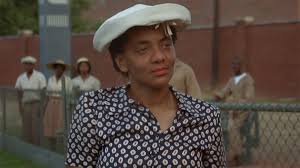
The other woman meets her. She’s small. Slim. But she isn’t in a black and white polka dot dress, or a large-brimmed hat this time.
Somehow, it’s like what Ray told her when he first came across Shoeless Joe, and the others. Dottie can almost see the stats appear in her mind in a nice and neat bloc.
G – 228
R – 136
BA – .273
G by POS – RP-150
Pitcher. Second-Fielder. Outfielder. A 33-8 win-loss record over three years. She knows this. Now.
It’d been broad daylight when they’d first met. Now, it is a night lit up by the lights and the magic of this small ballfield. She wears a striped uniform with a C emblazoned on it surrounding the word “chicks.”
The Steel City Chicks.
For a few moments, Dottie feels stupid. Of course, she would have had a team of her own. It just wouldn’t have been recognized by the League. She didn’t need the Peaches or the Belles. She, and her teammates, had been fighting their own battle. It was a shame it took so long, that it literally took life, death, and a miracle to get them all here to where they are – right now – today in what feels like the summer that a part of Dottie never truly left.
But Dottie resists stretching her jaw. Instead, she extends her hand. The other woman looks at her. She gives her the same level stare, that look of pure confidence, and a steady defiance she had so many years ago back in 1943, segregated by so many things. But they had that moment, when she threw that ball down the yard like thunder and nearly destroyed Ellen Sue’s hand and baseball career.
And then, she takes Dottie’s hand. And when she does, they smile. Now their game can truly begin.

 Mythic Bios